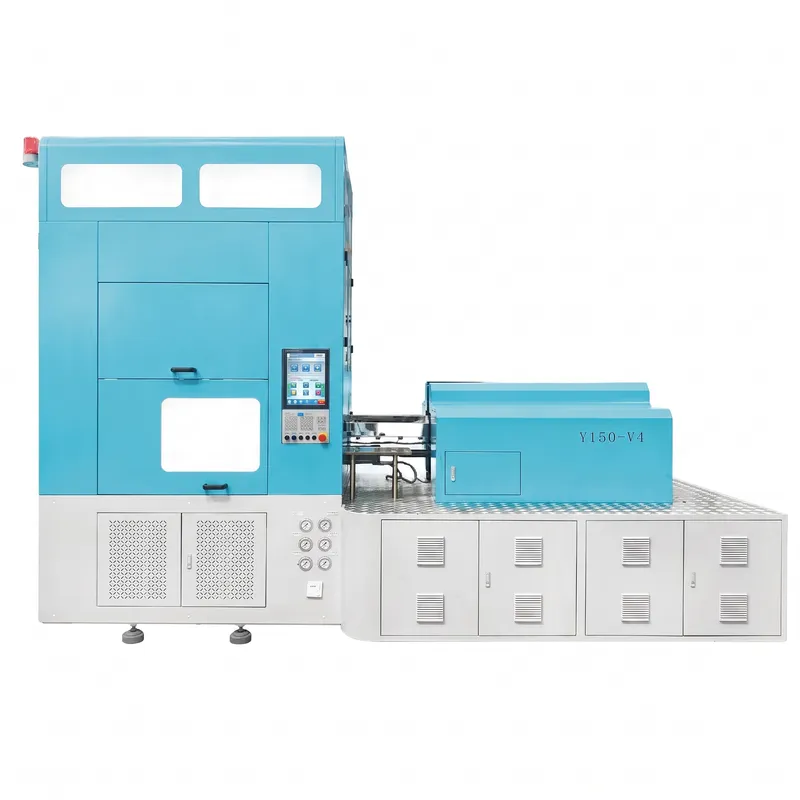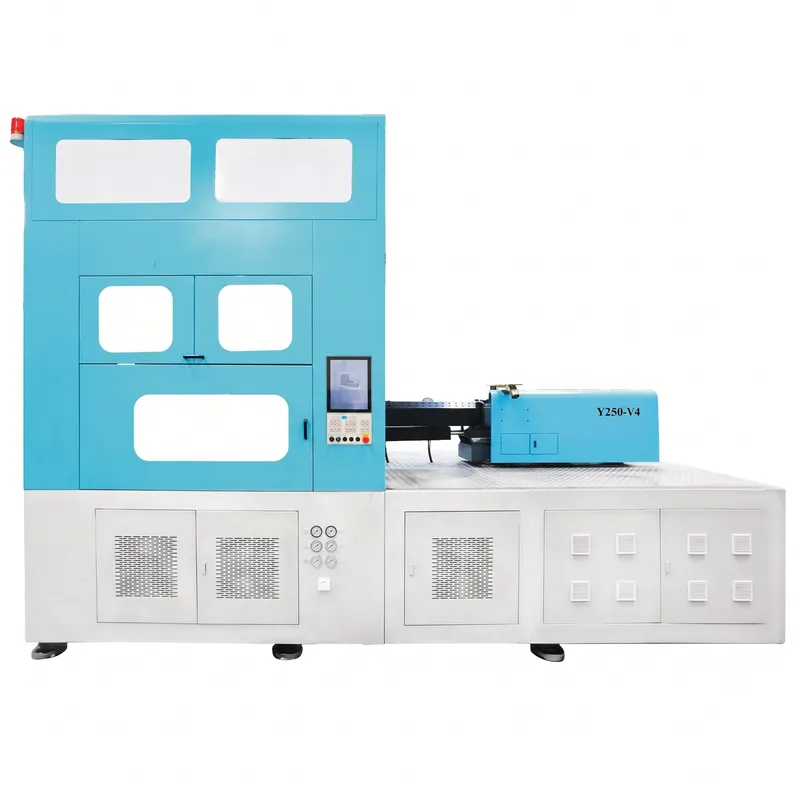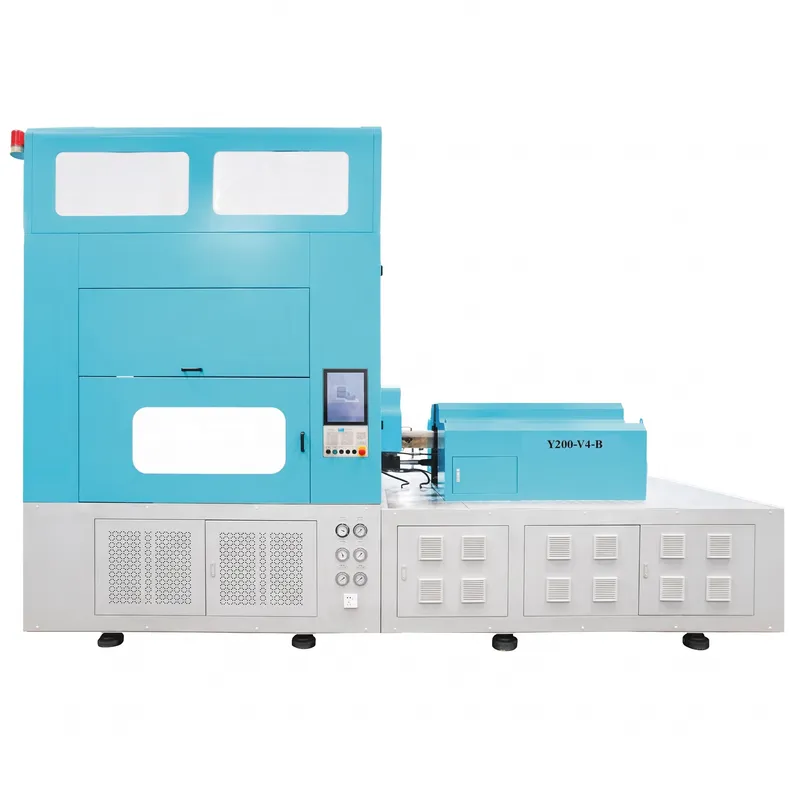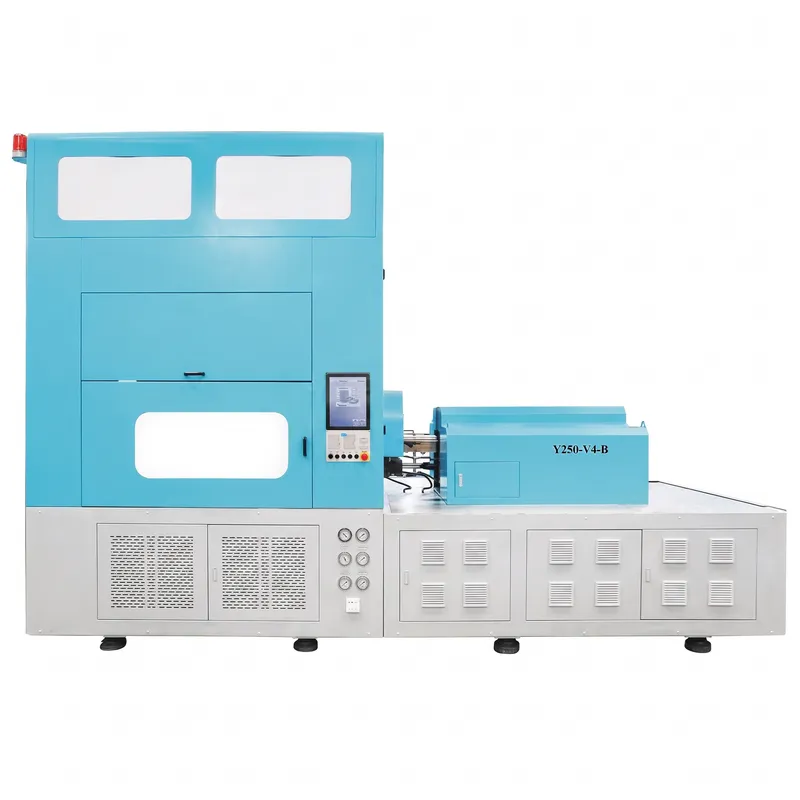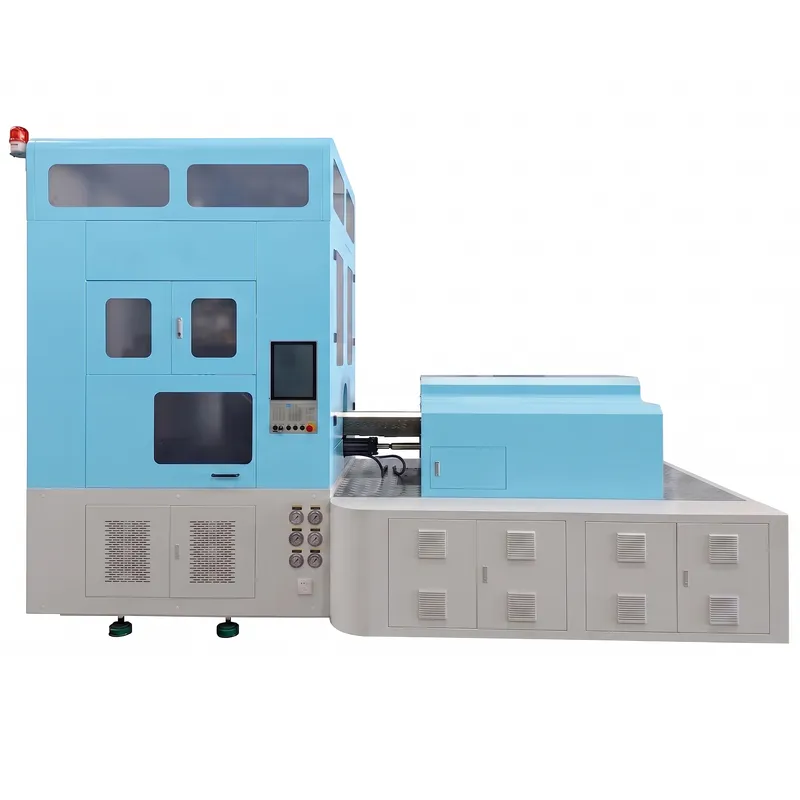
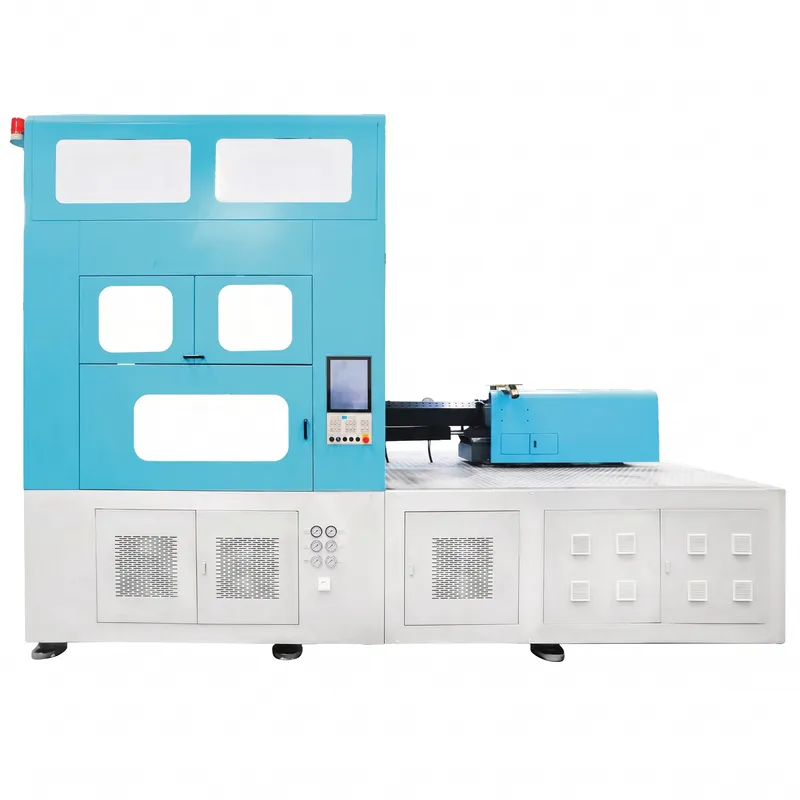
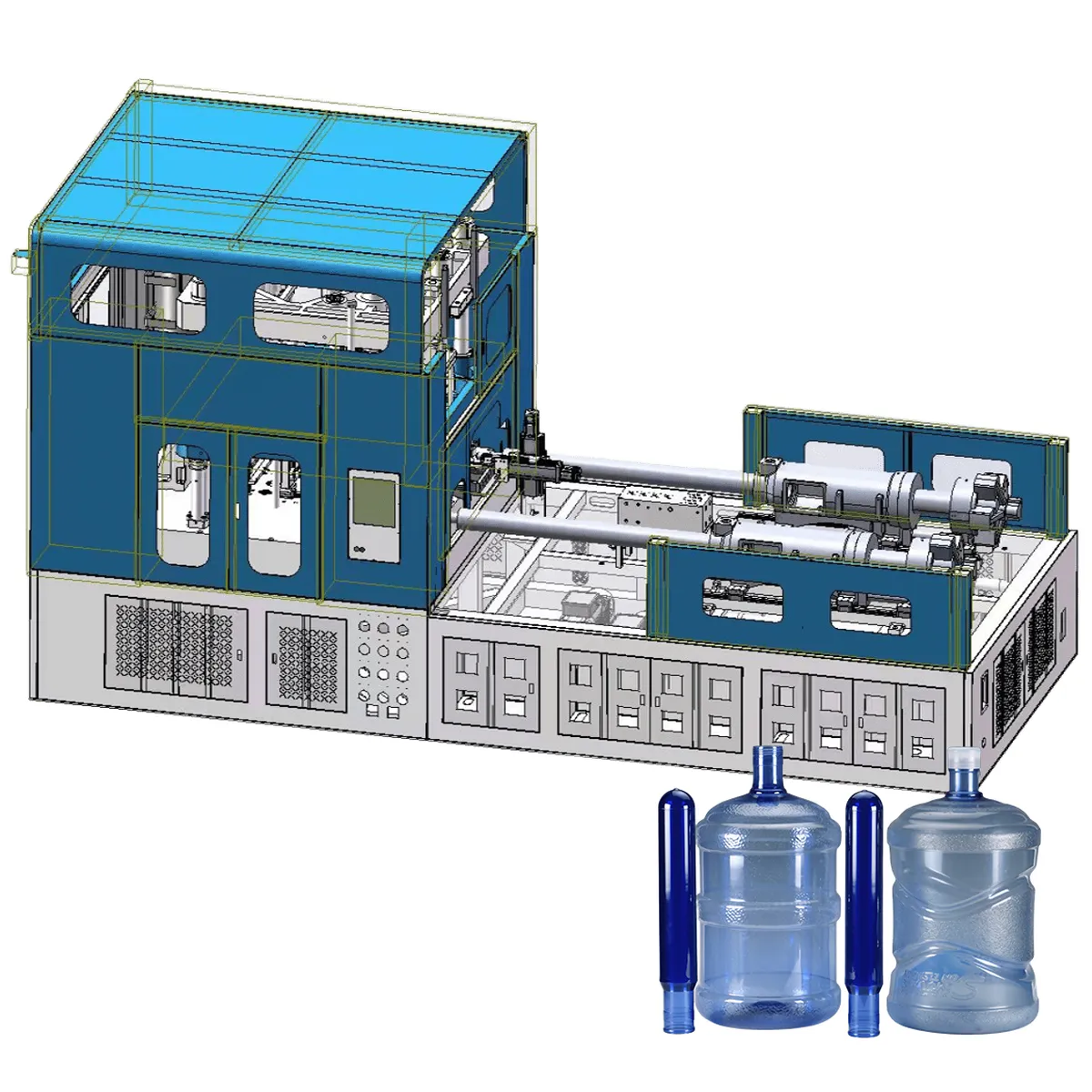
Y280-V6 一步式注塑拉伸吹塑机(6工位)
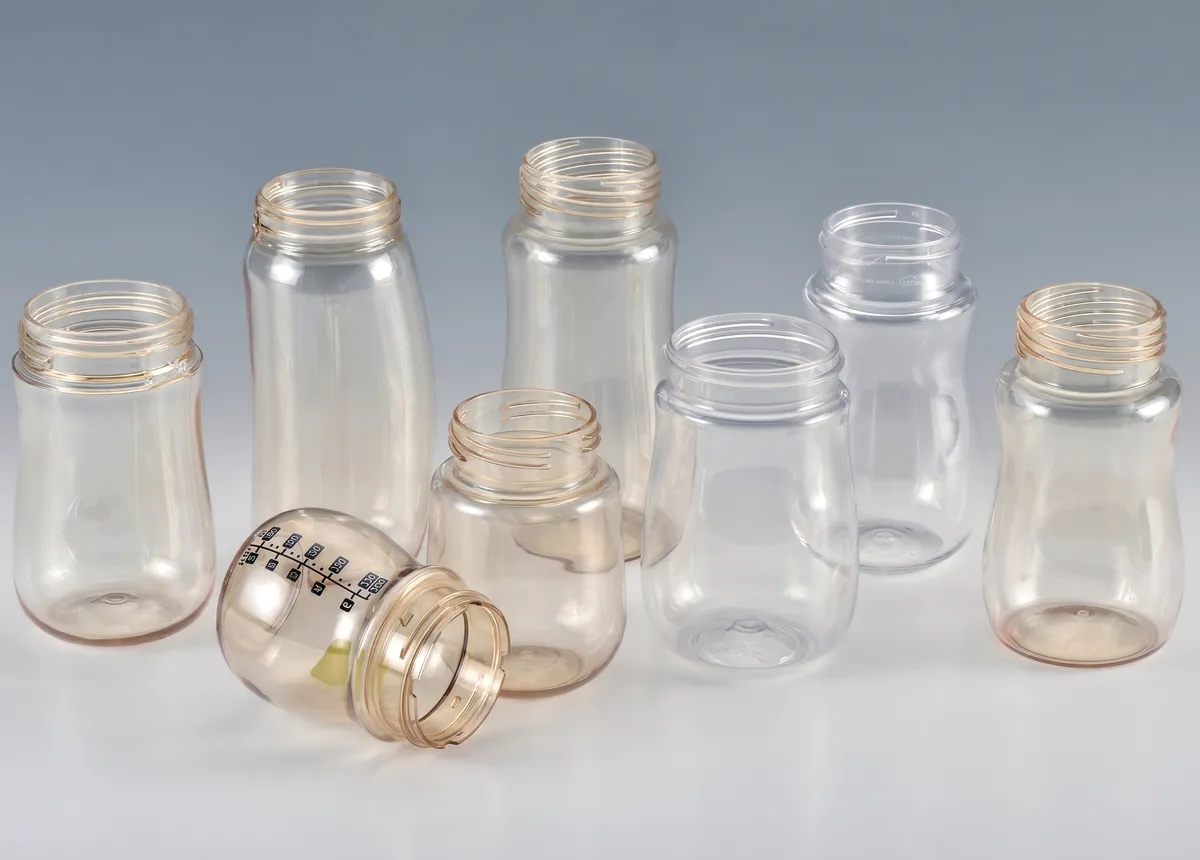
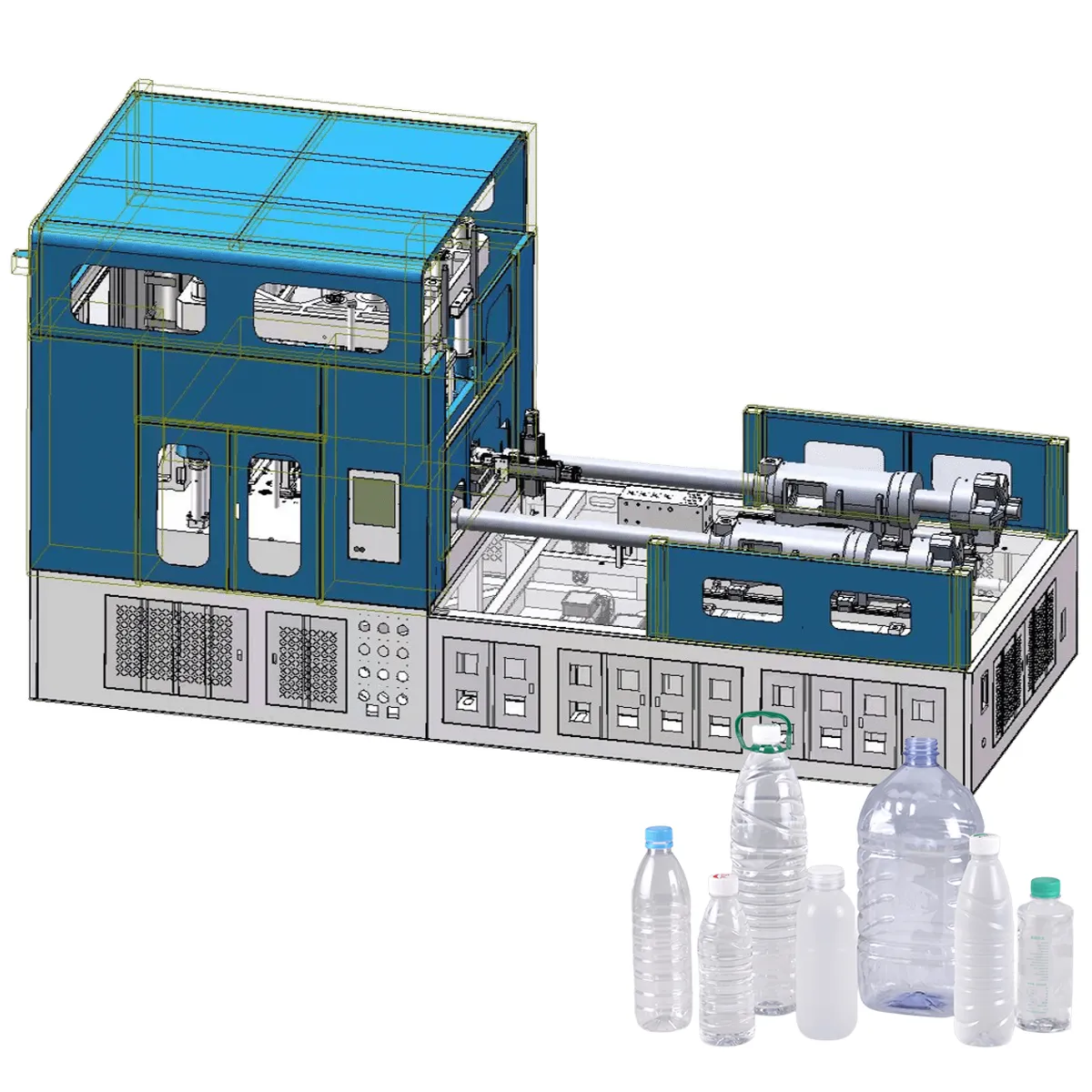
Y280-V6一步式注塑拉伸吹塑机是一种高效的塑料容器成型工艺,广泛应用于高精度、高要求中空塑料制品的生产,包括婴儿奶瓶、水瓶、药瓶、工艺瓶、异形瓶和化妆品瓶等,材质涵盖PET、PETG、PP、PC、Tritan、PS、ABS或PLA等。Y280-V6可直接替代日本主流注塑拉伸吹塑机,并提供标准型、伺服型和全电动型三种配置,以满足不同的生产环境需求。
The Y280-V6 One Step Injection Stretch Blow Molding Machine is a highly efficient plastic container molding process widely used in the production of high-precision, high-demand hollow plastic products, including baby bottles, water bottles, medicine bottles, craft and special-shaped bottles, and cosmetic bottles made of PET, PETG, PP, PC, Tritan, PS, ABS, or PLA. As a leading one step ISBM machine with six stations, its defining feature is that injection, stretching, and blow moulding are all completed continuously within the same equipment without any intermediate steps. This single-stage design eliminates reheating energy, reduces floor space, and significantly improves both production efficiency and batch-to-batch product consistency. The Y280-V6 is a direct-replacement option for leading Japanese injection stretch blow molding machines and is available in Standard, Servo, and Fully Electric configurations to suit diverse production environments.
The six-station rotary turntable architecture of the Y280-V6 sets it apart from conventional four-station ISBM machines. By adding two additional stations to the processing cycle, the machine can produce up to six plastic bottles simultaneously per cycle, delivering throughput levels that match high-volume cosmetic, pharmaceutical, beverage, and personal care packaging lines. All critical components are sourced from trusted global suppliers: Japan Yaskawa or WEICHI servo motors drive the turntable, American Parker high-pressure valves manage blowing air, Airtak air cylinders handle actuation, and YUKEN hydraulic control valves from Taiwan govern pressure regulation. The twin-screw system is heated by nano far-infrared energy-saving rings, reducing heating power consumption while maintaining melt quality. Whether you operate in the pharmaceutical sector requiring GMP-grade oil-free production, or a cosmetic packaging line demanding flawless surface finish with no visible parting lines, the Y280-V6 delivers. It is an ideal solution for businesses seeking a reliable PET injection stretch blow molding machine with proven industrial-grade durability and broad mold compatibility.
可更换的品牌和型号
CMN Transmission 提供全系列注塑拉伸吹塑成型机,每款机型均经过精心设计,可直接替代日本领先品牌的产品。所有机型均提供标准型、伺服型和全电动型三种配置,以满足您的生产需求。
| 标准型 | Y150-V4 | Y200-V4 | Y250-V4 |
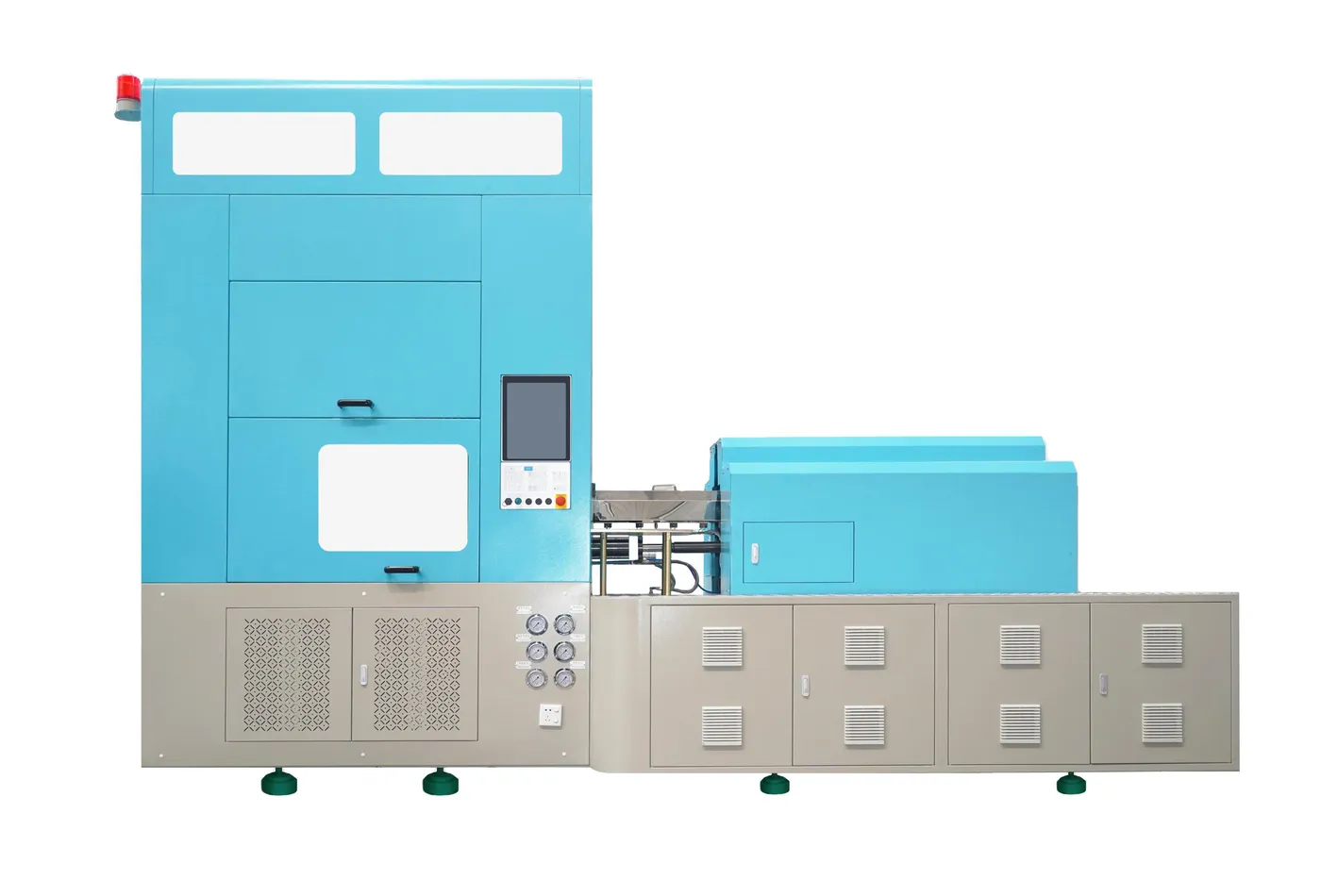 | 与日本ASB-12M兼容 | 与日本Aoki 250兼容 | 与日本ASB-70DPH兼容 |
| Y150-V4-B | Y500-V3 | - | |
| 与日本Aoki 100兼容 | 与日本Aoki 500兼容 | - | |
| 液压夹紧,液压螺杆注射。 | |||
| 伺服模型 | YS150-V4 | YS200-V4 | YS250-V4 |
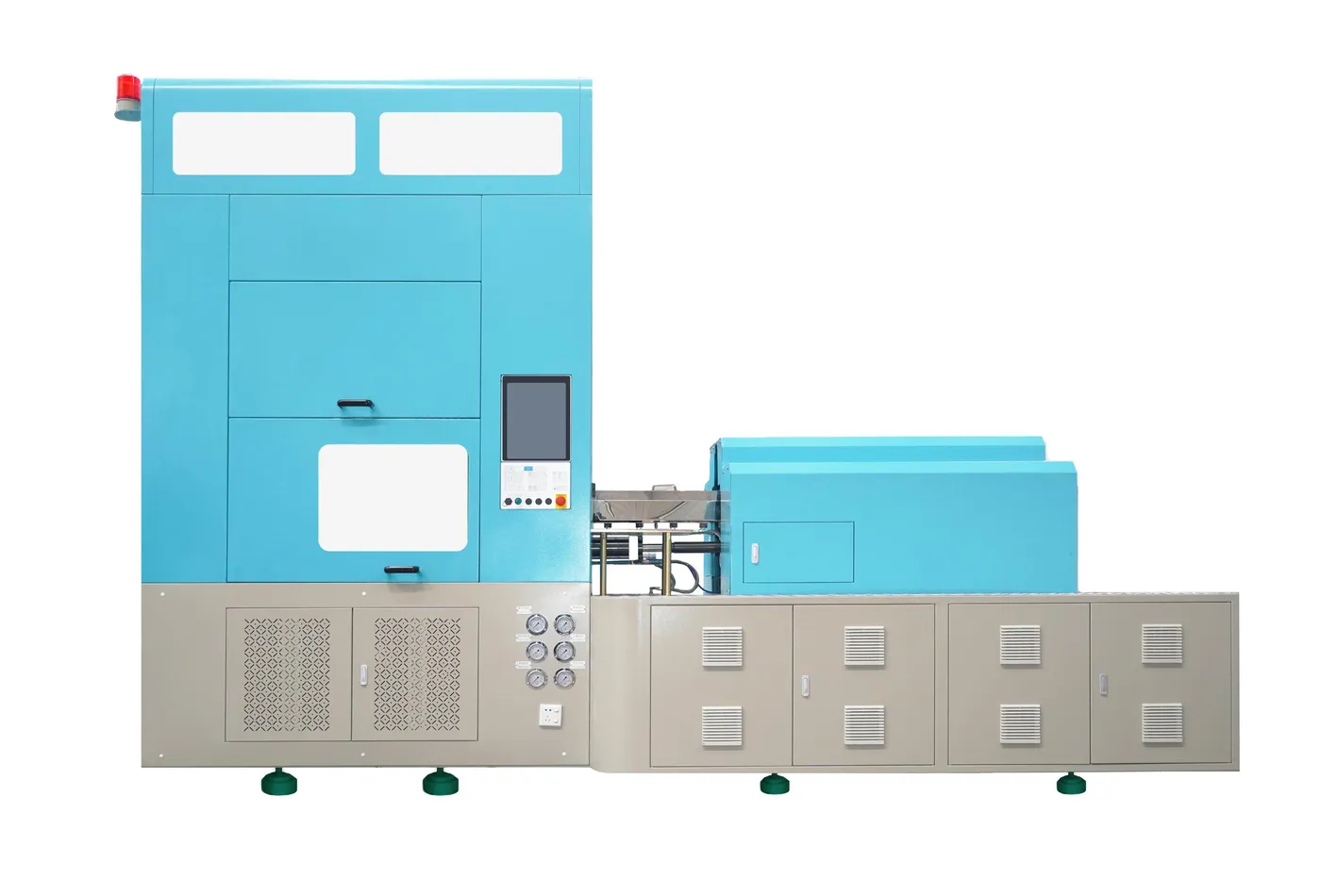 | 伺服夹紧、伺服螺杆注射,高精度、低能耗、长期稳定性 | ||
| 全电动车型 | Y150-V4-EV | Y200-V4-EV | Y250-V4-EV |
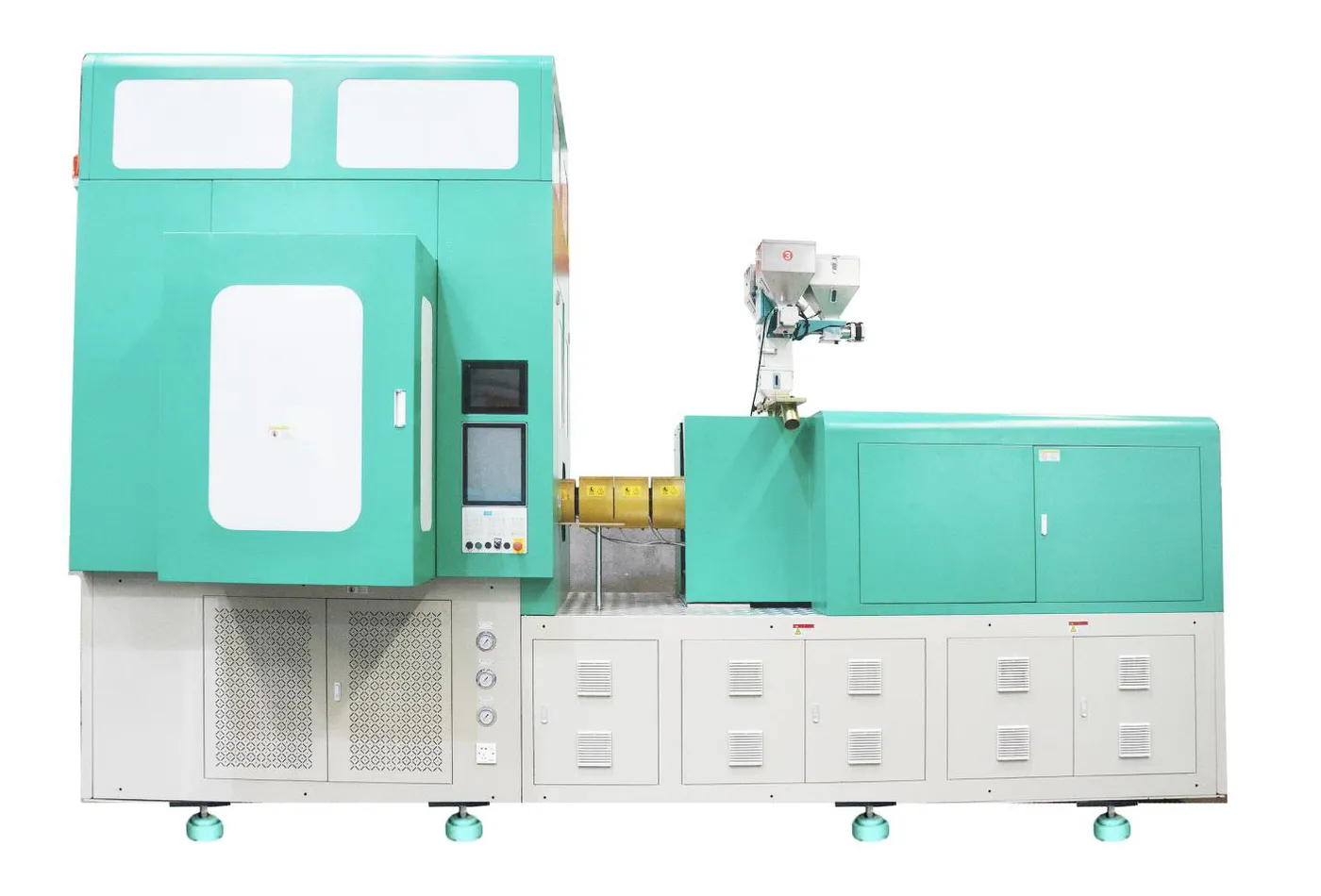 | 纯电动驱动,避免油污污染。 | ||
我们的ISBM机器优势
1. 质量更佳。日本吹塑机生产的塑料瓶都有分模线,即两个模具中间凸起的塑料部分,会留下痕迹。而我们的模具精度极高,完全看不到分模线。
2. 我们的生产速度很快,拥有大量的螺杆解决方案和高速运转能力。日本一次只能生产四个塑料瓶,而我们可以一次生产六个。
3. 节约能源。我们的机器比日本、欧洲和美国的机器节能15%至25%。
4. 已广泛采用多种电气控制技术来替代液压和气动元件。例如,日本底部切割机构中使用的气动元件已被伺服电机取代,并且伺服电机的转速提高了一倍。在制药行业和其他领域,无需任何液压系统即可使用全伺服电机,从而确保符合GMP标准,并在无油无污染的环境中运行。
产品规格
| 物品 | 单元 | 规格 | |||||||
| 姓名 | One-step injection stretch blow molding machine (6-station) | ||||||||
| 模型 | Y280-V6 | ||||||||
| 制造商 | CMN传输 | ||||||||
| Meterial | PET/PETG | ||||||||
| 螺纹直径 | 毫米 | 40 | 50 | 55 | 60 | ||||
| 理论注射体积 | 立方厘米 | 188 | 310 | 442 | 480 | ||||
| 螺杆转速(RPM) | 转/分钟 | 270 | 180 | 150 | 150~220 | ||||
| 注射夹紧力 | 克努尔特人 | 150 | |||||||
| 吹气夹紧力 | 克努尔特人 | 200 | |||||||
| 电机功率 | 柯威 | 43.2 | |||||||
| 加热功率 | 柯威 | 10 | |||||||
| 吹气压力 | 百万 | 2.0-3.5 | |||||||
| 冷却水压力 | 百万 | 0.4-0.6 | |||||||
| 机油冷却器水压 | 百万 | 0.3-0.4 | |||||||
| 机油冷却器水温 | ℃ | 20-25 | |||||||
| 电压 | V | 370-400 | |||||||
| (长*宽*高)尺寸(长*宽*高) | 毫米 | 5900x2600x3200 | |||||||
| 重量 | T | 14 | |||||||
| 产品尺寸 | |||||||||
| 产品数量 | 件 | 1 | 2 | 4 | 5 | 6 | 7 | 9 | 10 |
| 瓶身直径(BD) | 毫米 | 120 | 110 | 68 | 55 | 50 | 45 | 35 | 20 |
| 瓶身高度(H) | 毫米 | 210 | 150 | 100 | |||||
| 颈部直径(E) | 毫米 | 85 | 70 | 50 | 38 | 32 | 25 | 17 | 12 |
| 最大瓶装容量(毫升) | 机器学习 | 2500 | 1500 | 900 | 400 | 250 | 100 | 30 | 20 |
| 最大瓶子重量(瓦) | G | 130 | 65 | 43 | 32 | 26 | 22 | 18 | 16 |
机器参数
| 螺丝直径: | 50毫米(可选) |
| 理论注射容量: | 310克 |
| 注射夹紧力: | 150千牛 |
| 上模行程: | 250毫米 |
| 下模行程: | 205毫米 |
| 温度。调节核心划水: | 250毫米 |
| 温度调节枪管行程: | 230毫米 |
| 击球动作: | 170毫米 |
| 吹气夹紧力: | 200KN(单侧) |
| 吹气核心冲刺: | 250毫米 |
| 吹塑行程: | 75+75毫米 |
| 油箱容积: | 300升 |
| 尺寸(长×宽×高): | 5.9*2.6*3.2m |
| 重量: | 14T |
技术标准
| 伺服控制系统: | Using 2 sets of servo pump systems. |
| 伺服电机功率: | 汇川/潍柴伺服电机功率:43.2KW。 |
| 计算机控制系统: | 使用 Inovance/MiRLE PLC。 |
| 转盘驱动: | 转盘配备日本安川伺服电机或带台湾津天减速器的威驰伺服电机。 |
| 高压阀: | 使用美国派克高压阀。 |
| 气缸: | 使用艾塔克气缸。 |
| 温度控制: | 采用集成控制箱控制温度,精度高、稳定性好、操作简便。 |
| 液压压力控制阀: | 采用中国台湾YUKEN公司的液压压力控制阀。 |
| 螺杆加热: | The twin-screw is heated by a nano-far-infrared energy-saving heating ring(10KW). |
| 吹塑成型结构: | 吹塑结构采用液压缸或双伺服电机模具夹紧系统,具有高压补偿功能。 |
| 注射装置: | The double-injection unit is controled by a single cylinder. The melt motor may be controlled either hydraulically or by a servo motor. |
| 油管: | 油管采用意大利进口材料制成。 |
| 机器总功率: | 机器总功率:53.2千瓦。 |
Key Features of the Y280-V6 ISBM Machine
1. Superior Product Quality
The single-stage injection stretch blow molding machine process produces bottles directly from preforms without reheating, which preserves molecular alignment and surface integrity. Containers achieve high optical clarity, smooth surface finishes, and uniform wall thickness in every cycle. Because the preform and finished bottle are made on the same machine without intermediate handling, there is virtually no risk of contamination or surface damage. The Y280-V6 mold tooling is manufactured to extremely tight tolerances, making parting line marks invisible to the naked eye. This is a clear advantage over Japanese-brand alternatives where a visible parting line protrusion is common.
2. Flexible Design Capabilities
Y280-V6 定制化注塑拉伸吹塑机平台支持复杂的瓶型、定制瓶颈以及从 20 毫升到 2500 毫升的容器容量。该机器每个循环可配置 8 个模腔,能够适应小批量特殊订单和大批量商品生产。这种适应性使其成为化妆品品牌(需要独特的瓶型)、制药厂商(需要精确的瓶盖密封)以及高端饮料生产商(需要具有高视觉吸引力的透明 PET 瓶)的理想之选。此外,该机器的模具兼容性也包括最初为日本 ASB 和 Aoki 设备设计的模具。
3. Sustainability and Lower Energy Use
The one-step process eliminates the secondary preform reheating stage that two-step systems require, reducing overall energy consumption by 15% to 25% compared to equivalent Japanese, European, or American machines. Nano far-infrared energy-saving heating rings on the twin-screw system further reduce heat loss during the melting phase. The process also generates less material waste than extrusion blow molding because preform weight is precisely controlled before blowing. For manufacturers working with bio-based resins such as PLA or recycled PET content, the stable melt temperature management of the Y280-V6 helps maintain consistent processing conditions without degradation.
4. High Production Efficiency
The six-station rotary architecture of the Y280-V6 produces more bottles per cycle than the four-station designs found in competing Japanese ISBM machine models. While a standard four-station Japanese machine typically produces four bottles simultaneously, the Y280-V6 outputs six bottles per cycle. Combined with a servo-driven turntable and dual servo pump systems that reduce pressure stabilization delays, overall throughput increases significantly. The integrated single-stage processing cycle also reduces machine downtime between production runs, eliminating the need to synchronize separate injection and blow molding equipment. Full-process PLC automation reduces operator intervention and supports cost-effective mass production across extended shifts.
5. Versatile Application Range
As a true-purpose injection blow molding machine for packaging, the Y280-V6 produces containers ranging from 20 ml eye-drop bottles to 2,500 ml wide-mouth packaging. Supported materials include PET, PETG, PP, PC, Tritan, PS, ABS, and PLA, giving manufacturers broad flexibility to serve pharmaceutical, cosmetic, food, beverage, chemical, and personal care markets from a single machine platform. Multiple screw diameter configurations (40, 50, 55, or 60 mm) allow operators to match injection shot size to the specific product and material being run. This versatility makes the Y280-V6 one of the most commercially adaptable one step injection stretch blow molding machines currently available from Chinese manufacturers.
6. Compatible with Japanese ASB or Aoki Machine
One of the most significant commercial benefits of the Y280-V6 is its direct compatibility with mold tooling originally designed for Japanese ASB injection stretch blow molding machines. For manufacturers currently running ASB or Aoki machines, this means existing mold investments can be transferred to the CMN machine without costly retooling. The Y280-V6 is engineered as a direct replacement for ASB ISBM machine models and also offers compatibility paths for Aoki model formats. This mold compatibility dramatically reduces the total cost of switching from Japanese to CMN equipment.
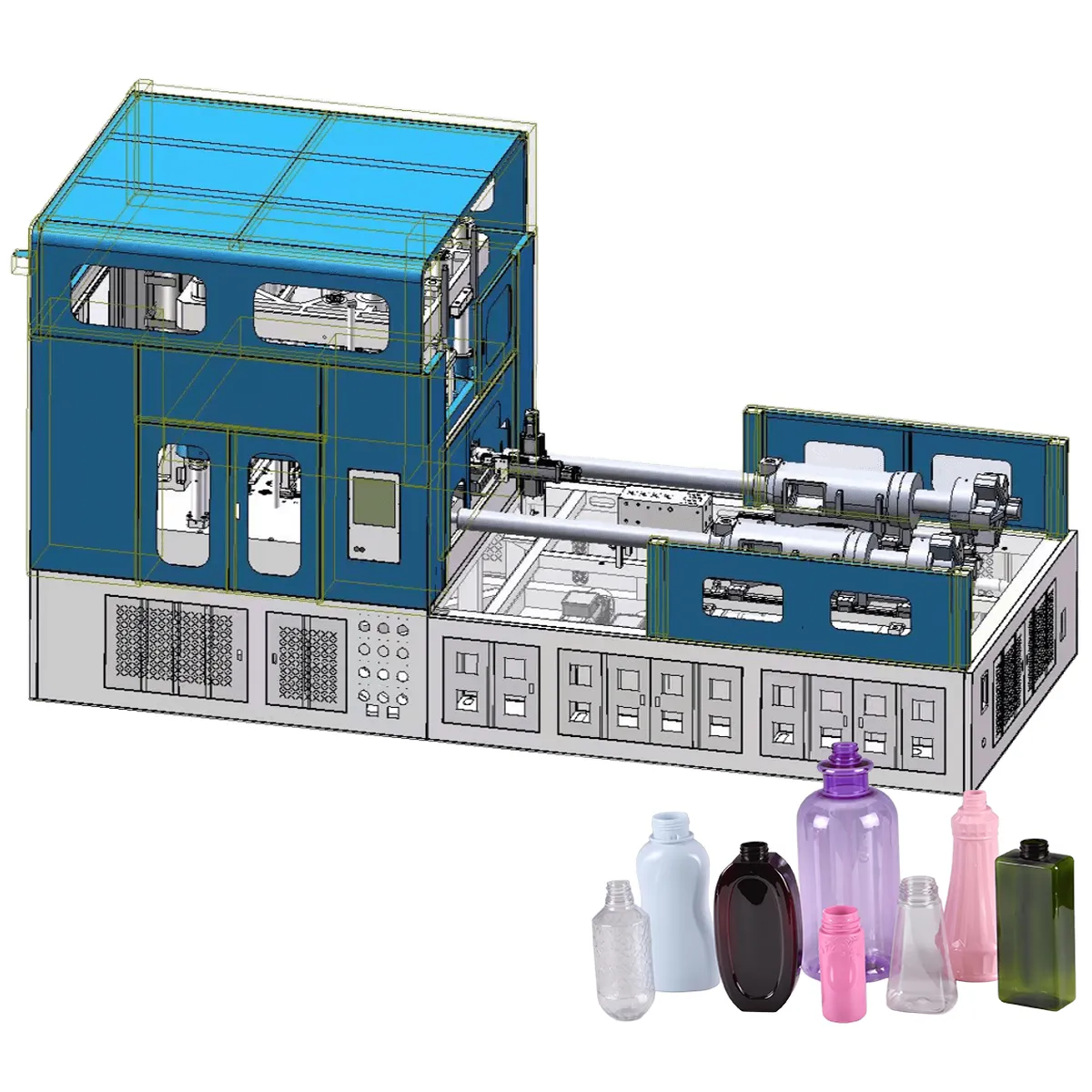
工作原理
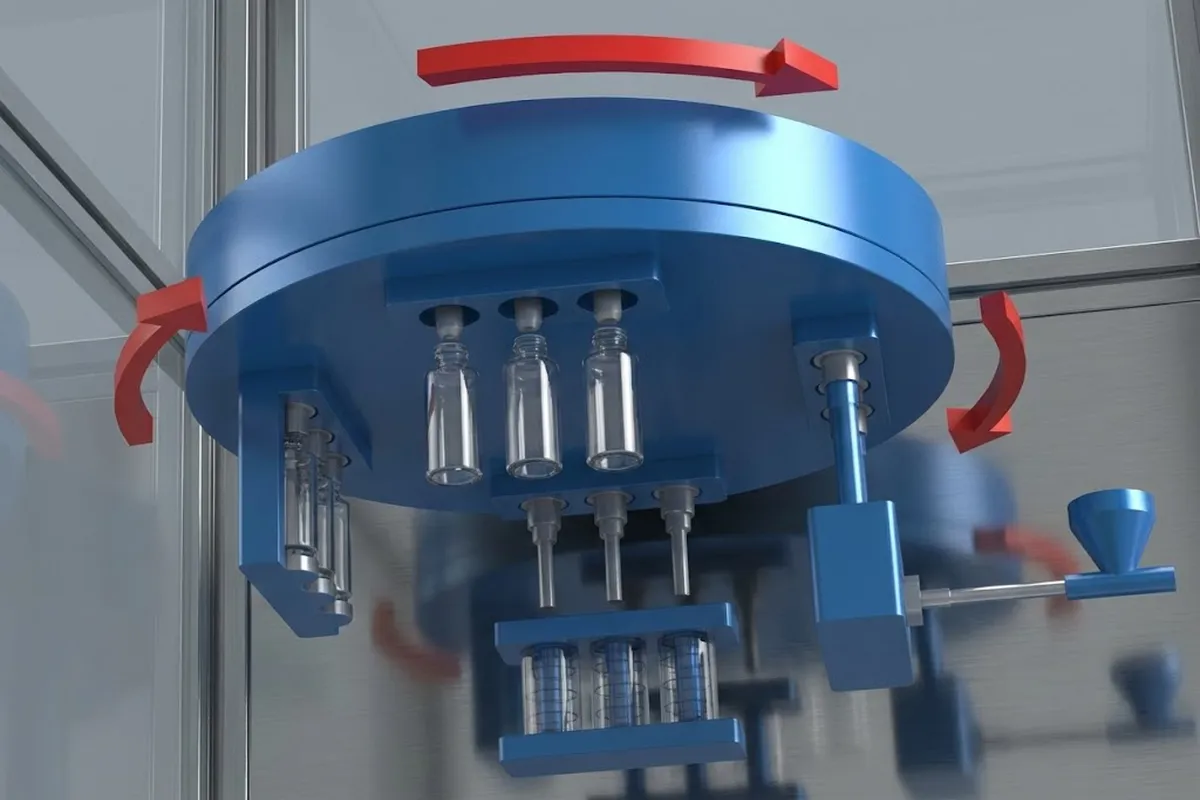
第一步:注塑成型
The process begins by heating PET or PETG resin to a precise molten state using the nano far-infrared screw heating system. The molten material is injected under 150 KN clamping force into a mold cavity to form a preform. The preform is partially cooled to stabilize its shape while retaining sufficient heat to allow effective stretching in the next stage. During this phase, the neck finish, thread geometry, and sealing area are formed to their final dimensions. This ensures reliable cap fitment, dimensional accuracy, and consistent bottle weight from cycle to cycle. The injection unit operates under single-cylinder control, with the melt motor configurable as either hydraulic or servo-driven depending on the production environment and accuracy requirements.
步骤 2:预处理和转移
The Japan Yaskawa or WEICHI servo motor drives the six-station rotary turntable, transferring the freshly molded preform from the injection station to the temperature conditioning zone with precise indexing accuracy. As the preform travels between stations, it passes through controlled thermal management zones managed by the integrated temperature control box. The TEMP. Regulating Core Stroke of 250 mm and TEMP. Regulating Barrel Stroke of 230 mm allow fine adjustment of heat distribution along the preform body. This consistent thermal conditioning step is critical for achieving uniform material behavior during the subsequent stretching and blowing stage. Uneven preform temperature is one of the primary causes of thin shoulders, thick bases, or cracking during blow molding, all of which the Y280-V6 conditioning system is engineered to prevent.
步骤 3:拉伸吹塑
这是预成型坯最终成型为容器形状的阶段。Y280-V6 吹塑机的吹芯行程为 250 毫米,吹模行程为 75 + 75 毫米,提供了充足的行程范围,可适应各种高度和瓶身轮廓。双轴拉伸首先由拉伸杆沿长度方向拉伸预成型坯,然后以 2.0 至 3.5 兆帕的压缩空气将其向外膨胀,以匹配吹模腔。液压缸或双伺服电机模具夹紧系统具有高压补偿功能,可保持 200 千牛的吹塑夹紧力(单侧),确保模具完全密封,抵御内部气压。这种聚合物分子的双轴取向显著提高了成品容器的抗气体渗透、抗冲击和抗内压性能,使其成为碳酸饮料、医药液体和加压化妆品包装的理想选择。
第四步:冷却和排出
Once the container has been fully blown into its final shape, the cooling water system (maintained at 0.4 to 0.6 MPa and 20 to 25 degrees Celsius through the machine oil cooler) rapidly removes heat from the mold cavity to solidify the bottle form. Controlled cooling is essential for dimensional stability, consistent bottle weight, and preventing internal stress that could lead to deformation during storage or transport. After sufficient cooling is achieved, the mold opens and the take-out mechanism (with a stroke of 170 mm) automatically ejects the finished bottle from the station. The complete molding cycle concludes with a ready-to-fill plastic container delivered directly to the take-out position, requiring no manual trimming, reheating, or secondary processing before use.
Application Areas
1. 化妆品瓶
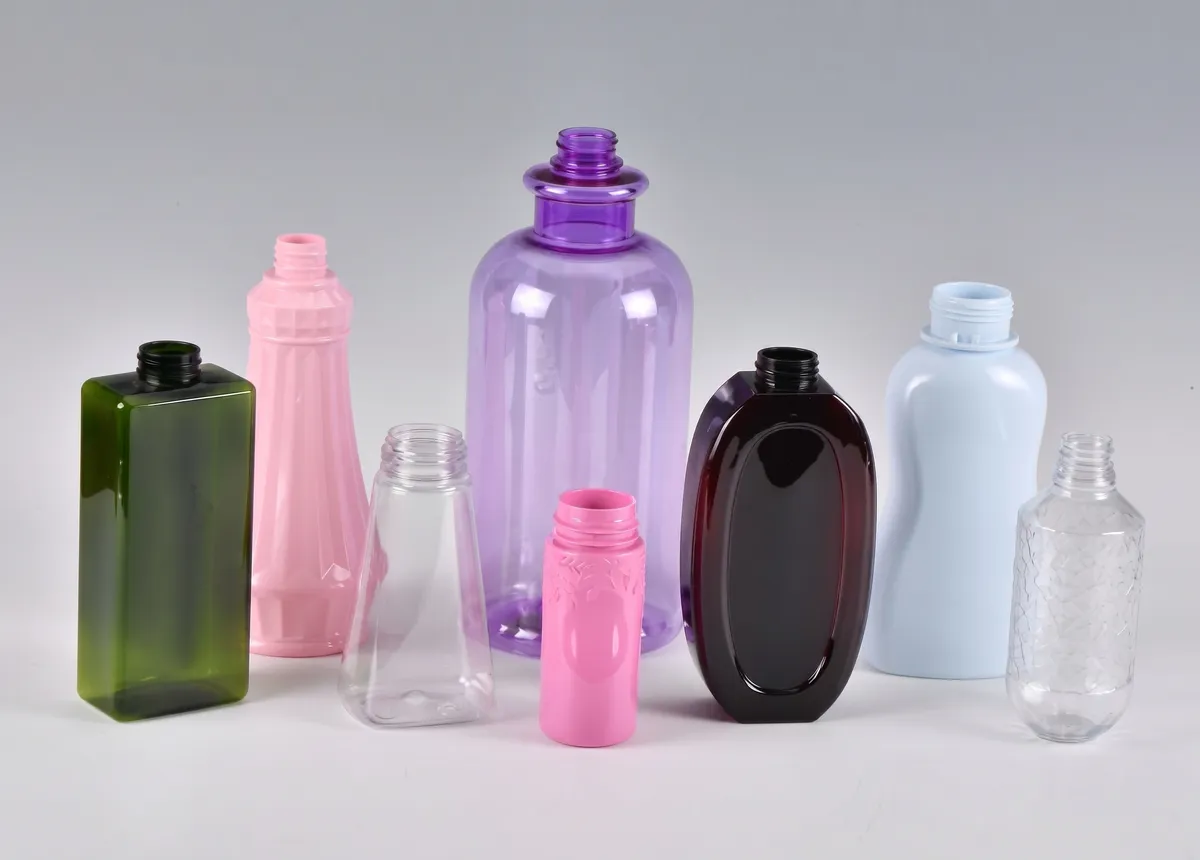
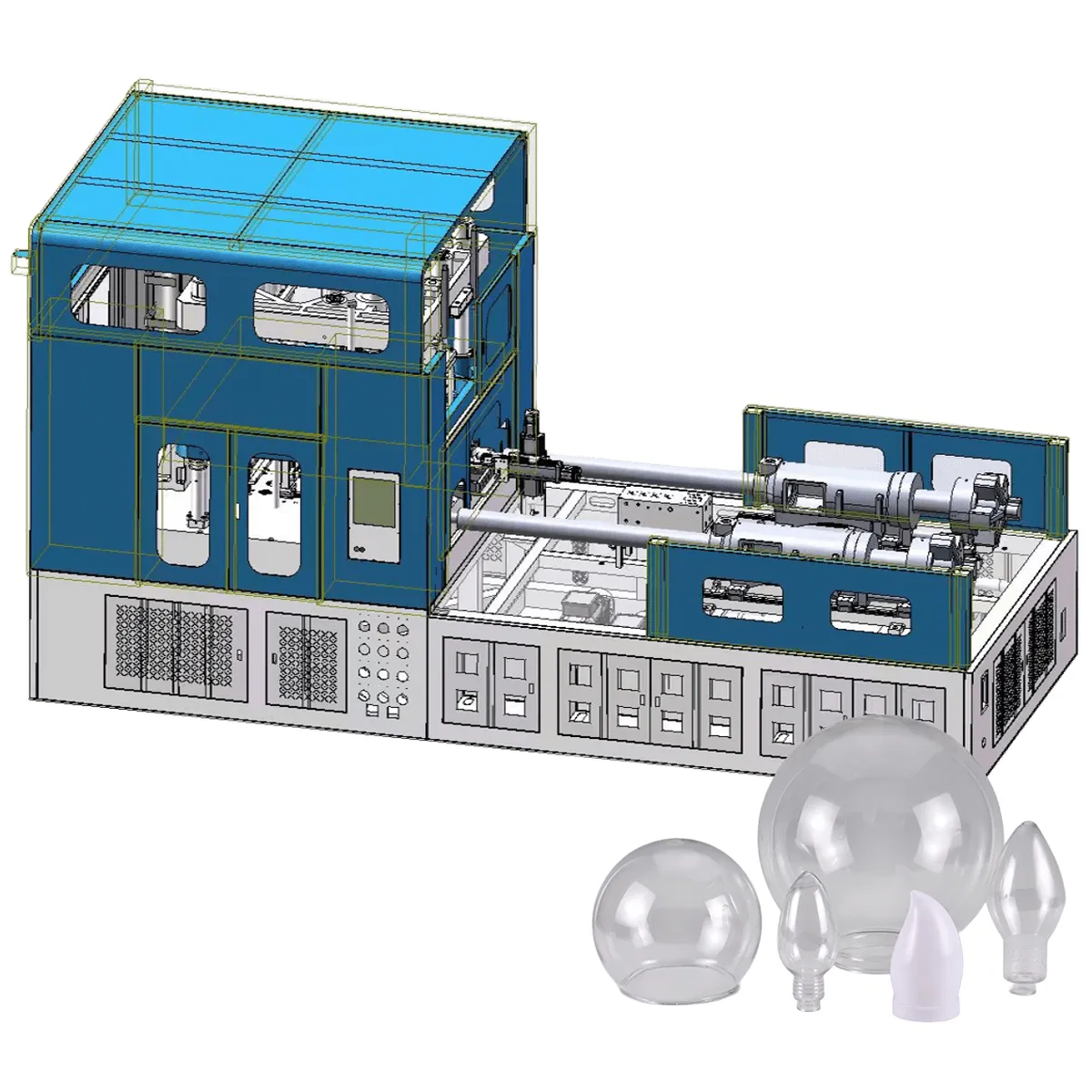
High-end cosmetic packaging demands flawless surface aesthetics, transparency, and dimensional consistency. The Y280-V6 produces skincare, toner, serum, and lotion containers in Tritan, PETG, and PET with no visible parting lines and excellent optical clarity. The mold precision achievable with CMN tooling makes it the preferred 注塑拉伸吹塑机 for cosmetic brands supplying premium retail markets in Europe, North America, and Southeast Asia.
2. 药瓶
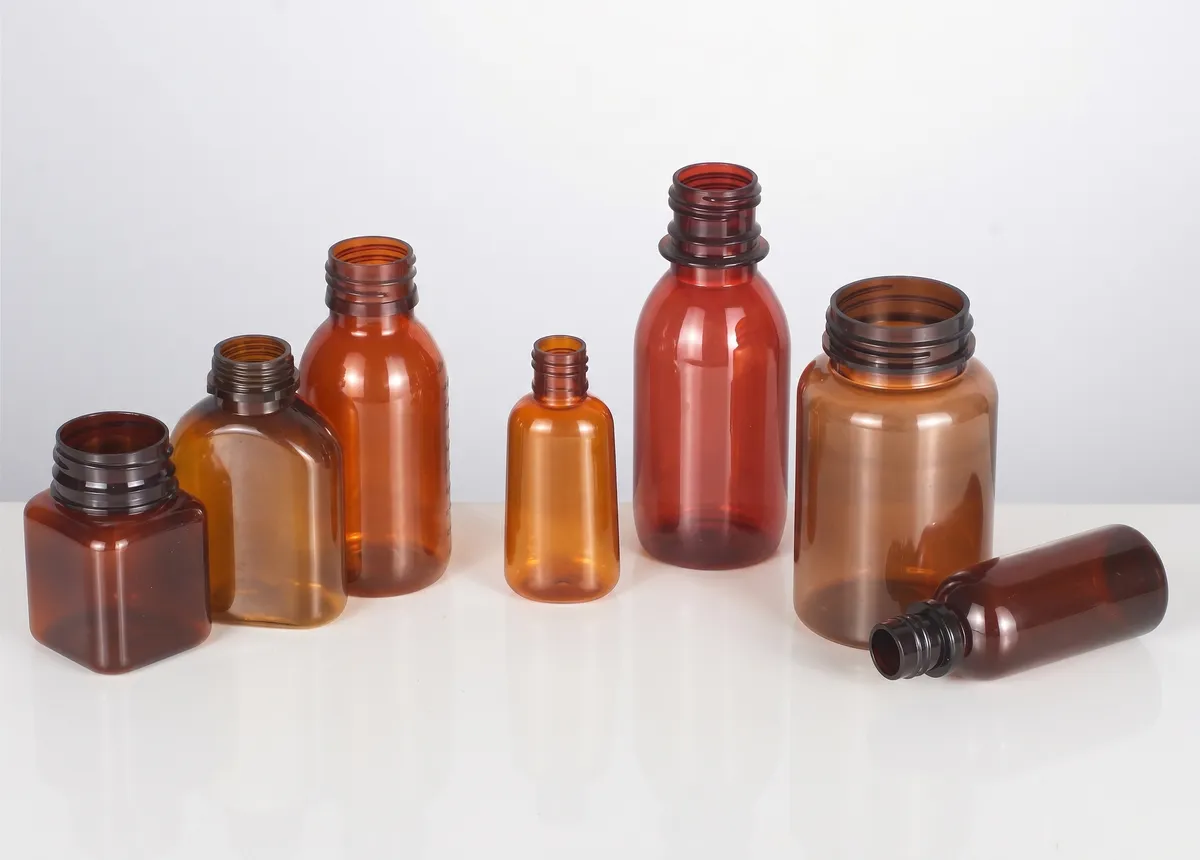
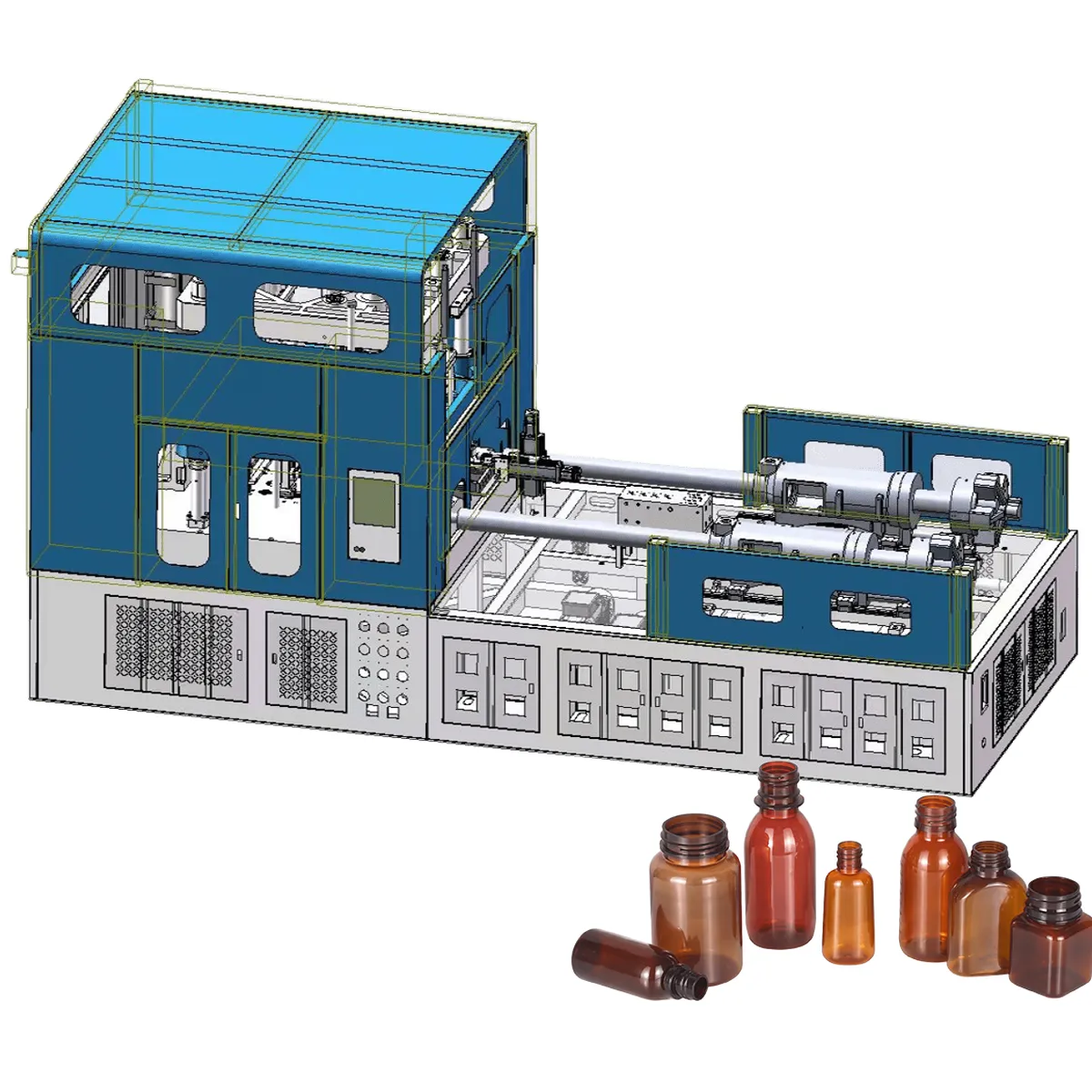
The Y280-V6 is widely used in pharmaceutical packaging facilities requiring GMP-compliant production. The machine supports fully electric, oil-free servo configurations that eliminate hydraulic oil contamination risk. Pharmaceutical bottles for oral liquids, tablets, capsules, syrups, and eye drops can be produced in PET, PETG, and PP from 20 ml to 500 ml with highly accurate neck thread geometry to ensure reliable closure sealing and dosing accuracy.
3. 化学品瓶
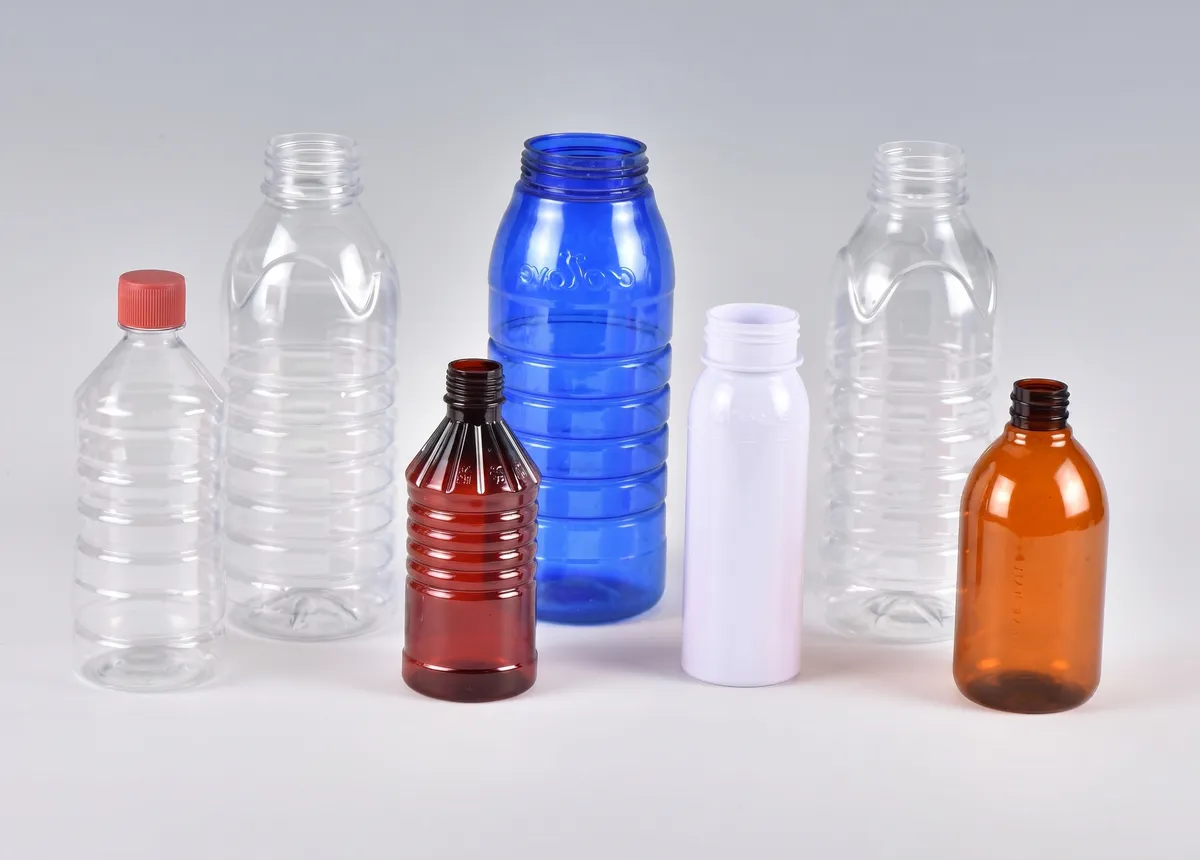
Chemical packaging requires containers that resist solvent permeation, maintain structural integrity under varied storage conditions, and offer tamper-evident closure compatibility. The Y280-V6 produces PP and PET chemical bottles with uniform wall thickness and stable shoulder geometry. Applications include agricultural chemical packaging, cleaning agent bottles, industrial lubricant containers, and specialty chemical packaging requiring chemical resistance and controlled vapor permeability.
4. Hand Wash Bottles
Hand wash, liquid soap, and antibacterial gel packaging often requires ergonomic shapes, pump neck compatibility, and high visual appeal on retail shelves. The Y280-V6 ISBM process handles the complex shapes common in personal care packaging, including oval, square-shoulder, and waisted body profiles. The biaxial orientation of the PET or PP material improves bottle squeeze resistance and drop impact performance, which are important factors for consumer personal care products during distribution.
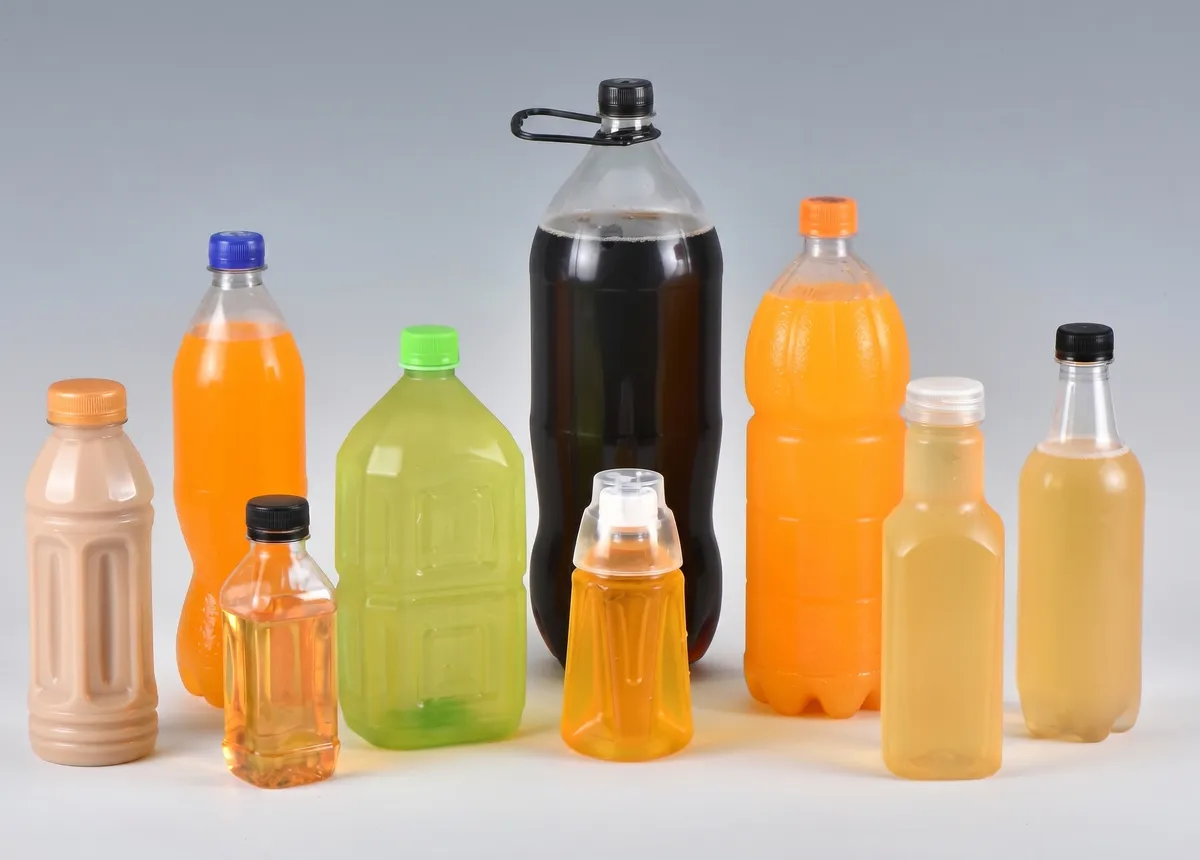
5. Beverage Bottles
PET beverage bottles produced on the Y280-V6 benefit from the biaxial molecular orientation created by the stretch blow process, resulting in improved top-load strength, burst pressure resistance, and excellent optical clarity. The machine can produce still water, juice, tea, and edible oil containers from 100 ml to 2,500 ml per cycle. The servo-controlled turntable indexing ensures consistent preform positioning between stations, which directly affects fill volume accuracy and bottle weight stability across large production runs.
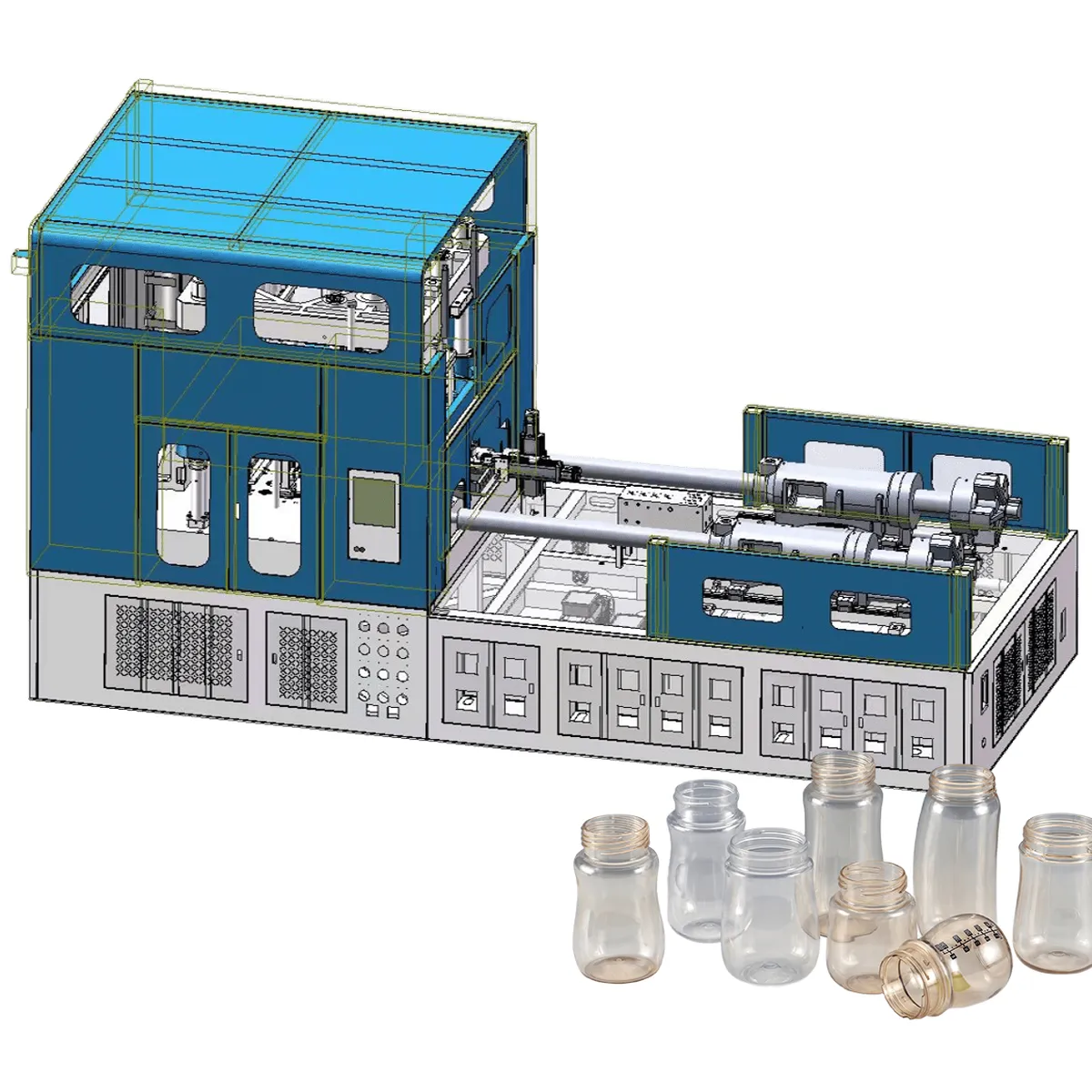
6. Feeding Bottles (Baby Bottles)
Baby bottle production is one of the most demanding applications for any ISBM machine because the materials must be BPA-free, completely transparent, and free of surface defects. The Y280-V6 processes Tritan, PPSU, PC, and PET resins for baby bottles that meet international food contact and chemical migration standards. The one-step ISBM process prevents contamination between stations that could occur with two-step systems, making it the preferred technology for premium infant feeding product manufacturers globally.
7. Body Wash Bottles
沐浴露包装必须兼具功能性和强大的货架吸引力。Y280-V6 可生产宽体、有色和磨砂 PET 和 PETG 材质的沐浴露容器,瓶颈可选择泵头或翻盖式封口。该机器的温度控制精度高,能够加工不透明和半透明树脂混合物,避免出现颜色分布不均或局部过薄等常见缺陷,尤其是在瓶型复杂度增加的情况下。在同一模腔配置下,产量范围从 200 毫升旅行装到 1000 毫升家庭装。
8. Drinking Water Buckets
Large-format PET drinking water containers require outstanding structural rigidity, high clarity, and stackable base geometry. The Y280-V6 accommodates wide-mouth neck configurations and large-body bottle designs up to 2,500 ml. The 200 KN blowing clamping force and 250 mm blow core stroke provide the dimensional control needed for consistent, thick-walled large containers. For water dispenser bottle manufacturers, the Y280-V6 offers a reliable, energy-efficient production platform that meets the volume demands of bulk water packaging markets in Asia, the Middle East, and Africa.
 |  |
| 化妆品瓶 | 药瓶 |
 |  |
| 化学瓶 | 奶瓶 |
Key Components of ISBM Y280-V6 Machine
夹紧单元
The Y280-V6 uses a dual-mode clamping system that supports either a hydraulic cylinder or dual servo motor configuration with high-pressure compensation. The injection clamping force of 150 KN and blow clamping force of 200 KN (single side) are precisely maintained throughout each production cycle. The upper mold stroke of 250 mm and lower mold stroke of 205 mm provide clearance for a wide range of bottle heights up to 210 mm. High-pressure compensation during mold closure eliminates parting line flash and ensures airtight sealing during the blow phase, directly improving finished bottle quality and reducing scrap rates.
注射单元
双注射单元由单个油缸控制,熔融电机可根据买家的工艺要求选择液压或伺服电机版本。双螺杆设计采用纳米远红外节能环(总加热功率 10 kW)加热,可将热量沿螺杆筒均匀分布,最大限度减少能量损失。可选螺杆直径为 40、50、55 和 60 mm,可使注射量与产品型腔容积精确匹配,理论注射容量范围从 188 cm³ 到 480 cm³。这种灵活性使得只需更换螺杆,即可在同一台机器平台上生产小型化妆品容器和大型水容器。
模具系统
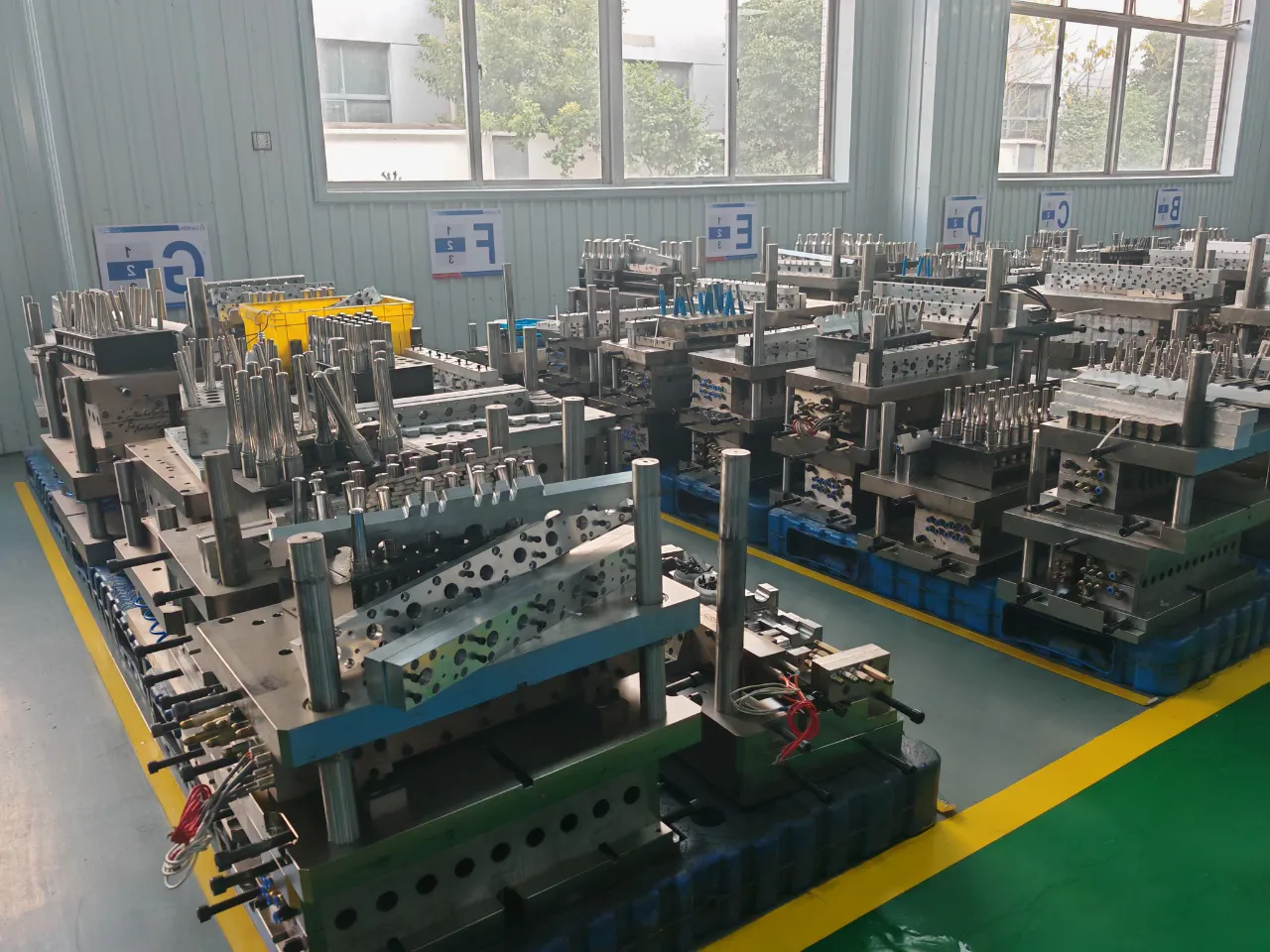
CMN Transmission manufactures injection stretch blow molds to extremely tight tolerances, producing finished containers with parting lines that are virtually invisible to the naked eye. This is a direct performance improvement over equivalent Japanese-brand machines where parting line protrusion is a common quality issue. The mold tooling is compatible with existing ASB injection stretch blow molding machine mold formats, which allows manufacturers transitioning from Japanese equipment to reuse their existing tooling investment. Cavity configurations range from 1 to 10 cavities per cycle, with bottle diameter ranges from 20 mm to 120 mm and volumes from 20 ml to 2,500 ml.
Blow Pin and Air Delivery System
The blow pin assembly on the Y280-V6 operates with a 250 mm blow core stroke, providing sufficient travel for tall bottle body profiles. High-pressure air is delivered through American Parker valves at blowing pressures of 2.0 to 3.5 MPa, which ensures complete mold filling during the blow phase even for complex or thick-walled bottle designs. The consistent air pressure management prevents thin spots, uneven wall distribution, and blow-out defects that can occur when air delivery timing or pressure fluctuates between cycles. The Parker valve specification also ensures long service life under continuous high-pressure cycling conditions typical of commercial production schedules.
冷却系统
The Y280-V6 cooling system maintains machine oil cooler water at 20 to 25 degrees Celsius at 0.3 to 0.4 MPa, while the primary mold cooling water circuit operates at 0.4 to 0.6 MPa. This dual-circuit approach separates hydraulic system heat management from mold cooling, allowing each to be optimized independently. Effective mold cooling directly determines cycle time and dimensional stability of the finished bottle. The 300-liter oil tank provides adequate thermal mass to buffer heat load fluctuations during high-speed production, maintaining consistent hydraulic oil temperature and preventing viscosity-related performance changes that could affect clamping force or injection pressure accuracy.
弹射系统
The take-out mechanism operates with a 170 mm stroke and is driven by Airtak air cylinders for fast, consistent bottle removal at the ejection station. Servo-timed ejection is synchronized with the turntable indexing cycle through the Inovance or MiRLE PLC to prevent mechanical interference and allow maximum production speed without compromising bottle integrity during removal. The ejection stroke and speed are adjustable through the HMI interface, allowing operators to tune take-out timing when switching between different bottle heights or weights. Gentle ejection control is particularly important for thin-walled or elongated containers where rough handling at the take-out station can cause deformation before the bottle has fully solidified.
Injection Blow Molding vs Injection Stretch Blow Molding vs Extrusion Blow Molding
Choosing the right blow molding process is a fundamental decision that affects bottle quality, production cost, mold investment, and material compatibility. Here is how the three main processes compare.
EBM | Extrusion Blow Molding
EBM starts with a hot hollow parison formed by an extruder. The mold closes around the parison, and compressed air expands the plastic into the mold cavity. This method is highly flexible for producing large containers, handled bottles, drums, and HDPE packaging where exact neck precision is less critical. Common materials include HDPE, LDPE, PP, and PVC.
The primary advantage of EBM is shape freedom. Parison extrusion can form handles, wide bodies, and offset shapes more easily than injection-based processes. However, parison sag under gravity can create uneven wall thickness, and the mold closing process often produces flash that requires trimming. For buyers, the main quality risks are inconsistent wall distribution around handles or shoulders and less precise neck thread definition.
IBM | Injection Blow Molding
IBM starts with an injection-molded preform where the neck, thread, and sealing area are formed with high dimensional precision before the bottle body is blown. The preform is transferred into a blow mold and inflated into its final shape. Because the neck geometry is established during injection before blowing, IBM produces exceptionally accurate thread definitions and closure sealing surfaces.
This precision matters most for small pharmaceutical bottles, eye-drop containers, cosmetic jars, and medical packaging where cap and pump fitment must be leak-free. IBM also produces consistent bottle weight and repeatable dimensions. However, IBM does not include a stretch rod, so the biaxial orientation benefits of the ISBM process are not achieved, making IBM less suitable for large or lightweight PET containers where strength and clarity at low wall thickness are priorities.
ISBM | Injection Stretch Blow Molding
ISBM is the process used in the Y280-V6. Like IBM, it starts with an injection-molded preform that establishes the neck geometry. But ISBM adds a stretch rod that extends the preform vertically before compressed air expands it outward. This biaxial orientation aligns the polymer molecules in two directions simultaneously, producing bottles with significantly improved clarity, top-load strength, gas barrier performance, and lightweight potential.
These properties are critical for PET water bottles, carbonated beverage packaging, edible oil containers, and clear cosmetic bottles where both performance and visual clarity matter. The single-stage injection stretch blow molding machine design of the Y280-V6 combines injection and blow molding in one continuous cycle without secondary preform reheating, achieving 15 to 25% energy savings compared to two-step systems while maintaining superior bottle quality and production speed.
对比表
| 类型 | 起始形式 | 常用材料 | 最佳产品 | 主要优势 | 主要限制 |
|---|---|---|---|---|---|
| 循证医学 | 帕里松 | 高密度聚乙烯(HDPE)、低密度聚乙烯(LDPE)、聚丙烯(PP)、聚氯乙烯(PVC)。 | 大型容器、带把手的瓶子、桶 | Flexible sizes and lower tooling cost | 颈部精度降低,可能出现闪光 |
| IBM | 预成型件 | HDPE、PP、PET、PS | 小型精密瓶罐 | 精确的颈部表面处理和螺纹轮廓 | 模具成本较高,尺寸范围较小 |
| ISBM | 拉伸预成型件 | PET, PETG, PP, Tritan | Clear bottles, beverage and cosmetic packaging | Strength, clarity, lightweighting, energy savings | Higher machine and mold initial cost |
ISBM机器的兼容原材料
PET(聚对苯二甲酸乙二醇酯)
PET is the most widely processed resin on the Y280-V6 and the material most closely associated with the ISBM process. Its excellent optical clarity, gas barrier properties, and lightweight strength make it the standard choice for water bottles, beverage containers, food packaging, and transparent cosmetic bottles. PET processed through biaxial ISBM stretching achieves significantly better mechanical properties than unstretched PET, including improved top-load strength and drop impact resistance.
PETG(乙二醇改性PET)
PETG is a modified form of PET with superior impact resistance, easier processing, and the ability to be formed into complex shapes without cracking. It offers the same high clarity as standard PET but with greater flexibility and toughness. PETG is commonly chosen for cosmetic packaging, medical containers, and display packaging where the bottle must withstand rough handling or temperature variation without becoming brittle. The Y280-V6 handles PETG with consistent melt quality through its precise barrel temperature control.
PP(聚丙烯)
聚丙烯(PP)因其优异的耐化学性、耐高温性和符合食品接触安全标准而备受青睐。它广泛应用于药品包装、食品容器和个人护理用品领域,在这些领域中,瓶子必须能够经受住灭菌循环或热灌装工艺的考验。与聚对苯二甲酸乙二醇酯(PET)相比,PP的加工窗口较窄,因此在Y280-V6生产线上加工PP需要精确的温度控制,但该机器集成的控制箱温度系统能够可靠地应对这一挑战。Y280-V6生产线生产的PP瓶为医药和食品应用提供了一种经济高效的玻璃瓶替代方案。
PPSU (Polyphenylsulfone)
PPSU 是一种高性能工程树脂,具有卓越的耐热性、耐水解性和透明度,可承受 134 摄氏度的反复蒸汽灭菌循环。它是婴儿奶瓶和医疗容器的理想之选,可经受高压蒸汽灭菌而不发生降解或变色。PPSU 不含 BPA,符合全球最严格的食品接触法规。Y280-V6 的精准温控能力确保这种高粘度树脂的稳定熔融流动,而不会造成表面缺陷或分子降解。
PC(聚碳酸酯)
PC offers the highest impact resistance among common transparent engineering plastics and is traditionally used in reusable water bottles, large water dispensing containers, and baby bottles. While BPA concerns have reduced PC use in certain markets, it remains an important material for industrial containers and optical-quality applications requiring exceptional clarity combined with toughness. The Y280-V6 processes PC with precise barrel temperature profiles to prevent degradation and color change during the injection phase. PC containers produced on the ISBM machine achieve superior drop resistance compared to those produced by other molding methods.
Tritan(伊士曼 Tritan 共聚酯)
Tritan is a BPA-free copolyester developed by Eastman Chemical that combines the clarity and toughness of PC with enhanced chemical resistance and dishwasher durability. It has become the leading material for premium reusable water bottles, baby bottles, and kitchen containers marketed to health-conscious consumers. The Y280-V6 processes Tritan effectively through its stable screw temperature management, producing bottles with outstanding clarity, scratch resistance, and long-term durability that justify the premium positioning of Tritan-branded packaging in retail markets.
PCTG (Glycol-Modified PCT)
PCTG is a transparent copolyester with properties positioned between standard PETG and Tritan, offering excellent impact resistance, low-temperature clarity, and good chemical resistance. It is commonly used in cosmetic packaging, medical device housings, and consumer product containers where high clarity and toughness are both required at a cost point below Tritan. PCTG processes at moderate temperatures on the Y280-V6 and produces bottles with a crystal-clear appearance suitable for premium cosmetic and personal care packaging lines targeting demanding retail markets.
Injection Stretch Blow Molding Machine for Beverage Bottle Production
Step 1: PET Resin Drying and Hopper Loading
PET resin for beverage bottle production must be dried to a moisture content below 50 ppm before processing to prevent hydrolytic degradation during melt injection. A dehumidifying dryer operating at 160 to 170 degrees Celsius for 4 to 6 hours is typically required. Dried PET pellets are loaded into the machine hopper, which feeds the injection screw. Undried PET produces bottles with reduced intrinsic viscosity, visible surface haziness, and reduced mechanical strength that can cause bottles to fail burst pressure or drop tests during quality control inspection.
Step 2: Preform Injection Molding
The dried PET resin is fed to the screw barrel, melted at temperatures typically between 270 and 285 degrees Celsius, and injected under precise pressure into the injection mold to form the beverage bottle preform. The preform shape, including the neck thread, sealing surface, and body wall thickness distribution, is determined at this stage. For carbonated beverage bottles, neck finish accuracy is especially critical because the crown or screw cap must seal reliably against the internal CO2 pressure of 2.0 to 4.5 bar. The preform is partially cooled to a stable but pliable temperature before transfer.
Step 3: Temperature Conditioning and Turntable Transfer
The servo-driven rotary turntable transfers the freshly injected preform from the injection station to the temperature conditioning zone. The integrated control box temperature system manages thermal equilibration across the preform body length to achieve a consistent temperature profile before stretching begins. For beverage bottles, the optimal preform temperature for biaxial ISBM stretching is typically 85 to 100 degrees Celsius, varying by bottle design and wall thickness target. Uneven preform temperature at this stage is the most common cause of shoulder thinning, base thickening, and pearl white opacity in the finished bottle.
Step 4: Biaxial Stretch Blow Molding
The conditioned preform enters the blow station where the mold closes around it and a stretch rod extends the preform vertically to the base of the blow mold. High-pressure air at 2.0 to 3.5 MPa is then introduced through the blow pin to expand the preform outward against the mold cavity walls simultaneously. This biaxial stretching step is what produces the superior strength and clarity characteristic of ISBM PET bottles. For carbonated beverage bottles, the resulting molecular orientation improves CO2 barrier performance, burst pressure resistance, and thermal stability during hot filling or pasteurization processes.
Step 5: Mold Cooling and Bottle Solidification
Following the blow molding stage, the bottle is held inside the closed mold while cooling water circulated through the mold channels removes heat from the container surface. Cooling time is a direct determinant of cycle time and dimensional stability. For beverage bottles where high clarity and low haze are commercial requirements, rapid and uniform cooling prevents crystallization that would make the PET appear white or translucent. The Y280-V6 cooling water circuit maintains temperature at 20 to 25 degrees Celsius through the machine oil cooler, providing stable cooling conditions across extended production runs.
Step 6: Ejection and Quality Inspection
冷却完成后,模具打开,行程为170毫米的取料机构将成品饮料瓶从吹瓶工位取出。取出的瓶子被送至检验和后续包装区域。饮料瓶的质量检验通常包括:目视检查瓶身表面缺陷和透明度;测量瓶颈尺寸以确保瓶盖贴合;称重以确保灌装量一致;以及根据客户质量计划定期进行爆破压力和跌落冲击测试。通过检验的瓶子无需任何二次修整或表面处理,即可直接进入灌装线、输送系统或包装工位。
Step 7: Downstream Packing and Storage
Finished beverage bottles from the Y280-V6 production line are typically collected on conveyors, counted into specified lot quantities, and packed into corrugated cartons or plastic bags for shipment to the filling plant. For high-volume operations, automatic bottle counting and bagging systems can be integrated downstream of the ISBM machine ejection station. Bottles should be stored in clean, dry conditions away from direct sunlight and chemical vapors that could affect PET surface quality before filling. Proper downstream handling protects the investment in bottle quality that the ISBM process provides throughout the entire production chain.
Maintenance and Care
1. Daily Lubrication and Mechanical Checks
At the start of each production shift, inspect all lubrication points on the clamping unit, turntable bearing, and ejection mechanism. Apply grease to specified points according to the maintenance schedule provided in the machine manual. Check that the turntable rotation is smooth and that no unusual vibration or noise is present during indexing. Verify that all air cylinder rod seals are intact and that there is no air leakage at cylinder connections. Addressing minor lubrication deficiencies early prevents accelerated wear on precision components and avoids unplanned downtime during production runs.
2. Hydraulic System Oil Management
300升液压油箱应每周检查油位、颜色和污染情况。新鲜的液压油通常呈浅琥珀色;颜色变深或浑浊则表明存在氧化、水污染或磨损密封件造成的颗粒污染。应按照制造商规定的周期彻底更换液压油,通常为每运行2000至3000小时更换一次。每次更换液压油时,应清洁或更换液压油滤清器。保持液压油清洁至关重要,因为YUKEN液压控制阀和高压部件的内部间隙很小,对颗粒污染非常敏感,会导致阀门卡滞、压力波动和部件加速磨损。
3. Cooling Water Circuit Maintenance
The cooling water circuit should be inspected monthly for scale buildup, biological growth, and flow rate consistency. The machine oil cooler must maintain water temperature between 20 and 25 degrees Celsius and pressure between 0.3 and 0.4 MPa to keep hydraulic oil viscosity within the operating range. The mold cooling circuit operates at 0.4 to 0.6 MPa and must be monitored for blockages that could cause uneven mold cooling and dimensional variation in bottles. Use treated water or a closed-loop cooling system with corrosion inhibitor to prevent scale and corrosion that would reduce heat transfer efficiency and restrict flow through mold cooling channels over time.
4. Screw and Barrel Cleaning
The injection screw and barrel should be purged and cleaned whenever changing between resin types or colors, and at scheduled intervals during extended production runs of the same material. For PET and PETG, purge with a commercial purging compound or a compatible transition resin to remove degraded material from the screw flights and barrel walls. Degraded PET deposits can cause black specks, yellow streaking, or molecular weight reduction in the finished container if not removed. The nano far-infrared heating ring system heats the barrel uniformly, but stagnant material in low-flow zones can still degrade if the screw is left stationary at temperature for extended periods without purging.
5. Mold Inspection and Cavity Care
Mold tooling should be inspected at regular intervals for wear on the cavity surface, parting line, venting channels, and neck ring components. Clean cavity surfaces with approved mold release agents and plastic-safe solvents to remove resin deposits and oxidation. Inspect water channel connections on the mold for leaks or blockages and verify that the cooling circuit is balanced across all cavities. Misaligned or worn parting surfaces can create flash on bottles, which affects container appearance and may indicate clamping force imbalance. Store molds in climate-controlled storage with protective coating on metal surfaces when not in production to prevent corrosion and humidity damage.
6. Servo Motor and Electrical System Checks
The Inovance or WEICHI servo motors driving the Y280-V6 clamping and injection systems should be inspected quarterly for bearing temperature, encoder signal quality, and cable condition. Check servo drive units in the electrical cabinet for adequate ventilation and absence of dust buildup that could cause overheating or signal interference. The Inovance or MiRLE PLC should have its battery backup status checked annually to ensure parameter memory is retained during power outages. Review the PLC fault log monthly to identify recurring alarms that may indicate developing mechanical or electrical issues before they cause a production stoppage. All electrical connections should be retorqued at commissioning and at annual service intervals to prevent high-resistance contacts from developing.
为什么选择CMN的注塑拉伸吹塑机?
CMN Transmission is a dedicated manufacturer of automatic one-step injection blow molding machines and injection stretch blow molding machine equipment, with a product range covering injection blow molding machines, extrusion blow molding machines, injection stretch blow molding machines, molds, and auxiliary equipment. CMN operates from a well-located production base with efficient logistics access that supports reliable international delivery timelines for customers across Asia, the Middle East, Africa, South America, and Europe.
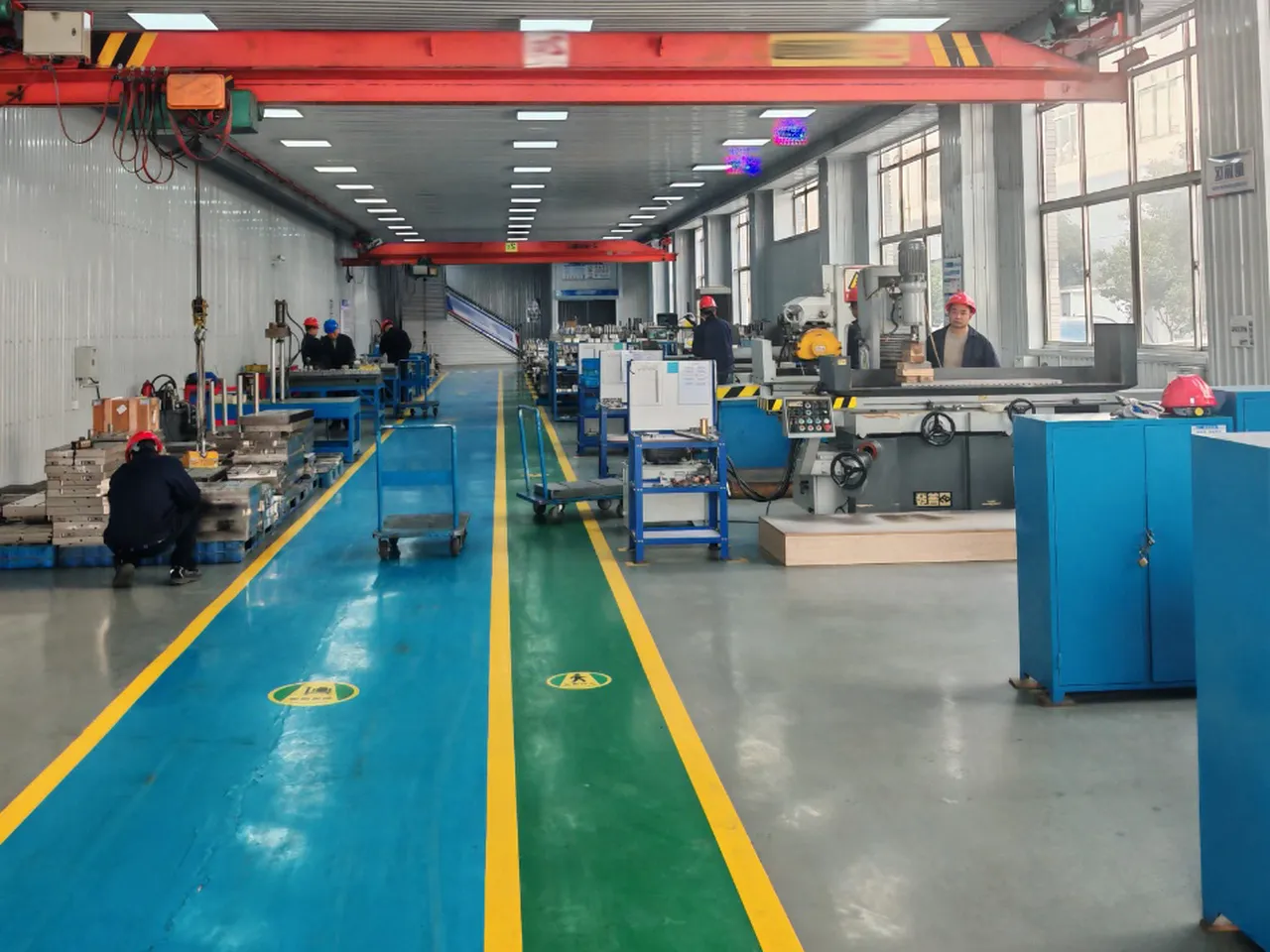
CMN拥有一支经验丰富的研发团队,汇聚了在注塑吹塑设备设计和注塑吹塑模具制造方面拥有深厚背景的工程技术人员。这种涵盖机器和模具的双重专长,使CMN在帮助客户解决复杂的瓶型设计难题方面具有显著优势,这些难题往往涉及形状复杂、材料要求苛刻或尺寸公差要求严格等问题。CMN的技术团队将扎实的理论知识与丰富的生产实践经验相结合,提供详尽的个性化售前咨询、快速响应的售中技术支持以及完善的售后服务,包括现场安装、操作人员培训、工艺优化和备件供应。
CMN的产品应用涵盖医药包装、食品饮料包装、医疗保健及个人护理包装、化妆品包装,以及各种容量从1毫升到1000毫升的特种塑料包装产品,材料包括HDPE、LDPE、PET、PETG、PP、PS、PPSU、PC、Tritan、ABS、PLA、PCTG、EVA和环保认证的玉米基树脂。CMN秉持自力更生、诚信经营、务实创新、勇于担当的发展理念,构建了涵盖设备选型、模具设计、工艺验证和持续生产支持的一站式交钥匙工程能力。这种全链式服务模式确保CMN的客户能够获得高端注塑吹塑产品,从首个生产周期到设备整个生命周期,始终满足质量要求。
 |  |
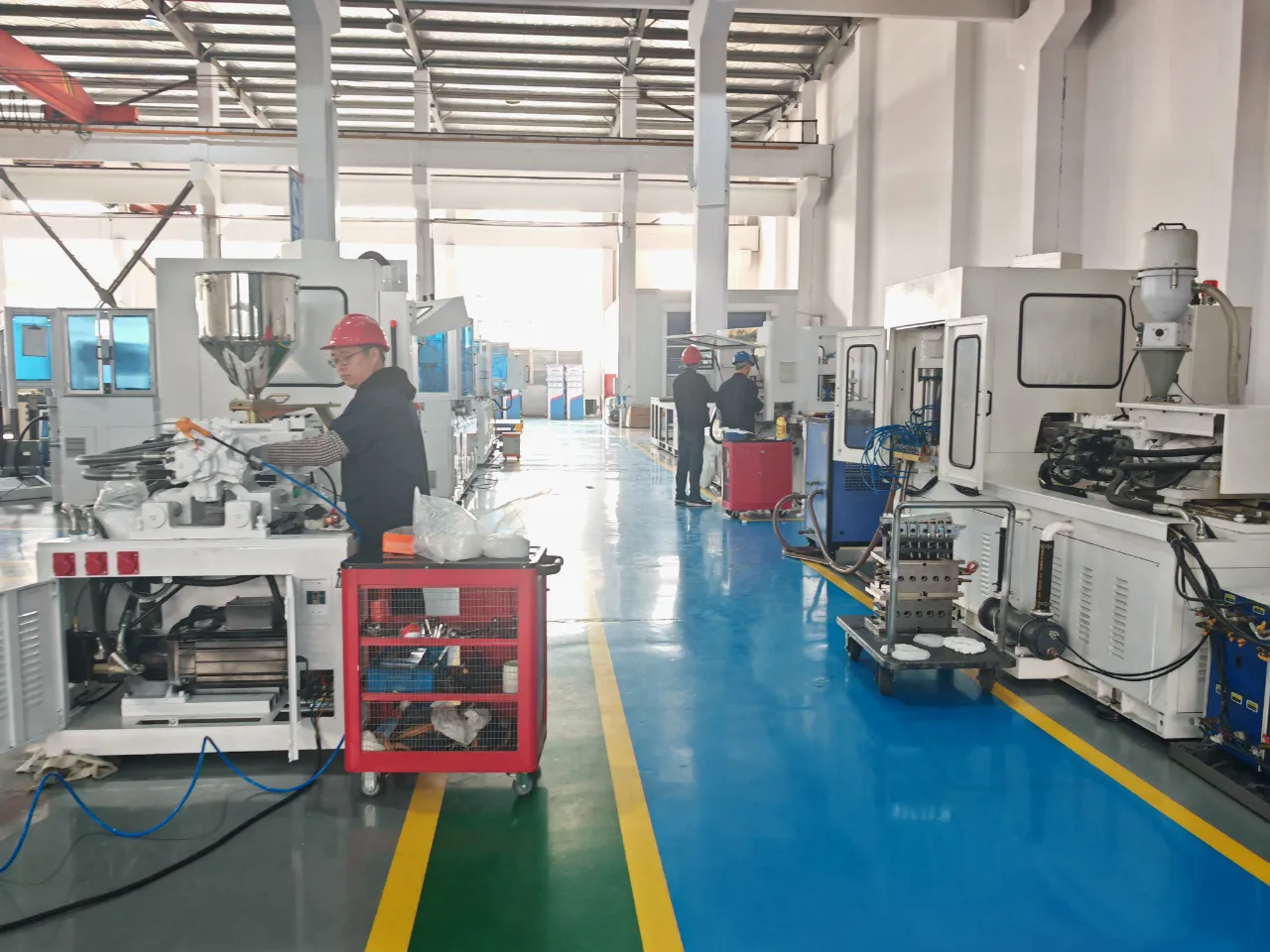 | 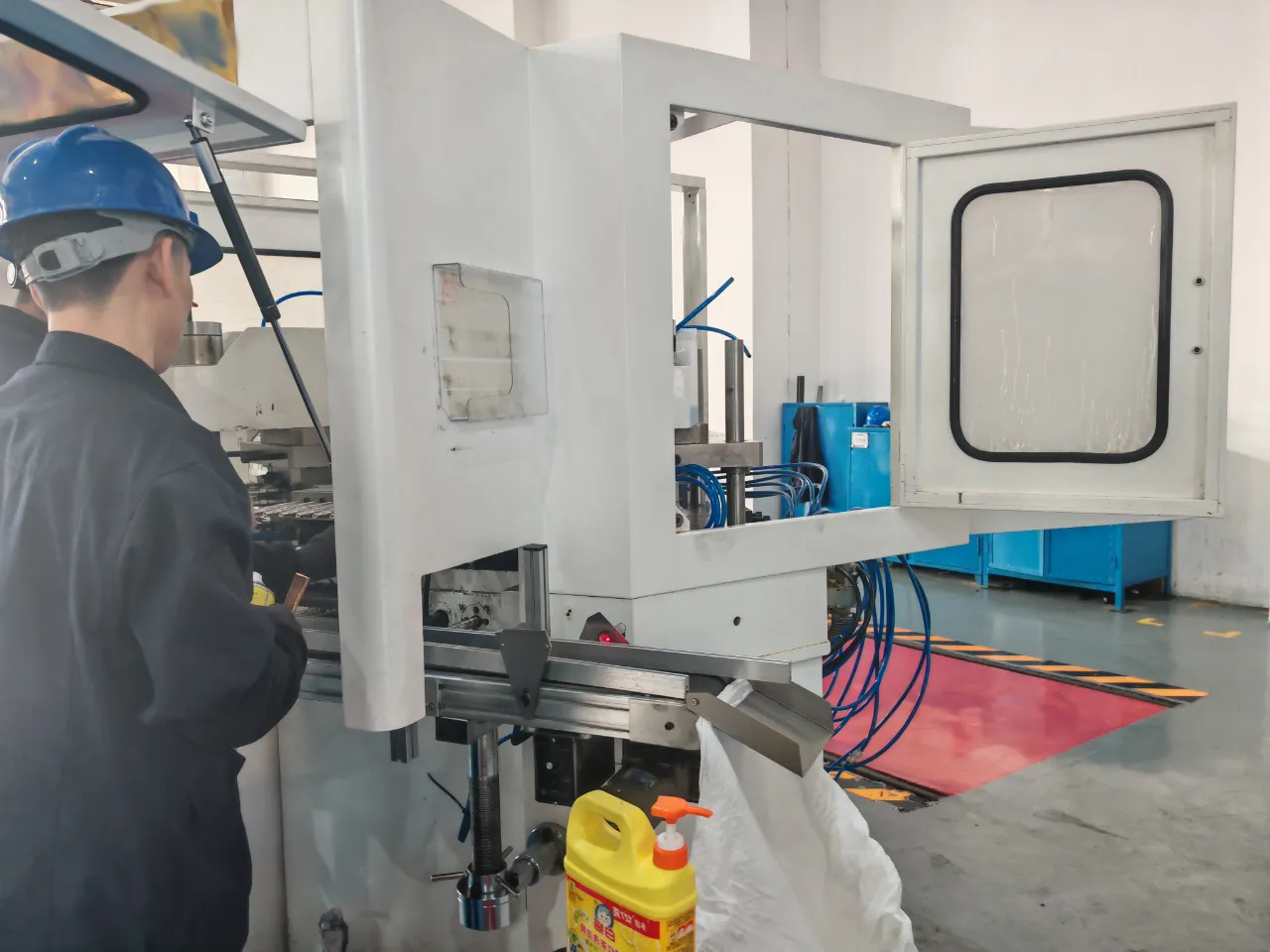 |
常问问题
Q: What is the difference between the Y280-V6 and a standard four-station injection stretch blow molding machine?
A: The Y280-V6 uses a six-station rotary turntable instead of the four-station design common in Japanese ISBM machines. This means the Y280-V6 can process six preforms simultaneously in a single rotation cycle, producing more bottles per cycle than a four-station machine running the same tooling configuration. In addition to higher output, the extra stations allow for longer temperature conditioning and cooling dwell times, which can improve bottle quality when running demanding materials or complex shapes.
Q: Can the Y280-V6 use existing ASB or Aoki injection stretch blow molding machine molds?
答:是的。Y280-V6 的设计兼容最初为日本 ASB 注塑拉伸吹塑机生产的模具,特别是 ASB-12M 和 ASB-70DPH 型模具。CMN 的产品系列还包括兼容 Aoki 100、Aoki 250 和 Aoki 500 型模具的型号。这种模具兼容性对于已投入模具资金并希望在不更换所有模具的情况下改用 CMN 设备的制造商来说,是一项重要的商业优势。请在购买前联系我们的销售团队,提供您现有模具的规格,以确认兼容性。
Q: Is a fully electric version of this one step injection stretch blow molding machine available?
A: Yes. CMN Transmission offers the Y280-V6 in a Fully Electric configuration that replaces all hydraulic drive systems with servo motors. The fully electric version produces no hydraulic oil, making it suitable for pharmaceutical manufacturing facilities that must comply with GMP standards and operate in clean-room-adjacent environments. The fully electric version also offers advantages in energy consumption, positioning repeatability, and quieter operation. It is available at a higher initial cost than the Standard or Servo hydraulic-assisted versions.
Q: What materials can the Y280-V6 PET injection stretch blow molding machine process?
答:Y280-V6 主要设计用于加工 PET 和 PETG,这两种材料是 ISBM 生产中最常用的。但是,通过选择合适的螺杆直径、调节料筒温度和进行干燥预处理,该机器也能加工 PP、PC、Tritan、PPSU、PCTG、ABS、PS 和 PLA 等材料。不同的材料需要不同的加工参数,CMN 的技术团队可以在交付前根据您的具体材料和瓶型设计,提供合适的配置建议。
Q: How much energy does the Y280-V6 single-stage injection stretch blow molding machine save compared to Japanese equivalents?
A: The Y280-V6 consumes 15% to 25% less energy than comparable Japanese, European, or American injection stretch blow molding machines running similar bottle designs and output volumes. This saving comes from three sources: the servo pump systems which only generate pressure on demand rather than running continuously at full flow, the nano far-infrared screw heating rings which reduce heat loss compared to conventional resistance heating, and the single-stage ISBM process which eliminates the secondary preform reheating step required by two-stage blow molding systems. Actual savings vary by bottle design, cycle time, and local utility rates.
Q: What bottle sizes and volumes can the Y280-V6 ISBM machine produce?
A: The Y280-V6 accommodates bottles from 20 ml to 2,500 ml in volume, with bottle diameters from 20 mm to 120 mm and bottle heights up to 210 mm. The machine can run from 1 to 10 cavities per cycle depending on bottle size, with neck diameters from 12 mm up to 85 mm. The product dimensions table provides the maximum bottle specifications at each cavity count. Custom bottle dimensions outside the standard table can be discussed with the CMN engineering team, who will assess mold feasibility and machine stroke compatibility before confirming the order.
Q: What is the difference between a one step ISBM machine and a two-step PET blow molding machine?
A: In a one step ISBM machine like the Y280-V6, the plastic resin is injected into a preform and immediately transferred to the stretch blow molding station within the same machine, retaining the heat from the injection phase. No separate preform reheating equipment is needed. In a two-step system, preforms are injection molded separately, stored and cooled completely, then reheated in a second machine before blow molding. The one-step process uses less energy because it avoids the preform reheating cycle, has a smaller footprint because only one machine is required, and produces bottles directly from resin pellets. The two-step system offers greater flexibility for high-volume commodity PET bottle production where preforms can be produced and stored separately for flexible output scheduling.
Q: How long does installation and commissioning of the Y280-V6 take?
答:Y280-V6 的标准安装和调试通常需要 3 至 5 天,CMN 技术团队将在现场进行操作。该过程包括机器定位和调平、电气和气动连接、冷却水回路调试、液压系统注水和压力设定、模具安装和校准,以及使用买方提供的材料和模具进行初始生产试生产。在调试期间,还会同步进行操作人员培训,内容涵盖机器设置、参数调整、安全规程和基本维护。CMN 安装工程师的现场访问安排在机器交付时进行协调,具体取决于买方的准备情况以及现场所有公用设施和模具的可用性。
Q: What compressed air supply does the Y280-V6 injection blow molding machine require?
A: The Y280-V6 requires a compressed air supply capable of delivering blowing air at 2.0 to 3.5 MPa (20 to 35 bar). A high-pressure compressor is required to achieve the upper end of this range for certain bottle designs or materials. The volume of air consumed per cycle depends on the bottle cavity volume and number of cavities, with larger or more numerous bottles requiring more air per cycle. Buyers should calculate the required compressor capacity based on their expected production speed and bottle volume before installation. An undersized compressed air supply is one of the most common causes of startup delays on new ISBM machine installations.
问:Y280-V6 能否生产用于医药和食品接触应用的不含 BPA 的瓶子?
答:是的。Y280-V6 可加工不含双酚A (BPA) 的材料,包括 PET、PETG、PP、Tritan、PPSU 和 PCTG,所有这些材料均符合主要的国际食品接触和药品包装法规,包括 FDA、欧盟 10/2011 及同等标准。对于 GMP 要求完全消除液压油污染风险的药品应用,建议使用 Y280-V6 的全电动伺服配置。需要特定材料合规性文件或食品接触安全声明的买家,应在购买时向 CMN 和树脂供应商索取相关证书。
用户评价
金载元,韩国药品包装公司
“大约十四个月前,我们在首尔的药品包装厂安装了Y280-V6注塑机,说实话,这是我们做过的最明智的设备决策之一。我们使用六腔模具生产50毫升PET口服液瓶,瓶颈尺寸的一致性非常出色。自从从日本ISBM的机器换用Y280-V6后,我们密封面的质量控制不合格率从每千瓶约1.2%降至0.25%以下。能源成本的下降幅度也超出了我们的预期——我们的工厂工程师计算出,每生产一千瓶,电费降低了约22%。CMN的安装团队在调试期间花了整整四天时间与我们一起工作,非常细致周到。”
Rajesh Mehta,化妆品包装,印度
“我在孟买经营一条化妆品包装生产线,去年我们把一台老旧的日本单步成型机换成了Y280-V6。表面质量的提升立竿见影。之前我们的客户一直抱怨我们150毫升护肤品瓶子上的分模线痕迹很淡,换用CMN模具后,这个问题彻底解决了。这台机器对Tritan和PETG材料的加工非常稳定。生产周期更短,伺服系统的响应速度也明显更快。我之前还担心中国厂商的售后服务,但他们的响应速度非常快。我发给WhatsApp的消息通常几个小时内就能收到回复。”
艾哈迈德·哈桑,饮料包装,埃及
“我们为位于开罗的PET水瓶生产线订购了两台Y280-V6设备。从订单确认到交货大约需要10周,这在可接受的范围内。机器到货时状态良好,包装也符合出口标准。我们现有的日本ASB模具无需任何改动即可直接使用,这为我们节省了大量新模具费用。每班产量高于我们之前使用的四工位日本机器。如果人机界面支持阿拉伯语就更好了,但目前的英文界面对我们的操作员来说也足够用了。总体而言,生产成本降低了,产品质量也保持稳定。”
费尔南达·科斯塔,婴儿包装,巴西
“我们位于圣保罗的公司使用Tritan材料生产婴儿奶瓶,供应巴西零售市场。我们选择Y280-V6奶瓶机,正是因为它具备全电动配置选项,符合我们的GMP要求。该奶瓶机已运行约8个月,用于生产120毫升六腔婴儿奶瓶。各腔体之间的尺寸一致性非常好——瓶颈直径误差在0.15毫米以内,完全符合我们的公差要求。唯一不足之处是,备件文档的葡萄牙语版本可以更详细一些,但CMN公司提供了主要维护操作的视频教程,这对我们的技术人员很有帮助。生产效率一直很稳定。”
Budi Santoso,包装设备,印度尼西亚
“我在雅加达从事吹塑设备行业超过十五年,Y280-V6 的性能确实可以与日本同类产品媲美,而且价格更低。我们为一位客户购买了一台,用于生产 PP 和 PETG 材质的洗手液瓶,效果非常出色。瓶重一致性极佳,误差在正负 0.3 克以内,客户对此非常满意。我们实际测量的能耗数据显示,与之前用于生产相同瓶型的日本机器相比,Y280-V6 的能耗降低了约 20%。CMN 公司顺利完成了运输和报关手续。我一定会向其他客户推荐他们。”
穆罕默德·哈立德,饮料和食品包装,巴基斯坦
“我们在拉合尔生产PET果汁瓶和食用油瓶,在选择CMN之前,我们评估了三家不同的注塑拉伸吹塑机制造商。价格很有竞争力,但真正促使我们做出决定的是模具与我们现有ASB模具的兼容性。我们已经有六套模具,不想投资购买全新的模具。设备转移过程非常顺利,从投产第一天起,瓶子的质量就一直很稳定。我们的物流协调员提到,CMN提供的运输单据非常齐全,这使得清关速度比预期更快。备件供应也很充足——我们更换过两次小型液压阀,两个零件都在三周内到货。”
阮氏兰,化妆品包装,越南
“我们在胡志明市的工厂生产出口市场的化妆品瓶,Y280-V6注塑机已经运行了大约11个月。我们主要用它来生产200毫升和300毫升的PETG乳液瓶和精华液瓶,通常每次生产4到6个模腔。瓶子的表面质量非常好——自从我们换用这台机器以来,负责验货的欧洲买家没有提出任何表面质量方面的投诉。注塑过程中伺服系统的响应速度明显比我们之前的液压注塑机快。更换瓶型时的设置时间大约为40分钟,这对于我们的生产计划来说是可以接受的。在最初的三个月里,CMN的技术人员两次到我们工厂进行工艺参数的微调。这种程度的支持远远超出了我的预期。”
Thabo Ndlovu,饮料包装,南非
“我们在约翰内斯堡经营一家PET瓶生产厂,为整个南部非洲的饮料品牌供货。多年来我们一直采购日本设备,而Y280-V6是我们首次从中国ISBM设备制造商那里采购。我们的维护团队大概花了两个月的时间才完全适应,主要是因为他们习惯了日本设备的布局。就性能而言,机器运行可靠。十二个月以来,我们没有发生过任何重大故障——只有常规的计划维护。瓶子的透明度和爆破强度测试结果均符合我们的规格。我主要想提醒其他买家的是,要预留足够的压缩空气容量,因为Y280-V6的耗气量比老式低压设备要大。”
卡洛斯·拉米雷斯,合同包装,墨西哥
“我们是一家位于墨西哥城的合同包装制造商,18个月前将Y280-V6生产线引入到我们的产品线中。我们为多家客户生产250毫升至1000毫升的PET和PP材质的沐浴露、洗发水和洗手液瓶。六工位设计是我们选择它而不是竞争对手的四工位机器的主要原因,因为我们的客户期望快速交货。在我们实际的生产条件下,机器的生产速度非常出色。PLC配方存储功能对于管理不同客户的多种瓶型设计非常实用。给其他买家一个实用建议——在安装之前,请确保您当地的压缩空气供应能够满足3.5兆帕的吹气压力。我们最初就遇到了这个问题,导致启动时间延迟了大约一周。”
其他信息
| 编辑 | Yjx |
|---|