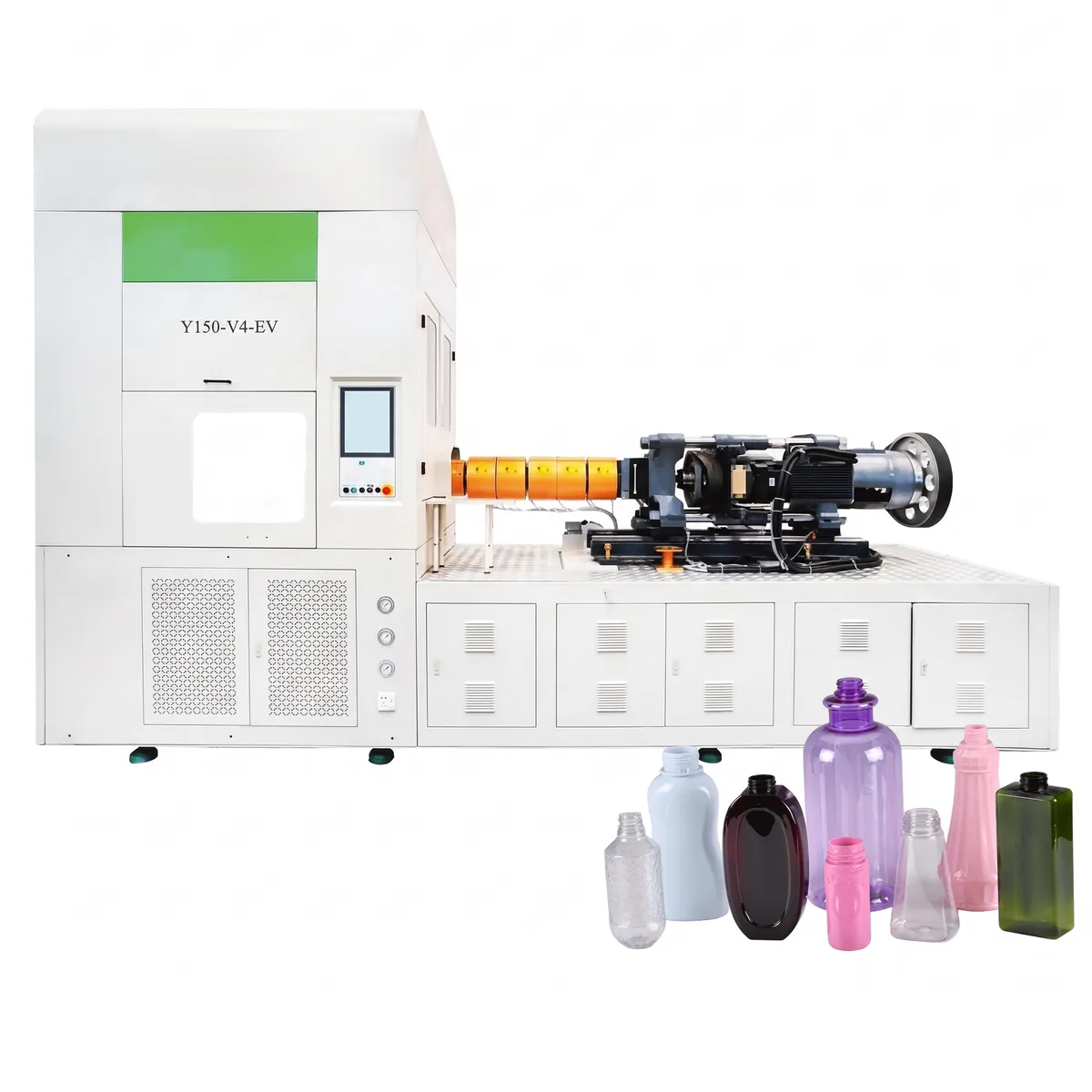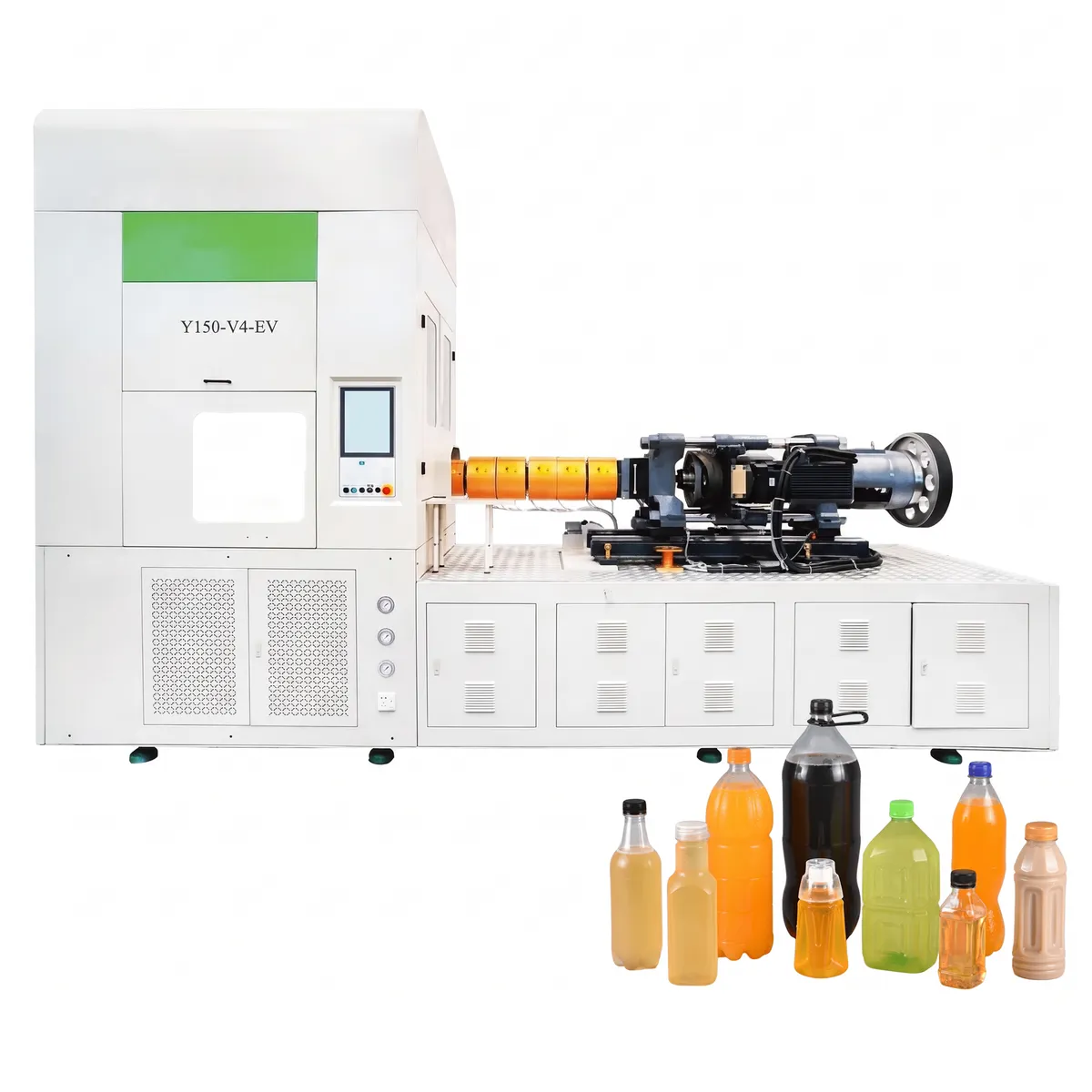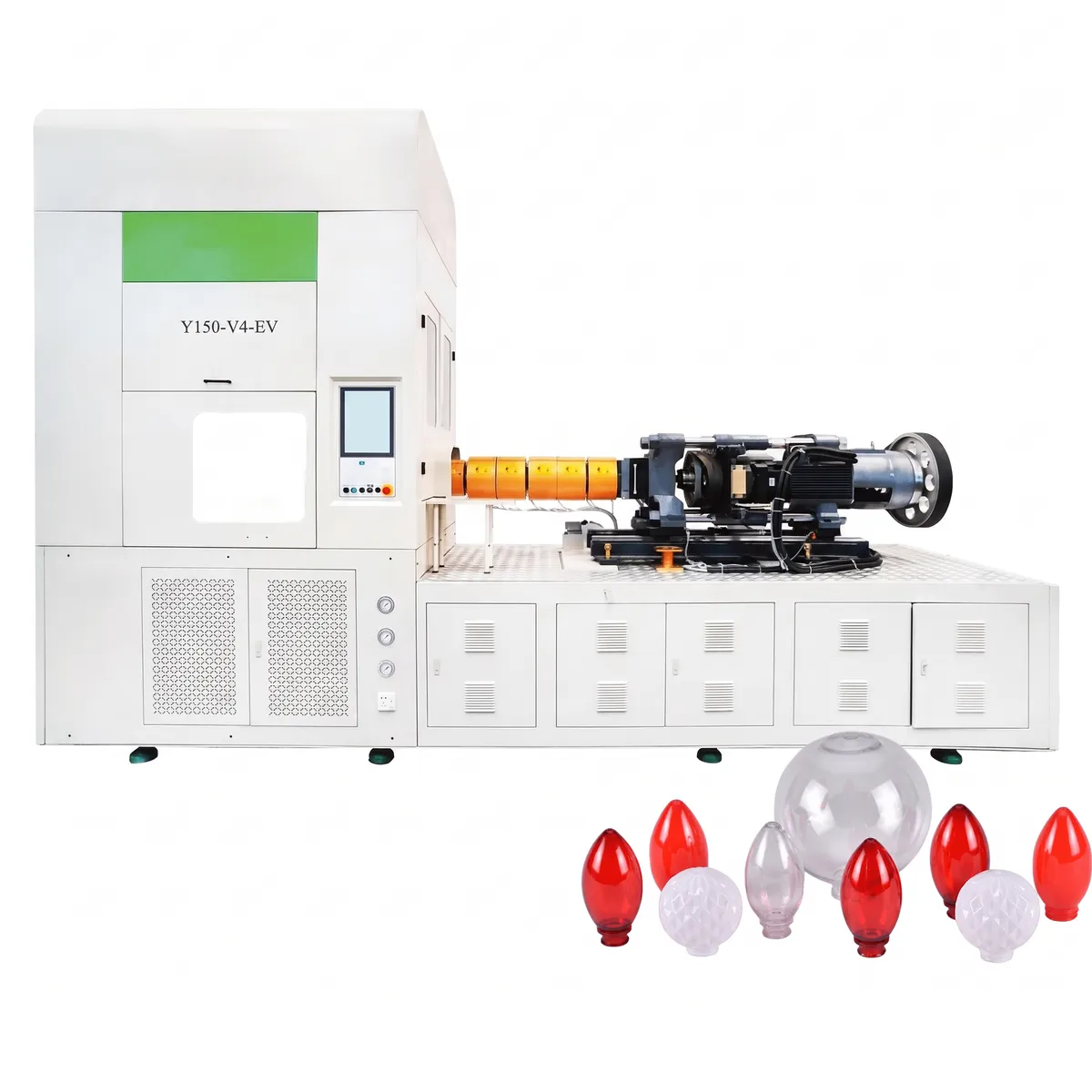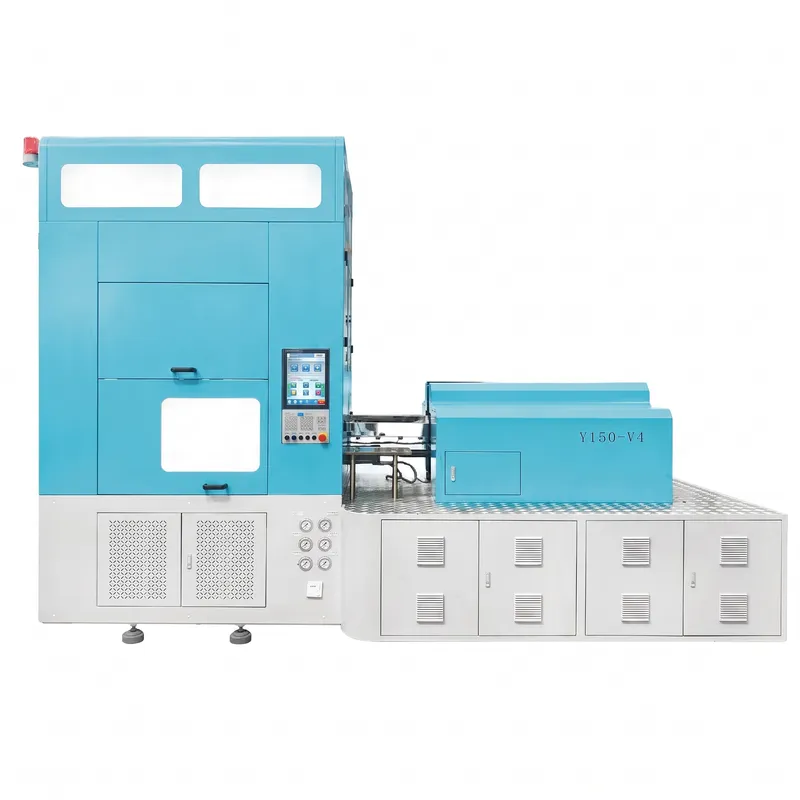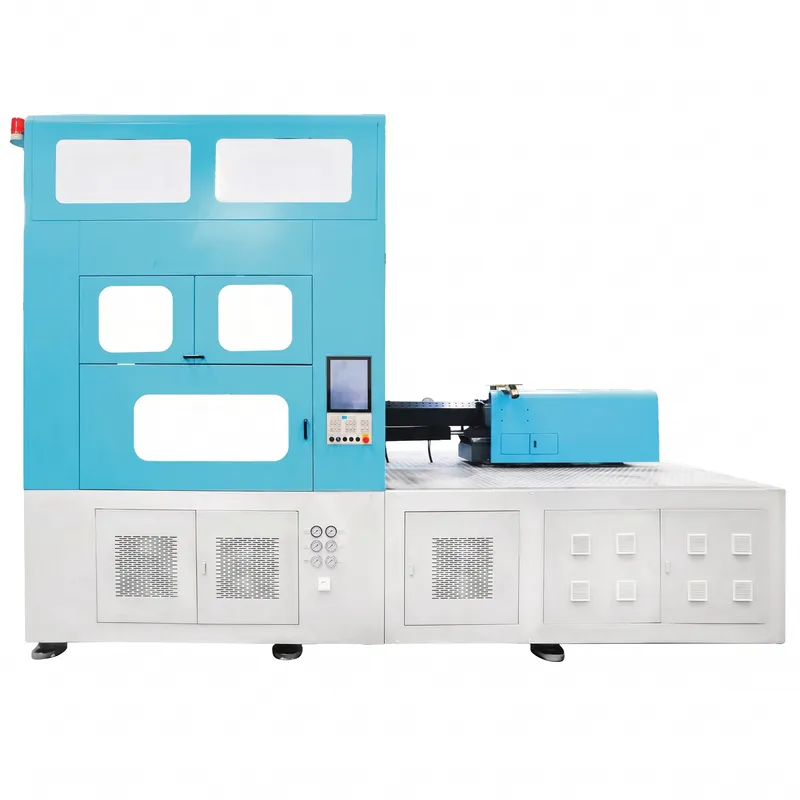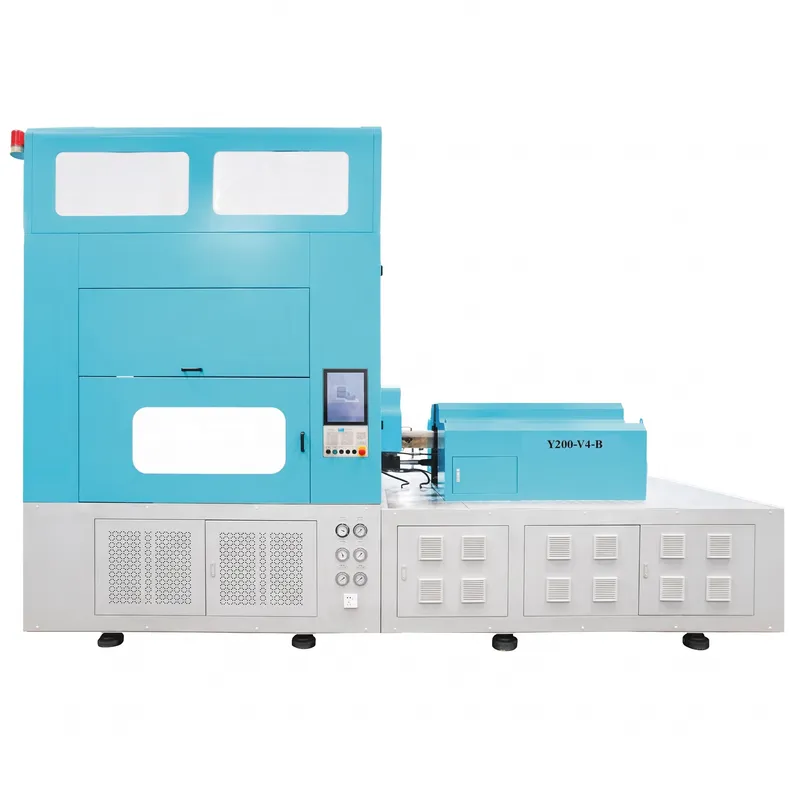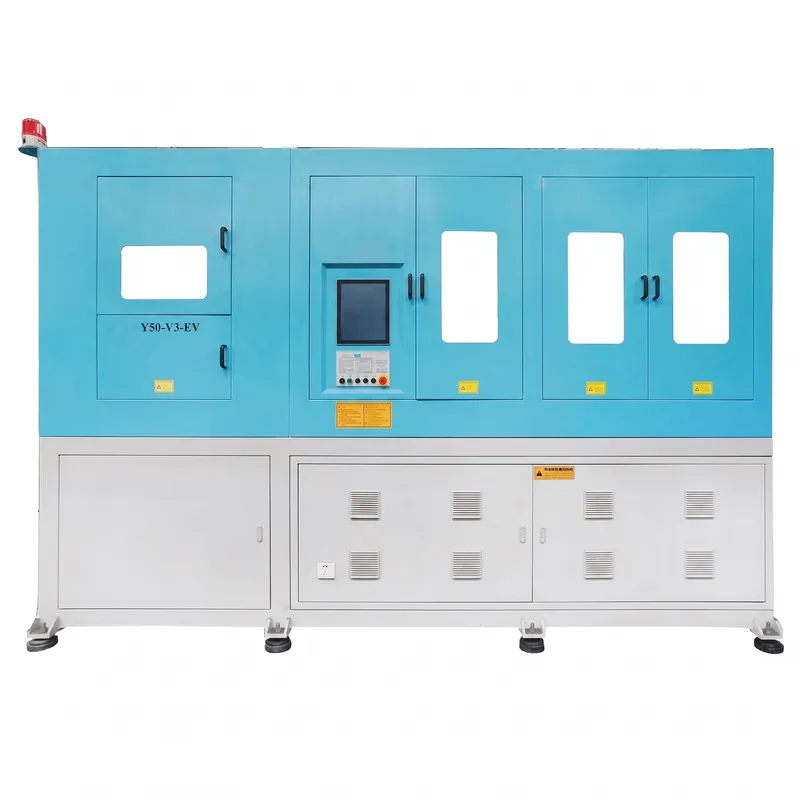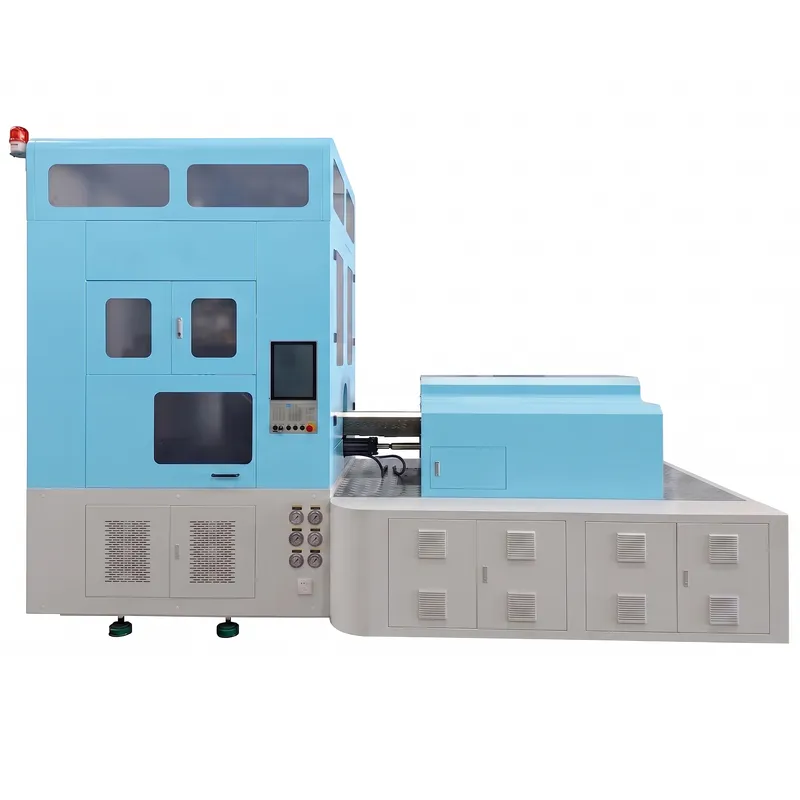
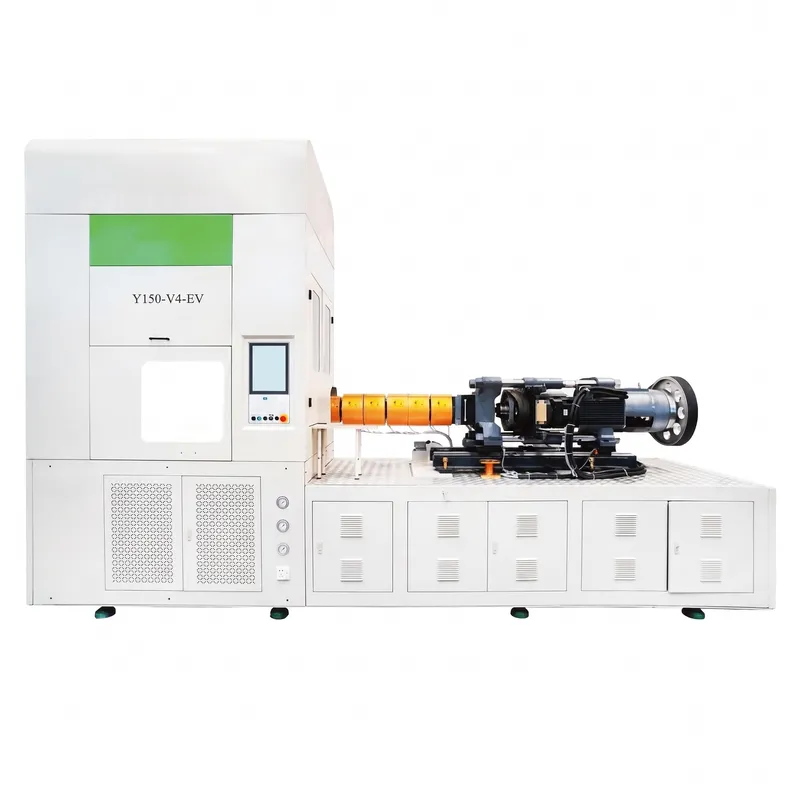
Y150-V4-EV 一步式注塑拉伸吹塑机(4工位)
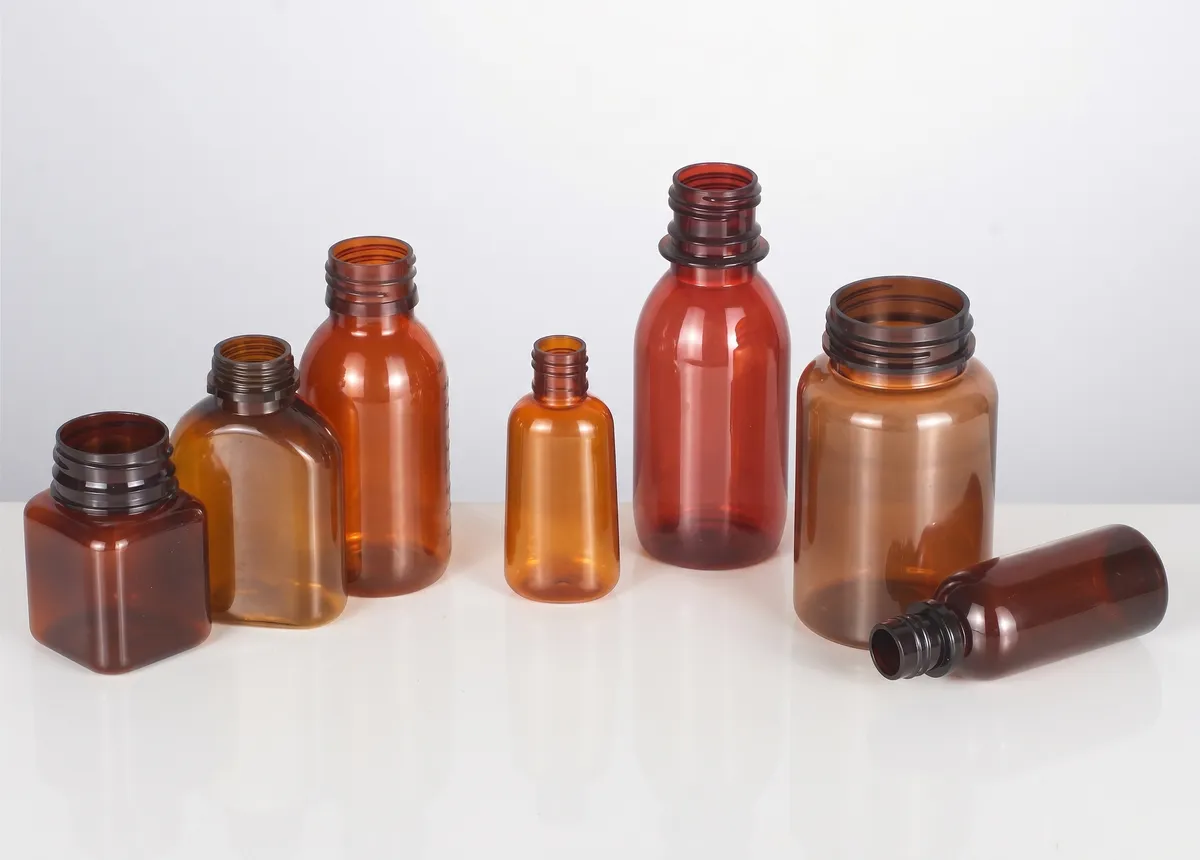
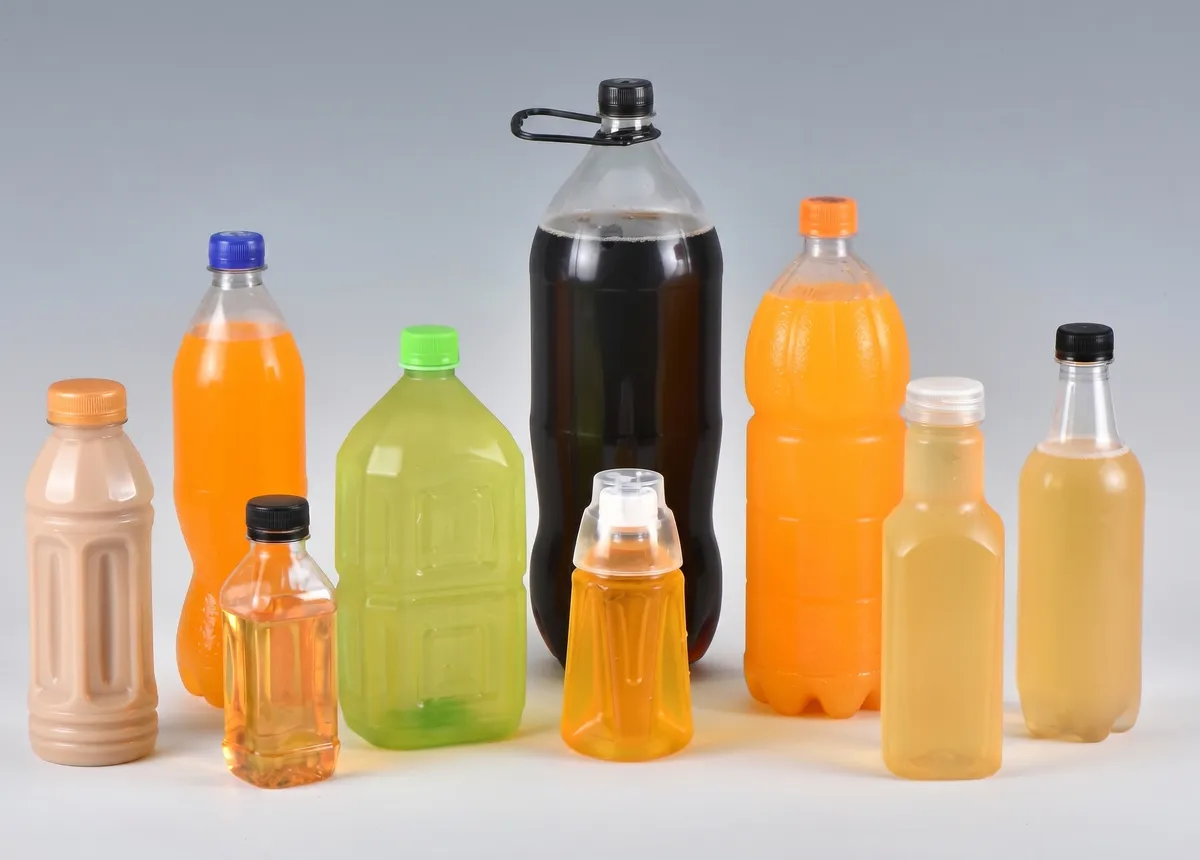
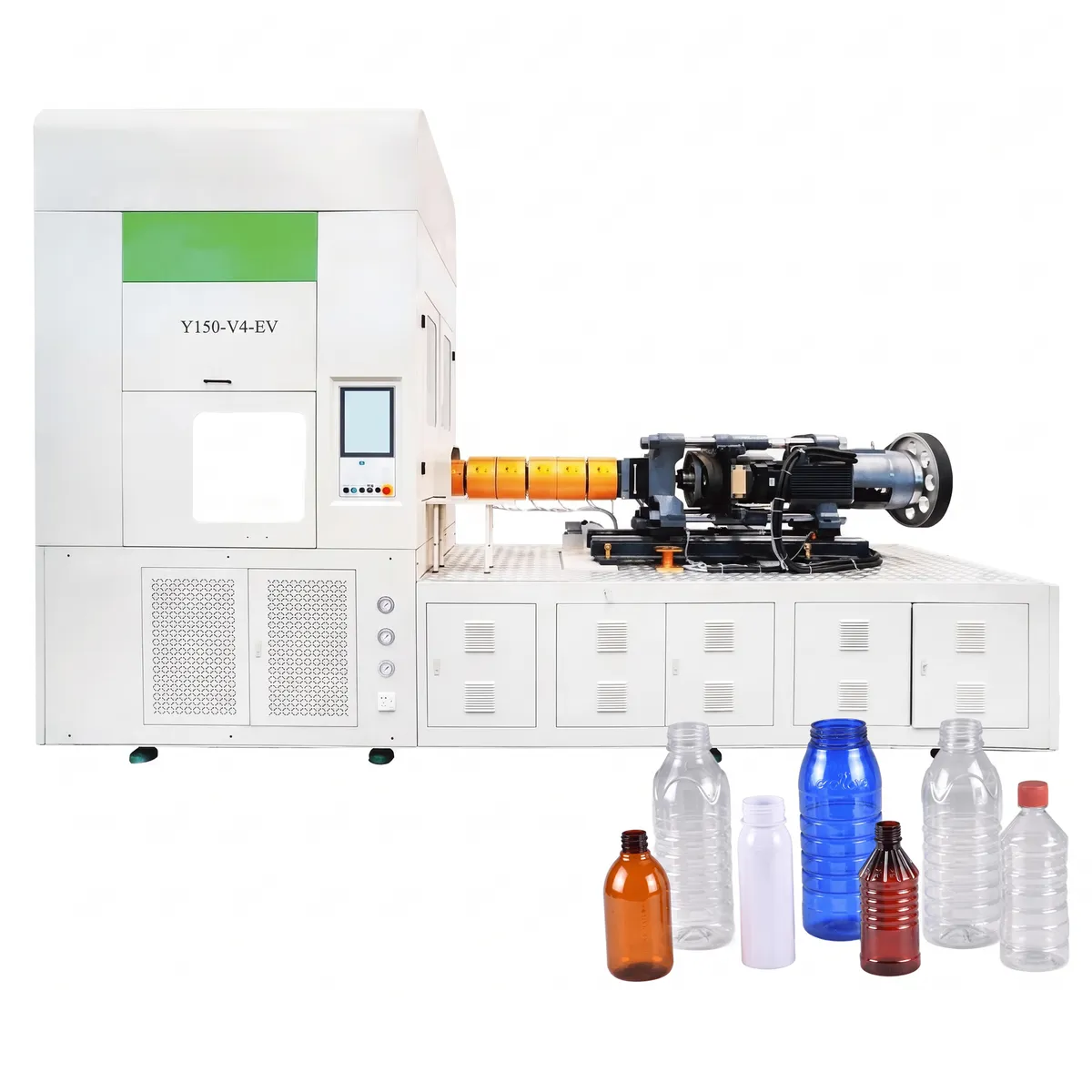
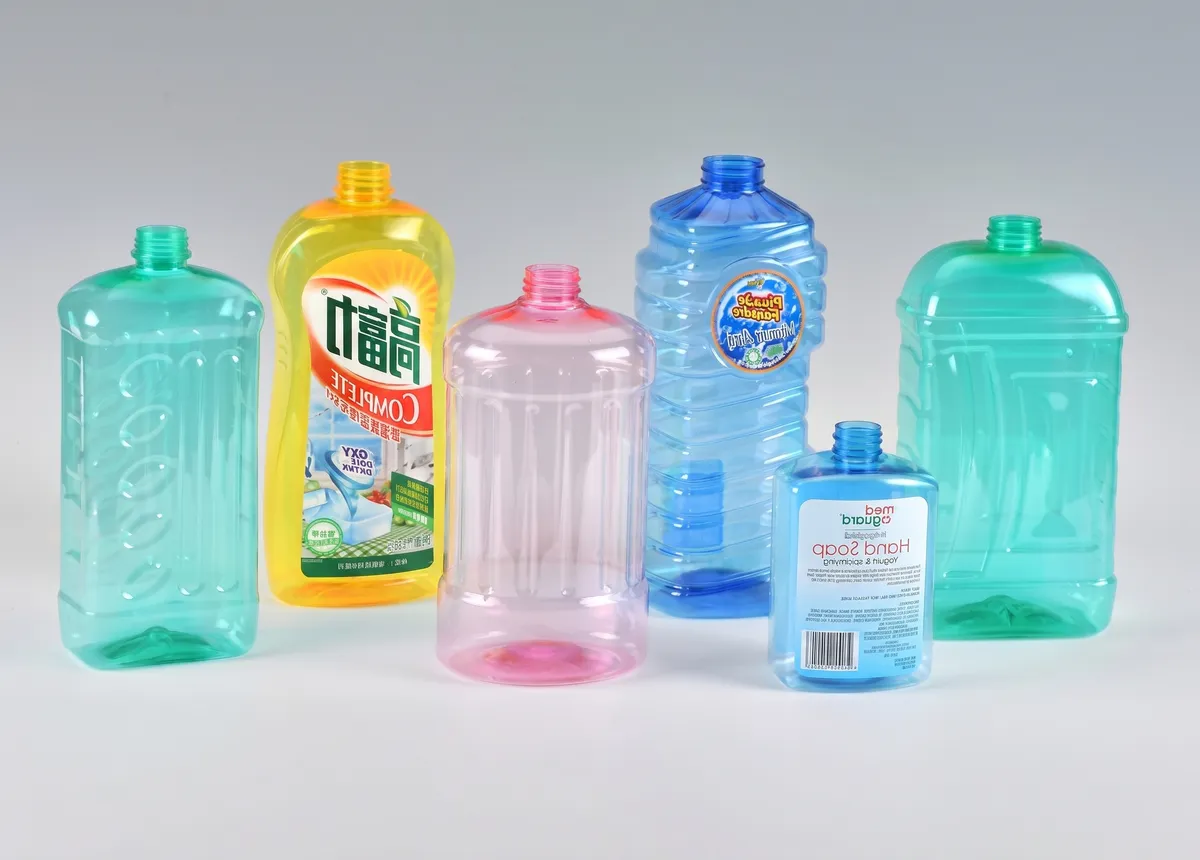
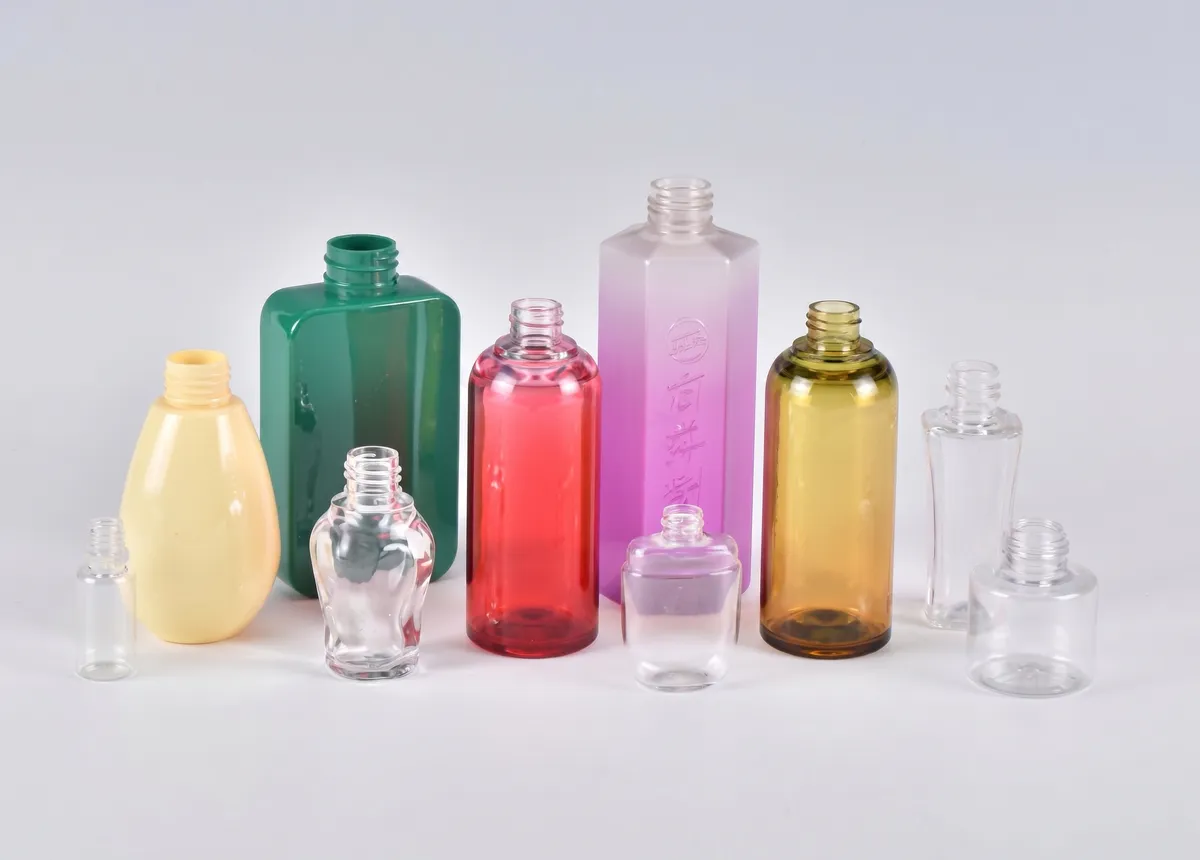
Our Y150-V4-EV One Step Injection Stretch Blow Molding Machine is a highly efficient plastic container molding system widely used in the production of high-precision, high-demand hollow plastic products, including baby bottles, water bottles, medicine bottles, craft and special-shaped bottles, and cosmetic bottles made from PET, PETG, PP, PC, Tritan, PS, ABS, or PLA.
Y150-V4-EV One Step Injection Stretch Blow Molding Machine
Our Y150-V4-EV One Step Injection Stretch Blow Molding Machine is a highly efficient plastic container molding system widely used in the production of high-precision, high-demand hollow plastic products, including baby bottles, water bottles, medicine bottles, craft and special-shaped bottles, and cosmetic bottles made from PET, PETG, PP, PC, Tritan, PS, ABS, or PLA. As a leading injection stretch blow molding machine manufacturer, CMN Transmission has engineered this full electric ISBM machine to complete all three process steps, namely injection, stretching, and blow moulding, continuously within a single piece of equipment, eliminating intermediate handling steps and dramatically improving both production efficiency and product consistency.
The Y150-V4-EV is the flagship fully electric injection stretch blow moulding machine in CMN's 4-station product line. Powered by 10 sets of Inovance/WEICHI servo motor control systems with a combined motor power of 102.8 KW, it replaces all hydraulic and pneumatic components with precision servo drives, making it GMP-compliant and suitable for oil-free, contamination-free environments in pharmaceutical, food, and high-end cosmetic packaging. With direct compatibility with Japanese ASB-12M molds, customers can adopt this advanced Chinese-made single stage injection stretch blow molding machine without redesigning their existing tooling, achieving a cost-effective upgrade from legacy imported equipment. Whether you need a customized injection stretch blow molding machine for a niche bottle geometry or a proven high-volume PET injection stretch blow molding machine for beverage lines, the Y150-V4-EV delivers measurable performance advantages.

可更换的品牌和型号
| 标准型 | Y150-V4 | Y200-V4 | Y250-V4 |
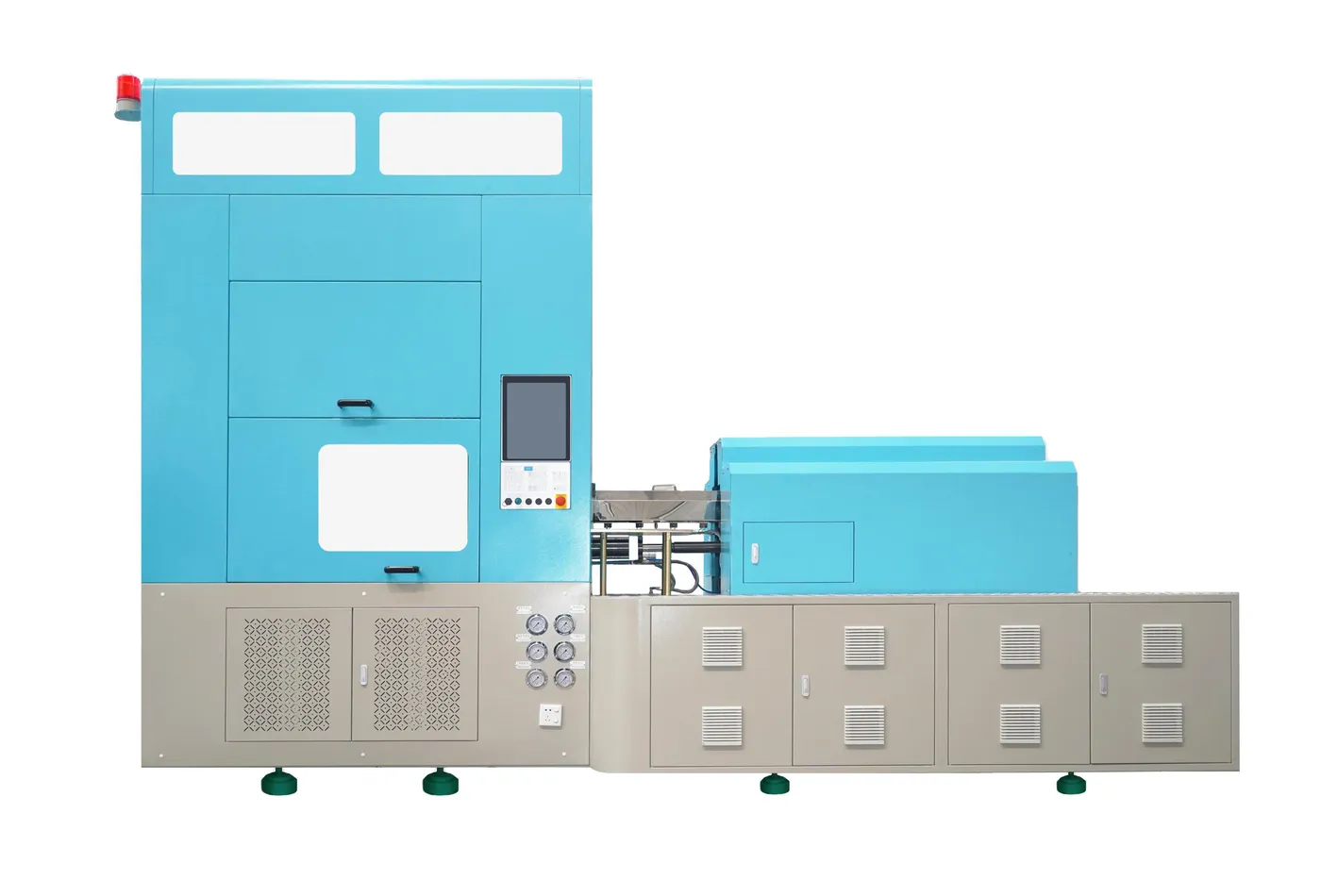
![]() | 与日本ASB-12M兼容 | 与日本Aoki 250兼容 | 与日本ASB-70DPH兼容 |
| Y150-V4-B | Y500-V3 | - | |
| 与日本Aoki 100兼容 | 与日本Aoki 500兼容 | - | |
| 液压夹紧,液压螺杆注射。 | |||
| 伺服模型 | YS150-V4 | YS200-V4 | YS250-V4 |
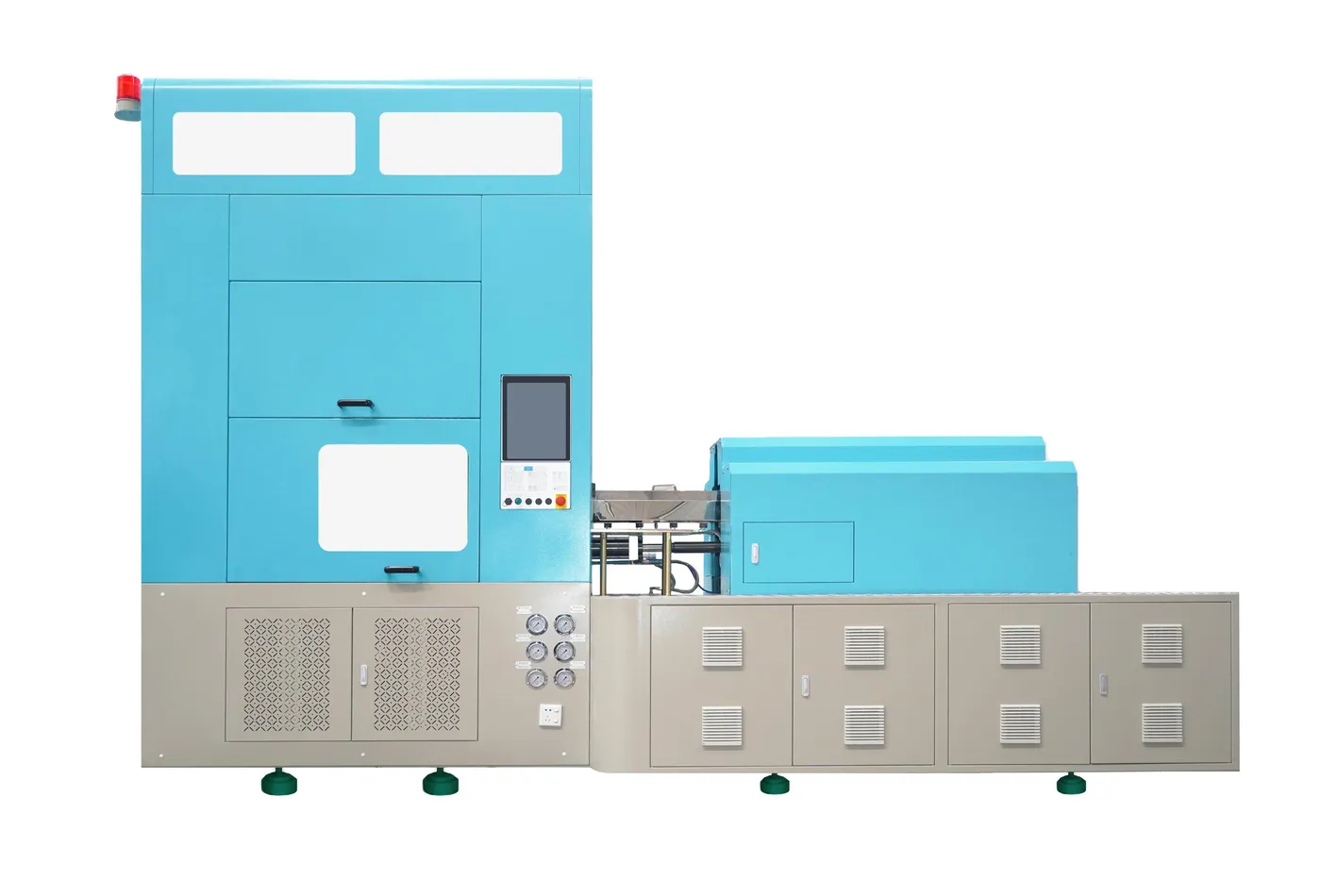
![]() | 伺服夹紧、伺服螺杆注射,高精度、低能耗、长期稳定性 | ||
| 全电动车型 | Y150-V4-EV | Y200-V4-EV | Y250-V4-EV |
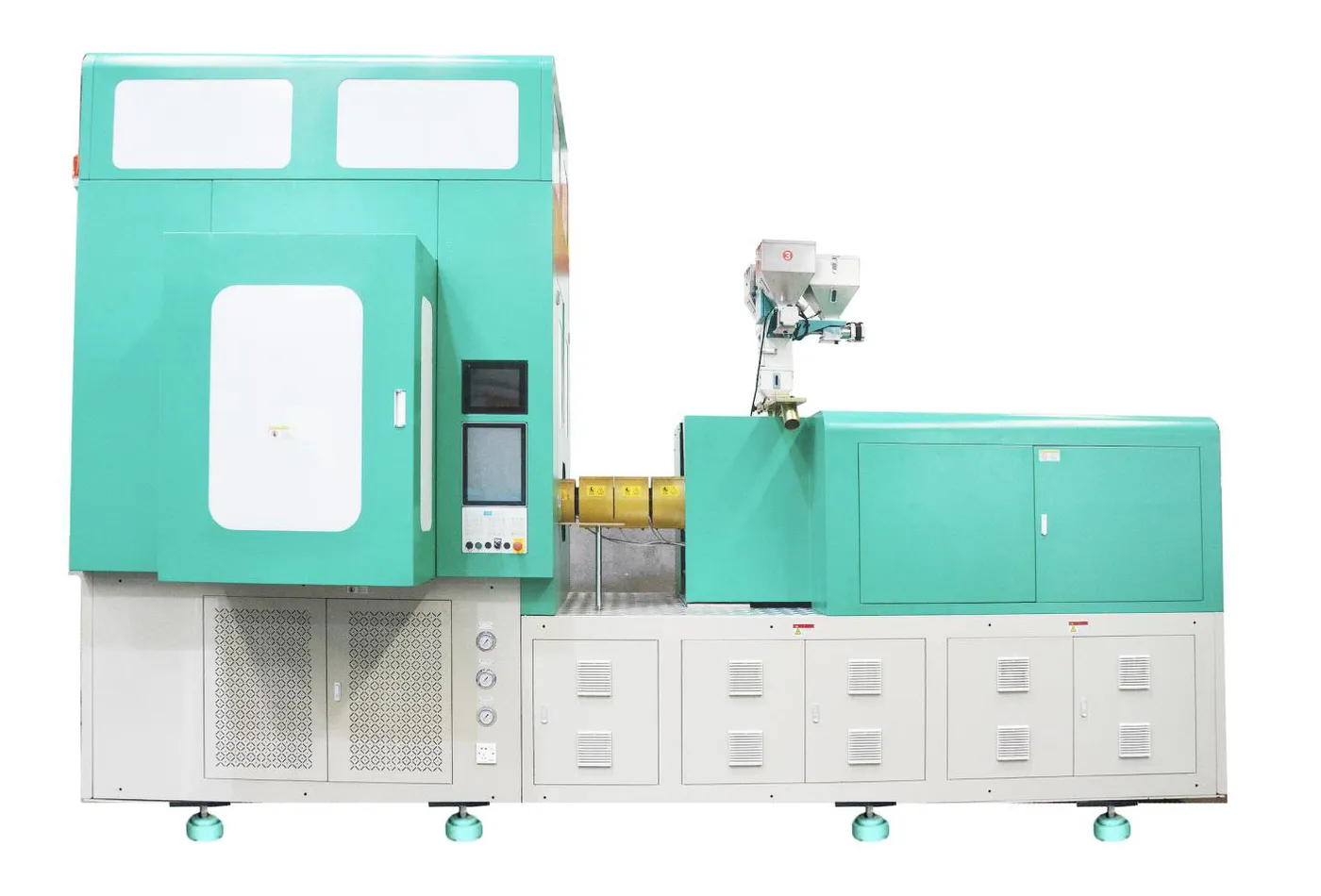
![]() | 纯电动驱动,避免油污污染。 | ||
我们的ISBM机器优势
1. 质量更佳。日本吹塑机生产的塑料瓶都有分模线,即两个模具中间凸起的塑料部分,会留下痕迹。而我们的模具精度极高,完全看不到分模线。
2. 我们的生产速度很快,拥有大量的螺杆解决方案和高速运转能力。日本一次只能生产四个塑料瓶,而我们可以一次生产六个。
3. 节约能源。我们的机器比日本、欧洲和美国的机器节能15%至25%。
4. 已广泛采用多种电气控制技术来替代液压和气动元件。例如,日本底部切割机构中使用的气动元件已被伺服电机取代,并且伺服电机的转速提高了一倍。在制药行业和其他领域,无需任何液压系统即可使用全伺服电机,从而确保符合GMP标准,并在无油无污染的环境中运行。
产品规格
| 物品 | 单元 | 规格 | |||||||
| 姓名 | One-step Injection Stretch Blow Molding Machine(4-station) | ||||||||
| 模型 | Y150-V4-EV (Compatible with Japanese ASB-12M model) | ||||||||
| 制造商 | CMN传输 | ||||||||
| 材料 | PET/PETG | ||||||||
| 螺纹直径 | 毫米 | 40 | 50 | 55 | / | ||||
| 理论注射体积 | 立方厘米 | 188 | 392 | 475 | / | ||||
| 螺杆转速(RPM) | 转/分钟 | 350 | 350 | 350 | / | ||||
| 注射夹紧力 | 克努尔特人 | 150 | |||||||
| 吹气夹紧力 | 克努尔特人 | 200 | |||||||
| 电机功率 | 柯威 | 102.8 | |||||||
| 加热功率 | 柯威 | 10 | |||||||
| 吹气压力 | 百万 | 2.0-3.5 | |||||||
| 冷却水压力 | 百万 | 0.4-0.6 | |||||||
| 机油冷却器水压 | 百万 | 0.3-0.4 | |||||||
| 机油冷却器水温 | ℃ | 20-25 | |||||||
| 电压 | V | 370-400 | |||||||
| (长*宽*高)尺寸(长*宽*高) | 毫米 | 5200x1800x3300 | |||||||
| 重量 | T | 7 | |||||||
| 产品尺寸 | |||||||||
| 产品数量 | 件 | 1 | 2 | 3 | 4 | 5 | 6 | 7 | 8 |
| Bottle Diameter (BD) | 毫米 | 118 | 80 | 66 | 56 | 54 | 45 | 28 | 26 |
| Bottle Height (H) | 毫米 | 210 | 150 | 100 | |||||
| Neck Diameter (E) | 毫米 | 83 | 62 | 48 | 38 | 32 | 25 | 17 | 15 |
| Max. Bottle Volume (ml) | 机器学习 | 2500 | 1500 | 900 | 400 | 250 | 100 | 30 | 20 |
| Max. Bottle Weight (W) | G | 130 | 65 | 43 | 32 | 26 | 22 | 18 | 16 |
机器参数
| 兼容型号: | 与日本ASB-12M型号兼容 |
| 螺丝直径: | 50毫米(可选) |
| 理论注射容量: | 392g |
| 注射夹紧力: | 150千牛 |
| 上模行程: | 250毫米 |
| 下模行程: | 205毫米 |
| 温度。调节核心划水: | 250毫米 |
| 温度调节枪管行程: | 230毫米 |
| 击球动作: | 170毫米 |
| 吹气夹紧力: | 200KN(单侧) |
| 吹气核心冲刺: | 250毫米 |
| 吹塑行程: | 75+75毫米 |
| 尺寸(长×宽×高): | 5.2*1.8*3.3m |
| 重量: | 7T |
技术标准
| 伺服控制系统: | Using 10 sets of servo motor control systems. |
| 伺服电机功率: | Inovance/ WEICHI servo motor power: 102.8KW. |
| 计算机控制系统: | 使用 Inovance/MiRLE PLC。 |
| 转盘驱动: | 转盘配备日本安川伺服电机或带台湾津天减速器的威驰伺服电机。 |
| 吹塑成型结构: | The blow molding structure adopts a dual servo motor mold clamping system with a high-pressure compensation function. |
| 高压阀: | Using the American Parker high- pressure valve. |
| 气缸: | 使用艾塔克气缸。 |
| 温度控制: | Using integrated control box to control temperature, which is highly accurate, stable and easy to operate. |
| Screw Heated: | The screw is heated by a nano-far- infrared energy-saving heating ring(10KW). |
| Lead Screw | Lead screw: NSK Japan; |
| 机器总功率: | Total power of the machine:112.8KW. |
Advantages of the Y150-V4-EV Injection Stretch Blow Molding Machine
1. 节能
The one step injection stretch blow molding machine retains the heat of the preform from the injection stage directly through to blowing, eliminating the need for secondary reheating. This single thermal loop reduces energy consumption by 15% to 25% compared to machines from Japan, Europe, and the United States, and up to 40% compared to two-stage processes. For high-volume factories running 24/7 shifts, the electricity cost savings translate directly into a measurable improvement in operating margin over time.
2. 出色的表现
The axial stretch rod in this injection stretch blow moulding machine aligns polymer molecules in two directions simultaneously, creating biaxially oriented plastic structures. This orientation significantly improves the compression resistance, barrier properties, and optical transparency of the finished bottle. The result is a container with superior drop-impact resistance and better gas barrier performance, qualities that are particularly critical in pharmaceutical, beverage, and edible oil packaging where product integrity is non-negotiable.
3. 高精度和尺寸稳定性
Full-process servo automation controls every axis of movement with repeatability that manual or hydraulic systems cannot match. Human error is minimized, making the Y150-V4-EV ideal for mass production of high-tolerance bottles where dimensional deviation must be held within fractions of a millimeter. CMN's proprietary mold engineering achieves parting-line precision so accurate that the seam mark is virtually invisible to the naked eye, a quality advantage over comparable Japanese-made machines that leave a visible protrusion along the parting line.
4. 高材料利用率
Because the single-stage injection stretch blow molding machine processes raw resin directly from pellets into a finished bottle in one continuous pass, there is no intermediate preform handling stage where waste or rejects can accumulate. Material yield rates are significantly higher than in two-stage ISBM processes. Reduced scrap not only lowers raw material cost but also reduces the environmental footprint of the production line, supporting sustainability goals and lowering the total cost per unit produced at high volumes.
5. 低成本、占地面积小、稳定性高
The Y150-V4-EV occupies just 5.2 x 1.8 x 3.3 m of floor space, a compact envelope that fits comfortably in most factory layouts without costly facility modifications. Labor requirements are minimal thanks to automated product take-out and integrated PLC controls. The fully electric drive architecture eliminates hydraulic oil circuits, dramatically reducing maintenance costs, unplanned downtime, and the risk of oil contamination in sensitive production environments such as GMP pharmaceutical cleanrooms.
6. Compatible with AOKI Molds
The Y150-V4-EV is fully certified as a direct replacement for Japanese Aoki 250 model injection stretch blow molding machines. Customers who have invested in AOKI tooling can migrate to CMN's platform without redesigning molds or retooling production lines. This cross-compatibility dramatically reduces the cost of switching to a more energy-efficient, higher-output Chinese-made one step ISBM machine, making the ROI calculation straightforward for procurement teams.

Working Principle of One-step ISBM Machine
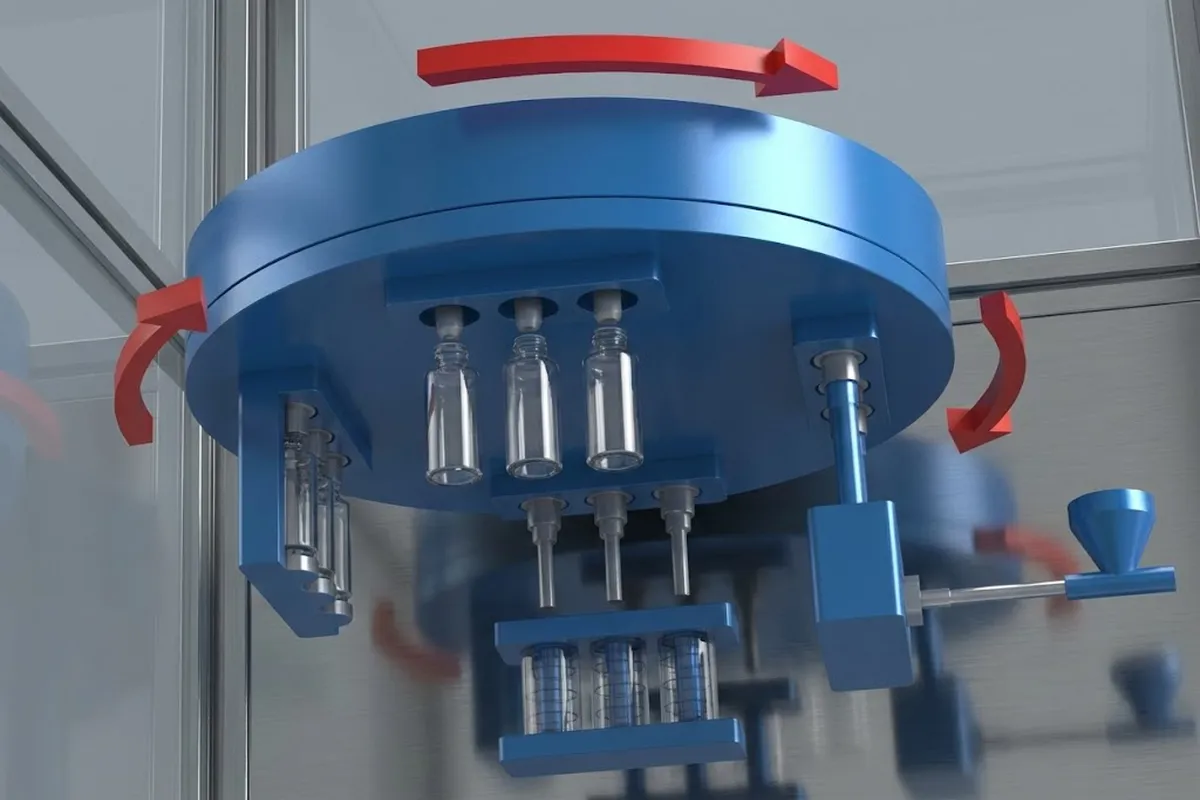
1. Injection Process
Molten PET or PETG resin is injected into the preform mold under precisely controlled pressure and temperature. Injection speed, melt pressure, and mold cavity temperature are all managed by the Inovance PLC to ensure complete, uniform mold filling. This stage determines the wall thickness distribution and neck geometry of the preform, which directly influences the quality of the final bottle.
2. Stretching Process
After injection, the preform undergoes controlled initial cooling and transfers to the stretching station while still retaining thermal energy from molding. The stretch rod extends the preform longitudinally at a precisely controlled speed and temperature. This axial elongation prepares the molecular structure of the polymer for biaxial orientation, which is the fundamental mechanism behind the superior mechanical properties of the finished ISBM bottle.
3. Blowing Process
Compressed air at 2.0 to 3.5 MPa is introduced through the blow pin while the pre-stretched preform is enclosed in the blow mold, forcing the softened polymer against the mold cavity walls. The Parker high-pressure valve ensures precise, consistent air delivery. Blow pressure and mold temperature are monitored and regulated in real time to ensure the finished bottle precisely replicates the mold geometry, critical for meeting tight dimensional tolerances in pharmaceutical and cosmetic packaging.
4. Molding and Cooling
Following blow expansion, chilled water circulates through the mold cooling channels to rapidly extract heat from the bottle body, solidifying the polymer in its final shape. Cooling uniformity, duration, and mold temperature are carefully controlled to prevent warpage, shrinkage, and surface defects. Once the bottle has achieved dimensional stability, the automated take-out system removes it from the mold and places it on the conveyor, completing one full cycle of the injection blow molding machine.

Application Areas
1. 药瓶
GMP compliance is mandatory in pharmaceutical packaging. The fully electric Y150-V4-EV eliminates hydraulic oil circuits entirely, ensuring an oil-free, contamination-free production environment that meets FDA and EU GMP standards. It produces tablet bottles, syrup containers, and infusion bottles in PET and PETG with consistent neck dimensions that interface precisely with child-resistant caps and tamper-evident closures.
2. Beverage Bottles
Water, juice, and sports drink brands rely on PET injection stretch blow molding machines to produce lightweight yet pressure-resistant bottles. The Y150-V4-EV can produce up to 6 bottles per cycle, compared to 4 per cycle on comparable Japanese models, delivering a significant throughput advantage for high-volume beverage bottling lines. Superior CO2 barrier properties from biaxial orientation extend carbonated beverage shelf life.
3. 化学品瓶
The Y150-V4-EV produces chemical storage bottles from PET and PETG resins that offer excellent chemical resistance and structural integrity under varying pressures. The biaxial orientation achieved by the stretch blow process enhances the container's resistance to deformation, making it suitable for solvent, lubricant, and industrial fluid packaging that demands long shelf life and zero leakage.
4. Cosmetic Bottles
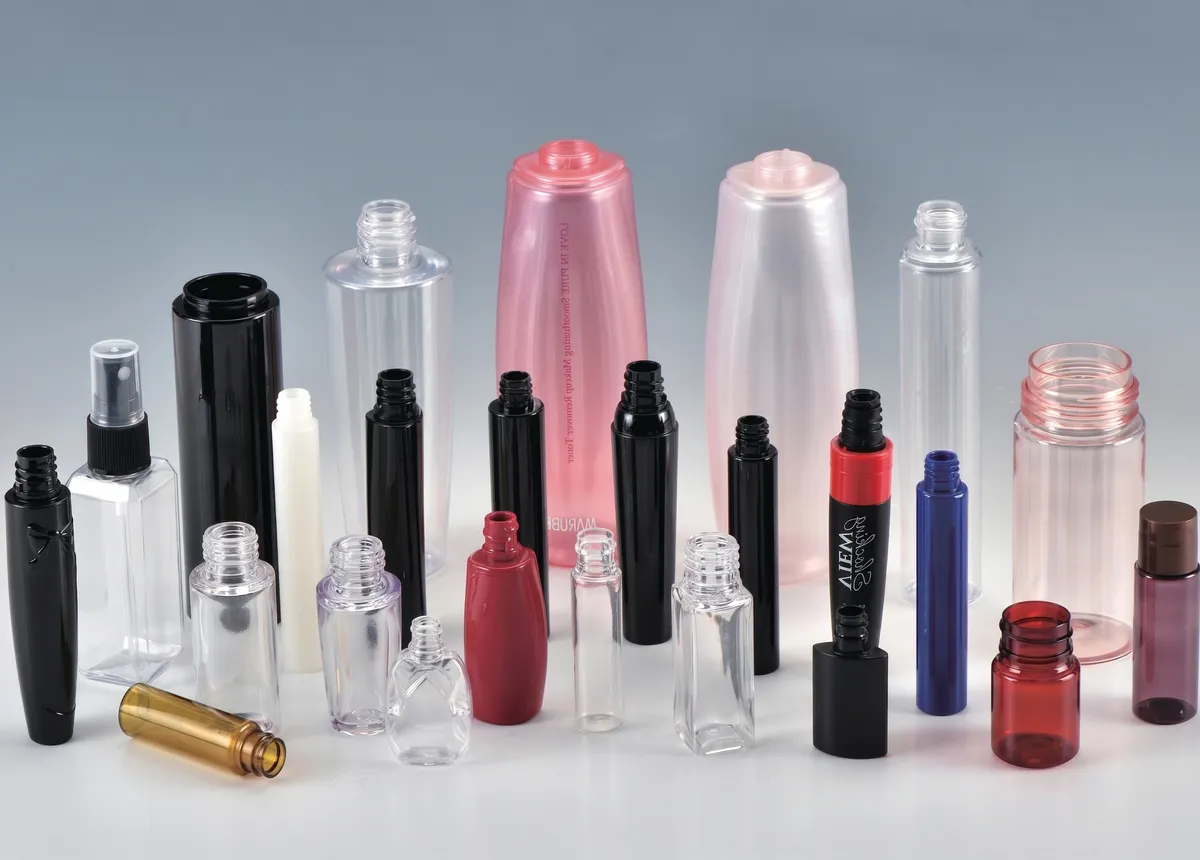
High-end cosmetic brands demand bottles with flawless surface clarity, perfectly straight parting lines, and consistent dimensional tolerances. The Y150-V4-EV's near-invisible parting-line precision makes it the preferred customized injection stretch blow molding machine for serum, lotion, and cream bottles used by global beauty brands. It supports intricate bottle geometries in PET, PETG, Tritan, and PC materials.
5. 农药瓶
Agrochemical packaging requires containers that resist aggressive chemical formulations and UV exposure over extended storage periods. PET and PETG bottles produced by this IBM machine offer outstanding resistance to pesticide and herbicide concentrations. The integral neck finish produced in the injection stage ensures a precise, leak-proof interface with safety-sealed caps, reducing the risk of accidental spills throughout the supply chain.
6. Shampoo Bottles
Personal care packaging combines aesthetic requirements with functional durability. The Y150-V4-EV produces shampoo and conditioner bottles with smooth, glossy surfaces and consistent wall thickness that allows even distribution of squeeze force for the end consumer. Materials such as PETG and Tritan offer crystal clarity for on-shelf visual appeal while maintaining excellent chemical resistance against surfactants, fragrances, and colorants.
7. Infusion Bottles
Intravenous infusion bottles demand the highest standards of cleanliness, dimensional accuracy, and material purity. The Y150-V4-EV's oil-free fully electric architecture eliminates any risk of hydraulic oil contamination entering the production environment. Precise servo control ensures every bottle meets the narrow dimensional tolerances required for sterile filling lines, autoclave resistance specifications, and international pharmacopoeial standards for parenteral packaging.
8. Condiment Bottles
Soy sauce, vinegar, cooking oil, and hot sauce bottles require excellent barrier properties to prevent flavor loss and oxidation. Biaxially oriented PET bottles from this injection stretch blow moulding machine provide superior oxygen barrier performance that extends product shelf life. The machine's flexible mold change capability allows condiment manufacturers to run multiple bottle formats, including wide-mouth and narrow-neck variants, on a single platform.
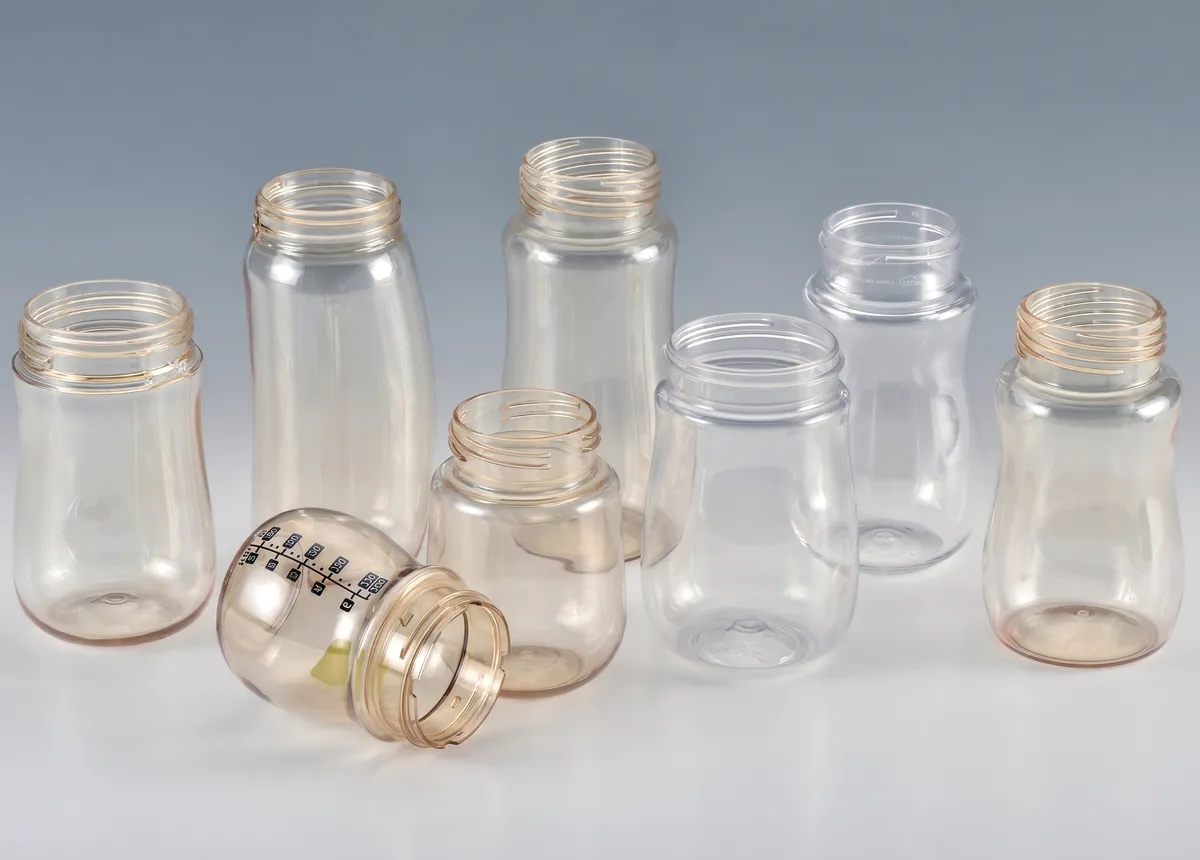
![]() | ![]() |
| 化妆品瓶 | Feeding Bottle |
![]() | ![]() |
| 药瓶 | 饮料瓶 |
Injection Stretch Blow Molding Machine Components
Clamping Unit
The injection clamping unit generates 150 KN of force using a fully servo-driven mechanism with no hydraulic cylinder required. This provides faster, more repeatable clamping cycles than hydraulic alternatives. The dual servo motor mold clamping system on the blow station delivers 200 KN (single side) with a high-pressure compensation function that maintains consistent clamping force even as the mold wears over time, ensuring bottle quality remains stable across millions of production cycles.
Injection Unit
The injection unit features a 50 mm screw (optional configurations available at 40 mm and 55 mm) driven by an Inovance or WEICHI servo motor delivering up to 392 g theoretical injection volume per cycle. The screw is heated by a nano far-infrared energy-saving heating ring rated at 10 KW. Rotational speed is fixed at 350 r/min across all screw diameter options, ensuring consistent plasticization quality regardless of resin batch variations.
Injection Mold (Preform Mold)
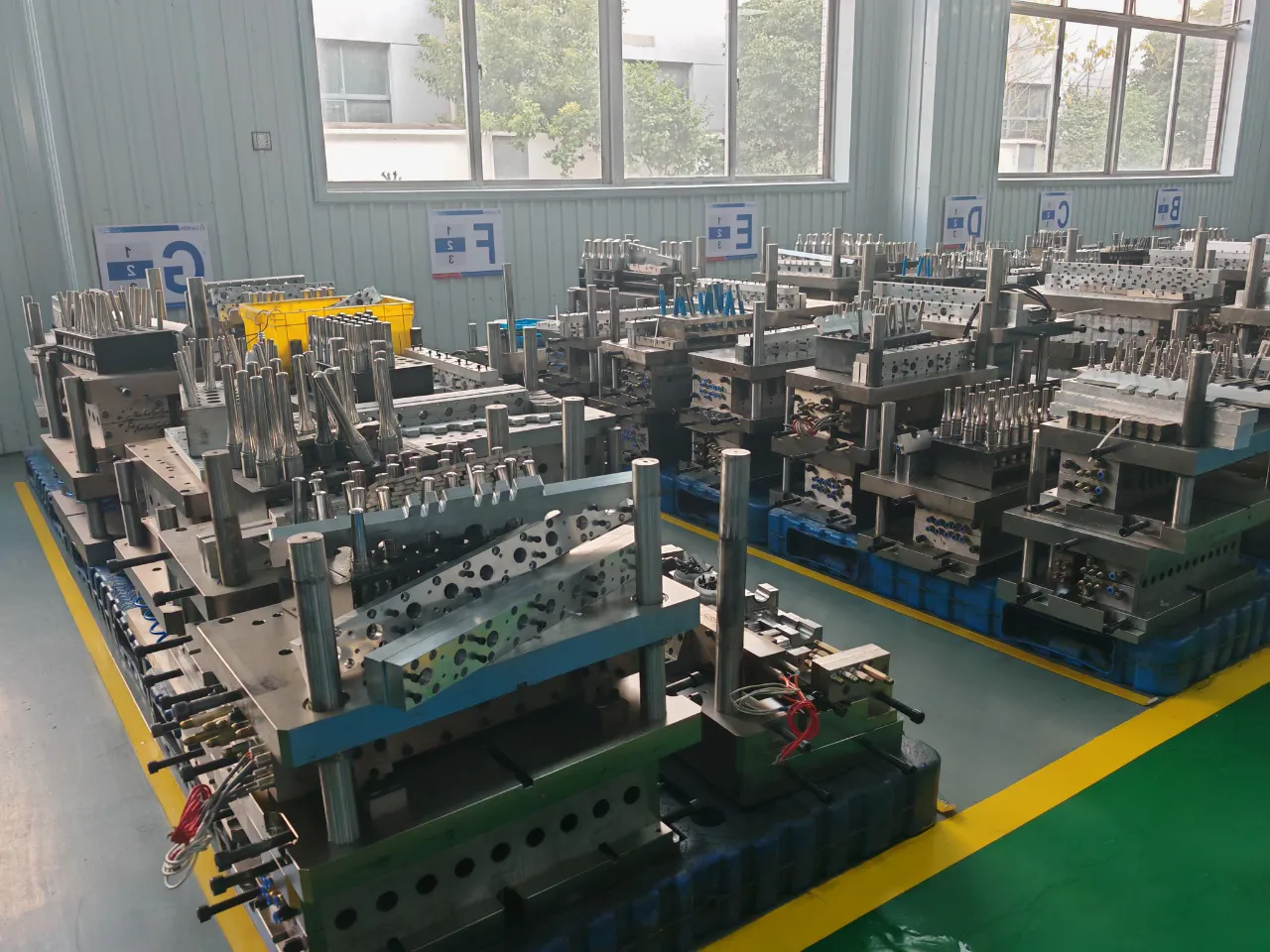
The preform mold is engineered to ASB-12M tooling standards, enabling full interchangeability with existing ASB-format tooling. CMN's proprietary mold manufacturing achieves dimensional tolerances that produce a parting line so fine it is invisible to the naked eye, eliminating the visible seam mark commonly found on bottles made by Japanese-branded machines. Upper mold stroke is 250 mm and lower mold stroke is 205 mm, providing versatility for a wide range of bottle geometries from 20 ml to 2500 ml.
Blow Pin and Stretch Rod
The blow pin and stretch rod assembly are the heart of the ISBM process. The blow core stroke of 250 mm accommodates a wide range of bottle heights. Compressed air delivery through the Parker high-pressure valve is rated at 2.0 to 3.5 MPa, ensuring sufficient pressure for full mold contact even at high cavity filling speeds. The stretch rod speed is controlled by a dedicated servo motor, allowing independent adjustment of stretch ratio for different resin grades and bottle designs.
冷却系统
The integrated cooling system requires a cooling water supply at 0.4 to 0.6 MPa and an oil cooler water supply at 0.3 to 0.4 MPa maintained between 20°C and 25°C. Dedicated cooling channels in the blow mold walls extract heat from the bottle at a precisely controlled rate, preventing residual thermal stress that could lead to warpage or post-mold dimensional change. The temperature regulating core stroke of 250 mm and barrel stroke of 230 mm provide fine-tuned thermal management of the preform before blowing.
Ejection (Take-out) System
The servo-driven take-out system with a 170 mm stroke removes finished bottles from the blow mold at the end of each cycle without manual intervention. This replaces the pneumatic take-out mechanism used on Japanese machine designs, where servo motor control doubles the operating speed of the take-out action. Faster take-out reduces total cycle time, contributing to the Y150-V4-EV's ability to produce up to 6 bottles per cycle versus 4 on comparable Japanese models.
Servo Control System
Ten independent servo motor control systems govern every movement axis of the machine, from turntable rotation and mold opening to screw plasticization and stretch rod actuation. The Inovance or MiRLE PLC provides the central control intelligence, with a Yaskawa or WEICHI servo motor paired with a Taiwan TSUNTIEN reducer driving the turntable. This all-electric architecture provides millisecond-level response times, enabling precise synchronization across all machine axes and supporting the consistent, high-speed production that B2B customers require.

Injection Stretch Blow Molding vs. Extrusion Blow Molding
挤出吹塑成型(EBM)
Extrusion blow molding is among the most common types of blow molding. In this process, a molten plastic tube, known as a parison, is extruded vertically downward. The mold then clamps around the parison and compressed air inflates it against the mold walls. This method works well for producing large, simple hollow parts such as bottles and containers. Manufacturers often choose extrusion blow molding for its lower tooling cost and high production speed. However, this process generates significantly more scrap material due to the pinch-off at the bottom of the parison, and it offers less precise control over wall thickness distribution compared to injection-based methods.
注塑拉伸吹塑成型(ISBM)
Injection stretch blow molding, also referred to as stretch blow molding, enhances the injection blow molding process by adding an axial stretch step between preform formation and air inflation. After the preform is injection-molded, a stretch rod elongates it lengthwise before compressed air expands it radially. This biaxial stretching aligns polymer chains in two directions, resulting in containers with significantly enhanced mechanical strength, optical clarity, and gas barrier properties. The injection stretch blow moulding machine is the preferred choice for manufacturing high-quality beverage, food, pharmaceutical, and cosmetic packaging.
Comparison Table: Blow Molding Process Types
| 过程 | Defining Characteristics | 操作原则 | 典型应用 |
|---|---|---|---|
| 挤出吹塑 | Extrudes molten tube (parison), clamped in mold and inflated | Parison extruded, mold clamps and seals, air inflates against walls | Large simple parts (fuel tanks, detergent bottles); lower tooling cost; more scrap |
| 注塑吹塑成型(IBM) | Uses injection-molded preform transferred to blow mold for inflation | Preform molded with controlled wall thickness, transferred and inflated | Small high-precision containers (pharmaceutical vials); no bottom weld; higher capital cost |
| 注塑拉伸吹塑成型(ISBM) | Adds axial stretching of preform before blowing for biaxial orientation | Preform stretched axially by rod, then inflated, aligning polymer chains in two directions | PET beverage bottles, cosmetic containers, pharmaceutical packaging; superior clarity and strength |
Production Speed Comparison
Injection blow molding achieves the fastest cycle times, particularly with multi-cavity molds where cycle times around 25 seconds per cycle are achievable. The one step 注塑拉伸吹塑机 adds a stretch step, slightly extending the cycle, but the additional process steps produce a superior bottle that commands a premium price. Extrusion blow molding is generally slower due to continuous extrusion and parison cooling requirements. Factors including screw speed, mold cavity count, and machine type all influence throughput across all three methods.
壁厚控制
Injection-based processes (both IBM and ISBM) provide superior wall thickness control because the preform geometry is defined by the injection mold rather than by parison sag and pinch-off mechanics. This is why ISBM machine suppliers dominate pharmaceutical packaging, where wall thickness consistency is critical for dosage accuracy and regulatory compliance. Extrusion blow molding struggles to achieve the same level of wall uniformity, particularly in small containers.
Design Flexibility
Extrusion blow molding offers the widest range of container shapes, including irregular and non-round cross-sections, due to its parison-and-clamp mechanism. ISBM machines are optimized for rotationally symmetrical bottles. However, the Y150-V4-EV accommodates a wide range of bottle volumes from 20 ml to 2500 ml across 1 to 8 cavities, providing considerable flexibility for high-precision applications. Custom mold development is available from CMN's engineering team.
材料兼容性
Extrusion blow molding supports the widest range of polymers including PE, PP, ABS, PVC, and nylon, making it versatile for large industrial parts. ISBM processes primarily use PET and PETG, leveraging their excellent orientation response and optical clarity. CMN's Y150-V4-EV also supports PP, PC, Tritan, PS, ABS, and PLA, providing broader material compatibility than many competing ISBM platforms while maintaining the process advantages of single-stage injection stretch blow technology.
| Process Type | 生产速度 | 壁厚控制 | Design Flexibility | Best For |
|---|---|---|---|---|
| 注塑吹塑成型(IBM) | Fast (preformed preforms allow quick cycles) | 高的 | Small, detailed shapes | Pharmaceutical vials, small precision containers |
| 挤出吹塑 | Moderate (parison extrusion, longer cycle) | 低至中等 | Complex shapes, asymmetric parts | Large containers, fuel tanks, detergent bottles |
| 注塑拉伸吹塑成型(ISBM) | High (stretch adds slight overhead, offset by quality premium) | Very high | Precision round containers | Beverage, cosmetic, pharmaceutical, food bottles |

兼容的原材料
1. PET (Polyethylene Terephthalate)
PET is the primary material for this PET injection stretch blow molding machine. It offers outstanding clarity, excellent tensile strength, and superior CO2 and O2 barrier properties, making it ideal for beverage, food, and pharmaceutical bottles. Its low moisture permeability preserves product freshness, and it is fully recyclable (resin code 1), supporting circular economy initiatives for brands with sustainability commitments.
2. PETG (Glycol-modified PET)
PETG combines the clarity of PET with improved impact resistance and easier processability at slightly lower temperatures. It is widely used for cosmetic bottles, medical device packaging, and food containers where optical quality is paramount. PETG produces scratch-resistant surfaces with a glass-like finish and is compatible with a wide range of chemical ingredients found in personal care formulations.
3. PP (Polypropylene)
PP offers excellent chemical resistance, high temperature tolerance (autoclavable up to 121°C), and outstanding fatigue resistance. It is the material of choice for medical bottles, baby feeding bottles, and food containers that require steam sterilization. PP's low density reduces container weight compared to PET, offering logistics cost savings for high-volume food and healthcare packaging applications where shipping weight matters.
4. PC (Polycarbonate)
Polycarbonate delivers exceptional impact strength, glass-like optical clarity, and a broad service temperature range. It is commonly specified for reusable water bottles, baby bottles, and laboratory containers where durability and long service life are required. PC containers can be sterilized by autoclaving, making them suitable for hospital and research laboratory environments. The Y150-V4-EV's fully electric architecture supports PC's narrow processing window requirements.
5. Tritan (Copolyester)
Tritan copolyester, developed by Eastman Chemical, is a BPA-free alternative to polycarbonate that offers exceptional clarity, dishwasher durability, and resistance to tough-use environments. It is increasingly specified for premium reusable water bottles, sports bottles, and children's drinkware. Tritan's wide processing temperature window and compatibility with standard ISBM tooling make it straightforward to integrate into existing production lines using CMN's customized injection stretch blow molding machine.
6. PCTG
PCTG offers a balance of high clarity, excellent toughness, and good chemical resistance with easier processability than standard PET at lower processing temperatures. It is widely used in cosmetic packaging, electronics accessories, and food service containers where a combination of aesthetic quality and structural performance is required. PCTG is also highly compatible with color masterbatches, enabling vibrant, consistent color across high-volume production runs.
7. PLA (Polylactic Acid)
PLA is a bio-based, compostable resin derived from renewable resources such as corn starch and sugarcane, making it highly attractive for brands pursuing sustainable packaging goals. It offers clarity comparable to PET and good rigidity for single-use bottles. The Y150-V4-EV's precise temperature control system is essential for processing PLA within its narrow thermal window, preventing premature degradation while achieving full molecular orientation during the stretch blow stage.
8. PPSU (Polyphenylsulfone)
PPSU is an advanced engineering thermoplastic offering exceptional heat resistance (service temperatures to 180°C), outstanding chemical resistance, and excellent hydrolytic stability, making it the preferred material for hospital-grade sterilizable baby bottles and medical fluid containers. Its amber-brown transparency allows product visibility while providing UV protection. PPSU commands a premium price, but its durability and sterilization compatibility make it the material of choice for healthcare packaging where patient safety is paramount.
![]() | ![]() |
ISBM Machine for Bottle Manufacturing
Step 1: Machine Preparation
Select the appropriate resin grade (PET, PETG, or other compatible material) and verify drying status. PET typically requires drying at 150°C for 4 to 6 hours to reduce moisture content below 50 ppm, which prevents hydrolytic degradation during melting. Preheat all machine zones to the required process temperatures as specified in the material data sheet and bottle-specific process parameters. Inspect all mold surfaces for contamination and verify cooling water supply pressure and temperature are within specification before starting the first cycle.
Step 2: Parameter Setting
Enter the appropriate injection pressure, injection speed, stretching rod travel parameters, and blowing pressure through the Inovance or MiRLE PLC touchscreen interface. Injection pressure and speed profiles are typically set as multi-stage ramps to ensure complete cavity filling without flash or short shots. Blowing pressure is set within the 2.0 to 3.5 MPa range based on the bottle wall thickness and volume. Cooling duration is adjusted in the PLC to balance cycle time against adequate thermal solidification of the bottle body before take-out.
Step 4: Manufacturing Operation
Once parameters are confirmed, initiate the automatic production cycle. The PLC coordinates all 10 servo axes in sequence: injection of molten resin to form the preform, transfer of the preform to the stretch station, axial stretching to the programmed rod depth, transfer to the blow station, high-pressure air inflation to fill the blow mold cavity, cooling, and automated take-out. Monitor the first 10 to 20 cycles closely, inspecting each bottle for flash, short shots, stress whitening, or dimensional deviations before approving full production speed.
Step 4: Quality Inspection
Perform systematic quality checks at defined intervals throughout the production run. Measure bottle body diameter, height, neck diameter, and wall thickness at multiple points using calibrated gauges. Check for visual defects including surface haziness, parting-line flash, sink marks, and stress whitening. Verify that bottle weight is within the specified range per the product dimensions table. If deviations are detected, adjust the relevant process parameters, such as injection speed, mold temperature, or blow pressure, using the PLC interface and re-evaluate after 5 to 10 cycles.

ISBM Machine Maintenance
1. Regular Cleaning
Clean the injection mold cavities and blow mold surfaces after every production shift using approved mold release remover and lint-free cloths. Remove plastic residue, dust, and airborne particles from all mechanical components, linear guides, and turntable surfaces. Build-up of resin residue on mold parting lines is a primary cause of flash defects and should be addressed promptly to maintain the tight parting-line tolerances that give CMN bottles their competitive clarity advantage.
2. Lubrication Maintenance
Apply the specified grade of lubricating grease or oil to all NSK lead screw assemblies, guide rails, turntable bearings, and mold opening mechanism slides according to the maintenance schedule in the operator manual, typically every 250 to 500 operating hours. Proper lubrication prevents premature wear of precision linear motion components, reduces servo motor load, and extends the service life of the NSK Japan lead screws that are central to the machine's long-term dimensional accuracy.
3. Full Electric System Checking
Because the Y150-V4-EV is a fully electric machine with no hydraulic circuits, the servo motor system requires periodic performance verification. Check all 10 servo motor drives monthly for fault codes, abnormal temperature, and unusual noise. Verify servo encoder feedback accuracy on each axis by running a calibration cycle. Inspect servo motor cooling fans and heatsinks for dust build-up that could reduce thermal dissipation and cause overtemperature shutdowns during sustained high-duty-cycle production.
4. Electrical System Maintenance
Inspect the interior of all electrical control cabinets quarterly to identify loose terminal connections, signs of overheating on circuit breakers or contactors, and accumulated dust on the PLC backplane. Clean all cabinet air filters and verify that cooling fans within electrical enclosures are functioning correctly. Check the integrity of all wiring harnesses running to servo motors and sensors, paying particular attention to areas where cables flex repeatedly during machine movement, which can cause intermittent faults over time.
5. Mold Maintenance
Inspect all injection and blow mold cavities, cores, and parting surfaces for signs of wear, galling, or surface pitting at intervals defined by the production volume. Replace worn cavity inserts immediately to prevent dimensional drift in the finished bottles. Check the condition of the blow mold cooling channels by monitoring cooling water inlet and outlet temperatures. Blockage of cooling channels reduces cooling efficiency, extends cycle time, and can cause warpage in the finished bottles. Polish mold surfaces annually to maintain the optical finish required for clear bottle production.
6. Machine Adjustment and Calibration
Perform a full machine parameter calibration every 6 months or after any major maintenance intervention involving the servo system or lead screws. Verify that clamping force measurements on both the injection and blow stations match the set values on the PLC, using calibrated force measurement equipment. Check turntable positioning accuracy using dial indicators to verify that station-to-station indexing is within the tolerance specified in the machine acceptance report. Recalibrate any axis that shows deviation to maintain the dimensional precision that CMN's quality guarantee is built on.

Why Choose CMN's Injection Stretch Blow Molding Machine?
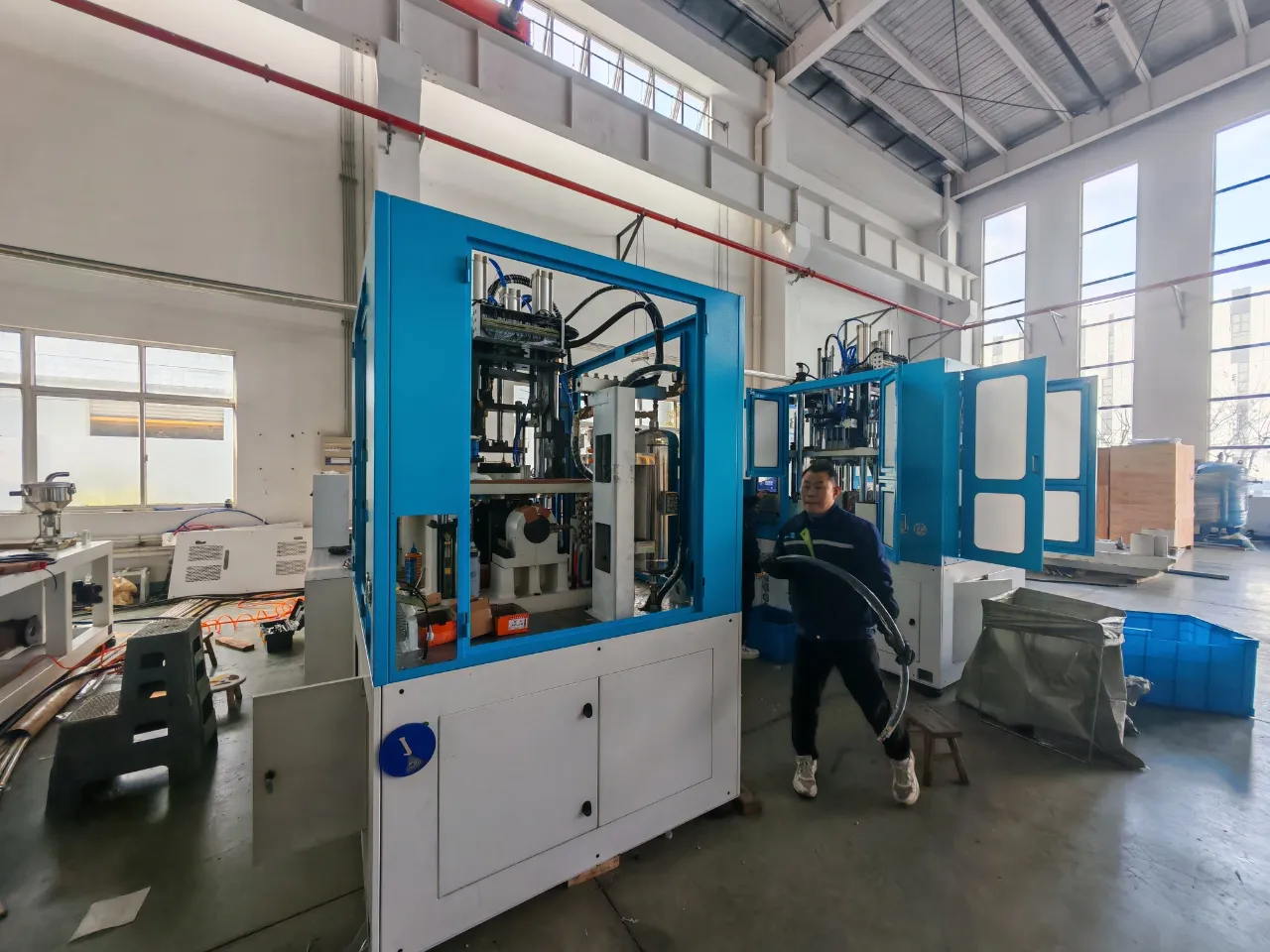
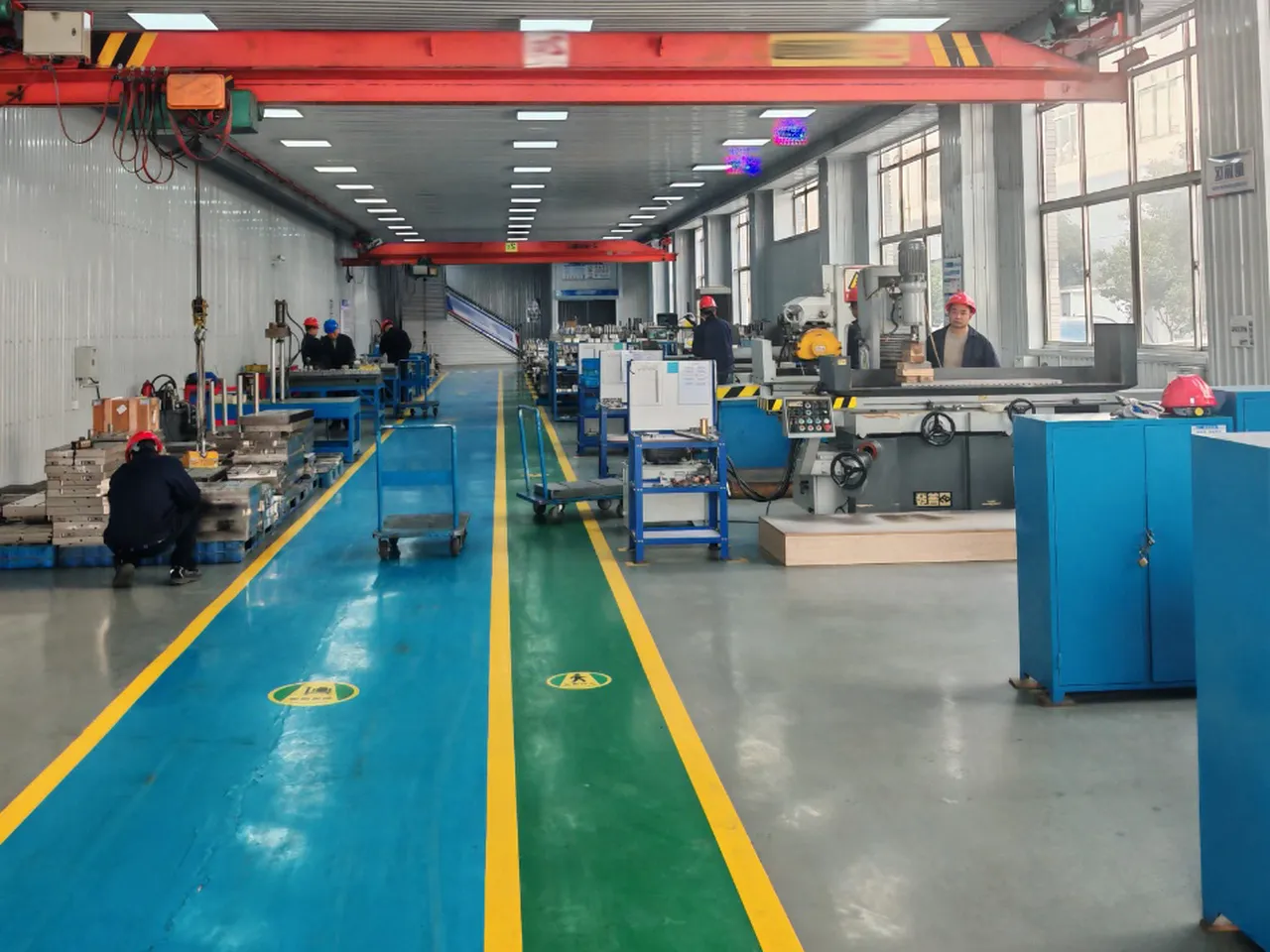
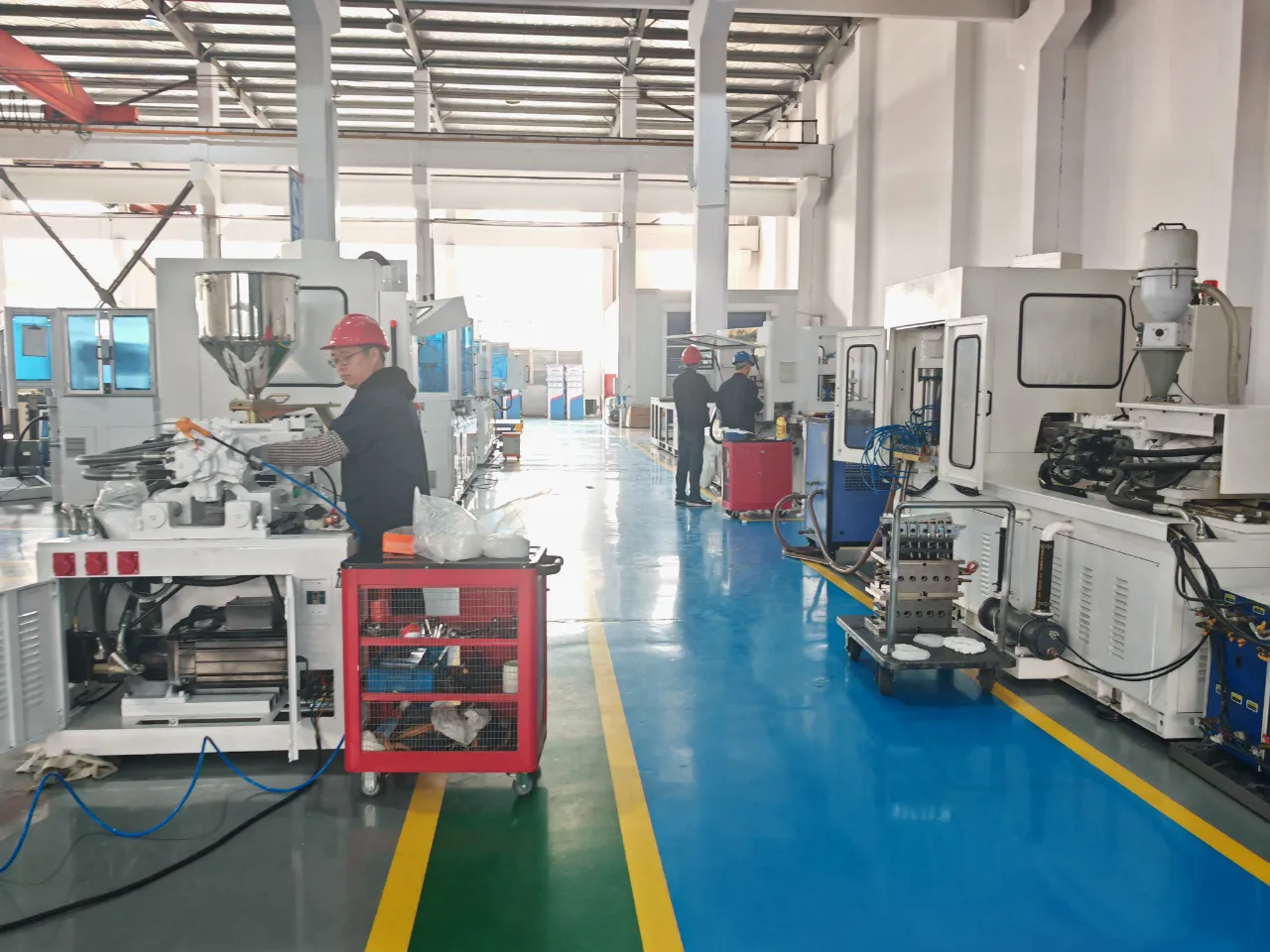
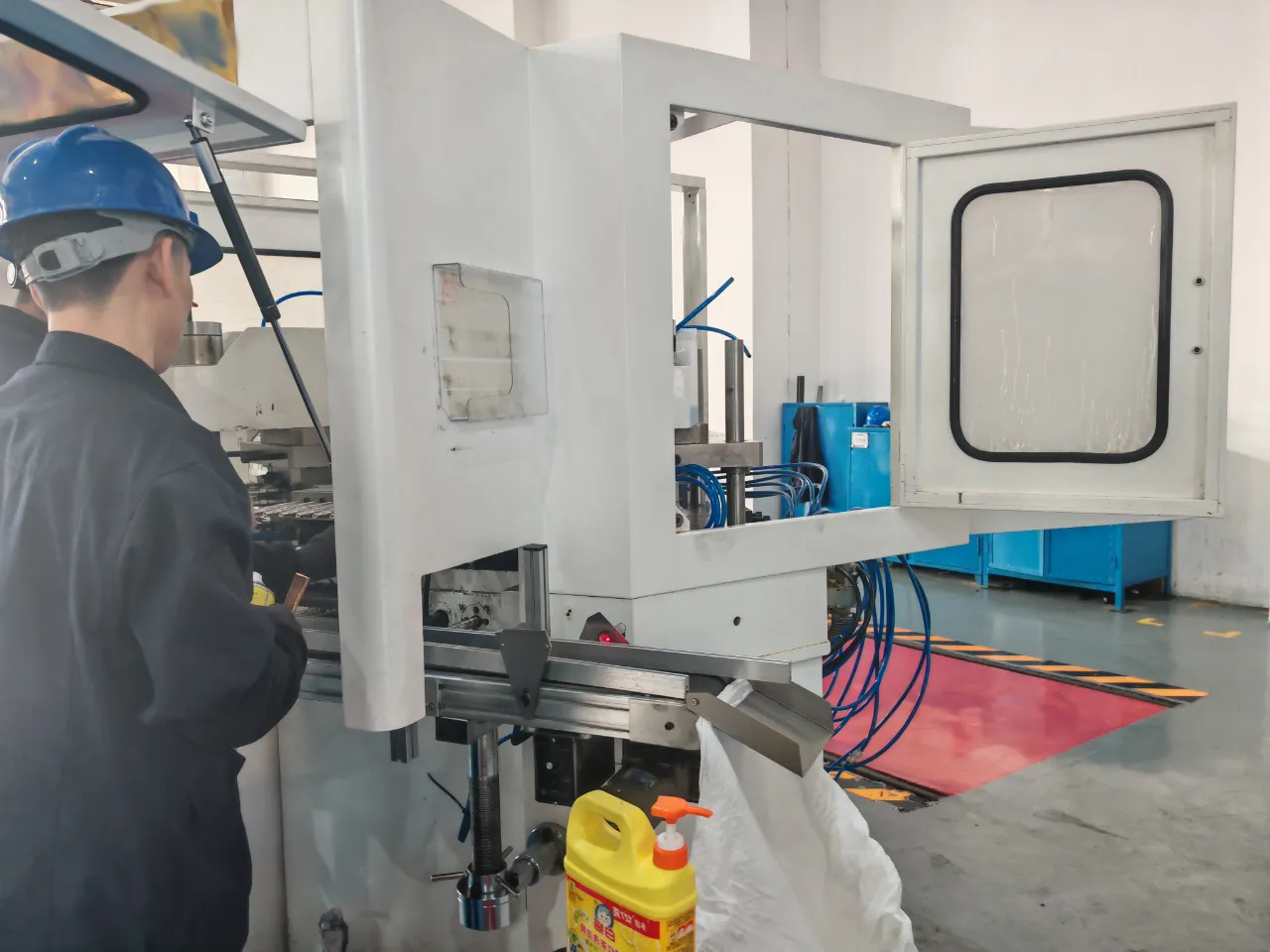
CMN Transmission is primarily engaged in the research, development, manufacturing, and global sales of automatic one step injection blow molding machines and injection stretch blow molding machines. Our product range includes injection blow molding machines, extrusion blow molding machines, single-stage and two-stage injection stretch blow molding machines, and auxiliary equipment. With an advantageous manufacturing location and well-established international logistics partnerships, CMN delivers reliably to customers across 50+ countries worldwide.
CMN Transmission has assembled an exceptional R&D engineering team with deep expertise in both injection-blow machinery and injection-blow mold design. Our engineers bring rich theoretical knowledge and practical production experience accumulated over more than 20 years, enabling us to provide detailed and highly responsive pre-sale technical consultation, on-site commissioning support, and long-term after-sale service. We do not treat machinery sales as transactional; we build long-term production partnerships with our customers.
Our product applications cover pharmaceutical packaging, food packaging, healthcare packaging, cosmetic packaging, and a wide range of industrial plastic packaging formats. CMN's machines can process a comprehensive polymer range including HDPE, LDPE, PET, PETG, PP, PS, PPSU, PC, Tritan, ABS, PLA, EVA, PCTG, and environmentally certified corn-based bioplastics, enabling customers to address both conventional and emerging sustainable packaging mandates with a single machine platform.
CMN Transmission adheres to an enterprise philosophy of self-reliance, integrity, pragmatism, innovation, and responsibility. We build complete one-stop turnkey project capabilities, from bottle design and mold engineering to machine commissioning and operator training, delivering high-end injection stretch blow molding production systems that combine world-class output quality with Chinese manufacturing cost efficiency. When you partner with CMN, you gain access not just to a machine, but to a team that is genuinely invested in the success of your production operation.
![]() | ![]() |
![]() | ![]() |
常问问题
Q: What is the difference between a one step injection stretch blow molding machine and a two step ISBM machine?
A: In a one step ISBM machine like the Y150-V4-EV, the entire process of injection, stretching, and blowing occurs sequentially within a single machine in one continuous cycle without the preform ever leaving the equipment. In a two-step process, preforms are injection-molded on a separate machine, cooled, stored, and then reheated in a separate reheat stretch blow machine. The one-step process eliminates reheating energy costs, reduces floor space requirements, removes intermediate handling contamination risks, and produces better dimensional consistency because the preform never fully cools between stages.
Q: Is the Y150-V4-EV truly compatible with ASB-12M molds without modification?
A: Yes. The Y150-V4-EV is certified as a direct replacement of ASB ISBM machine (ASB-12M) tooling. Mold mounting dimensions, pitch distances, and station-to-station relationships have been engineered to match ASB-12M tooling specifications. Most customers can mount their existing ASB-12M molds directly without modification. We recommend requesting a dimensional verification report for your specific mold set before purchase to confirm compatibility, which CMN's engineering team can provide based on your mold drawings.
Q: How much energy does the Y150-V4-EV save compared to hydraulic injection stretch blow molding machines?
A: The Y150-V4-EV consumes 15% to 25% less energy than hydraulic ISBM machines from Japan, Europe, and the United States. Compared to two-stage ISBM processes that require preform reheating, the energy saving reaches up to 40%. The primary savings come from replacing hydraulic pump motors with precision servo drives that only draw power on demand, eliminating the constant idle energy consumption of hydraulic systems. The nano far-infrared heating ring also provides more efficient and uniform thermal transfer to the screw barrel compared to conventional band heaters.
Q: Can the Y150-V4-EV process materials other than PET, such as PP, Tritan, or PLA?
A: Yes. While PET and PETG are the primary materials for the standard 4-station machine, the Y150-V4-EV can also process PP, PC, Tritan, PETG, PCTG, PLA, and PPSU with appropriate mold and process parameter adjustments. Each material requires specific barrel temperature profiles, stretch rod speed settings, and blow pressure parameters. CMN's technical team can provide material-specific process guidelines for each resin type. Note that PP and Tritan may require mold design adjustments for optimal orientation and clarity.
Q: What is the maximum bottle size and output capacity of the Y150-V4-EV?
A: The Y150-V4-EV can produce bottles up to 2500 ml in volume with a maximum bottle diameter of 118 mm when running a single cavity. When running 6 cavities, bottles up to 100 ml can be produced at a maximum bottle diameter of 45 mm. Maximum bottle height reaches 210 mm for 1 to 2 cavity configurations and 100 mm for 7 to 8 cavity configurations. Maximum output at 6 cavities per cycle delivers approximately 6 bottles per injection cycle, compared to 4 per cycle on equivalent Japanese ASB-12M platforms, providing a significant throughput advantage for high-volume production.
Q: Is the Y150-V4-EV suitable for GMP-certified pharmaceutical production environments?
A: Yes. The fully electric architecture of the Y150-V4-EV eliminates all hydraulic oil circuits from the machine, removing the risk of oil contamination in the production environment. This makes it fully compliant with GMP requirements for pharmaceutical packaging, where oil-free operation is mandatory in many regulatory frameworks including EU GMP Annex 1. The machine can operate in controlled cleanroom environments and the integrated servo control system supports electronic batch record generation, which simplifies process validation documentation for pharmaceutical manufacturers.
Q: What after-sales support does CMN provide for the Y150-V4-EV?
A: CMN provides comprehensive after-sales support including on-site installation and commissioning by factory-trained engineers, operator training for production and maintenance personnel, remote technical support via video call, and a spare parts supply service with a guaranteed parts availability period. CMN also provides process optimization support for new bottle designs and material changeovers. For customers requiring on-site support after the initial commissioning period, CMN can arrange service visits through its distributor network or by dispatching engineers directly from its manufacturing facility.
Q: How does CMN's production speed compare to Japanese ISBM machine brands?
A: The Y150-V4-EV can produce 6 bottles per cycle versus 4 bottles per cycle on a comparable Japanese ASB-12M platform, representing a 50% throughput increase per machine for the same mold cavity count. This advantage comes from CMN's high-speed screw solution, multiple screw configuration options, and the replacement of pneumatic components in the take-out mechanism with servo motors that operate at twice the speed. For production managers calculating capacity requirements, this improvement in output rate can reduce the number of machines required to meet daily production targets.
Q: Can CMN supply customized molds for specific bottle designs?
A: Yes. CMN Transmission offers a customized injection stretch blow molding machine package that includes bottle mold design and manufacturing as part of a turnkey project delivery. CMN's mold engineering team can design preform molds and blow molds for custom bottle geometries based on customer-supplied 3D drawings or physical bottle samples. Standard lead time for mold manufacture is approximately 25 to 35 days depending on cavity count and bottle complexity. CMN also provides mold trials at its factory before shipment to verify dimensional accuracy against the customer's specifications.
Q: What international certifications does CMN's injection blow molding machine carry?
A: CMN's ISBM machines meet CE marking requirements for the European market and comply with applicable international safety standards for industrial machinery. The electrical system is designed to IEC standards and the machine is compatible with 370 to 400 V three-phase power supply as specified in the technical datasheet. Customers in regulated markets can request specific test reports and documentation from CMN's quality department to support import clearance and regulatory approval processes in their respective countries.

用户评价
Park Jae-won, Cosmetic Packaging Industry, South Korea
"We switched from a Japanese ASB-12M to CMN's Y150-V4-EV about a year ago and honestly the transition was smoother than expected. The mold compatibility claim is real, we ran our existing 6-cavity cosmetic bottle tooling on the first day without any modifications. Output went from 4 bottles per cycle to 6 per cycle immediately. Electricity bills dropped noticeably in the first two months. The after-sales team was patient with our operators during the learning curve and provided remote support whenever we had questions."
Pham Thi Lan, Pharmaceutical Packaging Industry, Vietnam
"I manage a pharmaceutical bottle line running 100ml PET tablet containers. We bought the Y150-V4-EV specifically because it is fully electric with no oil. Our GMP auditor was happy during the last inspection and commented positively on the clean production environment. The machine has been running about 14 months now with no major breakdowns. Neck finish dimensions are consistent, which is critical for the child-resistant caps we use. CMN's engineers came on-site for initial commissioning and stayed four days until everything was dialed in."
Mohammed Al-Rashidi, Beverage Industry, Saudi Arabia
"We ordered two units of the Y150-V4-EV for our beverage bottle factory back in early last year. Delivery was on time and packed well, no damage. The documentation was thorough enough for our maintenance team to follow. One thing I appreciated is that CMN included a video library for operator training, which our team could access remotely. We ran PETG bottles for a juice brand and the clarity is excellent. We had one servo drive alarm in the first three months and CMN diagnosed it by video call within two hours."
Rahul Mehta, Food Industry, India
"As a mold maker and machine reseller, I have worked with AOKI, ASB, and several European brands. I started recommending CMN about two years ago to customers looking for cost-effective alternatives. The Y150-V4-EV holds its own in terms of build quality. The parting line on the demo bottles CMN sent was genuinely invisible, not just marketing. Spare parts availability has been good and prices are reasonable. I have sold five units so far and plan to expand my CMN product portfolio next year."
Lucas Ferreira, Agrochemical Packaging Industry, Brazil
"We produce pesticide and agrochemical containers in PET for local and export markets. The bottles need to be chemically resistant and have tight neck tolerances for the flip-top safety caps. The Y150-V4-EV has been producing 250ml containers with neck dimensions well within tolerance for over eight months now. One thing I want to highlight is the energy saving, our monthly power bill for this line is about 20% lower than what we were paying running the old hydraulic ISBM we had before. The servo system is noticeably quieter too."
Ingrid Van Damme, Personal Care Packaging Industry, Belgium
"Logistics was actually our biggest concern before ordering. CMN coordinated well with the freight forwarder and the two Y150-V4-EV units arrived at our port in Antwerp without damage. Installation went well, the machine dimensions are 5.2 x 1.8 x 3.3 m so it fit our factory layout without major changes. We use it for shampoo and personal care bottles in PETG. Clarity is very good and the parting line is much cleaner than what we were getting from the previous supplier. Service response time from CMN has been acceptable."
David Chen, Beverage Packaging Industry, Taiwan
"We are running the Y150-V4-EV on Tritan resin for premium reusable water bottles. The material is tricky because of the narrow processing window and the machine handles it well once the temperature parameters are set correctly. CMN's tech team walked us through the process settings over a video call before we started. After about six months of production, no major issues. The bottles come out with great surface finish. We compared with samples from a Taiwanese machine and the CMN output was comparable in clarity and dimensional accuracy at a much lower machine price."
Ahmad Yusof, Food Packaging Industry, Malaysia
"We import packaging machinery and the Y150-V4-EV has become our bestselling ISBM model for food grade clients. The machine builds confidence with customers because it uses recognizable brands inside, Parker valves, NSK lead screws, Yaskawa servo motors. These are names our customers already trust. CMN is also easy to work with on documentation for import customs purposes. We have sold units to Indonesia, Thailand, and the Philippines and feedback from all locations has been positive. Lead time from order to delivery was about 75 days for the last batch."
Ayasha Nkosi, Food Packaging Industry, South Africa
"Our factory produces condiment and sauce bottles in PET. We bought the Y150-V4-EV nine months ago after comparing it with another Chinese brand and one Japanese model. CMN won on price and after-sales support package. The machine runs our 400ml ketchup bottle mold at 4 cavities per cycle with very consistent wall thickness. We had one heating ring fail at about 1200 hours of operation, CMN shipped a replacement part within a week. Overall we are satisfied and will likely order a second unit before the end of this year for our new production hall."
其他信息
| 编辑 | Yjx |
|---|