
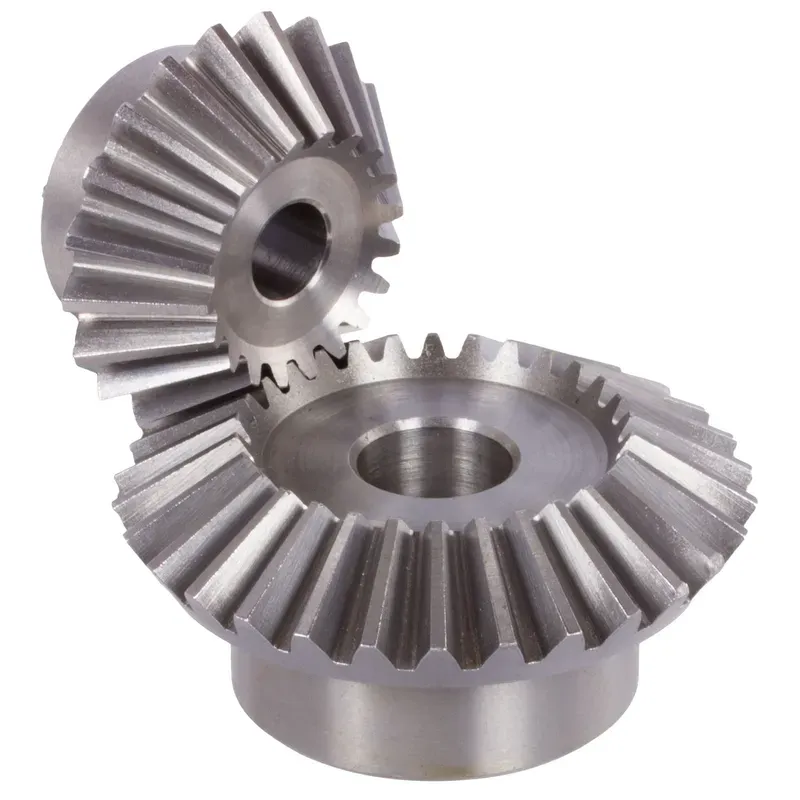
Przekładnie stożkowe stalowe proste o przełożeniu 1,5:1, układ zębów prostych
Stalowe, proste koła zębate stożkowe o przełożeniu 1,5:1 to element mechaniczny służący do przenoszenia mocy i ruchu między przecinającymi się wałami pod określonym kątem, zazwyczaj 90 stopni. Koła te posiadają proste zęby, które są nacięte wzdłuż powierzchni stożka, co umożliwia płynne zazębienie i przenoszenie mocy. Przełożenie 1,5:1 oznacza, że na każde 1,5 obrotu koła napędowego (koła wejściowego), koło napędzane (koła wyjściowe) wykonuje jeden pełny obrót. Taka konfiguracja jest idealna do zastosowań wymagających umiarkowanej redukcji prędkości lub zwiększenia momentu obrotowego.
Stalowe, proste koła zębate stożkowe o przełożeniu 1,5:1 to element mechaniczny służący do przenoszenia mocy i ruchu między przecinającymi się wałami pod określonym kątem, zazwyczaj 90 stopni. Koła te posiadają proste zęby, które są nacięte wzdłuż powierzchni stożka, co umożliwia płynne zazębienie i przenoszenie mocy. Przełożenie 1,5:1 oznacza, że na każde 1,5 obrotu koła napędowego (koła wejściowego), koło napędzane (koła wyjściowe) wykonuje jeden pełny obrót. Taka konfiguracja jest idealna do zastosowań wymagających umiarkowanej redukcji prędkości lub zwiększenia momentu obrotowego.
Wykonane z wytrzymałej stali, te stalowe przekładnie stożkowe wytrzymują duże obciążenia i pracują wydajnie w wymagających warunkach, takich jak maszyny, systemy samochodowe i urządzenia przemysłowe. Ich prosta konstrukcja zapewnia łatwiejszą produkcję i konserwację w porównaniu z przekładniami stożkowymi o zębach śrubowych lub spiralnych.
Przekładnia stożkowa prosta stalowa o przełożeniu 1,5:1
| 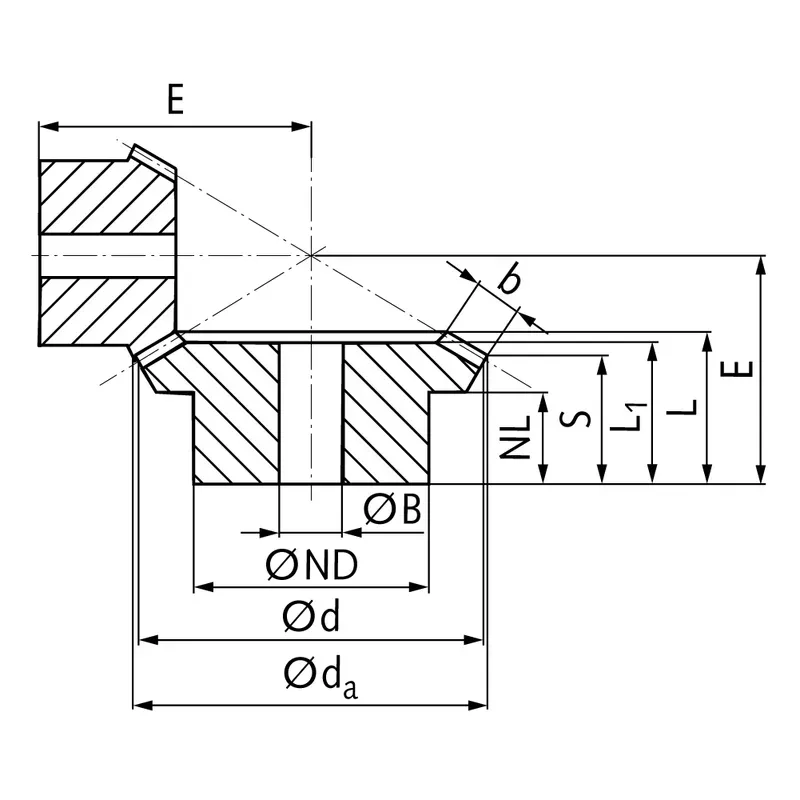 |
| Moduł | Numer zębów | DA | D | ND | Holandia | L1 | L | S | B | BH7 | mi | Moment obrotowy* | Waga |
| mm | mm | mm | mm | mm | mm | mm | mm | mm | mm | Ncm | G | ||
| 0,5 | 20 | 11,0 | 10 | 8 | 3,5 | 6,5 | 7,1 | 4,7 | 3 | 4 | 11,9 | 0,014 | 2 |
| 0,5 | 30 | 15,4 | 15 | 10 | 4,0 | 6,0 | 7,0 | 5,4 | 3 | 4 | 10,1 | 0,021 | 4 |
| 1 | 16 | 18,1 | 16 | 13 | 6,9 | 11 | 12,0 | 8,7 | 4,3 | 5 | 20 | 0,066 | 10 |
| 1 | 24 | 24,8 | 24 | 20 | 8,8 | 13 | 14,8 | 12,6 | 4,3 | 5 | 20 | 0,099 | 32 |
| 1,5 | 16 | 27,1 | 24 | 20 | 8,7 | 14 | 16,1 | 11,0 | 6,5 | 8 | 28 | 0,023 | 34 |
| 1,5 | 24 | 37,2 | 36 | 20 | 12,0 | 17 | 20,2 | 16,9 | 6,5 | 10 | 28 | 0,035 | 55 |
| 1,5 | 20 | 33,1 | 30 | 20 | 9,0 | 17 | 18,9 | 12,5 | 8,1 | 8 | 34 | 0,43 | 52 |
| 1,5 | 30 | 46,2 | 45 | 30 | 12,0 | 20 | 22,1 | 17,9 | 8,1 | 10 | 32 | 0,65 | 133 |
| 2 | 16 | 35,5 | 32 | 20 | 8,0 | 21 | 22,6 | 13,1 | 12 | 10 | 36 | 0,57 | 60 |
| 2 | 24 | 50,3 | 48 | 30 | 8,0 | 18 | 21,5 | 15,7 | 12 | 10 | 30 | 0,86 | 151 |
| 2 | 20 | 43,5 | 40 | 30 | 7,5 | 20 | 22,3 | 11,2 | 14 | 10 | 40 | 1,15 | 119 |
| 2 | 30 | 62,3 | 60 | 40 | 15,0 | 25 | 28,7 | 21,7 | 14 | 15 | 40 | 1,73 | 301 |
| 2,5 | 16 | 44,3 | 40 | 30 | 11,7 | 26 | 28,2 | 16,4 | 14 | 10 | 45 | 3,3 | 150 |
| 2,5 | 24 | 62,9 | 60 | 30 | 12,0 | 26 | 29,4 | 22,1 | 14 | 10 | 40 | 5,0 | 300 |
| 2,5 | 20 | 54,3 | 50 | 30 | 10,0 | 27 | 30,2 | 16,0 | 18 | 10 | 52 | 6,8 | 230 |
| 2,5 | 30 | 77,9 | 75 | 50 | 14,0 | 27 | 31,1 | 22,2 | 18 | 15 | 45 | 10,2 | 550 |
| 3 | 16 | 53,2 | 48 | 40 | 13,2 | 30 | 32,7 | 17,7 | 19 | 15 | 52 | 5,9 | 250 |
| 3 | 24 | 75,5 | 72 | 50 | 8,0 | 24 | 27,8 | 18,6 | 19 | 15 | 40 | 8,9 | 490 |
| 3 | 20 | 65,2 | 60 | 40 | 10,0 | 33 | 35,8 | 16,8 | 24 | 15 | 60 | 12,4 | 390 |
| 3 | 30 | 93,5 | 90 | 50 | 15,0 | 33 | 37,6 | 25,7 | 24 | 20 | 53 | 18,6 | 860 |
| 4 | 16 | 71,0 | 64 | 50 | 12,5 | 36 | 38,9 | 19,3 | 25 | 20 | 65 | 14,3 | 500 |
| 4 | 24 | 100,7 | 96 | 60 | 12,0 | 31 | 35,6 | 23,5 | 25 | 20 | 52 | 21,5 | 1010 |
| 4 | 20 | 87,0 | 80 | 50 | 18,0 | 48 | 51,1 | 27,3 | 30 | 20 | 85 | 29,5 | 950 |
| 4 | 30 | 124,6 | 120 | 60 | 18,0 | 40 | 46,4 | 31,5 | 30 | 25 | 68 | 44,3 | 1900 |
| 5 | 20 | 108,7 | 100 | 60 | 12,0 | 50 | 54,7 | 22,9 | 40 | 25 | 95 | 60,6 | 1630 |
| 5 | 30 | 155,8 | 150 | 70 | 12,0 | 40 | 46,3 | 26,4 | 40 | 30 | 72 | 90,9 | 3070 |
Zalety stalowych przekładni stożkowych prostych
- Wysoka wytrzymałość i trwałość
Stalowe przekładnie stożkowe proste wykonane są z wytrzymałej stali, która zapewnia doskonałą wytrzymałość i trwałość. Dzięki temu wytrzymują duże obciążenia, są odporne na zużycie i zachowują wydajność nawet w ekstremalnych warunkach, takich jak wysoki moment obrotowy i wahania temperatury. - Wydajne przenoszenie mocy
Konstrukcja z prostymi zębami umożliwia wydajne i proste przenoszenie mocy między wałami pod kątem przecięcia, zazwyczaj 90 stopni. Taka sprawność minimalizuje straty energii, dzięki czemu przekładnie te idealnie nadają się do zastosowań wymagających stałej i niezawodnej wydajności mechanicznej. - Ekonomiczna produkcja
Ze względu na prostą geometrię, koła zębate stożkowe o zębach prostych są łatwiejsze i tańsze w produkcji w porównaniu z alternatywnymi rozwiązaniami, takimi jak koła zębate stożkowe o zębach spiralnych. To sprawia, że są one opłacalnym wyborem dla branż poszukujących wysokiej wydajności bez nadmiernie skomplikowanych konstrukcji. - Niskie wymagania konserwacyjne
Prosta konstrukcja stalowych przekładni stożkowych ułatwia ich inspekcję, czyszczenie i konserwację. Zmniejsza to przestoje i koszty konserwacji, co jest korzystne dla branż, w których wydajność operacyjna i niezawodność mają kluczowe znaczenie dla długoterminowej wydajności. - Wszechstronność zastosowań
Stalowe przekładnie stożkowe są wszechstronne i mogą być stosowane w różnych gałęziach przemysłu, w tym w motoryzacji, maszynach przemysłowych i lotnictwie. Ich zdolność do niezawodnego przenoszenia ruchu i momentu obrotowego w układach wałów przecinających się sprawia, że nadają się do różnorodnych układów mechanicznych. - Precyzyjna kontrola ruchu
Konfiguracja z prostymi zębami zapewnia płynne zazębianie i precyzyjną kontrolę ruchu. Jest to szczególnie korzystne w zastosowaniach wymagających precyzyjnego i przewidywalnego ruchu, takich jak robotyka, przekładnie i inne precyzyjne systemy mechaniczne.
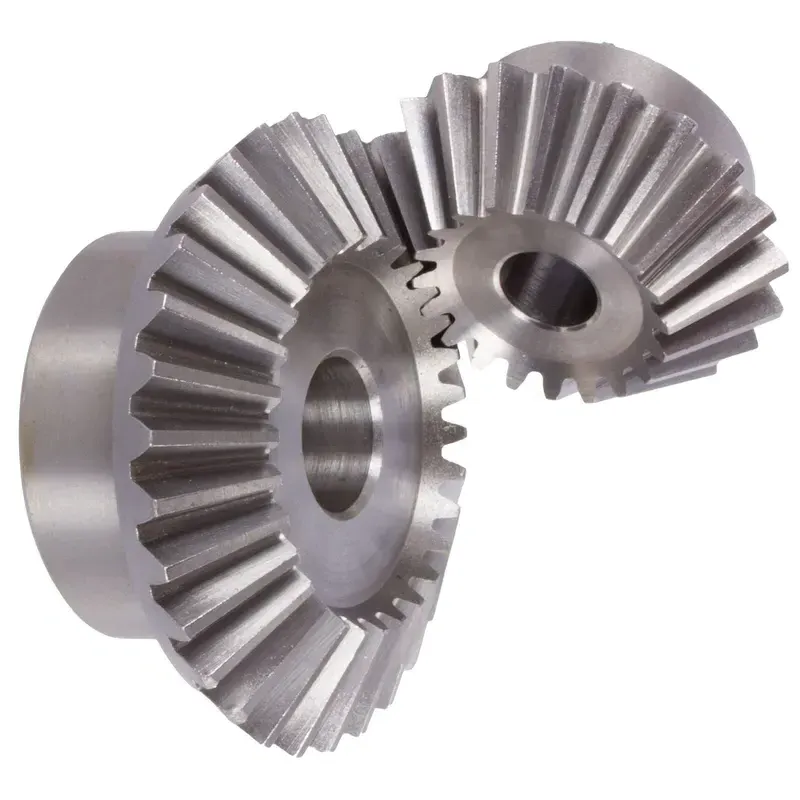
Zastosowania stalowych przekładni stożkowych prostych
- Przemysł motoryzacyjny
Stalowe, proste koła zębate stożkowe są szeroko stosowane w sektorze motoryzacyjnym w takich elementach jak mechanizmy różnicowe i skrzynie biegów. Ich zdolność do efektywnego przenoszenia mocy między przecinającymi się wałami zapewnia płynne dostarczanie momentu obrotowego, co ma kluczowe znaczenie dla osiągów pojazdu i oszczędności paliwa. - Maszyny przemysłowe
W maszynach przemysłowych przekładnie te służą do napędzania systemów przenośników, pomp i ciężkiego sprzętu. Ich solidna konstrukcja i zdolność do przenoszenia dużych obciążeń sprawiają, że są one niezbędne w zakładach produkcyjnych, górnictwie i innych ciężkich warunkach przemysłowych. - Przemysł lotniczy i kosmiczny
Sektor lotniczo-kosmiczny wykorzystuje stalowe przekładnie stożkowe w systemach takich jak mechanizmy podwozia i systemy sterowania lotem. Ich precyzja, trwałość i odporność na wysokie obciążenia mają kluczowe znaczenie dla zapewnienia bezpieczeństwa i niezawodności w zastosowaniach lotniczych. - Sprzęt rolniczy
Maszyny rolnicze, takie jak traktory, kombajny i pługi, często wykorzystują proste przekładnie stożkowe. Ich wytrzymałość i wydajność idealnie nadają się do przenoszenia mocy w trudnych warunkach, zapewniając niezawodność i wydajność sprzętu używanego w rolnictwie. - Sprzęt morski i offshore
Stalowe przekładnie stożkowe są stosowane w zastosowaniach morskich, takich jak systemy sterowania statkami, jednostki napędowe i wciągarki. Ich odporność na korozję i zdolność do przenoszenia dużych obciążeń sprawiają, że nadają się one do trudnych warunków morskich i wymagających operacji morskich. - Robotyka i automatyka
W robotyce i systemach zautomatyzowanych, przekładnie stożkowe o zębach prostych służą do precyzyjnego sterowania ruchem i przenoszenia mocy. Ich dokładność i niezawodność są kluczowe w zastosowaniach takich jak ramiona robotyczne, zautomatyzowane linie montażowe i precyzyjne maszyny w zaawansowanej produkcji.
 |  |
| Przekładnia stożkowa do mechanizmów różnicowych samochodowych | Przekładnia stożkowa do robotyki |
 |  |
| Przekładnia stożkowa do maszyn rolniczych | Przekładnia stożkowa do przemysłu morskiego |
Różne rodzaje przekładni stożkowych
Przekładnie stożkowe proste
Przekładnie stożkowe o zębach prostych to najprostszy rodzaj przekładni stożkowych, charakteryzujący się prostymi zębami równoległymi do tworzącej stożka podziałowego. Są one stosowane w zastosowaniach, w których występują wysokie prędkości obrotowe i niskie lub średnie obciążenia. Jednakże, przekładnie stożkowe o zębach prostych mogą generować większy hałas w porównaniu z innymi typami przekładni stożkowych ze względu na nagłe zazębienie się zębów.
Przekładnie stożkowe spiralne
Przekładnie stożkowe o zębach spiralnych mają zęby o zakrzywionych kształtach, ustawione skośnie do tworzącej stożka podziałowego. Kąt pochylenia zębów zapewnia stopniowe i płynne zazębienie, co przekłada się na cichszą pracę i większą obciążalność w porównaniu z przekładniami stożkowymi o zębach prostych. Przekładnie stożkowe o zębach spiralnych są powszechnie stosowane w mechanizmach różnicowych w samochodach oraz w zastosowaniach przemysłowych wymagających dużych prędkości i obciążeń.
Przekładnie stożkowe hipoidalne
Przekładnie stożkowe hipoidalne są podobne do przekładni stożkowych spiralnych, ale z istotną różnicą: stożki podziałowe kół zębatych nie przecinają się. Zamiast tego osie kół zębatych są przesunięte, co pozwala na uzyskanie większych średnic zębatek i lepszy styk zębów. Taka konfiguracja przesunięcia zapewnia szereg korzyści, takich jak wyższy moment obrotowy, niższy poziom hałasu i bardziej zwarta konstrukcja. Przekładnie hipoidalne są często stosowane w tylnych mostach samochodowych i przekładniach przemysłowych.
Przekładnie stożkowe Zerol
Przekładnie stożkowe Zerol stanowią szczególny przypadek przekładni stożkowych o zębach spiralnych, w których kąt pochylenia linii śrubowej wynosi zero. Oznacza to, że zęby są równoległe do osi obrotu, podobnie jak w przekładniach stożkowych o zębach prostych. Jednak w przeciwieństwie do przekładni stożkowych o zębach prostych, przekładnie stożkowe Zerol mają zakrzywiony profil zębów, który umożliwia płynne i stopniowe zazębianie. Przekładnie stożkowe Zerol łączą zalety przekładni stożkowych o zębach prostych i spiralnych, zapewniając lepszą obciążalność i cichszą pracę w porównaniu z przekładniami stożkowymi o zębach prostych.
Koła zębate stożkowe
Przekładnie stożkowe o zębach ukośnych to specyficzny rodzaj przekładni stożkowych, w których liczba zębów na obu kołach jest równa, a kąt między wałem a wałem wynosi 90°. Taka konfiguracja zapewnia przełożenie 1:1, dzięki czemu przekładnie ukośne idealnie nadają się do zastosowań wymagających zmiany kierunku obrotu bez zmiany prędkości lub momentu obrotowego. Przekładnie ukośne mogą mieć zęby proste, spiralne lub zerowe.
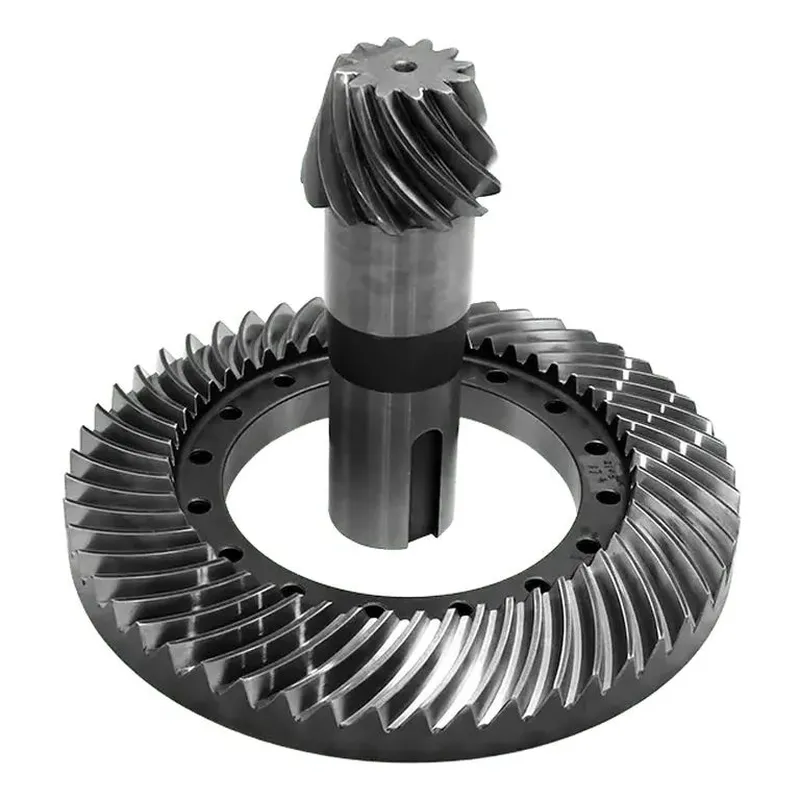 | 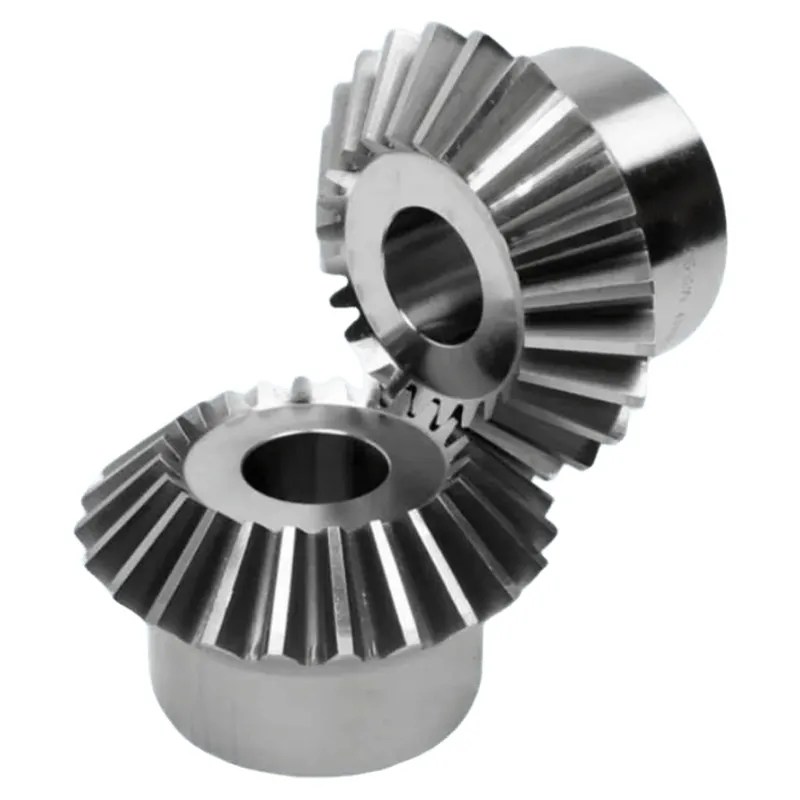 |
| Przekładnie stożkowe hipoidalne | Koła zębate stożkowe |
Informacje dodatkowe
| Edytowane przez | Yjx |
|---|
Podobne produkty
-
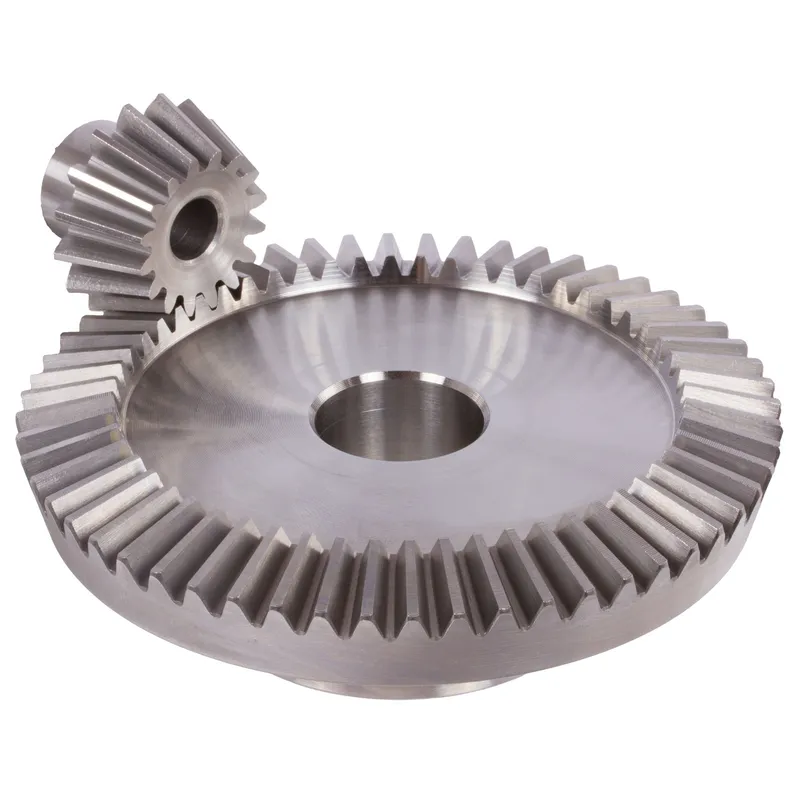
Przekładnie stożkowe ze stali prostej o stosunku 1:1 – 4:1, układ zębów prostych
-
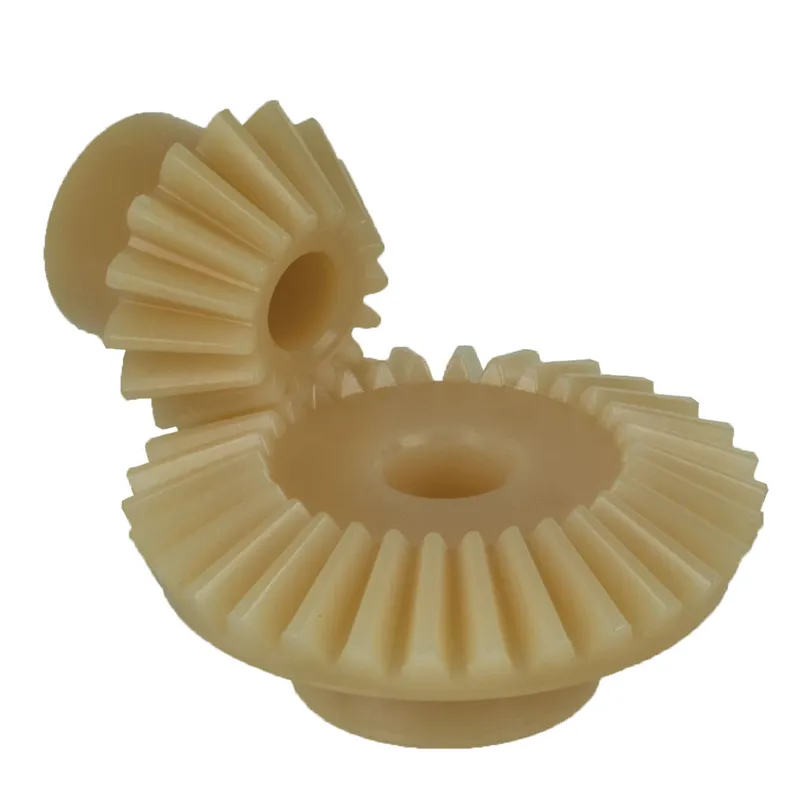
Przekładnie stożkowe z żywicy poliketonowej o stosunku 1:1 – 5:1
-
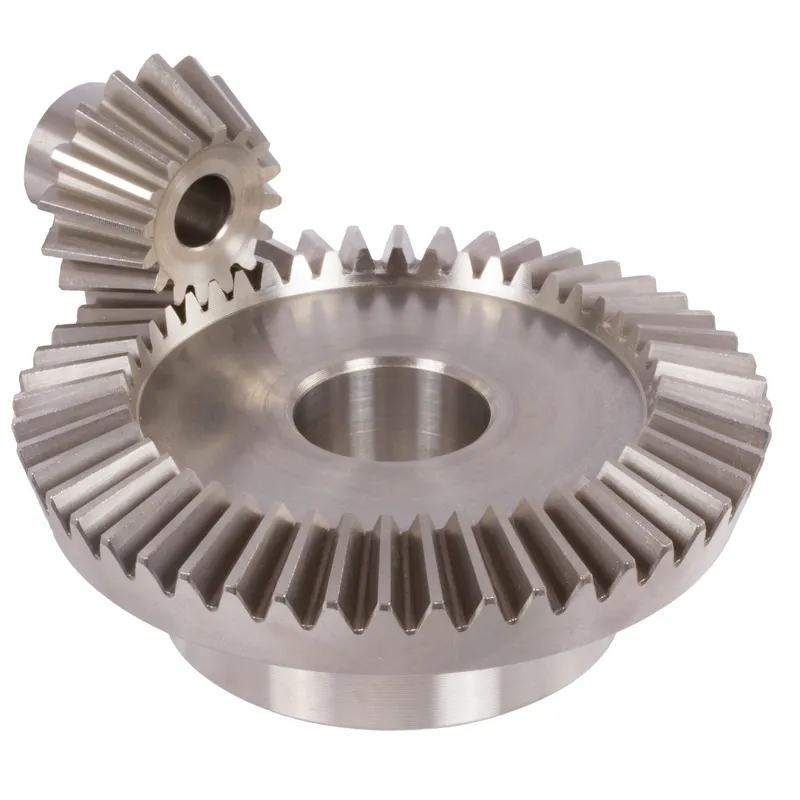
Przekładnie stożkowe ze stali nierdzewnej o stosunku 3:1 i zębach prostych
-
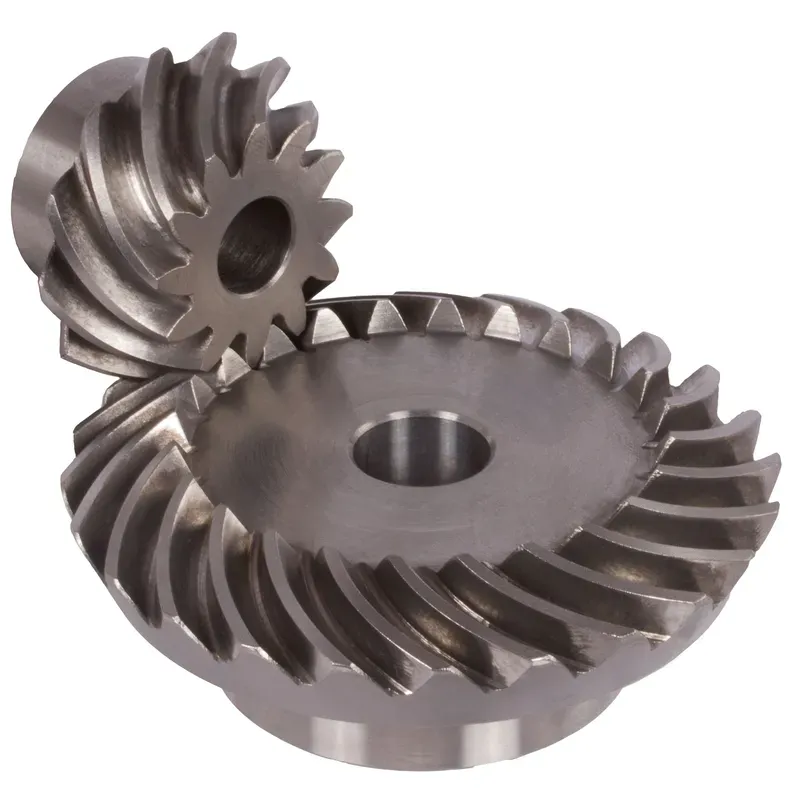
Przekładnie stożkowe spiralne ze stali o stosunku zębów 1,5:1
-
Przekładnie stożkowe spiralne ze stali o stosunku zębów 2,5:1