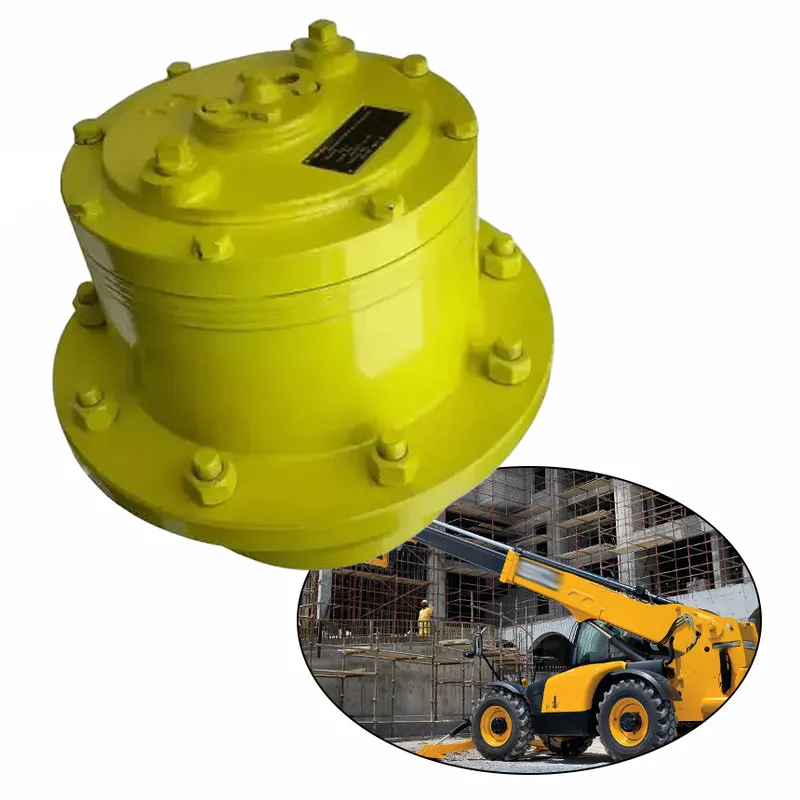
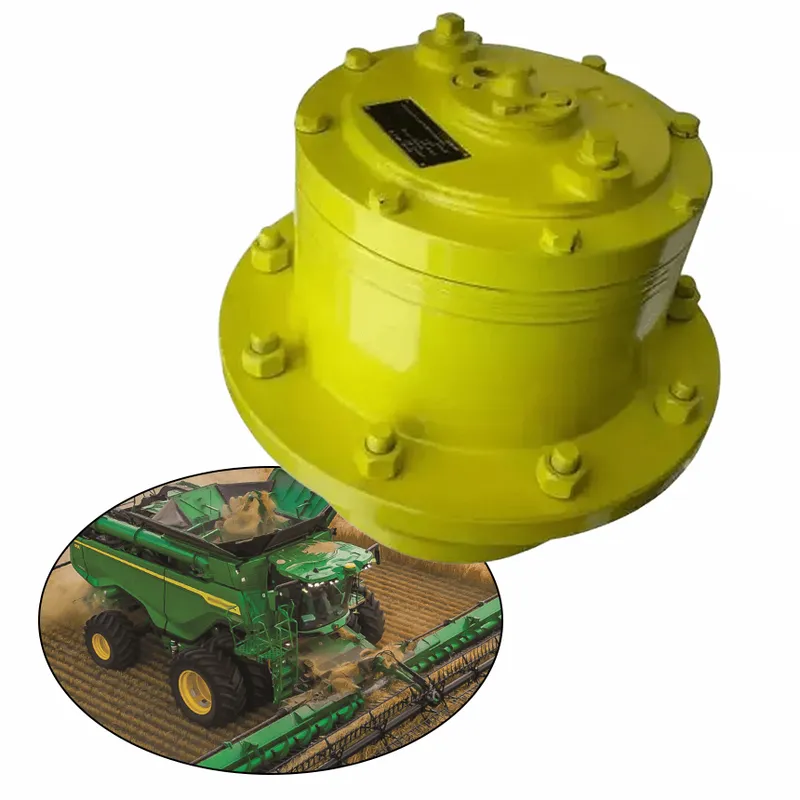
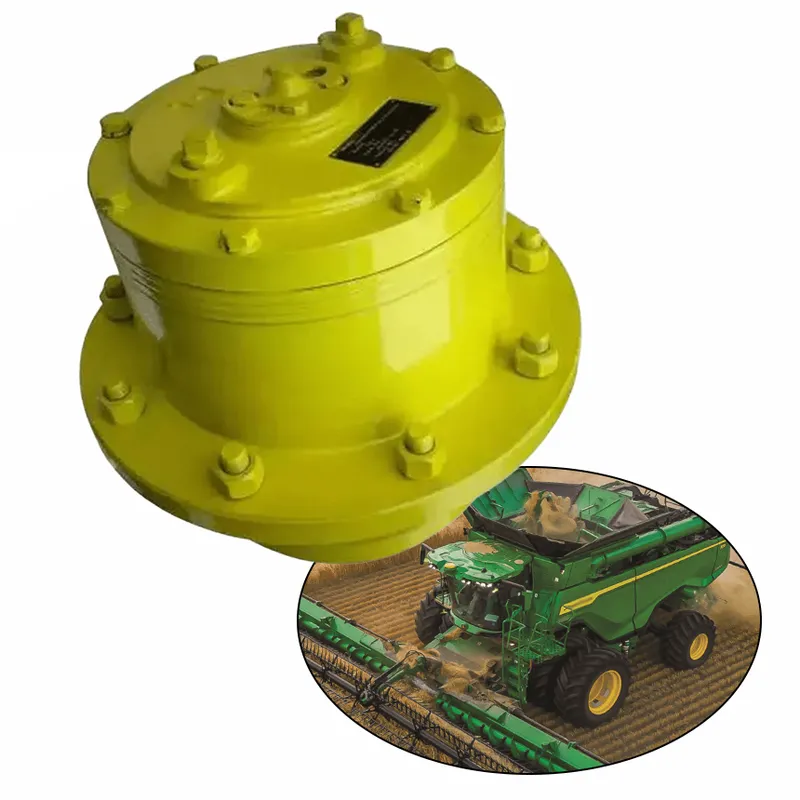
เกียร์ทดรอบแบบเฟืองดาวเคราะห์สำหรับเครื่องเกี่ยวข้าว
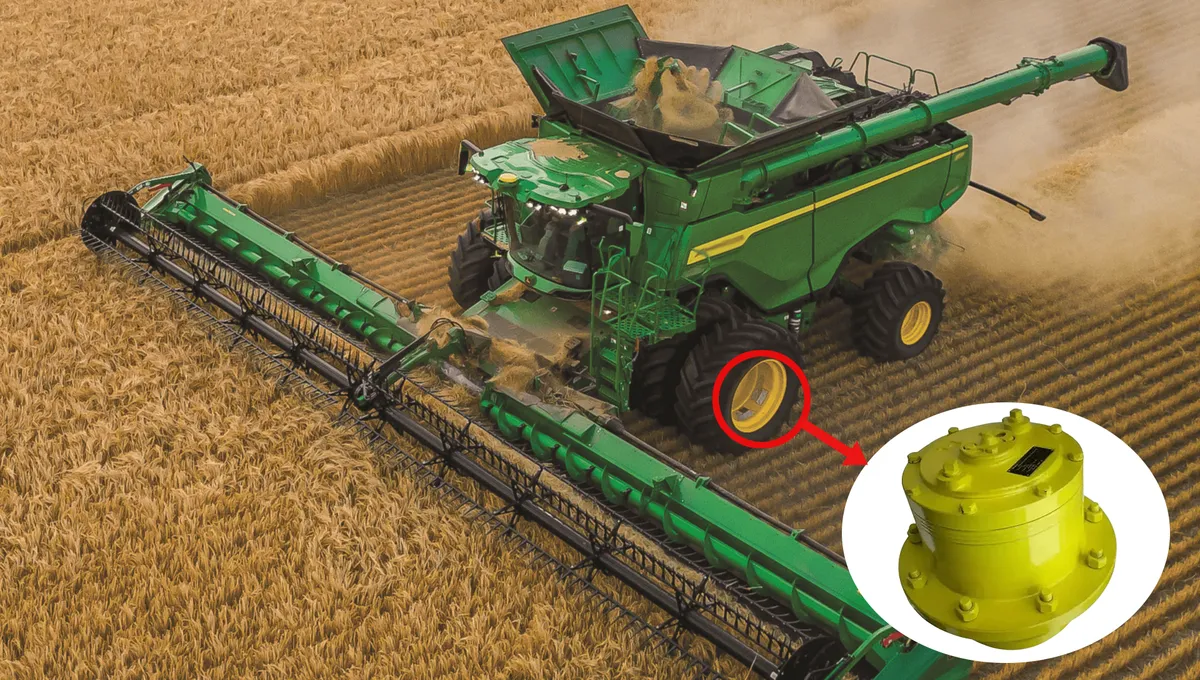
ระบบเกียร์ขับเคลื่อนล้อแบบเฟืองดาวเคราะห์สำหรับเครื่องเกี่ยวข้าวเป็นระบบส่งกำลังที่มีขนาดกะทัดรัดและมีประสิทธิภาพสูง โดยใช้กลไกเฟืองดาวเคราะห์เพื่อเพิ่มแรงบิดและลดความเร็ว ซึ่งจำเป็นต่อการขับเคลื่อนล้อของเครื่องจักรทางการเกษตร ในบริบทของเครื่องเกี่ยวข้าว ระบบเกียร์ขับเคลื่อนล้อแบบเฟืองดาวเคราะห์นี้มักจะถูกรวมเข้ากับดุมล้อหรือเพลาโดยตรง ช่วยให้การขับเคลื่อนมีความน่าเชื่อถือและเพิ่มแรงฉุดบนพื้นผิวที่ไม่เรียบในระหว่างการทำงาน เช่น การตัด การนวด และการเก็บเกี่ยวพืชผล
ระบบเกียร์ขับเคลื่อนล้อแบบเฟืองดาวเคราะห์สำหรับเครื่องเกี่ยวข้าวเป็นระบบส่งกำลังขนาดกะทัดรัดและมีประสิทธิภาพสูง โดยใช้กลไกเฟืองดาวเคราะห์เพื่อเพิ่มแรงบิดและลดความเร็ว ซึ่งจำเป็นต่อการขับเคลื่อนล้อของเครื่องจักรทางการเกษตร ประกอบด้วยส่วนประกอบสำคัญ ได้แก่ เฟืองดวงอาทิตย์ตรงกลางที่รับแรงบิดจากเครื่องยนต์ เฟืองดาวเคราะห์หลายตัวหมุนรอบเฟืองดวงอาทิตย์โดยขบกับเฟืองวงแหวนด้านนอก และตัวยึดที่เชื่อมต่อเฟืองดาวเคราะห์กับเพลาส่งกำลัง ทำให้สามารถส่งแรงบิดสูงได้ในดีไซน์ที่ประหยัดพื้นที่
ในบริบทของเครื่องเกี่ยวข้าวแบบรวม ระบบเกียร์เฟืองดาวเคราะห์แบบขับเคลื่อนล้อนี้มักจะถูกรวมเข้ากับดุมล้อหรือเพลาโดยตรง ช่วยให้การขับเคลื่อนมีความน่าเชื่อถือและเพิ่มแรงฉุดบนพื้นผิวที่ไม่เรียบในระหว่างการทำงาน เช่น การตัด การนวด และการเก็บเกี่ยวพืชผล การออกแบบนี้รองรับน้ำหนักบรรทุกสูง ลดเสียงรบกวน และส่งเสริมประสิทธิภาพการใช้เชื้อเพลิง ในขณะเดียวกันก็มีความทนทานต่อสภาพแวดล้อมที่รุนแรง เช่น โคลน ฝุ่น และการใช้งานเป็นเวลานาน
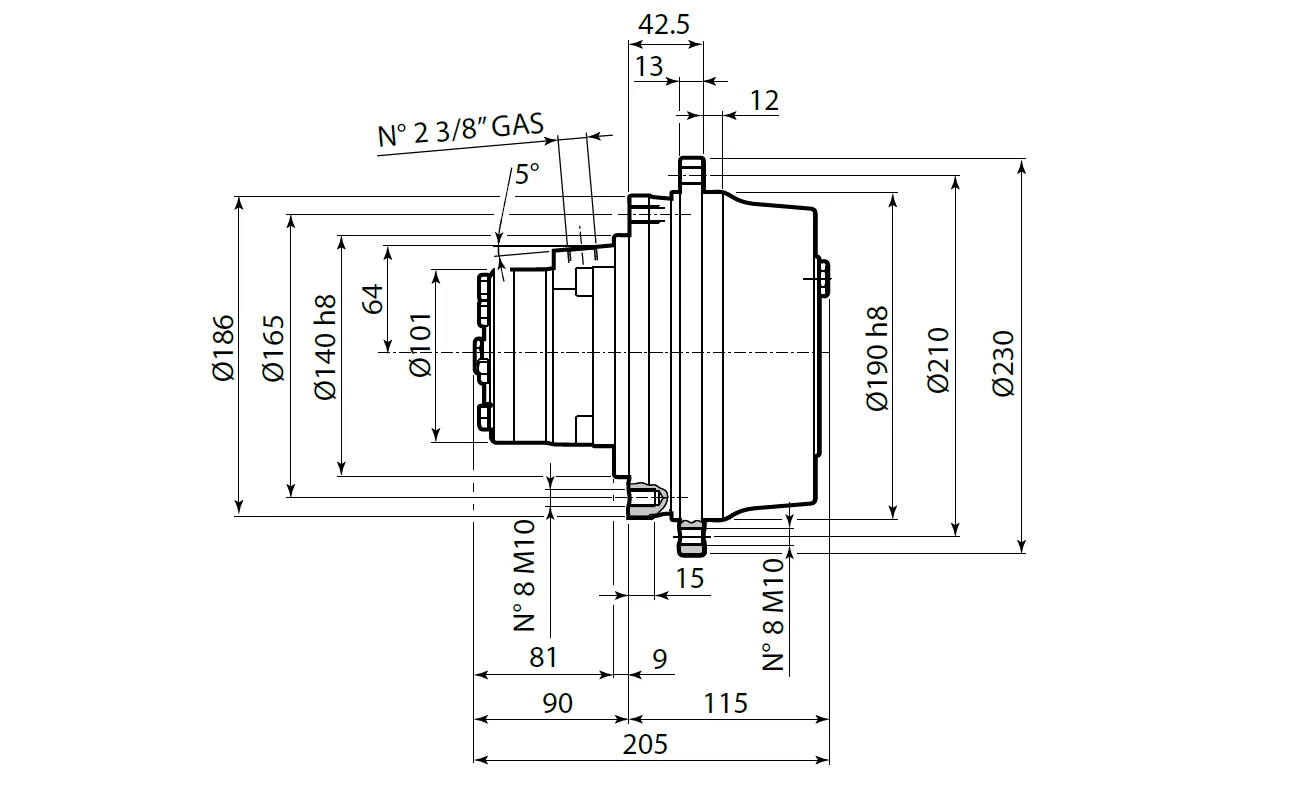
มิติของระบบขับเคลื่อนล้อเฟืองดาวเคราะห์
คำจำกัดความทางเทคนิค
| สัญลักษณ์ | หน่วยวัด | คำอธิบาย |
| ฉัน | - | อัตราส่วนการลดลง |
| ที2แม็กซ์ | [นม] | แรงบิดเอาต์พุตสูงสุด |
| ที2พี | [นม] | แรงบิดเอาต์พุตสูงสุด |
| ที2แม็กซ์อินท์ | [นม] | แรงบิดสูงสุดแบบไม่ต่อเนื่อง |
| ที2คอนท์ | [นม] | แรงบิดเอาต์พุตต่อเนื่อง |
| พีคอนท์ | [กิโลวัตต์] | กำลังไฟฟ้าต่อเนื่องสูงสุด |
| ไพนต์ | [กิโลวัตต์] | กำลังสูงสุดแบบไม่ต่อเนื่อง |
| n1max | [รอบต่อนาที] | ความเร็วอินพุตสูงสุด |
| n2max | [รอบต่อนาที] | ความเร็วเอาต์พุตสูงสุด |
จีอาร์ 80
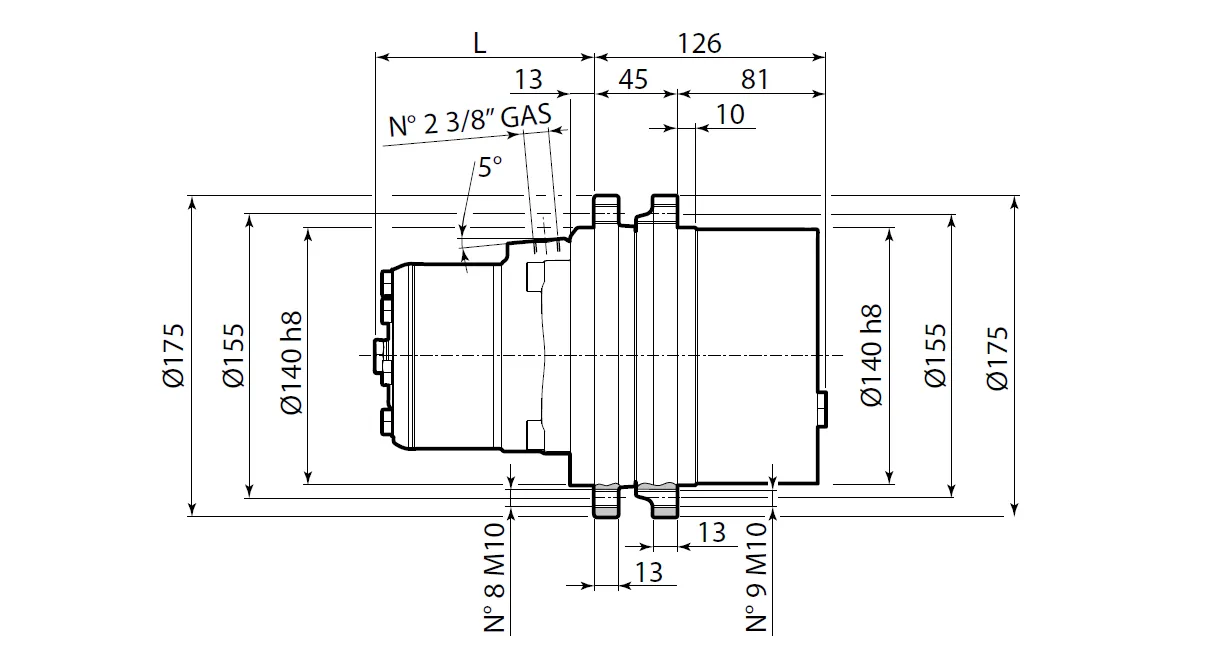
| พิมพ์ | มอเตอร์ดิสพลาซึม [cc] | การกระจายทั้งหมด [cc] | ฉัน | แรงบิด | ความเร็ว n2max | พลัง | |||||||
| ที2คอนท์ | ที2แม็กซ์อินท์ | ที2พี | พีคอนท์ [กิโลวัตต์] | ไพนต์ [กิโลวัตต์] | |||||||||
| [นม] | Δp [บาร์] | [นม] | Δp [บาร์] | [นม] | Δp [บาร์] | [รอบต่อนาที] | พอร์ตาตา ไหล [ลิตร/นาที] | ||||||
| จีอาร์80-เอ็มอาร์50 | 51,6 | 269,9 | 5,23 | 470 | 145 | 570 | 175 | 630 | 205 | 115 | 30 | 5,5 | 7 |
| จีอาร์80-เอ็มอาร์80 | 80,3 | 420,0 | 800 | 145 | 960 | 175 | 1060 | 205 | 68 | 30 | 5,5 | 7 | |
| จีอาร์80-เอ็มอาร์100 | 99,8 | 522,0 | 800 | 115 | 1000 | 145 | 1310 | 205 | 55 | 30 | 5,5 | 7 | |
| จีอาร์80-เอ็มอาร์125 | 125,7 | 657,4 | 800 | 95 | 1000 | 120 | 1500 | 190 | 45 | 30 | 5,5 | 7 | |
| จีอาร์80-เอ็มอาร์160 | 159,6 | 834,7 | 800 | 75 | 1000 | 95 | 1500 | 145 | 33 | 30 | 5 | 7 | |
| จีอาร์80-เอ็มอาร์200 | 199,8 | 1045,0 | 800 | 60 | 1000 | 75 | 1500 | 115 | 26 | 30 | 5 | 7 | |
| จีอาร์80-เอ็มอาร์250 | 249,3 | 1303,8 | 800 | 50 | 1000 | 60 | 1500 | 95 | 21 | 30 | 4,5 | 6 | |
จีอาร์ 200
| พิมพ์ | มอเตอร์ดิสพลาซึม [cc] | การกระจายทั้งหมด [cc] | ฉัน | แรงบิด | ความเร็ว n2สูงสุด | พลัง | |||||||
| ที2ต่อ | ที2แม็กซ์อินท์ | ที2พี | พีคอนท์ [กิโลวัตต์] | ไพนต์ [กิโลวัตต์] | |||||||||
| [นม] | Δp [บาร์] | [นม] | Δp [บาร์] | [นม] | Δp [บาร์] | [รอบต่อนาที] | พอร์ตาตา ไหล [ลิตร/นาที] | ||||||
| จีอาร์200-เอ็มอาร์50 | 51,6 | 319,9 | 6,20 | 560 | 145 | 670 | 175 | 740 | 205 | 98 | 30 | 5,5 | 7 |
| จีอาร์200-เอ็มอาร์80 | 80,3 | 497,9 | 950 | 145 | 1150 | 175 | 1250 | 205 | 58 | 30 | 5,5 | 7 | |
| จีอาร์200-เอ็มอาร์100 | 99,8 | 618,8 | 1180 | 145 | 1420 | 175 | 1560 | 205 | 46 | 30 | 5,5 | 7 | |
| จีอาร์200-เอ็มอาร์125 | 125,7 | 779,3 | 1450 | 145 | 1750 | 175 | 1920 | 205 | 38 | 30 | 5,5 | 7 | |
| จีอาร์200-เอ็มอาร์160 | 159,6 | 989,5 | 1600 | 125 | 2100 | 165 | 2450 | 205 | 29 | 30 | 5 | 7 | |
| จีอาร์200-เอ็มอาร์200 | 199,8 | 1238,8 | 1600 | 100 | 2150 | 135 | 2500 | 165 | 23 | 30 | 5 | 7 | |
| จีอาร์200-เอ็มอาร์250 | 249,3 | 1545,7 | 1600 | 80 | 2150 | 105 | 2500 | 135 | 18 | 30 | 4,5 | 6 | |
| จีอาร์200-เอ็มอาร์315 | 315,7 | 1957,3 | 1600 | 65 | 2150 | 85 | 2500 | 110 | 15 | 30 | 4 | 5 | |
| จีอาร์200-เอ็มอาร์375 | 372,6 | 2310,1 | 1600 | 55 | 2150 | 70 | 2500 | 90 | 12 | 30 | 3,5 | 4,5 | |
อีเอช 210
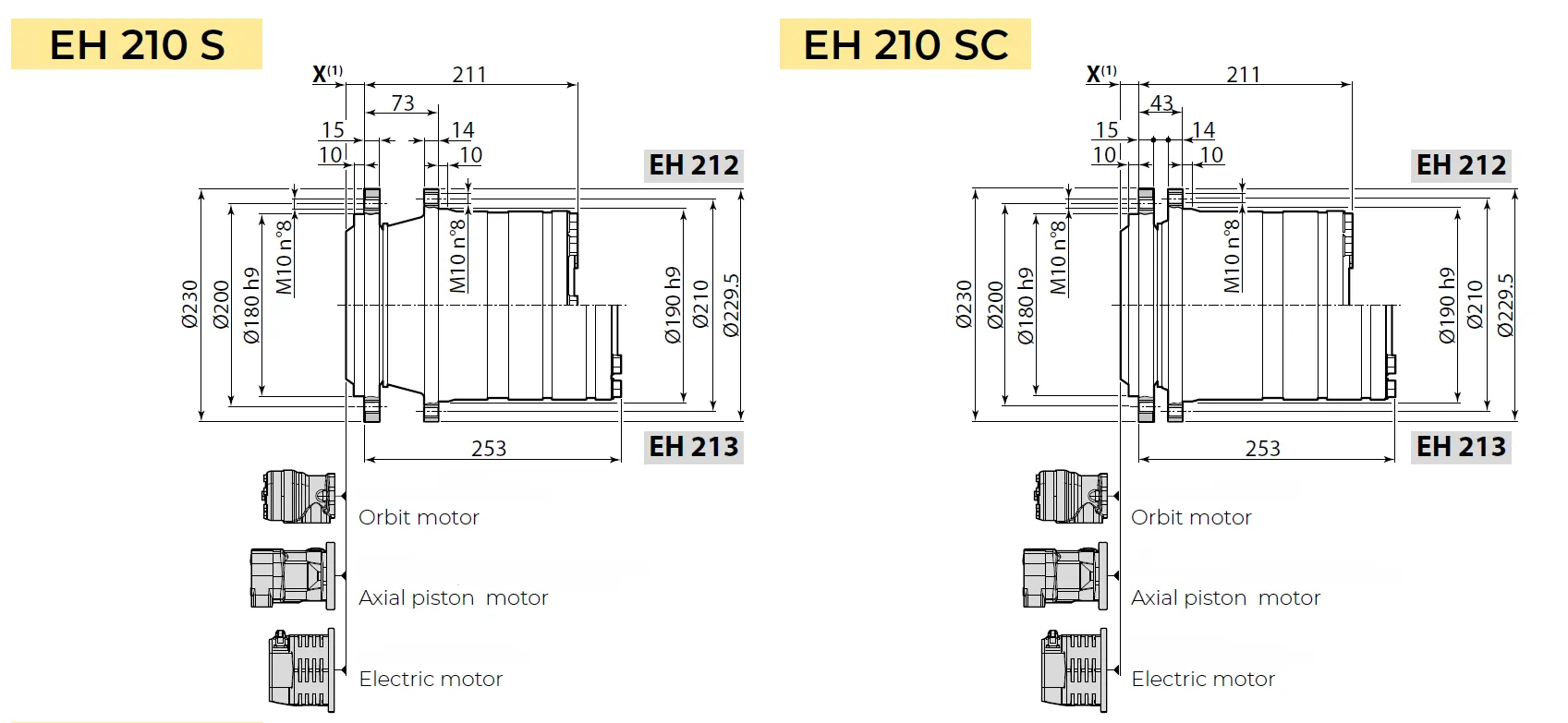
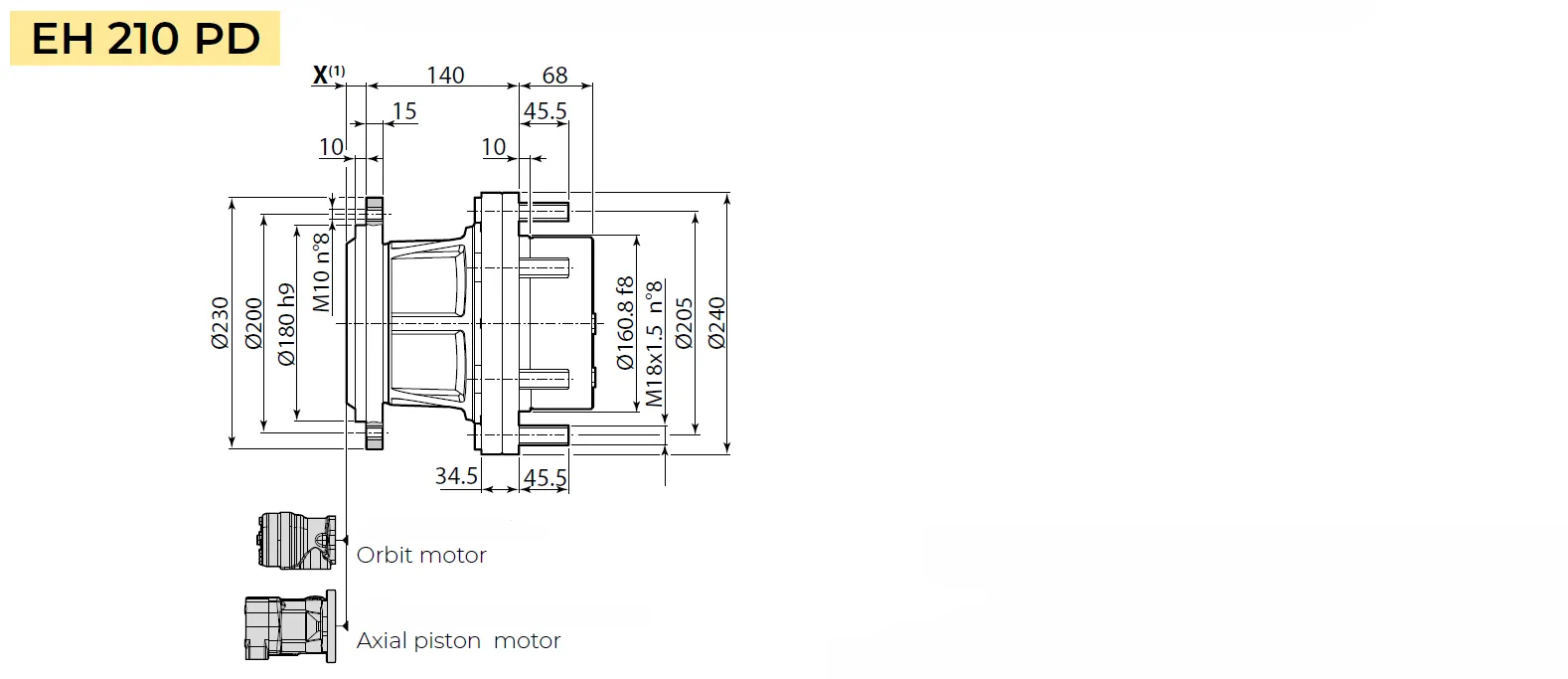
| พิมพ์ | น้ำหนัก | ปริมาณน้ำมัน | i (da÷a / From÷to) | ที2แม็กซ์ [นม] | n1max [รอบต่อนาที] | ||||
| อีเอช 212 | อีเอช 213 | อีเอช 212 | อีเอช 213 | อีเอช 212 | อีเอช 213 | ||||
| อีเอช 210 เอส | 35 | 40 | 0.8 | 1 | 11 ÷ 29 | 41 ÷ 129 | 3950 | 3500 | |
| อีเอช 210 เอสซี | |||||||||
| อีเอช 210 พีดี | - | - | |||||||
อีเอช 240
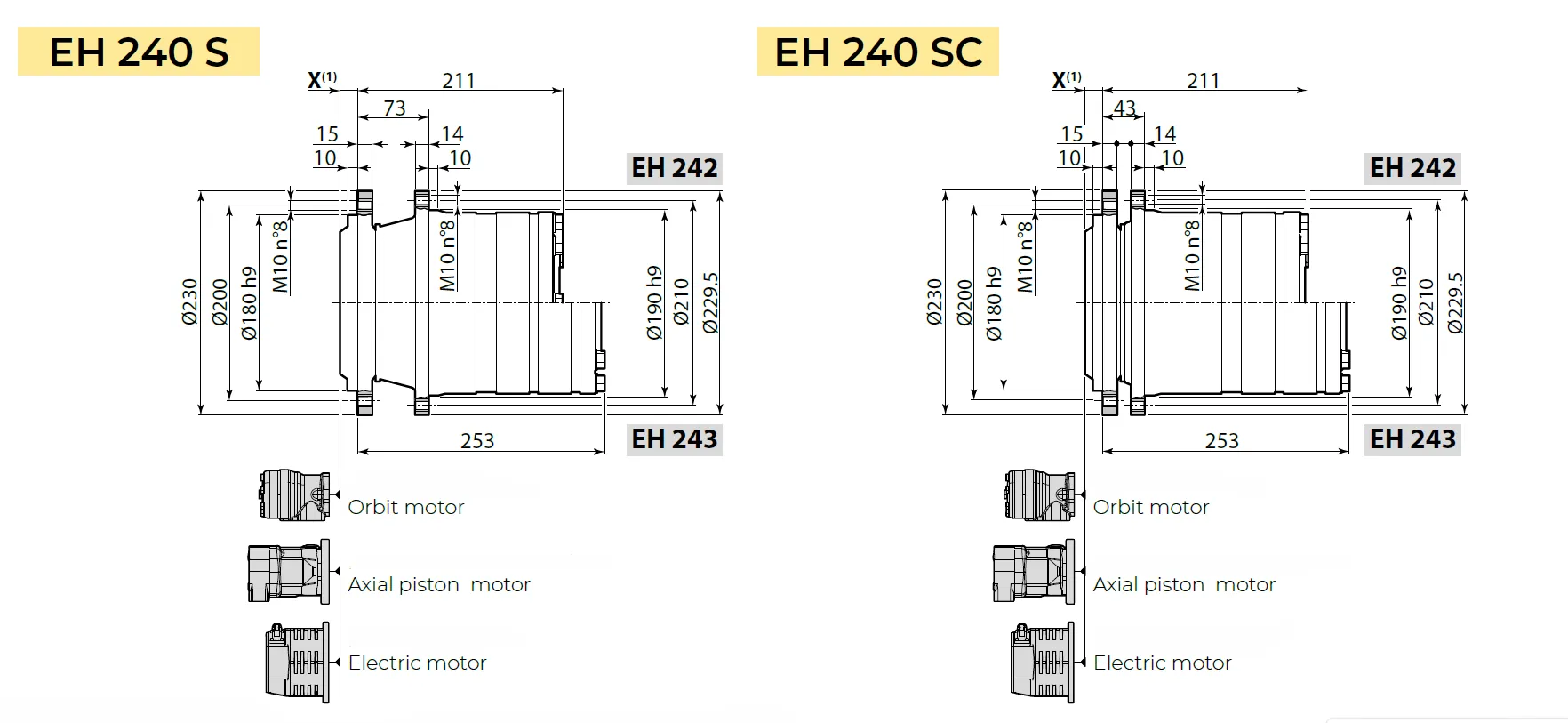
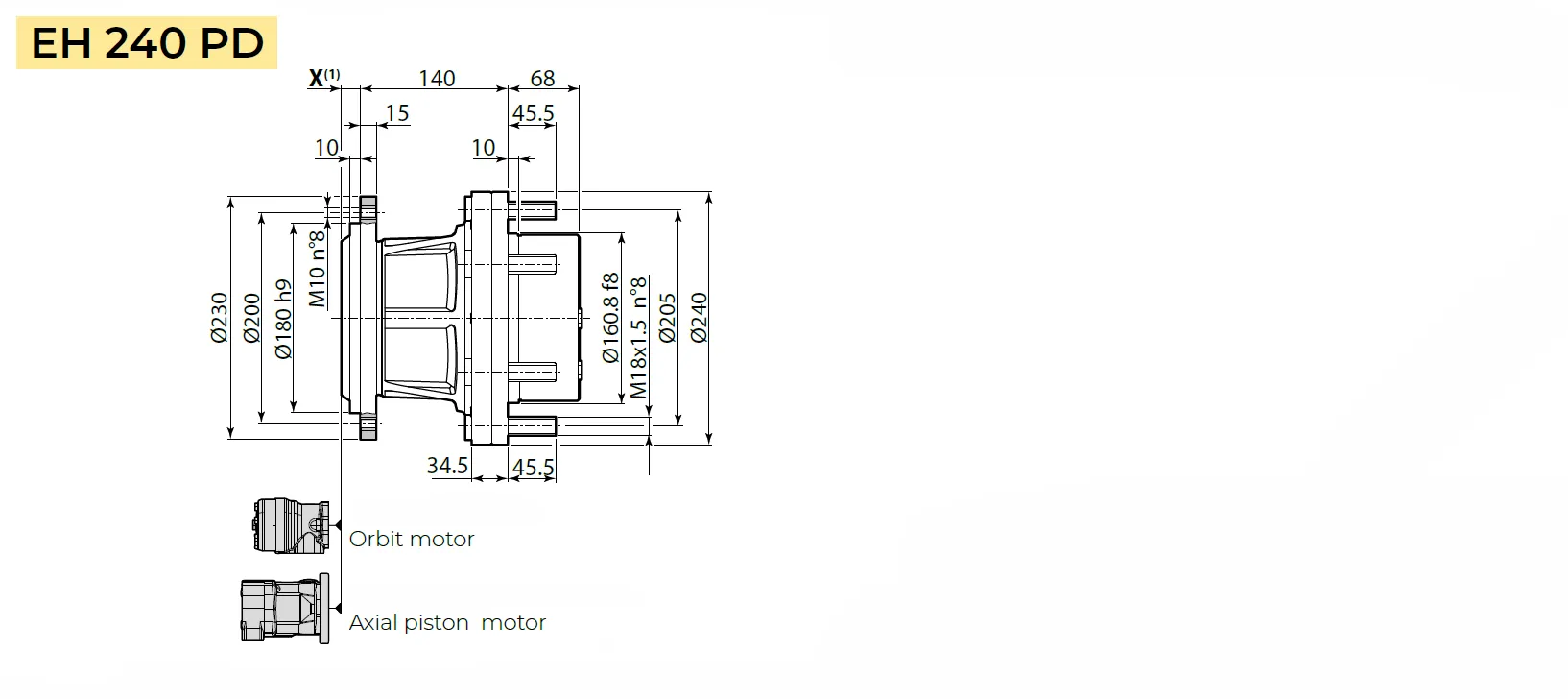
| พิมพ์ | น้ำหนัก | ปริมาณน้ำมัน | i (da÷a / From÷to) | ที2แม็กซ์ [นม] | n1max [รอบต่อนาที] | ||||
| อีเอช 242 | อีเอช 243 | อีเอช 242 | อีเอช 243 | อีเอช 242 | อีเอช 243 | ||||
| อีเอช 240 เอส | 35 | 40 | 0.8 | 1 | 12 ÷ 31 | 45 ÷ 135 | 5600 | 3500 | |
| อีเอช 240 เอสซี | |||||||||
| อีเอช 240 พีดี | - | - | |||||||
อีเอช 350
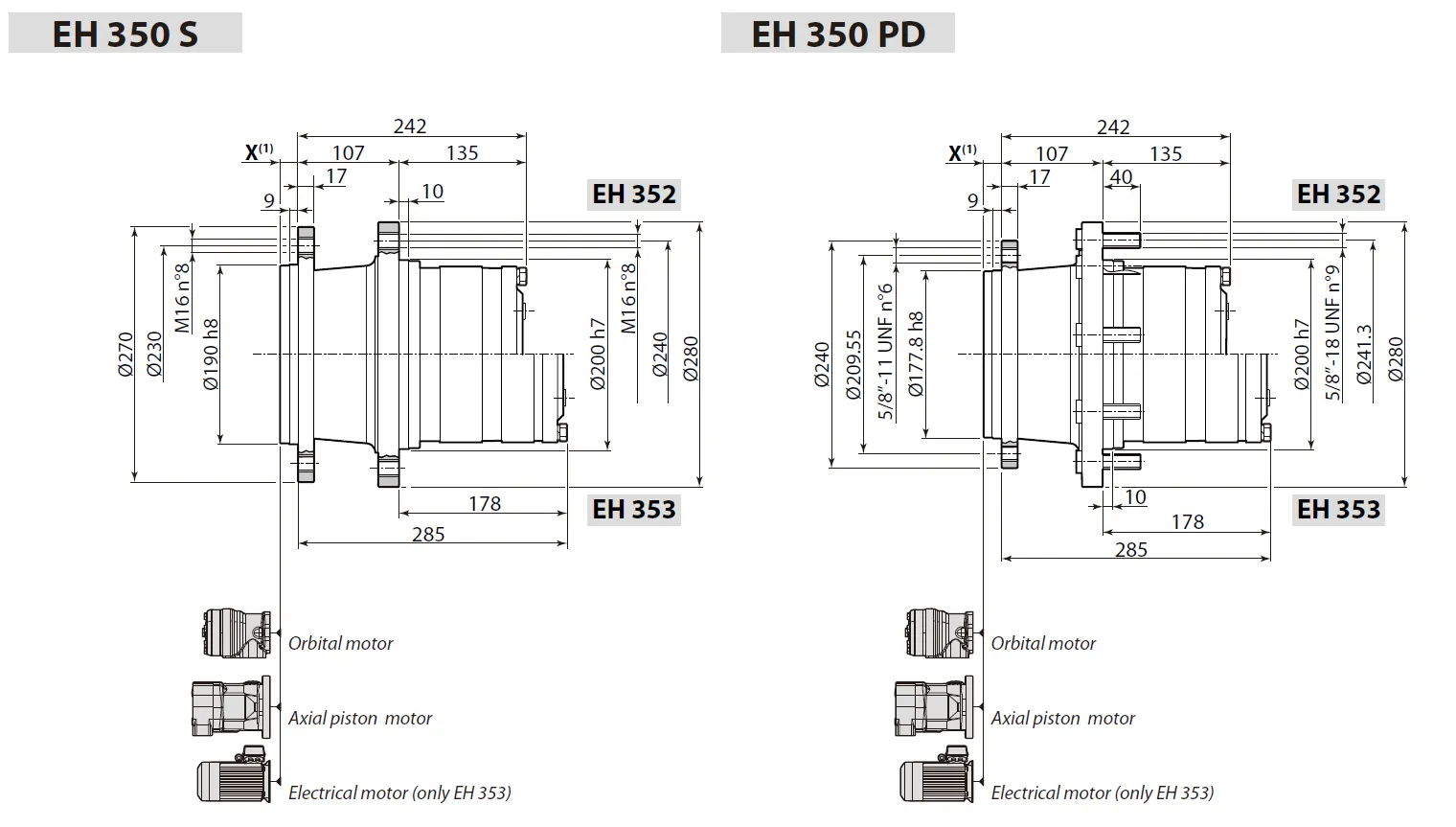
| พิมพ์ | น้ำหนัก | ปริมาณน้ำมัน | i (da÷a / From÷to) | ที2แม็กซ์ [นม] | n1max [รอบต่อนาที] | ||||
| อีเอช 352 | อีเอช 353 | อีเอช 352 | อีเอช 353 | อีเอช 352 | อีเอช 353 | ||||
| อีเอช 350 เอส | 55 | 60 | 1 | 1.2 | 15 ÷ 31 | 52 ÷ 135 | 7200 | 3500 | |
| อีเอช 350 พีดี | |||||||||
อีเอช 610
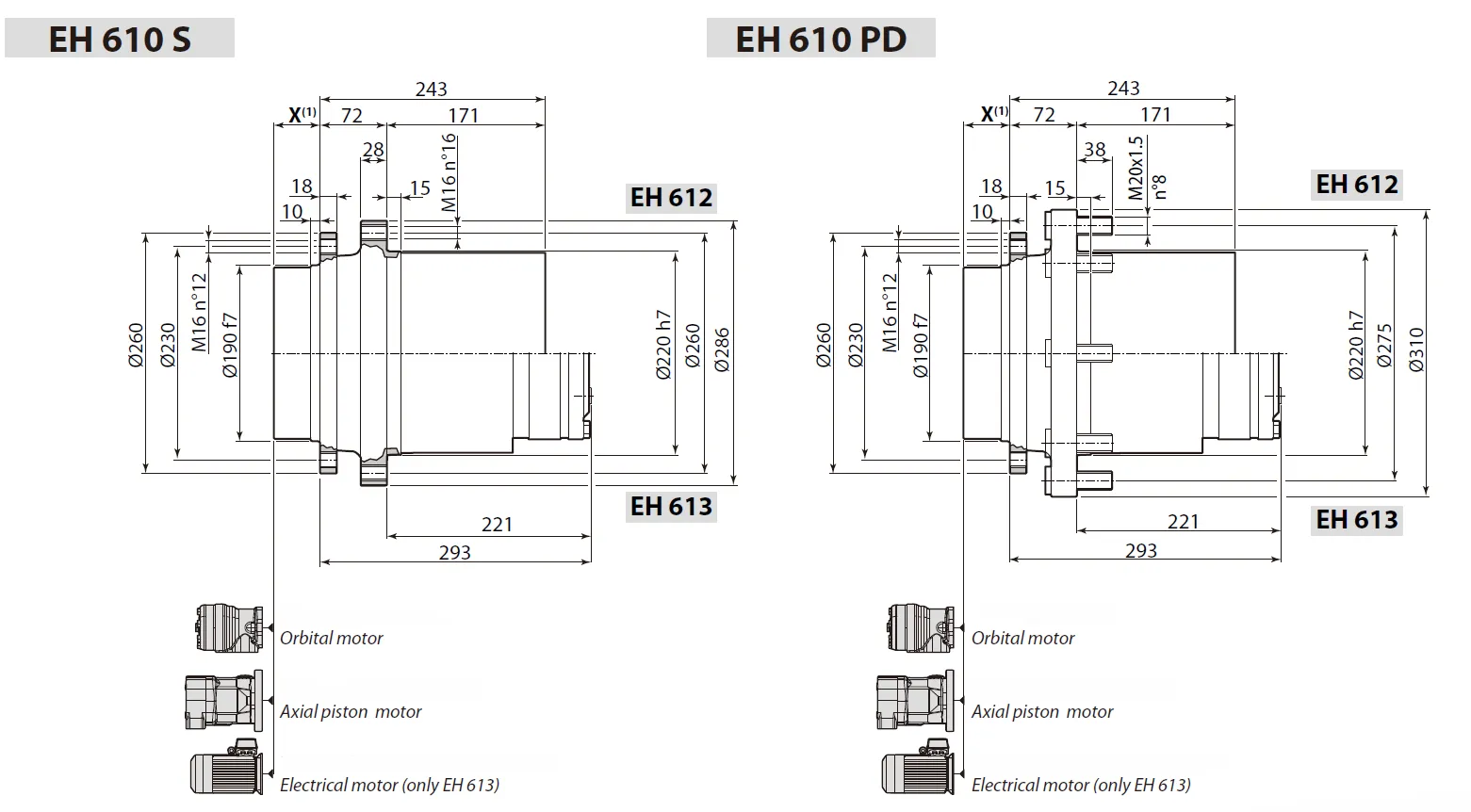
| พิมพ์ | น้ำหนัก | ปริมาณน้ำมัน | i (da÷a / From÷to) | ที2แม็กซ์ [นม] | n1max [รอบต่อนาที] | ||||
| อีเอช 612 | อีเอช 613 | อีเอช 612 | อีเอช 613 | อีเอช 612 | อีเอช 613 | ||||
| อีเอช 610 เอส | 60 | 70 | 1.2 | 1.5 | 12 ÷ 31 | 47 ÷ 138 | 13500 | 3500 | |
| อีเอช 610 พีดี | |||||||||
อีเอช 910
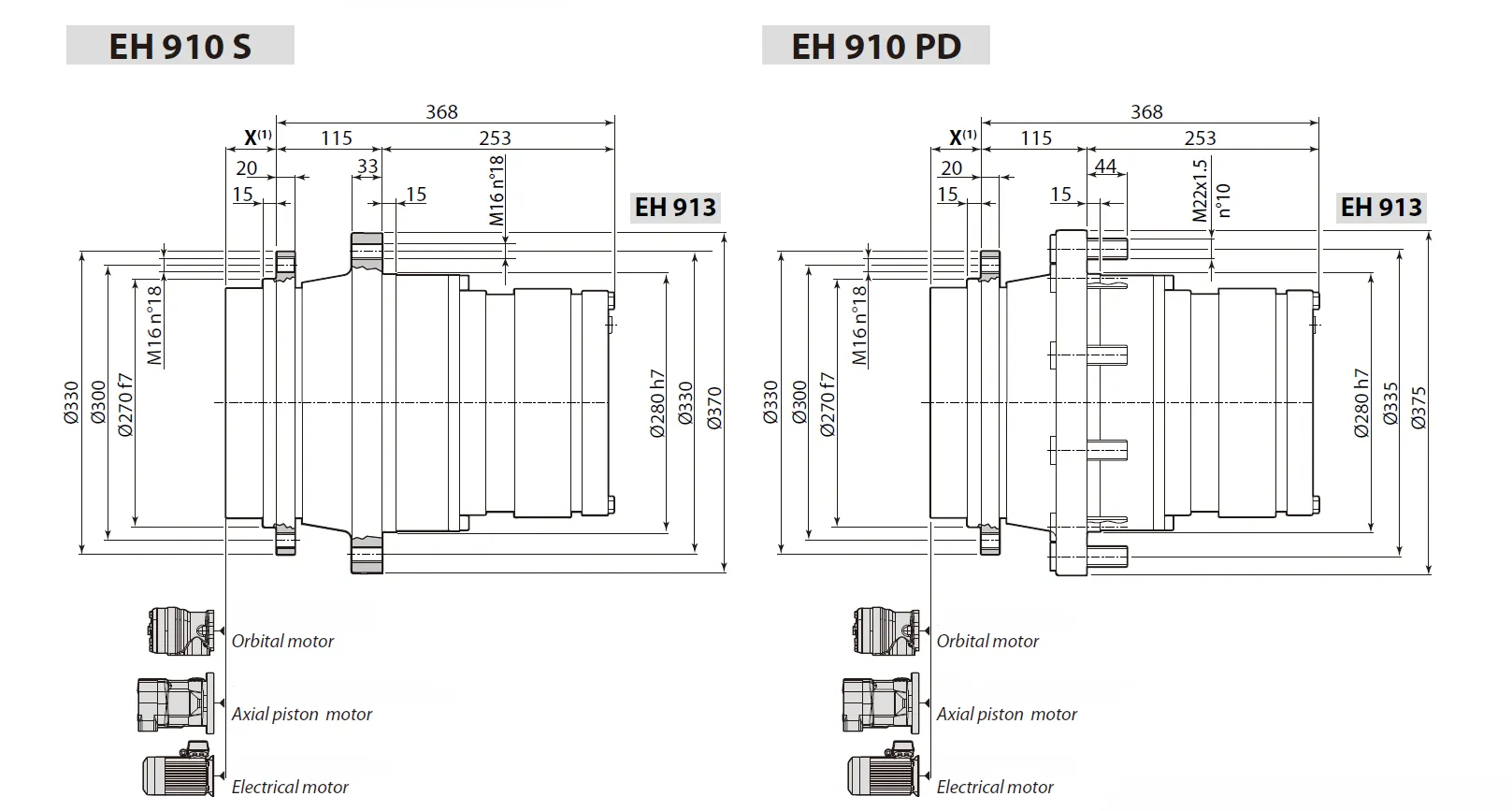
| พิมพ์ | น้ำหนัก | ปริมาณน้ำมัน | i (da÷a / From÷to) | ที2แม็กซ์ | n1max | |
| อีเอช 913 | อีเอช 913 | อีเอช 913 | [นม] | [รอบต่อนาที] | ||
| อีเอช 910 เอส | 130 | 1 | 47 ÷ 131 | 24200 | 3500 | |
| อีเอช 910 พีดี | ||||||
เวอร์ชั่น S

| ขนาด | มิติ | ||||||||||
| ดี1 | ดี2 | ดี3 | ดี4 | ดี5 | ดี6 | ดี7 | ดี8 | แอล1 | แอล2 | แอล3 | |
| อีเอช 210 เอส | 230 | 200 | 180 น. | 190 น. | 210 | 229.5 | M10 หมายเลข 8 | M10 หมายเลข 8 | 253 | 73 | 180 |
| อีเอช 240 เอส | 230 | 200 | 180 น. | 190 น. | 210 | 229.5 | M10 หมายเลข 8 | M10 หมายเลข 8 | 253 | 73 | 180 |
| อีเอช 350 เอส | 270 | 230 | 190 น. | 200 ชั่วโมง | 240 | 280 | M16 หมายเลข 8 | M16 หมายเลข 8 | 242 | 107 | 178 |
| อีเอช 610 เอส | 260 | 230 | 190 ฟ7 | 220 น. | 260 | 286 | M16 หมายเลข 12 | M16 หมายเลข 16 | 243 | 72 | 171 |
| อีเอช 910 เอส | 330 | 300 | 270 ฟ7 | 280 น. | 350 | 370 | M16 หมายเลข 18 | M16 หมายเลข 18 | 368 | 115 | 253 |
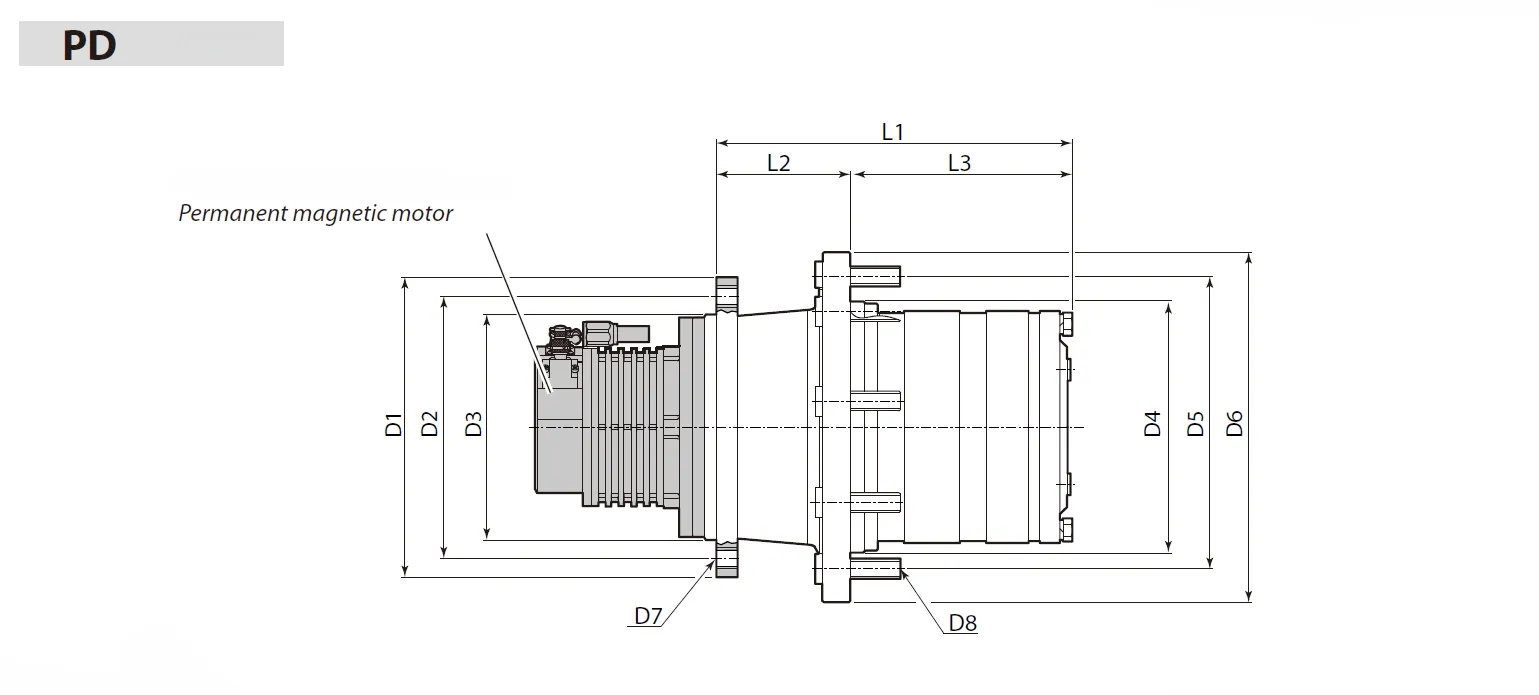
เวอร์ชัน PD
| ขนาด | มิติ | ||||||||||
| ดี1 | ดี2 | ดี3 | ดี4 | ดี5 | ดี6 | ดี7 | ดี8 | แอล1 | แอล2 | แอล3 | |
| อีเอช 210 พีดี | 230 | 200 | 180 น. | 160.8 ฟ.8 | 205 | 240 | M10 (8x) | M18x1.5 (6x) | 210 | 140 | 70 |
| อีเอช 240 พีดี | 230 | 200 | 180 น. | 160.8 ฟ.8 | 205 | 240 | M10 (8x) | M18x1.5 (6x) | 210 | 140 | 70 |
| อีเอช 350 พีดี | 240 | 209.55 | 177.8 ชั่วโมง | 200 ชั่วโมง | 241.3 | 280 | 5/8"-11 UNC (6x) | 5/8"-19 UNF (9x) | 285 | 107 | 178 |
| อีเอช 610 พีดี | 260 | 230 | 190 ฟ7 | 220 น. | 275 | 310 | M16 (12x) | M20x1.5 (8x) | 293 | 72 | 221 |
| อีเอช 910 พีดี | 330 | 300 | 270 ฟ7 | 280 น. | 335 | 375 | M16 (18x) | M22x1.5 (10x) | 368 | 115 | 253 |
ข้อดีของระบบเกียร์ดาวเคราะห์ขับเคลื่อนล้อสำหรับรถเกี่ยวข้าว
1. ดีไซน์กะทัดรัดและประหยัดพื้นที่
ชุดเกียร์ขับเคลื่อนล้อแบบดาวเคราะห์นี้มีโครงสร้างที่กะทัดรัดมาก ซึ่งผสานรวมเข้ากับดุมล้อของเครื่องเกี่ยวข้าวได้อย่างลงตัว ช่วยลดขนาดโดยรวมของตัวรถโดยไม่ลดทอนประสิทธิภาพ การจัดเรียงเฟืองแบบเอพิไซคลิกช่วยลดพื้นที่การใช้งาน ทำให้สามารถใช้พื้นที่สำหรับส่วนประกอบสำคัญอื่นๆ ได้อย่างเหมาะสม ในขณะที่ยังคงรักษาความสามารถในการส่งกำลังที่แข็งแกร่ง ซึ่งจำเป็นต่อการขับขี่ในสภาพพื้นที่แคบๆ
2. การเพิ่มแรงบิดและกำลังส่งสูง
ด้วยการใช้เฟืองดวงอาทิตย์ เฟืองดาวเคราะห์ และเฟืองวงแหวน ระบบเฟืองดาวเคราะห์จึงสามารถเพิ่มแรงบิดได้อย่างมาก ส่งกำลังไปยังล้อได้อย่างมีประสิทธิภาพมากขึ้นสำหรับการรับน้ำหนักมากในระหว่างการเก็บเกี่ยว ส่งผลให้การยึดเกาะบนพื้นผิวที่ไม่เรียบดีขึ้น ลดการลื่นไถล และเพิ่มผลผลิตในสภาพดินที่ยากลำบากซึ่งเกียร์แบบดั้งเดิมอาจรับมือไม่ไหว
3. ประสิทธิภาพที่เหนือกว่าและประหยัดเชื้อเพลิง
การออกแบบนี้ส่งเสริมการส่งกำลังอย่างมีประสิทธิภาพโดยมีการสูญเสียพลังงานน้อยที่สุด ส่งผลให้ประหยัดเชื้อเพลิงและยืดระยะเวลาการทำงานของเครื่องเกี่ยวข้าว การปรับการทำงานของเฟืองให้เหมาะสมช่วยลดแรงเสียดทานและการเกิดความร้อน ซึ่งเอื้อต่อการทำเกษตรกรรมอย่างยั่งยืนโดยการลดความต้องการพลังงานโดยรวม ในขณะที่ยังคงรักษาความเร็วและประสิทธิภาพที่สม่ำเสมอในภาระงานที่แตกต่างกัน
4. อัตราทดเกียร์อเนกประสงค์เพื่อความยืดหยุ่นในการใช้งาน
ด้วยอัตราทดเกียร์ที่หลากหลาย ระบบเกียร์แบบเฟืองดาวเคราะห์ช่วยให้ควบคุมความเร็วและปรับแรงบิดได้อย่างแม่นยำ เหมาะสำหรับงานเก็บเกี่ยวเฉพาะด้าน เช่น การตัดหรือการนวดข้าว ความอเนกประสงค์นี้ช่วยเพิ่มความคล่องตัวในสภาพแวดล้อมการทำงานที่หลากหลาย ทำให้ผู้ใช้งานสามารถสลับระหว่างการขนส่งความเร็วสูงและการทำงานที่ต้องการความแม่นยำด้วยความเร็วต่ำได้อย่างราบรื่นโดยไม่เกิดความเมื่อยล้าทางกลไก
5. การทำงานที่เสถียร ลดเสียงรบกวนและการสั่นสะเทือน
ระบบเฟืองดาวเคราะห์ที่มีความสมดุลในตัว ช่วยให้การทำงานราบรื่น เสถียร มีระดับเสียงต่ำ และการสั่นสะเทือนน้อยที่สุด ช่วยเพิ่มความสะดวกสบายให้กับผู้ปฏิบัติงานในระหว่างการเก็บเกี่ยวที่ยาวนาน ความเสถียรนี้ยังช่วยยืดอายุการใช้งานของชิ้นส่วนที่เชื่อมต่อในเครื่องเก็บเกี่ยวข้าวโพด ในขณะที่ฟีเจอร์แบบบูรณาการ เช่น การจัดการน้ำมันที่ได้รับการปรับให้เหมาะสม ช่วยเพิ่มความน่าเชื่อถือในการใช้งานที่มีความต้องการสูง
สถานการณ์การใช้งานเกียร์ขับเคลื่อนล้อเฟืองดาวเคราะห์
1. อุตสาหกรรมเกษตร
ในภาคเกษตรกรรม เกียร์ทดรอบแบบเฟืองดาวเคราะห์มีความสำคัญอย่างยิ่งต่อการขับเคลื่อนเครื่องเก็บเกี่ยว รถแทรกเตอร์ และเครื่องผสมอาหารสัตว์ ช่วยให้การส่งแรงบิดมีประสิทธิภาพและเพิ่มแรงฉุดบนพื้นผิวที่ไม่เรียบ การออกแบบที่แข็งแรงทนทานช่วยให้ทนต่อสภาพแวดล้อมที่รุนแรง เช่น โคลนและฝุ่น ช่วยเพิ่มความน่าเชื่อถือในการทำงานและผลผลิตระหว่างการเก็บเกี่ยวพืชผลและการปฏิบัติงานในไร่
2. อุตสาหกรรมการก่อสร้าง
เครื่องจักรกลก่อสร้าง เช่น รถขุด รถตัก และเครน ใช้ระบบขับเคลื่อนล้อแบบเฟืองดาวเคราะห์สำหรับการหมุนและการขับเคลื่อนตีนตะขาบ ทำให้เกิดแรงบิดสูงเพื่อรับมือกับน้ำหนักบรรทุกหนักและการเคลื่อนไหวที่แม่นยำในสถานที่ก่อสร้าง ซึ่งช่วยเพิ่มเสถียรภาพของเครื่องจักร ลดเวลาหยุดทำงาน และสนับสนุนการจัดการวัสดุอย่างมีประสิทธิภาพในสภาพแวดล้อมที่ท้าทาย
3. อุตสาหกรรมเหมืองแร่
การดำเนินงานเหมืองแร่พึ่งพาเกียร์ทดรอบแบบเฟืองดาวเคราะห์ในระบบขับเคลื่อนแบบตีนตะขาบและหัวตัดสำหรับอุปกรณ์ใต้ดินและบนพื้นดิน ซึ่งให้ความทนทานและแรงบิดที่เหนือกว่าสำหรับการเคลื่อนที่ในภูมิประเทศที่ขรุขระและการสกัดทรัพยากร โครงสร้างที่กะทัดรัดช่วยลดพื้นที่ที่ต้องการในขณะที่รับประกันประสิทธิภาพที่เชื่อถือได้ภายใต้แรงกดดันสูงและสภาวะการสึกหรอที่รุนแรง
4. อุตสาหกรรมโลจิสติกส์และการขนถ่ายวัสดุ
ในด้านโลจิสติกส์ ชุดเกียร์ทดรอบแบบขับเคลื่อนล้อเหล่านี้ใช้ขับเคลื่อนรถนำทางอัตโนมัติ (AGV) รถยก และรถบรรทุกอุตสาหกรรม โดยให้การควบคุมความเร็วที่แม่นยำและประสิทธิภาพสูงสำหรับงานระบบอัตโนมัติในคลังสินค้าและงานโลจิสติกส์ภายใน ซึ่งช่วยให้การขนส่งวัสดุเป็นไปอย่างราบรื่น ลดการใช้พลังงาน และเพิ่มปริมาณงานในศูนย์กระจายสินค้าและโรงงานผลิต
5. อุตสาหกรรมยานยนต์
ในอุตสาหกรรมยานยนต์ มีการนำระบบเกียร์ทดรอบแบบเฟืองดาวเคราะห์มาใช้ในรถออฟโรด ระบบส่งกำลัง และระบบขับเคลื่อนไฟฟ้า ทำให้สามารถปรับอัตราทดเกียร์ได้หลากหลาย ส่งผลให้เร่งความเร็วได้ดีขึ้นและประหยัดเชื้อเพลิงมากขึ้น โครงสร้างที่เบาแต่แข็งแรงรองรับโซลูชันการเคลื่อนที่ขั้นสูง ช่วยเพิ่มประสิทธิภาพของยานยนต์ทั้งในภาคผู้โดยสารและภาคพาณิชย์
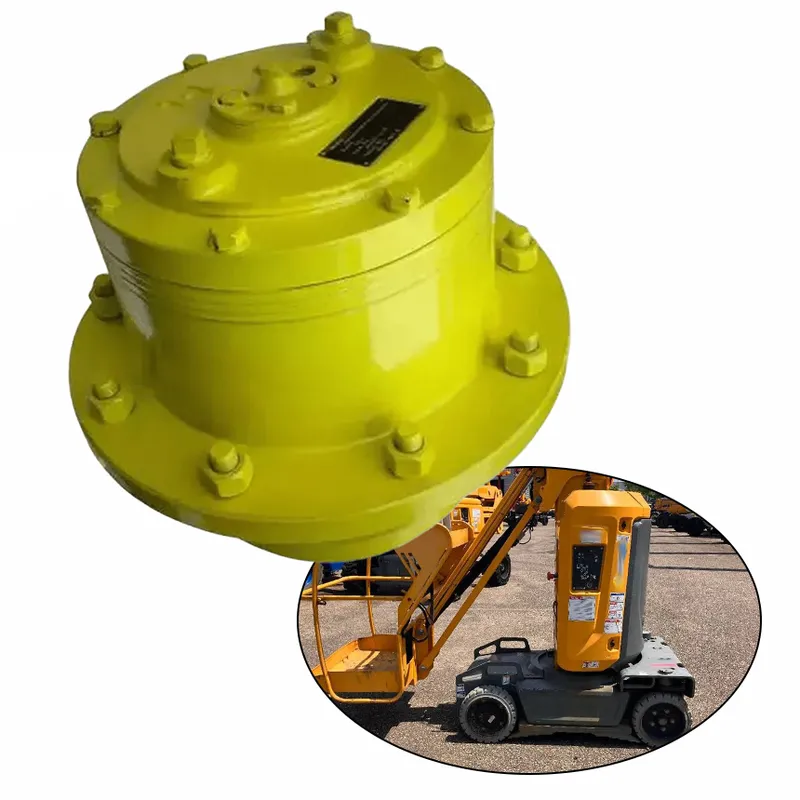
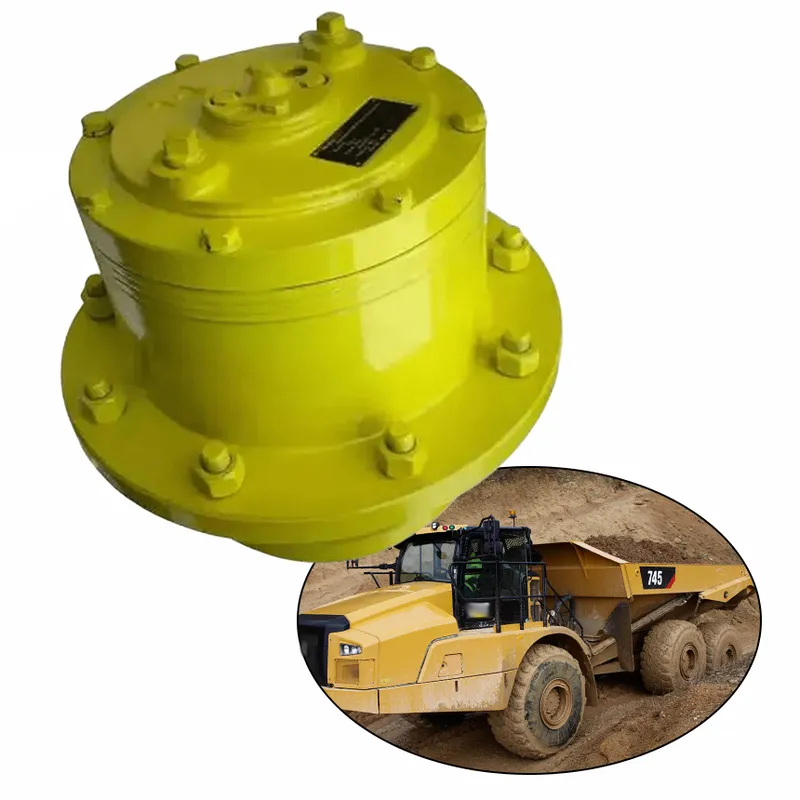
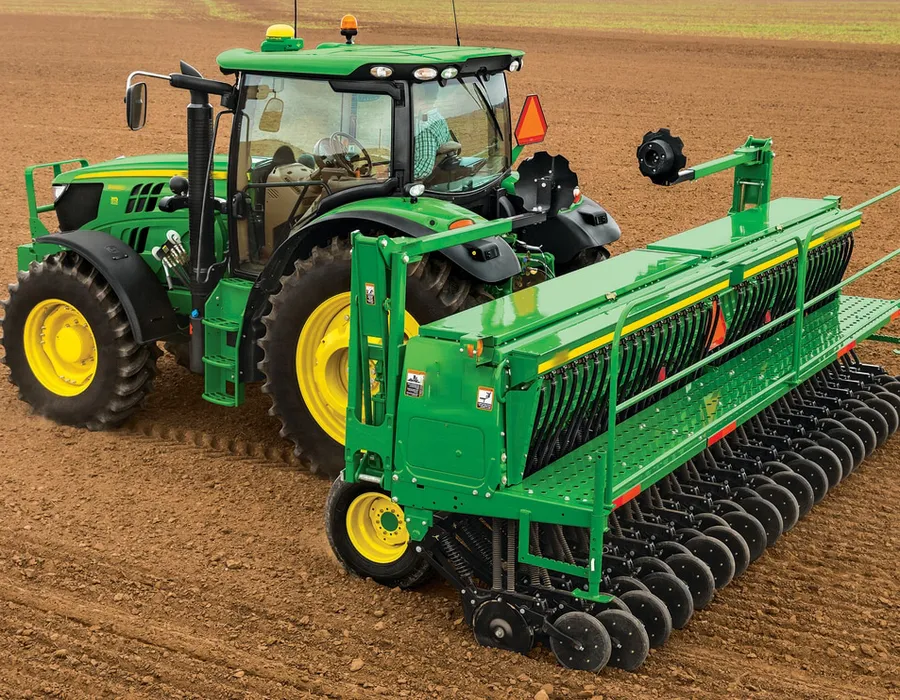 | 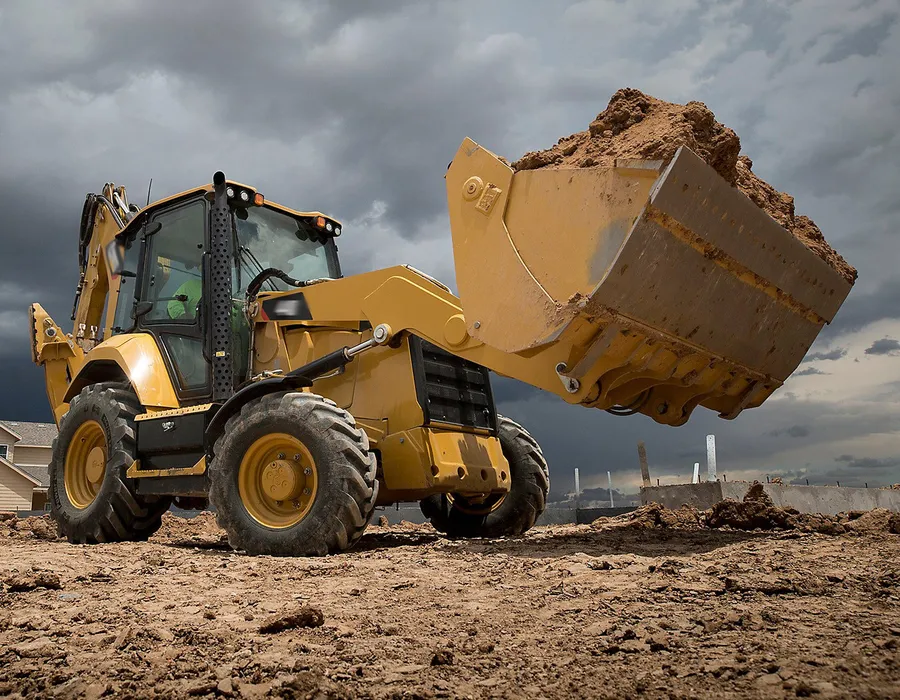 |
| ระบบขับเคลื่อนล้อแบบดาวเคราะห์สำหรับเครื่องปลูกข้าวสาลี | ระบบขับเคลื่อนล้อแบบเฟืองดาวเคราะห์สำหรับรถขุดตัก |
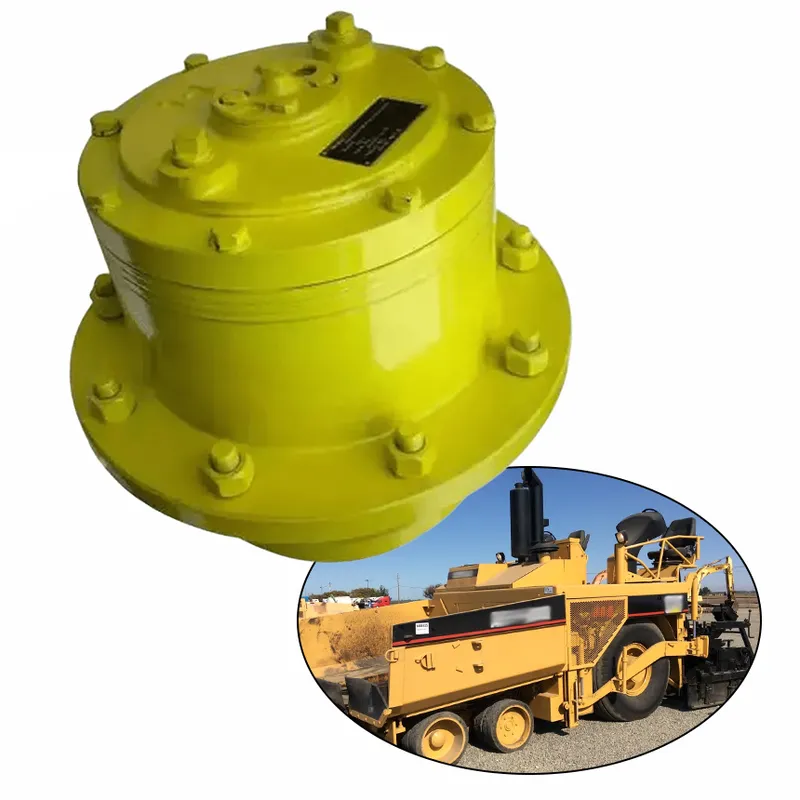
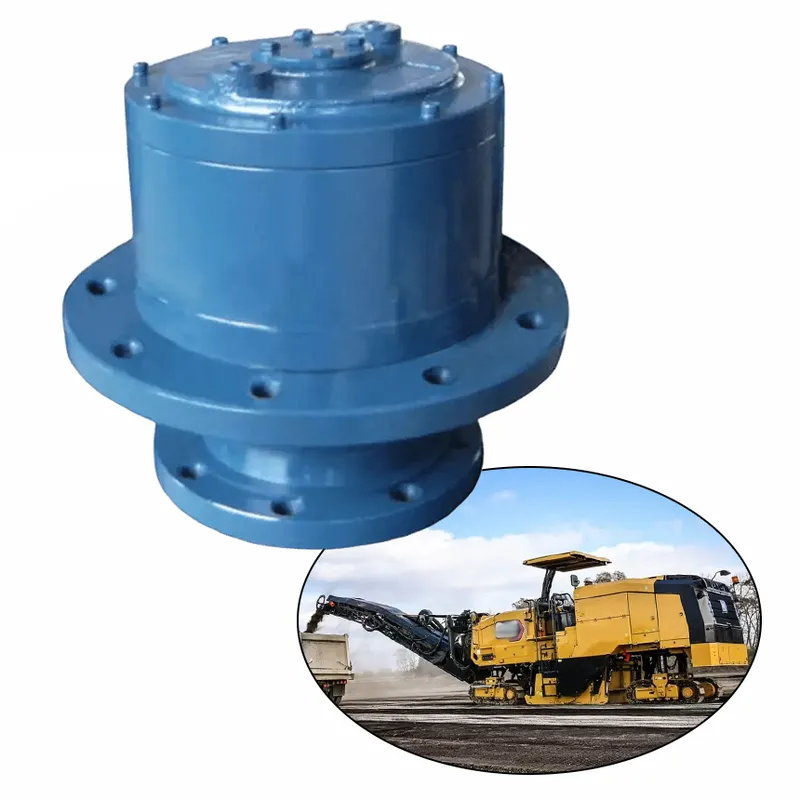
 | 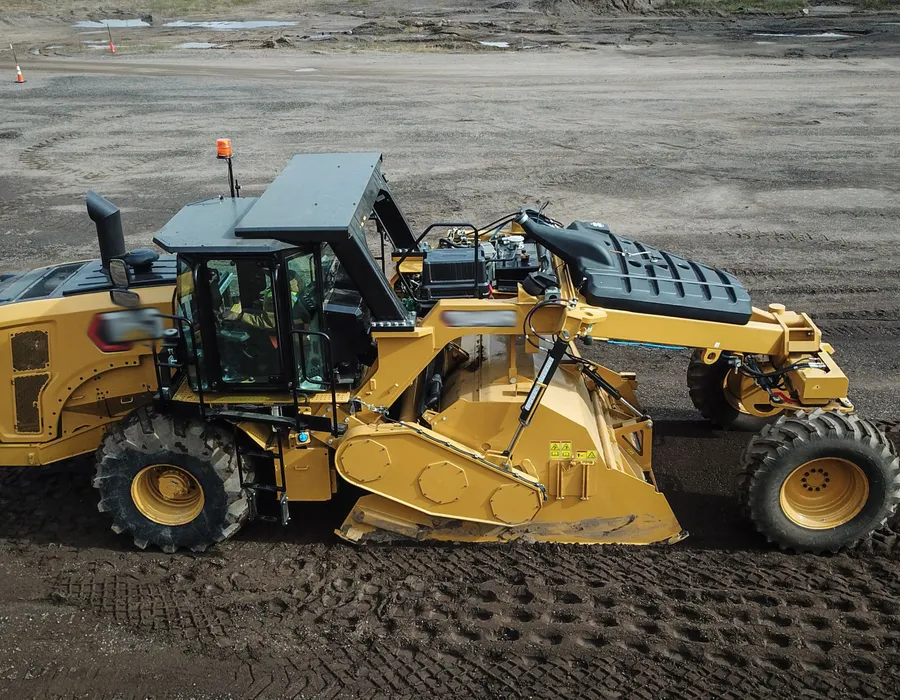 |
| ระบบขับเคลื่อนล้อแบบดาวเคราะห์สำหรับรถบดถนน | ระบบขับเคลื่อนล้อแบบดาวเคราะห์สำหรับเครื่องถมถนน |
การหล่อลื่นน้ำมันของเกียร์เฟืองดาวเคราะห์แบบขับเคลื่อนล้อ
1. เตรียมเกียร์และรวบรวมวัสดุ
เริ่มด้วยการจอดรถหรือเครื่องจักรบนพื้นราบ ดึงเบรกมือ และปล่อยให้เกียร์ขับเคลื่อนล้อเย็นลงหากเพิ่งใช้งานเพื่อป้องกันการไหม้ เตรียมเครื่องมือที่จำเป็นให้พร้อม รวมถึงถาดรองน้ำมัน ประแจ และน้ำมันหล่อลื่นที่แนะนำ เช่น น้ำมัน ISO VG 220 ถึง 320 ที่มีสารเติมแต่ง EP โดยตรวจสอบข้อมูลจำเพาะของคู่มือเกี่ยวกับความหนืดตามอุณหภูมิการทำงาน
2. ถ่ายน้ำมันเครื่องเก่าออก
วางถาดรองน้ำมันไว้ใต้ชุดเกียร์เฟืองดาวเคราะห์ ถอดปลั๊กถ่ายน้ำมันโดยใช้แรงบิดที่เหมาะสมเพื่อหลีกเลี่ยงความเสียหาย และปล่อยให้น้ำมันเก่าไหลออกจนหมดในขณะที่น้ำมันหล่อลื่นยังอุ่นอยู่เพื่อให้ไหลได้ง่ายขึ้น ขั้นตอนนี้ช่วยกำจัดสิ่งปนเปื้อนและน้ำมันที่เสื่อมสภาพ โดยปกติจะทำหลังจากใช้งานครั้งแรก 50 ชั่วโมง และหลังจากนั้นทุกๆ 500 ชั่วโมง
3. ทำความสะอาดและตรวจสอบเกียร์
หลังจากถ่ายน้ำมันออกแล้ว ให้ล้างภายในด้วยน้ำยาทำความสะอาดที่เหมาะสมหรือน้ำมันใหม่เพื่อขจัดคราบตะกอนและเศษสิ่งสกปรกที่ตกค้าง จากนั้นตรวจสอบส่วนประกอบภายใน เช่น เฟืองและลูกปืน ว่ามีการสึกหรอหรือเสียหายหรือไม่ ติดตั้งปลั๊กถ่ายน้ำมันกลับเข้าไปให้แน่นด้วยแรงบิดที่กำหนด ตรวจสอบให้แน่ใจว่าไม่มีการรั่วซึม เพื่อรักษาความสมบูรณ์ของระบบก่อนเติมน้ำมันใหม่
4. เลือกและเติมสารหล่อลื่นที่เหมาะสม
เลือกชนิดน้ำมันที่ถูกต้อง เช่น น้ำมันเกรด GL-5 EP 80/90 สำหรับการใช้งานทั่วไป หรือน้ำมันสังเคราะห์สำหรับสภาพแวดล้อมที่มีความร้อนสูง แล้วเทลงไปในรูเติมน้ำมันจนถึงระดับที่กำหนด ซึ่งโดยทั่วไปจะอยู่กึ่งกลางของชุดเฟืองสำหรับการติดตั้งในแนวตั้ง หรือถึงเส้นศูนย์กลางสำหรับการติดตั้งในแนวนอน
5. ตรวจสอบปริมาณการบรรจุและปิดฝาให้สนิท
เติมน้ำมันต่อไปจนกว่าจะเริ่มล้นออกมาจากรูวัดระดับ จากนั้นหยุดพักเพื่อให้ระดับน้ำมันลดลงก่อนเติมให้เต็มหากจำเป็น โดยตรวจสอบให้แน่ใจว่าปริมาณน้ำมันตรงกับคำแนะนำในคู่มือ เช่น 8 ถึง 14 ควอร์ต ขึ้นอยู่กับทิศทางการติดตั้ง ขันฝาปิดทั้งหมดให้แน่น รวมถึงฝาปิดช่องระบายอากาศและฝาปิดวัดระดับน้ำมัน ตามแรงบิดที่แนะนำเพื่อป้องกันการอุดตันของอากาศหรือการรั่วซึม
6. ทดสอบและตรวจสอบการหล่อลื่น
เดินเครื่องเกียร์ทดรอบแบบดาวเคราะห์ด้วยความเร็วต่ำสักครู่เพื่อให้น้ำมันไหลเวียน จากนั้นตรวจสอบระดับน้ำมันอีกครั้งหลังจากนั้นไม่กี่นาที เติมน้ำมันเพิ่มหากจำเป็น และตรวจสอบรอยรั่วรอบซีล ทำการทดสอบการขับขี่ระยะสั้นหรือตรวจสอบการทำงานเพื่อยืนยันการทำงานที่ราบรื่น ปรับแต่งตามความจำเป็นเพื่อให้มั่นใจถึงความน่าเชื่อถือในระยะยาวและลดแรงเสียดทาน
ข้อมูลเพิ่มเติม
| เรียบเรียงโดย | วายเจเอ็กซ์ |
|---|