
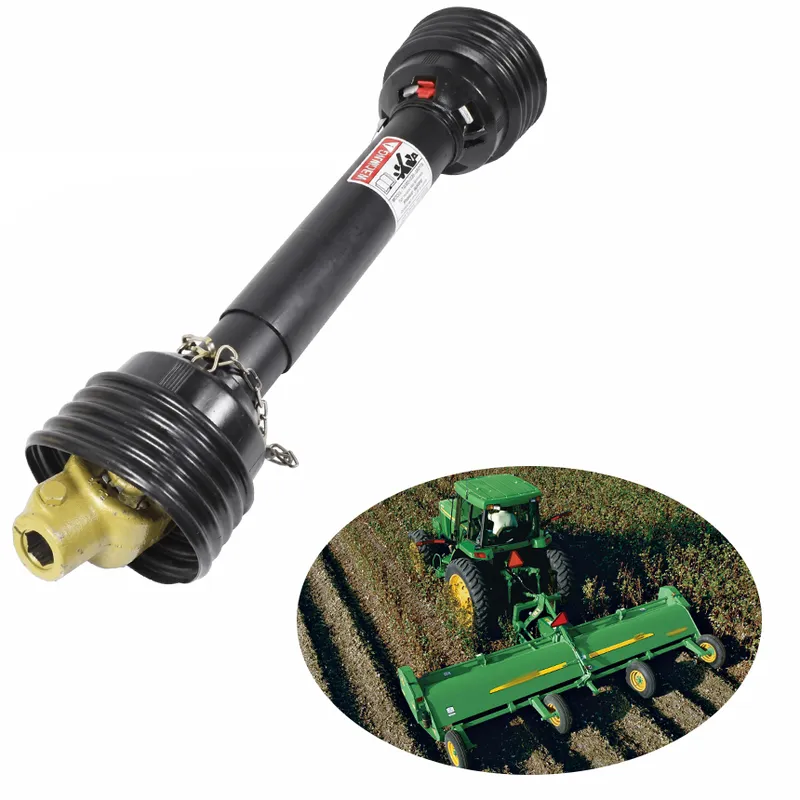
Arbre de prise de force pour broyeurs à fléaux John Deere 520
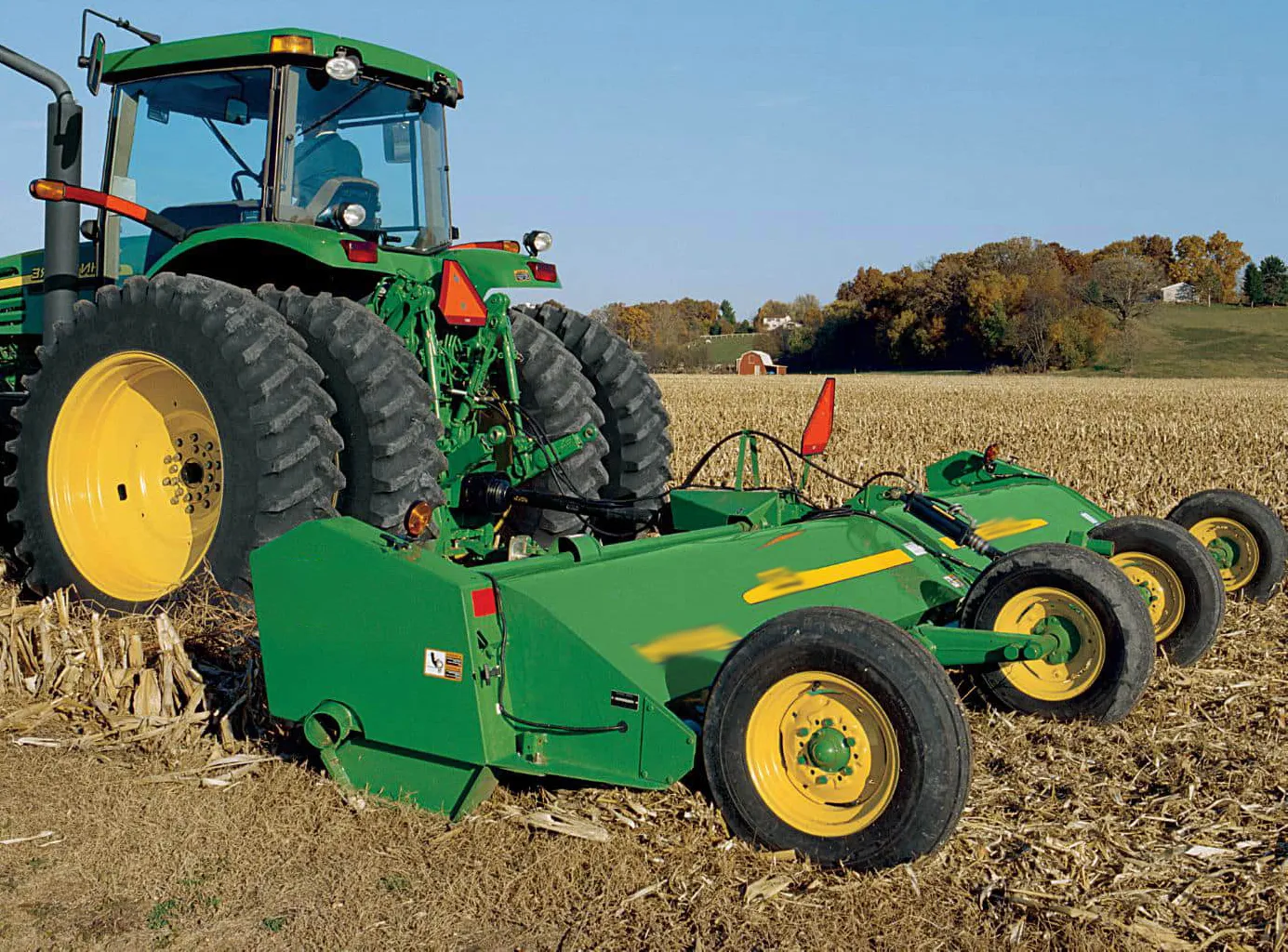
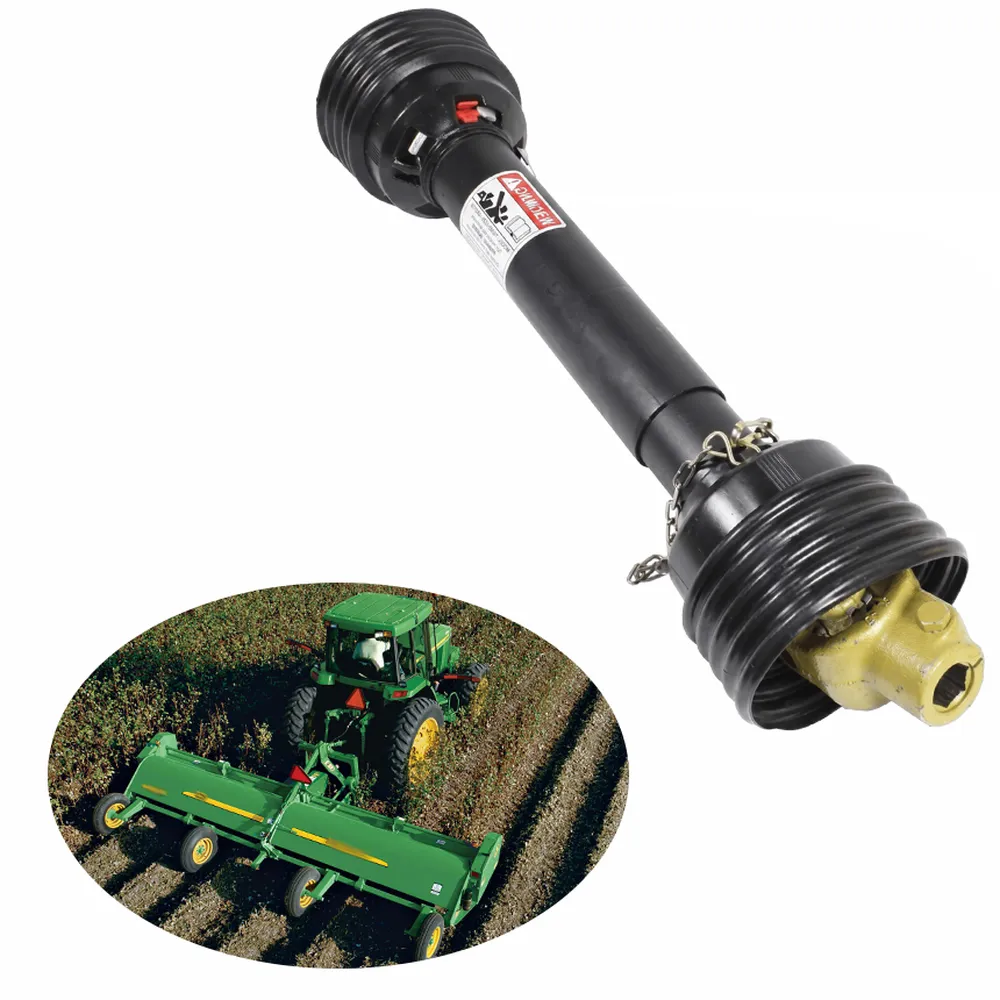
The PTO Shaft for John Deere Flail Shredders 520 is engineered to deliver consistent, high-performance power transmission between your tractor and the John Deere 520 series flail shredder. This flail shredder PTO shaft excels in tough application scenarios, including dense crop residue shredding, roadside brush clearing, orchard and vineyard maintenance, and heavy pasture renovation.
Arbre de prise de force fiable pour les broyeurs à fléaux John Deere
Arbre de prise de force pour broyeur à fléaux John Deere, modèle : 520
The PTO Shaft for John Deere Flail Shredders 520 is engineered to deliver consistent, high-performance power transmission between your tractor and the John Deere 520 series flail shredder. Manufactured to exact OEM dimensional tolerances, this PTO drive shaft features a cold-drawn, high-tensile 20CrMnTi alloy steel tube in a lemon cross-section profile, ensuring smooth torque transfer and an extended service life under the most demanding agricultural operating conditions. The shaft is rated for 1000 PTO shaft applications, giving operators flexibility across a wide range of tractor models and field conditions. Each unit ships fully assembled with a CE-marked conical safety guard, integrated stainless-steel safety chains, and pre-lubricated PTO shaft u joints ready for immediate field installation.
Designed for real-world agricultural punishment, this flail shredder PTO shaft excels in tough application scenarios including dense crop residue shredding, roadside brush clearing, orchard and vineyard maintenance, and heavy pasture renovation. The robust shear bolt PTO shaft overload protection system instantly disconnects the driveline when the shredder encounters an immovable obstacle such as a rock or buried stump, preventing catastrophic and costly damage to the tractor's PTO gearbox and the flail shredder's input bearings. The telescoping PTO shaft tubing accommodates the full range of hitch-distance variation during operation, while the sealed needle-bearing U-joint crosses maintain smooth, vibration-free torque delivery on sloped, undulating terrain. Compatible with standard PTO shaft yoke bore sizes and available in custom lengths, this PTO driveline shaft for flail shredder provides season after season of reliable, trouble-free performance.
Arbre principal : CAT 7/8 SFT série SH à vitesse constante
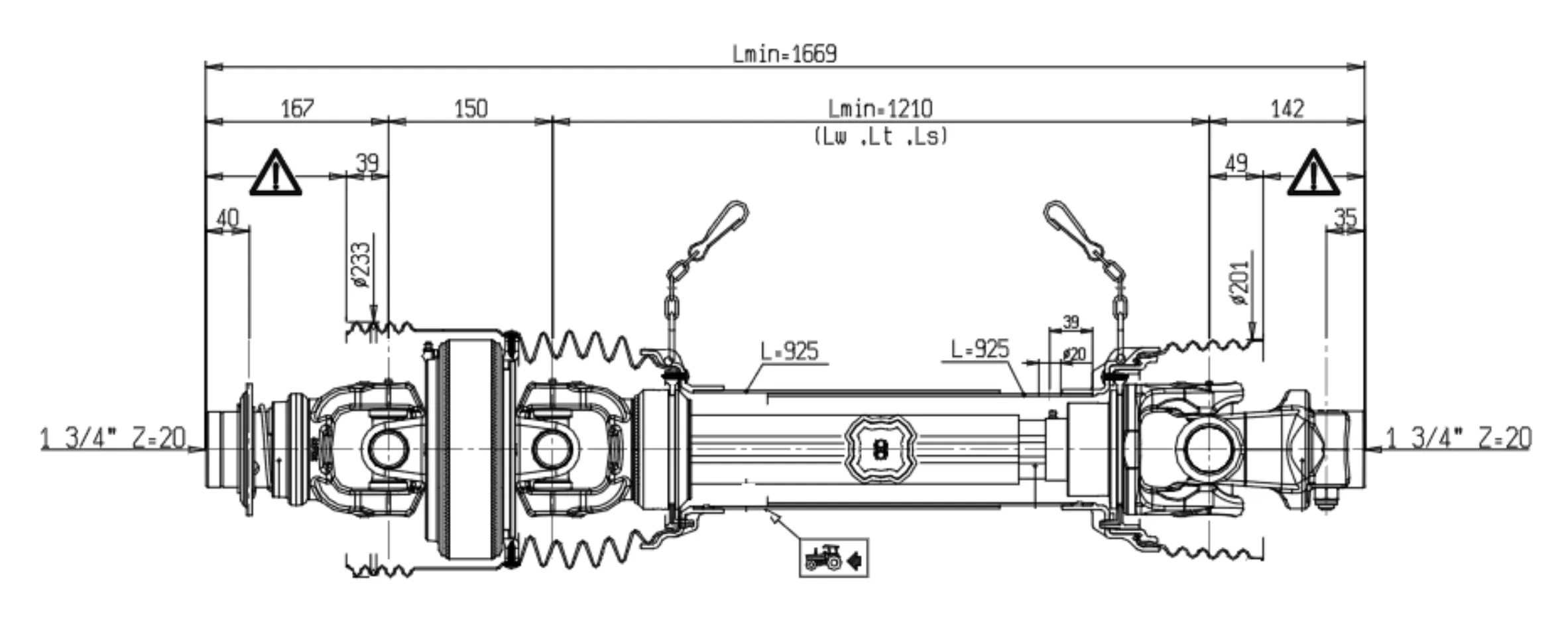
couple max=6750 Nm
Série SH RL3 Démarrage
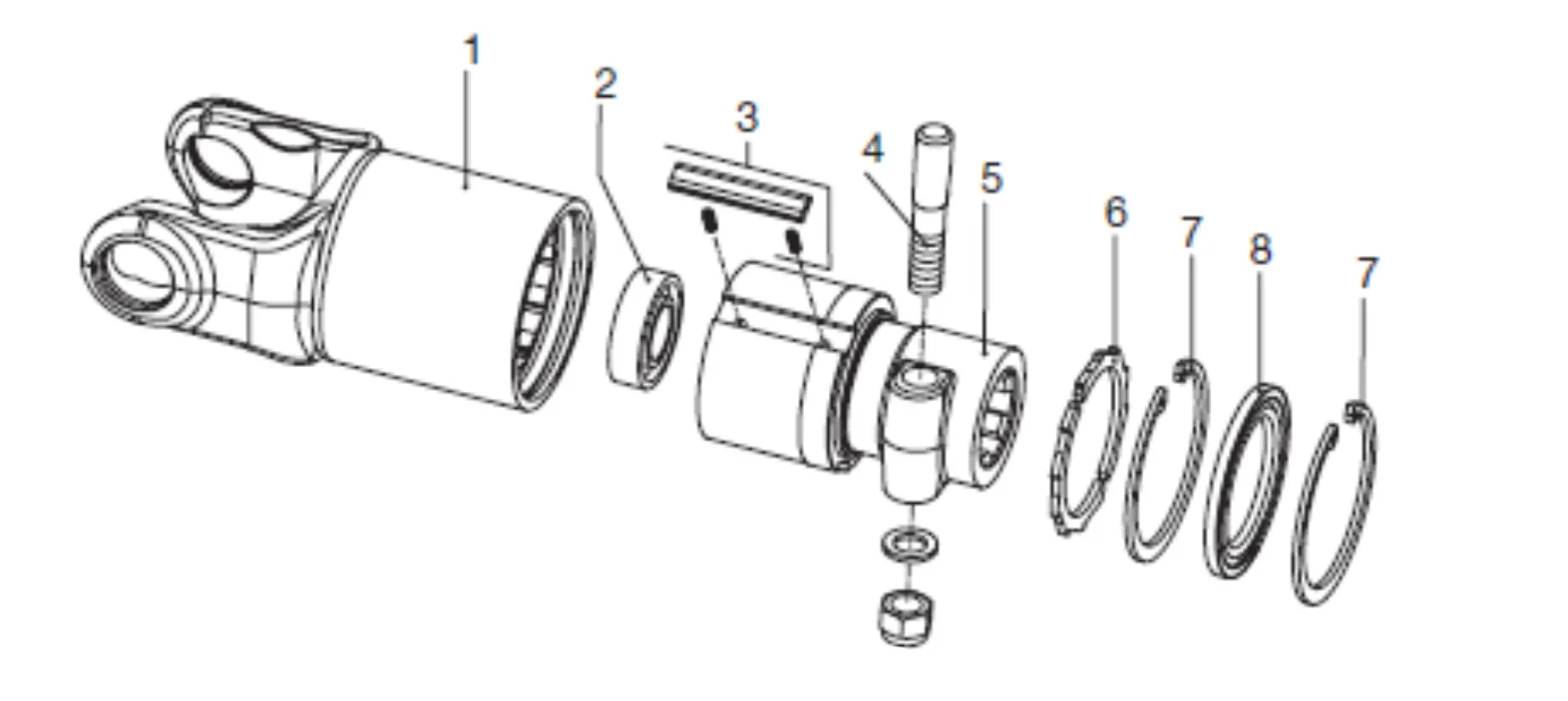
Spécifications du broyeur à fléaux John Deere 520
| Modèle | 520 Tirés | 520 Intégrale |
|---|---|---|
| Besoins en énergie | ||
| vitesse de prise de force | 1 000 tr/min | 1 000 tr/min |
| exigences de puissance de la prise de force du tracteur | 120 ch (90 kW) minimum | 140 ch (104 kW) minimum |
| Boîte de vitesse | 270 ch (201 kW) maximum ; 180 ch (134 kW) en continu ; Garantie de 2 ans | 270 ch (201 kW) maximum ; 180 ch (134 kW) en continu ; Garantie de 2 ans |
| Couteaux | ||
| Nombre de couteaux | 248 (124 paires) | 248 (124 paires) |
| Dimension du couteau | 0,31 x 2,5 po (8 mm x 64 mm) | 0,31 x 2,5 po (8 mm x 64 mm) |
| montage de couteau | anneau en D | anneau en D |
| Type de couteau | Acier allié, rechargé, trempé avec du carbure de vanadium, réversible | Acier allié, rechargé, trempé avec du carbure de vanadium, réversible |
| Superposition des couteaux | 1,07 po (27,4 mm) | 1,07 po (27,4 mm) |
| vitesse de la pointe du couteau | 139 mph (224 km/h) | 139 mph (224 km/h) |
| Rotor | ||
| vitesse du rotor | 2 000 tr/min | 2 000 tr/min |
| Dimensions du rotor | Rotor carré 7 x 7 pouces | Rotor carré 7 x 7 pouces |
| Type de roulement | Roulements à double rangée de cylindres, triple étanchéité ; garantie illimitée de 2 ans | Roulements à double rangée de cylindres, triple étanchéité ; garantie illimitée de 2 ans |
| Dimensions opérationnelles | ||
| largeur de coupe | 20 pieds (6,1 m) | 20 pieds (6,1 m) |
| Hauteur de coupe | 3 po à 10 po (76 mm à 254 mm) | 3 po à 10 po (76 mm à 254 mm) |
| Largeur de fonctionnement | 21 pi 3 po (6,48 m) | 21 pi 3 po (6,48 m) |
| Durée de fonctionnement | 10 pi 7 po (3,23 m) | 10 pi 7 po (3,23 m) |
| Dimensions de transport | ||
| largeur de transport | 2,39 m (7 pi 10 po) dans le sens de la longueur | 21 pi 3 po (6,48 m) |
| longueur de transport | 24 pi 1 po (7,34 m) dans le sens de la longueur | 7 pi 10 po (2,39 m) |
| Poids (approximatif) | 5 000 lb (2 268 kg) | 4 376 lb (1 985 kg) |
| Ascenseur | Relevage arrière, vérin à distance standard | N / A |
| Attelage | N / A | Cat. 3 ou 3N ; attache rapide requise |
| Roues/pneus | Quatre 6PR 7,60-15 | Deux 6PR 7.60-15 ; quatre en option |
Spécifications techniques
| Paramètre | Spécification |
|---|---|
| Nom du produit | Arbre de prise de force pour broyeurs à fléaux John Deere 520 |
| Application | John Deere Flail Shredder 520 Series |
| Vitesse de prise de force | 1000 tr/min |
| PTO Shaft Series / Category | Series 4 (CAT 4) |
| Tractor Spline (Inner Yoke) | 1-3/8" 6-Spline (Z6) | 1-3/4" 20-Spline optional |
| Implement Spline (Outer Yoke) | 1-3/8" 6-Spline (Z6) |
| Taille du journal transversal | 27 x 74,6 mm |
| Profil du tube | Lemon Profile (Star Profile Available on Request) |
| Compressed Length (approx.) | 870 mm |
| Extended Length (approx.) | 1,100 mm |
| Max Continuous Torque | 590 N·m |
| Max Operating Angle (U-Joint) | 25 degrees (continuous) |
| Overload Protection Type | Shear Bolt (M8 Grade 8.8, 2 per side) |
| Guard Type | Full Conical Plastic Guard with 2x Stainless Safety Chains |
| Matériau du tube | 20CrMnTi Alloy Steel, Carburized and Heat-Treated (HRC 58-62) |
| Traitement de surface | Phosphated + Painted (anti-corrosion) |
| Certifications | CE | ISO9001:2015 | TS16949 |
| OEM Replacement Reference | Replacement of Weasler PTO shaft; Bondioli & Pavesi equivalent |
| Personnalisation | Custom PTO shaft lengths, splines, OEM/ODM branding available |
Caractéristiques de l'arbre de prise de force pour broyeur à fléaux John Deere
1. Precision-Machined 20CrMnTi Alloy Steel Construction
Every PTO drive shaft begins as a 20CrMnTi alloy steel billet that undergoes carburizing and heat treatment to achieve a surface hardness of HRC 58-62 while retaining a tough, ductile core. This combination of hard surface and soft core maximizes fatigue resistance and torsional rigidity, enabling the shaft to transmit a rated 590 N·m of continuous torque without deformation or premature wear of the spline teeth or tube wall. The lemon-profile PTO shaft tube provides a self-centering, non-circular engagement that eliminates lateral play and reduces vibration at 1000 RPM operating speeds, ensuring smooth, quiet power delivery throughout the duty cycle.
2. Dual Shear Bolt Overload Protection System
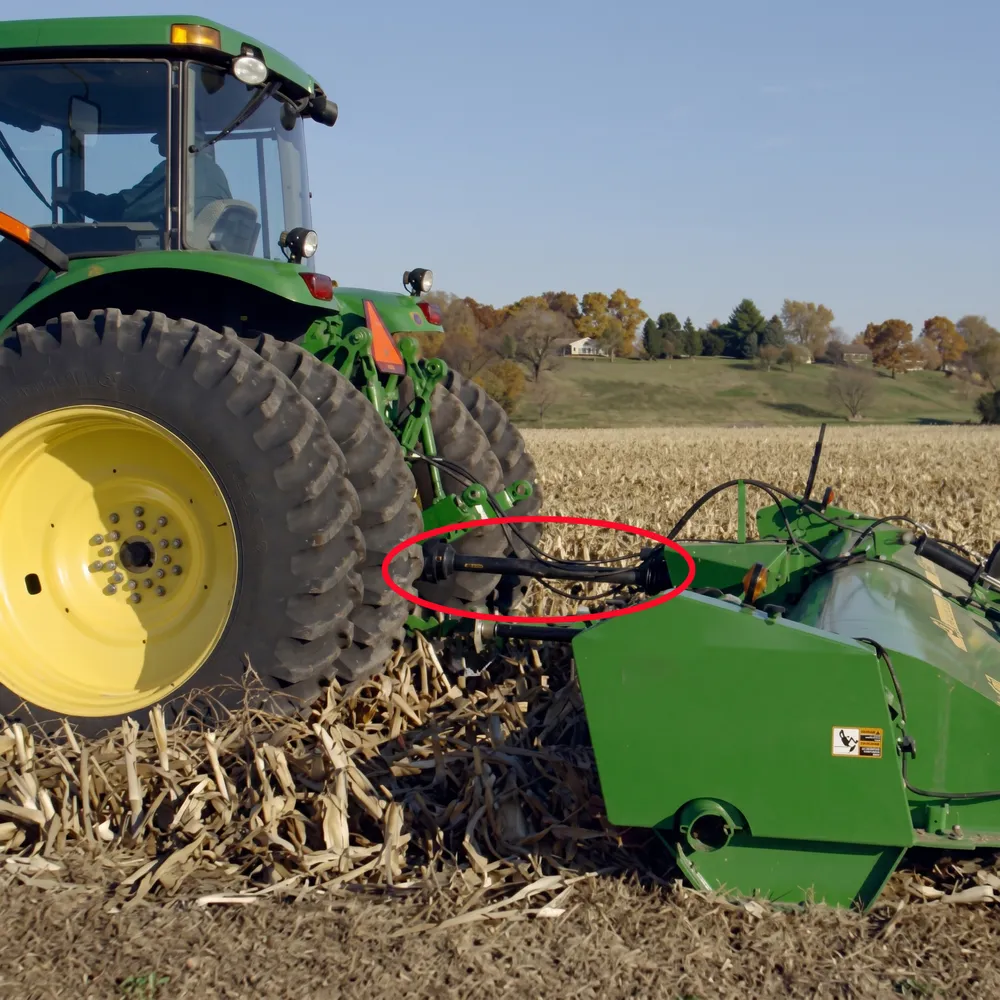
The precisely engineered PTO shaft shear bolt overload protection hubs, located at the implement-side yoke, contain two M8 Grade 8.8 bolts per side that are calibrated to fracture cleanly at a predetermined torque threshold. When the John Deere 520 flail shredder strikes a buried rock, stump, or wire mass, the shear bolts break instantly, decoupling the driveline and absorbing the shock spike before it can propagate to the tractor gearbox or implement input shaft bearings. This sacrificial shear pin PTO shaft mechanism saves significantly more expensive drivetrain components from impact damage. Replacement bolts cost mere cents and take under five minutes to fit in the field, minimizing costly downtime during the working season.
3. Heavy-Duty Sealed PTO Shaft Universal Joints
Both PTO shaft u joints use 27 x 74.6 mm cross journals manufactured from case-hardened alloy steel, with four sealed needle-bearing cups pre-packed with high-temperature, extreme-pressure (EP) grease. Each PTO shaft universal joint is rated for continuous operation at articulation angles up to 25 degrees, enabling flexible power coupling on undulating terrain, slopes, and headland turns. Every cross kit is individually load-tested before assembly to verify consistent torque capacity across the full batch. The sealed lips prevent ingress of field dust and moisture, dramatically extending re-greasing intervals compared to unsealed equivalent cross kits from cheaper aftermarket suppliers.
4. Precision Telescoping Tube for Flexible PTO Shaft Length
The two-part telescoping PTO shaft tubing allows smooth length adjustment from approximately 870 mm compressed to 1,100 mm extended, accommodating the full range of drawbar-to-implement hitch distances encountered during John Deere 520 operation. The inner and outer lemon-profile tubes are machined to a sliding clearance of less than 0.15 mm, virtually eliminating the rattle and looseness typical of low-quality aftermarket shafts. A nylon bearing strip on the inner tube provides a low-friction sliding surface that prevents metal-to-metal contact wear. Custom PTO shaft dimensions and non-standard lengths are available from CMN Transmission for non-standard tractor-to-implement hitch geometries.
5. CE-Compliant Full Conical Safety Guard and Chains
The PTO shaft guard is a full conical injection-moulded thermoplastic enclosure meeting EU Machinery Directive 2006/42/EC and ASABE S203 safety standards. Two stainless-steel safety chains anchor the PTO shaft cover rigidly to the tractor rear frame and implement housing, keeping the guard stationary while the internal shaft rotates at full operating speed. This design prevents operator entanglement, satisfies statutory safety inspection requirements in most global agricultural jurisdictions, and provides a physical barrier against debris ejection toward the operator. The guard material is UV-stabilized for outdoor longevity and withstands the chemical and pressure-wash environments typical of agricultural use.
6. Direct Replacement for Weasler and OEM PTO Shafts
This shaft is a certified drop-in replacement of Weasler PTO shaft units and is dimensionally compatible with Bondioli & Pavesi equivalents. No adapters, shimming, or re-drilling are required. The PTO shaft yoke bores are machined to ISO 500 spline tolerances, ensuring a secure, rattle-free engagement on 1-3/8" 6-spline tractor PTO stubs and implement input shafts. CMN Transmission also stocks a range of compatible PTO shaft adapter kits for operators running non-standard spline configurations including 1-3/4" 20-spline for high-speed 1000 RPM PTO systems, ensuring this one product family covers the widest possible range of tractor models and flail shredder applications.
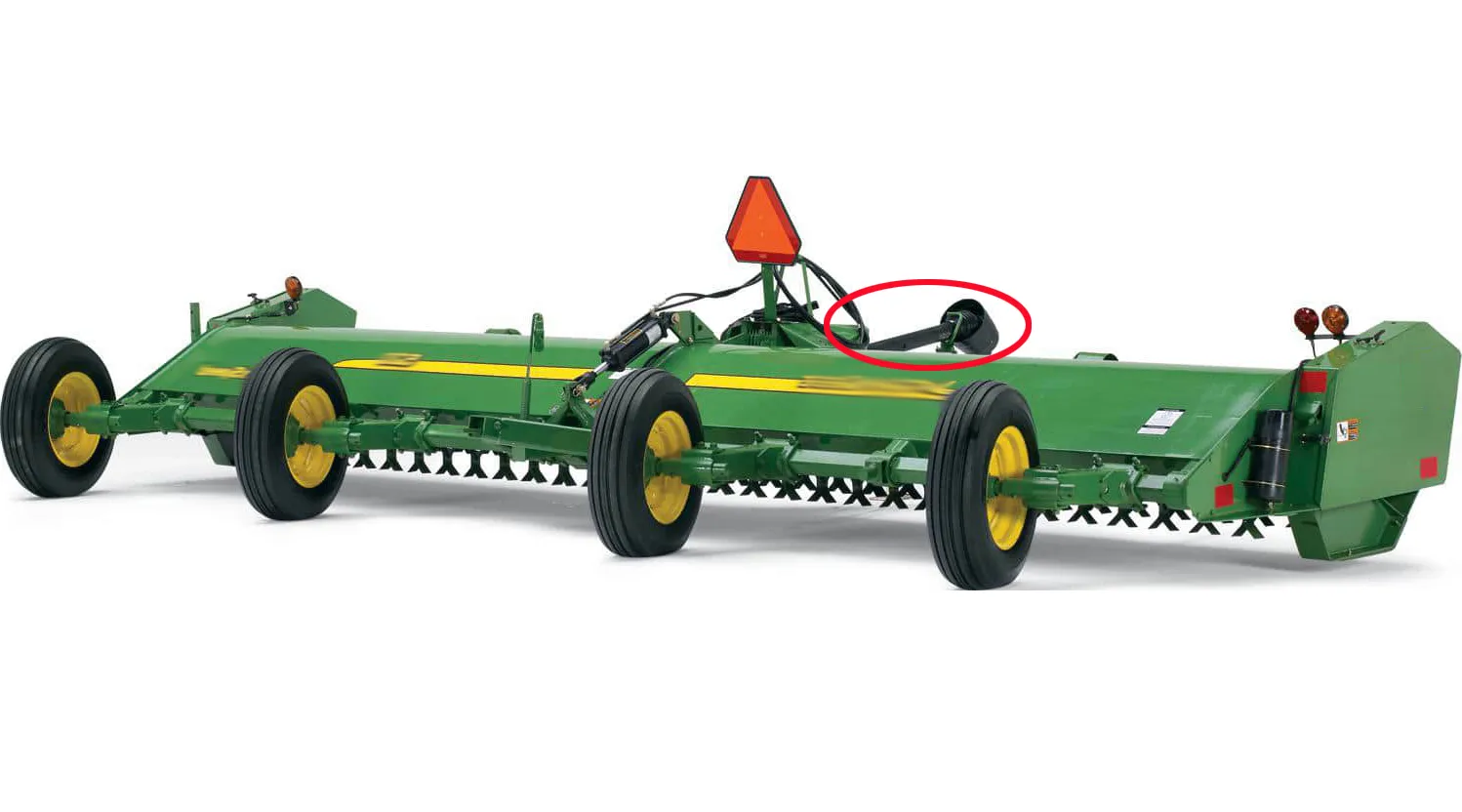
Working Principle of the Flail Shredder PTO Shaft
1. Power Take-Off Output at the Tractor
The power transmission cycle begins at the tractor's PTO stub shaft, a splined output shaft located at the rear of the tractor transmission housing. When the PTO engagement lever is activated, the engine's crankshaft drives a dedicated reduction gear train inside the transmission that steps down engine speed to the standardized output of 1000 RPM at the stub. The tractor PTO shaft yoke, the component that connects directly to this stub, is machined to a 1-3/8" 6-spline bore and slides onto the stub with a snap-pin or collar lock that prevents axial disengagement during operation.
2. Torque Transmission Through the Universal Joint Assembly
From the tractor-side yoke, rotational energy passes through the first PTO shaft universal joint, which consists of a cross-shaped journal (27 x 74.6 mm) with four sealed needle-bearing cups pressed into the yoke ears. This U-joint design permits the shaft to operate through horizontal and vertical articulation angles up to 25 degrees, accommodating all relative movement between the tractor and the attached flail shredder as the assembly traverses headlands, slopes, and rough terrain. Without this flexible coupling, any geometric misalignment between the tractor PTO axis and the implement input axis would generate enormous bending forces that would fracture the driveline within minutes of operation.
3. Telescoping Tube Extension and Retraction
After passing through the first U-joint, torque travels along the inner and outer sections of the PTO shaft tube. The lemon cross-section creates a non-circular interference fit that transmits the full rated torque while simultaneously allowing the two tube sections to slide axially against each other. As the tractor's three-point hitch rises and falls, or as the flail shredder pivots over undulating ground, the geometric distance between the tractor PTO stub and the implement input stub changes continuously during operation. The telescoping action of the PTO shaft tubing absorbs these dynamic length changes smoothly and without binding, maintaining a continuous, vibration-free torque transmission path at all operating positions.
4. Shear Bolt Overload Protection Engagement
Integrated into the implement-side yoke assembly is the shear bolt PTO shaft overload protection hub. The torque transmission path through this hub passes through two M8 Grade 8.8 shear bolts that are dimensionally engineered to fracture at a calibrated shear force corresponding to the maximum safe torque threshold for the John Deere 520 flail shredder's gearbox and rotor bearing ratings. When the shredder strikes an immovable object such as a buried concrete post, a large rock, or a tightly wound ball of wire, the instantaneous torque spike can escalate to several thousand Newton-meters within a few milliseconds. The shear bolts detect this event thermodynamically and fracture cleanly, instantly disconnecting the drive yoke from the protection hub and arresting the energy spike before it can propagate back through the PTO driveline shaft into the tractor's gearbox.
5. Power Delivery to the Flail Shredder Rotor
Beyond the overload protection hub, torque passes through the second arbre de transmission de prise de force universal joint at the implement end of the assembly, which once again permits dynamic angular articulation during field operation. The implement-side yoke spline then engages with the input stub of the flail shredder's gearbox. This gearbox multiplies rotational speed via bevel and spur gear stages, stepping up from the 1000 rpm PTO shaft input to the 2,500 to 3,200 RPM required to bring the flail knives to effective cutting velocity. The spinning rotor, now driven at full design speed, shreds crop material, grass, and woody brush through the combined effect of centrifugal impact and the scissor interaction between the swinging flail blades and the fixed counter-blades in the shredder housing.
Application Areas
1. Broyage des tiges de récolte
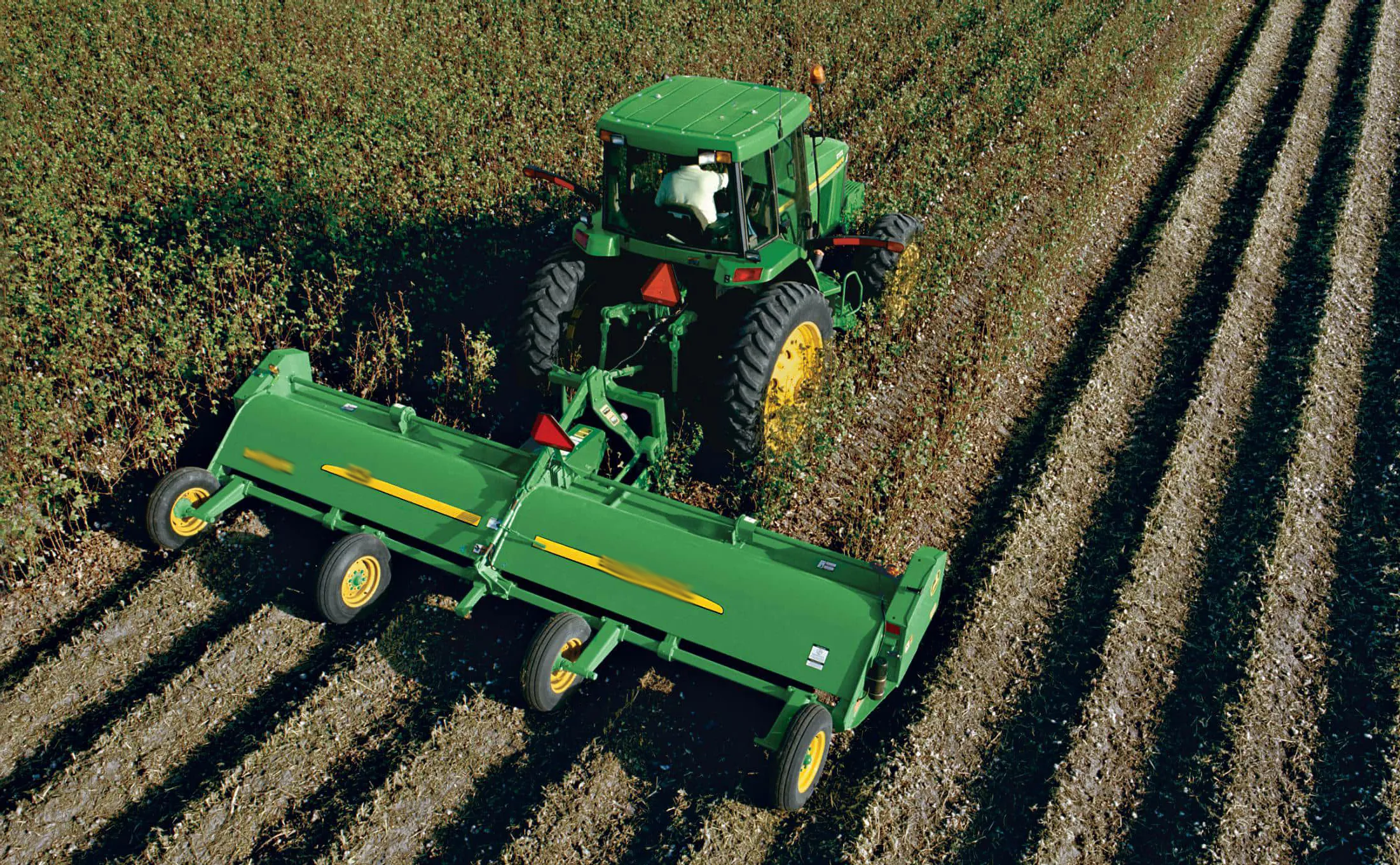
After harvest, the dry, fibrous stalks of corn, sunflower, sorghum, and other row crops must be shredded and incorporated into the soil to accelerate decomposition and prepare the field for the next planting cycle. The PTO shaft for flail shredder reliably transmits the high, sustained torque required to shred dense, moisture-depleted stalks at working speeds of 4 to 8 km/h across full-width passes. The heavy duty PTO shaft construction handles the load spikes that occur when the shredder encounters inter-tangled plant residue or occasional stone exposure without fatigue cracking or premature spline wear, delivering consistent performance across entire fields and full seasonal campaigns.
2. Entretien des pâturages
Regular flail shredding of pasture grasses and weed species encourages uniform, fine-leaved sward regrowth that is more palatable and nutritionally dense for grazing livestock. This tractor PTO drive shaft handles the intermittent overloads generated when the shredder passes over ant hills, shallow rock outcrops, or dense grass clumps, with the shear bolt hub protecting the drivetrain during each brief overload event. The smooth rotational balance of the precision-machined shaft minimizes vibration transmission to the tractor cab, reducing operator fatigue during extended pasture maintenance shifts across large cattle, sheep, and horse grazing properties.
3. Entretien des bords de route
Municipal, county, and national road authorities rely on flail shredders to control vegetation along roadsides, preventing sight-line obstruction and reducing seasonal fire risk in dry climates. The PTO drive shaft for flail shredder must cope with frequent and substantial angular articulation as the tractor navigates curbs, drainage inlets, and steep embankment slopes adjacent to traffic. Our heavy-duty sealed U-joints maintain smooth torque delivery at articulation angles up to 25 degrees, while the CE-compliant PTO shaft guard provides mandatory operator protection in high-risk public-area working environments throughout the entire operational shift.
4. Entretien des parcs et des terrains scolaires
Groundskeeping crews at municipal parks, sports facilities, and school campuses require a PTO shaft tractor combination that operates smoothly and safely in areas with potential bystander proximity. The full CE-compliant PTO shaft cover prevents debris ejection, and the vibration-free torque delivery of this precision-balanced shaft eliminates the machine juddering and rattling that causes rapid operator fatigue during the long, uninterrupted mowing sessions required for large open grounds. The shear bolt protection prevents rotor seizure events that would otherwise create alarming noise and sudden implement stoppage in populated public spaces.
5. Entretien des vergers et des vignobles
In orchard and vineyard interrow management, the flail shredder processes cover crops, pruning residue, and grass between tree and vine rows to manage competition for soil moisture and nutrients. The compact profile of the John Deere 520 and the precise PTO shaft dimensions of this driveline allow operators to work in narrow interrow spaces without the shaft fouling on trellis wires, vine stakes, or low-hanging branches. The shear bolt overload protection is especially valuable in vineyards where buried drip irrigation lines, vine stake anchors, and rocky subsoil can be struck without warning at full operating speed during routine maintenance passes.
6. Entretien des fossés et des berges
Drainage ditches and earthen flood-control banks must be kept clear of woody shrub and reed growth that impedes water flow and damages channel lining structures. The agricultural PTO shaft is engineered to withstand the extreme articulation angles and sudden torque surges that occur when a flail shredder operates on steep-sided waterway banks and channel edges. The high-strength alloy steel construction resists the progressive metal fatigue that accumulates during sustained high-angle continuous operation, while the sealed U-joint crosses maintain consistent lubrication even when the shaft is frequently submerged in mud and water during ditch-floor work.
How to Install PTO Shaft on John Deere Flail Shredder
1. Pre-Installation Safety Check
Park the tractor on a flat, level surface and engage the parking brake. Disengage the PTO and wait until all rotating components have come to a complete standstill. Switch off the engine and remove the ignition key before approaching the driveline. Inspect the new PTO drive shafts for any transit damage to the tube, guard, or yoke components. Verify that the spline sizes on both yokes match the tractor PTO stub and implement input shaft specifications, and confirm that both shear bolts are correctly seated in the overload protection hub with cotter pins or lock washers in place. Confirm the PTO shaft guard and both safety chains are present and structurally undamaged before proceeding.
2. Set the Correct PTO Shaft Length Before Fitting
With the flail shredder connected to the tractor's three-point hitch at the normal operating position, measure the distance between the tractor PTO stub face and the implement input stub face. Set the PTO shaft length so that the telescoping tubes overlap by at least one-third of the inner tube length when the implement is in the raised transport position, and by no less than one-quarter when lowered to working height. If required, trim the inner tube using a hacksaw, then deburr and chamfer the cut end with a file before assembly. Insufficient tube overlap risks the shaft separating under load, while excessive overlap prevents the tubes from extending to working length and will cause tube bottoming and driveline seizure.
3. Connect the Tractor-Side Yoke
Apply a thin film of general-purpose grease to the tractor PTO stub splines before sliding the tractor PTO shaft yoke onto the stub. Carefully align the spline teeth of the yoke bore with the corresponding teeth on the stub, then push the yoke forward firmly until the retaining pin snaps audibly into the groove machined on the stub shaft. Give the yoke a firm rearward pull-test to confirm positive retention. Never force a misaligned yoke onto the stub, as forcing it will burr the spline tooth faces and create a loose, noisy fit that will rapidly develop into severe spline wear requiring full yoke replacement during the operating season.
4. Connect the Implement-Side Yoke and Shear Bolt Hub
Extend the PTO shaft toward the flail shredder input stub and slide the implement-side yoke onto the shaft. Align the shear bolt hub slots with the stub grooves, then insert and torque the PTO shaft shear bolt replacements to the manufacturer-specified torque of 22 to 25 N·m for M8 Grade 8.8 bolts. Install the cotter pin or lock washer through the bolt shank to prevent vibration-induced backing-out during operation. Verify the bolt heads sit flush with or slightly below the hub face plane. Never substitute higher-grade fasteners, as these will not fracture at the design threshold and will instead allow catastrophic torque overload damage to propagate to the gearbox and rotor bearings.
5. Attach the Safety Guard and Safety Chains
Slide the PTO shaft cover over the assembled driveline from one end. Fasten the two safety chain anchor points to fixed, rigid structural points on the tractor rear frame and the implement input housing. Set the chain tension so the guard is held stationary without being so tight that it restricts the guard from pivoting slightly as the hitch geometry changes. Manually rotate the PTO shaft through one full revolution to confirm the guard clears all fixed structures throughout its range of motion. A spinning guard caused by broken or disconnected chains is one of the most dangerous failure modes of a PTO drive shaft installation and is a statutory violation in most jurisdictions.
6. Initial Run-In and Final Operational Inspection
With all personnel clear of the driveline, start the tractor and engage the PTO at low throttle, approximately one-third of rated operating speed, and allow the new agricultural PTO shaft to run for five minutes while observing from a safe distance. Monitor for unusual vibration, abnormal noise, or heat generation at the U-joints and tube section. After the run-in period, disengage the PTO, allow the shaft to stop, and re-check all connection points for loosening. Increase to full rated PTO speed on the second run and confirm vibration-free, noise-free operation before commencing productive field work with the John Deere 520 flail shredder.
PTO Driveline Shaft Maintenance Tips
1. Regular Greasing of U-Joints and Telescoping Tube
Lubricate all four grease nipples on both PTO shaft u joint cross kits using EP2 lithium-based grease every 8 operating hours or weekly during active use, whichever interval is reached first. Simultaneously inject grease through the telescoping tube nipple at the same service interval. In very dusty or wet field conditions, reduce the interval to 4 to 6 hours. Continue pumping grease until fresh grease is visible exiting from the bearing cup seal lips, confirming that all four needle cup chambers have been fully charged. Over-greasing is always preferable to under-greasing for agricultural U-joints, as field contamination rapidly degrades bearing lubricant quality.
2. Pre-Use Shear Bolt Inspection
Before each operating session, visually inspect both PTO shaft shear bolt positions in the overload protection hub. Look for bolts that appear corroded, cracked, or partially fractured from a previous low-level overload event. A compromised bolt will fail at a significantly lower torque than the design threshold, causing nuisance disconnections during normal heavy shredding work. Always carry an adequate stock of genuine M8 Grade 8.8 shear bolts in the tractor toolbox. Never substitute standard high-tensile bolts, which will not fracture at the correct threshold and will allow damage to cascade to the gearbox and input shaft bearings.
3. Guard Cleaning and Integrity Inspection
After each use, wash the PTO shaft cover with clean water to remove crop residue, mud, and fertilizer deposits that hold moisture against the polymer surface and accelerate stress cracking. Inspect the guard after washing for impact cracks, especially at the cone section transitions and chain anchor reinforcement zones. A cracked guard can shatter catastrophically under the centrifugal stresses of a rotating shaft. Replace any guard showing cracks longer than 20 mm or any deformation that reduces the structural integrity of the enclosure. Guard replacement is a low-cost investment that ensures compliance with CE machinery safety regulations throughout the product's service life.
4. Annual U-Joint Cross Kit Replacement
Regardless of apparent condition, replace both PTO shaft universal joint cross kits at least once per working season in high-use farm applications, or after every 200 operating hours in professional contractor service. Early warning signs requiring immediate cross kit replacement include detectable play when rocking the joint by hand, grease leaking visibly from the bearing cup seal lips, rust staining on the cup outer faces, or any clicking noise during rotation. CMN Transmission supplies matching cross kit replacement PTO shaft parts at competitive pricing to minimize service downtime and maintain the mechanical integrity of the complete driveline assembly throughout its operational life.
5. Off-Season Storage Procedure
At season end, remove the PTO driveline shaft from the implement and tractor, clean it thoroughly with a pressure washer, and allow it to dry fully before storage. Apply a coat of anti-rust oil or corrosion-inhibiting grease to all exposed metal surfaces, particularly the PTO shaft yoke spline bores and the telescoping tube contact areas. Store the shaft horizontally in a covered, dry location away from direct sunlight, which degrades the polymer guard material over time. Keep the shaft away from fertilizer bags and chemical containers, as agricultural chemicals are highly corrosive to both the phosphate-painted steel components and the injection-moulded guard material.
6. Spline Wear Monitoring and Adapter Inspection
Every 50 operating hours, remove both yokes from their respective stubs and examine the spline teeth for fretting wear, which appears as a polished, roughened, or darkened contact surface on the tooth flanks. Light fretting can be managed by increasing the grease application frequency at the spline interface. Severe wear, indicated by tooth height reduction exceeding 0.5 mm or measurable radial play in the yoke-to-stub connection, requires replacement of the affected yoke or installation of a compatible PTO shaft adapter to restore the correct fit geometry. Continuing to operate with severely worn splines accelerates wear exponentially and can result in sudden in-field driveline separation.
Dépannage courant
1. Vibrations excessives pendant le fonctionnement
Cause: Worn or damaged PTO shaft u joint cross kits, shaft bent by impact, or operating angle exceeding 25 degrees. Solution: Disengage the PTO and manually rock each U-joint to detect play. Replace any cross kit showing lash or stiff movement. Re-check the tractor-to-implement geometry to confirm the shaft angle is within the 25-degree design limit throughout the full hitch range of motion. If the shaft has been visibly bent by a severe impact event, replace the entire PTO driveline shaft assembly immediately, as a bent shaft will generate progressive vibration fatigue in the yoke ears and U-joint needle bearings leading to sudden fracture.
2. Repeated Shear Bolt Failure
Cause: Operating in excessively dense or woody material, use of incorrect bolt grade, or a foreign object blockage in the flail rotor. Solution: After each shear event, inspect and clear the flail rotor of any wrapped wire, vine, or debris before inserting the shear bolt PTO shaft replacement. Confirm you are using genuine M8 Grade 8.8 bolts torqued correctly. If shearing occurs repeatedly under what appears to be normal operating load, the implement gearbox may have a bearing failure generating internal resistance spikes that mimic overload conditions. Inspect gearbox oil level and bearing condition before resuming field work.
3. Telescoping Tubes Binding or Sticking
Cause: Insufficient lubrication of the PTO shaft tubing inner surface, crop material ingested into the tube gap, or corrosion accumulation between the tube profiles. Solution: Inject EP2 grease through the tube grease nipple until fresh grease exits from the tube overlap gap, confirming that the full sliding contact area has been re-lubricated. If stiffness persists after greasing, partially separate the tube sections and clean the profile contact surfaces with a wire brush before re-greasing. Confirm that the tube overlap length remains within the correct operational range for all hitch positions, as over-extended tubes with minimal overlap are prone to jamming under combined torsional and axial load.
4. Yoke Disengaging from Tractor PTO Stub
Cause: Worn or missing retaining snap-ring in the tractor PTO stub groove, worn PTO shaft yoke bore splines, or incorrect spline engagement at installation. Solution: Inspect the tractor PTO stub retaining groove for wear or damage and replace the snap-ring if required. If the stub groove is intact but the tractor PTO shaft yoke continues to disengage under load, the yoke spline bore is likely worn beyond its serviceable limit and must be replaced. In an emergency field situation, a properly tensioned hose clamp can provide temporary retention, but this must not be treated as a permanent fix and must be resolved before the next operating session.
5. Overheating of U-Joint Cross Kits
Cause: Insufficient needle-bearing lubrication, operating angle exceeding the 25-degree limit, or severely worn bearing cups running metal-to-metal against the journal trunnion faces. Solution: Re-grease all four nipples until fresh grease exits from the seal lips confirming all needle cup chambers have been charged. If the joint remains hot after lubrication, the bearing cups are worn and scoring the journal. Immediate PTO shaft universal joint cross kit replacement is necessary. An overheating U-joint that is not repaired will progress to bearing seizure, which causes the cross journal to shear and results in sudden total loss of drive and potential driveline ejection.
6. PTO Shaft Guard Rotating with the Shaft
Cause: Safety chains broken or anchor points on tractor frame or implement housing have failed, allowing the PTO shaft cover to rotate freely. Solution: Disengage the PTO immediately and do not allow any personnel within five meters of the rotating assembly until it has completely stopped. Inspect both chain attachment points and replace any broken chain with a grade-equivalent safety chain. Confirm both anchor points are rigid structural fixtures capable of holding the guard stationary under load. A rotating guard is one of the gravest safety hazards associated with PTO drive shaft use and must be corrected before any further operation of the implement.
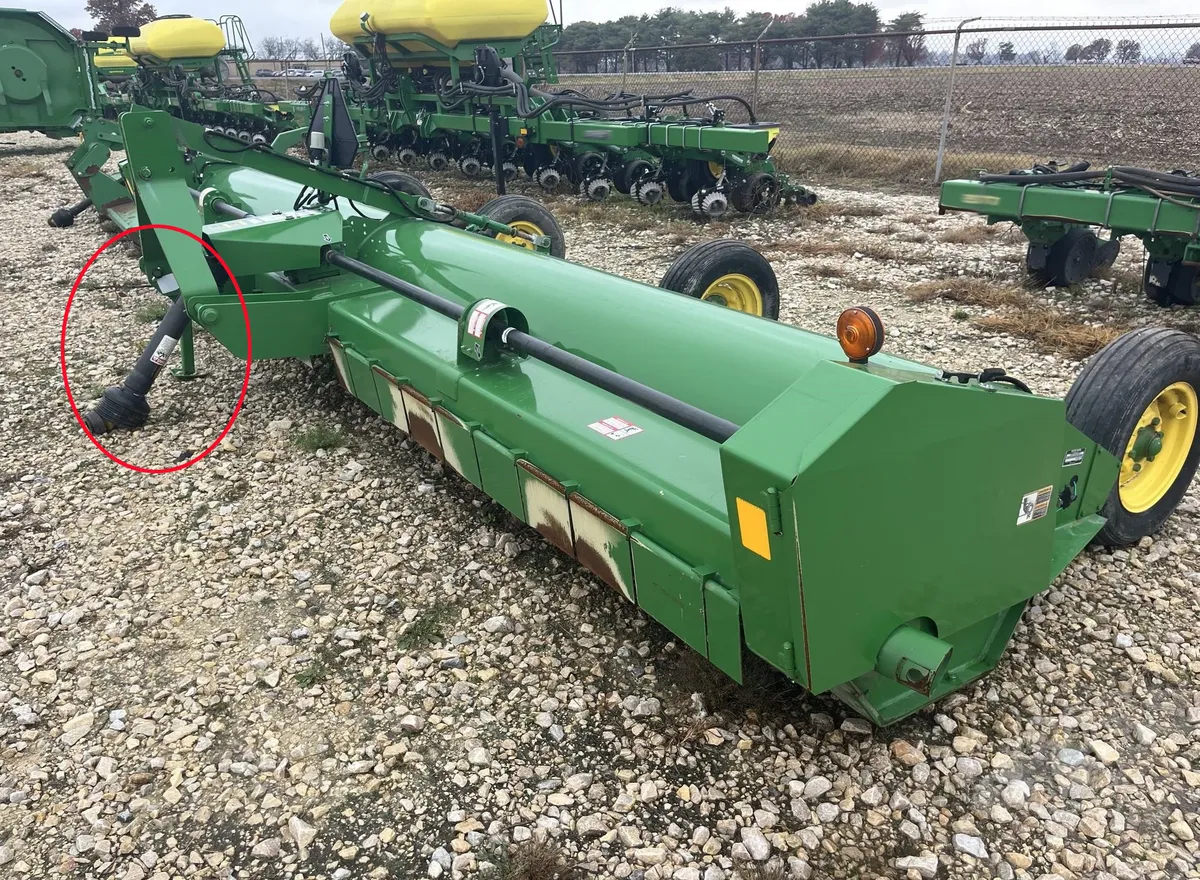
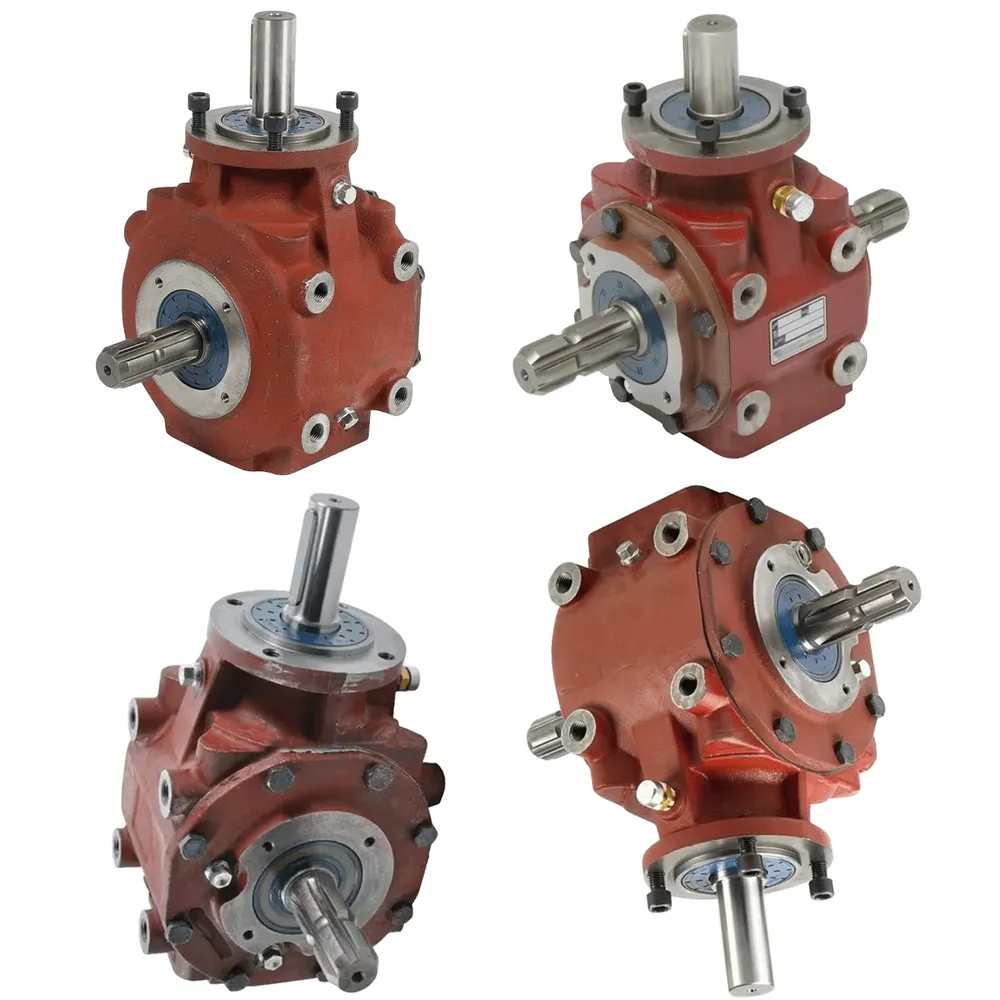
Arbre de prise de force du broyeur à fléaux et boîte de vitesses de la faucheuse à fléaux
A flail shredder PTO shaft is the mechanical driveline that connects the tractor's power take-off output stub to the implement's gearbox input shaft, serving as the sole power bridge between the engine and the cutting rotor. Every PTO drive shaft for flail shredder must simultaneously perform three demanding mechanical functions: transmit continuous high-torque rotational power with minimal energy loss, accommodate the constantly changing angular and axial misalignment between the tractor and implement as the combination navigates field terrain, and protect the entire drivetrain from the sudden, violent torque overloads that arise when the shredder's rotor encounters a submerged obstacle. These three requirements combine to make the agricultural PTO shaft one of the most mechanically loaded and fatigue-stressed components in any tractor-implement combination. For the John Deere 520 flail shredder specifically, the shaft must sustain a continuous rated torque of up to 590 N·m at 1000 RPM, while simultaneously coping with the cyclic vibrations generated by the rotor's rapidly spinning flail blades as they impact crop material hundreds of times per second. CMN Transmission designs this PTO driveline shaft for flail shredder around a two-section telescoping tube, heavy-duty sealed U-joint crosses, and a precisely calibrated shear bolt overload protection hub to address all three functional requirements within a single, integrated assembly.
The flail mower gearbox, also referred to as the flail shredder gearbox or rotor drive transmission, is the speed-multiplying mechanical device mounted on the implement's main frame. Its primary engineering function is to accept the relatively low rotational speed from the tractor PTO shaft input (1000 RPM) and amplify it to the 2,500 to 3,200 RPM required by the rotor to bring the swinging flail knives to effective crop-impact velocity. Internally, the gearbox consists of a spiral bevel input stage that changes the rotational axis from the inline PTO driveline direction to the transverse rotor shaft direction, followed in many designs by a parallel shaft spur gear stage that provides the final speed multiplication ratio. All gear sets are precision-ground from case-hardened alloy steel and housed in a cast-iron or aluminium alloy casing filled with 80W-90 gear oil. The input shaft of the gearbox is splined to accept the implement-side PTO shaft yoke in direct engagement, creating a rigid, high-torque mechanical connection between the driveline and the rotor's power source.
The relationship between the PTO shaft for flail shredder and the flail mower gearbox is mechanically symbiotic and functionally inseparable. A poorly specified or worn driveline shaft delivers erratic, vibration-laden torque to the gearbox input that accelerates wear on input shaft bearings, gear tooth surfaces, and output shaft seals. Conversely, a worn or damaged gearbox creates internal resistance that generates torque spikes and vibration pulses that propagate back through the PTO shaft tubing and U-joints, dramatically shortening the driveline's service life. In practice, operators who invest in a high-quality heavy duty PTO shaft from CMN Transmission simultaneously extend the service life of their flail mower gearbox, because a shaft transmitting smooth, balanced torque subjects the gearbox input bearings and gear mesh to measurably lower fatigue stress cycles per hour of operation compared to a worn or imbalanced shaft. CMN Transmission recommends inspecting both the PTO driveline shaft and the flail mower gearbox together at each major service interval, replacing worn components in both systems simultaneously to maintain the mechanical coherence of the complete power transmission chain from tractor engine to cutting rotor, and to avoid a situation where one newly repaired component is immediately stressed by mechanical deficiencies in its companion system.
Pourquoi choisir les arbres de prise de force agricoles de CMN Transmission ?
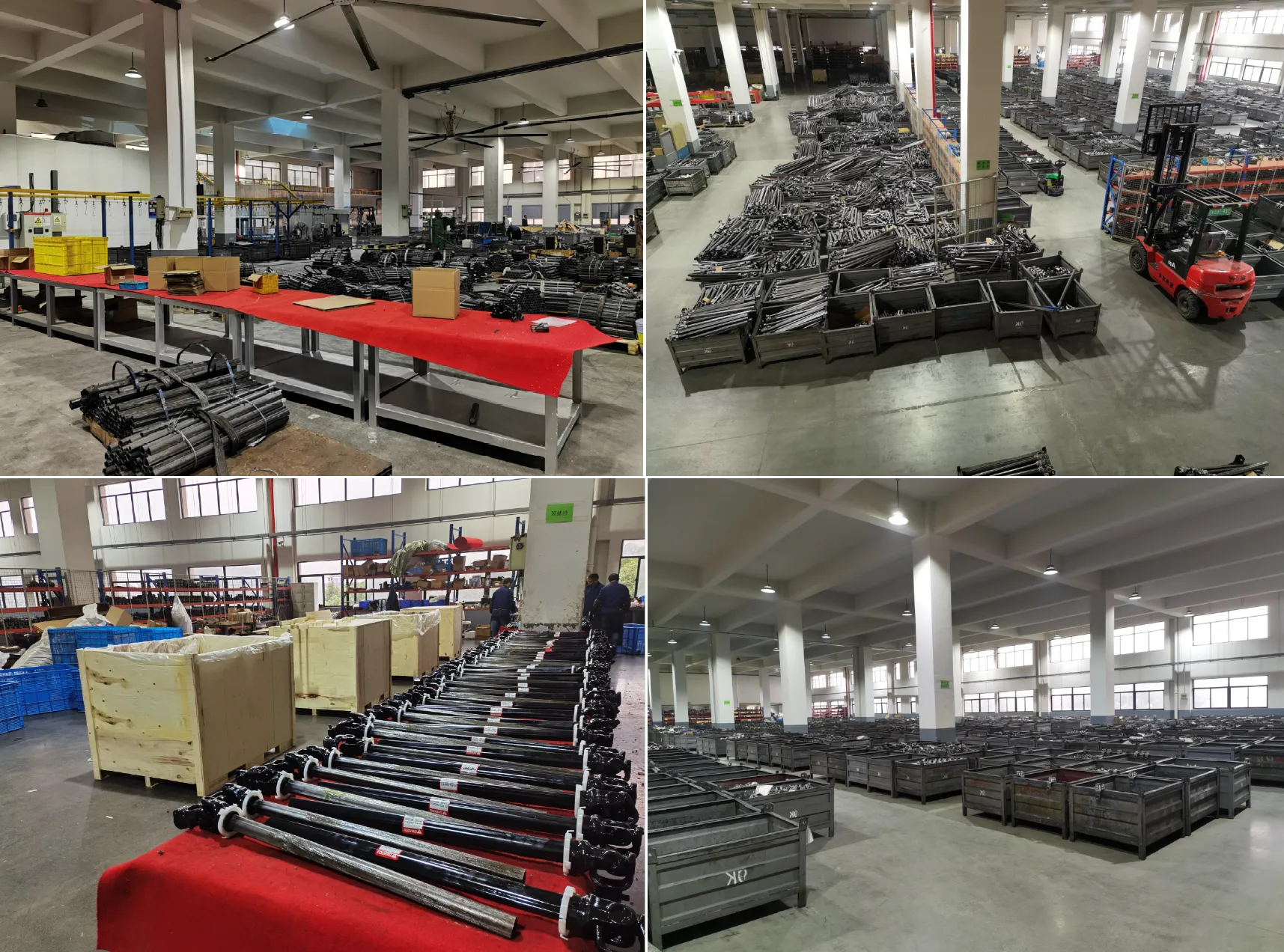
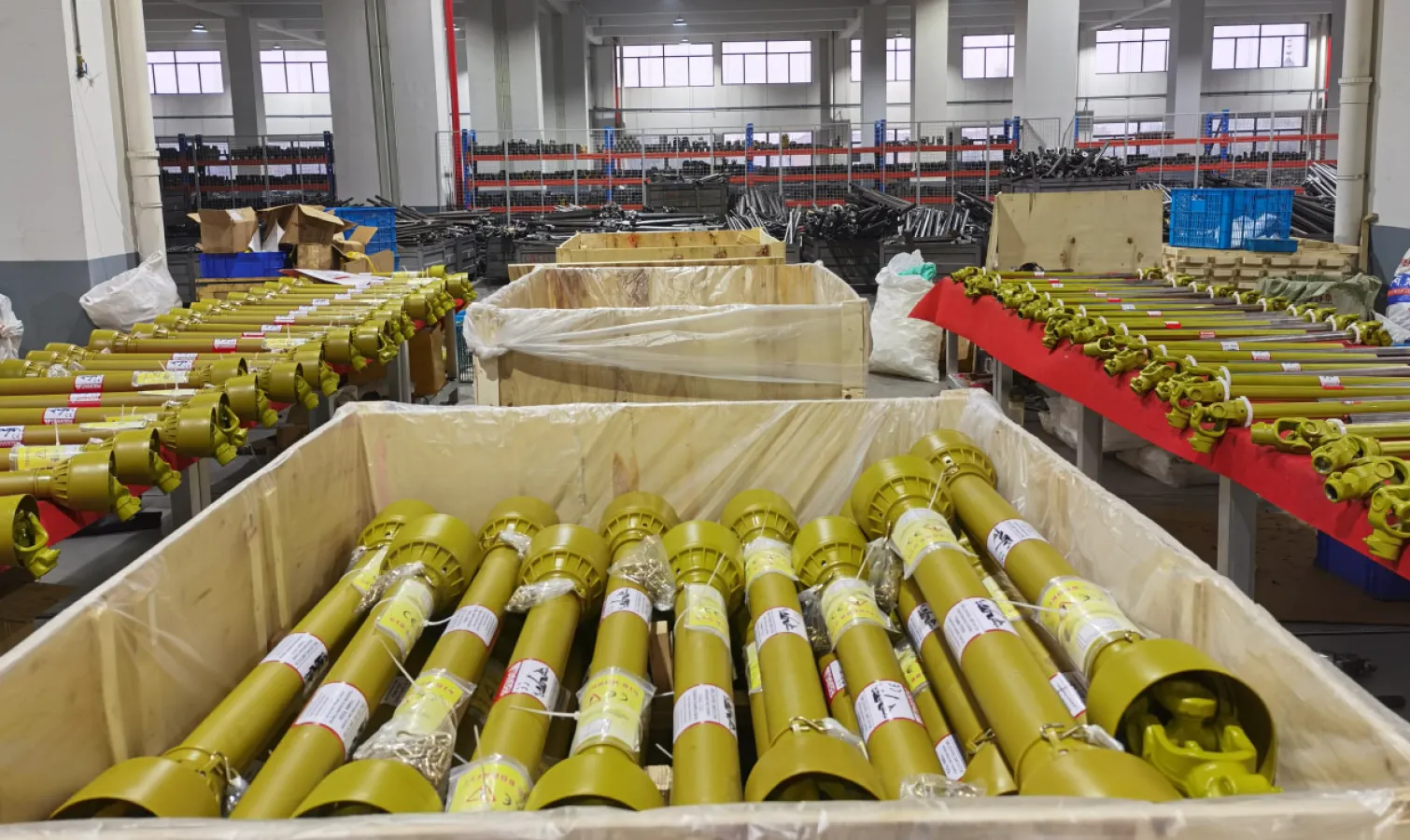
CMN Transmission was established with one guiding principle: to deliver agricultural and industrial transmission products that meet or exceed the quality benchmarks set by established European and North American brands, at a price point that makes professional-grade engineering genuinely accessible to farmers, dealers, and OEM equipment manufacturers worldwide. Our PTO shaft product range spans every major series from compact garden tractor applications through to heavy duty PTO shaft drivelines for high-horsepower row crop, forage, and biomass processing equipment, covering the complete spectrum of PTO shaft sizes demanded by the global agricultural market.
Every agricultural PTO shaft that leaves our facility has passed a comprehensive pre-shipment inspection protocol encompassing dimensional verification with certified measuring instruments, spline gauge ring checking to ISO 500 tolerances, U-joint torque and lash measurement, surface coating thickness verification, and visual inspection of guard assembly integrity and safety chain attachment points. We maintain a complete production traceability record for each batch, recording raw material heat numbers, machining operator IDs, heat treatment batch records, and final inspection sign-offs, enabling full root-cause investigation of any field quality concern reported by a customer anywhere in the world.
For agricultural distributors, dealerships, implement manufacturers, and B2B procurement specialists seeking a reliable, cost-competitive, and technically supported source of PTO driveline shaft products including custom PTO shaft assemblies, slip clutch PTO shaft variants, and complete PTO shaft parts service kits, CMN Transmission offers responsive technical sales support, competitive tiered pricing, flexible minimum order quantities, and the engineering credibility to back every claim with certified test data. Contact our international B2B team today to receive a detailed technical and commercial quotation matched to your specific PTO shaft sizes and volume requirements.
- Full In-House Manufacturing
De la matière première en alliage brut aux arbres de transmission de prise de force finis et testés, chaque étape de la production est contrôlée en interne grâce à des centres de tournage CNC, des machines à tailler les engrenages, des fours de traitement thermique et des équipements de mesure tridimensionnelle, garantissant une traçabilité complète et une qualité constante pour chaque lot. - Triple-Certified Quality Assurance
CMN Transmission détient les certifications ISO9001:2015, TS16949 et CE, offrant à ses clients B2B du monde entier une assurance vérifiée de manière indépendante quant à la qualité des produits, l'intégrité du système de gestion et la conformité à la directive européenne sur les machines pour tous les produits d'arbres de prise de force agricoles exportés. - Six-Continent Export Experience
Nos arbres de prise de force pour tracteurs et nos produits de transmission agricole sont exportés vers l'Amérique du Nord, l'Europe, l'Australie, l'Amérique du Sud, l'Afrique et l'Asie, grâce à des partenariats de transport établis qui garantissent une livraison internationale rapide, fiable et compétitive pour les distributeurs, les concessionnaires et les fabricants d'équipement d'origine (OEM) du monde entier. - Custom PTO Shaft Engineering
Longueur d'arbre de prise de force non standard, configurations de cannelures uniques, profils de tubes alternatifs, arbre de prise de force avec protection contre les surcharges par embrayage à glissement ou marquage OEM/ODM complet : notre équipe d'ingénieurs développe et fournit des solutions adaptées aux spécifications précises du client avec des délais de livraison compétitifs.
FAQ
Q: What PTO shaft sizes are compatible with the John Deere Flail Shredder 520?
A: The John Deere 520 uses a Series 4 (CAT4) PTO shaft with a 1-3/8" 6-spline (Z6) connection on both ends. The compressed length is approximately 870 mm and the extended length is approximately 1,100 mm. Key PTO shaft dimensions include a 27 x 74.6 mm cross journal and a lemon-profile tube. If your tractor uses a 1-3/4" 20-spline stub for 1000 RPM applications, contact CMN Transmission for a compatible PTO shaft adapter or spline-specific shaft variant to ensure a secure, rattle-free connection.
Q: Is this a direct drop-in replacement for the Weasler PTO shaft on the John Deere 520?
A: Yes. This CMN Transmission shaft is a verified replacement of Weasler PTO shaft for the John Deere 520 application. All critical dimensions including yoke bore size, cross journal dimensions, tube profile, and overall length range are manufactured to match Weasler OEM specifications. No adapters, shimming, drilling, or machined modifications are required for a direct fit installation on the original tractor PTO stub and implement input shaft.
Q: What is the difference between a 540 PTO shaft and a 1000 PTO shaft for a flail shredder?
A: A 540 PTO shaft operates at the tractor's standard 540 RPM output setting, while a 1000 PTO shaft (also known as a 1000 rpm PTO shaft) runs at 1,000 RPM. The higher speed input reduces the multiplication ratio required from the flail shredder gearbox, which can mean smoother, more efficient operation in higher-horsepower tractors. The John Deere 520 supports both speeds. Always verify your tractor's PTO output setting and the gearbox input specification before selecting the correct shaft for your specific combination.
Q: How do I measure and set the correct PTO shaft length for my tractor?
A: Connect the implement to your tractor at the normal working hitch position. Measure the distance between the tractor PTO stub face and the implement input stub face. This is your required working length. The PTO shaft length at working position should still have the inner and outer tubes overlapping by at least 150 mm. With the implement raised to transport height, confirm the tubes do not bottom out. Contact CMN Transmission with your specific measurements if you require a custom PTO shaft for non-standard hitch geometries.
Q: What type of shear bolt does this shaft use, and where do I buy replacements?
A: The shear bolt PTO shaft protection system on this unit uses M8 Grade 8.8 shear bolts, two per hub side. These are standard metric fasteners available from any agricultural dealer, automotive parts outlet, or directly from CMN Transmission as a spare PTO shaft parts kit. Always replace shear bolts with the correct Grade 8.8 specification only. Substituting higher-grade fasteners defeats the overload protection system entirely and risks propagating catastrophic torque damage to the gearbox input bearings and shaft.
Q: How often should the U-joints on a flail shredder PTO shaft be lubricated?
A: Grease all four nipples on both PTO shaft u joint cross kits every 8 operating hours or weekly during active use, using EP2 lithium-based extreme-pressure grease. In very dusty or wet conditions, reduce the interval to 4 to 6 hours. Also lubricate the telescoping tube grease nipple at the same interval. Regular lubrication is the single most cost-effective maintenance action to maximize service life of the PTO shaft universal joint cross kits and overall shaft assembly.
Q: Can I order a custom or OEM-branded PTO shaft from CMN Transmission?
A: Yes. CMN Transmission offers full custom PTO shaft engineering and production services, including custom lengths, non-standard spline configurations, alternative tube profiles, and complete OEM/ODM branding with your own logo and packaging. We also manufacture PTO shaft with slip clutch protection variants for applications requiring auto-reset overload capability. Contact our technical sales team with your application parameters, drawings, or sample shaft for a competitive custom production quotation.
Q: Is the PTO shaft guard CE certified, and is this required legally?
A: Yes, the PTO shaft guard supplied is CE marked in compliance with EU Machinery Directive 2006/42/EC. CE certification confirms the guard design has been validated against mechanical strength, material durability, and safety chain retention requirements specified in the directive. In the European Union, a CE-marked guard is a legal operational requirement. For operators in other regions, the CE marking provides independent assurance of guard design quality and protective performance above minimum local standards.
Q: What is the maximum safe operating angle for the U-joints on this PTO shaft?
A: The PTO shaft universal joint crosses are rated for continuous operation at angles up to 25 degrees. Operating consistently beyond 25 degrees significantly reduces rated torque capacity and greatly accelerates needle bearing wear. For applications regularly requiring steeper operating angles, such as roadside embankment work, CMN Transmission offers wide-angle constant-velocity (CV) joint shaft versions. Contact us to discuss which tractor PTO shafts configuration best matches your specific high-angle application requirements.
Q : Quelle est la différence entre un arbre de prise de force à embrayage à glissement et un arbre de prise de force à boulon de cisaillement ?
A: A slip clutch PTO shaft uses a spring-loaded friction disc assembly that slips automatically at a preset torque and re-engages without requiring any part replacement. A shear bolt PTO shaft requires bolt replacement after each overload event but provides a more consistent and precise protection threshold. For flail shredder use, both types are suitable. Shear bolt versions are preferred where maintenance discipline is high and overload events are infrequent; PTO shaft with slip clutch protection is favored where overload events are frequent or bolt replacement in the field is impractical.
Q: Why does CMN Transmission use a lemon profile for the PTO shaft tube?
A : Le profil du tube de l'arbre de prise de force détermine directement la capacité de couple et le comportement de glissement de la section télescopique. CMN Transmission utilise un profil bilobé (en forme de citron) pour cette application, car il offre un équilibre optimal entre rigidité en torsion, glissement axial fluide sous couple et charge axiale combinés, et faisabilité de fabrication de précision aux dimensions requises de l'arbre de prise de force. Les profils en étoile offrent une capacité de couple légèrement supérieure, mais sont plus sujets au grippage et au blocage dans des conditions de terrain difficiles où la pénétration de résidus de récolte et de terre dans l'entrefer du tube est inévitable lors d'une utilisation agricole normale.
Avis clients
Marcus Hollingsworth, directeur de ferme, États-Unis
Nous utilisons un tracteur John Deere 520 sur une exploitation de maïs de 48 hectares dans l'Iowa, et l'arbre de transmission d'origine a fini par céder après trois saisons intensives. J'ai commandé un arbre de remplacement de série 4 chez CMN Transmission suite à une recommandation sur un forum agricole en ligne. L'ajustement était parfait, sans aucun réglage ni adaptateur nécessaire : il s'est simplement glissé directement sur l'arbre cannelé de 35 mm et s'est verrouillé du premier coup. Depuis le printemps, nous l'avons utilisé pendant environ 210 heures, à broyer des tiges épaisses et une culture de couverture variée, et il fonctionne aussi bien qu'au premier jour. La qualité de fabrication est nettement supérieure à celle du dernier arbre de rechange que j'avais acheté chez un concessionnaire local. Le carter est robuste, les joints de cardan sont toujours bien serrés et la finition phosphatée résiste bien. Je n'hésiterai pas à en commander un autre le moment venu.
James Whitfield, entrepreneur agricole, Royaume-Uni
Je gère des contrats d'entretien de prairies dans trois comtés du Yorkshire et, au fil des ans, j'ai testé plusieurs marques d'arbres de prise de force pour broyeurs à fléaux, cherchant un modèle durable et abordable. L'arbre Weasler d'origine de mon broyeur 520 a fini par rendre l'âme après quatre saisons. Un ami m'a conseillé CMN. Commandé lundi, reçu jeudi par DHL, une livraison internationale impressionnante. La finition de l'arbre est nettement supérieure à celle de certains produits chinois que j'ai pu essayer : le revêtement phosphaté est uniforme et les alésages du joug étaient impeccables, sans bavures ni copeaux. Trois mois après le début de la saison, avec un travail quotidien intensif sur les roseaux et les berges de fossés, aucun boulon de cisaillement ni vibration à déplorer. Un produit et un service irréprochables.
Klaus Brenner, agriculteur, Allemagne
« Je suis agriculteur en Bavière et j'utilise principalement un John Deere 520 pour l'entretien des talus. L'arbre d'origine était usé après cinq ans. J'ai commandé chez CMN et j'ai été surpris de la rapidité de la livraison en Allemagne. L'arbre est d'une finition impeccable, les joints de cardan sont parfaitement ajustés et le tube de protection est bien étanche. Aucune vibration, aucun bruit. Sur simple demande, le service client m'a rapidement envoyé une fiche technique. Je recommande vivement ce produit, excellent rapport qualité-prix. »
Andrew Stafford, directeur de vignoble, Australie
Je gère un vignoble dans la Barossa Valley et nous utilisons un JD 520 pour le paillage inter-rangs des déchets de taille chaque hiver. L'arbre de prise de force que j'avais installé auparavant, acheté chez un fournisseur local, vibrait énormément dès la première saison, ce qui était gênant et inquiétant. J'ai commandé celui-ci chez CMN et je n'ai absolument rien à redire. La partie télescopique coulisse parfaitement, sans aucun jeu, et le moyeu du boulon de cisaillement est une pièce usinée de qualité, contrairement à l'acier embouti de l'ancien. En novembre, nous avons également heurté un piquet d'irrigation enterré à pleine vitesse et le boulon de cisaillement a parfaitement rempli son rôle : rupture nette, sans dommage à la boîte de vitesses. J'avais déjà des boulons de rechange dans ma boîte à outils. Excellent produit, livraison rapide en Australie-Méridionale, je le recommande vivement.
Yann Leborgne, conducteur de travaux, France
« Nous effectuons des travaux d'entretien des routes pour une collectivité locale en Bretagne, et notre tracteur John Deere 520 fonctionne quasiment toute l'année. L'arbre de transmission d'origine a cassé l'hiver dernier et nous avions besoin d'une pièce rapidement. CMN a traité la commande en 24 heures et nous avons reçu l'arbre en 5 jours ouvrables. L'installation s'est faite sans problème, les dimensions étaient parfaites et la protection d'arbre est conforme aux normes CE. Aucun problème mécanique depuis, les joints résistent bien même dans la végétation très dense des berges de canal. Un excellent rapport qualité-prix pour un travail professionnel. »
Marco Andreoli, propriétaire de ferme, Italie
« Je suis propriétaire d'une entreprise agricole en Émilie-Romagne et j'utilise le JD 520 pour broyer les chaumes de maïs et les résidus de taille dans les vergers. Après avoir comparé plusieurs fournisseurs, j'ai commandé cet arbre de transmission chez CMN. Le prix était compétitif, mais ce qui m'a convaincu, c'est la documentation technique complète et la certification ISO. L'arbre est arrivé bien emballé et en parfait état. L'installation a été simple. Sur le terrain, aucune vibration, aucun jeu, et j'ai déjà dépassé les 150 heures d'utilisation. Le support technique par e-mail a répondu en anglais et en italien. Je recommande. »
Darren McKinnon, entrepreneur en récolte à façon, Canada
Nous exploitons une entreprise de récolte et de gestion des résidus agricoles en Saskatchewan. Après une saison de récolte de canola particulièrement difficile, l'arbre de prise de force de notre JD 520 s'est fissuré au niveau de la soudure du tube. Il nous fallait donc le remplacer rapidement. Le site web de CMN était facile à utiliser, la fiche technique correspondait exactement aux dimensions de notre arbre et la commande a été expédiée en deux jours ouvrables. La qualité de la finition m'a agréablement surpris. L'usinage du joug est impeccable, le protecteur s'ajuste parfaitement sans aucune modification et les kits de traverses sont très robustes. Cet automne, nous avons broyé environ 160 hectares de chaume de canola avec le nouvel arbre sans aucun problème. Le prix était très raisonnable. J'ai déjà recommandé CMN à deux autres exploitants de notre région.
Ricardo Fonseca, directeur de ferme, Brésil
Nous cultivons du soja et du maïs sur environ 800 hectares dans le Mato Grosso et utilisons le JD 520 pour broyer la paille après la récolte. Nous avons testé deux autres fournisseurs d'arbres de prise de force avant de choisir CMN Transmission. La qualité des kits de transmission et de la protection des boulons de cisaillement est nettement supérieure. Le produit est arrivé au Brésil bien emballé et dans les délais. Nous l'utilisons déjà depuis plus de 300 heures sans aucun problème. Le service avant-vente était excellent ; ils ont répondu rapidement à toutes nos questions techniques. Nous recommandons CMN à tous les producteurs qui recherchent la qualité à un prix juste.
Craig Sutherland, éleveur de moutons, Nouvelle-Zélande
Nous élevons des moutons et gérons une entreprise de fauchage à Canterbury, et notre principal outil pour la rénovation des pâturages est le JD 520. J'ai commandé deux arbres de transmission de prise de force chez CMN au cours des dix-huit derniers mois : un pour un remplacement direct et l'autre comme pièce de rechange pour l'atelier. Les deux sont arrivés bien emballés et à temps, ce qui est crucial en pleine saison, quand l'alternative est d'attendre dix jours pour une pièce. Le premier a déjà fonctionné plus de 250 heures dans des pâturages de kikuyu, des joncs et des bordures de broussailles, et le seul entretien que j'ai effectué a été le graissage régulier. Je recommande vivement CMN Transmission aux autres agriculteurs néo-zélandais qui recherchent un arbre de transmission de prise de force de remplacement de qualité et économique pour leur Weasler, avec une livraison internationale rapide.
Informations complémentaires
| Édité par | Yjx |
|---|
Produits similaires
-
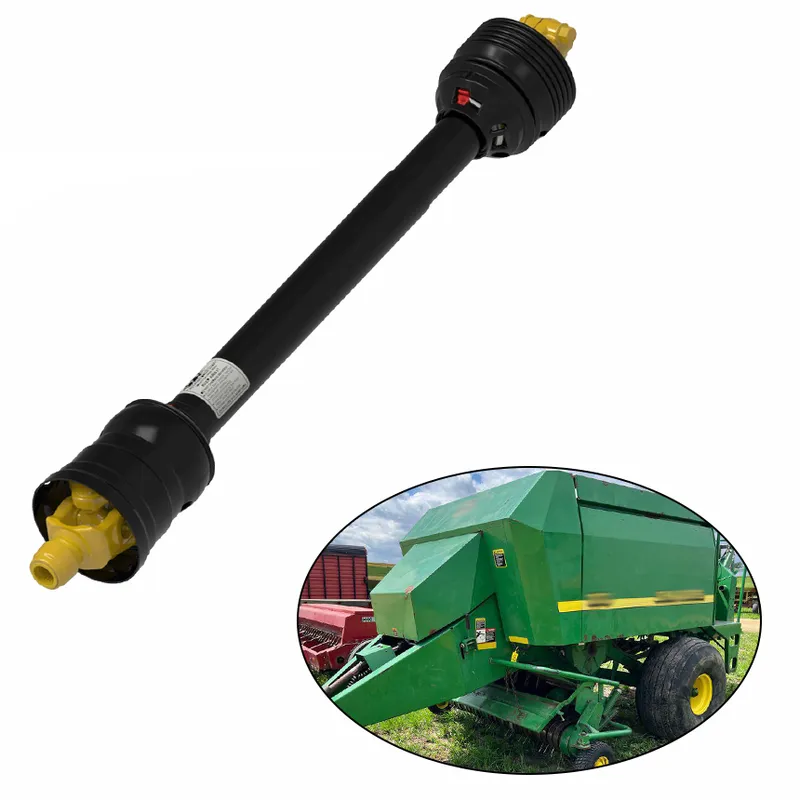
Arbre de prise de force pour presses à balles carrées John Deere 100
-
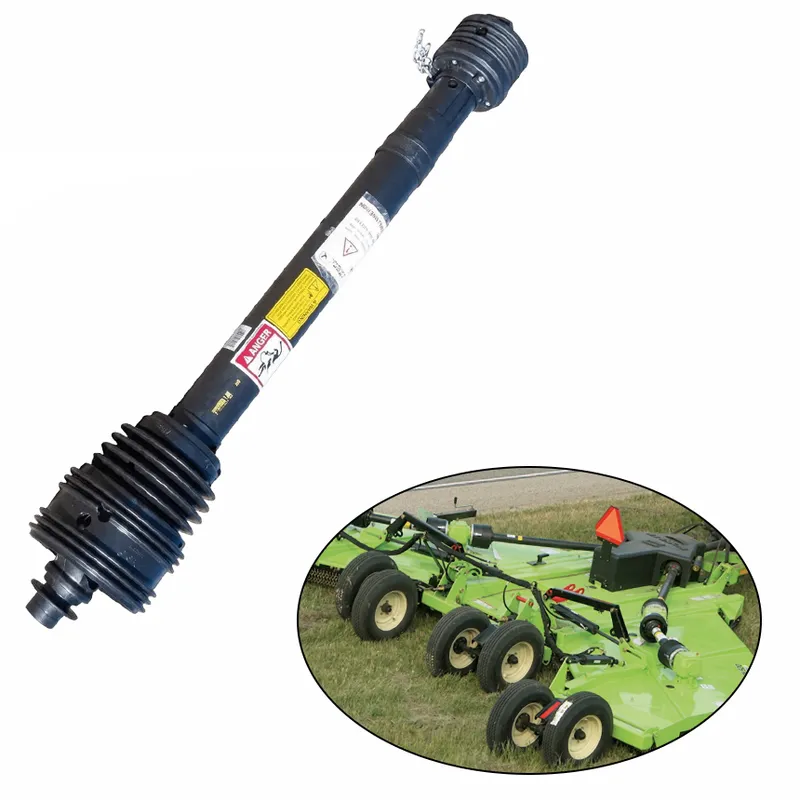
Arbre de prise de force pour tondeuses Schulte Batwing FX-530, FX-520, 5026
-
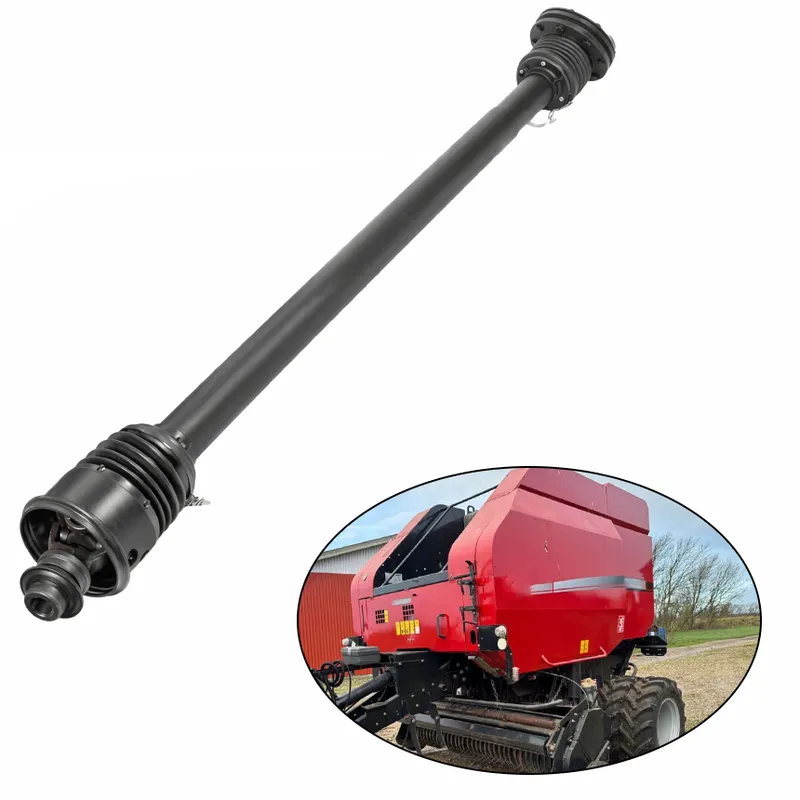
Arbre de prise de force pour presses à balles rondes Case IH RB444, RB454, RB455A, RB464, RB554, RB564
-
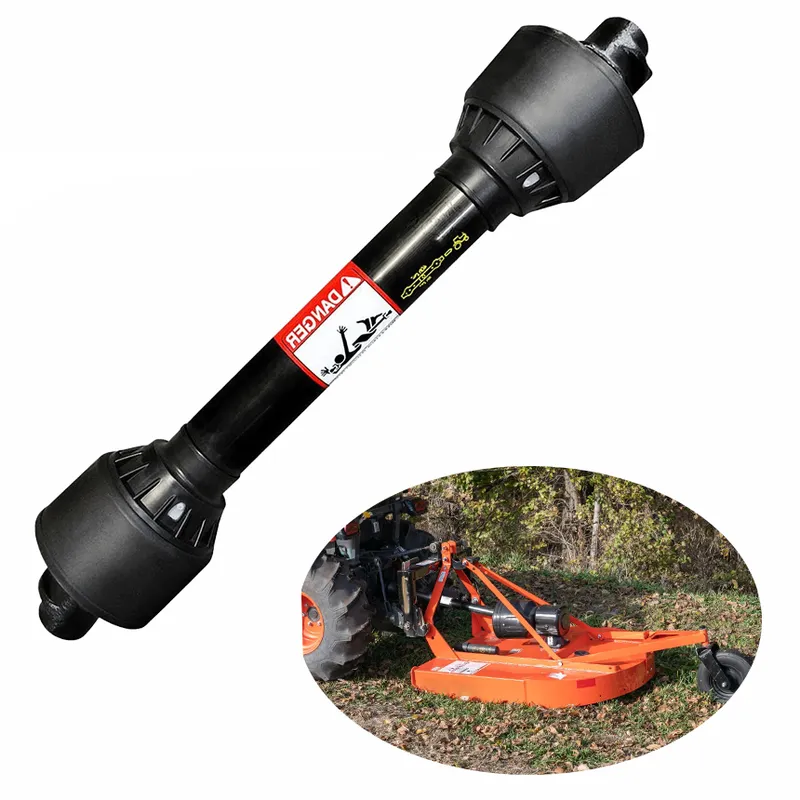
Arbre de prise de force pour broyeurs rotatifs Land Pride RCR12, RCR15, RCR18, RCR1884, RCF20, RCF2084, RCR2510
-
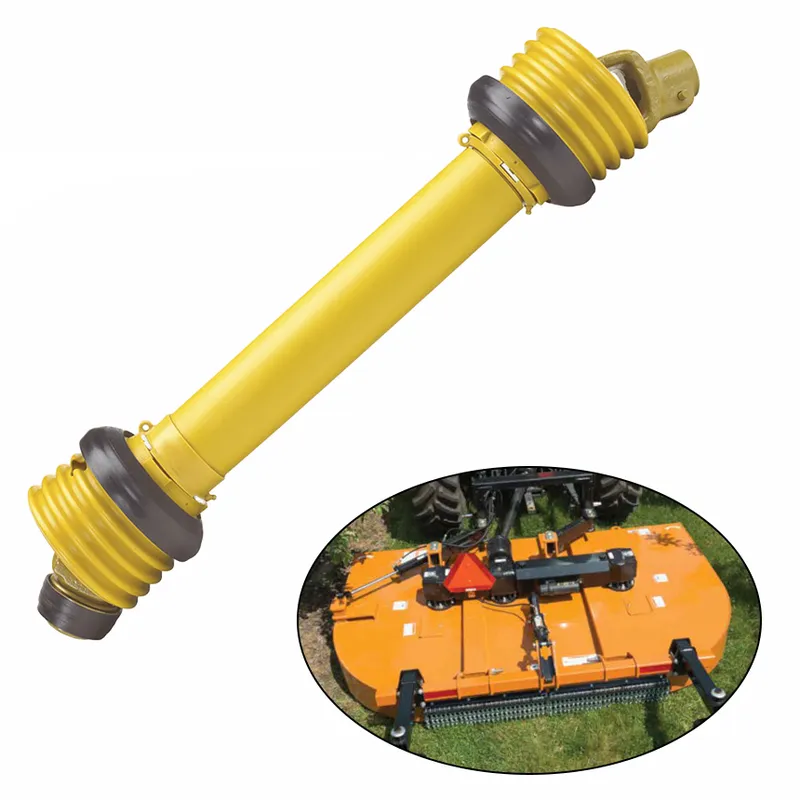
Arbre de prise de force pour broyeurs rotatifs multibroches Woods DS96, MDS96, DS120, MDS120, DS1260, DS1440, DSO1260, MTS1680, TS1680