
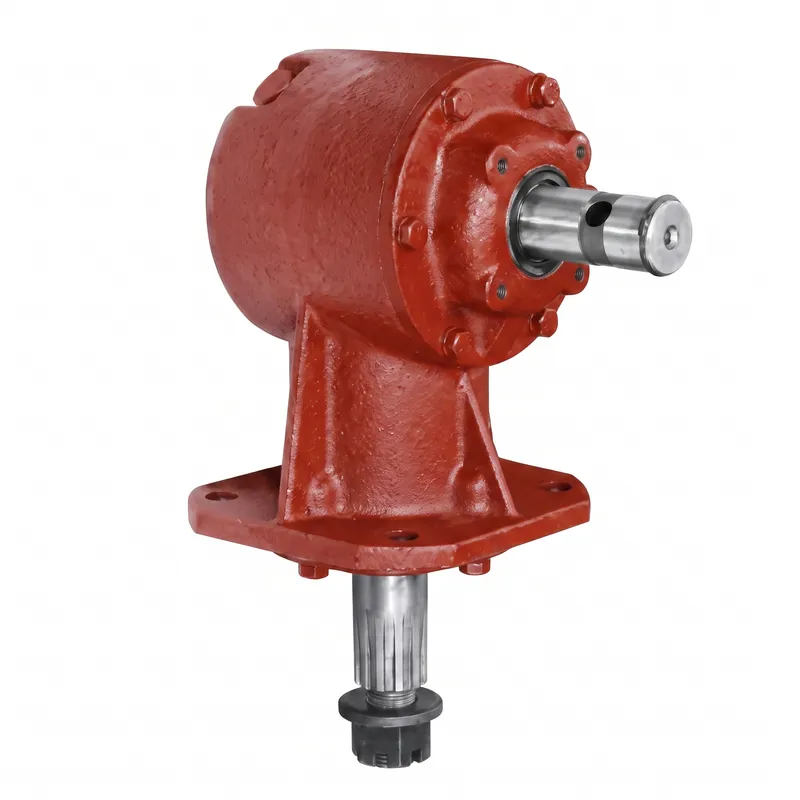
Ricambio per riduttore della troncatrice rotativa RC-30 per il riduttore Omni RC-30
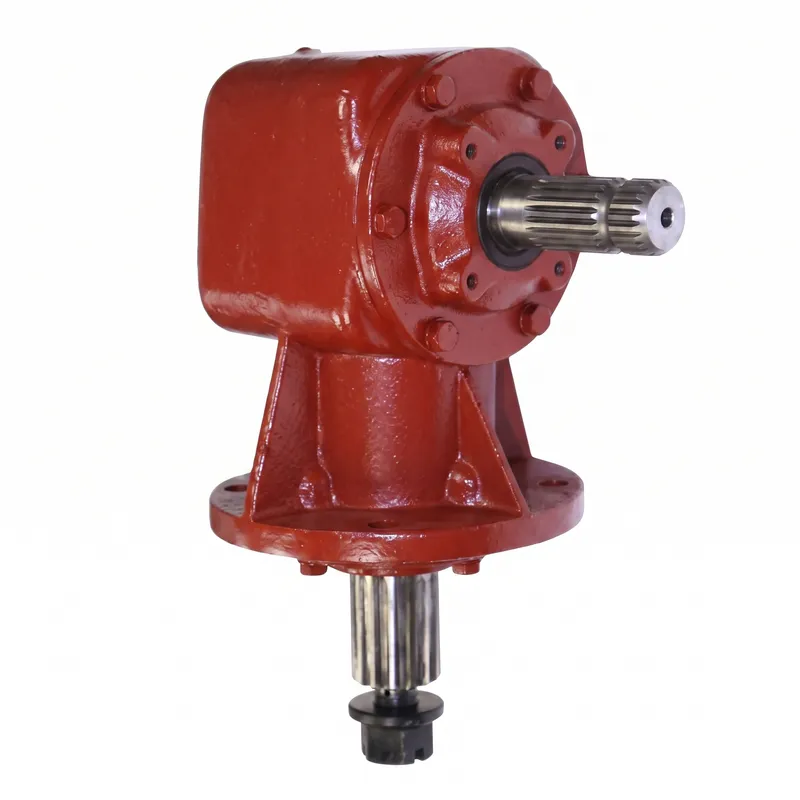
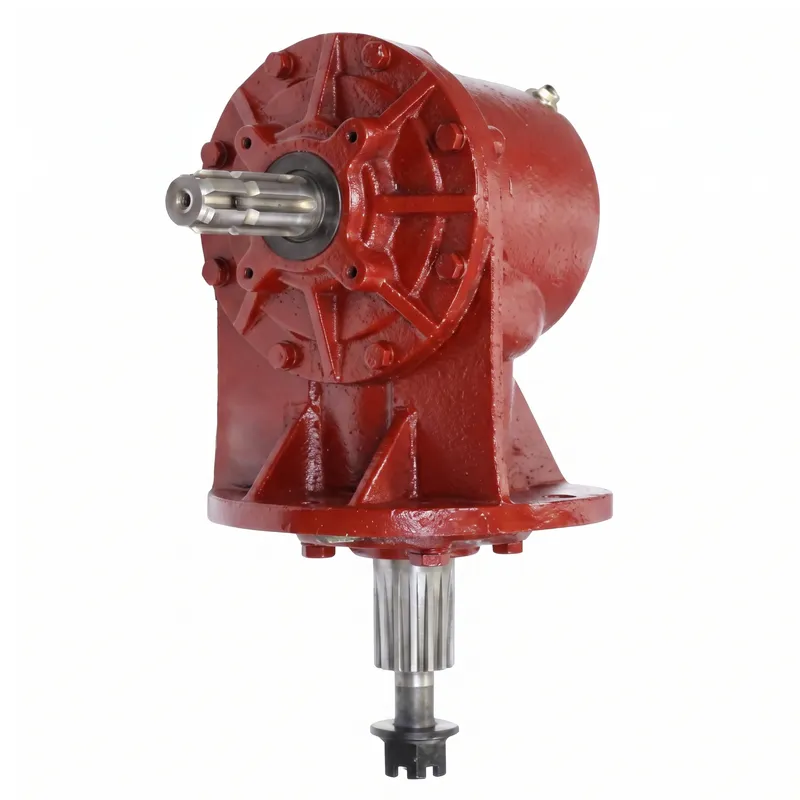
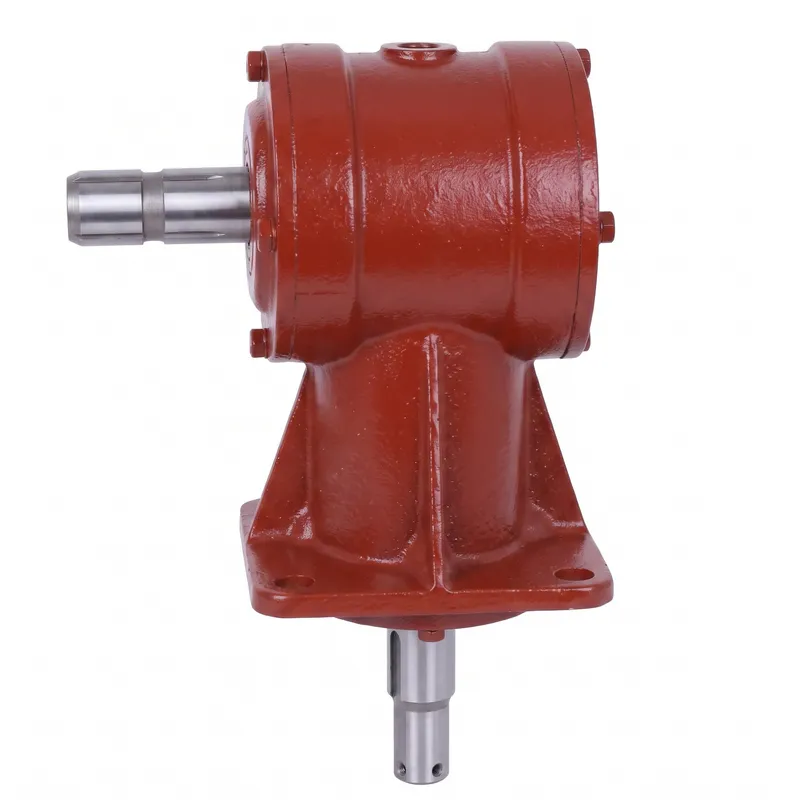
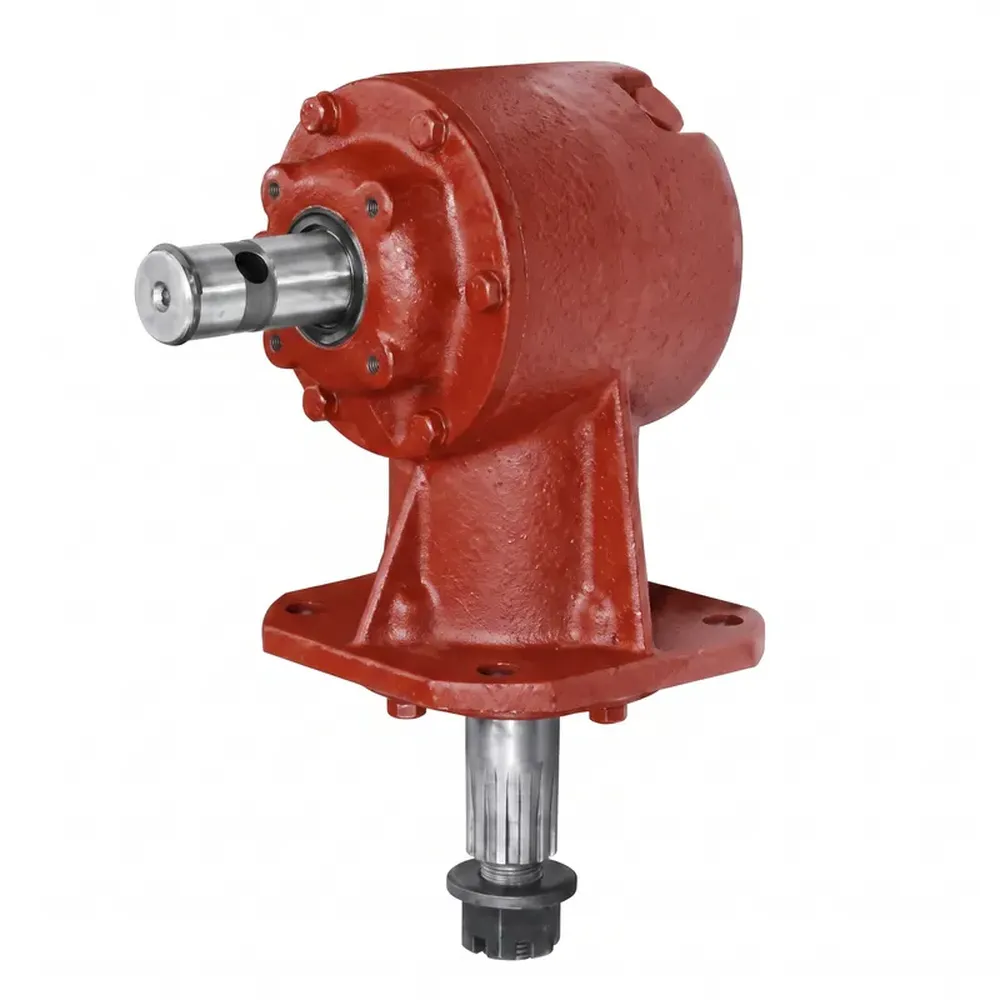
The RC-30 Rotary Cutter Gearbox Replacement for Omni RC-30 Gearbox is a precision-engineered power transmission unit developed specifically for agricultural machinery. Designed to drive rotary knives and cutting assemblies, it delivers reliable mechanical energy for grass cutting, straw crushing, and brush clearing across demanding field conditions. As a direct-fit rotary cutter gearbox replacement, it maintains dimensional compatibility with the original Omni RC-30 while incorporating upgraded sealing and bearing systems.
The RC-30 Rotary Cutter Gearbox Replacement for Omni RC-30 Gearbox is a precision-engineered power transmission unit developed specifically for agricultural machinery. Designed to drive rotary knives and cutting assemblies, it delivers reliable mechanical energy for grass cutting, straw crushing, and brush clearing across demanding field conditions. As a direct-fit rotary cutter gearbox replacement, it maintains dimensional compatibility with the original Omni RC-30 while incorporating upgraded sealing and bearing systems. With a torque range of 2,800 to 4,667 lb.-in. (316 to 527 Nm) and three available gear ratios, this unit is engineered for finishing mowers, rotary cutters, and rotary slashers in professional agricultural applications including livestock pasture management, roadside vegetation control, and wetland strip maintenance.
At its core, this gearbox for rotary cutters converts the high-speed rotation of the tractor's PTO output shaft, typically at 540 or 1000 RPM - into the lower-speed, high-torque mechanical output required for efficient cutting. The bevel gear set handles this power redirection at a precise 90-degree angle, ensuring the blade carrier bar receives stable torque even when load conditions shift abruptly, such as when cutting through dense cornstalks, thick perennial weeds, or overgrown brush. Supporting multiple gear ratio selections (1:1.47, 1:1.71, and 1:1.93), operators can adapt blade tip speed and torque delivery to match crop density, terrain type, and desired cut quality whether managing steep slopes, waterlogged wetlands, orchard rows, or open pastures. The result is a dependable agricultural gearbox that keeps your rotary cutter running at peak efficiency season after season.
Specifiche del prodotto
| Modello: | Cambio RC-30 |
| Coppia: | 2,800 - 4,667 lb.-in. (316 - 527 Nm.) |
| Rapporti: | 1:1.47, 1:1.71, 1:1.93 |
| Tipo di ingranaggio: | Smusso |
| Tipo di sigillo: | Triplo labbro a molla |
| Tipo di cuscinetto: | Palla con scanalatura profonda |
| Capacità dell'olio: | 23 oz. (0.68 L) |
| Peso: | 51 lbs. (23.1 kg.) |
| Applicazioni: | Tosaerba di finitura Taglierine rotative Tagliatori rotanti |
RC-30 Rotary Cutter Gearbox Dimensions
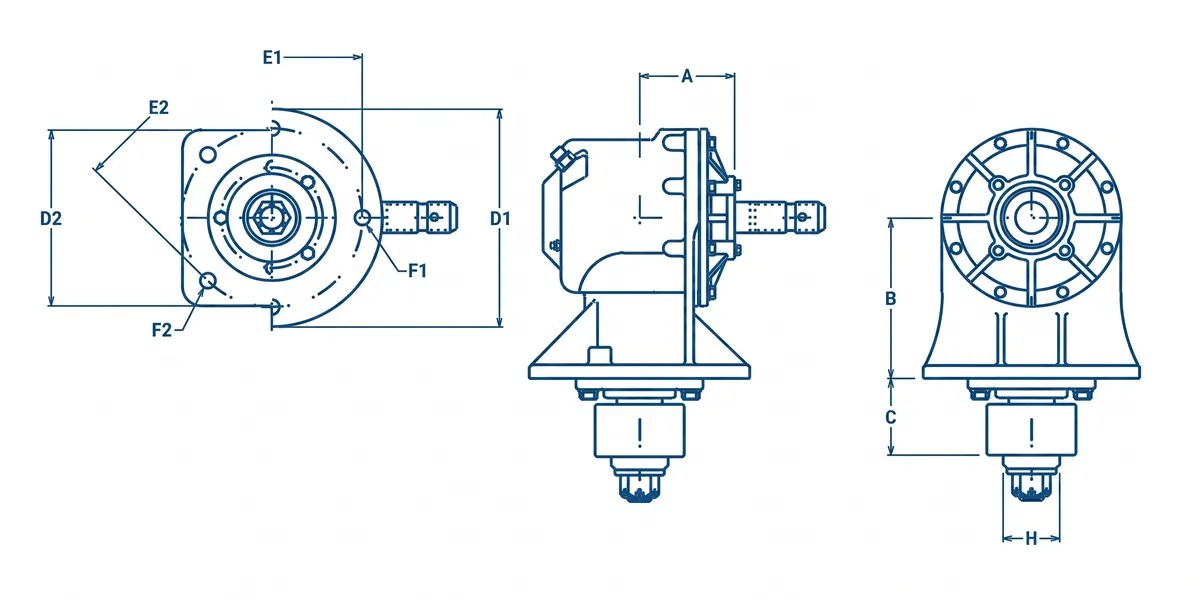
| Modello | Massimo Peso Unità | CL a Thru Cappello UN | CL a Flangia B | Flangia a Hub Pilot C | Hub Pilot Diametro H | Diametro della flangia D1 | Foro per bullone Modello E1 | Fori di montaggio Formula 1 | Flangia quadrata Misurare D2 | Foro per bullone Modello E2 | Fori di montaggio F2 | |||||||||||
|---|---|---|---|---|---|---|---|---|---|---|---|---|---|---|---|---|---|---|---|---|---|---|
| libbre | kg | In | mm | In | mm | In | mm | In | mm | In | mm | In | mm | In | mm | In | mm | In | mm | In | mm | |
| RC-20 | 34 | 15 | 3.0 | 76 | 6.5 | 165 | 2.40 | 61.0 | - | - | - | - | - | - | - | - | 6.18 | 157 | 6.8 | 171.5 | (4) 0.67 | (4) 17 |
| RC-27 | 47 | 21 | 3.5 | 88 | 6.4 | 164 | 2.40 | 61.0 | - | - | - | - | - | - | - | - | 6.18 | 157 | 6.8 | 171.5 | (4) 0.67 | (4) 17 |
| RC-30 | 51 | 23 | 3.9 | 100 | 6.4 | 164 | 3.30 | 84.0 | 2.5 | 63.5 | - | - | - | - | - | - | 6.89 | 175 | 6.8 | 171.5 | (4) 0.67 | (4) 17 |
| RC-51 | 56 | 25 | 3.7 | 94 | 6.4 | 164 | 3.50 | 88.9 | 2.5 | 63.5 | - | - | - | - | - | - | 6.89 | 175 | 6.8 | 171.5 | (4) 0.67 | (4) 17 |
| RC-61 | 81 | 37 | 4.2 | 107 | 7.2 | 183 | 3.50 | 88.9 | 2.5 | 63.5 | 9.5 | 242.0 | 8.0 | 203.2 | (4) 0.787 | (4) 20 | - | - | - | - | - | - |
| RC-71 | 83 | 38 | 4.2 | 107 | 7.2 | 183 | 3.50 | 88.9 | 2.5 | 63.5 | 9.5 | 242.0 | 8.0 | 203.2 | (4) 0.787 | (4) 20 | - | - | - | - | - | - |
| RC-81 | 98 | 45 | 4.6 | 116 | 11.0 | 279 | 3.50 | 88.9 | 2.5 | 63.5 | 9.6 | 245.0 | 8.0 | 203.2 | (4) 0.787 | (4) 20 | - | - | - | - | - | - |
| RC-100 | 96 | 44 | 4.8 | 121 | 7.1 | 180 | 3.78 | 96.0 | 2.5 | 63.5 | 9.4 | 240.0 | 8.0 | 203.2 | (4) 0.787 | (4) 20 | - | - | - | - | - | - |
| RC-130S | 109 | 49 | 5.1 | 130 | 7.1 | 180 | 4.00 | 102.0 | 2.9 | 73.0 | 9.8 | 250.0 | 8.0 | 203.2 | (6) 0.807 | (6) 21 | - | - | - | - | - | - |
| RC-130L | 120 | 54 | 5.1 | 130 | 7.1 | 180 | 7.20 | 184.0 | 3.8 | 96.0 | 9.8 | 250.0 | 8.0 | 203.2 | (6) 0.807 | (6) 21 | - | - | - | - | - | - |
| RC-145 | 110 | 50 | 5.6 | 142 | 8.9 | 225 | 8.05 | 204.5 | 3.8 | 96.0 | 10.2 | 260.0 | 8.0 | 203.2 | (6) 0.807 | (6) 21 | - | - | - | - | - | - |
| RC-150L | 145 | 66 | 5.1 | 130 | 11.0 | 280 | 7.20 | 184.0 | 3.8 | 96.0 | 9.8 | 250.0 | 8.0 | 203.2 | (6) 0.807 | (6) 21 | - | - | - | - | - | - |
| RC-200 | 220 | 100 | 6.4 | 162 | 9.5 | 241 | 8.00 | 203.0 | 5.3 | 135.0 | 11.8 | 300.0 | 10 | 254.0 | (6) 0.905 | (6) 23 | - | - | - | - | - | - |
Key Features of the RC-30 Rotary Cutter Gearbox
1. Compatibilità della presa di forza del trattore
The RC-30 connects directly to the tractor's power output shaft and supports both standard 540 RPM and 1000 RPM PTO speeds through quick-change coupling configurations. This broad compatibility eliminates the need for adapters on most common tractor brands, reducing installation time in the field. Operators can swap the gearbox in and out between machines without custom tooling, making it a practical choice for farms running mixed equipment fleets where downtime must be kept to an absolute minimum.
2. Multi-Ratio Blade Speed Control
Three selectable Riduttore per taglierina rotante ratios (1:1.47, 1:1.71, and 1:1.93) give operators precise control over blade tip speed and output torque relative to PTO input. A higher ratio such as 1:1.93 accelerates blade rotation for clean finish mowing of short grass, while the 1:1.47 ratio prioritizes torque for tackling dense weeds, thick straw, or overgrown brush. This flexibility allows one gearbox to perform across different crops and terrain conditions, reducing the need for multiple dedicated units.
3. Terrain-Adaptive Floating Design
The floating gearbox mounting design allows the cutter deck to follow ground contours automatically, compensating for undulations without driver input. This self-leveling behavior protects the blade set from violent impacts with rocks, buried debris, or hardened soil ridges. Whether operating on sloped pastures, uneven paddock terrain, or the edge of irrigation ditches, the unit maintains a consistent cutting height and protects both the blade assembly and the internal gear components from shock-loading that causes premature wear.
4. Field-Serviceable Lubrication System
External oil fill and drain ports make rotary cutter gearbox oil changes and level checks straightforward in the field without removing the unit from the cutter deck. The 23 oz. (0.68 L) oil-bath lubrication system keeps bevel gears and deep groove ball bearings continuously submerged in gear oil, dramatically reducing heat buildup and metal-on-metal wear during extended cutting sessions. Scheduled rotary cutter gearbox oil level checks are simple to perform and encourage the maintenance habits that extend overall service life.
5. Triple Lip Seal and Deep Groove Ball Bearing Protection
Triple lip spring-loaded oil seals wrap each rotating shaft exit point, creating a three-barrier defense against gear oil leakage and field contamination ingress. Mud, crop sap, dust, fine grit, and moisture are blocked at the seal interface before they can reach the bearing races or gear tooth surfaces. Deep groove ball bearings handle both radial and axial loads produced during heavy cutting operations. This combination of seal type and bearing type is a primary reason the RC-30 consistently outperforms lower-spec alternatives in long-term field durability.
6. Integrated Overload Safety Mechanism
When the blade set strikes a large embedded rock, concrete remnant, or other immovable obstruction, the integrated overload clutch or shear bolt mechanism immediately interrupts power transfer to the cutting assembly. This instantaneous response prevents the severe torsional stress spike from propagating into the gearbox housing, bevel gears, and input shaft - the components most vulnerable to catastrophic failure under sudden overload. By absorbing or severing the load rather than transmitting it, the safety mechanism protects a capital asset and prevents costly rotary cutter gearbox repair or full replacement.
Working Principle
The RC-30 rotary mower gearbox working principle is that power enters the gearbox through the input shaft, which is directly coupled to the tractor's PTO output. The PTO spins at either 540 or 1000 RPM depending on the tractor's selected PTO speed range. This high rotational speed carries relatively low torque at this stage - the gearbox's primary job is to redirect that rotation through 90 degrees and simultaneously trade some speed for a proportional torque increase.
Inside the housing, a precision-machined bevel gear set accomplishes both of these tasks simultaneously. The input bevel gear - mounted on the carburized alloy steel input shaft - meshes with a larger output bevel gear oriented at 90 degrees to the input axis. The tooth count ratio between these two gears determines the rotary cutter gearbox ratio, with the RC-30 offering three options: 1:1.47, 1:1.71, and 1:1.93. At a ratio of 1:1.93 with 540 RPM PTO input, the output shaft delivers approximately 280 RPM with torque amplified proportionally - sufficient to drive heavy swing blades through dense brush and thick-stemmed crops without stalling.
The output shaft, positioned vertically downward through the bottom of the housing, connects to the blade carrier bar or blade hub assembly on the cutter deck. As the output shaft rotates, the blade assembly spins at the operating speed determined by the selected gear ratio. When blades contact vegetation, the instantaneous load spike is absorbed by the gearbox's deep groove ball bearings, which manage both the radial forces from blade rotation and the axial forces generated when blades deflect on contact with dense material.
The oil-bath lubrication system ensures that every gear tooth mesh cycle and every bearing revolution occurs in a film of gear oil rather than under dry metal contact. The 23 oz. rotary cutter gearbox oil fill maintains the correct lubricant volume to keep internal temperatures within a safe operating range. The triple lip spring-loaded seals at each shaft exit maintain the oil inside the housing regardless of the mud, moisture, dust, and crop debris that the exterior of the gearbox encounters in normal agricultural use.
Multi-speed regulation capability means operators can match the gearbox's output characteristics to the task at hand. Lighter, faster cuts on established grass require a higher output speed and lower torque - the 1:1.93 ratio serves this role. Heavier work clearing overgrown wetland margins or tackling shrubby pasture corners demands maximum torque - the 1:1.47 ratio provides this. The practical result is one gearbox that covers a wide functional range without mechanical modification.
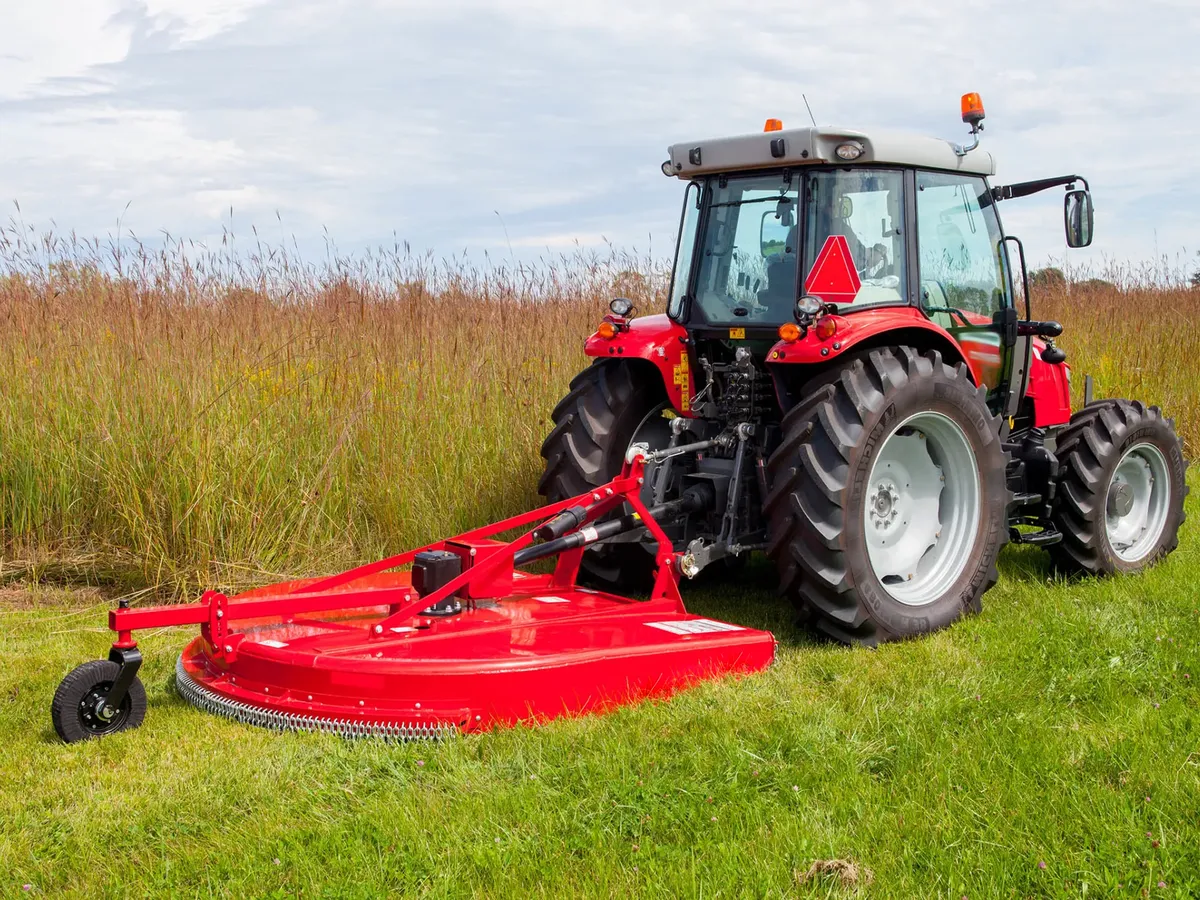
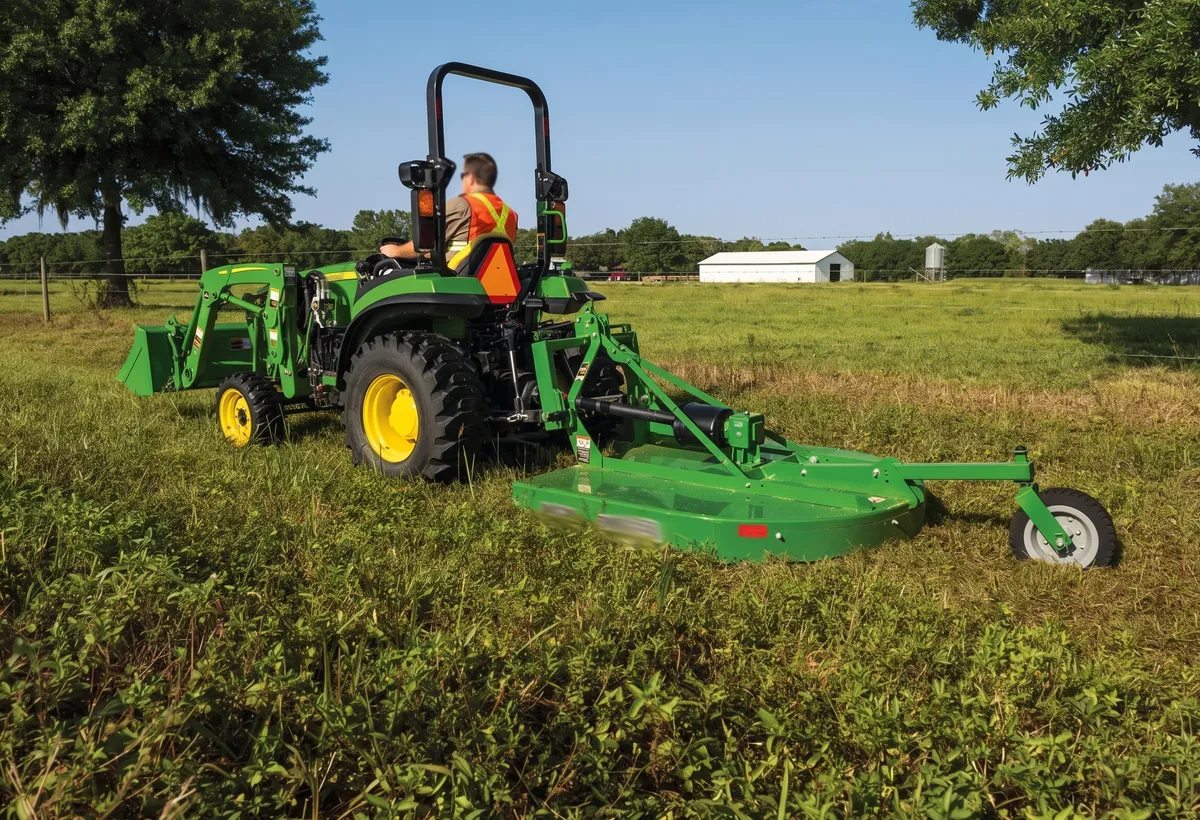
Scenari applicativi
Taglio dell'erba e triturazione della paglia
This finishing mower gearbox drives the rotary blade assembly at blade tip speeds suitable for cutting established grass swards, cover crop residues, and standing straw. Operators can select a higher gear ratio to increase blade speed for fine grass cutting or shift to a lower ratio to increase torque for crushing heavier straw material before incorporation into the soil as organic matter.
Disboscamento di arbusti e rovi
For orchard perimeters, woodland edges, and abandoned field margins overgrown with brambles, blackthorn, or rose briar, the RC-30's torque output at its lower gear ratios is sufficient to handle woody stems without stalling. This is one of the classic rotary slasher gearbox applications where sustained high-torque output under variable load is more important than blade tip speed.
Preparazione dei terreni agricoli e trattamento delle stoppie
Combined with disc knives or dump-style cutting blades, the RC-30 enables rapid clearance of post-harvest stubble fields - rice stubble, wheat stubble, and cornstalks - ahead of primary tillage or direct planting operations. The ability to manage blade speed ensures residue is chopped to a length suitable for soil incorporation without creating a thatch layer that impedes seedbed preparation.
Gestione di frutteti e filari di vigneti
The compact overall dimensions of the RC-30 make it well suited to narrow inter-row machinery in orchards and vineyards, where clearance is tight and precision matters. Weed management between fruit tree rows and vine rows requires a gearbox that delivers reliable torque without the bulk of heavier units, and the RC-30's 51 lb. weight keeps the cutter deck balanced during close-proximity maneuvers.
Controllo della vegetazione ai lati delle strade e nelle fasce di rispetto
Municipal and highway maintenance contractors rely on dependable rotary cutter gearbox suppliers for units that can handle sustained high-cycle operation along road verges, drainage ditches, and utility easements. The RC-30's triple lip seals and deep groove ball bearings are designed for exactly this type of prolonged operational use where maintenance access is limited between cutting runs.
Wetland and Riparian Zone Maintenance
Wetland vegetation management demands a gearbox that can withstand exposure to water, organic acids, and the abrasive silt carried by cutting debris in riparian environments. The RC-30's sealed housing and rust-resistant surface treatment allow it to operate reliably in these conditions, maintaining cutting performance for environmental management agencies and drainage board contractors working along waterways.
RC-30 Rotary Cutter Gearbox Components
1. Alloggiamento del cambio
The outer shell is cast from ductile iron, selected for its combination of high tensile strength and controlled ductility that allows it to absorb sudden shock loads without cracking. The housing encloses and protects all internal gear, bearing, and shaft components while also acting as the oil reservoir for the lubrication system. Its structural geometry provides the mounting interface for the cutter deck frame, and its wall thickness is engineered to absorb the vibration generated by blade impact without fatiguing over time. The red oxide primer coating protects the exterior surface from field corrosion between maintenance cycles.
2. Ingranaggi conici
Forged alloy steel bevel gears are the primary power transmission elements inside the housing. Precision machine-cut after forging, the tooth profiles of the bevel gear set are hardened and ground to maintain accurate mesh geometry under heavy load. The gears redirect the PTO shaft's horizontal rotational input through 90 degrees to drive the vertical output shaft, simultaneously performing the speed and torque conversion that defines the selected gear ratio. The tooth geometry distributes load across multiple contact points simultaneously, reducing peak stress per tooth and extending gear service life significantly compared to straight-cut alternatives.
3. Albero di ingresso
Manufactured from carburized alloy steel, the input shaft connects directly to the tractor's PTO driveline through a standard spline interface. The spline configuration allows torque to be transmitted through positive mechanical engagement across the full shaft circumference rather than through a single key, distributing the torsional load evenly and preventing the localized stress concentrations that cause shaft fatigue. The input shaft is precision-ground at its bearing journal diameters to ensure concentricity within the housing and smooth rotation without wobble throughout its service life.
4. Albero di uscita
The output shaft exits the housing vertically downward and delivers power to the blade carrier bar or blade hub assembly. It must withstand not only the sustained torque transmitted through the gear set but also the repeated impact shock that the blade assembly experiences each time it contacts dense vegetation, woody stems, or embedded debris. The output shaft's material specification and heat treatment profile are selected to resist both torsional fatigue from sustained load and the bending fatigue introduced by off-center blade impacts during typical cutting operations.
5. Deep Groove Ball Bearings
Deep groove ball bearings support both input and output shafts within the housing, maintaining precise shaft alignment under the combined radial and axial loads generated during cutting operations. The deep groove geometry enables these bearings to handle moderate thrust loads without requiring a separate thrust bearing arrangement, simplifying the internal assembly and reducing overall component count. Bearing quality directly determines the gearbox's operating noise level, thermal output, and service interval, making bearing selection one of the most consequential decisions in the RC-30's component engineering.
6. Triple Lip Spring-Loaded Oil Seals
Three sealing lips - each backed by a garter spring that maintains consistent radial contact pressure against the rotating shaft surface - form the barrier between the oil-filled interior of the housing and the contaminated field environment outside. The first lip scrapes crop debris and coarse contamination away from the sealing zone. The second lip acts as the primary oil retention barrier. The third lip provides backup retention and protection against fine particulate intrusion. Together, these three sealing stages explain why triple lip seals represent the industry standard for agricultural gearbox seal design rather than simpler single-lip alternatives.
7. Gear Oil Lubrication System
The RC-30 uses an oil-bath lubrication system where the lower bevel gear runs partially submerged in 23 oz. (0.68 L) of gear oil. As the gear rotates, it carries a film of oil upward through the mesh zone and splashes lubricant across the upper gear surfaces and bearing assemblies. External oil fill and drain ports make rotary cutter gearbox oil service straightforward in the field. Maintaining the correct rotary cutter gearbox oil level is the single most impactful routine maintenance action available to operators - low oil is the leading cause of overheating and premature bearing and gear failure in this type of unit.
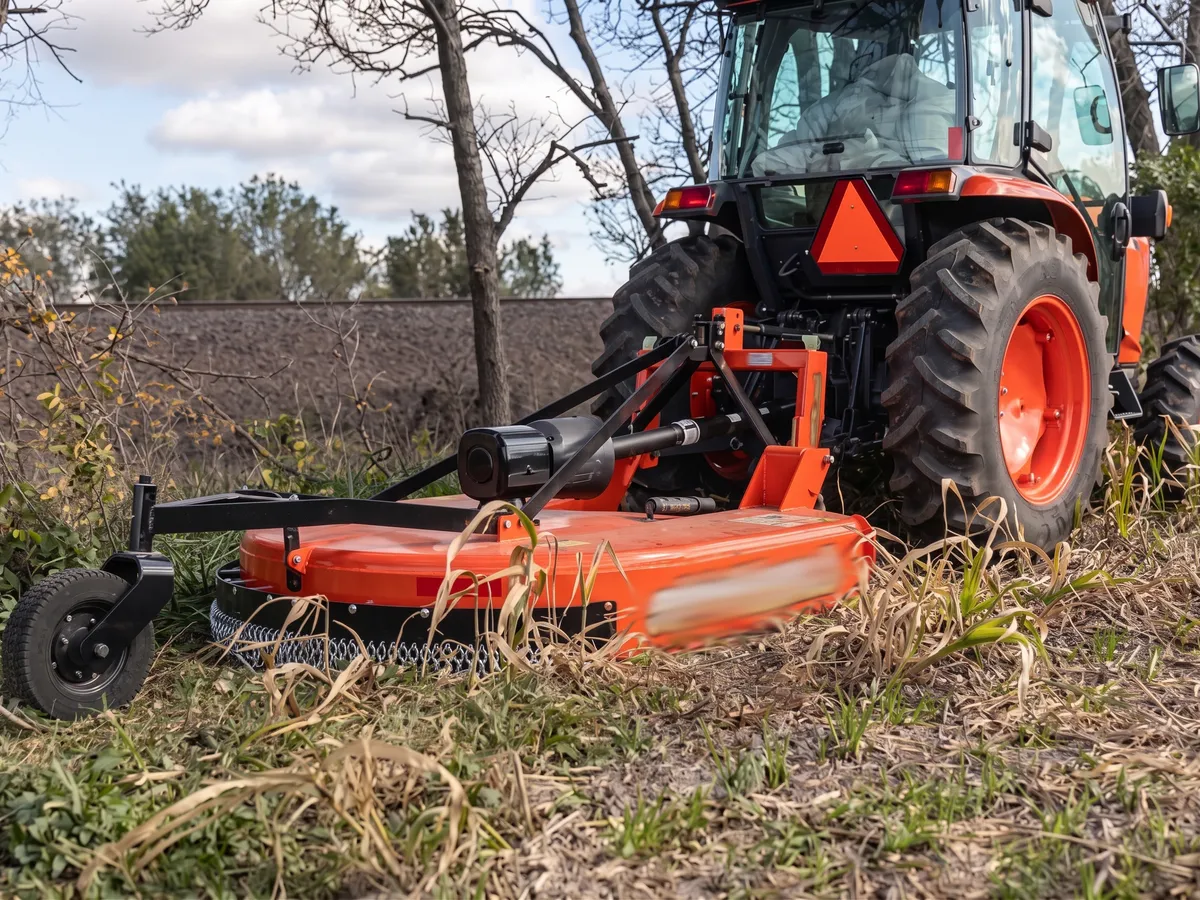
How to Replace a Rotary Mower Gearbox
Replacing the gearbox on your rotary cutter is a manageable workshop task when approached methodically. Follow these steps to complete a clean replacement gearbox for rotary cutter installation:
1. Disconnect PTO and Block the Deck
Before any physical work begins, disengage the tractor's PTO, shut off the engine, and remove the ignition key. Allow all rotating components to come to a complete stop. Block the cutter deck securely so it cannot lower unexpectedly while you work under or around it. These are non-negotiable first steps regardless of how quick the job looks.
2. Drain the Gear Oil
Place a drain pan under the gearbox and remove the drain plug to drain the 23 oz. of gear oil from the existing unit. Allow it to drain completely - residual oil inside the housing makes the unit unnecessarily heavy to handle and creates a spill risk during removal. Dispose of used gear oil in accordance with local regulations.
3. Detach the PTO Driveshaft
Slide the PTO driveshaft yoke off the gearbox input shaft. On most configurations this requires compressing a retaining clip or releasing a locking collar. Support the driveshaft so it does not hang unsupported and strain the PTO shaft or universal joints. Mark the driveshaft orientation relative to the tractor PTO if alignment marks are not already present.
4. Remove the Blade Hub Assembly
Remove the blade retaining hardware from the output shaft below the gearbox. Depending on the blade hub design, this typically involves removing a castellated nut, snap ring, or hub retaining bolt. Use a blade-holding tool to prevent the blade assembly from rotating while breaking loose the retaining nut. Set blades aside in a safe orientation - sharp edges remain hazardous even after the machine is shut down.
5. Unbolt and Remove the Old Gearbox
The RC-30 mounts to the cutter deck through four mounting bolts arranged on a 6.8 in. bolt hole pattern. Remove these four bolts evenly and have a second person or a support cradle ready to receive the gearbox weight - at 51 lbs. (23.1 kg), the unit is manageable but awkward to handle alone when working under a deck. Inspect the mounting face on the deck for damage or corrosion before fitting the new unit.
6. Install the RC-30 Replacement Gearbox
Position the new RC-30 gearbox against the deck mounting face, aligning the hub pilot (2.5 in. / 63.5 mm diameter) with the deck's locating bore. Insert and hand-tighten all four mounting bolts before torquing any of them down. Then torque each bolt to specification in a cross pattern to ensure the flanged mounting face seats evenly without warping. Verify that the output shaft runs true and is not deflected by checking for even clearance around the blade hub bore before final tightening.
7. Reconnect Driveshaft, Fill Oil, and Conduct No-Load Test
Reconnect the PTO driveshaft yoke to the input shaft and confirm the locking collar or retaining clip is fully engaged. Fill the gearbox with the correct grade and quantity of gear oil through the fill port - 23 oz. (0.68 L) - and replace the fill plug. Reinstall the blade assembly with hardware torqued to specification. Before returning the cutter to field use, run the PTO at low speed for two to three minutes with the cutter raised to verify quiet, smooth operation and check around all shaft exits for leakage.
8. Post-Installation Inspection After First 10 Hours
After the first ten hours of operational use with the new RC-30 gearbox installed, conduct a thorough post-installation inspection. Check all mounting bolts for any signs of loosening, inspect the oil level and look for any weeping around the seal zones, and listen for any unusual sounds that might indicate a seating or alignment issue from the installation process. Catching minor issues at this early stage prevents them from developing into structural failures that would require another gearbox replacement.
Riduttore e albero di trasmissione della presa di forza della troncatrice rotativa
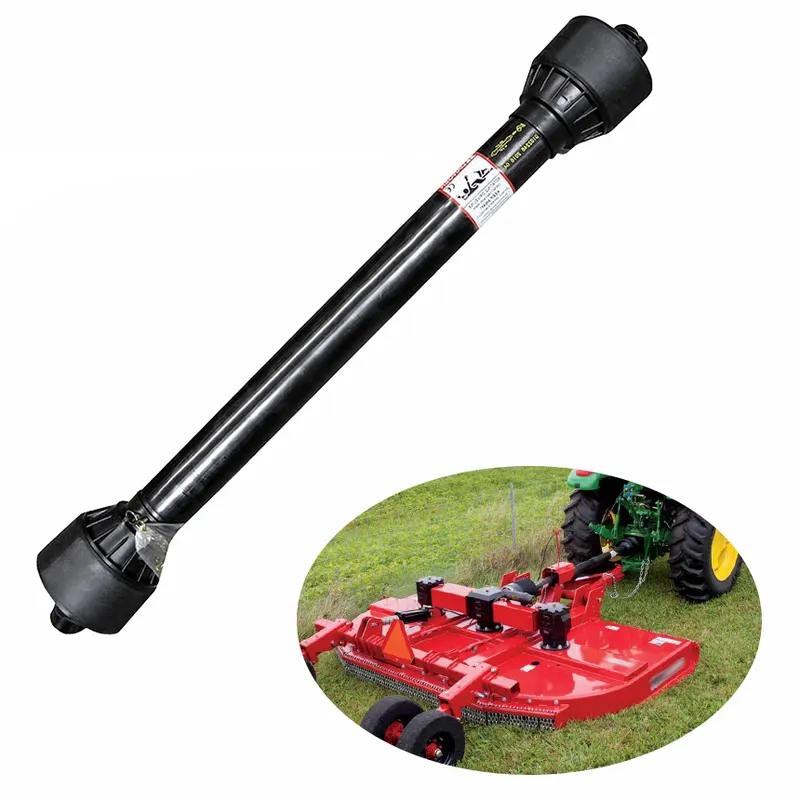
A rotary cutter gearbox and a PTO shaft are two mechanically distinct components that function as an inseparable power delivery system. Understanding the relationship between them is essential for selecting the correct replacement gearbox, maintaining optimal performance, and preventing the mechanical failures that occur when mismatched or poorly maintained components are paired together.
The Power Take-Off (PTO) shaft is the mechanical link between the tractor's internal transmission and any attached implement. The tractor's PTO output rotates at a standardized speed - 540 RPM for lighter agricultural implements or 1000 RPM for higher-power applications - and delivers this rotation through a splined output stub that protrudes from the rear or mid-mount position of the tractor. The PTO driveshaft that connects the tractor to the cutter typically consists of a telescoping tube assembly with universal joints (U-joints) at each end, allowing the shaft to accommodate the angular and length changes that occur as the tractor turns, the implement rises and falls, and the hitch geometry changes during field operation.
The rotary cutter gearbox receives this rotating input at its input shaft, which is splined to mate directly with the PTO driveshaft yoke. From this point, the gearbox performs three critical functions simultaneously: it changes the direction of power flow (typically through 90 degrees via the bevel gear set), it increases torque and proportionally reduces output speed according to the selected gear ratio, and it provides the structural mounting platform that connects the cutter deck's blade assembly to this power source. This directional change is critical - the PTO shaft runs horizontally from the tractor, while the blade assembly must rotate in a horizontal plane driven by a vertical output shaft, and the gearbox bridges this geometric difference.
When selecting a rotary cutter gearbox for sale, the PTO shaft's speed range must match the gearbox's rated input speed. An RC-30 gearbox receiving 540 RPM PTO input delivers a specific blade speed range through its available gear ratios. Changing to a 1000 RPM PTO input without adjusting the gear ratio or confirming the gearbox's rated input speed will result in over-speeding the output shaft and rapidly overstressing the bearings, seals, and gear tooth surfaces - even though the gearbox itself is undamaged and otherwise serviceable.
The PTO shaft's universal joints must be kept within their designed operating angle range. Exceeding the maximum U-joint angle - typically 15 to 20 degrees depending on joint design - causes the joint to introduce cyclic velocity fluctuations into the driveline twice per revolution. These speed pulses propagate into the gearbox as periodic torque spikes that accelerate bevel gear tooth wear, loosen mounting hardware, and fatigue the input shaft. Correct implement hitch geometry, maintaining the PTO shaft as close to horizontal as the application permits, and using a driveshaft with appropriately phased U-joints all contribute directly to gearbox service life.
The RC-30 connects directly from the tractor's PTO shaft straight down to the blade carrier bar on a vertical axis. It handles high-impact shock loads when the heavy swing-away blades strike thick brush, rocks, or small trees during field operation. A rotary cutter gearbox and PTO shaft transfer power from a tractor's power takeoff to spin the mower's heavy blades under the deck - the gearbox is not a passive coupling but an active torque-multiplying machine that stands between the tractor's drivetrain and the cutting forces generated at the blade tips.
This is why the specification and condition of both components must be evaluated together. A worn PTO driveshaft with deteriorated U-joints will destroy even a new, correctly specified gearbox within a single season. Conversely, a correctly maintained PTO driveshaft paired with an undersized gearbox will result in chronic overheating and premature gear failure. When ordering a rotary cutter gearbox replacement, always confirm the PTO shaft is in serviceable condition, correctly sized, and operating within the angular limits specified by the driveshaft manufacturer before commissioning the new gearbox.
 |  |
Guasti comuni e risoluzione dei problemi
Excessive Oil Leakage
Symptoms: Oil pooling beneath the gearbox, visible wet streaks on housing exterior, rapid loss of oil level.
Causes: Worn or hardened triple lip seals, cracked housing, blocked pressure relief plug forcing oil past seals.
Action: Inspect and replace seals during a scheduled rotary cutter gearbox rebuild. Confirm the pressure relief plug is clear and functioning. Inspect the housing for hairline cracks near mounting boss areas.
Abnormal Noise During Operation
Symptoms: Grinding, whining, or clicking sounds emanating from the gearbox during PTO engagement or under cutting load.
Causes: Worn or pitted bevel gear teeth from inadequate lubrication, damaged bearing races, loose end caps, or incorrect oil level.
Action: Stop operation immediately. Check and correct oil level first. If noise persists after refilling, the gearbox requires internal inspection - a sign that rotary cutter gearbox repair is needed.
Excessive Heat Buildup
Symptoms: Housing too hot to touch after normal operating periods, accelerated oil consumption, discolored seals.
Causes: Insufficient oil volume, incorrect oil grade, overloading beyond rated torque limits, or blocked oil flow ports.
Action: Allow the gearbox to cool completely before opening. Drain, flush, and refill with the correct grade of gear oil to the specified 23 oz. capacity. Verify cutting load is within the gearbox's rated torque range.
Output Shaft Wobble or Vibration
Symptoms: Visible wobble at the blade hub, increased vibration transmitted to the cutter deck and tractor, abnormal wear on blade hardware.
Causes: Failed or worn deep groove ball bearings on the output shaft, bent output shaft from severe blade strike, or loose blade hub retaining hardware.
Action: Remove the blade assembly and check the output shaft for visible deflection. Inspect bearings for roughness when rotated by hand. Replace bearing sets and shaft as required.
Overload Clutch Slipping Under Normal Load
Symptoms: Power delivery to the blade assembly feels inconsistent even in light vegetation; blade speed drops unexpectedly under mild load.
Causes: Worn overload clutch friction surfaces, incorrect clutch spring preload, or contamination of clutch surfaces by gear oil from a failed nearby seal.
Action: Inspect the overload clutch assembly for wear and contamination. Clean or replace clutch components as required. This fault is frequently masked by misidentification as a PTO or driveline issue.
Input Shaft Spline Wear
Symptoms: Clunking sound on PTO engagement and disengagement, detectable play between the PTO driveline yoke and the gearbox input shaft.
Causes: Extended operation without adequate PTO driveshaft lubrication, misalignment between tractor PTO and gearbox input, or operating at PTO speeds outside the rated range.
Action: Inspect spline engagement surfaces on both the PTO yoke and the gearbox input shaft. Lubricate PTO driveshaft slip joints per the service schedule. Replace worn shafts before spline damage propagates into the gear set.
Perché scegliere i riduttori per trinciatrici rotative di CMN Transmission?
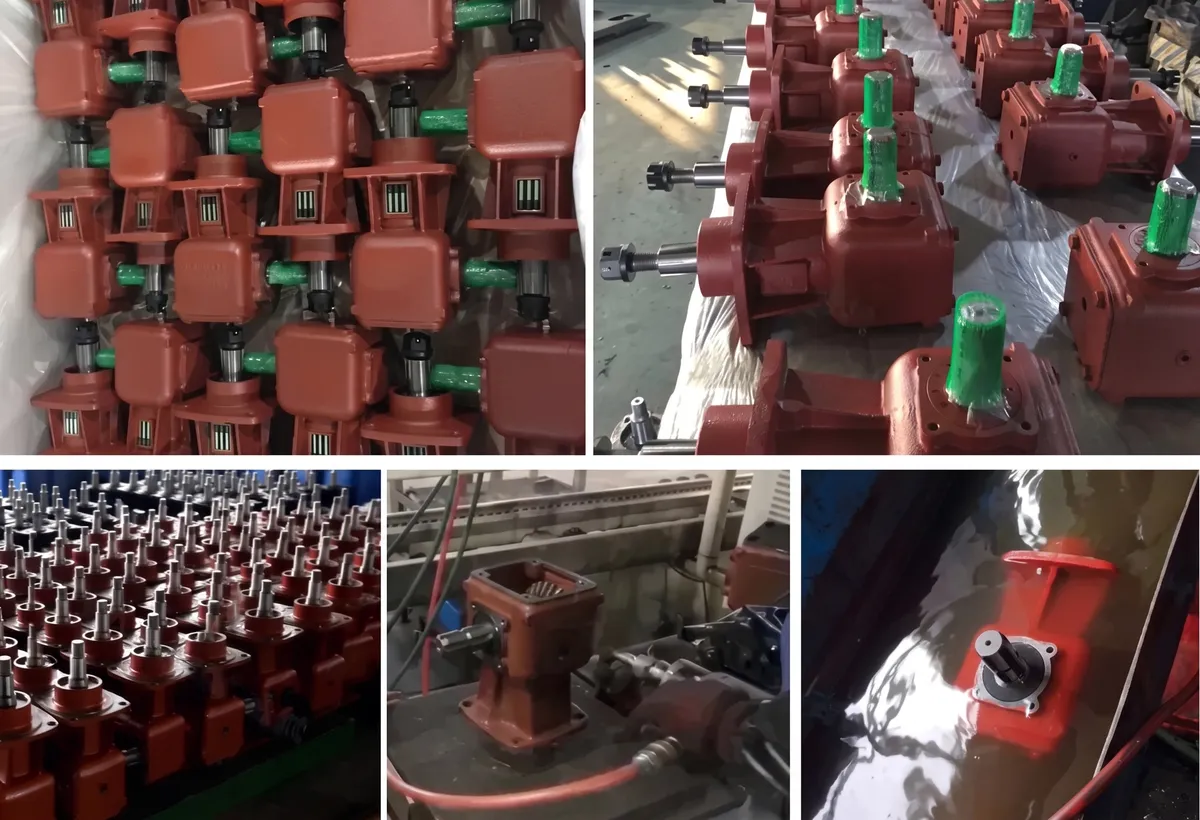
Korea CMN Transmission Co., Ltd., founded in 2000 and located in Sandan-o, Danwon-gu, Ansan-si, Gyeonggi-do, Korea. CMN Transmission Co., Ltd. has built more than two decades of focused expertise in agricultural gearbox design, manufacturing, and service. With over 100 factory employees dedicated to R&D, production, and quality assurance, the company delivers the manufacturing consistency that global agricultural OEMs and distributors depend on for reliable product supply. CMN Transmission's catalog covers rotary cutter gearboxes, rotary tiller gearboxes, flail mower gearboxes, feed mixer gearboxes, fertilizer spreader gearboxes, post hole digger gearboxes, round and square baler gearboxes, disc mower gearboxes, combine harvester gearboxes, center pivot irrigation gearboxes, and many more agricultural gearbox types - nearly one thousand specifications in total. Custom gearbox engineering is available for OEM partners requiring non-standard shaft configurations, mounting dimensions, or gear ratios.
With an annual production capacity exceeding 500,000 gearbox units, CMN Transmission can meet both regular distributor order volumes and large OEM supply requirements without lead time surprises. This scale is supported by in-house gear cutting, heat treatment, precision machining, and assembly operations that maintain quality control at each production stage rather than relying on multiple external sub-suppliers for critical components. CMN Transmission exports to over 60 countries worldwide, including the United States, Canada, Mexico, Brazil, Argentina, France, Germany, Italy, Spain, the United Kingdom, Russia, India, Thailand, Vietnam, Turkey, Australia, and New Zealand. This global distribution network means technical solutions and replacement gearboxes reach customers across all major agricultural markets with established logistics paths and local support contacts.
CMN Transmission holds CE marking approval, ISO 9001 Quality Management System certification, Environmental Management certification, and Occupational Health and Safety certification. These certifications represent documented, independently audited quality systems - not simply stated claims - providing procurement professionals and OEM partners with verifiable confidence in the manufacturing standards behind every unit shipped. CMN Transmission's technical team provides pre-sale compatibility verification, application-specific gear ratio selection guidance, and post-sale support for both standard replacement units and custom OEM programs. Whether you are selecting a replacement gearbox for rotary cutter equipment or sourcing gearboxes for a new machinery development program, CMN's agricultural gearbox specialists provide the application knowledge to ensure the correct unit reaches your equipment.
Domande frequenti
Q: What is the correct gear oil type and capacity for the RC-30 rotary cutter gearbox?
A: The RC-30 uses an oil-bath lubrication system with a total oil capacity of 23 oz. (0.68 L). The correct oil grade for most applications is SAE 90 or SAE 140 gear oil - check your specific tractor and cutter manufacturer's documentation for the recommended specification in your climate. In cold-climate winter operations, a lower viscosity such as SAE 80W-90 may be specified to ensure adequate lubricant flow at startup temperatures. Always fill through the dedicated oil port rather than removing end caps, and verify the rotary cutter gearbox oil level is correct before each extended cutting session.
Q: Is the RC-30 a direct drop-in replacement for the original Omni RC-30 gearbox?
A: Yes. The RC-30 replacement gearbox maintains the same critical mounting dimensions as the original Omni RC-30: flange square size 6.89 in. (175 mm), bolt hole pattern 6.8 in. (171.5 mm), mounting holes (4) at 0.67 in. (17 mm) diameter, and hub pilot diameter 2.5 in. (63.5 mm). The overall dimensions - CL to Thru Cap 3.9 in. (100 mm), CL to Flange 6.4 in. (164 mm), Flange to Hub Pilot 3.30 in. (84.0 mm) - are compatible with the original mounting configuration. No deck modification or adapters are required for a standard installation.
Q: What rotary cutter gearbox ratio should I choose for my application?
A: The RC-30 offers three gear ratios - 1:1.47, 1:1.71, and 1:1.93 - and the correct choice depends on your cutting task and PTO speed. The 1:1.93 ratio maximizes blade tip speed at the expense of some torque, making it ideal for finish mowing of established grass. The 1:1.47 ratio prioritizes torque output, suited to heavy brush clearing, thick straw, and overgrown fields. The 1:1.71 represents a balanced midpoint for general-purpose pasture and field maintenance. If you regularly cut a wide variety of vegetation types, the 1:1.71 ratio is the most versatile starting point.
Q: How often should I change the oil in a rotary cutter gearbox?
A: For the RC-30 under normal operating conditions, the first oil change is typically recommended at 50 hours of operation to flush any initial break-in metal particles from the gear and bearing surfaces. Thereafter, annual oil changes or changes at every 200 to 250 operational hours are a standard maintenance interval for agricultural gearboxes in regular seasonal use. In demanding applications - high-cycle roadside maintenance, operation in very dusty conditions, or sustained heavy cutting - a shorter interval of every 100 hours is a sensible precaution. Always check the rotary cutter gearbox oil level at the start of each day during heavy cutting seasons.
Q: Why is my rotary cutter gearbox leaking oil?
A: Oil leakage from a rotary cutter gearbox most commonly results from hardened, cracked, or worn triple lip oil seals around the input or output shafts. Heat cycles over time harden the rubber seal lips, reducing their ability to maintain contact pressure against the rotating shaft surface. A blocked or missing pressure relief plug can also force oil past the lip seals by building internal pressure. Inspect the seal zones for wet oil streaks and the pressure relief plug for blockage before concluding that a full rotary cutter gearbox rebuild is necessary - in many cases, a seal replacement resolves the leakage entirely.
Q: Can the RC-30 handle both 540 and 1000 RPM PTO inputs?
A: The RC-30 supports standard PTO input speeds through its compatible spline input shaft. However, it is essential to confirm whether the specific unit you are ordering is rated for 540 RPM, 1000 RPM, or both speeds before installation. Operating a gearbox at an input speed above its design rating will over-speed the output shaft and rapidly degrade bearings and seals. Contact CMN Transmission directly to confirm the correct PTO speed specification when ordering, particularly if your tractor operates at 1000 RPM PTO output or if you intend to use the gearbox on multiple tractor models with different PTO speeds.
Q: What rotary cutter gearbox parts are most commonly replaced?
A: The most frequently replaced rotary cutter gearbox parts in routine maintenance are the triple lip oil seals and the deep groove ball bearings. Seals typically require replacement when the lip rubber hardens with age or when shaft surface scoring creates a seal-defeating groove in the shaft's contact zone. Bearings wear through accumulation of operating hours, contamination from failed seals, or heat damage from prolonged low-oil operation. Bevel gears are less frequently replaced but should be inspected during any bearing or seal replacement service for pitting, chipping, and excessive backlash that indicates advanced wear.
Q: Is it better to repair or fully replace a worn rotary cutter gearbox?
A: The decision between rotary cutter gearbox repair and full replacement depends on the condition of the housing and bevel gears. If the housing is structurally sound and the bevel gear teeth show only moderate surface wear without significant pitting or chipping, a rebuild with new seals, bearings, and a fresh oil fill is economically justified. However, if the housing shows cracking, the gear teeth are heavily worn or damaged, or if the input or output shafts show scoring in the seal contact zones, a full replacement unit is more cost-effective than sourcing and machining individual components. At the RC-30's price point, full replacement often delivers better long-term value than extensive internal repairs.
Q: What horsepower range is the RC-30 gearbox designed for?
A: The RC-30 is designed for medium-duty agricultural applications with a torque rating of 2,800 to 4,667 lb.-in. (316 to 527 Nm), which corresponds to tractor power output in the range of approximately 40 to 75 horsepower at the PTO under typical rotary cutter operating conditions. It is well suited to finishing mowers, standard rotary cutters, and rotary slashers in this power range. For applications requiring a 100 HP rotary cutter gearbox or larger, CMN Transmission offers higher-rated units in the RC series - the RC-61, RC-81, and RC-100 models cover progressively higher HP ranges for heavy-duty pasture and brush management tasks.
Q: How do I confirm the RC-30 is compatible with my specific rotary cutter brand and model?
A: To confirm compatibility, you need to verify three sets of dimensions from your existing gearbox or your cutter deck's specification sheet: the mounting bolt hole pattern diameter and number of holes, the hub pilot bore diameter in the cutter deck, and the input and output shaft spline specifications. For the RC-30, the key numbers are: bolt hole pattern 6.8 in. (171.5 mm), four holes at 0.67 in. (17 mm) diameter, hub pilot diameter 2.5 in. (63.5 mm). If these match your cutter deck, the RC-30 is a direct fit. CMN Transmission's technical team can also cross-reference your existing gearbox model number to confirm compatibility - email your enquiry before ordering if you have any dimensional uncertainty.
Recensioni dei clienti
James Harrington, Livestock Farmer, United States
"We run about 400 acres of mixed pasture in Kansas and the original gearbox on our 6-foot bush hog finally gave out after about seven seasons. Ordered this RC-30 replacement on a Thursday, had it in hand by Tuesday, bolted it up over a Wednesday morning and were back cutting by noon. Fit was exactly right - the bolt pattern matched perfectly and the hub pilot dropped straight in. We've now run about 80 hours on it since installation and it's quieter than the original was in its last two seasons. Oil seals look clean, no weeping anywhere. Would absolutely buy again."
Robert Challand, Custom Cutting, Canada
"I was skeptical about going with an aftermarket unit rather than sourcing through the OEM, but honestly I'm glad I did. The price was significantly better and the quality is the same or better than what came on the machine. The triple lip seals are noticeably more substantial than what was on the gearbox I pulled off. We work some fairly wet ground in Ontario, lots of drainage ditch margins and low spots, and this unit is handling the moisture exposure well. It's been about four months and I check the oil level every week - hasn't moved. That's a good sign."
Alejandro Torres Vega, Crop Farmer, Mexico
"I needed a replacement gearbox for my 5-foot rotary cutter and this RC-30 arrived well-packaged and with all the correct specifications. The 1:1.93 gear ratio I ordered works perfectly with my 50-horsepower tractor. We use it to clear land with dense brush in Jalisco and the performance has been very good. Good customer service too - they answered my questions about shaft compatibility before I placed the order. I would definitely recommend it to other farmers in Mexico."
Carlos Eduardo Mendes, Sugarcane Farmer, Brazil
"We have a sugarcane property in the interior of São Paulo and our cutting machine was down because of a broken gearbox. We found this RC-30 online and placed the order. Delivery took a little longer than we expected to arrive in Brazil, but the product made up for the wait. The gearbox has been running for five months, throughout the entire harvest season, and we haven't had any problems. The quality is good and the price was fair compared to the alternatives we found locally."
Brendan Kowalski, Fleet Maintenance, Australia
"I manage roadside vegetation for a local council in Victoria and we go through gearboxes reasonably regularly given the hours we run. This is the second RC-30 we've ordered and it's performed the same as the first - solid, reliable, no drama. The dimensions are exactly right for our Rhino cutter deck and the installation each time has been straightforward. We particularly appreciate that the oil ports are positioned sensibly for field access. When you're servicing machines between jobs on the roadside, you don't want to be removing the whole unit just to check the oil. Good design."
Klaus-Peter Möller, Agricultural Contractor, Germany
"We use this gearbox for our mulchers in Bavaria and are very satisfied. The build quality matches what we are used to from German branded products, at a significantly lower price. The bevel gearbox runs quietly and the seals are absolutely leak-proof - not a single drop of oil after a complete fall and spring season. Delivery time was slightly longer than with domestic suppliers, but the quality is really good in return. We now have two units in operation."
David Thornton, allevatore di montagna, Regno Unito
"Ho acquistato questo riduttore per sostituire quello originale su una falciatrice rotativa da 1,5 metri molto usata. Il vecchio riduttore aveva circa 12 anni e alla fine si è rotto. Dopo averlo smontato, ho dato un'occhiata all'interno e ho notato che gli ingranaggi conici erano piuttosto usurati. L'RC-30 si è montato perfettamente, con lo stesso schema di foratura e la stessa dimensione del mozzo. Ho notato che questo riduttore funziona a una temperatura sensibilmente inferiore rispetto al vecchio, che ha funzionato per un paio di stagioni. Non so dire con certezza se sia merito dell'olio nuovo o dei cuscinetti nuovi, ma è più silenzioso e si surriscalda meno, proprio quello che si desidera. Ottimo prodotto."
Harpreet Singh Dhaliwal, Taglio personalizzato, India
"Gestiamo un servizio di fienagione e pascolo a contratto in tre distretti del Punjab e l'affidabilità dei macchinari è fondamentale per noi: un cambio rotto in piena stagione significa perdere i contratti. Questo RC-30 è in funzione su una delle nostre falciatrici dalla scorsa primavera, con oltre 300 ore di utilizzo in due stagioni di taglio. Nessun problema. Le guarnizioni dell'olio hanno retto perfettamente, gli ingranaggi sono ancora silenziosi e il carter non mostra segni di cedimento strutturale, nonostante lavoriamo su terreni rocciosi vicino ai campi collinari. Ordinerò altre due unità come scorta prima della prossima stagione."
Gonzalo Pereyra, coltivatore di cereali, Argentina
"Coltiviamo soia e mais su terreni pianeggianti del delta nella provincia di Mendoza e utilizziamo una falciatrice rotativa per la gestione dei residui tra i raccolti. Il riduttore originale della nostra falciatrice si è rotto durante il ciclo autunnale e avevamo bisogno di una sostituzione immediata. Il team di CMN è stato reattivo: ci hanno confermato che l'RC-30 sarebbe stato perfettamente compatibile con la nostra configurazione e la spedizione è arrivata più velocemente del previsto, considerando la spedizione internazionale. L'abbiamo installata da soli in circa due ore ed è perfetta. Il rapporto di riduzione 1:1,71 che abbiamo ordinato ci fornisce esattamente la velocità della lama necessaria per trinciare i residui di mais."
Informazioni aggiuntive
| A cura di | Yjx |
|---|
Prodotti correlati
-
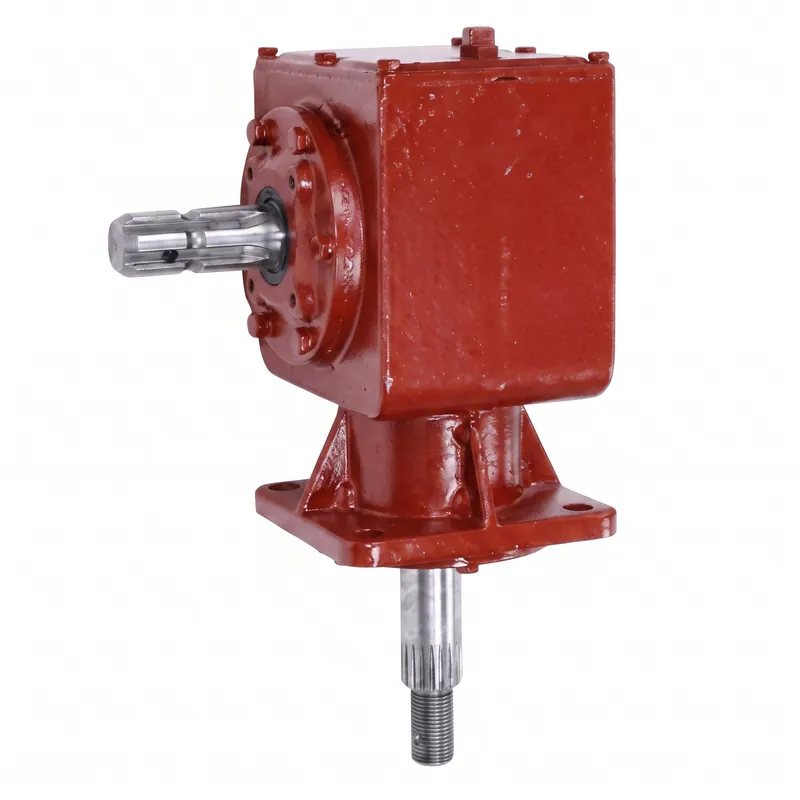
Ricambio per riduttore della troncatrice rotativa RC-27 per il riduttore Omni RC-27
-
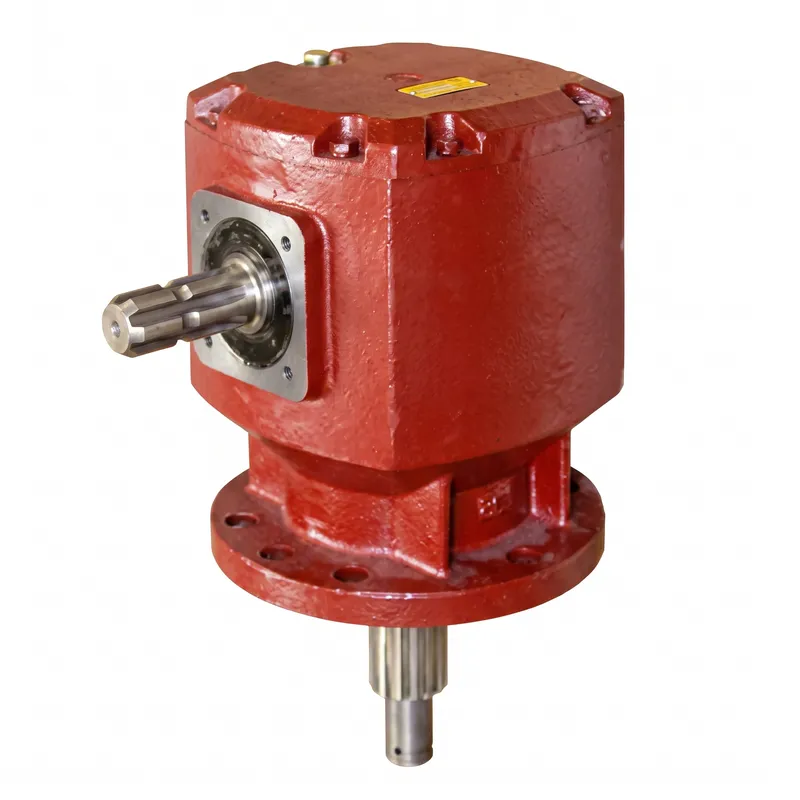
Ricambio per riduttore della troncatrice rotativa RC-100 per il riduttore Omni RC-100
-
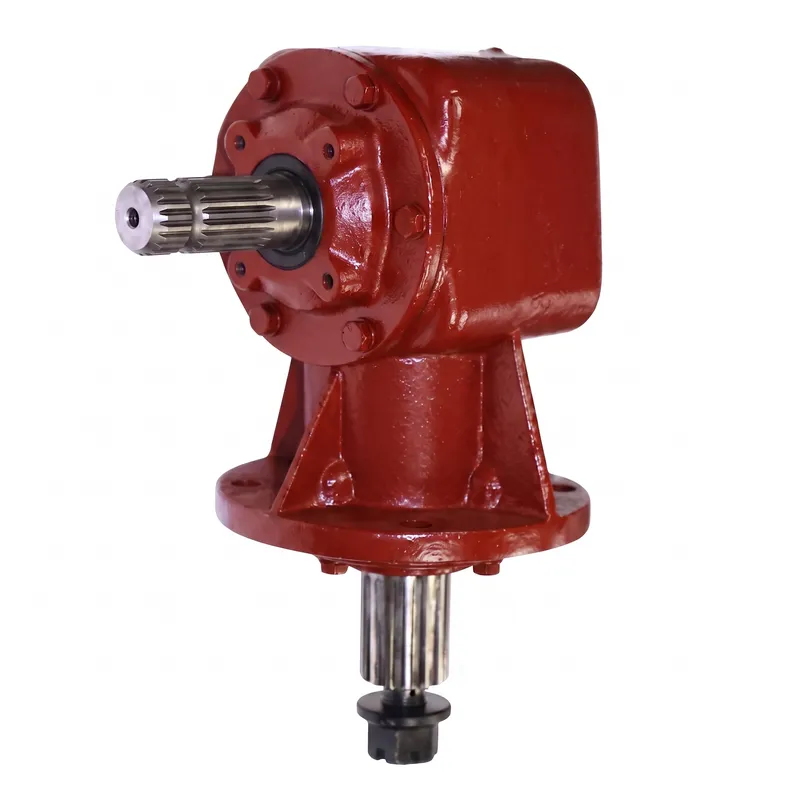
Ricambio per riduttore della troncatrice rotativa RC-51 per il riduttore Omni RC-51
-
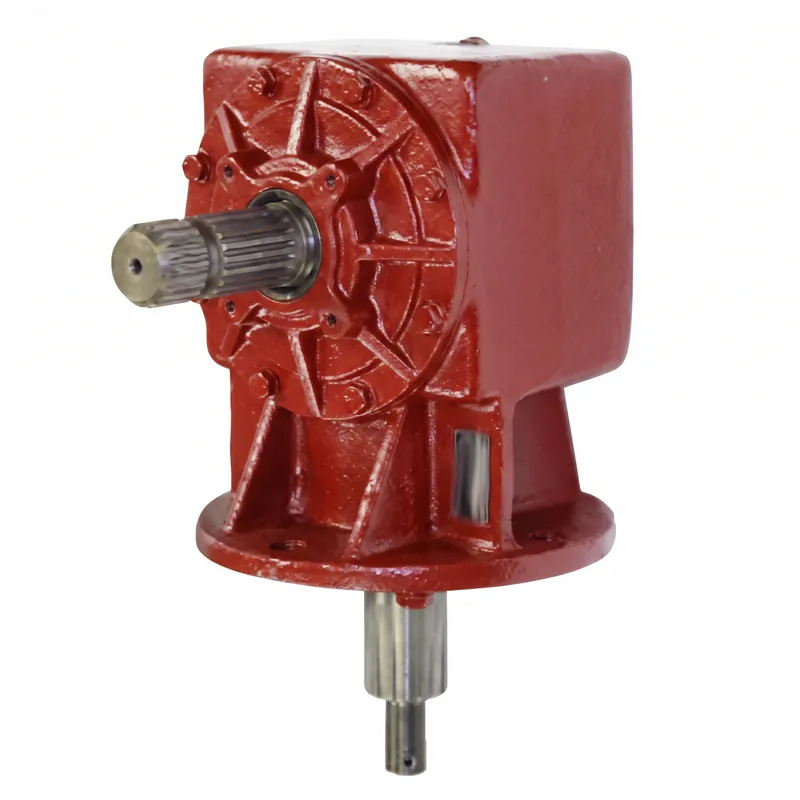
Ricambio per riduttore della troncatrice rotativa RC-71 per il riduttore Omni RC-71
-
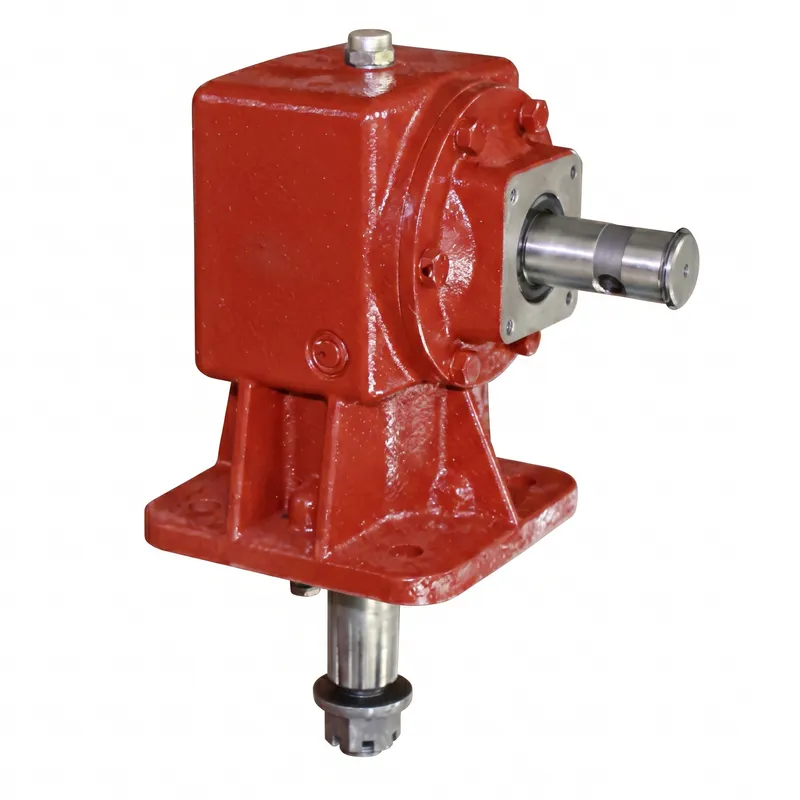
Ricambio per riduttore della troncatrice rotativa RC-33 per il riduttore Omni RC-33