
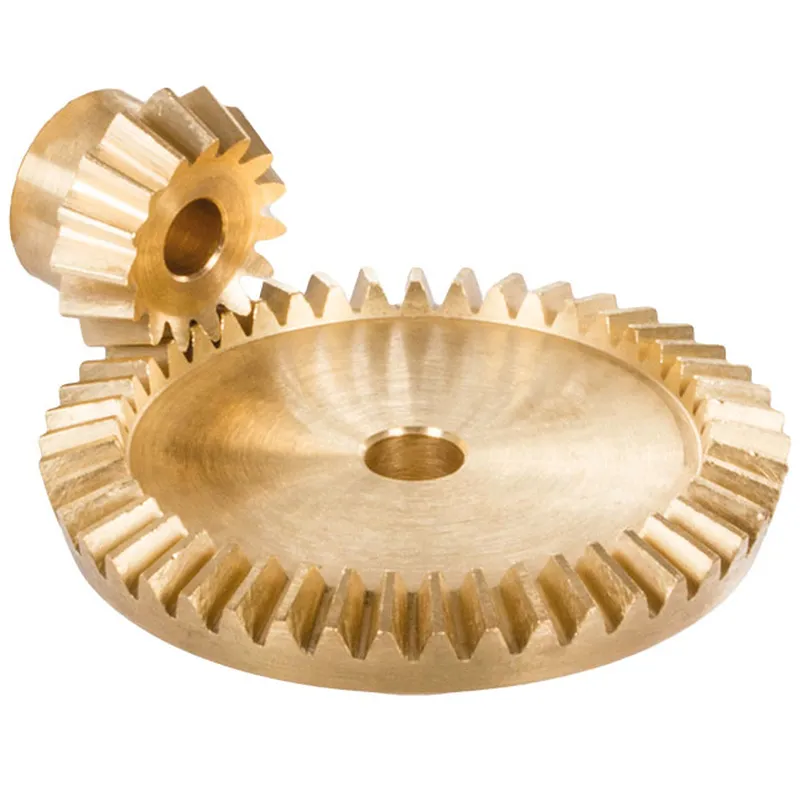
Engrenages coniques en laiton, rapport de transmission 4:1, système à dents droites
Le système d'engrenages coniques en laiton à denture droite (rapport 4:1) désigne une configuration d'engrenage mécanique composée d'engrenages coniques en laiton, conçue pour transmettre la puissance entre deux arbres positionnés à un angle l'un par rapport à l'autre, généralement de 90 degrés. L'utilisation du laiton comme matériau lui confère une excellente durabilité, une résistance à la corrosion et une bonne usinabilité, ce qui le rend idéal pour les applications exigeant un fonctionnement silencieux et régulier, telles que la robotique, l'instrumentation et les petites machines.
Le système d'engrenages coniques en laiton à denture droite (rapport 4:1) désigne une configuration mécanique composée d'engrenages coniques en laiton, conçue pour transmettre la puissance entre deux arbres positionnés à un angle de 90 degrés l'un par rapport à l'autre. Les engrenages coniques ont une forme conique et leurs dents sont droites, alignées radialement sur leur surface. Le rapport 4:1 indique que pour quatre tours de la roue menante (petite roue ou pignon), la roue menée (grande roue) effectue un tour complet. Ce système est souvent utilisé pour réduire la vitesse tout en augmentant le couple dans les systèmes mécaniques.
L'utilisation du laiton lui confère une excellente durabilité, une résistance à la corrosion et une usinabilité remarquables, ce qui le rend idéal pour les applications exigeant un fonctionnement fluide et silencieux. Les engrenages coniques à denture droite sont plus simples à fabriquer et conviennent parfaitement aux applications légères et à faible vitesse, telles que la robotique, l'instrumentation et les petites machines. Cependant, ils peuvent être moins performants que les engrenages coniques à denture hélicoïdale pour supporter des charges importantes.
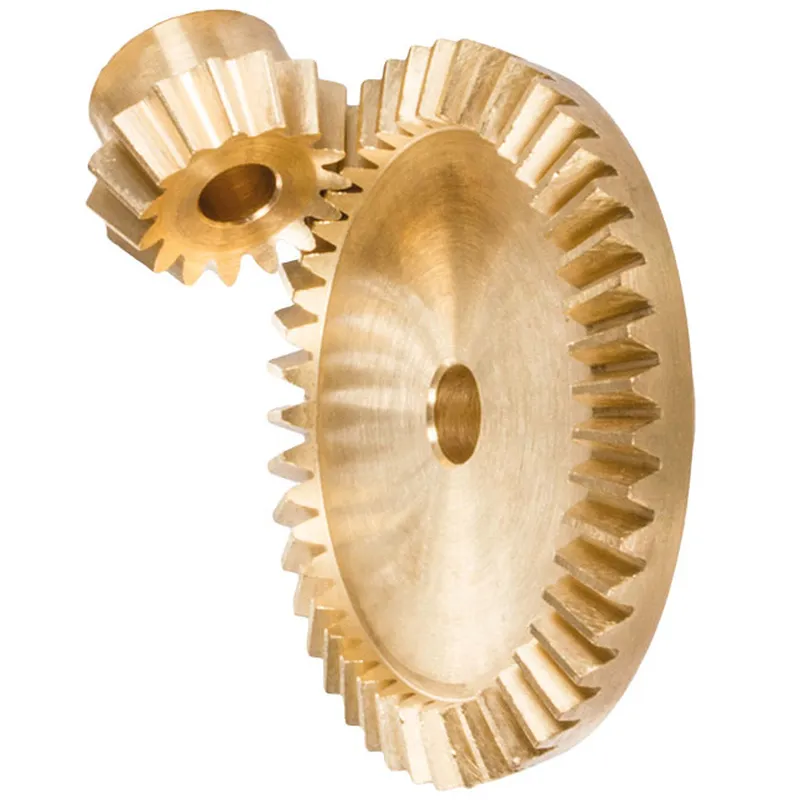
Engrenage conique en laiton, rapport 4:1
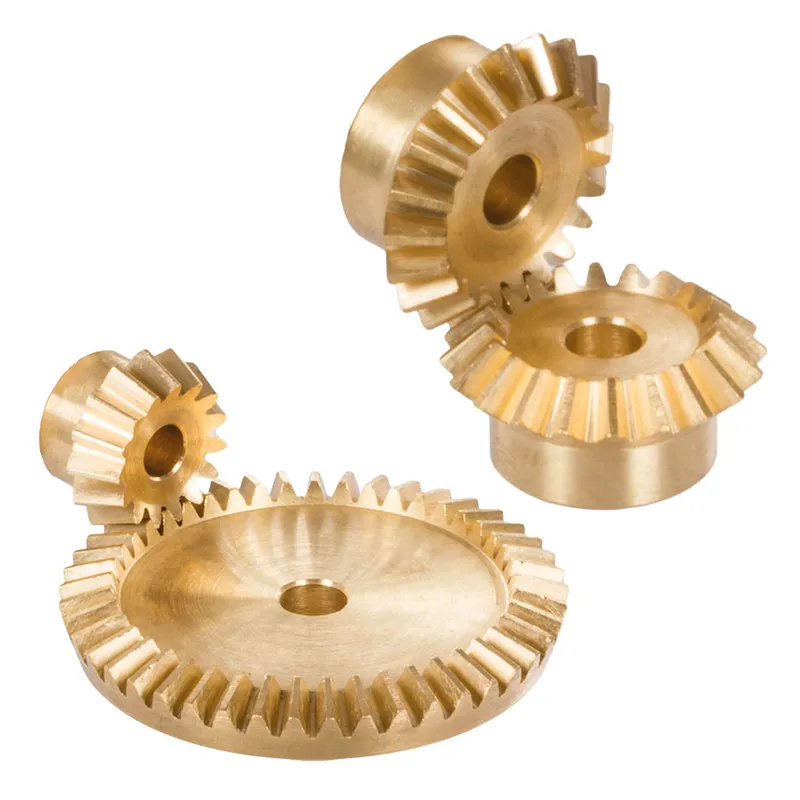 | 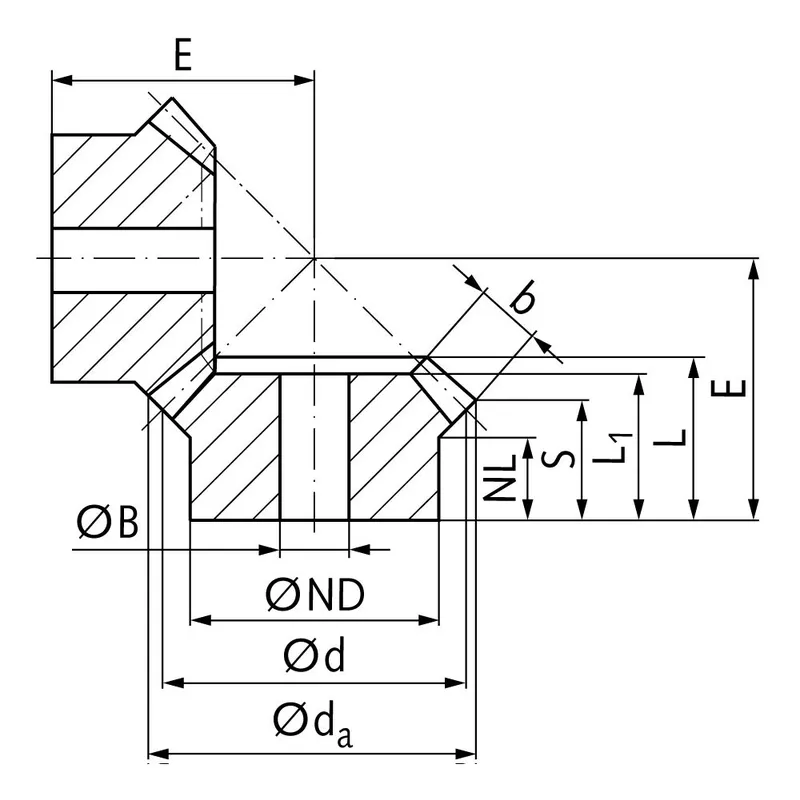 |
| Module | Nombre de dents | dun | d | ND | NL | L1 | L | S | b | BH7 | E | Couple* | Poids |
| mm | mm | mm | mm | mm | mm | mm | mm | mm | mm | Ncm | g | ||
| 1 | 15 | 17,8 | 15 | 13 | 5,5 | 10 | 11 | 6,3 | 5 | 5 | 35,9 | 12,2 | 10 |
| 1 | 60 | 60,3 | 60 | 16 | 8 | 12,5 | 14,6 | 13,6 | 5 | 6 | 20,5 | 48,8 | 110 |
Engrenages coniques en laiton : avantages et inconvénients
Engrenages coniques en laiton Elles sont largement utilisées dans les systèmes mécaniques en raison de leurs propriétés matérielles et de leurs caractéristiques de conception uniques. Cependant, comme tout composant, elles présentent un ensemble distinct d'avantages et d'inconvénients.
Avantages :
- résistance à la corrosion
Le laiton est extrêmement résistant à la corrosion, ce qui rend ces engrenages idéaux pour les environnements exposés à l'humidité, aux produits chimiques ou à d'autres agents corrosifs. Cette propriété garantit une durabilité et une fiabilité à long terme. - usinabilité
Le laiton se travaille facilement, ce qui permet une fabrication précise des engrenages et des finitions impeccables. Il en résulte un fonctionnement efficace et silencieux, un critère essentiel pour les applications exigeant un niveau sonore minimal. - Faible friction
Le laiton possède naturellement un faible coefficient de frottement, ce qui réduit l'usure entre les dents des engrenages et prolonge la durée de vie du système. Cela contribue également à une transmission de puissance plus fluide avec des pertes d'énergie minimales. - Attrait esthétique
Grâce à leur aspect doré, les engrenages coniques en laiton sont souvent privilégiés pour les pièces mécaniques décoratives ou apparentes, comme dans les horloges, la robotique ou les machines anciennes. - Sans étincelles
Le laiton ne produit pas d'étincelles, ce qui le rend sûr à utiliser dans des environnements où des gaz ou des matériaux inflammables sont présents, comme dans les industries minières ou pétrochimiques. - Léger
Comparé à d'autres métaux comme l'acier, le laiton est relativement léger, ce qui est avantageux pour les systèmes où la réduction du poids est essentielle.
Inconvénients
- Force inférieure
Le laiton est plus tendre que des matériaux comme l'acier. Cela limite sa capacité à supporter des charges élevées ou à être utilisé dans des applications exigeantes, le rendant inadapté aux systèmes à couple élevé. - Coût
Le laiton est généralement plus cher que des matériaux courants comme l'acier ou la fonte. Cela peut augmenter le coût global de production, notamment pour les applications à grande échelle. - Résistance à l'usure limitée
Bien que le laiton présente une bonne résistance à la corrosion, sa résistance à l'usure est inférieure à celle de matériaux plus durs. À terme, les engrenages peuvent s'user plus rapidement sous de fortes contraintes ou à grande vitesse. - Conductivité thermique
Le laiton conduit la chaleur plus efficacement que certains autres métaux, ce qui peut entraîner une surchauffe de certains systèmes d'engrenages si elle n'est pas correctement gérée.
Applications typiques des engrenages coniques droits en laiton
- Horloges et garde-temps
Les engrenages coniques droits en laiton sont fréquemment utilisés dans les horloges et les garde-temps en raison de leur usinage de précision et de leur faible friction. Leur résistance à la corrosion garantit leur longévité, tandis que leur légèreté réduit les contraintes sur les mécanismes internes délicats, permettant ainsi une précision de mesure du temps optimale sur de longues périodes. - Robotique et automatisation
En robotique, les engrenages coniques en laiton sont idéaux pour les conceptions légères et compactes exigeant un fonctionnement fluide et un contrôle précis des mouvements. Leur faible niveau sonore contribue à des systèmes robotiques plus silencieux, tandis que leur usinabilité permet des conceptions sur mesure adaptées aux mouvements robotiques et aux exigences de couple spécifiques. - Petites machines et instruments
Les engrenages coniques en laiton sont courants dans les petites machines comme les machines à coudre ou les instruments médicaux, où la précision et la fiabilité sont essentielles. Leur résistance à la corrosion garantit un fonctionnement constant même en milieu humide, tandis que leur rotation fluide prévient l'usure prématurée des autres composants. - Composants aérospatiaux
Dans le secteur aérospatial, les engrenages coniques en laiton sont utilisés dans les assemblages mécaniques légers où une résistance élevée à la corrosion et un poids minimal sont essentiels. Leur capacité à fonctionner efficacement en environnement contrôlé garantit des performances fiables dans des applications telles que les systèmes d'actionnement et la transmission de puissance à petite échelle. - Applications marines
En milieu marin, les matériaux doivent résister à la corrosion due à l'eau salée et à l'humidité. Les engrenages coniques en laiton sont largement utilisés dans l'instrumentation de bord, les systèmes de direction et autres équipements marins, où leur durabilité et leur résistance à la dégradation garantissent un fonctionnement optimal et durable, même dans des conditions extrêmes.
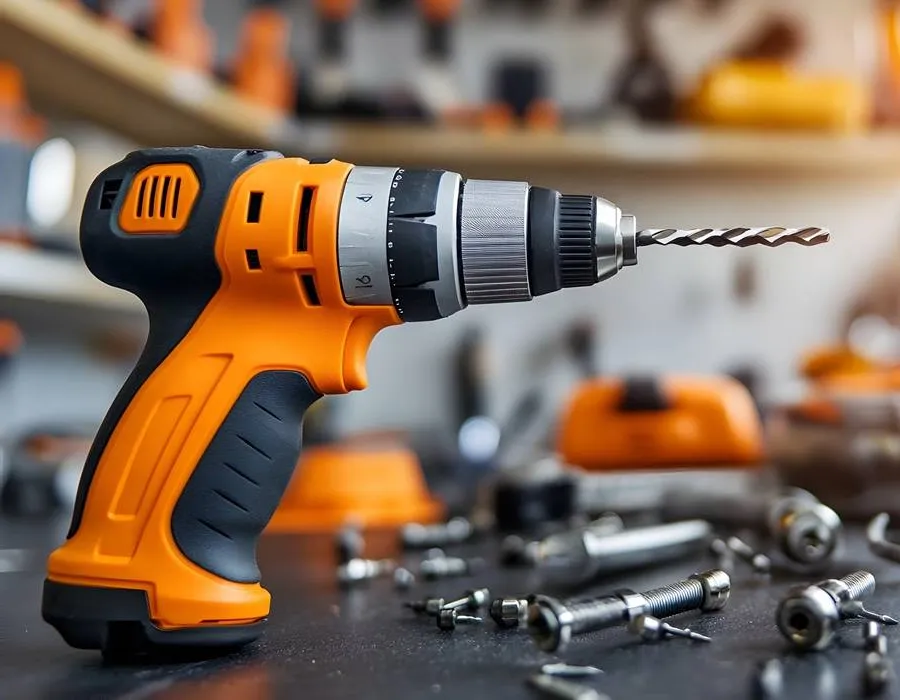 |  |
| Engrenage conique pour outils électriques | Engrenage conique pour différentiels automobiles |
 |  |
| Engrenages coniques pour robotique | Engrenages coniques pour l'industrie maritime |
Engrenage conique contre engrenage à onglet
Qu'est-ce qu'un engrenage conique ?
Les engrenages coniques sont un type d'engrenage mécanique dont les dents sont de forme conique, ce qui leur permet de transmettre la puissance entre des arbres se croisant sous différents angles. Contrairement aux engrenages à denture droite, limités à des angles de 90 degrés, les engrenages coniques offrent une plus grande flexibilité quant à l'orientation des arbres. Ces engrenages sont largement utilisés dans une vaste gamme de machines et d'applications nécessitant la transmission de puissance entre des arbres non parallèles.
Les engrenages coniques se présentent sous différentes configurations, notamment les engrenages coniques droits, les engrenages coniques hélicoïdaux et les engrenages coniques hypoïdes.
- Les engrenages coniques droits ont des dents taillées droit sur la surface du cône, tandis que les engrenages coniques hélicoïdaux présentent des dents incurvées pour un fonctionnement plus fluide et plus silencieux.
- Les engrenages coniques hypoïdes, une variante des engrenages coniques hélicoïdaux, possèdent un axe de pignon décalé pour une capacité de couple accrue et un bruit réduit.
Qu'est-ce qu'un engrenage à onglet ?
Les engrenages coniques sont un type d'engrenage à denture droite dont les dents s'entrecroisent à angle droit. Ils sont conçus pour transmettre le mouvement et la puissance entre deux arbres perpendiculaires. On les retrouve fréquemment dans de nombreuses applications mécaniques, notamment les machines industrielles, les systèmes automobiles et les instruments de précision.
Les dents des engrenages coniques sont taillées à un angle de 45 degrés par rapport à l'axe de rotation, ce qui leur permet de s'engrèner de manière fluide et efficace. Cette géométrie de dent unique permet aux engrenages coniques de changer le sens de rotation tout en maintenant un rapport de vitesse constant entre les arbres d'entrée et de sortie.
| Fonctionnalité | Engrenages à onglet | Engrenages coniques |
|---|---|---|
| Conception | Un type spécifique d'engrenage conique, conçu pour les arbres à un angle de 90 degrés. | Peut être conçu pour n'importe quel angle compris entre 0 et 180 degrés, offrant une plus grande flexibilité de l'arbre. |
| Fonctionnalité | Utilisé pour les changements de direction ou de transmission de puissance à 90 degrés. Courant dans les outils à main et les machines. | Utilisé pour la transmission de puissance sous différents angles. On le trouve dans les transmissions automobiles, les aéronefs, etc. |
| Rapport de transmission | Généralement, un rapport de transmission de 1:1, n'offrant aucun avantage mécanique en termes de vitesse ou de couple. | Peut être conçu avec différents rapports de transmission pour réduire la vitesse ou multiplier le couple. |
| Capacité de charge | Capacité de charge limitée en raison du contact ponctuel entre les dents, ce qui entraîne une concentration des contraintes. | Capacité de charge supérieure grâce à une meilleure répartition des contraintes le long de la surface de la dent. |
| Besoins en espace | Conception compacte, adaptée aux applications à espace limité. | Peut nécessiter plus d'espace en raison de sa taille plus importante et de son positionnement angulaire. |
| Polyvalence des angles | Limité aux angles d'arbre de 90 degrés. | Très polyvalent, supportant des angles d'arbre de 0 à 180 degrés. |
| Applications | Systèmes automobiles, outils à main, machines industrielles et instruments de précision. | Transmissions automobiles, systèmes de contrôle d'aéronefs et divers systèmes de transmission de puissance. |
| Complexité de la fabrication | Relativement plus simple à fabriquer que les autres engrenages coniques. | Plus complexes à fabriquer, notamment les engrenages coniques spiraux et hypoïdes. |
| Contrecoup | Sujet au jeu, ce qui peut entraîner des erreurs de positionnement et des vibrations. | Également sujet au jeu, mais cela varie selon le type spécifique d'engrenage conique. |
| Capacité de couple | Capacité de transmission de couple modérée. | Capacité de couple plus élevée, notamment dans les engrenages coniques hypoïdes grâce à des surfaces de contact des dents plus importantes. |
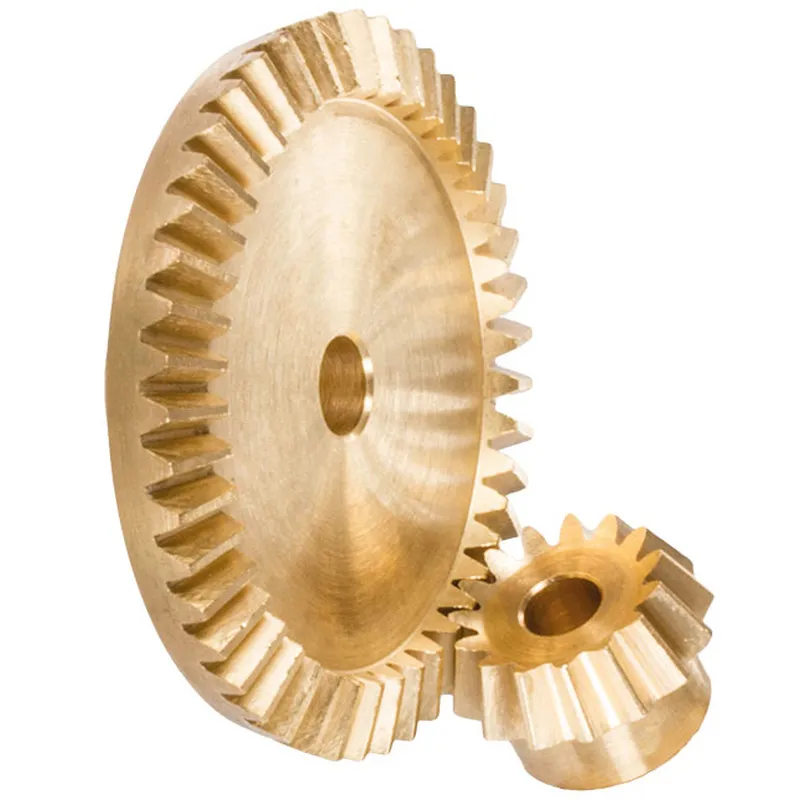 | 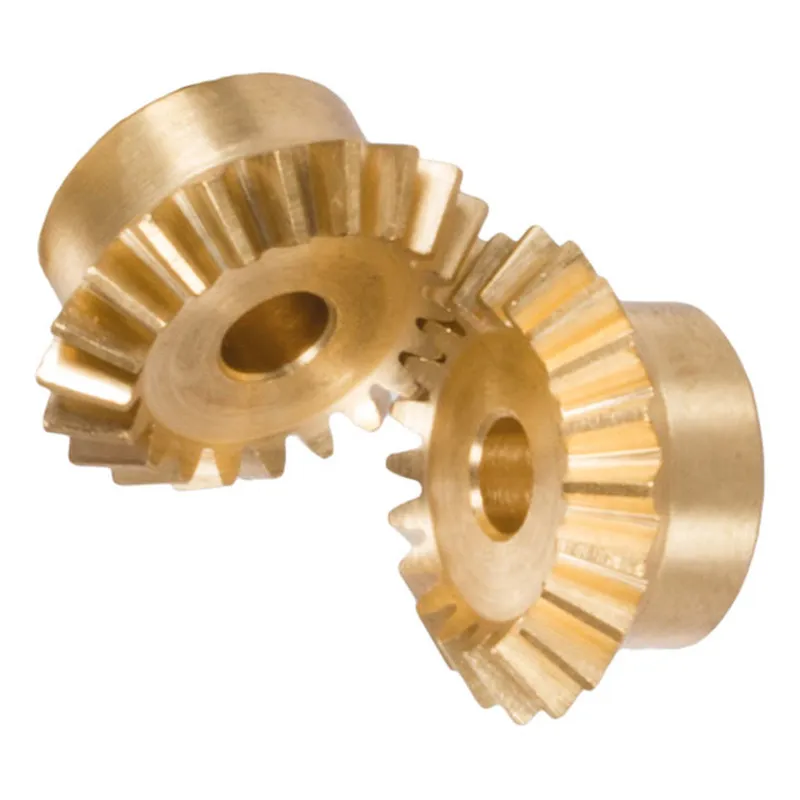 |
| Engrenage conique | Engrenage à onglet |
Informations complémentaires
| Édité par | Yjx |
|---|
Produits similaires
-
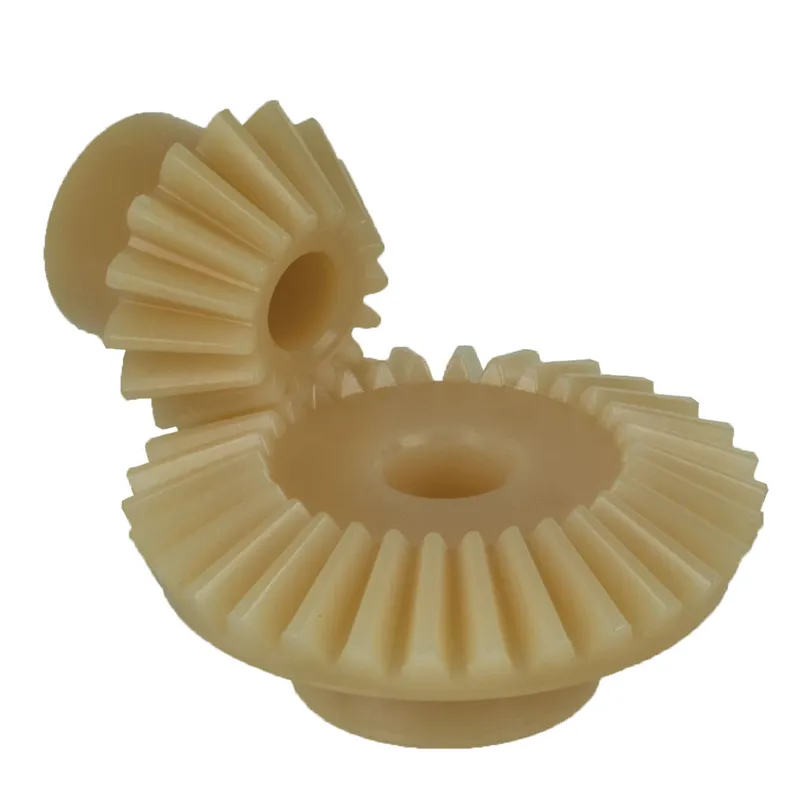
Engrenages coniques en résine polycétone plastique, rapport 1:1 – 5:1
-
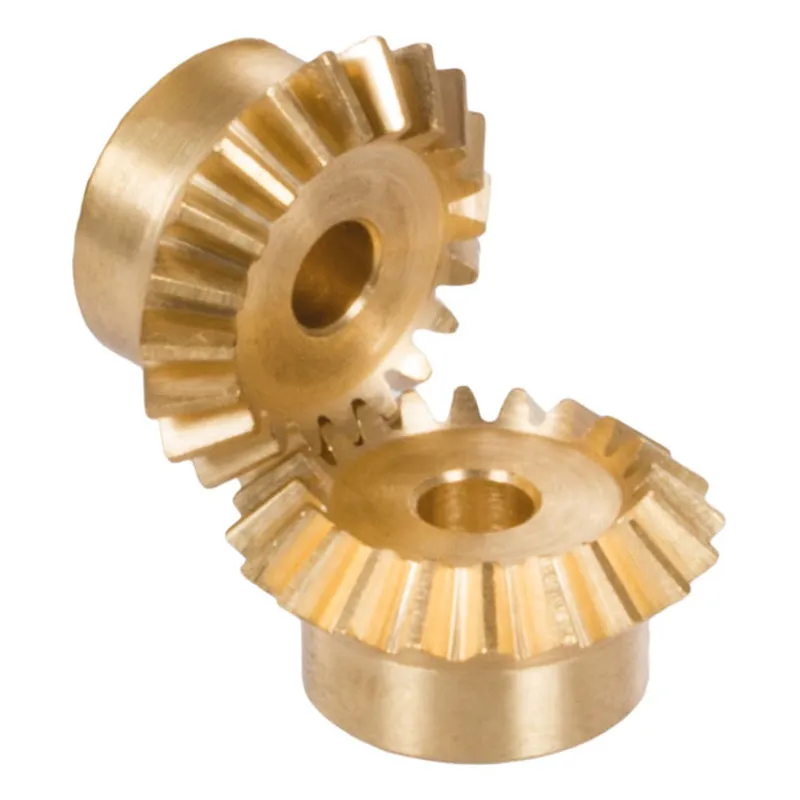
Engrenages coniques en laiton, rapport 1:1, système à dents droites
-
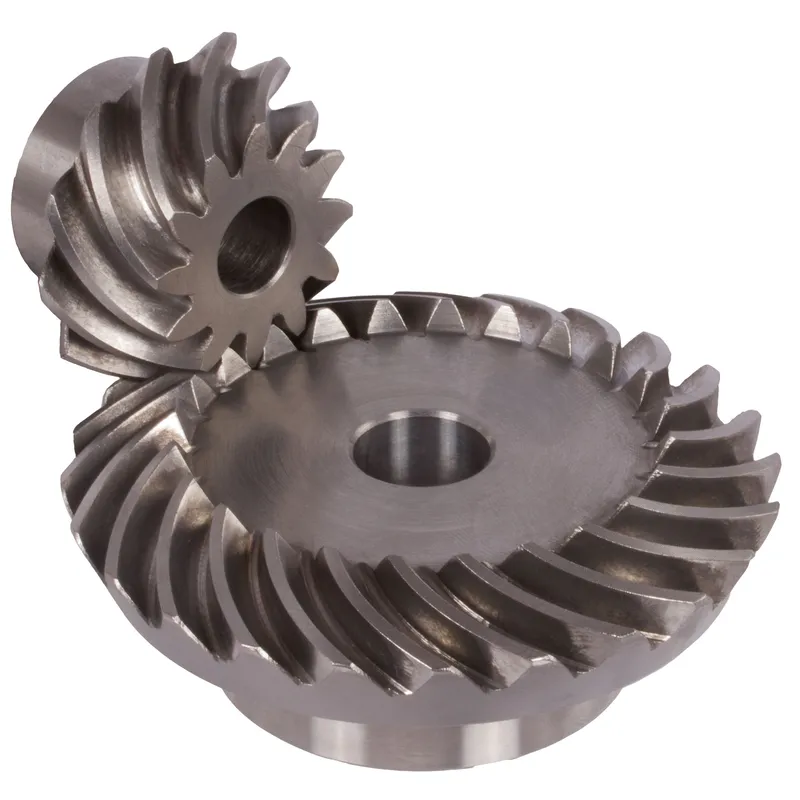
Engrenages coniques à denture spirale en acier, rapport de réduction 1:1 à 4:1
-
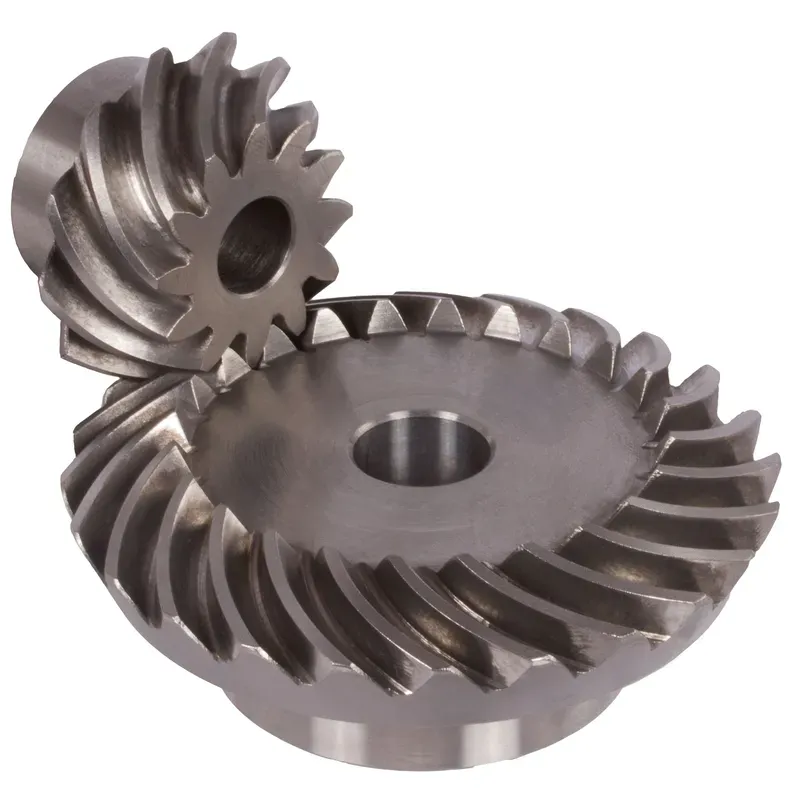
Engrenages coniques à denture spirale en acier, rapport 1,615:1
-
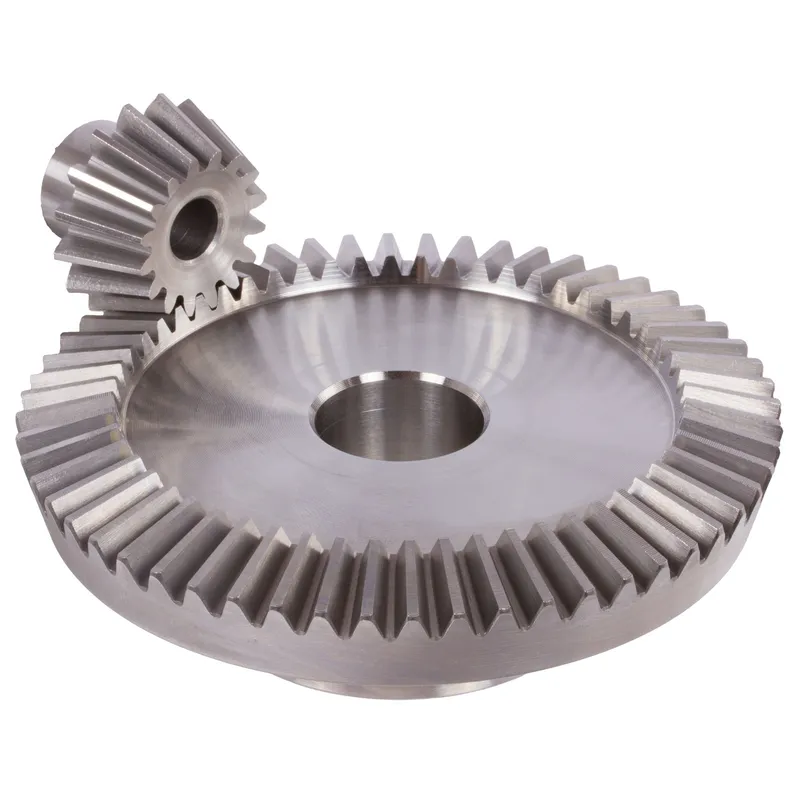
Engrenages coniques droits en acier, rapport de 1:1 à 4:1, système à denture droite