
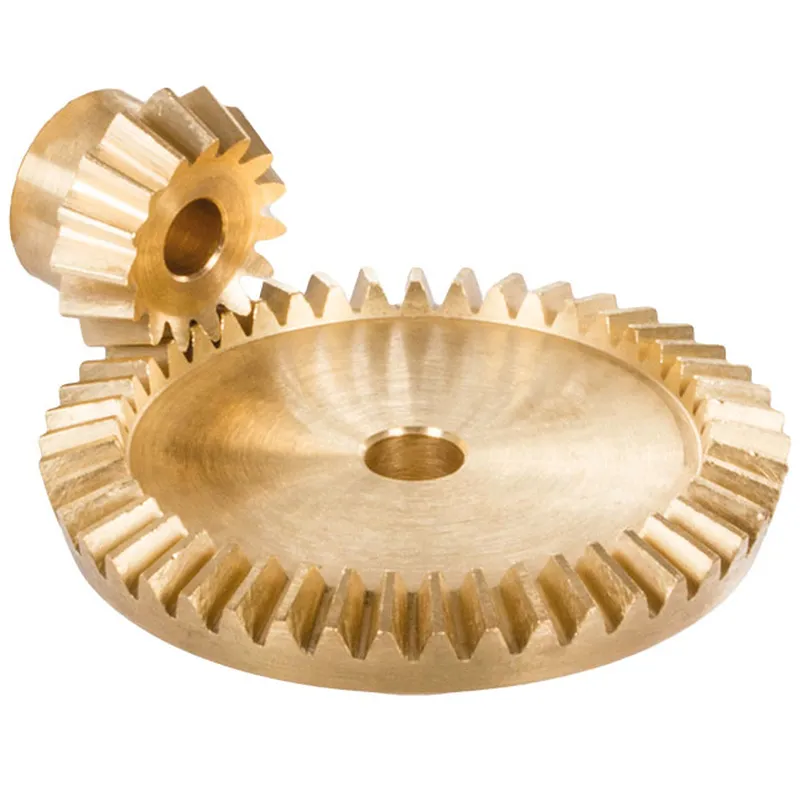
Bộ bánh răng côn bằng đồng thau, tỷ số truyền 4:1, hệ thống răng thẳng.
Hệ thống bánh răng côn bằng đồng thau tỷ số truyền 4:1, răng thẳng là một cấu hình bánh răng cơ khí bao gồm các bánh răng côn làm từ đồng thau, được thiết kế để truyền công suất giữa hai trục đặt ở một góc với nhau, thường là 90 độ. Việc sử dụng đồng thau làm vật liệu mang lại độ bền tuyệt vời, khả năng chống ăn mòn và khả năng gia công tốt, làm cho nó phù hợp với các ứng dụng yêu cầu hoạt động trơn tru và êm ái, chẳng hạn như robot, thiết bị đo lường và máy móc nhỏ.
Hệ thống bánh răng côn bằng đồng thau tỷ số truyền 4:1, răng thẳng, đề cập đến cấu hình bánh răng cơ khí bao gồm các bánh răng côn làm bằng đồng thau, được thiết kế để truyền công suất giữa hai trục đặt ở một góc với nhau, thường là 90 độ. Bánh răng côn có hình nón, và răng của chúng được cắt thẳng, thẳng hàng theo hướng xuyên tâm dọc theo bề mặt bánh răng. Tỷ số truyền 4:1 cho biết cứ mỗi bốn vòng quay của bánh răng dẫn động (bánh răng nhỏ hơn hoặc bánh răng chủ động), bánh răng bị dẫn động (bánh răng lớn hơn) sẽ quay một vòng đầy đủ. Cấu hình này thường được sử dụng để giảm tốc độ đồng thời tăng mô-men xoắn trong các hệ thống cơ khí.
Việc sử dụng đồng thau làm vật liệu mang lại độ bền tuyệt vời, khả năng chống ăn mòn và khả năng gia công tốt, làm cho nó phù hợp với các ứng dụng yêu cầu hoạt động trơn tru và êm ái. Bánh răng côn thẳng dễ chế tạo hơn và lý tưởng cho các ứng dụng tốc độ thấp, trọng lượng nhẹ như robot, thiết bị đo lường và máy móc nhỏ. Tuy nhiên, chúng có thể không xử lý tải trọng nặng hiệu quả như bánh răng côn xoắn.
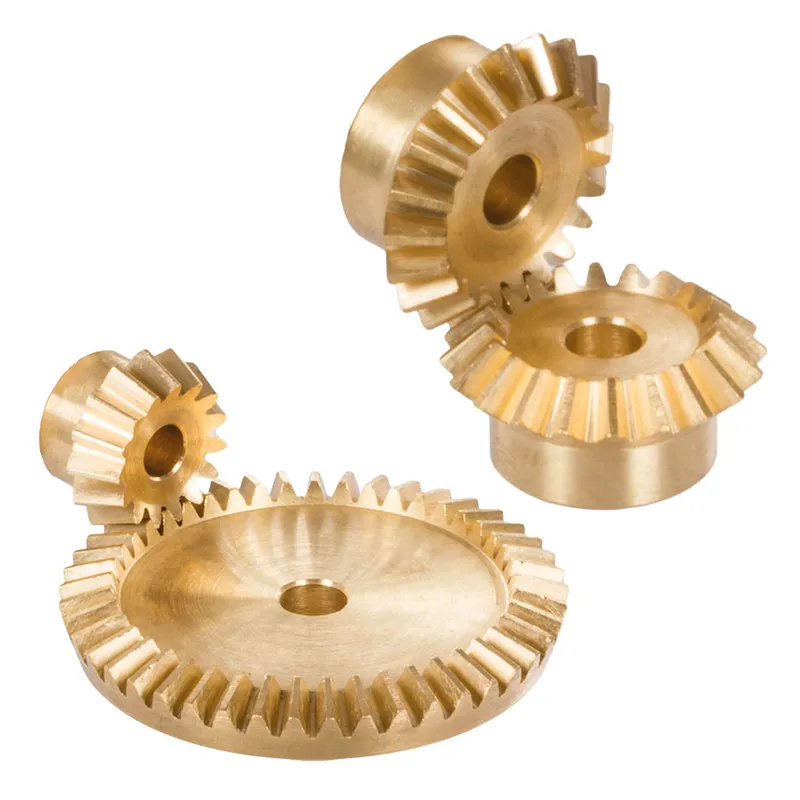
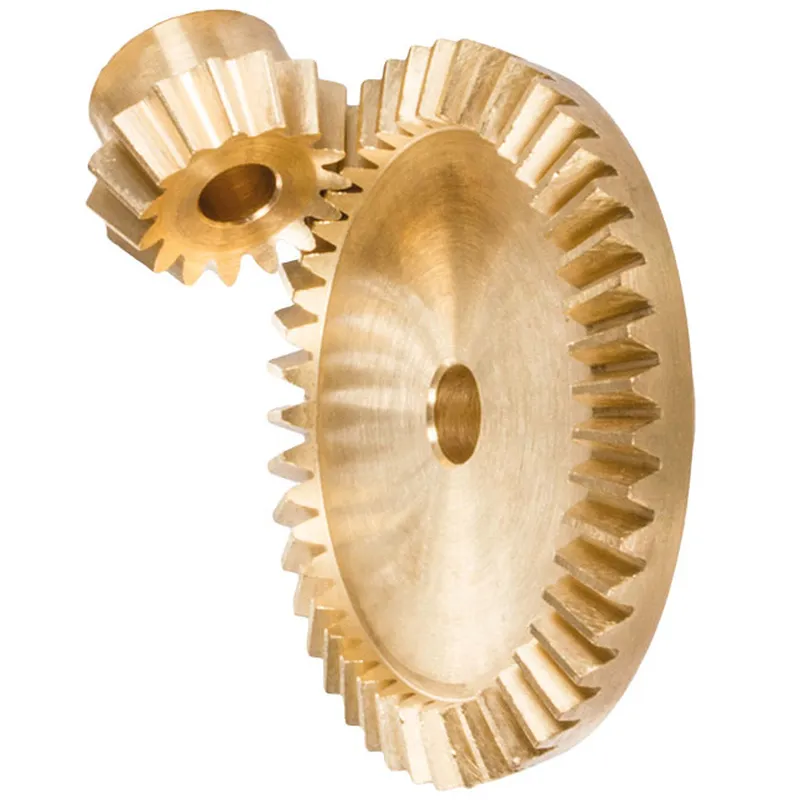
Bánh răng côn bằng đồng thau, tỷ số truyền 4:1
 | 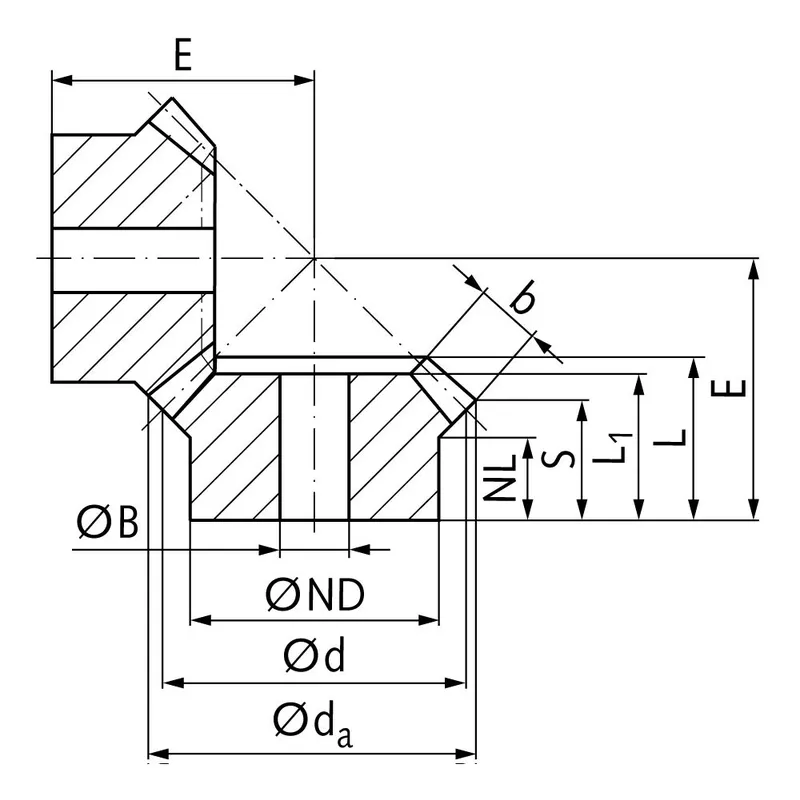 |
| Mô-đun | Con số của răng | dMột | d | ND | NL | L1 | L | S | b | BH7 | E | Mô-men xoắn* | Cân nặng |
| mm | mm | mm | mm | mm | mm | mm | mm | mm | mm | Ncm | g | ||
| 1 | 15 | 17,8 | 15 | 13 | 5,5 | 10 | 11 | 6,3 | 5 | 5 | 35,9 | 12,2 | 10 |
| 1 | 60 | 60,3 | 60 | 16 | 8 | 12,5 | 14,6 | 13,6 | 5 | 6 | 20,5 | 48,8 | 110 |
Ưu điểm và nhược điểm của bánh răng côn bằng đồng thau
Bánh răng côn bằng đồng thau Chúng được sử dụng rộng rãi trong các hệ thống cơ khí nhờ các đặc tính vật liệu và thiết kế độc đáo. Tuy nhiên, giống như bất kỳ bộ phận nào khác, chúng cũng có những ưu điểm và nhược điểm riêng.
Thuận lợi:
- Khả năng chống ăn mòn
Đồng thau có khả năng chống ăn mòn cao, khiến loại bánh răng này lý tưởng cho môi trường tiếp xúc với độ ẩm, hóa chất hoặc các tác nhân ăn mòn khác. Đặc tính này đảm bảo độ bền và độ tin cậy lâu dài. - Khả năng gia công
Đồng thau dễ gia công, cho phép chế tạo bánh răng chính xác với bề mặt nhẵn mịn. Điều này đảm bảo hoạt động hiệu quả và êm ái, đặc biệt quan trọng trong các ứng dụng yêu cầu độ ồn tối thiểu. - Ma sát thấp
Đồng thau có độ ma sát thấp tự nhiên, giúp giảm mài mòn giữa các răng bánh răng và kéo dài tuổi thọ của hệ thống. Điều này cũng góp phần truyền tải năng lượng mượt mà hơn với tổn thất năng lượng tối thiểu. - Sức hấp dẫn về mặt thẩm mỹ
Nhờ vẻ ngoài óng ánh, bánh răng côn bằng đồng thau thường được ưa chuộng cho các bộ phận cơ khí trang trí hoặc dễ nhìn thấy, chẳng hạn như trong đồng hồ, robot hoặc máy móc cổ điển. - Không phát tia lửa điện
Đồng thau không phát tia lửa điện, do đó an toàn khi sử dụng trong môi trường có khí hoặc vật liệu dễ cháy, chẳng hạn như trong ngành khai thác mỏ hoặc công nghiệp hóa dầu. - Nhẹ
So với các kim loại khác như thép, đồng thau tương đối nhẹ, điều này rất có lợi cho các hệ thống cần giảm trọng lượng.
Nhược điểm
- Sức mạnh thấp hơn
So với các vật liệu như thép, đồng thau mềm hơn. Điều này hạn chế khả năng chịu tải trọng cao hoặc các ứng dụng nặng, khiến nó không phù hợp với các hệ thống mô-men xoắn cao. - Trị giá
Đồng thau thường đắt hơn các vật liệu thông thường như thép hoặc gang. Điều này có thể làm tăng tổng chi phí sản xuất, đặc biệt là trong các ứng dụng quy mô lớn. - Khả năng chống mài mòn hạn chế
Mặc dù đồng thau có khả năng chống ăn mòn tốt, nhưng khả năng chống mài mòn của nó lại thấp hơn so với các vật liệu cứng hơn. Theo thời gian, các bánh răng có thể bị mòn nhanh hơn trong điều kiện tải trọng cao hoặc tốc độ cao. - Độ dẫn nhiệt
Đồng thau dẫn nhiệt hiệu quả hơn một số kim loại khác, điều này có thể dẫn đến hiện tượng quá nhiệt trong một số hệ thống bánh răng nếu không được quản lý đúng cách.
Các ứng dụng điển hình của bánh răng côn thẳng bằng đồng thau
- Đồng hồ và các thiết bị đo thời gian
Bánh răng côn thẳng bằng đồng thau thường được sử dụng trong đồng hồ nhờ khả năng gia công chính xác và ma sát thấp. Khả năng chống ăn mòn đảm bảo tuổi thọ cao, trong khi trọng lượng nhẹ giúp giảm áp lực lên các cơ cấu bên trong tinh vi, cho phép giữ giờ chính xác trong thời gian dài. - Robot và Tự động hóa
Trong lĩnh vực robot học, bánh răng côn bằng đồng thau là lựa chọn lý tưởng cho các thiết kế nhỏ gọn, trọng lượng nhẹ, đòi hỏi hoạt động trơn tru và điều khiển chuyển động chính xác. Độ ồn thấp của chúng góp phần tạo nên các hệ thống robot yên tĩnh hơn, trong khi khả năng gia công cho phép tạo ra các thiết kế tùy chỉnh phù hợp với các chuyển động và yêu cầu mô-men xoắn cụ thể của robot. - Máy móc và dụng cụ nhỏ
Bánh răng côn bằng đồng thau thường được sử dụng trong các máy móc nhỏ như máy may hoặc dụng cụ y tế, nơi độ chính xác và độ tin cậy là rất quan trọng. Khả năng chống ăn mòn của chúng đảm bảo hiệu suất ổn định trong môi trường ẩm ướt, trong khi hoạt động trơn tru giúp ngăn ngừa sự mài mòn không cần thiết trên các bộ phận khác. - Linh kiện hàng không vũ trụ
Trong các hệ thống hàng không vũ trụ, bánh răng côn bằng đồng thau được sử dụng trong các cụm cơ khí nhẹ, nơi yêu cầu khả năng chống ăn mòn cao và trọng lượng tối thiểu. Khả năng hoạt động hiệu quả trong môi trường được kiểm soát đảm bảo hiệu suất đáng tin cậy trong các ứng dụng như hệ thống truyền động và truyền tải điện năng quy mô nhỏ. - Ứng dụng hàng hải
Môi trường biển đòi hỏi các vật liệu có khả năng chống ăn mòn do nước mặn và độ ẩm. Bánh răng côn bằng đồng thau được sử dụng rộng rãi trong các thiết bị đo đạc trên tàu thuyền, hệ thống lái và các thiết bị hàng hải khác, nơi độ bền và khả năng chống xuống cấp của chúng đảm bảo chức năng lâu dài trong điều kiện khắc nghiệt.
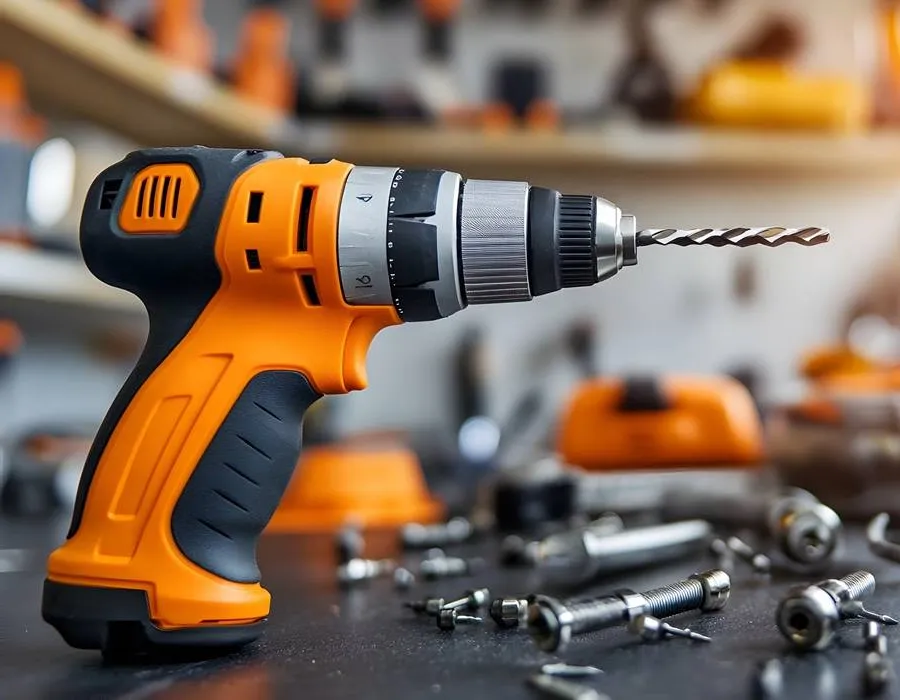 |  |
| Bánh răng côn cho dụng cụ điện | Bánh răng côn cho bộ vi sai ô tô |
 |  |
| Bánh răng côn cho robot | Bánh răng côn cho ngành hàng hải |
Bánh răng côn so với bánh răng vát
Bánh răng côn là gì?
Bánh răng côn là một loại bánh răng cơ khí có răng hình nón, cho phép chúng truyền lực giữa các trục giao nhau ở nhiều góc độ khác nhau. Không giống như bánh răng vát, chỉ giới hạn ở góc 90 độ, bánh răng côn mang lại sự linh hoạt hơn trong việc định hướng trục. Loại bánh răng này được sử dụng rộng rãi trong nhiều loại máy móc và ứng dụng cần truyền lực giữa các trục không song song.
Bánh răng côn có nhiều cấu hình khác nhau, bao gồm bánh răng côn thẳng, bánh răng côn xoắn ốc và bánh răng côn hypoid.
- Bánh răng côn thẳng có răng được cắt thẳng ngang bề mặt hình nón, trong khi bánh răng côn xoắn có răng cong giúp hoạt động êm ái và nhẹ nhàng hơn.
- Bánh răng côn hypoid, một biến thể của bánh răng côn xoắn ốc, có trục bánh răng chủ động lệch tâm để tăng khả năng truyền mô-men xoắn và giảm tiếng ồn.
Bánh răng vát là gì?
Bánh răng côn vát là một loại bánh răng có răng giao nhau ở góc 90 độ. Chúng được thiết kế để truyền chuyển động và công suất giữa hai trục vuông góc với nhau. Bánh răng côn vát thường được sử dụng trong nhiều ứng dụng cơ khí, bao gồm máy móc công nghiệp, hệ thống ô tô và dụng cụ chính xác.
Các răng của bánh răng côn được cắt ở góc 45 độ so với trục quay, cho phép chúng ăn khớp với nhau một cách trơn tru và hiệu quả. Hình dạng răng độc đáo này cho phép bánh răng côn thay đổi hướng quay trong khi vẫn duy trì tỷ số vận tốc không đổi giữa trục đầu vào và trục đầu ra.
| Tính năng | Bánh răng vát | Bánh răng côn |
|---|---|---|
| Thiết kế | Một loại bánh răng côn đặc biệt, được thiết kế cho các trục có góc 90 độ. | Có thể được thiết kế cho bất kỳ góc nào giữa 0 và 180 độ, mang lại sự linh hoạt cao hơn cho trục. |
| Chức năng | Được sử dụng cho các thay đổi 90 độ trong chuyển động hoặc truyền lực. Thường gặp trong các dụng cụ cầm tay và máy móc. | Được sử dụng để truyền lực ở nhiều góc độ khác nhau. Thường thấy trong hệ thống truyền động ô tô, máy bay, v.v. |
| Tỷ số truyền | Thông thường tỷ số truyền là 1:1, không mang lại lợi thế cơ học nào về tốc độ hoặc mô-men xoắn. | Có thể được thiết kế với tỷ số truyền khác nhau để giảm tốc độ hoặc tăng mô-men xoắn. |
| Khả năng chịu tải | Khả năng chịu tải hạn chế do tiếp xúc điểm giữa các răng, dẫn đến sự tập trung ứng suất. | Khả năng chịu tải cao hơn nhờ sự phân bố ứng suất tốt hơn dọc theo bề mặt răng. |
| Yêu cầu về không gian | Thiết kế nhỏ gọn, phù hợp với các ứng dụng có không gian hạn chế. | Có thể cần nhiều không gian hơn do kích thước lớn và vị trí đặt góc cạnh. |
| Tính linh hoạt trong các góc độ | Giới hạn ở góc trục 90 độ. | Rất linh hoạt, hỗ trợ góc trục từ 0 đến 180 độ. |
| Ứng dụng | Hệ thống ô tô, dụng cụ cầm tay, máy móc công nghiệp và thiết bị đo chính xác. | Hệ thống truyền động ô tô, hệ thống điều khiển máy bay và các hệ thống truyền tải năng lượng khác nhau. |
| Độ phức tạp trong sản xuất | So với các loại bánh răng côn khác, loại này có quy trình sản xuất tương đối đơn giản hơn. | Việc chế tạo phức tạp hơn, đặc biệt là các loại bánh răng côn xoắn và bánh răng côn hypoid. |
| Phản ứng dữ dội | Dễ bị hiện tượng giật ngược, có thể gây ra lỗi định vị và rung động. | Cũng dễ bị hiện tượng rơ, nhưng mức độ khác nhau tùy thuộc vào loại bánh răng côn cụ thể. |
| Khả năng mô-men xoắn | Khả năng truyền mô-men xoắn ở mức trung bình. | Khả năng truyền mô-men xoắn cao hơn, đặc biệt là ở các bánh răng côn hypoid do diện tích tiếp xúc răng lớn hơn. |
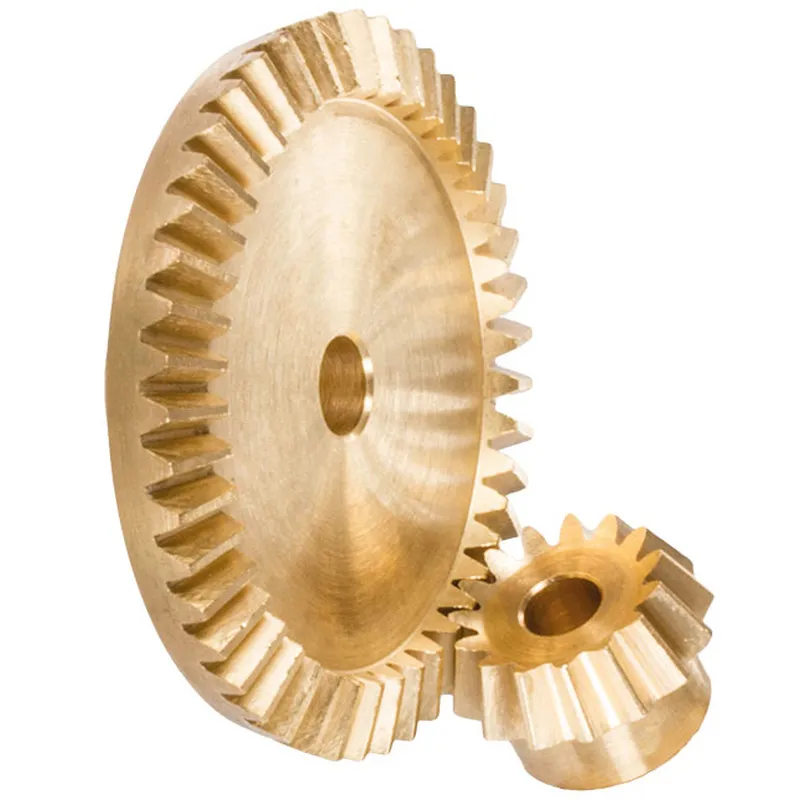 | 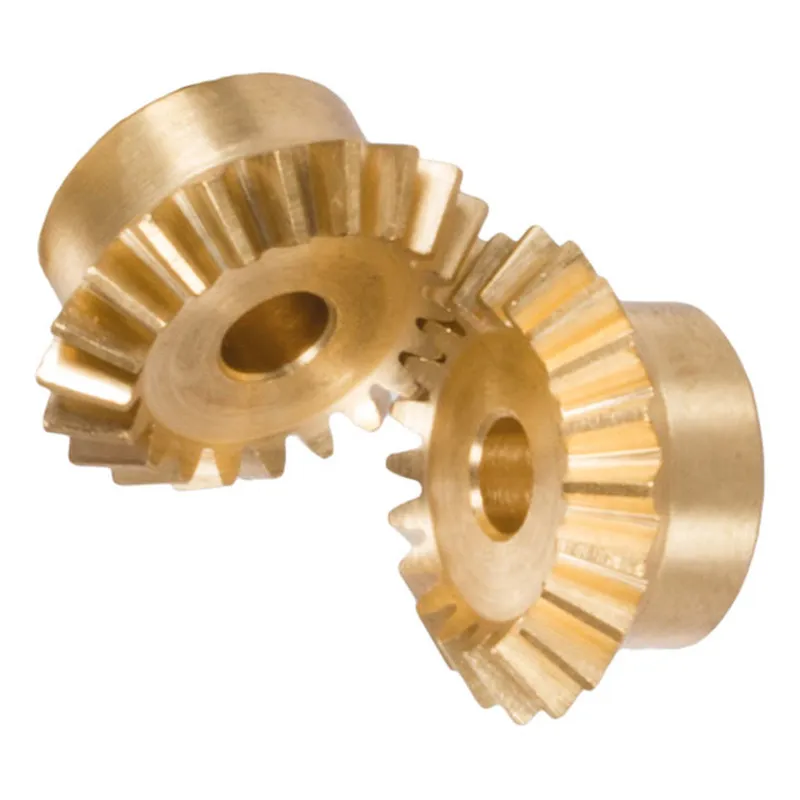 |
| Bánh răng côn | Bánh răng vát |
Thông tin bổ sung
| Được chỉnh sửa bởi | Yjx |
|---|
Sản phẩm tương tự
-
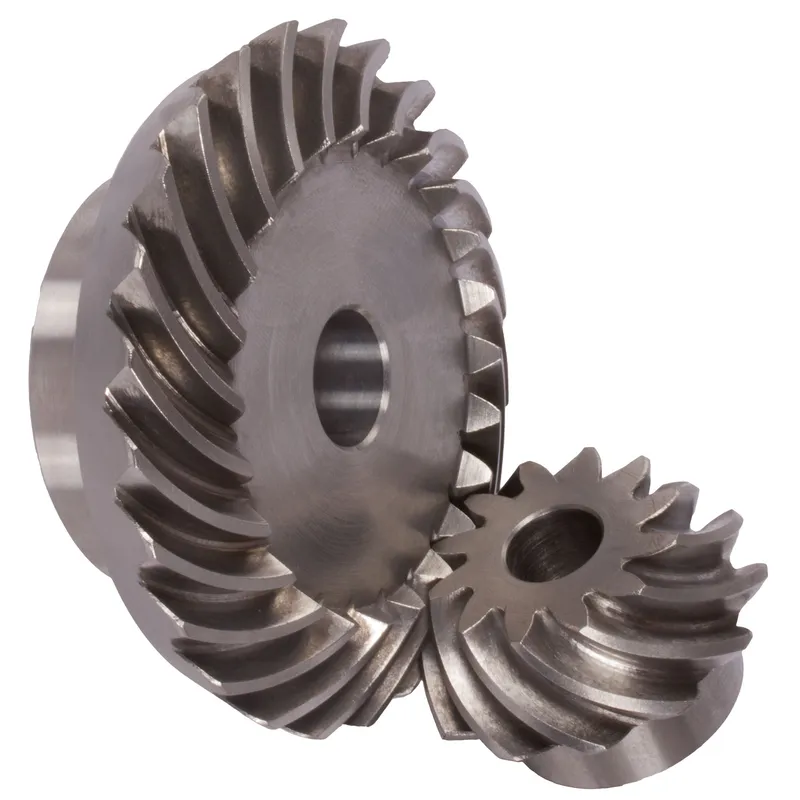
Bánh răng côn xoắn ốc bằng thép, tỷ số truyền 1:1, hệ thống răng xoắn ốc.
-
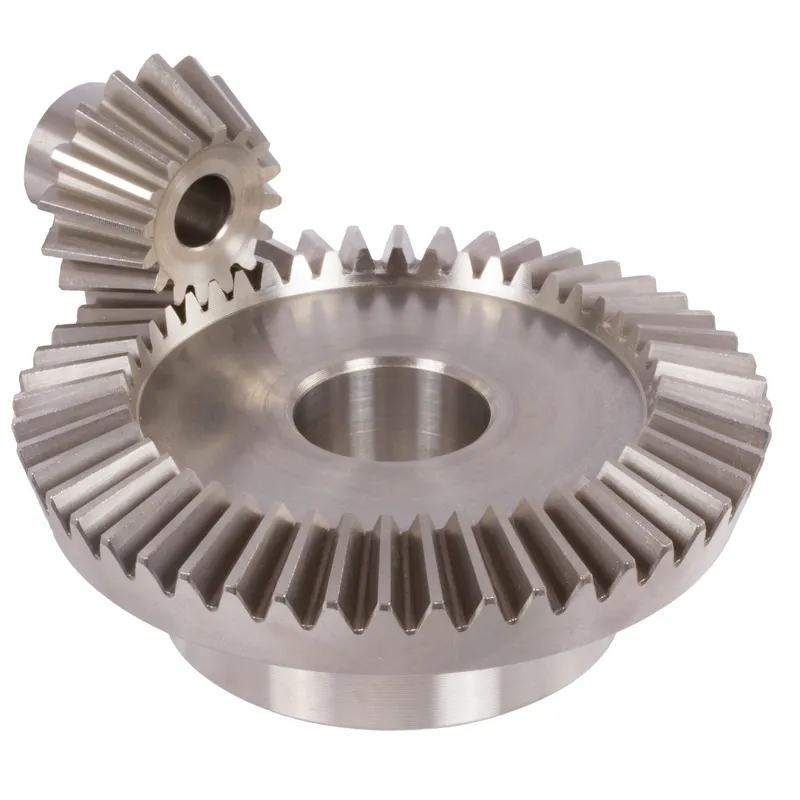
Bộ bánh răng côn bằng thép không gỉ, tỷ số truyền 2:1, hệ thống răng thẳng.
-
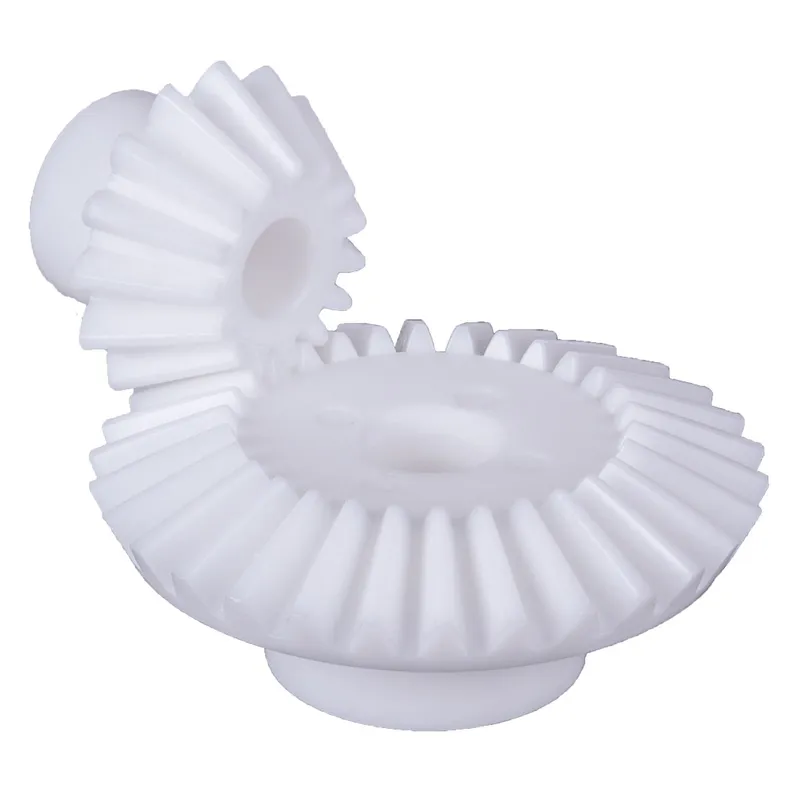
Bánh răng côn bằng nhựa Polyacetal, tỷ số truyền 1:1 – 5:1
-
Bộ bánh răng côn bằng đồng thau, tỷ số truyền 1,5:1, hệ thống răng thẳng.
-
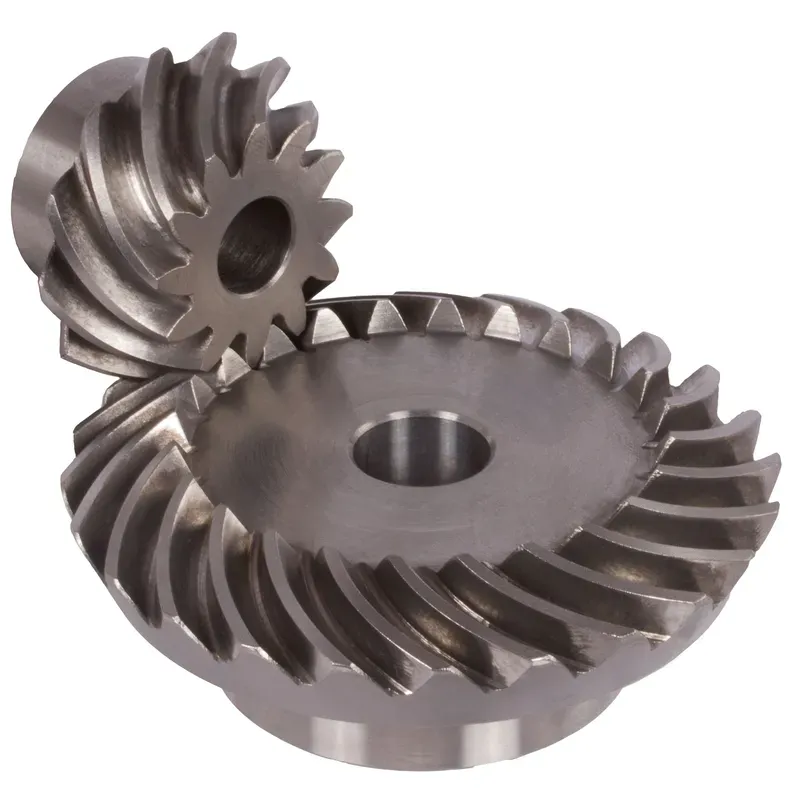
Bánh răng côn xoắn ốc bằng thép, tỷ số truyền 1,615:1, hệ thống răng xoắn ốc.