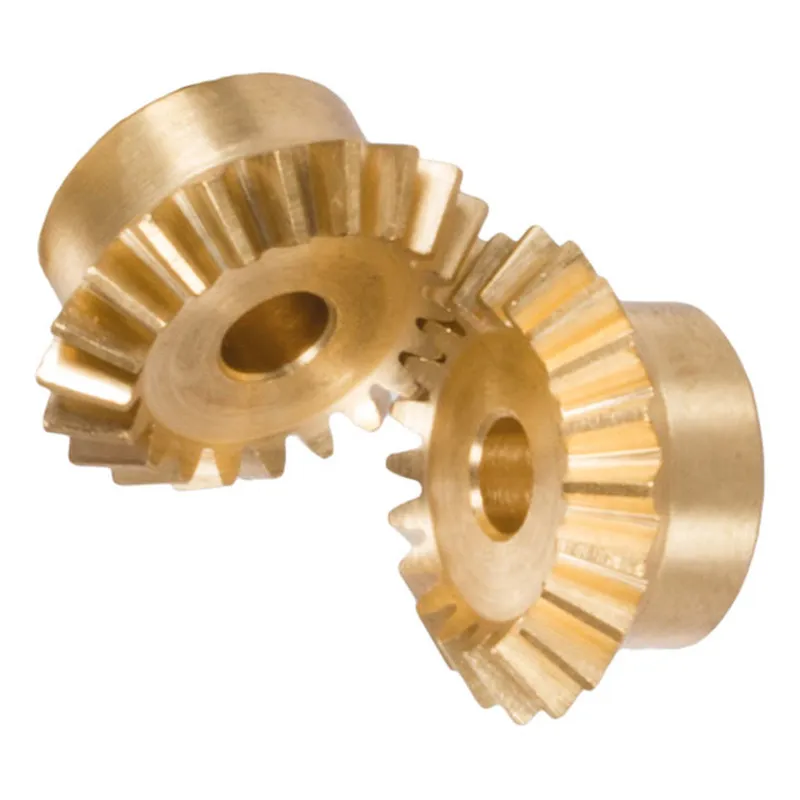
Roda Gigi Bevel Kuningan Rasio 4:1 Sistem Gigi Lurus
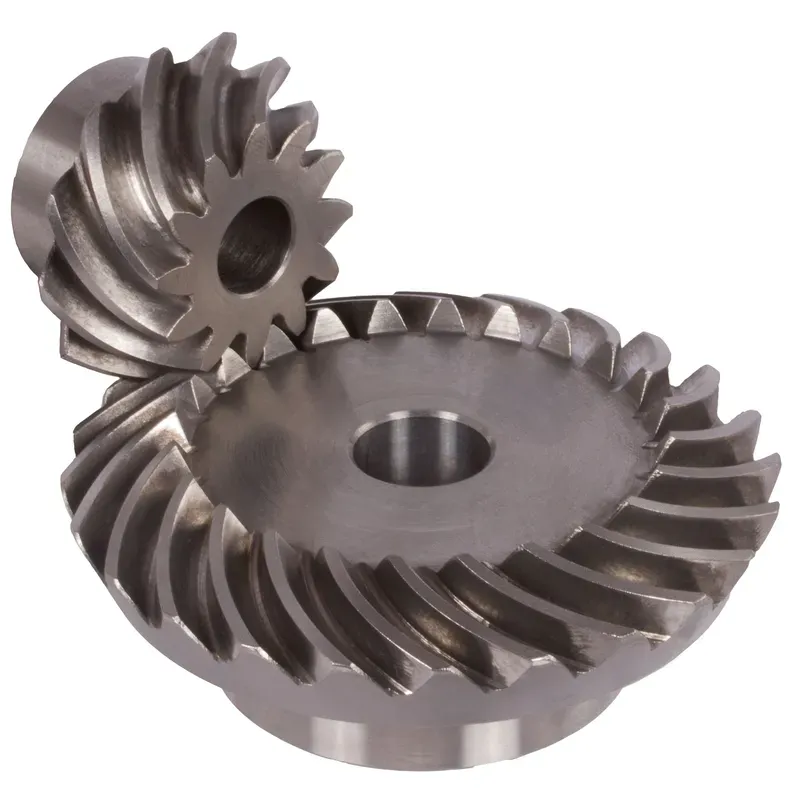
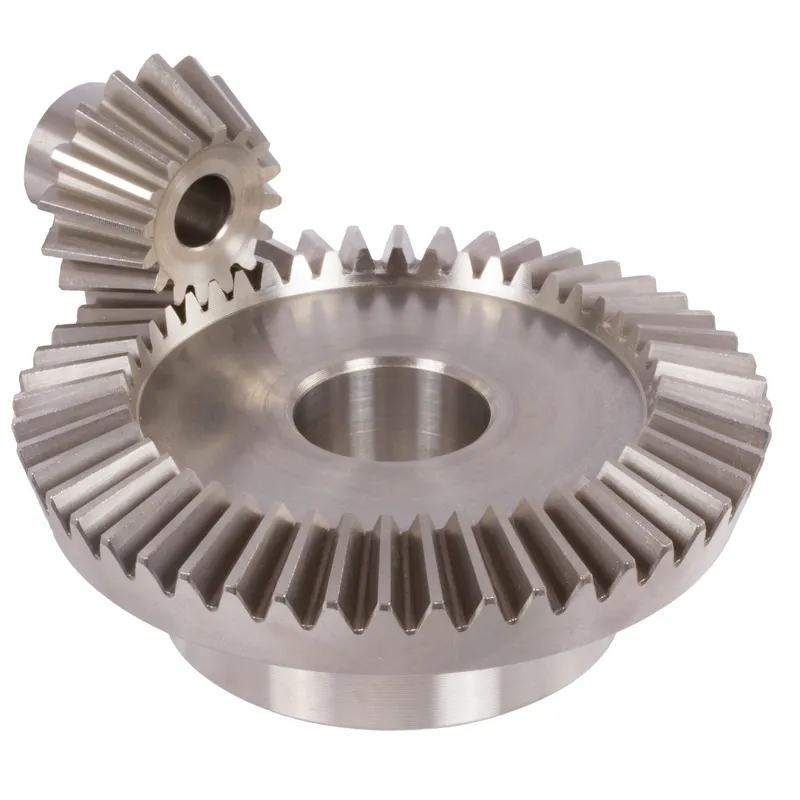
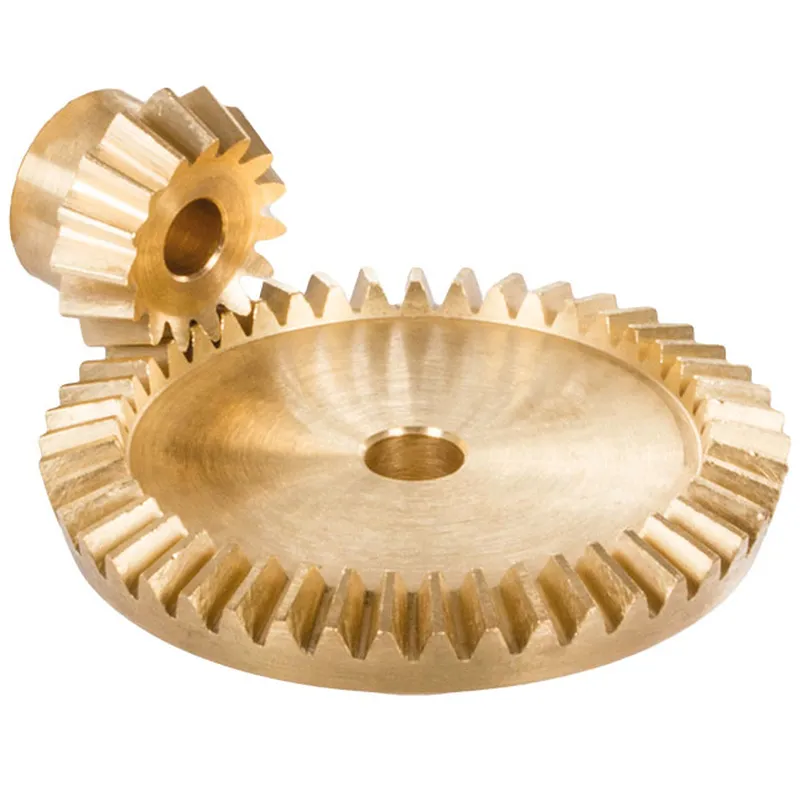
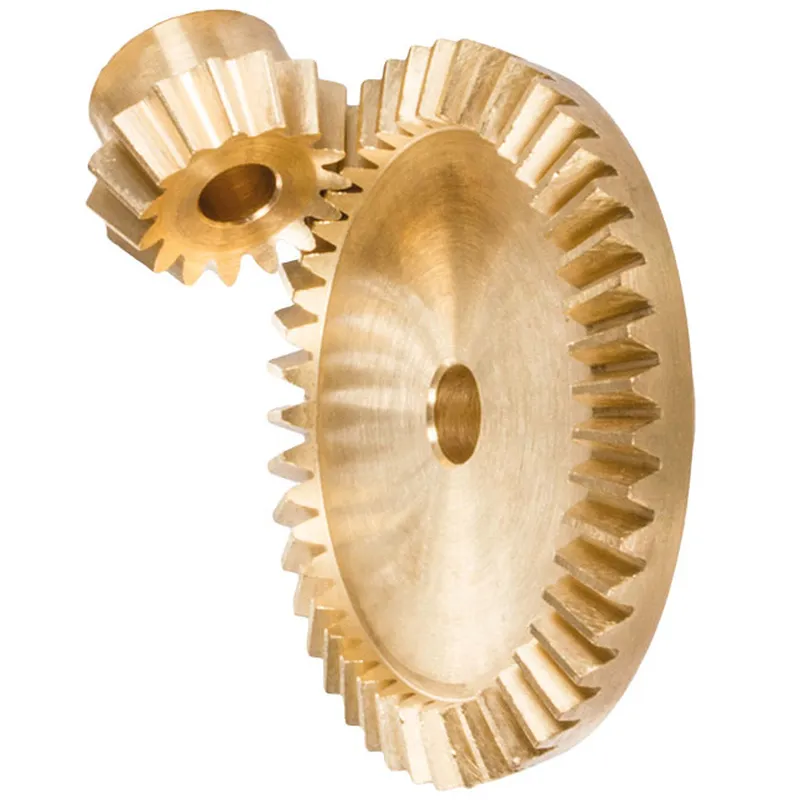
Sistem roda gigi bevel kuningan rasio 4:1 dengan gigi lurus mengacu pada konfigurasi roda gigi mekanis yang terdiri dari roda gigi bevel yang terbuat dari kuningan, dirancang untuk mentransmisikan daya antara dua poros yang diposisikan pada sudut tertentu satu sama lain, biasanya 90 derajat. Penggunaan kuningan sebagai material memberikan daya tahan, ketahanan korosi, dan kemampuan pengerjaan yang sangat baik, sehingga cocok untuk aplikasi yang membutuhkan pengoperasian yang halus dan tenang, seperti robotika, instrumentasi, dan mesin kecil.
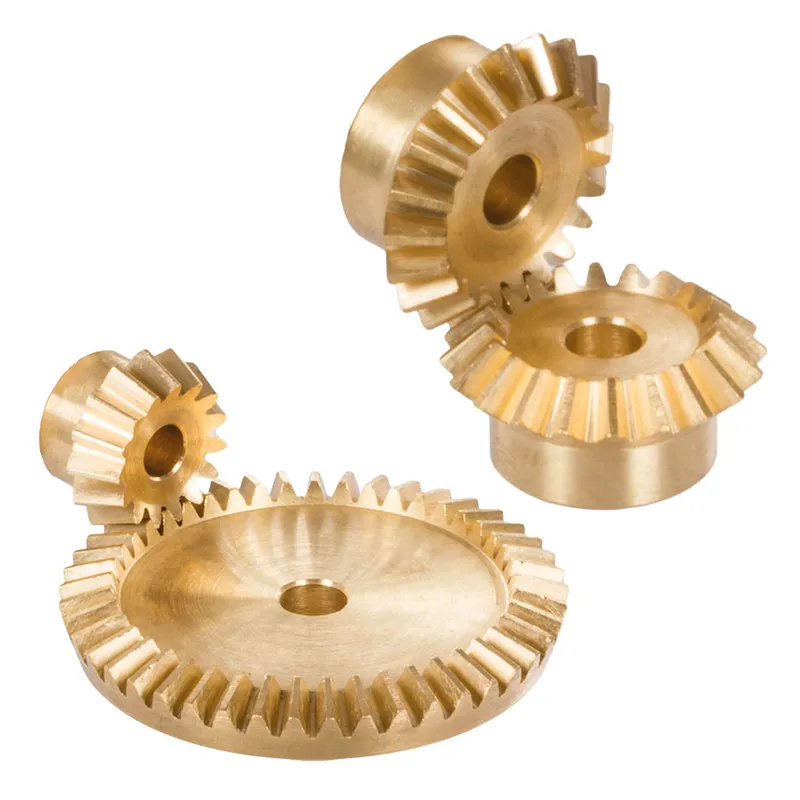
Sistem roda gigi bevel kuningan dengan rasio 4:1 dan gigi lurus mengacu pada konfigurasi roda gigi mekanis yang terdiri dari roda gigi bevel yang terbuat dari kuningan, dirancang untuk mentransmisikan daya antara dua poros yang diposisikan pada sudut tertentu satu sama lain, biasanya 90 derajat. Roda gigi bevel berbentuk kerucut, dan giginya dipotong lurus, sejajar secara radial di sepanjang permukaan roda gigi. Rasio 4:1 menunjukkan bahwa untuk setiap empat putaran roda gigi penggerak (roda gigi yang lebih kecil atau pinion), roda gigi yang digerakkan (roda gigi yang lebih besar) menyelesaikan satu putaran penuh. Konfigurasi ini sering digunakan untuk mengurangi kecepatan sekaligus meningkatkan torsi dalam sistem mekanis.
Penggunaan kuningan sebagai material memberikan daya tahan, ketahanan korosi, dan kemudahan pengerjaan yang sangat baik, sehingga cocok untuk aplikasi yang membutuhkan pengoperasian yang halus dan tenang. Roda gigi bevel bergigi lurus lebih mudah diproduksi dan ideal untuk aplikasi ringan dan berkecepatan rendah seperti robotika, instrumentasi, dan mesin kecil. Namun, roda gigi ini mungkin tidak mampu menangani beban berat seefektif roda gigi bevel spiral.
Rasio Gigi Bevel Kuningan 4:1
 | 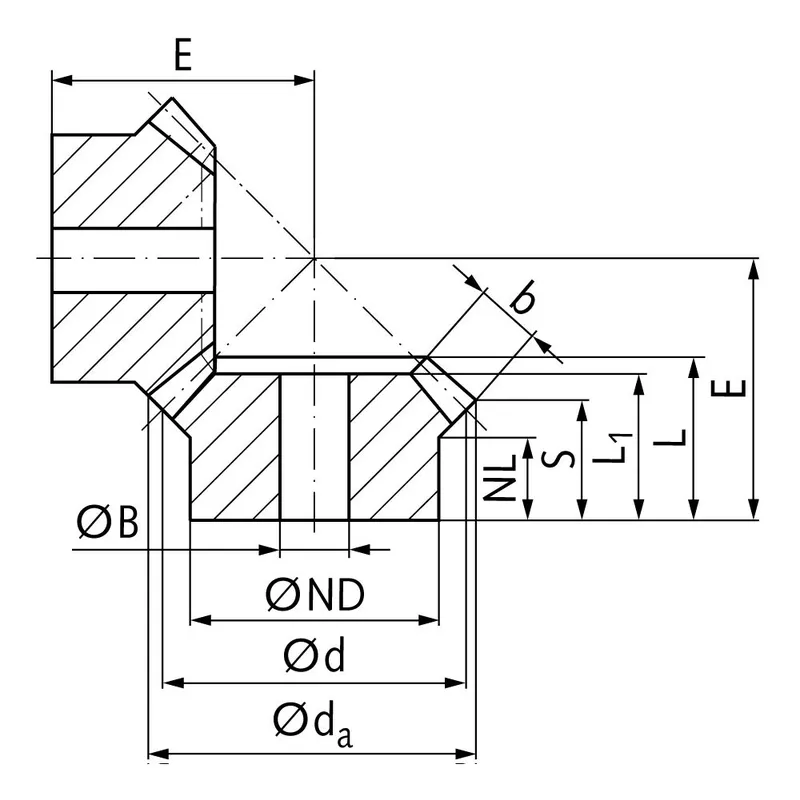 |
| Modul | Nomor gigi | DA | D | ND | NL | L1 | L | S | B | BH7 | E | Torsi* | Berat |
| mm | mm | mm | mm | mm | mm | mm | mm | mm | mm | Ncm | G | ||
| 1 | 15 | 17,8 | 15 | 13 | 5,5 | 10 | 11 | 6,3 | 5 | 5 | 35,9 | 12,2 | 10 |
| 1 | 60 | 60,3 | 60 | 16 | 8 | 12,5 | 14,6 | 13,6 | 5 | 6 | 20,5 | 48,8 | 110 |
Keuntungan dan Kerugian Roda Gigi Bevel Kuningan
Roda gigi bevel kuningan Banyak digunakan dalam sistem mekanis karena sifat material dan fitur desainnya yang unik. Namun, seperti komponen lainnya, mereka memiliki serangkaian kelebihan dan kekurangan yang berbeda.
Keuntungan:
- Ketahanan Korosi
Kuningan memiliki ketahanan yang tinggi terhadap korosi, sehingga roda gigi ini ideal untuk lingkungan yang terpapar kelembapan, bahan kimia, atau zat korosif lainnya. Sifat ini menjamin daya tahan dan keandalan jangka panjang. - Kemampuan pemesinan
Kuningan mudah diolah, memungkinkan pembuatan roda gigi yang presisi dengan hasil akhir yang halus. Hal ini memastikan pengoperasian yang efisien dan senyap, yang sangat penting dalam aplikasi yang membutuhkan kebisingan minimal. - Gesekan Rendah
Kuningan secara alami memiliki gesekan yang rendah, mengurangi keausan antar gigi roda dan memperpanjang umur sistem. Hal ini juga berkontribusi pada transmisi daya yang lebih halus dengan kehilangan energi minimal. - Daya Tarik Estetika
Karena penampilannya yang keemasan, roda gigi bevel kuningan sering dipilih untuk bagian mekanis dekoratif atau yang terlihat, seperti pada jam, robotika, atau mesin antik. - Tidak Menimbulkan Percikan Api
Kuningan tidak menghasilkan percikan api, sehingga aman digunakan di lingkungan yang terdapat gas atau material yang mudah terbakar, seperti di industri pertambangan atau petrokimia. - Ringan
Dibandingkan dengan logam lain seperti baja, kuningan relatif ringan, yang menguntungkan untuk sistem di mana pengurangan berat sangat penting.
Kekurangan
- Kekuatan Lebih Rendah
Kuningan lebih lunak dibandingkan material seperti baja. Hal ini membatasi kemampuannya untuk menangani beban tinggi atau aplikasi tugas berat, sehingga tidak cocok untuk sistem torsi tinggi. - Biaya
Kuningan umumnya lebih mahal daripada bahan umum seperti baja atau besi cor. Hal ini dapat meningkatkan biaya produksi secara keseluruhan, terutama dalam aplikasi skala besar. - Ketahanan Aus Terbatas
Meskipun kuningan memiliki ketahanan korosi yang baik, ketahanan ausnya lebih rendah daripada material yang lebih keras. Seiring waktu, roda gigi dapat aus lebih cepat dalam kondisi tekanan tinggi atau kecepatan tinggi. - Konduktivitas Termal
Kuningan menghantarkan panas lebih efisien daripada beberapa logam lain, yang dapat menyebabkan panas berlebih pada sistem roda gigi tertentu jika tidak dikelola dengan benar.
Aplikasi Khas Roda Gigi Bevel Lurus Kuningan
- Jam dan Arloji
Roda gigi bevel lurus berbahan kuningan sering digunakan pada jam dan arloji karena kemampuan pemesinan yang presisi dan gesekan yang rendah. Ketahanan terhadap korosi memastikan umur pakai yang panjang, sementara sifatnya yang ringan mengurangi tekanan pada mekanisme internal yang halus, memungkinkan ketepatan waktu dalam jangka waktu yang lama. - Robotika dan Otomasi
Dalam bidang robotika, roda gigi bevel kuningan sangat ideal untuk desain yang ringan dan ringkas yang membutuhkan pengoperasian yang lancar dan kontrol gerakan yang presisi. Tingkat kebisingannya yang rendah berkontribusi pada sistem robot yang lebih tenang, sementara kemudahan pengerjaannya memungkinkan desain khusus yang disesuaikan dengan gerakan robot dan persyaratan torsi tertentu. - Mesin dan Instrumen Kecil
Roda gigi bevel kuningan umum digunakan pada mesin-mesin kecil seperti mesin jahit atau instrumen medis, di mana presisi dan keandalan sangat penting. Ketahanan terhadap korosi memastikan kinerja yang konsisten di lingkungan yang terpapar kelembapan, sementara pengoperasiannya yang lancar mencegah keausan yang tidak perlu pada komponen lain. - Komponen Dirgantara
Dalam sistem kedirgantaraan, roda gigi bevel kuningan digunakan dalam rakitan mekanis ringan di mana ketahanan korosi yang tinggi dan bobot minimal sangat penting. Kemampuannya untuk beroperasi secara efisien dalam lingkungan terkontrol memastikan kinerja yang andal dalam aplikasi seperti sistem aktuasi dan transmisi daya skala kecil. - Aplikasi Kelautan
Lingkungan laut membutuhkan material yang tahan terhadap korosi akibat air asin dan kelembapan. Roda gigi bevel kuningan banyak digunakan dalam instrumentasi kapal, sistem kemudi, dan peralatan laut lainnya, di mana daya tahan dan ketahanannya terhadap degradasi memastikan fungsionalitas jangka panjang dalam kondisi yang keras.
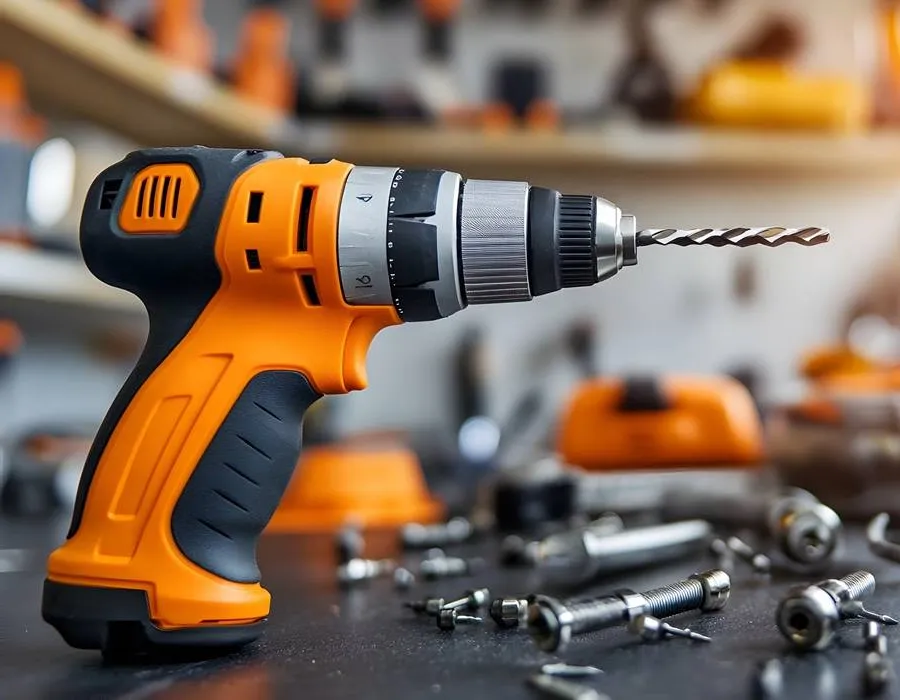 |  |
| Roda Gigi Miring untuk Perkakas Listrik | Roda Gigi Bevel untuk Diferensial Otomotif |
 |  |
| Roda Gigi Miring untuk Robotika | Roda Gigi Miring untuk Industri Kelautan |
Roda Gigi Bevel vs Roda Gigi Miter
Apa Itu Roda Gigi Bevel?
Roda gigi bevel adalah jenis roda gigi mekanis yang memiliki gigi berbentuk kerucut, sehingga memungkinkan transmisi daya antara poros yang berpotongan pada berbagai sudut. Tidak seperti roda gigi miter yang terbatas pada sudut 90 derajat, roda gigi bevel menawarkan fleksibilitas yang lebih besar dalam orientasi poros. Roda gigi ini banyak digunakan dalam berbagai mesin dan aplikasi yang membutuhkan transmisi daya antara poros yang tidak sejajar.
Roda gigi bevel hadir dalam berbagai konfigurasi, termasuk roda gigi bevel lurus, roda gigi bevel spiral, dan roda gigi bevel hipoid.
- Roda gigi bevel lurus memiliki gigi yang dipotong lurus melintang pada permukaan kerucut, sedangkan roda gigi bevel spiral memiliki gigi melengkung untuk pengoperasian yang lebih halus dan lebih senyap.
- Roda gigi bevel hipoid, variasi dari roda gigi bevel spiral, memiliki sumbu pinion yang bergeser untuk meningkatkan kapasitas torsi dan mengurangi kebisingan.
Apa itu Miter Gear?
Roda gigi miter adalah jenis roda gigi bevel dengan gigi yang saling berpotongan pada sudut 90 derajat. Roda gigi ini dirancang untuk mentransmisikan gerakan dan daya antara dua poros yang tegak lurus satu sama lain. Roda gigi miter umumnya digunakan dalam berbagai aplikasi mekanis, termasuk mesin industri, sistem otomotif, dan instrumen presisi.
Gigi pada roda gigi miter dipotong pada sudut 45 derajat terhadap sumbu rotasi, sehingga memungkinkan gigi-gigi tersebut saling berpasangan dengan lancar dan efisien. Geometri gigi yang unik ini memungkinkan roda gigi miter untuk mengubah arah rotasi sambil mempertahankan rasio kecepatan konstan antara poros input dan output.
| Fitur | Roda Gigi Miter | Roda Gigi Bevel |
|---|---|---|
| Desain | Jenis roda gigi bevel tertentu, dirancang untuk poros dengan sudut 90 derajat. | Dapat dirancang untuk sudut berapa pun antara 0 dan 180 derajat, menawarkan fleksibilitas poros yang lebih besar. |
| Fungsionalitas | Digunakan untuk perubahan arah gerak atau transmisi daya sebesar 90 derajat. Umum ditemukan pada perkakas tangan dan mesin. | Digunakan untuk transmisi daya pada berbagai sudut. Ditemukan pada sistem penggerak otomotif, pesawat terbang, dll. |
| Rasio Gigi | Biasanya rasio gigi 1:1, yang tidak memberikan keuntungan mekanis dalam hal kecepatan atau torsi. | Dapat dirancang dengan rasio roda gigi yang berbeda untuk pengurangan kecepatan atau penggandaan torsi. |
| Kapasitas Muat | Kapasitas beban terbatas karena kontak titik antar gigi, yang menyebabkan konsentrasi tegangan. | Kapasitas beban yang lebih tinggi karena distribusi tegangan yang lebih baik di sepanjang permukaan gigi. |
| Persyaratan Ruang | Desain ringkas, cocok untuk aplikasi dengan ruang terbatas. | Mungkin memerlukan lebih banyak ruang karena ukurannya yang lebih besar dan posisinya yang miring. |
| Fleksibilitas dalam Sudut | Terbatas pada sudut poros 90 derajat. | Sangat serbaguna, mendukung sudut poros dari 0 hingga 180 derajat. |
| Aplikasi | Sistem otomotif, perkakas tangan, mesin industri, dan instrumen presisi. | Sistem penggerak otomotif, sistem kendali pesawat terbang, dan berbagai sistem transmisi daya. |
| Kompleksitas Manufaktur | Relatif lebih mudah diproduksi dibandingkan dengan roda gigi bevel lainnya. | Lebih kompleks untuk diproduksi, terutama roda gigi bevel spiral dan hipoid. |
| Reaksi | Rentan terhadap reaksi balik, yang dapat menyebabkan kesalahan posisi dan getaran. | Juga rentan terhadap reaksi balik, tetapi bervariasi tergantung pada jenis roda gigi bevel tertentu. |
| Kapasitas Torsi | Kemampuan transmisi torsi sedang. | Kapasitas torsi yang lebih tinggi, terutama pada roda gigi bevel hipoid karena area kontak gigi yang lebih besar. |
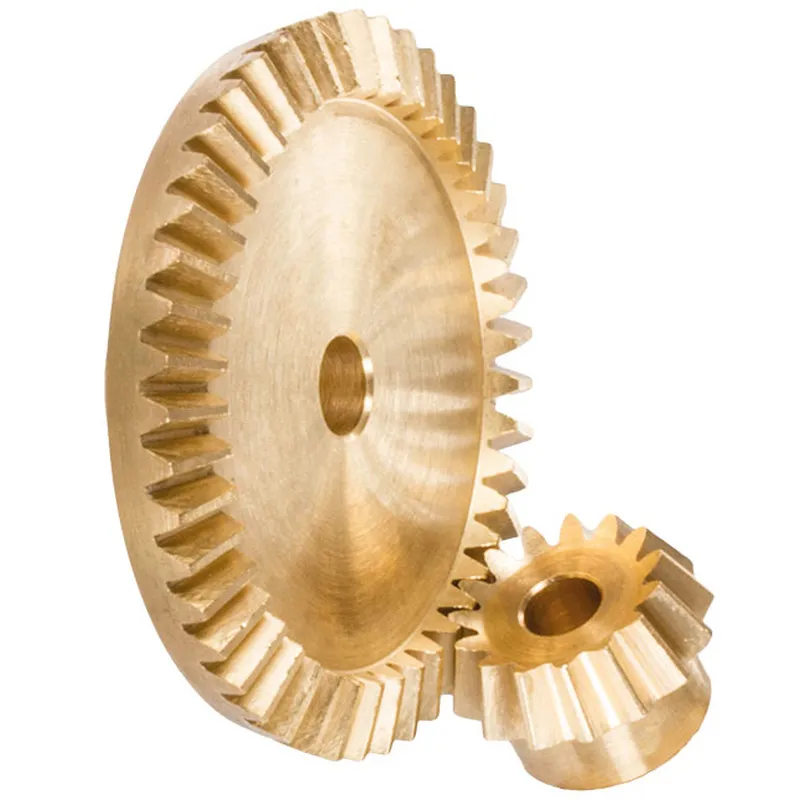 |  |
| Roda Gigi Miring | Roda Gigi Miter |
Informasi Tambahan
| Diedit oleh | Yjx |
|---|