
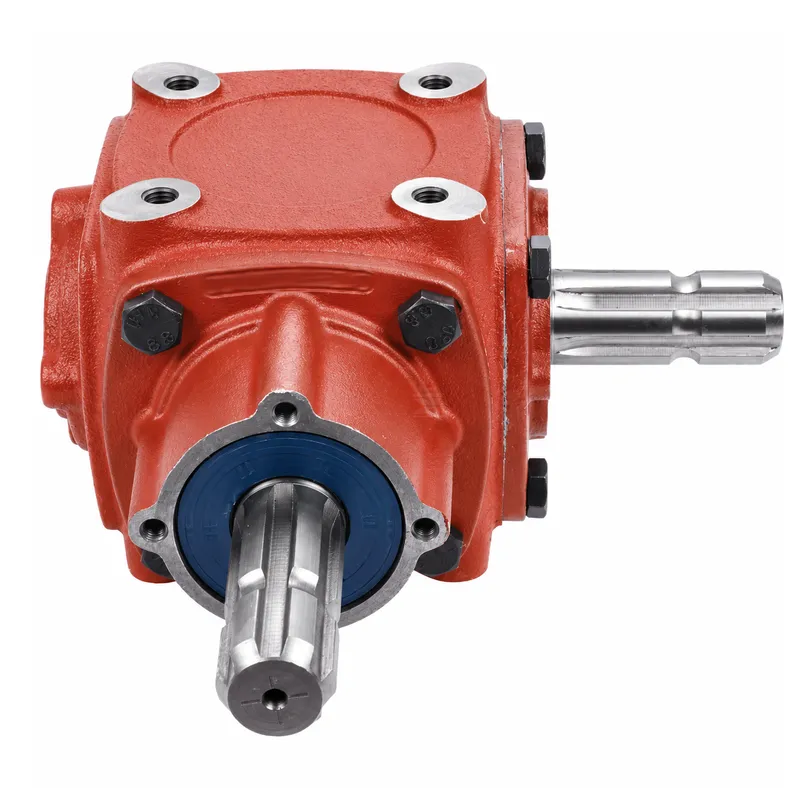
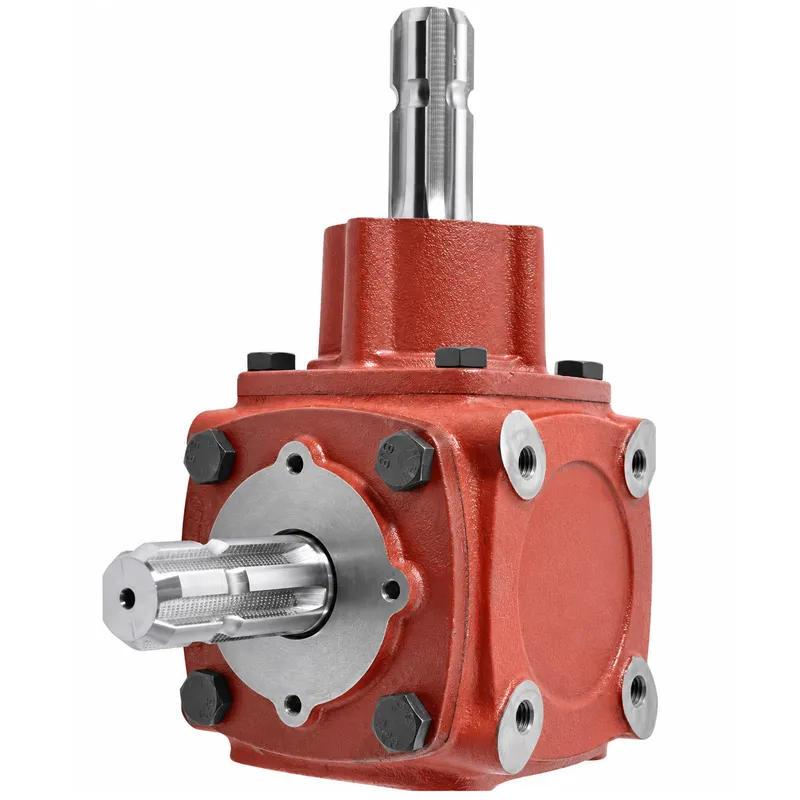
T-19A Rotary Tiller Gearbox Ratio 1:1.84 Replacement for Comer T-19A Gearbox
The T-19A Rotary Tiller Gearbox with a 1:1.84 ratio is a precision-built agricultural power transmission unit engineered as a direct replacement for the Comer T-19A gearbox. Manufactured by CMN Transmission in South Korea, this rotary tiller gearbox transfers rotational power from a tractor’s power take-off (PTO) shaft to the rotating blades of a rotary tiller, commonly known as a rotavator. Through its internal spur gear system, the gearbox adjusts rotational speed and increases output torque during reduction operation, delivering 137 N·m of maximum torque at up to 20 HP.
The T-19A Rotary Tiller Gearbox with a 1:1.84 ratio is a precision-built agricultural power transmission unit engineered as a direct replacement for the Comer T-19A gearbox. Manufactured by CMN Transmission in South Korea, this rotary tiller gearbox transfers rotational power from a tractor's power take-off (PTO) shaft to the rotating blades of a rotary tiller, commonly known as a rotavator. Through its internal spur gear system, the gearbox adjusts rotational speed and increases output torque during reduction operation, delivering 137 N·m of maximum torque at up to 20 HP. Constructed with a durable cast iron GG25 housing, hardened alloy steel gears, sealed bearings, and premium oil seals, the T-19A is built to handle the rigors of daily soil cultivation across diverse field conditions.
This gearbox for rotary tiller supports a wide range of agricultural applications including multi-row rotary tillers, mowers, fertiliser spreaders, and band saws. Whether you are preparing seedbeds in loose sandy soil, breaking up compacted clay fields, or incorporating crop residues before planting season, the T-19A delivers consistent rotor speed and reliable power transmission. Both input and output shafts feature standard 1-3/8 inch 6-spline connections (Z6), ensuring broad compatibility with existing PTO drivelines and tiller rotor drives. With a compact 14 kg design and straightforward bolt-on mounting, installation can be completed in the field without specialized tooling.
Technical Parameters
| Model | T-19A Gearbox 1:1.84 |
| Replace Brand | Comer |
| Product Details |
|
| Application Range |
|
| Ratio | 1:1.84 |
| Connection 1 Outside Diameter inch and splines | 1.3/8-6 |
| Connection 2 Outside Diameter inch and splines | 1.3/8-6 |
| Max. input Power | 14.7 kW |
| Max. input Rotation Speed | 540 r/min |
| Max. output Power | 14.7 kW |
| Max. output power | 20 HP |
| Max. output Torque | 137 N·m |
| Gear Arrangement Increasing | 23-24 |
| Gear Arrangement Reducing | 3-4 |
| Contains Oil | No |
| Max. oil Capacity | 0.9 L |
| Max. Oil Change Interval | 500 h |
| Oil SAE Viscosity Grade | 80W-90 |
| Housing Material | Cast iron GG25 |
| Weight | 14 kg |
We have completed a third-party supplier audit and company verification supported by SGS / TÜV Rheinland. This verification helps buyers review company identity, business operations, supplier profile and general manufacturing capability. Product-specific inspection reports, material documents or compliance records can be provided according to order requirements.
Minimum Order Quantity (MOQ): Flexibly set based on the product type and order amount.
Samples: New customers may request 1–5 samples under appropriate circumstances.
Mixed Orders: Combining different models is supported; the total order amount must reach approximately $1,500.
Small Orders: Orders starting from 1–2 pieces are supported, but the unit price will be relatively higher.
Lead Time: 10–25 working days for standard parts; 20–45 working days for customized components; 45–120 working days for project-based equipment.
Trade Terms: EXW, FOB, CIF, and DAP are generally supported; FCA, CFR, CPT, CIP, and DDP terms can be specifically negotiated.
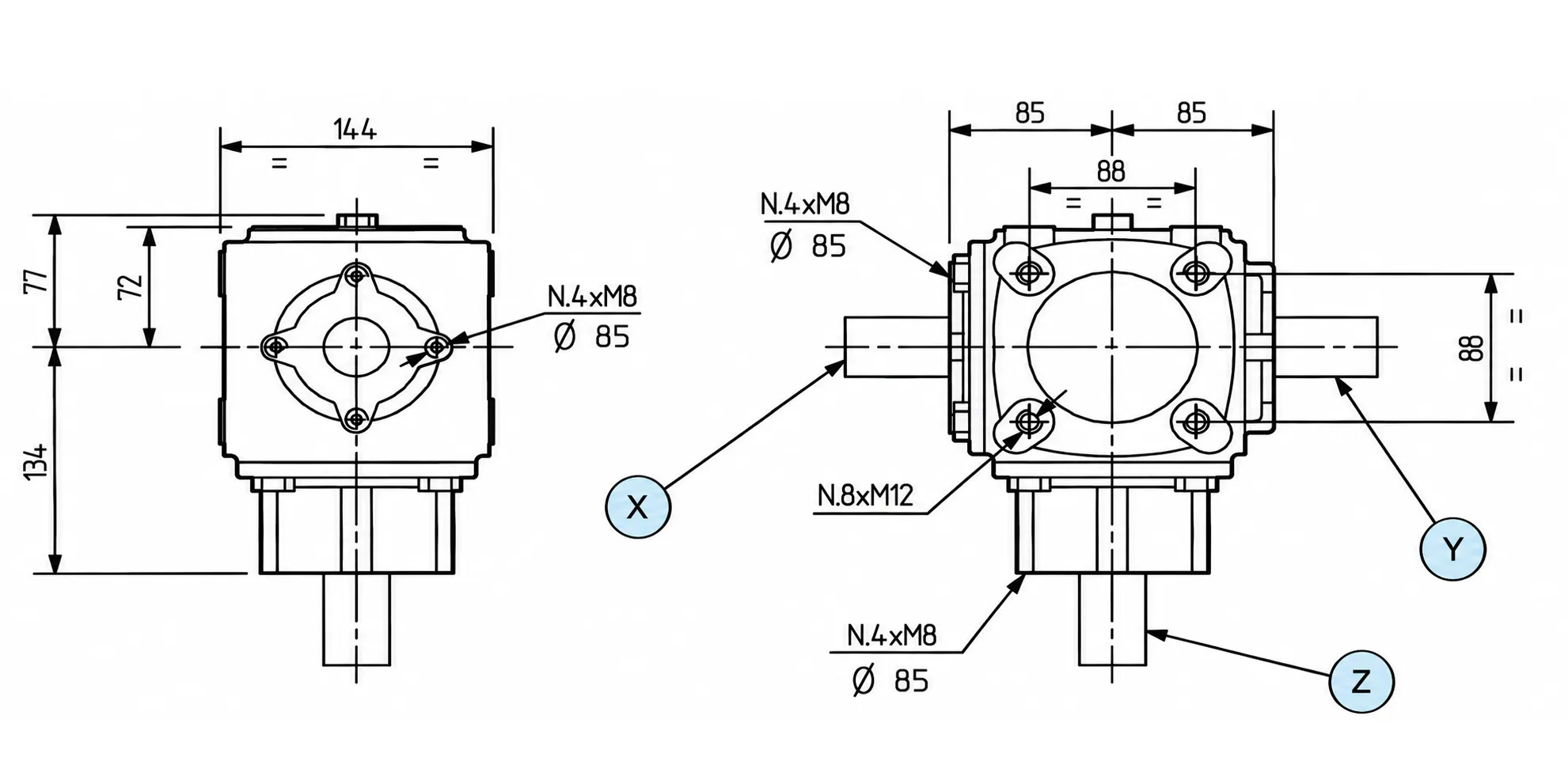
T-19A Rotary Tiller Gearbox Dimensions
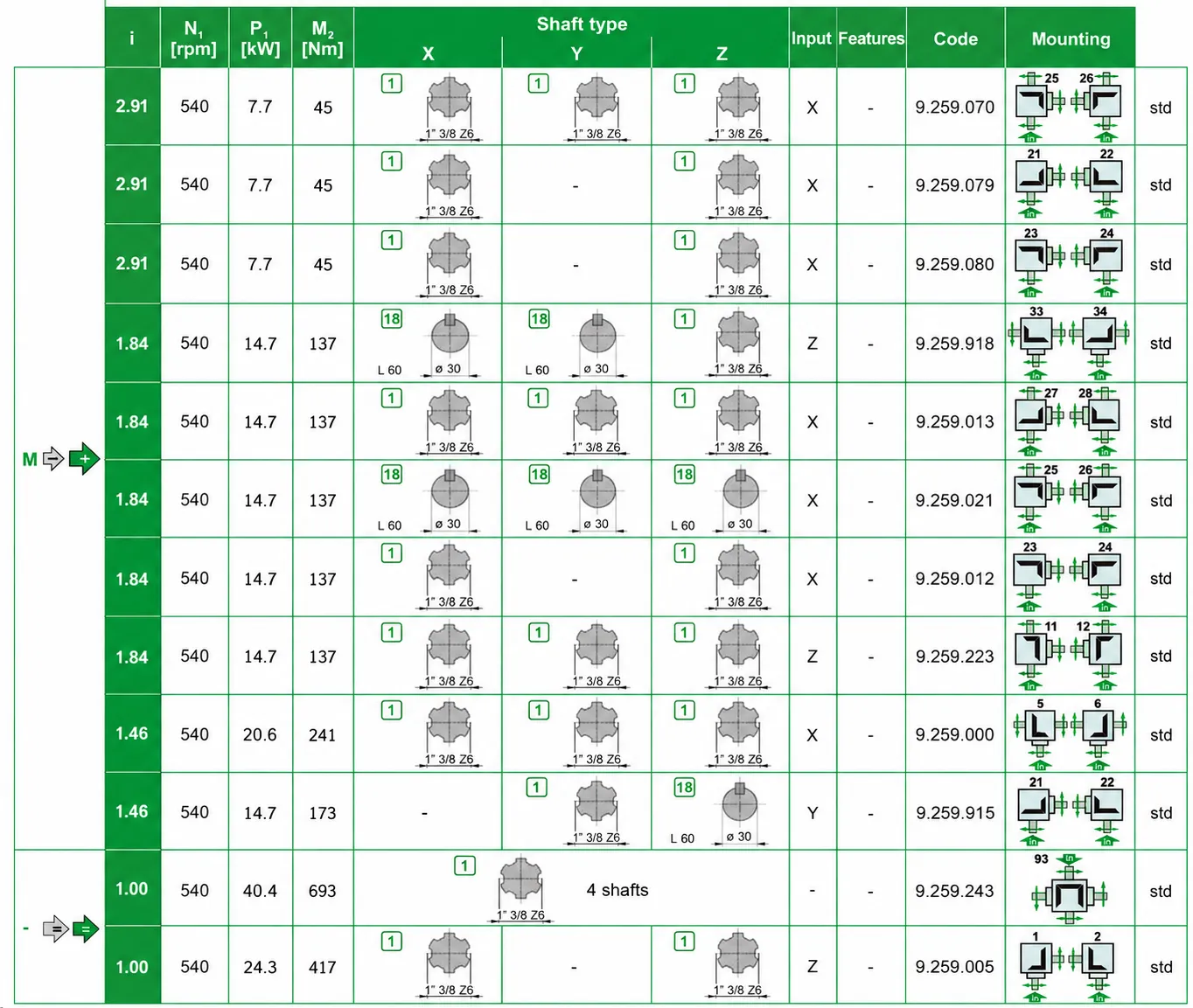
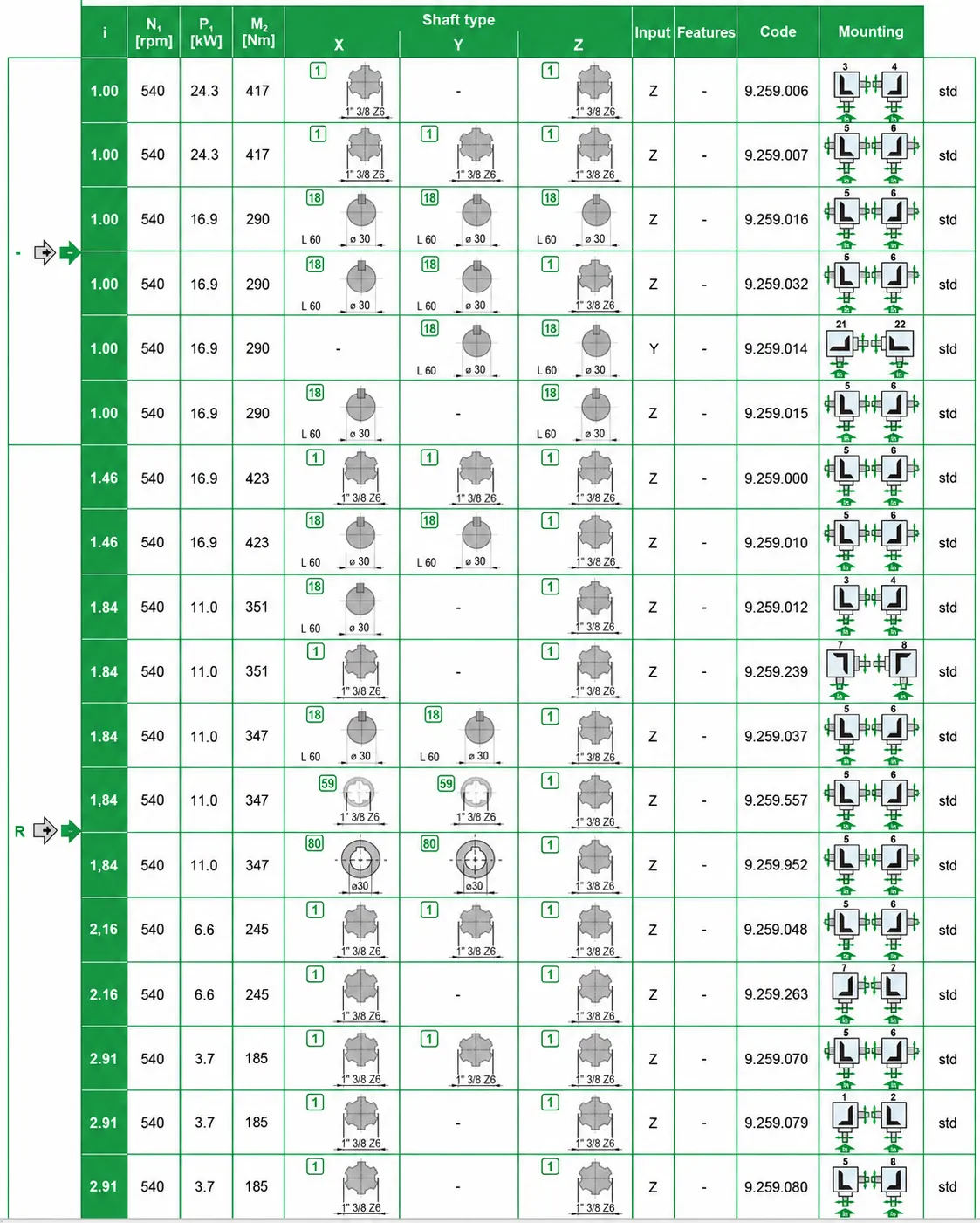
Key Advantages of the T-19A Rotary Cultivator Gearbox
1. High Torque Output
Delivering a maximum output torque of 137 N·m at 20 HP, this rotary cultivator gearbox is optimized for high-load soil cultivation. The 1:1.84 reduction ratio converts PTO input speed into greater rotational force at the tiller rotor, enabling the blades to cut through compacted clay, dry hard ground, and root-laden soil without stalling. The torque capacity is calibrated to match the demands of multi-row rotary tillers operating across varying terrain types, from loose sandy soils to heavy clay fields, keeping the rotor turning at a steady, productive pace regardless of the resistance encountered.
2. High-Strength Gear Design
The T-19A features high-strength alloy steel gears that undergo precision machining and controlled heat treatment to achieve optimal surface hardness and wear resistance. Each gear is finished through hobbing, shaving, and grinding processes to maintain tight dimensional tolerances. This multi-step manufacturing approach reduces gear noise, improves meshing efficiency, and significantly extends the operating life of the tiller gearbox. The result is a gear set that delivers smooth, consistent power transmission even after thousands of hours of field operation in abrasive soil conditions.
3. Compact and Lightweight Structure
Weighing just 14 kg, the T-19A adopts a modular housing design that fits into the same mounting envelope as the original Comer T-19A unit. The compact footprint makes it compatible with a wide range of small to mid-size rotary tillers and rotavators without structural modifications. Standard bolt patterns and 1-3/8 inch 6-spline shaft connections allow for a direct bolt-on swap, which means field technicians can complete a gearbox replacement during scheduled maintenance windows with basic hand tools and minimal machine downtime.
4. Industrial-Grade Cast Iron GG25 Housing
The gearbox housing is precision-cast from GG25 grade grey cast iron, a material selected for its excellent vibration damping properties, high compressive strength, and resistance to surface wear. Unlike lighter alloy alternatives, the GG25 housing absorbs shock loads generated when tiller blades encounter rocks, roots, or compacted soil layers. The casting surfaces are machined to close tolerances at bearing seats and flange faces, ensuring proper alignment of the internal gear train and extending the service life of the agricultural gearbox under repetitive impact conditions.
5. Advanced Sealing System
Each shaft entry point is fitted with multi-lip oil seals and dust exclusion rings that form a layered barrier against soil particles, moisture, and crop debris. The sealing system is designed to maintain internal oil pressure while preventing lubricant leakage during extended operation. A dedicated oil plug and breather vent on the housing allow pressure equalization as the gearbox heats up during work, preventing seal blowout. This sealing arrangement drastically reduces the frequency of maintenance and keeps the rotary tiller gearbox parts clean and properly lubricated throughout the season.
6. Customized Engineering
CMN Transmission provides custom production services covering gear ratio modifications, alternative shaft configurations, and adjusted mounting arrangements. If your a specific tiller design or regional soil conditions call for a non-standard setup, our engineering team can adapt the T-19A parameters to your requirements. This service is particularly valuable for OEM equipment manufacturers and distributors who supply rotary tillers in markets with unique soil profiles, tractor standards, or implement designs. We work from customer drawings, existing gearbox samples, or detailed technical specifications to deliver precisely matched units.
7. Certified Quality and Global Supply
Every T-19A unit is manufactured under ISO 9001 certified quality management and carries CE certification for the European market. From incoming raw material inspection through final assembly and run-in testing, each production stage follows documented procedures with traceable quality records. CMN Transmission ships to over 60 countries worldwide and maintains consistent stock levels to support both spot orders and long-term OEM supply agreements.
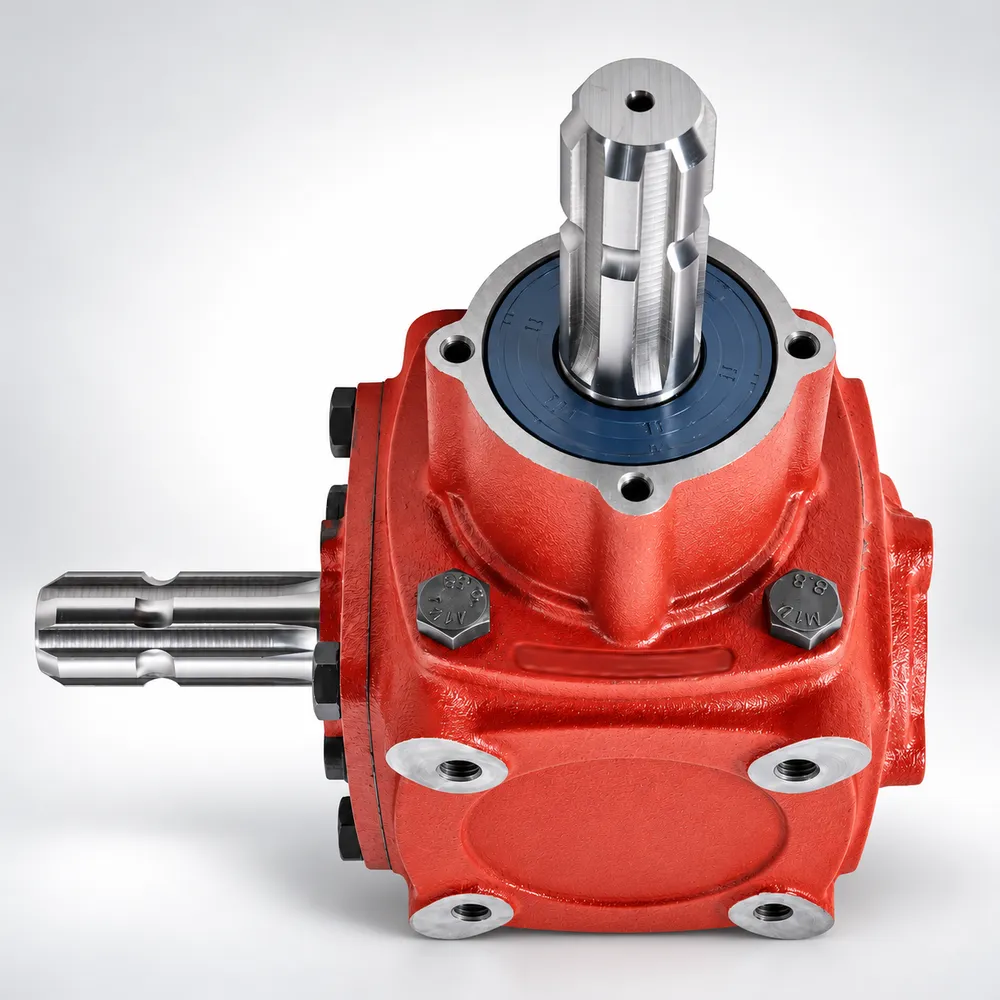
Operating Principle
The T-19A rotavator gearbox receives mechanical power from the tractor's rear PTO shaft, which commonly rotates at 540 RPM in standard agricultural configurations. This input enters the gearbox through a 1-3/8 inch 6-spline input shaft and engages the internal spur gear set. With a reduction ratio of 1:1.84, the gearbox converts the incoming 540 RPM into approximately 293 RPM at the output shaft. This speed reduction is accompanied by a proportional increase in torque, delivering up to 137 N·m of rotational force to the tiller rotor. The lower speed and higher torque at the output side gives the tiller blades the mechanical advantage needed to cut into compacted or rocky soil without overwhelming the tractor's drivetrain.
Inside the cast iron GG25 housing, the T-19A uses a pair of precision-ground spur gears arranged in a specific tooth count configuration. The increasing arrangement uses a 23-24 gear pair, while the reducing arrangement employs a 3-4 configuration. When the input pinion gear (with fewer teeth) drives the larger output gear, the speed decreases and the torque multiplies according to the gear ratio. The gear teeth are case-hardened to resist pitting and spalling under high-contact stress, and the tooth profiles are ground to achieve tight engagement tolerances. This careful manufacturing ensures that the gear mesh transfers power efficiently with minimal energy loss to heat or vibration, keeping the overall transmission efficiency well above 95 percent during normal field operation.
The output shaft of the gearbox for rotary cultivator connects to the tiller rotor drive through a matching 1-3/8 inch 6-spline coupling. As the output shaft turns, it drives the horizontal rotor and its array of L-shaped or C-shaped tiller blades through the soil. The steady output speed produced by the gear reduction maintains consistent blade engagement depth and soil mixing quality, even when the tractor encounters patches of harder ground or varying moisture content. This consistent rotor speed is critical for producing uniform seedbed texture and thorough incorporation of organic matter, crop residues, and applied fertilizers.
The robust GG25 cast iron housing serves as both a structural frame and an environmental barrier. Its thick walls absorb the vibration and impact forces that travel through the drivetrain during tilling, preventing those forces from loosening internal components or fatiguing the mounting hardware. The housing surfaces are treated with corrosion-resistant coatings to withstand prolonged exposure to soil moisture, fertilizer chemicals, and temperature cycling between cold morning starts and peak operating heat. Effective seals at every shaft opening and housing joint keep soil particles, grit, and moisture from entering the oil bath, protecting the gears and bearings from abrasive damage. A breather vent allows internal air pressure to equalize as the gearbox warms up, preventing pressure buildup that could push oil past the seals.
In many rotary tiller installations, the drivetrain between the PTO and the gearbox includes an overload protection device such as a shear bolt coupling, a friction slip clutch, or a torque limiter. These safety mechanisms are designed to interrupt the power flow if the rotor suddenly jams against a large rock, a buried stump, or an immovable object. By absorbing or releasing the shock load before it reaches the gearbox internals, these devices protect the gear teeth, shafts, bearings, and housing from catastrophic failure. When selecting or replacing a T-19A gearbox, it is recommended to verify that the PTO shaft assembly includes a properly rated overload protection device matched to the 20 HP and 137 N·m torque capacity of the gearbox.
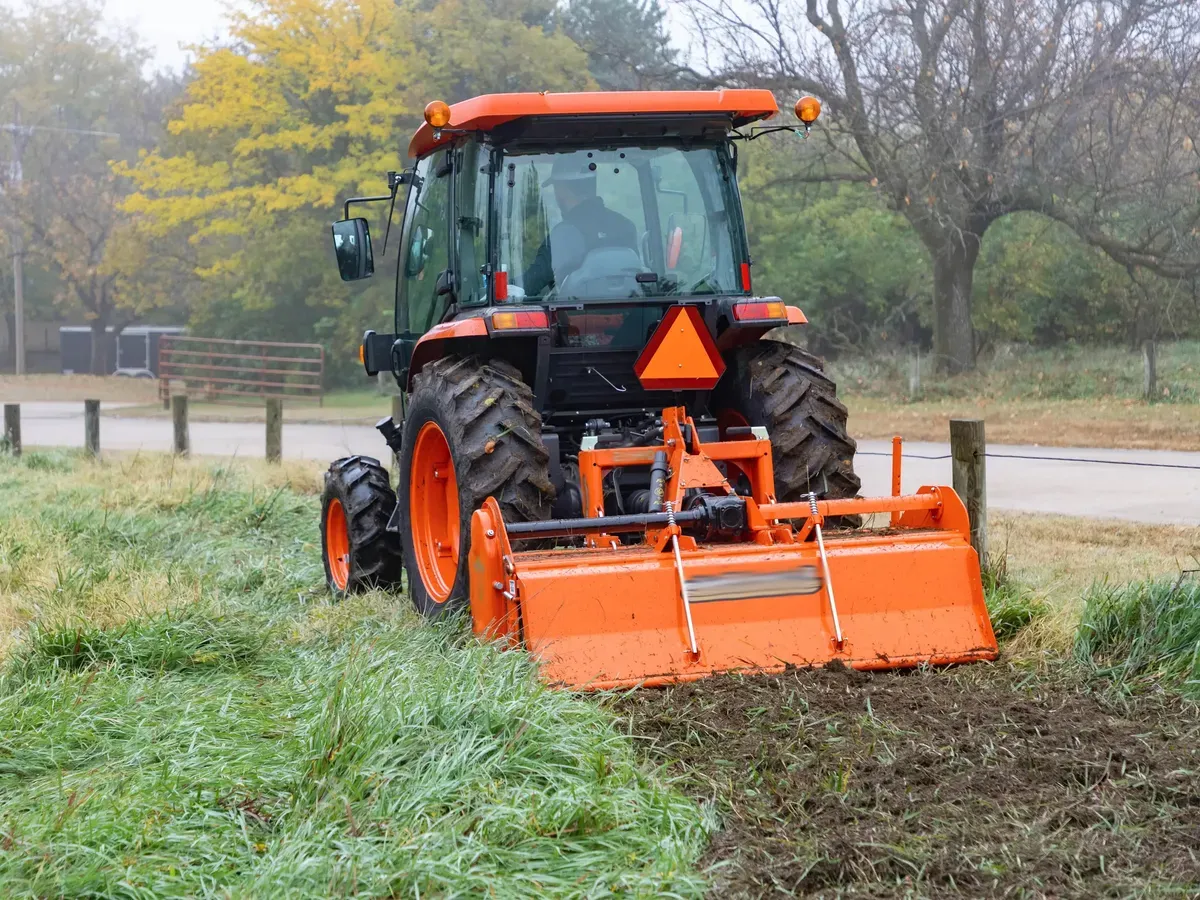
Applications of the T-19A Rotary Tiller Gearbox
Seedbed Preparation and Primary Cultivation
The primary use of any rotary tiller gearbox is powering the blades that mix and pulverize soil to create a fine, uniform seedbed. The T-19A provides steady torque to the rotor as it breaks apart clods, levels the surface, and creates the crumb structure that seeds need for good soil-to-seed contact. This application is fundamental across grain farming, vegetable production, and nursery operations where consistent germination rates depend on properly prepared planting surfaces.
Crop Residue Incorporation and Composting
After harvest, rotary tillers powered by gearboxes like the T-19A are used to chop and incorporate crop stubble, straw, and plant residues into the topsoil layer. This process accelerates decomposition by mixing organic matter with soil microorganisms and oxygen. The agricultural gearbox for rotary tiller maintains consistent rotor speed to ensure thorough mixing of compost, green manure, or applied fertilizer throughout the tilling depth, promoting nutrient recycling and soil health improvement ahead of the next planting cycle.
Light Land Leveling and Surface Finishing
On small plots, vegetable beds, and orchard floors, the rotary tiller serves double duty as a leveling tool. The rotating blades smooth out ruts, fill in low spots, and create an even surface texture that improves irrigation distribution and reduces puddling. The T-19A rotary cultivator gearbox keeps the rotor speed consistent during these finishing passes, which is critical for achieving the precise, uniform soil texture required in high-value crop production and raised bed farming systems.
Vineyard and Orchard Floor Management
Compact rotary tillers equipped with the T-19A gearbox are widely used between vineyard rows and under orchard tree canopies where space is limited and precise cultivation is necessary. The gearbox drives the tiller blades to control weed growth, incorporate cover crop residues, and loosen the soil surface to improve water infiltration around root zones. Its compact 14 kg footprint and standard spline connections make it suitable for the smaller, specialized tiller implements that work in these narrow, high-value production environments.
Vegetable Bed Formation and Market Garden Work
Market gardeners and commercial vegetable growers rely on rotary tillers to build raised beds, incorporate amendments, and prepare fine-textured planting rows. The T-19A delivers the consistent blade speed and torque control that these operations demand, ensuring each bed receives the same cultivation intensity. Whether the grower is working light sandy loam or heavy alluvial soil, the agricultural gearbox for rotavator keeps the rotor performing at the same standard, which directly affects crop uniformity and yield predictability across the entire planting area.
Pasture Renovation and Grassland Management
Livestock farms use rotary tillers to renovate degraded pastures by breaking up the existing sod, incorporating seed, and mixing in lime or fertilizer. The T-19A gearbox handles the heavy loads that come from cutting through established grass root mats and compacted grazing surfaces. This renovation process restores productive grass stands without full reseeding, saving time and input costs. The gearbox's reliable torque output ensures that the tiller can process even heavily matted pasture sections without requiring multiple passes.
Road Shoulder and Construction Site Soil Preparation
Beyond traditional farming, rotary tillers equipped with the T-19A find use in preparing soil along road shoulders, embankments, and construction sites where the ground needs to be loosened and graded before seeding or surfacing. The gearbox withstands the abrasive conditions found in these non-agricultural environments, where soil may contain gravel, construction debris, and compacted fill material. Its durable cast iron housing and hardened gear set handle these tough conditions without the rapid wear that lighter gearbox designs would experience.
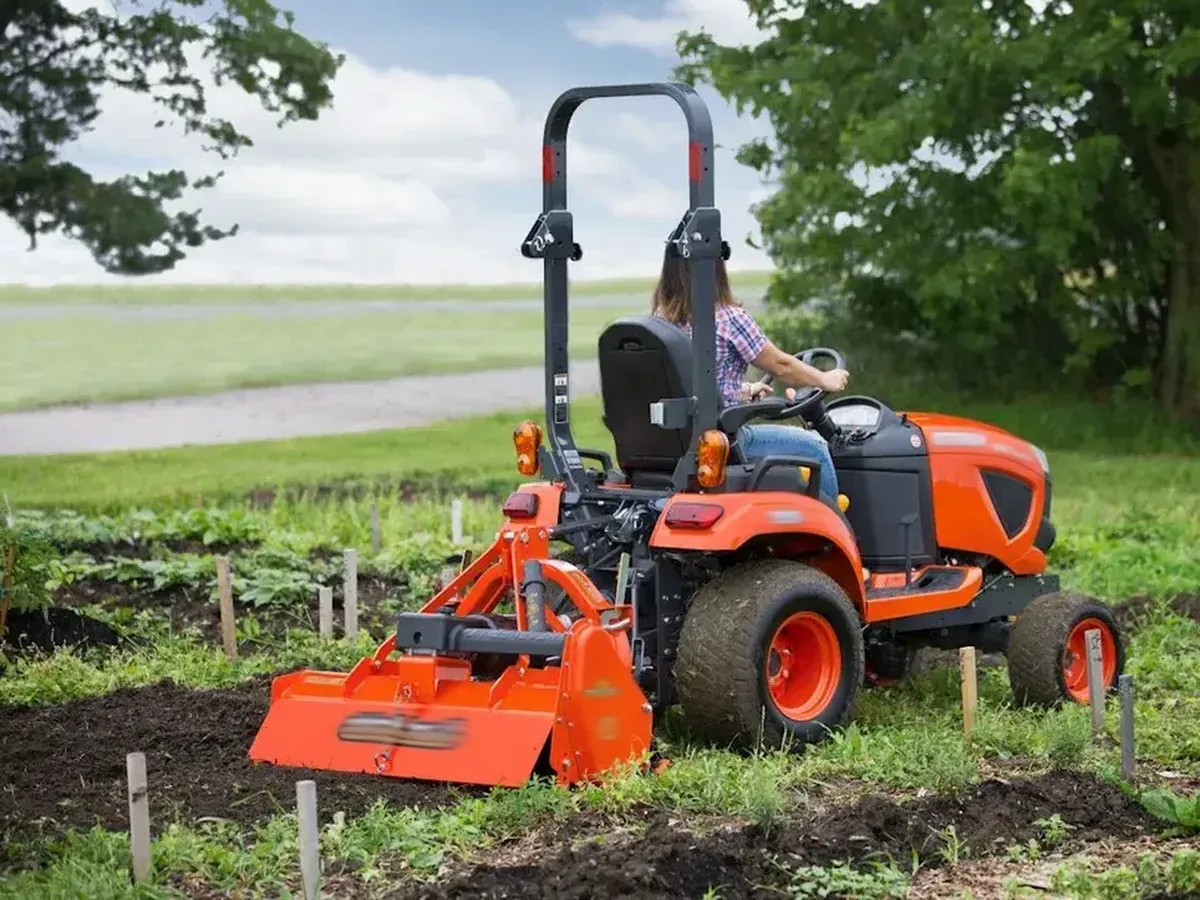
How to Select the Right Agricultural Gearbox for Rotary Tiller
1. Start with Your Tractor and Tiller Specifications
Before selecting a gearbox for rotary tiller, gather the key operating parameters: tractor horsepower, PTO output power and speed, rotary tiller working width, required rotor speed, tilling depth, prevailing soil conditions, input and output shaft specifications, mounting position, and any existing gearbox model numbers or technical drawings. These parameters collectively define the speed, torque, and installation requirements your replacement gearbox must satisfy. Keep in mind that two tractors with similar horsepower ratings may still require different gearbox configurations because tiller width, blade arrangement, rotor speed, and soil resistance can vary significantly between operations.
2. Match the Gearbox to Tractor Power
Tractor horsepower serves as an important reference point, but the gearbox should be matched to the actual power transmitted through the PTO and the load generated by the tiller under working conditions. An undersized agricultural gearbox may experience excessive heat buildup, accelerated bearing wear, gear tooth damage, or shortened service life. An unnecessarily oversized unit may add weight, increase cost, and create installation clearance problems. When requesting a gearbox recommendation, provide complete information including tractor power, PTO specifications, tiller width, and typical operating conditions rather than relying on horsepower alone.
3. Confirm PTO Speed
PTO speed is one of the most critical specifications when choosing a rotary tiller gearbox. Most agricultural implements operate with standard PTO inputs of either 540 RPM or 1000 RPM, and the gearbox converts this input into the output speed required by the tiller rotor. Before placing an order, confirm the PTO input speed of your tractor, the gearbox rated input speed, the required output speed at the rotor, and the rotation direction. Two gearboxes with identical external dimensions and mounting patterns may produce very different rotor speeds if their internal gear ratios differ, so this verification step is essential.
4. Select the Correct Gear Ratio
The rotary tiller gearbox ratio determines the relationship between input and output speed (Gear Ratio = Input Speed / Output Speed). However, the ideal ratio depends on more than just speed conversion. Rotor diameter, blade configuration, tilling depth, soil resistance, tractor power, and forward travel speed all influence which ratio produces the best cultivation result. A higher rotor speed is not always better: hard soil and deep tillage increase load substantially, so speed and torque should be evaluated together. The T-19A's 1:1.84 ratio provides a balanced combination suitable for typical multi-row tiller applications up to 20 HP.
5. Consider Tiller Working Width
Tiller width directly affects the transmission load placed on the gearbox. A narrow tiller working behind a compact tractor generally creates less drivetrain load than a wider implement operating at the same PTO speed and tilling depth. As working width increases, more blades engage the soil simultaneously, raising both the torque demand and the heat generated within the gearbox. The gearbox, rotor, shafts, and PTO system should be specified as a complete transmission system rather than selected independently. Always provide the actual tiller working width to your rotary tiller gearbox suppliers when requesting a quotation or replacement recommendation.
6. Match the Gearbox to Soil Conditions
Soil type can change gearbox loading dramatically. Light or previously cultivated soil creates moderate, stable resistance, while clay and compact ground increase blade resistance and demand greater torque capacity from the gearbox. Dry, hard soil can generate repeated impact loads as blades enter and exit the ground surface, stressing gears, shafts, bearings, and the housing structure. If the same tiller model will be deployed across different regions or sold into multiple markets, the gearbox selection should account for the most demanding soil conditions that the equipment will encounter during its service life.
7. Check Shaft and Spline Compatibility
Even when power rating and gear ratio are correctly matched, a gearbox cannot be installed if the shaft configuration does not physically connect to the tractor PTO and tiller rotor drive. Verify input shaft diameter, output shaft diameter, spline type and count, keyway dimensions, shaft length, shaft orientation, and rotation direction before ordering. For OEM and replacement projects, providing technical drawings, existing gearbox samples, or detailed dimensional measurements greatly improves the accuracy of model matching and avoids costly returns due to fit issues.
8. Check Mounting Dimensions and Clearance
Small and mid-size rotary tiller gearboxes often fit into limited installation spaces on the tiller frame. Before placing an order, confirm the mounting hole pattern, bolt circle center distance, housing external dimensions, input and output shaft positions relative to each other, installation direction (horizontal, vertical, or angled), and available clearance around the gearbox for PTO shaft swing, chain guards, and blade shields. A gearbox with the correct ratio and power rating may still be unsuitable if its mounting envelope does not match the tiller frame structure. The T-19A dimensions are provided in the drawings above for direct comparison with your existing installation.
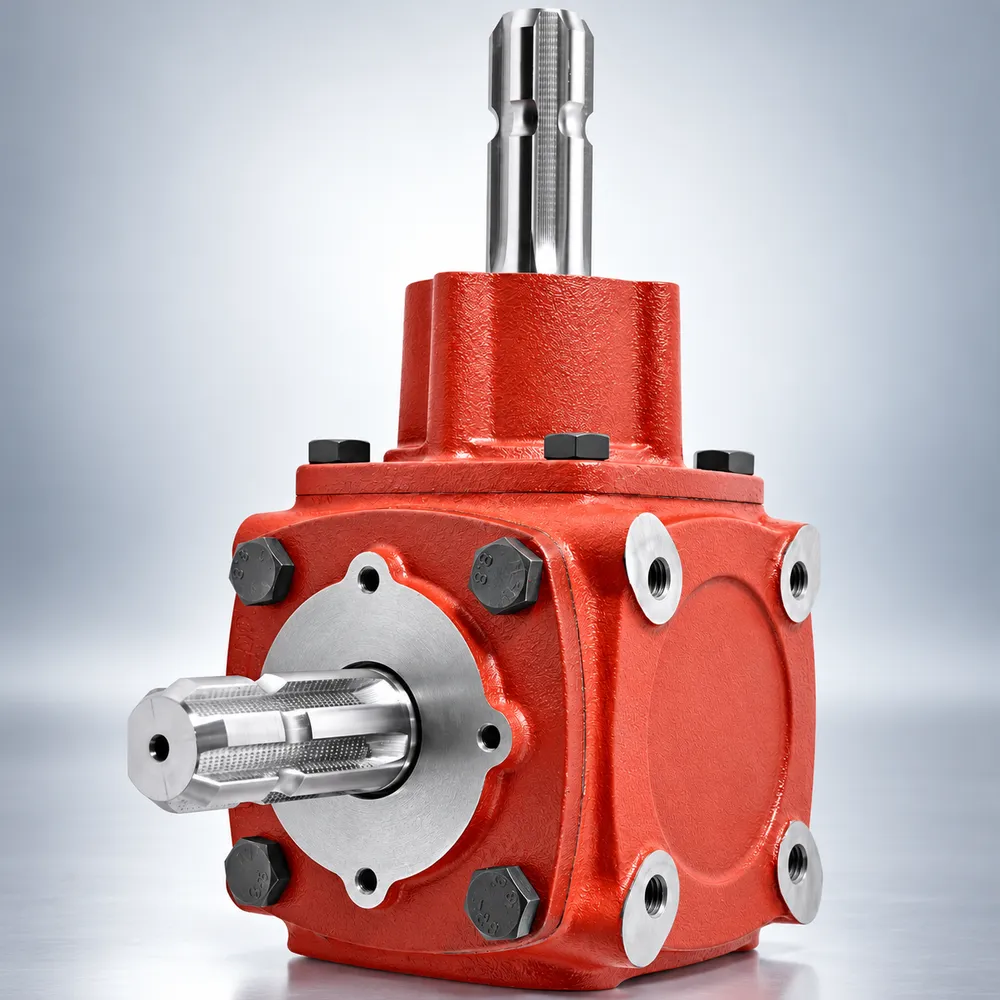
Common Troubleshooting
Oil Leakage
Visible lubricant around the shafts, seals, housing joints, or drain plugs typically indicates worn oil seals, loose plugs, damaged sealing surfaces, or hairline cracks in the housing. If the oil level drops noticeably between checks, do not operate the gearbox for extended periods until the source of the leak has been identified and repaired. Running the unit with insufficient oil will lead to rapid gear and bearing damage. Replace any seal that shows signs of hardening, cracking, or deformation, and inspect the shaft surfaces for scoring marks that could prevent a new seal from seating properly.
Grinding or Rattling Noise
Any new or unusual mechanical noise coming from the tiller gearbox during operation may indicate insufficient lubrication, bearing wear, gear tooth damage, or incorrect gear mesh engagement. A grinding sound often points to metal-to-metal contact caused by low oil level or degraded lubricant that has lost its viscosity. Rattling may suggest loose internal components or excessive bearing clearance. If the noise becomes severe or is accompanied by vibration, stop the machine immediately and inspect the gearbox internals before resuming operation to avoid further damage.
Excessive Vibration
Sudden or gradually increasing vibration during tilling may result from several sources: loose gearbox mounting bolts, worn or failed bearings, bent input or output shafts, PTO shaft universal joint problems, rotor imbalance due to missing or damaged blades, or misalignment between the gearbox and the tiller frame. Since vibration can originate from any point in the drivetrain, inspect the complete power path from the tractor PTO through the driveline shaft, gearbox, and rotor assembly rather than assuming the gearbox alone is the cause.
Reduced Tilling Performance
Weak rotor performance or noticeable reduction in tilling depth or soil mixing quality can result from several conditions: incorrect PTO speed setting on the tractor, excessive soil resistance due to extreme dryness or compaction, severely worn tiller blades, PTO shaft problems that reduce power delivery, internal gearbox wear that causes power loss, or damaged drivetrain components that slip under load. Compare the symptom with any changes in operating noise, vibration, gearbox temperature, and shaft movement to narrow down the probable cause before disassembly.
Rotor Does Not Turn
If the tractor PTO is operating but the tiller rotor does not turn or turns intermittently, stop the machine immediately. Possible causes include stripped or broken gear teeth inside the gearbox, a sheared input or output shaft, damaged spline connections, failed coupling keys, broken drive chains or sprockets (in chain-driven tiller designs), or a tripped overload protection device (shear bolt or slip clutch). Inspect the PTO shaft connection to the gearbox input first, then check the gearbox output connection to the rotor drive, before opening the gearbox housing for internal inspection.
Abnormal Operating Temperature
All gearboxes generate heat during operation as a natural byproduct of gear mesh friction and oil shearing. However, a clear increase in temperature compared to normal operating conditions may indicate low lubricant level, use of an incorrect oil viscosity grade, bearing problems or preload issues, shaft or gear misalignment, excessive operating load, or increased internal friction from worn components. Compare the operating temperature under consistent working conditions rather than relying on a single absolute temperature reading, since ambient conditions and load intensity affect normal heat generation.
Oil Contamination or Discoloration
During routine oil changes, inspect the drained oil for signs of contamination. Metallic particles or a grey, milky appearance indicate internal component wear or water ingress through failed seals. Dark, thick oil suggests overheating or excessively long drain intervals. Fine soil particles in the oil indicate a compromised seal or housing crack. In all cases, flush the gearbox housing before refilling with fresh SAE 80W-90 oil, and investigate the root cause. Regular monitoring of oil condition is one of the most effective ways to detect developing rotary tiller gearbox problems before they lead to complete failure.
Shaft Play or End Movement
If you can detect axial (end-to-end) or radial (side-to-side) movement in the input or output shaft by hand when the machine is stopped, the bearings supporting that shaft may be worn, improperly preloaded, or damaged. Excessive shaft play allows the gears to move out of their optimal mesh position, which increases noise, reduces efficiency, accelerates tooth wear, and may eventually lead to tooth breakage. Address bearing replacement promptly, and verify that the new bearings are properly preloaded according to the gearbox assembly specifications.
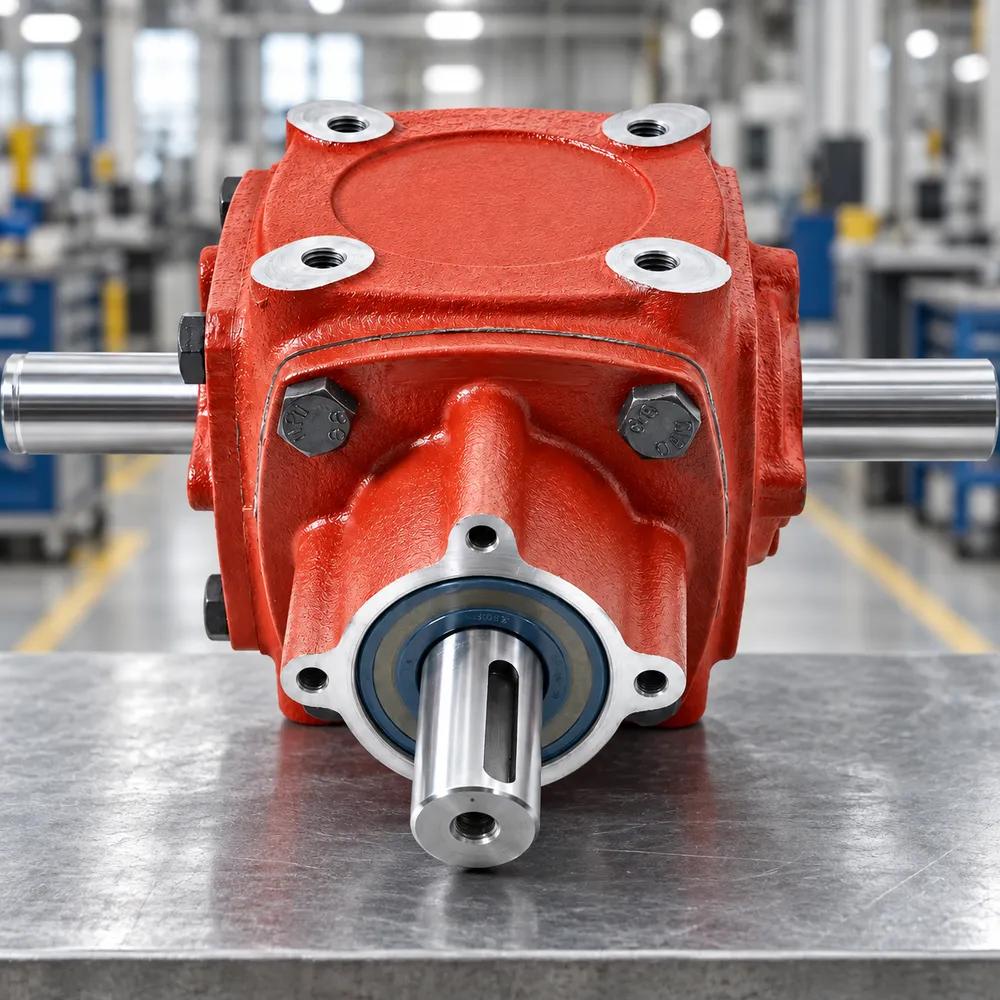
Rotary Tiller Gearbox vs. Fertilizer Spreader Gearbox
What Is a Rotary Tiller Gearbox?
A rotary tiller gearbox, also called a rotary cultivator gearbox, is a critical component in soil cultivation equipment. It transmits mechanical power from the tractor's PTO shaft to the tiller's horizontal rotor and blade assembly, converting rotational speed into the torque needed to break up, mix, and refine soil. These gearboxes are built with heavy-duty housings, hardened gears, and robust seals to survive the constant impact, vibration, and abrasive conditions encountered during ground-engaging work.
Advantages of Rotary Tiller Gearboxes
- Engineered for high-impact, ground-engaging loads with heavy-duty cast iron or alloy steel housings that absorb shock from rocks, roots, and compacted soil layers during continuous cultivation operations.
- Reduction ratios (such as 1:1.84) convert PTO speed into high output torque, giving the tiller blades the force needed to cut through heavy clay, dry crust, and tangled root systems without stalling.
- Sealed bearing and oil seal systems are specifically designed to exclude fine soil particles and moisture, critical for equipment that operates partially buried in the ground during normal use.
- Available in multiple rotary tiller gearbox ratio configurations and shaft sizes to match a wide range of tractor power classes, tiller widths, and regional soil conditions around the world.
Applications of Rotary Tiller Gearboxes
- Seedbed preparation for grain crops, vegetables, and nursery stock across all soil types, from sandy loam to heavy clay, in both flat and sloped field conditions.
- Incorporating crop residues, compost, lime, and pre-plant fertilizers into the topsoil to improve soil structure and nutrient distribution before planting.
- Vineyard, orchard, and market garden floor management where compact tillers must work in tight row spacing with precision and consistent soil disturbance depth.
- Pasture renovation, land reclamation, and construction site soil preparation where the tiller must process compacted, rocky, or debris-laden ground materials.
What Is a Fertilizer Spreader Gearbox?
A fertilizer spreader gearbox, also called a fertilizer distributor gearbox, is an essential component of spreading machinery that delivers granular or powdered material evenly across a field. Positioned at the center of the machine, it transmits PTO power to the spinning discs or augers that distribute fertilizer in a wide, uniform pattern. These gearboxes are engineered with corrosion-resistant materials and precise speed control mechanisms to handle the chemically active and abrasive nature of fertilizer products.
Advantages of Fertilizer Spreader Gearboxes
- Designed for consistent, high-speed disc rotation that creates uniform spreading patterns across wide swath widths, which is essential for even nutrient distribution and crop yield optimization.
- Internal gear arrangements allow precise speed and torque adjustment to match different fertilizer types (granular, pellet, powder) and field spreading requirements without separate mechanical modifications.
- Housing and components are treated with chemical-resistant coatings and sealed against moisture to prevent corrosion from fertilizer dust, salts, and humid storage conditions.
- Typically lighter and more compact than tiller gearboxes, since operating loads are lower and consist primarily of constant-speed disc rotation without the impact forces of ground-engaging blades.
Applications of Fertilizer Spreader Gearboxes
- Broadcast application of granular fertilizers, lime, gypsum, and soil amendments across large-scale row crop and cereal grain production fields using centrifugal disc spreaders.
- Precision application of seed, salt, sand, and de-icing materials on roadways, commercial properties, and municipal grounds maintenance areas using variable-rate systems.
- Top-dressing turf grass on sports fields, golf courses, and landscaping projects where uniform distribution at controlled rates is critical for maintaining surface quality.
- Organic and specialty fertilizer distribution in vineyards, orchards, and specialty crop operations where application accuracy directly affects product quality and environmental compliance.
Comparison Table:
| Feature | Rotary Tiller Gearbox | Fertilizer Spreader Gearbox |
|---|---|---|
| Primary Function | Drives tiller rotor and blades through soil | Drives spinning discs or augers for material spreading |
| Typical Load Type | High-impact, variable (shock loads from soil, rocks) | Steady, constant-speed rotation (low impact) |
| Gear Ratio Range | 1:1 to 1:3+ (reduction for torque) | 1:1 to 1:2.5 (often speed-increasing) |
| Housing Material | Heavy-duty cast iron (e.g. GG25) | Cast iron or aluminum alloy with anti-corrosion treatment |
| Environmental Exposure | Soil, mud, rocks, moisture, crop debris | Fertilizer dust, salts, humidity, chemical agents |
| Torque Requirement | High (ground-engaging, variable resistance) | Moderate (disc inertia and material flow) |
| Sealing Priority | Soil and abrasive particle exclusion | Chemical and moisture resistance |
| Weight | Heavier (robust construction for impact loads) | Generally lighter (lower structural demand) |
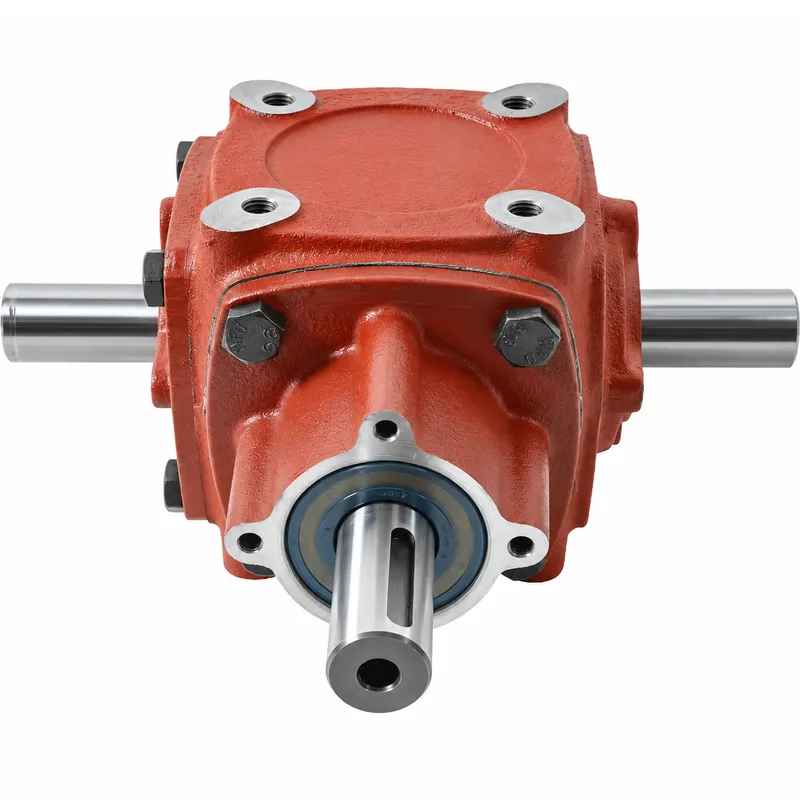 | 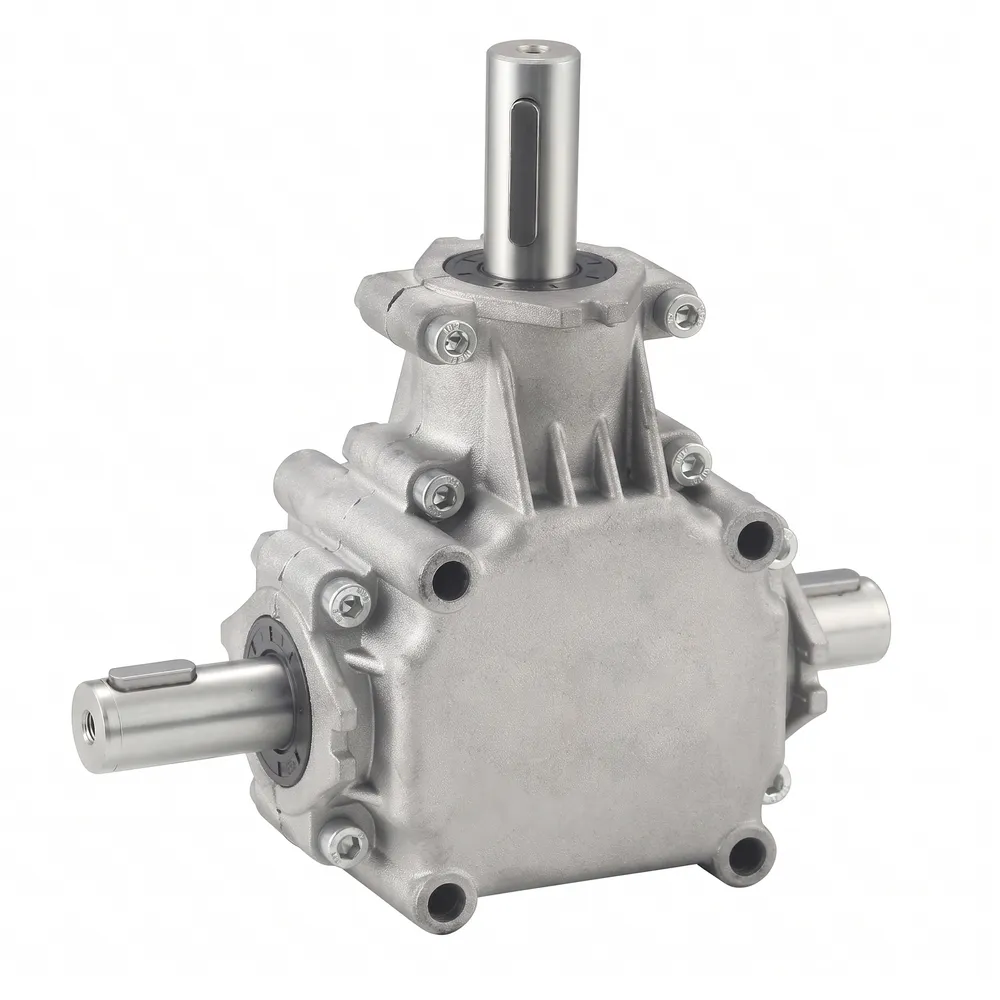 |
| Rotary Tiller Gearbox | Fertilizer Spreader Gearbox |
Rotary Cultivator Gearbox and Agricultural PTO Shaft
Rotary cultivator gearboxes are essential components in agricultural machinery, transferring power from the tractor's PTO or engine to the tiller rotor while ensuring consistent soil cultivation performance. The internal gear set adjusts speed and torque to handle varying soil conditions, and the heavy-duty construction ensures long-term durability across hundreds or thousands of hours of field operation. In any rotary tiller installation, the gearbox sits at the critical junction between the PTO driveline and the implement's working components, converting the tractor's rotational output into the specific speed and torque combination that the tiller blades need to perform effective soil cultivation.
The agricultural PTO shaft for a rotary tiller functions as the critical driveline that transmits mechanical power from a tractor's rear output directly to the implement's gearbox input. This shaft typically consists of two telescoping halves connected by universal joints at each end, allowing for angular misalignment and length changes as the tiller follows the tractor over uneven terrain. The inner half slides within the outer half to accommodate the changing distance between the tractor and the implement during turns, lifts, and transport. Without a properly sized and maintained PTO shaft, the gearbox cannot receive the consistent power input it needs to drive the rotor at the correct speed.
The PTO shaft and the rotary tiller gearbox form a complete power transmission pathway from the tractor engine to the soil-engaging blades. The tractor's PTO stub shaft drives the driveline shaft at 540 RPM (or 1000 RPM, depending on the tractor configuration), and the driveline shaft delivers that rotation to the gearbox input spline. Inside the gearbox, the gear set reduces the speed and increases the torque according to its ratio (1:1.84 in the case of the T-19A), and the output shaft then drives the tiller rotor. The universal joints in the PTO shaft compensate for the angular offset between the tractor's PTO height and the gearbox input position, while the telescoping section adjusts for distance changes during three-point hitch operation.
For the T-19A gearbox to perform correctly, the PTO driveline shaft must match several critical parameters. The shaft's implement-end yoke must have a 1-3/8 inch 6-spline bore that fits the gearbox input shaft precisely. The shaft's torque rating must equal or exceed the gearbox's 20 HP / 137 N·m capacity to prevent driveline failure under load. The shaft length (collapsed and extended) must suit the distance between the tractor PTO stub and the gearbox input when the tiller is in working position. Universal joint angles should remain below the manufacturer's recommended maximum (typically 25 to 30 degrees) to prevent vibration, accelerated wear, and power loss through the driveline. An overload protection device, such as a shear bolt or friction clutch built into the PTO shaft assembly, provides an additional layer of safety for the gearbox.
Both the PTO shaft and the gearbox for rotary cultivator require regular maintenance to remain reliable. The PTO shaft needs periodic greasing of its universal joints and telescoping section, inspection of safety shields, and verification that the yoke splines are not worn or damaged. The gearbox requires oil level checks before each use, scheduled oil changes (first at 50 to 70 hours, then every 500 hours or annually), and inspection of the shaft seals for leakage. When either component shows signs of wear, vibration, or abnormal noise, both should be inspected as a system rather than individually, since a problem in one directly affects the other. CMN Transmission supplies both rotary tiller gearboxes and compatible PTO shafts to provide a matched drivetrain solution for your equipment.

Why Choose CMN Transmission's Rotary Tiller Gearboxes?
Korea CMN Transmission Co., Ltd. was established in 2000 and is headquartered in Sandan-o, Danwon-gu, Ansan-si, Gyeonggi-do, South Korea. With more than 100 factory employees dedicated to research, development, manufacturing, sales, and after-sales service, CMN Transmission has grown over the past two decades into a trusted name in the global agricultural gearbox industry, exporting to over 60 countries across North America, South America, Europe, Asia, Africa, and Oceania.
Our product range covers nearly one thousand gearbox specifications across a comprehensive catalog of agricultural power transmission equipment. This includes rotary tiller gearboxes, rotary cutter gearboxes, feed mixer gearboxes, rotary mower gearboxes, fertilizer spreader gearboxes, flail mower gearboxes, post hole digger gearboxes, round baler gearboxes, square baler gearboxes, disc mower gearboxes, center pivot irrigation gearboxes, hydraulic drive gearboxes, silage machine gearboxes, orchard sprayer gearboxes, rotary rake gearboxes, combine harvester gearboxes, grain storage gearboxes, grain transportation gearboxes, corn header gearboxes, cutting bar gearboxes, poultry feeding gearboxes, and custom agricultural gearboxes built to customer specifications. Our additional product lines include PTO shafts, universal joints, yokes, tubes, torque limiters, covers, adapters, couplings, bearings, blades, chains, and sprockets.
With an annual production quantity exceeding 500,000 units, CMN Transmission consistently delivers reliable performance and long-term durability to global OEM manufacturers and parts distributors. Every product is manufactured under CE and ISO 9001 certified quality management systems, ensuring consistent quality control from raw material sourcing through final assembly, testing, and packaging.
Key Advantages
- Two Decades of Specialized Manufacturing Experience
Since 2000, CMN has focused exclusively on agricultural gearbox production. This long track record means our engineering team has solved thousands of application-specific challenges across diverse global markets, soil conditions, and equipment platforms. Every lesson learned from 25 years of field feedback is built into our current product designs, including the T-19A. - Complete Custom Production Capability
We support custom production based on customer drawings, existing gearbox samples, or detailed technical specifications. Whether you need a modified gear ratio, an alternative shaft configuration, a non-standard mounting arrangement, or a completely new gearbox design, our in-house engineering and machining capabilities can deliver production-ready prototypes and volume orders to your exact requirements. - Global Logistics and Responsive Support
Our products are exported to the United States, Canada, Mexico, Brazil, Argentina, France, Germany, Italy, Spain, the United Kingdom, Russia, China, India, Thailand, Vietnam, Turkey, Australia, New Zealand, and dozens of other markets. Our logistics team has extensive experience with international shipping, customs documentation, and packaging standards for agricultural machinery components, ensuring that your order arrives in good condition regardless of destination.
When you choose CMN Transmission as your rotary tiller gearbox manufacturer and supplier, you gain a production partner with the technical depth, manufacturing scale, quality certifications, and global logistics infrastructure to support your agricultural equipment business reliably over the long term. Whether you are an OEM building new tillers, a parts distributor stocking replacement gearboxes, or an end-user farmer who needs a single replacement unit, CMN has the product range and support structure to meet your needs. Contact us today to discuss your requirements.
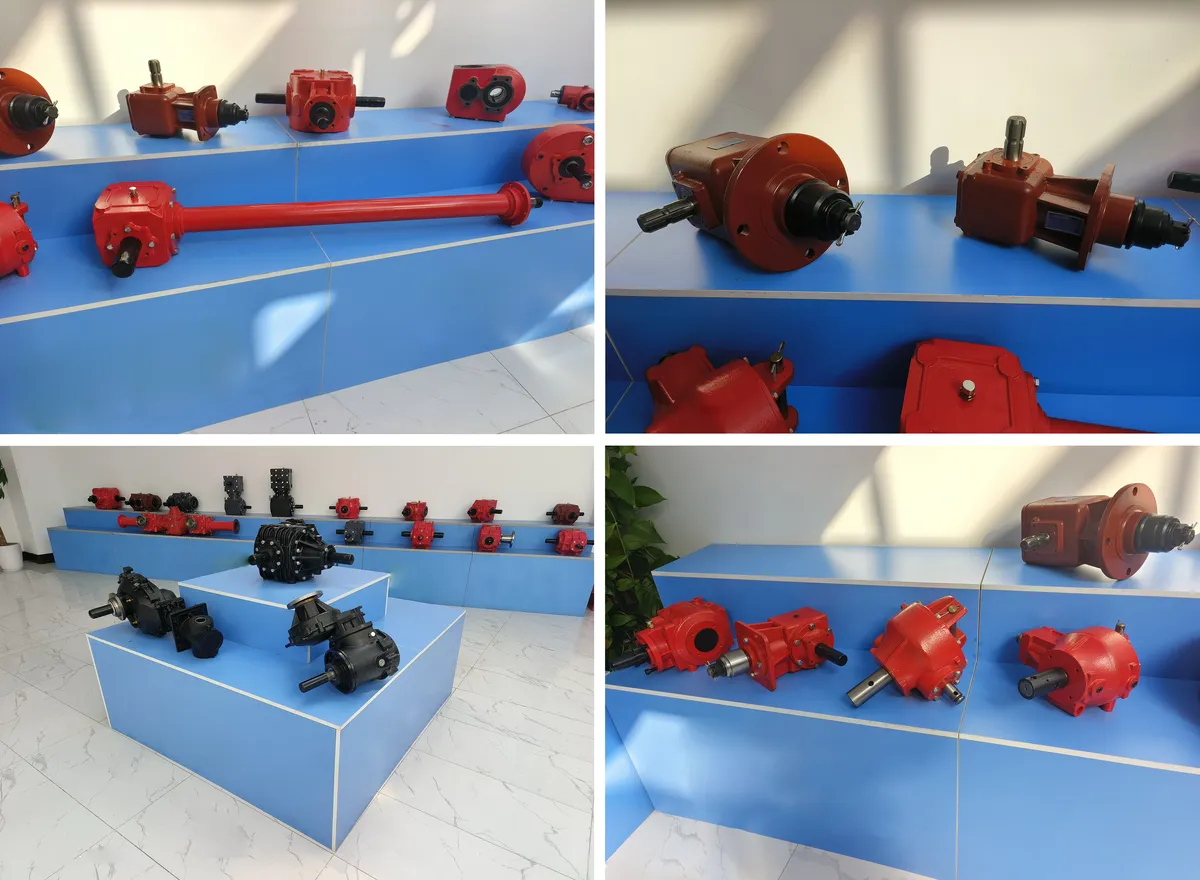
Frequently Asked Questions
Q: Is the CMN T-19A a direct fit replacement for the original Comer T-19A gearbox?
A: Yes. The CMN T-19A is engineered as a dimensional and functional replacement for the Comer T-19A rotary tiller gearbox. It shares the same 1:1.84 gear ratio, 1-3/8 inch 6-spline input and output shaft connections, mounting bolt patterns, and housing envelope dimensions. In most cases, the replacement can be bolted directly into the same frame position as the original unit without any modifications to the tiller or PTO driveline.
Q: What type of oil should I use in the T-19A rotary tiller gearbox?
A: The T-19A is designed to operate with SAE 80W-90 EP (Extreme Pressure) gear oil. This multi-grade viscosity provides adequate film strength across both cold starts and high operating temperatures typical of agricultural field work. The gearbox holds a maximum of 0.9 liters. Fill the oil through the designated oil plug until the level reaches the bottom of the fill hole with the gearbox in its installed position. Check the rotary tiller gearbox oil level before every use.
Q: How often should I change the oil in a rotary tiller gearbox?
A: Perform the first oil change after 50 to 70 hours of operation to remove break-in particles from new gears and bearings. After the initial change, drain and replace the oil every 500 to 700 operating hours, or at least once per year if operating hours are lower. Always inspect the drained oil for metal particles, discoloration, or water contamination, as these signs may indicate developing internal wear or seal failure that requires attention.
Q: What is the maximum horsepower rating for the T-19A gearbox?
A: The T-19A is rated for a maximum input power of 14.7 kW, which is equivalent to 20 HP. This rating applies at the standard PTO input speed of 540 RPM. Operating the gearbox above this power rating will accelerate gear and bearing wear and may lead to premature failure. If your tiller application requires higher power capacity, contact CMN Transmission for a larger model recommendation.
Q: Can I use the T-19A gearbox with a 1000 RPM PTO tractor?
A: The T-19A is rated for a maximum input speed of 540 RPM. Operating the gearbox at 1000 RPM would exceed the designed input speed and create significantly higher internal forces, which could lead to overheating, accelerated wear, and potential gear failure. If you need a rotary tiller gearbox compatible with a 1000 RPM PTO, please contact our engineering team to discuss models with the appropriate speed rating and gear ratio for your application.
Q: Does the T-19A gearbox come pre-filled with oil?
A: No. All CMN Transmission gearboxes are shipped without oil to prevent leakage during transport and to allow the customer to select their preferred brand of SAE 80W-90 gear oil. Before first use, fill the gearbox through the oil plug to the specified level (0.9 liters maximum). Running the gearbox without oil, even briefly, will cause immediate and severe damage to the gears and bearings that is not covered by warranty.
Q: What is the output speed of the T-19A gearbox at 540 RPM input?
A: With a gear ratio of 1:1.84 and a standard input of 540 RPM, the output shaft of the T-19A rotates at approximately 293 RPM. This reduced output speed is accompanied by a proportional increase in torque, delivering up to 137 N·m at the output shaft. The exact output speed may vary slightly depending on load conditions and the manufacturing tolerances of the gear tooth count.
Q: Are replacement parts available for the T-19A rotary tiller gearbox?
A: Yes. CMN Transmission supplies individual rotary tiller gearbox parts including gear sets, input and output shafts, bearings, oil seals, gaskets, oil plugs, and housing components for the T-19A model. If you need a specific replacement part, provide the gearbox model number and a description or photo of the component you need, and our parts team will confirm availability, pricing, and lead time for your order.
Q: Can CMN Transmission supply rotary tiller gearboxes with different ratios?
A: Yes. In addition to the T-19A 1:1.84, CMN also manufactures the T-19A in 1:1 ratio and 1:1.46 ratio variants. We also produce other agricultural gearbox models covering different power classes, shaft sizes, and mounting configurations. For custom ratio requirements not listed in our standard catalog, our engineering team can evaluate feasibility and provide a quotation for modified or custom-built units.
Q: Where can I buy a T-19A rotary tiller gearbox for sale?
A: The T-19A and other rotary tiller gearbox for sale models are available directly from CMN Transmission through our website and sales team. We supply individual units for end-user replacement needs as well as volume orders for OEM manufacturers and agricultural parts distributors. To request pricing, lead time, and shipping options for your location, please visit our Contact Us page or send an inquiry through the quote request form on this product page.
Customer Reviews
Mike Thompson, Row Crop Farming, United States
"We farm about 800 acres of corn and soybeans in central Illinois and run a 4-row rotary tiller behind our 45 HP utility tractor. The original Comer T-19A gearbox had been leaking oil for two seasons, and getting a genuine replacement was going to take weeks. We ordered the CMN T-19A with the 1:1.84 ratio, and the spline fit was identical to the old one. Swapped it out on a Saturday morning, filled it with 80W-90 as recommended, and we were back tilling by lunchtime. After about 340 hours of use so far, no leaks, no noise, runs just like it should. The price was also very reasonable compared to the OEM part."
James Kowalski, Vegetable Production, Canada
"I operate a small vegetable farm in Ontario and use a compact rotary tiller for seedbed preparation every spring and fall. When the gearbox failed mid-season last year, I needed a quick turnaround. CMN shipped the T-19A replacement to Toronto within about 10 business days, well packed with foam padding inside the box. The 1-3/8 six-spline shafts matched my existing PTO line perfectly. I did the first oil change at 60 hours as instructed, and the oil came out clean with no metal particles at all. Going into my second season with this unit now and it has been completely trouble-free."
Santiago Vargas, Grain Farming, Argentina
"We manage about 1,500 hectares of wheat and corn in the Pampas region and use several multi-row tillers for soil preparation. We replaced three worn Comer gearboxes with CMN T-19A units at the start of this planting season. The shipment arrived in Buenos Aires in solid condition, every unit was properly labeled with the ratio and serial number, and all three spline interfaces matched our existing driveshafts without any modification. After the break-in oil change at 65 hours, the insides were spotless. Very impressed with the build quality considering the price point."
Ricardo Mendes, Agricultural Parts Distribution, Brazil
"Our company distributes agricultural spare parts across southern Brazil and we have been sourcing rotary tiller gearbox replacements from CMN for about two years now. The T-19A with the 1:1.84 ratio is one of our most requested items because Comer-equipped tillers are very common in our market. Customer feedback has been consistently positive. The cast iron housing feels substantial, the gear finish is smooth, and we have had zero warranty claims on the batch we received last quarter. CMN's sales team responds quickly and provides clear technical documentation, which helps our warehouse staff verify compatibility before shipping to end users."
Klaus Bauer, Mixed Farming, Germany
"We run a mixed farm in Bavaria with about 120 hectares of arable land and 40 hectares of pasture. Our rotary tiller is a 2.5-meter Italian-made unit with a Comer T-19A gearbox that needed replacing after the output seal failed and we ran it too long with low oil. I was a bit hesitant about buying a non-OEM replacement, but after comparing the dimensional drawings and specifications, everything matched. Installation took less than 45 minutes. We have been using it in clay-heavy soil for about 200 hours and the gearbox runs quiet and cool. Good quality product at a fair price."
Pierre Lefebvre, Specialty Crops, France
"We grow lavender and sunflowers in the Provence area and rely on a compact tiller for between-row cultivation. The original gearbox on our Italian tiller was 15 years old and had developed a persistent oil leak that we could not fix by replacing seals alone. We ordered the CMN T-19A as a complete replacement. The customer service was excellent during the ordering process, they even confirmed the bolt pattern compatibility from our photos before shipping. Delivery to France took about two weeks. The unit bolted right in and has been running smoothly for one full growing season now. I appreciated that they included detailed oil-change instructions with the gearbox."
Somchai Phetcharoen, Rice Production, Thailand
"Our rice farming operation in Chiang Mai province uses rotary tillers extensively for paddy field preparation. The soil here is very wet and sticky during the monsoon season, so the gearbox takes a lot of punishment. We switched to the CMN T-19A after our previous replacement gearbox from another supplier failed within six months. The CMN unit has now completed a full wet season and dry season cycle, roughly 500 hours of heavy use, and we just did the second oil change. Everything inside looks normal, no metal filings, seals are holding well despite the constant mud exposure. Very happy with this purchase."
Rajesh Patil, Vegetable Farming, India
"We have a 40-acre market garden near Pune where we grow onions, tomatoes, and leafy greens for local wholesale markets. The tiller is essential for bed preparation, and when our old gearbox broke a gear tooth, we could not afford to wait. CMN arranged an air freight option that got the T-19A to us in about a week. The 1:1.84 ratio matched our tiller perfectly, and the shaft splines fit without any machining. I also liked that the gearbox came with a label showing the oil type and fill capacity right on the housing. We have been running it for about 150 hours now with no issues at all. Will order again when we need more spare parts."
Craig Henderson, Agricultural Contracting, Australia
"I run a contracting business in Queensland doing soil preparation, pasture renovation, and land clearing for other farmers. Our tillers see a lot of rough country, red clay soils with rocks, and long working days. We ordered two CMN T-19A gearboxes as spares and have already installed one after the Comer original wore out on our busiest machine. The replacement has been running for about three months through some very demanding ground conditions, and I am genuinely impressed with how it has held up. The cast iron housing is thick and well-finished, and the gears are noticeably quieter than the worn unit we pulled out. Good value for the money, and shipping to Australia was straightforward."
Additional information
| Edited by | Yjx |
|---|
Related products
-
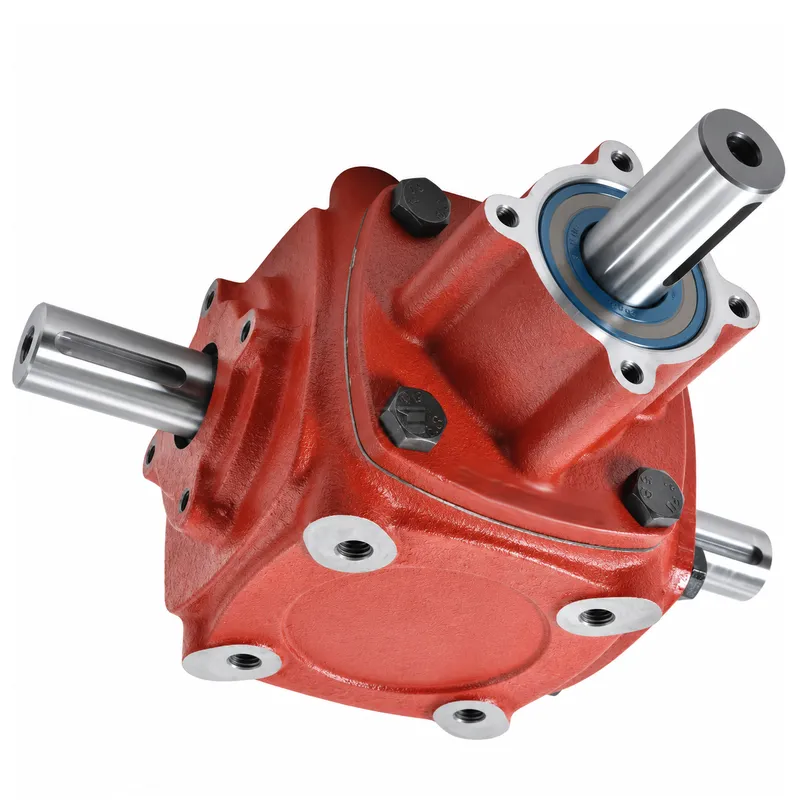
T-19A Rotary Tiller Gearbox Ratio 1.46:1 Replacement for Comer T-19A Gearbox
-
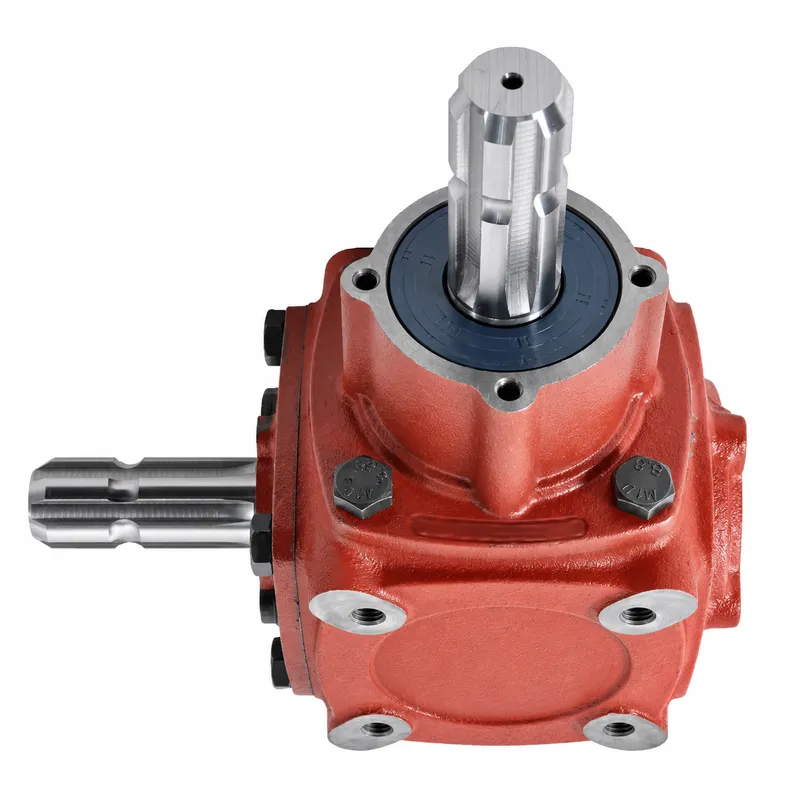
T-19A Rotary Tiller Gearbox Ratio 1:1 Replacement for Comer T-19A Gearbox
-
T-19A Rotary Tiller Gearbox Ratio 1:1.46 Replacement for Comer T-19A Gearbox
-
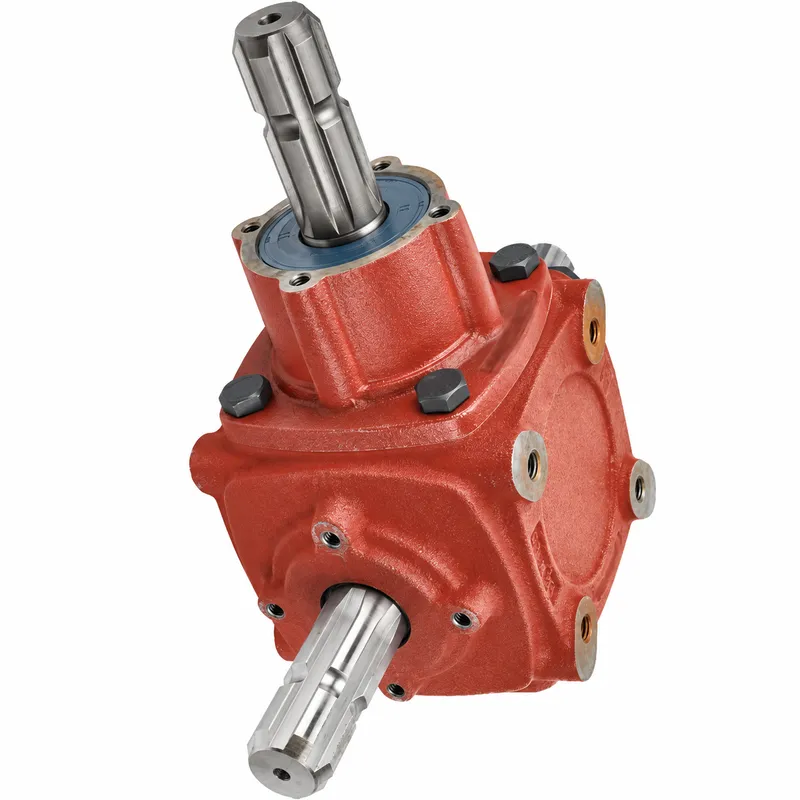
T-19A Rotary Tiller Gearbox Ratio 1.84:1 Replacement for Comer T-19A Gearbox
-
T-19A Rotary Tiller Gearbox Ratio 1:2.16 Replacement for Comer T-19A Gearbox


