
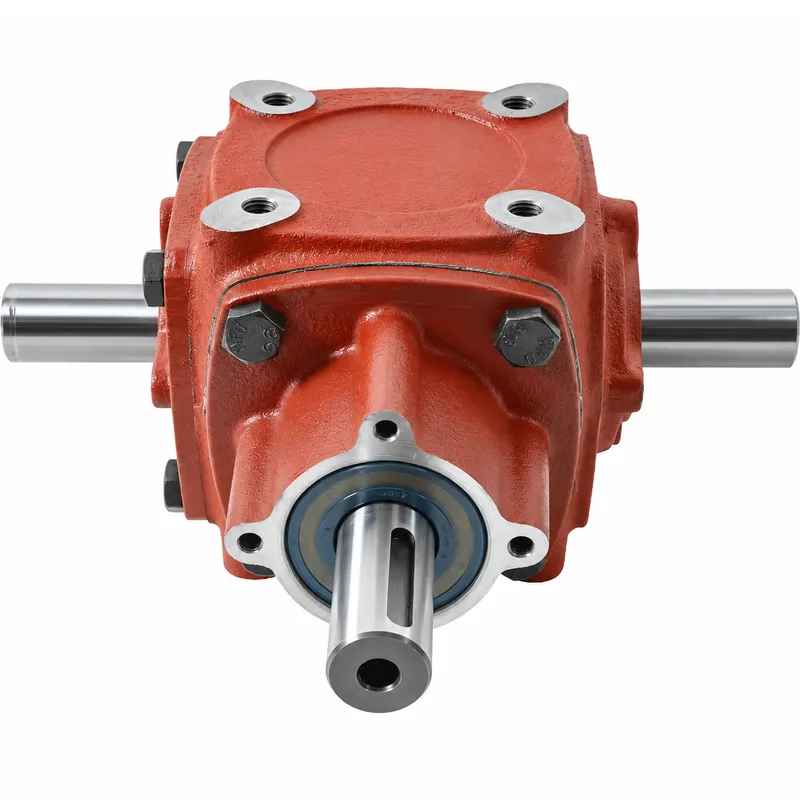
T-19A Rotary Tiller Gearbox Ratio 1:1.46 Replacement for Comer T-19A Gearbox
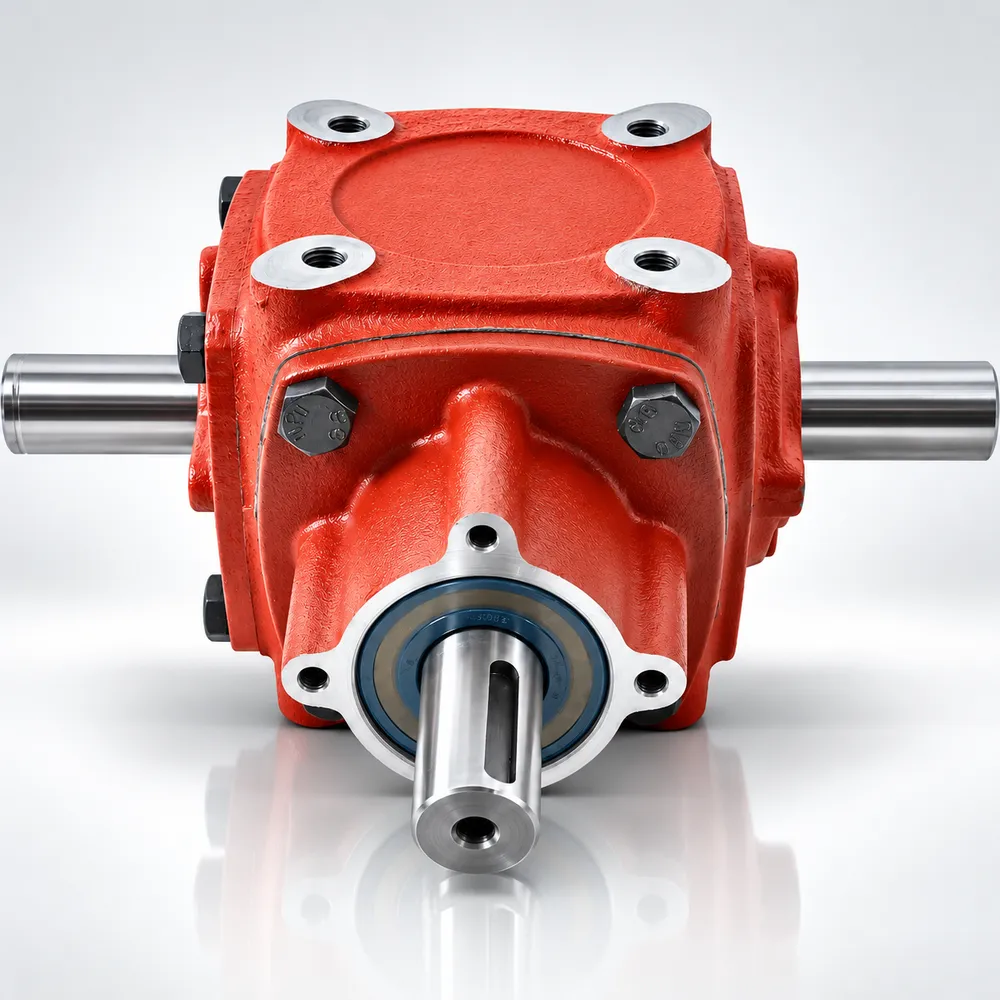
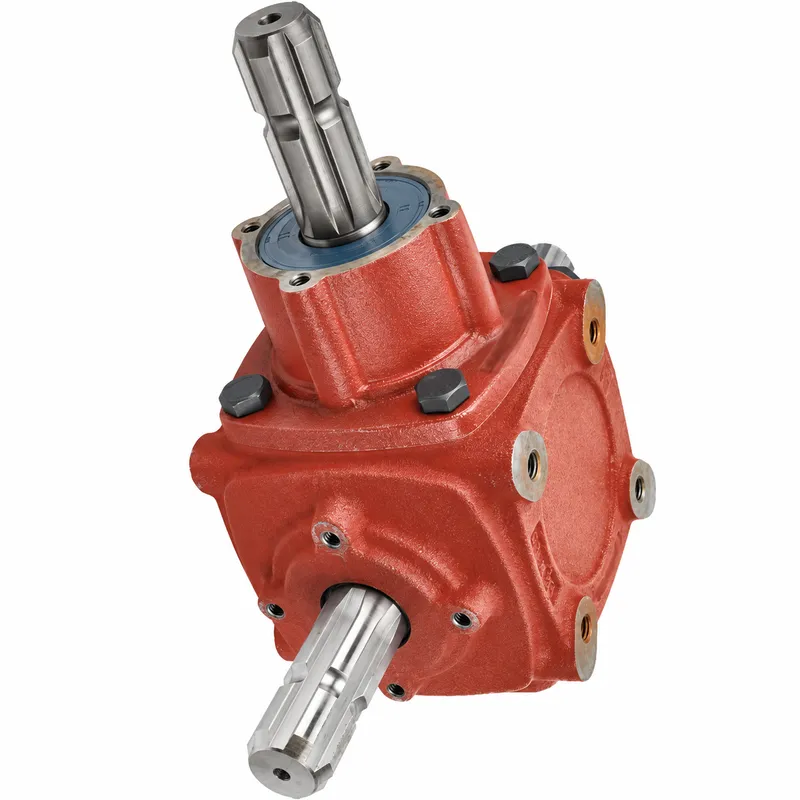
The T-19A rotary tiller gearbox with a 1:1.46 ratio is a precision-built agricultural power transmission unit engineered as a direct drop-in replacement for the original Comer T-19A gearbox. It transfers rotational power from a tractor’s power take-off (PTO) shaft to the tiller rotor through a set of hardened bevel gears, converting 540 RPM input into a higher output speed while maintaining controlled torque delivery of up to 241 Nm. This rotary cultivator gearbox is built to endure the harsh demands of daily soil cultivation across commercial farms, orchards, and vegetable operations.
The T-19A rotary tiller gearbox with a 1:1.46 ratio is a precision-built agricultural power transmission unit engineered as a direct drop-in replacement for the original Comer T-19A gearbox. It transfers rotational power from a tractor's power take-off (PTO) shaft to the tiller rotor through a set of hardened bevel gears, converting 540 RPM input into a higher output speed while maintaining controlled torque delivery of up to 241 Nm. Housed in a rugged cast iron GG25 enclosure and weighing just 14 kg, this rotary cultivator gearbox is built to endure the harsh demands of daily soil cultivation across commercial farms, orchards, and vegetable operations.
Operators who need a reliable gearbox for rotary tiller applications turn to the T-19A for its proven ability to break up compacted soil, incorporate crop residues and compost, and create fine, uniform seedbeds. Its 1:1.46 speed-increasing ratio is well matched for multi-row rotary tillers, mowers, fertilizer spreaders, and other implements that require a moderate step-up in rotor speed from the standard 540 RPM PTO output. Each unit ships without oil, allowing users to fill with the recommended SAE 80W-90 gear lubricant before the first field operation.
Technical Parameters
| Model | T-19A Gearbox 1:1.46 |
| Replace Brand | Comer |
| Product Details |
|
| Application Range |
|
| Ratio | 1:1.46 |
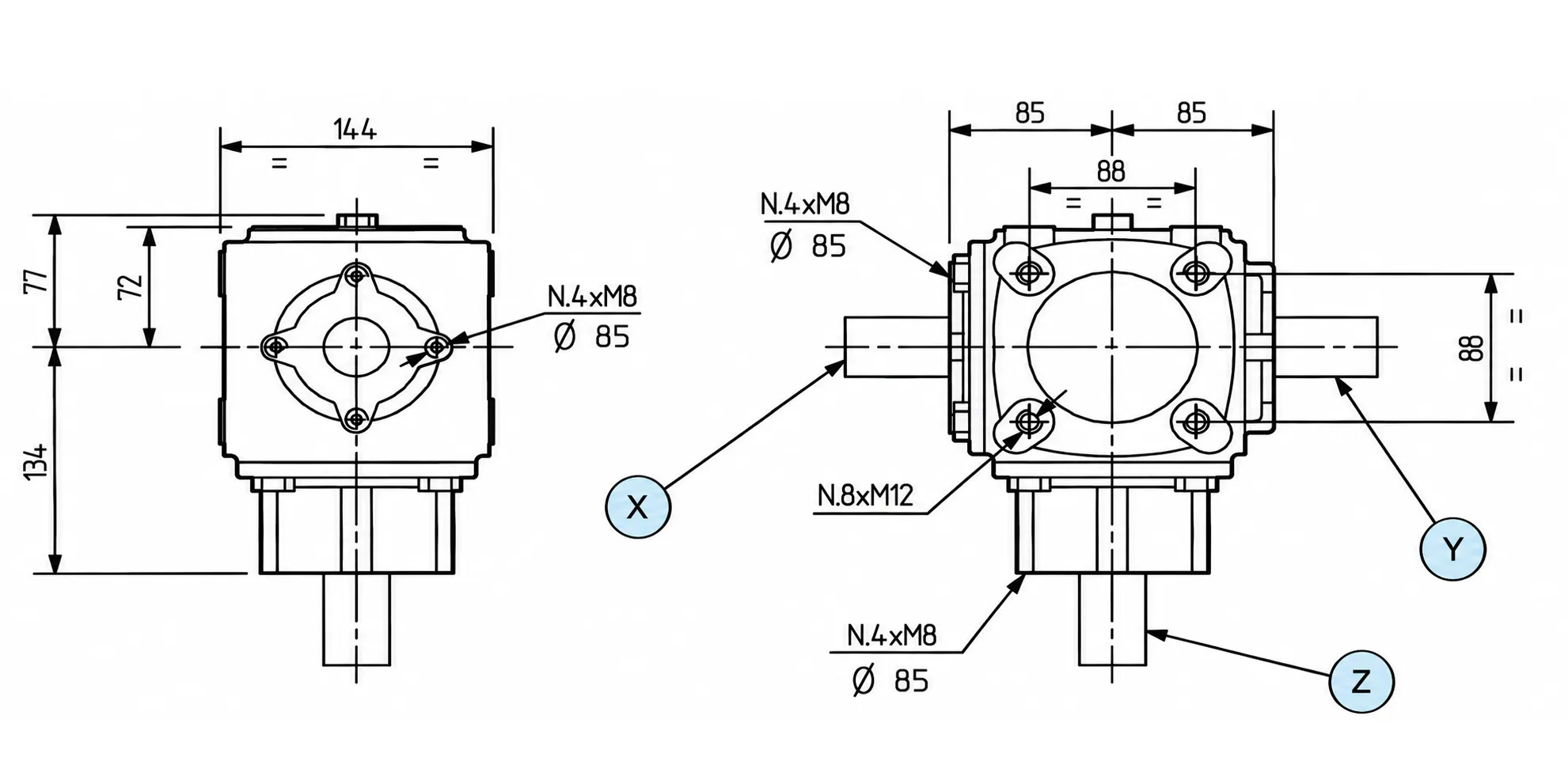
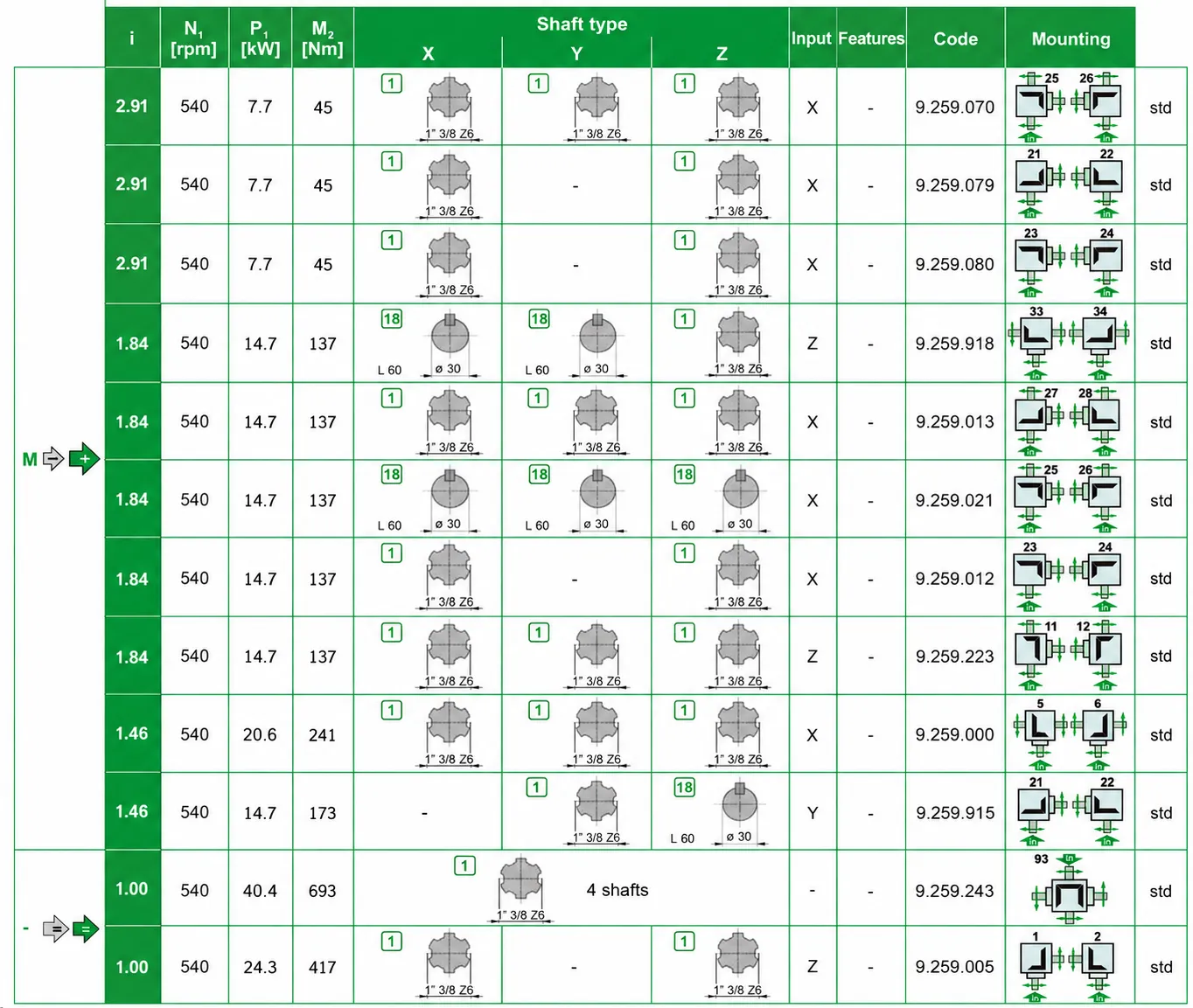
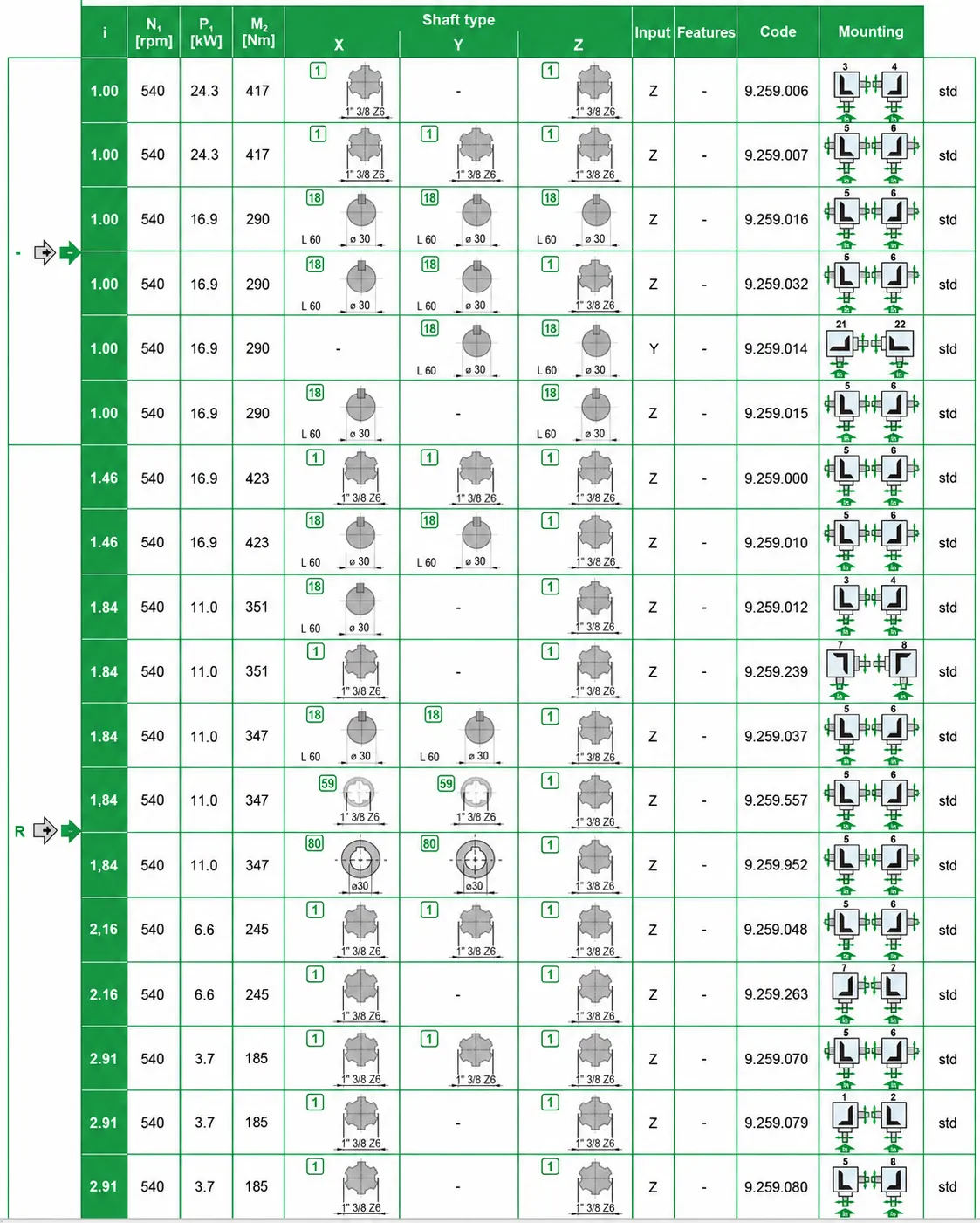
| Connection 1 Outside Diameter inch and splines | 1.3/8-6 |
| Connection 2 Outside Diameter inch and splines | 1.3/8-6 |
| Connection 3 Outside Diameter inch and splines | 1.3/8-6 |
| Max. input Power | 16.9 kW |
| Max. input Rotation Speed | 540 r/min |
| Max. output Power | 20.6 kW |
| Max. output power | 28 HP |
| Max. output Torque | 241 N·m |
| Gear Arrangement Increasing | 25-26 27-28 |
| Gear Arrangement Reducing | 5-6 |
| Contains Oil | No |
| Max. oil Capacity | 0.9 L |
| Max. Oil Change Interval | 500 h |
| Oil SAE Viscosity Grade | 80W-90 |
| Housing Material | Cast iron GG25 |
| Weight | 14 kg |
We have completed a third-party supplier audit and company verification supported by SGS / TÜV Rheinland. This verification helps buyers review company identity, business operations, supplier profile and general manufacturing capability. Product-specific inspection reports, material documents or compliance records can be provided according to order requirements.
Minimum Order Quantity (MOQ): Flexibly set based on the product type and order amount.
Samples: New customers may request 1–5 samples under appropriate circumstances.
Mixed Orders: Combining different models is supported; the total order amount must reach approximately $1,500.
Small Orders: Orders starting from 1–2 pieces are supported, but the unit price will be relatively higher.
Lead Time: 10–25 working days for standard parts; 20–45 working days for customized components; 45–120 working days for project-based equipment.
Trade Terms: EXW, FOB, CIF, and DAP are generally supported; FCA, CFR, CPT, CIP, and DDP terms can be specifically negotiated.
T-19A Rotary Tiller Gearbox Dimensions
Advantages of the T-19A Rotary Tiller Gearbox
1. High-Strength Gear Construction
The T-19A employs high-strength alloy steel bevel gears that undergo precision hobbing, shaving, and grinding followed by full heat treatment. This multi-step manufacturing process produces a tooth surface with superior hardness and wear resistance, giving the gear set a longer working life under heavy loads. Each gear pair is matched and tested to minimize backlash and operational noise. The result is a tiller gearbox that delivers smooth, efficient power transfer season after season, even when operating in abrasive soil conditions that would rapidly wear standard gears.
2. High Torque Transmission
Delivering up to 241 Nm of output torque from 28 HP of input power, this rotary tiller gearbox handles heavy clay, dry compacted ground, sandy loam, and rocky soil without stalling or overheating. The 1:1.46 gear ratio is specifically optimized to provide the rotor speed and torque balance needed for effective soil pulverization across different terrains. Whether you are preparing seedbeds in the Midwest or cultivating orchards in Mediterranean climates, this agricultural gearbox maintains stable output under fluctuating load conditions throughout the working day.
3. Compact Structure
The modular design of the T-19A lets operators mount it directly onto existing tiller frames using the same bolt pattern and shaft dimensions as the original Comer T-19A. With standard 1-3/8 inch 6-spline connections on both input and output shafts, no adapter sleeves or custom brackets are needed. The total weight of 14 kg means a single technician can handle the swap in the field. Oil filling, level checking, and draining are all accessible through clearly positioned plugs on the housing exterior.
4. Sealed Bearing System
Every bearing position in the T-19A is protected by high-quality oil seals that prevent dust, mud, crop debris, and moisture from entering the gear chamber. This sealed architecture drastically reduces the frequency of maintenance interventions and protects the internal components from premature wear caused by contaminant ingress. In typical field conditions, operators can expect consistent performance for the full oil change interval of 500 hours without needing to inspect or replace seals, making this rotavator gearbox one of the lowest-maintenance options on the market.
5. Direct Comer T-19A Replacement
This gearbox is manufactured to match the exact dimensions, mounting points, shaft profiles, and gear specifications of the original Comer T-19A. Operators who need to replace a worn or damaged unit can install this agricultural gearbox for rotary tiller applications without modifying the tiller frame, PTO driveline, or rotor assembly. The spline profiles, housing bolt holes, and oil port locations are all identical, which eliminates downtime spent on fabrication or custom fitting during critical planting and tillage windows.
6. Customizable Shaft and Ratio
CMN Transmission offers the T-19A platform with multiple gear ratio options, input/output shaft configurations, and mounting arrangements to suit the specific agricultural needs of different regions and equipment models. Whether your operation requires a different speed ratio, a cylindrical keyed shaft instead of splined, or a non-standard mounting pattern, our engineering team can adjust the gearbox parameters to build the most suitable product for your application. This flexibility makes the T-19A a preferred choice among global OEM partners and equipment distributors.
How Does the T-19A Rotary Cultivator Gearbox Work
The T-19A rotary tiller gearbox receives mechanical input from the tractor's PTO shaft, which commonly rotates at 540 RPM. This input shaft enters the gearbox through a sealed opening fitted with an oil seal and bearing, connecting to the driving bevel gear inside the cast iron housing. As the PTO shaft rotates, the driving gear engages with the driven bevel gear at a 1:1.46 ratio, meaning the output shaft turns at approximately 788 RPM. This speed increase provides the tiller rotor with the faster blade rotation necessary for thorough soil pulverization while the gearbox simultaneously manages the torque conversion. The maximum input power capacity of 20.6 kW (28 HP) at 540 RPM translates to a controlled output torque of 241 Nm, delivering a steady and predictable rotor speed even when the blades encounter roots, stones, or dense clay layers.
Inside the gearbox, the bevel gear pair performs two critical functions simultaneously. First, it redirects the axis of rotation by 90 degrees, converting the horizontal PTO input into a vertical or angled output that aligns with the tiller rotor shaft. Second, it adjusts the rotational speed through the gear tooth count ratio. In the 1:1.46 configuration, the output gear has fewer teeth than the input gear, creating a speed multiplication effect. This arrangement is specifically selected for rotary cultivator gearbox applications where higher blade tip speed improves cutting efficiency in medium to light soils. The gear tooth profiles are precision ground to achieve smooth meshing, which reduces vibration, limits heat generation, and minimizes power loss through the drivetrain.
The cast iron GG25 housing serves as both the structural frame and the protective enclosure for the gear set, bearings, and lubricant. GG25 grade cast iron provides excellent vibration damping, corrosion resistance, and the mechanical rigidity needed to maintain precise gear alignment under load. The housing exterior is treated with a corrosion-resistant and abrasion-resistant finish to withstand constant exposure to moist soil, agricultural chemicals, and abrasive dust. All shaft openings are fitted with multi-lip oil seals that keep lubricant inside while blocking dirt, grit, and water from entering the gear chamber. A breather vent on the housing allows air pressure to equalize during temperature changes without admitting contaminants, which prevents seal damage caused by internal pressure buildup during extended operation.
In typical rotary tiller setups, the driveline between the tractor PTO and the gearbox input includes a torque-limiting device such as a shear bolt coupling, friction clutch, or slip clutch. These protective components interrupt the power flow when the rotor encounters a sudden overload caused by a buried rock, fence wire, or severely compacted soil layer. By disconnecting the drive before excessive torque reaches the gearbox internals, these devices prevent catastrophic gear or bearing failure and protect the tractor driveline from shock loads. The T-19A housing is designed with mounting provisions that accommodate standard PTO shaft and guard assemblies, making it straightforward to integrate overload protection into the complete tillage drive system.
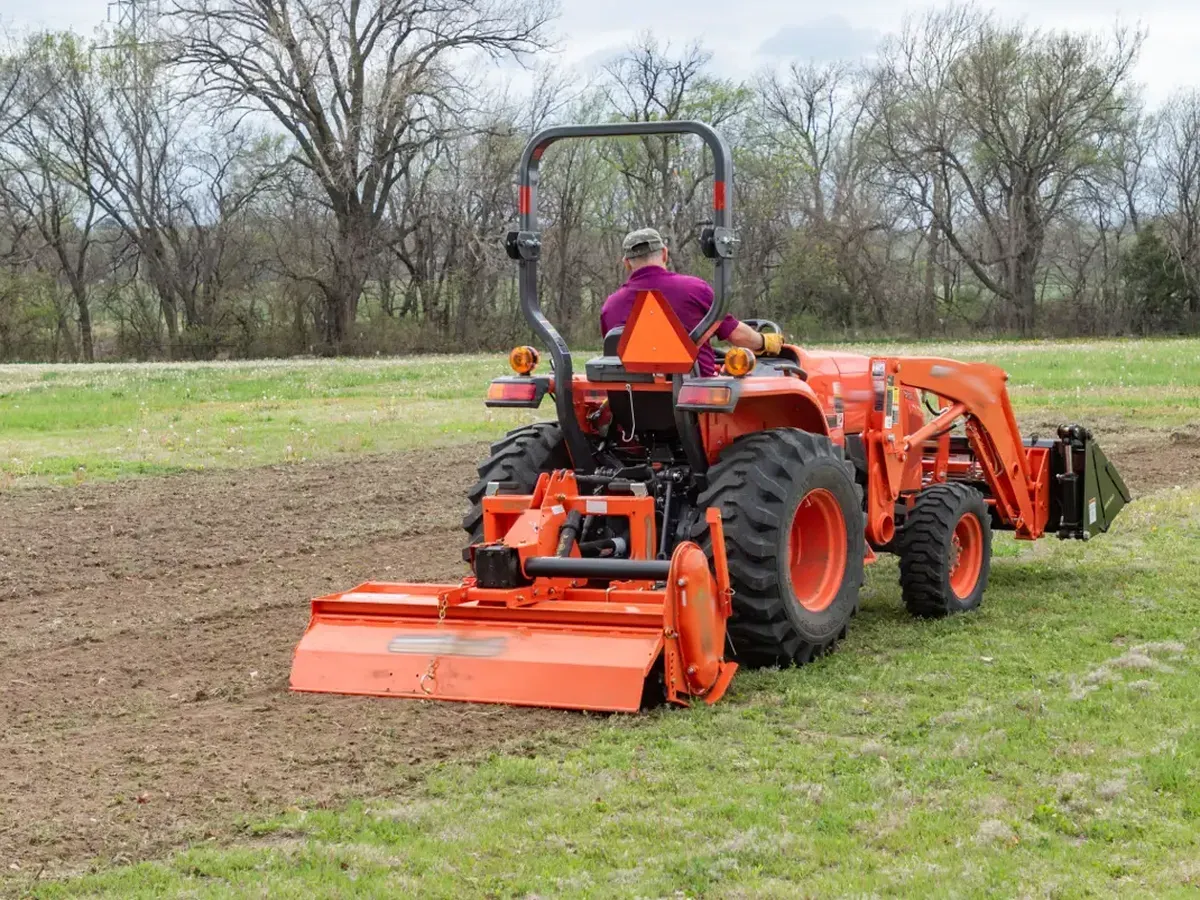
Application Areas
Seedbed Preparation and Primary Cultivation
The most common use for this rotary tiller gearbox is preparing seedbeds before planting grain, oilseed, vegetable, or forage crops. The gearbox drives the rotor blades through compacted topsoil, breaking up large clods into a fine, uniform tilth that promotes rapid seed germination and even root development. Operators can adjust tilling depth and forward speed to match soil type and moisture content for optimal bed quality.
Crop Residue Incorporation
After harvest, significant volumes of straw, stubble, and root mass remain on the field surface. This agricultural gearbox for rotavator applications powers the rotor at sufficient speed to chop and mix these residues into the top 15 to 20 cm of soil. Incorporating crop residues accelerates decomposition, returns nutrients to the soil profile, and reduces the buildup of disease-carrying plant material that can affect the following crop cycle.
Fertilizer and Soil Amendment Mixing
Spreading compost, lime, gypsum, or granular fertilizer on the soil surface is only the first step. The rotary tiller driven by this gearbox blends these amendments thoroughly into the root zone, ensuring even nutrient distribution and faster chemical interaction with soil particles. This is particularly valuable for organic farming operations where surface-applied compost must be incorporated before planting to prevent nitrogen loss.
Light Land Leveling and Surface Finishing
On small plots, vegetable beds, market gardens, and greenhouse floors, the T-19A gearbox for rotary cultivator use provides the controlled rotor speed needed to create a smooth, level soil surface with consistent particle size. This precision finish is important for drip irrigation layouts, raised bed formation, and direct seeding operations where surface uniformity directly affects plant spacing and water distribution patterns.
Vineyard and Orchard Soil Management
Compact rotary tillers powered by the T-19A are widely used between tree rows and vine rows to manage weed growth, break surface crusting, and improve water infiltration around perennial crops. The gearbox's 14 kg weight and compact housing dimensions allow it to fit narrow-row implements designed for under-canopy work in fruit orchards, nut plantations, and wine grape vineyards without interfering with low-hanging branches or trellis supports.
Vegetable Plot and Raised Bed Preparation
Small-scale vegetable growers and commercial market gardeners use this rotary cultivator gearbox to prepare planting beds quickly between successive crop cycles. The higher rotor speed provided by the 1:1.46 ratio produces a finer soil texture that is ideal for direct-seeded vegetables like carrots, lettuce, and onions. Multiple passes at different depths can produce a layered bed structure with a firm base and a loose surface layer.
Post-Harvest Field Conditioning
Immediately after harvest, rotary tilling with the T-19A gearbox helps break up wheel tracks, plow pans, and compaction layers left by harvesting equipment. This timely cultivation restores soil structure, improves drainage, and creates conditions favorable for cover crop establishment. In regions where a second or relay crop follows the main harvest, rapid field turnaround powered by a reliable agricultural gearbox is critical for meeting tight planting windows.
Construction and Landscaping Ground Work
Beyond farming, rotary tillers fitted with the T-19A gearbox serve construction crews and landscaping contractors who need to prepare ground for road sub-bases, sports turf installation, residential lawn establishment, and erosion control seeding. The gearbox's durable cast iron housing and sealed bearing system tolerate the abrasive conditions found on construction sites, including sandy fill, gravel-contaminated soil, and demolition debris mixed into backfill material.
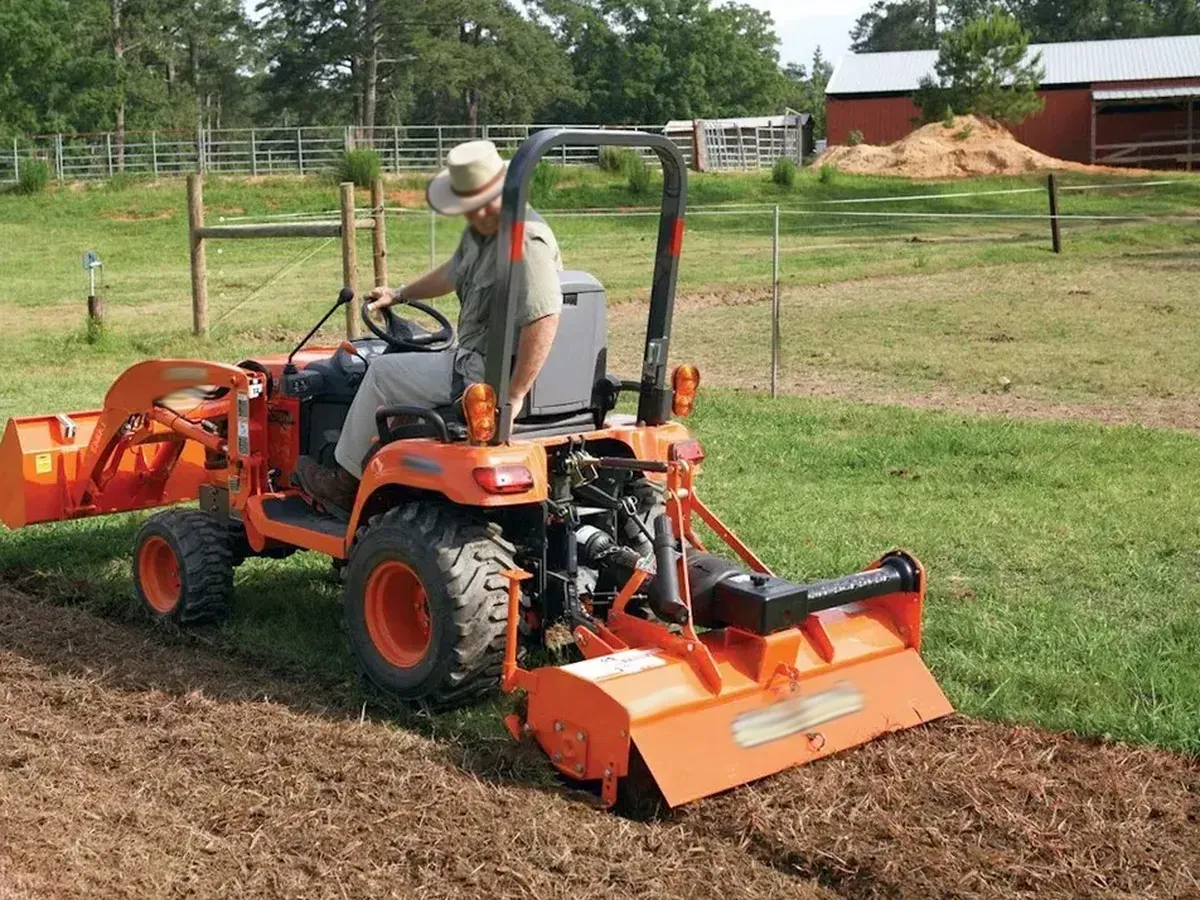
T-19A Rotavator Gearbox Troubleshooting
Oil Leakage
Visible lubricant traces around shafts, seals, housing joint lines, or drain plugs indicate potential problems with worn seals, loose plugs, damaged sealing surfaces, or hairline cracks in the housing. If you notice the oil level dropping between checks, do not continue operating the gearbox for extended periods until you have identified and corrected the leak source. Running with low oil leads to insufficient lubrication, accelerated gear and bearing wear, and elevated operating temperatures that compound the original problem.
Grinding or Rattling Noise
Any new mechanical noise from the gearbox area, including grinding, metallic rattling, or rhythmic clicking, may point to insufficient lubrication, bearing wear, gear tooth damage, or incorrect gear engagement. If the noise becomes pronounced or changes character suddenly, stop the machine immediately, disengage the PTO, and inspect the gearbox before resuming operation. Continued running with damaged gears or bearings typically leads to rapid escalation of damage and eventual catastrophic failure.
Excessive Vibration
Sudden or progressively worsening vibration may result from a loose gearbox mounting, worn bearings, bent input or output shaft, PTO driveshaft problems, rotor imbalance, or damaged tiller blades. Because the gearbox is mechanically connected to several other components, vibration can originate anywhere in the drivetrain and transmit through the housing. Check the entire system rather than assuming the gearbox is the sole source. Tightening loose bolts, replacing worn blades, and rebalancing the rotor often resolve vibration without any gearbox repair.
Reduced Tilling Performance
Weak or inconsistent rotor output can result from incorrect PTO speed setting on the tractor, excessive soil resistance beyond the implement's capacity, worn or broken tiller blades, PTO shaft problems such as worn universal joints, internal gearbox wear reducing power transfer efficiency, or damaged drivetrain components between the tractor and the rotor. Compare the current performance against previous results under similar field conditions and cross-reference symptoms with noise, vibration, temperature, and shaft movement observations to narrow down the cause.
Rotor Does Not Turn
If the tractor PTO is engaged and running but the tiller rotor does not turn or turns erratically, stop the machine immediately and investigate. Possible causes include fractured gear teeth inside the gearbox, a sheared shaft key, worn or stripped splines on the input or output shaft, a failed coupling between the gearbox and the rotor, or a triggered overload device such as a sheared bolt. Do not attempt to force the rotor to turn manually, as the underlying failure may involve broken components that could shift unpredictably.
Abnormal Operating Temperature
Gearboxes naturally generate heat during operation, so a warm housing surface is normal. However, a noticeable change from typical operating temperature may indicate low lubricant volume, use of the wrong oil viscosity, bearing problems, shaft misalignment, excessive tilling load, or increased internal friction caused by wear or contamination. Compare the temperature under similar working conditions and loading rather than relying on an absolute temperature threshold, as ambient temperature, soil type, and working depth all affect normal heat generation.
Difficulty Engaging or Disengaging PTO
If the PTO shaft is difficult to connect or disconnect from the gearbox input stub, the spline profiles may be worn, corroded, or misaligned. Inspect the spline teeth on both the gearbox stub and the PTO yoke for burring, stepped wear, or rust buildup. Apply a thin film of anti-seize compound to the splines during reassembly to prevent galling. Difficulty in engagement can also indicate that the shaft and gearbox are not aligned coaxially, which should be corrected before operating to prevent accelerated joint and bearing wear.
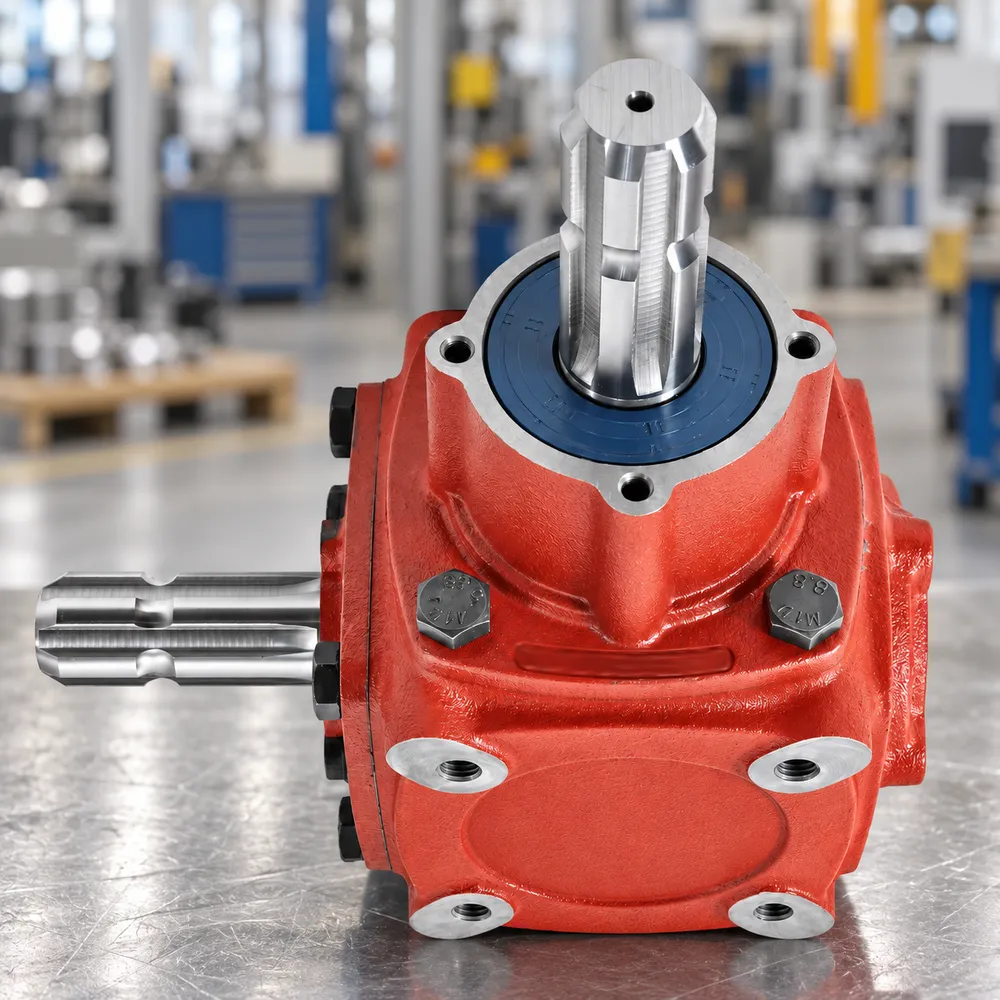
Rotary Tiller Gearbox Inspection Tips
1. Inspect the Gearbox Exterior
Before each operating session, walk around the tiller and visually check the gearbox housing for cracks, impact damage, loose mounting bolts, oil traces around seals or plugs, bent or damaged shafts, and loose PTO connections. Pay attention to dirt accumulation around sealing surfaces, as packed soil can trap moisture against the housing and accelerate corrosion. Small changes from normal appearance often provide early warning of a developing problem before it leads to in-field failure.
2. Check Lubricant Level and Condition
Correct lubrication is fundamental to the life of every gear and bearing inside the housing. Check the oil level through the level plug according to the gearbox specification. If the lubricant is low, determine whether a leak is present before simply topping off. Draw a small sample and inspect it for water contamination (milky appearance), metal particles (glittering specks), unusual discoloration, burnt odor, or excessive dirt content. Always use the SAE 80W-90 grade specified for this particular gearbox rather than assuming one oil type fits every model.
3. Inspect Oil Seals for Leaks
Oil leaks most frequently occur around the input shaft seal, output shaft seal, oil plugs, and housing joint faces. A damaged seal allows lubricant to escape while simultaneously permitting dust, soil particles, and moisture to enter the gearbox interior. Check these areas carefully for fresh oil traces after each work session. Persistent leakage should be repaired by replacing the failed seal rather than repeatedly adding oil, as running with a compromised seal will cause progressive internal damage to the gears and bearings.
4. Listen for Abnormal Operating Noise
During operation, any new grinding, knocking, clicking, or rattling sound coming from the gearbox area may indicate gear tooth wear, bearing damage, low lubricant level, shaft misalignment, loose internal components, or excessive load on the rotor. A new noise does not always confirm a specific failure, but it should trigger a closer inspection at the earliest safe opportunity. Shut down the PTO and investigate any sound that is clearly different from the normal operating note of the gearbox.
5. Monitor Vibration Levels
New or increasing vibration may originate from the gearbox itself or from another component in the drivetrain. Check the gearbox mounting bolts for tightness, inspect the PTO shaft for damage or imbalance, examine the bearings for play, verify that the rotor assembly is balanced and that all tiller blades are intact, and look at all shafts and couplings for wear or looseness. Always inspect the complete transmission system before attributing vibration to the gearbox alone, as an imbalanced rotor or bent PTO shaft will transmit vibration through the entire drive.
6. Check Shafts and Spline Connections
Inspect the input and output shafts for excessive radial play, spline tooth wear, damaged keyways, or loose couplings. Also check the entire connection chain from the tractor PTO output, through the PTO driveshaft, into the gearbox, and out to the tiller rotor. Misalignment or looseness at any point outside the gearbox creates additional internal loading that accelerates wear on the gears and bearings. Worn splines should be replaced before they cause shaft failure during operation.
7. Keep the Gearbox Clean
After every work session, remove accumulated soil, crop residue, and debris from around the gearbox housing, particularly near the shaft seals, oil plugs, and housing joint lines. A clean gearbox makes it far easier to spot oil leakage, crack development, or bolt looseness that would otherwise be hidden under packed dirt. When cleaning, avoid high-pressure water sprays or steam directed at shaft seals, as these methods can force moisture past the seal lips and into the oil. A stiff brush or low-pressure rinse is sufficient.
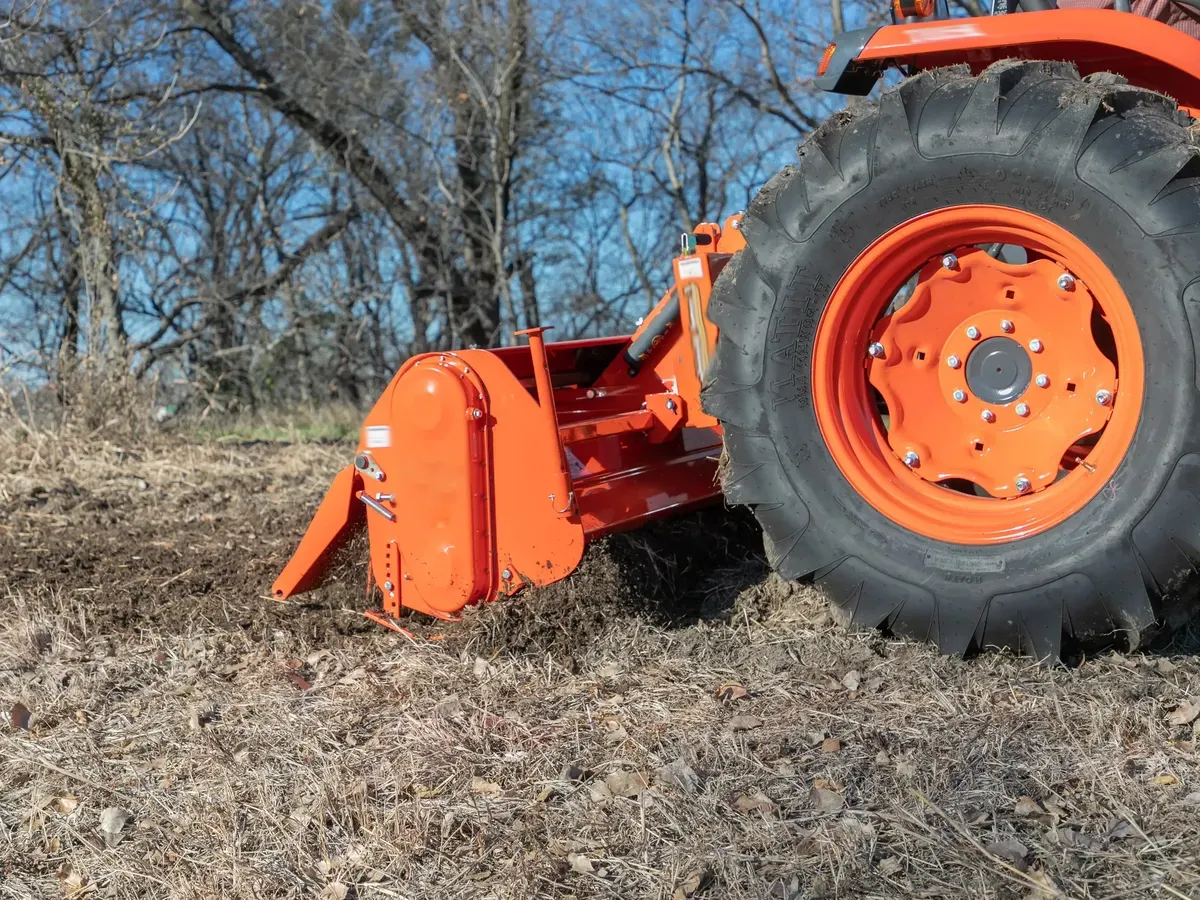
Rotary Cultivator Gearbox Vs Flail Mower Gearbox
What Is a Rotary Cultivator Gearbox?
A rotary cultivator gearbox, also referred to as a rotary tiller gearbox, is the central power transmission unit in soil cultivation equipment. It receives mechanical input from the tractor PTO and converts it into the speed and torque combination required to drive the tiller's horizontal rotor and its array of curved blades or tines through the soil. These gearboxes are built with heavy-duty housings, precision-machined bevel gears, and sealed bearing assemblies to withstand the continuous shock loading and abrasive environments typical of tillage work.
Advantages of Rotary Cultivator Gearboxes
- Deliver high torque at controlled speeds, allowing blades to cut through compacted and root-filled soil without stalling the rotor or overloading the tractor driveline.
- Available in multiple gear ratios to match different soil types, tractor power classes, and tiller rotor diameters, giving operators the flexibility to optimize cultivation performance for each field.
- Sealed housing design protects internal gears and bearings from the abrasive dust, moisture, and debris that are always present during soil tillage operations, extending service intervals.
- Standard shaft connections (typically 1-3/8 inch 6 splines) enable quick installation and replacement across a wide range of tiller brands and models without custom adapters.
Applications of Rotary Cultivator Gearboxes
- Primary and secondary soil tillage for seedbed preparation across grain, oilseed, cotton, and vegetable crops on farms ranging from small market gardens to large-scale commercial operations.
- Incorporation of crop residues, compost, lime, and other soil amendments into the topsoil profile to improve fertility and organic matter content after harvest.
- Inter-row cultivation in vineyards, orchards, and tree plantations for weed control and soil aeration around perennial root zones.
- Ground preparation for landscaping, sports turf, road construction sub-bases, and erosion control seeding projects where uniform soil texture is required.
What Is a Flail Mower Gearbox?
A flail mower gearbox is the power transmission component inside flail mowing equipment that converts tractor PTO input into the high-speed rotor rotation needed to swing an array of pivoting flail blades or hammers. These gearboxes typically operate at higher output speeds than tiller gearboxes, as flail mowing requires fast blade tip velocity to cut and shred standing vegetation, brush, and crop residues rather than cultivating soil. The internal gear sets regulate speed and torque to suit different cutting conditions, and the heavy-duty housing construction ensures long-term reliability in rough terrain.
Advantages of Flail Mower Gearboxes
- Designed for high-speed output that generates the blade tip velocity necessary to cleanly cut grass, weeds, brush, and crop stubble rather than ripping or tearing the material.
- Housed in impact-resistant enclosures that absorb the vibration and shock loads caused by flail blades striking rocks, fence posts, and hidden debris in rough mowing conditions.
- Multiple ratio options allow operators to match rotor speed to the type of material being cut, from fine lawn grass to heavy scrub and saplings.
- Belt-driven or direct-drive configurations offer installation flexibility for rear-mount, side-mount, and boom-arm flail mower designs used on different terrain profiles.
Applications of Flail Mower Gearboxes
- Roadside and highway verge maintenance where vegetation must be cut back regularly to maintain visibility, drainage, and fire safety standards.
- Pasture topping and paddock maintenance to remove mature seed heads and promote fresh grass regrowth for livestock grazing.
- Orchard and vineyard floor management, shredding pruning debris and cover crops between tree or vine rows without disturbing the root zone.
- Land clearing and brush control on abandoned fields, forest margins, and utility corridors where dense woody growth must be cut and mulched in a single pass.
Comparison Table
| Feature | Rotary Cultivator Gearbox | Flail Mower Gearbox |
|---|---|---|
| Primary Function | Soil cultivation and seedbed preparation | Vegetation cutting and mulching |
| Typical Output Speed | Moderate (500 to 900 RPM) | High (1500 to 3000+ RPM) |
| Torque Requirement | High (soil resistance) | Moderate (cutting force) |
| Gear Type | Bevel gears (90-degree angle) | Bevel or spur gears |
| Housing Material | Cast iron (GG25 or similar) | Cast iron or ductile iron |
| Operating Environment | Subsoil, abrasive dust, wet soil | Above-ground debris, rocks, brush |
| Load Pattern | Continuous with periodic shock | Continuous with frequent impact |
| Common Ratios | 1:1, 1:1.46, 1:1.84, 1:2.91 | 1:1, 1:1.5, 1:2, 1:3 |
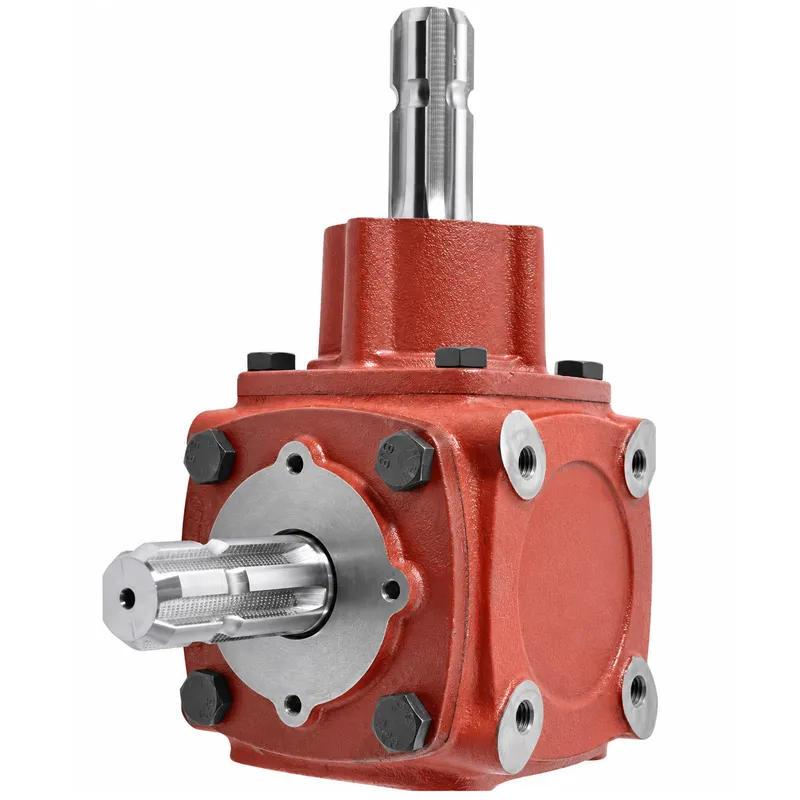
Rotary Tiller Gearbox and PTO Driveline Shaft
Rotary tiller gearboxes are the central mechanical link between a tractor's power output and the soil-working rotor of a rotary cultivator. These units house a set of precision bevel gears inside a sealed cast iron enclosure, converting the PTO shaft's rotational speed and torque into the specific output conditions required by the tiller rotor. Depending on the gear ratio selected, the gearbox can either increase or decrease the output speed relative to the input, with a corresponding inverse effect on torque. For the T-19A with its 1:1.46 ratio, the output shaft spins approximately 46 percent faster than the 540 RPM input, delivering a rotor speed of roughly 788 RPM at 241 Nm of torque. This combination drives the curved tiller blades through soil at a velocity that produces effective cutting, mixing, and pulverization across a range of soil types and moisture conditions.
The PTO drive shaft for a rotary tiller is the mechanical driveline that transmits power from the tractor's rear PTO stub shaft to the input connection on the tiller gearbox. This shaft is typically a telescoping tube assembly with universal joints at each end, allowing it to accommodate the angular misalignment and changes in distance between the tractor and the three-point-hitch-mounted implement as the tiller follows ground contours. The shaft's tube sections slide together and apart as the hitch raises and lowers, maintaining a continuous power connection throughout the full range of implement movement. Most PTO shafts for rotary tillers include an integral overload protection device, such as a shear bolt collar or a friction slip clutch, positioned at the implement end to interrupt torque flow before an overload condition can damage the gearbox or tractor driveline.
The connection between the PTO shaft and the tiller gearbox is made through the splined input stub on the gearbox. For the T-19A, this is a 1-3/8 inch 6-spline male stub that slides into the matching female yoke on the PTO shaft's implement end. When the tractor operator engages the PTO clutch, torque flows from the tractor through the telescoping shaft, through the universal joints that compensate for angular offset, and into the gearbox input shaft. The gearbox then redirects this power through 90 degrees via its bevel gear pair and delivers it to the output shaft connected to the tiller rotor. The entire system must be properly aligned, with the PTO shaft operating within its rated angular limits, to prevent accelerated wear on the universal joint bearings and avoid vibration that could damage the gearbox housing or mounting points.
Both the PTO shaft and the gearbox require routine maintenance to deliver reliable performance. The PTO shaft universal joints need periodic greasing, and the telescoping tube sections should be lubricated to prevent binding. The shaft guard must be intact and free-spinning to meet safety requirements. On the gearbox side, oil level checks, scheduled oil changes, seal inspections, and housing cleaning should follow the manufacturer's recommended intervals. When either component shows signs of wear, such as increased play in the universal joints or metal particles in the gearbox oil, prompt attention prevents cascading damage through the connected drivetrain. Using the correct PTO shaft length, angular capacity, and torque protection rating ensures that the shaft and the agricultural gearbox for rotary tiller work together as a reliable, safe, and efficient power transmission system.

Why Choose CMN Transmission's Rotary Tiller Gearboxes?
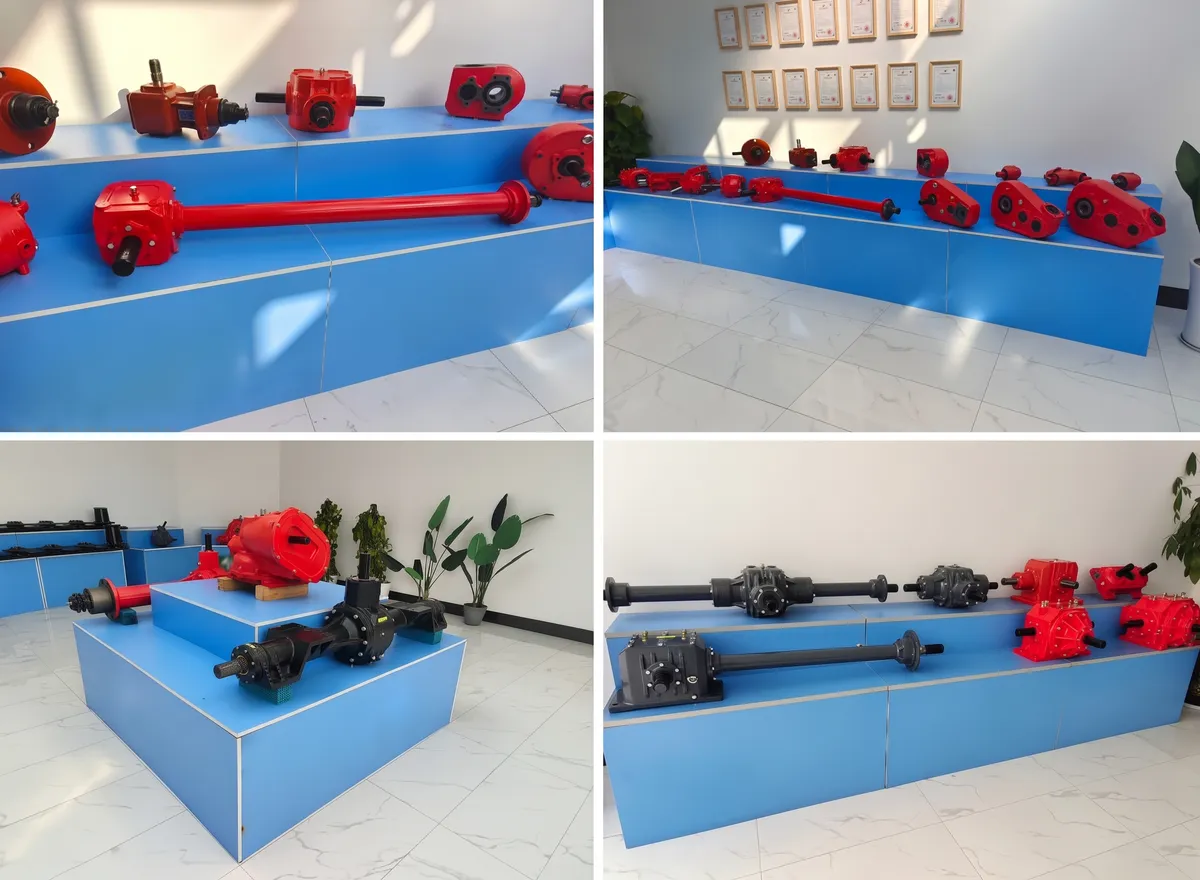
Korea CMN Transmission Co., Ltd. was established in 2000 and is headquartered in Sandan-o, Danwon-gu, Ansan-si, Gyeonggi-do, Korea. With a factory workforce of over 100 employees and more than two decades of focused experience, CMN Transmission has grown into one of the most trusted rotary tiller gearbox manufacturers in the global agricultural equipment supply chain, exporting to more than 60 countries worldwide.
Our product range is among the broadest in the industry. We manufacture rotary cutter gearboxes, rotary tiller gearboxes, feed mixer gearboxes, rotary mower gearboxes, fertilizer spreader gearboxes, flail mower gearboxes, post hole digger gearboxes, round baler gearboxes, square baler gearboxes, disc mower gearboxes, center pivot irrigation gearboxes, hydraulic drive gearboxes, silage machine gearboxes, orchard sprayer gearboxes, rotary rake gearboxes, combine harvester gearboxes, grain storage gearboxes, grain transportation gearboxes, corn headers gearboxes, cutting bar gearboxes, poultry feeding gearboxes, and custom agricultural gearbox solutions covering nearly one thousand individual specifications. These products are used in grain harvesting equipment, forage machinery, mowers, balers, rakes, rotary tillers, fertilizer spreaders, sprayers, feed mixers, silage machines, and combine harvesters across every major agricultural region.
Beyond gearboxes, our product portfolio includes PTO shafts, universal joints, yokes, tubes, torque limiters, covers, adapters, couplings, bearings, blades, chains, and sprockets. With an annual production volume exceeding 500,000 units, CMN Transmission consistently delivers the reliability, durability, and performance that global OEMs and distributors depend on for their own product lines and aftermarket programs. Every product leaves our facility under CE and ISO 9001 certified quality management systems, ensuring consistent manufacturing standards and dependable field performance. Our quality control process includes incoming material inspection, in-process dimensional checks, heat treatment verification, gear tooth profile measurement, assembled unit functional testing, and final packaging audit before shipment.
CMN Transmission exports to the United States, Canada, Mexico, Brazil, Argentina, France, Germany, Italy, Spain, the United Kingdom, Russia, China, India, Thailand, Vietnam, Turkey, Australia, New Zealand, and dozens of other markets. Our experienced technical team provides engineering consultation during the specification phase, detailed installation and maintenance documentation with each order, and responsive after-sales support when questions arise in the field.
We support full custom production based on customer drawings and specifications for agricultural gearboxes, PTO shafts, and various agricultural machinery components. Whether you need a single replacement unit or a container load of rotary tiller gearboxes for sale to your dealer network, CMN Transmission has the production capacity, technical capability, and global logistics experience to deliver on time and to specification. Contact us today to discuss your requirements and receive a competitive quotation from one of the leading rotary tiller gearbox suppliers in the industry.
Frequently Asked Questions
Q: What is the rotary tiller gearbox ratio of the T-19A, and how does it affect tilling performance?
A: The T-19A is configured with a 1:1.46 speed-increasing ratio, meaning the output shaft rotates at 1.46 times the input speed. At a standard 540 RPM PTO input, the rotor shaft turns at approximately 788 RPM. This higher blade speed produces finer soil particle size, making it well suited for seedbed preparation, vegetable plot finishing, and operations where a smooth, uniform tilth is required in medium to light soil conditions.
Q: What type of oil should I use in the T-19A rotary tiller gearbox?
A: CMN Transmission recommends SAE 80W-90 extreme-pressure (EP) gear oil for the T-19A. This viscosity grade provides adequate film strength for the bevel gear contact surfaces across a wide operating temperature range. The total oil capacity is 0.9 liters. Always use gear oil that meets GL-4 or GL-5 specifications, and avoid mixing different oil brands or viscosity grades to maintain consistent lubrication performance.
Q: How often should I change the oil in my rotary tiller gearbox?
A: Perform the first oil change after 50 to 70 hours of initial operation to flush out any break-in particles from the new gears and bearings. After that, change the oil every 500 to 700 operating hours, or at least once per year if you do not reach that hour threshold. In dusty or wet environments, or when operating at sustained high loads, consider shortening the change interval to maintain oil cleanliness and cooling performance.
Q: Is the CMN T-19A a direct replacement for the original Comer T-19A gearbox?
A: Yes. The CMN T-19A is manufactured to match the original Comer T-19A in all critical dimensions, including housing bolt pattern, shaft spline profiles (1-3/8 inch 6 splines on both input and output), oil port locations, and overall external measurements. It can be installed as a direct swap without modifications to the tiller frame, PTO driveline, or rotor drive coupling. Weight is the same at 14 kg.
Q: What is the maximum input power for this agricultural gearbox?
A: The T-19A in the 1:1.46 ratio configuration accepts a maximum input power of 20.6 kW, which is equivalent to 28 HP at 540 RPM. This power rating is suitable for compact and mid-size tractors commonly used with multi-row rotary tillers, mowers, and fertilizer spreaders. If your application requires a higher power capacity, contact CMN Transmission for alternative T-19A configurations or larger gearbox models.
Q: How do I check the rotary tiller gearbox oil level correctly?
A: To check the rotary tiller gearbox oil level, position the tiller on level ground with the gearbox in its normal operating orientation. Remove the level check plug located on the side of the housing. The oil should be visible at the lower edge of the plug opening. If oil does not reach this point, add the recommended SAE 80W-90 lubricant through the fill plug until it begins to weep from the level port. Replace both plugs and wipe away any spilled oil before operating.
Q: What shaft connection does the T-19A gearbox use?
A: Both the input and output shafts feature a 1-3/8 inch outside diameter with 6 splines (designated 1-3/8" Z6 in technical drawings). This is the most common PTO shaft connection standard for agricultural implements rated up to approximately 50 HP. The spline profile mates with standard PTO driveshaft yokes and rotor drive couplings, allowing installation without custom adapters or machined sleeves.
Q: Can the T-19A be used with a 1000 RPM PTO output?
A: The standard T-19A is rated for a maximum input speed of 540 RPM. Running it at 1000 RPM would exceed the rated speed and power capacity of the gear set and bearings, potentially leading to overheating and premature failure. If your tractor only has a 1000 RPM PTO, you would need a speed reduction adapter between the tractor and the gearbox, or contact CMN Transmission to discuss a gearbox model rated for 1000 RPM input.
Q: Does CMN Transmission offer custom rotary tiller gearbox configurations?
A: Yes. CMN Transmission provides customized gearbox solutions including alternative gear ratios (1:1, 1:1.84, 1:2.16, 1:2.91 and others), different shaft types (splined, keyed cylindrical, or flanged), non-standard mounting arrangements, and adjusted power ratings. Whether you are an OEM designing a new tiller model or a distributor needing a specific shaft configuration for your regional market, our engineering team can modify the T-19A platform to meet your requirements.
Q: Are replacement rotary tiller gearbox parts available for the T-19A?
A: CMN Transmission stocks individual rotary tiller gearbox parts for the T-19A, including bevel gear sets, input and output shafts, bearings, oil seals, breather vents, drain and fill plugs, and housing gaskets. This allows operators to rebuild or repair an existing unit rather than replacing the entire gearbox, which is often more cost-effective for units with minor wear or a single failed component. Contact our parts department with your gearbox serial number for correct part identification.
Customer Reviews
John Miller, Corn and Soybean Farming, United States
"We run about 800 acres of corn and soybeans in central Iowa, and our old Comer T-19A gearbox finally gave out after twelve seasons. I ordered the CMN replacement unit and had it bolted up in under an hour. The spline fit was perfect on both the PTO side and the rotor coupling. We filled it with 80W-90 oil and went straight back to work prepping our spring seedbeds. After 120 hours of running in heavy black soil, I drained the oil for the first change and it came out clean with no metal particles. At the price point, this is a no-brainer compared to sourcing an original Comer unit."
Klaus Wagner, Mixed Farming, Germany
"I manage a 350-hectare mixed operation near Regensburg with wheat, barley, and sugar beet rotations. Our rotary tiller runs almost daily during spring and autumn, so the gearbox takes serious punishment. The CMN T-19A with the 1:1.46 ratio arrived well packaged, and the dimensions matched our existing frame exactly. I particularly appreciate the quality of the cast iron housing. After 400 hours of operation through our heavy Bavarian clay, the gearbox runs quietly and the oil stays clean. Very good value compared to European distributors."
Carlos Rodrigues, Sugarcane and Soybean Operation, Brazil
"We ordered five T-19A gearboxes for our fleet of rotary tillers that prepare ground between sugarcane harvest cycles. The red laterite soil here is extremely abrasive, and gearboxes that are not well sealed tend to fail within a single season. The CMN units arrived in Santos within three weeks, and the seals have held up well through our first rainy season. Four of the five units are performing without any issues at 200+ hours. One unit had a minor oil weep from the drain plug gasket which we resolved by replacing the crush washer. Good product overall."
Rajesh Patel, Rice and Wheat Farming, India
"I operate a 45 HP Mahindra tractor with a multi-row rotary tiller for rice paddy preparation. Our previous gearbox failed during the kharif season and finding a replacement locally was difficult. A dealer in Ludhiana recommended the CMN T-19A as a Comer replacement, and it was the right call. The 1-3/8 inch spline connection slid right onto our existing driveshaft. We have been using it through two full cropping seasons now, covering both the rice puddling work in monsoon conditions and the wheat bed preparation in winter. Very strong build quality for the price."
Pierre Dubois, Vineyard Operation, France
"We use a compact rotary tiller between our vine rows to control weeds and break the surface crust after heavy rains. The gearbox sits low and close to the trellis wire, so dimensions matter. I measured our old Comer unit before ordering, and the CMN T-19A matched on every point. The weight is the same 14 kg, the bolt pattern lines up, and the shaft stub length is correct. After one full growing season of inter-row work in stony limestone soil, the housing shows normal wear but no cracks, and the gear operation is still quiet and smooth. I will order a second unit for our other tiller."
Michael Taylor, Wheat and Cattle, Australia
"Getting parts out to regional Australia is always a challenge, so when our rotary tiller gearbox started making noise mid-season, I needed a replacement quickly. CMN shipped the T-19A to Sydney and my freight forwarder had it out to our property near Dubbo within a total of four weeks. The gear quality is noticeable when you compare it side by side with the old Comer unit. Teeth are well finished and the casting is clean. We have put about 250 hours on it across two seasons of seedbed preparation in our red-brown earth soils, and it runs as well as the day we installed it."
Mehmet Arslan, Vegetable and Greenhouse Farming, Turkey
"I grow tomatoes, peppers, and cucumbers across 12 hectares of open field and 3 hectares of greenhouse tunnels near Antalya. The rotary tiller runs hard between each crop cycle to turn in drip tape remnants and old root mass. I purchased two CMN T-19A gearboxes as spares, and the first one went into service six months ago. Everything about the installation was straightforward, and the 28 HP capacity is well matched to our 50 HP tractor. One small note: the packaging could be improved for better protection during shipping, as the carton arrived slightly dented. The gearbox itself was undamaged."
Somchai Kongkaew, Rice Farming, Thailand
"Our cooperative manages over 500 rai of paddy fields in northern Thailand. The rotary tillers run in wet, muddy conditions for most of the season, which is very demanding on gearbox seals. We bought a batch of eight CMN T-19A units to standardize across our fleet. The seal quality has been excellent. After a full wet season of puddling work in standing water and heavy clay, none of the eight units showed any sign of water entering the oil. The response time from the CMN sales team was also very good when we had questions about the oil specification for tropical climates."
David Lawson, Hay and Grain Production, Canada
"I operate a 1,500-acre mixed grain and hay operation near Lethbridge. Our rotary tiller is a critical piece of equipment for fall seedbed prep and spring field finishing. The original gearbox had been rebuilt twice before I decided to buy new. The CMN T-19A showed up at my doorstep in Calgary within two and a half weeks of ordering. What impressed me most is the gear tooth finish. Under a magnifying glass, the tooth surfaces are smooth and consistent, which tells me the manufacturing quality control is solid. We are now past 300 hours with zero issues, and I have recommended it to two neighbors who were looking for Comer replacement gearboxes."
Additional information
| Edited by | Yjx |
|---|
Related products
-
T-19A Rotary Tiller Gearbox Ratio 1:2.16 Replacement for Comer T-19A Gearbox
-
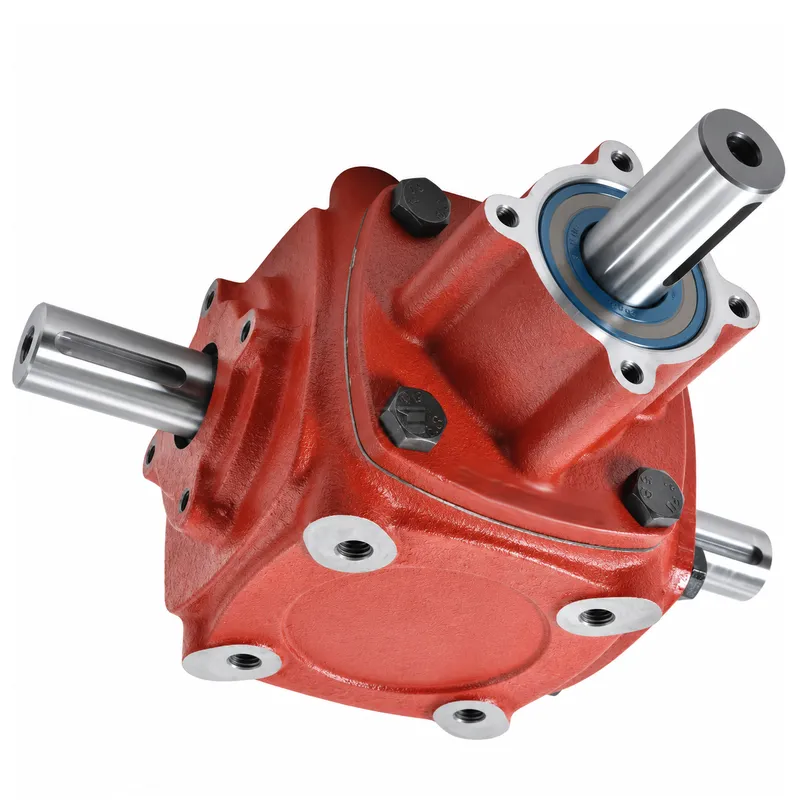
T-19A Rotary Tiller Gearbox Ratio 1.46:1 Replacement for Comer T-19A Gearbox
-
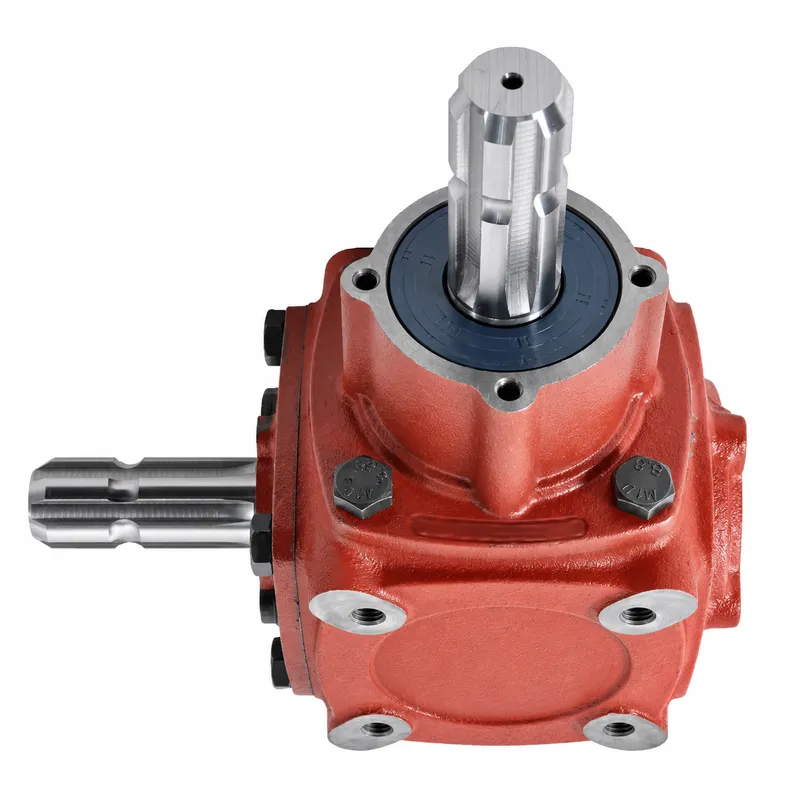
T-19A Rotary Tiller Gearbox Ratio 1:1 Replacement for Comer T-19A Gearbox
-
T-19A Rotary Tiller Gearbox Ratio 1.84:1 Replacement for Comer T-19A Gearbox
-
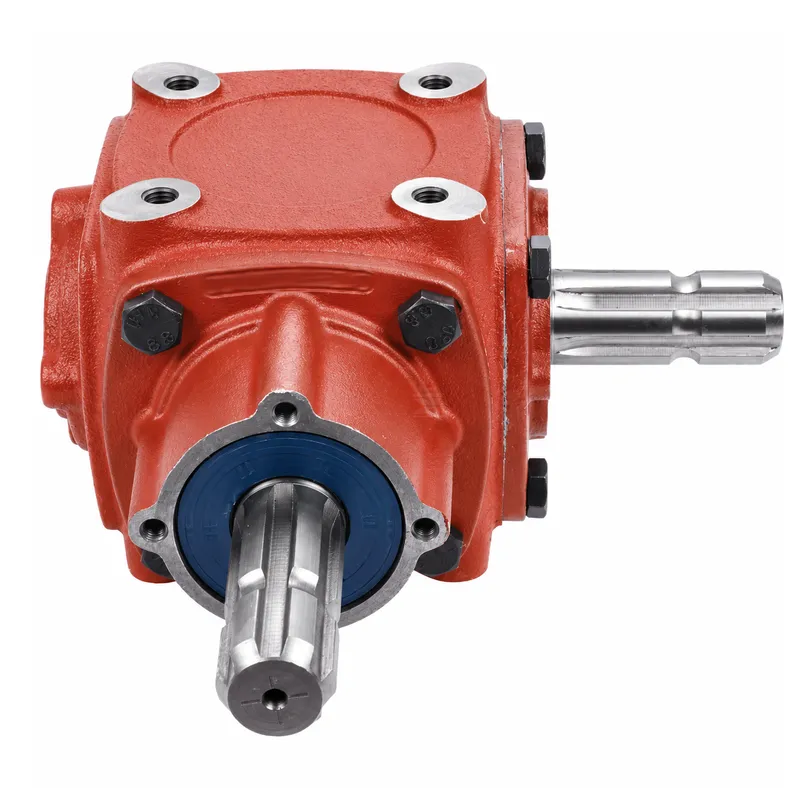
T-19A Rotary Tiller Gearbox Ratio 1:1.84 Replacement for Comer T-19A Gearbox


