
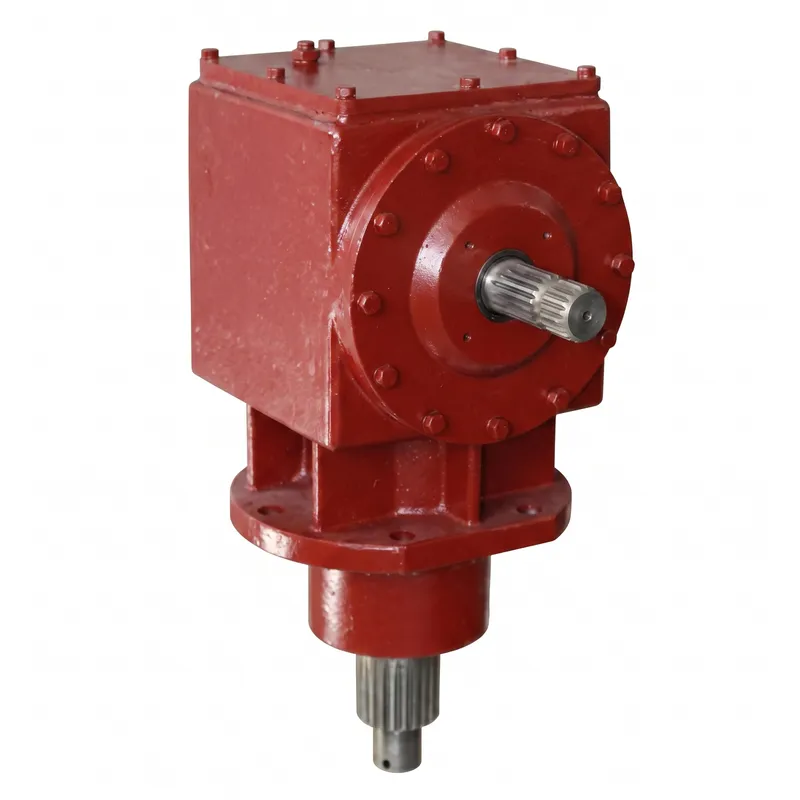
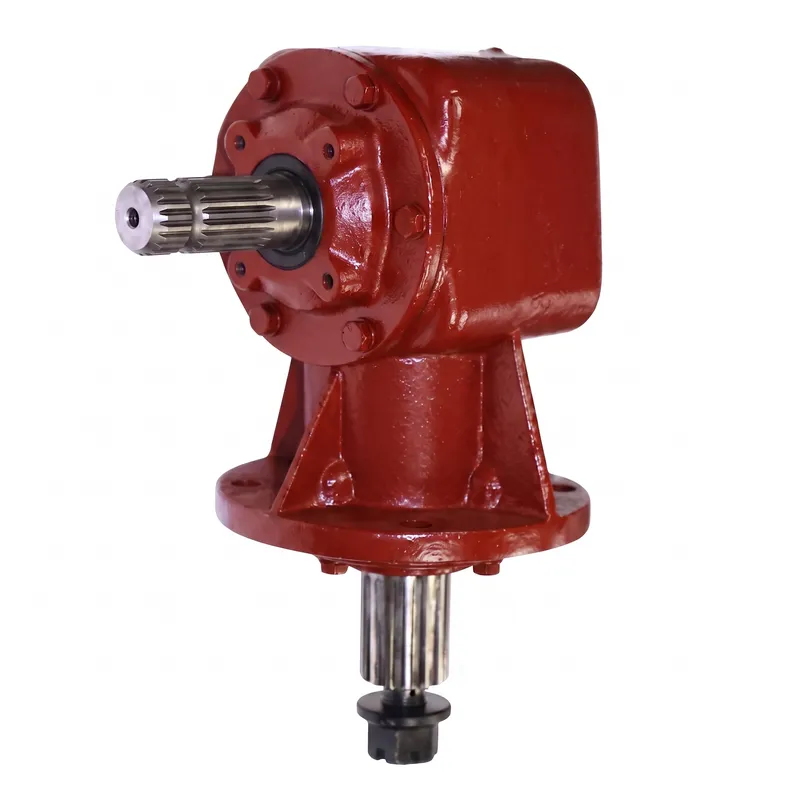
RC-200 Rotary Cutter Gearbox Replacement for Omni RC-200 Gearbox
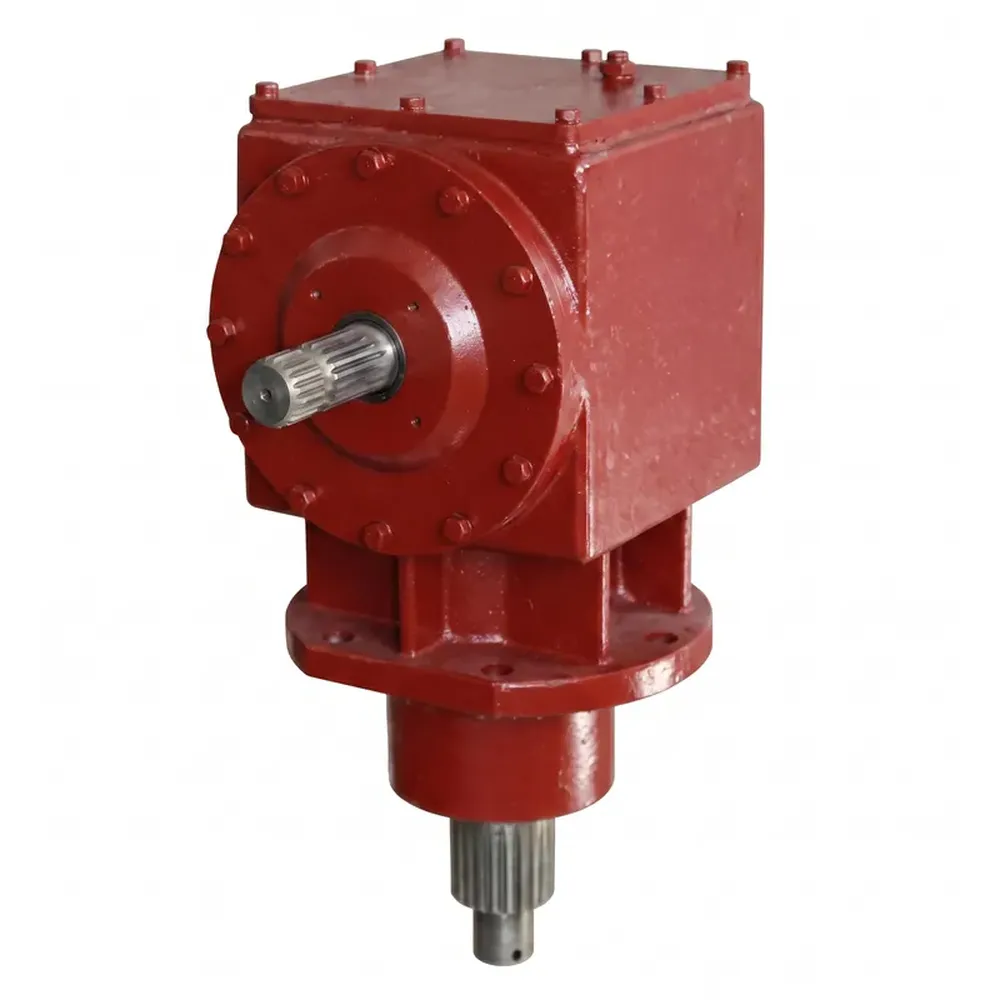
The RC-200 Rotary Cutter Gearbox Replacement for Omni RC-200 Gearbox is a heavy-duty power transmission unit engineered specifically for demanding agricultural applications. As a direct drop-in replacement for the original Omni RC-200, this rotary cutter gearbox is purpose-built to drive rotary blades across a wide range of field tasks: grass cutting, straw crushing, brush and bramble clearing, stubble treatment, and roadside vegetation management.
The RC-200 Rotary Cutter Gearbox Replacement for Omni RC-200 Gearbox is a heavy-duty power transmission unit engineered specifically for demanding agricultural applications. As a direct drop-in replacement for the original Omni RC-200, this rotary cutter gearbox is purpose-built to drive rotary blades across a wide range of field tasks: grass cutting, straw crushing, brush and bramble clearing, stubble treatment, and roadside vegetation management. Its ductile-iron housing and precision bevel gear set are designed to absorb the shock loads and continuous stress that define real-world agricultural work, making it a trusted choice for both OEM equipment builders and end users seeking a replacement gearbox for rotary cutter machinery. Whether you operate a compact tractor in orchard rows or a high-horsepower unit across open pasture, the RC-200 delivers the torque, durability, and versatility your operation demands.
At the heart of this agricultural gearbox is a bevel gear set that converts the high-speed rotation of the tractor's PTO shaft (540 or 1000 RPM standard input) into the low-speed, high-torque output required for efficient cutting. Four available gear ratios (1.21:1, 1:1, 1:1.21, and 1:1.46) allow operators to precisely match the gearbox output to the density of the crop, the hardness of the terrain, and the specific requirements of the implement. A rated torque range of 21,000 to 28,350 lb.-in. (2,371-3,201 Nm) ensures consistent blade power even when cutting through thick, uneven material on steep slopes or in wet field conditions. Backed by tapered roller bearings, a triple lip spring-loaded seal system, and 174 oz. (5.2 L) oil capacity, the RC-200 is built to maintain peak performance across an extended service life with straightforward field maintenance.
Product Specifications
| Model: | RC-200 Gearbox |
| Torque: | 21,000 - 28,350 lb.-in. (2,371 - 3,201 Nm) |
| Ratios: | 1.21:1, 1:1, 1:1.21, 1:1.46 |
| Gear Type: | Bevel |
| Seal Type: | Triple Lip Spring Loaded |
| Bearing Type: | Tapered Roller |
| Oil Capacity: | 174 oz. (5.2 L) |
| Weight: | 220 lbs. (99.8 kg) |
| Applications: | Finishing Mowers Rotary Cutters Rotary Slashers |
RC-200 Rotary Cutter Gearbox Dimensions
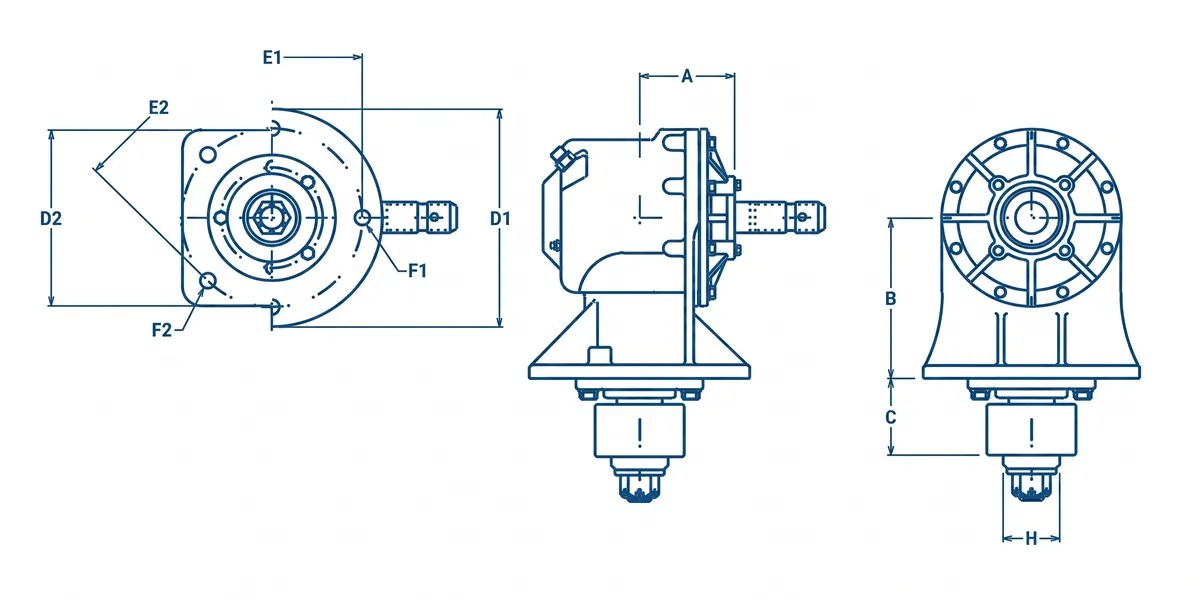
| Model | Maximum Weight of Unit | CL to Thru Cap A | CL to Flange B | Flange to Hub Pilot C | Hub Pilot Diameter H | Flange Diameter D1 | Bolt Hole Pattern E1 | Mounting Holes F1 | Flange Square Size D2 | Bolt Hole Pattern E2 | Mounting Holes F2 | |||||||||||
|---|---|---|---|---|---|---|---|---|---|---|---|---|---|---|---|---|---|---|---|---|---|---|
| lb | kg | in | mm | in | mm | in | mm | in | mm | in | mm | in | mm | in | mm | in | mm | in | mm | in | mm | |
| RC-20 | 34 | 15 | 3.0 | 76 | 6.5 | 165 | 2.40 | 61.0 | - | - | - | - | - | - | - | - | 6.18 | 157 | 6.8 | 171.5 | (4) 0.67 | (4) 17 |
| RC-27 | 47 | 21 | 3.5 | 88 | 6.4 | 164 | 2.40 | 61.0 | - | - | - | - | - | - | - | - | 6.18 | 157 | 6.8 | 171.5 | (4) 0.67 | (4) 17 |
| RC-30 | 51 | 23 | 3.9 | 100 | 6.4 | 164 | 3.30 | 84.0 | 2.5 | 63.5 | - | - | - | - | - | - | 6.89 | 175 | 6.8 | 171.5 | (4) 0.67 | (4) 17 |
| RC-51 | 56 | 25 | 3.7 | 94 | 6.4 | 164 | 3.50 | 88.9 | 2.5 | 63.5 | - | - | - | - | - | - | 6.89 | 175 | 6.8 | 171.5 | (4) 0.67 | (4) 17 |
| RC-61 | 81 | 37 | 4.2 | 107 | 7.2 | 183 | 3.50 | 88.9 | 2.5 | 63.5 | 9.5 | 242.0 | 8.0 | 203.2 | (4) 0.787 | (4) 20 | - | - | - | - | - | - |
| RC-71 | 83 | 38 | 4.2 | 107 | 7.2 | 183 | 3.50 | 88.9 | 2.5 | 63.5 | 9.5 | 242.0 | 8.0 | 203.2 | (4) 0.787 | (4) 20 | - | - | - | - | - | - |
| RC-81 | 98 | 45 | 4.6 | 116 | 11.0 | 279 | 3.50 | 88.9 | 2.5 | 63.5 | 9.6 | 245.0 | 8.0 | 203.2 | (4) 0.787 | (4) 20 | - | - | - | - | - | - |
| RC-100 | 96 | 44 | 4.8 | 121 | 7.1 | 180 | 3.78 | 96.0 | 2.5 | 63.5 | 9.4 | 240.0 | 8.0 | 203.2 | (4) 0.787 | (4) 20 | - | - | - | - | - | - |
| RC-130S | 109 | 49 | 5.1 | 130 | 7.1 | 180 | 4.00 | 102.0 | 2.9 | 73.0 | 9.8 | 250.0 | 8.0 | 203.2 | (6) 0.807 | (6) 21 | - | - | - | - | - | - |
| RC-130L | 120 | 54 | 5.1 | 130 | 7.1 | 180 | 7.20 | 184.0 | 3.8 | 96.0 | 9.8 | 250.0 | 8.0 | 203.2 | (6) 0.807 | (6) 21 | - | - | - | - | - | - |
| RC-145 | 110 | 50 | 5.6 | 142 | 8.9 | 225 | 8.05 | 204.5 | 3.8 | 96.0 | 10.2 | 260.0 | 8.0 | 203.2 | (6) 0.807 | (6) 21 | - | - | - | - | - | - |
| RC-150L | 145 | 66 | 5.1 | 130 | 11.0 | 280 | 7.20 | 184.0 | 3.8 | 96.0 | 9.8 | 250.0 | 8.0 | 203.2 | (6) 0.807 | (6) 21 | - | - | - | - | - | - |
| RC-200 | 220 | 100 | 6.4 | 162 | 9.5 | 241 | 8.00 | 203.0 | 5.3 | 135.0 | 11.8 | 300.0 | 10 | 254.0 | (6) 0.905 | (6) 23 | - | - | - | - | - | - |
Key Advantages of the RC-200 Rotary Cutter Gearbox
1. Tractor PTO Drive Compatibility
The RC-200 connects directly to the tractor's power output shaft and accepts both 540 RPM and 1000 RPM standard PTO inputs. The splined gear-to-shaft connection is factory-standard, enabling quick-change coupling for fast field installation and removal without special tools. This universal compatibility makes it straightforward to match the gearbox to a wide range of tractor makes and models, reducing downtime during implement changes and allowing operators to move efficiently between tasks across the working day.
2. Durability and Environmental Protection
The gearbox housing is manufactured from ductile iron as standard, providing superior impact resistance against field debris while maintaining structural rigidity under continuous high-torque loads. Precision cast iron end caps and a red oxide primer surface treatment give the unit solid baseline corrosion resistance against mud, moisture, plant sap, and gravel. The triple lip spring-loaded seal system provides three independent barriers against contamination ingress, protecting the internal bearings and gear surfaces from the abrasive particles and water ingress that are the primary causes of premature finishing mower gearbox failure in operational agricultural environments.
3. Terrain Adaptability
Designed for variable and uneven ground conditions, the RC-200's floating gearbox architecture allows the cutting deck to follow natural ground contours automatically. As the terrain rises and falls, the implement adjusts its cutting height without operator intervention, preventing blade-to-ground collisions with embedded rocks, tree stumps, or other hard obstacles. This self-adjusting capability is especially important in rough pasture, sloped hillsides, drainage ditches, and orchard floor environments where ground hardness and elevation change unpredictably throughout the work area.
4. Maintenance Convenience
Field serviceability is built into the RC-200 from the ground up. The oil fill port and drain valve are both externally accessible, making rotary cutter gearbox oil changes and top-ups straightforward without removing the unit from the implement. The pressure relief plug standard on every unit prevents internal pressure build-up during sustained operation. Monitoring and maintaining the correct rotary cutter gearbox oil level is quick and clear, even in field conditions, reducing the risk of dry running and heat-related gear or bearing damage during heavy seasonal use.
5. Safety Protection Mechanism
In the event of blade or spindle jamming caused by a sudden impact with a buried obstruction, the RC-200's integrated overload protection system reacts to interrupt the driveline torque path before catastrophic gear or shaft damage occurs. Compatible configurations support shear bolt protection or optional free-wheel clutch fitment to absorb shock loads that exceed safe operating thresholds. This layer of mechanical protection is particularly valuable in heavy brush-clearing work and in areas where subsurface debris such as field wire, old fence posts, or large stones creates unpredictable impact risks during normal cutting operation.
6. Precision Bevel Gear Engineering
The RC-200's core transmission element is a forged-blank, precision machine-cut bevel gear set. Forged blank gearing offers a denser grain structure and greater fatigue strength compared to cast gears, making it the correct specification choice for the repetitive high-impact loads generated during rotary cutter operation. Optional precision forged straight bevel, spiral bevel, and lapped spiral bevel configurations are available to match specific noise, efficiency, and load-rating requirements. Carburized alloy steel shafts support the gear set throughout, providing the hardened surface layer and tough core combination needed to resist both surface wear and through-fatigue in demanding conditions.
Working Principle
The RC-200 is a right-angle bevel gear drive unit positioned as the central power hub of any rotary cutter or finishing mower implement. The working sequence begins when the operator engages the tractor's PTO, which drives a rotating driveshaft (commonly turning at 540 or 1000 RPM depending on the tractor specification and the implement requirement) directly into the gearbox input shaft. That rotational energy enters the gear housing and is immediately redirected 90 degrees by the bevel gear set, converting horizontal PTO shaft rotation into a vertical output that drives the blade spindle downward into the cutting plane.
The selected rotary cutter gearbox ratio (1.21:1, 1:1, 1:1.21, or 1:1.46) determines the relationship between input speed and output speed, and consequently the torque multiplication delivered to the blade hub. A ratio greater than 1:1 (speed reduction) increases torque at the output shaft, which is the correct choice when cutting dense pasture grass, heavy crop stalks, or thick brush where blade loading is high. A ratio less than 1:1 (speed increase) raises blade tip speed for lighter mowing tasks where a finer finish and lower vegetation density allow more aggressive blade rotation. This flexibility means a single RC-200 unit can be configured to serve as a 40 hp rotary cutter gearbox, a 60 hp rotary cutter gearbox, or a higher capacity 75 hp rotary cutter gearbox application by selecting the appropriate ratio to match the available tractor horsepower and the intended cutting load.
Inside the housing, the tapered roller bearings support both the input and output shafts radially and axially, keeping gear mesh geometry precise under the combined radial loads from belt or direct drive coupling and the axial thrust forces generated as bevel teeth engage under load. Oil-bath lubrication, maintained at the correct rotary cutter gearbox oil level, keeps gear flanks and bearing raceways continuously lubricated throughout operation. The gearcase porting design routes oil to the lower bearings as standard, ensuring that even the most load-bearing support points receive adequate lubrication at all operating angles.
The triple lip spring-loaded seal on the output shaft provides three sequential barriers against the ingress of the grass juice, fine soil particles, and moisture that define the rotary cutter working environment. At the same time, the pressure relief plug equalizes internal air pressure as the gearbox heats up and cools down through the working cycle, preventing seal lip distortion from internal pressure differentials. The result is a mechanically complete drive system that converts high-speed tractor PTO power into the controlled, high-torque output that keeps blades cutting efficiently and reliably throughout an entire operational season, with predictable maintenance intervals and straightforward field servicing when the time comes.
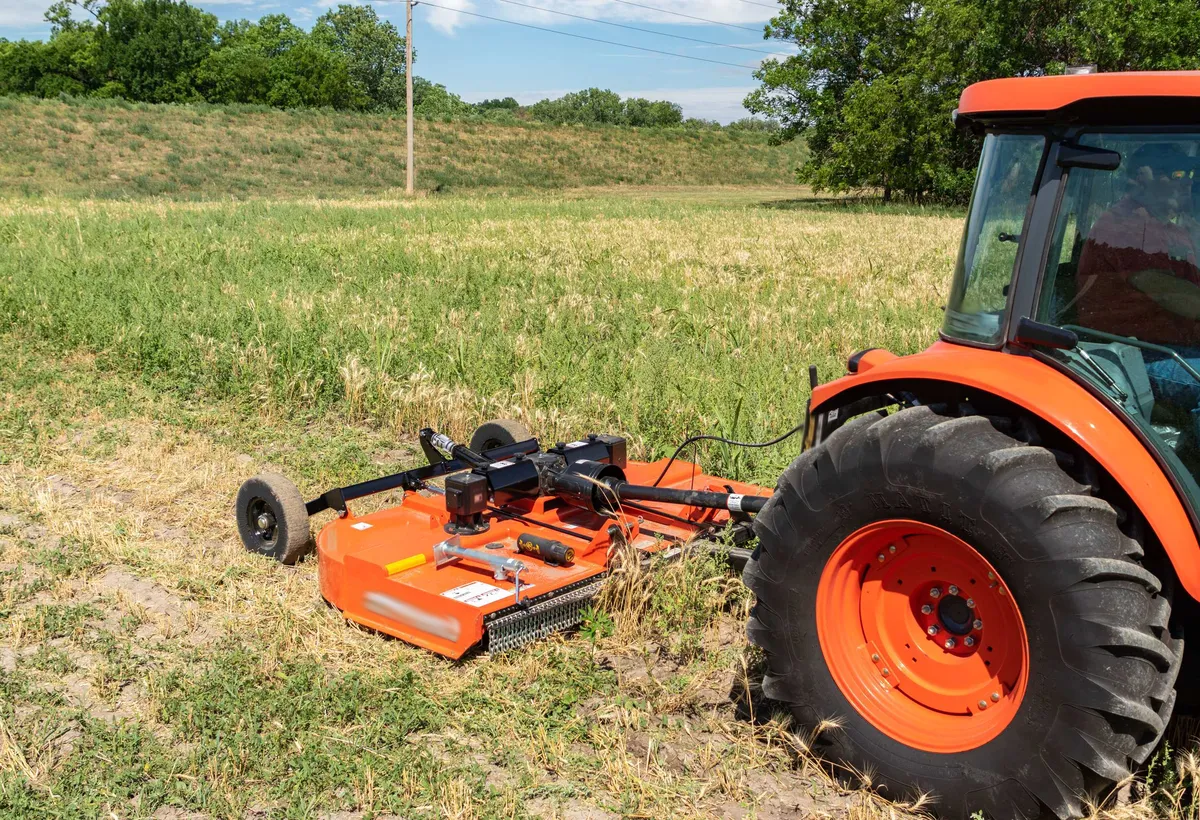
Application Areas
1. Shrub and Bramble Clearing
For clearing dense brush at orchard borders, woodland margins, and field boundaries, the RC-200 provides the sustained high torque needed to sever woody stalks that would stall a lighter rotary mower gearbox unit. The heavy bevel gear construction and ductile iron housing withstand the severe impact loads generated when blades contact mature shrubs, bramble canes, and small saplings, maintaining stable power output throughout extended clearing operations even in heavily overgrown areas.
2. Grass Cutting and Straw Crushing
The RC-200 drives the rotary blade assembly to cut standing grass, cereal straw, and cover crops such as cornstalk residue directly in the field. Operators can use different gear ratios to control the degree of material size reduction, choosing coarser crushing for in-field organic matter return or finer shredding to produce animal bedding or feedstock. The gearbox maintains consistent blade speed through variations in crop density and stem diameter, ensuring clean, even cutting across the full working width without stalling under load.
3. Orchard and Vineyard Management
The RC-200 is well suited to inter-row vegetation management in orchards and vineyards where working width and ground clearance constraints limit implement size. The compact right-angle drive configuration positions the power transmission unit close to the cutting plane, enabling under-canopy access and tight inter-row clearance without damaging tree trunks or vine stems. The terrain-following capability is especially valuable on sloped orchard floors where conventional fixed-height implements would either scalp crests or leave uncut strips in hollows.
4. Farmland Preparation and Stubble Treatment
In post-harvest field management, the RC-200 is used in combination with disc or dumping knife configurations to rapidly clear standing stubble from rice, wheat, and maize crops ahead of the next planting cycle. Fast, thorough stubble destruction reduces pest and fungal disease harbor sites while also improving soil incorporation of organic material. The gearbox's torque capacity ensures consistent cutting performance even in the dense, tough regrowth conditions that develop after heavy crop years.
5. Roadside and Right-of-Way Maintenance
Municipal and infrastructure operators use the RC-200 as the core drive unit in roadside mowers and rotary slasher gearbox applications for highway shoulder maintenance, drainage channel clearing, and utility right-of-way management. The heavy-duty housing construction and robust overload protection systems are well matched to the unpredictable debris encountered during roadside work, including loose gravel, embedded wire, and roadside waste, which can cause sudden high-impact shock loads on the gearbox output shaft.
6. Pasture and Paddock Renovation
Livestock producers use rotary cutters fitted with the RC-200 to top pastures, control selective grass species, and remove rank growth that cattle and sheep refuse to graze. Regular topping with the correct gearbox for rotary cutter implements promotes even re-growth across the sward, improves pasture density, and reduces the seed head formation that reduces grazing palatability. The multi-ratio capability allows topping height to be optimized for different grass species and seasonal growth stages across the same farm.
7. Forestry and Vegetation Management
In forestry preparation and replanting operations, the RC-200 drives heavy rotary cutters used to clear competing vegetation from planting rows, fire break maintenance corridors, and access track edges. The combination of a 100 hp rotary cutter gearbox configuration's maximum torque output and the bevel gear drive's reliable power redirection allows operators to work in challenging terrain, including steep gradients and uneven ground with embedded rocks and root systems, that would be impractical for lighter implements.
8. Wetland and Embankment Cutting
The RC-200's sealed construction and resistance to contamination by mud and moisture make it appropriate for cutting work in irrigation channel banks, drainage ditches, and wetland margins where equipment is routinely exposed to waterlogged soils and standing water. The triple lip seal system is specifically engineered to prevent moisture ingress into the gear housing under the splash and spray conditions common in this type of work, protecting internal components from the accelerated corrosion and bearing failure that follows water contamination of gear oil.
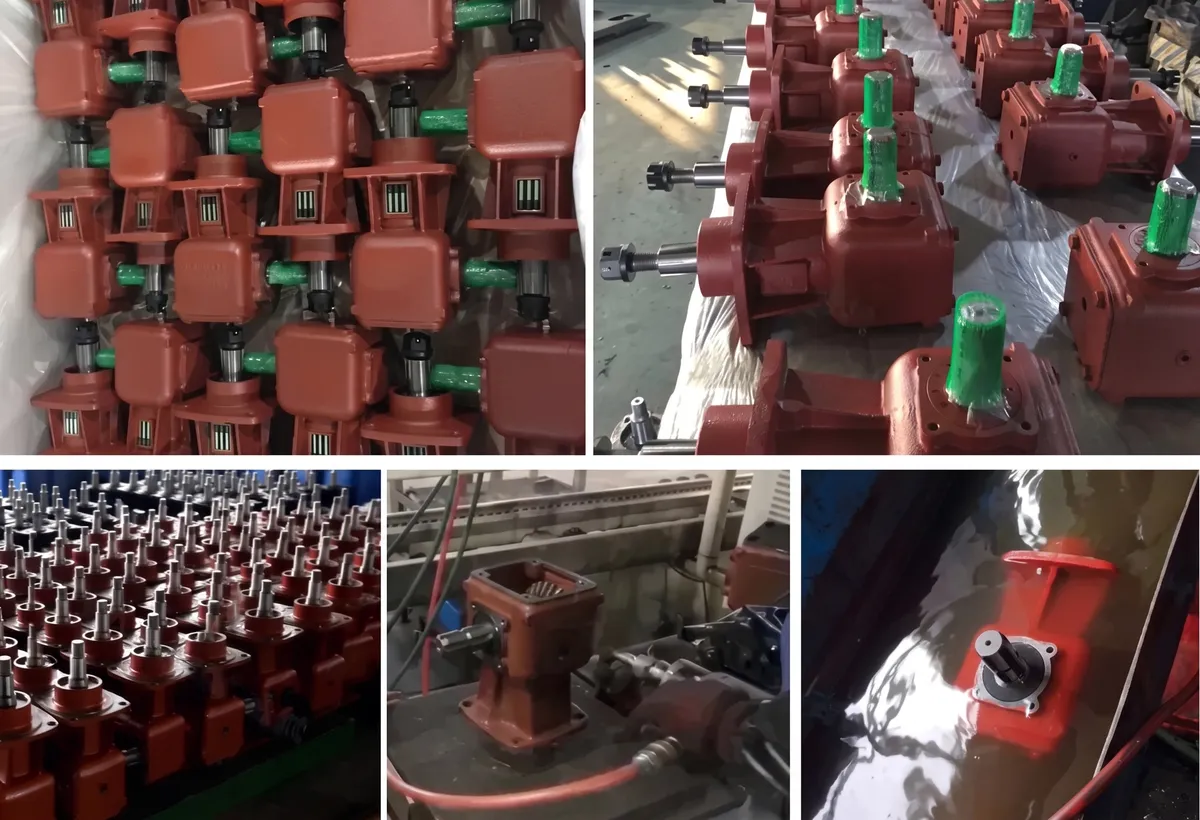
Rotary Cutter Gearbox Manufacturing Process
1. Raw Material Selection and Incoming Inspection
All raw materials, including ductile iron casting stock, alloy steel bar for shafts and gears, and sealing compounds, are subject to incoming material certification review and physical testing before release to production. Chemical composition verification by spectrometric analysis and mechanical property testing (tensile strength, hardness, and impact resistance) confirm that materials meet the specified grades required for agricultural gearbox duty. Batch traceability is maintained throughout production to support quality investigations if field performance data indicates a material non-conformance.
2. Housing Casting and Heat Treatment
Gearbox housings are produced by precision sand casting or permanent mold casting processes using certified ductile iron melt. After casting, housings undergo controlled stress-relief annealing to eliminate residual casting stresses that could cause dimensional instability during subsequent machining operations. The annealed castings are then shot-blasted to clean scale and surface oxide from all external and internal faces before transfer to the machining cells, ensuring clean surfaces for accurate fixturing and measurement throughout the machining process.
3. CNC Precision Machining of Housing Bores and Faces
Bearing bores, shaft seal seats, mounting flange faces, and oil port thread positions are machined on multi-axis CNC machining centers to achieve the tight dimensional tolerances required for correct bearing fit and seal performance. Bore roundness, cylindricity, and positional accuracy between the input and output bore axes are controlled to ensure correct bevel gear mesh geometry after assembly, which is a primary determinant of gearbox noise, efficiency, and gear service life.
4. Gear Blank Forging and Precision Hobbing
Gear blanks are produced by closed-die forging from alloy steel bar, establishing the dense, refined grain structure required for high fatigue strength in the gear root and tooth flank zones. After rough turning and normalizing, gear teeth are cut by precision CNC gear hobbing or bevel gear generation machines. Tooth form accuracy, pitch error, and lead deviation are measured by CMM gear inspection equipment against DIN or AGMA gear quality standards before parts are released for carburizing heat treatment.
5. Carburizing, Quenching, and Tempering
Gear sets and shafts are carburized in controlled atmosphere furnaces to build a hardened case layer of specified depth on all critical tooth flank and root surfaces. After carburizing, components are quenched to transform the case microstructure to martensite and then tempered to relieve brittleness while retaining the high surface hardness (typically HRC 58-62) needed to resist pitting fatigue and tooth flank wear. Case depth and core hardness are verified by metallographic section and Rockwell hardness testing on production witness samples.
6. Precision Assembly and Gear Mesh Setting
Gearboxes are assembled in clean assembly bays by trained technicians using controlled torque tools and calibrated fixtures. Tapered roller bearing preload is set to specification using selective shim adjustment, and bevel gear backlash and tooth contact pattern are verified by blue-compound contact inspection before the housing is closed. Correct contact pattern and backlash are the primary assembly quality indicators for gear mesh quality and are critical determinants of gearbox noise level and gear life in service.
7. Run-In Testing and Noise Inspection
Every assembled gearbox is run on a no-load or loaded test stand at specified input speeds for a defined run-in period before oil is drained and replaced with fresh lubricant. During run-in testing, technicians monitor for abnormal vibration, temperature rise above baseline, audible gear noise anomalies, and any seal leakage. Units that fail the run-in acceptance criteria are returned to assembly for investigation and rework before re-test, ensuring that only correctly assembled and functionally verified gearboxes proceed to surface finishing and packing.
8. Surface Treatment and Export Packing
After run-in testing, gearbox exteriors receive red oxide primer as standard surface protection, with optional alternative coatings available for specific corrosion environment requirements. All external oil ports are plugged with transit blanking caps, and shaft ends receive protective covering to prevent damage during handling and transit. Units are packed in export-specification timber crates or cartons with appropriate internal bracing and moisture-absorbing desiccant packs to ensure the gearbox arrives at the customer's facility in the same condition it left the factory.
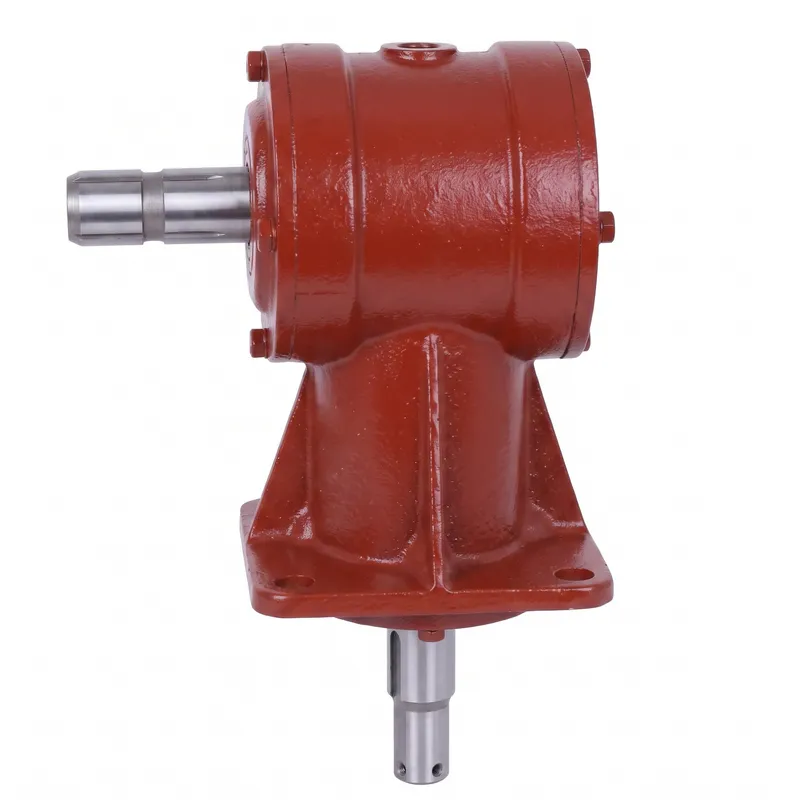
How to Correctly Lubricate the RC-200 Gearbox
1. Select the Correct Oil Grade
Use a high-quality SAE 80W-90 or SAE 90 gear oil meeting GL-4 or GL-5 API service classification for standard operating conditions. In high-temperature seasonal work or when the gearbox is subject to continuous heavy-load use, consider upgrading to a synthetic gear lubricant of equivalent viscosity grade, which provides superior thermal stability and oxidation resistance compared to mineral oil. Never mix different oil grades or brands without fully draining and flushing the housing first, as incompatible additive packages can cause accelerated bearing and seal material degradation.
2. Check Oil Level Before Each Season
Before beginning each cutting season and after any extended storage period, check the rotary cutter gearbox oil level using the external dipstick or level plug provided. The correct oil level should be at the center of the oil level sight glass or at the bottom of the fill port thread when the gearbox is mounted in its operating position on a level surface. Operating with low oil is the leading cause of premature bearing and gear failure in field-operated gearboxes, as partially submerged components run at higher temperatures and with inadequate lubricant film thickness under load.
3. Initial Break-In Oil Change
For new gearboxes or units following a rotary cutter gearbox rebuild, perform an initial oil change after the first 25 to 50 hours of operation. During the break-in period, microscopic metal particles from newly machined gear and bearing surfaces are released into the lubricant. Draining and replacing the oil at this stage removes these particles before they can act as an abrasive contaminant within the gear mesh and bearing raceways. This first-change step significantly extends the overall service interval life of the rebuilt or new unit.
4. Follow Scheduled Oil Change Intervals
Under standard agricultural seasonal use, change the gear oil annually or every 100 to 150 operating hours, whichever comes first. In high-intensity applications such as continuous heavy-brush clearing or operation in dusty, high-temperature environments, shorten the change interval to every 50 to 75 hours to prevent thermal degradation of the oil's viscosity index improvers and anti-wear additives. When changing oil, drain the housing fully while warm to ensure maximum removal of suspended wear particles and degraded oil fractions before refilling to the correct level with fresh lubricant.
5. Inspect Seals During Every Service
At every oil change, visually inspect the output shaft seal area and input shaft seal zone for any sign of oil weeping, seal lip damage, or contamination tracking onto the housing exterior. Even minor oil seepage from seal positions indicates that one or more lip seals have lost effective contact pressure and should be replaced before the next operating season. Proactive seal replacement is significantly less costly than the emergency gearbox removal and rotary cutter gearbox repair that follows when contaminated oil causes catastrophic bearing or gear failure mid-season.
6. Lubricate External Grease Points
Some RC-200 configurations include external grease nipples for blade hub bearings, yoke splines, or other auxiliary bearing points that are not lubricated by the internal oil bath. Identify and apply the manufacturer-specified grease to all such points at each oil service interval using a hand grease gun with the appropriate grease type (typically NLGI 2 lithium complex or equivalent). Do not over-grease labyrinth seal areas, as excess grease pressure can displace sealing elements and create pathways for contamination ingress at the output seal zone.
7. Seasonal Storage Preparation
Before placing the RC-200 in off-season storage for periods exceeding 90 days, change the gear oil regardless of hours run to remove acidic and moisture-contaminated oil from the previous season. Fresh oil with full additive packages prevents corrosion pitting on gear flanks and bearing raceways during static storage, which can cause premature fatigue failure when the unit is returned to service the following season. Store the gearbox in a dry location protected from direct rainfall, and re-check the oil level and seal condition again before the first use of the new season.
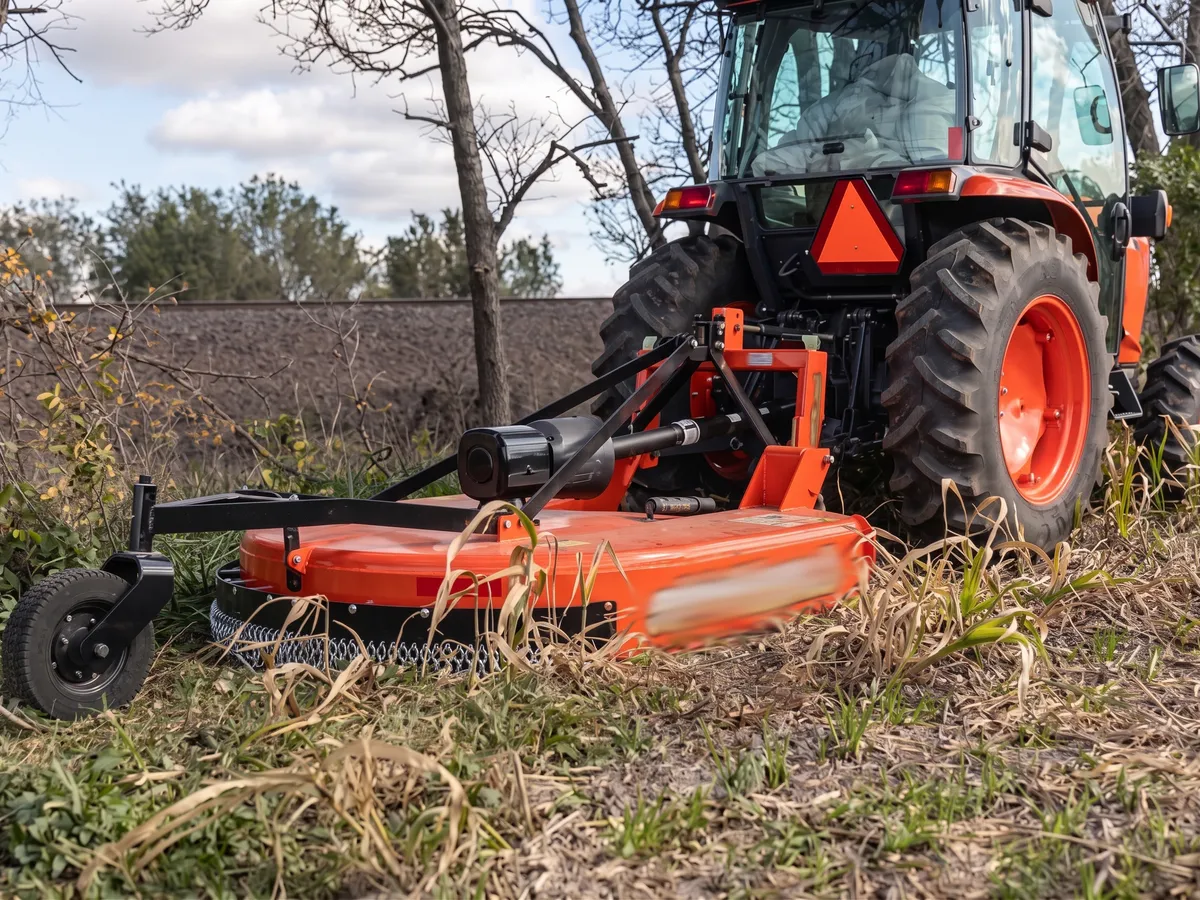
Rotary Cutter Gearbox and PTO Driveline Shaft
The rotary cutter gearbox and the PTO shaft are the two essential and inseparable power transmission components in any PTO-driven rotary cutter or finishing mower system. The Power Take-Off (PTO) shaft is the mechanical connection that runs from the tractor's PTO output stub (located at the rear of the tractor gearbox) to the input shaft of the implement gearbox. On most agricultural tractors, the PTO stub rotates at either 540 RPM or 1000 RPM depending on which PTO speed is selected, and the PTO shaft transmits this rotational energy across the variable gap between the tractor's hitch point and the implement's gearbox input. The PTO shaft itself is a telescoping assembly built from two interlocking profiled steel tubes that slide inside one another, allowing the working length of the shaft to change as the implement rises, falls, and pivots on the three-point hitch or drawbar attachment during field operation. Protective shielding covers the rotating shaft and its universal joint assemblies for operator safety.
The universal joints (U-joints) fitted at each end of the PTO shaft are a critical element of the power delivery chain. They allow the shaft to transmit torque continuously even when the angular alignment between the tractor's PTO stub and the implement's gearbox input shaft is not perfectly straight, which occurs whenever the implement follows uneven ground or the tractor turns. The angle of articulation at the U-joints must be kept within the manufacturer's specified maximum working angle to prevent vibration, rapid U-joint wear, and the torque pulsation that can cause premature gear failure inside the gearbox for rotary cutter.
The rotary cutter gearbox connects directly from the PTO shaft input at its input flange down to the blade carrier bar on a vertical axis. The gearbox housing mounts rigidly to the implement deck frame through the specified bolt flange pattern, and the input shaft receives the splined end of the PTO shaft's implement-end yoke. As the PTO shaft spins the gearbox input at the selected RPM, the bevel gear set inside the RC-200 converts that horizontal rotation through 90 degrees, driving the vertical output shaft and the blade hub assembly below it. This right-angle drive configuration allows the gearbox to position the entire cutting blade assembly below the implement deck in a compact, low-profile arrangement that maximizes ground clearance while delivering full torque to the blades.
The gearbox handles high-impact shock loads when the heavy swing-away or fixed blades strike thick brush, embedded stones, or small trees during cutting operations. These sudden deceleration events generate torque spikes that can be ten or more times the normal operating torque, and the gearbox must either absorb them through its structural design or route them to a sacrificial protection device. On properly configured implements, a shear bolt drive or slip clutch fitted between the PTO shaft and the gearbox input acts as the weak link, fracturing or slipping before internal gearbox components are damaged. The RC-200's robust bevel gear construction and heavy ductile iron housing provide the structural resilience to withstand the normal cyclic shock loads of heavy agricultural cutting, while the overload protection at the driveline level guards against catastrophic events.
Selecting the correct PTO shaft length and checking the collapsed and extended length against the tractor-to-implement distance range before operation is as important as selecting the correct gearbox. An undersized PTO shaft that bottoms out on the telescoping tubes during tight turns, or an oversized shaft that separates at full extension, will cause immediate and severe mechanical damage to both the shaft and the gearbox input shaft. Always verify PTO shaft specifications alongside gearbox specifications when ordering a replacement gearbox for rotary cutter equipment, to ensure the complete driveline system is correctly matched for safe and reliable operation.
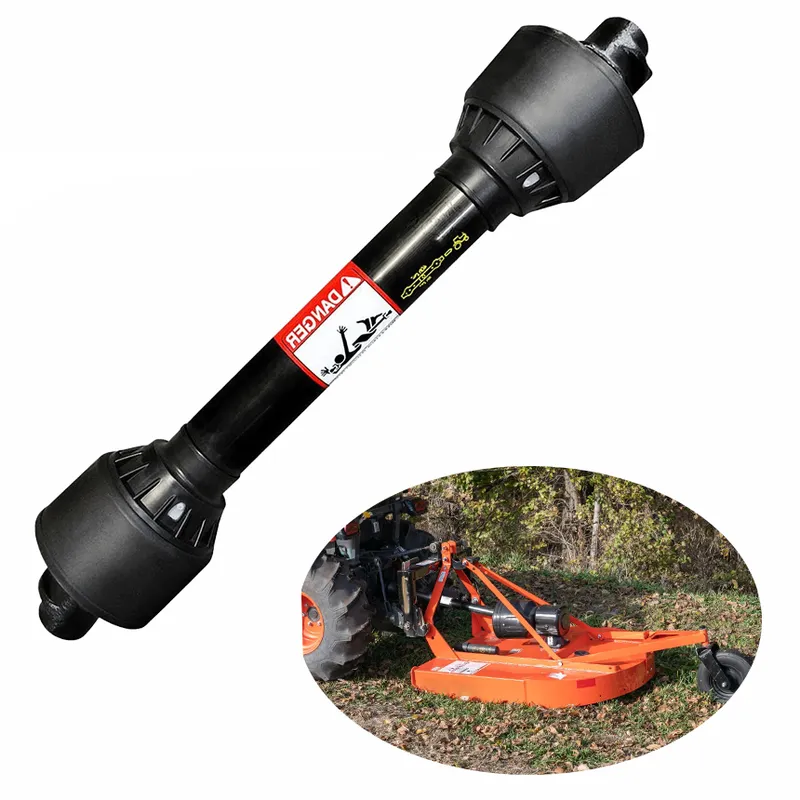
Rotary Cutter Gearbox vs. Flail Mower Gearbox
Two of the most common PTO-driven gearbox types in agricultural vegetation management are the rotary cutter gearbox and the flail mower gearbox. While both redirect PTO power to a cutting mechanism, they are engineered for fundamentally different cutting tasks, blade systems, and operating environments.
Rotary Cutter Gearbox
A rotary cutter gearbox is a mechanical power transmission unit that redirects rotational energy from a tractor's PTO shaft 90 degrees to a vertical output shaft, reducing speed and multiplying torque to drive heavy slashing blades. The right-angle bevel gear drive configuration connects horizontal PTO shaft rotation to a vertical blade spindle in a compact housing that mounts directly to the cutting deck frame.
Advantages
- Delivers the high torque required to slice through dense brush, saplings, and heavy pasture grass without stalling or overheating under sustained load.
- Housed in heavy-duty ductile iron to withstand severe field impacts and flying debris generated during heavy slashing and clearing work.
- Features a relatively simple straight or spiral bevel gear configuration, making maintenance, parts replacement, and rotary cutter gearbox rebuild operations straightforward for trained workshop technicians.
- Integrates readily with shear bolts or slip clutches to protect internal gears from sudden shock loads when blades contact immovable objects such as large stones or tree stumps.
- Lower parts cost and wider availability of rotary cutter gearbox parts from multiple manufacturers compared to more specialized flail mower units.
Disadvantages
- The robust ductile iron housing construction adds significant weight to the cutting implement, increasing tractor ballasting requirements and potential soil compaction impact.
- Output shaft seals are highly vulnerable to damage if field wire, baler twine, or plastic wrap wraps around the shaft at the housing exit point during cutting operations.
- Internal gears can suffer catastrophic failure if external safety clutches seize, are bypassed, or are incorrectly specified for the operating torque of the tractor.
- Prone to heat buildup during continuous heavy-load operation in extreme summer temperatures without adequate oil volume and correct oil viscosity selection.
Typical Applications
- Agricultural brush hogs and heavy-duty slashers for pasture and paddock clearing.
- Municipal roadside right-of-way clearing and drainage channel maintenance machines.
- Forestry vegetation management and plantation access track clearing implements.
- High-horsepower finishing mower applications on large commercial and institutional turf areas.
Flail Mower Gearbox
A flail mower gearbox is a specialized right-angle drive that transfers PTO power to a side-mounted belt and pulley system, which subsequently spins a horizontal rotor equipped with free-swinging knives or hammer flails at high rotational speeds. The gearbox itself operates as the first stage of the power path, with the belt drive providing a secondary speed step-up to the rotor.
Advantages
- Frequently incorporates an internal overrunning clutch (freewheel) to protect the tractor's PTO brake from the rotor's high rotational inertia during rapid shutdown events.
- Facilitates the high-speed rotor rotation necessary for finely mulching and shredding vegetation and crop residue rather than simply cutting it, producing a finer end product.
- Engineered with heavy-duty bearings specifically to withstand constant high-frequency vibration transmitted from the horizontal flail rotor during mulching operation.
- Maintains a relatively compact profile, allowing the mower to operate close to trees, vines, and fence lines without structural interference.
Disadvantages
- Relies on a secondary side-belt drive system that requires regular tensioning, alignment checking, and periodic belt replacement to prevent power loss and belt slip under load.
- Higher operational rotor speeds generate more internal heat, demanding strictly observed oil change schedules and correct viscosity grade selection to prevent lubricant breakdown.
- Vibration from missing, unbalanced, or worn flail blades on the rotor transmits directly to the gearbox input and can destroy internal bearings rapidly if the condition is not corrected.
- Typically more expensive to source and replace than standard rotary cutter gearbox for sale units due to the integrated freewheel mechanism and higher-speed bearing specifications.
Typical Applications
- Vineyard, orchard, and olive grove floor vegetation management where fine mulching of prunings and trimmings is required.
- Arable crop residue and heavy stubble mulching operations ahead of direct drilling or minimum tillage systems.
- Roadside embankment and ditch maintenance where vegetation regrowth control requires fine mulching to prevent material accumulation.
- Urban park, sports ground, and fine amenity turf grooming applications requiring a consistent and tidy finish.
Side-by-Side Comparison
| Feature | Rotary Cutter Gearbox | Flail Mower Gearbox |
|---|---|---|
| Drive Axis | Vertical (blade spindle) | Horizontal (rotor) via belt |
| Gear Type | Bevel (straight or spiral) | Bevel + belt/pulley stage |
| Output Speed | Low-medium (torque emphasis) | High (rotor speed emphasis) |
| Torque Capacity | Very high (brush/slashing duty) | Moderate (mulching duty) |
| Impact Load Handling | High (heavy blade strike) | Moderate (flail swing-away) |
| Overload Protection | Shear bolt or slip clutch | Internal freewheel clutch |
| Cut Quality | Coarse to medium | Fine (mulching) |
| Rebuild Complexity | Moderate (bevel gears) | Higher (freewheel + timing) |
| Parts Availability | Wide (multiple suppliers) | More limited |
| Best Use Case | Brush, pasture, slashing, clearing | Mulching, orchard, fine finish |
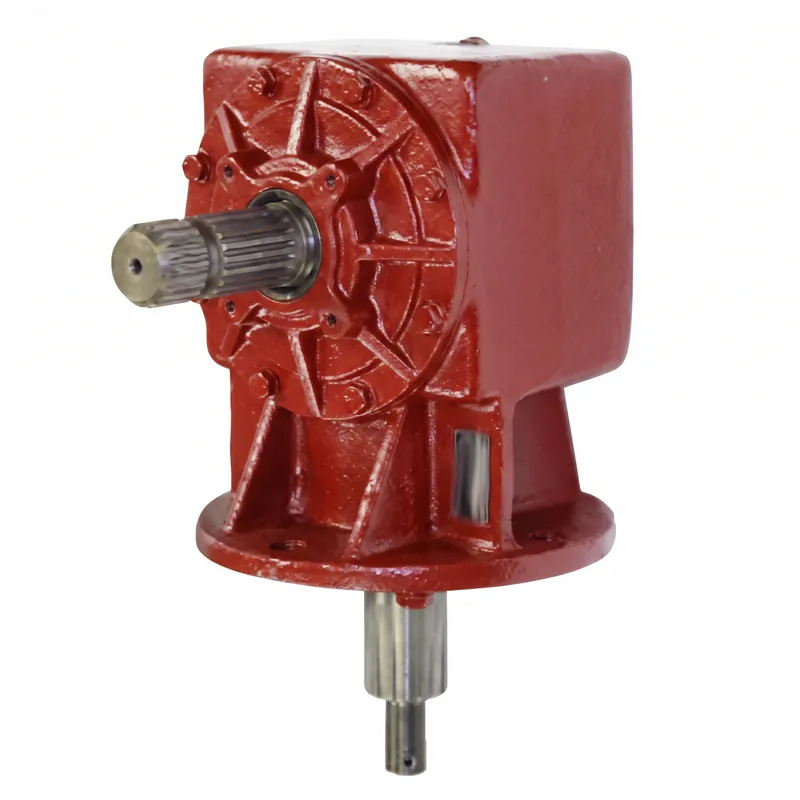
Why Choose CMN Transmission's Rotary Cutter Gearboxes?
Korea CMN Transmission Co., Ltd. was established in 2000 and is headquartered in Sandan-o, Danwon-gu, Ansan-si, Gyeonggi-do, Korea. With over 100 dedicated factory employees, CMN Transmission is focused entirely on the research, development, manufacturing, sales, and aftersales service of agricultural gearboxes for the global market. Over the past two and a half decades, CMN Transmission has earned a strong and growing reputation as a reliable, technically capable supplier to OEMs, agricultural equipment distributors, and end-user operations in more than 60 countries worldwide.
Our product portfolio spans the full breadth of modern agricultural power transmission requirements. As one of the leading rotary cutter gearbox manufacturers in Asia, CMN's range covers rotary cutter gearboxes, rotary tiller gearboxes, feed mixer gearboxes, rotary mower gearbox units, fertilizer spreader gearboxes, flail mower gearboxes, post hole digger gearboxes, round and square baler gearboxes, disc mower gearboxes, center pivot irrigation gearboxes, hydraulic drive gearboxes, silage machine gearboxes, orchard sprayer gearboxes, rotary rake gearboxes, combine harvester gearboxes, grain storage and transportation gearboxes, corn header gearboxes, cutting bar gearboxes, and poultry feeding gearboxes - covering nearly one thousand specifications in total, with custom agricultural gearbox design and manufacturing also available for application-specific requirements.
CMN's annual production volume exceeds 500,000 units, a throughput that supports the process consistency, material procurement scale, and production engineering investment needed to deliver reliable performance and long-term durability across every unit leaving the factory. Quality management is certified to ISO 9001, and CMN also holds CE certification, Environmental Management certification, and Occupational Health and Safety certification, demonstrating a compliance framework aligned with the requirements of European, North American, and global market partners.
Our export markets include the United States, Canada, Mexico, Brazil, Argentina, France, Germany, Italy, Spain, the United Kingdom, Russia, China, India, Thailand, Vietnam, Turkey, Australia, New Zealand, and many more, with extensive accumulated experience providing technical solutions to agricultural machinery partners across widely different climatic, regulatory, and operational environments. Whether you are sourcing a single replacement gearbox for rotary cutter equipment or specifying CMN units as the standard power transmission solution across an OEM production line, our technical and commercial teams can support your requirements from specification through delivery and beyond.
Frequently Asked Questions
Q: Is the RC-200 a direct replacement for the Omni RC-200 rotary cutter gearbox?
A: Yes. The CMN Transmission RC-200 is engineered as a direct drop-in replacement for the original Omni Gear RC-200 unit, with matching flange bolt patterns (6 x 0.905 in / 23 mm), flange diameter (11.8 in / 300 mm), hub pilot (5.3 in / 135 mm), and overall mounting dimensions. No housing modifications, adapter plates, or custom machining should be required for a standard replacement installation on equipment originally fitted with the Omni RC-200.
Q: What gear ratio should I choose for my application?
A: The correct rotary cutter gearbox ratio depends on your tractor PTO speed, available horsepower, and the cutting task. For heavy brush clearing and slashing on high-horsepower tractors (75 hp and above), the 1.21:1 or 1:1 ratio provides the highest torque output. For medium-duty pasture topping and finishing mowing on mid-range tractors (40-75 hp), the 1:1.21 ratio is typically optimal. For lighter vegetation and faster finishing work, the 1:1.46 ratio increases blade speed. Contact our technical team with your tractor spec and implement model if you are unsure which ratio is correct for your setup.
Q: What oil type and how much oil should I use in the RC-200 rotary cutter gearbox?
A: The RC-200 requires SAE 80W-90 or SAE 90 gear oil to GL-4 or GL-5 API specification for standard conditions. Total rotary cutter gearbox oil capacity is 174 oz. (5.2 liters). Always fill to the correct level as indicated by the fill port or level plug when the gearbox is mounted in its normal operating position on a level surface. Check the rotary cutter gearbox oil level at the start of each season and top up if necessary. Change the oil completely after the first 25-50 hours on a new or rebuilt unit, and then annually or every 100-150 operating hours thereafter under normal field conditions.
Q: What is the maximum tractor horsepower the RC-200 is rated for?
A: The RC-200 is rated for a maximum torque input of 28,350 lb.-in. (3,201 Nm), which corresponds to high-horsepower tractor PTO outputs typically in the range of 100 hp and above at 1000 RPM PTO input speed depending on the selected gear ratio. It is used across a broad range of power inputs from approximately 40 hp rotary cutter gearbox duty through 75 hp rotary cutter gearbox applications and up to the heaviest 100 hp rotary cutter gearbox configurations. Always match the gearbox ratio selection to your specific tractor output to avoid over-torquing the gearbox input shaft or driveline.
Q: How do I know if my rotary cutter gearbox needs to be rebuilt or replaced?
A: Common indicators that a rotary cutter gearbox rebuild or replacement is needed include: excessive gear noise or grinding during operation; vibration that was not present when the unit was new; oil leakage from shaft seal areas that persists after seal replacement; play or roughness when the output shaft is rocked by hand with the gearbox stationary; or visible oil contamination with metallic particles on drain plug magnets at service intervals. A rotary cutter gearbox repair may address seal, bearing, or minor gear wear, while severe internal damage or cracked housing typically warrants full replacement with a new unit.
Q: What causes rotary cutter gearbox seals to fail prematurely?
A: The most common causes of early seal failure are: field wire, baler twine, or plastic wrap wrapping around the output shaft, which physically cuts or displaces the seal lips; incorrect oil type causing seal lip material swelling or hardening; operating with excess oil pressure buildup due to a blocked pressure relief plug; running with insufficient oil causing overheating and thermal damage to seal rubber compounds; and using incorrect replacement seal dimensions during a rotary cutter gearbox repair that leaves the lip contact diameter mismatched to the shaft journal diameter. Inspect the shaft for scoring or groove wear at the seal contact area before fitting new seals, as a grooved shaft will destroy new seals quickly regardless of seal quality.
Q: Can I use synthetic oil in the RC-200 rotary cutter gearbox?
A: Yes, a high-quality full synthetic gear lubricant of SAE 75W-90 or SAE 75W-140 GL-5 specification is compatible with the RC-200 and offers advantages in high-temperature or extended-interval applications: superior thermal stability, better cold-weather flow for startup protection, and longer effective service life before oxidation and additive depletion require a change. Do not mix synthetic and mineral oils without fully draining and flushing the housing first. If switching from mineral to synthetic oil on an established gearbox, inspect seals for condition before refilling as worn seals may weep synthetic oil more readily than they did with the more viscous mineral base.
Q: Where can I find rotary cutter gearbox parts for the RC-200?
A: CMN Transmission supplies a full range of rotary cutter gearbox parts for the RC-200 series, including replacement seal kits, tapered roller bearing sets, bevel gear pairs, input and output shaft assemblies, and pressure relief plugs. Parts can be ordered directly through our website or by contacting our sales team with your model number and a description of the required component. We maintain inventory for current production models and can quote lead times for less common items. Using OEM-specification replacement parts is strongly recommended over generic substitutes, particularly for seal and bearing positions where dimensional precision directly affects service life.
Q: What is the difference between the RC-200 and smaller models like the RC-130 or RC-150L?
A: The RC-200 is the heaviest and highest-torque unit in the RC right-angle drive range at 220 lbs (99.8 kg) and up to 28,350 lb.-in. torque capacity, compared to the RC-150L at 145 lbs (66 kg) or the RC-130L at 120 lbs (54 kg). The RC-200's larger flange diameter (11.8 in / 300 mm), greater CL-to-flange distance (9.5 in / 241 mm), and higher bolt hole count (6 x 23 mm) reflect its higher structural loading requirement. Choosing the correct model requires matching the gearbox's rated input torque to the actual maximum torque output of the tractor PTO system, with a safety margin that accounts for shock loading from the cutting application.
Q: Do you offer custom shaft configurations or oil port positions on the RC-200?
A: Yes. CMN Transmission offers custom configurations on the RC-200 for OEM customers and volume buyers, including custom shaft spline or keyed profiles, alternative shaft extension lengths, repositioned oil fill and drain port locations, and alternative surface coating specifications beyond the standard red oxide primer. Custom configurations typically require minimum order quantities and longer lead times for tooling and production scheduling. Contact our sales engineering team with your specific application requirements and production volume for a technical and commercial assessment of your custom gearbox requirements.
Customer Reviews
Jake Harrington, Pasture Management, United States
"We've been running these gearboxes on our ranch in Texas for going on two seasons now. Replaced an old OEM unit that finally gave out after years of heavy brush work, and honestly the RC-200 from CMN has been just as solid if not better. Fitted straight up, no modifications needed. We run it on a 90 hp tractor cutting heavy cedar and mesquite saplings, and the thing just keeps going. Oil seals have stayed tight, no weeping, no noise issues. The 1:1.21 ratio works perfect for our conditions. Definitely ordering a spare to keep on the shelf."
Doug Carmichael, Agricultural Equipment, Canada
"I supply rotary cutter gearbox parts and replacement units to farms across Ontario, and this is the third batch of RC-200 units I've ordered from CMN Transmission over the past 18 months. Every shipment has arrived well packed, dimensions exactly as spec'd, and customers haven't come back with complaints. The tapered roller bearings run noticeably quieter than some cheaper units I've sourced elsewhere. Shipping to Canada was faster than I expected, about 12 days door to door. Communication from the sales team was clear and they sent full documentation with no chasing required. Will keep ordering."
Rodrigo Escamilla, Sugarcane Field Operations, Mexico
"We bought two RC-200 units for our rotary cutters operating in sugarcane fields in Veracruz. The fit was direct, the torque feels strong and stable even under heavy load conditions with mature cane. We have operated both units for approximately 200 hours so far without any mechanical problems. The oil level is easy to check, which helps a lot with field maintenance. The sales team spoke fluent Spanish and answered all our technical questions quickly. Shipping to Mexico was seamless. Very satisfied with the quality and price."
Brett Summers, Livestock and Hay Farm, Australia
"We operate contract slashing services across South Australia and Western Australia using a fleet of eight rotary cutter implements. Had two RC-200 gearboxes fail from a previous supplier within a single season, which was a disaster mid-contract. Switched to CMN Transmission on a recommendation and ordered four units. We're now 14 months in across three of them with one still awaiting fitment, and not a single failure or leak. The triple lip seal holds up well even in the red clay soils and dry grass dust we work in constantly. Build quality is clearly better than what we had before. Very happy with the decision to switch suppliers."
Marc Delacroix, Roads Maintenance, France
"We use CMN's RC-200 gearboxes on our rotary mowers for road shoulder maintenance in the department. The manufacturing quality is solid, and the tapered roller bearings hold up well under our heavy-duty use conditions. We ordered five units in March and they were delivered to France in about 15 days. The export packaging was very robust, with no damage upon receipt. The value for money is significantly higher than some European equivalents we have tried. We plan to renew our order for next year."
Klaus Hofmann, Grain Farm, Germany
"I was a bit cautious ordering from Korea initially - we have had mixed experiences with imported gearboxes here in Germany - but a colleague in the same business had already been using CMN units for a year and gave them a strong recommendation. We ordered two RC-200 units for our rotary slasher equipment. Both arrived in perfect condition, well within the quoted delivery window. The gear mesh quality is excellent, very low noise even at full PTO speed. We had a minor query about the oil spec and the technical response from CMN was clear and helpful. After 300 hours across both units, both are still performing without any issues. German quality standards are high and these units meet them."
Paulo Henrique Ribeiro, Stubble Treatment, Brazil
"Purchased one RC-200 gearbox to replace a worn original on an older Rhino rotary cutter. The replacement fit was exact - bolt pattern, flange dimensions, all matched the spec sheet without needing any adaptation. Fitted it myself in about 3 hours with standard workshop tools. It has now been running for one full cutting season in central Brazil on our soybean and corn stubble clearing operation - roughly 350 hours in total. Still tight, still quiet, oil level has stayed stable and the seals are clean. Honestly would not have expected this level of quality at this price point. Fast shipping to Mato Grosso was also a positive surprise. Would recommend to anyone looking for a reliable replacement gearbox for rotary cutter applications."
Simon Blackwood, Roadside and Railway Maintenance, United Kingdom
"We run several rotary cutters for roadside and railway embankment maintenance across the East Midlands. Ordered three RC-200 units from CMN Transmission in February - the main reason we chose them was the detailed technical spec sheet and the fact they answered all our pre-purchase questions clearly and without delay. Units arrived at our depot in 11 days. First unit is now 8 months into regular use on our toughest embankment machine and the gearbox is performing well. The pressure relief plug and oil level check setup are well thought out for field servicing. We're planning to standardize on the CMN RC-200 across the rest of the fleet when the existing gearboxes come up for replacement."
Gianluca Ferretti, Vineyard Management, Italy
"We purchased four RC-200 units for our mowing equipment used in vineyard management in Tuscany and Umbria. The choice of the 1:1 ratio proved to be correct for our operating conditions. After about ten months of seasonal use, the gearboxes show no oil leaks, abnormal noise, or obvious wear. The export packaging was excellent: all four units arrived intact. Customer service promptly answered all our technical questions prior to purchase. Very good value for money for a product of this caliber. We will definitely order again."
Additional information
| Edited by | Yjx |
|---|
Related products
-
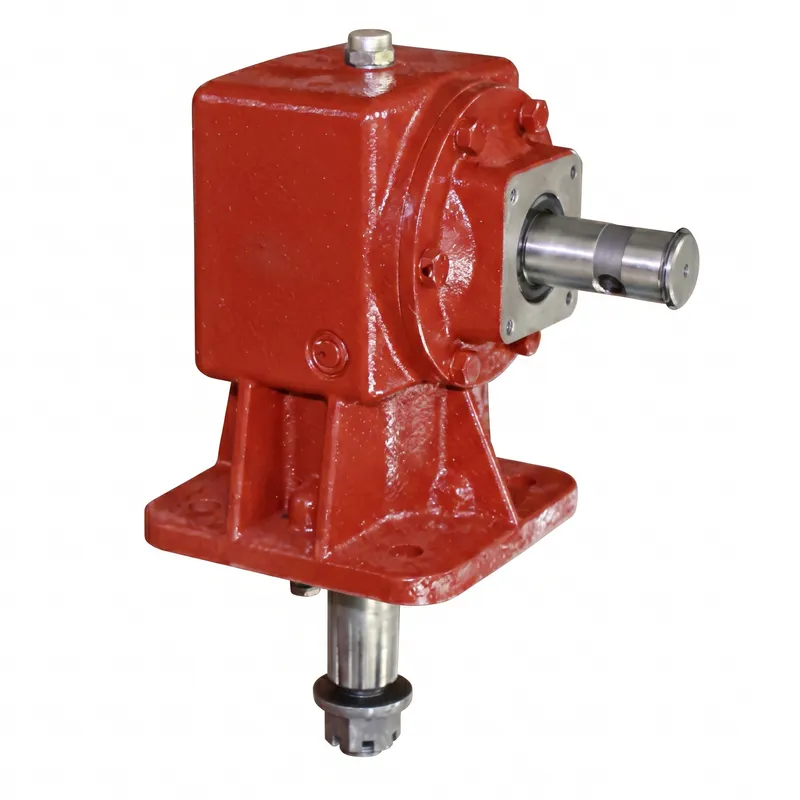
RC-33 Rotary Cutter Gearbox Replacement for Omni RC-33 Gearbox
-
RC-20 Rotary Cutter Gearbox Replacement for Omni RC-20 Gearbox
-
RC-71 Rotary Cutter Gearbox Replacement for Omni RC-71 Gearbox
-
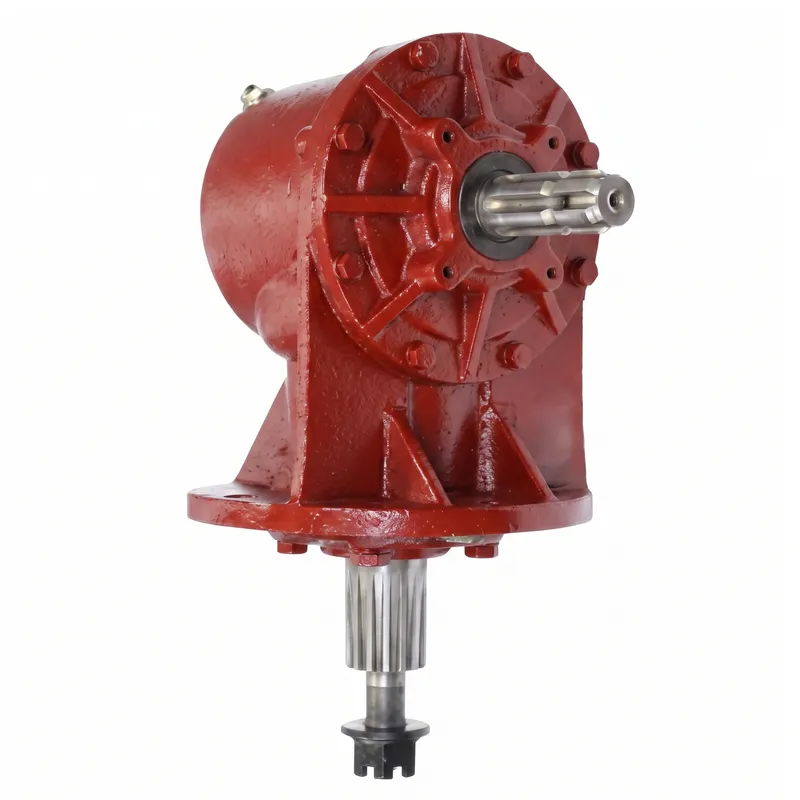
RC-61 Rotary Cutter Gearbox Replacement for Omni RC-61 Gearbox
-
RC-51 Rotary Cutter Gearbox Replacement for Omni RC-51 Gearbox