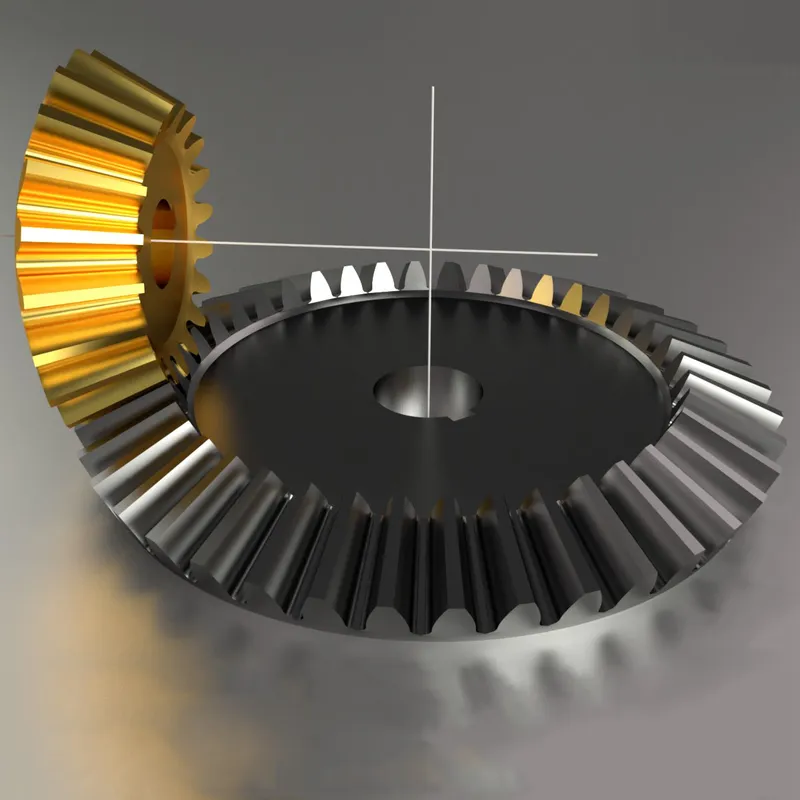
How to Measure Bevel Gears?

Inaccurate bevel gear measurements lead to poor performance, premature failures, and costly rework in machinery applications. Imprecise dimensions and deviations from gear standards result in noisy operation, reduced power transmission efficiency, and alignment issues that can bring production lines to a halt.

锥齿轮的关键尺寸和角度

锥齿轮是复杂的机械部件,其特征在于一系列关键尺寸和角度。
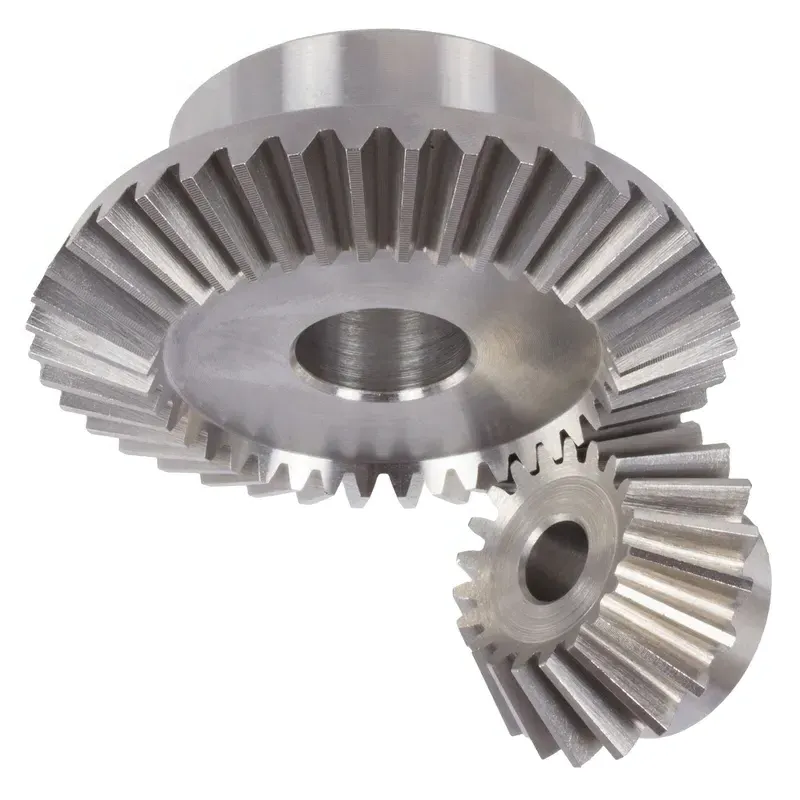
Steel Straight Bevel Gear

A. 基本尺寸的详细检查

锥齿轮的整体几何形状和尺寸由几个关键尺寸决定:

  • 节圆直径: This diameter is measured at the heel end of the 锥齿轮 teeth. It represents the effective size of the gear and is a fundamental parameter for gear calculations and design.
  • 螺锥角节锥角描述了节锥相对于齿轮轴线所形成的角度。它定义了齿轮齿的方向,并决定了齿轮如何与其啮合的小齿轮啮合。
  • 附录和附录齿顶高是指齿轮齿顶高于节锥的高度,齿根高是指齿根低于节锥的高度。两者共同决定了总齿深。齿顶高和齿根高通常与齿轮模数成比例。
  • 面部宽度齿宽是指沿节锥母线从齿根到齿尖测量的齿轮齿宽。它影响齿轮的强度和承载能力。较大的齿宽通常能传递更大的扭矩。
  • 锥体距离锥距是指从节锥顶点到锥齿轮中面的距离。它是装配过程中确定齿轮相对于其啮合小齿轮位置的关键尺寸。
  • 顶点距离顶点距离测量齿轮轴线到节锥顶点的偏移量。它有助于确定齿轮之间的理论啮合点。

B. 锥齿轮的基本角度

除了线性尺寸外,还有几个角度对于确定锥齿轮的几何形状至关重要:

  • 面部角度:齿面锥面母线与齿轮轴线之间的夹角。它决定了齿轮齿外端相对于旋转轴线的角度。
  • 边缘角度:测量外锥母线与齿轮轴线之间的距离,边缘角定义了最靠近顶点的齿内端的斜率。
  • 附加角这是齿顶角的等效角度,它以角度术语定义从齿面角度到外边缘的齿高。
  • 牙槽角相应地,牙根角测量的是从节线到牙根的角度牙齿深度。

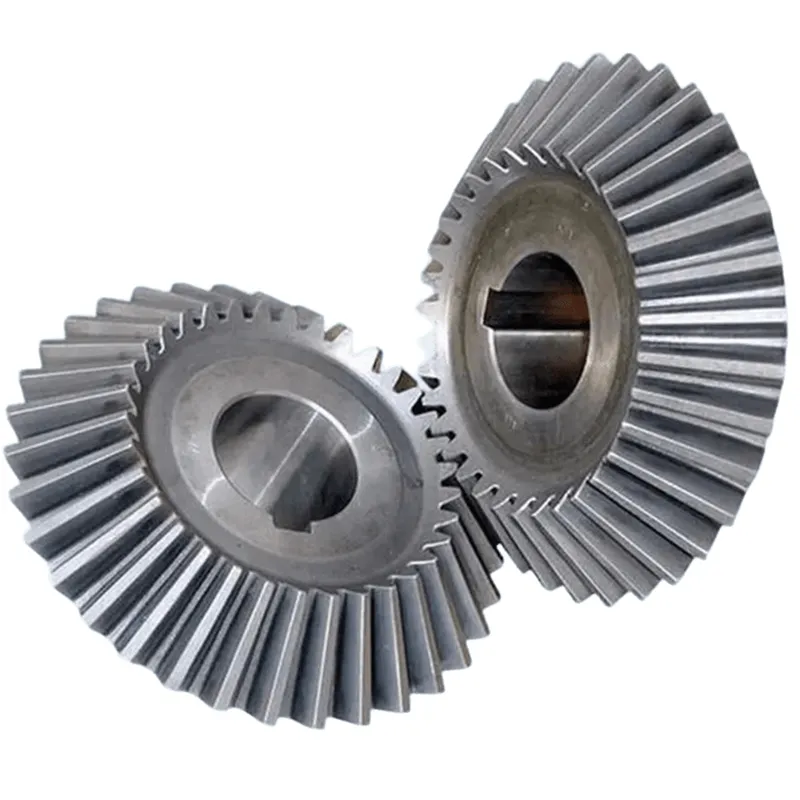
Bevel Gear

C. 反弹

齿隙是指两个啮合齿轮齿之间的间隙或游隙。一定的齿隙对于润滑、制造公差和热膨胀是必要的。然而,过大的齿隙会导致噪音、振动和定位不准。齿隙通常使用专用工具在啮合最紧密的位置进行测量,或者在固定齿轮的情况下测量其角度游隙。

D. 模块

齿轮模数是表示齿尺寸的标准化单位。它定义为节圆直径与齿数的比值。在锥齿轮中,模数通常在齿根端标明,以便于制造。模数越大,齿越大,齿距越粗;而节圆直径越小,模数越小。

Measuring Bevel Gears Step by Step

Step 1: Gather Required Tools and Equipment

To accurately measure bevel gears, you will need the following tools:

  • Vernier caliper or micrometer for measuring tooth thickness, depth, and pitch diameter
  • Bevel protractor for measuring pitch and root angles
  • Gear tooth vernier caliper for measuring tooth thickness at a specific depth
  • Surface plate and height gauge for checking gear runout and mounting distance

Step 2: Measure Pitch Diameter

To measure pitch diameter:

  1. Place the bevel gear on a surface plate with the back face down.
  2. Position the height gauge perpendicular to the surface plate and align its measuring tip with the pitch line on a gear tooth flank.
  3. Zero the height gauge at this position.
  4. Rotate the gear 180 degrees and measure the height at the corresponding pitch line on the opposite tooth flank.
  5. The pitch diameter is calculated by adding the two height measurements.

Repeat this process on multiple teeth around the gear to ensure consistency and check for potential runout issues.

Step 3: Measure Tooth Thickness

To measure tooth thickness:

  1. Use a gear tooth vernier caliper positioned at the pitch line.
  2. Measure the thickness of a tooth at the pitch line, taking care not to damage the tooth profile.
  3. Repeat this measurement on several teeth around the gear, noting any variations.

Alternatively, a standard vernier caliper or micrometer can be used to measure the chordal thickness at the base of the tooth.

Step 4: Measure Pressure and Root Angles

To measure these angles:

  1. Place the bevel protractor on the pitch cone of the gear, aligning its edge with a tooth flank.
  2. Read the pressure angle directly from the protractor scale at the point of tangency with the tooth profile.
  3. Reposition the protractor to align with the root line of the tooth to measure the root angle.

Verify that the measured angles match the specified gear design parameters.

Step 5: Inspect Gear Runout

Gear runout refers to the variation in gear geometry as it rotates about its axis. To check runout:

  1. Mount the bevel gear on a mandrel or arbor supported by V-blocks on a surface plate.
  2. Position a dial indicator with its probe contacting the back face of the gear near the outer diameter.
  3. Slowly rotate the gear, noting the total indicator reading (TIR) on the dial.
  4. Compare the measured TIR to the specified tolerance for runout.

Repeat this process at the front face of the gear and at the pitch diameter to fully evaluate gear runout.

Step 6: Verify Mounting Distance

The mounting distance is the axial position of the bevel gear relative to its mating gear. To verify mounting distance:

  1. Place the bevel gear on a surface plate with its front face down.
  2. Use a height gauge to measure the distance from the surface plate to the back face of the gear at the specified mounting distance radius.
  3. Compare this measurement to the gear’s designed mounting distance.

Bevel Gear for Robotics

Specific Considerations for Different Bevel Gear Types

A. Straight Bevel Gears

Straight bevel gears feature teeth that are straight and conical. When measuring 直齿锥齿轮, pay close attention to the following parameters:

  • Pitch diameter: Measure the pitch diameter at the back cone distance. This is where the gear meshes with its mating pinion. Use a vernier caliper or micrometer for accurate measurements.
  • Tooth thickness: Check the tooth thickness at the normal section. This is measured at the standard pitch circle. A gear tooth vernier is the preferred tool for this measurement.
  • Back cone distance: This is the distance from the cone center to the back face of the gear. It’s a critical dimension that affects gear alignment. Measure it using a depth micrometer or a coordinate measuring machine (CMM).
  • Face angle: The angle formed by the pitch cone with the back face of the gear is the face angle. This can be measured with a bevel protractor or on a CMM. Verify that it matches the specified design angle.

B. Spiral Bevel Gears

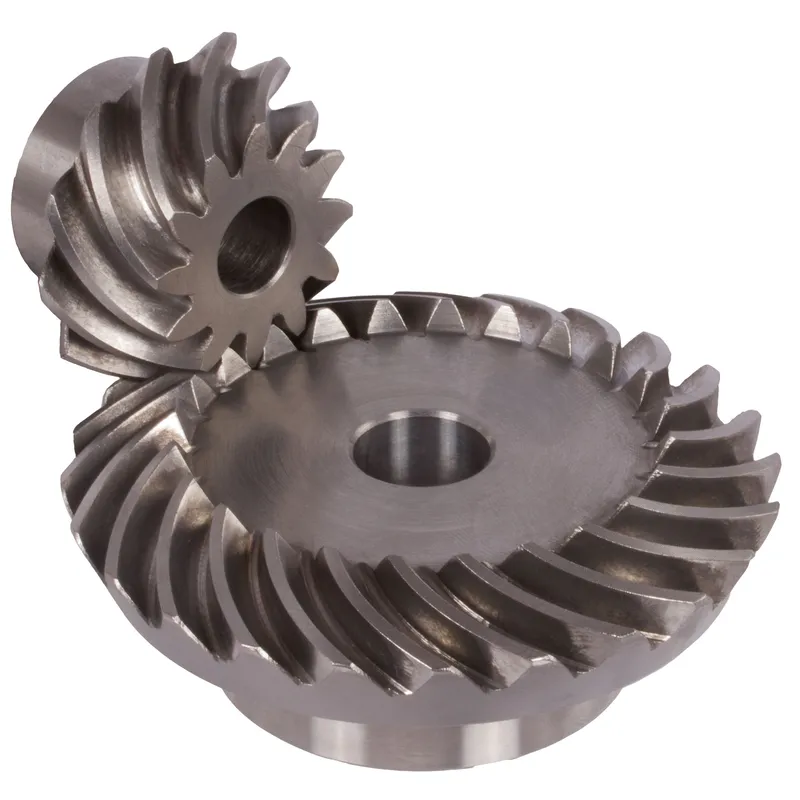
Spiral bevel gears have curved teeth that are positioned along diagonal lines across the surface of the cone. Key dimensions to check for spiral bevel gears include:

  • Mean spiral angle: This is the angle between the tooth trace and an element of the pitch cone that passes through the middle of the tooth trace. It’s measured at the mean cone distance. Use a spiral bevel gear testing machine equipped with a dividing head for reliable measurements.
  • Pressure angle: The pressure angle in a spiral bevel gear is measured at the mean point. It’s defined as the angle between a line normal to the tooth surface and a plane tangent to the pitch surface. Special tooling on a gear measuring machine is needed to accurately assess pressure angle.
  • Pitch apex to crown: This is the distance in the axial plane between the pitch apex and the crown gear. The crown gear is the larger of the two mating spiral bevel gears. A direct measurement can be made using a depth micrometer.

Steel Spiral Bevel Gears

C. Hypoid and Zerol Bevel Gears

Hypoid and Zerol bevel gears are special types of spiral bevel gears. Hypoid gears have an offset between the axes of the pinion and gear, while Zerol gears have zero offset. When measuring these gear types, focus on:

  • Pitch apex to crown: Similar to spiral bevel gears, this dimension is critical for proper assembly and operation. Use a depth gauge to measure the distance from the heel end of the tooth to the pitch apex.
  • Offset: For hypoid gears, the pinion axis is offset above or below the gear axis. This offset affects tooth contact and must be carefully controlled. It can be measured with a hypoid gear testing machine that simulates the operating positions of the gear and pinion.
  • Spiral angle: Both hypoid and Zerol gears have spirally curved teeth. The spiral angle is defined at the mean point for these gear types. As with spiral bevel gears, use a spiral bevel gear tester with a dividing head to measure this parameter.

Zerol Bevel Gear