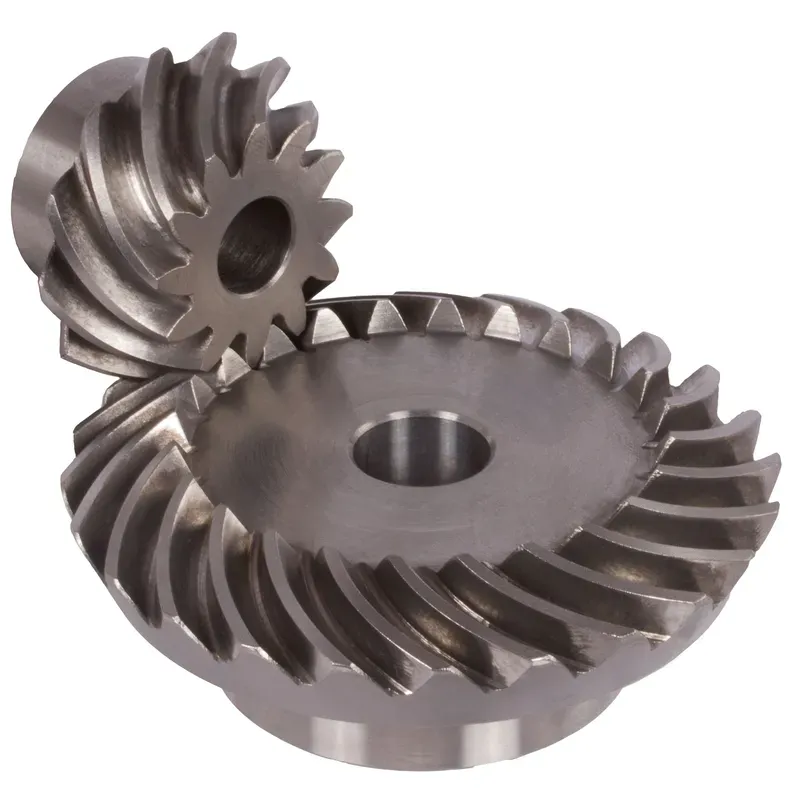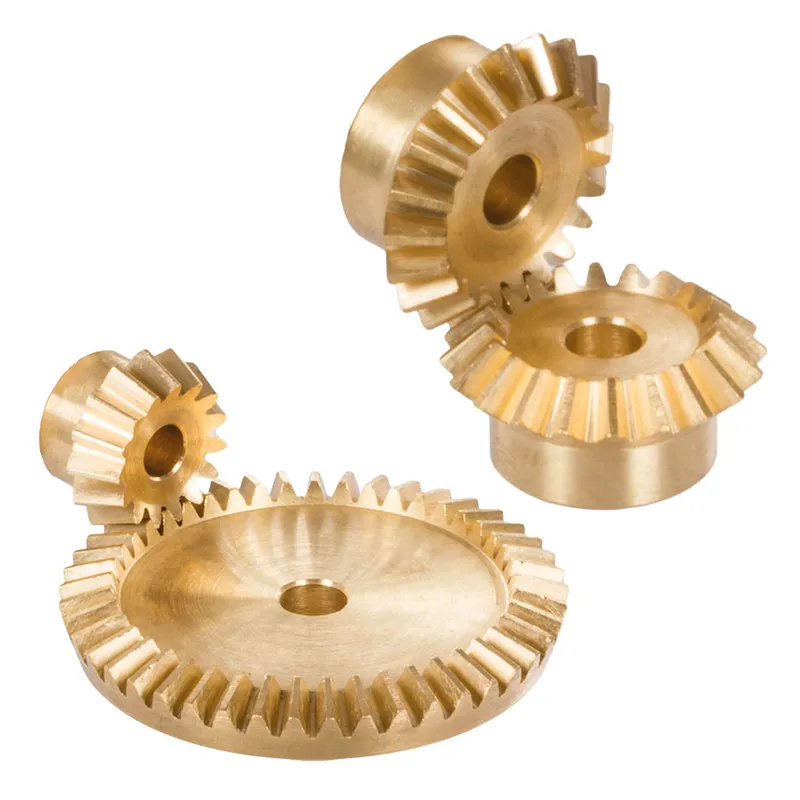
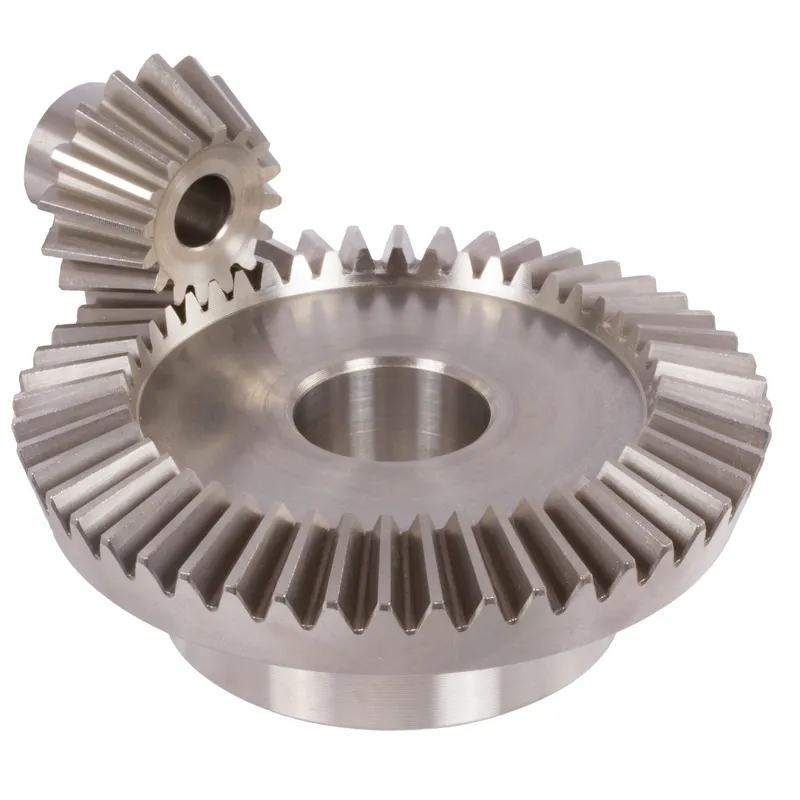
स्टेनलेस स्टील बेवल गियर अनुपात 4:1 स्ट्रेट-टूथ सिस्टम
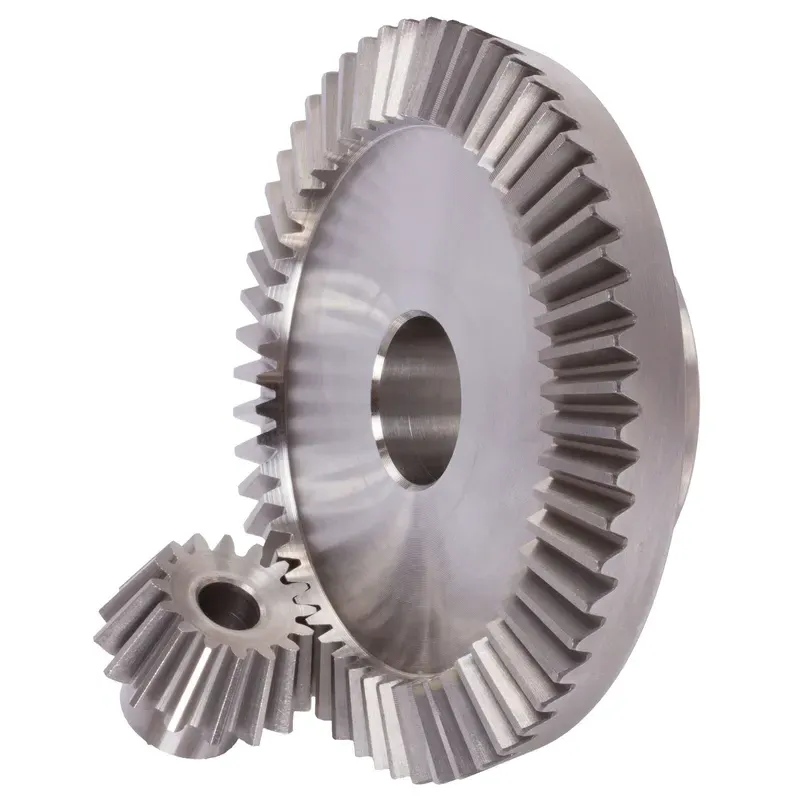
स्टेनलेस स्टील बेवल गियर्स का 4:1 अनुपात वाला सीधा दांत वाला सिस्टम एक यांत्रिक गियर सेटअप है जिसे दो प्रतिच्छेदी शाफ्टों के बीच कुशल शक्ति संचरण के लिए डिज़ाइन किया गया है, जो आमतौर पर समकोण (90°) पर स्थित होते हैं। ये बेवल गियर टिकाऊ स्टेनलेस स्टील से बने होते हैं, जो जंग, घिसाव और उच्च तापमान वाले वातावरण के प्रति उत्कृष्ट प्रतिरोध प्रदान करते हैं, जिससे वे चुनौतीपूर्ण औद्योगिक अनुप्रयोगों के लिए उपयुक्त होते हैं।
स्टेनलेस स्टील बेवल गियर्स का 4:1 अनुपात वाला सीधा दांत वाला सिस्टम एक यांत्रिक गियर सेटअप है जिसे दो प्रतिच्छेदी शाफ्टों के बीच कुशल शक्ति संचरण के लिए डिज़ाइन किया गया है, जो आमतौर पर समकोण (90°) पर स्थित होते हैं। ये बेवल गियर टिकाऊ स्टेनलेस स्टील से बने होते हैं, जो जंग, घिसाव और उच्च तापमान वाले वातावरण के प्रति उत्कृष्ट प्रतिरोध प्रदान करते हैं, जिससे वे चुनौतीपूर्ण औद्योगिक अनुप्रयोगों के लिए उपयुक्त होते हैं।
4:1 अनुपात का अर्थ है कि बड़ा गियर (पिनियन) एक चक्कर पूरा करने पर छोटा गियर चार चक्कर लगाता है। इससे गति में काफी कमी आती है और टॉर्क बढ़ जाता है। सीधे दांतों वाली डिज़ाइन में गियर के दांत रैखिक रूप से व्यवस्थित होते हैं, जो स्पाइरल बेवल गियर की तुलना में निर्माण और संरेखण में आसान होते हैं। दांतों के अचानक आपस में जुड़ने के कारण ये थोड़े शोर करते हैं, लेकिन कम से मध्यम गति वाले अनुप्रयोगों के लिए आदर्श हैं जहाँ सटीकता और टिकाऊपन आवश्यक हैं।
स्टेनलेस स्टील बेवल गियर अनुपात 4:1
| 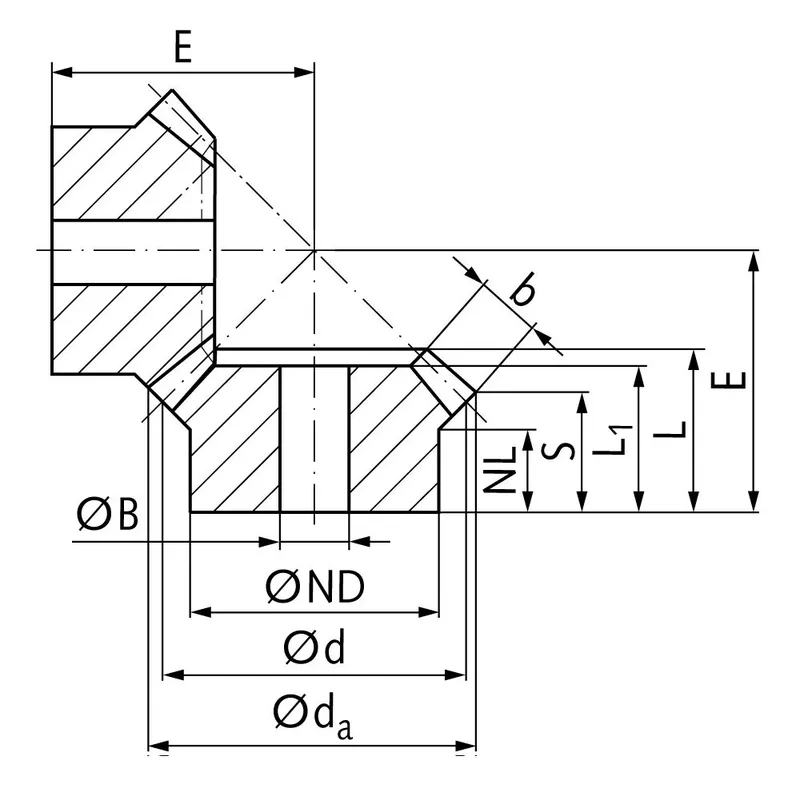 |
| मॉड्यूल | संख्या दांतों का | डीए | डी | रा | एनएल | एल1 | एल | एस | बी | बीएच7 | ई | टॉर्क* | वज़न |
| मिमी | मिमी | मिमी | मिमी | मिमी | मिमी | मिमी | मिमी | मिमी | मिमी | एनसीएम | जी | ||
| 1 | 15 | 17,8 | 15 | 13 | 7,7 | 17,3 | 17,3 | 8,4 | 9,3 | 5 | 38 | 0,14 | 15 |
| 1 | 60 | 60,3 | 60 | 30 | 10,0 | 15 | 17,1 | 15,1 | 9,3 | 8 | 22 | 0,56 | 160 |
| 1,5 | 15 | 26,7 | 22,5 | 18 | 14,45 | 28 | 28,9 | 15,5 | 13,9 | 8 | 60 | 0,48 | 42 |
| 1,5 | 60 | 90,4 | 90 | 50 | 12,0 | 25 | 27,6 | 24,6 | 13,9 | 15 | 35 | 1,92 | 745 |
| 2 | 15 | 34,0 | 30 | 20 | 13,5 | 29 | 29,9 | 15,5 | 15 | 10 | 75 | 1,34 | 80 |
| 2 | 60 | 120,9 | 120 | 60 | 20,0 | 35 | 40,1 | 37,0 | 15 | 25 | 50 | 5,36 | 1600 |
| 2,5 | 15 | 42,5 | 37,5 | 30 | 16,1 | 35 | 36,8 | 17,6 | 20 | 10 | 92 | 2,5 | 190 |
| 2,5 | 60 | 151,2 | 150 | 80 | 18,0 | 33 | 37,8 | 33,8 | 20 | 25 | 50 | 10,0 | 2600 |
| 3 | 15 | 51,0 | 45 | 30 | 13,15 | 38 | 39,7 | 15,7 | 25 | 10 | 105 | 4,4 | 270 |
| 3 | 60 | 181,5 | 180 | 80 | 18,0 | 35 | 40,6 | 35,5 | 25 | 30 | 55 | 17,6 | 3800 |
| 4 | 15 | 68,0 | 60 | 40 | 12,5 | 43 | 44,8 | 16,0 | 30 | 20 | 135 | 8,9 | 520 |
| 4 | 60 | 242,0 | 240 | 90 | 20,0 | 41 | 50,1 | 44,0 | 30 | 30 | 70 | 35,6 | 8300 |
स्टेनलेस स्टील बेवल गियर के फायदे
उच्च टॉर्क क्षमता
स्टेनलेस स्टील बेवल गियर का एक प्रमुख लाभ उच्च टॉर्क भार को संभालने की उनकी क्षमता है। बेवल गियर की ज्यामिति और डिज़ाइन परस्पर क्रिया करने वाले शाफ्टों के बीच शक्ति और टॉर्क के कुशल संचरण की अनुमति देते हैं।
संक्षिप्त परिरूप
बेवल गियर गैर-समानांतर शाफ्टों के बीच शक्ति संचरण के लिए एक कॉम्पैक्ट समाधान प्रदान करते हैं। शंक्वाकार ज्यामिति का उपयोग करके, बेवल गियर सीमित स्थान के भीतर घूर्णन की दिशा को प्रभावी ढंग से बदल सकते हैं।
सुचारू और शांत संचालन
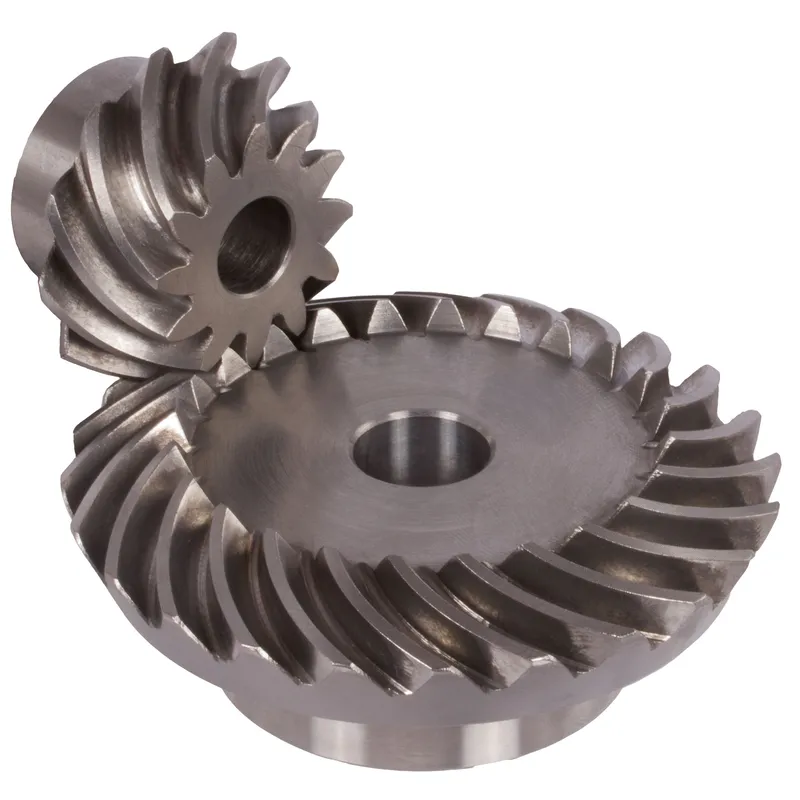
सही ढंग से डिज़ाइन और निर्मित होने पर, बेवल गियर सुचारू और शांत संचालन प्रदान कर सकते हैं। गियर के दांतों की ज्यामिति में प्रगति, जैसे कि स्पाइरल बेवल गियर और हाइपॉइड गियर का उपयोग, ने बेवल गियर की सुगमता और शोर कम करने की क्षमताओं में उल्लेखनीय सुधार किया है। स्पाइरल बेवल गियर के घुमावदार दांतों का आकार क्रमिक जुड़ाव और अलगाव की अनुमति देता है, जिसके परिणामस्वरूप सीधे बेवल गियर की तुलना में यह अधिक शांत संचालन प्रदान करता है।
शाफ्ट कोणों में बहुमुखी प्रतिभा
बेवल गियर शाफ्ट के कोणों के मामले में लचीलापन प्रदान करते हैं। हालांकि बेवल गियर के लिए सबसे सामान्य शाफ्ट कोण 90 डिग्री होता है, लेकिन इन्हें विभिन्न शाफ्ट कोणों के साथ काम करने के लिए डिज़ाइन किया जा सकता है।
स्टेनलेस स्टील बेवल गियर के नुकसान
उच्च विनिर्माण जटिलता
स्टेनलेस स्टील बेवल गियर की मुख्य कमियों में से एक यह है कि अन्य प्रकार के गियर, जैसे कि स्पर गियर, की तुलना में इनका निर्माण अधिक जटिल होता है। बेवल गियर के उत्पादन के लिए वांछित दाँतों की ज्यामिति और सतह की फिनिश प्राप्त करने हेतु विशेष मशीनरी और सटीक निर्माण प्रक्रियाओं की आवश्यकता होती है। इस जटिलता के कारण निर्माण लागत बढ़ सकती है और डिलीवरी में अधिक समय लग सकता है।
गलत संरेखण के प्रति संवेदनशीलता
अन्य प्रकार के गियरों की तुलना में बेवल गियर संरेखण में गड़बड़ी के प्रति अधिक संवेदनशील होते हैं। संरेखण में गड़बड़ी के कारण भार का असमान वितरण, गियर के दांतों पर तनाव में वृद्धि और समय से पहले खराबी आ सकती है।
सीमित गति क्षमता
बेवल गियर की गति क्षमता सीमित होती है। तेज़ गति पर, गियर के दाँतों के बीच फिसलने की क्रिया के कारण बेवल गियर अत्यधिक शोर और कंपन उत्पन्न करते हैं। इससे कार्यक्षमता कम हो जाती है और घिसाव बढ़ जाता है। इसलिए, बेवल गियर का उपयोग आमतौर पर मध्यम से कम गति की आवश्यकता वाले अनुप्रयोगों में किया जाता है।
उच्च लागत
बेवल गियरों के निर्माण में आवश्यक जटिलता और सटीकता के कारण, सरल गियरों की तुलना में इनकी लागत अक्सर अधिक होती है। विशेष मशीनरी, कुशल श्रमिक और कड़े गुणवत्ता नियंत्रण उपायों की आवश्यकता बेवल गियरों की बढ़ी हुई लागत में योगदान देती है। इसके अतिरिक्त, विशिष्ट अनुप्रयोगों के लिए बेवल गियरों की अनुकूलन और विशिष्ट डिज़ाइन आवश्यकताओं से भी इनकी लागत और बढ़ सकती है।
बेवल गियर का उपयोग किस लिए किया जाता है?
ऑटोमोबाइल में विद्युत संचरण
ऑटोमोटिव उद्योग में बेवल गियर का व्यापक उपयोग होता है, विशेष रूप से डिफरेंशियल ड्राइव में। डिफरेंशियल में, ड्राइवशाफ्ट से शक्ति को विभाजित करने और पहियों तक पहुंचाने के लिए सीधे बेवल गियर का उपयोग किया जाता है, जिससे पहिए अलग-अलग गति से घूम सकते हैं। इससे सुचारू मोड़ लेना और बेहतर ट्रैक्शन नियंत्रण संभव होता है। बेवल गियर का उपयोग ट्रांसफर केस और स्टीयरिंग सिस्टम जैसे विभिन्न अन्य ऑटोमोटिव अनुप्रयोगों में भी किया जाता है।
औद्योगिक मशीनरी
बेवल गियर का उपयोग आमतौर पर औद्योगिक मशीनरी में किया जाता है जहाँ परस्पर जुड़े शाफ्टों के बीच शक्ति संचारित करने की आवश्यकता होती है। ये गियरबॉक्स, स्पीड रिड्यूसर और पावर ट्रांसमिशन सिस्टम सहित कई प्रकार के उपकरणों में पाए जाते हैं। बेवल गियर का उपयोग करने वाले औद्योगिक अनुप्रयोगों में खनन मशीनरी, निर्माण उपकरण, प्रिंटिंग प्रेस और कपड़ा मशीनरी शामिल हैं।
एयरोस्पेस और विमानन
एयरोस्पेस और विमानन उद्योग विभिन्न अनुप्रयोगों में विद्युत संचरण के लिए स्टेनलेस स्टील बेवल गियर पर निर्भर करते हैं। बेवल गियर का उपयोग विमान इंजनों, रोटर ड्राइव सिस्टम और सहायक गियरबॉक्स में किया जाता है। इन्हें उच्च भार सहन करने और कठिन परिचालन स्थितियों में विश्वसनीय प्रदर्शन प्रदान करने के लिए डिज़ाइन किया गया है। कॉम्पैक्ट डिज़ाइन और गैर-समानांतर शाफ्ट के बीच विद्युत संचरण की क्षमता के कारण बेवल गियर सीमित स्थान वाले एयरोस्पेस अनुप्रयोगों के लिए उपयुक्त हैं।
समुद्री अनुप्रयोग
बेवल गियर का उपयोग समुद्री अनुप्रयोगों में प्रणोदन प्रणालियों, स्टीयरिंग प्रणालियों और डेक मशीनरी में शक्ति संचरण के लिए किया जाता है। इनका उपयोग समुद्री गियरबॉक्स, थ्रस्टर और विंच में होता है। बेवल गियर की उच्च टॉर्क भार सहन करने और कठोर समुद्री वातावरण का सामना करने की क्षमता इन्हें इन अनुप्रयोगों के लिए उपयुक्त बनाती है। टिकाऊपन और विश्वसनीयता सुनिश्चित करने के लिए समुद्री बेवल गियर अक्सर संक्षारण-प्रतिरोधी सामग्रियों से निर्मित होते हैं।
 |  |
| ऑटोमोटिव डिफरेंशियल के लिए बेवल गियर | औद्योगिक मशीनरी के लिए बेवल गियर |
 |  |
| रोबोटिक्स के लिए बेवल गियर | समुद्री उद्योग के लिए बेवल गियर |
स्टेनलेस स्टील बेवल गियर माप
चरण 1: आवश्यक उपकरण और सामग्री एकत्रित करें
बेवल गियर को सटीक रूप से मापने के लिए, आपको निम्नलिखित उपकरणों की आवश्यकता होगी:
- दांत की मोटाई, गहराई और पिच व्यास मापने के लिए वर्नियर कैलिपर या माइक्रोमीटर का उपयोग किया जाता है।
- पिच और मूल कोणों को मापने के लिए बेवल प्रोट्रैक्टर
- किसी विशिष्ट गहराई पर दांत की मोटाई मापने के लिए गियर टूथ वर्नियर कैलिपर
- गियर रनआउट और माउंटिंग दूरी की जांच के लिए सरफेस प्लेट और हाइट गेज
चरण 2: पिच व्यास को मापें
पिच व्यास मापने के लिए:
- बेवल गियर को सरफेस प्लेट पर इस तरह रखें कि उसका पिछला भाग नीचे की ओर हो।
- हाइट गेज को सरफेस प्लेट के लंबवत स्थिति में रखें और इसके मापने वाले सिरे को गियर के दांत के किनारे पर स्थित पिच लाइन के साथ संरेखित करें।
- इस स्थिति पर हाइट गेज को शून्य पर सेट करें।
- गियर को 180 डिग्री घुमाएं और विपरीत दांत के किनारे पर संबंधित पिच लाइन पर ऊंचाई मापें।
- पिच का व्यास दो ऊँचाई मापों को जोड़कर निकाला जाता है।
एकरूपता सुनिश्चित करने और संभावित रनआउट समस्याओं की जांच करने के लिए गियर के चारों ओर कई दांतों पर इस प्रक्रिया को दोहराएं।
चरण 3: दांत की मोटाई मापें
दांत की मोटाई मापने के लिए:
- पिच लाइन पर स्थित गियर टूथ वर्नियर कैलिपर का उपयोग करें।
- दांत की मोटाई को पिच लाइन पर मापें, ध्यान रहे कि दांत के आकार को कोई नुकसान न पहुंचे।
- गियर के चारों ओर कई दांतों पर इस माप को दोहराएं और किसी भी भिन्नता को नोट करें।
इसके अलावा, दांत के आधार पर कॉर्डल मोटाई को मापने के लिए एक मानक वर्नियर कैलिपर या माइक्रोमीटर का उपयोग किया जा सकता है।
चरण 4: दाब और मूल कोणों को मापें
इन कोणों को मापने के लिए:
- बेवल प्रोट्रैक्टर को गियर के पिच कोन पर रखें और इसके किनारे को दांत के पार्श्व भाग के साथ संरेखित करें।
- दांत की आकृति के स्पर्शबिंदु पर स्थित प्रोटेक्टर स्केल से सीधे दबाव कोण पढ़ें।
- दांत की जड़ के कोण को मापने के लिए प्रोटेक्टर को दांत की जड़ की रेखा के साथ संरेखित करें।
यह सत्यापित करें कि मापे गए कोण निर्दिष्ट गियर डिजाइन मापदंडों से मेल खाते हैं।
चरण 5: गियर रनआउट की जांच करें
गियर रनआउट से तात्पर्य गियर की ज्यामिति में होने वाले उस बदलाव से है जो उसके अक्ष के चारों ओर घूमने पर होता है। रनआउट की जाँच करने के लिए:
- बेवल गियर को सरफेस प्लेट पर वी-ब्लॉक द्वारा समर्थित मैंड्रेल या आर्बर पर माउंट करें।
- डायल इंडिकेटर को इस प्रकार रखें कि उसका प्रोब गियर के पिछले हिस्से से बाहरी व्यास के पास संपर्क में रहे।
- गियर को धीरे-धीरे घुमाएं और डायल पर कुल संकेतक रीडिंग (टीआईआर) को नोट करें।
- मापे गए टीआईआर की तुलना रनआउट के लिए निर्दिष्ट सहनशीलता से करें।
गियर के सामने वाले हिस्से और पिच व्यास पर इस प्रक्रिया को दोहराएं ताकि गियर रनआउट का पूरी तरह से मूल्यांकन किया जा सके।
चरण 6: माउंटिंग दूरी सत्यापित करें
माउंटिंग दूरी, बेवल गियर की उसके साथी गियर के सापेक्ष अक्षीय स्थिति है। माउंटिंग दूरी की पुष्टि करने के लिए:
- बेवल गियर को सरफेस प्लेट पर इस तरह रखें कि उसका सामने वाला हिस्सा नीचे की ओर हो।
- निर्दिष्ट माउंटिंग दूरी त्रिज्या पर सरफेस प्लेट से गियर के पिछले हिस्से तक की दूरी मापने के लिए हाइट गेज का उपयोग करें।
- इस माप की तुलना गियर की डिज़ाइन की गई माउंटिंग दूरी से करें।
अतिरिक्त जानकारी
| द्वारा संपादित | वाईजेएक्स |
|---|