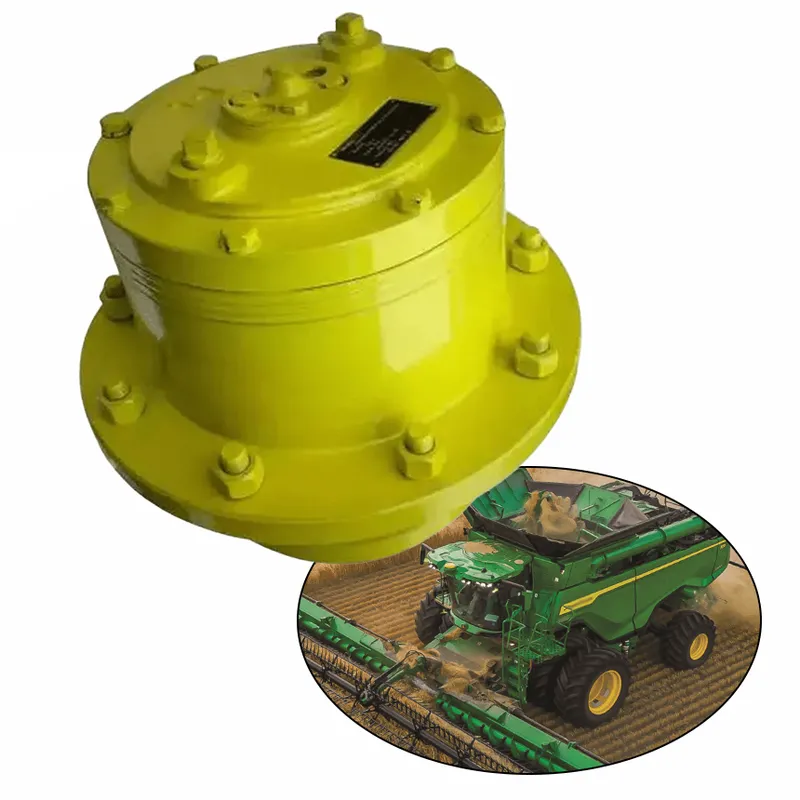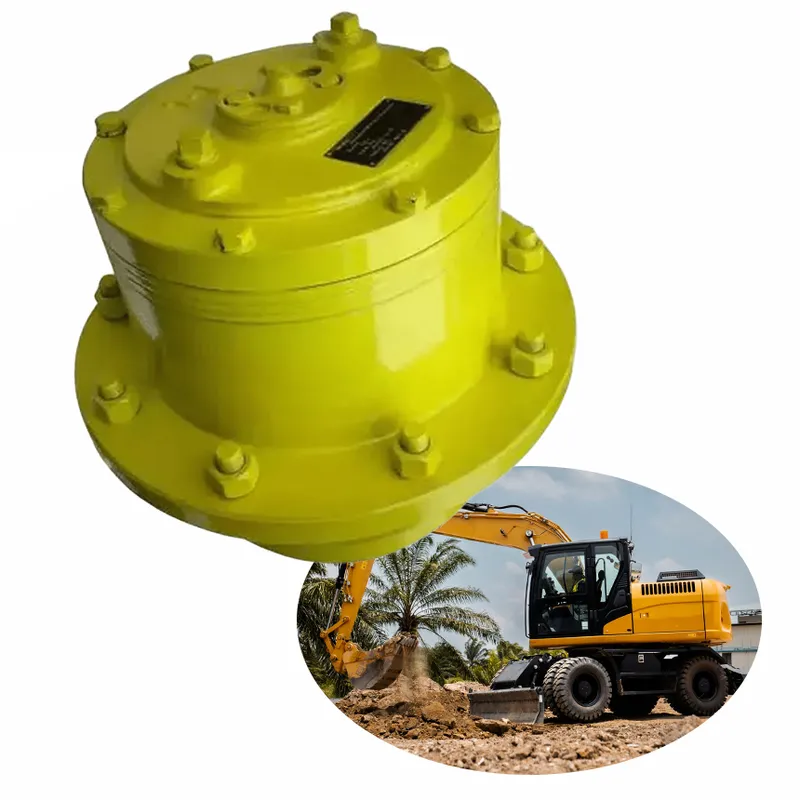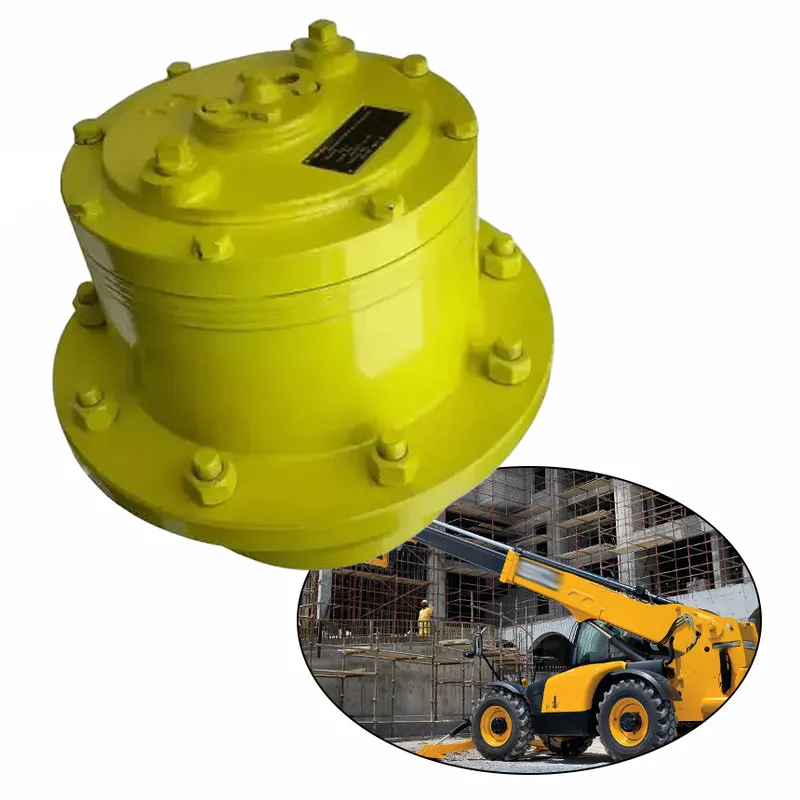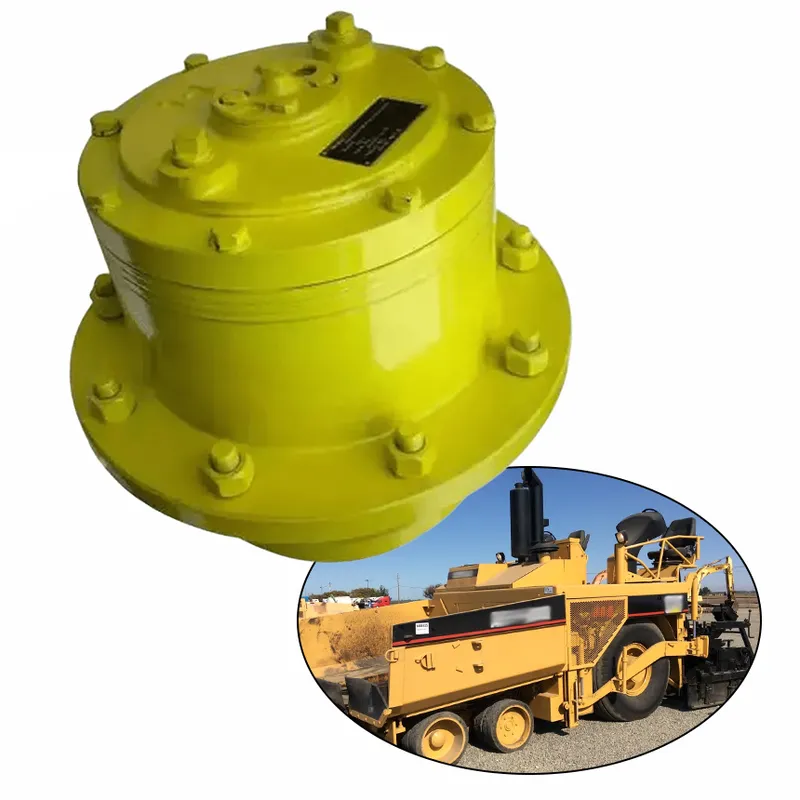
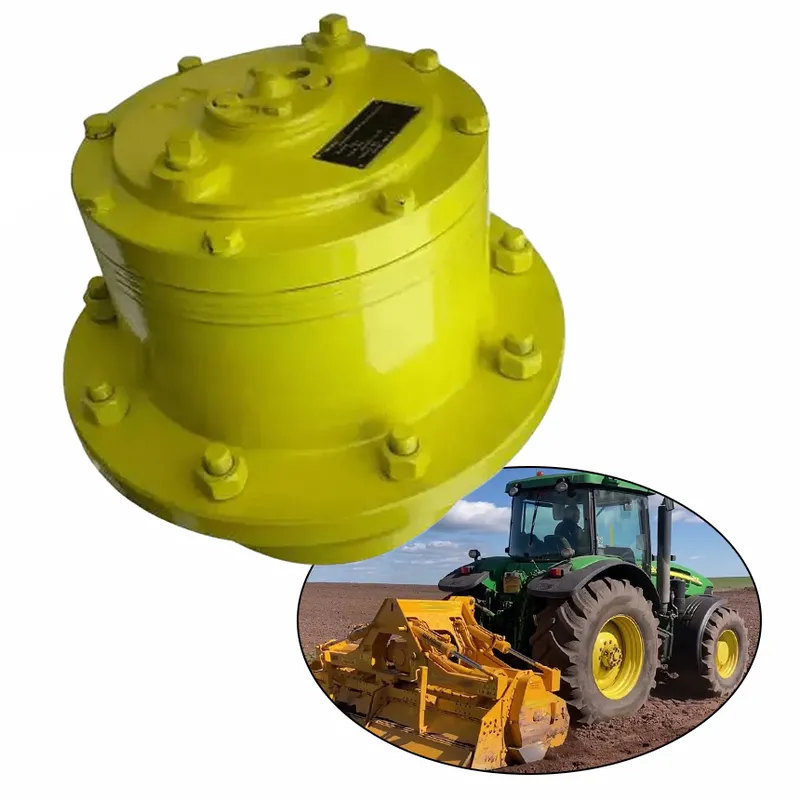
Planetary Wheel Drive Gearbox for Stone Crushers
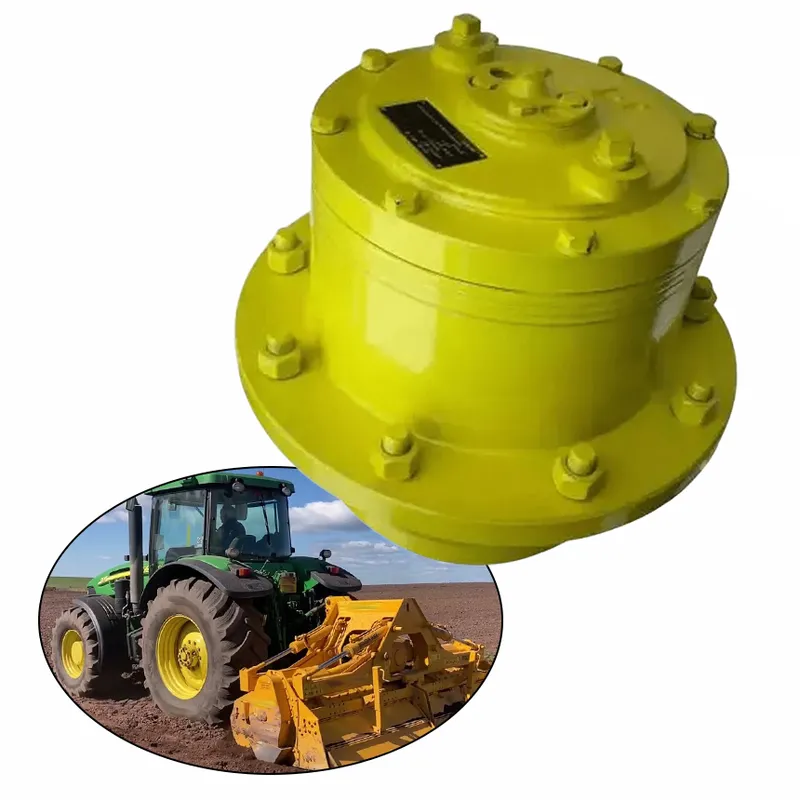
The planetary wheel drive gearbox for stone crushers is a robust, compact mechanical component designed to transmit high torque and achieve significant speed reduction in heavy-duty crushing applications. Utilizing a planetary gear system, comprising a central sun gear, orbiting planet gears, and an outer ring gear, this planetary gearbox efficiently converts the high-speed input from an engine or motor into low-speed, high-torque output essential for pulverizing rocks and aggregates.
The planetary wheel drive gearbox for stone crushers is a robust, compact mechanical component designed to transmit high torque and achieve significant speed reduction in heavy-duty crushing applications. Utilizing a planetary gear system, comprising a central sun gear, orbiting planet gears, and an outer ring gear, this planetary gearbox efficiently converts the high-speed input from an engine or motor into low-speed, high-torque output essential for pulverizing rocks and aggregates. Its design ensures superior load distribution, minimizing wear and enhancing durability under extreme conditions such as vibration, dust, and shock loads commonly encountered in quarries and construction sites.
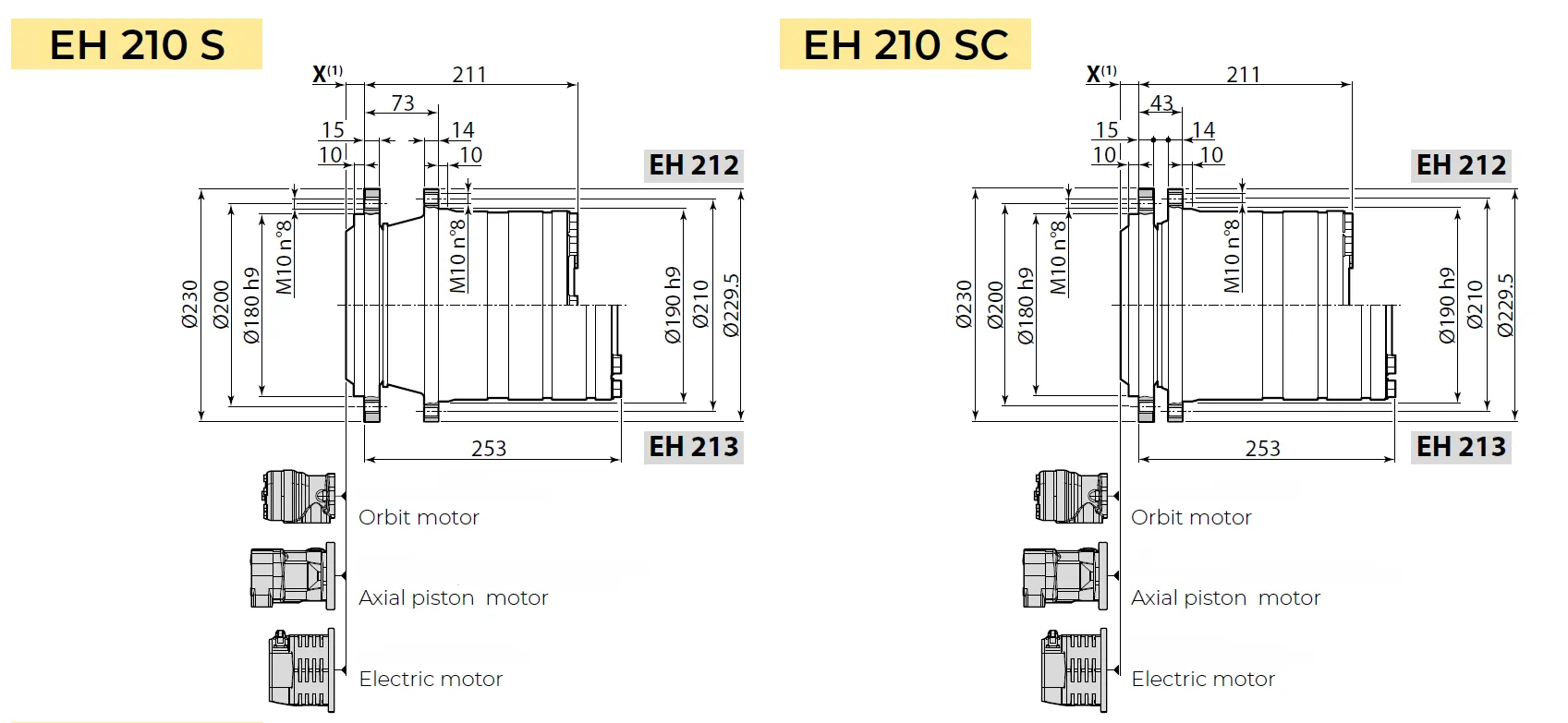
Planetary Wheel Drive Dimensions
Technical Definitions
| Symbols | Units of measurement | Description |
| i | - | Reduction ratio |
| T2max | [Nm] | Maximum output torque |
| T2p | [Nm] | Peak output torque |
| T2maxint | [Nm] | Maximum intermittent torque |
| T2cont | [Nm] | Continuous output torque |
| Pcont | [kW] | Maximum continuous power |
| Pint | [kW] | Maximum intermittent power |
| n1max | [rpm] | Maximum input speed |
| n2max | [rpm] | Maximum output speed |
GR 80
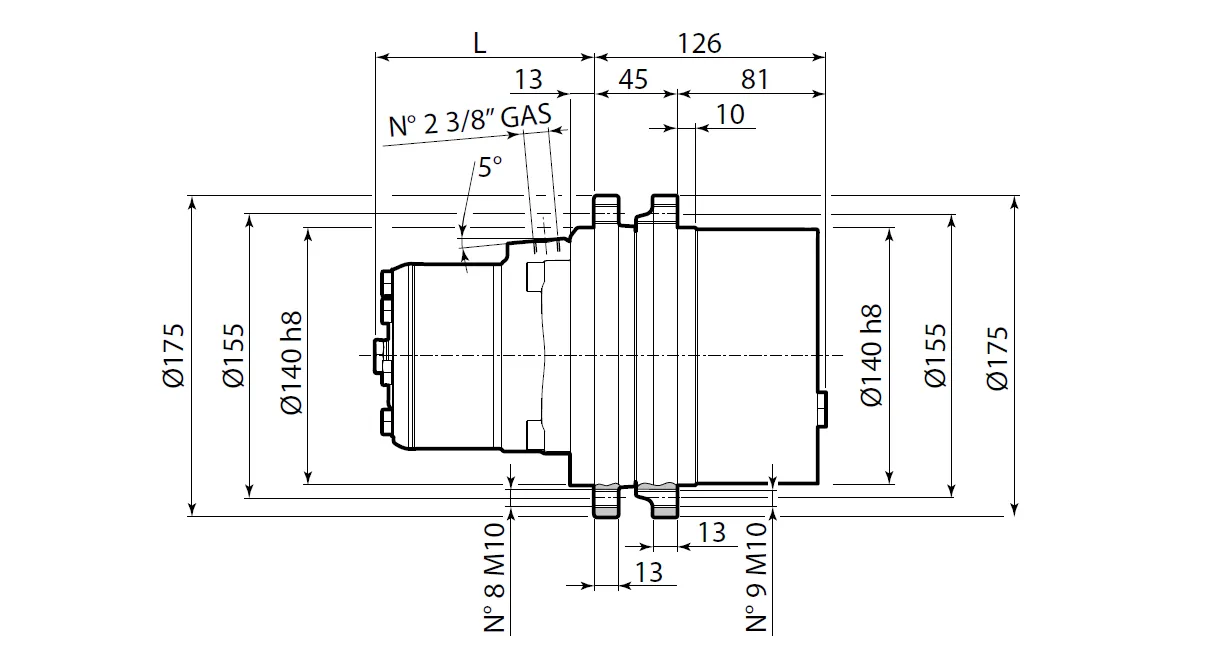
| Type | Motor disp. [cc] | Total disp. [cc] | i | Torque | Speed n2max | Power | |||||||
| T2cont | T2maxint | T2p | Pcont [kW] | Pint [kW] | |||||||||
| [Nm] | Δp [bar] | [Nm] | Δp [bar] | [Nm] | Δp [bar] | [rpm] | portata flow [l/min] | ||||||
| GR80-MR50 | 51,6 | 269,9 | 5,23 | 470 | 145 | 570 | 175 | 630 | 205 | 115 | 30 | 5,5 | 7 |
| GR80-MR80 | 80,3 | 420,0 | 800 | 145 | 960 | 175 | 1060 | 205 | 68 | 30 | 5,5 | 7 | |
| GR80-MR100 | 99,8 | 522,0 | 800 | 115 | 1000 | 145 | 1310 | 205 | 55 | 30 | 5,5 | 7 | |
| GR80-MR125 | 125,7 | 657,4 | 800 | 95 | 1000 | 120 | 1500 | 190 | 45 | 30 | 5,5 | 7 | |
| GR80-MR160 | 159,6 | 834,7 | 800 | 75 | 1000 | 95 | 1500 | 145 | 33 | 30 | 5 | 7 | |
| GR80-MR200 | 199,8 | 1045,0 | 800 | 60 | 1000 | 75 | 1500 | 115 | 26 | 30 | 5 | 7 | |
| GR80-MR250 | 249,3 | 1303,8 | 800 | 50 | 1000 | 60 | 1500 | 95 | 21 | 30 | 4,5 | 6 | |
GR 200
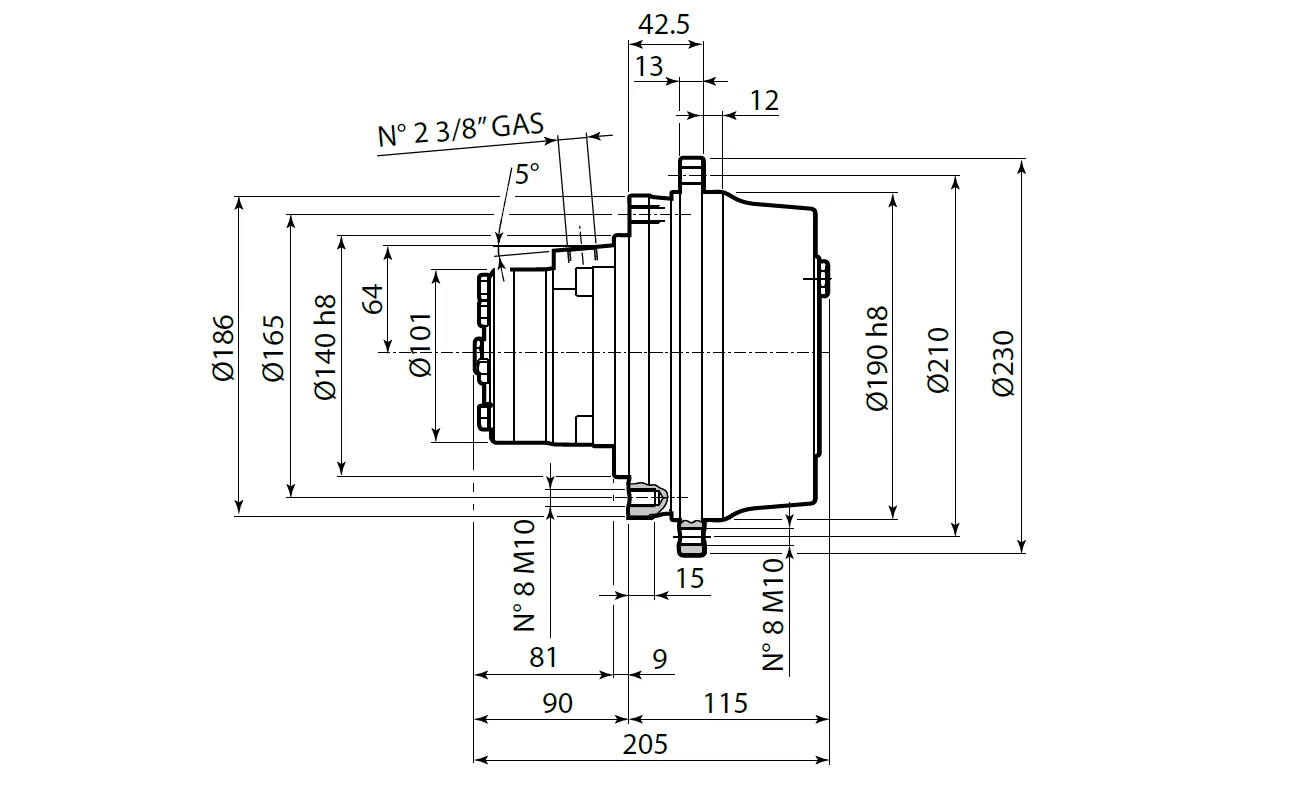
| Type | Motor disp. [cc] | Total disp. [cc] | i | Torque | Speed n2max | Power | |||||||
| T2cont | T2maxint | T2p | Pcont [kW] | Pint [kW] | |||||||||
| [Nm] | Δp [bar] | [Nm] | Δp [bar] | [Nm] | Δp [bar] | [rpm] | portata flow [l/min] | ||||||
| GR200-MR50 | 51,6 | 319,9 | 6,20 | 560 | 145 | 670 | 175 | 740 | 205 | 98 | 30 | 5,5 | 7 |
| GR200-MR80 | 80,3 | 497,9 | 950 | 145 | 1150 | 175 | 1250 | 205 | 58 | 30 | 5,5 | 7 | |
| GR200-MR100 | 99,8 | 618,8 | 1180 | 145 | 1420 | 175 | 1560 | 205 | 46 | 30 | 5,5 | 7 | |
| GR200-MR125 | 125,7 | 779,3 | 1450 | 145 | 1750 | 175 | 1920 | 205 | 38 | 30 | 5,5 | 7 | |
| GR200-MR160 | 159,6 | 989,5 | 1600 | 125 | 2100 | 165 | 2450 | 205 | 29 | 30 | 5 | 7 | |
| GR200-MR200 | 199,8 | 1238,8 | 1600 | 100 | 2150 | 135 | 2500 | 165 | 23 | 30 | 5 | 7 | |
| GR200-MR250 | 249,3 | 1545,7 | 1600 | 80 | 2150 | 105 | 2500 | 135 | 18 | 30 | 4,5 | 6 | |
| GR200-MR315 | 315,7 | 1957,3 | 1600 | 65 | 2150 | 85 | 2500 | 110 | 15 | 30 | 4 | 5 | |
| GR200-MR375 | 372,6 | 2310,1 | 1600 | 55 | 2150 | 70 | 2500 | 90 | 12 | 30 | 3,5 | 4,5 | |
EH 210
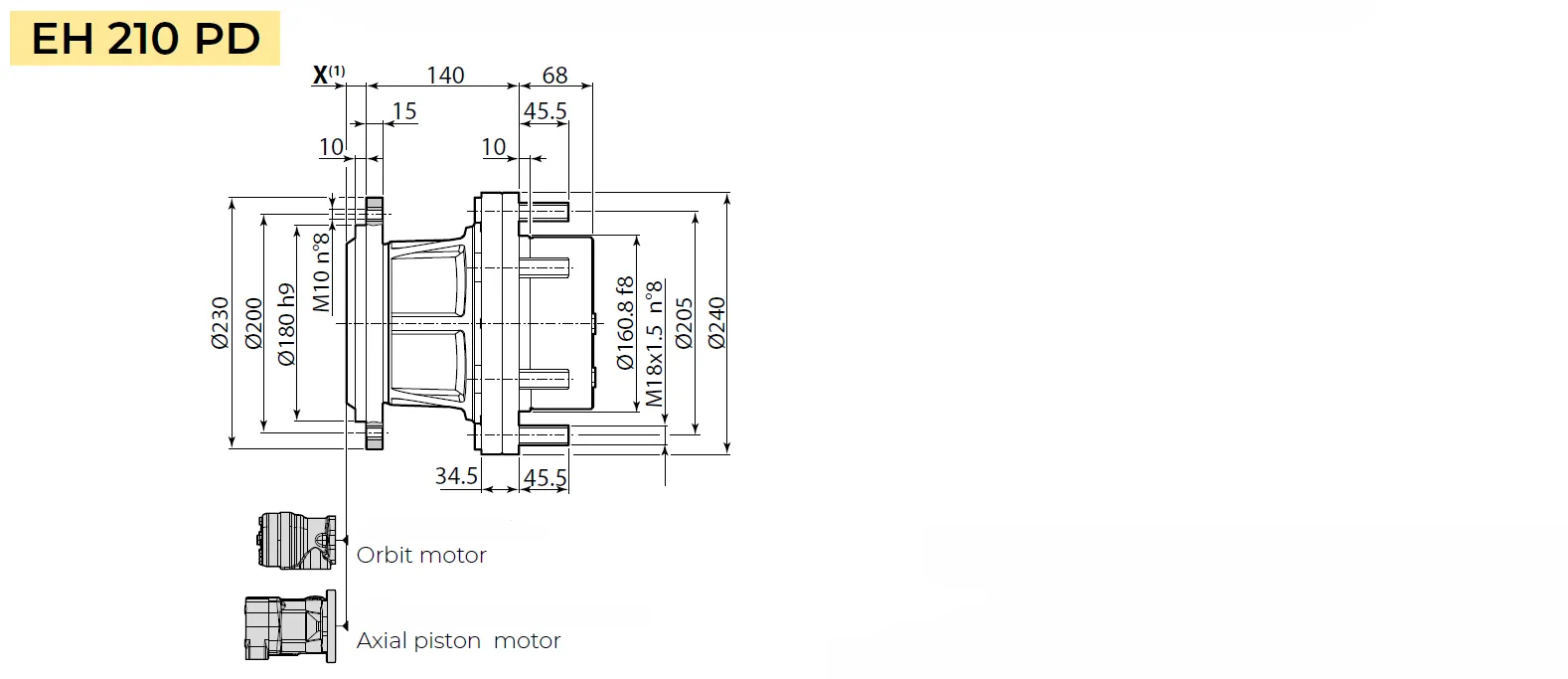
| Type | Weight | Oil quantity | i (da÷a / From÷to) | T2max [Nm] | n1max [rpm] | ||||
| EH 212 | EH 213 | EH 212 | EH 213 | EH 212 | EH 213 | ||||
| EH 210 S | 35 | 40 | 0.8 | 1 | 11 ÷ 29 | 41 ÷ 129 | 3950 | 3500 | |
| EH 210 SC | |||||||||
| EH 210 PD | - | - | |||||||
EH 240
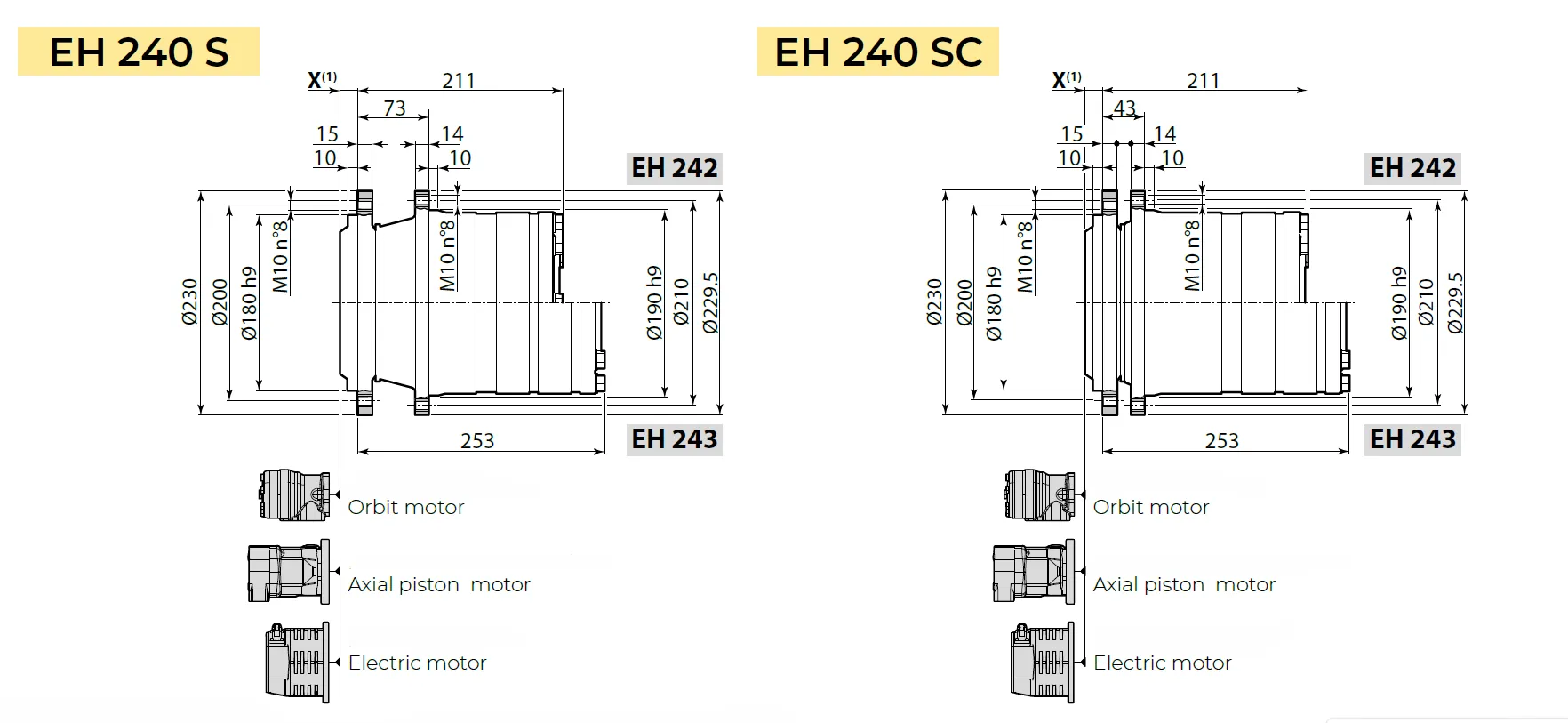
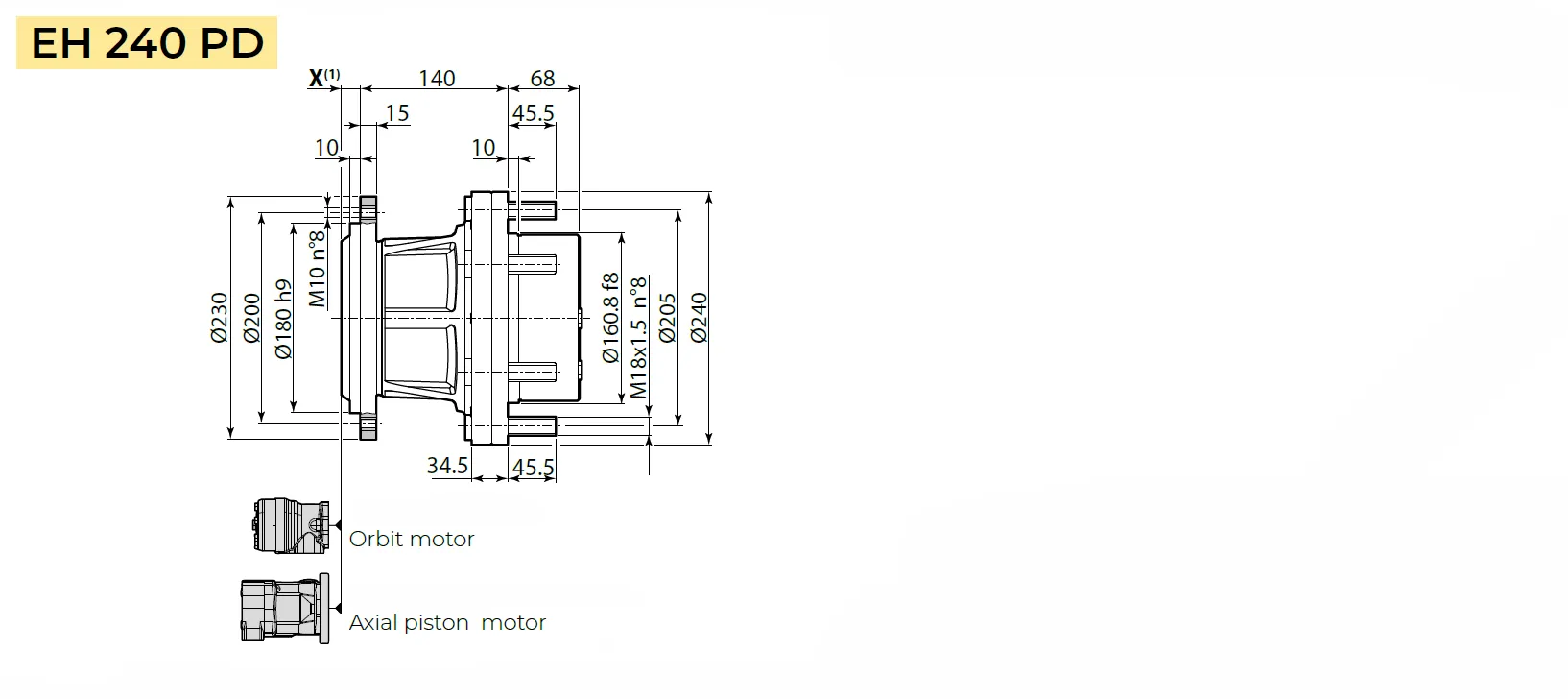
| Type | Weight | Oil quantity | i (da÷a / From÷to) | T2max [Nm] | n1max [rpm] | ||||
| EH 242 | EH 243 | EH 242 | EH 243 | EH 242 | EH 243 | ||||
| EH 240 S | 35 | 40 | 0.8 | 1 | 12 ÷ 31 | 45 ÷ 135 | 5600 | 3500 | |
| EH 240 SC | |||||||||
| EH 240 PD | - | - | |||||||
EH 350
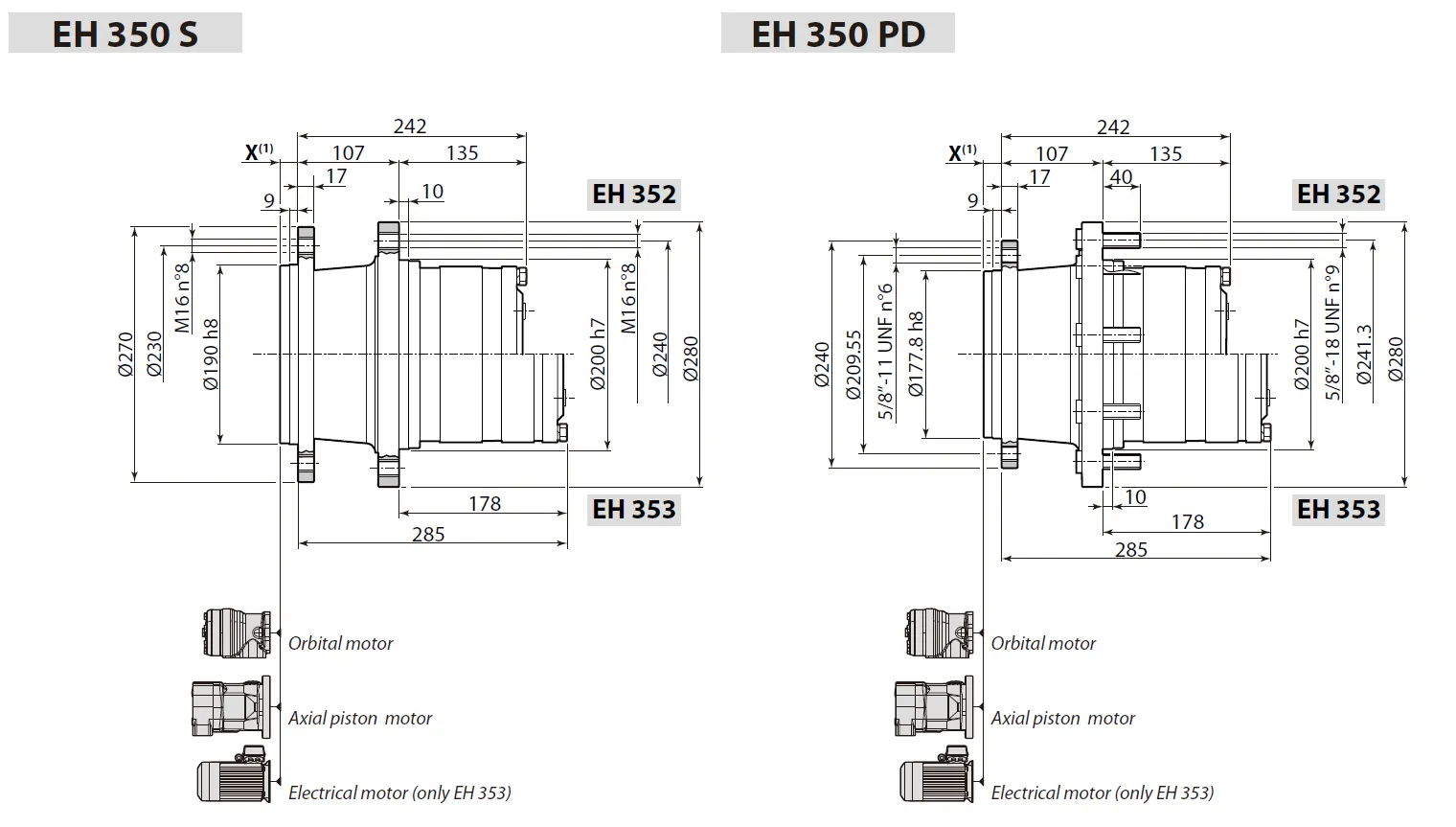
| Type | Weight | Oil quantity | i (da÷a / From÷to) | T2max [Nm] | n1max [rpm] | ||||
| EH 352 | EH 353 | EH 352 | EH 353 | EH 352 | EH 353 | ||||
| EH 350 S | 55 | 60 | 1 | 1.2 | 15 ÷ 31 | 52 ÷ 135 | 7200 | 3500 | |
| EH 350 PD | |||||||||
EH 610
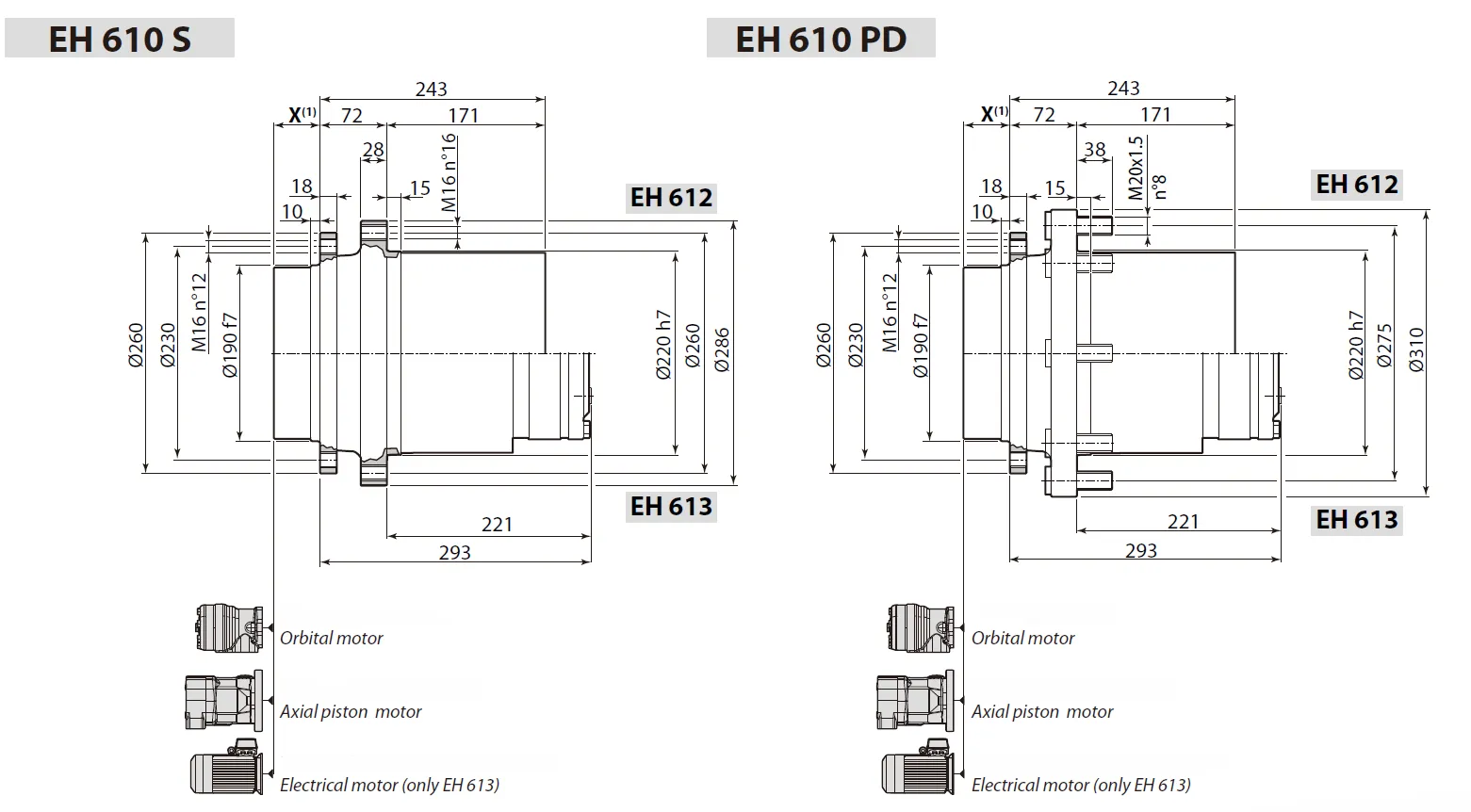
| Type | Weight | Oil quantity | i (da÷a / From÷to) | T2max [Nm] | n1max [rpm] | ||||
| EH 612 | EH 613 | EH 612 | EH 613 | EH 612 | EH 613 | ||||
| EH 610 S | 60 | 70 | 1.2 | 1.5 | 12 ÷ 31 | 47 ÷ 138 | 13500 | 3500 | |
| EH 610 PD | |||||||||
EH 910
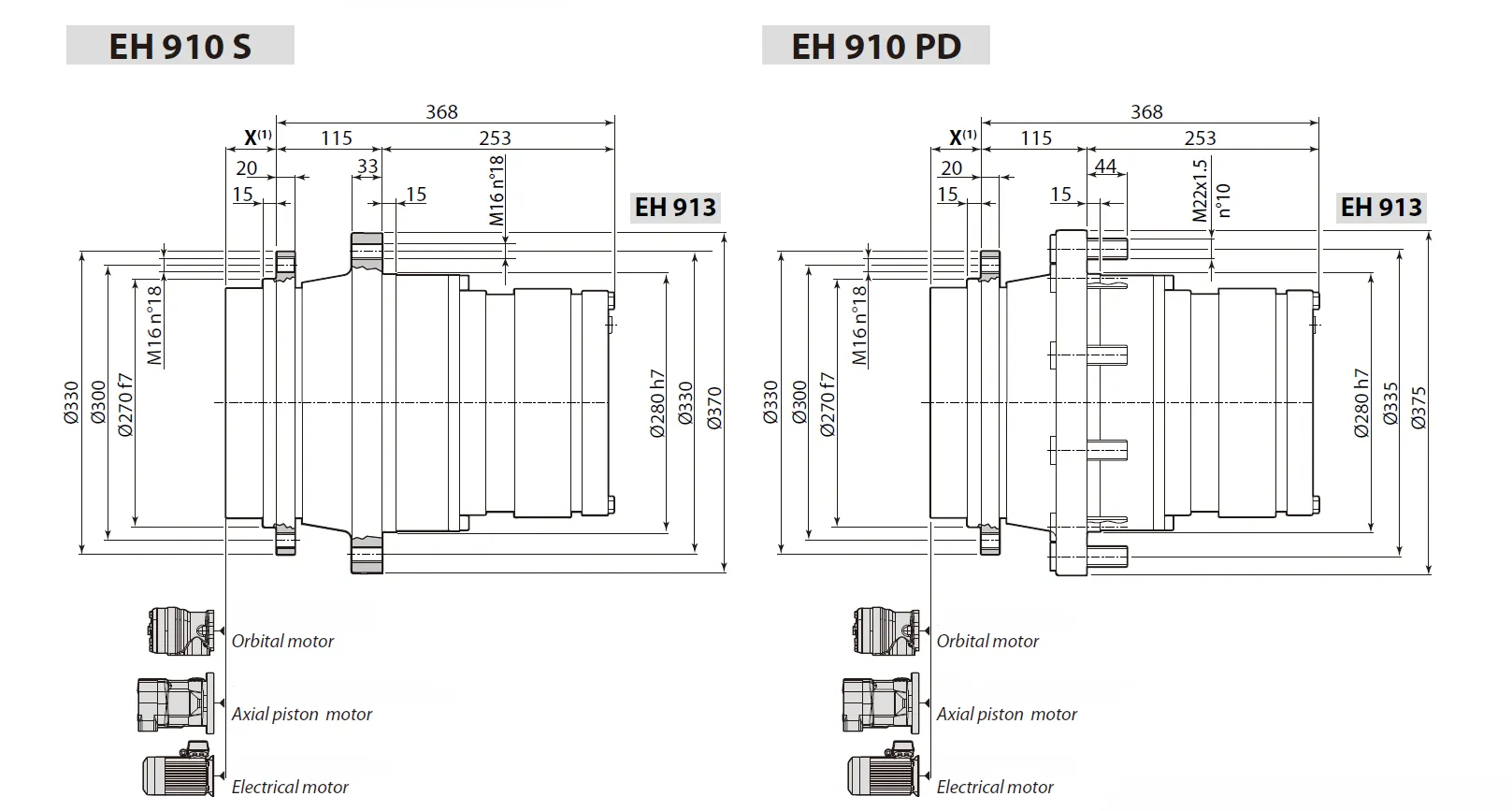
| Type | Weight | Oil quantity | i (da÷a / From÷to) | T2max | n1max | |
| EH 913 | EH 913 | EH 913 | [Nm] | [rpm] | ||
| EH 910 S | 130 | 1 | 47 ÷ 131 | 24200 | 3500 | |
| EH 910 PD | ||||||
S Version

| Size | Dimensions | ||||||||||
| D1 | D2 | D3 | D4 | D5 | D6 | D7 | D8 | L1 | L2 | L3 | |
| EH 210 S | 230 | 200 | 180 h9 | 190 h9 | 210 | 229.5 | M10 n°8 | M10 n°8 | 253 | 73 | 180 |
| EH 240 S | 230 | 200 | 180 h9 | 190 h9 | 210 | 229.5 | M10 n°8 | M10 n°8 | 253 | 73 | 180 |
| EH 350 S | 270 | 230 | 190 h8 | 200 h7 | 240 | 280 | M16 n°8 | M16 n°8 | 242 | 107 | 178 |
| EH 610 S | 260 | 230 | 190 f7 | 220 h7 | 260 | 286 | M16 n°12 | M16 n°16 | 243 | 72 | 171 |
| EH 910 S | 330 | 300 | 270 f7 | 280 h7 | 350 | 370 | M16 n°18 | M16 n°18 | 368 | 115 | 253 |
PD Version
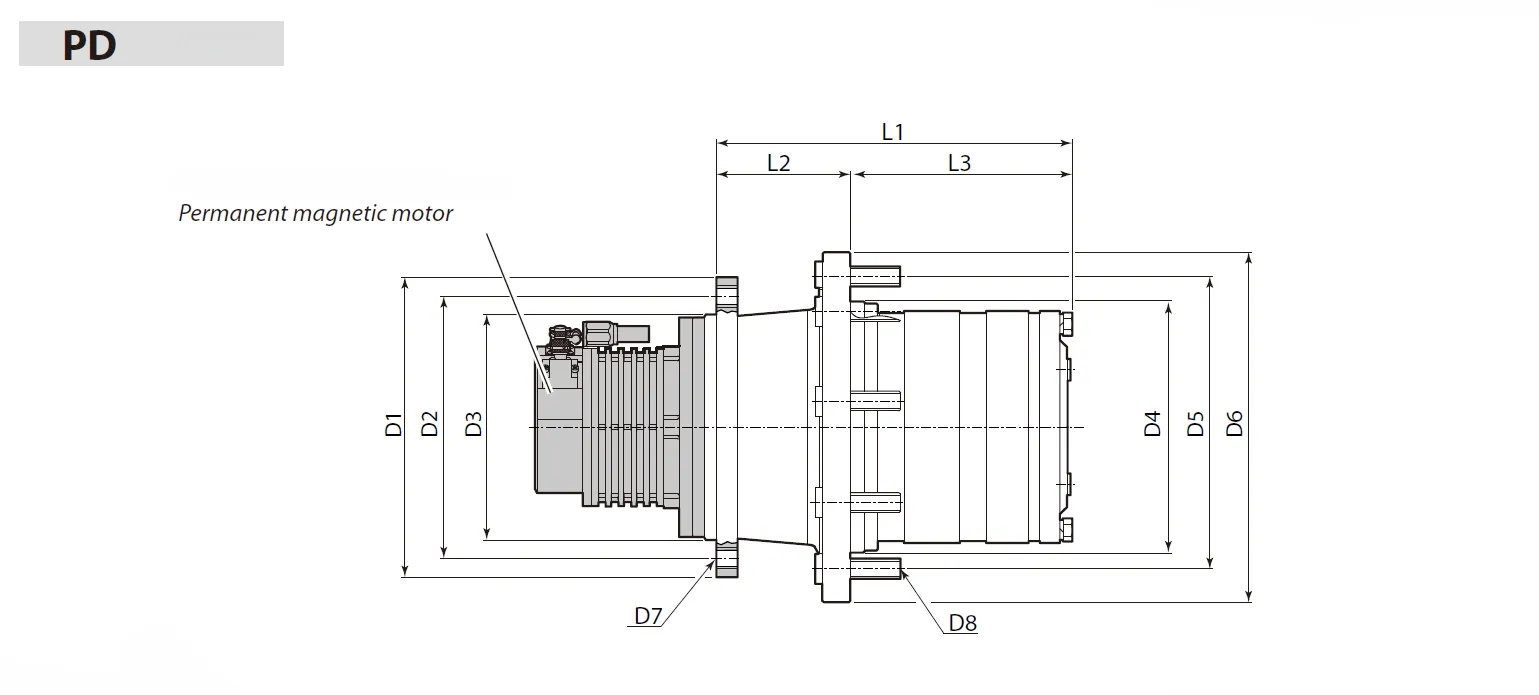
| Size | Dimensions | ||||||||||
| D1 | D2 | D3 | D4 | D5 | D6 | D7 | D8 | L1 | L2 | L3 | |
| EH 210 PD | 230 | 200 | 180 h9 | 160.8 f8 | 205 | 240 | M10 (8x) | M18x1.5 (6x) | 210 | 140 | 70 |
| EH 240 PD | 230 | 200 | 180 h9 | 160.8 f8 | 205 | 240 | M10 (8x) | M18x1.5 (6x) | 210 | 140 | 70 |
| EH 350 PD | 240 | 209.55 | 177.8 h8 | 200 h7 | 241.3 | 280 | 5/8"-11 UNC (6x) | 5/8"-19 UNF (9x) | 285 | 107 | 178 |
| EH 610 PD | 260 | 230 | 190 f7 | 220 h7 | 275 | 310 | M16 (12x) | M20x1.5 (8x) | 293 | 72 | 221 |
| EH 910 PD | 330 | 300 | 270 f7 | 280 h7 | 335 | 375 | M16 (18x) | M22x1.5 (10x) | 368 | 115 | 253 |
Advantages of Planetary Wheel Drive Gearbox for Stone Crushers
1. Superior Torque Density and Load Distribution
By distributing the load across multiple planet gears, the planetary wheel drive gearbox delivers exceptional torque output essential for pulverizing tough stones and aggregates, minimizing stress on individual components, and extending operational lifespan under heavy-duty conditions. This design ensures reliable performance even with shock loads, reducing downtime in high-volume crushing applications.
2. Compact and Lightweight Construction
The planetary gearbox's space-efficient architecture allows for seamless integration into mobile stone crushers, optimizing machine portability and maneuverability on rugged terrains without compromising power, which is crucial for efficient site operations and reduced transportation costs.
3. High Operational Efficiency
Achieving efficiency rates often exceeding 95%, this planetary wheel drive minimizes energy consumption during prolonged crushing tasks, leading to lower fuel or electricity expenses and supporting sustainable practices in industrial settings while maintaining consistent output speeds.
4. Enhanced Durability and Reliability
Engineered to withstand extreme vibrations, dust ingress, and abrasive materials common in stone crushing, the sealed planetary system promotes longevity and reduces maintenance needs, ensuring uninterrupted productivity and cost-effective ownership over time.
5. Smooth Operation with Low Noise and Vibration
The balanced gear arrangement facilitates quiet and vibration-dampened performance, improving operator comfort, complying with workplace safety standards, and extending the service life of adjacent crusher components in noisy quarry environments.
6. Versatile Integration and Adaptability
Compatible with hydraulic or electric motors, the wheel drive gearbox supports customizable reduction ratios for various stone crusher models, enabling precise speed control and adaptability to diverse material processing requirements in land clearing and aggregate production.
Applications of Wheel Drive Planetary Gearbox
1. Construction Machinery
In excavators, loaders, and stone crushers, the wheel drive planetary gearbox provides reliable torque multiplication and speed reduction, enabling efficient navigation over uneven terrain while handling heavy loads and shock impacts, thus enhancing productivity in building and demolition sites.
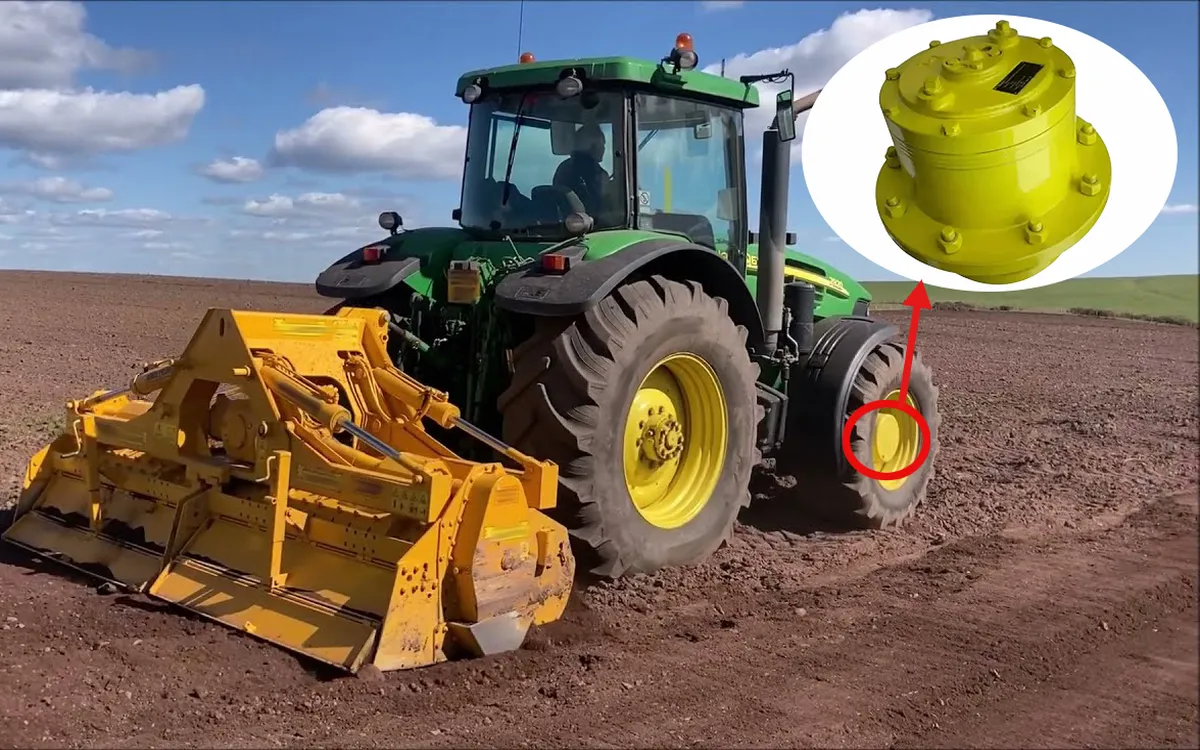
2. Agricultural Equipment
Utilized in tractors, combine harvesters, and irrigation systems, this gearbox facilitates precise wheel control and high torque output, supporting operations in muddy or sloped fields to optimize crop planting, harvesting, and soil management with minimal slippage and energy loss.
3. Mining Operations
For haul trucks, drill rigs, and conveyor systems in mines, the wheel drive planetary gearbox ensures durable performance against abrasive materials and extreme vibrations, delivering consistent power to wheels for material transport and extraction in harsh underground or open-pit environments.
4. Forestry Machinery
In skidders, forwarders, harvesters, and forestry mulchers, the wheel drive planetary gearbox enables robust torque delivery for tracked and wheeled vehicles, facilitating efficient timber extraction, forwarding, and mulching on uneven forest terrains while withstanding vibrations and debris for enhanced operational reliability.
5. Wind Energy Systems
Employed in slew drives for wind turbine applications, this gearbox provides high torque density and optimized load handling to enable precise yaw and pitch adjustments, ensuring efficient energy capture and structural stability in variable wind conditions with minimal maintenance requirements.
6. Material Handling Equipment
Employed in winches, hoists, and track drives for cranes and forklifts, it delivers superior load-bearing capacity and rotational precision, facilitating safe and efficient lifting or towing of heavy goods in ports, factories, and construction yards with reduced maintenance requirements.
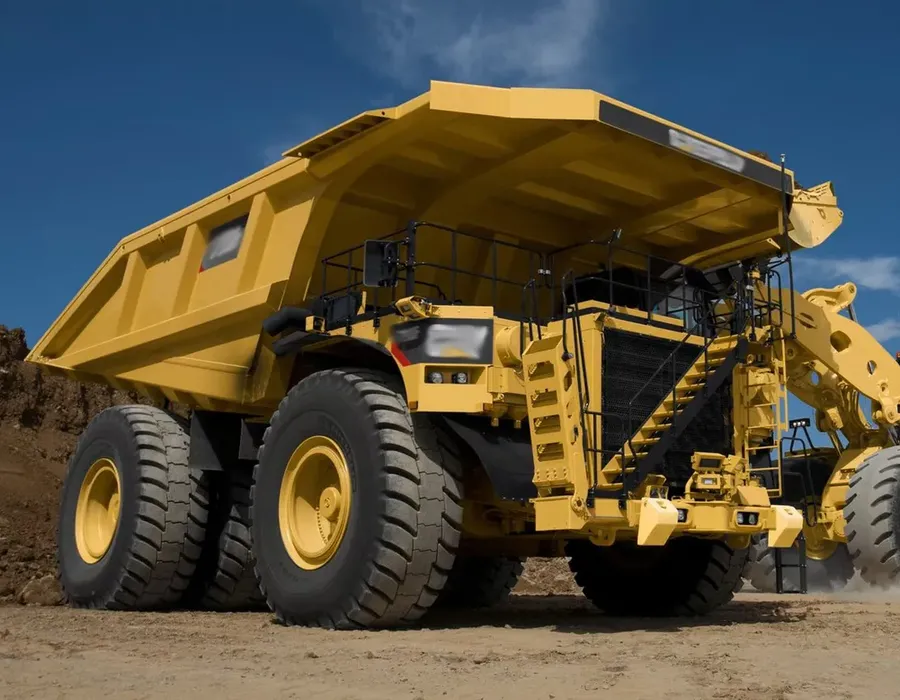 | 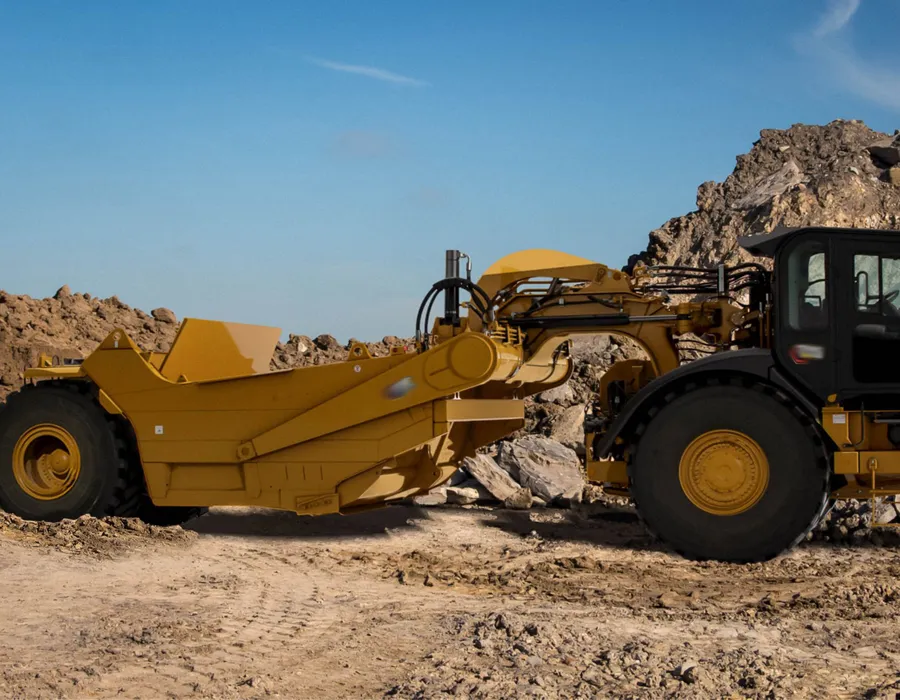 |
| Planetary Wheel Drive for Mining Dump Trucks | Planetary Wheel Drive for Wheel Tractor-Scrapers |
 | 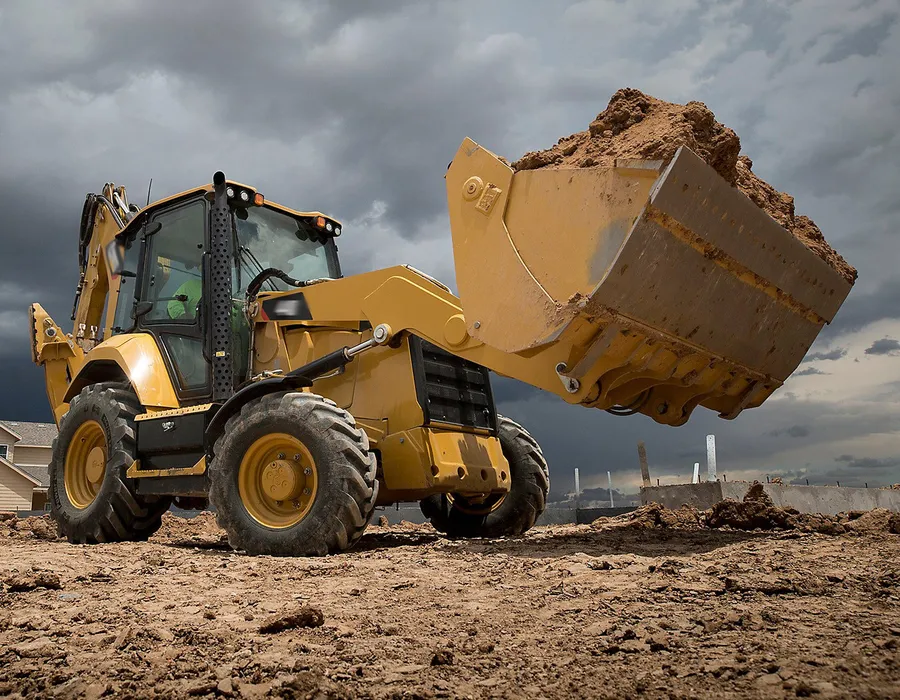 |
| Planetary Wheel Drive for Road Rollers | Planetary Wheel Drive for Backhoe Loaders |
Planetary Wheel Drive Gearbox Troubleshooting
1. Overheating Issues
Excessive heat in the planetary wheel drive gearbox often results from overload operation, insufficient lubrication, or poor ventilation, leading to accelerated wear on gears and bearings. To troubleshoot, monitor temperature with infrared thermometers, ensure proper lubricant levels and quality, reduce load if necessary, and inspect cooling systems for blockages, thereby preventing thermal degradation and prolonging component life.
2. Unusual Noise During Operation
Noises such as grinding, whining, or clicking typically indicate gear tooth wear, misalignment, or damaged bearings within the planetary system, exacerbated by contaminants or improper assembly. Troubleshoot by conducting auditory inspections under load, checking for loose components, replacing worn parts, and ensuring precise gear meshing to restore smooth, quiet functionality and avoid further damage.
3. Excessive Vibration
Vibrations in the wheel drive gearbox may stem from imbalanced loads, faulty planet gears, or foundation instability, causing premature failure of seals and mounts in wheel drive applications. Effective troubleshooting includes using vibration analysis tools to pinpoint frequencies, realigning shafts, balancing rotating elements, and securing mounting bolts to minimize oscillations and enhance operational stability.
4. Lubricant Leakage
Leaks from seals or gaskets often occur due to aging materials, overpressurization, or installation errors, resulting in inadequate lubrication and potential contamination in dusty environments like quarries. To address this, inspect seals for cracks, replace damaged ones with high-quality alternatives, check fluid levels regularly, and clean external surfaces to prevent ingress of debris and maintain internal integrity.
5. Gear Wear and Pitting
Surface pitting, scoring, or excessive wear on sun, planet, or ring gears is commonly caused by abrasive particles, overload, or inadequate hardness, compromising torque efficiency in stone crushing tasks. Troubleshooting involves disassembling for visual examination, measuring backlash, resurfacing or replacing affected gears, and implementing filtration systems to extend durability and performance.
6. Loss of Torque or Power Transmission
Reduced torque output may arise from internal slippage, bearing failures, or hydraulic integration issues in wheel drives, affecting crusher productivity. Diagnose by testing input-output ratios with dynamometers, inspecting bearings for play, tightening connections, and recalibrating ratios to restore full power delivery and prevent operational inefficiencies.
Additional information
| Edited by | Yjx |
|---|