
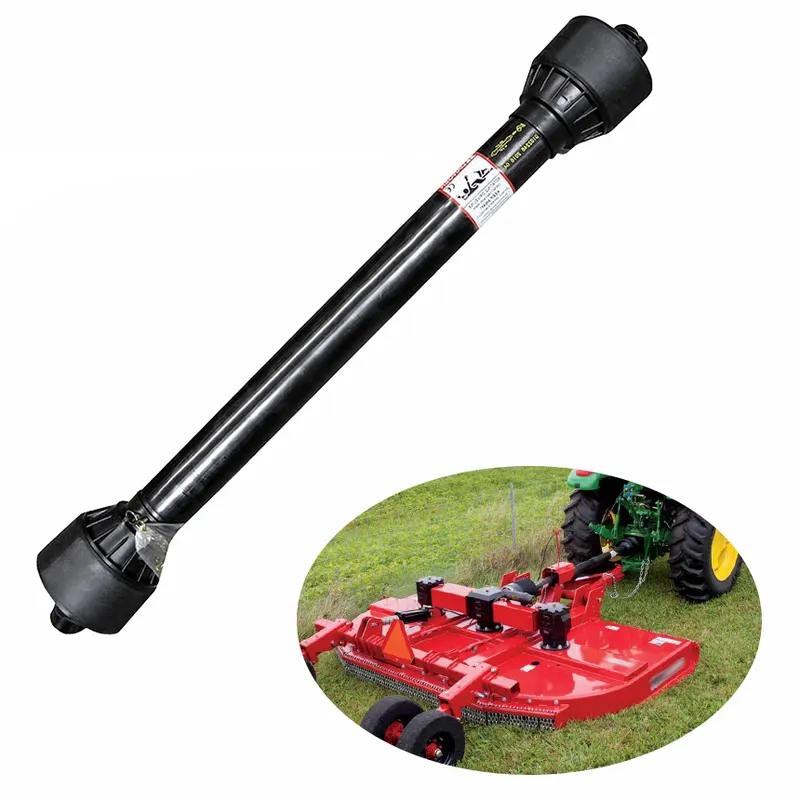
PTO Shaft for Bush Hog Rotary Cutters 3210, 3209, 3214, 2308, 2010, 2310, 3308, 3510, 3514, 14215
Upgrade your tractor PTO drive shaft with our durable PTO shaft for Bush Hog rotary cutters, compatible with models 3210, 3209, 3214, 2308, 2010, 2310, 3308, 3510, 3514, and 14215. Rated up to 150 HP at 540 RPM, featuring slip clutch protection and precise spline fittings for reliable power transfer. Ideal for agricultural tasks, ensuring minimal downtime and enhanced efficiency on your farm equipment.
Reliable PTO Shaft for Bush Hog Rotary Cutter Models
PTO Shaft for Bush Hog Rotary Cutter Models: 3210, 3209, 3214, 2308, 2010, 2310, 3308, 3510, 3514, 14215
In the realm of agricultural machinery, the PTO shaft serves as a critical component for transferring power from tractors to implements like rotary cutters. Our PTO shaft for Bush Hog rotary cutters, designed specifically for models such as 3210, 3209, 3214, 2308, 2010, 2310, 3308, 3510, 3514, and 14215, embodies reliability and precision engineering. This tractor PTO shaft integrates seamlessly with Bush Hog equipment, ensuring efficient operation in demanding field conditions. Crafted with high-strength materials, it handles the rigors of heavy-duty tasks, from mowing overgrown pastures to clearing brush.
The inclusion of PTO shaft parts like yokes and tubes allows for straightforward replacement, making it a go-to choice for farmers seeking durable solutions. Unlike generic options, this PTO drive shaft is tailored to meet the exact specifications of Bush Hog models, reducing wear on both the tractor and the cutter. The PTO shaft incorporates features like slip clutch mechanisms to protect against overloads, a common issue in rugged terrains. For instance, the 540 PTO shaft variant operates optimally at standard speeds, while options for 1000 PTO shaft configurations cater to higher-power tractors. This versatility extends to PTO shaft tubing and u joints, which are engineered for minimal vibration and maximum stability.
Standard Main Shaft
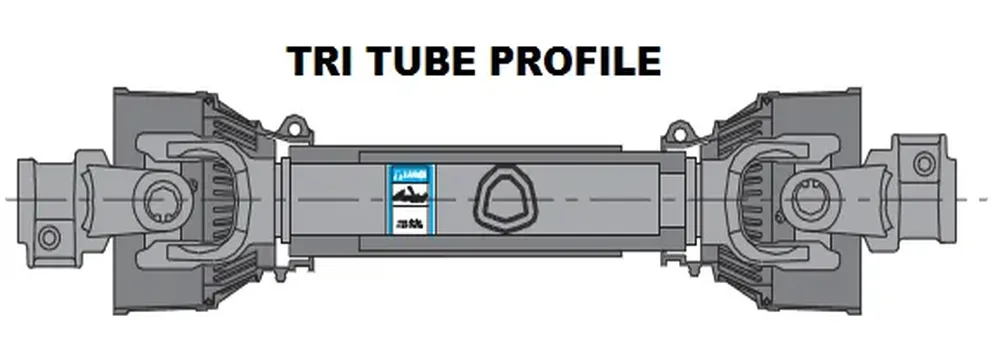
| CAT | Kích cỡ | HP@540RPM | Tractor | Implement |
|---|---|---|---|---|
4 | 6 | 65 | 1.375-6 spline | 1.375-6 spline |
5 | 8 | 95 | 1.375-6 spline | 1.375-6 spline |
Constant Velocity PTO Assemblies (without Implement Yoke)
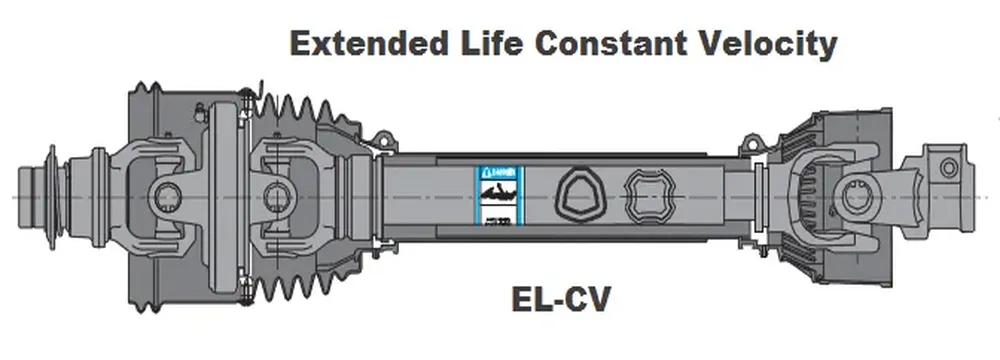
| CAT | Kích cỡ | HP@540RPM | Tractor |
|---|---|---|---|
4 | 6 | 65 | 1.375-6 |
4 | 6 | 100 | 1.375-21 |
5 | 8 | 90 | 1.375-6 |
5 | 8 | 150 | 1.375-21 |
Connecting Yokes
| CAT | Kích cỡ | Trục đầu vào | |
|---|---|---|---|
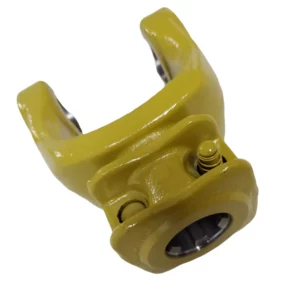 | 4 | 6 | 1.375-6 |
4 | 6 | 1.375-21 | |
4 | 6 | 1.750-20 | |
5 | 8 | 1.375-6 | |
5 | 8 | 1.375-21 | |
5 | 8 | 1.750-20 |
Rotary Cutter Input Requirements
FT Clutches for 1.375-6 spline input.
| Universal Size | Torque nm |
|---|---|
CAT3 / S4 | 1000nm |
CAT3 / S4 | 1000nm |
CAT4 / S6 | 1800nm |
CAT5 / S8 | 1450nm |
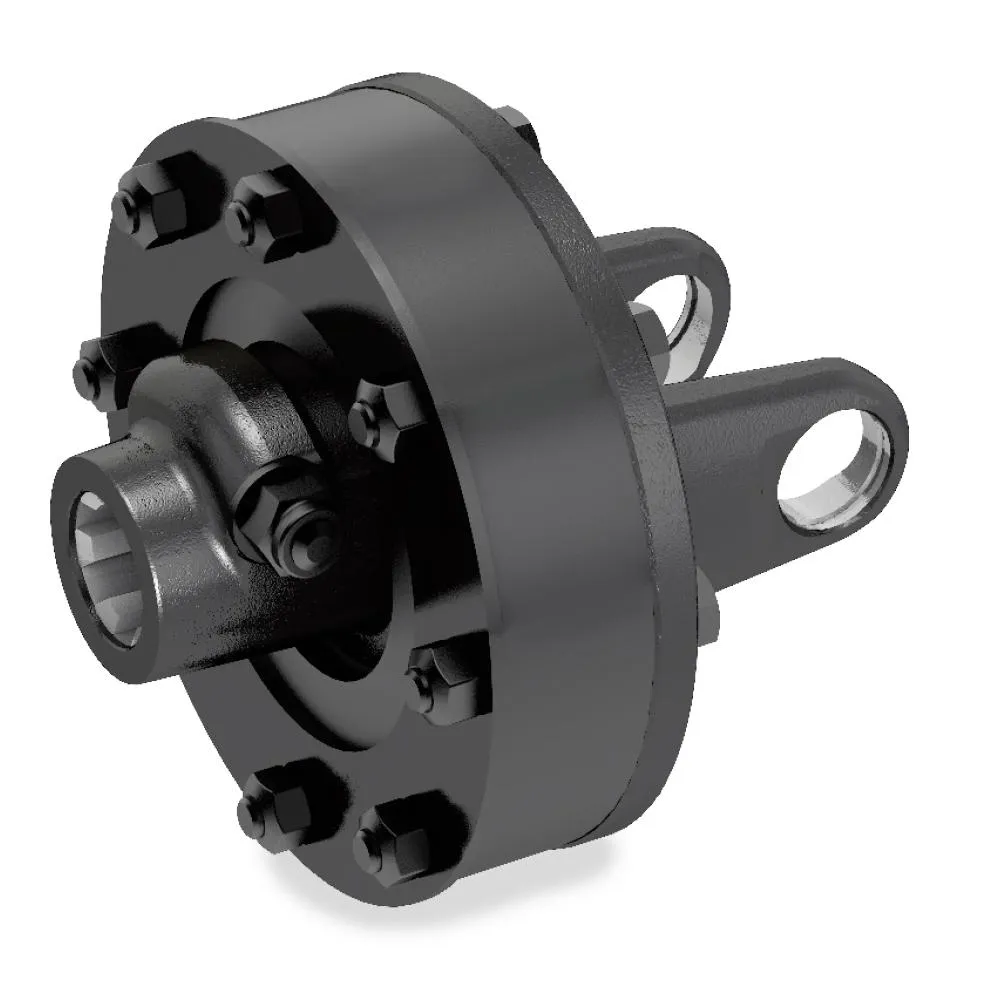 | 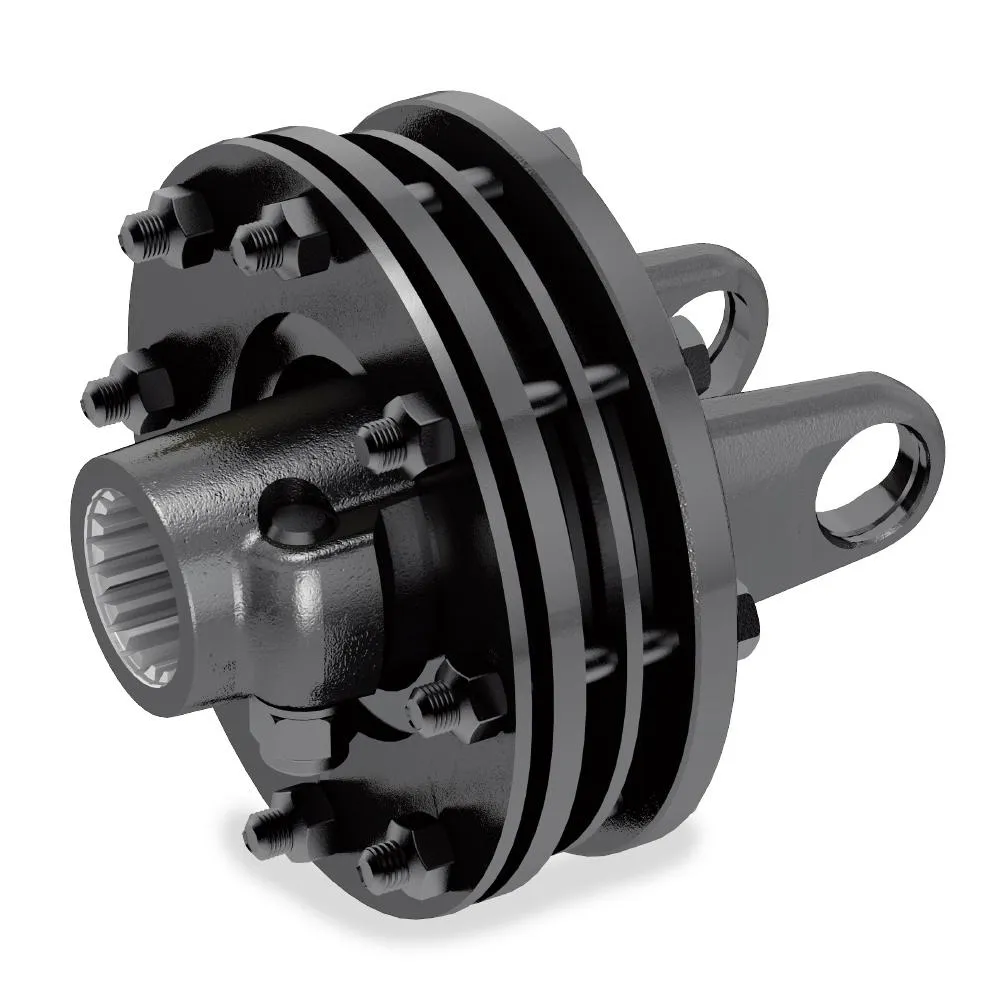 |
| FT42 Friction Clutch | FV Friction Clutch |
Features of PTO Drive Shaft for Bush Hog Rotary Cutter
1. Precision-Machined PTO Shaft Yoke Forks
The yoke forks on both the tractor and implement ends are forged from alloy steel and finish-machined to DIN 808 tolerances. Bearing cup bores are held to ±0.012 mm, which eliminates the radial play that causes premature needle bearing failure in high-vibration environments like rotary cutting. Each yoke fork is inspected with CMM equipment before assembly, and the spline bore is rolled rather than broached to create a compressive surface residual stress that resists fretting fatigue.
2. Slip Clutch PTO Shaft Protection - FT42 & FV Series
The FT42 and FV friction clutch assemblies are the core of this shaft's overload protection system. When the cutter blade strikes a rock, stump, or embedded fence post, the clutch disengages in milliseconds before the torque spike can propagate back through the PTO shaft tube and into the tractor gearbox. Spring plates are pre-set at the factory to the rated torque for the specific Bush Hog model, and both series use hardened friction discs that maintain consistent slip torque across a wide temperature range. This feature alone can prevent thousands of dollars in gearbox repairs.
3. Constant-Velocity PTO Assemblies for Hillside Operations
Standard Cardan (cross-type) universal joints deliver torque with a sinusoidal velocity fluctuation that increases rapidly above 15° of operating angle. For Bush Hog cutters used on slopes greater than 12–15°, our constant-velocity PTO assemblies replace that fluctuating output with perfectly smooth power delivery regardless of joint angle. This reduces vibration fatigue in both the tractor PTO housing and the cutter gearbox, and it noticeably reduces the shudder that operators feel through the seat and steering wheel during hillside runs.
4. Heavy-Duty Plastic Guard Tube with Chain Retention
Federal safety regulations in the US and CE regulations in Europe require full guarding of rotating PTO drive shafts. This assembly includes a two-piece polyethylene guard tube with chain retention at both ends. The chains hook to fixed points on the tractor and cutter to prevent the guard from rotating with the shaft. The guard profile is dimensioned to provide a minimum 25 mm clearance around the spinning tube at all articulation angles within the shaft's rated range.
5. Telescoping Tube with Correct Minimum Overlap
The inner and outer PTO shaft tube sections slide freely on a square or triangular cross-section profile (configuration varies by model) and are protected internally with a plastic plain bearing that prevents metal-to-metal contact during operation. Critical to safe use is the minimum overlap dimension: our shafts are manufactured with sufficient tube length to maintain at least one-third of the inner tube inside the outer tube at maximum extension, preventing separation during aggressive maneuvers. Each shaft ships with a printed overlap guide specific to the Bush Hog model it serves.
6. Universal Joint Cross Kits - Full PTO Shaft Parts Availability
Unlike shafts sold as sealed, non-serviceable units, this assembly uses standard-dimension PTO shaft U-joint crosses, the same cross-kit sizes stocked by agricultural dealers worldwide. When a bearing cup eventually wears (typically after several seasons of heavy use), operators can replace just the cross kit rather than the entire shaft. CMN Transmission maintains a stock of all cross kits, as well as individual PTO shaft yoke adapters and guard components, so field repairs don't require a full shaft replacement.
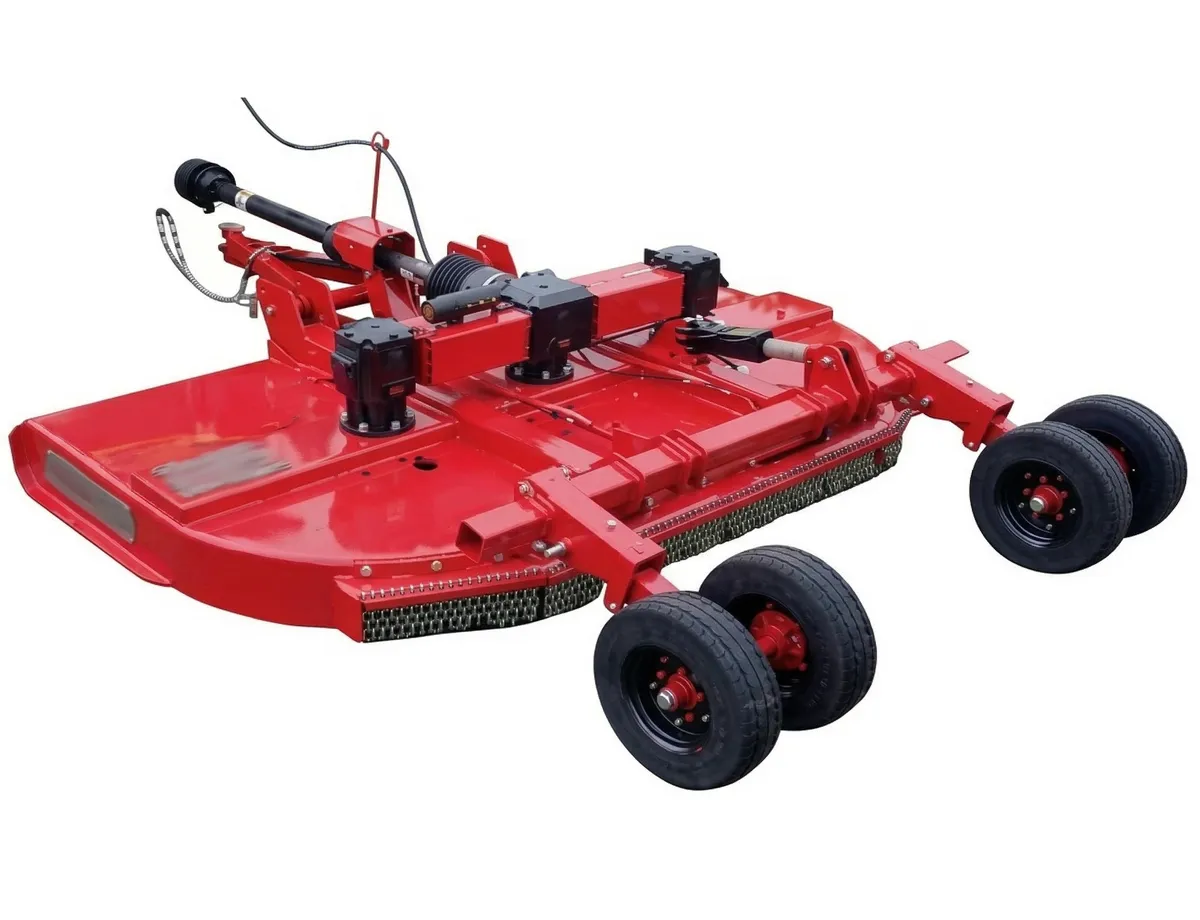
How the Tractor PTO Shaft Transfers Power to Rotary Cutter
Understanding the mechanics of a tractor PTO drive shaft helps operators make better maintenance decisions, recognize early wear signs, and choose the right clutch setting for their working conditions.
1. Tractor PTO Stub Shaft Engagement
When the operator engages the PTO lever, a multi-disc wet clutch inside the tractor's transmission connects the engine's gear train to the PTO stub shaft projecting from the rear of the tractor. This stub shaft rotates at either 540 RPM (for standard-speed implements) or 1000 RPM (for high-speed implements). The connecting yoke at the tractor end of our PTO shaft slides over the stub shaft splines and is secured by a snap ring or set screw. The yoke's precision-machined bore and the stub shaft's rolled splines form a tight, low-backlash connection that transmits torque efficiently without rattling.
2. Universal Joint Power Transmission
From the tractor yoke, rotational energy passes through the first U-joint cross to the inner shaft tube. The cross-type universal joint is mechanically simple, with four bearing cups on crossed journals, but its geometry introduces a velocity variation when the input and output shafts are not collinear. At the operating angles typical of rotary cutter work (5–12° on flat ground), this variation is small enough to be absorbed by tractor and cutter driveline flexibility. In our constant-velocity assemblies, a double-joint or ball-and-socket intermediate section eliminates this variation entirely, which is particularly valuable when cutting on slopes or using wide-wing cutters that articulate significantly during contour following.
3. Telescoping Tube Length Compensation
As the tractor turns, backs up, or crests a hill, the distance between the tractor PTO stub and the cutter input shaft changes continuously. The telescoping inner-outer tube assembly accommodates this distance change by sliding freely along the profile section. Square-profile and triangular-profile tubes are the most common geometries, each chosen for its torsional stiffness-to-weight ratio. The internal plastic plain bearing prevents metal contact during sliding and helps maintain concentric alignment between the tubes, which in turn keeps vibration levels low even at the fully extended length.
4. Slip Clutch Overload Protection
Immediately before the implement yoke, the friction clutch sits in the driveline. Under normal cutting loads, the clutch's spring-loaded friction discs lock the driveline into a rigid power path. When blade impact torque spikes above the preset threshold, say, during a sudden rock strike on a Bush Hog 3210 or 3214, the discs slip against each other, allowing the tractor-side shaft to keep rotating while the cutter-side shaft momentarily decelerates. This slip absorbs the shock energy thermally, protecting the gearbox inside the cutter. Once the obstruction clears and torque drops below the threshold, the clutch re-engages automatically. The entire event lasts less than a quarter of a second.
5. Cutter Input Shaft Drive
The implement-end yoke mates with the cutter's input stub shaft, typically a 1.375-6 spline on Bush Hog models. The rotary torque is then redirected by a 90° bevel gearbox inside the cutter deck, which translates the horizontal PTO input axis to the vertical blade spindle axis. The PTO shaft's end torque capacity,1800 Nm on Cat 4/S6 clutch configurations, is well above the continuous cutting load but calibrated below the fracture strength of the cutter's internal gearbox shafts, so the external PTO shaft always sacrifices first in an overload scenario rather than the far more expensive internal components.
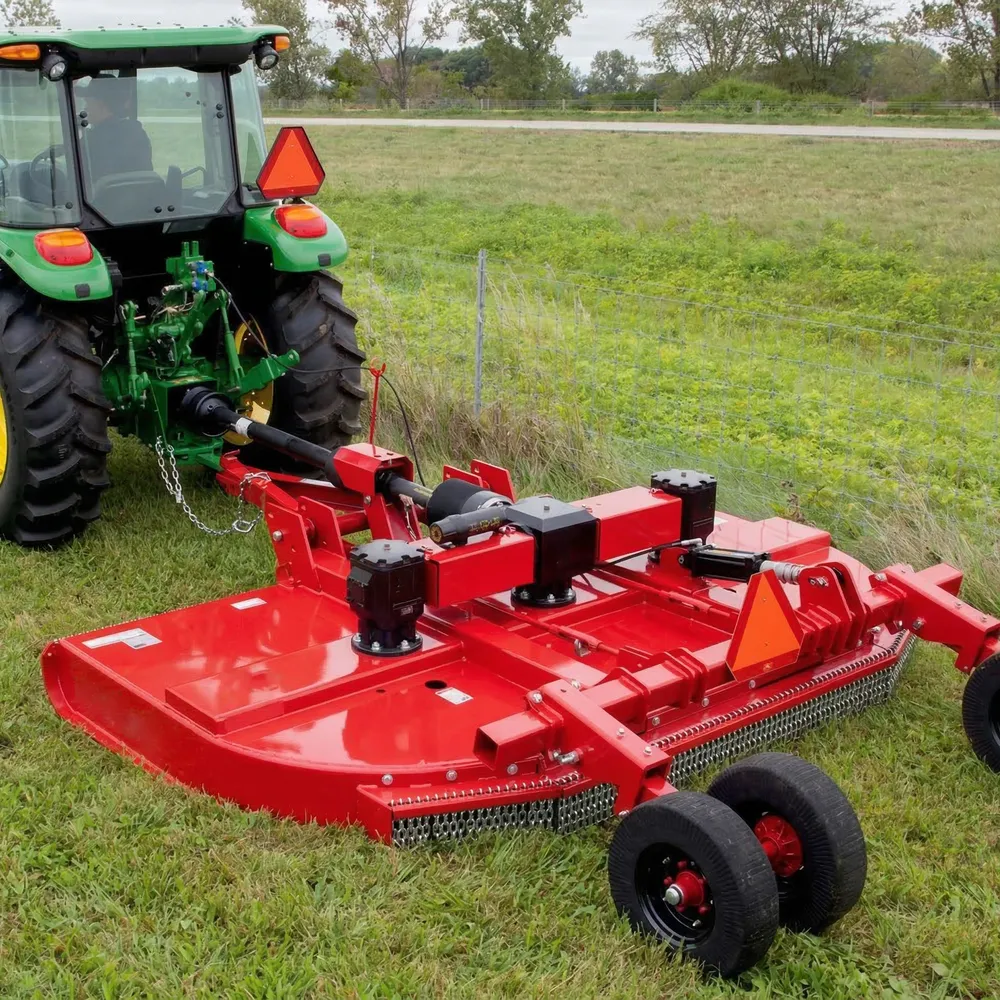
Applications of Rotary Cutter PTO Shafts
1. Pasture and Hayfield Maintenance
Pasture management is where rotary cutters log the most hours. Controlling thistle, broom sedge, brush encroachment, and woody regrowth requires a cutter that can handle material ranging from fine grass to three-inch woody stems in a single pass. The 65–95 HP ratings of our Cat 4 and Cat 5 PTO shafts cover everything from compact utility tractors cutting small hobby-farm paddocks to full-size row-crop machines working large cow-calf operations. The friction clutch is especially valuable in older, rock-strewn pastures where striking buried stones is a regular occurrence.
2. Roadside and Right-of-Way Vegetation Control
County road departments, highway contractors, and utility companies operate Bush Hog cutters on mowing cycles that cover thousands of miles annually. In these applications, the PTO driveline shaft accumulates hours faster than almost any other use case, and the variety of material encountered from thin grass on one section to dense blackberry thickets and saplings on the next demands a drivetrain that handles rapid load changes without fatiguing. Our alloy-steel tubes and hardened U-joint crosses are specifically suited to this high-cycle, variable-load profile.
3. Orchard, Vineyard, and Grove Floor Management
In orchards and vineyards, rotary cutters work in tight spaces between tree rows, often on ground with root crowns, irrigation risers, and dropped fruit that can create sudden overloads. The compact footprint of Bush Hog's 3210, 3209, and 2308 models makes them popular in these settings, and the quick-response friction clutch protects expensive grapevine irrigation infrastructure from shaft-impact damage. Constant-velocity PTO assemblies are particularly popular in terrace-planted vineyards where the hitch angle changes frequently as the tractor follows curved row paths.
4. Construction Site Preparation and Land Clearing
Before a subdivision goes in or a solar farm gets graded, vegetation management contractors use heavy-duty rotary cutters to process standing brush, small trees, and ground cover. The Bush Hog 3308, 3510, 3514, and 14215 larger, heavier-deck models are common in this segment, and they place high torque demands on the PTO drive shaft during initial passes through dense stands. Our Cat 5 shaft, rated to 150 HP continuous at 540 RPM with an 1800 Nm clutch, handles this load class comfortably.
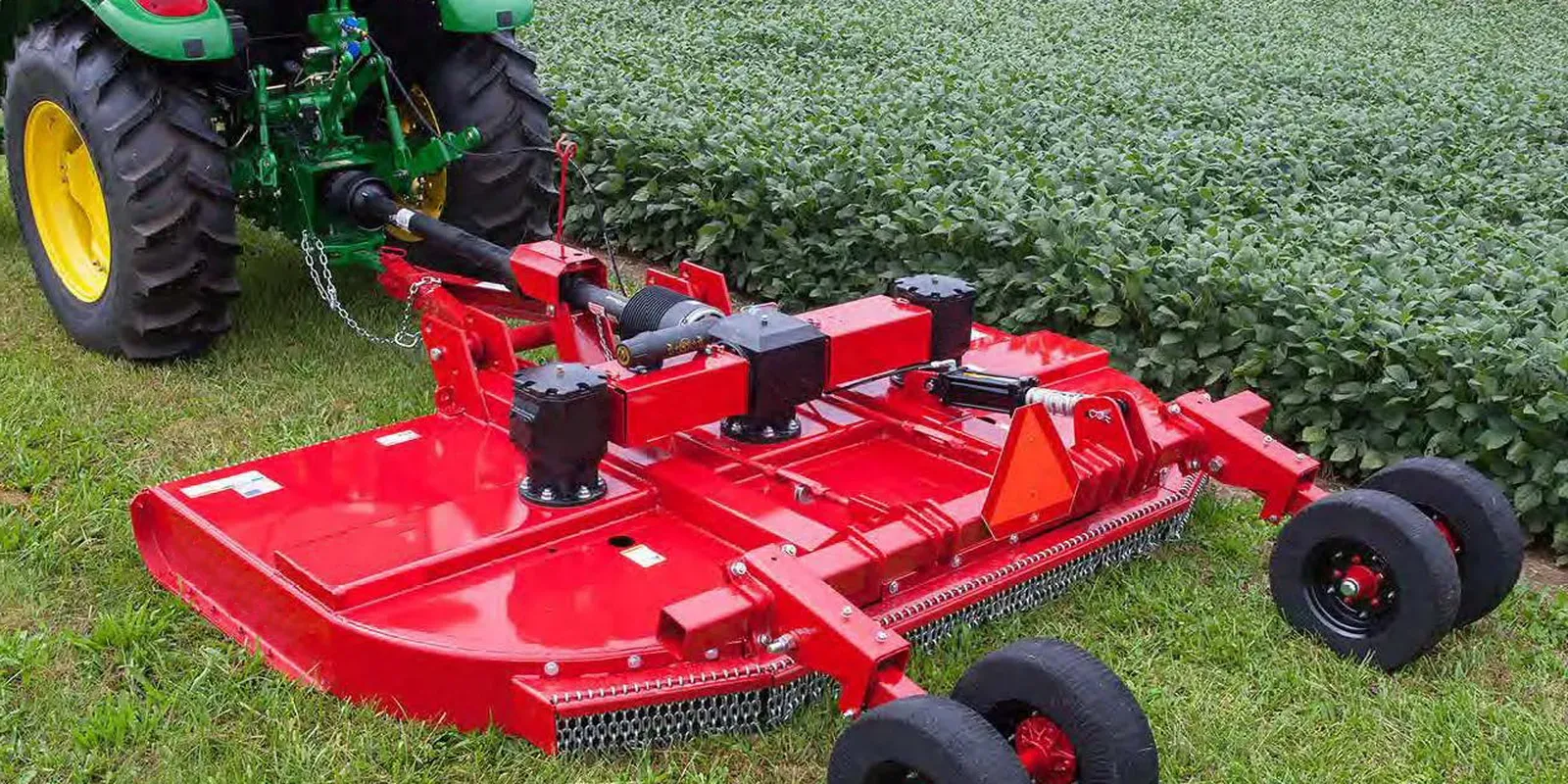
Tractor PTO Shaft Installation Steps
Proper installation is the single most important factor in achieving the service life our shafts are engineered for. A PTO shaft installed in five minutes without checking overlap, operating angle, or guard clearance can fail within a season, not because of a manufacturing defect, but because the installation parameters were outside the shaft's design envelope. Follow the steps below carefully, and refer to your specific Bush Hog model's operator manual for any cutter-specific alignment requirements.
- Disconnect power before starting. Park the tractor on level ground, shut off the engine, disengage the PTO, and remove the key. Never work around a PTO stub shaft with the engine running.
- Inspect the tractor stub shaft. Clean any corrosion from the spline teeth with a wire brush and verify the snap-ring groove is in good condition. Damaged grooves must be repaired before fitting the new shaft.
- Connect the tractor-end yoke first. Align the yoke bore with the stub shaft splines. Note that 6-spline profiles have a master spline to ensure phase alignment, then push the yoke fully onto the shaft until the snap ring engages its groove. Tug firmly to confirm engagement.
- Connect the implement-end yoke. Raise or lower the cutter's three-point hitch until the input stub shaft is accessible, then install the implement yoke in the same manner. On Bush Hog models with a shear bolt PTO shaft connector, install a new shear bolt of the specified grade and torque. Never substitute a harder bolt, as this defeats the overload protection.
- Check operating angle. With the cutter at normal working height (deck level, blades approximately 3–4 inches off the ground), measure the included angle between the tractor and shaft. It should not exceed 15° for standard shafts; 25° for CV assemblies. An excessive angle accelerates U-joint bearing wear exponentially.
- Verify tube overlap. Extend the hitch to maximum and compress it to minimum to confirm the inner tube remains inside the outer tube by at least one-third of the inner tube's total length at full extension, and that the tubes do not bottom out at full compression.
- Attach guard chains. Hook both retention chains to their designated anchor points one to the tractor, one to the cutter deck. Chains should be loose enough to allow shaft articulation but short enough to prevent the guard from rotating if the chain connection at one end breaks.
- Perform a no-load run check. Start the tractor, engage the PTO at low idle (≤ 600 engine RPM), and observe the shaft for 60 seconds. Listen for abnormal vibration or contact between the shaft and guard. Disengage and shut down before going hands-on with any component.
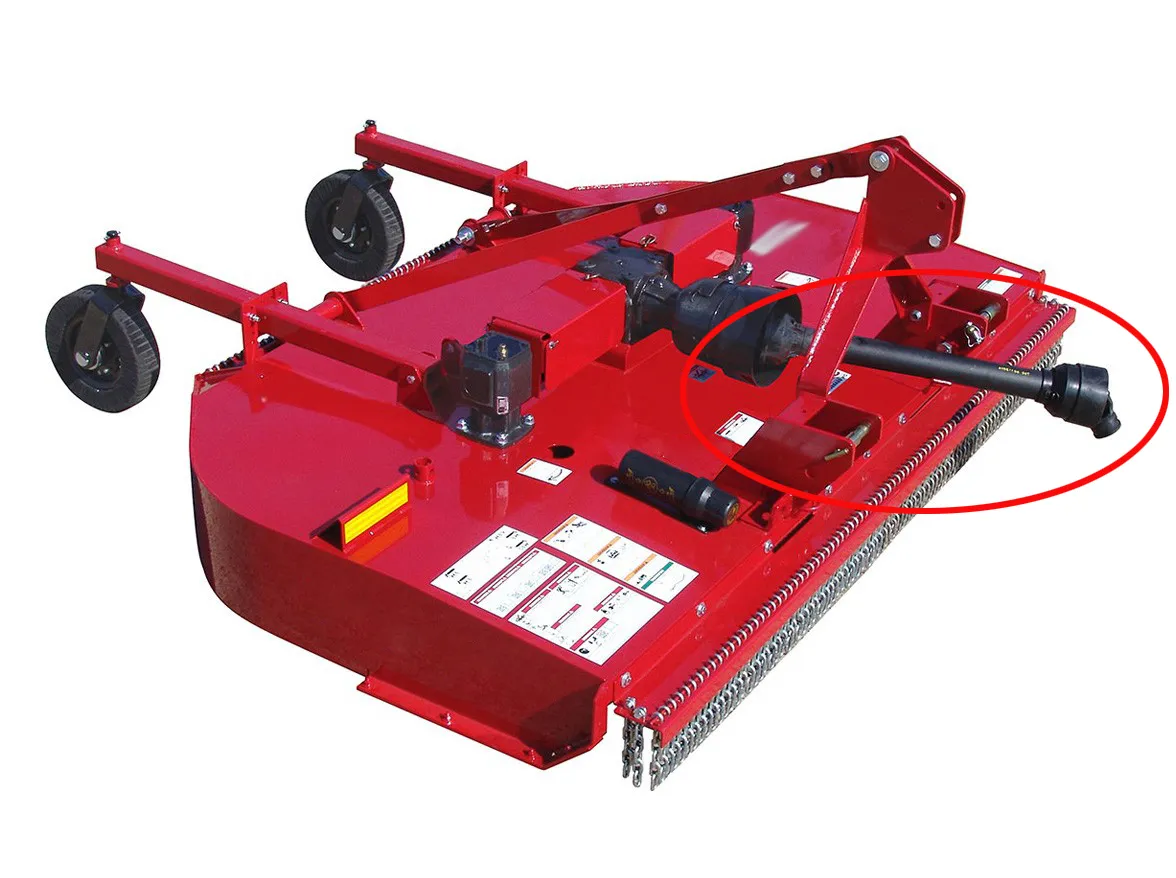
CMN Transmission - PTO Shaft Manufacturers
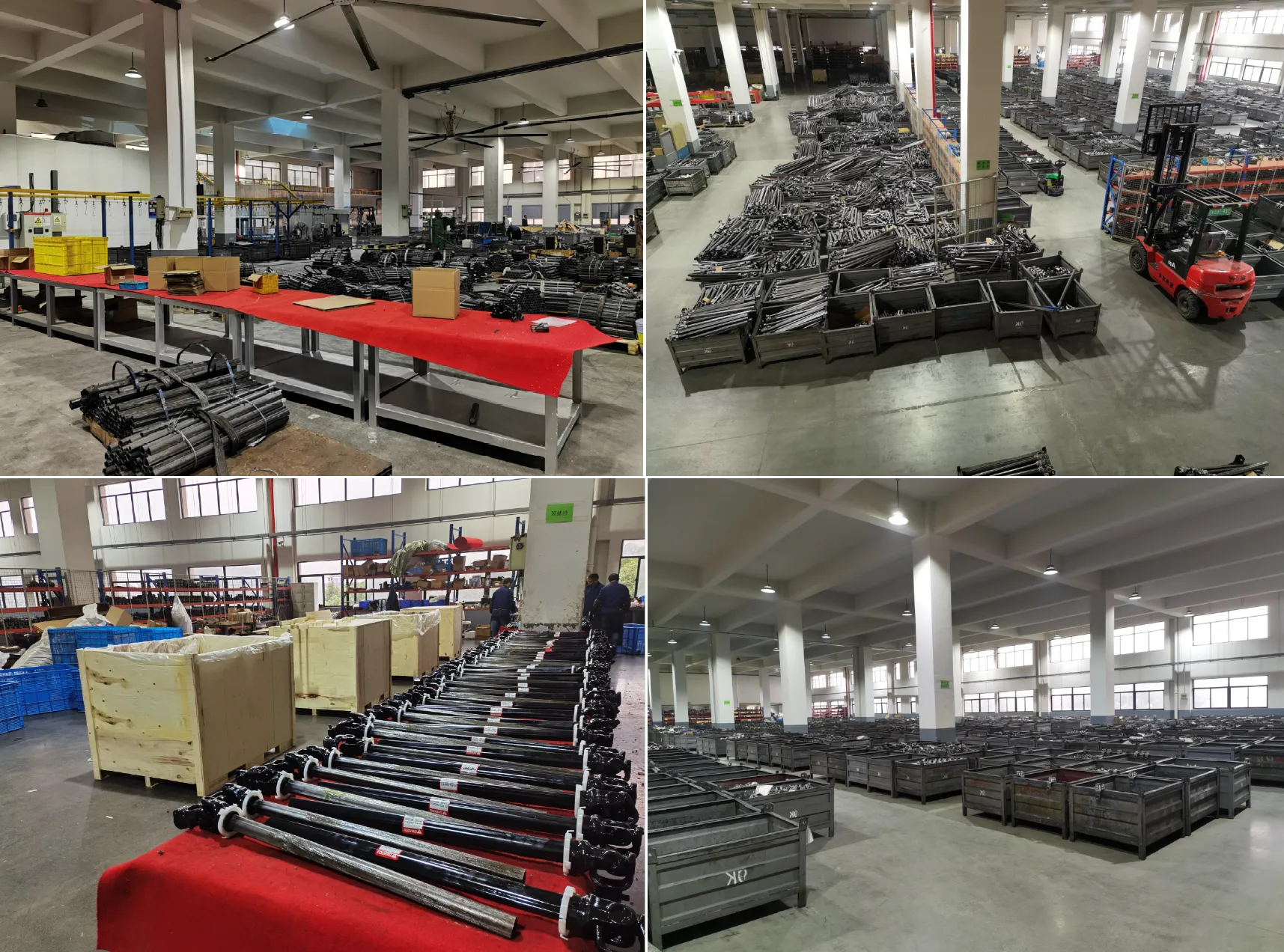
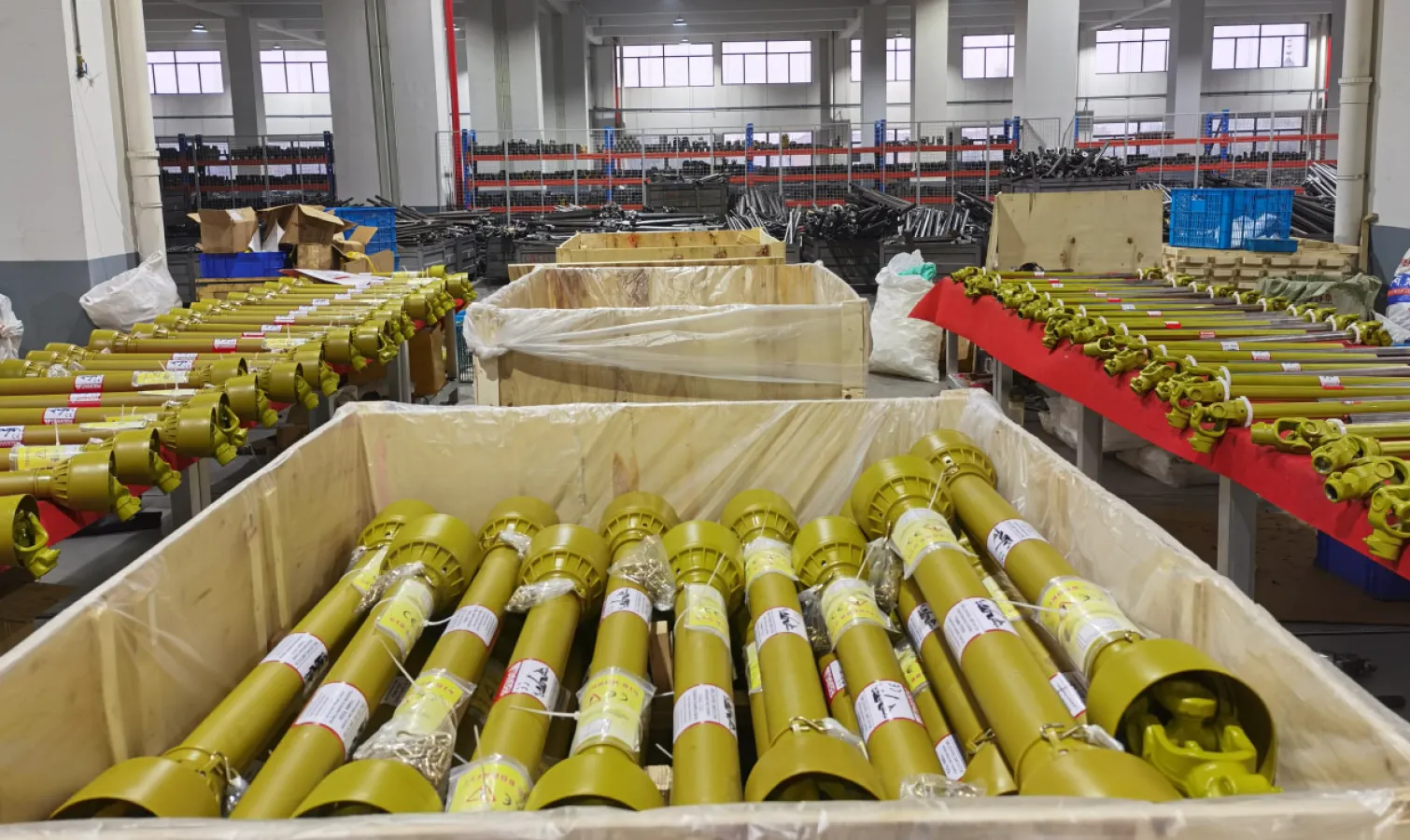
When you select a PTO shaft from CMN Transmission, you connect directly with the manufacturer instead of navigating multiple distributor layers that add unnecessary cost. Our main production base works alongside more than ten shareholding cooperative factories, giving us complete oversight of raw material selection, machining tolerances, and heat treatment processes. This direct link means any technical question reaches our engineering staff immediately, rather than a distant call center. The result is factory-direct pricing that typically runs significantly lower than what distributors charge for identical specifications, often saving customers two or three times the markup while still delivering the same or better quality.
Every PTO drive shaft produced at CMN Transmission follows a documented ISO 9001 quality management system and complies fully with CE machinery safety requirements. This is more than certification paperwork; it includes traceable records for every step from incoming steel inspection to final assembly torque verification. Should any concern arise, we can pinpoint the exact batch, machine, operator, and production date within minutes. This level of accountability proves especially valuable for operators shipping equipment to regulated markets in Europe and North America, where consistent documentation and verifiable quality standards are non-negotiable.
Our established logistics network now serves customers in more than 53 countries spanning Europe, North America, South America, the Middle East, Africa, and Southeast Asia. We maintain direct relationships with major carriers, prepare accurate HS codes in advance, and assist with customs documentation tailored to agricultural import requirements. For dealers and distributors, we support blanket order programs that allow predictable inventory levels without forcing large minimum commitments or tying up capital. CMN Transmission also stands out through practical one-stop after-sales support handled by a single dedicated team. We keep a full stock of every common wear component, U-joint cross kits, friction disc sets, guard tube sections, and yoke adapters ready for same-week dispatch. The standard 12-month warranty covers manufacturing defects with free replacement parts and shipping when the issue stems from production rather than misuse or neglected maintenance.
Beyond standard offerings, we provide genuine customization options that fit real-world equipment variations. Standard configurations work for most Bush Hog rotary cutter setups, but we routinely create custom-length assemblies, non-standard spline profiles, adjusted clutch torque settings, and special tube cross-sections with lead times as short as 15 days for orders of 20 units or more. Engineering samples are available for testing before committing to full production runs. This combination of direct manufacturing control, certified quality systems, worldwide delivery capability, responsive after-sales service, and deep hands-on agricultural experience is why operators and dealers continue to choose CMN Transmission for their PTO shaft needs. Our team understands the difference between a shaft that performs in a test lab and one that reliably handles full seasons of demanding field work, and that practical knowledge shapes every product we ship.
Câu hỏi thường gặp
Q: What is the correct PTO shaft for Bush Hog model 3210 and which Cat category does it use?
A: The Bush Hog 3210 is a single-spindle rotary cutter typically paired with tractors in the 60–75 HP range and uses a Cat 4 (Size 6) PTO drive shaft with a 1.375-6 spline tractor connection. Our standard main shaft for this model is rated at 65 HP at 540 RPM, which comfortably exceeds the 3210's continuous load requirements. If your tractor produces higher horsepower and you're operating on hilly terrain, we recommend upgrading to the constant-velocity Cat 4 assembly rated at 100 HP with a 1.375-21 spline profile. Contact us with your tractor make and model number, and we'll confirm the exact configuration.
Q: What's the difference between a standard PTO shaft and a constant-velocity (CV) PTO shaft for a Bush Hog cutter?
A: A standard Cardan shaft uses two cross-type U-joints to transmit torque. When the angle between the tractor and implement exceeds about 12–15°, these joints introduce a rotational velocity fluctuation, the output shaft speeds up and slows down twice per revolution, even though the input rotates at constant speed. This vibration accelerates wear in both the tractor PTO housing and the cutter gearbox. A constant-velocity PTO assembly adds a centering mechanism (typically a ball-and-trunnion or double-joint design) that cancels this velocity fluctuation, delivering smooth power at angles up to 25°. CV assemblies are strongly recommended for hillside operations, wide-wing cutters, and any application where you regularly notice vibration shudder during turns or on uneven ground.
Q: How do I know if my Bush Hog needs a 540 RPM or 1000 RPM PTO shaft?
A: Check the input shaft speed specification on your Bush Hog model's identification plate or in the operator manual. The vast majority of rotary cutters, including all ten models listed in our product name, are designed for 540 RPM PTO operation. 1000 RPM PTO is primarily used for higher-speed implements like finish mowers and grain augers. Connecting a 540 RPM cutter to a 1000 RPM PTO output without the correct shaft and gearbox modification will severely overspeed the cutter's blade assembly, creating an extremely dangerous operating condition. If you're uncertain, the 6-spline profile on the PTO stub shaft indicates 540 RPM; 21 splines indicates 1000 RPM on most tractor brands.
Q: How often should I grease the U-joints on my PTO driveline shaft?
A: Grease all U-joint cross bearing cups every 8 operating hours or at the start of each working day during peak season. Use a #2 NLGI multi-purpose lithium-complex grease rated for extreme pressure (EP) service. Apply until fresh grease appears at the bearing cup seals, which typically takes 2–3 pumps on a standard grease gun. Under particularly dusty or wet conditions, shorten the interval to every 4–6 hours. Neglecting U-joint lubrication is the single most common cause of preventable PTO shaft failure in the field. A missed greasing session during a dry harvest week can advance a bearing from healthy to failed in as little as two or three additional operating hours.
Q: My slip clutch PTO shaft keeps slipping even on light material. What's wrong?
A: Persistent slipping under light loads typically has one of three causes: (1) the clutch spring plates have been compressed from normal use and need retensioning by a qualified technician using a calibrated torque wrench; (2) the friction disc surfaces have glazed from repeated slip events and need scuffing with fine abrasive paper or replacement; or (3) the clutch was designed for a lower-torque application and is the wrong specification for your cutter model. Do not simply tighten the spring adjustment nut without a torque reference; overtightening defeats the clutch's protective function.
Q: What does the shear bolt PTO shaft connection do, and what grade bolt should I use?
A: Some Bush Hog cutters use a shear bolt as the primary overload protection mechanism rather than a friction clutch. The shear bolt is a specific grade of fastener designed to break cleanly at a calculated torque level when the blade strikes an immovable object, disconnecting the implement from the tractor PTO before gearbox damage occurs. The bolt grade and diameter are precisely calculated for the implement's torque limit. Substituting a higher-grade or larger-diameter bolt is extremely dangerous because it allows overload torques to reach the gearbox unchecked. Always replace shear bolts with the exact specification listed in the Bush Hog operator manual.
Q: How do I measure the minimum overlap on my PTO shaft tube to make sure it's safe?
A: With the shaft installed and the three-point hitch at maximum working height (full extension), mark the outer tube at the point where the inner tube exits it. Then lower the hitch to working depth and remeasure. The inner tube should remain inside the outer tube by at least one-third of the inner tube's total shaft length at full extension. As a practical example, if the inner tube is 750 mm long, it must remain inside the outer tube by at least 250 mm at the most extended position the hitch can reach. If the overlap is less than this, either the shaft is too short for your hitch-to-cutter distance, or the hitch stop needs adjustment. Operating below minimum overlap risks complete tube separation during operation, a potentially lethal equipment failure.
Customer Reviews
Marcus Trelawney, Beef Cattle Farmer, Queensland, Australia
"We ordered a Cat 4 constant-velocity shaft for our Bush Hog 3210 running behind a 75-HP New Holland. Had it bolted on in about 40 minutes, and honestly, the difference in vibration on our hillside paddocks was night and day. The old shaft was always shaking the cab when we came down the slope at the far end of the property. This one is smooth as glass. We're about 120 hours in now, greased it religiously every week, and there's no play in the joints yet. Really solid product."
Pieter van den Berghe, Mixed Farm Operator, Netherlands
"Shipping took about 24 days by sea to Rotterdam, which was fine. I ordered early enough in February to have it for spring. The shaft itself fitted the Bush Hog 2310 perfectly, no adapter needed, and the clutch torque was clearly set correctly from the factory because it slipped cleanly when we hit a buried concrete irrigation standpipe and then re-engaged without any drama. The only reason I'm giving four stars instead of five is that the packing could be a bit more robust. One end of the guard tube had a small ding from the carton shifting. Doesn't affect performance at all, just cosmetics."
Billy Renfroe, Mowing Contractor, Georgia, USA
"I manage the roadside mowing contract for about 340 miles of county roads, and we run four Bush Hog 3308 cutters simultaneously during peak season. Went through two shafts from a local supplier in one season before a dealer recommended trying CMN. Ordered three Cat 5 units, shipped air freight, and arrived in six days at our depot in Georgia. That was 14 months ago. Two of the three shafts are still on their original U-joint crosses; the third one had a cup replaced at about 280 hours, which is totally normal. Much better build quality than what we were sourcing domestically at twice the price."
Ray Kowalczyk, Agricultural Equipment Dealer, Ontario, Canada
"I'm a dealer and I've stocked CMN PTO shafts for going on two years now. My customers buy them for Bush Hog 3209, 3214, and 3510 models mainly. Return rate is essentially zero. I think I've had one warranty claim in that entire period. CMN resolved it in under two weeks including sending a replacement shaft before they even received the failed one back. Their after-sales contact is responsive, usually answers within a business day, and they actually know the technical specs rather than just reading from a catalog. That kind of support matters when a customer calls me mid-season with a problem."
Fiona Drummond, Hobby Farm Owner, Victoria, Australia
"Quick note from a hobby farmer who's not exactly an expert mechanic, the installation was genuinely straightforward. The shaft came with a printed instruction sheet that was much clearer than the Bush Hog manual's PTO section. The snap ring clicked in positively, the guard chains reached both attachment points on my Kubota and the 3209 without any rigging, and the overlap check was easy to do with a tape measure. My concern was whether a farm-supply person like me could fit it correctly, and the answer turned out to be yes. Running well after three months and about 30 hours on our hobby pasture."
Jonathon Escobar, Site Vegetation Manager, California, USA
"We've got a utility-scale solar project site where we run a Bush Hog 14215 for vegetation management between panel rows. It's dense, weedy stuff the first year, mixed with rocks the previous tenants left when they cleared the field. The Cat 5 shaft has been through some hard knocks. The clutch slipped maybe eight or ten times during the first clearing cycle through the tough spots, and it's held up without any sign of clutch slippage under normal loads. Over 200 hours on this shaft so far. The greasing schedule is a bit inconvenient in the field, but you just build it into the pre-shift walk-around, and it's fine."
Thông tin bổ sung
| Được chỉnh sửa bởi | Yjx |
|---|
Sản phẩm tương tự
-
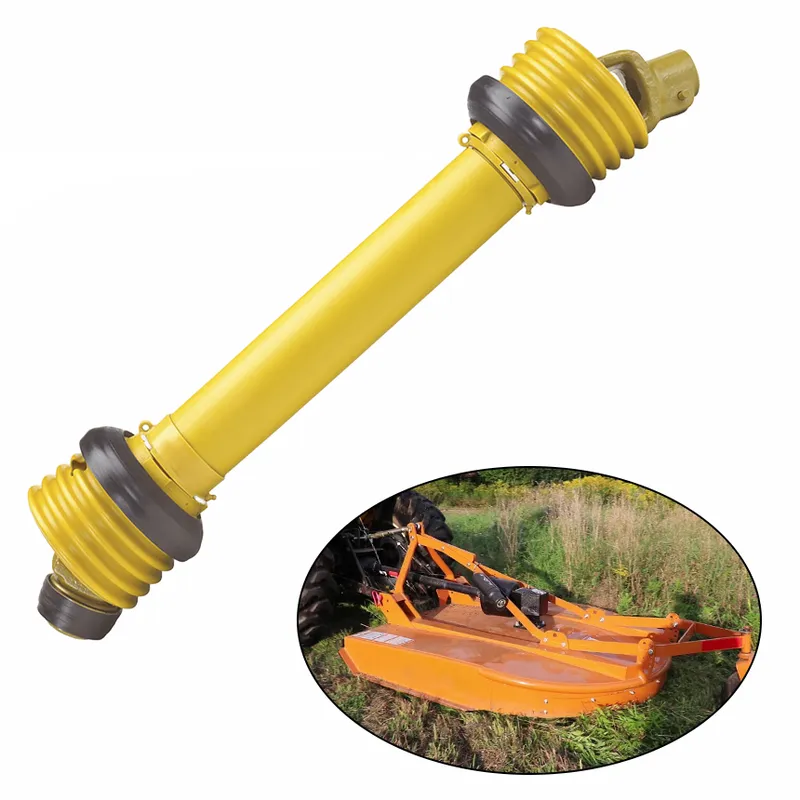
PTO Shaft for Woods Medium Duty Rotary Cutters BB84X, BB600X, BB720X, BB840X, BB840X-P
-
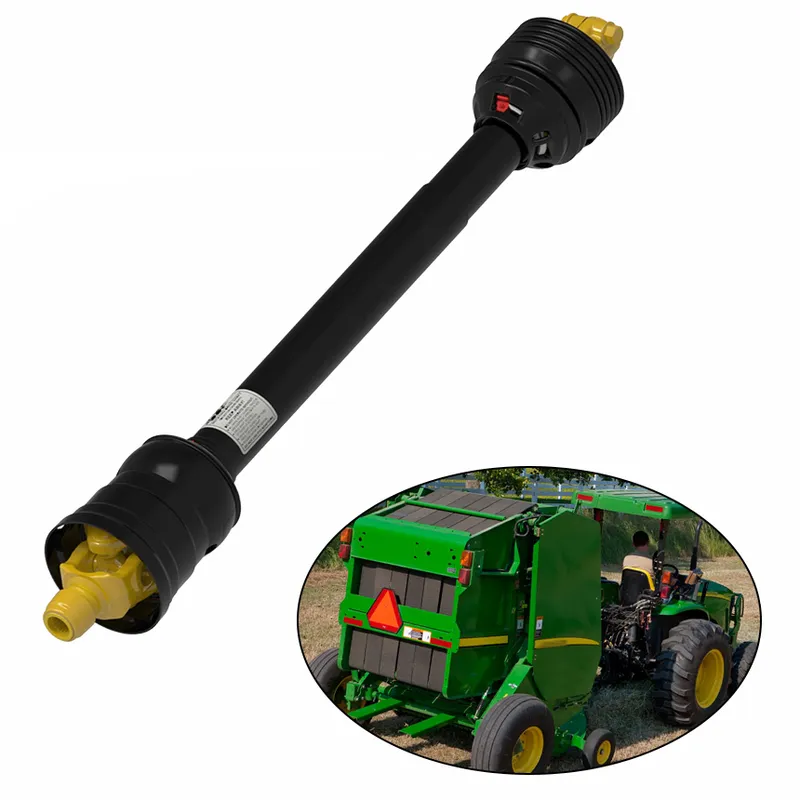
PTO Shaft for John Deere Round Balers 447, 449, 457, 458, 459, 467, 468, 469, 547
-
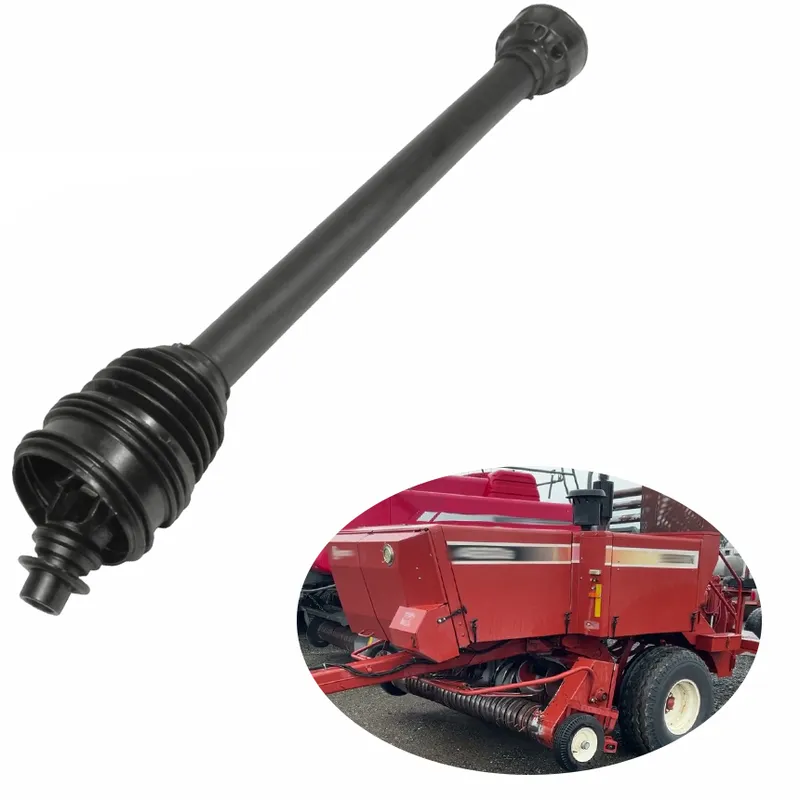
PTO Shaft for Hesston Square Balers 4690, 4690S
-
PTO Shaft for John Deere Round Balers 469, 569
-
PTO Shaft for Woods Medium Duty Rotary Cutters MD160, MD172, MD184