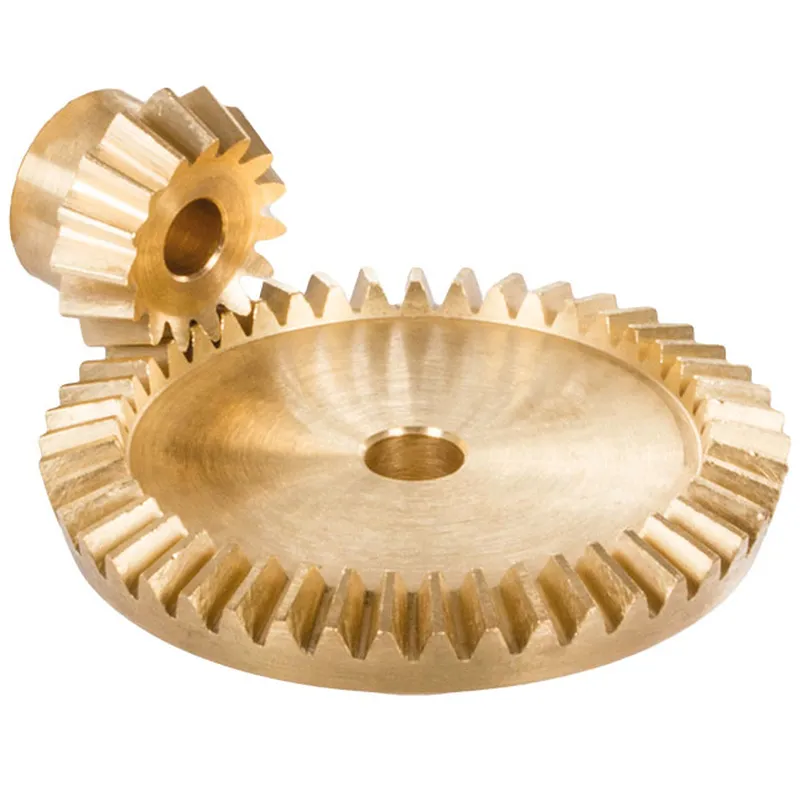
Brass Bevel Gears Ratio 4:1 Straight-Tooth System
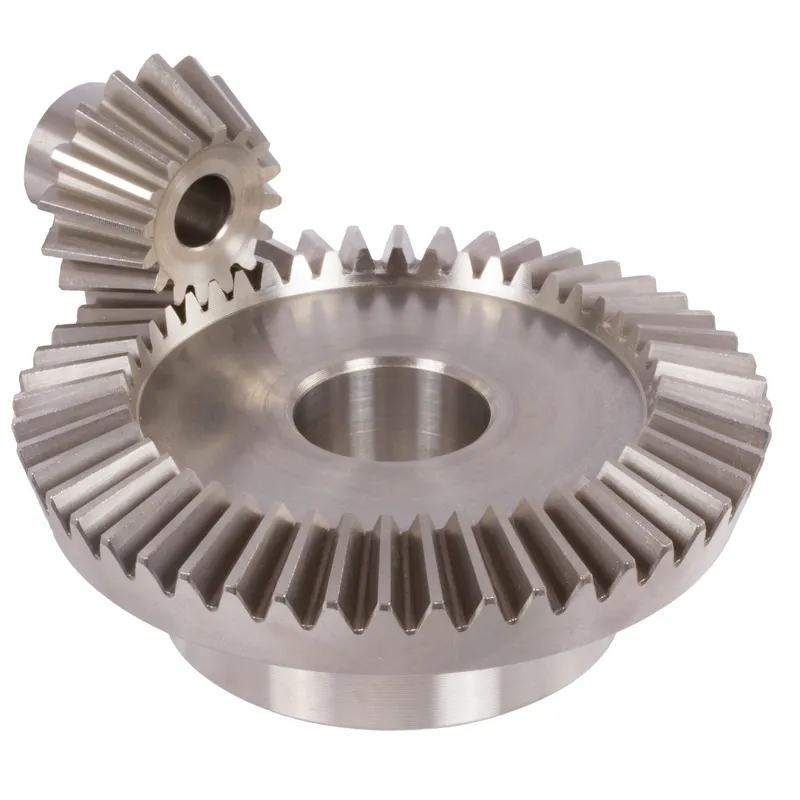
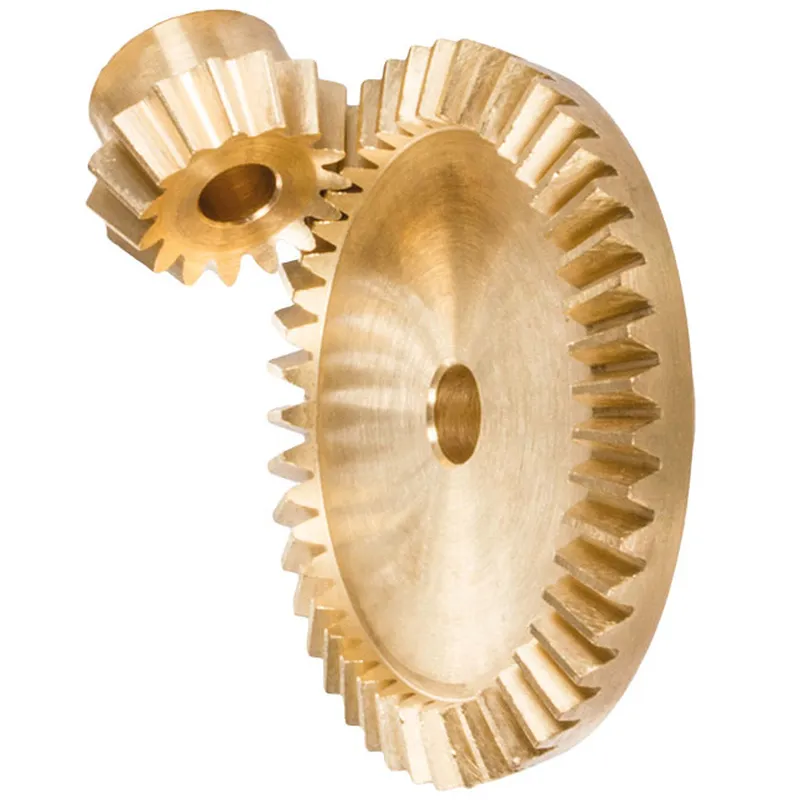
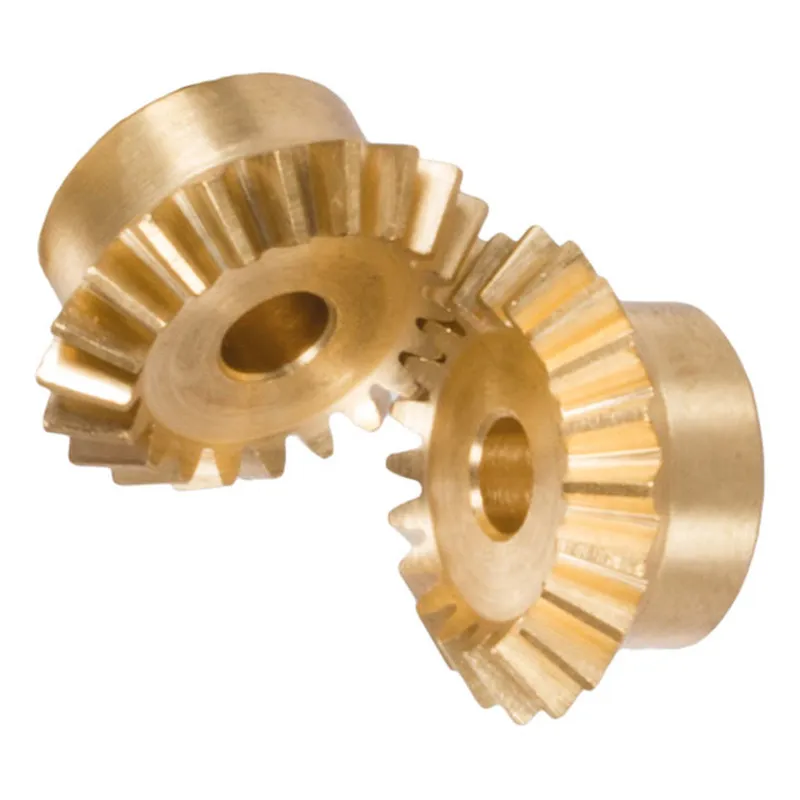
The brass bevel gears ratio 4:1 straight-tooth system refers to a mechanical gear configuration consisting of bevel gears made from brass, designed to transmit power between two shafts positioned at an angle to each other, typically 90 degrees. The use of brass as a material provides excellent durability, corrosion resistance, and machinability, making it suitable for applications where smooth, quiet operation is required, such as robotics, instrumentation, and small machinery.
The brass bevel gears ratio 4:1 straight-tooth system refers to a mechanical gear configuration consisting of bevel gears made from brass, designed to transmit power between two shafts positioned at an angle to each other, typically 90 degrees. Bevel gears are conical in shape, and their teeth are cut straight, aligning radially along the gear's surface. The 4:1 ratio indicates that for every four rotations of the driving gear (smaller gear or pinion), the driven gear (larger gear) completes one full rotation. This setup is often used to reduce speed while increasing torque in mechanical systems.
The use of brass as a material provides excellent durability, corrosion resistance, and machinability, making it suitable for applications where smooth, quiet operation is required. Straight-tooth bevel gears are simpler to manufacture and ideal for lightweight, low-speed applications like robotics, instrumentation, and small machinery. However, they may not handle heavy loads as effectively as spiral bevel gears.
Brass Bevel Gear Ratio 4:1
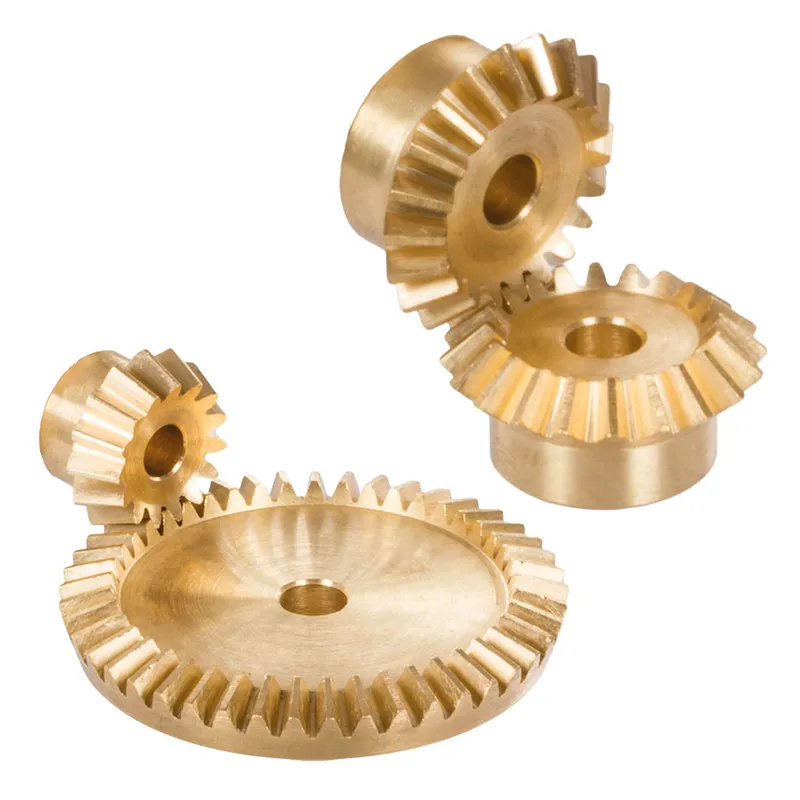 | 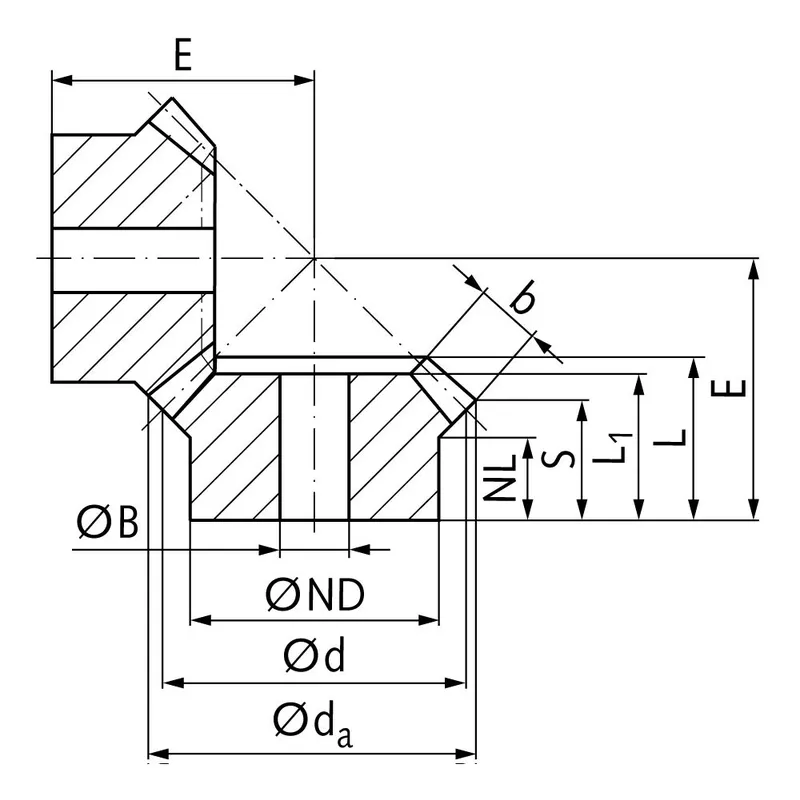 |
| โมดูล | ตัวเลข ของฟัน | งเอ | ง | เอ็นดี | เอ็นแอล | แอล1 | แอล | เอส | ข | บีเอช7 | อี | แรงบิด* | น้ำหนัก |
| มม. | มม. | มม. | มม. | มม. | มม. | มม. | มม. | มม. | มม. | เอ็นซีเอ็ม | จี | ||
| 1 | 15 | 17,8 | 15 | 13 | 5,5 | 10 | 11 | 6,3 | 5 | 5 | 35,9 | 12,2 | 10 |
| 1 | 60 | 60,3 | 60 | 16 | 8 | 12,5 | 14,6 | 13,6 | 5 | 6 | 20,5 | 48,8 | 110 |
Brass Bevel Gear Advantages and Disadvantages
Brass bevel gears are widely used in mechanical systems due to their unique material properties and design features. However, like any component, they come with a distinct set of advantages and disadvantages.
Advantages:
- ความต้านทานการกัดกร่อน
Brass is highly resistant to corrosion, making these gears ideal for environments exposed to moisture, chemicals, or other corrosive agents. This property ensures long-term durability and reliability. - Machinability
Brass is easy to machine, allowing for precise gear manufacturing with smooth finishes. This ensures efficient and quiet operation, which is especially crucial in applications requiring minimal noise. - Low Friction
Brass has naturally low friction, reducing wear between gear teeth and extending the system's lifespan. This also contributes to smoother power transmission with minimal energy loss. - Aesthetic Appeal
Due to its golden appearance, brass bevel gears are often preferred for decorative or visible mechanical parts, such as in clocks, robotics, or vintage machinery. - Non-Sparking
Brass is non-sparking, making it safe for use in environments where flammable gases or materials are present, such as in mining or petrochemical industries. - Lightweight
Compared to other metals like steel, brass is relatively lightweight, which is advantageous for systems where weight reduction is critical.
Disadvantages
- Lower Strength
Brass is softer compared to materials like steel. This limits its ability to handle high loads or heavy-duty applications, making it unsuitable for high-torque systems. - ค่าใช้จ่าย
Brass is generally more expensive than common materials like steel or cast iron. This can increase the overall cost of production, particularly in large-scale applications. - Limited Wear Resistance
While brass has good corrosion resistance, its wear resistance is lower than harder materials. Over time, gears may wear out faster under high-stress or high-speed conditions. - Thermal Conductivity
Brass conducts heat more efficiently than some other metals, which can lead to overheating in certain gear systems if not properly managed.
Typical Applications of Brass Straight Bevel Gears
- Clocks and Timepieces
Brass straight bevel gears are frequently used in clocks and timepieces due to their precise machining capabilities and low friction. Their corrosion resistance ensures longevity, while their lightweight properties reduce stress on delicate internal mechanisms, allowing for accurate timekeeping over extended periods. - หุ่นยนต์และระบบอัตโนมัติ
In robotics, brass bevel gears are ideal for lightweight, compact designs requiring smooth operation and precise motion control. Their low noise levels contribute to quieter robotic systems, while their machinability allows for custom designs tailored to specific robotic movements and torque requirements. - Small Machinery and Instruments
Brass bevel gears are common in small machinery like sewing machines or medical instruments, where precision and reliability are critical. Their resistance to corrosion ensures consistent performance in environments exposed to moisture, while their smooth operation prevents unnecessary wear on other components. - Aerospace Components
In aerospace systems, brass bevel gears are used in lightweight mechanical assemblies where high corrosion resistance and minimal weight are essential. Their ability to operate efficiently in controlled environments ensures reliable performance in applications like actuation systems and small-scale power transmission. - การใช้งานทางทะเล
Marine environments demand materials that resist corrosion from saltwater and humidity. Brass bevel gears are widely used in boat instrumentation, steering systems, and other marine equipment, where their durability and resistance to degradation ensure long-term functionality in harsh conditions.
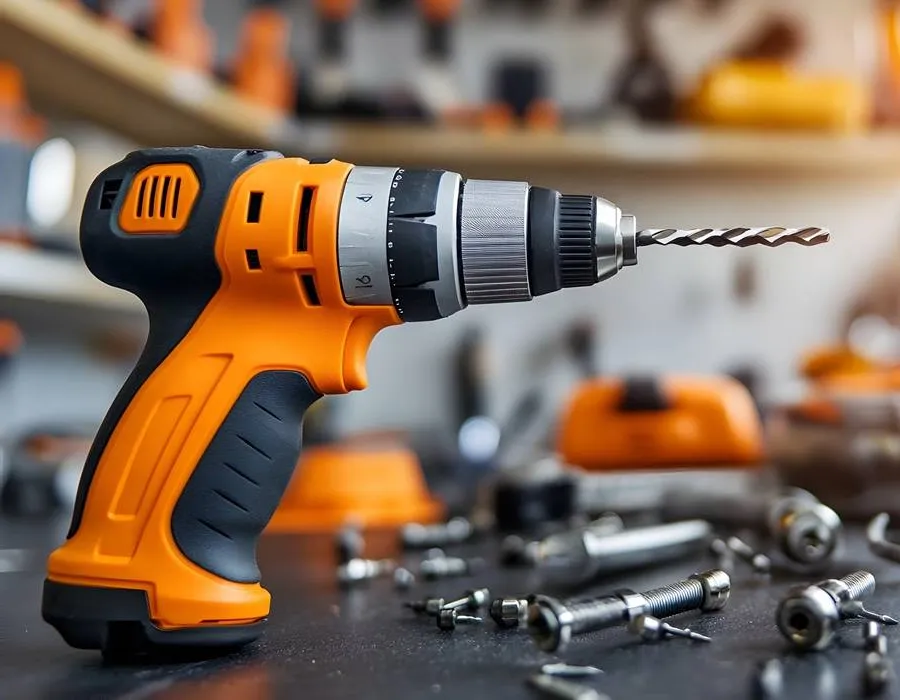 |  |
| เฟืองเฉียงสำหรับเครื่องมือไฟฟ้า | เฟืองดอกจอกสำหรับเฟืองท้ายรถยนต์ |
 |  |
| เฟืองดอกจอกสำหรับหุ่นยนต์ | เฟืองดอกจอกสำหรับอุตสาหกรรมทางทะเล |
Bevel Gear Vs Miter Gear
What Is a Bevel Gear
Bevel gears are a type of mechanical gear that features conically-shaped teeth, allowing them to transmit power between intersecting shafts at various angles. Unlike miter gears, which are limited to 90-degree angles, bevel gears offer greater flexibility in shaft orientation. These gears find extensive use in a wide range of machinery and applications where power transmission between non-parallel shafts is required.
เฟืองดอกจอกมีหลายรูปแบบ ได้แก่ เฟืองดอกจอกตรง เฟืองดอกจอกเกลียว และเฟืองดอกจอกไฮปอยด์
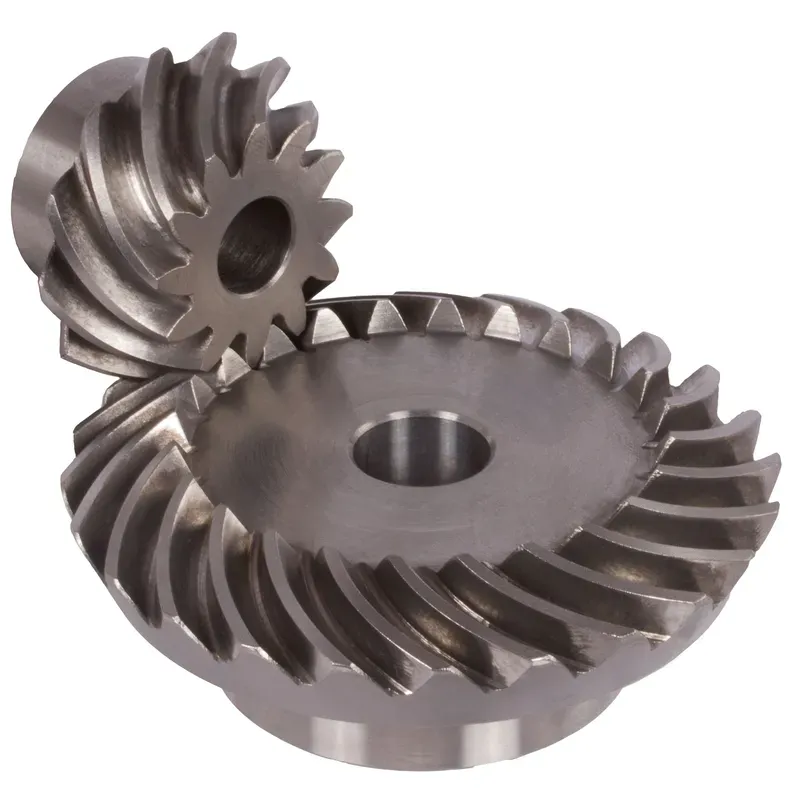
- Straight bevel gears have teeth that are cut straight across the cone surface, while spiral bevel gears feature curved teeth for smoother and quieter operation.
- เฟืองดอกจอกไฮปอยด์ ซึ่งเป็นรูปแบบหนึ่งของเฟืองดอกจอกเกลียว มีแกนเฟืองตัวเล็กที่เยื้องศูนย์ เพื่อเพิ่มความสามารถในการรับแรงบิดและลดเสียงรบกวน
What is a Miter Gear
เฟืองมิตเตอร์เป็นเฟืองชนิดหนึ่งที่มีฟันตัดกันเป็นมุม 90 องศา ออกแบบมาเพื่อส่งกำลังและการเคลื่อนที่ระหว่างเพลาสองตัวที่ตั้งฉากกัน เฟืองมิตเตอร์นิยมใช้ในงานเชิงกลหลากหลายประเภท รวมถึงเครื่องจักรในอุตสาหกรรม ระบบยานยนต์ และเครื่องมือวัดความแม่นยำ
The teeth of miter gears are cut at a 45-degree angle to the axis of rotation, allowing them to mesh together smoothly and efficiently. This unique tooth geometry enables miter gears to change the direction of rotation while maintaining a constant velocity ratio between the input and output shafts.
| คุณสมบัติ | เฟืองมิตเตอร์ | เฟืองดอกจอก |
|---|---|---|
| ออกแบบ | A specific type of bevel gear, designed for shafts at a 90-degree angle. | Can be designed for any angle between 0 and 180 degrees, offering greater shaft flexibility. |
| Functionality | Used for 90-degree changes in motion or power transmission. Common in hand tools and machinery. | Used for power transmission at various angles. Found in automotive drivetrains, aircraft, etc. |
| Gear Ratio | Typically a 1:1 gear ratio, providing no mechanical advantage in speed or torque. | Can be designed with different gear ratios for speed reduction or torque multiplication. |
| Load Capacity | Limited load capacity due to point contact between teeth, which leads to stress concentration. | Higher load capacity due to better stress distribution along the tooth surface. |
| Space Requirements | Compact design, suitable for applications with limited space. | May require more space due to larger size and angular positioning. |
| Versatility in Angles | Limited to 90-degree shaft angles. | Highly versatile, supporting shaft angles from 0 to 180 degrees. |
| แอปพลิเคชัน | Automotive systems, hand tools, industrial machinery, and precision instruments. | Automotive drivetrains, aircraft control systems, and various power transmission systems. |
| Manufacturing Complexity | Relatively simpler to manufacture compared to other bevel gears. | More complex to manufacture, especially spiral and hypoid bevel gears. |
| กระแสต่อต้าน | Prone to backlash, which can cause positioning errors and vibrations. | Also prone to backlash, but varies based on the specific type of bevel gear. |
| ความสามารถในการรับแรงบิด | Moderate torque transmission capability. | Higher torque capacity, especially in hypoid bevel gears due to larger tooth contact areas. |
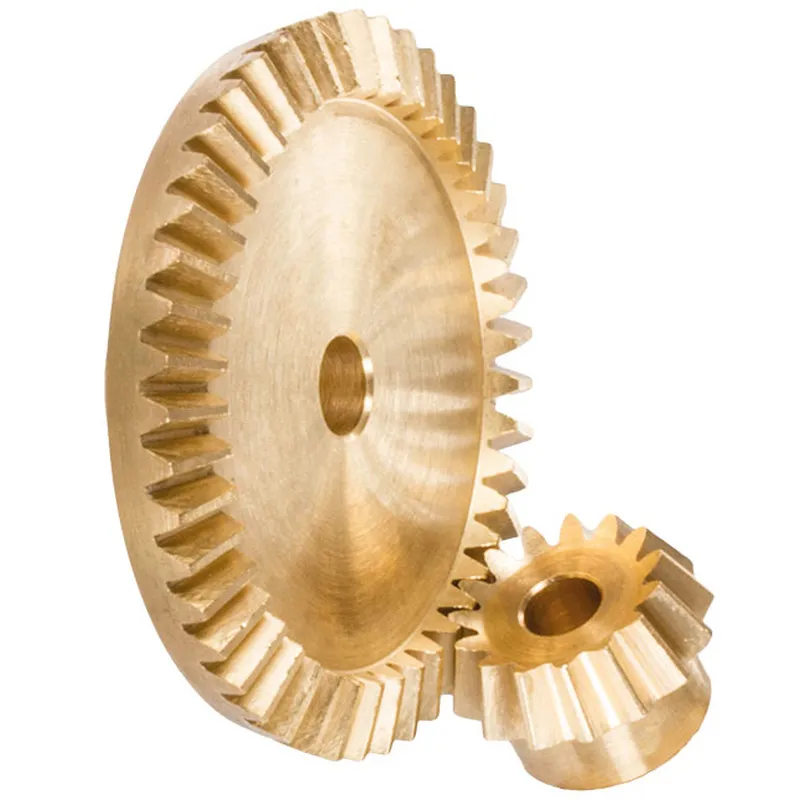 |  |
| เฟืองดอกจอก | Miter Gear |
ข้อมูลเพิ่มเติม
| เรียบเรียงโดย | วายเจเอ็กซ์ |
|---|