
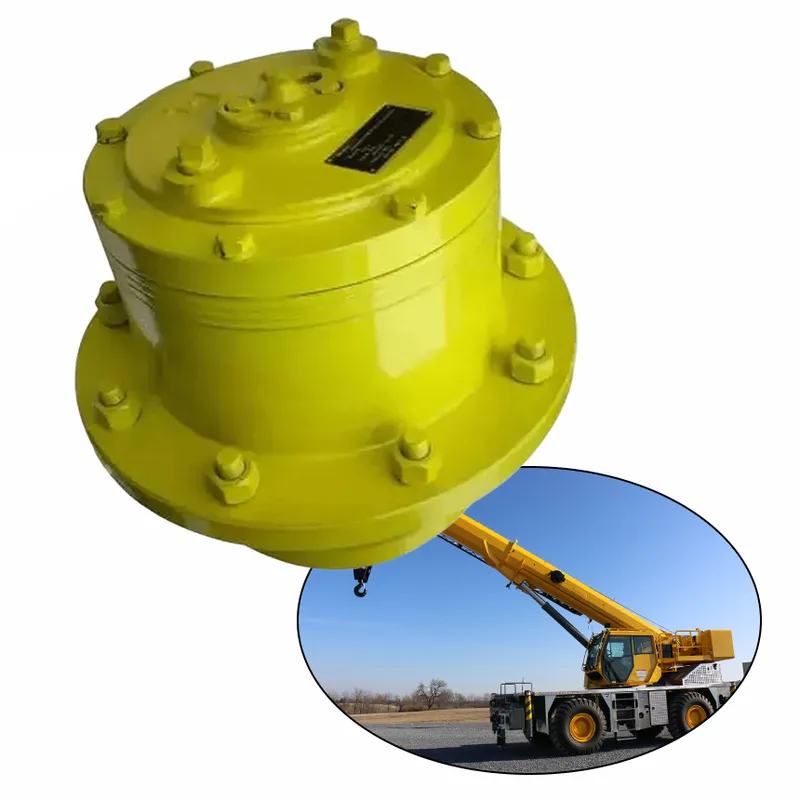
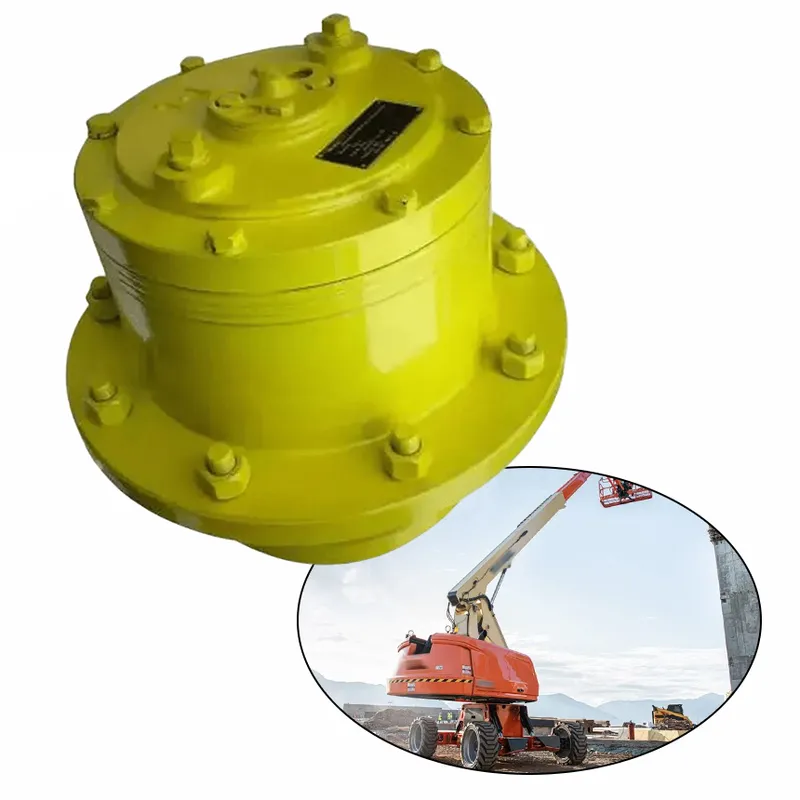
Caixa de engrenagens planetárias para guindastes de rodas
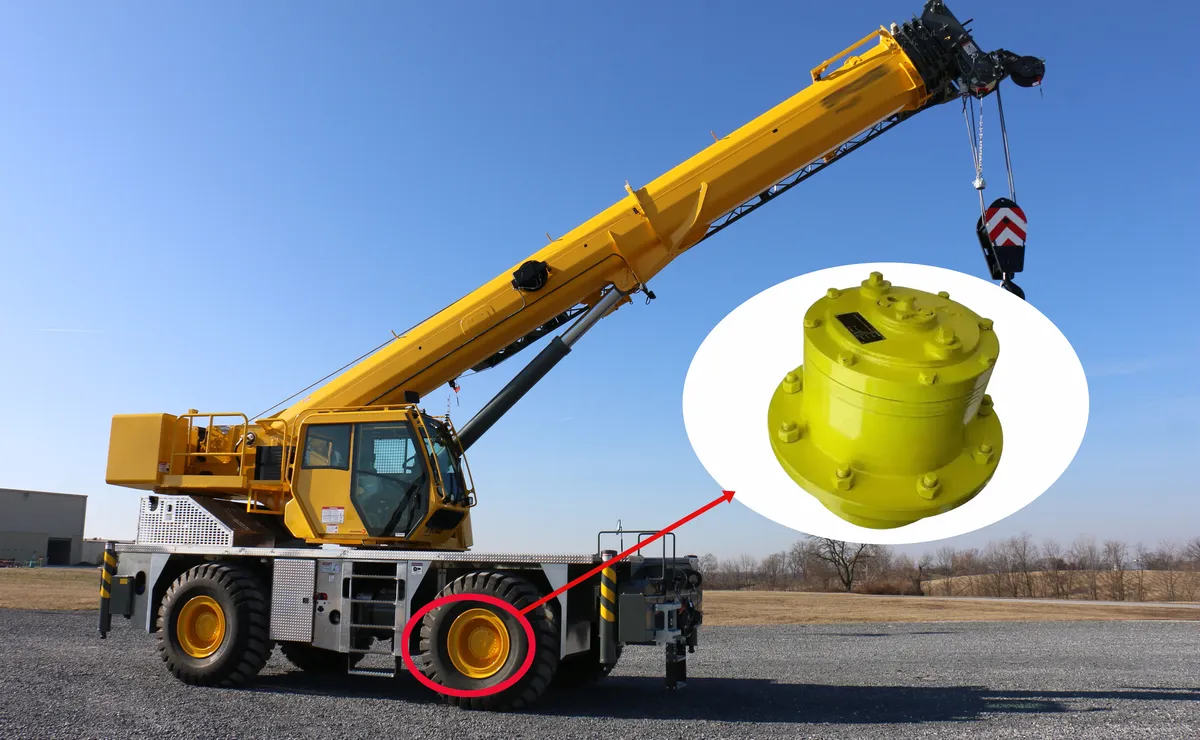
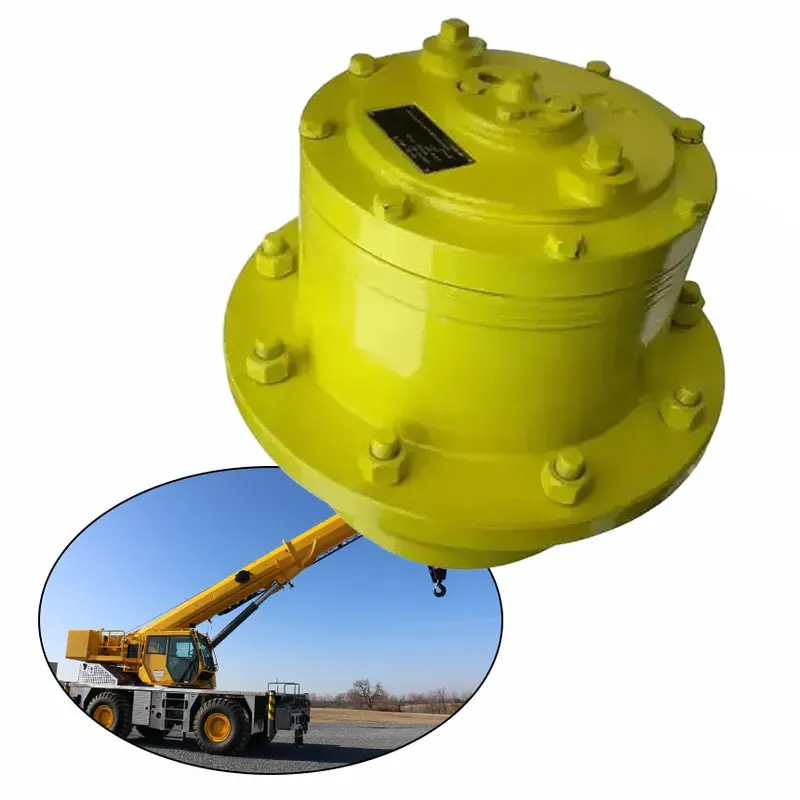
The planetary wheel drive gearbox for wheel cranes is a sophisticated, compact transmission system engineered to deliver high torque multiplication and speed reduction directly at the wheel hubs, facilitating efficient propulsion and maneuverability in mobile crane applications. These planetary gearboxes are pivotal for wheel drives, ensuring stable traction, precise load handling, and enhanced stability on uneven or challenging terrains encountered in construction, mining, and heavy lifting environments. They offer significant advantages, including large torque capacity, high transmission efficiency, low-speed stability, and reduced noise levels compared to conventional worm gearboxes or helical gearboxes.
The planetary wheel drive gearbox for wheel cranes is a sophisticated, compact transmission system engineered to deliver high torque multiplication and speed reduction directly at the wheel hubs, facilitating efficient propulsion and maneuverability in mobile crane applications. This planetary gearbox employs an epicyclic or planetary gear configuration, comprising a central sun gear that drives multiple orbiting planet gears mounted on a carrier, all enclosed within an outer ring gear. This arrangement enables coaxial alignment of input and output shafts, resulting in a space-saving design that integrates seamlessly with hydraulic or electric motors, while robust full-complement bearings absorb axial and radial forces exerted during operation.
In the context of wheel cranes, such as truck-mounted or all-terrain mobile cranes, these gearboxes are pivotal for wheel drives, ensuring stable traction, precise load handling, and enhanced stability on uneven or challenging terrains encountered in construction, mining, and heavy lifting environments. They offer significant advantages, including large torque capacity, high transmission efficiency, low-speed stability, and reduced noise levels compared to conventional caixas de engrenagens sem-fim or helical gearboxes.
Dimensões da tração planetária
Definições Técnicas
| Símbolos | Unidades de medida | Descrição |
| eu | - | Taxa de redução |
| T2máx | [Nm] | Torque máximo de saída |
| T2p | [Nm] | Torque de saída de pico |
| T2maxint | [Nm] | Torque intermitente máximo |
| T2cont | [Nm] | Torque de saída contínuo |
| Pcont | [kW] | Potência máxima contínua |
| Pinta | [kW] | Potência máxima intermitente |
| n1máx | [rpm] | Velocidade máxima de entrada |
| n2máx | [rpm] | Velocidade máxima de saída |
GR 80
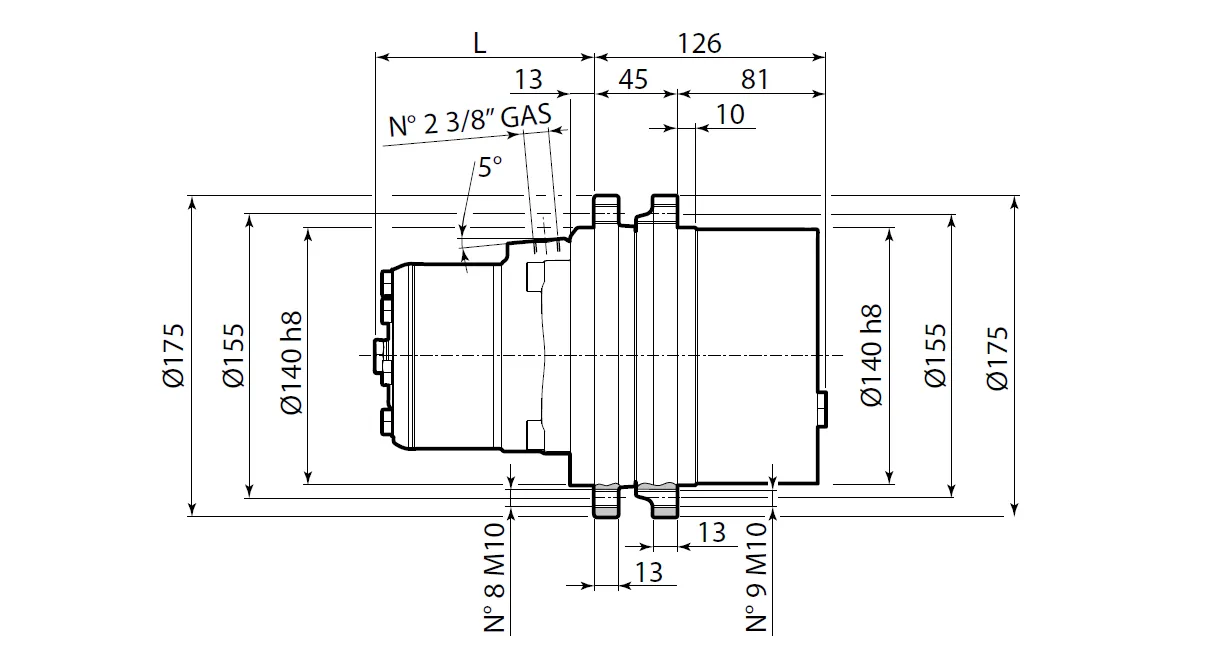
| Tipo | Exibição do motor. [cc] | Exibição total. [cc] | eu | Torque | Velocidade n2máx | Poder | |||||||
| T2cont | T2maxint | T2p | Pcont [kW] | Pinta [kW] | |||||||||
| [Nm] | Δp [barra] | [Nm] | Δp [barra] | [Nm] | Δp [barra] | [rpm] | portata fluxo [l/minuto] | ||||||
| GR80-MR50 | 51,6 | 269,9 | 5,23 | 470 | 145 | 570 | 175 | 630 | 205 | 115 | 30 | 5,5 | 7 |
| GR80-MR80 | 80,3 | 420,0 | 800 | 145 | 960 | 175 | 1060 | 205 | 68 | 30 | 5,5 | 7 | |
| GR80-MR100 | 99,8 | 522,0 | 800 | 115 | 1000 | 145 | 1310 | 205 | 55 | 30 | 5,5 | 7 | |
| GR80-MR125 | 125,7 | 657,4 | 800 | 95 | 1000 | 120 | 1500 | 190 | 45 | 30 | 5,5 | 7 | |
| GR80-MR160 | 159,6 | 834,7 | 800 | 75 | 1000 | 95 | 1500 | 145 | 33 | 30 | 5 | 7 | |
| GR80-MR200 | 199,8 | 1045,0 | 800 | 60 | 1000 | 75 | 1500 | 115 | 26 | 30 | 5 | 7 | |
| GR80-MR250 | 249,3 | 1303,8 | 800 | 50 | 1000 | 60 | 1500 | 95 | 21 | 30 | 4,5 | 6 | |
GR 200
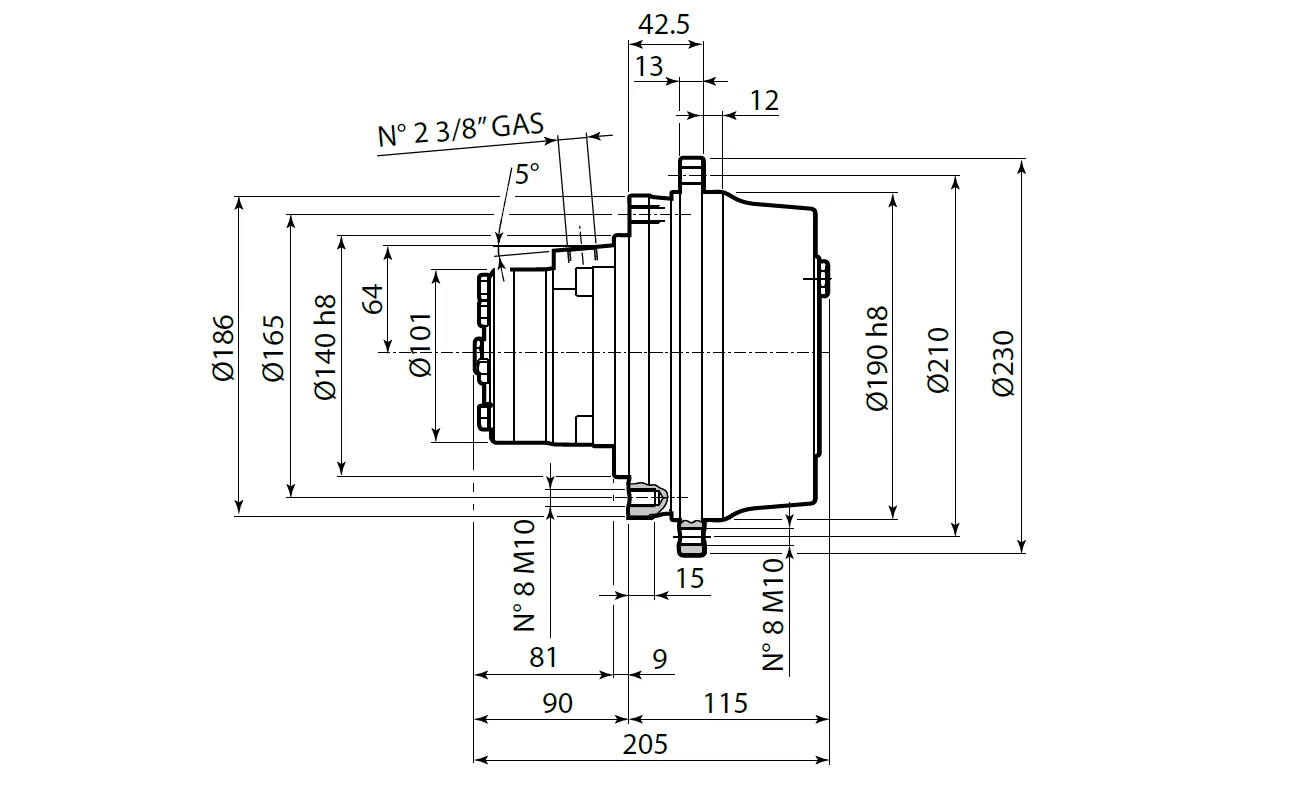
| Tipo | Exibição do motor. [cc] | Exibição total. [cc] | eu | Torque | Velocidade n2máximo | Poder | |||||||
| T2continuação | T2maxint | T2p | Pcont [kW] | Pinta [kW] | |||||||||
| [Nm] | Δp [barra] | [Nm] | Δp [barra] | [Nm] | Δp [barra] | [rpm] | portata fluxo [l/minuto] | ||||||
| GR200-MR50 | 51,6 | 319,9 | 6,20 | 560 | 145 | 670 | 175 | 740 | 205 | 98 | 30 | 5,5 | 7 |
| GR200-MR80 | 80,3 | 497,9 | 950 | 145 | 1150 | 175 | 1250 | 205 | 58 | 30 | 5,5 | 7 | |
| GR200-MR100 | 99,8 | 618,8 | 1180 | 145 | 1420 | 175 | 1560 | 205 | 46 | 30 | 5,5 | 7 | |
| GR200-MR125 | 125,7 | 779,3 | 1450 | 145 | 1750 | 175 | 1920 | 205 | 38 | 30 | 5,5 | 7 | |
| GR200-MR160 | 159,6 | 989,5 | 1600 | 125 | 2100 | 165 | 2450 | 205 | 29 | 30 | 5 | 7 | |
| GR200-MR200 | 199,8 | 1238,8 | 1600 | 100 | 2150 | 135 | 2500 | 165 | 23 | 30 | 5 | 7 | |
| GR200-MR250 | 249,3 | 1545,7 | 1600 | 80 | 2150 | 105 | 2500 | 135 | 18 | 30 | 4,5 | 6 | |
| GR200-MR315 | 315,7 | 1957,3 | 1600 | 65 | 2150 | 85 | 2500 | 110 | 15 | 30 | 4 | 5 | |
| GR200-MR375 | 372,6 | 2310,1 | 1600 | 55 | 2150 | 70 | 2500 | 90 | 12 | 30 | 3,5 | 4,5 | |
EH 210
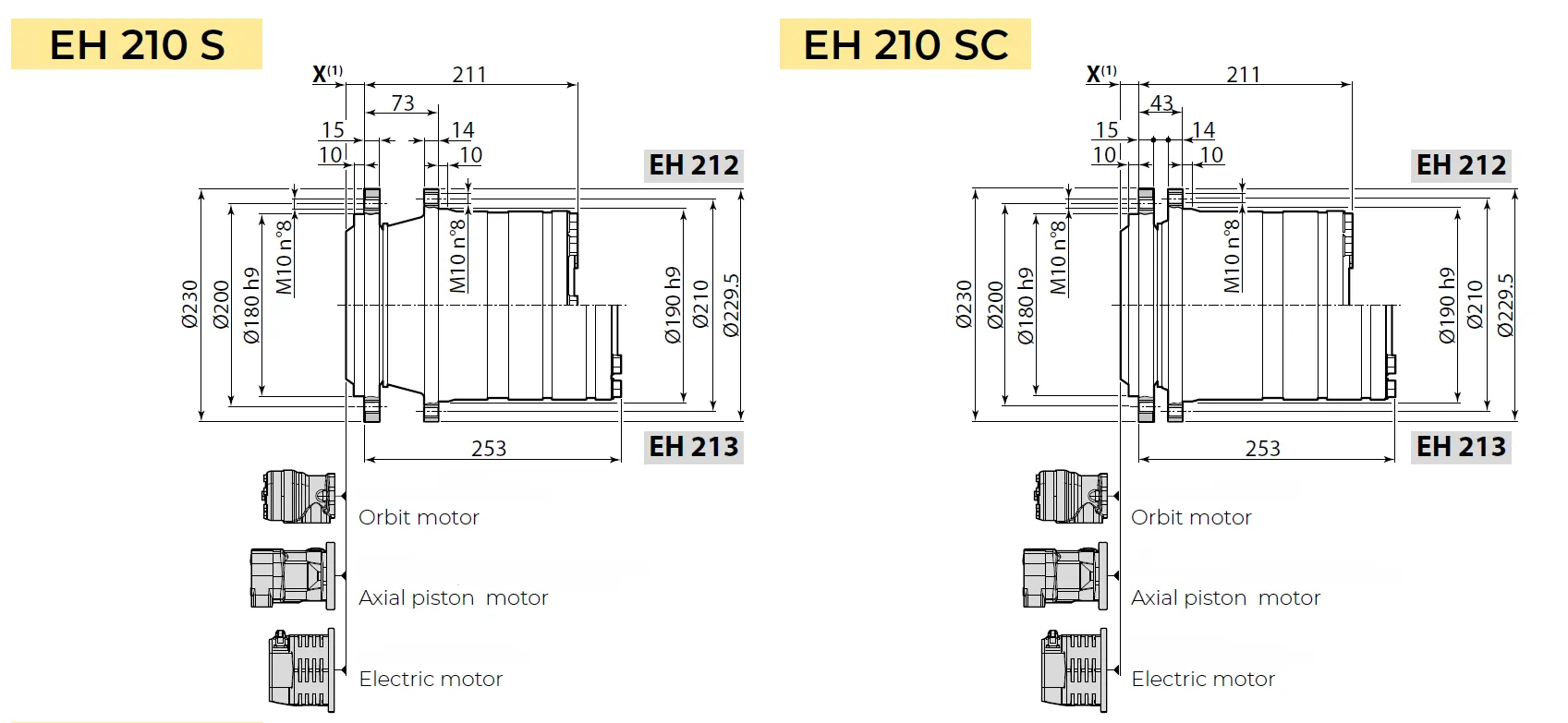
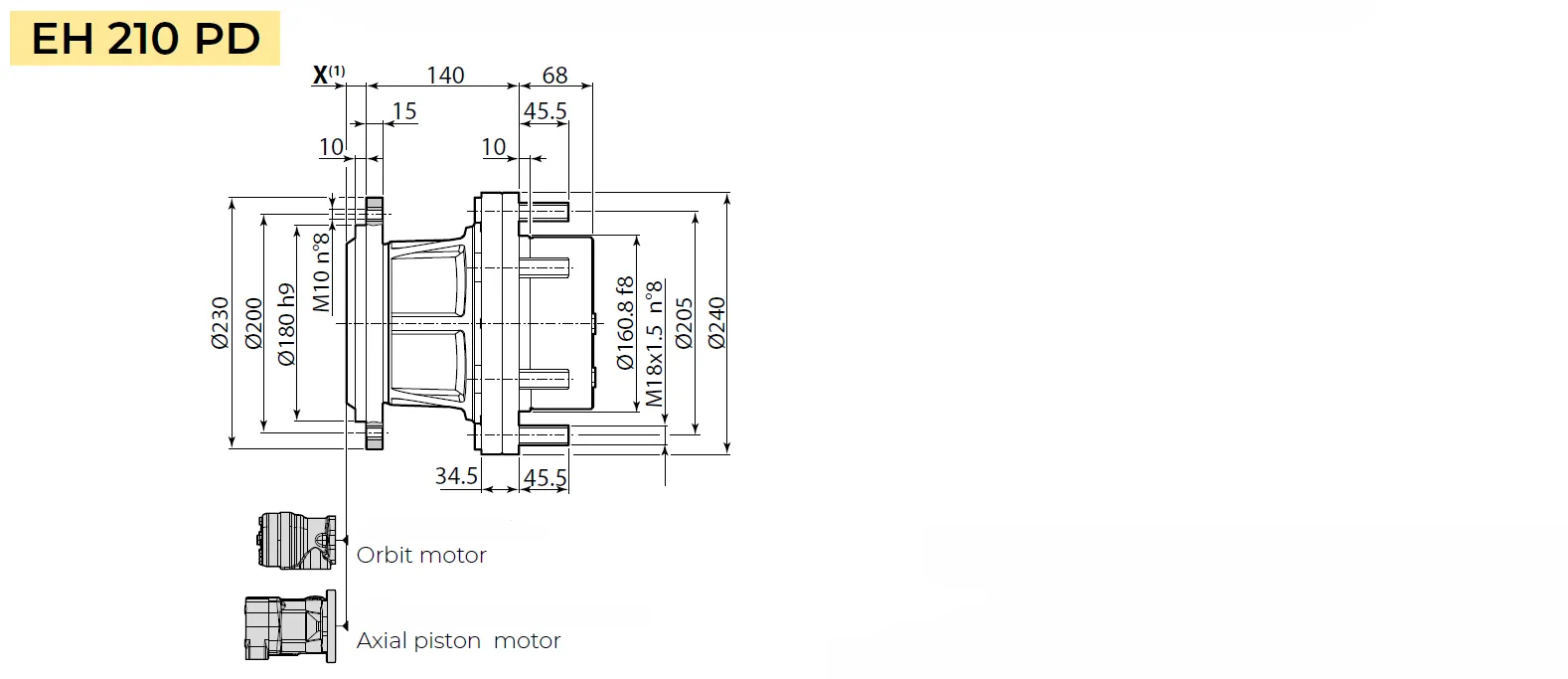
| Tipo | Peso | Quantidade de óleo | i (da÷a / De÷para) | T2máx [Nm] | n1máx [rpm] | ||||
| EH 212 | EH 213 | EH 212 | EH 213 | EH 212 | EH 213 | ||||
| EH 210 S | 35 | 40 | 0.8 | 1 | 11 ÷ 29 | 41 ÷ 129 | 3950 | 3500 | |
| EH 210 SC | |||||||||
| EH 210 PD | - | - | |||||||
EH 240
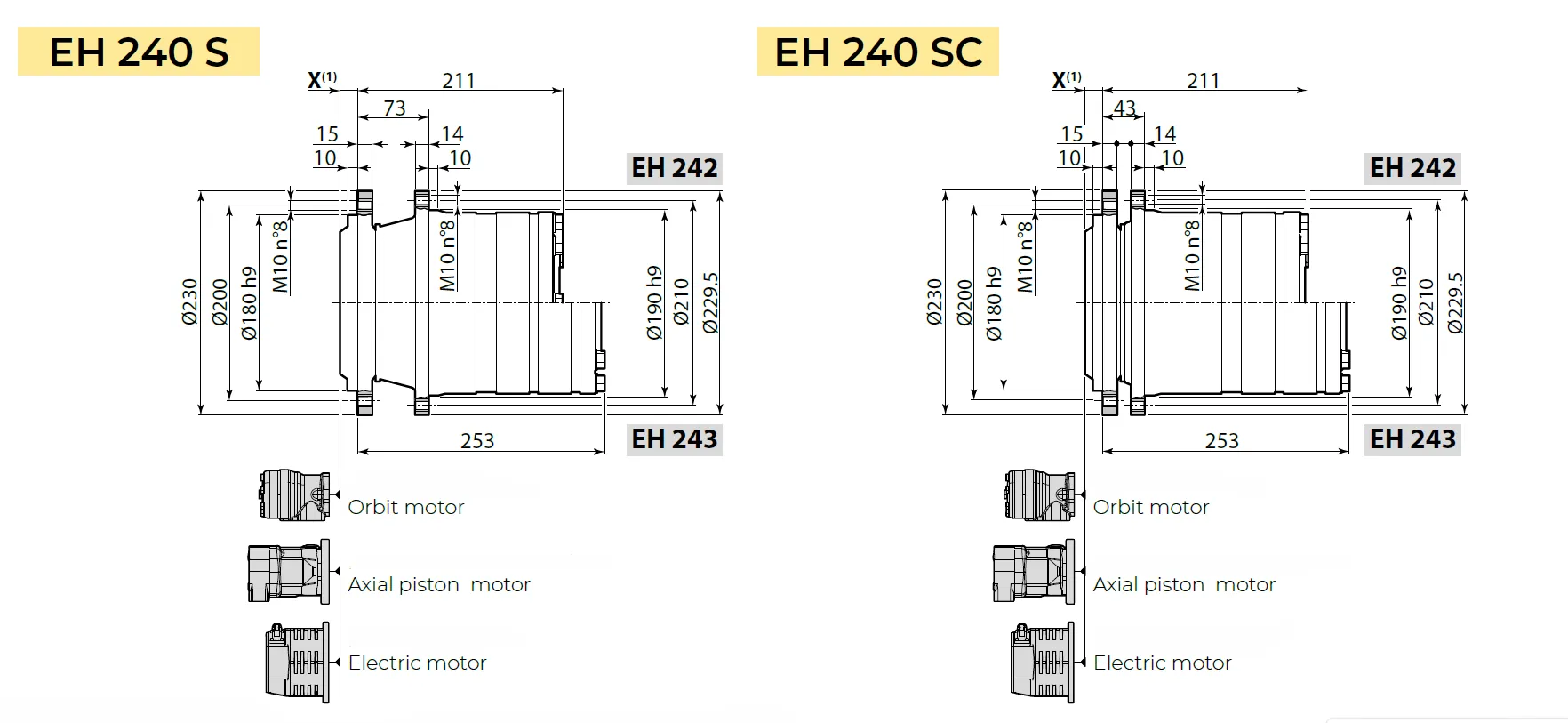
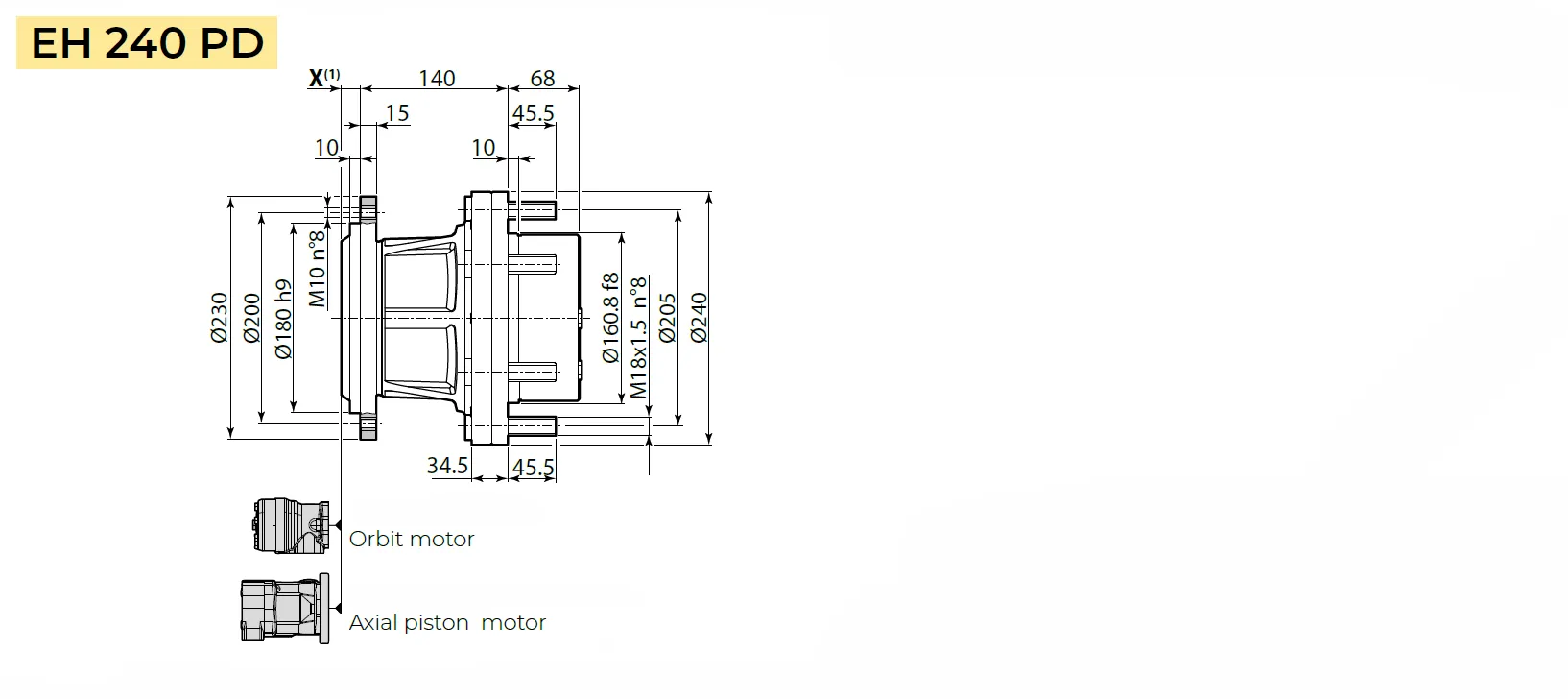
| Tipo | Peso | Quantidade de óleo | i (da÷a / De÷para) | T2máx [Nm] | n1máx [rpm] | ||||
| EH 242 | EH 243 | EH 242 | EH 243 | EH 242 | EH 243 | ||||
| EH 240 S | 35 | 40 | 0.8 | 1 | 12 ÷ 31 | 45 ÷ 135 | 5600 | 3500 | |
| EH 240 SC | |||||||||
| EH 240 PD | - | - | |||||||
EH 350
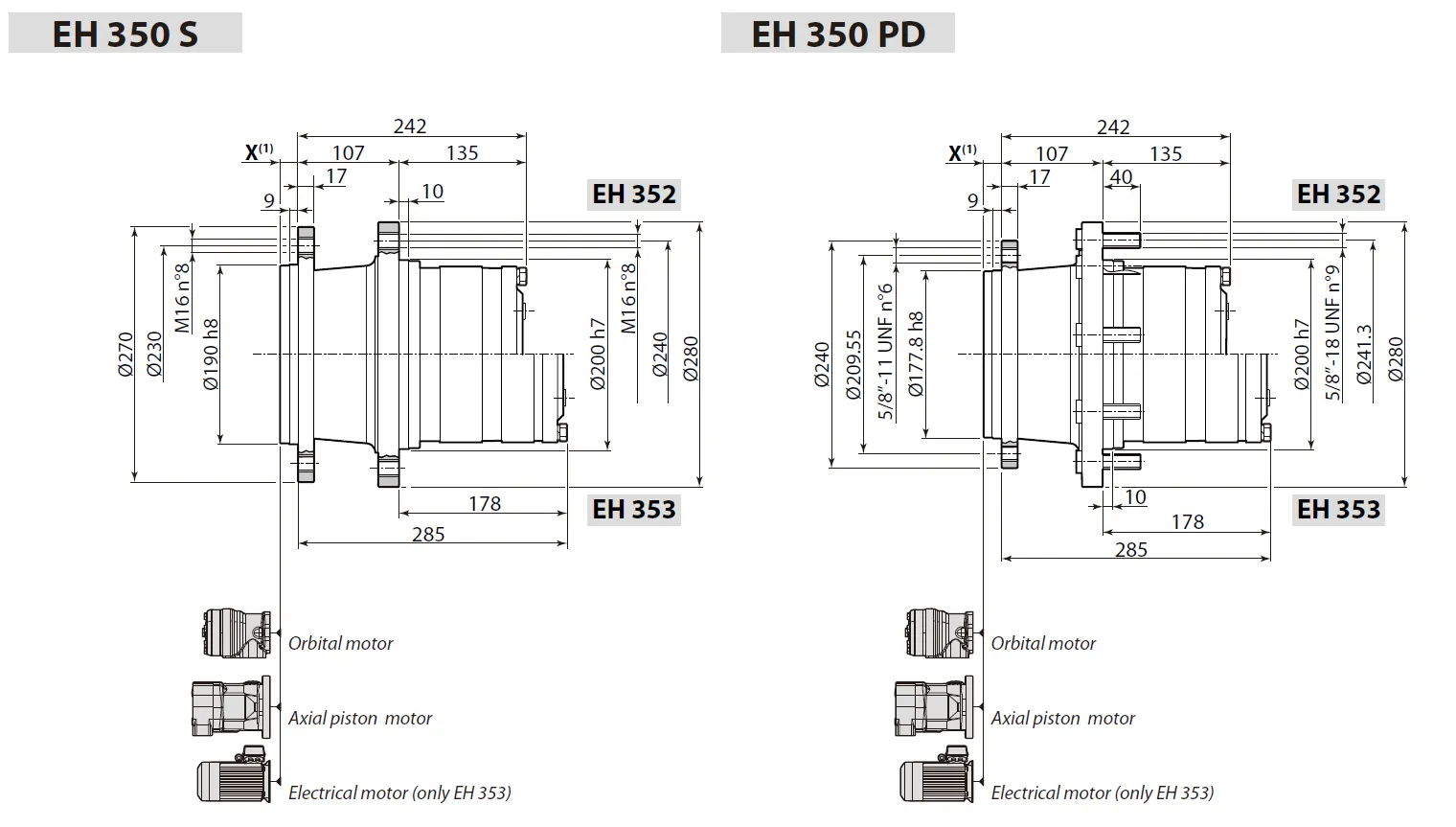
| Tipo | Peso | Quantidade de óleo | i (da÷a / De÷para) | T2máx [Nm] | n1máx [rpm] | ||||
| EH 352 | EH 353 | EH 352 | EH 353 | EH 352 | EH 353 | ||||
| EH 350 S | 55 | 60 | 1 | 1.2 | 15 ÷ 31 | 52 ÷ 135 | 7200 | 3500 | |
| EH 350 PD | |||||||||
EH 610
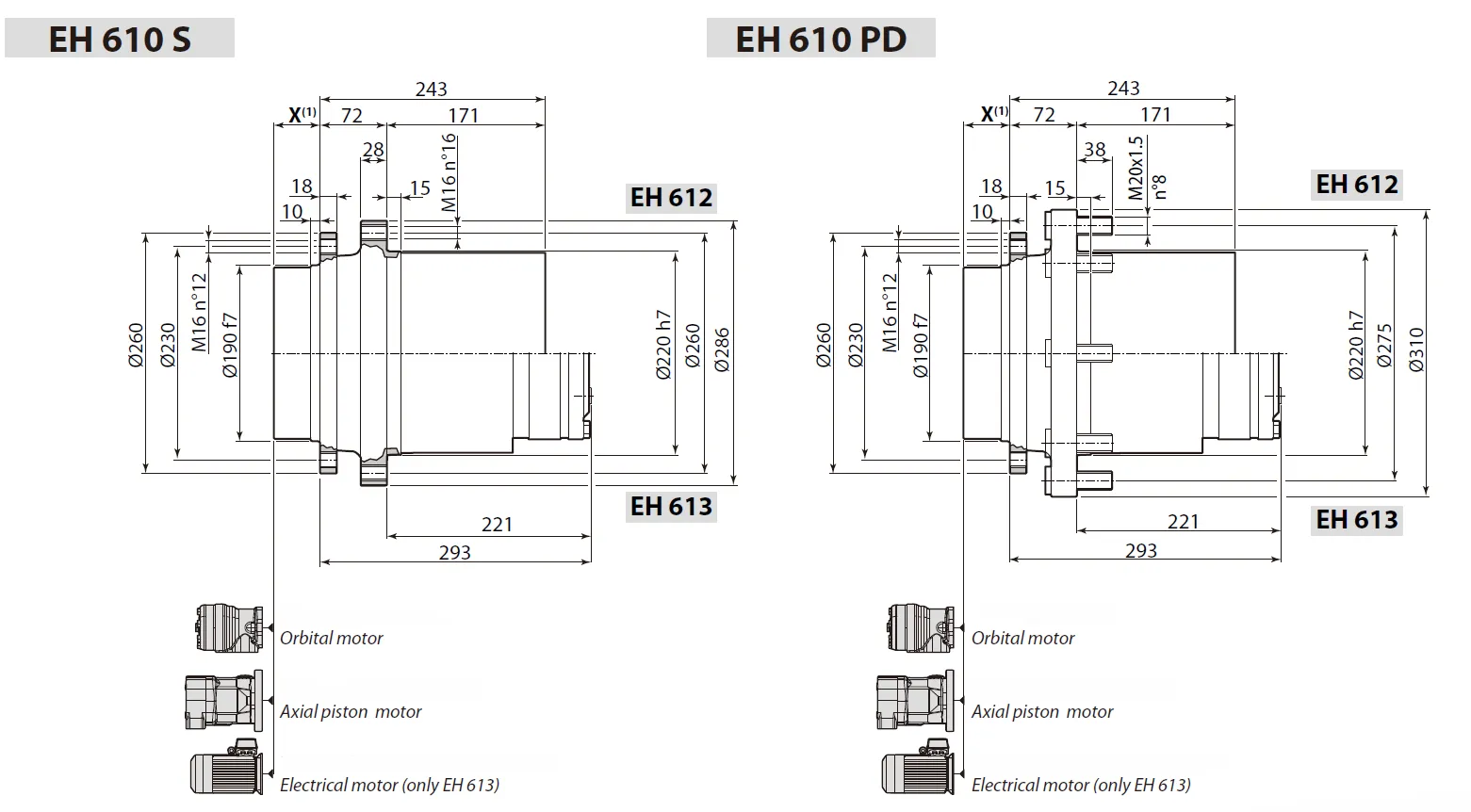
| Tipo | Peso | Quantidade de óleo | i (da÷a / De÷para) | T2máx [Nm] | n1máx [rpm] | ||||
| EH 612 | EH 613 | EH 612 | EH 613 | EH 612 | EH 613 | ||||
| EH 610 S | 60 | 70 | 1.2 | 1.5 | 12 ÷ 31 | 47 ÷ 138 | 13500 | 3500 | |
| EH 610 PD | |||||||||
EH 910
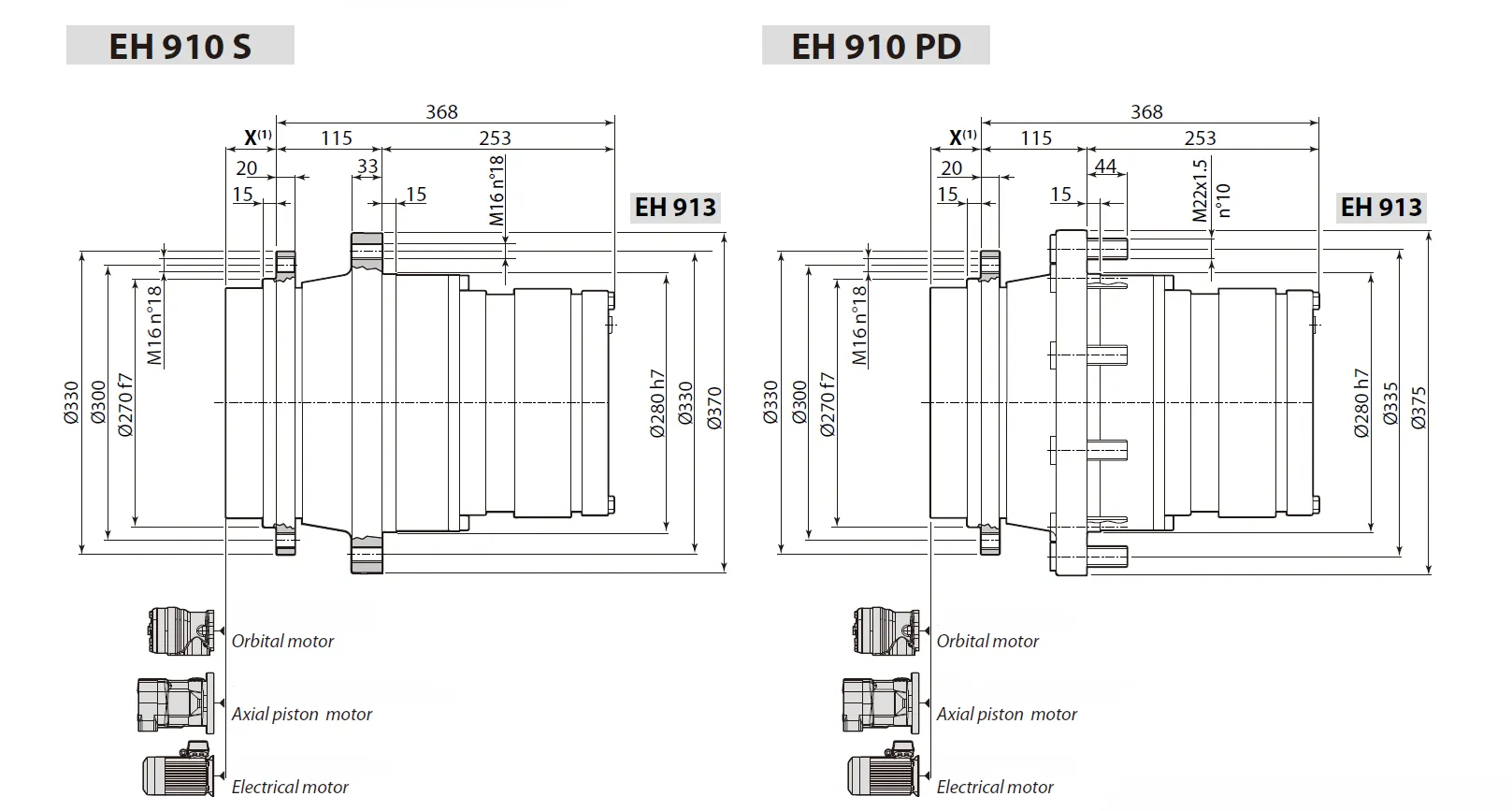
| Tipo | Peso | Quantidade de óleo | i (da÷a / De÷para) | T2máx | n1máx | |
| EH 913 | EH 913 | EH 913 | [Nm] | [rpm] | ||
| EH 910 S | 130 | 1 | 47 ÷ 131 | 24200 | 3500 | |
| EH 910 PD | ||||||
Versão S

| Tamanho | Dimensões | ||||||||||
| D1 | D2 | D3 | D4 | D5 | D6 | D7 | D8 | L1 | L2 | L3 | |
| EH 210 S | 230 | 200 | 180 h9 | 190 h9 | 210 | 229.5 | M10 n°8 | M10 n°8 | 253 | 73 | 180 |
| EH 240 S | 230 | 200 | 180 h9 | 190 h9 | 210 | 229.5 | M10 n°8 | M10 n°8 | 253 | 73 | 180 |
| EH 350 S | 270 | 230 | 190 h8 | 200 h7 | 240 | 280 | M16 n°8 | M16 n°8 | 242 | 107 | 178 |
| EH 610 S | 260 | 230 | 190 f7 | 220 h7 | 260 | 286 | M16 n°12 | M16 n°16 | 243 | 72 | 171 |
| EH 910 S | 330 | 300 | 270 f7 | 280 h7 | 350 | 370 | M16 n°18 | M16 n°18 | 368 | 115 | 253 |
Versão PD
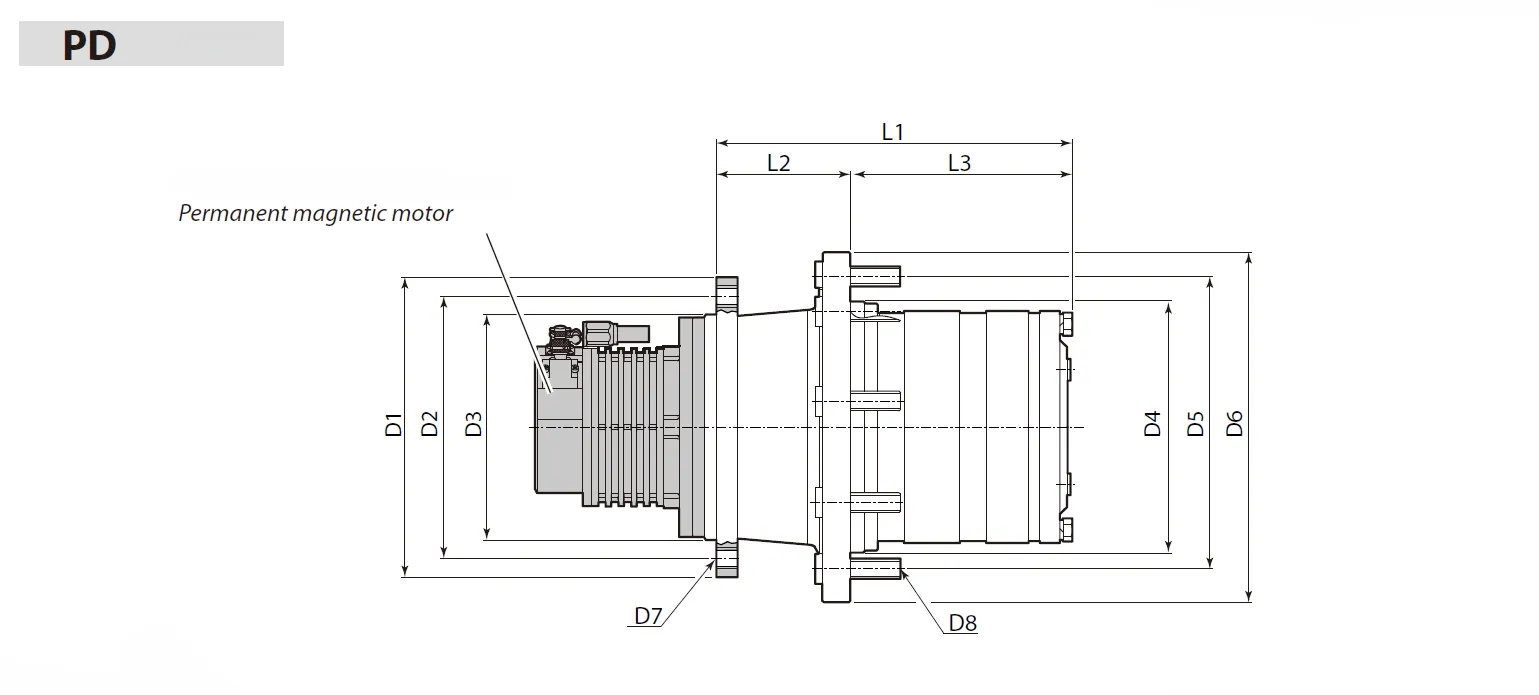
| Tamanho | Dimensões | ||||||||||
| D1 | D2 | D3 | D4 | D5 | D6 | D7 | D8 | L1 | L2 | L3 | |
| EH 210 PD | 230 | 200 | 180 h9 | 160,8 f8 | 205 | 240 | M10 (8x) | M18x1,5 (6x) | 210 | 140 | 70 |
| EH 240 PD | 230 | 200 | 180 h9 | 160,8 f8 | 205 | 240 | M10 (8x) | M18x1,5 (6x) | 210 | 140 | 70 |
| EH 350 PD | 240 | 209.55 | 177,8 h8 | 200 h7 | 241.3 | 280 | 5/8"-11 UNC (6x) | 5/8"-19 UNF (9x) | 285 | 107 | 178 |
| EH 610 PD | 260 | 230 | 190 f7 | 220 h7 | 275 | 310 | M16 (12x) | M20x1,5 (8x) | 293 | 72 | 221 |
| EH 910 PD | 330 | 300 | 270 f7 | 280 h7 | 335 | 375 | M16 (18x) | M22x1,5 (10x) | 368 | 115 | 253 |
Wheel Crane Planetary Wheel Drive Gearbox Advantages
1. Compact Design and Space Efficiency
The planetary wheel drive gearbox features a coaxial alignment of input and output shafts, allowing for a remarkably compact structure that saves valuable installation space in wheel cranes. This design reduces overall vehicle weight by up to 60%, enabling lighter support structures while maintaining robustness, which is essential for mobile applications where maneuverability and transportability are paramount.
2. High Torque Capacity
Engineered to deliver exceptional torque multiplication, often exceeding 70,000 Nm, this planetary wheel drive efficiently transfers power from hydraulic or electric motors directly to the wheels of cranes. It supports heavy lifting operations by providing substantial torque at low speeds, ensuring precise control and stability during load handling on uneven terrains.
3. Eficiência de transmissão superior
With efficiency rates surpassing 90% even at high reduction ratios like 70:1, the planetary configuration minimizes energy loss through even distribution of power across multiple planet gears. This results in optimized fuel consumption and reduced operational costs for wheel cranes, while maintaining consistent performance in prolonged duties.
4. Maior durabilidade e confiabilidade
Incorporating full-complement bearings and a modular planetary setup, the wheel drive planetary gearbox withstands axial and radial forces, ensuring long-term reliability in harsh crane environments. Its even torque distribution and rotational stiffness prevent premature wear, extending service life and minimizing downtime for maintenance.
5. Superior Shock Load Resistance
The multi-gear engagement in the planetary system allows for effective absorption of sudden impacts and vibrations common in wheel crane operations, such as those encountered during off-road travel or heavy load shifts. This capability protects internal components, enhancing safety and operational continuity in dynamic settings.
6. Improved Stability and Maneuverability
By providing stable traction and precise speed control at the wheel hubs, the planetary gear reducer enhances the overall stability of wheel cranes on challenging surfaces, reducing the risk of tipping during lifts. This contributes to safer, more productive operations, with features like low-speed stability and reversibility supporting intricate maneuvers in confined spaces.
Aplicações de transmissões planetárias
1. Construction Machinery
In construction equipment such as mobile cranes, excavators, and concrete pumps, the wheel drive planetary gearbox provides robust torque delivery and compact integration, enabling smooth maneuverability on rough terrains while supporting heavy loads and ensuring stability during lifting and positioning operations for enhanced site efficiency.
2. Mining Equipment
Utilized in mining vehicles like haul trucks, loaders, and drilling rigs, this planetary gearbox offers high reduction ratios and shock resistance, facilitating reliable wheel propulsion in harsh underground or open-pit conditions, thereby improving traction, reducing downtime, and optimizing energy use in resource extraction processes.
3. Agricultural Machinery
Applied in tractors, harvesters, and irrigation systems, the planetary wheel drive gearbox ensures efficient power transfer to wheels for variable speed control, enhancing field navigation on uneven soil, boosting crop yield through precise operations, and minimizing fuel consumption in modern farming practices.
4. Material Handling Systems
In automated guided vehicles (AGVs), forklifts, and warehouse robots, it enables compact wheel hub integration for agile movement in logistics facilities, supporting high payload capacities, seamless navigation in confined spaces, and automated workflows that streamline supply chain operations and reduce labor costs.
5. Setor de Energias Renováveis
Employed in wind turbine yaw and pitch drives, as well as solar tracking systems, the wheel drive gearbox facilitates precise rotational control for optimal energy capture, with its durable design withstanding extreme weather, contributing to sustainable power generation and long-term reliability in green infrastructure projects.
6. Automotive and Electric Vehicles
Integrated into electric and hybrid vehicle wheel drives, it provides efficient torque multiplication for improved acceleration and energy recovery, supporting eco-friendly mobility with reduced emissions, enhanced handling on diverse roads, and compatibility with advanced battery systems in the evolving transportation industry.
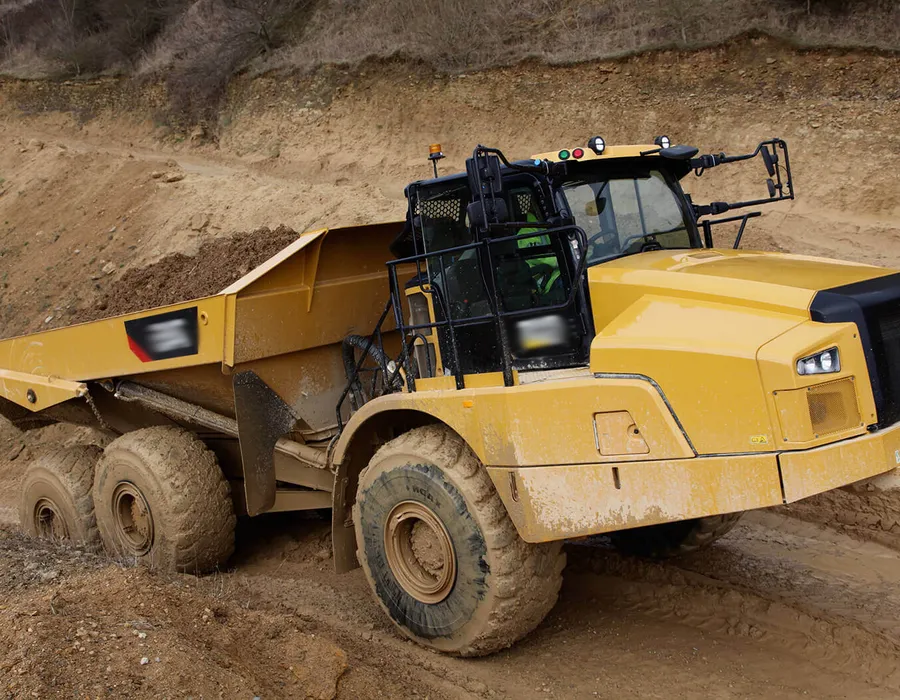 | 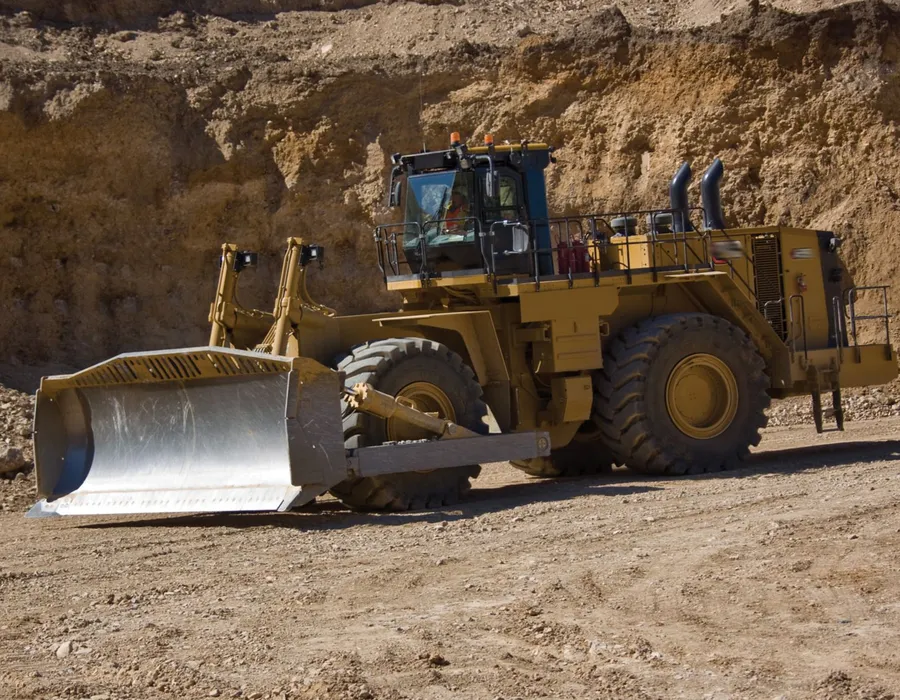 |
| Tração planetária para caminhões articulados | Tração planetária para tratores de rodas de mineração |
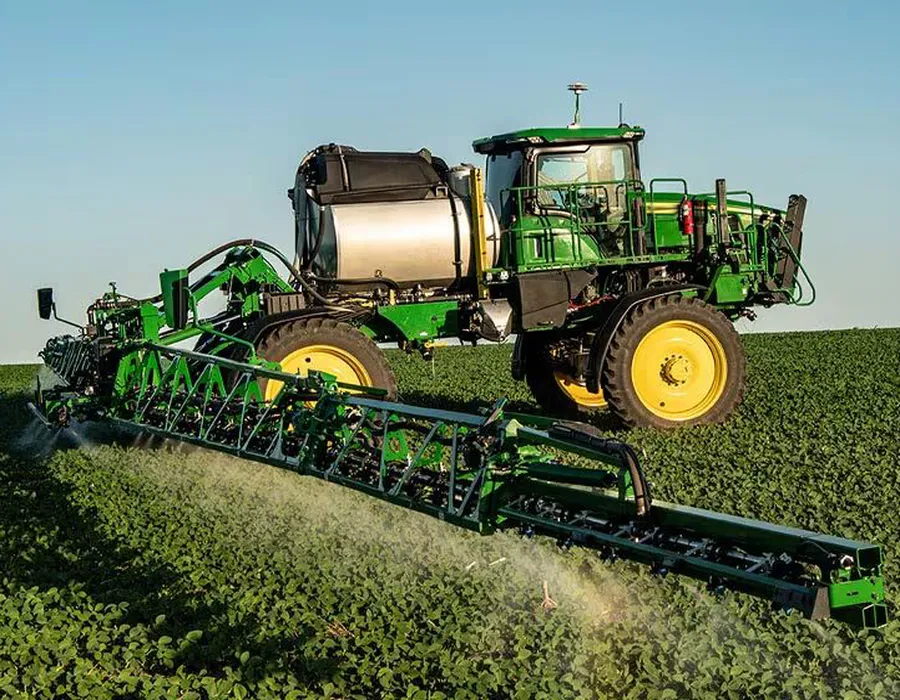 |  |
| Acionamento por roda planetária para pulverizadores de lança | Tração planetária para rolos compactadores |
Wheel Drive Planetary Gearbox Troubleshooting
1. Overheating Issues: Excessive heat in the wheel drive planetary gearbox often arises from inadequate lubrication, high loads, or poor heat dissipation, leading to degraded oil viscosity and potential component failure. To troubleshoot, monitor temperature regularly using infrared thermometers, inspect and replace lubricant as per specifications, reduce operational loads if necessary, and enhance cooling through better ventilation or auxiliary systems for sustained efficiency.
2. Noise and Vibration Problems: Unusual noise or vibrations typically result from worn bearings, misaligned gears, or imbalances in the planetary assembly, which can accelerate wear and compromise stability in wheel drive applications. Address this by conducting visual inspections for debris, checking alignment with precision tools, replacing damaged components like gears or bearings, and balancing the system to restore smooth operation and prevent further damage.
3. Lubricant Leaks: Leaks from seals or gaskets in the planetary gearbox can occur due to aging materials, improper installation, or contamination, resulting in reduced lubrication and increased internal friction. Troubleshoot by examining seals for cracks or wear, cleaning affected areas, replacing faulty seals promptly, and ensuring proper torque during reassembly to maintain fluid integrity and operational reliability.
4. Gear Wear and Damage: Wear such as pitting, gluing, or tooth fractures in planetary gears is common from overloading, poor lubrication, or material defects, causing inefficiency and potential breakdowns in wheel drives. Resolve by disassembling for inspection, measuring gear tolerances, replacing worn parts with high-quality equivalents, and improving lubrication practices to extend component life and enhance torque transmission.
5. Alignment and Installation Errors: Misalignment between the motor and planetary gear reducer or incorrect assembly can lead to uneven load distribution, increased stress on components, and premature failure in dynamic wheel drive environments. Correct this through precise alignment using dial indicators, verifying installation against manufacturer blueprints, adjusting fits and tolerances, and performing test runs to confirm proper engagement and minimize operational disruptions.
6. Loss of Power or Inefficiency: Reduced power output may stem from internal contamination, bearing failures, or hydraulic issues in the planetary system, affecting traction and maneuverability in wheel cranes or similar machinery. Troubleshoot by checking for contaminants in the oil, testing hydraulic pressures, replacing faulty bearings or seals, and recalibrating the system to restore optimal torque and efficiency for demanding tasks.
Informação adicional
| Editado por | Yjx |
|---|
Produtos relacionados
-
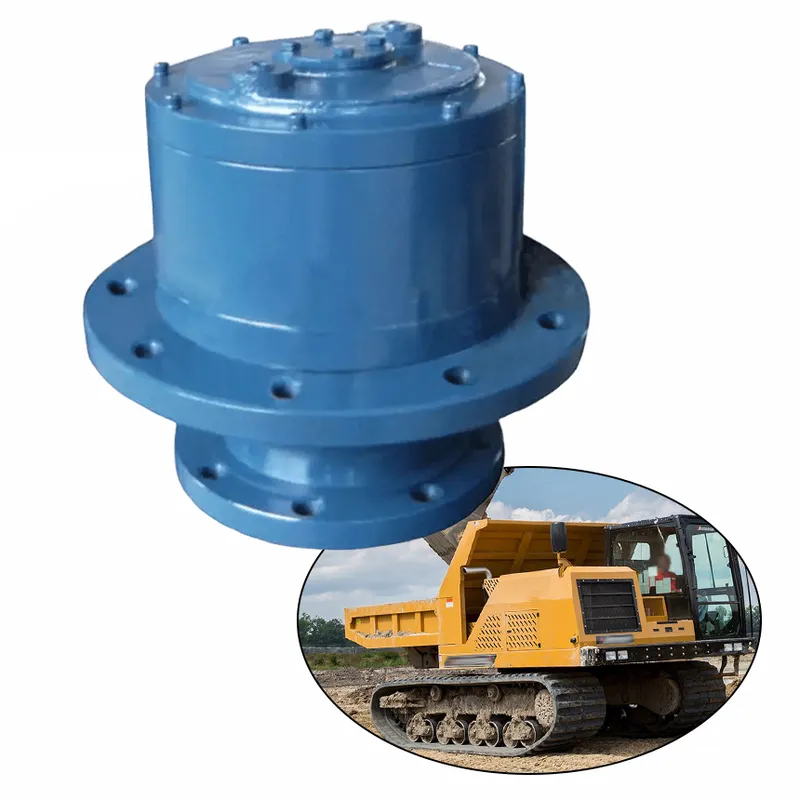
Caixa de engrenagens de transmissão de esteira planetária para caminhões basculantes
-
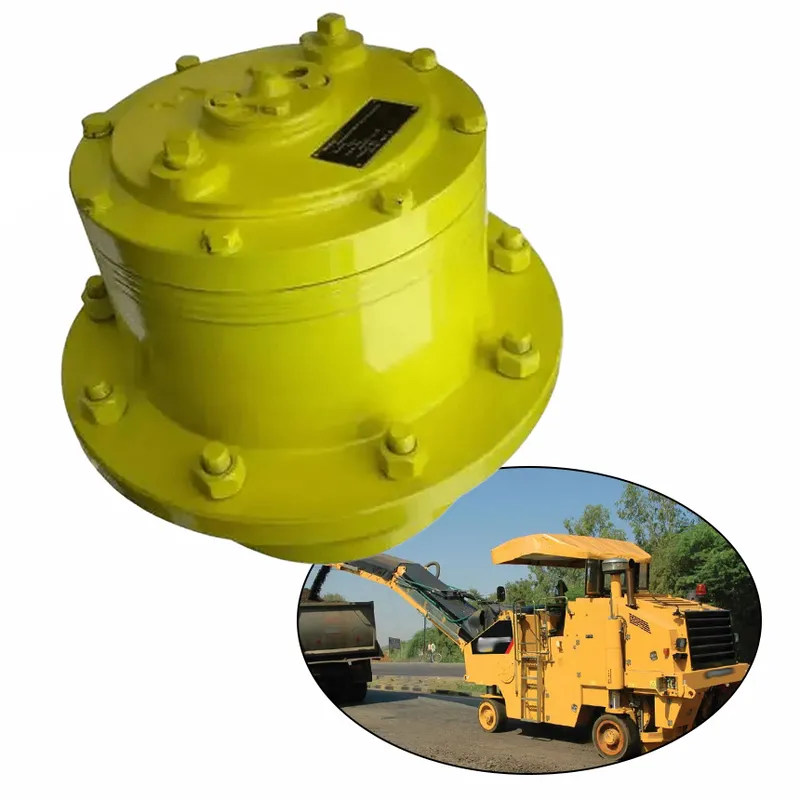
Caixa de engrenagens de acionamento planetário para fresadoras a frio
-
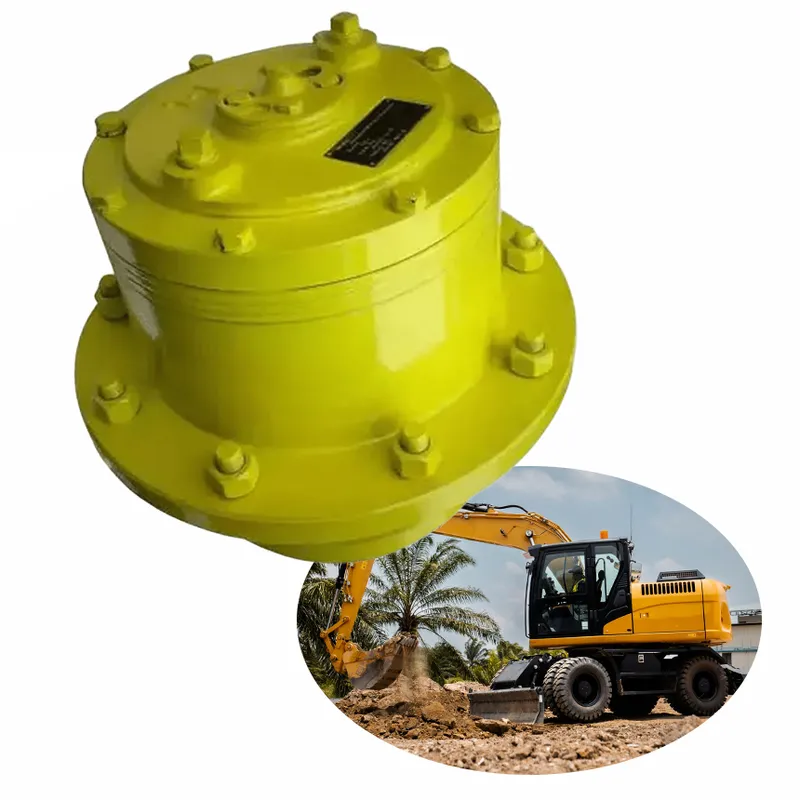
Caixa de engrenagens planetárias para escavadeiras de rodas
-
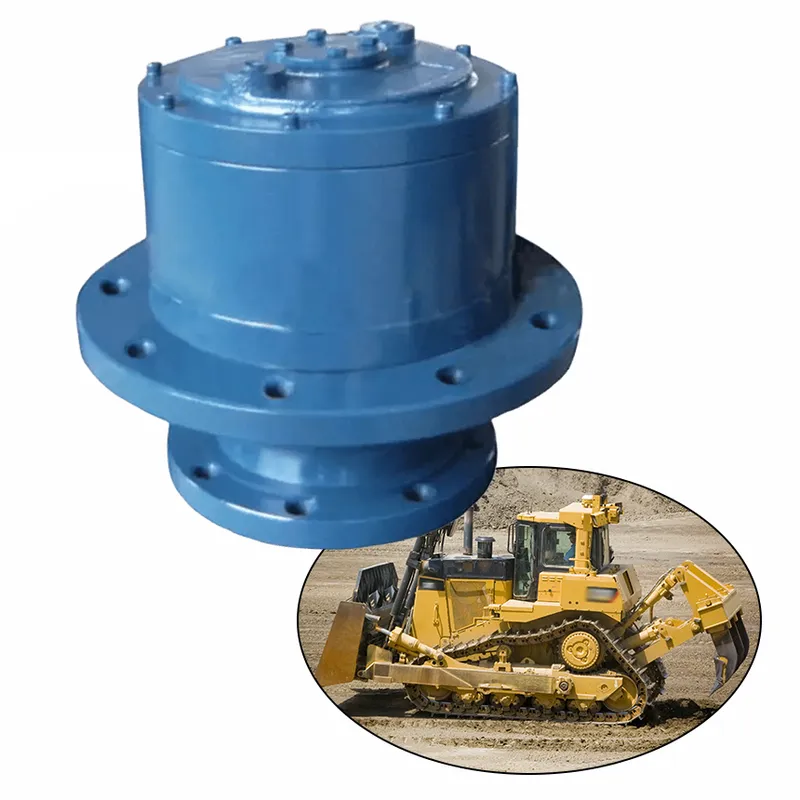
Caixa de engrenagens de transmissão de esteira planetária para tratores de esteira
-
Caixa de engrenagens de tração planetária para elevadores de lança telescópica