
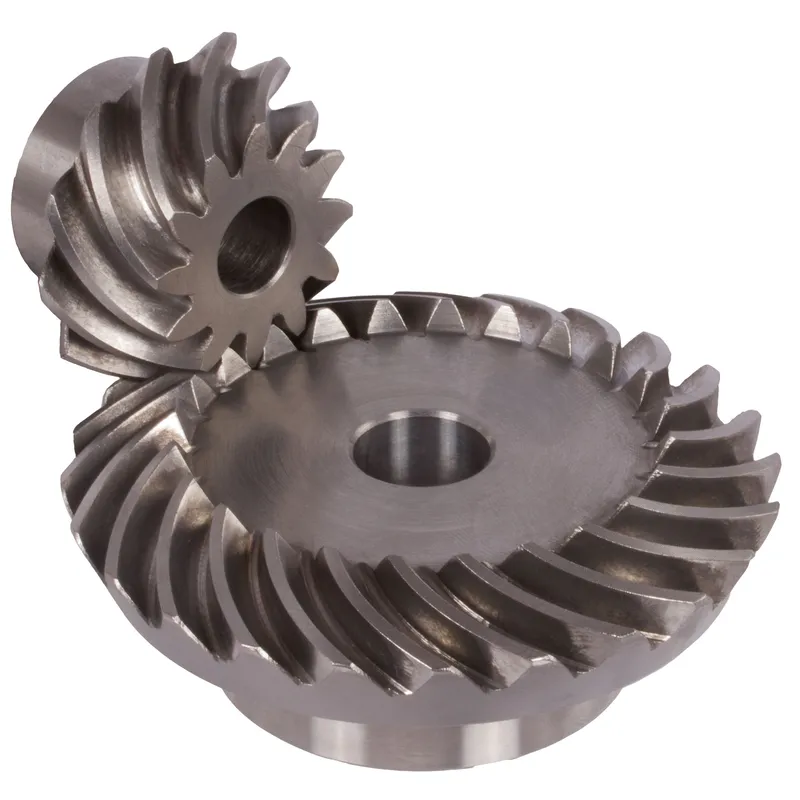
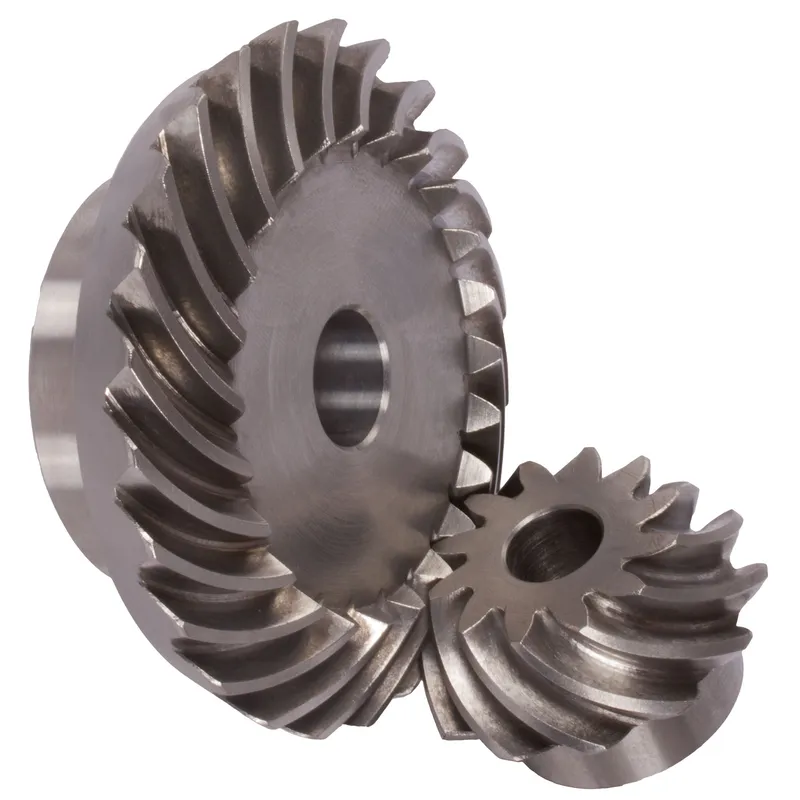
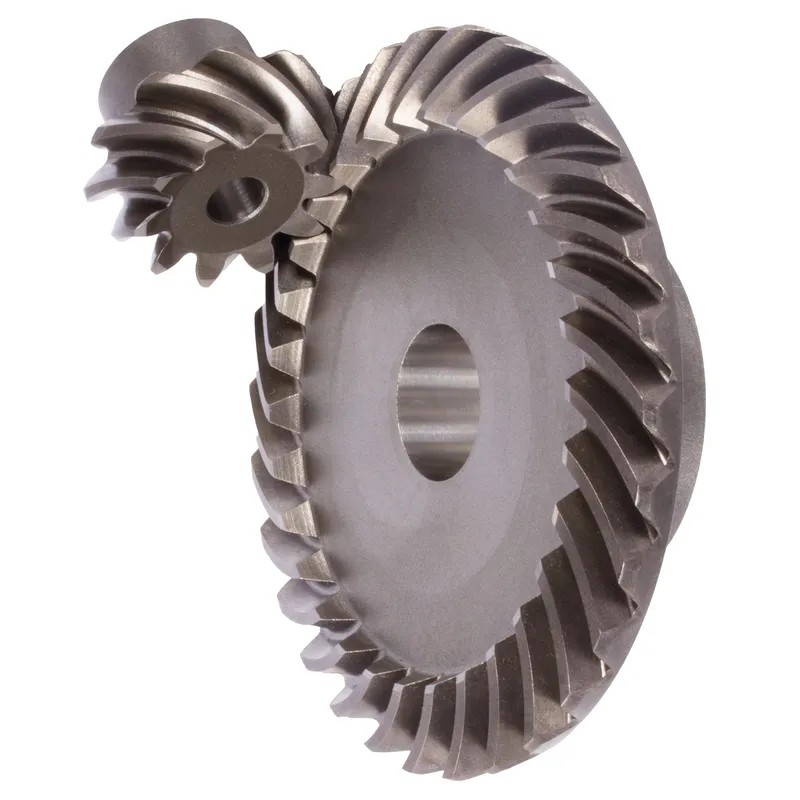
Engrenagens cônicas espirais de aço com relação de 1:1 a 4:1. Sistema de dentes espirais.
Engrenagens cônicas helicoidais de aço com relação de 1,2:1 a 1,6:1 e sistema de dentes helicoidais são engrenagens cônicas projetadas para transmitir potência entre eixos que se cruzam, tipicamente em um ângulo de 90 graus. O design dos dentes helicoidais, com dentes curvos e angulados (frequentemente com ângulo helicoidal de 35°), garante uma operação mais suave e silenciosa em comparação com engrenagens cônicas retas, devido ao engate gradual dos dentes e às maiores taxas de contato. Essas engrenagens cônicas de aço são fabricadas com aços carbono ou liga de alta resistência, como 42CrMo4 ou 16MnCr5, adequados para reduções de velocidade moderadas em aplicações como diferenciais automotivos ou máquinas industriais.
Engrenagens cônicas helicoidais de aço com relação de 1:1 a 4:1 e sistema de dentes helicoidais são engrenagens cônicas projetadas para transmitir potência entre eixos que se cruzam, tipicamente em um ângulo de 90 graus. O design dos dentes helicoidais, com dentes curvos e angulados (frequentemente com ângulo helicoidal de 35°), garante uma operação mais suave e silenciosa em comparação com engrenagens cônicas retas, devido ao engate gradual dos dentes e às maiores taxas de contato. Essas engrenagens são fabricadas em aços carbono ou liga de alta resistência, como o 42CrMo4 (para módulos de até 1,5) ou o 16MnCr5 (para módulos de 2,0 e superiores), com dentes temperados para maior durabilidade. A relação de transmissão, calculada como o número de dentes da engrenagem movida dividido pelo número de dentes do pinhão, varia de 1:1 a 4:1, tornando-as adequadas para reduções de velocidade moderadas em aplicações como diferenciais automotivos ou máquinas industriais.
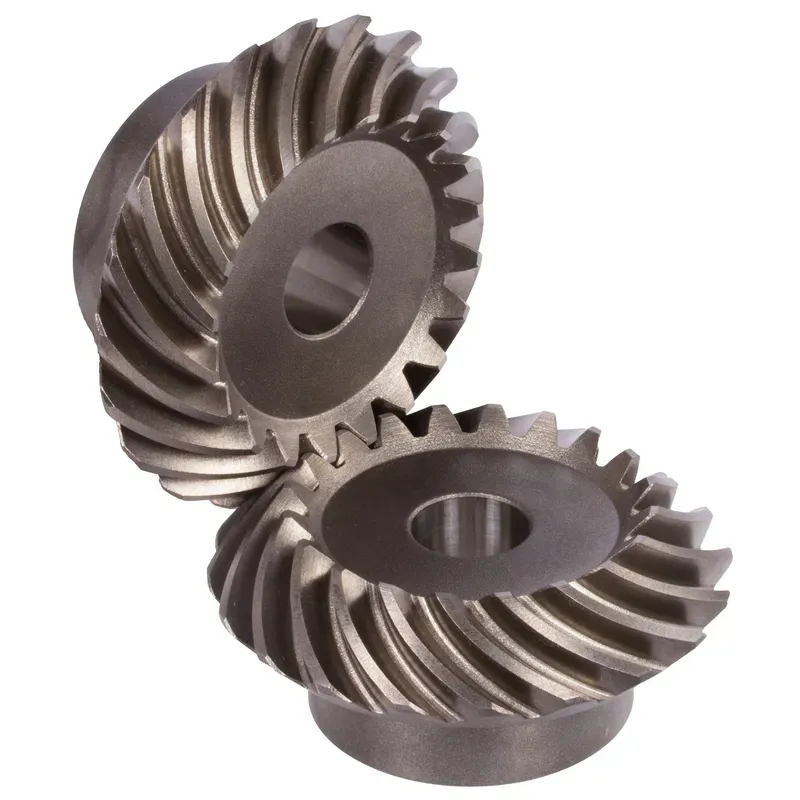
Engrenagem cônica espiral de aço com relação de 1:1
 | 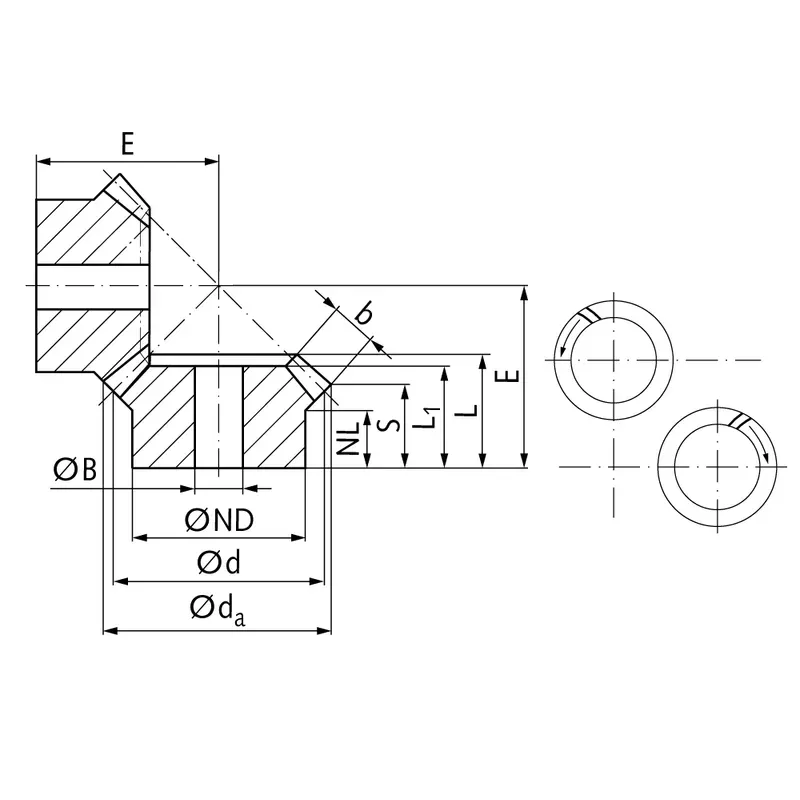 |
| Módulo | Número de dentes | dum | d | ND | Holanda | eu1 | eu | S1) | b | BH7 | E | Torque* | Peso |
| milímetros | milímetros | milímetros | milímetros | milímetros | milímetros | milímetros | milímetros | milímetros | milímetros | Ncm | g | ||
| 0,6 | 16 | 15,8 | 15,5 | 10 | 4,5 | 9 | 10,0 | 7,7 | 3,3 | 5 | 15 | 0,64 | 12 |
| 0,6 | 20 | 16,9 | 16,5 | 12 | 6,5 | 11 | 12,0 | 9,2 | 4 | 5 | 17 | 1,27 | 19 |
| 0,6 | 25 | 23,3 | 22,5 | 19 | 7,2 | 12 | 13,4 | 9,2 | 6 | 6 | 20 | 2,1 | 50 |
| 0,6 | 30 | 27,8 | 27 | 22 | 7 | 13 | 14,9 | 9,9 | 7 | 8 | 23 | 3,0 | 75 |
| 0,6 | 35 | 32,3 | 31,5 | 25 | 7,2 | 15 | 16,3 | 10,6 | 8 | 8 | 26 | 3,5 | 116 |
| 1 | 16 | 25,4 | 24 | 17 | 7,5 | 13,5 | 15,95 | 11,7 | 6 | 6 | 23 | 2,5 | 55 |
| 1 | 20 | 31,4 | 30 | 25 | 8,4 | 15 | 17,3 | 11,7 | 8 | 8 | 26 | 6,3 | 112 |
| 1 | 25 | 38,9 | 37,5 | 25 | 8 | 16 | 19,0 | 11,9 | 10 | 10 | 30 | 10,0 | 155 |
| 1 | 30 | 46,4 | 45 | 30 | 8 | 19 | 21,7 | 13,2 | 12 | 10 | 35 | 14,3 | 278 |
| 1,3 | 20 | 41,8 | 40 | 30 | 7,3 | 19 | 20,7 | 12,9 | 11 | 10 | 32 | 14,8 | 222 |
| 1,3 | 25 | 51,8 | 50 | 30 | 8 | 19 | 21,8 | 11,9 | 14 | 10 | 36 | 18,5 | 326 |
| 1,3 | 30 | 61,8 | 60 | 35 | 8 | 21 | 24,2 | 12,9 | 16 | 12 | 42 | 31,5 | 530 |
| 1,5 | 18 | 41,7 | 39,6 | 30 | 8 | 17 | 20,3 | 13,2 | 10 | 10 | 32 | 15,9 | 209 |
| 1,5 | 24 | 54,9 | 52,8 | 35 | 8 | 20 | 22,6 | 12,7 | 14 | 10 | 38 | 21,2 | 408 |
| 1,5 | 28 | 63,7 | 61,6 | 40 | 8 | 20 | 23,2 | 13,3 | 14 | 12 | 43 | 34,5 | 576 |
| 2,2881 | 21 | 71,5 | 70 | 45 | 15 | 28 | 32,22 | 22,5 | 15 | 16 | 55 | 70 | 973 |
| 2,236 | 24 | 79,0 | 78 | 45 | 15 | 29 | 32,48 | 23,7 | 14 | 16 | 60 | 73 | 1200 |
| 2 | 26 | 82,0 | 80 | 55 | 20 | 35 | 37,73 | 26,8 | 16 | 16 | 65 | 42 | 1581 |
| 2,5 | 19 | 90,0 | 88 | 56 | 18 | 34 | 36,91 | 23,5 | 20 | 20 | 65 | 185 | 1700 |
| 2,5 | 24 | 98,0 | 96 | 54 | 16 | 32 | 37,2 | 24,5 | 19 | 20 | 70 | 188 | 2000 |
| 3 | 21 | 103,0 | 100 | 68 | 17 | 36 | 43,4 | 27,7 | 23 | 25 | 75 | 240 | 2600 |
| 3 | 24 | 115,0 | 112 | 64 | 18 | 34 | 41,7 | 26,7 | 22 | 25 | 80 | 260 | 2800 |
| 3,5 | 24 | 131,0 | 128 | 72 | 20 | 38 | 46,15 | 29,5 | 25 | 30 | 90 | 396 | 4200 |
| 3,5 | 26 | 144,0 | 140 | 85 | 30 | 57 | 62,3 | 43,0 | 28 | 30 | 110 | 238 | 7300 |
Relação de engrenagem cônica espiral de aço 1,214:1
| 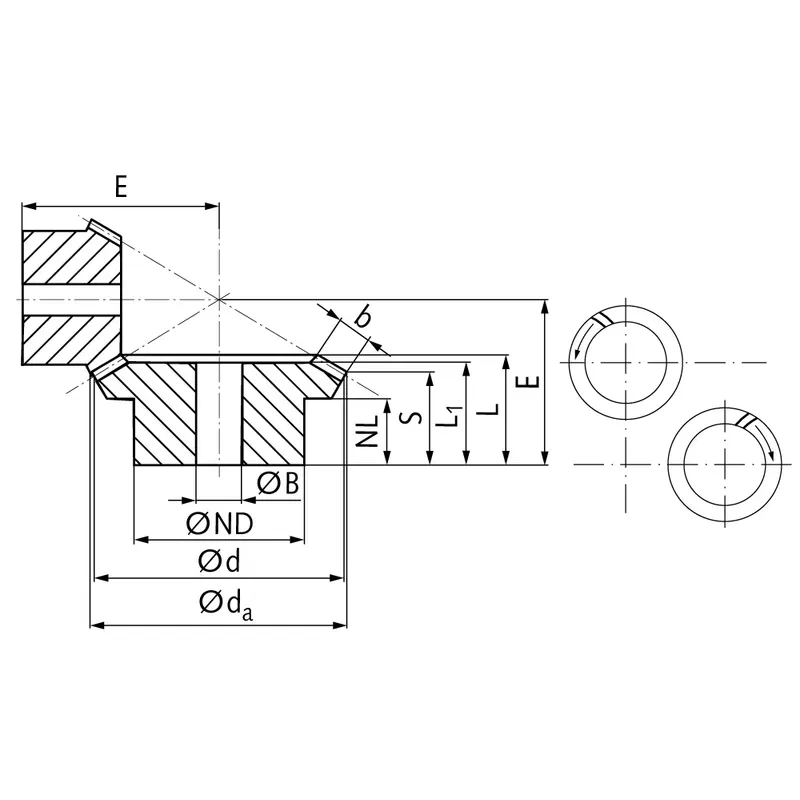 |
| Módulo | Número de dentes | dum | d | ND | Holanda | eu1 | eu | S | b | BH7 | E | Torque* | Peso |
| milímetros | milímetros | milímetros | milímetros | milímetros | milímetros | milímetros | milímetros | milímetros | milímetros | Ncm | g | ||
| 1,5 | 14 | 41,0 | 38,7 | 22 | 11 | 21,1 | 24,3 | 15,4 | 11,5 | 12 | 38,0 | 14,1 | 236 |
| 1,5 | 17 | 48,9 | 47,0 | 30 | 11 | 20,9 | 23,9 | 16,6 | 11,5 | 15 | 34,8 | 17,1 | 236 |
Relação de engrenagem cônica espiral de aço 1,385:1
| |
| Módulo | Número de dentes | dum | d | ND | Holanda | eu1 | eu | S | b | BH7 | E | Torque* | Peso |
| milímetros | milímetros | milímetros | milímetros | milímetros | milímetros | milímetros | milímetros | milímetros | milímetros | Ncm | g | ||
| 1,5 | 13 | 36,7 | 33,9 | 22 | 11 | 21,6 | 24,1 | 16,0 | 10 | 12 | 38,5 | 11,3 | 216 |
| 1,5 | 18 | 48,5 | 47,0 | 30 | 11 | 20,9 | 24,7 | 18,9 | 10 | 15 | 34,8 | 15,7 | 216 |
Engrenagem cônica espiral de aço com relação de 1,5:1
| |
| Módulo | Número de dentes | dum | d | ND | Holanda | eu1 | eu | S | b | BH7 | E | Torque* | Peso |
| milímetros | milímetros | milímetros | milímetros | milímetros | milímetros | milímetros | milímetros | milímetros | milímetros | Ncm | g | ||
| 0,6 | 22 | 20,8 | 19,8 | 17 | 7 | 13 | 14,3 | 8,5 | 7 | 6 | 23 | 2,2 | 116 |
| 0,6 | 33 | 30,3 | 29,7 | 20 | 8 | 14 | 15,5 | 11,6 | 7 | 8 | 21 | 3,3 | 116 |
| 1 | 20 | 31,6 | 30 | 25 | 8 | 17 | 18,3 | 10,0 | 10 | 8 | 32 | 8,1 | 166 |
| 1 | 30 | 46,3 | 45 | 30 | 8 | 17 | 19,5 | 14,0 | 10 | 10 | 28 | 12,2 | 166 |
| 1,3 | 16 | 34,3 | 32 | 25 | 8 | 18 | 19,9 | 10,7 | 11 | 8 | 34 | 11,9 | 220 |
| 1,3 | 24 | 49,4 | 48 | 30 | 8 | 18 | 21,1 | 15,0 | 11 | 10 | 30 | 17,9 | 220 |
| 1,5 | 16 | 37,8 | 35,8 | 30 | 8 | 17 | 18,8 | 10,5 | 10 | 10 | 36 | 14,3 | 273 |
| 1,5 | 24 | 54,4 | 52,8 | 35 | 8 | 17 | 21,1 | 15,6 | 10 | 10 | 32 | 21,5 | 273 |
| 2 | 16 | 53,0 | 50 | 35 | 6 | 18 | 21,37 | 12,8 | 11 | 10 | 48,45 | 41,0 | 561 |
| 2 | 24 | 76,0 | 75 | 39 | 15 | 24 | 27,53 | 21,7 | 11 | 16 | 45 | 61,5 | 561 |
| 2,5 | 16 | 67,0 | 64 | 40 | 14 | 25 | 31,89 | 19,9 | 16 | 16 | 65 | 84 | 1300 |
| 2,5 | 24 | 97,5 | 96 | 54 | 14 | 23 | 28,66 | 20,1 | 16 | 20 | 50 | 126 | 1300 |
| 3 | 16 | 79,0 | 76 | 50 | 15 | 28 | 35,71 | 21,9 | 19 | 20 | 75 | 160 | 1682 |
| 3 | 24 | 115,0 | 114 | 64 | 18 | 28 | 34,69 | 24,8 | 19 | 25 | 60 | 240 | 1682 |
Relação de engrenagem cônica espiral de aço 1,615:1
| |
| Módulo | Número de dentes | dum | d | ND | Holanda | eu1 | eu | S | b | BH7 | E | Torque* | Peso |
| milímetros | milímetros | milímetros | milímetros | milímetros | milímetros | milímetros | milímetros | milímetros | milímetros | Ncm | g | ||
| 1 | 13 | 20,8 | 18,6 | 16 | 8,2 | 12 | 13,9 | 9,3 | 5 | 8 | 24 | 2,4 | 45 |
| 1 | 21 | 30,8 | 30,0 | 20 | 6 | 10,5 | 12,0 | 9,3 | 5 | 10 | 18 | 3,9 | 45 |
Engrenagem cônica espiral de aço com relação de 2:1
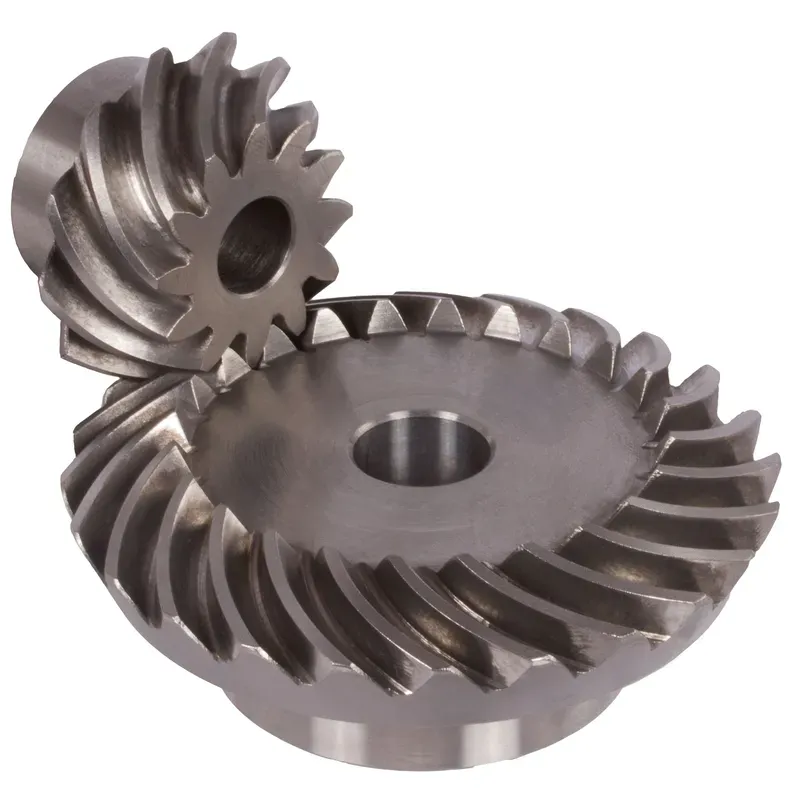 | 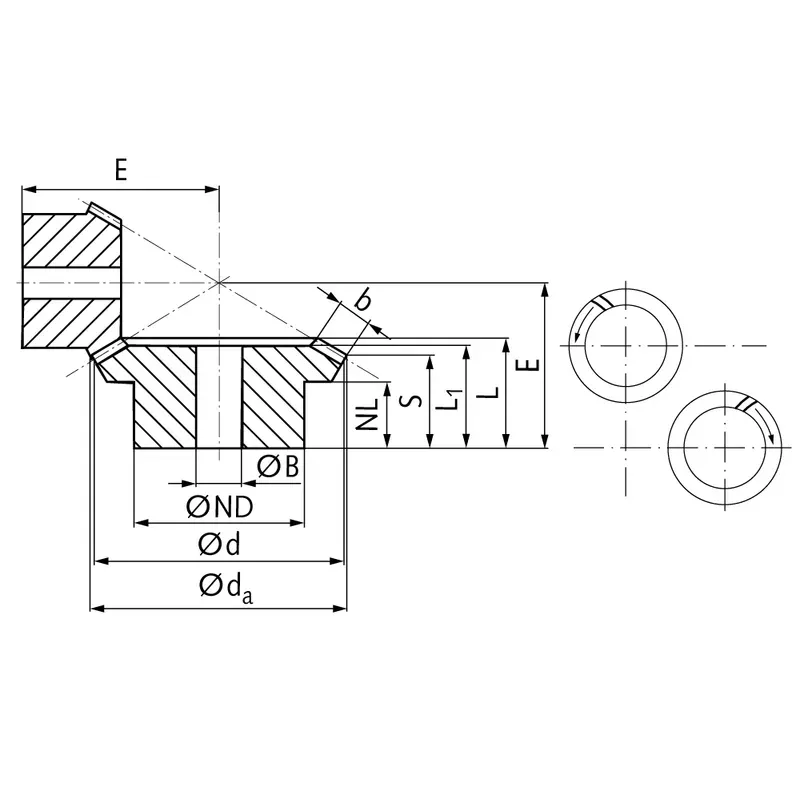 |
| Módulo | Número de dentes | dum | d | ND | Holanda | eu1 | eu | S | b | BH7 | E | Torque* | Peso |
| milímetros | milímetros | milímetros | milímetros | milímetros | milímetros | milímetros | milímetros | milímetros | milímetros | Ncm | g | ||
| 0,6 | 22 | 20,8 | 19,8 | 16 | 7,4 | 15 | 15,6 | 8,5 | 8 | 6 | 28 | 2,3 | 116 |
| 0,6 | 44 | 40,1 | 39,6 | 25 | 8 | 15 | 17,2 | 13,6 | 8 | 10 | 23 | 4,6 | 116 |
| 1 | 20 | 31,8 | 30 | 25 | 8 | 19 | 20,2 | 9,4 | 12 | 8 | 39 | 9,8 | 323 |
| 1 | 40 | 60,9 | 60 | 40 | 8 | 18 | 21,2 | 15,9 | 12 | 12 | 30 | 19,6 | 323 |
| 1,3 | 16 | 34,4 | 32 | 25 | 7 | 20 | 22,1 | 9,6 | 14 | 8 | 41 | 12,0 | 397 |
| 1,3 | 32 | 65,1 | 64 | 40 | 8 | 20 | 23,3 | 17,1 | 14 | 12 | 32 | 24,0 | 397 |
| 1,5 | 16 | 38,0 | 35,2 | 30 | 8,4 | 19 | 21,2 | 10,5 | 12 | 10 | 45 | 14,4 | 435 |
| 1,5 | 32 | 71,7 | 70,4 | 45 | 8 | 17 | 21,0 | 15,7 | 12 | 12 | 32 | 28,8 | 435 |
| 2,269 | 12 | 44,0 | 41,5 | 30 | 12 | 28,23 | 28,23 | 17,6 | 15 | 12 | 55 | 10,1 | 846 |
| 2,269 | 24 | 83,0 | 83 | 50 | 15 | 27 | 32,41 | 26,0 | 15 | 16 | 45 | 20,2 | 846 |
| 2,321 | 13 | 47,0 | 45 | 30 | 15 | 30 | 33,0 | 21,7 | 15 | 10 | 63,65 | 49 | 818 |
| 2,321 | 26 | 91,0 | 90 | 40 | 22 | 30 | 35,5 | 29,8 | 15 | 16 | 50 | 98 | 818 |
| 2,5 | 11 | 57,0 | 52,5 | 40 | 15 | 36,72 | 36,72 | 19,7 | 20 | 16 | 70 | 17,8 | 2000 |
| 2,5 | 22 | 106,0 | 105 | 70 | 20 | 39 | 44,65 | 35,8 | 20 | 20 | 60 | 35,6 | 2000 |
| 2,5 | 13 | 59,0 | 56 | 39 | 15 | 34 | 38,37 | 22,9 | 20 | 16 | 75,13 | 95 | 1400 |
| 2,5 | 26 | 113,0 | 112 | 54 | 21 | 30 | 37,72 | 29,0 | 20 | 25 | 55 | 190 | 1400 |
| 3 | 13 | 68,0 | 64 | 45 | 16 | 37 | 41,95 | 24,9 | 22 | 20 | 84,62 | 133 | 2000 |
| 3 | 26 | 128,0 | 128 | 54 | 20 | 32 | 39,9 | 30,6 | 22 | 25 | 60 | 266 | 2000 |
| 3 | 14 | 76,0 | 72,5 | 55 | 25 | 51,46 | 51,46 | 32,0 | 25 | 20 | 100 | 644 | 4800 |
| 3 | 28 | 146,0 | 145 | 90 | 25 | 50 | 57,1 | 46,2 | 25 | 30 | 80 | 128 | 4800 |
| 3,5 | 13 | 77,0 | 72 | 54 | 12 | 34 | 39,8 | 21,1 | 24 | 20 | 88,38 | 197 | 2800 |
| 3,5 | 26 | 146,0 | 144 | 64 | 25 | 38 | 47,1 | 36,5 | 24 | 30 | 70 | 394 | 2800 |
Relação de engrenagem cônica espiral de aço 2,066:1
| |
| Módulo | Número de dentes | dum | d | ND | Holanda | eu1 | eu | S | b | BH7 | E | Torque* | Peso |
| milímetros | milímetros | milímetros | milímetros | milímetros | milímetros | milímetros | milímetros | milímetros | milímetros | Ncm | g | ||
| 1 | 15 | 24,1 | 21,8 | 19 | 6 | 13,2 | 13,3 | 7,0 | 7 | 8 | 29,0 | 3,6 | 112 |
| 1 | 31 | 45,6 | 45,0 | 24 | 8 | 14,0 | 16,3 | 13,2 | 7 | 10 | 23,5 | 7,4 | 112 |
Engrenagem cônica espiral de aço com relação de 2,5:1
| |
| Módulo | Número de dentes | dum | d | ND | Holanda | eu1 | eu | S | b | BH7 | E | Torque* | Peso |
| milímetros | milímetros | milímetros | milímetros | milímetros | milímetros | milímetros | milímetros | milímetros | milímetros | Ncm | g | ||
| 0,6 | 22 | 20,9 | 19,8 | 16 | 6,8 | 16 | 16,7 | 7,5 | 10 | 6 | 32 | 2,6 | 172 |
| 0,6 | 55 | 49,9 | 49,5 | 30 | 8 | 16 | 19,3 | 15,6 | 10 | 10 | 25 | 6,5 | 172 |
| 1,0 | 20 | 31,8 | 30 | 25 | 8,4 | 21 | 22,8 | 9,8 | 14 | 8 | 47 | 9,9 | 355 |
| 1,0 | 50 | 75,7 | 75 | 50 | 8 | 18 | 21,1 | 15,9 | 14 | 12 | 30 | 24,8 | 355 |
| 1,3 | 14 | 30,5 | 28 | 22 | 8,7 | 20 | 21,6 | 10,5 | 12 | 8 | 45 | 11,3 | 420 |
| 1,3 | 35 | 70,9 | 70 | 45 | 8 | 18 | 21,6 | 17,1 | 12 | 12 | 30 | 28,2 | 420 |
| 1,5 | 16 | 38,0 | 35,2 | 30 | 7,5 | 20 | 21,6 | 9,6 | 13 | 10 | 53 | 14,5 | 624 |
| 1,5 | 40 | 89,1 | 88 | 60 | 8 | 16 | 20,6 | 15,8 | 13 | 15 | 32 | 36,3 | 624 |
| 3,6 | 9 | 62,0 | 54,78 | 40 | 14,17 | 34 | 38,35 | 20,9 | 21 | 16 | 87,06 | 150 | 2400 |
| 3,6 | 23 | 141,0 | 140 | 70 | 35 | 45 | 52,53 | 45,0 | 21 | 30 | 70 | 383 | 2400 |
Engrenagem cônica espiral de aço com relação de 3:1
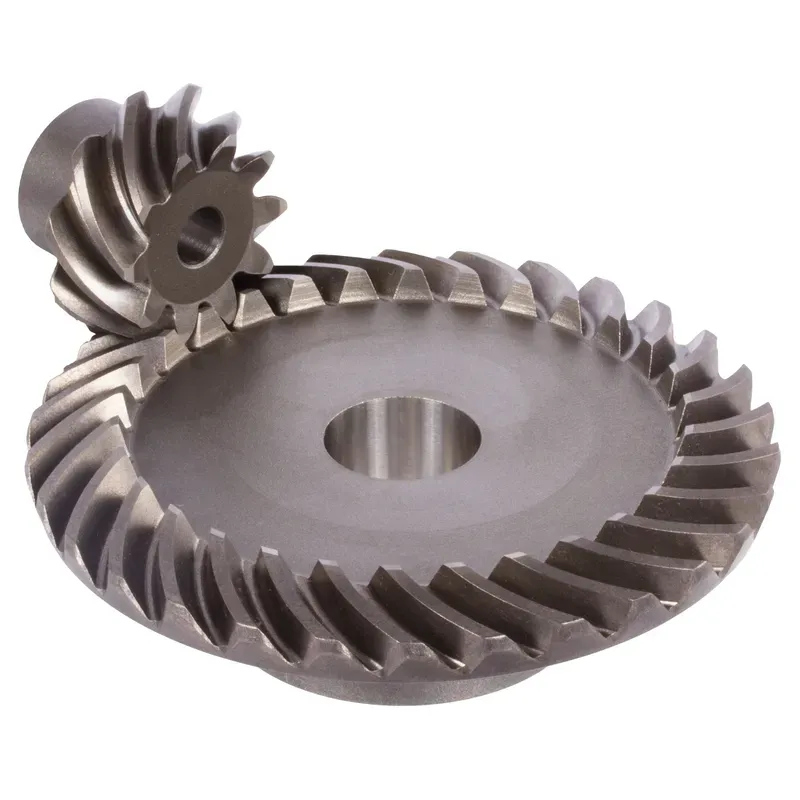 | 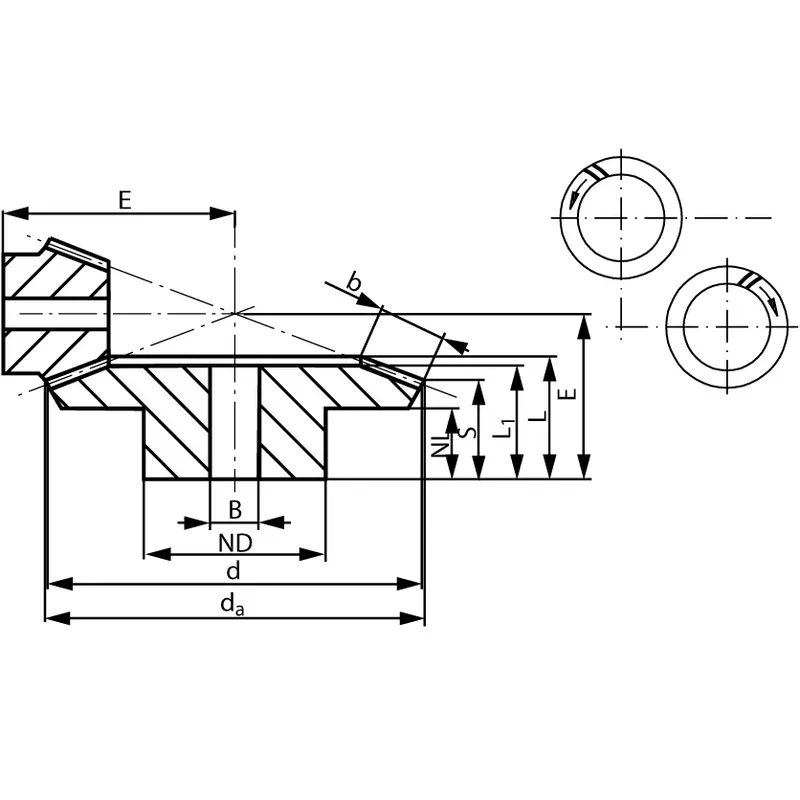 |
| Módulo | Número de dentes | dum | d | ND | Holanda | eu1 | eu | S | b | BH7 | E | Torque* | Peso |
| milímetros | milímetros | milímetros | milímetros | milímetros | milímetros | milímetros | milímetros | milímetros | milímetros | Ncm | g | ||
| 0,6 | 20 | 19,1 | 18 | 15 | 7,5 | 17,7 | 17,7 | 8,2 | 10 | 6 | 35 | 2,1 | 175 |
| 0,6 | 60 | 54,3 | 54 | 45 | 8 | 16 | 19,7 | 16,6 | 10 | 10 | 25 | 6,3 | 175 |
| 1 | 16 | 26,1 | 24 | 20 | 8,3 | 22 | 22,6 | 9,3 | 14 | 8 | 45 | 5,8 | 380 |
| 1 | 48 | 72,5 | 72 | 50 | 8 | 18 | 21,3 | 16,8 | 14 | 12 | 28 | 17,4 | 380 |
| 1,3 | 11 | 25,1 | 22 | 19 | 6 | 17 | 17,9 | 7,5 | 11 | 8 | 40 | 7,7 | 320 |
| 1,3 | 33 | 66,6 | 60 | 40 | 8 | 17 | 20,4 | 16,9 | 11 | 12 | 27 | 23,1 | 320 |
| 1,5 | 10 | 26,0 | 22 | 17 | 8 | 19 | 20,1 | 9,6 | 11 | 8 | 42 | 9,1 | 380 |
| 1,5 | 30 | 66,6 | 66 | 40 | 8 | 17 | 21,3 | 17,8 | 11 | 12 | 28 | 27,3 | 380 |
| 2,2291 | 9 | 36,5 | 32 | 22 | 11 | 24 | 25,8 | 15,4 | 13 | 8 | 60,52 | 28 | 638 |
| 2,2291 | 27 | 96,0 | 96 | 48 | 19 | 25 | 29,5 | 25,5 | 13 | 20 | 40 | 84 | 638 |
| 2,5736 | 9 | 42,0 | 37,5 | 27 | 12 | 26,5 | 28,64 | 15,1 | 15 | 12 | 69,84 | 46 | 1100 |
| 2,5736 | 27 | 113,0 | 112,5 | 54 | 24 | 32 | 38,41 | 33,9 | 15 | 25 | 50 | 138 | 1100 |
| 3,5 | 9 | 59,0 | 52,5 | 40 | 12 | 33 | 36,2 | 18,9 | 22 | 16 | 92,64 | 132 | 2700 |
| 3,5 | 27 | 158,5 | 157,5 | 70 | 29 | 40 | 47,9 | 41,2 | 22 | 30 | 65 | 396 | 2700 |
Engrenagem cônica espiral de aço com relação de 4:1
| |
| Módulo | Número de dentes | dum | d | ND | Holanda | eu1 | eu | S | b | BH7 | E | Torque* | Peso |
| milímetros | milímetros | milímetros | milímetros | milímetros | milímetros | milímetros | milímetros | milímetros | milímetros | Ncm | g | ||
| 1 | 16 | 25,9 | 24 | 20 | 7,3 | 21 | 21,8 | 8,2 | 14 | 8 | 56 | 7,8 | 842 |
| 1 | 64 | 96,5 | 96 | 70 | 8 | 19 | 22,4 | 19 | 14 | 20 | 30 | 31,2 | 842 |
| 1,5 | 11 | 27,8 | 24,2 | 20 | 8 | 19 | 20,7 | 9 | 12 | 8 | 57 | 11,3 | 775 |
| 1,5 | 44 | 97,3 | 96,8 | 70 | 8 | 17 | 21,9 | 19 | 12 | 20 | 30 | 45,2 | 775 |
Vantagens das engrenagens cônicas espirais de aço
1. Alta capacidade de torque
Uma das principais vantagens das engrenagens cônicas é a sua capacidade de suportar cargas de torque elevadas. A geometria e o design das engrenagens cônicas permitem a transmissão eficiente de potência e torque entre eixos que se cruzam.
2. Design compacto
As engrenagens cônicas oferecem uma solução compacta para a transmissão de potência entre eixos não paralelos. Ao utilizar uma geometria cônica, as engrenagens cônicas podem alterar o sentido de rotação de forma eficaz em um espaço limitado.
3. Funcionamento suave e silencioso
Quando projetadas e fabricadas corretamente, as engrenagens cônicas podem proporcionar uma operação suave e silenciosa. Os avanços na geometria dos dentes das engrenagens, como o uso de engrenagens cônicas helicoidais e hipoides, melhoraram significativamente a suavidade e a capacidade de redução de ruído das engrenagens cônicas. O perfil curvo dos dentes das engrenagens cônicas helicoidais permite o engate e o desengate graduais, resultando em uma operação mais silenciosa em comparação com as engrenagens cônicas retas.
4. Versatilidade nos ângulos do eixo
As engrenagens cônicas oferecem flexibilidade em termos dos ângulos de eixo que podem acomodar. Embora o ângulo de eixo mais comum para engrenagens cônicas seja de 90 graus, elas podem ser projetadas para funcionar com diversos outros ângulos de eixo.
Desvantagens das engrenagens cônicas espirais de aço
1. Maior complexidade de fabricação
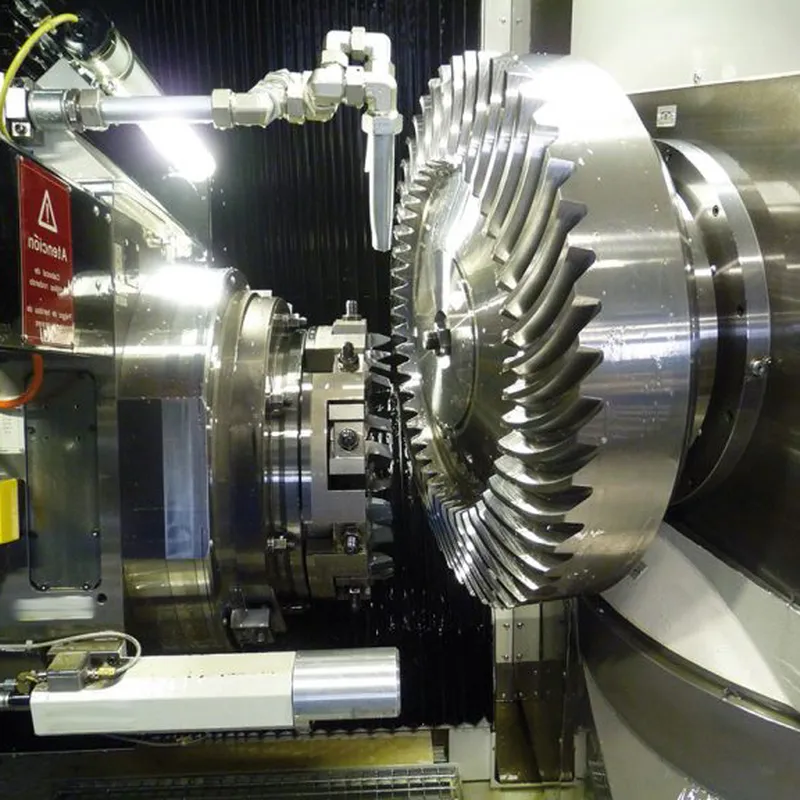
Uma das principais desvantagens das engrenagens cônicas é a sua maior complexidade de fabricação em comparação com outros tipos de engrenagens, como as engrenagens cilíndricas de dentes retos. A produção de engrenagens cônicas exige máquinas especializadas e processos de fabricação precisos para atingir a geometria dos dentes e o acabamento superficial desejados. Essa complexidade pode resultar em custos de fabricação mais elevados e prazos de entrega mais longos.
2. Sensibilidade ao desalinhamento
As engrenagens cônicas são mais sensíveis ao desalinhamento em comparação com outros tipos de engrenagens. O desalinhamento pode levar à distribuição desigual da carga, aumento da tensão nos dentes da engrenagem e falha prematura.
3. Capacidade de velocidade limitada
As engrenagens cônicas têm limitações em termos de capacidade de velocidade. Em altas velocidades, elas tendem a gerar ruído e vibração excessivos devido ao deslizamento entre os dentes. Isso pode levar à redução da eficiência e ao aumento do desgaste. Consequentemente, as engrenagens cônicas são normalmente utilizadas em aplicações com requisitos de velocidade moderados a baixos.
4. Custo mais elevado
A complexidade e a precisão de fabricação exigidas para engrenagens cônicas geralmente se traduzem em custos mais elevados em comparação com tipos de engrenagens mais simples. A necessidade de maquinário especializado, mão de obra qualificada e medidas rigorosas de controle de qualidade contribuem para o aumento do custo das engrenagens cônicas. Além disso, a personalização e os requisitos específicos de projeto das engrenagens cônicas para aplicações particulares podem aumentar ainda mais seu custo.
Dimensões e ângulos principais das engrenagens cônicas
As engrenagens cônicas são componentes mecânicos complexos caracterizados por uma gama de dimensões e ângulos críticos.
A. Exame detalhado das dimensões básicas
Diversas dimensões-chave definem a geometria e o tamanho geral de uma engrenagem cônica:
- Diâmetro primitivoEste diâmetro é medido na extremidade do calcanhar dos dentes da engrenagem cônica. Representa a dimensão efetiva da engrenagem e é um parâmetro fundamental para cálculos e projeto de engrenagens.
- Ângulo do cone de inclinaçãoO ângulo do cone primitivo descreve o ângulo formado pelo cone primitivo em relação ao eixo da engrenagem. Ele define a orientação dos dentes da engrenagem e determina como a engrenagem se engrena com o pinhão correspondente.
- Adendo e DedendumO adendo é a altura do dente da engrenagem acima do cone primitivo, enquanto o dedendo é a profundidade abaixo dele. Juntos, eles definem a profundidade total do dente. O adendo e o dedendo são normalmente especificados em proporção ao módulo da engrenagem.
- Largura do rostoA largura da face refere-se ao tamanho do dente da engrenagem medido ao longo da geratriz do cone primitivo, do calcanhar à ponta. Ela afeta a resistência e a capacidade de carga do dente da engrenagem. Faces mais largas geralmente permitem maior transmissão de torque.
- Distância do coneA distância do cone representa o comprimento do vértice do cone primitivo até o ponto médio da face da engrenagem cônica. É uma dimensão fundamental para o posicionamento da engrenagem em relação ao pinhão correspondente durante a montagem.
- Distância do vérticeA distância do vértice mede o deslocamento do eixo da engrenagem até o vértice do cone primitivo. Ela ajuda a localizar o ponto teórico de engrenamento entre as engrenagens.
B. Ângulos Essenciais de Engrenagens Cônicas
Além das dimensões lineares, vários ângulos são cruciais para definir a geometria de uma engrenagem cônica:
- Ângulo do rostoO ângulo entre a geratriz do cone frontal e o eixo da engrenagem. Ele determina o ângulo das extremidades externas dos dentes da engrenagem em relação ao eixo de rotação.
- Ângulo da bordaMedido entre a geratriz do cone externo e o eixo da engrenagem, o ângulo da aresta define a inclinação das extremidades internas dos dentes mais próximas do ápice.
- Ângulo de AdendoEsta é a versão angular equivalente ao adendo, que define a altura do dente em termos angulares, do ângulo da face até a borda externa.
- Ângulo DedendumConsequentemente, o ângulo do dedendo mede a profundidade angular do dente, desde a linha de inclinação até a raiz do dente.
C. Reação
A folga refere-se ao espaço ou jogo entre os dentes de duas engrenagens em contato. Alguma folga é necessária para acomodar a lubrificação, as tolerâncias de fabricação e a expansão térmica. No entanto, folga excessiva pode causar ruído, vibração e posicionamento impreciso. A folga é normalmente medida no ponto de contato mais estreito, utilizando ferramentas específicas, ou avaliando a folga angular com as engrenagens fixas.
D. Módulo
O módulo de uma engrenagem é uma unidade padronizada que indica o tamanho do dente. É definido como a razão entre o diâmetro primitivo e o número de dentes. Em engrenagens cônicas, o módulo é normalmente especificado na extremidade do calcanhar para fins de fabricação. Números de módulo maiores correspondem a dentes maiores e mais grosseiros, enquanto engrenagens com passo mais fino têm módulos menores.
Informação adicional
| Editado por | Yjx |
|---|
Produtos relacionados
-
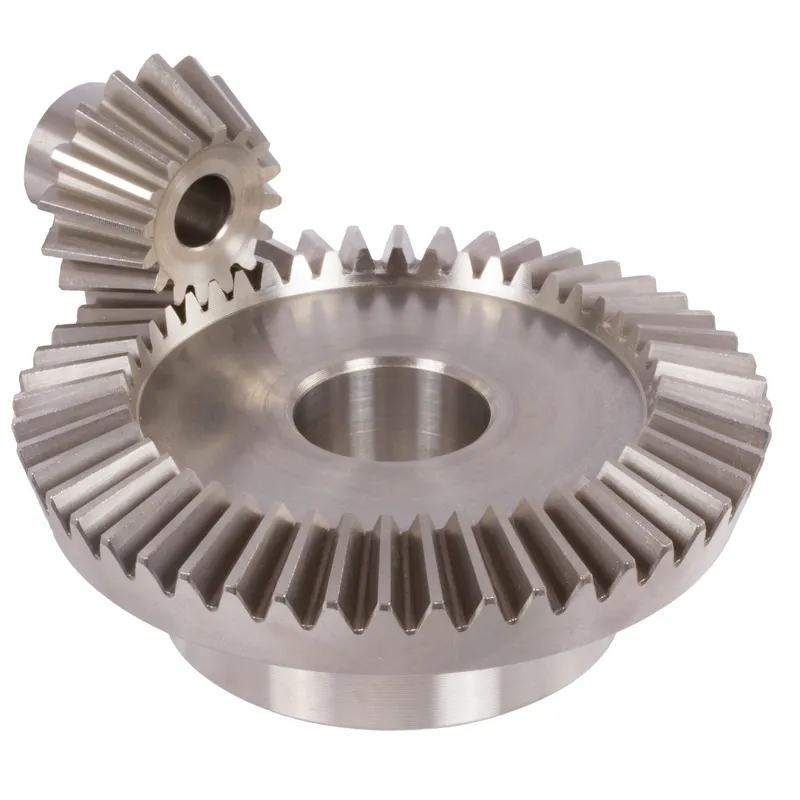
Engrenagens cônicas de aço inoxidável com relação de 1:1 a 4:1 e sistema de dentes retos.
-
Engrenagens cônicas de aço inoxidável com relação de 1:1 e sistema de dentes retos.
-
Engrenagens cônicas espirais de aço com relação de 3:1 e sistema de dentes espirais.
-
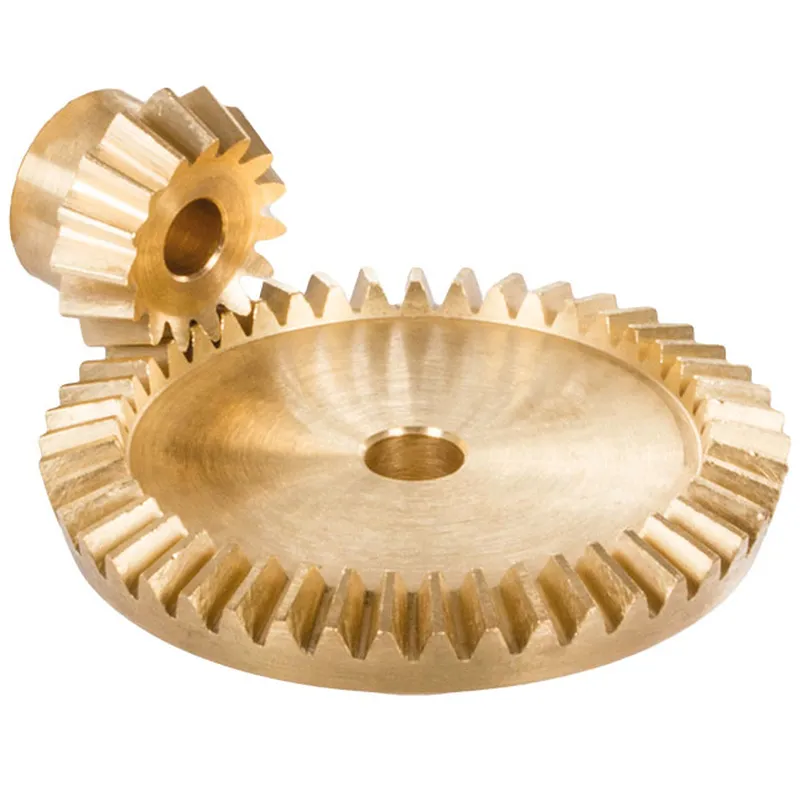
Engrenagens cônicas de latão com relação de 2,5:1 e sistema de dentes retos.
-
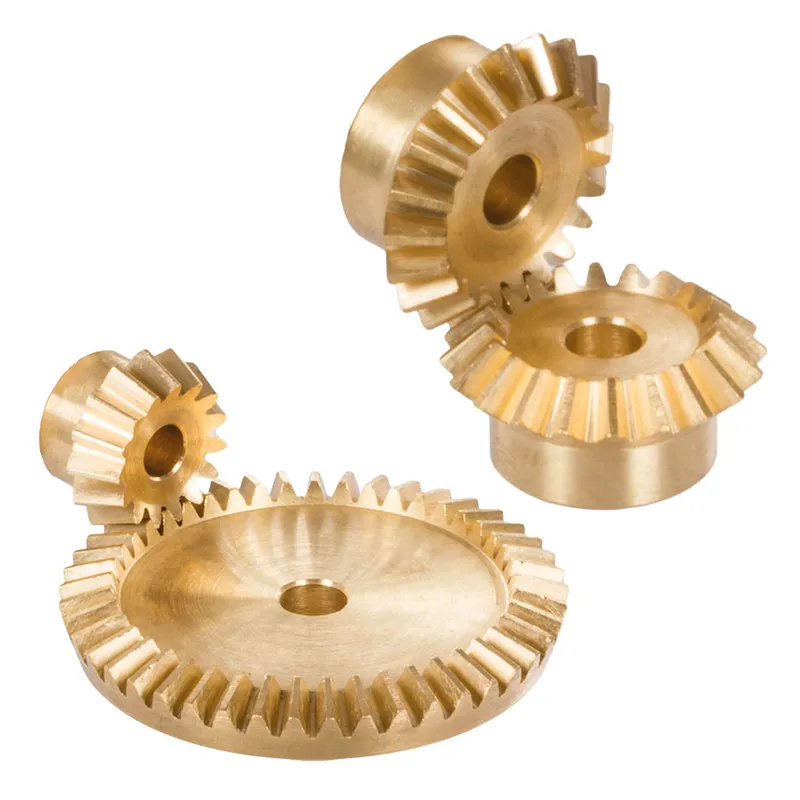
Engrenagens cônicas de latão com relação de 1:1 a 4:1 e sistema de dentes retos.