
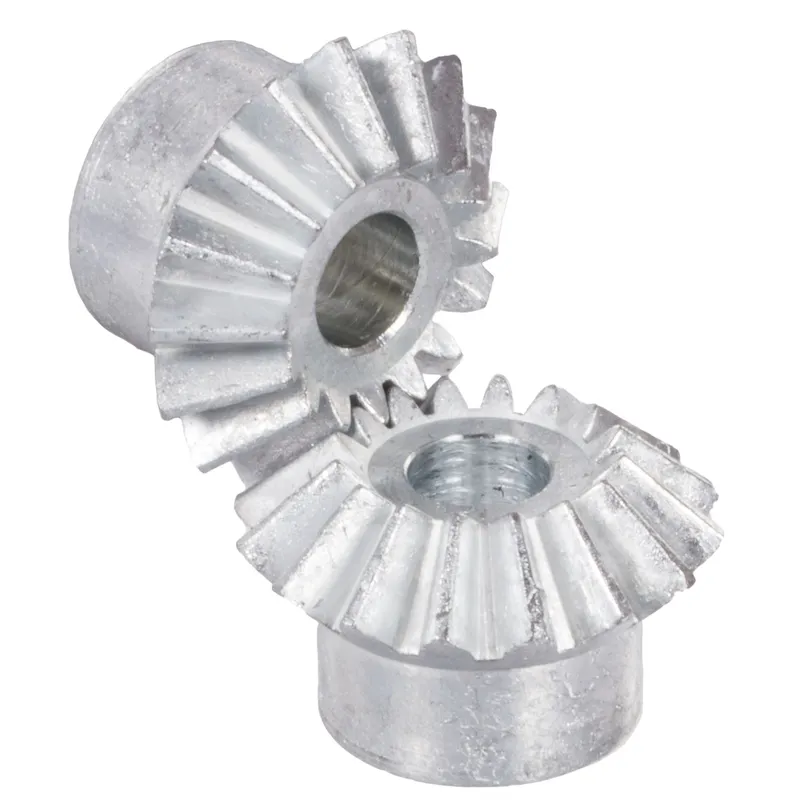
Engrenagens cônicas fundidas em zinco, relação 1:1, sistema de dentes retos
Engrenagens cônicas fundidas em zinco com relação de 1:1 e sistema de dentes retos são componentes mecânicos utilizados para transmitir torque entre eixos que se cruzam em um ângulo de 90 graus. O design de dentes retos apresenta dentes lineares, proporcionando simplicidade e eficiência em aplicações de baixa velocidade e baixa carga. Essas engrenagens cônicas são frequentemente utilizadas em máquinas que exigem transferência de movimento precisa, como em sistemas de automação ou instrumentação de pequena escala.
Engrenagens cônicas fundidas em zinco com relação de 1:1 e sistema de dentes retos são componentes mecânicos usados para transmitir torque entre eixos que se cruzam em um ângulo de 90 graus. Fabricadas em liga de zinco (tipicamente ZnAl4Cu1), essas engrenagens oferecem uma alternativa econômica e leve às engrenagens de aço ou ferro, com boa resistência, mas com adequação limitada para operação contínua devido às propriedades do material. A relação de 1:1 significa que ambas as engrenagens têm o mesmo número de dentes, garantindo velocidade de rotação igual sem multiplicação de torque. O design de dentes retos apresenta dentes lineares, proporcionando simplicidade e eficiência em aplicações de baixa velocidade e baixa carga. Essas engrenagens são frequentemente usadas em máquinas que exigem transferência de movimento precisa, como automação em pequena escala ou instrumentação.
Engrenagem cônica fundida em zinco, relação 1:1
| 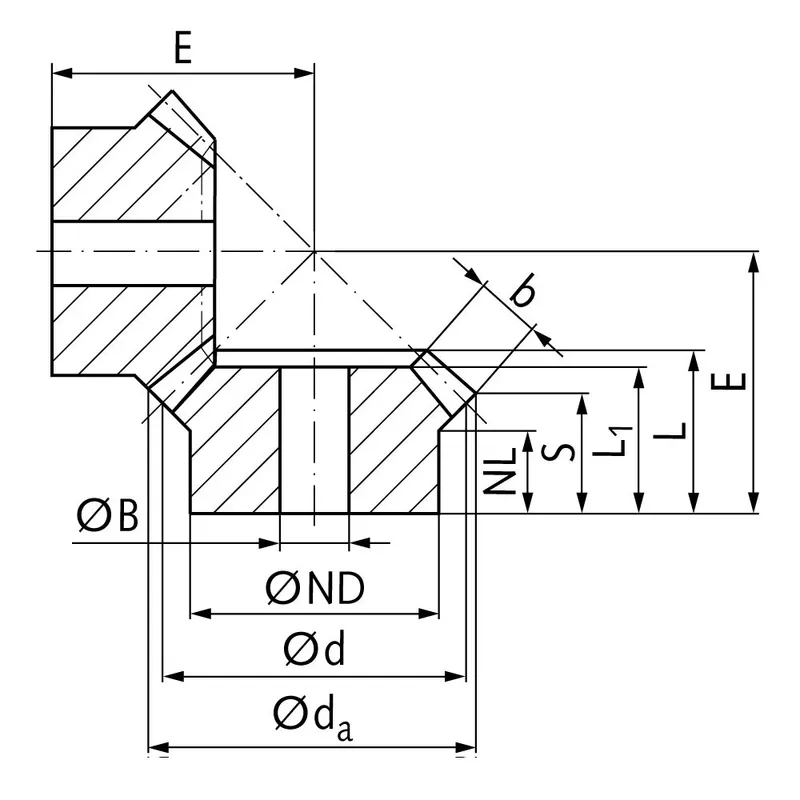 |
| Módulo | Número de dentes | dum | d | ND | Holanda | eu1 | eu | S | b | BH9 | E | Torque* | Peso |
| milímetros | milímetros | milímetros | milímetros | milímetros | milímetros | milímetros | milímetros | milímetros | milímetros | Ncm | g | ||
| 1 | 16 | 17,5 | 16 | 12 | 7,5 | 13,0 | 13,0 | 10,5 | 4,5 | 6 | 17,9 | 14 | 7 |
| 1,5 | 16 | 26,0 | 24 | 19 | 10,7 | 17,0 | 18,6 | 14,5 | 6,9 | 8 | 25,5 | 46 | 27 |
| 2 | 16 | 34,6 | 32 | 23 | 10 | 19,2 | 21,3 | 15,1 | 9,6 | 10 | 30,0 | 110 | 52 |
| 2,5 | 16 | 43,3 | 40 | 26 | 12 | 23,0 | 25,5 | 17,6 | 12,3 | 12 | 36,2 | 230 | 88 |
| 3 | 16 | 52,3 | 48 | 30 | 13 | 26,0 | 29,3 | 20,6 | 14,0 | 14 | 42,5 | 380 | 146 |
| 3,5 | 16 | 61,4 | 56 | 34 | 14 | 29,2 | 33,2 | 23,2 | 15,5 | 16 | 49,4 | 580 | 228 |
- No cálculo do torque de engrenagens cônicas fundidas em zinco, apenas a resistência da raiz foi considerada.
- Devido às propriedades do material, essas engrenagens são adequadas para operação contínua apenas em certa medida.
Processo de produção de engrenagens cônicas fundidas em zinco
A produção de engrenagens cônicas de zinco fundido envolve um processo preciso de várias etapas, otimizado para a criação de componentes duráveis e econômicos, com dentes retos e relação de 1:1 para aplicações em eixos que se cruzam.
- Preparação da ligaO processo começa com a seleção de uma liga de zinco, tipicamente ZnAl4Cu1 (Zamak 5), conhecida por sua resistência, ductilidade e capacidade de fundição. O zinco bruto é fundido em um forno a aproximadamente 420–450 °C, garantindo uma liga fundida homogênea. As impurezas são removidas e a liga é testada quanto à composição para atender aos requisitos mecânicos.
- Projeto e fabricação de moldesMoldes de aço de alta precisão são fabricados para formar a geometria da engrenagem, incluindo dentes retos e ângulos de chanfro. Esses moldes são projetados usando software CAD para garantir perfis de dentes precisos e alinhamento do eixo a 90 graus. Os moldes são polidos e revestidos para aumentar a durabilidade e facilitar a remoção da peça.
- Processo de fundição sob pressãoA liga de zinco fundida é injetada no molde sob alta pressão (até 20.000 psi) usando uma máquina de fundição sob pressão. Isso garante que a liga preencha os detalhes complexos dos dentes. O processo é rápido, com tempos de ciclo de 10 a 30 segundos, permitindo altas taxas de produção. O resfriamento ocorre dentro do molde, solidificando a engrenagem em segundos.
- Ejeção e corteApós a solidificação, a engrenagem é ejetada do molde. O excesso de material, ou rebarba, é removido por meio de corte automatizado ou rebarbação vibratória para obter dimensões precisas.
- Pós-processamentoAs engrenagens passam por tratamentos de superfície, como polimento ou revestimento (por exemplo, revestimento de níquel ou zinco), para aumentar a resistência à corrosão. Os dentes podem ser usinados para tolerâncias mais rigorosas, embora a capacidade de fundição do zinco muitas vezes minimize essa necessidade.
- Controle de qualidadeCada engrenagem é inspecionada quanto à precisão dimensional, fidelidade do perfil do dente e defeitos superficiais, utilizando ferramentas como máquinas de medição por coordenadas (MMC) e testadores de dureza. As engrenagens são testadas quanto à capacidade de torque, garantindo sua adequação para aplicações de baixa carga e baixa velocidade até 100 °C.
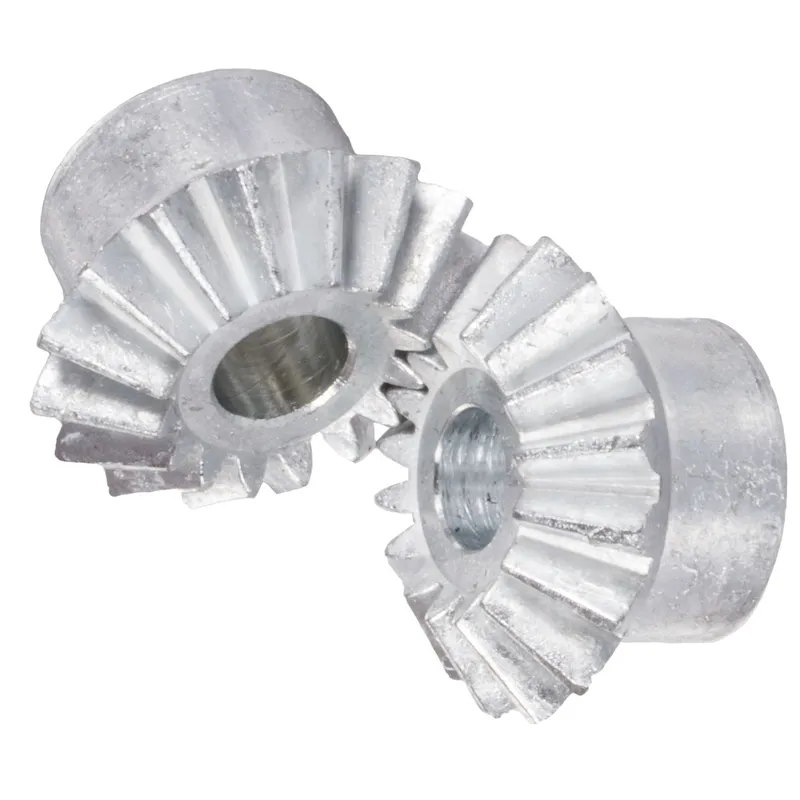
Engrenagem cônica de zinco fundido sob pressão
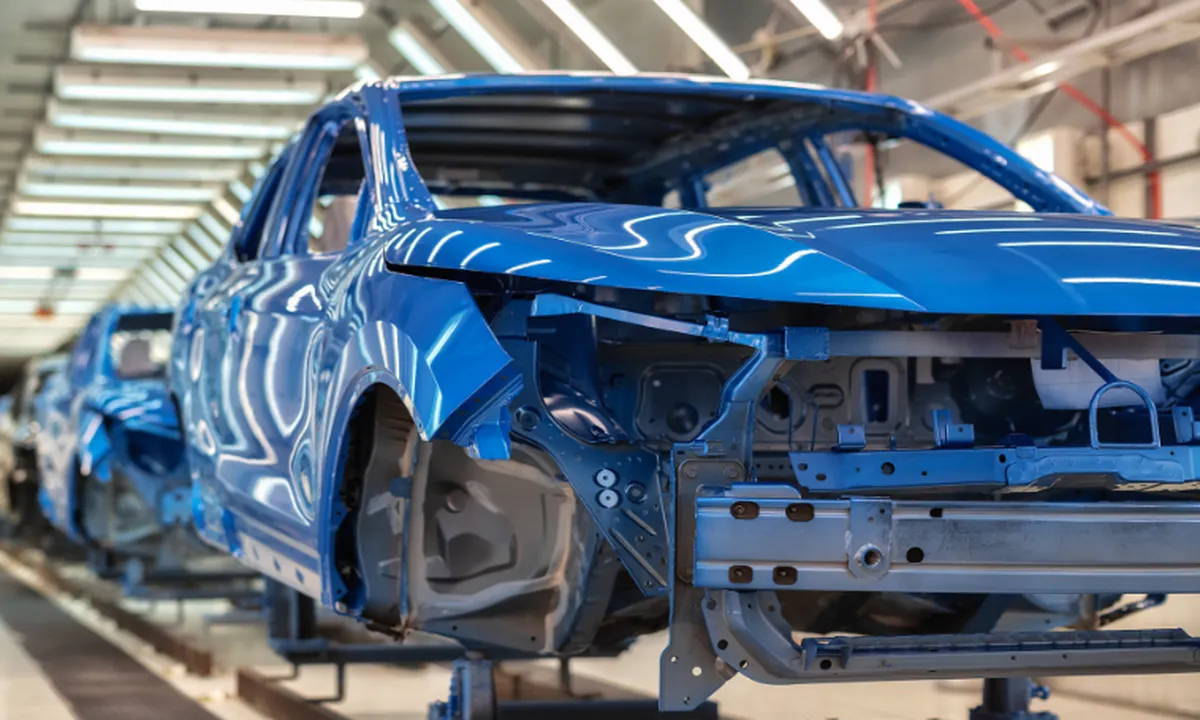
- Indústria Automotiva
As engrenagens cônicas fundidas em zinco são amplamente utilizadas em aplicações automotivas, como sistemas de transmissão, mecanismos de direção e diferenciais. Seu design leve, resistência à corrosão e alta resistência as tornam adequadas para suportar estresse mecânico contínuo e exposição ambiental. - Máquinas Industriais
Em máquinas industriais, essas engrenagens são componentes cruciais para a transmissão de potência em correias transportadoras, misturadores e bombas. Sua relação precisa de 1:1 e durabilidade garantem uma transferência de movimento eficiente, mesmo sob cargas pesadas, mantendo a confiabilidade operacional. - Eletrodomésticos
As engrenagens cônicas de zinco fundido são comumente usadas em eletrodomésticos como liquidificadores, máquinas de lavar roupa e aspiradores de pó. Seu funcionamento suave e resistência ao desgaste proporcionam uma operação silenciosa e duradoura em aparelhos sujeitos a uso regular e intensivo. - Robótica e Automação
Essas engrenagens desempenham um papel vital na robótica e em sistemas automatizados, onde o controle preciso do movimento é essencial. Sua capacidade de transmitir potência em ângulos retos, combinada com seu tamanho compacto e durabilidade, garante um desempenho eficiente em movimentos robóticos complexos. - Aeroespacial e Defesa
Em aplicações aeroespaciais e de defesa, as engrenagens cônicas de zinco fundido são utilizadas em sistemas de controle e mecanismos de navegação. Sua leveza e capacidade de suportar ambientes agressivos as tornam ideais para manter a funcionalidade em condições extremas. - Equipamentos médicos
Dispositivos médicos, como máquinas de imagem e robôs cirúrgicos, dependem de engrenagens cônicas de zinco fundido para precisão e confiabilidade. Sua resistência à corrosão e desempenho consistente em processos de esterilização garantem que atendam aos rigorosos padrões de aplicações médicas.
 |  |
| Engrenagem cônica para a indústria automotiva | Engrenagem cônica para a indústria da robótica |
 | 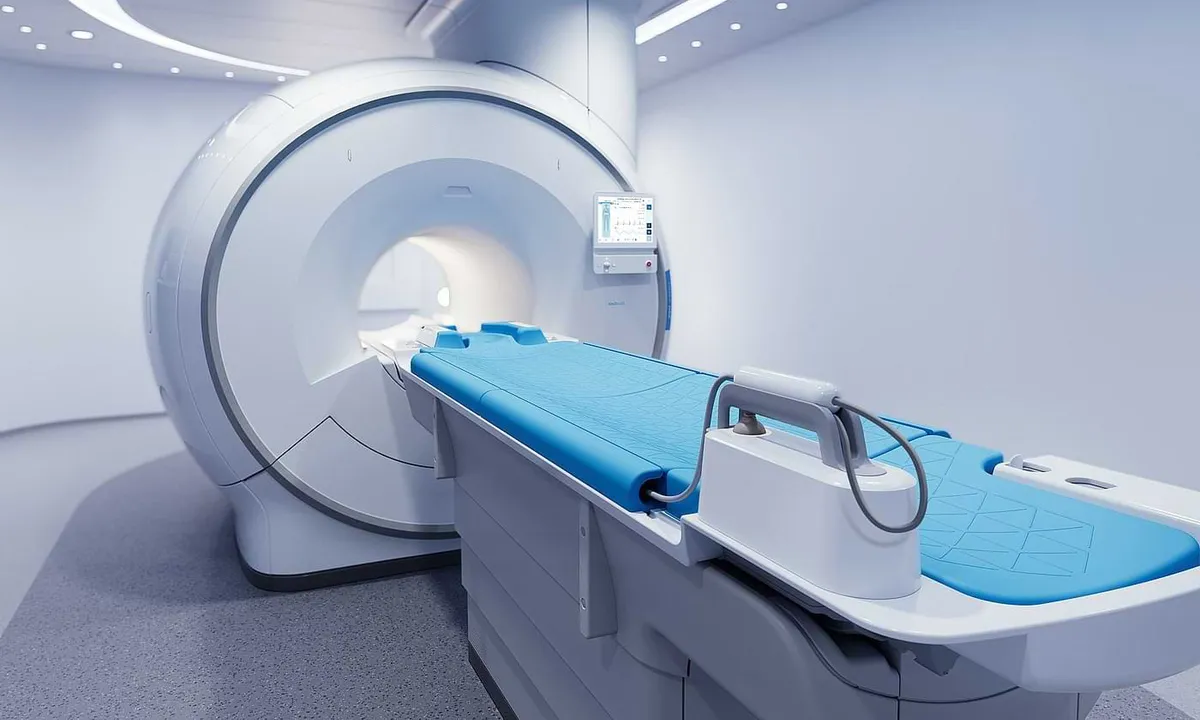 |
| Engrenagem cônica para a indústria aeroespacial | Engrenagem cônica para a indústria médica |
Engrenagem cônica versus engrenagem de esquadria
As engrenagens cônicas são um tipo de engrenagem cônica com dentes que se cruzam em um ângulo de 90 graus. Elas são projetadas para transmitir movimento e potência entre dois eixos perpendiculares entre si. As engrenagens cônicas são comumente usadas em uma ampla gama de aplicações mecânicas, incluindo máquinas industriais, sistemas automotivos e instrumentos de precisão.
Os dentes das engrenagens cônicas são cortados em um ângulo de 45 graus em relação ao eixo de rotação, permitindo que se encaixem de forma suave e eficiente. Essa geometria de dente exclusiva possibilita que as engrenagens cônicas mudem o sentido de rotação, mantendo uma relação de velocidade constante entre os eixos de entrada e saída.
Vantagens das engrenagens de esquadria
Design compacto
Devido à sua disposição perpendicular, as engrenagens cônicas permitem um sistema de transmissão de potência mais eficiente em termos de espaço, em comparação com outros tipos de engrenagens.
Alta eficiência
O encaixe preciso dos dentes da engrenagem garante uma transferência suave e eficiente de movimento e torque entre os eixos que se cruzam. Essa alta eficiência se traduz em menor consumo de energia e melhor desempenho geral do sistema.
Versatilidade
As engrenagens cônicas são extremamente versáteis e podem ser utilizadas em uma ampla gama de aplicações em diversos setores industriais. São adequadas tanto para aplicações de baixa quanto de alta velocidade, bem como para a transmissão de cargas leves a moderadas.
Desvantagens das engrenagens de esquadria
Capacidade de carga limitada
Em comparação com outros tipos de engrenagens cônicas, como as engrenagens cônicas helicoidais, as engrenagens de esquadria têm uma capacidade de carga relativamente limitada. O contato pontual entre os dentes da engrenagem resulta em maiores concentrações de tensão, o que pode levar ao desgaste prematuro e à redução da vida útil da engrenagem sob cargas pesadas.
Retaliação
Engrenagens de encaixe são propensas à folga, que se refere ao espaço entre os dentes das engrenagens em contato. A folga pode causar erros de posicionamento, vibrações e ruído no sistema de engrenagens.
Sensibilidade de alinhamento
Qualquer desalinhamento entre os eixos que se cruzam pode levar ao aumento do desgaste, vibração e redução da vida útil das engrenagens.
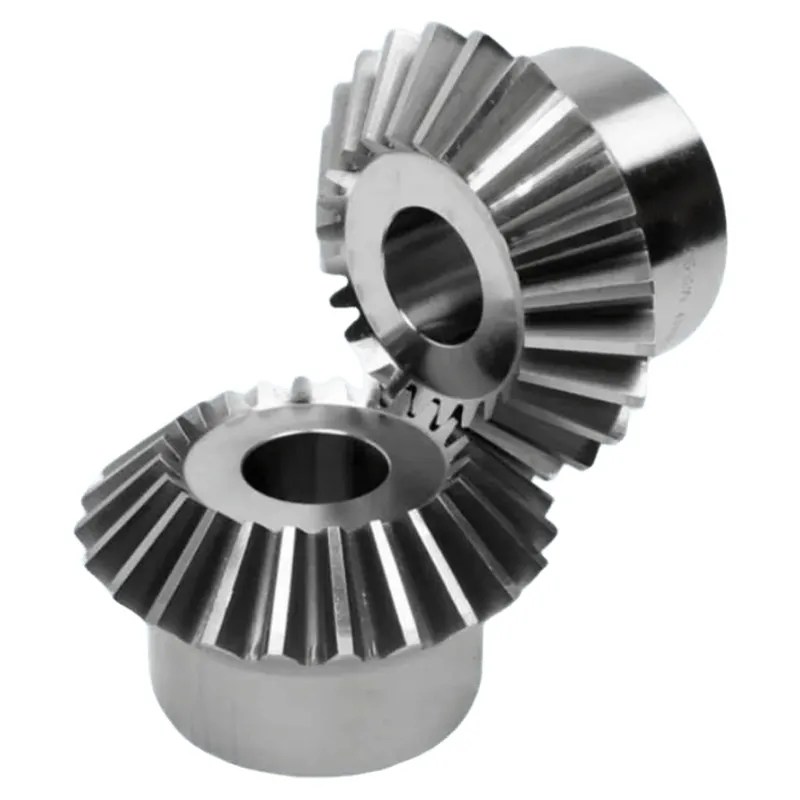
As engrenagens cônicas são um tipo de engrenagem mecânica que apresenta dentes em formato cônico, permitindo a transmissão de potência entre eixos que se cruzam em vários ângulos. Ao contrário das engrenagens de esquadria, que são limitadas a ângulos de 90 graus, as engrenagens cônicas oferecem maior flexibilidade na orientação dos eixos. Essas engrenagens são amplamente utilizadas em uma vasta gama de máquinas e aplicações onde a transmissão de potência entre eixos não paralelos é necessária.
As engrenagens cônicas vêm em diferentes configurações, incluindo engrenagens cônicas retas, engrenagens cônicas espirais e engrenagens cônicas hipoides.
- As engrenagens cônicas retas possuem dentes cortados em linha reta na superfície do cone, enquanto as engrenagens cônicas helicoidais apresentam dentes curvos para uma operação mais suave e silenciosa.
- As engrenagens cônicas hipoides, uma variação das engrenagens cônicas espirais, possuem um eixo do pinhão deslocado para aumentar a capacidade de torque e reduzir o ruído.
Vantagens das Engrenagens Cônicas
Ângulos de eixo versáteis
Uma das principais vantagens das engrenagens cônicas é sua capacidade de transmitir potência entre eixos em vários ângulos, não se limitando apenas a 90 graus como as engrenagens de meia-esquadria.
Operação suave e silenciosa
Engrenagens cônicas helicoidais e engrenagens cônicas hipoides oferecem um funcionamento mais suave e silencioso em comparação com engrenagens cônicas retas. Os dentes curvos das engrenagens cônicas helicoidais proporcionam um engate mais gradual, reduzindo a vibração e o ruído.
Alta capacidade de torque
Engrenagens cônicas, especialmente as hipoides, são capazes de transmitir altas cargas de torque. O eixo do pinhão deslocado em engrenagens hipoides permite maiores áreas de contato dos dentes, aumentando sua capacidade de carga.
Design compacto
As engrenagens cônicas permitem designs compactos, possibilitando a transmissão de potência entre eixos que se cruzam em um espaço menor em comparação com outras configurações de engrenagens.
Desvantagens das engrenagens cônicas
Fabricação complexa
O processo de fabricação de engrenagens cônicas, especialmente as espirais e hipoides, é mais complexo e dispendioso em comparação com outros tipos de engrenagens.
Maior atrito e geração de calor
Devido ao deslizamento entre os dentes, as engrenagens cônicas estão sujeitas a um atrito maior em comparação com as engrenagens cilíndricas de dentes retos ou helicoidais.
Potencial para reação negativa
Engrenagens cônicas podem apresentar folga, que é a folga ou a folga entre os dentes da engrenagem. A folga pode resultar em precisão posicional reduzida e maior desgaste, principalmente em aplicações que exigem posicionamento preciso ou operação em baixa velocidade.
Relações de velocidade limitadas
Embora as engrenagens cônicas ofereçam versatilidade nos ângulos do eixo, elas são limitadas em termos de relações de velocidade alcançáveis em comparação com outros tipos de engrenagens, como as engrenagens helicoidais.
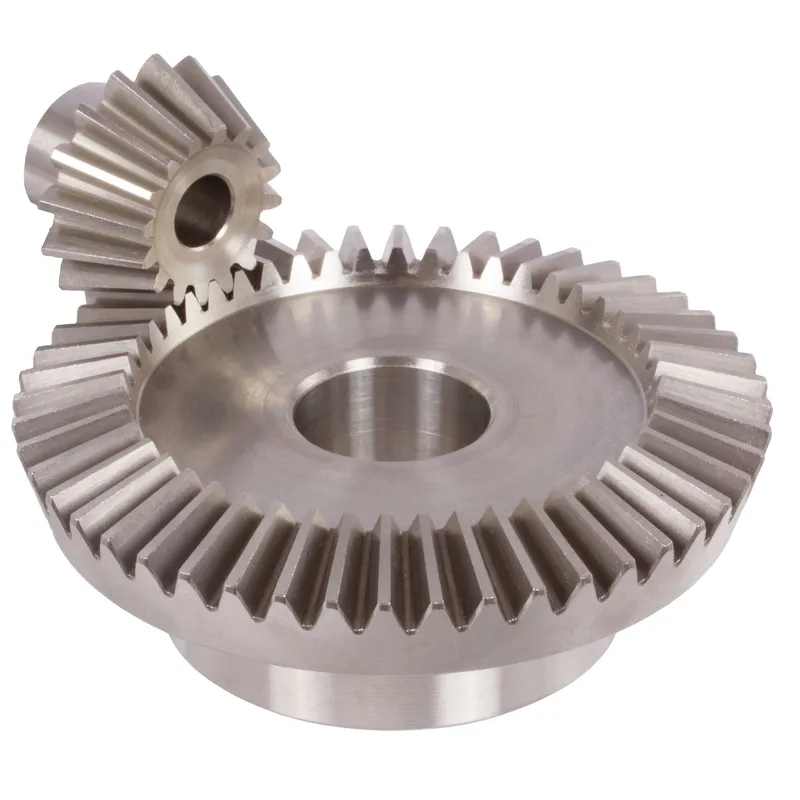
Principais diferenças entre engrenagens de esquadria e engrenagens cônicas
Embora as engrenagens cônicas e as engrenagens de esquadria sejam usadas para transmitir potência entre eixos que se cruzam, elas apresentam diferenças distintas em termos de projeto, funcionalidade e vantagem mecânica.
Projeto
As engrenagens de esquadria são um tipo específico de engrenagem cônica projetada para operar com eixos em um ângulo de 90 graus.
Em contrapartida, as engrenagens cônicas podem ser projetadas para qualquer ângulo entre 0 e 180 graus, proporcionando maior flexibilidade no posicionamento do eixo.
Funcional
As engrenagens cônicas são normalmente usadas em aplicações que exigem uma mudança de 90 graus na direção do movimento ou na transmissão de potência. Elas são comumente encontradas em ferramentas manuais, diferenciais automotivos e máquinas industriais.
As engrenagens cônicas, por outro lado, oferecem mais versatilidade em termos de ângulos do eixo e são utilizadas em uma gama mais ampla de aplicações, como transmissões automotivas, sistemas de controle de aeronaves e transmissão de potência em diversas máquinas.
Vantagem Mecânica
As engrenagens de esquadria geralmente têm uma relação de transmissão de 1:1, o que significa que não oferecem nenhuma vantagem mecânica em termos de velocidade ou torque.
As engrenagens cônicas, no entanto, podem ser projetadas com diferentes relações de transmissão, permitindo a redução da velocidade ou a multiplicação do torque, dependendo dos requisitos da aplicação.
Requisitos de carga
A capacidade de carga das engrenagens cônicas e das engrenagens de esquadria varia de acordo com fatores como material, dureza superficial e perfil do dente. Geralmente, as engrenagens cônicas suportam cargas maiores em comparação com as engrenagens de esquadria devido à sua capacidade de distribuir a tensão de maneira mais uniforme ao longo da superfície do dente.
Restrições de espaço
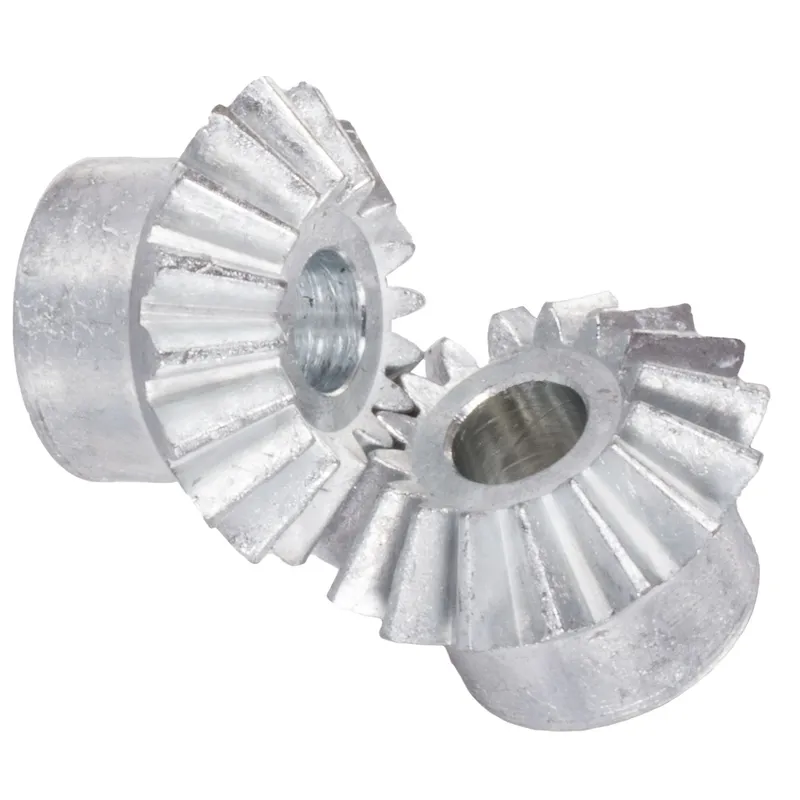
As engrenagens de esquadria são mais compactas e exigem menos espaço para instalação, sendo adequadas para aplicações com espaço limitado. As engrenagens cônicas, embora mais versáteis em termos de ângulos de eixo, podem exigir mais espaço para acomodar seu tamanho maior e posicionamento angular.
Informação adicional
| Editado por | Yjx |
|---|
Produtos relacionados
-
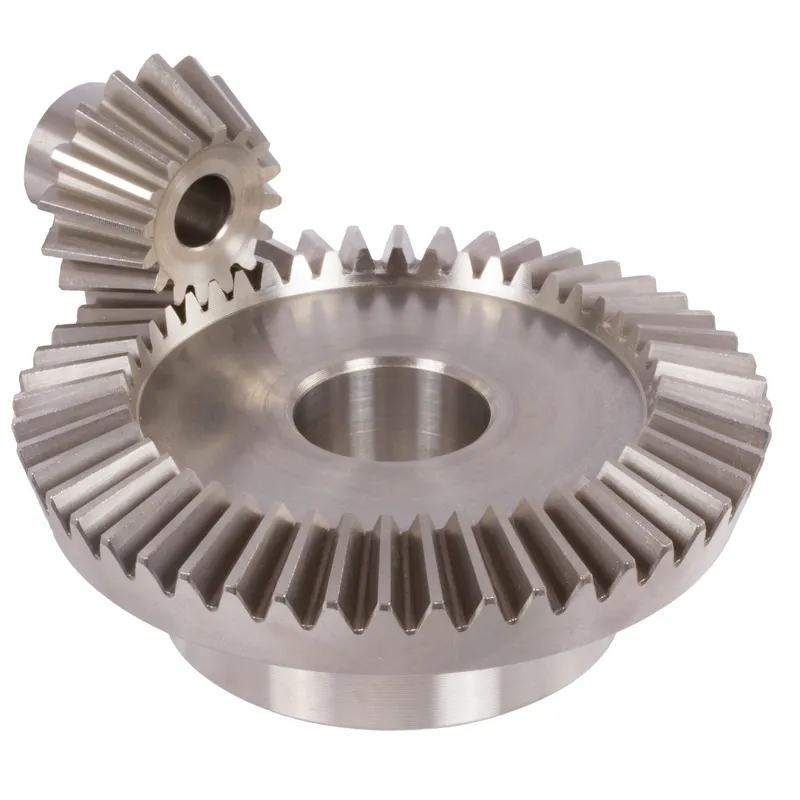
Engrenagens cônicas de aço inoxidável com relação de 4:1 e sistema de dentes retos.
-
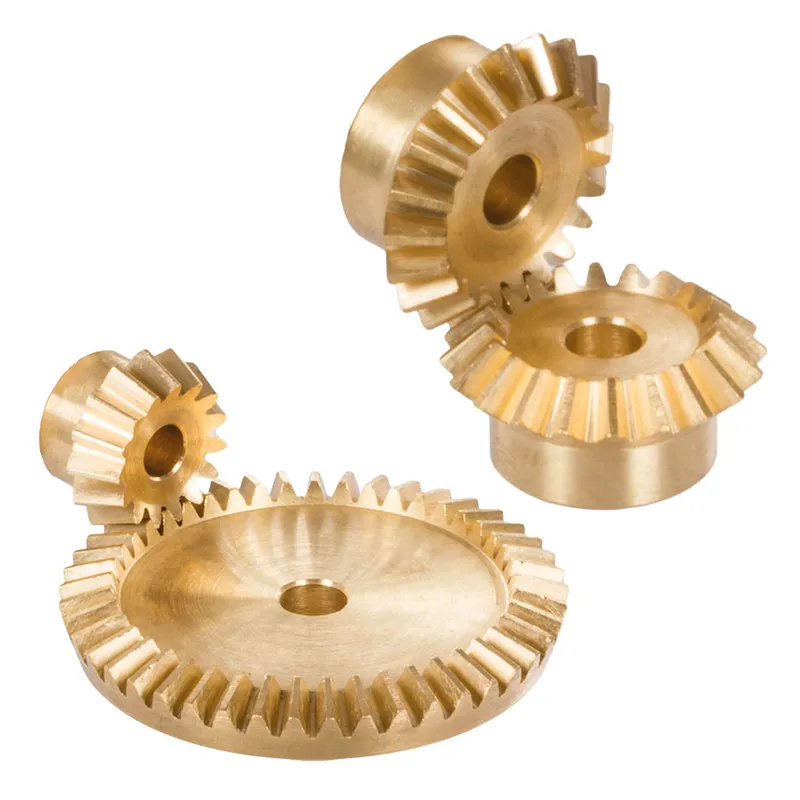
Engrenagens cônicas de latão com relação de 1:1 a 4:1 e sistema de dentes retos.
-
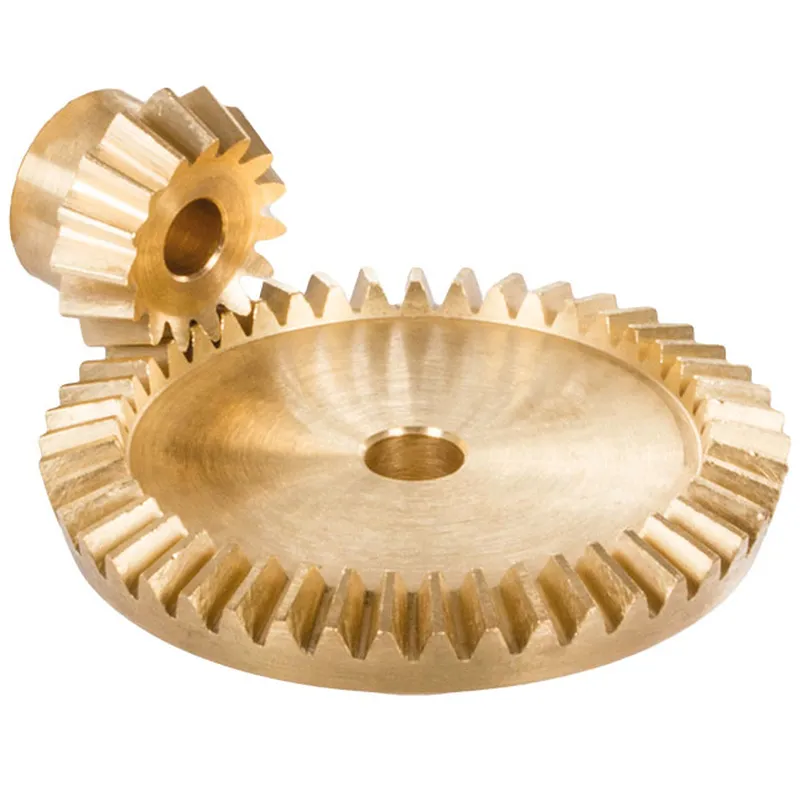
Engrenagens cônicas de latão com relação de 2,5:1 e sistema de dentes retos.
-
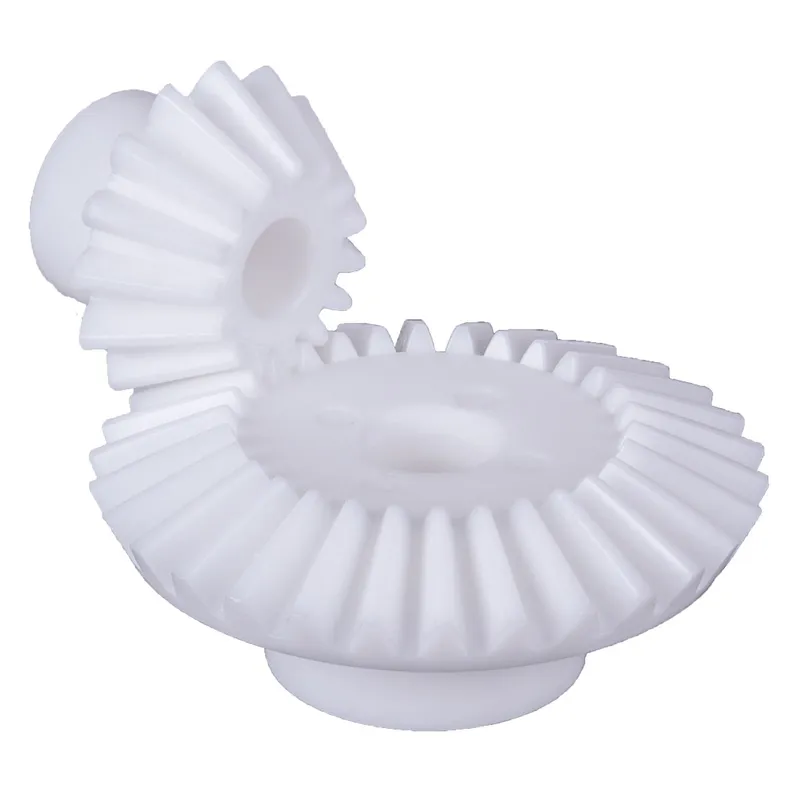
Engrenagens cônicas de plástico de resina poliacetal proporção 1:1 – 5:1
-
Engrenagens cônicas de aço inoxidável com relação 2:1 e sistema de dentes retos