
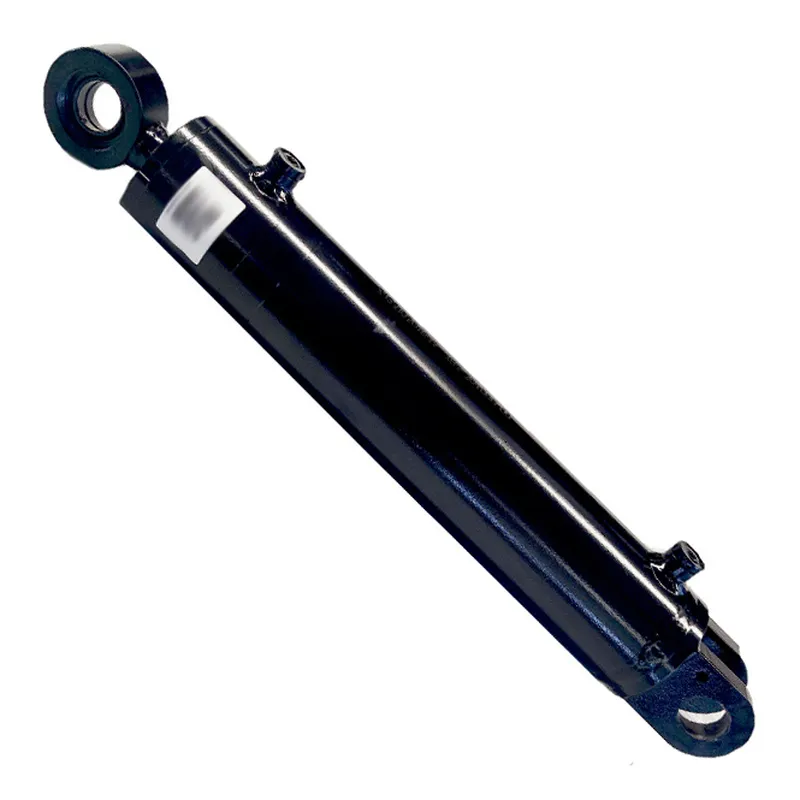
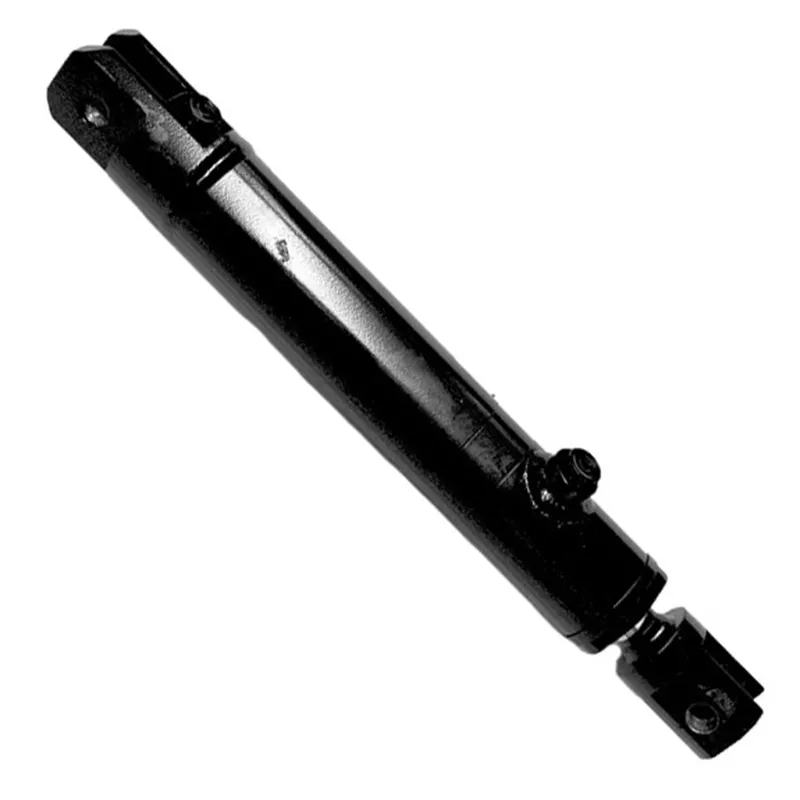
Side Shift Hydraulic Cylinder for Large Tonnage Forklift
A side shift hydraulic cylinder for large tonnage forklifts is a critical component in the forklift’s side shift attachment, enabling lateral movement of the fork carriage without repositioning the entire vehicle. Designed for high-capacity forklifts (typically handling loads of 5 tons or more), this heavy-duty hydraulic cylinder uses pressurized fluid to drive a piston, allowing precise side-to-side adjustments, often up to 100-150 mm. It withstands extreme pressures and harsh industrial environments.
A side shift hydraulic cylinder for large tonnage forklifts is a critical component in the forklift’s side shift attachment, enabling lateral movement of the fork carriage without repositioning the entire vehicle. Designed for high-capacity forklifts (typically handling loads of 5 tons or more), this heavy-duty hydraulic cylinder uses pressurized fluid to drive a piston, allowing precise side-to-side adjustments, often up to 100-150 mm. It withstands extreme pressures and harsh industrial environments. The cylinder integrates with the forklift’s hydraulic system, featuring durable seals to prevent leaks and ensure reliable performance. This enhances maneuverability, reduces handling time, and improves load alignment in demanding applications like warehouses, construction sites, and manufacturing lines.
Forklift Side Shift Hydraulic Cylinder Dimensions

| Forklift Side Shift Cylinder | |||||||
| drawing number | bore diameter (D) | rod diameter (d) | stroke (S) | Installation distance (L) | working pressure | Interface dimensions (M) | weight |
| 7B3-304000-00 | Φ70 | Φ30 | 300 | 536 | 18MPa | 2-M14*1.5 | 13.5kg |
| Product Name: | Side Shift Hydraulic Cylinder |
| Function: | Used to achieve overall left and right movement of the fork. |
| Cylinder diameter: | 70mm-120mm |
| Rod diameter: | 30mm-60mm |
| Travel: | 300mm-1025mm |
| Maximum pressure: | 21MPa |
| Maximum thrust: | 238KN |
Large Tonnage Forklift Hydraulic Cylinder Types
- Hydraulic Tilt Cylinders
Hydraulic tilt cylinders are designed to adjust the angle of the forklift’s mast, enabling operators to tilt the forks forward or backward. This functionality is critical for securing loads during lifting and transport. Built for durability, these cylinders must withstand heavy loads and frequent use in demanding environments, ensuring smooth and precise mast tilting operations. - Hydraulic Lift Cylinders
Hydraulic lift cylinders are responsible for raising and lowering the forklift’s forks or platform. These cylinders use hydraulic pressure to lift heavy loads efficiently and safely. They are designed to handle immense vertical forces, maintaining stability even under maximum load capacity. Their robust construction ensures long-term performance in industries requiring consistent, high-capacity lifting. - Hydraulic Steering Cylinders
Hydraulic steering cylinders are essential for maneuvering large tonnage forklifts, providing precise control over the steering system. They work by converting hydraulic pressure into mechanical force, allowing smooth and effortless steering. These cylinders are engineered for heavy-duty use, ensuring reliable performance in confined or challenging operational spaces where precision steering is critical. - Hydraulic Side Shift Cylinders
Hydraulic side shift cylinders enable lateral movement of the forklift carriage or forks, allowing precise side-to-side positioning of loads. This eliminates the need to reposition the entire forklift, enhancing operational efficiency. Designed for heavy loads, these cylinders ensure smooth and controlled movement, making them indispensable for handling materials in tight or crowded spaces.
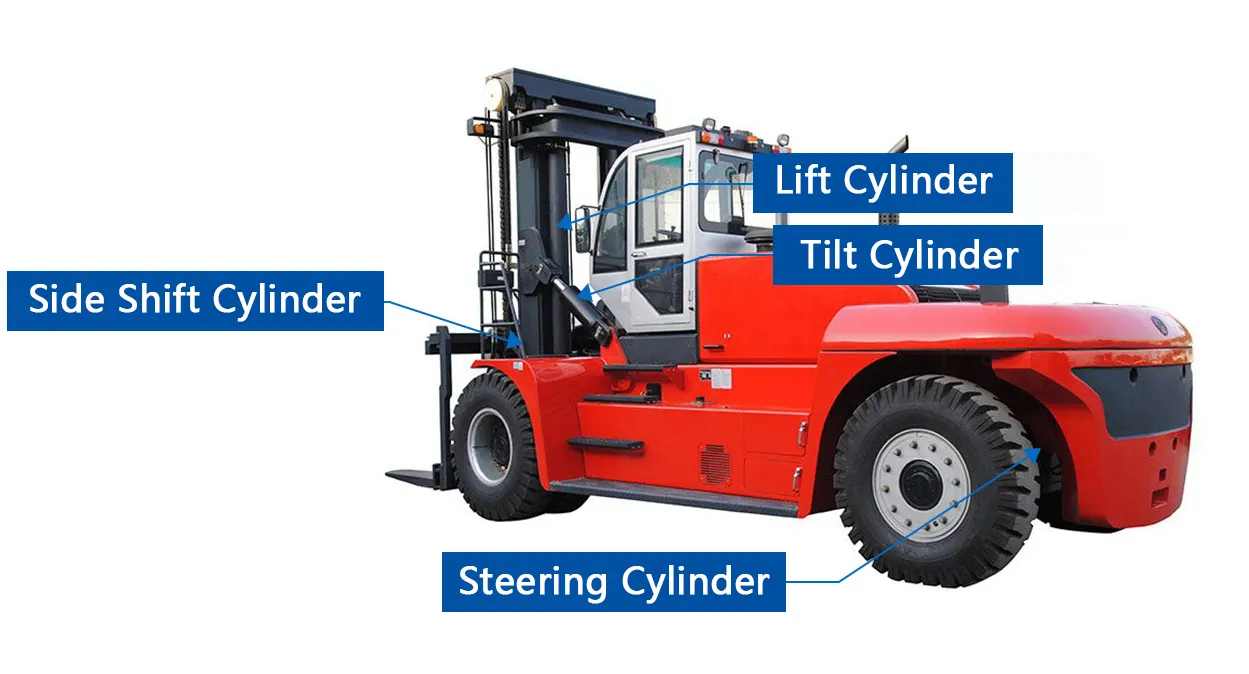
Forklift Hydraulic Side Shift Cylinder Components
- Cylinder Barrel
The cylinder barrel is the main body of the hydraulic side shift cylinder, housing the internal components. It is constructed from high-strength materials to withstand high-pressure hydraulic fluid and heavy lateral forces during operation. Its durability ensures long-term functionality under demanding conditions. - Piston
The piston is an internal component that moves within the cylinder barrel to create lateral motion. It divides the cylinder into two chambers, allowing hydraulic fluid to flow and generate the force needed for precise side-to-side movement. The piston is engineered for minimal friction and high efficiency. - Piston Rod
The piston rod connects the internal piston to the external components of the forklift carriage. It transmits the force generated within the cylinder to the side shift mechanism. Made from hardened steel, the piston rod is designed to resist bending and wear under heavy loads. - Seals and O-Rings
Seals and O-rings are critical for maintaining the hydraulic cylinder's performance by preventing fluid leakage. They ensure a tight seal between moving parts, such as the piston and barrel, while withstanding high pressure and extreme temperatures. Proper sealing enhances cylinder efficiency and longevity. - End Caps
End caps are located at both ends of the cylinder barrel, enclosing the internal components and maintaining structural integrity. These caps also house ports for hydraulic fluid entry and exit, facilitating controlled piston movement. They are precision-engineered for strength and leak-proof performance. - Hydraulic Ports
Hydraulic ports are entry and exit points for hydraulic fluid to flow into the cylinder. They are designed to securely connect with hydraulic hoses, enabling efficient fluid transfer. Properly positioned and sealed ports ensure smooth operation and prevent hydraulic system inefficiencies.

Forklift Side Shift Hydraulic Cylinder Maintenance
- Regular Inspection for Wear and Damage
Conduct thorough inspections of the side shift hydraulic cylinder to identify wear, cracks, or dents on the barrel, piston rod, and seals. Early detection of damage prevents operational failures and costly repairs, ensuring the cylinder remains in optimal working condition. - Seal and O-Ring Replacement
Check seals and O-rings regularly for leaks, cracks, or wear. Damaged seals reduce hydraulic efficiency and can cause fluid leakage. Replacing these components promptly ensures proper sealing and prevents further damage to the hydraulic side shift cylinder components. - Hydraulic Fluid Check and Replacement
Monitor the hydraulic fluid levels and quality to ensure the system operates efficiently. Contaminated or low hydraulic fluid can cause improper cylinder function and wear. Replace old or contaminated fluid with recommended types for optimal cylinder performance. - Clean Piston Rod and Barrel Surfaces
Keep the piston rod and barrel surfaces clean to prevent dust, debris, and contaminants from entering the forklift hydraulic cylinder. Dirt and particles can damage seals and internal components, leading to performance issues and costly repairs. - Lubricate Moving Components
Apply appropriate lubrication to the forklift side shift hydraulic cylinder’s moving parts, such as the piston rod, to minimize friction and wear. Proper lubrication reduces stress on components, enhances smooth movement, and prolongs the lifespan of the hydraulic cylinder. - Tighten Connections and Check Alignment
Inspect and tighten all hydraulic connections, ports, and fittings to prevent leaks. Misaligned components can cause uneven wear and reduce efficiency. Ensuring proper alignment and secure connections maintains the cylinder’s operational integrity.
Additional information
| Edited by | Yjx |
|---|
Related products
-

Steering Hydraulic Cylinder for Scissor Type Aerial Work Platform
-

Lift Hydraulic Cylinder for Small Tonnage Forklift
-
Support Hydraulic Cylinder for Scissor Type Aerial Work Platform
-

Lifting Hydraulic Cylinder for Scissor Type Aerial Work Platform
-
Left and Right Forward Extension Hydraulic Cylinder for Forward Moving Forklift