
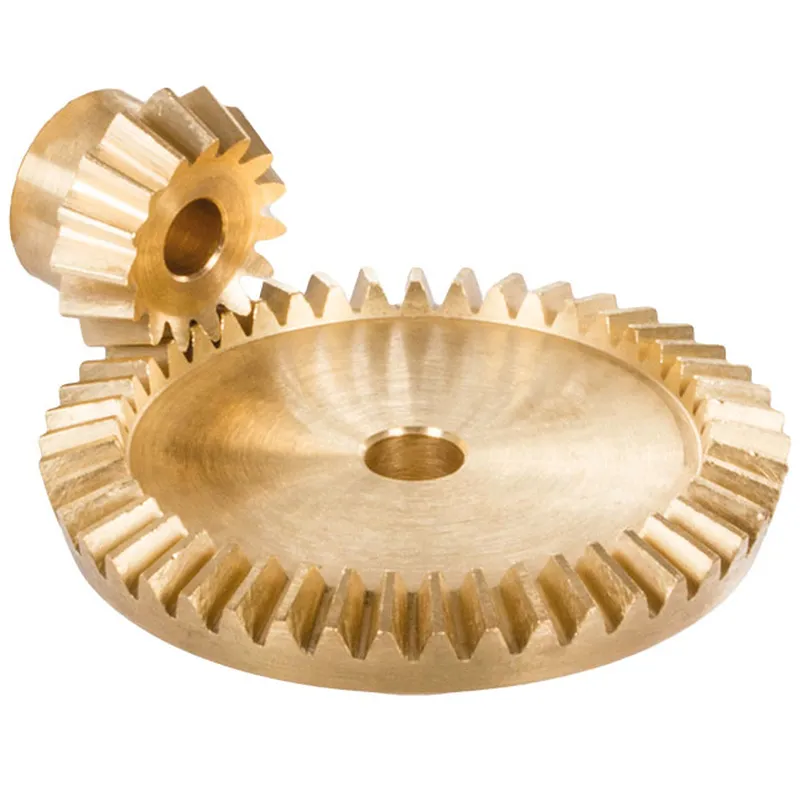
Przekładnie stożkowe mosiężne o przełożeniu 2:1, układ zębów prostych
The brass bevel gears ratio 2:1 straight-tooth system is a mechanical arrangement of bevel gears designed to transmit torque and rotational motion between intersecting shafts, typically at a 90-degree angle. In this system, the gears are made of brass, a durable and corrosion-resistant alloy, which ensures smooth operation and longevity under various conditions. The 2:1 gear ratio means that for every two rotations of the driving gear (the smaller gear), the driven gear (the larger gear) completes one rotation.
The brass bevel gears ratio 2:1 straight-tooth system is a mechanical arrangement of bevel gears designed to transmit torque and rotational motion between intersecting shafts, typically at a 90-degree angle. In this system, the gears are made of brass, a durable and corrosion-resistant alloy, which ensures smooth operation and longevity under various conditions. The 2:1 gear ratio means that for every two rotations of the driving gear (the smaller gear), the driven gear (the larger gear) completes one rotation.
The straight-tooth configuration indicates that the teeth are aligned radially along the gear's face, intersecting at the apex of the bevel. This design is simpler than spiral bevel gears and is ideal for low-speed or low-load applications where precision and cost efficiency are priorities. Commonly used in machinery, robotics, and power transmission systems, this straight bevel gear system offers reliable performance in compact spaces. Its brass construction also reduces friction and noise, making it a preferred choice for applications requiring minimal wear and smooth operation.
Brass Bevel Gear Ratio 2:1
| 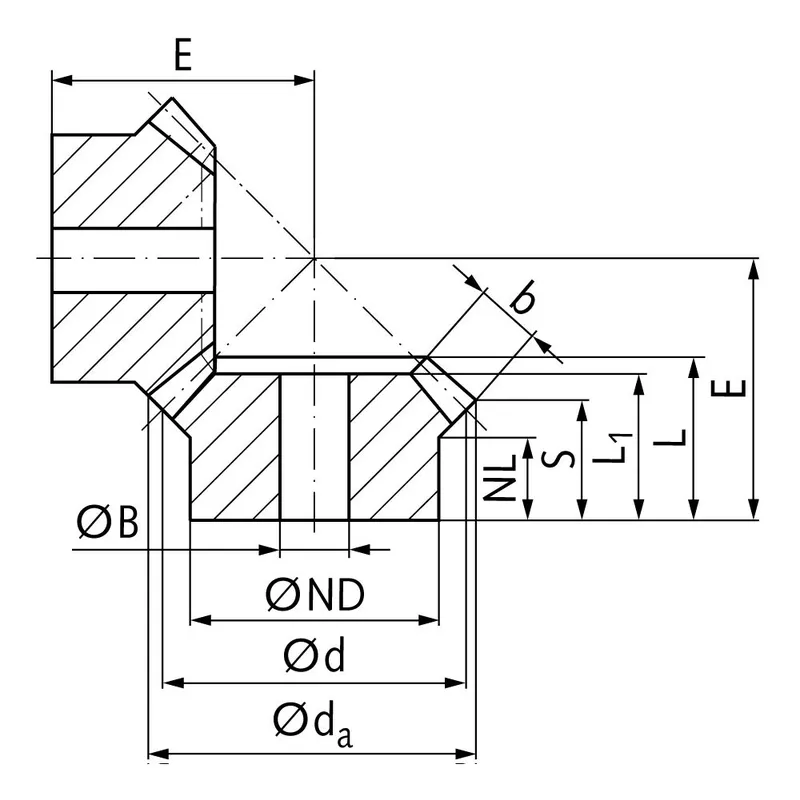 |
| Moduł | Numer zębów | DA | D | ND | Holandia | L1 | L | S | B | BH7 | mi | Moment obrotowy* | Waga |
| mm | mm | mm | mm | mm | mm | mm | mm | mm | mm | Ncm | G | ||
| 0,5 | 20 | 11,2 | 10 | 8 | 4 | 7 | 7,5 | 5,0 | 3 | 4 | 14,65 | 2,7 | 2 |
| 0,5 | 40 | 20,3 | 20 | 12 | 5 | 7,5 | 8,4 | 7,1 | 3 | 4 | 11,83 | 5,4 | 8 |
| 1 | 15 | 17,4 | 15 | 12,5 | 4,5 | 9 | 10,1 | 5,8 | 5 | 5 | 20,2 | 9,4 | 9 |
| 1 | 30 | 30,6 | 30 | 16 | 5 | 9 | 10,8 | 8,8 | 5 | 5 | 15,7 | 18,8 | 27 |
| 1 | 20 | 22,4 | 20 | 15 | 5 | 10 | 11,1 | 6,8 | 5 | 5 | 26,2 | 20,6 | 17 |
| 1 | 40 | 40,6 | 40 | 16 | 8 | 12 | 13,8 | 11,7 | 5 | 6 | 21,1 | 41,2 | 50 |
Różne rodzaje przekładni stożkowych
Przekładnie stożkowe proste
Przekładnie stożkowe o zębach prostych to najprostszy rodzaj przekładni stożkowych, charakteryzujący się prostymi zębami równoległymi do tworzącej stożka podziałowego. Są one stosowane w zastosowaniach, w których występują wysokie prędkości obrotowe i niskie lub średnie obciążenia. Jednakże, przekładnie stożkowe o zębach prostych mogą generować większy hałas w porównaniu z innymi typami przekładni stożkowych ze względu na nagłe zazębienie się zębów.
Przekładnie stożkowe spiralne
Przekładnie stożkowe o zębach spiralnych mają zęby o zakrzywionych kształtach, ustawione skośnie do tworzącej stożka podziałowego. Kąt pochylenia zębów zapewnia stopniowe i płynne zazębienie, co przekłada się na cichszą pracę i większą obciążalność w porównaniu z przekładniami stożkowymi o zębach prostych. Przekładnie stożkowe o zębach spiralnych są powszechnie stosowane w mechanizmach różnicowych w samochodach oraz w zastosowaniach przemysłowych wymagających dużych prędkości i obciążeń.
Przekładnie stożkowe hipoidalne
Przekładnie stożkowe hipoidalne są podobne do przekładni stożkowych spiralnych, ale z istotną różnicą: stożki podziałowe kół zębatych nie przecinają się. Zamiast tego osie kół zębatych są przesunięte, co pozwala na uzyskanie większych średnic zębatek i lepszy styk zębów. Taka konfiguracja przesunięcia zapewnia szereg korzyści, takich jak wyższy moment obrotowy, niższy poziom hałasu i bardziej zwarta konstrukcja. Przekładnie hipoidalne są często stosowane w tylnych mostach samochodowych i przekładniach przemysłowych.
Przekładnie stożkowe Zerol
Przekładnie stożkowe Zerol stanowią szczególny przypadek przekładni stożkowych o zębach spiralnych, w których kąt pochylenia linii śrubowej wynosi zero. Oznacza to, że zęby są równoległe do osi obrotu, podobnie jak w przekładniach stożkowych o zębach prostych. Jednak w przeciwieństwie do przekładni stożkowych o zębach prostych, przekładnie stożkowe Zerol mają zakrzywiony profil zębów, który umożliwia płynne i stopniowe zazębianie. Przekładnie stożkowe Zerol łączą zalety przekładni stożkowych o zębach prostych i spiralnych, zapewniając lepszą obciążalność i cichszą pracę w porównaniu z przekładniami stożkowymi o zębach prostych.
Miter Bevel Gears
Miter bevel gears are a specific type of bevel gear where the number of teeth on both gears is equal, and the shaft angle is 90°. This configuration results in a 1:1 gear ratio, making miter gears ideal for applications that require a change in the direction of rotation without altering the speed or torque. Miter gears can have straight, spiral, or Zerol teeth.
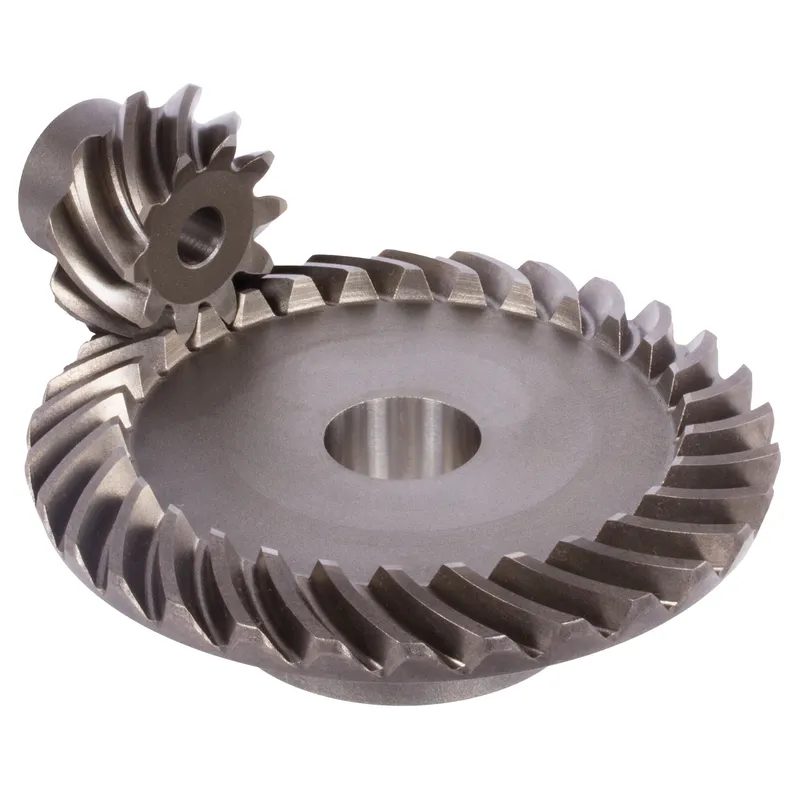 | 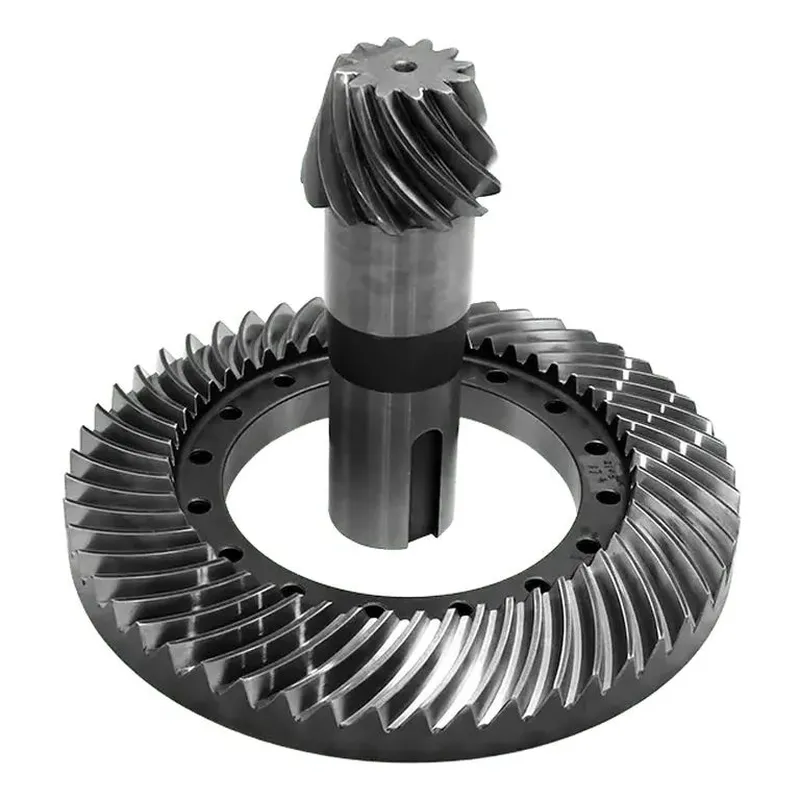 | 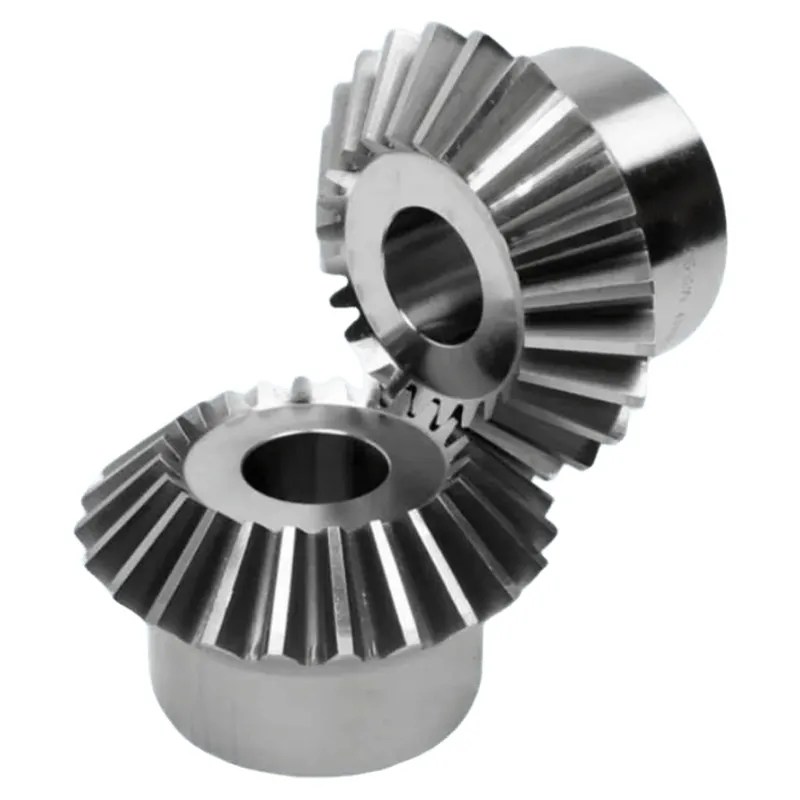 |
| Przekładnie stożkowe spiralne | Przekładnie stożkowe hipoidalne | Miter Bevel Gears |
Brass Straight Bevel Gear Applications
- Maszyny przemysłowe
Brass straight bevel gears are widely used in heavy-duty industrial machinery, such as conveyor systems and packaging equipment. Their ability to provide efficient torque transmission at 90-degree angles ensures smooth operation, durability, and minimal maintenance in rigorous environments where precision is critical. - Systemy samochodowe
In automotive applications, these gears are employed in differential systems and transmission mechanisms. They enable smooth power transfer between the engine and wheels, ensuring proper torque distribution. Their brass construction minimizes wear and provides long-lasting performance under high-stress conditions. - Robotyka i automatyka
Robotics systems rely on brass straight bevel gears for precise motion control and compact design. These gears allow robots to achieve accurate rotational movement and power transmission at specific angles, making them ideal for intricate and high-precision automated operations. - Sprzęt morski
The high corrosion resistance of brass makes these gears ideal for marine equipment, including winches and propeller systems. Straight bevel gears provide robust torque transfer in damp or saline environments, ensuring reliability in harsh conditions commonly encountered in marine applications. - Aerospace Components
In aerospace technology, brass straight bevel gears are used in actuator systems and flight control mechanisms. Their lightweight yet durable characteristics, combined with smooth torque transmission, make them essential for applications where precision, efficiency, and reliability are paramount. - Power Tools and Handheld Equipment
Power tools such as drills and grinders utilize these gears for efficient torque redirection in compact spaces. The brass material ensures a quieter operation and reduces friction, making the tools more ergonomic and durable for prolonged use in demanding environments.
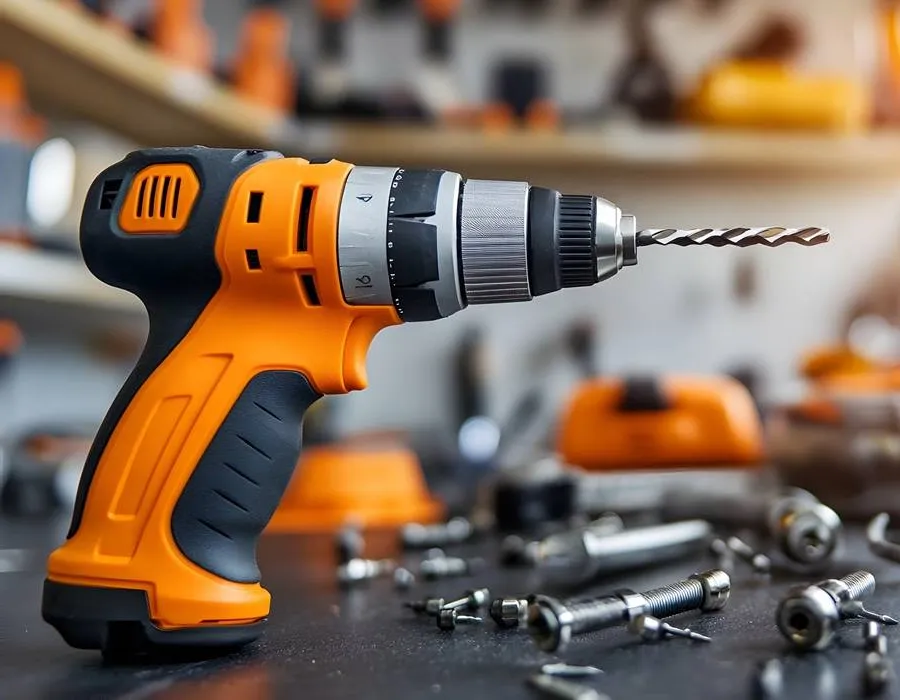 |  |
| Przekładnia stożkowa do elektronarzędzi | Przekładnia stożkowa do przemysłu morskiego |
 |  |
| Przekładnia stożkowa do robotyki | Przekładnia stożkowa do mechanizmów różnicowych samochodowych |
Informacje dodatkowe
| Edytowane przez | Yjx |
|---|
Podobne produkty
-
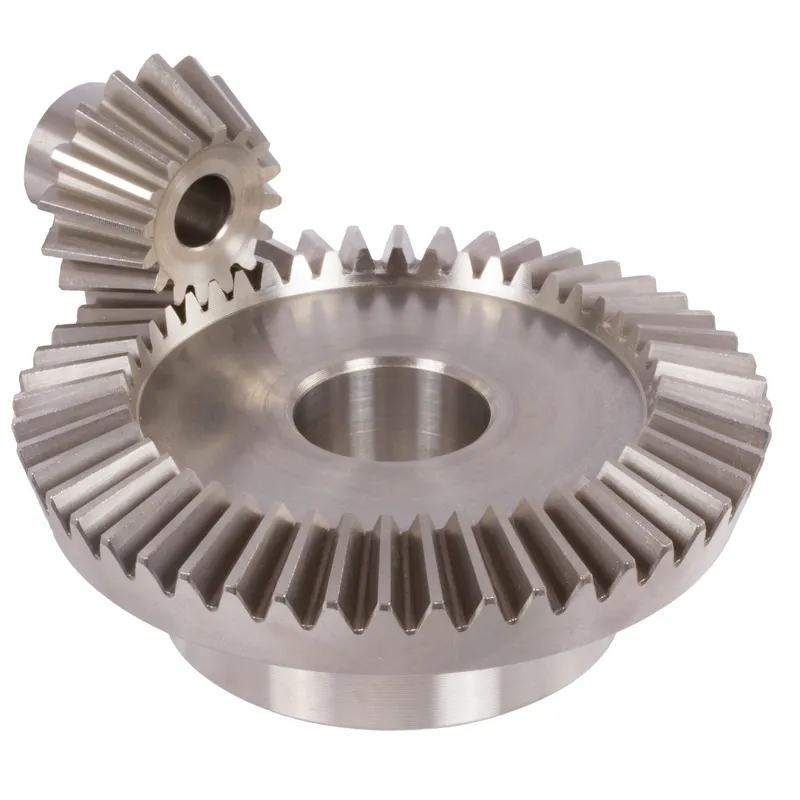
Przekładnie stożkowe ze stali nierdzewnej o stosunku 1:1 i zębach prostych
-
Przekładnie stożkowe ze stali nierdzewnej o stosunku 3:1 i zębach prostych
-
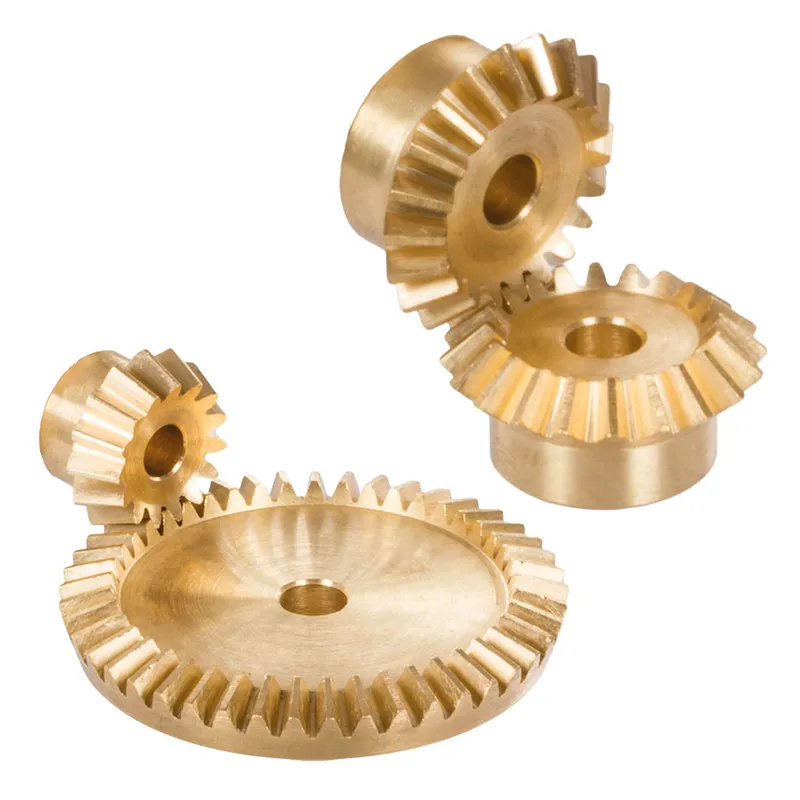
Przekładnie stożkowe mosiężne o przełożeniu 1:1 – 4:1, system zębów prostych
-
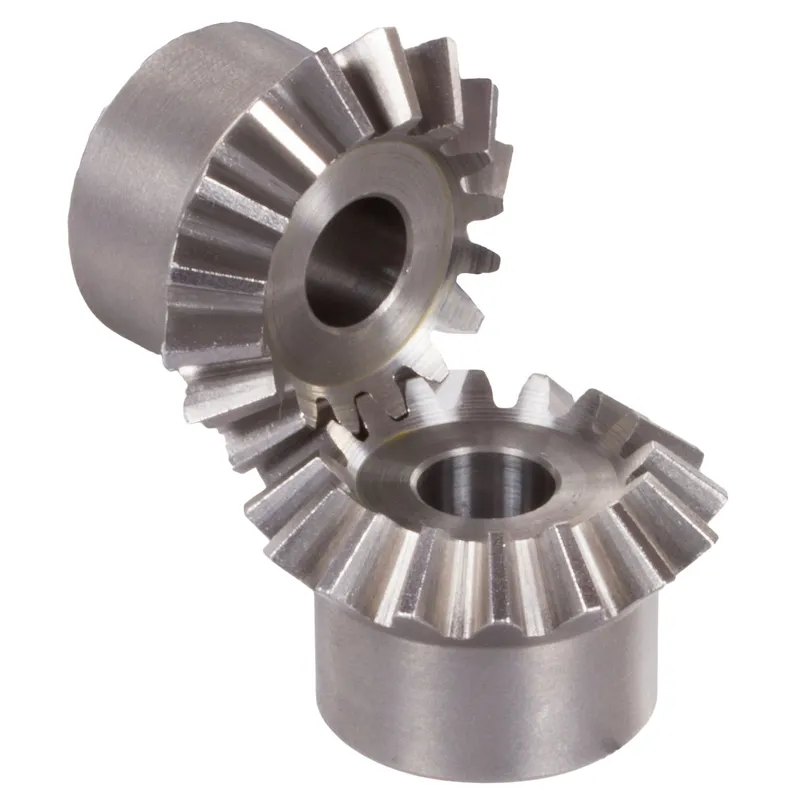
Przekładnie stożkowe ze stali ukośnej o przełożeniu 1:1 i układzie zębów prostych
-
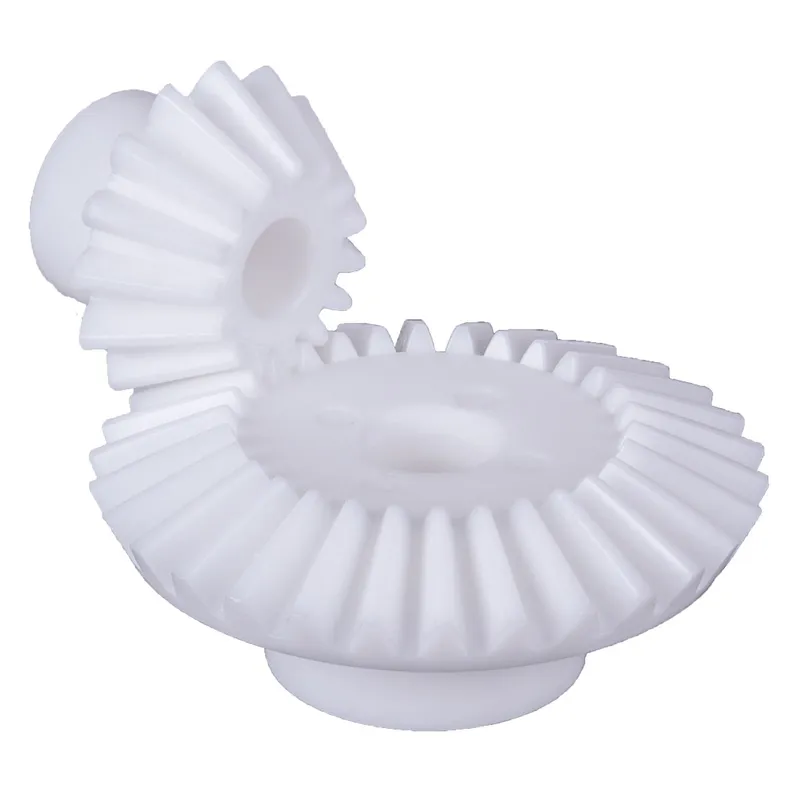
Przekładnie stożkowe z żywicy poliacetalowej o stosunku 1:1 – 5:1