
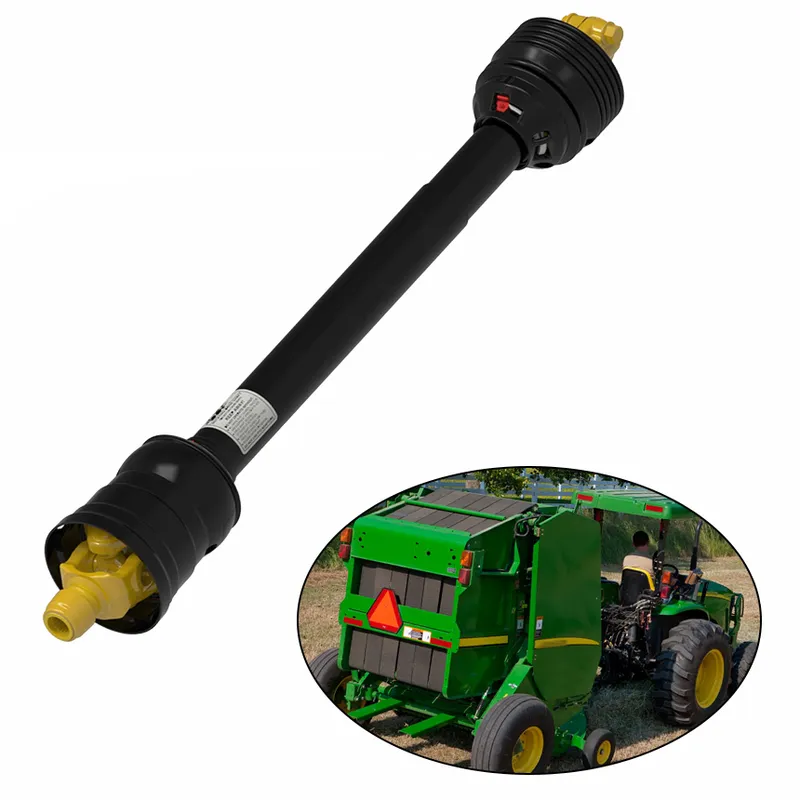
PTO Shaft for John Deere Round Balers 447, 449, 457, 458, 459, 467, 468, 469, 547
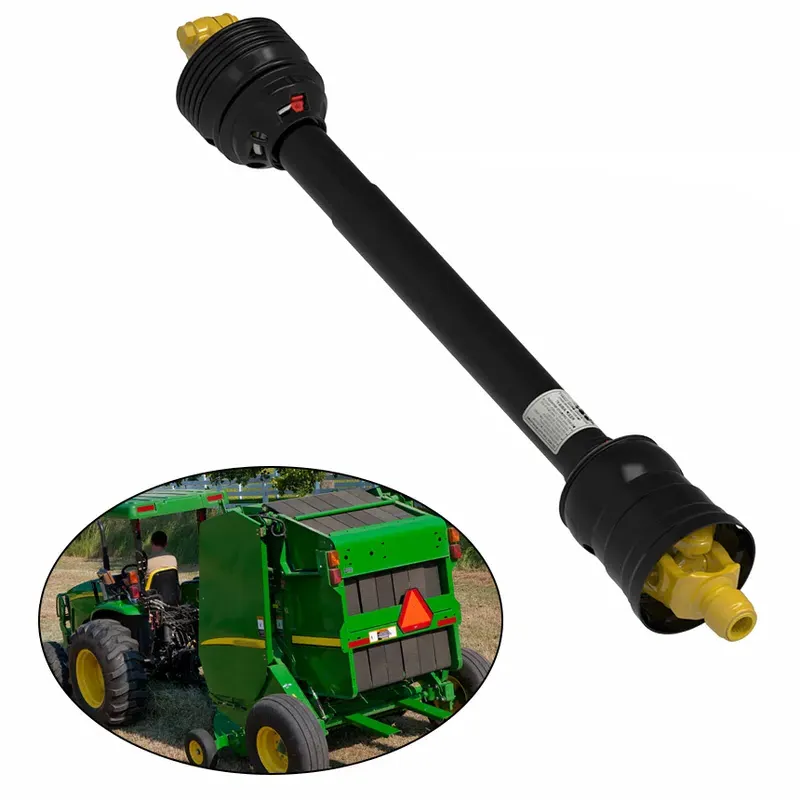
When your John Deere round baler demands reliable rotary power transfer from the tractor, the quality of your PTO shaft makes all the difference. CMN Transmission’s PTO shaft for John Deere round baler models 447, 449, 457, 458, 458 Standard, 458 Silage Special, 459, 467, 468, 469, 547, 557, 558, 559, 567, 568, and 569 is a precision-engineered tractor PTO shaft designed as a direct OEM-equivalent replacement.
Reliable PTO Shaft for John Deere Round Baler Models
PTO Shaft for John Deere Round Baler Model: 447, 449, 457, 458 Standard, 458, 458 Silage Special, 459, 467, 468, 469, 547, 557, 558, 559, 567, 568, 569
When your John Deere round baler demands reliable rotary power transfer from the tractor, the quality of your PTO shaft makes all the difference. CMN Transmission's PTO shaft for John Deere round baler models 447, 449, 457, 458, 458 Standard, 458 Silage Special, 459, 467, 468, 469, 547, 557, 558, 559, 567, 568, and 569 is a precision-engineered tractor PTO shaft designed as a direct OEM-equivalent replacement. Available in CAT 3, CAT 4, and CAT 5 constant velocity configurations with either 540 PTO shaft or 1000 PTO shaft RPM ratings, this PTO drive shaft fits tractors using 1.375"-6 or 1.375"-21 spline outputs, delivering torque ratings up to 1800 Nm through its heavy-duty friction clutch.
Whether you are baling dry hay across open pasture, wrapping silage in wet bottomland, or handling dense straw after a grain harvest, this round baler PTO shaft ensures smooth, uninterrupted power delivery from your tractor to the baler pickup and compression chamber. As a factory-direct agricultural PTO shaft from CMN Transmission, this PTO driveline shaft is ISO and CE certified, backed by global after-sales service, and shipped to over 53 countries worldwide. It is the dependable choice for farmers, contractors, and agricultural equipment dealers who need a replacement of John Deere PTO shaft that performs like the original without the OEM price tag.
Technical Specifications
Available for tractors using 1.375"-6 or 1.375"-21 spline. The input shaft is usually 1.375-6. Other combinations are available.
If you have a 1.75" x 20 spline tractor output we can modify a PTO CV head for you.
| Baler Model | PTO Category / RPM | Overload Protection |
|---|---|---|
| 448 | CAT 4 / 540 RPM | Friction Clutch |
| 458 | CAT 3 / 540 RPM | Shear Bolt |
| 458 | CAT 4 / 540 RPM | Friction Clutch |
| 558 | CAT 4 / 540 RPM | Friction Clutch |
| 468 | CAT 4 / 540 RPM | Friction Clutch |
| 468 | CAT 5 / 1000 RPM | Friction Clutch |
| 568 | CAT 4 / 540 RPM | Friction Clutch |
| 568 | CAT 5 / 1000 RPM | Friction Clutch |
Original Equipment
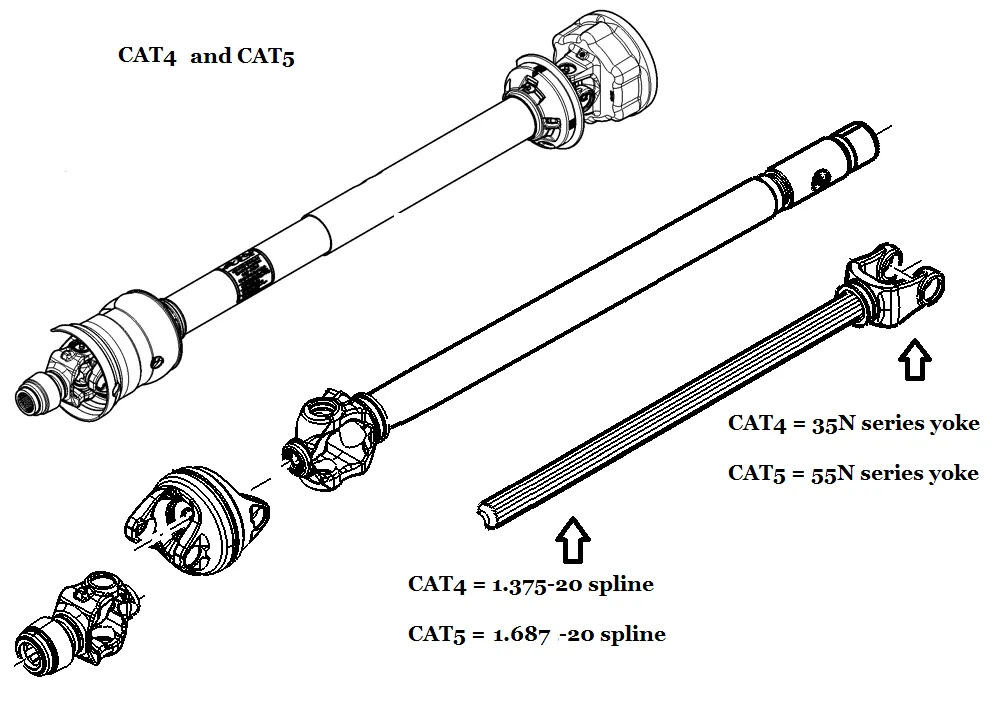
Replacement of OEM Weasler Half Shaft
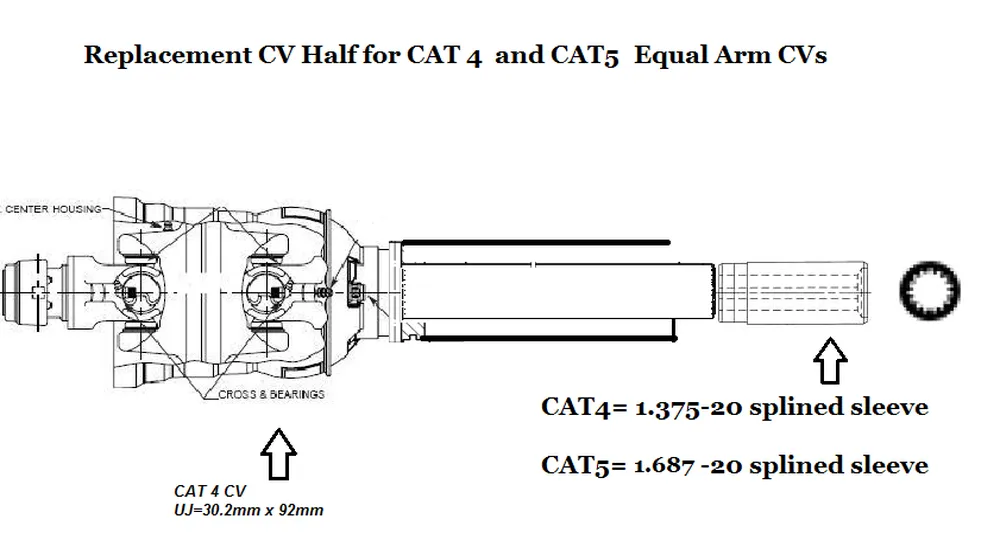
Replacement of OEM John Deere Half Shaft
Please check the telescoping spline diameter. Both sizes were used on various models.
| Categoria | Tractor splines | Telescoping splines |
| 4 | 1.375-6 | 1.375-20 |
| 4 | 1.375-6 | 1.375-20 |
| 5 | 1.375-6 | 1.750-20 |
| 5 | 1.375-21 | 1.750-20 |
Constant Velocity PTO Shaft
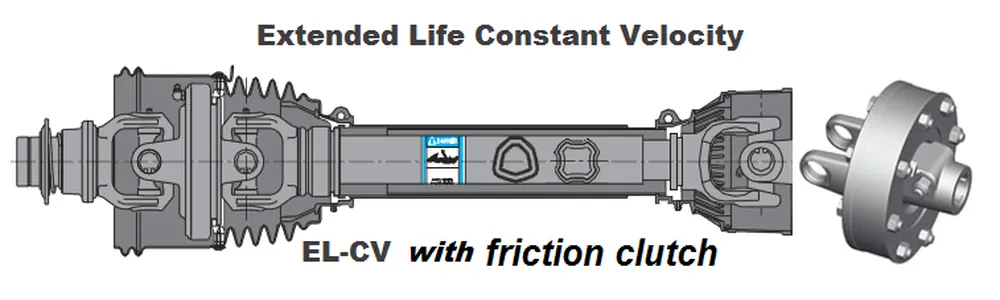
| Constant Velocity PTO | Tractor |
|---|---|
CAT3/540 | 1.375-6 |
CAT4/540 | 1.375-6 |
CAT4/1000 | 1.375-21 |
CAT5/540 | 1.375-6 |
CAT5/1000 | 1.375-21 |
FT Friction Clutch Specifications (1.375-6 Spline Input)
| Universal Size | Torque Rating | |
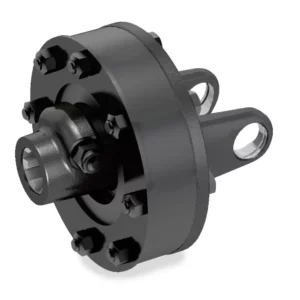 | CAT3 / S4 | 1000nm |
CAT3 / S4 | 1000nm | |
CAT4 / S6 | 1800nm | |
CAT5 / S8 | 1450nm |
Key Features of PTO Drive Shaft for Round Baler
- Constant Velocity (CV) Joint Design
Unlike standard universal joint PTO shafts that transmit power unevenly at operating angles, this PTO shaft universal joint features a constant velocity head that maintains smooth, vibration-free rotation even at significant angular offsets. This eliminates the pulsation and wear that conventional PTO shaft u joint designs introduce, reducing stress on the baler gearbox and extending the service life of every connected component in the driveline. - Dual Overload Protection Options
This PTO shaft for round baler is available with either a friction clutch or a PTO shaft shear bolt protection mechanism. The friction clutch (rated up to 1800 Nm) slips under excessive torque to protect both the tractor PTO output and the baler intake, then re-engages automatically. The shear bolt PTO shaft option uses a sacrificial bolt that breaks cleanly at a predetermined torque threshold, offering straightforward and low-cost protection ideal for operations where jams are infrequent. - Multi-Category Compatibility (CAT 3, 4, and 5)
Available across three size categories, this heavy duty PTO shaft covers the full range of John Deere round baler models from compact to large-frame machines. CAT 3 suits lighter-duty 458 balers, CAT 4 serves mid-range models at 540 RPM, and CAT 5 handles higher-powered 468 and 568 series balers running at 1000 rpm PTO shaft speed. This multi-category range means a single supplier can outfit your entire baler fleet. - Direct OEM Spline Fit
Engineered to slide directly onto 1.375"-6 or 1.375"-21 spline tractor outputs without shimming or the need for a PTO shaft adapter, this shaft replaces OEM Walterscheid and Weasler units bolt-for-bolt. The PTO shaft yoke geometry and spline dimensions are precision-machined to match John Deere factory specifications, ensuring zero play at the connection point and instant engagement when the tractor PTO is activated. - Telescoping Tube with High Fatigue Resistance
The telescoping PTO shaft tube allows the driveline to adjust its working length as the baler trails behind the tractor over uneven ground. Manufactured from precision-drawn, heat-treated alloy steel PTO shaft tubing, the inner and outer profiles resist fatigue cracking through millions of rotational cycles. The profile geometry maintains consistent overlap even at full extension, preventing separation and ensuring safe, continuous power transfer during field operations. - Full-Length Safety Guard System
Every CMN Transmission PTO shaft cover guard on this unit is constructed from impact-resistant polymer with integrated bearing stays that allow the guard to remain stationary while the shaft rotates inside. The guard system meets CE safety requirements and prevents accidental contact with the spinning shaft, protecting operators during hitching, unhitching, and field work. Guard sections are individually replaceable if damaged, reducing maintenance costs.
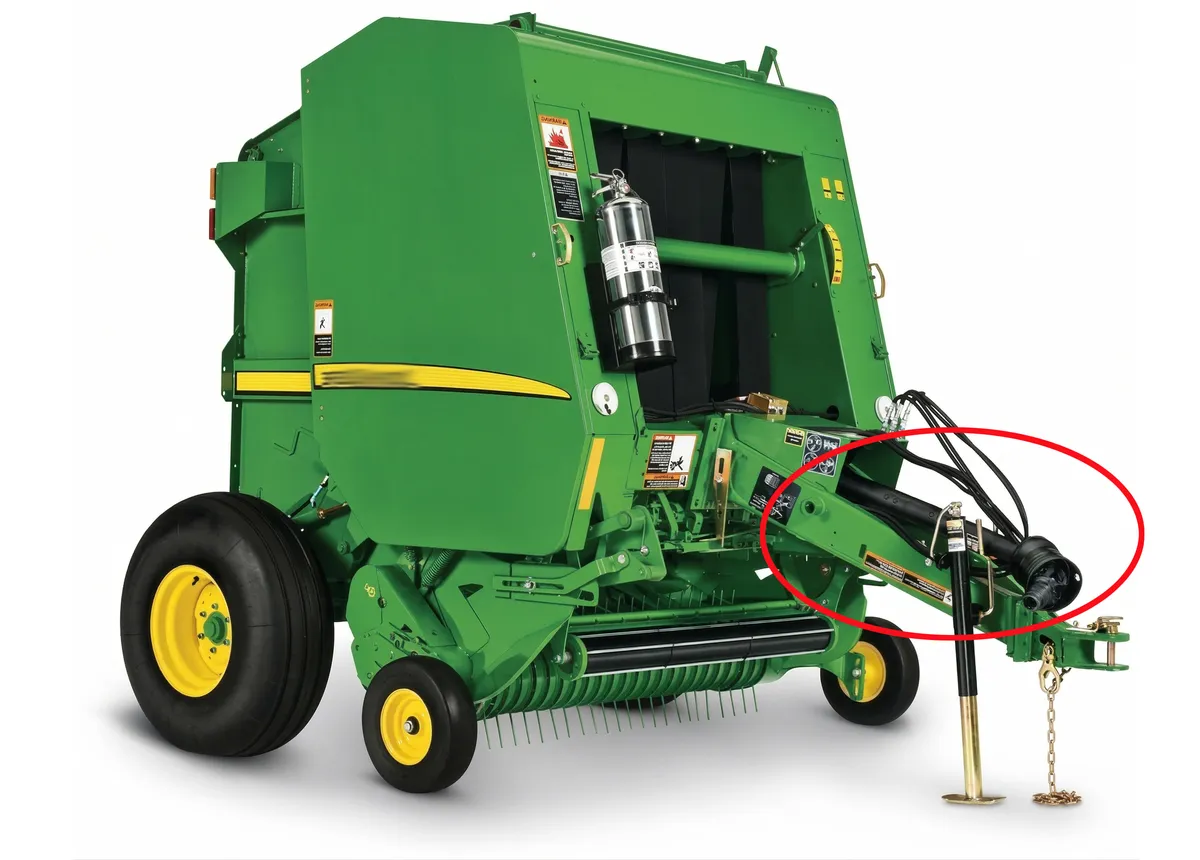
Working Principle of the Round Baler PTO Shaft
A tractor PTO drive shaft serves as the mechanical link that transfers rotational energy from a tractor's power take-off output to a trailed or mounted implement. The process begins at the tractor. When the operator engages the PTO lever or switch, an internal clutch inside the tractor transmission connects the engine crankshaft to the PTO output stub shaft, which protrudes from the rear of the tractor. This stub shaft has a standardized spline pattern. For most John Deere round baler setups covered here, it is either a 1.375"-6 spline (for 540 RPM operation) or a 1.375"-21 spline (for 1000 RPM operation). The PTO shaft yoke on the tractor end of the CMN driveline slides onto this spline and is locked in place with a spring-loaded collar, forming a positive, torque-transmitting connection.
From the tractor yoke, rotational energy travels through the telescoping PTO shaft tube. This tube consists of an inner profile nested inside an outer profile, allowing the driveline to extend and retract as the distance between the tractor and baler changes during turns, over hills, and across uneven terrain. The splined telescoping section slides smoothly while transmitting full torque. At the baler end, the shaft connects through a constant velocity (CV) joint head. Unlike a conventional PTO shaft universal joint which creates speed fluctuation at angles, the CV joint delivers uniform angular velocity, meaning the baler's input shaft receives a smooth, steady rotation even when the driveline operates at a lateral or vertical angle.
Between the tractor connection and the baler input, the overload protection device sits in-line. If you have the friction clutch version, a stack of spring-loaded plates will slip under torque spikes (such as a baler jam from feeding too much material at once), dissipating the excess energy as heat and then automatically re-engaging once the overload passes. If you have the shear pin PTO shaft version, a calibrated bolt will shear cleanly when torque exceeds the safe limit, disconnecting the driveline instantly and requiring a replacement bolt before operation resumes.
Once the rotary energy reaches the baler's input shaft, it enters the baler gearbox where it is distributed to the pickup mechanism, the belts or chains that form the bale chamber, and the wrapping system. The entire cycle from engine to finished bale depends on this PTO drive shaft maintaining consistent speed and torque. Any vibration, binding, or phase error in the shaft will translate directly into uneven bale density, premature wear on baler bearings, and increased fuel consumption.
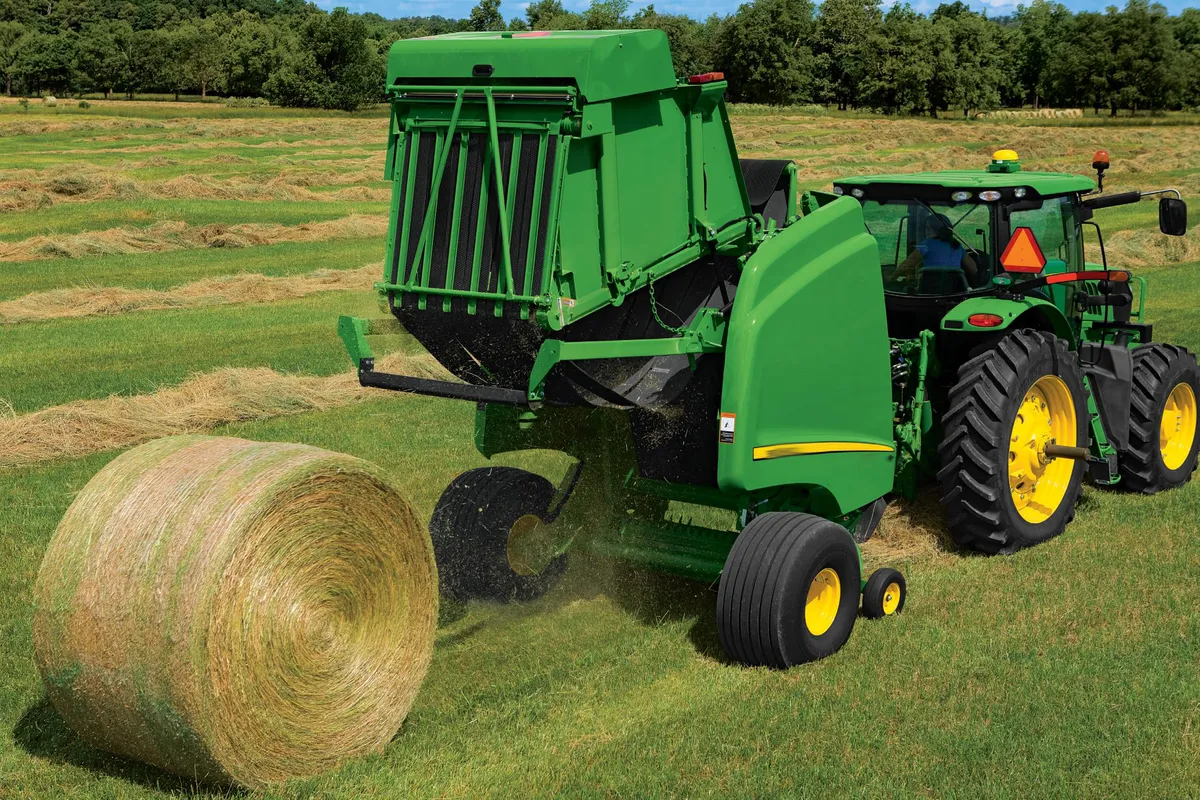
Applications of Tractor PTO Shaft for Round Baler
1. Hay and Forage Baling
This is the primary application. The PTO shaft for John Deere round baler powers the full baling cycle from windrow pickup through chamber compression to net wrap or twine tying on models 447 through 569. Operators baling Timothy hay, alfalfa, orchard grass, or mixed-grass forage rely on constant, uninterrupted PTO power to produce tight, uniform bales that stack and store efficiently and maintain nutritional quality for livestock feed throughout the season.
2. Silage and Haylage Wrapping Operations
Dairy and cattle operations running John Deere 458 Silage Special or 568 series balers use this tractor PTO shaft to drive the baler during high-moisture silage and haylage production. The material is denser and stickier than dry hay, demanding higher sustained torque from the driveline. The friction clutch option protects against slug-loading when dense, wet material enters the chamber, ensuring smooth operation without damaging the baler gearbox or tractor PTO output.
3. Straw and Residue Management After Grain Harvest
After combining wheat, barley, oats, or rice, farmers use round balers to collect and bale the remaining straw. This PTO drive shaft powers the baler through long days of straw collection across harvested fields. Straw can be dusty and abrasive, making the sealed CV joint and robust guard tube especially important for longevity. Baled straw serves multiple purposes including animal bedding, erosion control, mushroom substrate, and biomass energy feedstock.
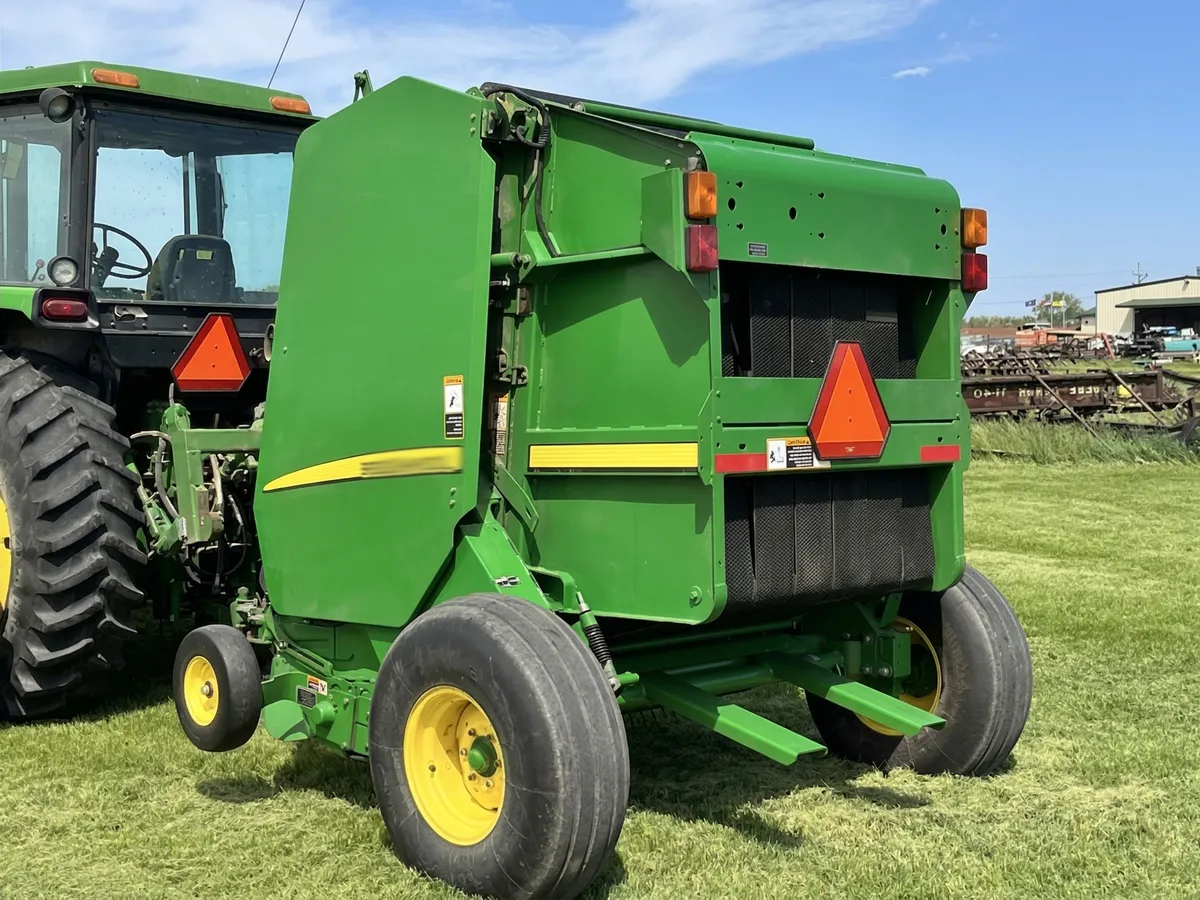
Fasi di installazione
Proper installation of your PTO shaft for John Deere round baler is essential for safe operation, maximum driveline life, and warranty coverage. Follow these steps carefully. Always perform installation with the tractor engine off, the PTO disengaged, the parking brake set, and the baler on level ground.
Step 1: Verify Compatibility
Before installation, confirm that the PTO category (CAT 3, 4, or 5), RPM rating (540 or 1000), and tractor spline size (1.375"-6 or 1.375"-21) match your specific tractor and baler combination. Cross-reference the specification tables above with the labels on your tractor PTO output stub and your baler's input shaft housing. If you have a 1.75" x 20 spline tractor, contact CMN Transmission for a modified CV head before proceeding.
Step 2: Inspect the Tractor PTO Output and Baler Input Shaft
Wipe the tractor PTO stub shaft clean and inspect the splines for wear, burrs, or damage. Check that the retaining collar and spring on the stub are functional. On the baler side, inspect the input shaft splines and bearing for excessive play. Replace any damaged components before installing the new shaft, as a worn connection point will accelerate wear on the new PTO shaft yoke and create unsafe operating conditions.
Step 3: Apply Lubrication
Apply a thin film of high-quality, lithium-based EP grease to the tractor PTO stub splines, the baler input shaft splines, and the telescoping spline section of the new PTO shaft tube. Grease the CV joint and universal joint cross bearings through the zerk fittings provided. Do not over-grease, as excess grease will attract dirt and accelerate wear.
Step 4: Connect the Tractor End
Pull back the spring-loaded locking collar on the tractor-end yoke, slide the yoke onto the tractor PTO stub until the locking pin clicks into the groove, then release the collar and verify it has fully seated. Pull firmly on the shaft to confirm it cannot separate. The yoke should rotate freely on the spline with no binding.
Step 5: Connect the Baler End
Attach the baler-end connection. If your unit has a friction clutch, bolt the clutch housing to the baler input using the provided hardware and torque the bolts to the specification stamped on the clutch housing. If it is a shear bolt PTO shaft, insert the correct grade shear bolt and secure the retaining nut. Verify free rotation by hand.
Step 6: Adjust Length and Check Operating Angles
With both ends connected, check that the telescoping section has adequate overlap (minimum one-third of the profile length) when the baler is at its closest point to the tractor, and that the shaft does not bottom out when the baler is at full extension. The driveline operating angle should not exceed 25 degrees in any plane. Excessive angles cause premature joint wear and vibration.
Step 7: Install and Secure Guards
Attach the PTO shaft cover guard halves over the shaft and secure the bearing stays to the tractor drawbar and baler hitch point using the provided chains or brackets. The guards must remain stationary during operation. Never operate without guards in place.
Step 8: Test at Low RPM
Start the tractor, engage the PTO at idle speed, and observe the shaft for any vibration, wobble, or unusual noise. Gradually increase to operating RPM. If any anomaly is detected, disengage immediately and re-check all connections and guard positions before resuming.
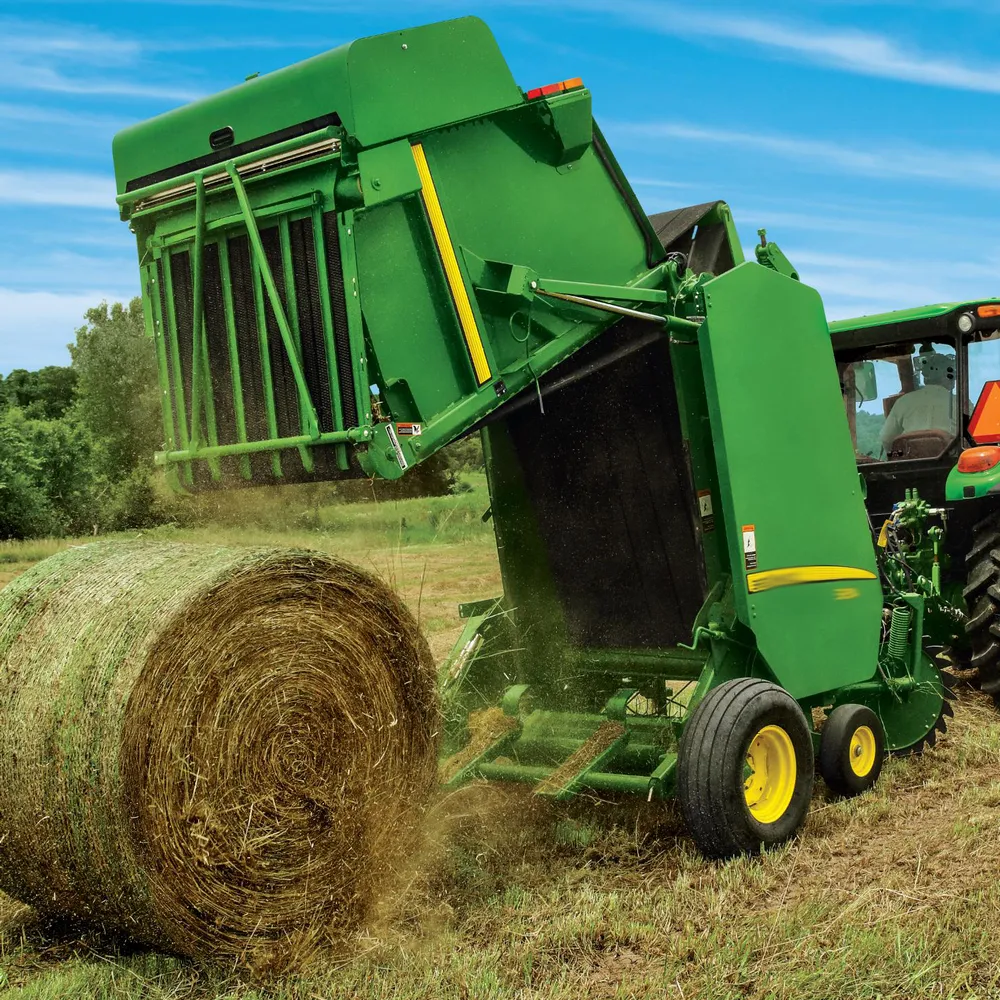
Common Troubleshooting for PTO Drive Shafts
Even with proper maintenance, field conditions can cause issues. Here are the most common problems operators encounter with PTO drive shafts on John Deere round balers and how to diagnose and resolve them.
1. Problem: Excessive Vibration During Operation
Cause: Worn PTO shaft u joint cross bearings, bent or dented PTO shaft tube, misaligned connection, or missing balance weights. Diagnosis: With the PTO disengaged and engine off, grip the shaft near each joint and check for play. Spin the shaft slowly by hand and observe for wobble. Solution: Replace worn cross bearings, straighten or replace the damaged tube section, and verify that both connection points are properly aligned. If vibration persists after joint and tube inspection, the issue may be a warped yoke. Replace the affected PTO shaft yoke and re-test.
2. Problem: Shaft Will Not Stay Connected to Tractor PTO Stub
Cause: Worn locking collar spring, damaged locking pin, or worn splines on either the yoke or the tractor stub. Diagnosis: Push the shaft onto the stub and check if the locking pin seats fully in the groove. If the pin does not click or the shaft can be pulled off with moderate force, the connection is compromised. Solution: Replace the locking collar assembly. If the tractor PTO stub splines are worn beyond tolerance, the stub itself may need replacement by a qualified tractor mechanic. Never secure a loose connection with wire, tape, or clamps, as the shaft can separate under load and become a lethal projectile.
3. Problem: Friction Clutch Slipping Continuously Under Normal Load
Cause: Glazed or worn friction plates, incorrect spring preload, or oil contamination on the plates. Diagnosis: A slip clutch PTO shaft that slips during normal baling (not a jam condition) will emit a burning smell and the baler will lose speed intermittently. Solution: Disassemble the clutch, inspect plate condition, and replace glazed or thin plates. Clean all surfaces with brake cleaner to remove oil contamination. Reassemble with the correct torque specification on the preload nut. If the clutch continues to slip after plate replacement, the spring pack may have lost tension and should be replaced.
4. Problem: Shear Bolt Breaks Repeatedly Without Apparent Jam
Cause: Incorrect bolt grade (too soft), baler pickup or chamber obstruction creating intermittent high torque, or baler gearbox internal issue. Diagnosis: Verify the shear bolt is the correct hardness grade specified for your model. Inspect the baler for partially buried rocks, wire, or other debris in the pickup area. Check the baler gearbox oil level and listen for internal grinding. Solution: Use only the correct grade PTO shaft shear bolt. Clear any obstructions from the baler. If the gearbox is the source, repair or replace internal gears before resuming operation, as running with a failing gearbox will continue to break shear bolts and may cause more extensive damage.
5. Problem: Grinding or Clicking Noise from the CV Joint
The constant velocity joint head contains precision ball bearings in a cage. Grinding indicates bearing surface failure; clicking indicates cage or ball damage. Diagnosis: Rotate the shaft slowly by hand and feel for roughness or catching at the CV end. Solution: A failed CV joint must be replaced as a complete assembly. Do not attempt to disassemble and repack a damaged CV joint, as the internal tolerances are critical. Install the replacement CV head and grease it thoroughly before operation. Prevent future CV failures by maintaining the grease schedule (every 8 operating hours) and never operating the shaft at angles exceeding the rated maximum.
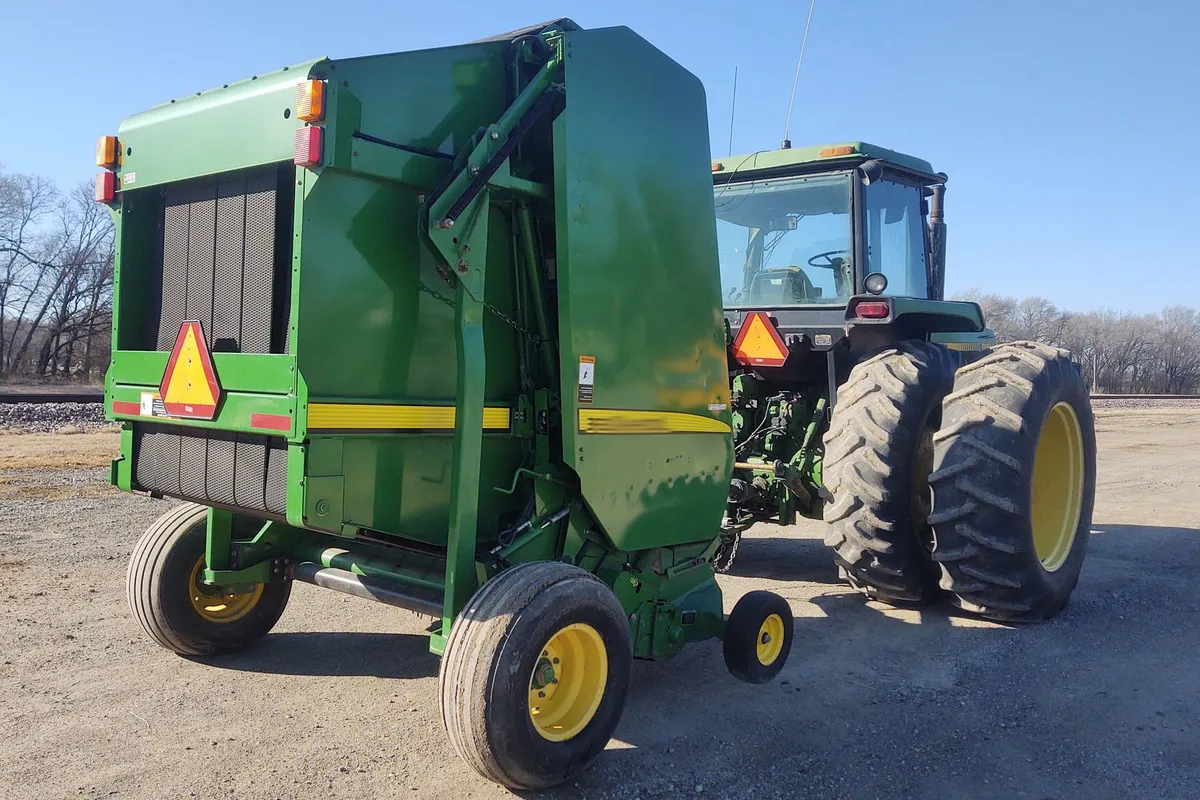
Brand Comparison
How does our replacement of John Deere PTO shaft compare to the major brands? Here is an objective comparison.
| Caratteristica | CMN Transmission | Walterscheid (GKN) | Weasler Engineering | Bondioli & Pavesi |
|---|---|---|---|---|
| Headquarters | Korea (Ansan, Gyeonggi-do) | Germany (Lohmar) | USA (West Bend, WI) | Italy (Suzzara) |
| CV Joint Available | Yes (CAT 3, 4, 5) | Yes (CAT 3 through 8) | Yes (CAT 1 through 6) | Yes (CAT 2 through 8) |
| Overload Protection | Friction Clutch & Shear Bolt | Friction Clutch, Shear Bolt, Ratchet | Friction Clutch & Shear Bolt | Friction Clutch, Shear Bolt, Free Wheel |
| Max Torque (CAT 4) | 1800 Nm | 2200 Nm | 1900 Nm | 2000 Nm |
| Certification | ISO & CE | ISO & CE | ASABE / SAE | ISO & CE |
| Custom Spline Modification | Yes (factory-direct) | Limited (dealer order) | Limited | Yes (longer lead time) |
| Direct Factory Sales | ✔ Yes | ✖ Dealer network only | ✖ Distributor only | ✖ Dealer network only |
| Price Point | Competitive (factory-direct) | Premium | Mid-range to premium | Premium |
| Global Shipping | 53+ countries | Global dealer network | Primarily North America | Global dealer network |
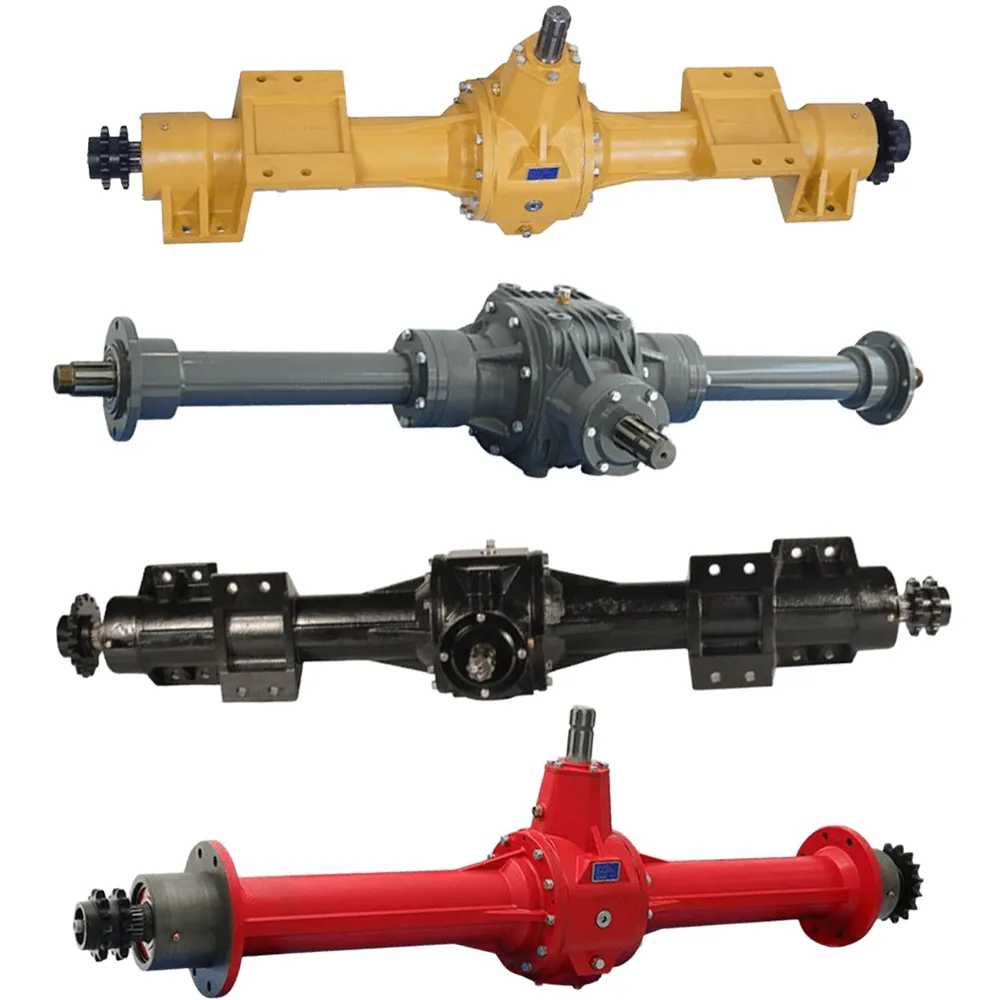
Round Baler PTO Shaft and Round Baler Gearbox
The round baler PTO shaft and the round baler gearbox are two halves of the same power transmission system. Neither can function without the other, and the condition of one directly affects the longevity and performance of its partner.
The PTO driveline shaft is the delivery mechanism. It accepts rotational energy from the tractor PTO output at a standardized speed (either 540 or 1000 RPM) and transmits it through the telescoping tube and constant velocity joint to the baler's input shaft. Its job is to bridge the gap between two machines that are constantly moving relative to each other, accommodating changes in distance and angle while maintaining a steady flow of torque. The shaft itself does not change speed or direction; it is a conduit.
The round baler gearbox is where that incoming rotational energy is transformed. The gearbox receives the single-speed input from the PTO shaft and uses a set of helical or spiral bevel gears to change the speed, direction, and distribution of power to the baler's internal mechanisms. Typically, the gearbox splits power between the pickup roller (which lifts the crop windrow into the chamber), the bale-forming belts or rollers (which compress the material into a cylindrical shape), and the wrapping or tying mechanism. Each of these functions requires a different speed and torque, and the gearbox provides exactly that through its internal gear ratios.
The critical connection point is where the PTO shaft for round baler meets the gearbox input. A worn or vibrating PTO shaft introduces cyclic loading into the gearbox input bearing, accelerating its wear and eventually causing gear misalignment. Conversely, a failing gearbox with worn gears or low oil will create torque spikes that travel back up the driveline, overloading the PTO shaft's overload protection and stressing the PTO shaft universal joint bearings. This is why CMN Transmission recommends inspecting both the PTO shaft and the gearbox as a system, not as isolated components. When replacing a worn PTO drive shaft, it is good practice to also check the gearbox oil level, inspect the input shaft seal for leaks, and verify that the gearbox mounting bolts are torqued correctly. CMN Transmission supplies both agricultural PTO shafts and round baler gearboxes, allowing customers to source matched driveline components from a single supplier for optimal compatibility and performance.
Why Choose CMN Transmission's Agricultural PTO Shafts?
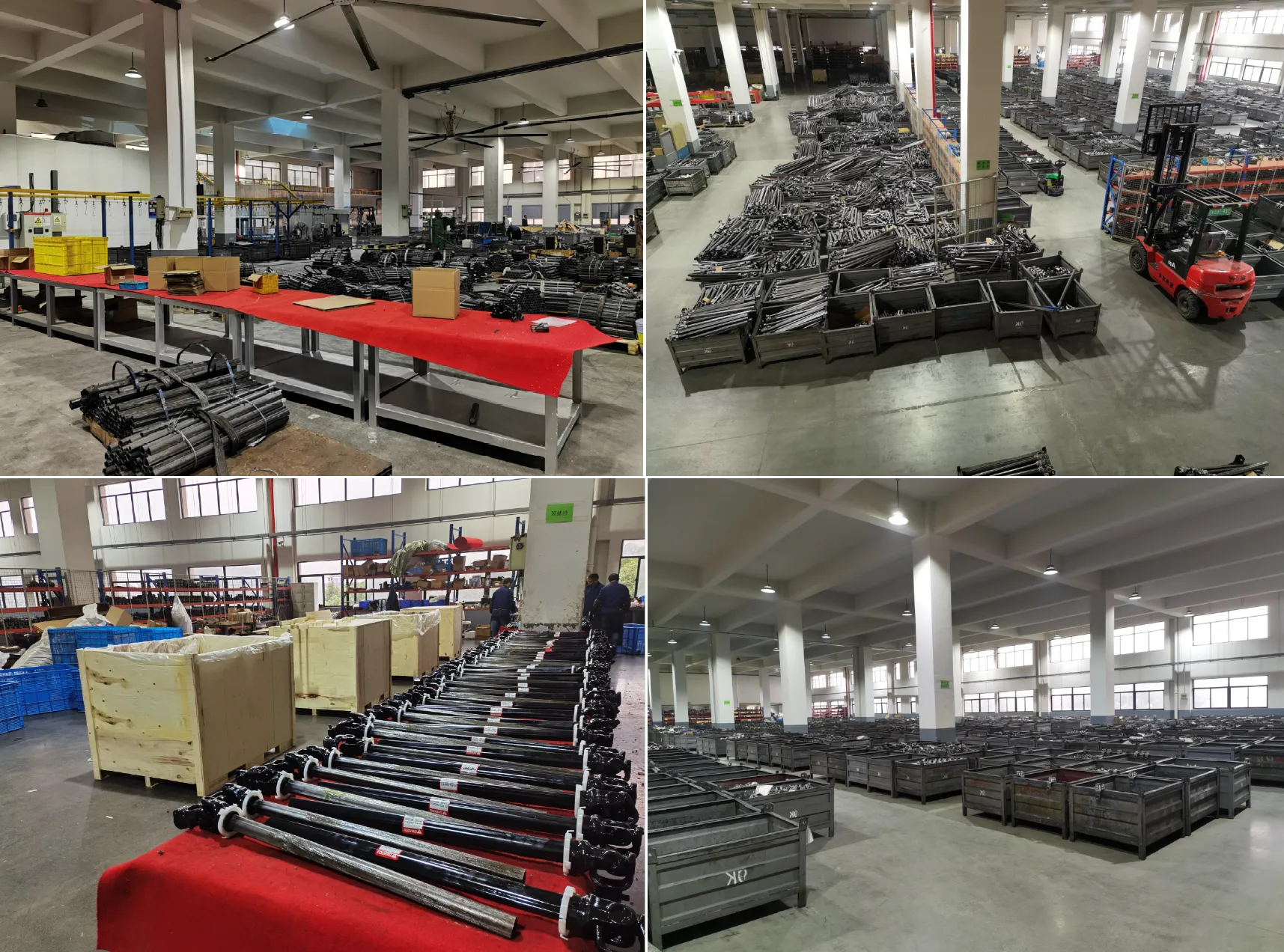
CMN Transmission is a leading global supplier of industrial power transmission solutions, headquartered in Ansan-si, Gyeonggi-do, Korea. Our product range extends well beyond PTO shafts. CMN Transmission manufactures agricultural gearboxes, hydraulic cylinders, planetary gearboxes, worm gearboxes, bevel gears, gear racks, chains, sprockets, timing pulleys, V-belt pulleys, hydraulic top links, couplings, bushings, and much more. This breadth means that when you source your PTO drive shaft from CMN, you can also source the round baler gearbox, bevel gears, and other drivetrain components from a single, trusted supplier, simplifying procurement and ensuring component compatibility.
As an integration of industry and trade, CMN Transmission offers true factory-direct pricing with no dealer markup. This direct-to-customer model gives agricultural operations and equipment dealers access to OEM-equivalent quality at significantly lower cost than established European brands, without sacrificing ISO and CE certification, precision engineering, or material quality. Our CAD design capability, advanced material technology, and surface treatment processes ensure that every heavy duty PTO shaft, PTO shaft yoke, PTO shaft u joint, and clutch assembly meets demanding international standards.
CMN Transmission exports to more than 53 countries across Europe, North America, South America, the Middle East, Africa, Southeast Asia, and Oceania. Our logistics team provides rapid feedback on shipping timelines, customs documentation, and freight options so that your tractor PTO shaft arrives when you need it. Whether you are a single-farm operation ordering one replacement PTO driveline shaft or a large dealership placing a bulk order of 100 units, our team scales to serve your needs with the same commitment to quality and service.
Domande frequenti
Q: What PTO shaft size do I need for my John Deere 468 round baler?
A: The John Deere 468 round baler accepts either a CAT 4 540 PTO shaft or a CAT 5 1000 PTO shaft, depending on your tractor's PTO output configuration. If your tractor has a 1.375"-6 spline and operates at 540 RPM, select the CAT 4 option. If it has a 1.375"-21 spline and runs at 1000 RPM, choose the CAT 5 configuration. Check your tractor operator's manual for the correct spline count and PTO speed.
Q: Can I use a 540 RPM PTO shaft on a 1000 RPM tractor for my round baler?
A: No. Using a 540 PTO shaft on a 1000 RPM tractor output will over-speed the baler, causing severe damage to the baler gearbox, belts, and pickup mechanism, and creating a serious safety hazard. Always match the PTO shaft sizes and RPM rating to your tractor and baler specifications exactly. Some tractors offer dual-speed PTO (540/1000); ensure the correct speed is selected before engaging.
Q: What is the difference between a friction clutch and a shear bolt PTO shaft for a round baler?
A: A PTO shaft with slip clutch (friction clutch) uses spring-loaded plates that slip under overload conditions and automatically re-engage once the overload clears. This is ideal for operations where jams occur frequently, such as silage baling with wet, dense material. A shear bolt PTO shaft uses a sacrificial bolt that breaks at a set torque, requiring manual replacement before resuming work. This is simpler and less expensive, suited for dry hay baling where jams are rare.
Q: How often should I grease my round baler PTO shaft?
A: Grease all zerk fittings on the PTO shaft universal joint cross bearings, CV joint, and telescoping spline section every 8 operating hours. Use an NLGI #2 lithium complex EP grease and apply 2 to 3 pump strokes per fitting. Operating without adequate lubrication is the number one cause of premature PTO shaft u joint failure. In extremely dusty or wet conditions, increase the greasing frequency to every 4 to 6 hours.
Q: Will this CMN PTO shaft fit my tractor if it has a 1.75 x 20 spline output?
A: Yes. While the standard configurations ship with 1.375"-6 or 1.375"-21 spline yokes, CMN Transmission can modify the PTO CV head to accept a 1.75" x 20 spline tractor output. This is a custom PTO shaft modification performed at the factory. Contact CMN Transmission with your tractor make, model, and spline dimensions, and they will prepare the modified unit before shipping.
Q: How do I know when to replace my PTO shaft u-joints?
A: Replace the PTO shaft u joint cross bearings when you detect any perceptible play when gripping the shaft on either side of the joint, when you hear clicking or grinding during rotation, or when you notice rust-colored dust (indicating needle bearing failure) around the joint caps. A worn universal joint creates vibration that damages both the baler gearbox and tractor PTO output bearings. Do not delay replacement once wear is detected.
Q: What is a constant velocity PTO shaft and why does my round baler need one?
A: A constant velocity (CV) PTO drive shaft delivers uniform rotational speed regardless of the operating angle between the tractor and baler. Standard universal joint shafts create a pulsating speed variation at angles, which translates to vibration and uneven bale density. John Deere round balers are designed for CV input, and using a non-CV shaft will result in increased wear, poor bale quality, and potential gearbox damage.
Q: Can I replace just the PTO shaft tube without replacing the entire driveline?
A: In many cases, yes. If the PTO shaft tube (telescoping section) is worn or damaged but the CV joint, yokes, and overload protection device are still in good condition, CMN Transmission can supply replacement PTO shaft tubing profiles individually. However, if the tube wear is accompanied by joint play or yoke damage, it is more cost-effective and safer to replace the complete assembly to ensure all components are matched and within tolerance.
Q: What torque rating should my PTO shaft have for a John Deere 558 baler?
A: The John Deere 558 uses a CAT 4 / 540 RPM configuration with friction clutch protection. The CMN Transmission CAT 4 friction clutch is rated at 1800 Nm, which provides adequate torque capacity and overload protection for the 558's power requirements. Always select a heavy duty PTO shaft with a torque rating that meets or exceeds the baler manufacturer's specification to prevent premature clutch slip or driveline failure under normal operating loads.
Q: Does CMN Transmission ship PTO shafts internationally, and what is the typical delivery time?
A: Yes. CMN Transmission ships tractor PTO shafts to over 53 countries worldwide from their production base in Ansan, Gyeonggi-do, Korea. Typical delivery times range from 10 to 18 days depending on destination. All shipments include proper export documentation and customs classification. For time-sensitive orders, expedited shipping options are available upon request. Contact the CMN sales team for a delivery estimate to your specific location.
Q: Is this PTO shaft compatible with John Deere 557, 558, 559, 567, 568, and 569 balers as well?
A: Yes. This PTO shaft for John Deere round baler is compatible with the full range of John Deere 400 and 500 series round balers, including models 447, 449, 457, 458, 458 Standard, 458 Silage Special, 459, 467, 468, 469, 547, 557, 558, 559, 567, 568, and 569. Select the correct CAT size (3, 4, or 5) and RPM (540 or 1000) based on your specific tractor and baler pairing using the specification tables on this page.
Customer Reviews
Travis McReynolds, Ranch Operations Manager, United States
"We run four John Deere 468 balers across about 2,200 acres of mixed grass and alfalfa in central Kansas. Two of them needed new PTO shafts this spring after the original Walterscheid units hit around 1,600 hours. We ordered the CAT 4 / 540 RPM version with friction clutch from CMN Transmission. The spline fit on our 1.375-6 tractor outputs was exact, no wobble, no shimming. We are roughly 240 hours into the season on each new shaft and they are running smooth with zero issues. The guard quality is noticeably better than what came off. Will be replacing the other two balers' shafts with CMN units over the winter."
Matthias Brinkmann, Dairy Farmer, Germany
"I bought the CAT 5 / 1000 RPM replacement for my 568 baler last autumn. Was a bit skeptical about ordering from overseas instead of going through the local Deere dealer, but the price difference was significant and the shaft arrived in Germany in about 12 days, well-packed with proper documentation. Fit was correct for the 1.375-21 spline. I have done two full seasons of silage baling with it now, probably 350 hours, and the CV joint still feels tight. Greasing every 8 hours as recommended. Very satisfied with this purchase."
Glenn Whitaker, Agricultural Contractor, New Zealand
"We do custom baling for about thirty properties across the Waikato region. Our 459 baler chews through a lot of ryegrass and the old Weasler shaft was getting sloppy in the telescoping section. Ordered the CMN replacement with shear bolt protection since jams are rare for us on clean pasture. Arrived in New Zealand within two weeks. The tube profile feels heavier gauge than the original. My operator says the baler runs noticeably smoother now, especially on hilly paddocks where the angle changes a lot. Good value for money."
Declan O'Sullivan, Beef Farmer, Ireland
"Running a 457 on a relatively small 60-hectare beef operation in County Cork. The existing PTO shaft had a seized u-joint and the dealer wanted a fortune for the genuine part. Found CMN Transmission online and ordered the CAT 3 / 540 unit. Shipping to Ireland took about 10 days. Installation was straightforward, same bolt pattern, same spline. The friction clutch slipped cleanly the one time we picked up a hidden fence post in a windrow, then re-engaged on its own. Exactly what you want. My only comment is I wish they had a European warehouse for faster delivery, but 10 days is manageable if you plan ahead."
Santiago Pereyra, Custom Harvesting Contractor, Argentina
"We handle hay baling services across three provinces in Argentina, using a mix of JD 467 and 569 balers. This year we replaced two shafts with CMN units. The CAT 4 for the 467 and the CAT 5 for the 569. Both shipped together and arrived well within the quoted timeframe. What impressed me most was the communication. I had a question about the telescoping spline diameter and the CMN team responded with a detailed diagram within a few hours. The shafts are performing well after about 180 hours each. The build quality is comparable to what we were getting from Bondioli, at a lower cost. We will be ordering more for next season."
Ryan Fehr, Grain and Livestock Farmer, Canada
"Our operation in Saskatchewan runs five 468 balers during a very compressed baling window, sometimes 14-hour days for three weeks straight. Downtime costs us real money. We ordered three CMN PTO shafts as spares before the season started. When one of our original shafts threw a u-joint bearing at hour 900, we had a CMN replacement on the baler in under 30 minutes. No adaptation needed. Fit was identical to the Walterscheid original. The spare strategy paid off. These are solid, well-made shafts. Not the absolute cheapest aftermarket option out there, but the quality is well above the bargain-bin stuff and the price is fair."
Bruce Hadfield, Hay Export Operator, Australia
"I manage a large-scale pastoral property in New South Wales where we bale oaten hay for export. Our 547 baler needed a new PTO driveline after the telescoping section developed too much slop. I ordered the CAT 4 / 540 with friction clutch. Delivery to Australia was about 15 days, which is competitive for shipped-from-Asia parts. The shaft has been on the baler for one full season now, roughly 280 hours. It handles the dusty conditions out here without complaint. I greased it religiously as the manual suggests and the joints still feel factory-tight. Good product, fair price, professional service."
Jean-Marc Leblanc, Dairy Farmer, France
"We use a 458 Silage Special for grass silage production on our dairy in Normandy. The PTO shaft failed mid-season last year, which was a disaster during cutting. This year I ordered a CMN replacement before the season as insurance. The quality of the packaging and the product itself were excellent. All fittings greased, guards included, correct hardware in the box. Installation took maybe 40 minutes following their guide. We are about 200 hours in and it runs quietly with no vibration. The friction clutch engages smoothly. For the price, this is an excellent alternative to the OEM part. I recommended CMN to two neighbouring farms."
Pieter van Rensburg, Mixed Farmer, South Africa
"I run a mixed arable and livestock farm near Pretoria. We bale Eragrostis and Lucerne hay with a 449 baler. Finding quality PTO shaft replacements locally is difficult and expensive. I found CMN Transmission through a Google search and decided to try their CAT 4 shaft. Communication was responsive, they answered my questions about spline compatibility same day. The shaft arrived in South Africa in about 18 days. Build quality is solid, the guard material feels thick and durable. I have only about 90 hours on it so far but first impressions are very positive. The shear bolt protection gives me peace of mind on our older baler."
Informazioni aggiuntive
| A cura di | Yjx |
|---|
Prodotti correlati
-
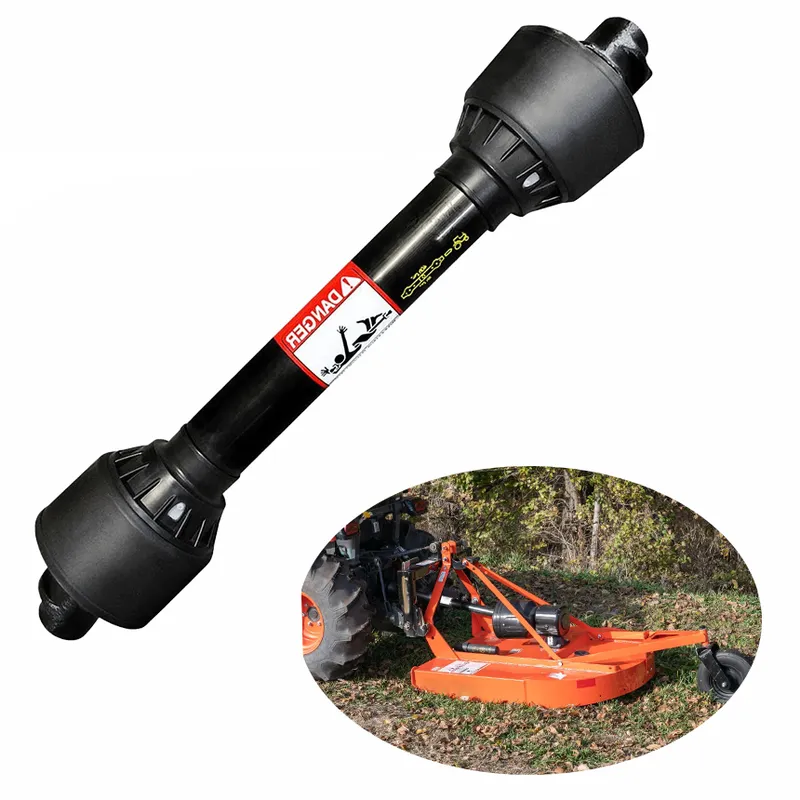
PTO Shaft for Land Pride Rotary Cutters RCR12, RCR15, RCR18, RCR1884, RCF20, RCF2084, RCR2510
-
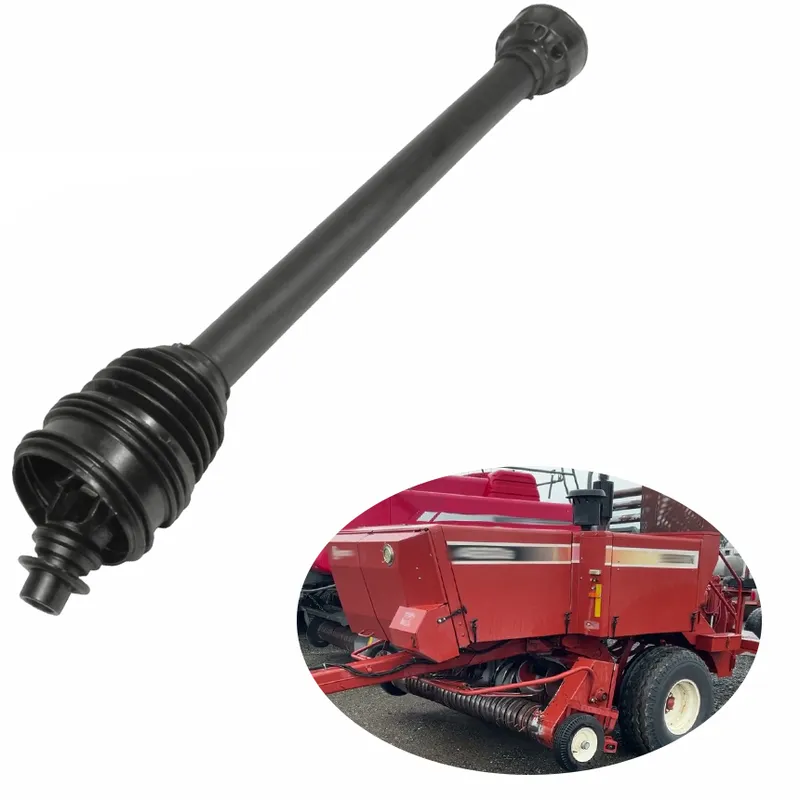
PTO Shaft for Hesston Square Balers 4690, 4690S
-
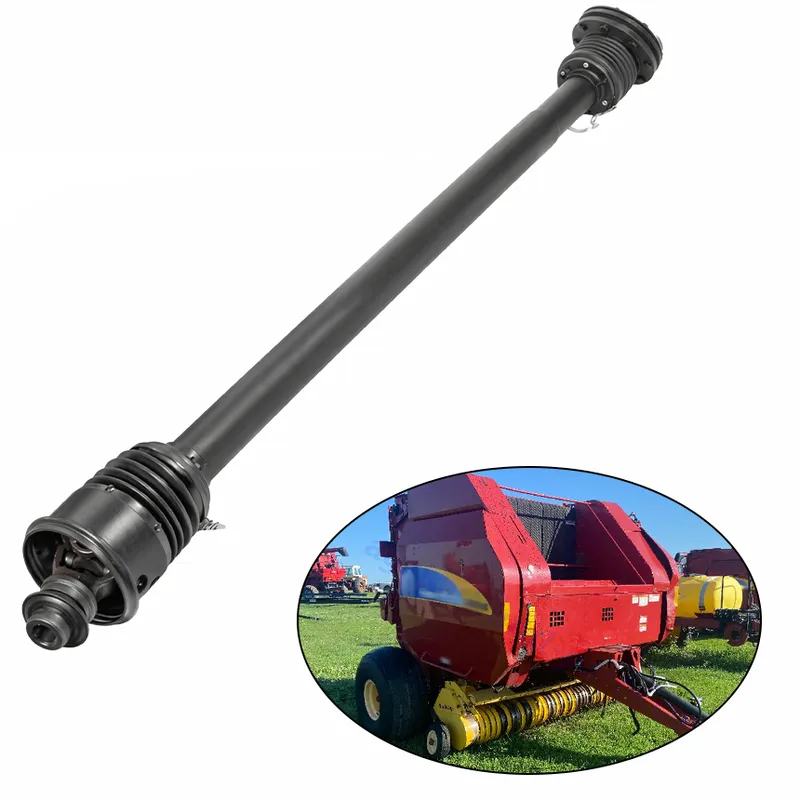
PTO Shaft for New Holland Round Balers BR7050, BR7060, BR7070, BR7080, BR7090
-
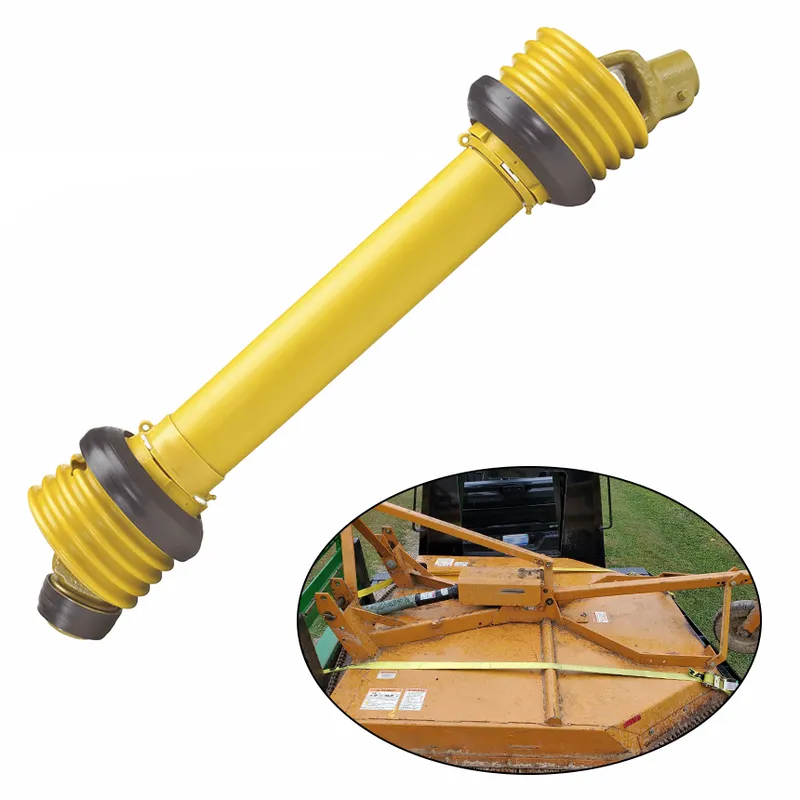
PTO Shaft for Woods Medium Duty Rotary Cutters MD160, MD172, MD184
-
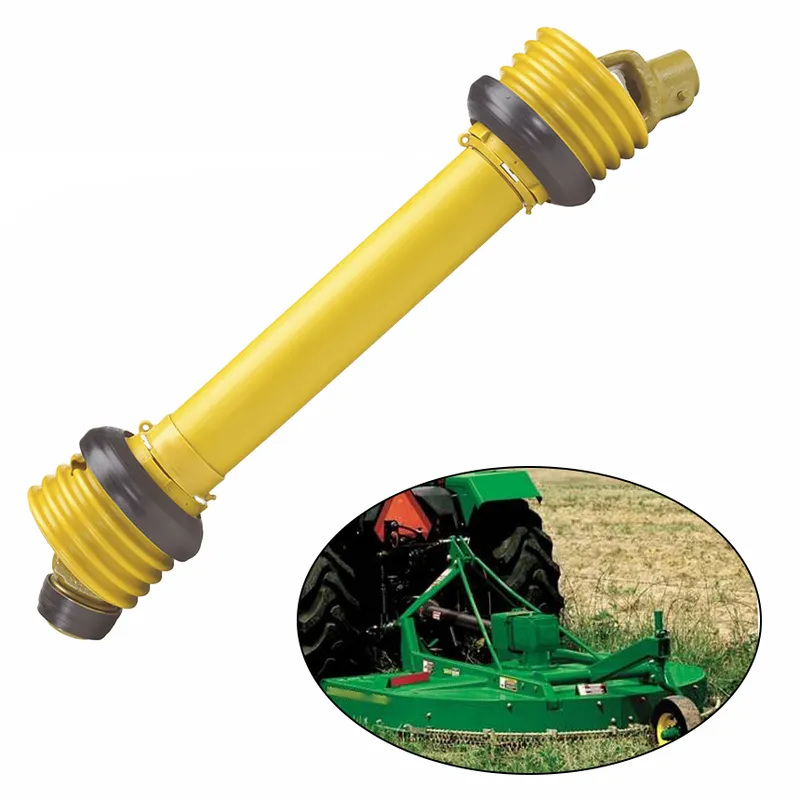
PTO Shaft for John Deere Rotary Cutters 609, 709