
Gli ingranaggi conici sono un componente fondamentale in molti sistemi meccanici, in quanto consentono la trasmissione efficiente della potenza tra alberi intersecanti. Questi ingranaggi presentano una geometria particolare, con denti tagliati su una superficie conica, che permette loro di funzionare in modo fluido e affidabile anche quando gli alberi non sono paralleli.
Cos'è un ingranaggio conico?
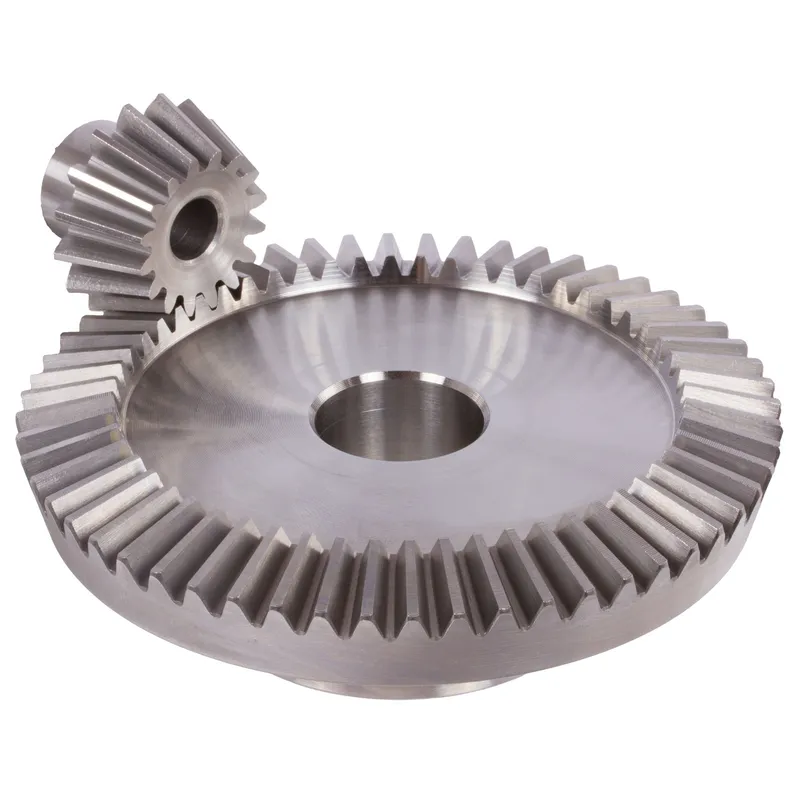
Un ingranaggio conico è un tipo di ingranaggio caratterizzato da denti di forma conica, che gli consentono di trasmettere potenza tra alberi intersecanti con diverse angolazioni, più comunemente 90 gradi. A differenza degli ingranaggi cilindrici a denti dritti, che hanno denti paralleli all'asse dell'albero, gli ingranaggi conici presentano denti a forma di cono, che permettono di cambiare simultaneamente il senso di rotazione e l'angolo dell'albero.
La geometria di ingranaggi conici Gli ingranaggi conici sono più complessi di altri tipi di ingranaggi a causa della loro natura tridimensionale. I denti di un ingranaggio conico sono ricavati da un grezzo a forma di cono, con la superficie primitiva che forma un cono all'angolo dell'albero appropriato. Questo design unico consente agli ingranaggi conici di gestire efficacemente sia i carichi radiali che quelli assiali.
Come funzionano gli ingranaggi conici
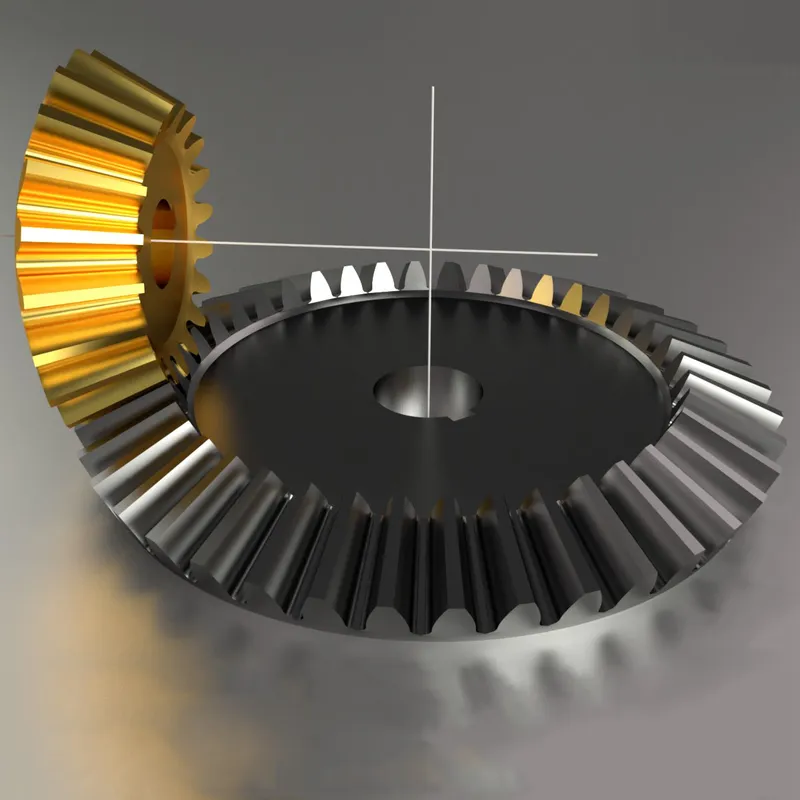
Gli ingranaggi conici sono progettati per trasmettere potenza e movimento tra alberi intersecanti, tipicamente ad un angolo di 90 gradi. I denti degli ingranaggi conici sono formati su superfici coniche, il che consente loro di ingranare e trasferire la coppia in modo efficiente.
Il principio di funzionamento degli ingranaggi conici si basa sull'ingranamento dei denti di due ruote dentate coniche. L'angolo di conicità di questi ingranaggi è progettato in modo tale che le superfici primitive dei denti rotolino l'una sull'altra senza slittamento. Questa azione di rotolamento consente una trasmissione fluida della potenza e della rotazione tra gli alberi intersecanti.
In un sistema di ingranaggi conici, il pignone è l'ingranaggio più piccolo che aziona l'ingranaggio più grande, noto come corona dentata. Il pignone è tipicamente montato sull'albero di ingresso, mentre la corona dentata è fissata all'albero di uscita. Quando il pignone ruota, i suoi denti si innestano con i denti della corona dentata, provocandone la rotazione.
Il rapporto di trasmissione degli ingranaggi conici è determinato dal numero di denti del pignone e della corona dentata. Un rapporto di trasmissione più elevato indica che la corona dentata ha più denti del pignone, con conseguente riduzione della velocità e moltiplicazione della coppia. Al contrario, un rapporto di trasmissione inferiore significa che il pignone ha più denti della corona dentata, con conseguente aumento della velocità e riduzione della coppia.
Caratteristiche di base degli ingranaggi conici
| Caratteristica | Descrizione | Formula (ove applicabile) |
|---|---|---|
| Diametro del passo (D) | Il diametro del cerchio primitivo misurato all'estremità più grande dell'ingranaggio | D = N/P (N: numero di denti, P: passo diametrale) |
| Angolo di beccheggio (γ) | L'angolo tra l'asse dell'ingranaggio e l'elemento del cono di passo | tan γ = (numero di denti sull'ingranaggio)/(numero di denti sull'ingranaggio accoppiato) |
| Larghezza del viso (F) | La lunghezza dei denti misurata lungo l'elemento del cono di passo | Generalmente ≤ 1/3 della distanza del cono |
| Addendum (a) | La distanza radiale dal cerchio primitivo alla parte superiore del dente | a = 1/P (per ingranaggi standard) |
| Dedendum (b) | La distanza radiale dal cerchio primitivo alla radice del dente | b = 1,157/P (per ingranaggi standard) |
| Profondità totale (ht) | Profondità totale dello spazio dentale | ht = a + b |
| Distanza del cono (R) | La lunghezza dell'elemento conico di passo dall'apice al bordo esterno | R = √(D²/4 + R₁²) dove R₁ è la distanza di montaggio |
| Passo circolare (p) | La distanza tra punti corrispondenti su denti adiacenti misurata lungo il cerchio primitivo | p = π/P |
| Modulo (m) | Alternativa metrica al passo diametrale | m = D/N = 25,4/P |
| Angolo di pressione (φ) | L'angolo tra il profilo del dente e una linea radiale sul cerchio primitivo | In genere 20° o 14,5° |
| Distanza del cono posteriore | La lunghezza dell'elemento del cono di passo fino al cono posteriore | Varia in base alla geometria degli ingranaggi |
| Angolo della radice | L'angolo tra l'elemento conico di base e l'asse dell'ingranaggio | Leggermente inferiore all'angolo di beccheggio |
| Angolo del viso | L'angolo tra l'elemento conico frontale e l'asse dell'ingranaggio | Leggermente più dell'angolo di beccheggio |
Tipi di ingranaggi conici
Ingranaggi conici dritti
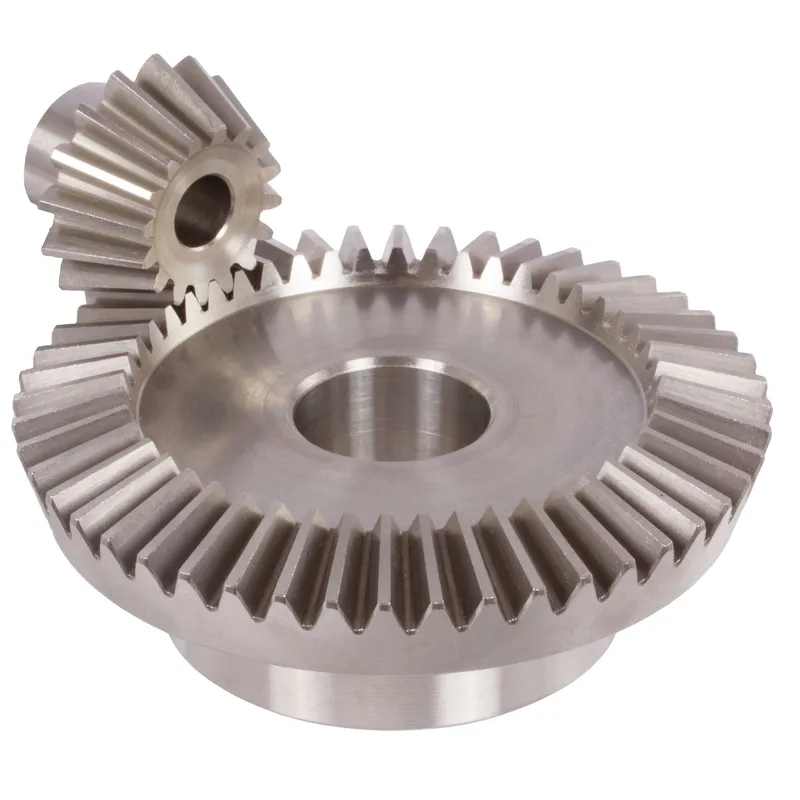
Gli ingranaggi conici dritti sono il tipo più semplice di ingranaggi conici, caratterizzati da denti dritti paralleli alla generatrice del cono primitivo. Sono utilizzati in applicazioni in cui sono presenti velocità elevate e carichi da bassi a medi. Tuttavia, ingranaggi conici a denti dritti Potrebbe generare più rumore rispetto ad altri tipi di ingranaggi conici a causa dell'innesto improvviso dei denti.
Ingranaggi conici a spirale
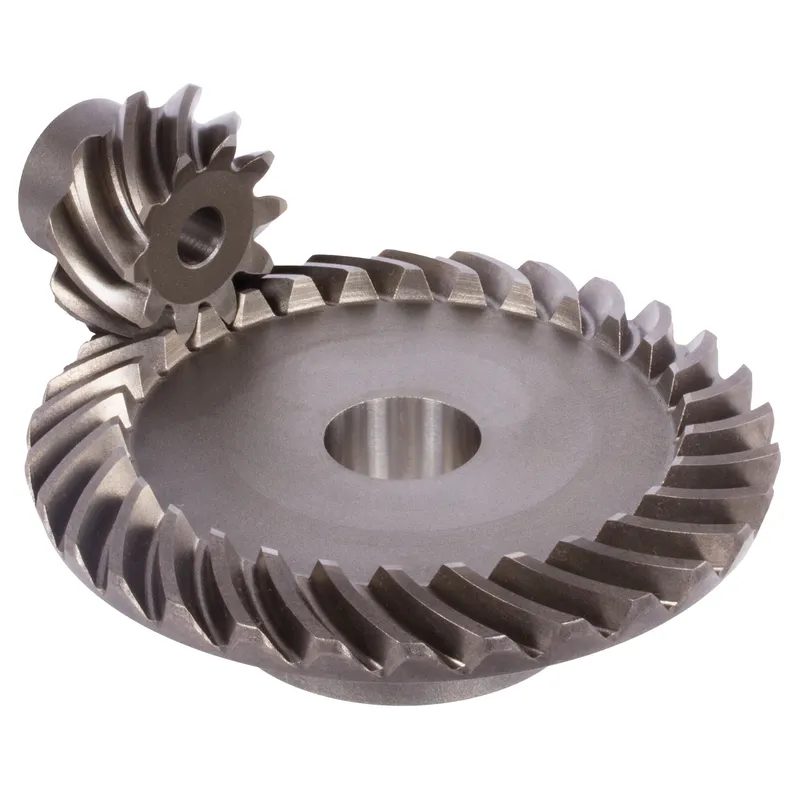
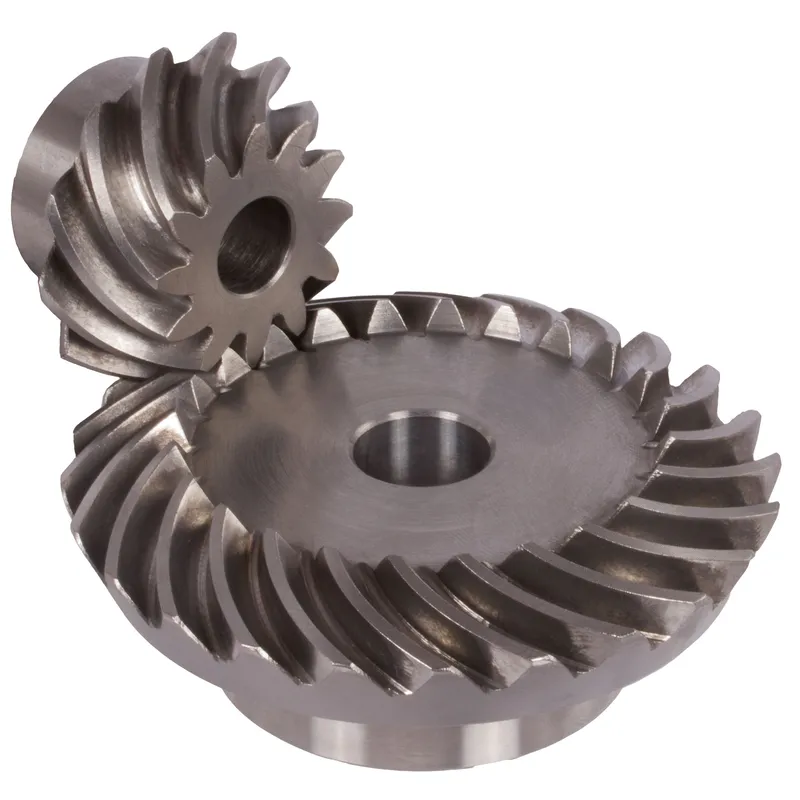
Gli ingranaggi conici a spirale presentano denti curvi e obliqui rispetto alla generatrice del cono primitivo. L'angolo di inclinazione dei denti garantisce un innesto graduale e fluido, con conseguente funzionamento più silenzioso e maggiore capacità di carico rispetto agli ingranaggi conici dritti. Gli ingranaggi conici a spirale sono comunemente utilizzati nei differenziali automobilistici e in applicazioni industriali che richiedono velocità elevate e carichi pesanti.
Ingranaggi conici ipoidi
Gli ingranaggi conici ipoidi sono simili agli ingranaggi conici a spirale, ma con una differenza sostanziale: i coni primitivi degli ingranaggi non si intersecano. Al contrario, gli assi degli ingranaggi sono disassati, consentendo l'utilizzo di diametri del pignone maggiori e un migliore contatto tra i denti. Questa configurazione disassata offre diversi vantaggi, come una maggiore capacità di coppia, una riduzione della rumorosità e una progettazione più compatta. Gli ingranaggi ipoidi sono frequentemente utilizzati negli assali posteriori delle automobili e nei riduttori industriali.
Ingranaggi conici Zerol
Gli ingranaggi conici Zerol sono un caso speciale di ingranaggi conici a spiraledove l'angolo di spirale è zero. Ciò significa che i denti sono paralleli all'asse di rotazione, in modo simile agli ingranaggi conici dritti. Tuttavia, a differenza degli ingranaggi conici dritti, gli ingranaggi conici Zerol hanno un profilo del dente curvo che consente un innesto fluido e graduale. Gli ingranaggi conici Zerol offrono un equilibrio tra i vantaggi degli ingranaggi conici dritti e a spirale, garantendo una maggiore capacità di carico e un funzionamento più silenzioso rispetto agli ingranaggi conici dritti.
Ingranaggi obliqui
Gli ingranaggi conici a 45° sono un tipo specifico di ingranaggio conico in cui il numero di denti su entrambi gli ingranaggi è uguale e l'angolo dell'albero è di 90°. Questa configurazione si traduce in un rapporto di trasmissione 1:1, rendendo gli ingranaggi conici a 45° ideali per applicazioni che richiedono un cambio di direzione di rotazione senza alterare la velocità o la coppia. Gli ingranaggi conici a 45° possono avere denti dritti, elicoidali o Zerol.
 |  |
| Ingranaggi conici a spirale | Ingranaggi conici dritti |
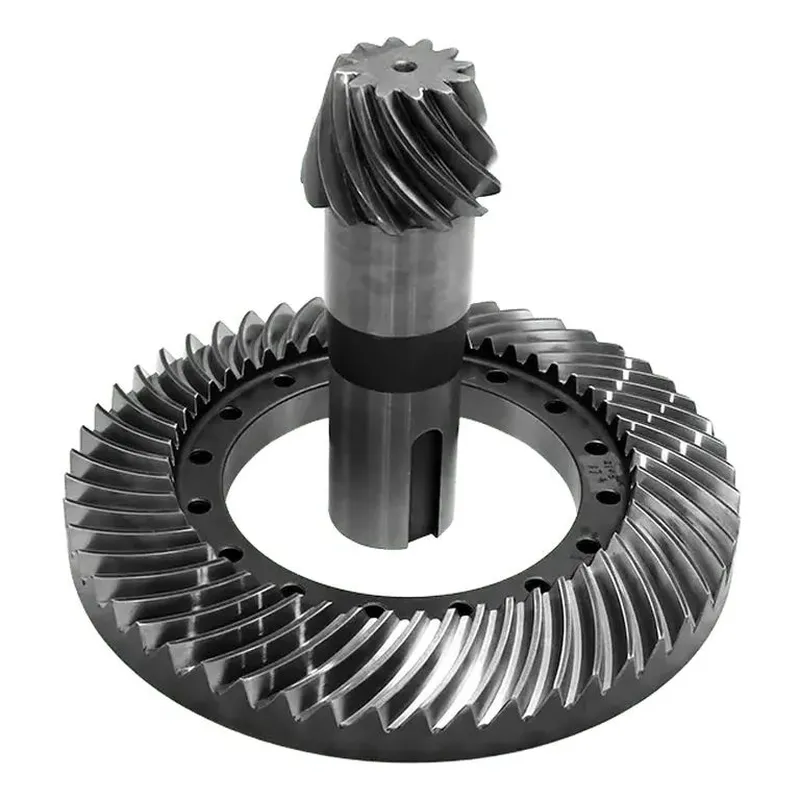 | 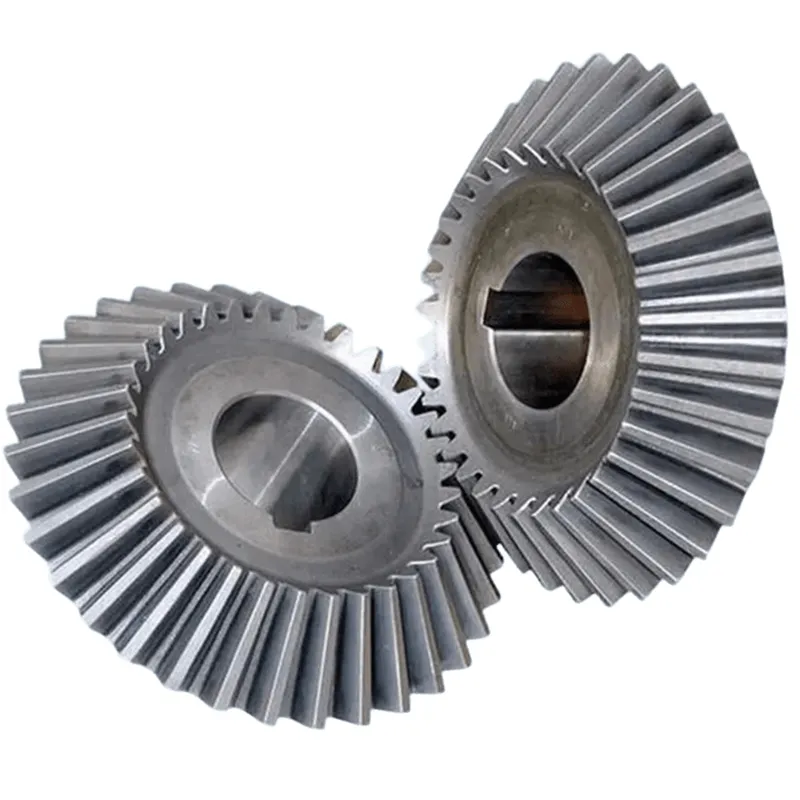 |
| Ingranaggi conici ipoidi | Ingranaggi conici Zerol |
Tabella di riferimento per l'efficienza degli ingranaggi conici
Intervalli di efficienza generale
| Tipo di ingranaggio | Intervallo di efficienza tipico | Condizioni operative ottimali |
|---|---|---|
| Smusso dritto | 96-98% | velocità basse o medie, correttamente allineate |
| Smusso a spirale | 95-97% | Velocità medio-alte, ben lubrificate |
| Smusso Zerol | 94-96% | Velocità medie, carichi moderati |
| Smusso ipoide | 90-95% | Alte velocità, carichi pesanti |
Fattori di efficienza in base alle condizioni operative
| Condizioni operative | Impatto sull'efficienza | Perdita di efficienza tipica |
|---|---|---|
| Bassa velocità (<1000 giri/minuto) | Perdite minime | 0.5-1% |
| Alta velocità (>3000 giri/minuto) | Aumento delle perdite | 2-5% |
| Lubrificazione insufficiente | Perdite significative | 5-10% |
| Disallineamento | Perdite ingenti | 3-8% |
| Carico pesante | Perdite moderate | 2-4% |
Impatto della lubrificazione sull'efficienza
| Tipo di lubrificazione | Impatto sull'efficienza | Applicazioni consigliate |
|---|---|---|
| Bagno d'olio | Massima efficienza | Carichi pesanti ad alta velocità |
| Grasso | Buona efficienza | velocità basse o medie |
| Splash | Efficienza moderata | velocità medie |
| Minimo | Scarsa efficienza | Solo carichi leggeri |
Effetti della temperatura
| Temperatura di esercizio | Impatto sull'efficienza | Requisiti di manutenzione |
|---|---|---|
| <20°C | Efficienza ridotta | Lubrificazione più frequente |
| 20-40°C | Efficienza ottimale | Manutenzione standard |
| 40-60°C | Leggermente ridotto | Monitoraggio intensificato |
| >60°C | Significativamente ridotto | Necessaria una lubrificazione speciale |
Efficienza della combinazione dei materiali
| Materiale del pignone/ingranaggio | Intervallo di efficienza | Caratteristiche di usura |
|---|---|---|
| Acciaio/acciaio | 95-98% | Eccellente durata |
| Acciaio/Bronzo | 93-96% | Buona resistenza all'usura |
| Acciaio/Plastica | 90-94% | Minore rumorosità, durata inferiore |
| Acciaio temprato/non temprato | 92-95% | Resistenza all'usura moderata |
Impatto delle dimensioni sull'efficienza
| Gamma di moduli per ingranaggi | Efficienza tipica | Le migliori applicazioni |
|---|---|---|
| <3 mm | 92-95% | Strumenti di precisione |
| 3-6 mm | 94-97% | Macchinari generali |
| 6-12 mm | 95-98% | Attrezzature pesanti |
| >12 mm | 93-96% | Azionamenti industriali |
Vantaggi degli ingranaggi conici
Elevata capacità di coppia
Uno dei principali vantaggi degli ingranaggi conici è la loro capacità di gestire carichi di coppia elevati. La geometria e il design degli ingranaggi conici consentono un'efficiente trasmissione di potenza e coppia tra alberi intersecanti.
Design compatto
Gli ingranaggi conici offrono una soluzione compatta per la trasmissione di potenza tra alberi non paralleli. Grazie alla geometria conica, gli ingranaggi conici possono cambiare efficacemente il senso di rotazione in uno spazio limitato.
Funzionamento fluido e silenzioso
Se progettati e realizzati correttamente, gli ingranaggi conici possono garantire un funzionamento fluido e silenzioso. I progressi nella geometria dei denti degli ingranaggi, come l'uso di ingranaggi conici a spirale e ipoidi, hanno migliorato significativamente la scorrevolezza e la capacità di riduzione del rumore degli ingranaggi conici. Il profilo curvo dei denti degli ingranaggi conici a spirale consente un innesto e un disinnesto graduali, con conseguente funzionamento più silenzioso rispetto agli ingranaggi conici dritti.
Versatilità negli angoli dell'albero
Gli ingranaggi conici offrono flessibilità in termini di angoli di inclinazione dell'albero che possono supportare. Sebbene l'angolo di inclinazione dell'albero più comune per gli ingranaggi conici sia di 90 gradi, possono essere progettati per funzionare con angoli di inclinazione dell'albero diversi.
Svantaggi degli ingranaggi conici
Maggiore complessità produttiva
Uno dei principali svantaggi degli ingranaggi conici è la loro maggiore complessità di produzione rispetto ad altri tipi di ingranaggi, come gli ingranaggi cilindrici. La produzione di ingranaggi conici richiede macchinari specializzati e processi di produzione precisi per ottenere la geometria dei denti e la finitura superficiale desiderate. Questa complessità può comportare un aumento dei costi di produzione e tempi di consegna più lunghi.
Sensibilità al disallineamento
Gli ingranaggi conici sono più sensibili al disallineamento rispetto ad altri tipi di ingranaggi. Il disallineamento può causare una distribuzione non uniforme del carico, un aumento delle sollecitazioni sui denti degli ingranaggi e guasti prematuri.
Capacità di velocità limitata
Gli ingranaggi conici presentano dei limiti in termini di velocità. Ad alte velocità, tendono a generare rumorosità e vibrazioni eccessive a causa dello scorrimento tra i denti. Ciò può comportare una riduzione dell'efficienza e un aumento dell'usura. Di conseguenza, gli ingranaggi conici sono tipicamente utilizzati in applicazioni con requisiti di velocità da moderati a bassi.
Costo più elevato
La complessità produttiva e la precisione richieste per gli ingranaggi conici si traducono spesso in costi più elevati rispetto a tipologie di ingranaggi più semplici. La necessità di macchinari specializzati, manodopera qualificata e rigorosi controlli di qualità contribuiscono all'aumento del costo degli ingranaggi conici. Inoltre, la personalizzazione e i requisiti di progettazione specifici degli ingranaggi conici per applicazioni specifiche possono aumentarne ulteriormente il costo.
A cosa serve un ingranaggio conico?
Trasmissione di potenza nelle automobili
Gli ingranaggi conici trovano ampio impiego nell'industria automobilistica, in particolare nei differenziali. In un differenziale, gli ingranaggi conici vengono utilizzati per suddividere la potenza proveniente dall'albero motore e trasmetterla alle ruote, consentendo loro di ruotare a velocità diverse. Ciò permette una sterzata più fluida e un migliore controllo della trazione. Gli ingranaggi conici sono utilizzati anche in diverse altre applicazioni automobilistiche, come nei riduttori e nei sistemi di sterzo.
Macchinari industriali
Gli ingranaggi conici sono comunemente utilizzati nei macchinari industriali dove è necessario trasmettere potenza tra alberi intersecanti. Si trovano in un'ampia gamma di apparecchiature, tra cui riduttori, variatori di velocità e sistemi di trasmissione di potenza. Le applicazioni industriali che utilizzano ingranaggi conici includono macchinari per l'industria mineraria, macchine edili, macchine da stampa e macchinari tessili.
Aerospaziale e aviazione
L'industria aerospaziale e aeronautica si affida agli ingranaggi conici per la trasmissione di potenza in diverse applicazioni. Gli ingranaggi conici sono utilizzati nei motori aeronautici, nei sistemi di azionamento dei rotori e nei riduttori degli accessori. Sono progettati per gestire carichi elevati e garantire prestazioni affidabili in condizioni operative impegnative. Il design compatto e la capacità di trasmettere potenza tra alberi non paralleli rendono gli ingranaggi conici particolarmente adatti alle applicazioni aerospaziali, dove lo spazio è limitato.
Applicazioni marine
Gli ingranaggi conici trovano impiego in ambito navale per la trasmissione di potenza nei sistemi di propulsione, nei sistemi di sterzo e nei macchinari di coperta. Sono utilizzati in riduttori, eliche di manovra e verricelli. La capacità degli ingranaggi conici di gestire elevati carichi di coppia e di resistere agli ambienti marini difficili li rende adatti a queste applicazioni. Gli ingranaggi conici per uso navale sono spesso realizzati con materiali resistenti alla corrosione per garantirne durata e affidabilità.
 |  |
 |  |
Domande frequenti
Gli ingranaggi conici aumentano la velocità?
No, gli ingranaggi conici non aumentano intrinsecamente la velocità. Vengono utilizzati per trasferire potenza tra alberi che si intersecano, tipicamente ad angoli di 90 gradi. Il rapporto di trasmissione determina se la velocità in uscita aumenta o diminuisce rispetto alla velocità in ingresso. Gli ingranaggi conici con un numero maggiore di denti sull'ingranaggio condotto comportano una riduzione della velocità.
Gli ingranaggi conici aumentano la coppia?
Sì, gli ingranaggi conici possono aumentare la coppia a seconda del rapporto di trasmissione. Quando l'ingranaggio condotto ha più denti dell'ingranaggio motore, la coppia in uscita sarà maggiore della coppia in ingresso. Questo perché il rapporto di trasmissione moltiplica la coppia in ingresso, consentendo agli ingranaggi conici di aumentare la coppia a scapito della velocità.
Gli ingranaggi conici sono costosi?
In generale, gli ingranaggi conici sono più costosi degli ingranaggi cilindrici a denti dritti a causa della loro geometria complessa e della necessità di attrezzature di produzione specializzate. Tuttavia, il costo è giustificato nelle applicazioni in cui è necessaria la trasmissione di potenza tra alberi intersecanti.