
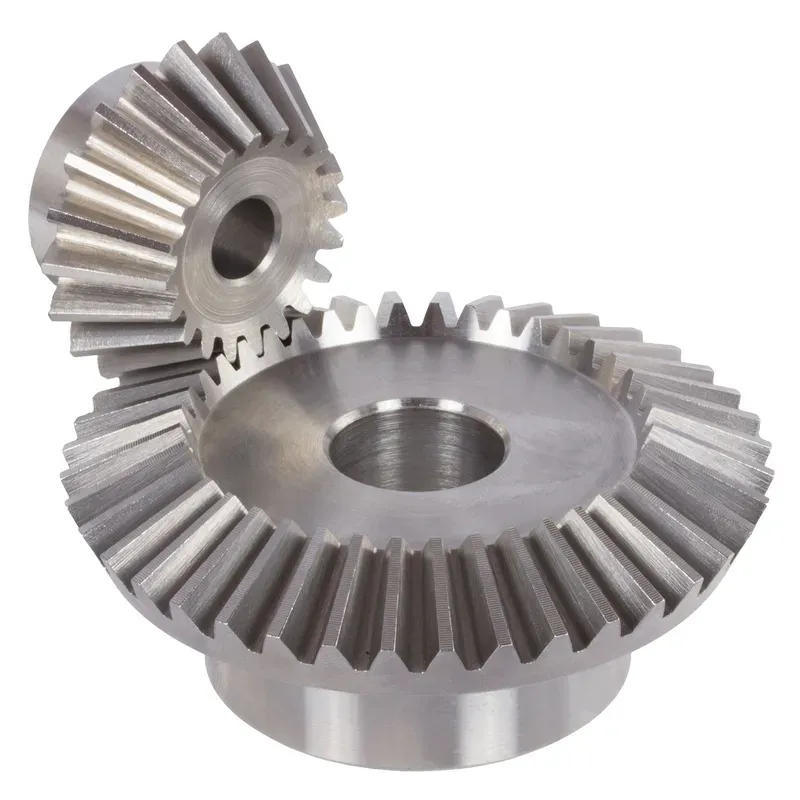
Steel Straight Bevel Gears Ratio 2:1 Straight Tooth System
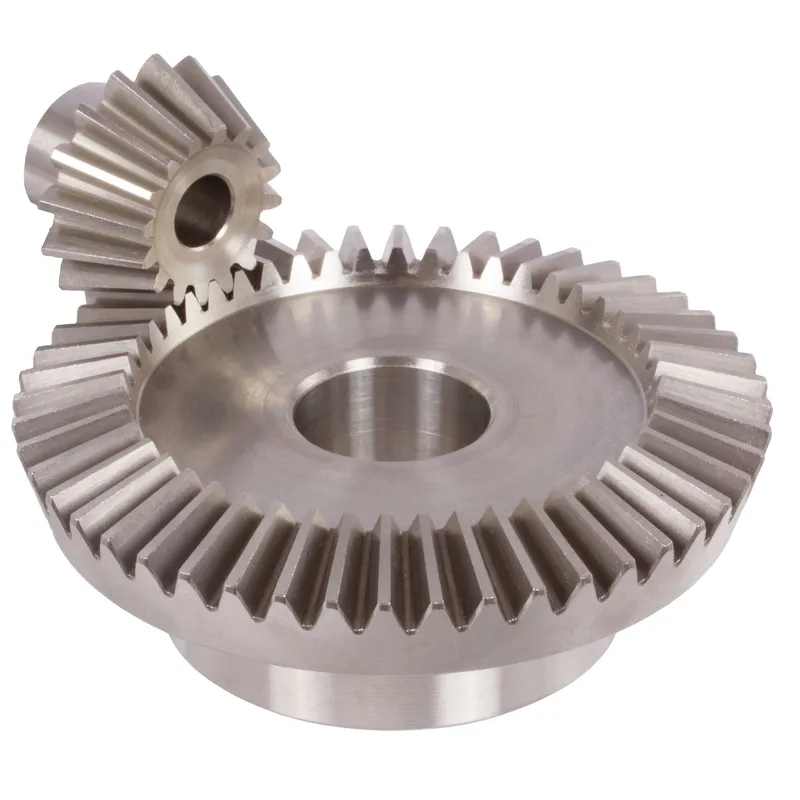
A steel straight bevel gear with a 2:1 ratio refers to a mechanical component designed for transmitting motion and power between intersecting shafts at a 90-degree angle. These gears feature straight teeth that are cut radially along the surface of the conical gear face, ensuring direct and efficient engagement with the mating gear. The 2:1 ratio indicates that for every two revolutions of the driving gear, the driven gear completes one revolution, effectively doubling the torque while reducing the speed.
A steel straight bevel gear with a 2:1 ratio refers to a mechanical component designed for transmitting motion and power between intersecting shafts at a 90-degree angle. These gears feature straight teeth that are cut radially along the surface of the conical gear face, ensuring direct and efficient engagement with the mating gear. The 2:1 ratio indicates that for every two revolutions of the driving gear, the driven gear completes one revolution, effectively doubling the torque while reducing the speed.
Made of durable steel, these steel bevel gears are commonly used in high-strength applications requiring precision and reliability, such as automotive systems, industrial machinery, and robotics. Their straight-tooth system provides simplicity in design and manufacturing, although it may generate more noise and less smooth operation compared to spiral bevel gears.
Steel Straight Bevel Gear Ratio 2:1
| 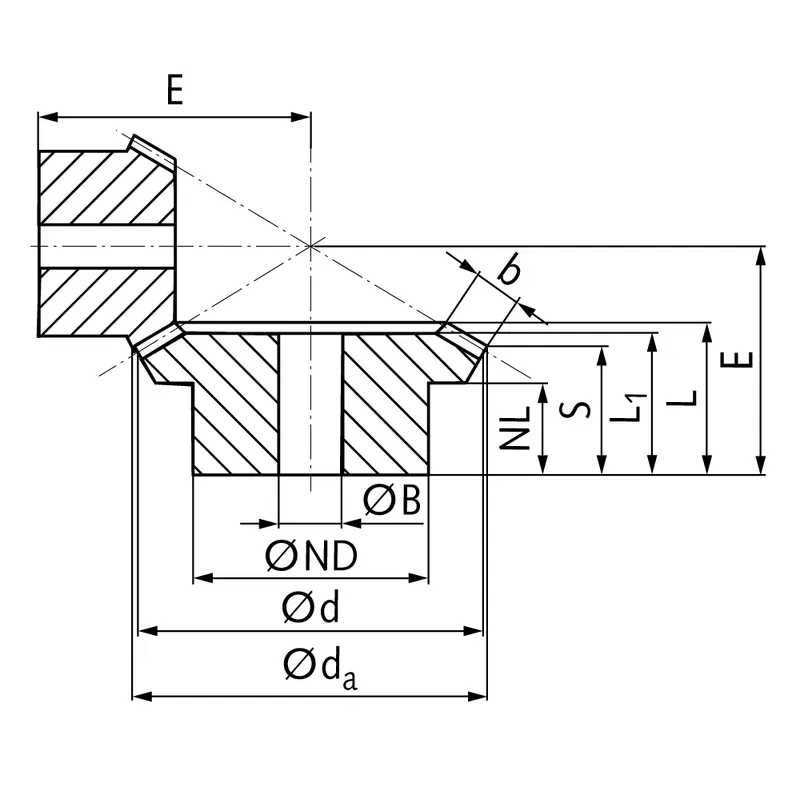 |
| Module | Nombre de dents | dun | d | ND | NL | L1 | L | S | b | BH7 | E | Couple* | Poids |
| mm | mm | mm | mm | mm | mm | mm | mm | mm | mm | Ncm | g | ||
| 0,5 | 20 | 11,2 | 10 | 8 | 4,0 | 7,0 | 7,5 | 5,0 | 3 | 4 | 14,65 | 0,017 | 2 |
| 0,5 | 40 | 20,3 | 20 | 12 | 5,0 | 7,5 | 8,4 | 7,1 | 3 | 4 | 11,83 | 0,034 | 8 |
| 1 | 15 | 17,4 | 15 | 13 | 6,5 | 11 | 11,9 | 7,6 | 5 | 5 | 22 | 0,063 | 10 |
| 1 | 30 | 30,6 | 30 | 20 | 9,0 | 13 | 15,1 | 13,1 | 5 | 5 | 20 | 0,126 | 40 |
| 1,5 | 15 | 26,1 | 22,5 | 18 | 6,5 | 13 | 14,8 | 8,4 | 7,6 | 8 | 30 | 0,22 | 26 |
| 1,5 | 30 | 45,9 | 45 | 30 | 12,0 | 18 | 20,7 | 17,6 | 7,6 | 10 | 28 | 0,44 | 124 |
| 1,5 | 20 | 33,6 | 30 | 20 | 9,5 | 19 | 21,6 | 12,9 | 10,1 | 8 | 42 | 0,54 | 59 |
| 1,5 | 40 | 60,9 | 60 | 40 | 12,0 | 19 | 22,0 | 17,9 | 10,1 | 15 | 32 | 1,08 | 234 |
| 2 | 15 | 33,7 | 30 | 20 | 7,5 | 22 | 23,0 | 10,9 | 14 | 10 | 40 | 0,59 | 58 |
| 2 | 30 | 61,8 | 60 | 40 | 12,0 | 24 | 27,2 | 21,9 | 14 | 15 | 35 | 1,18 | 312 |
| 2 | 20 | 43,7 | 40 | 30 | 7,5 | 22 | 24,0 | 10,9 | 15 | 10 | 50 | 1,4 | 132 |
| 2 | 40 | 81,8 | 80 | 50 | 18,0 | 29 | 32,8 | 26,9 | 15 | 20 | 45 | 2,8 | 593 |
| 2,5 | 15 | 42,2 | 37,5 | 30 | 15,6 | 31 | 33,3 | 18,6 | 17 | 10 | 55 | 3,4 | 160 |
| 2,5 | 30 | 77,3 | 75 | 50 | 10,0 | 24 | 28,1 | 21,6 | 17 | 15 | 38 | 6,8 | 530 |
| 2,5 | 20 | 54,6 | 50 | 30 | 14,0 | 34 | 36,6 | 19,2 | 20 | 10 | 68 | 4,3 | 280 |
| 2,5 | 40 | 102,3 | 100 | 60 | 15,0 | 29 | 33,3 | 25,3 | 20 | 25 | 48 | 8,6 | 970 |
| 3 | 15 | 50,6 | 45 | 30 | 11,5 | 33 | 35,4 | 16,4 | 22 | 10 | 60 | 6,1 | 270 |
| 3 | 30 | 92,8 | 90 | 50 | 10 | 26 | 30,7 | 22,3 | 22 | 20 | 42 | 12,2 | 750 |
| 3 | 20 | 65,6 | 60 | 40 | 10 | 33 | 36,1 | 14,4 | 25 | 15 | 73 | 15,2 | 450 |
| 3 | 40 | 122,8 | 120 | 60 | 18 | 34 | 38,7 | 28,8 | 25 | 25 | 56 | 30,4 | 1400 |
| 4 | 15 | 67,5 | 60 | 40 | 10 | 38 | 41,0 | 16,9 | 28 | 20 | 75 | 14,6 | 410 |
| 4 | 30 | 123,8 | 120 | 60 | 15 | 33 | 39,4 | 28,8 | 28 | 25 | 55 | 29,2 | 1600 |
| 4 | 20 | 87,4 | 80 | 50 | 13 | 45 | 48,0 | 21,9 | 30 | 20 | 100 | 35,0 | 970 |
| 4 | 40 | 163,7 | 160 | 80 | 20 | 40 | 45,7 | 33,7 | 30 | 30 | 70 | 70,0 | 3300 |
| 5 | 15 | 84,4 | 75 | 60 | 15 | 50 | 54,1 | 21,4 | 38 | 20 | 94 | 30,2 | 980 |
| 5 | 30 | 154,7 | 150 | 70 | 15 | 40 | 46,7 | 32,2 | 38 | 30 | 65 | 60,4 | 3030 |
| 5 | 20 | 109,3 | 100 | 60 | 18 | 58 | 62,1 | 27,3 | 40 | 25 | 125 | 72,4 | 1890 |
| 5 | 40 | 204,7 | 200 | 90 | 20 | 48 | 55,6 | 39,7 | 40 | 35 | 85 | 144,8 | 6480 |
| 6 | 20 | 130,7 | 120 | 70 | 15 | 58 | 67 | 23,6 | 50 | 30 | 139,9 | 130,0 | 2960 |
| 6 | 40 | 245,3 | 240 | 100 | 20 | 50 | 58 | 37,7 | 50 | 40 | 92,3 | 260,0 | 9610 |
Advantages of Steel Straight Bevel Gears
1. High Strength and Durability
Steel straight bevel gears, made from robust materials like carbon or alloy steel, offer exceptional strength and wear resistance. Their heat-treated construction ensures longevity, making them ideal for heavy-duty applications requiring reliable power transmission under significant loads.
2. Cost-Effective Manufacturing
The straight tooth design simplifies the production process compared to spiral bevel gears. This straightforward geometry allows for easier machining and lower manufacturing costs, making steel straight bevel gears an economical choice for many industrial applications without sacrificing performance.
3. Efficient Power Transmission
These steel bevel gears provide effective torque transfer between intersecting shafts, typically at 90 degrees. The 2:1 ratio ensures precise speed reduction and torque increase, making them suitable for machinery requiring consistent power delivery in compact, right-angle configurations.
4. Versatility in Applications
Steel straight bevel gears are adaptable to various industries, including automotive, aerospace, and heavy machinery. Their ability to handle moderate loads and speeds makes them suitable for applications like differential systems, where reliable power transfer is critical.
5. Ease of Maintenance
The simple design of steel bevel gears facilitates easier inspection and maintenance. Their straightforward tooth geometry allows for quick identification of wear or damage, reducing downtime and maintenance costs in industrial settings where reliability is paramount.
6. Compact Design
These gears enable efficient power transmission in space-constrained systems. Their conical shape and straight teeth allow for a compact footprint, making them ideal for machinery where space is limited, while still delivering robust performance and torque.
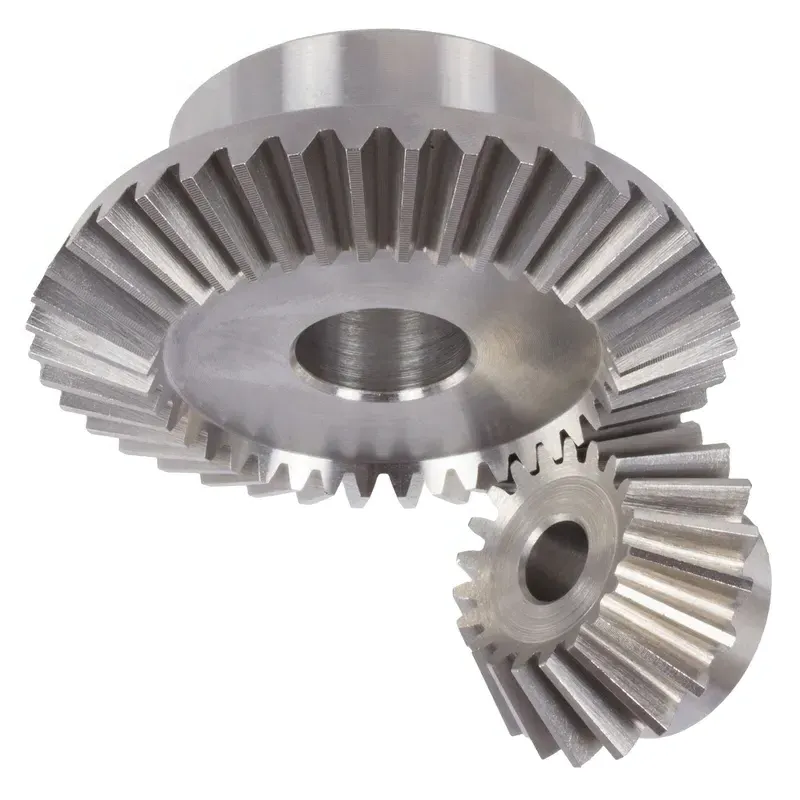
Engrenage à onglet contre engrenage conique
Miter Gears: Les engrenages coniques sont un type d'engrenage à denture droite dont les dents s'entrecroisent à angle droit. Ils sont conçus pour transmettre le mouvement et la puissance entre deux arbres perpendiculaires. On les retrouve fréquemment dans de nombreuses applications mécaniques, notamment les machines industrielles, les systèmes automobiles et les instruments de précision.
The teeth of miter gears are cut at a 45-degree angle to the axis of rotation, allowing them to mesh together smoothly and efficiently. This unique tooth geometry enables miter gears to change the direction of rotation while maintaining a constant velocity ratio between the input and output shafts.
Bevel Gears: Bevel gears are a type of mechanical gear that features conically-shaped teeth, allowing them to transmit power between intersecting shafts at various angles. Unlike miter gears, which are limited to 90-degree angles, bevel gears offer greater flexibility in shaft orientation. These gears find extensive use in a wide range of machinery and applications where power transmission between non-parallel shafts is required.
Les engrenages coniques se présentent sous différentes configurations, notamment les engrenages coniques droits, les engrenages coniques hélicoïdaux et les engrenages coniques hypoïdes.
- Straight bevel gears have teeth that are cut straight across the cone surface, while spiral bevel gears feature curved teeth for smoother and quieter operation.
- Les engrenages coniques hypoïdes, une variante des engrenages coniques hélicoïdaux, possèdent un axe de pignon décalé pour une capacité de couple accrue et un bruit réduit.
Principales différences entre les engrenages à denture conique et les engrenages à denture droite
Bien que les engrenages à denture droite et les engrenages coniques soient tous deux utilisés pour transmettre la puissance entre des arbres qui se croisent, ils présentent des différences notables en termes de conception, de fonctionnalité et d'avantage mécanique.
1. Design
Les engrenages à denture conique sont un type spécifique d'engrenage conique conçu pour fonctionner avec des arbres à un angle de 90 degrés.
En revanche, les engrenages coniques peuvent être conçus pour n'importe quel angle compris entre 0 et 180 degrés, offrant une plus grande flexibilité dans le positionnement de l'arbre.
2. Functional
Les engrenages à denture conique sont généralement utilisés dans les applications nécessitant un changement de direction de 90 degrés pour le mouvement ou la transmission de puissance. On les trouve couramment dans les outils à main, les différentiels automobiles et les machines industrielles.
Les engrenages coniques, quant à eux, offrent une plus grande polyvalence en termes d'angles d'arbre et sont utilisés dans une gamme d'applications plus large, telles que les transmissions automobiles, les systèmes de contrôle des aéronefs et la transmission de puissance dans diverses machines.
3. Mechanical Advantage
Les engrenages à onglet ont généralement un rapport de transmission de 1:1, ce qui signifie qu'ils n'offrent aucun avantage mécanique en termes de vitesse ou de couple.
Les engrenages coniques, en revanche, peuvent être conçus avec différents rapports de transmission, permettant une réduction de la vitesse ou une multiplication du couple, selon les exigences de l'application.
4. Load Requirements
La capacité de charge des engrenages coniques et des engrenages à denture droite varie en fonction de facteurs tels que le matériau, la dureté de surface et le profil des dents. En général, les engrenages coniques supportent des charges plus élevées que les engrenages à denture droite grâce à leur capacité à répartir les contraintes plus uniformément sur la surface des dents.
5. Space Constraints
Les engrenages à denture conique sont plus compacts et nécessitent moins d'espace pour leur installation, ce qui les rend adaptés aux applications où l'espace est limité. Les engrenages coniques, bien que plus polyvalents en termes d'angles d'arbre, peuvent nécessiter plus d'espace en raison de leur taille plus importante et de leur positionnement angulaire.
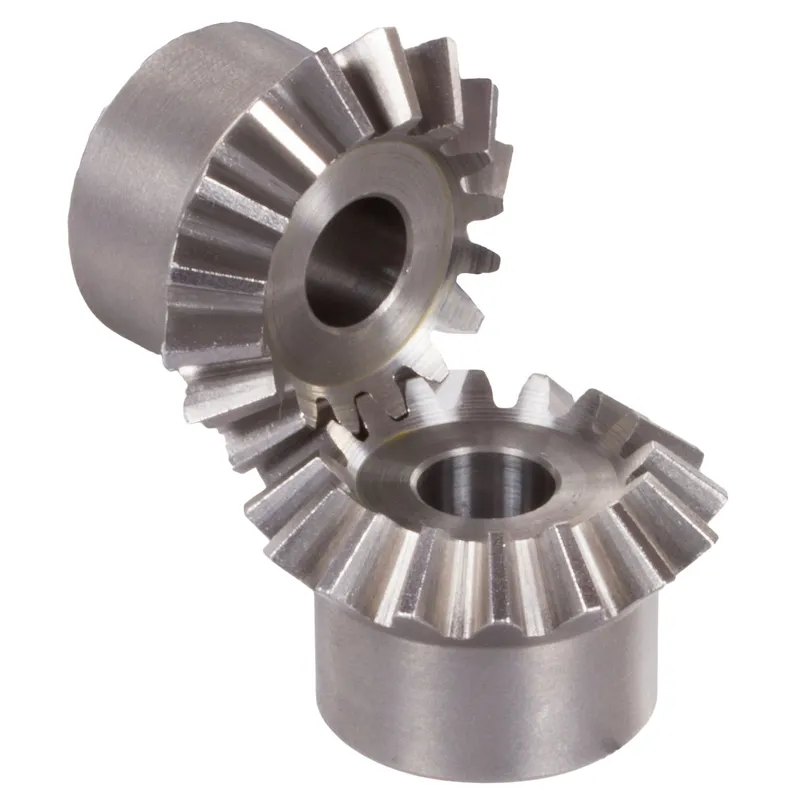 |  |
| Engrenage à onglet | Engrenage conique |
Steel Straight Bevel Gear Applications
- Différentiels automobiles
Steel straight bevel gears are widely used in automotive differentials to transfer torque between the drive shaft and the wheels. Their ability to handle high loads and provide efficient torque transmission ensures smooth operation under varying driving conditions, including sharp turns. - Machines industrielles
In heavy industrial machinery, such as conveyors, mixers, and crushers, these steel bevel gears play a critical role in transmitting power between intersecting shafts. Their durable steel construction ensures reliability and efficiency, even in environments with high stress and continuous operation. - Outils et équipements électriques
Many power tools, such as drills, saws, and grinders, rely on straight bevel gears for motion transfer. Their compact design and precise motion control make them ideal for small, portable devices requiring efficient speed reduction or torque multiplication. - Systèmes de robotique et d'automatisation
Steel bevel gears are used in robotics and automated systems for precise movement and power transfer at right angles. Their high precision and reliability allow them to function seamlessly in robotic arms, conveyor systems, and other automated machinery requiring accuracy and durability. - Marine Equipment
In marine applications, such as winches, rudder systems, and propulsion mechanisms, these gears handle the challenging conditions of high humidity and heavy loads. Their robust steel construction ensures resistance to wear and corrosion, providing long-lasting performance in harsh marine environments. - Aerospace Industry
Steel straight bevel gears are used in aerospace systems for power transmission in landing gears, flight control systems, and auxiliary equipment. Their ability to function reliably under extreme temperatures and stresses makes them indispensable in aviation and space exploration technology.
 |  |
| Engrenage conique pour différentiels automobiles | Engrenages coniques pour robotique |
 |  |
| Engrenage conique pour machines industrielles | Engrenages coniques pour l'industrie maritime |
Informations complémentaires
| Édité par | Yjx |
|---|
Produits similaires
-
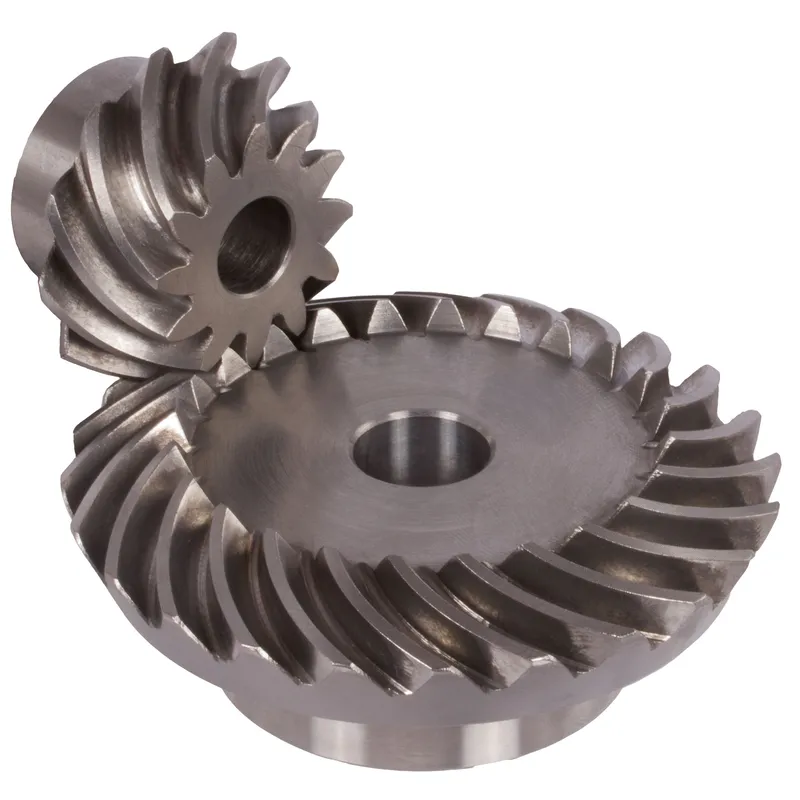
Engrenages coniques à denture spirale en acier, rapport de réduction 1:1 à 4:1
-
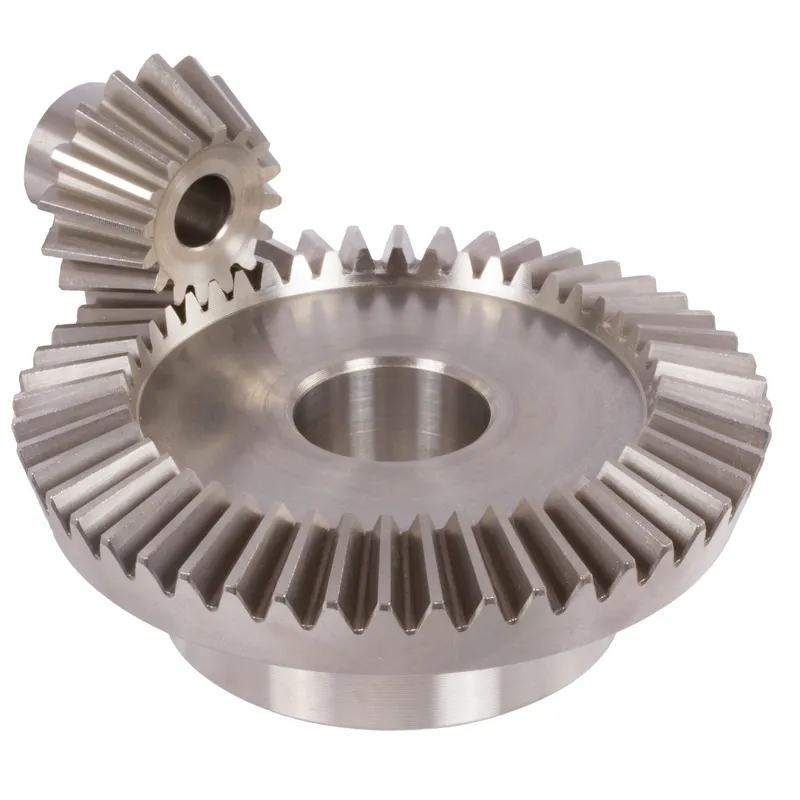
Engrenages coniques en acier inoxydable, rapport de transmission 3:1, système à dents droites
-
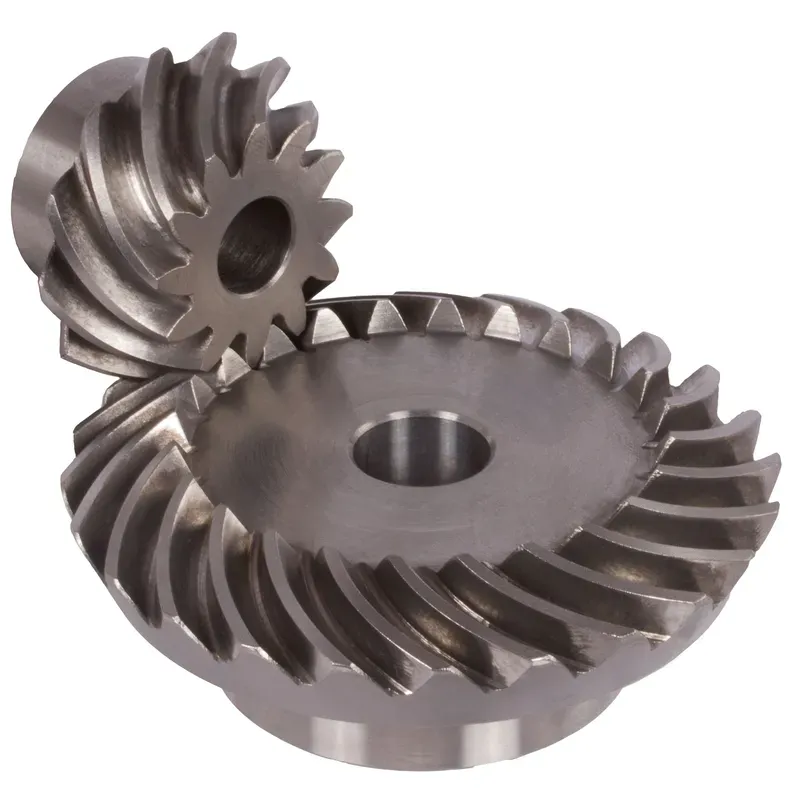
Engrenages coniques à denture spirale en acier, rapport 1,5:1
-
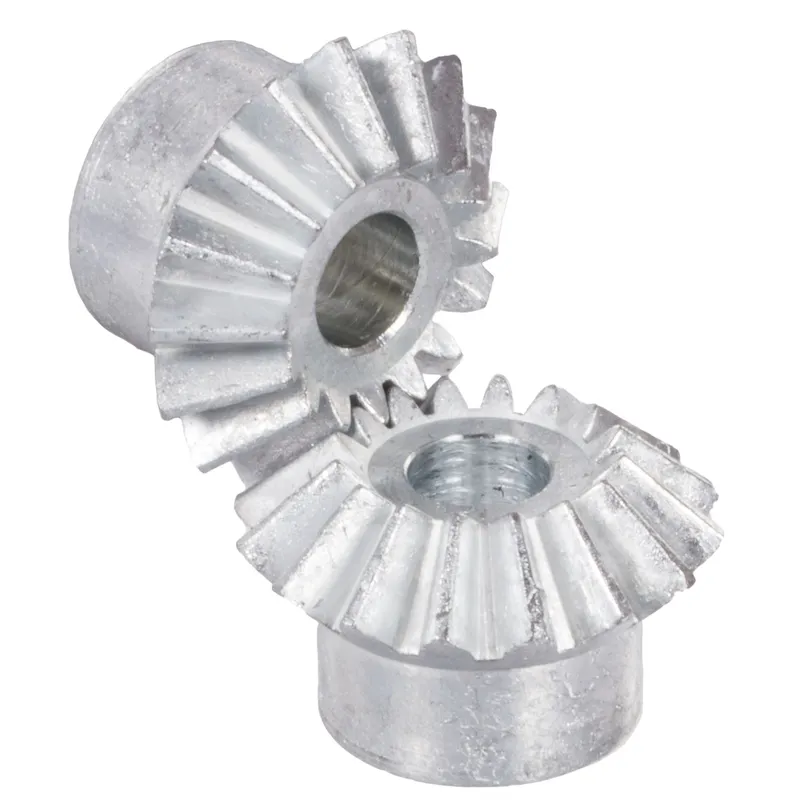
Engrenages coniques en zinc moulé sous pression, rapport 1:1, système à dents droites
-
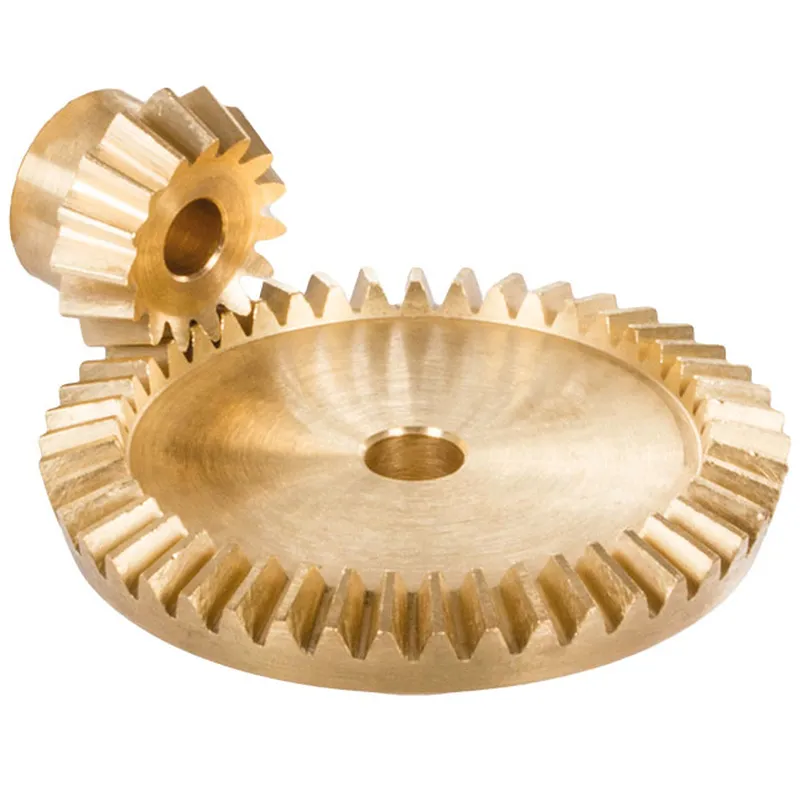
Engrenages coniques en laiton, rapport 1,5:1, système à dents droites