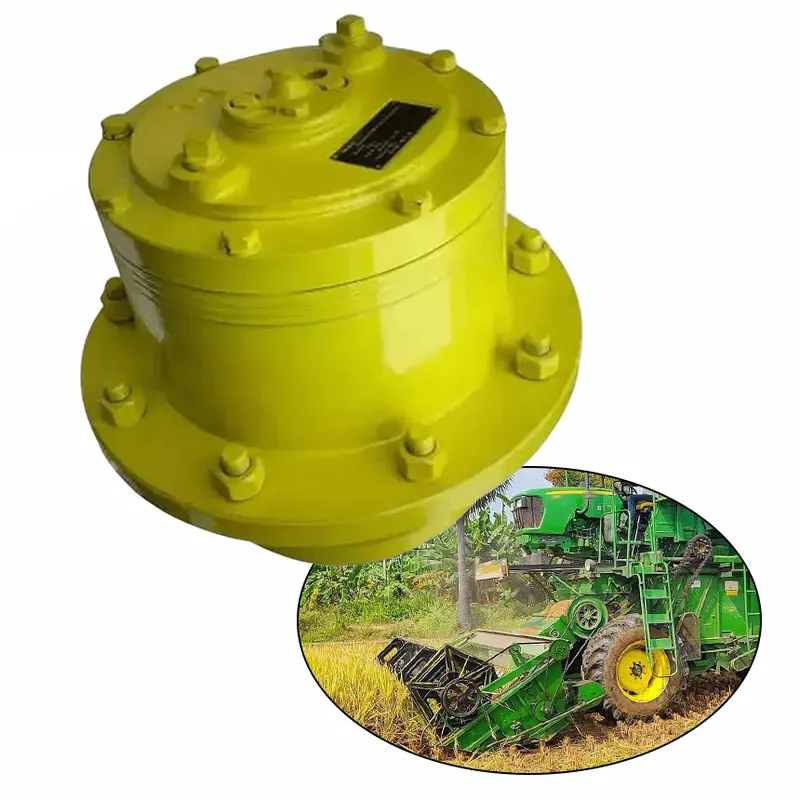
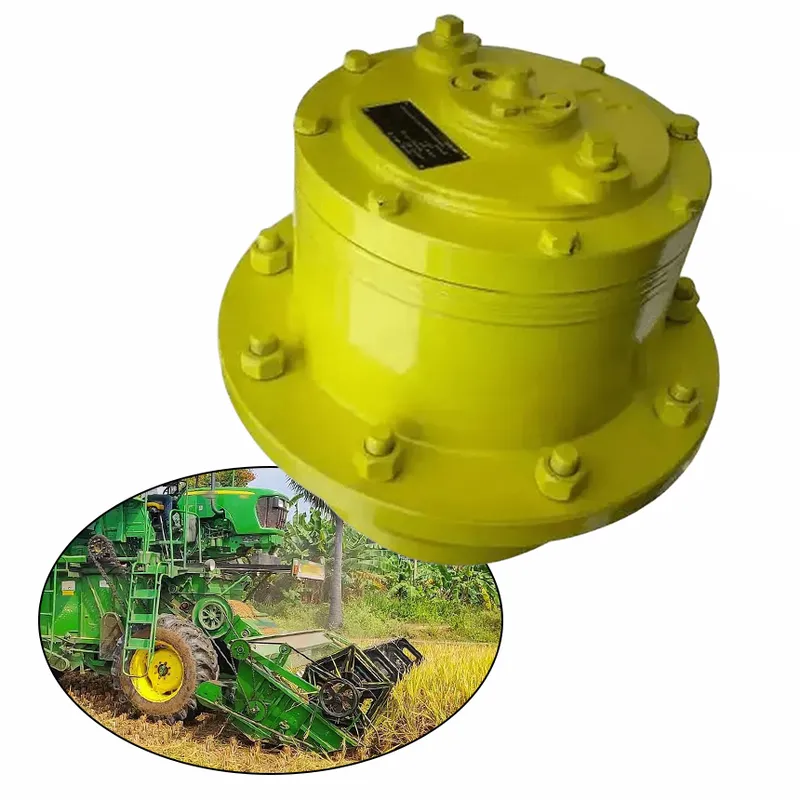
Planetary Wheel Drive Gearbox for Rice Harvesters
The planetary wheel drive gearbox for rice harvesters is a compact, high-torque transmission system engineered to efficiently transfer power from the engine to the wheels of agricultural machinery. The wheel drive planetary gearbox transmits engine torque to the drive system, facilitating forward and backward movement while maintaining high efficiency and low noise levels. It supports heavy loads, variable speeds for even crop collection, and reliable propulsion under demanding conditions, such as wet soil or dense vegetation.
The planetary wheel drive gearbox for rice harvesters is a compact, high-torque transmission system engineered to efficiently transfer power from the engine to the wheels of agricultural machinery. Utilizing an epicyclic gear arrangement, it comprises key components such as a central sun gear, orbiting planet gears mounted on a carrier, and an outer ring gear, often crafted from low-carbon alloy steel treated with carburizing, quenching, or nitriding for enhanced durability and load-bearing capacity. This design enables torque multiplication, speed reduction, and precise power distribution, making it ideal for navigating the challenging, uneven terrains of paddy fields during rice harvesting operations.
The wheel drive planetary gearbox transmits engine torque to the drive system, facilitating forward and backward movement while maintaining high efficiency and low noise levels. It supports heavy loads, variable speeds for even crop collection, and reliable propulsion under demanding conditions, such as wet soil or dense vegetation. Benefits include superior traction and stability, reduced fuel consumption, minimal maintenance due to its robust construction, and compact sizing for seamless integration into combine harvesters.
Dimensions de la transmission planétaire
Définitions techniques
| Symboles | Unités de mesure | Description |
| je | - | Rapport de réduction |
| T2max | [Nm] | Couple de sortie maximal |
| T2p | [Nm] | Couple de sortie maximal |
| T2maxint | [Nm] | Couple intermittent maximal |
| T2cont | [Nm] | Couple de sortie continu |
| Pcont | [kW] | Puissance continue maximale |
| Pinte | [kW] | Puissance intermittente maximale |
| n1max | [tr/min] | Vitesse d'entrée maximale |
| n2max | [tr/min] | Vitesse de sortie maximale |
GR 80
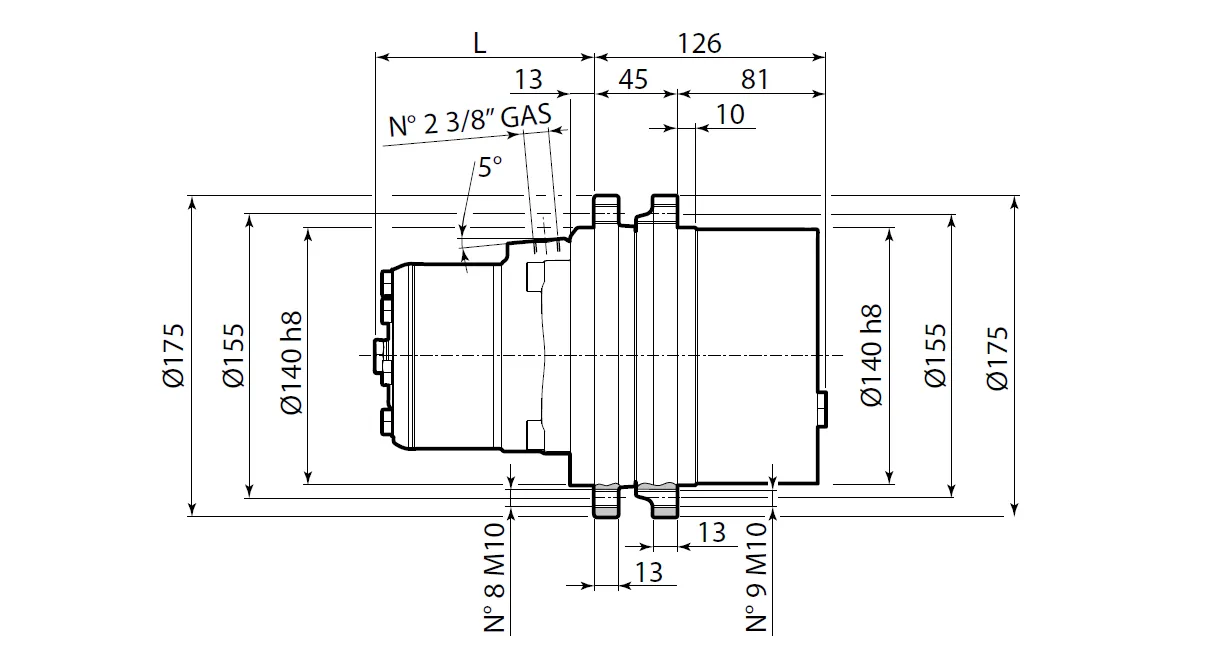
| Taper | Affichage du moteur [cc] | Disp. totale [cc] | je | Couple | Vitesse n2max | Pouvoir | |||||||
| T2cont | T2maxint | T2p | Pcont [kW] | Pinte [kW] | |||||||||
| [Nm] | Δp [bar] | [Nm] | Δp [bar] | [Nm] | Δp [bar] | [tr/min] | portata couler [l/min] | ||||||
| GR80-MR50 | 51,6 | 269,9 | 5,23 | 470 | 145 | 570 | 175 | 630 | 205 | 115 | 30 | 5,5 | 7 |
| GR80-MR80 | 80,3 | 420,0 | 800 | 145 | 960 | 175 | 1060 | 205 | 68 | 30 | 5,5 | 7 | |
| GR80-MR100 | 99,8 | 522,0 | 800 | 115 | 1000 | 145 | 1310 | 205 | 55 | 30 | 5,5 | 7 | |
| GR80-MR125 | 125,7 | 657,4 | 800 | 95 | 1000 | 120 | 1500 | 190 | 45 | 30 | 5,5 | 7 | |
| GR80-MR160 | 159,6 | 834,7 | 800 | 75 | 1000 | 95 | 1500 | 145 | 33 | 30 | 5 | 7 | |
| GR80-MR200 | 199,8 | 1045,0 | 800 | 60 | 1000 | 75 | 1500 | 115 | 26 | 30 | 5 | 7 | |
| GR80-MR250 | 249,3 | 1303,8 | 800 | 50 | 1000 | 60 | 1500 | 95 | 21 | 30 | 4,5 | 6 | |
GR 200
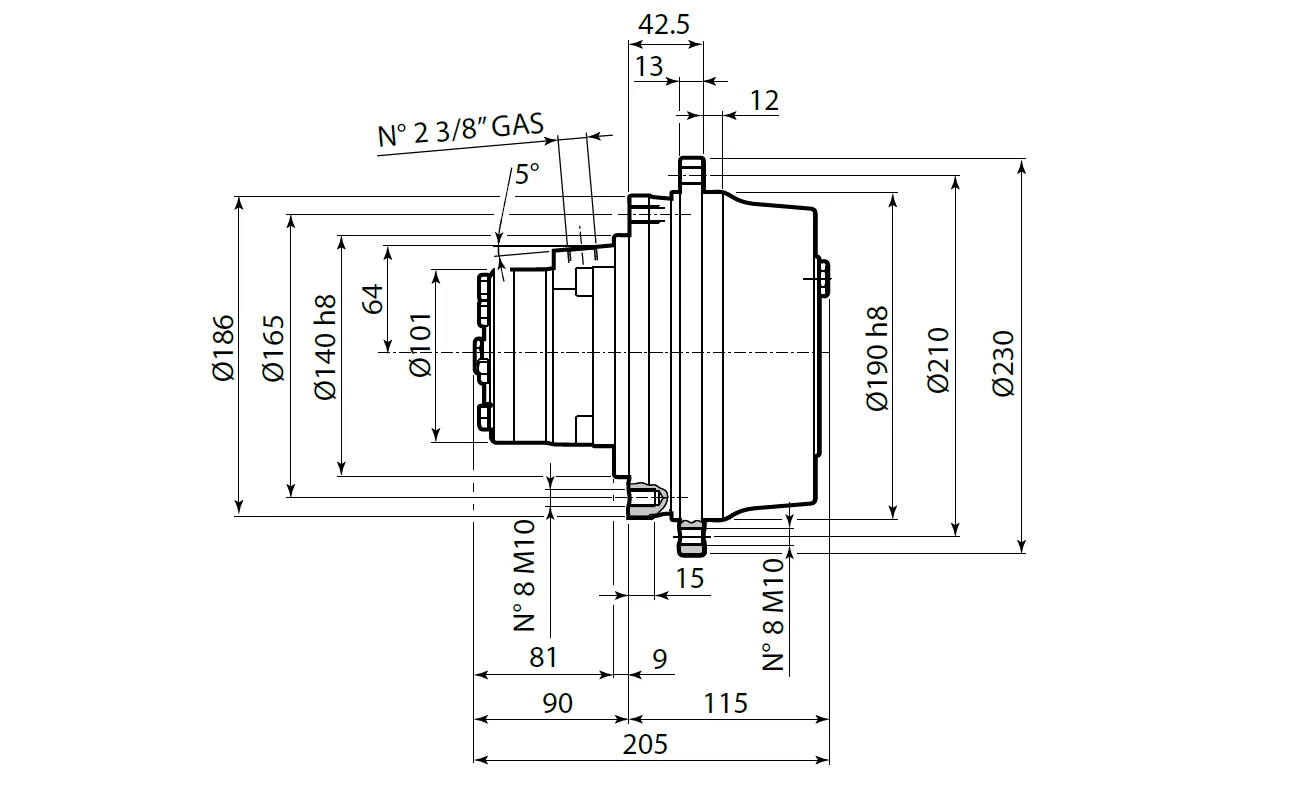
| Taper | Affichage du moteur [cc] | Disp. totale [cc] | je | Couple | Vitesse n2max | Pouvoir | |||||||
| T2suite | T2maxint | T2p | Pcont [kW] | Pinte [kW] | |||||||||
| [Nm] | Δp [bar] | [Nm] | Δp [bar] | [Nm] | Δp [bar] | [tr/min] | portata couler [l/min] | ||||||
| GR200-MR50 | 51,6 | 319,9 | 6,20 | 560 | 145 | 670 | 175 | 740 | 205 | 98 | 30 | 5,5 | 7 |
| GR200-MR80 | 80,3 | 497,9 | 950 | 145 | 1150 | 175 | 1250 | 205 | 58 | 30 | 5,5 | 7 | |
| GR200-MR100 | 99,8 | 618,8 | 1180 | 145 | 1420 | 175 | 1560 | 205 | 46 | 30 | 5,5 | 7 | |
| GR200-MR125 | 125,7 | 779,3 | 1450 | 145 | 1750 | 175 | 1920 | 205 | 38 | 30 | 5,5 | 7 | |
| GR200-MR160 | 159,6 | 989,5 | 1600 | 125 | 2100 | 165 | 2450 | 205 | 29 | 30 | 5 | 7 | |
| GR200-MR200 | 199,8 | 1238,8 | 1600 | 100 | 2150 | 135 | 2500 | 165 | 23 | 30 | 5 | 7 | |
| GR200-MR250 | 249,3 | 1545,7 | 1600 | 80 | 2150 | 105 | 2500 | 135 | 18 | 30 | 4,5 | 6 | |
| GR200-MR315 | 315,7 | 1957,3 | 1600 | 65 | 2150 | 85 | 2500 | 110 | 15 | 30 | 4 | 5 | |
| GR200-MR375 | 372,6 | 2310,1 | 1600 | 55 | 2150 | 70 | 2500 | 90 | 12 | 30 | 3,5 | 4,5 | |
EH 210
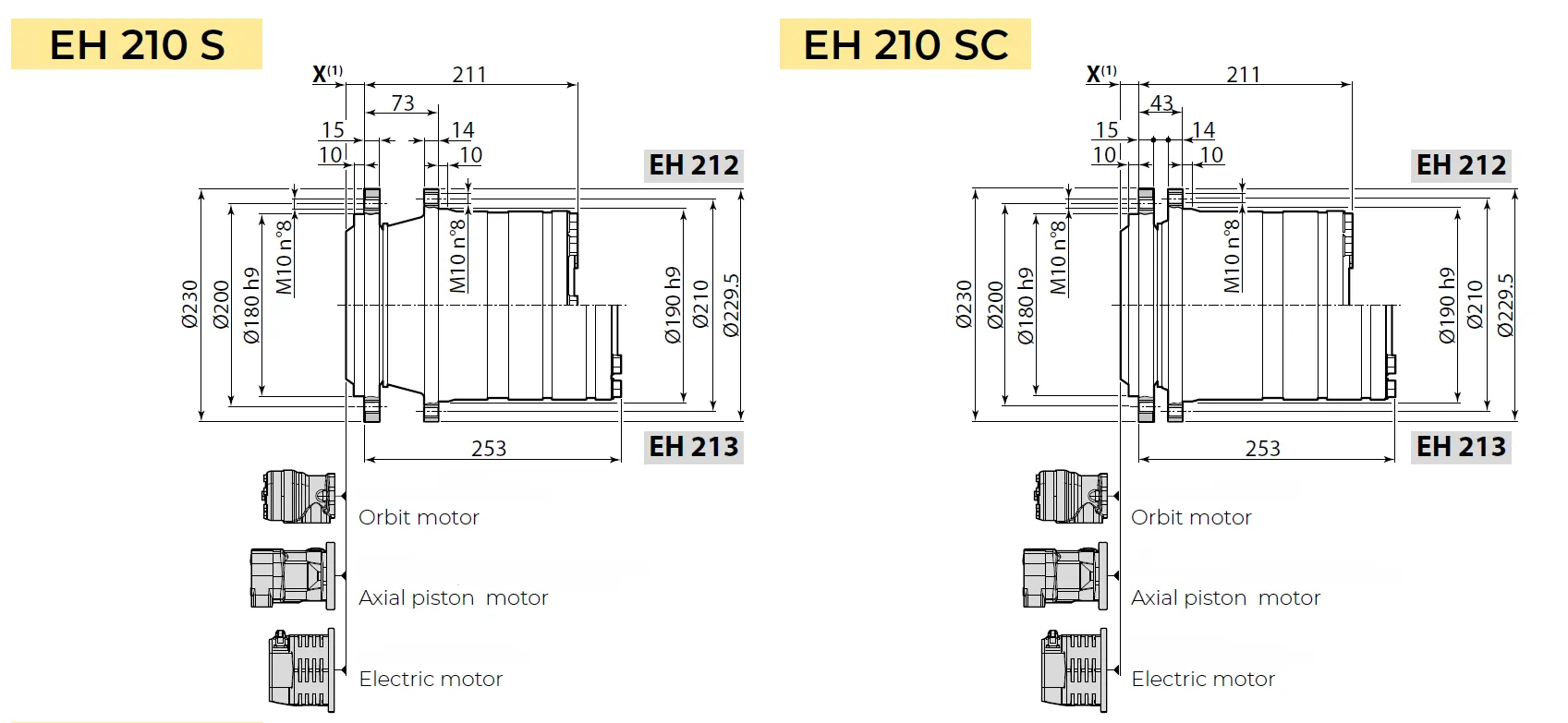
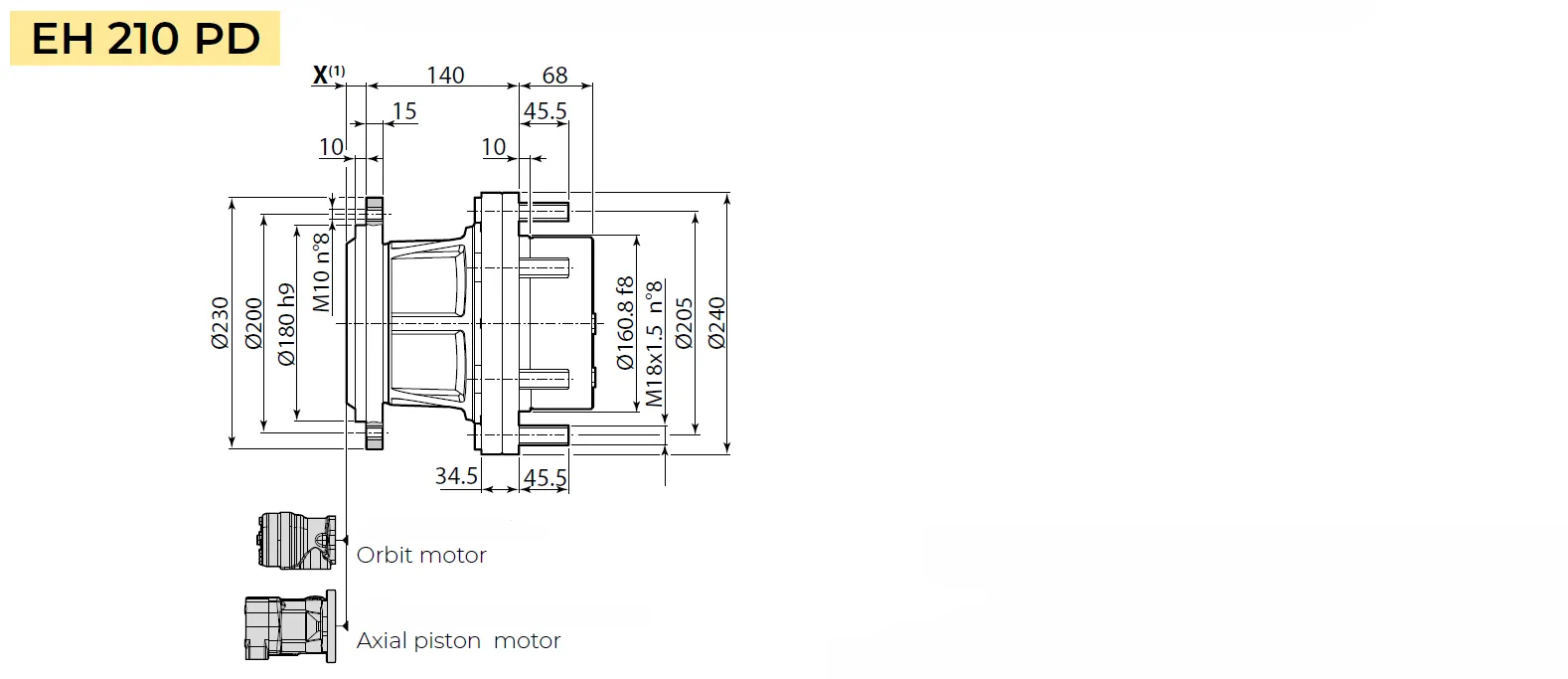
| Taper | Poids | Quantité d'huile | i (da÷a / De÷à) | T2max [Nm] | n1max [tr/min] | ||||
| EH 212 | EH 213 | EH 212 | EH 213 | EH 212 | EH 213 | ||||
| EH 210 S | 35 | 40 | 0.8 | 1 | 11 ÷ 29 | 41 ÷ 129 | 3950 | 3500 | |
| EH 210 SC | |||||||||
| EH 210 PD | - | - | |||||||
EH 240
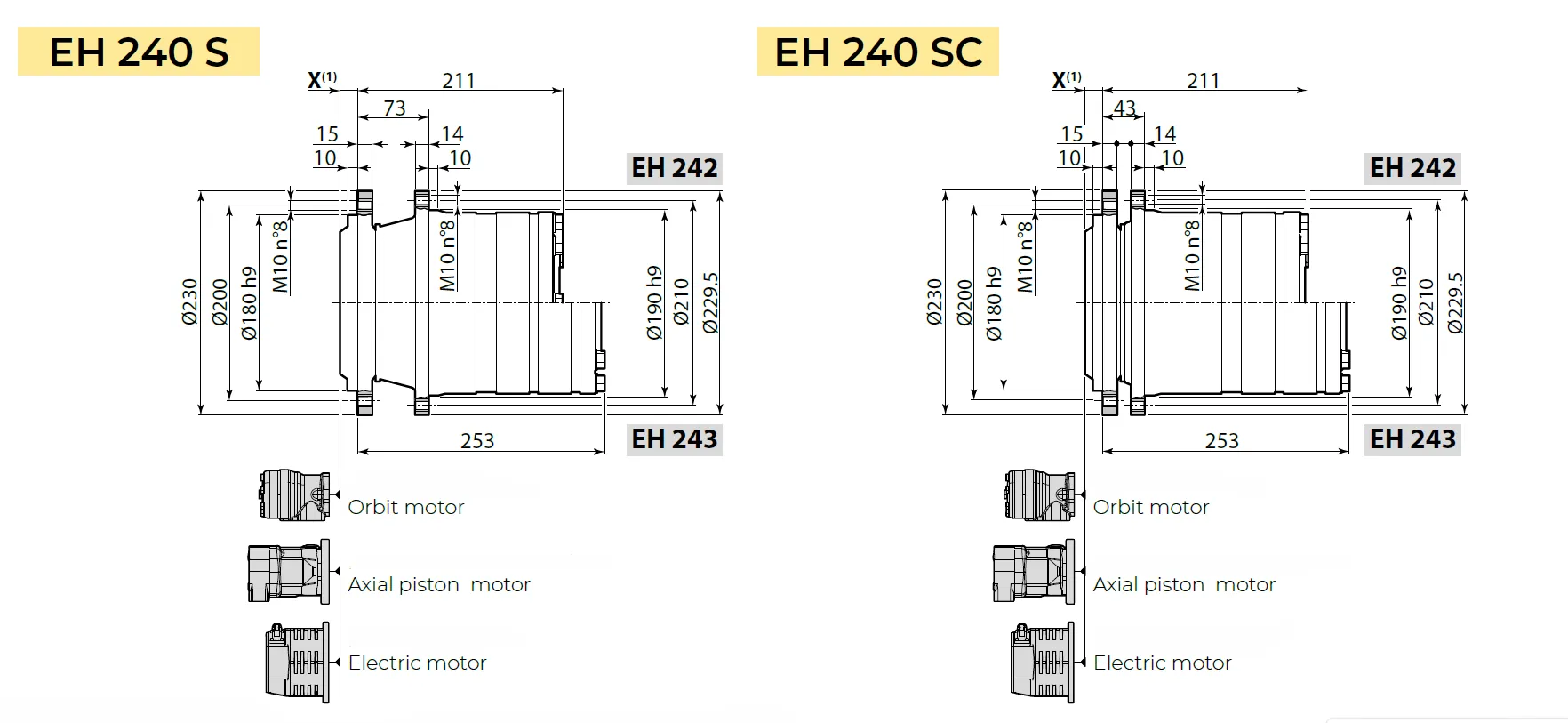
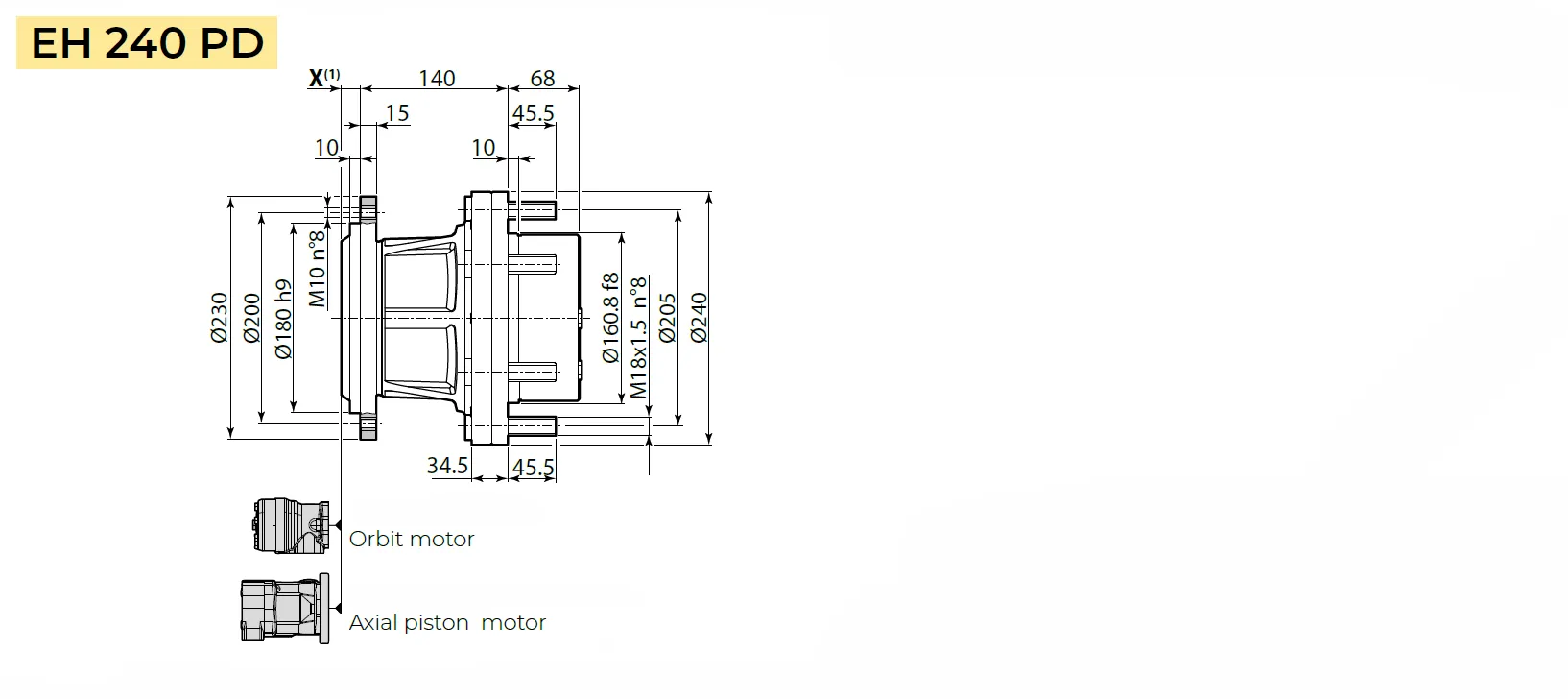
| Taper | Poids | Quantité d'huile | i (da÷a / De÷à) | T2max [Nm] | n1max [tr/min] | ||||
| EH 242 | EH 243 | EH 242 | EH 243 | EH 242 | EH 243 | ||||
| EH 240 S | 35 | 40 | 0.8 | 1 | 12 ÷ 31 | 45 ÷ 135 | 5600 | 3500 | |
| EH 240 SC | |||||||||
| EH 240 PD | - | - | |||||||
EH 350
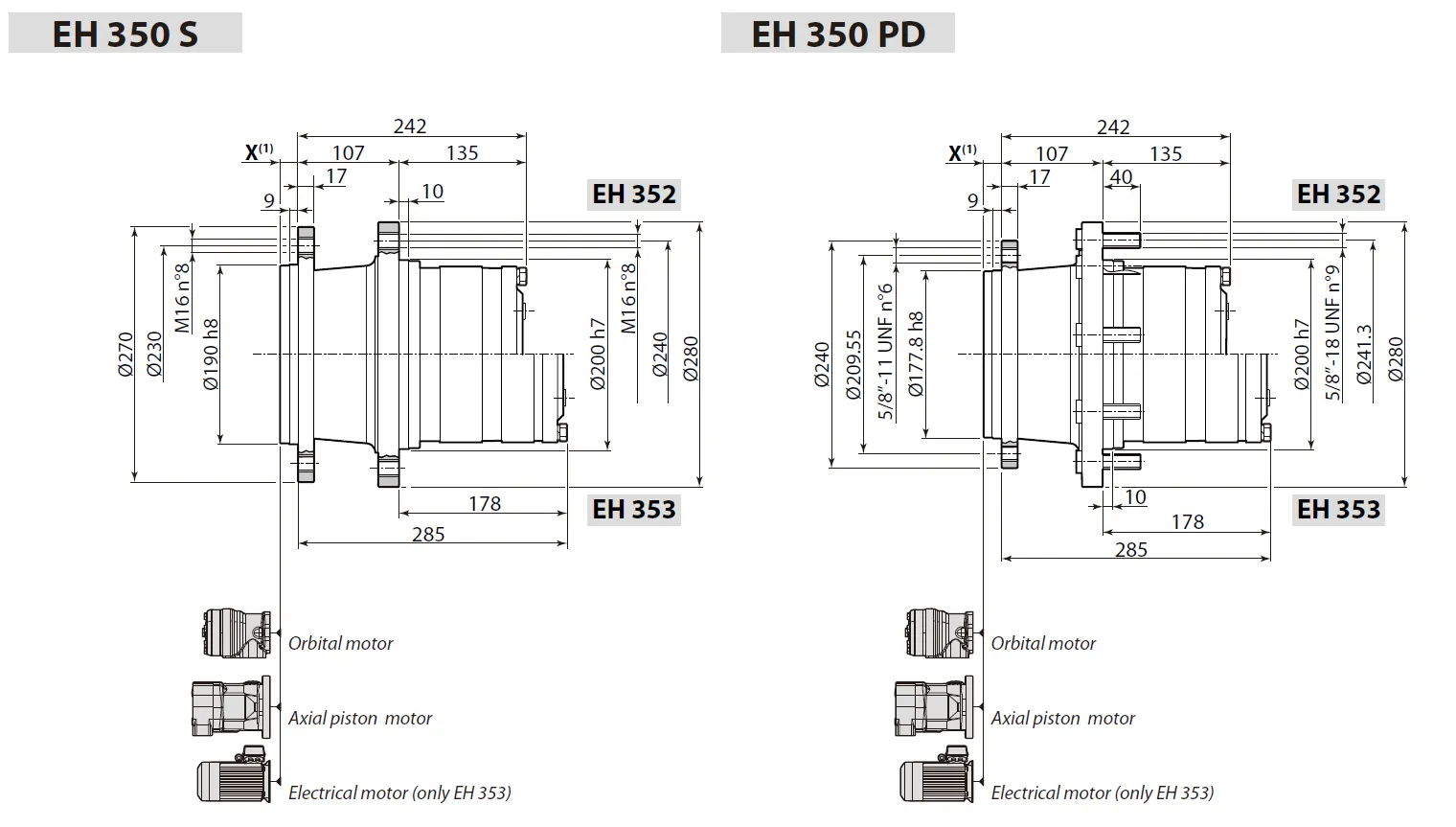
| Taper | Poids | Quantité d'huile | i (da÷a / De÷à) | T2max [Nm] | n1max [tr/min] | ||||
| EH 352 | EH 353 | EH 352 | EH 353 | EH 352 | EH 353 | ||||
| EH 350 S | 55 | 60 | 1 | 1.2 | 15 ÷ 31 | 52 ÷ 135 | 7200 | 3500 | |
| EH 350 PD | |||||||||
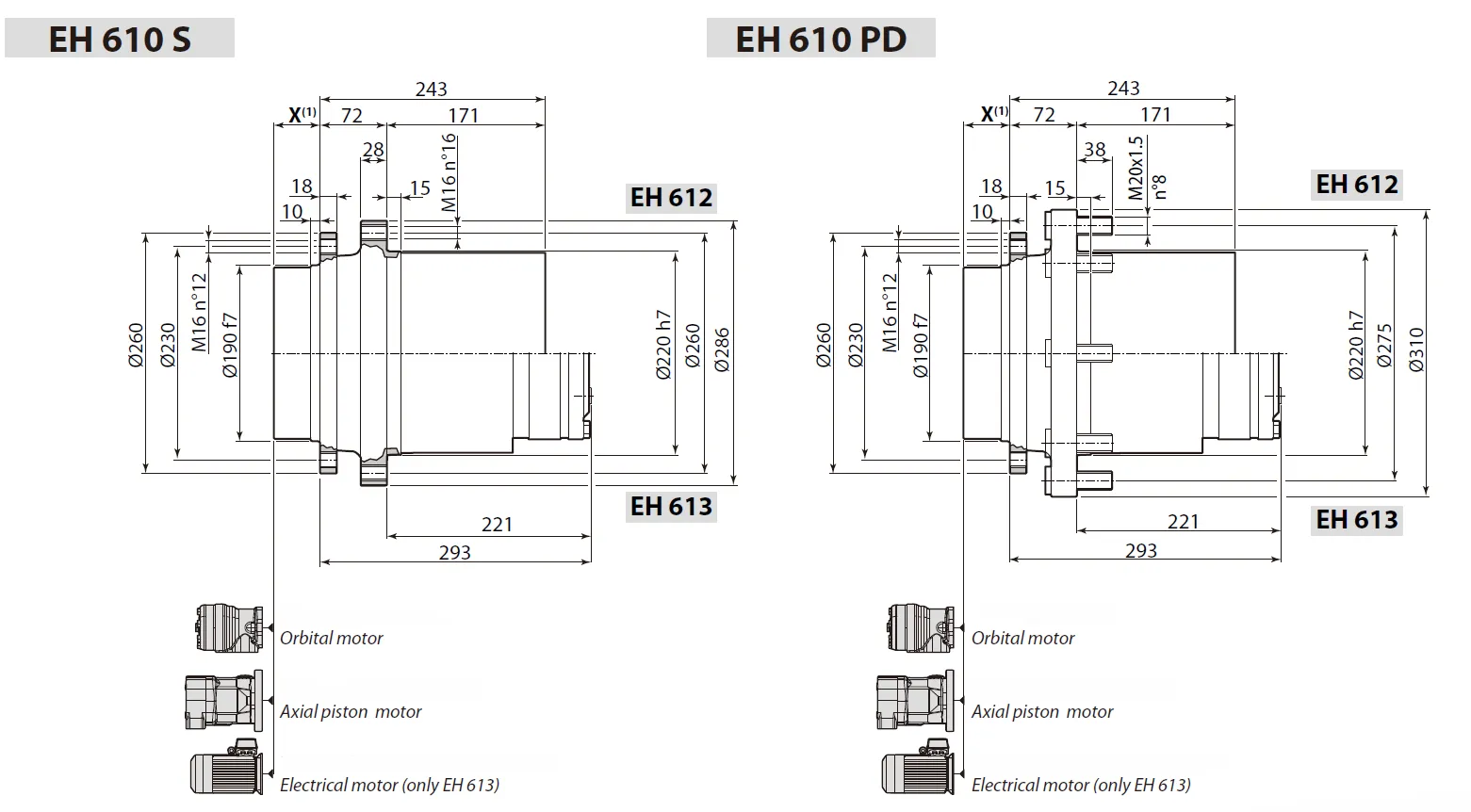
EH 610
| Taper | Poids | Quantité d'huile | i (da÷a / De÷à) | T2max [Nm] | n1max [tr/min] | ||||
| EH 612 | EH 613 | EH 612 | EH 613 | EH 612 | EH 613 | ||||
| EH 610 S | 60 | 70 | 1.2 | 1.5 | 12 ÷ 31 | 47 ÷ 138 | 13500 | 3500 | |
| EH 610 PD | |||||||||
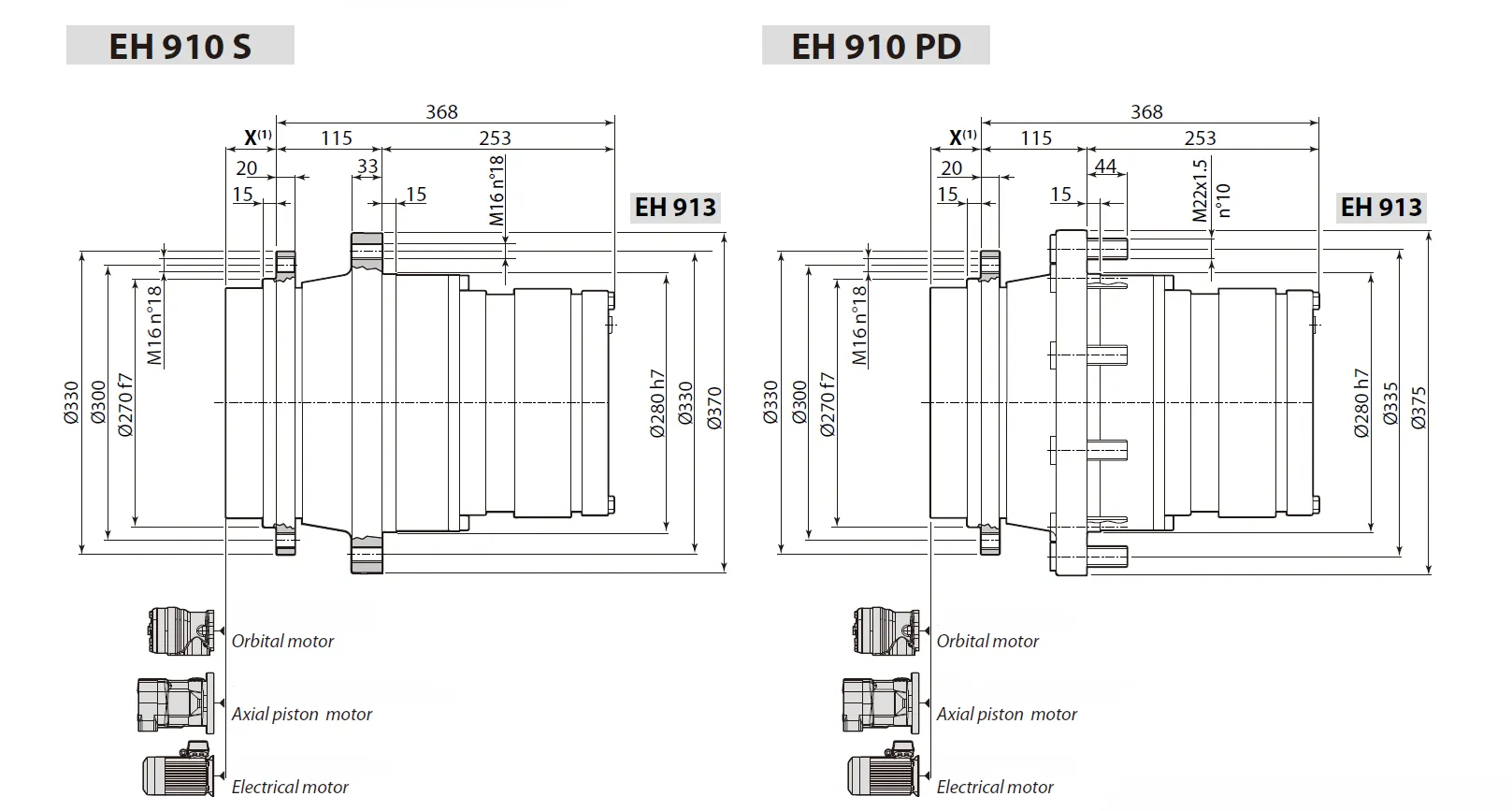
EH 910
| Taper | Poids | Quantité d'huile | i (da÷a / De÷à) | T2max | n1max | |
| EH 913 | EH 913 | EH 913 | [Nm] | [tr/min] | ||
| EH 910 S | 130 | 1 | 47 ÷ 131 | 24200 | 3500 | |
| EH 910 PD | ||||||
Version S

| Taille | Dimensions | ||||||||||
| D1 | D2 | D3 | D4 | D5 | D6 | D7 | D8 | L1 | L2 | L3 | |
| EH 210 S | 230 | 200 | 180 h9 | 190 h9 | 210 | 229.5 | M10 n°8 | M10 n°8 | 253 | 73 | 180 |
| EH 240 S | 230 | 200 | 180 h9 | 190 h9 | 210 | 229.5 | M10 n°8 | M10 n°8 | 253 | 73 | 180 |
| EH 350 S | 270 | 230 | 190 h8 | 200 h7 | 240 | 280 | M16 n°8 | M16 n°8 | 242 | 107 | 178 |
| EH 610 S | 260 | 230 | 190 f7 | 220 h7 | 260 | 286 | M16 n°12 | M16 n°16 | 243 | 72 | 171 |
| EH 910 S | 330 | 300 | 270 f7 | 280 h7 | 350 | 370 | M16 n°18 | M16 n°18 | 368 | 115 | 253 |
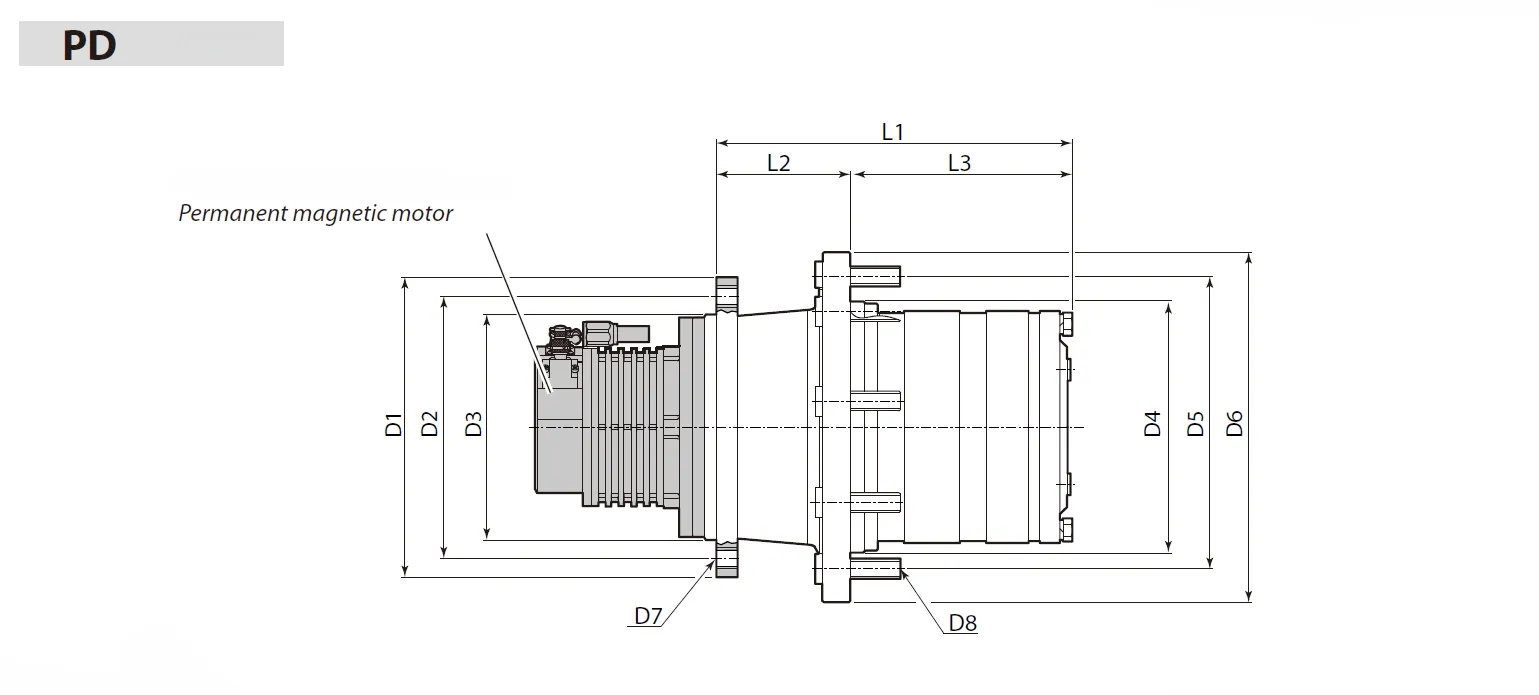
Version PD
| Taille | Dimensions | ||||||||||
| D1 | D2 | D3 | D4 | D5 | D6 | D7 | D8 | L1 | L2 | L3 | |
| EH 210 PD | 230 | 200 | 180 h9 | 160,8 f8 | 205 | 240 | M10 (8x) | M18x1,5 (6x) | 210 | 140 | 70 |
| EH 240 PD | 230 | 200 | 180 h9 | 160,8 f8 | 205 | 240 | M10 (8x) | M18x1,5 (6x) | 210 | 140 | 70 |
| EH 350 PD | 240 | 209.55 | 177,8 h8 | 200 h7 | 241.3 | 280 | 5/8"-11 UNC (6x) | 5/8"-19 UNF (9x) | 285 | 107 | 178 |
| EH 610 PD | 260 | 230 | 190 f7 | 220 h7 | 275 | 310 | M16 (12x) | M20x1,5 (8x) | 293 | 72 | 221 |
| EH 910 PD | 330 | 300 | 270 f7 | 280 h7 | 335 | 375 | M16 (18x) | M22x1,5 (10x) | 368 | 115 | 253 |
Rice Harvester Planetary Wheel Drive Gearbox Features
1. High Torque Transmission
The planetary wheel drive gearbox excels in delivering elevated torque levels, essential for rice harvesters operating in muddy and uneven paddy fields, enabling efficient propulsion and handling of heavy loads during harvesting without slippage or power loss, thereby enhancing overall machine productivity and reliability in demanding agricultural conditions.
2. Compact and Modular Design
Featuring a space-efficient epicyclic gear system, this planetary gearbox integrates seamlessly into rice harvester chassis, allowing for modular configurations that adapt to various machine models, reducing overall weight and improving maneuverability while maintaining structural integrity in compact agricultural machinery setups.
3. Enhanced Durability and Longevity
Constructed from robust materials such as alloy steel with advanced heat treatments, the planetary wheel drive withstands harsh environmental factors like moisture and debris in rice fields, offering extended service life and resistance to wear, which minimizes breakdowns and supports continuous operation during peak harvest seasons.
4. High Efficiency and Low Noise Operation
With transmission efficiencies reaching up to 97%, the wheel drive planetary gearbox optimizes power transfer from the engine to the wheels or tracks, resulting in reduced fuel consumption and quieter performance, which is particularly beneficial in rice harvesting to lessen operator fatigue and environmental impact over prolonged use.
5. Variable Speed Control
Incorporating precise gear ratios, it facilitates smooth speed adjustments for different harvesting tasks, from slow navigation in dense crops to faster transport modes, ensuring optimal cutting and collection efficiency while adapting to varying field conditions without compromising on power delivery or stability.
6. Faibles besoins d'entretien
Designed with sealed components and high-protection ratings like IP65, the wheel drive gearbox demands minimal upkeep, featuring easy-access lubrication points and corrosion-resistant finishes that endure wet rice paddy environments, thereby lowering operational costs and downtime for farmers relying on consistent machinery performance.
Wheel Drive Planetary Gearbox Applications
1. Agriculture Industry
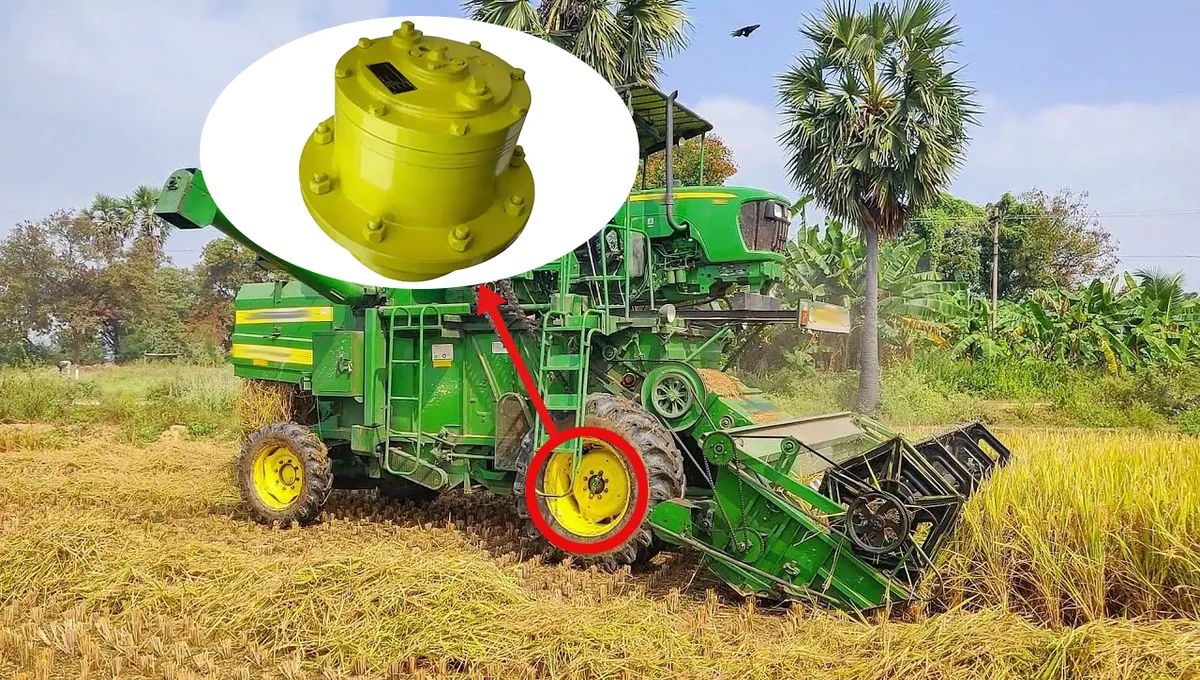
Wheel drive planetary gearboxes are extensively utilized in agricultural machinery such as rice harvesters, tractors, and combine harvesters, providing high torque for navigating challenging terrains like muddy fields, ensuring efficient propulsion, reduced slippage, and enhanced productivity during planting, harvesting, and tilling operations while withstanding harsh environmental conditions.
2. Industrie de la construction
In construction equipment including excavators, loaders, and bulldozers, these wheel drive gearboxes serve as wheel and track drives, delivering robust torque transmission for heavy-duty tasks such as digging, lifting, and material transport on uneven sites, offering reliability, compact design, and high load capacity to optimize operational efficiency.
3. Industrie minière
Planetary wheel drive gearboxes are integral to mining machinery like drill rigs, haul trucks, and conveyor systems, enabling precise speed reduction and torque amplification in demanding underground or open-pit environments, enhancing durability against abrasive materials and extreme loads for sustained performance and safety.
4. Forestry Industry: In forestry equipment such as harvesters, forwarders, and log loaders, wheel drive planetary gear reducers provide essential high-torque propulsion for traversing rugged terrains and handling heavy timber loads, ensuring reliable performance in dense forests with minimal slippage, enhanced durability against debris, and efficient power transmission to optimize logging operations and productivity.
5. Material Handling Industry
Utilized in forklifts, conveyor belts, and warehouse automation equipment, these planetary gearbox reducers enable smooth torque delivery for lifting and transporting heavy goods, offering modular designs for easy integration, reduced energy consumption, and enhanced control to improve logistics efficiency and workplace safety.
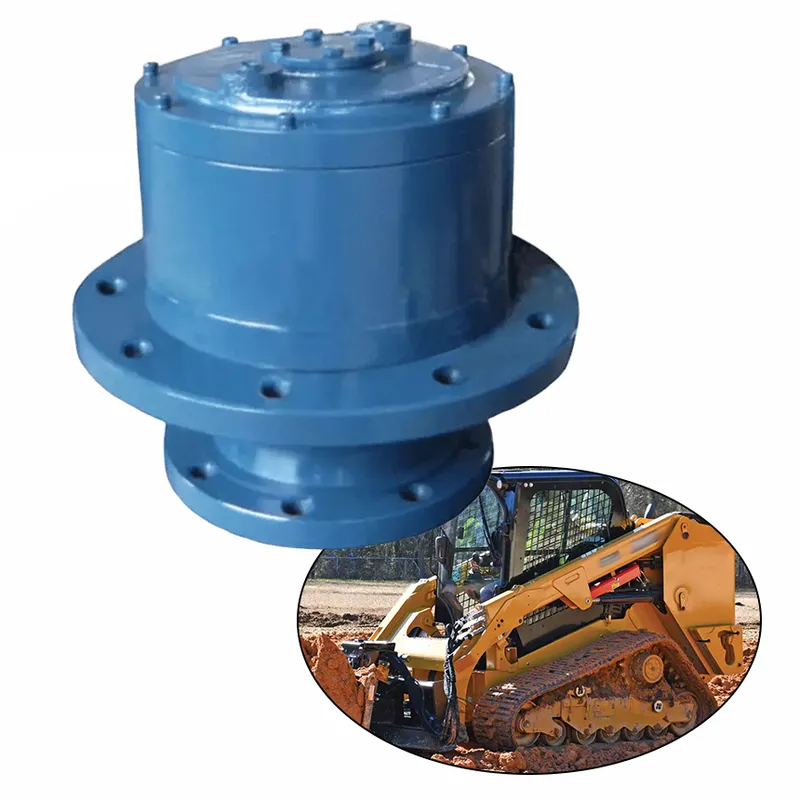
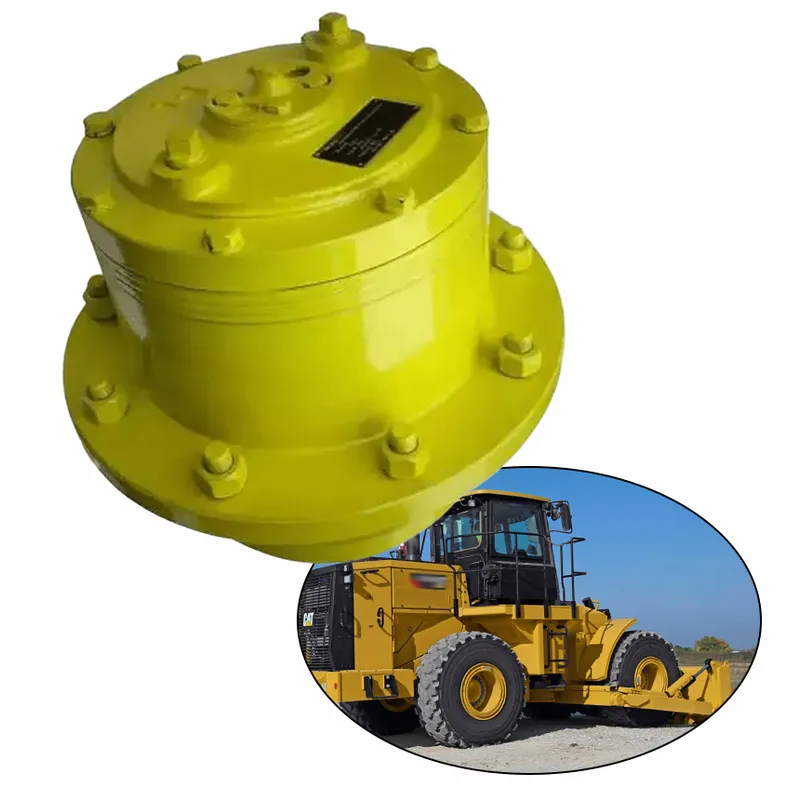
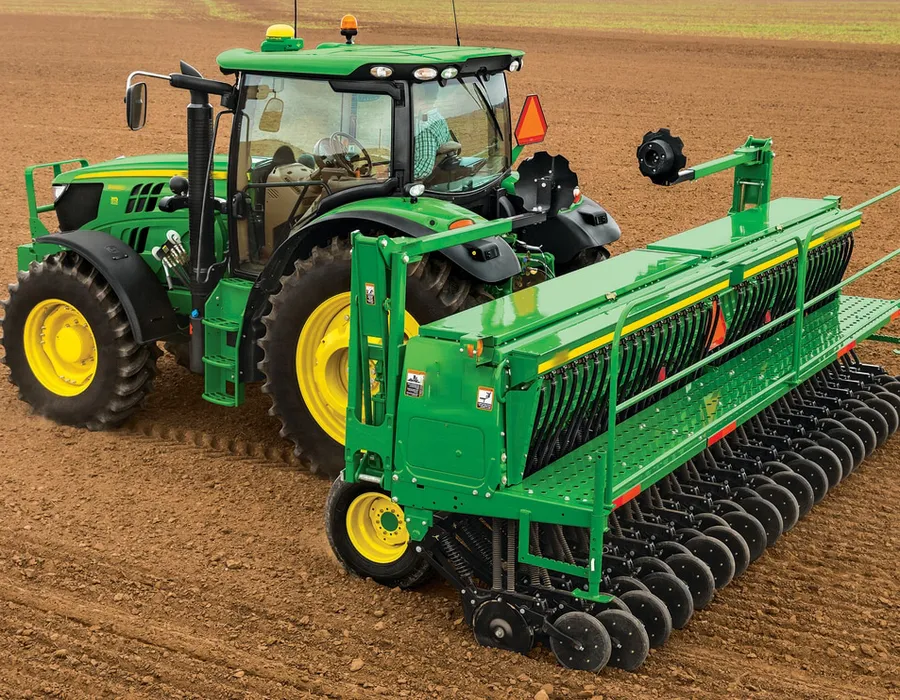 | 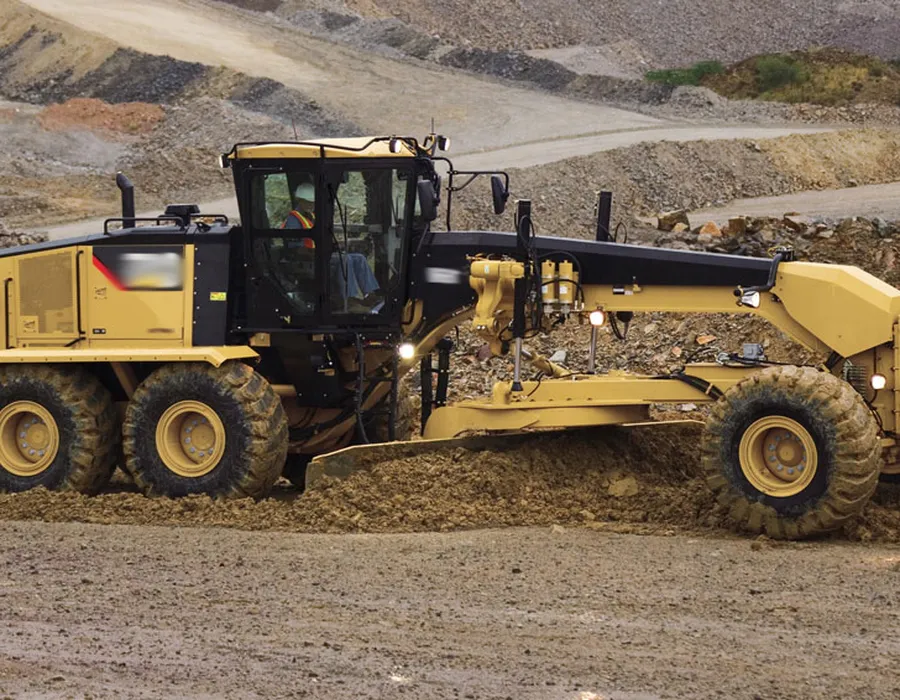 |
| Entraînement par roue planétaire pour semoirs à blé | Entraînement par roue planétaire pour niveleuses minières |
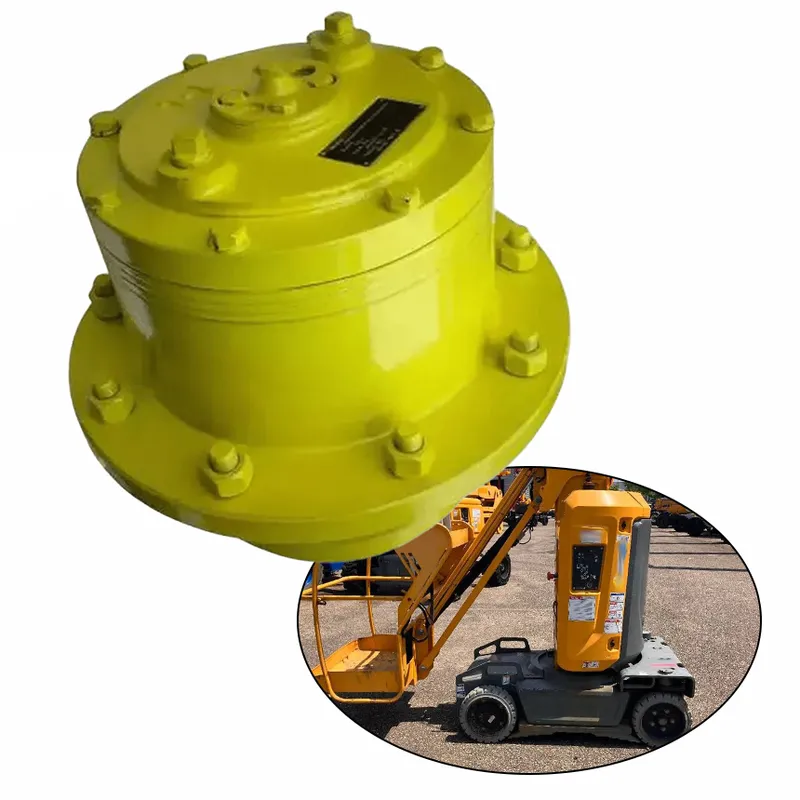
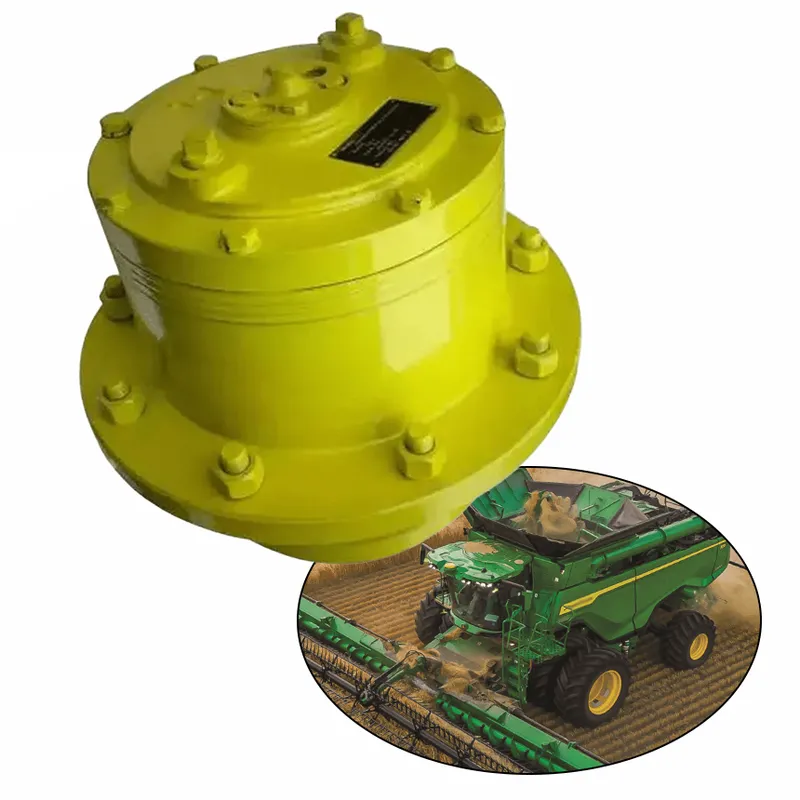
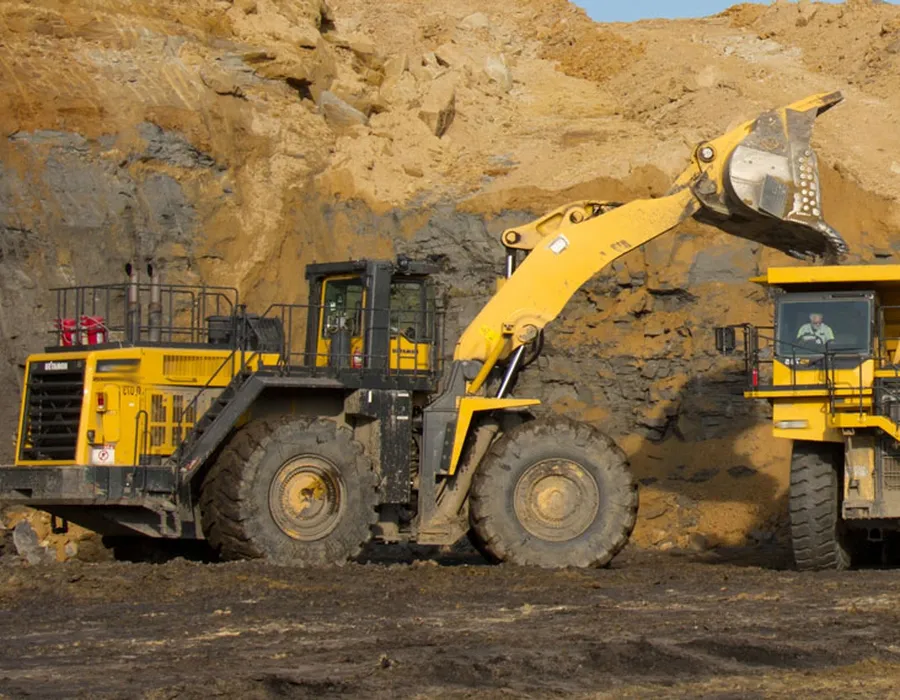 | 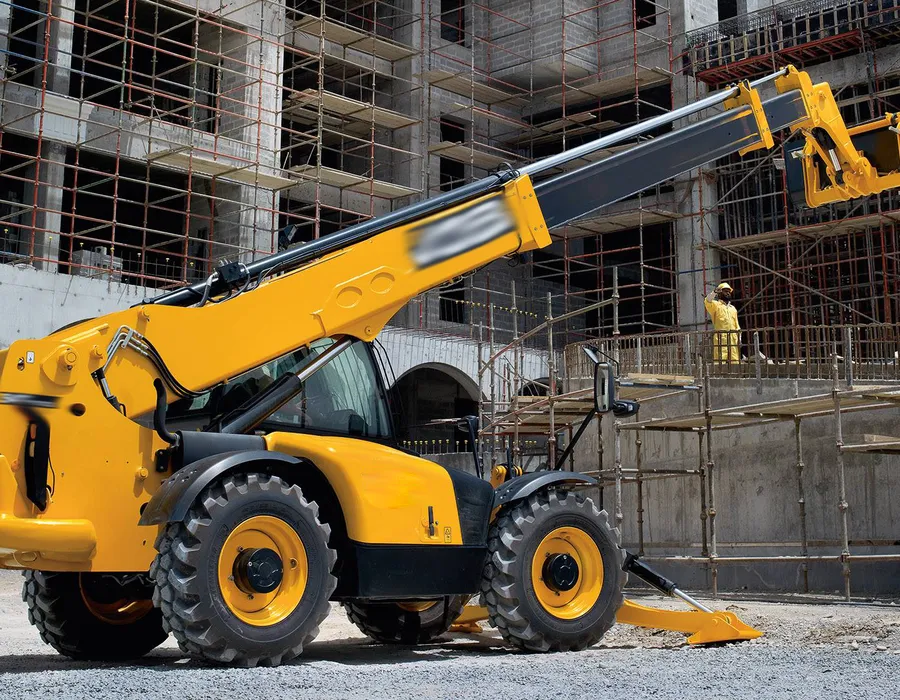 |
| Entraînement planétaire par roue pour chargeuses sur pneus minières | Entraînement planétaire pour chariots télescopiques |
Planetary Wheel Drive Gearbox Installation Steps
1. Pre-Installation Inspection and Preparation
Before beginning the installation of the wheel drive planetary gearbox on a rice harvester, thoroughly inspect both the gearbox and the connected motor or engine for any damage, ensuring all components are intact and free from debris, foreign objects, or rust, while verifying dimensional matches such as shaft alignments and flange tolerances to guarantee seamless integration in agricultural settings.
2. Alignment of Gearbox with Drive System
Carefully align the gearbox output shaft with the rice harvester's wheel or track drive input, ensuring concentricity and parallelism between flanges to prevent operational issues like gear wear or shaft breakage, particularly important in the uneven and muddy terrains typical of paddy fields during harvesting operations.
3. Connection of Motor or Engine to Gearbox
Naturally connect the motor or engine shaft to the gearbox input without forcing, wiping away any anti-rust oil and confirming proper keyway positioning, to facilitate efficient power transmission essential for the rice harvester's propulsion and functional components like threshing systems.
4. Initial Bolt Installation and Tightening
Insert mounting bolts into the threaded holes without fully tightening, then progressively tighten them in a diagonal sequence to distribute force evenly, avoiding excessive axial or radial stress that could damage internal bearings or gears in the demanding rice harvesting environment.
5. Torque Application and Securing Components
Use a torque wrench to tighten all bolts and clamping mechanisms to the manufacturer's specified values, including ring gears, planet carriers, and sun gears if assembling internally, ensuring the assembly withstands high loads and vibrations encountered in rice fields for reliable performance.
6. Final Verification and System Integration
After assembly, reinstall any covers or dust protections, verify gear ratios and control mechanisms for speed adjustments, and integrate the gearbox fully into the rice harvester's drive system, conducting operational tests to confirm smooth power delivery to wheels or tracks without noise or slippage.
Informations complémentaires
| Édité par | Yjx |
|---|