
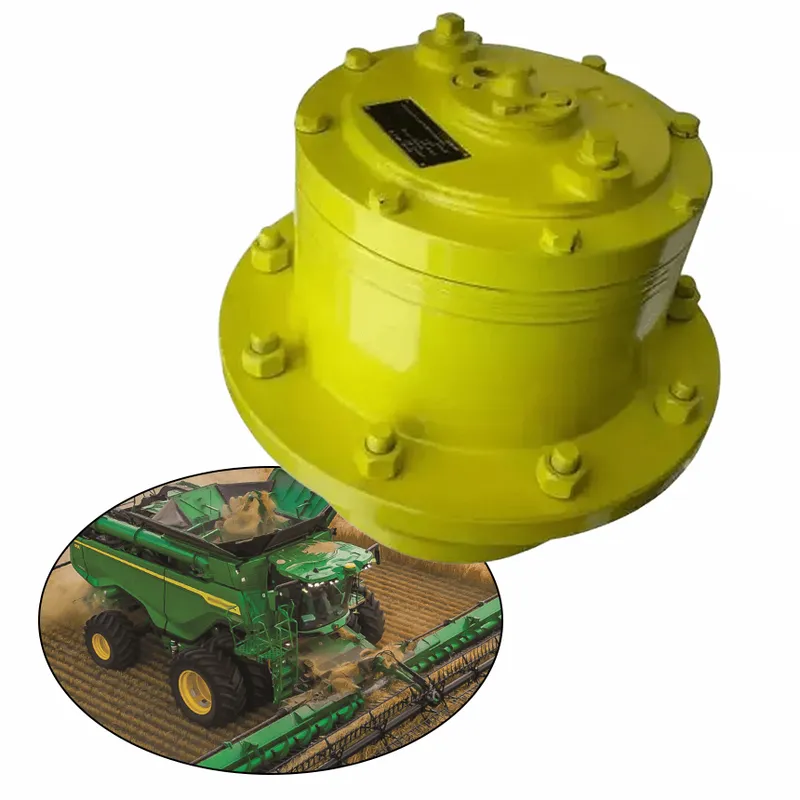
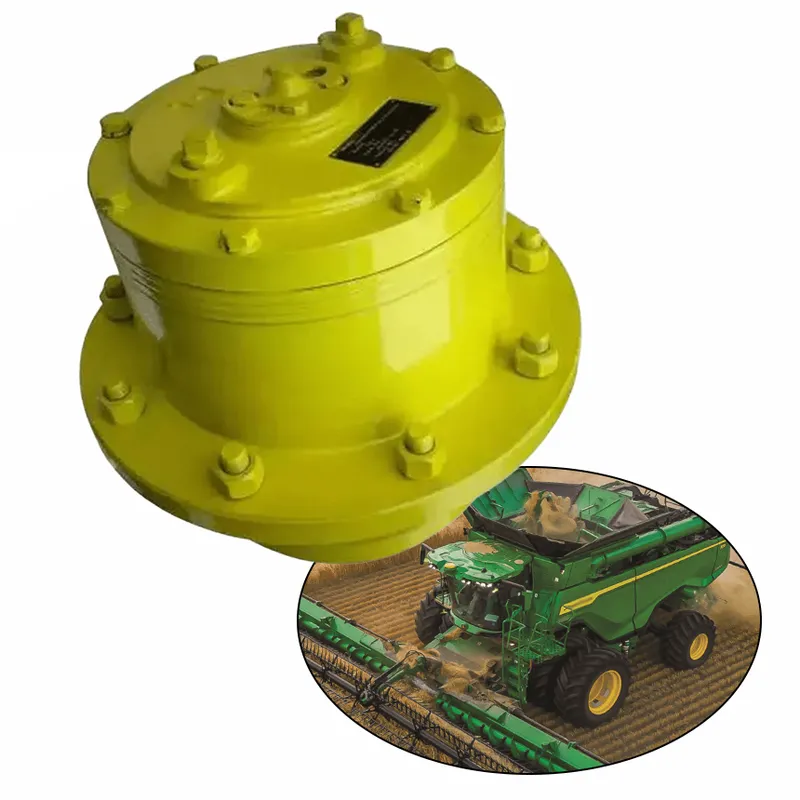
Réducteur à engrenages planétaires pour moissonneuses-batteuses
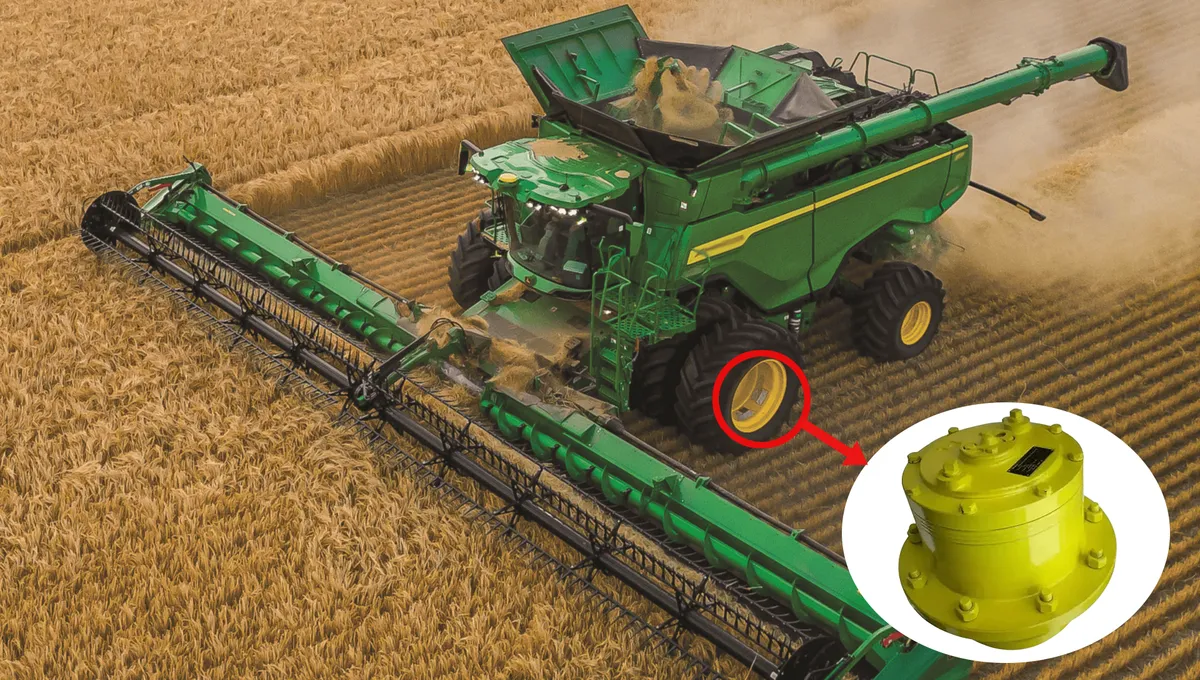
The planetary wheel drive gearbox for combine harvesters is a compact and efficient transmission system employing an epicyclic gear mechanism to achieve torque multiplication and speed reduction, essential for powering the wheels of agricultural machinery. In the context of combine harvesters, this wheel drive planetary gearbox is typically integrated directly into the wheel hubs or axles, facilitating reliable propulsion and enhanced traction on uneven terrain during operations such as cutting, threshing, and crop gathering.
The planetary wheel drive gearbox for combine harvesters is a compact and efficient transmission system employing an epicyclic gear mechanism to achieve torque multiplication and speed reduction, essential for powering the wheels of agricultural machinery. It consists of key components, including a central sun gear that receives input torque from the engine, multiple planet gears revolving around the sun gear while meshed with an outer ring gear, and a carrier that connects the planet gears to the output shaft, enabling high torque output in a space-efficient design.
In the context of combine harvesters, this wheel drive planetary gearbox is typically integrated directly into the wheel hubs or axles, facilitating reliable propulsion and enhanced traction on uneven terrain during operations such as cutting, threshing, and crop gathering. Its design supports heavy loads, minimizes noise emissions, and promotes fuel efficiency, while offering durability against harsh environmental conditions like mud, dust, and prolonged use.
Dimensions de la transmission planétaire
Définitions techniques
| Symboles | Unités de mesure | Description |
| je | - | Rapport de réduction |
| T2max | [Nm] | Couple de sortie maximal |
| T2p | [Nm] | Couple de sortie maximal |
| T2maxint | [Nm] | Couple intermittent maximal |
| T2cont | [Nm] | Couple de sortie continu |
| Pcont | [kW] | Puissance continue maximale |
| Pinte | [kW] | Puissance intermittente maximale |
| n1max | [tr/min] | Vitesse d'entrée maximale |
| n2max | [tr/min] | Vitesse de sortie maximale |
GR 80
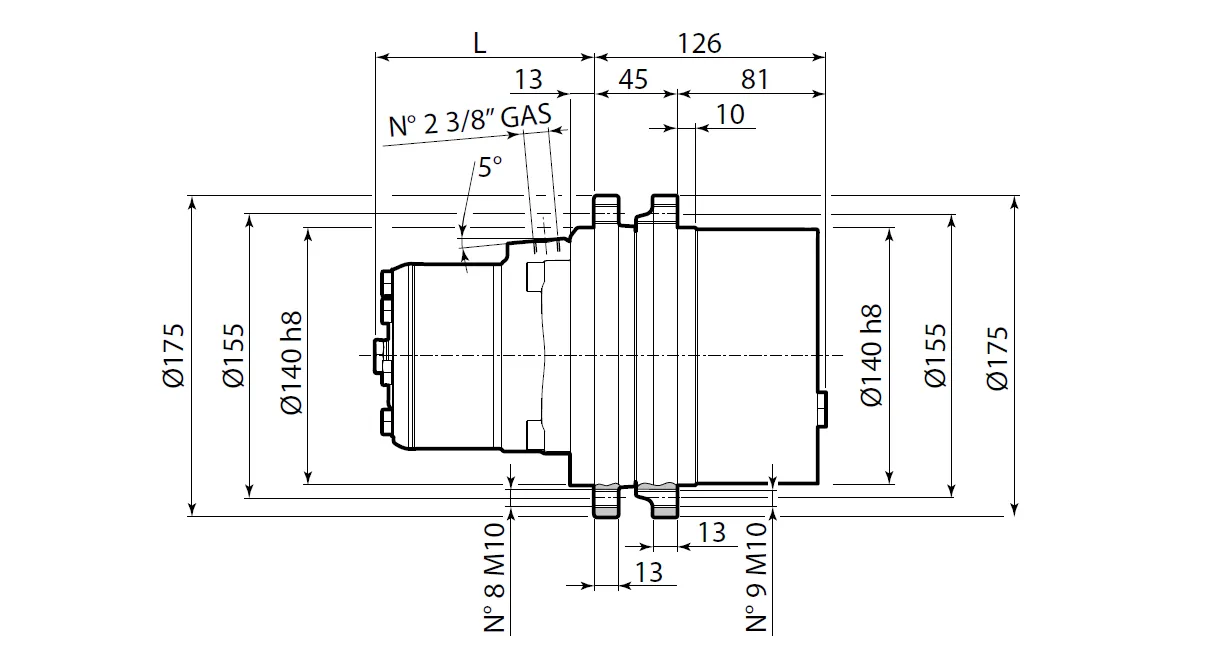
| Taper | Affichage du moteur [cc] | Disp. totale [cc] | je | Couple | Vitesse n2max | Pouvoir | |||||||
| T2cont | T2maxint | T2p | Pcont [kW] | Pinte [kW] | |||||||||
| [Nm] | Δp [bar] | [Nm] | Δp [bar] | [Nm] | Δp [bar] | [tr/min] | portata couler [l/min] | ||||||
| GR80-MR50 | 51,6 | 269,9 | 5,23 | 470 | 145 | 570 | 175 | 630 | 205 | 115 | 30 | 5,5 | 7 |
| GR80-MR80 | 80,3 | 420,0 | 800 | 145 | 960 | 175 | 1060 | 205 | 68 | 30 | 5,5 | 7 | |
| GR80-MR100 | 99,8 | 522,0 | 800 | 115 | 1000 | 145 | 1310 | 205 | 55 | 30 | 5,5 | 7 | |
| GR80-MR125 | 125,7 | 657,4 | 800 | 95 | 1000 | 120 | 1500 | 190 | 45 | 30 | 5,5 | 7 | |
| GR80-MR160 | 159,6 | 834,7 | 800 | 75 | 1000 | 95 | 1500 | 145 | 33 | 30 | 5 | 7 | |
| GR80-MR200 | 199,8 | 1045,0 | 800 | 60 | 1000 | 75 | 1500 | 115 | 26 | 30 | 5 | 7 | |
| GR80-MR250 | 249,3 | 1303,8 | 800 | 50 | 1000 | 60 | 1500 | 95 | 21 | 30 | 4,5 | 6 | |
GR 200
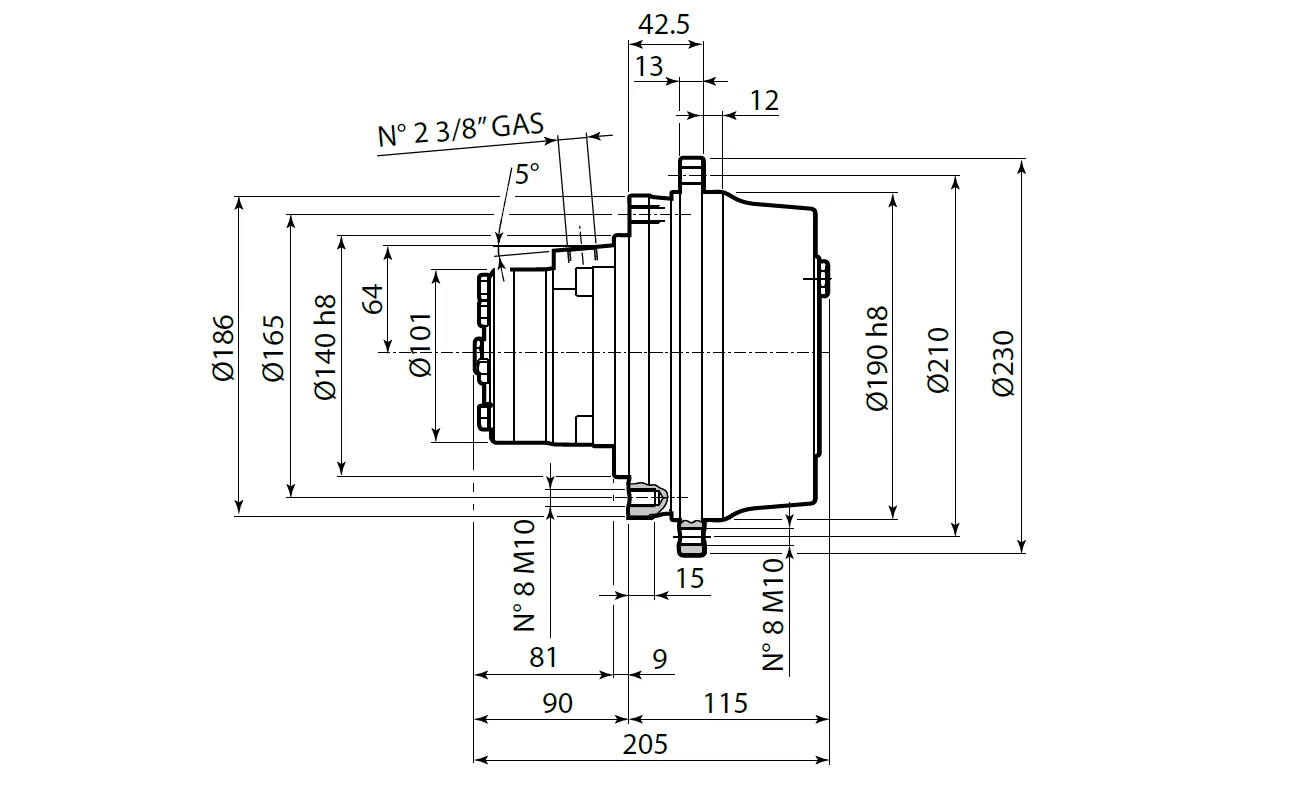
| Taper | Affichage du moteur [cc] | Disp. totale [cc] | je | Couple | Vitesse n2max | Pouvoir | |||||||
| T2suite | T2maxint | T2p | Pcont [kW] | Pinte [kW] | |||||||||
| [Nm] | Δp [bar] | [Nm] | Δp [bar] | [Nm] | Δp [bar] | [tr/min] | portata couler [l/min] | ||||||
| GR200-MR50 | 51,6 | 319,9 | 6,20 | 560 | 145 | 670 | 175 | 740 | 205 | 98 | 30 | 5,5 | 7 |
| GR200-MR80 | 80,3 | 497,9 | 950 | 145 | 1150 | 175 | 1250 | 205 | 58 | 30 | 5,5 | 7 | |
| GR200-MR100 | 99,8 | 618,8 | 1180 | 145 | 1420 | 175 | 1560 | 205 | 46 | 30 | 5,5 | 7 | |
| GR200-MR125 | 125,7 | 779,3 | 1450 | 145 | 1750 | 175 | 1920 | 205 | 38 | 30 | 5,5 | 7 | |
| GR200-MR160 | 159,6 | 989,5 | 1600 | 125 | 2100 | 165 | 2450 | 205 | 29 | 30 | 5 | 7 | |
| GR200-MR200 | 199,8 | 1238,8 | 1600 | 100 | 2150 | 135 | 2500 | 165 | 23 | 30 | 5 | 7 | |
| GR200-MR250 | 249,3 | 1545,7 | 1600 | 80 | 2150 | 105 | 2500 | 135 | 18 | 30 | 4,5 | 6 | |
| GR200-MR315 | 315,7 | 1957,3 | 1600 | 65 | 2150 | 85 | 2500 | 110 | 15 | 30 | 4 | 5 | |
| GR200-MR375 | 372,6 | 2310,1 | 1600 | 55 | 2150 | 70 | 2500 | 90 | 12 | 30 | 3,5 | 4,5 | |
EH 210
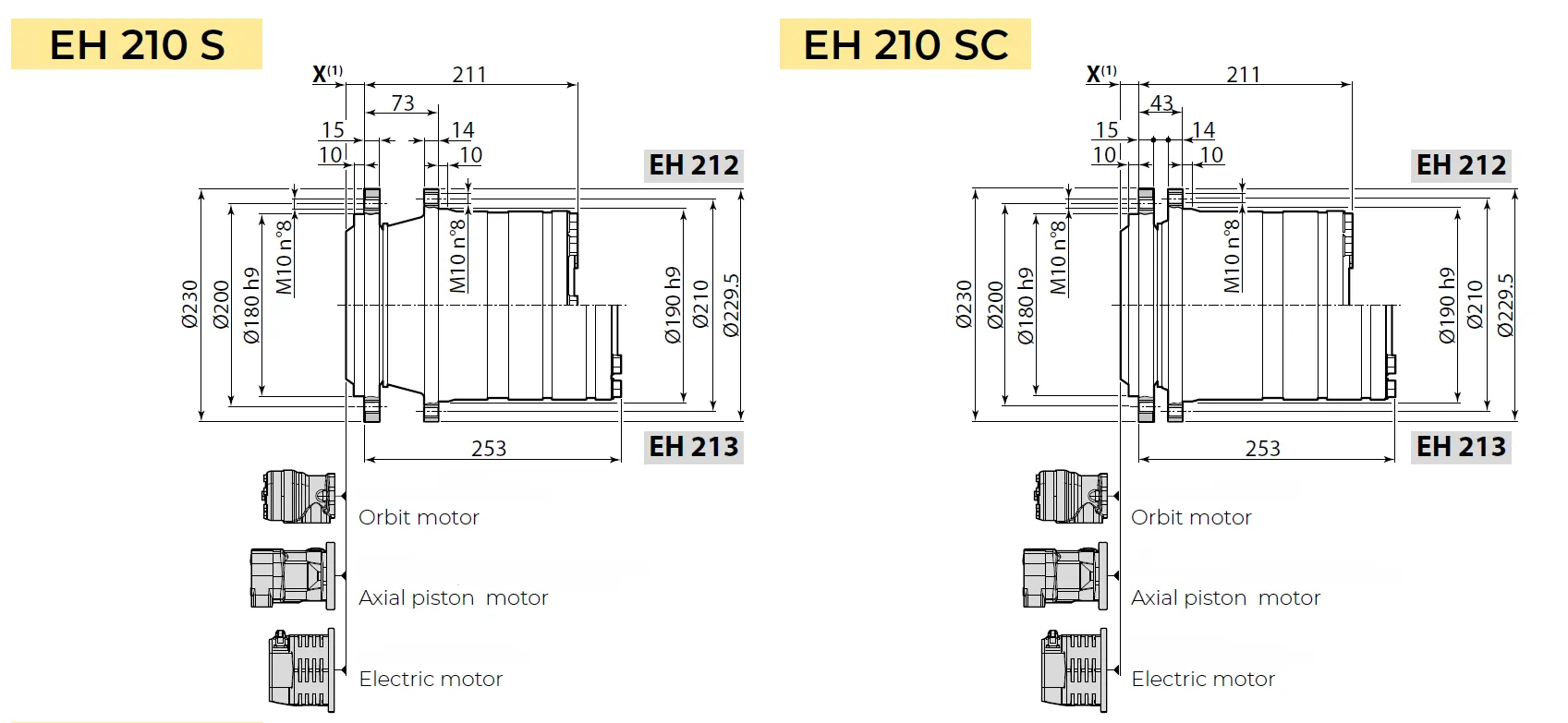
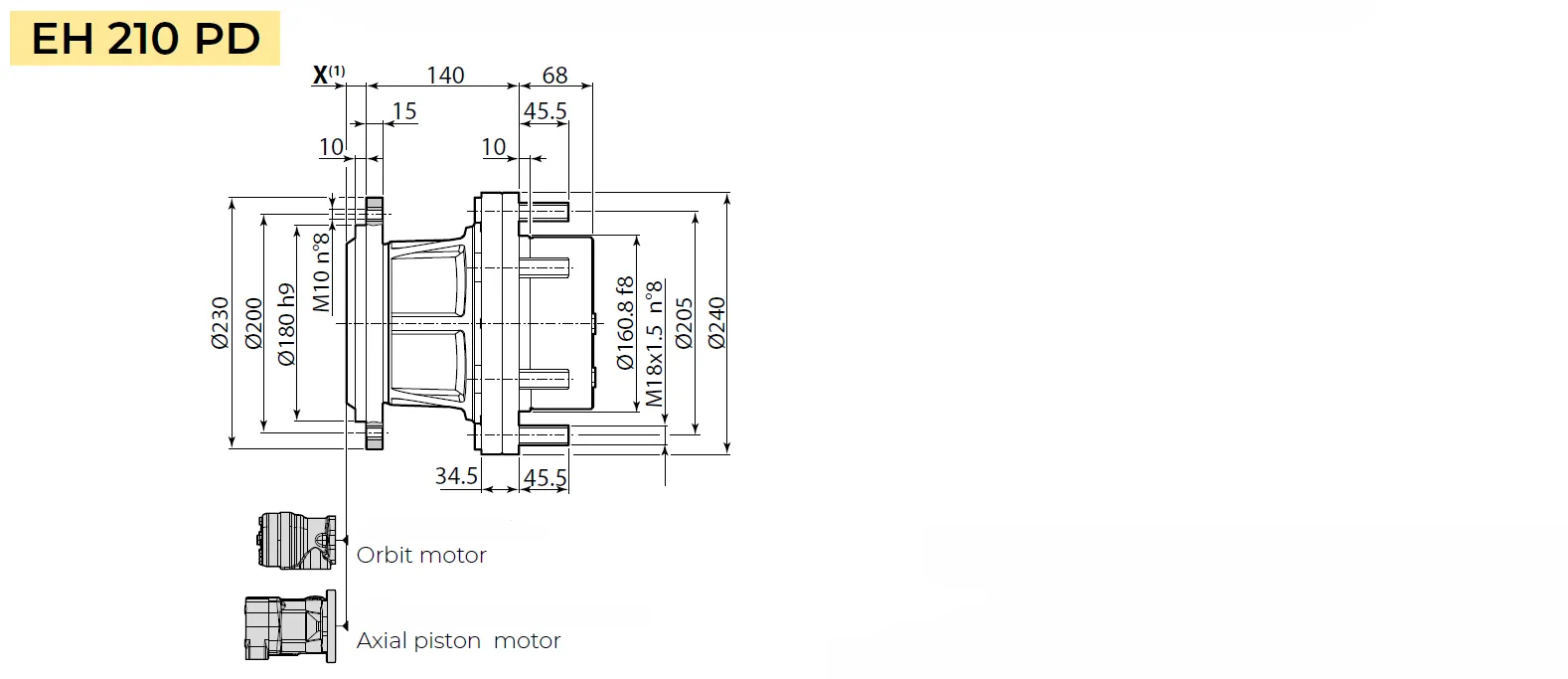
| Taper | Poids | Quantité d'huile | i (da÷a / De÷à) | T2max [Nm] | n1max [tr/min] | ||||
| EH 212 | EH 213 | EH 212 | EH 213 | EH 212 | EH 213 | ||||
| EH 210 S | 35 | 40 | 0.8 | 1 | 11 ÷ 29 | 41 ÷ 129 | 3950 | 3500 | |
| EH 210 SC | |||||||||
| EH 210 PD | - | - | |||||||
EH 240
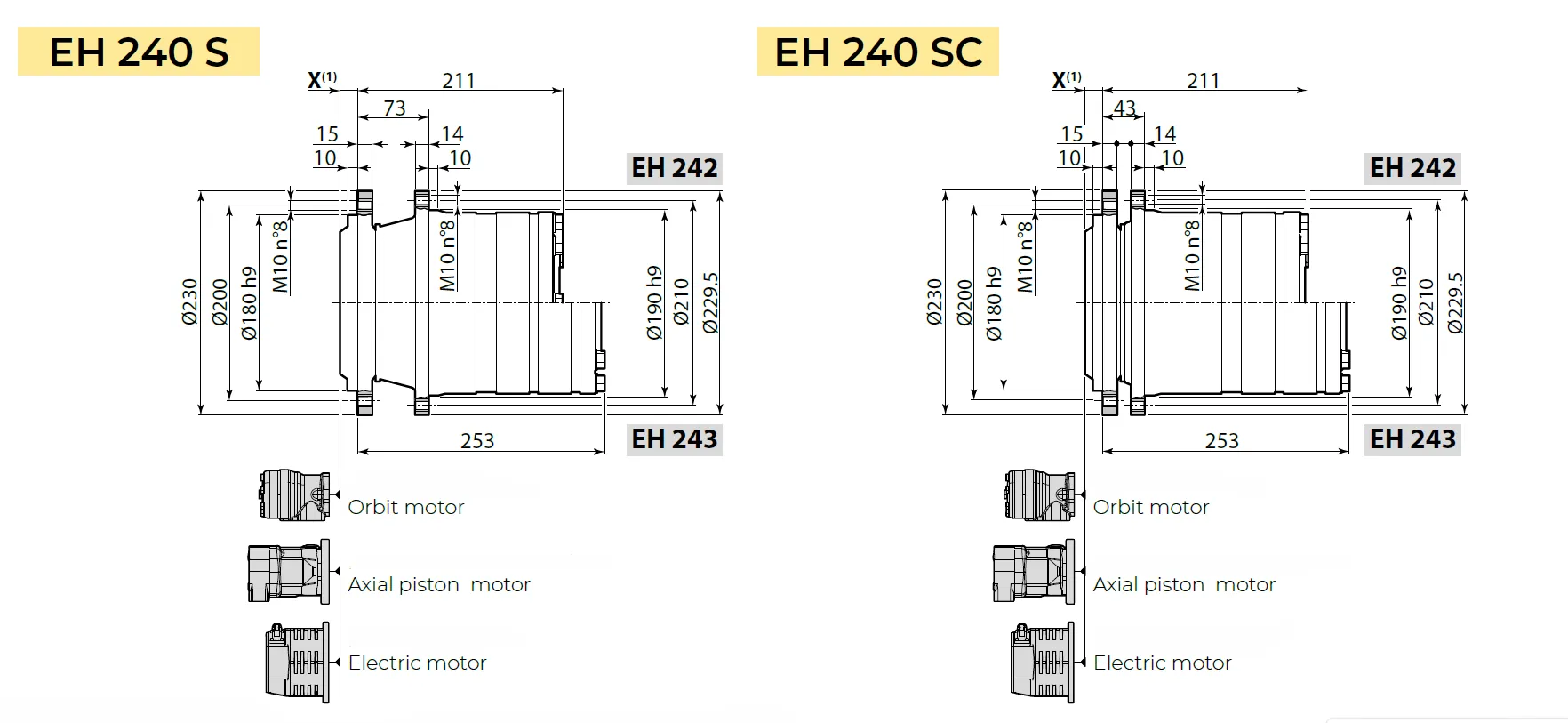
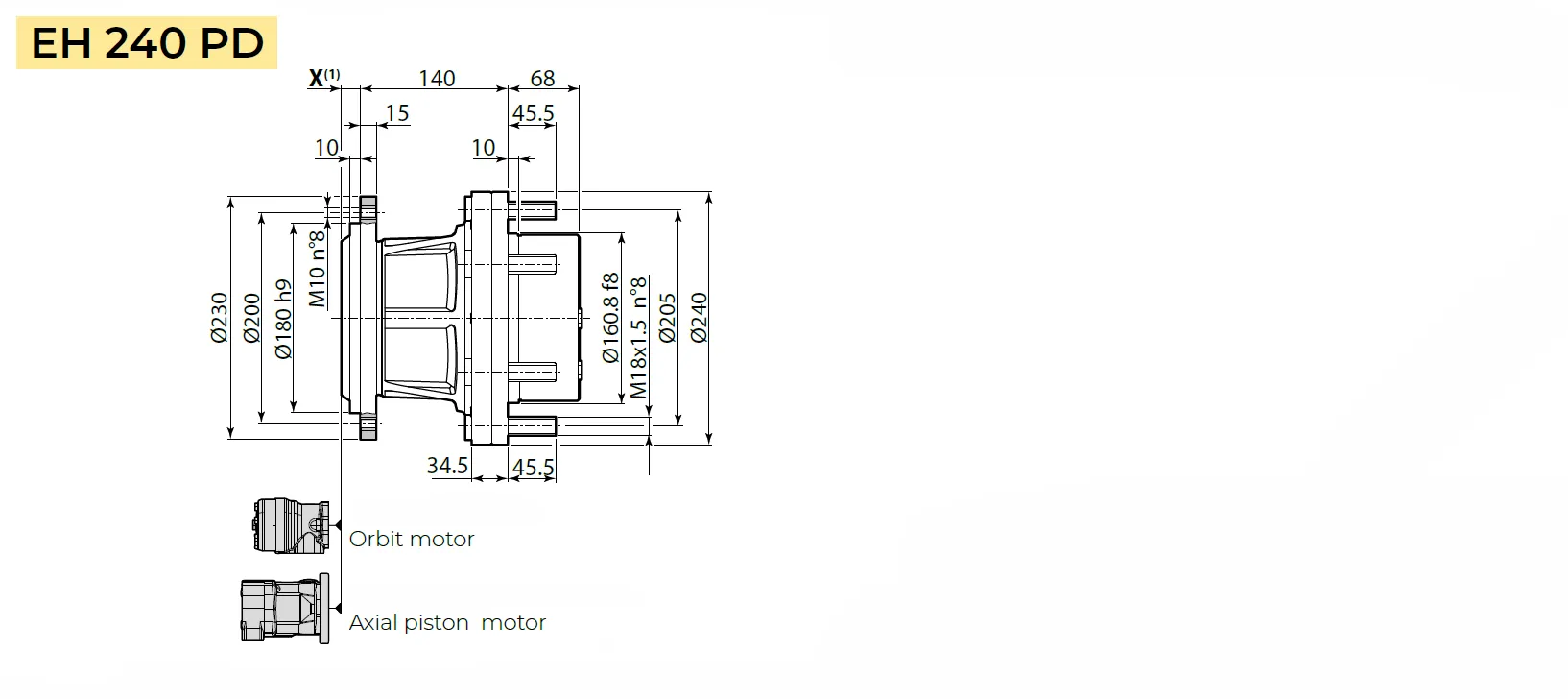
| Taper | Poids | Quantité d'huile | i (da÷a / De÷à) | T2max [Nm] | n1max [tr/min] | ||||
| EH 242 | EH 243 | EH 242 | EH 243 | EH 242 | EH 243 | ||||
| EH 240 S | 35 | 40 | 0.8 | 1 | 12 ÷ 31 | 45 ÷ 135 | 5600 | 3500 | |
| EH 240 SC | |||||||||
| EH 240 PD | - | - | |||||||
EH 350
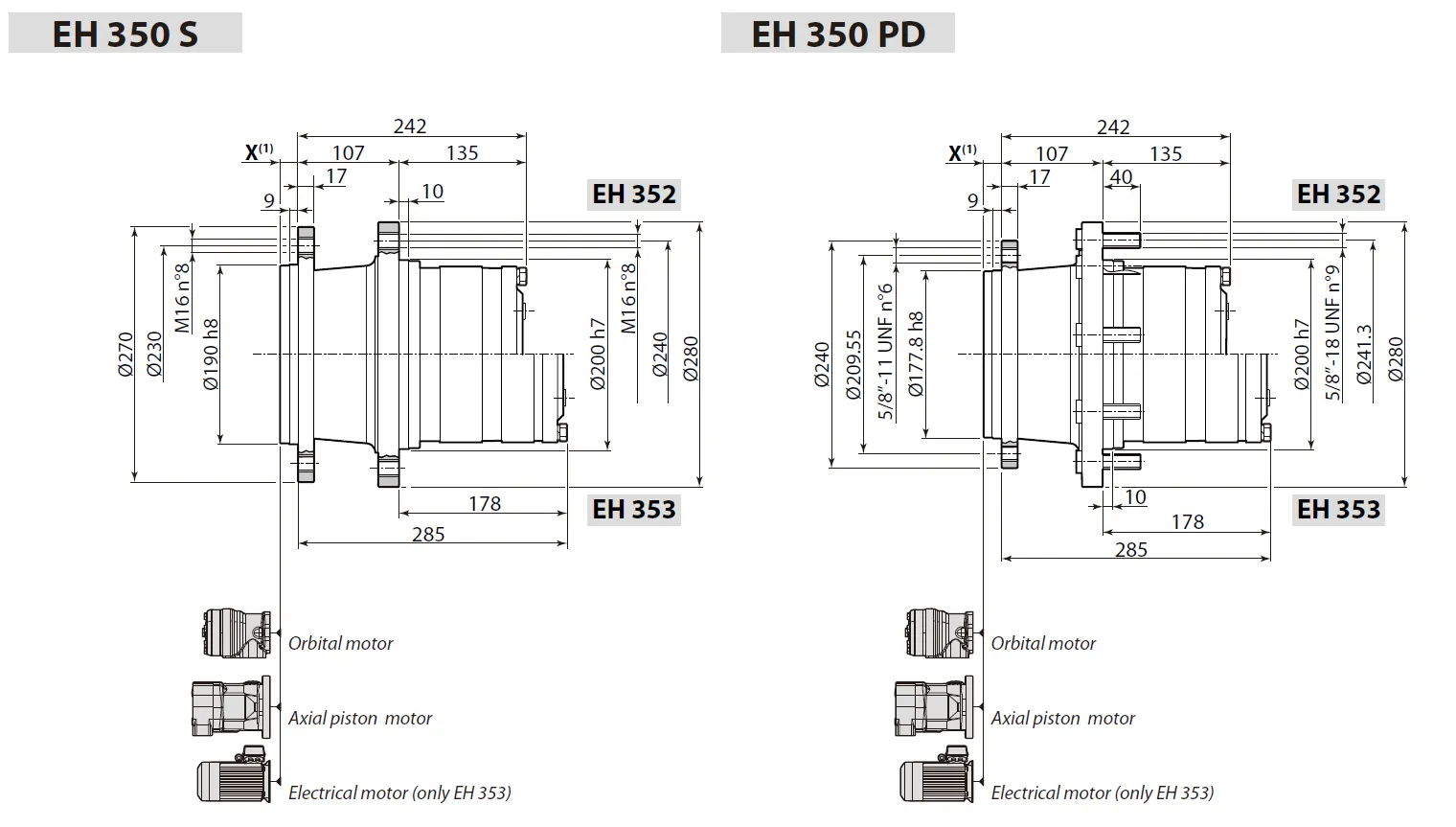
| Taper | Poids | Quantité d'huile | i (da÷a / De÷à) | T2max [Nm] | n1max [tr/min] | ||||
| EH 352 | EH 353 | EH 352 | EH 353 | EH 352 | EH 353 | ||||
| EH 350 S | 55 | 60 | 1 | 1.2 | 15 ÷ 31 | 52 ÷ 135 | 7200 | 3500 | |
| EH 350 PD | |||||||||
EH 610
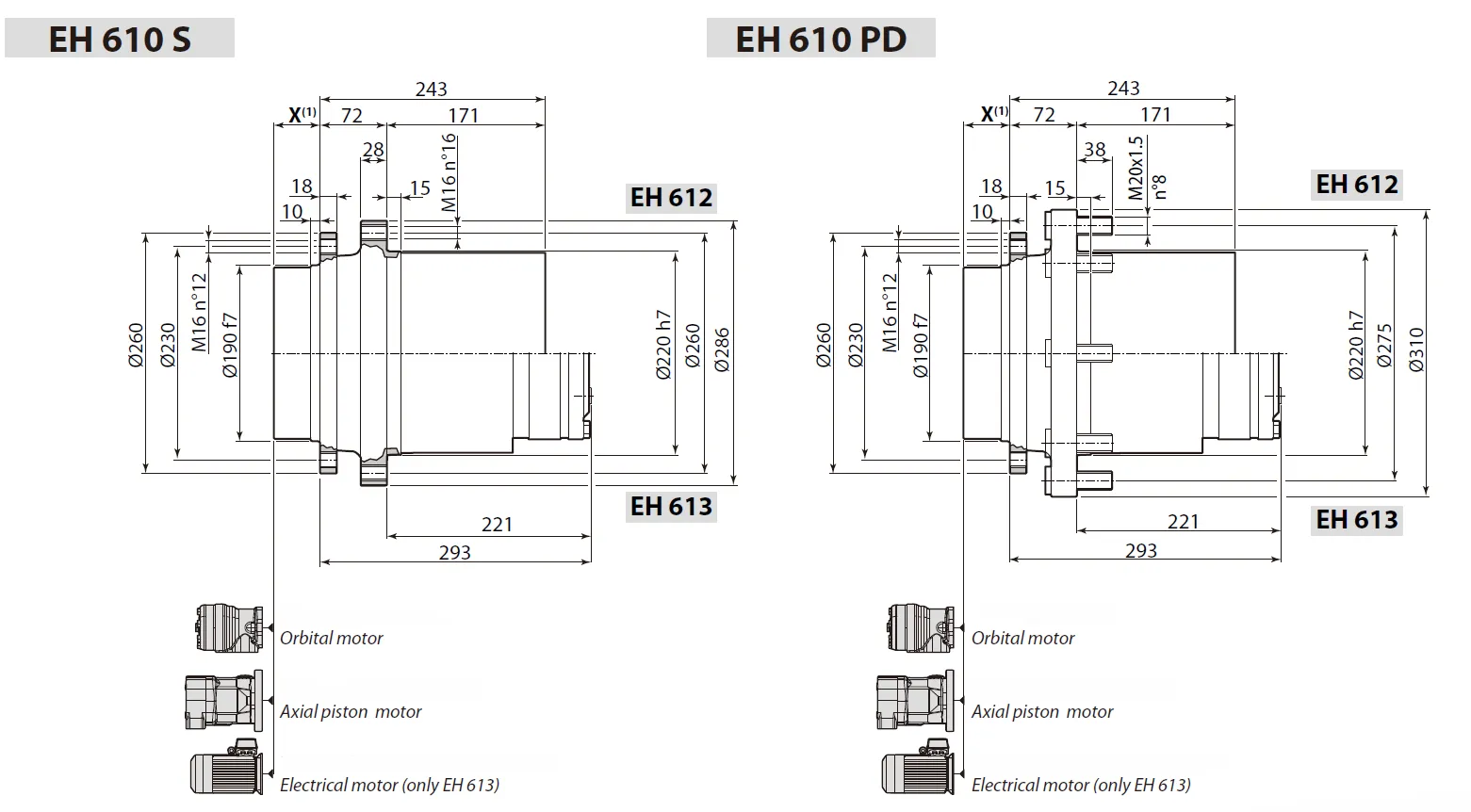
| Taper | Poids | Quantité d'huile | i (da÷a / De÷à) | T2max [Nm] | n1max [tr/min] | ||||
| EH 612 | EH 613 | EH 612 | EH 613 | EH 612 | EH 613 | ||||
| EH 610 S | 60 | 70 | 1.2 | 1.5 | 12 ÷ 31 | 47 ÷ 138 | 13500 | 3500 | |
| EH 610 PD | |||||||||
EH 910
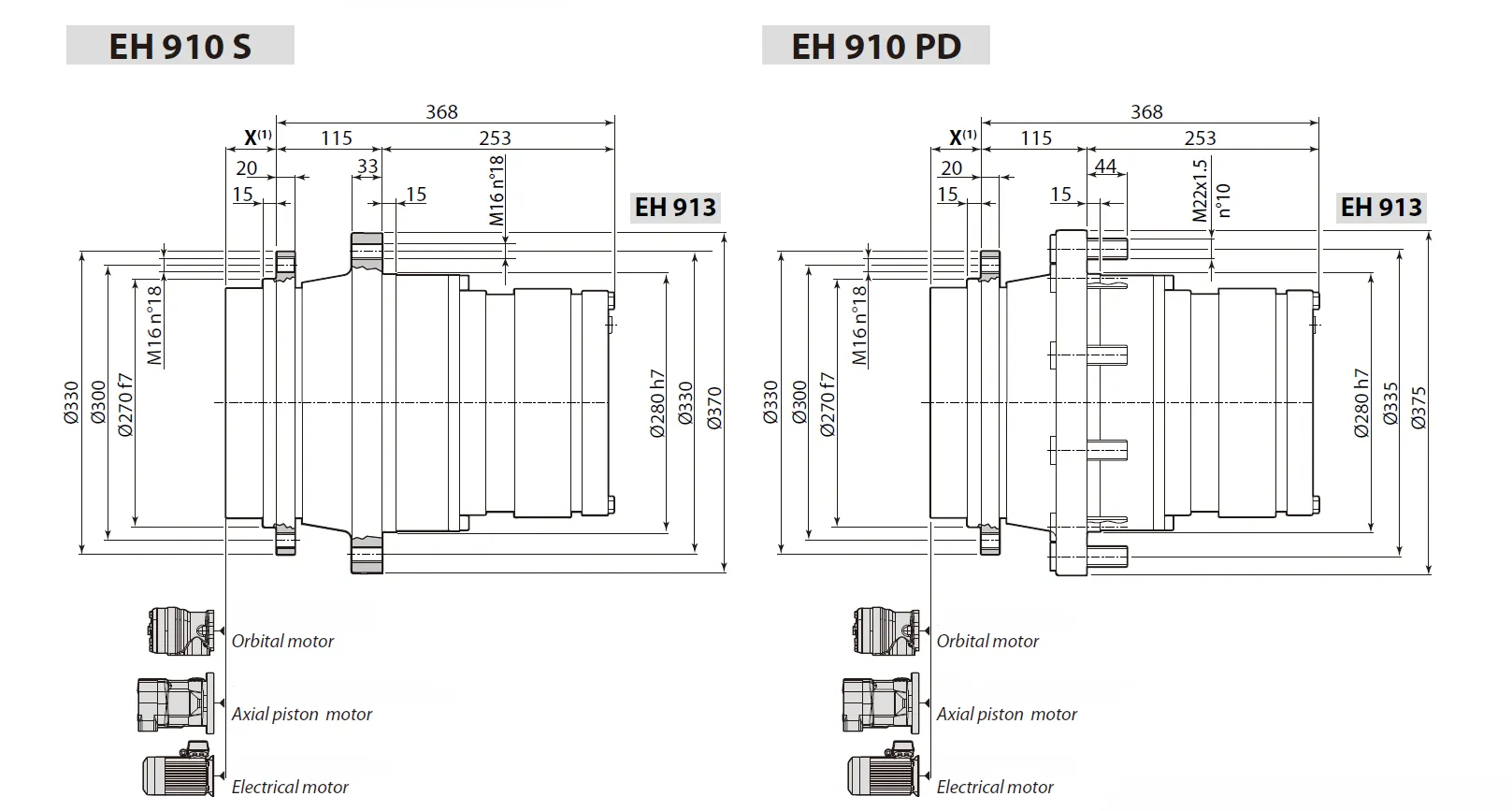
| Taper | Poids | Quantité d'huile | i (da÷a / De÷à) | T2max | n1max | |
| EH 913 | EH 913 | EH 913 | [Nm] | [tr/min] | ||
| EH 910 S | 130 | 1 | 47 ÷ 131 | 24200 | 3500 | |
| EH 910 PD | ||||||
Version S

| Taille | Dimensions | ||||||||||
| D1 | D2 | D3 | D4 | D5 | D6 | D7 | D8 | L1 | L2 | L3 | |
| EH 210 S | 230 | 200 | 180 h9 | 190 h9 | 210 | 229.5 | M10 n°8 | M10 n°8 | 253 | 73 | 180 |
| EH 240 S | 230 | 200 | 180 h9 | 190 h9 | 210 | 229.5 | M10 n°8 | M10 n°8 | 253 | 73 | 180 |
| EH 350 S | 270 | 230 | 190 h8 | 200 h7 | 240 | 280 | M16 n°8 | M16 n°8 | 242 | 107 | 178 |
| EH 610 S | 260 | 230 | 190 f7 | 220 h7 | 260 | 286 | M16 n°12 | M16 n°16 | 243 | 72 | 171 |
| EH 910 S | 330 | 300 | 270 f7 | 280 h7 | 350 | 370 | M16 n°18 | M16 n°18 | 368 | 115 | 253 |
Version PD
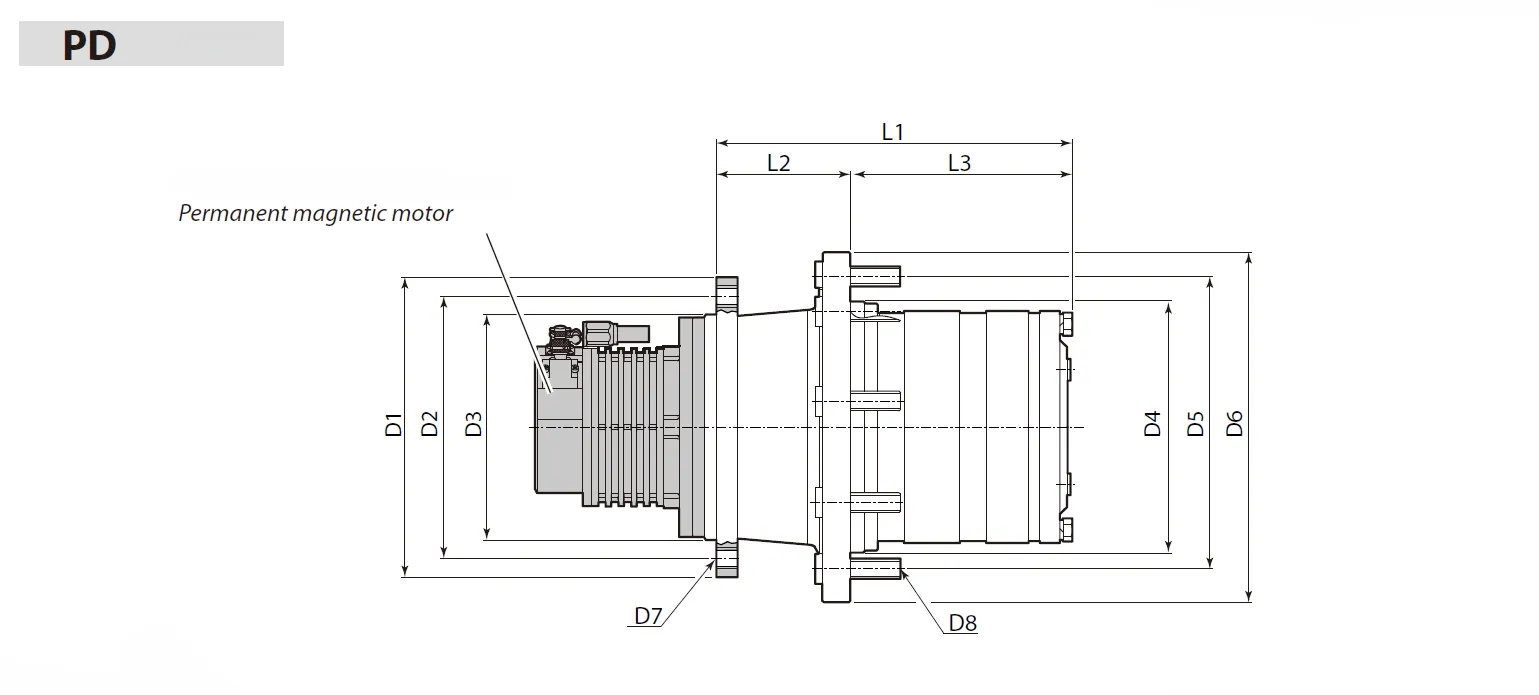
| Taille | Dimensions | ||||||||||
| D1 | D2 | D3 | D4 | D5 | D6 | D7 | D8 | L1 | L2 | L3 | |
| EH 210 PD | 230 | 200 | 180 h9 | 160,8 f8 | 205 | 240 | M10 (8x) | M18x1,5 (6x) | 210 | 140 | 70 |
| EH 240 PD | 230 | 200 | 180 h9 | 160,8 f8 | 205 | 240 | M10 (8x) | M18x1,5 (6x) | 210 | 140 | 70 |
| EH 350 PD | 240 | 209.55 | 177,8 h8 | 200 h7 | 241.3 | 280 | 5/8"-11 UNC (6x) | 5/8"-19 UNF (9x) | 285 | 107 | 178 |
| EH 610 PD | 260 | 230 | 190 f7 | 220 h7 | 275 | 310 | M16 (12x) | M20x1,5 (8x) | 293 | 72 | 221 |
| EH 910 PD | 330 | 300 | 270 f7 | 280 h7 | 335 | 375 | M16 (18x) | M22x1,5 (10x) | 368 | 115 | 253 |
Combine Harvester Wheel Drive Planetary Gearbox Advantages
1. Compact and Space-Efficient Design
This planetary wheel drive gearbox features a highly compact structure that integrates seamlessly into the wheel hubs of combine harvesters, allowing for reduced overall vehicle size without compromising performance. Its epicyclic gear arrangement minimizes the footprint, enabling optimization of space for other critical components while maintaining robust power transmission capabilities essential for navigating tight field conditions.
2. High Torque Multiplication and Output
By utilizing a sun gear, planet gears, and ring gear configuration, the planetary system achieves significant torque multiplication, delivering enhanced power to the wheels for handling heavy loads during harvesting operations. This results in improved traction on uneven terrain, reducing slippage and increasing productivity in challenging soil conditions where traditional gearboxes may falter.
3. Superior Efficiency and Fuel Savings
The design promotes efficient power transfer with minimal energy loss, leading to lower fuel consumption and extended operational runtime for combine harvesters. Optimized gear meshing reduces friction and heat generation, contributing to sustainable farming practices by decreasing overall energy demands while maintaining consistent speed and performance across varying workloads.
4. Versatile Gear Ratios for Adaptability
Offering a wide range of reduction ratios, the planetary gearbox allows for precise speed control and torque adjustment tailored to specific harvesting tasks, such as cutting or threshing. This versatility enhances maneuverability in diverse field scenarios, enabling operators to switch seamlessly between high-speed transport and low-speed precision work without mechanical strain.
5. Stable Operation with Reduced Noise and Vibration
The inherent balance of the planetary gear system ensures smooth, stable operation with low noise levels and minimal vibration, improving operator comfort during long harvesting sessions. This stability also contributes to the longevity of connected components in combine harvesters, while integrated features like optimized oil management further enhance reliability in high-demand applications.
Planetary Wheel Drive Gearbox Application Scenarios
1. Agriculture Industry
In agriculture, planetary wheel drive gearboxes are essential for powering combine harvesters, tractors, and feed mixers, enabling efficient torque transmission and enhanced traction on uneven terrain. Their robust design withstands harsh conditions like mud and dust, improving operational reliability and productivity during crop harvesting and field operations.
2. Industrie de la construction
Construction equipment such as excavators, loaders, and cranes utilizes planetary wheel drives for slew drives and track propulsion, delivering high torque multiplication to handle heavy loads and precise movements on job sites. This enhances machine stability, reduces downtime, and supports efficient material handling in demanding environments.
3. Industrie minière
Mining operations rely on wheel drive planetary gearboxes in track drives and cutter heads for underground and surface equipment, providing superior durability and torque for navigating rugged terrains and extracting resources. Their compact structure minimizes space requirements while ensuring reliable performance under extreme pressures and abrasive conditions.
4. Logistics and Material Handling Industry
In logistics, these wheel drive planetary gear reducers drive automated guided vehicles (AGVs), forklifts, and industrial trucks, offering precise speed control and high efficiency for warehouse automation and intralogistics tasks. This facilitates seamless material transport, reduces energy consumption, and boosts throughput in distribution centers and manufacturing facilities.
5. Automotive Industry
Automotive applications incorporate planetary gearbox reducers in off-road vehicles, transmissions, and electric drives, enabling versatile gear ratios for improved acceleration and fuel efficiency. Their lightweight yet strong construction supports advanced mobility solutions, enhancing vehicle performance in both passenger and commercial sectors.
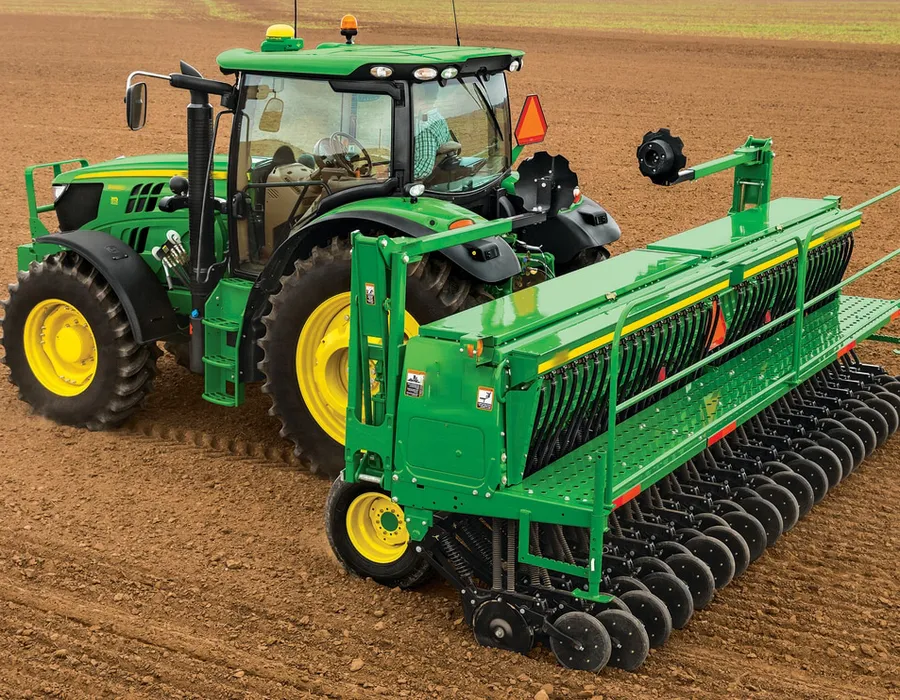 | 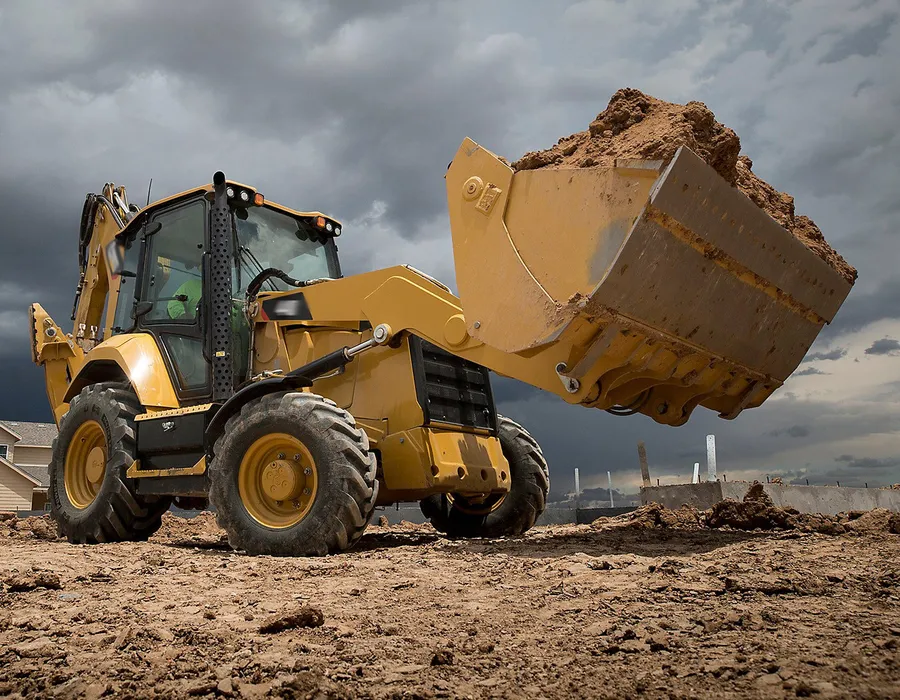 |
| Entraînement par roue planétaire pour semoirs à blé | Entraînement planétaire pour chargeuses-pelleteuses |
 | 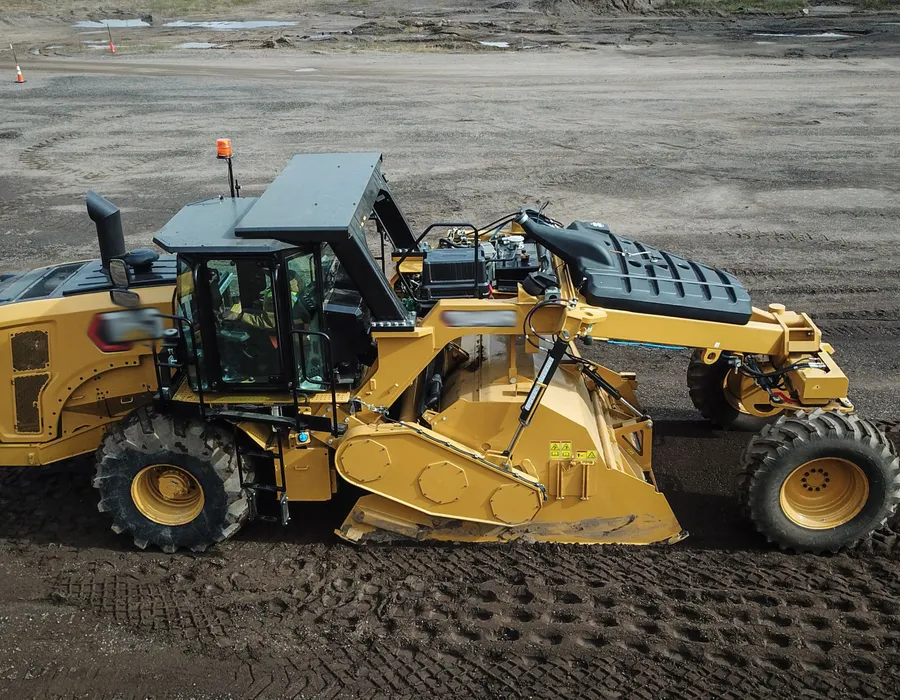 |
| Entraînement par roue planétaire pour rouleaux compresseurs | Entraînement planétaire pour récupérateurs de routes |
Lubrification à l'huile de la boîte de vitesses planétaire à entraînement par roue motrice
1. Prepare the Gearbox and Gather Materials
Begin by parking the vehicle or machinery on a level surface, engaging the safety brakes, and allowing the wheel drive gearbox to cool if recently operated to prevent burns. Assemble necessary tools, including drain pans, wrenches, and the recommended lubricant, such as ISO VG 220 to 320 oil with EP additives, while consulting the manual's specifications for viscosity based on operating temperatures.
2. Drain the Existing Oil
Position a drain pan beneath the planetary gearbox, remove the drain plug using appropriate torque settings to avoid damage, and allow the old oil to fully drain while the lubricant is warm for easier flow. This step removes contaminants and degraded oil, typically after the initial 50 hours of operation and subsequently every 500 hours.
3. Clean and Inspect the Gearbox
After draining, flush the interior with a compatible cleaning solvent or fresh oil to remove residual sludge and debris, then inspect internal components like gears and bearings for wear or damage. Reinstall the drain plug securely with the specified torque, ensuring no leaks, to maintain system integrity before refilling.
4. Select and Add the Appropriate Lubricant
Choose the correct oil type, such as GL-5 grade EP 80/90 for standard applications or synthetic for high-heat environments, and pour it through the fill hole until it reaches the specified level, often midway on the gear set for vertical orientations or to the centerline for horizontal setups.
5. Monitor Filling and Secure Caps
Continue adding oil until it begins to overflow from the level hole, then pause to allow settling before topping off if necessary, ensuring the volume matches manual guidelines, like 8 to 14 quarts depending on orientation. Tighten all caps, including vent and level plugs, to the recommended torques to prevent airlocks or leaks.
6. Test and Verify Lubrication
Operate the planetary gear reducer briefly at low speed to circulate the oil, then recheck the level after a few minutes, adding more if required, and inspect for leaks around seals. Perform a short road test or functional check to confirm smooth operation, adjusting as needed to ensure long-term reliability and reduced friction.
Informations complémentaires
| Édité par | Yjx |
|---|
Produits similaires
-
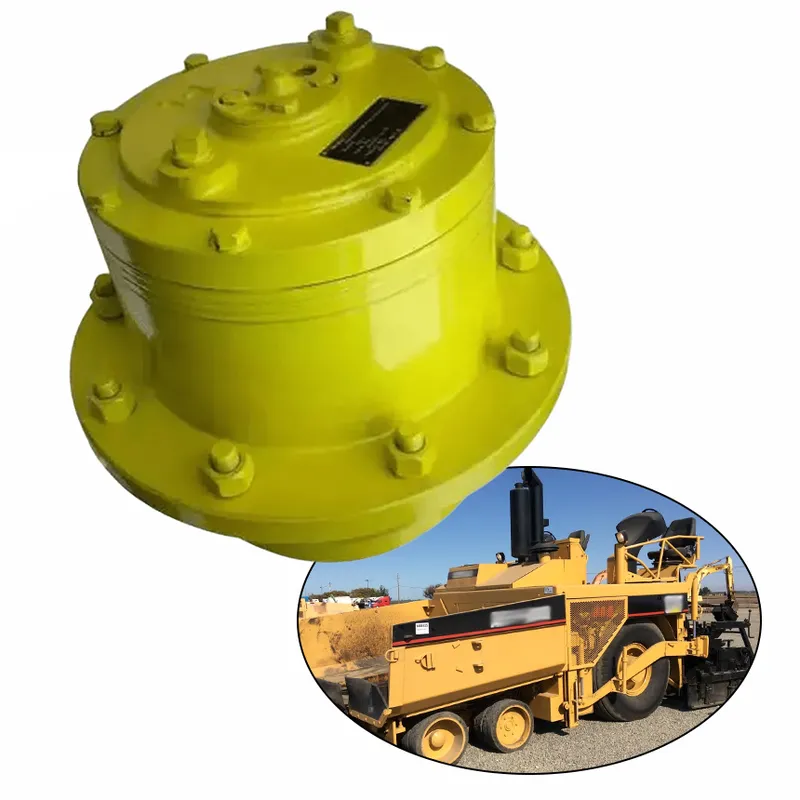
Boîte de vitesses à entraînement planétaire pour finisseurs d'asphalte
-
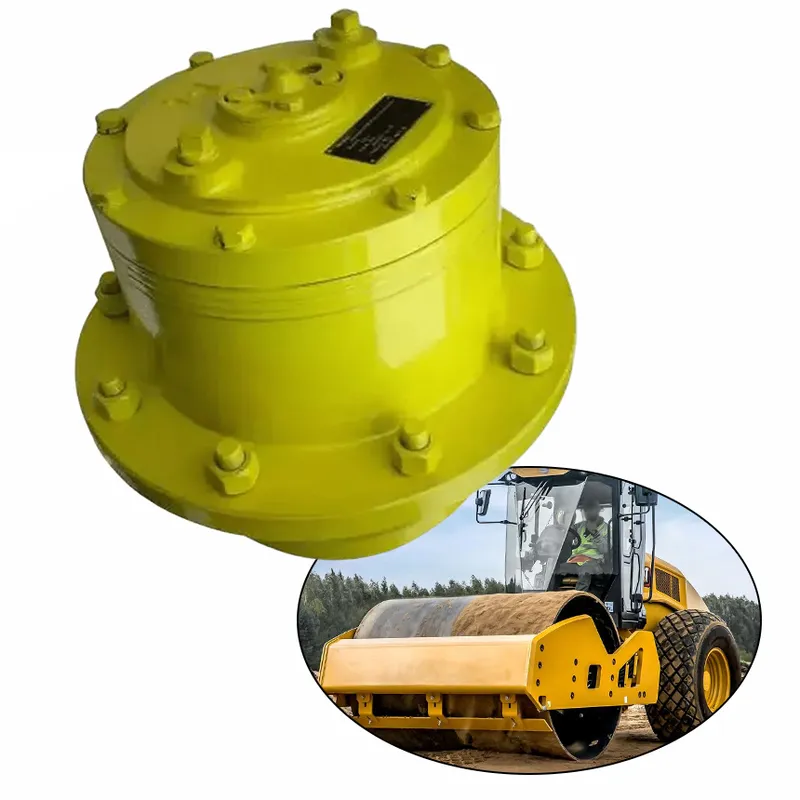
Réducteur à roue planétaire pour rouleaux compresseurs
-
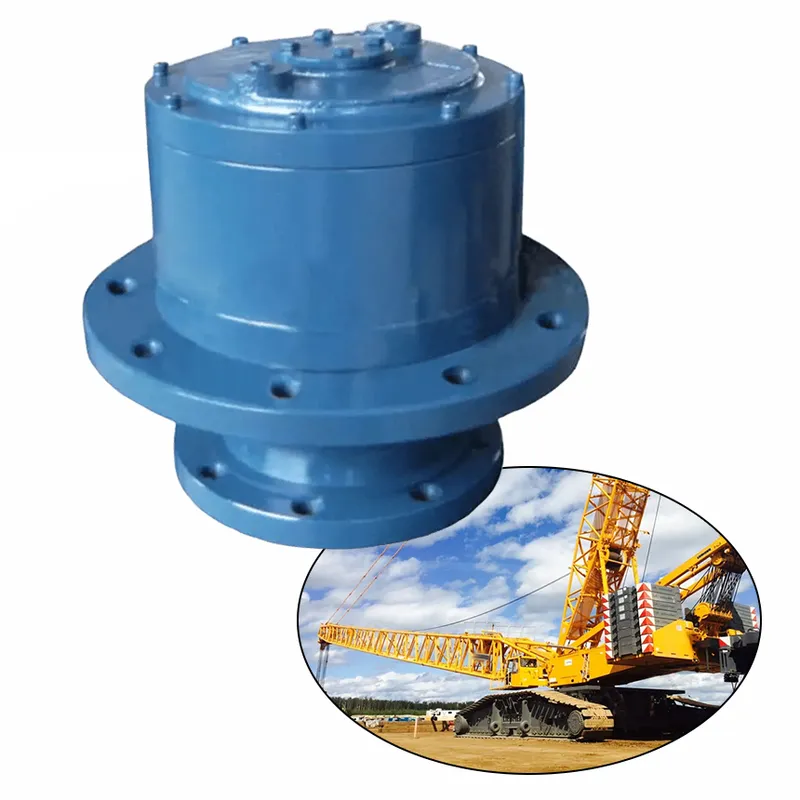
Réducteur planétaire pour grues sur chenilles
-
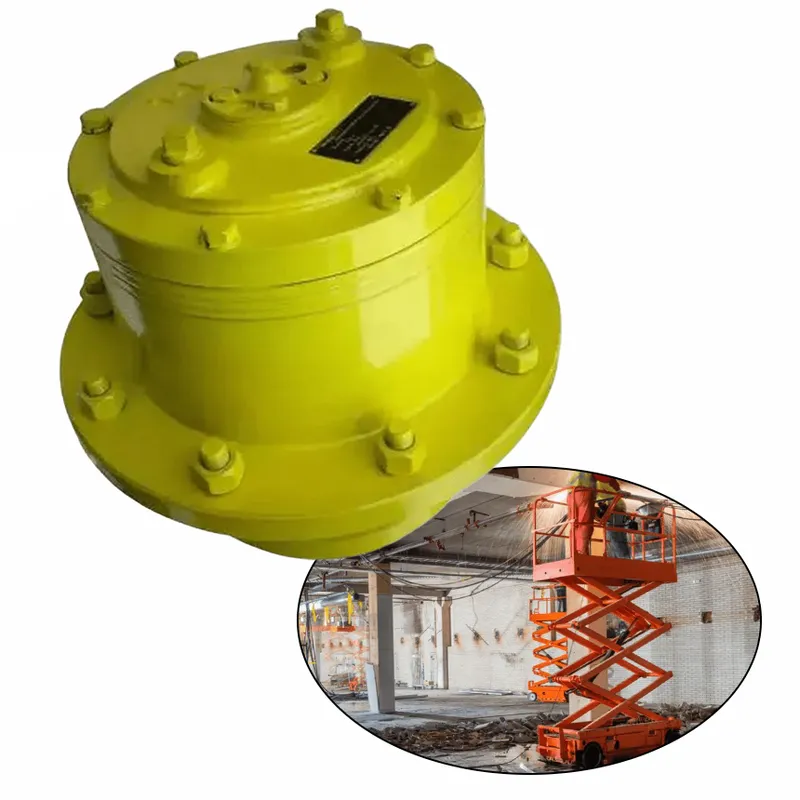
Réducteur à roue planétaire pour nacelles élévatrices à ciseaux
-
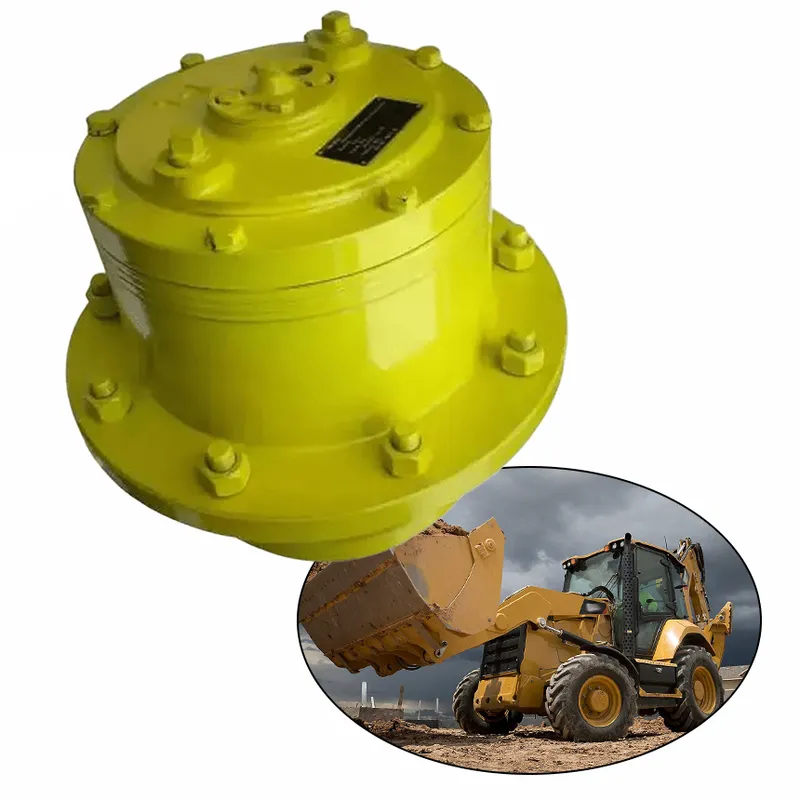
Boîte de vitesses à entraînement planétaire pour chargeuses-pelleteuses