
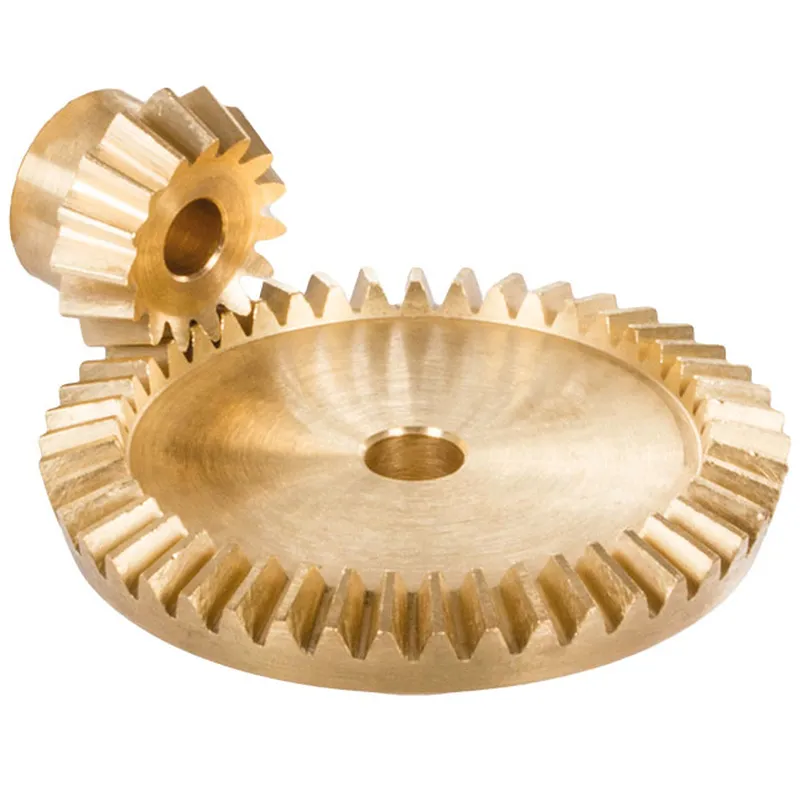
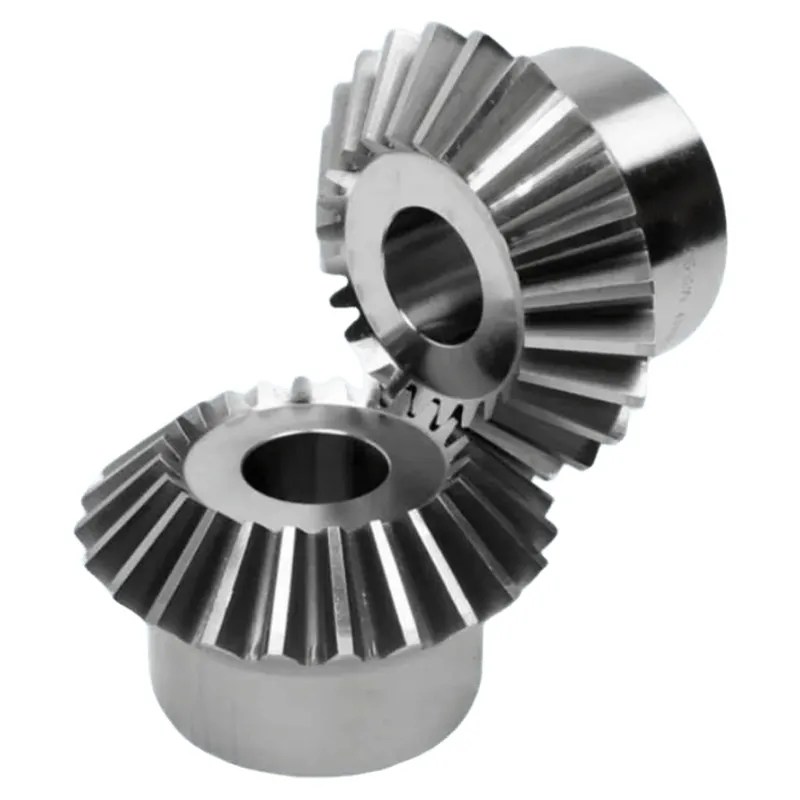
Engrenages coniques en laiton, rapport 2:1, système à dents droites
The brass bevel gears ratio 2:1 straight-tooth system is a mechanical arrangement of bevel gears designed to transmit torque and rotational motion between intersecting shafts, typically at a 90-degree angle. In this system, the gears are made of brass, a durable and corrosion-resistant alloy, which ensures smooth operation and longevity under various conditions. The 2:1 gear ratio means that for every two rotations of the driving gear (the smaller gear), the driven gear (the larger gear) completes one rotation.
The brass bevel gears ratio 2:1 straight-tooth system is a mechanical arrangement of bevel gears designed to transmit torque and rotational motion between intersecting shafts, typically at a 90-degree angle. In this system, the gears are made of brass, a durable and corrosion-resistant alloy, which ensures smooth operation and longevity under various conditions. The 2:1 gear ratio means that for every two rotations of the driving gear (the smaller gear), the driven gear (the larger gear) completes one rotation.
The straight-tooth configuration indicates that the teeth are aligned radially along the gear's face, intersecting at the apex of the bevel. This design is simpler than spiral bevel gears and is ideal for low-speed or low-load applications where precision and cost efficiency are priorities. Commonly used in machinery, robotics, and power transmission systems, this straight bevel gear system offers reliable performance in compact spaces. Its brass construction also reduces friction and noise, making it a preferred choice for applications requiring minimal wear and smooth operation.
Brass Bevel Gear Ratio 2:1
| 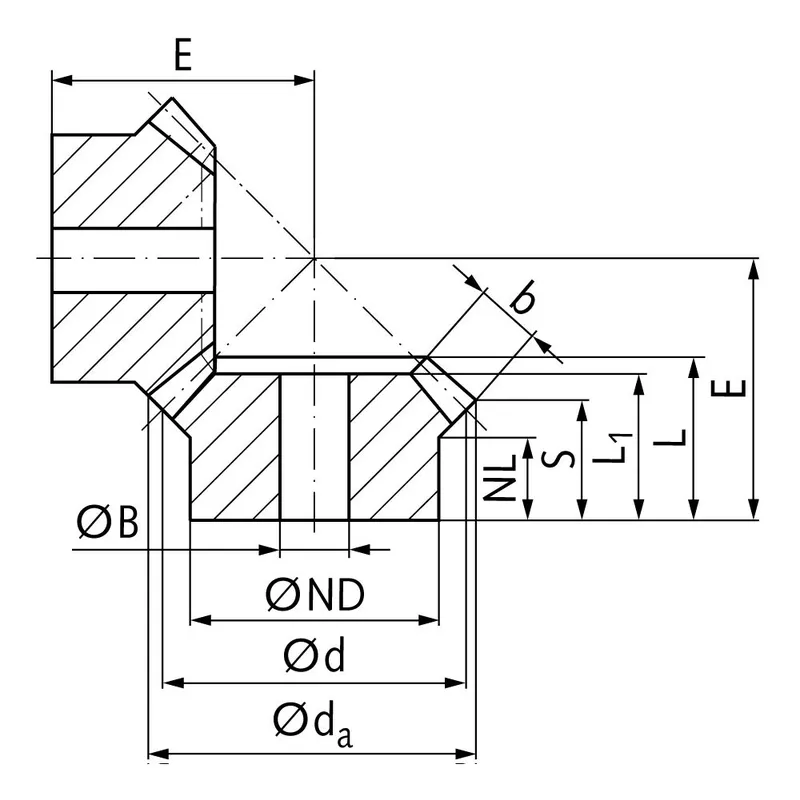 |
| Module | Nombre de dents | dun | d | ND | NL | L1 | L | S | b | BH7 | E | Couple* | Poids |
| mm | mm | mm | mm | mm | mm | mm | mm | mm | mm | Ncm | g | ||
| 0,5 | 20 | 11,2 | 10 | 8 | 4 | 7 | 7,5 | 5,0 | 3 | 4 | 14,65 | 2,7 | 2 |
| 0,5 | 40 | 20,3 | 20 | 12 | 5 | 7,5 | 8,4 | 7,1 | 3 | 4 | 11,83 | 5,4 | 8 |
| 1 | 15 | 17,4 | 15 | 12,5 | 4,5 | 9 | 10,1 | 5,8 | 5 | 5 | 20,2 | 9,4 | 9 |
| 1 | 30 | 30,6 | 30 | 16 | 5 | 9 | 10,8 | 8,8 | 5 | 5 | 15,7 | 18,8 | 27 |
| 1 | 20 | 22,4 | 20 | 15 | 5 | 10 | 11,1 | 6,8 | 5 | 5 | 26,2 | 20,6 | 17 |
| 1 | 40 | 40,6 | 40 | 16 | 8 | 12 | 13,8 | 11,7 | 5 | 6 | 21,1 | 41,2 | 50 |
Différents types d'engrenages coniques
Engrenages coniques droits
Les engrenages coniques droits sont les plus simples. Leurs dents droites sont parallèles à la génératrice du cône primitif. Ils sont utilisés dans des applications à vitesses élevées et charges faibles à moyennes. Cependant, en raison de l'engrènement brutal des dents, les engrenages coniques droits peuvent générer plus de bruit que d'autres types d'engrenages coniques.
Engrenages coniques à spirale
Les engrenages coniques à denture spirale possèdent des dents incurvées obliques par rapport à la génératrice du cône primitif. L'angle de spirale des dents assure un engrènement progressif et régulier, ce qui se traduit par un fonctionnement plus silencieux et une capacité de charge supérieure à celle des engrenages coniques droits. Les engrenages coniques à denture spirale sont couramment utilisés dans les différentiels automobiles et les applications industrielles exigeant des vitesses élevées et des charges importantes.
Engrenages coniques hypoïdes
Les engrenages hypoïdes sont similaires aux engrenages coniques à denture spirale, à une différence notable près : leurs cônes primitifs ne se croisent pas. Leurs axes sont décalés, ce qui permet des diamètres de pignon plus importants et un meilleur contact entre les dents. Cette configuration décalée offre plusieurs avantages, tels qu'une capacité de couple plus élevée, un niveau sonore réduit et une conception plus compacte. Les engrenages hypoïdes sont fréquemment utilisés dans les essieux arrière automobiles et les réducteurs industriels.
Engrenages coniques Zerol
Les engrenages coniques Zerol sont un cas particulier d'engrenages coniques à denture hélicoïdale, où l'angle d'hélice est nul. Cela signifie que les dents sont parallèles à l'axe de rotation, comme pour les engrenages coniques droits. Cependant, contrairement à ces derniers, les engrenages coniques Zerol possèdent un profil de dent incurvé qui permet un engrènement progressif et en douceur. Ils offrent un compromis entre les avantages des engrenages coniques droits et hélicoïdaux, assurant une capacité de charge accrue et un fonctionnement plus silencieux.
Miter Bevel Gears
Miter bevel gears are a specific type of bevel gear where the number of teeth on both gears is equal, and the shaft angle is 90°. This configuration results in a 1:1 gear ratio, making miter gears ideal for applications that require a change in the direction of rotation without altering the speed or torque. Miter gears can have straight, spiral, or Zerol teeth.
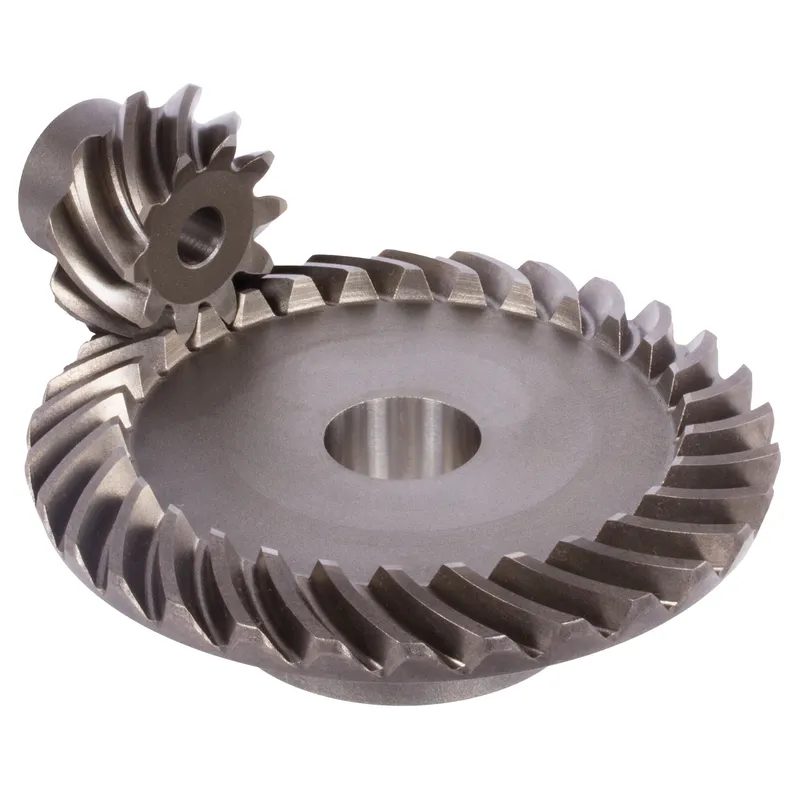 | 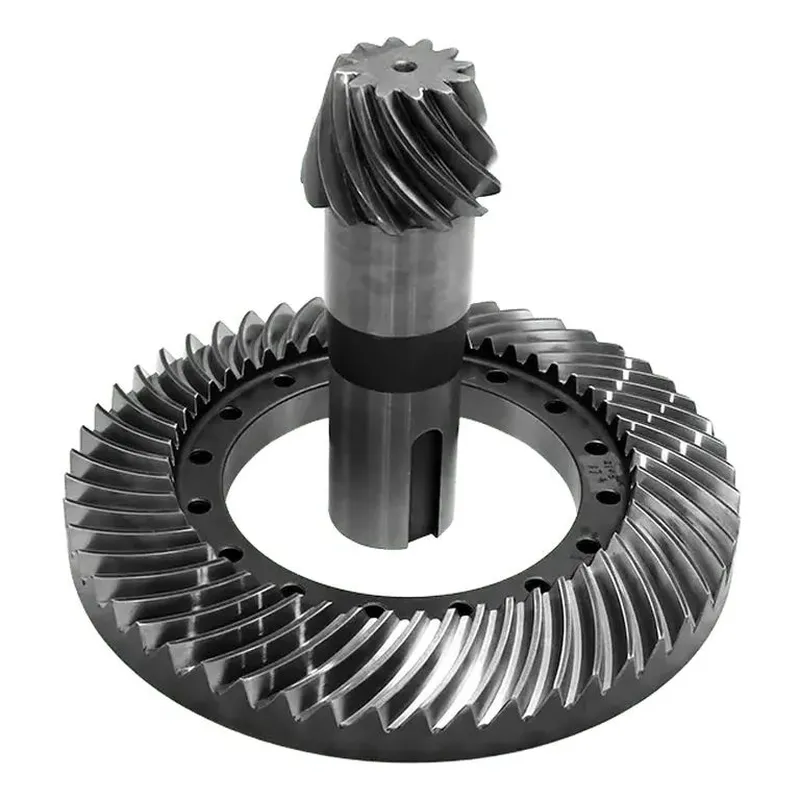 |  |
| Engrenages coniques à spirale | Engrenages coniques hypoïdes | Miter Bevel Gears |
Brass Straight Bevel Gear Applications
- Machines industrielles
Brass straight bevel gears are widely used in heavy-duty industrial machinery, such as conveyor systems and packaging equipment. Their ability to provide efficient torque transmission at 90-degree angles ensures smooth operation, durability, and minimal maintenance in rigorous environments where precision is critical. - Automotive Systems
In automotive applications, these gears are employed in differential systems and transmission mechanisms. They enable smooth power transfer between the engine and wheels, ensuring proper torque distribution. Their brass construction minimizes wear and provides long-lasting performance under high-stress conditions. - Robotique et automatisation
Robotics systems rely on brass straight bevel gears for precise motion control and compact design. These gears allow robots to achieve accurate rotational movement and power transmission at specific angles, making them ideal for intricate and high-precision automated operations. - Marine Equipment
The high corrosion resistance of brass makes these gears ideal for marine equipment, including winches and propeller systems. Straight bevel gears provide robust torque transfer in damp or saline environments, ensuring reliability in harsh conditions commonly encountered in marine applications. - Aerospace Components
In aerospace technology, brass straight bevel gears are used in actuator systems and flight control mechanisms. Their lightweight yet durable characteristics, combined with smooth torque transmission, make them essential for applications where precision, efficiency, and reliability are paramount. - Power Tools and Handheld Equipment
Power tools such as drills and grinders utilize these gears for efficient torque redirection in compact spaces. The brass material ensures a quieter operation and reduces friction, making the tools more ergonomic and durable for prolonged use in demanding environments.
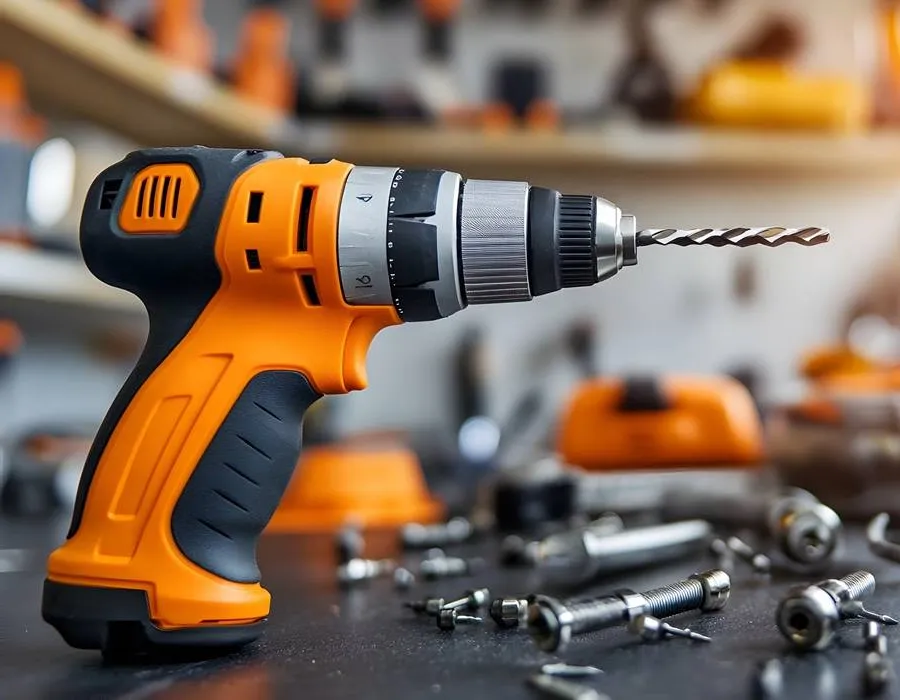 |  |
| Engrenage conique pour outils électriques | Engrenages coniques pour l'industrie maritime |
 |  |
| Engrenages coniques pour robotique | Engrenage conique pour différentiels automobiles |
Informations complémentaires
| Édité par | Yjx |
|---|
Produits similaires
-
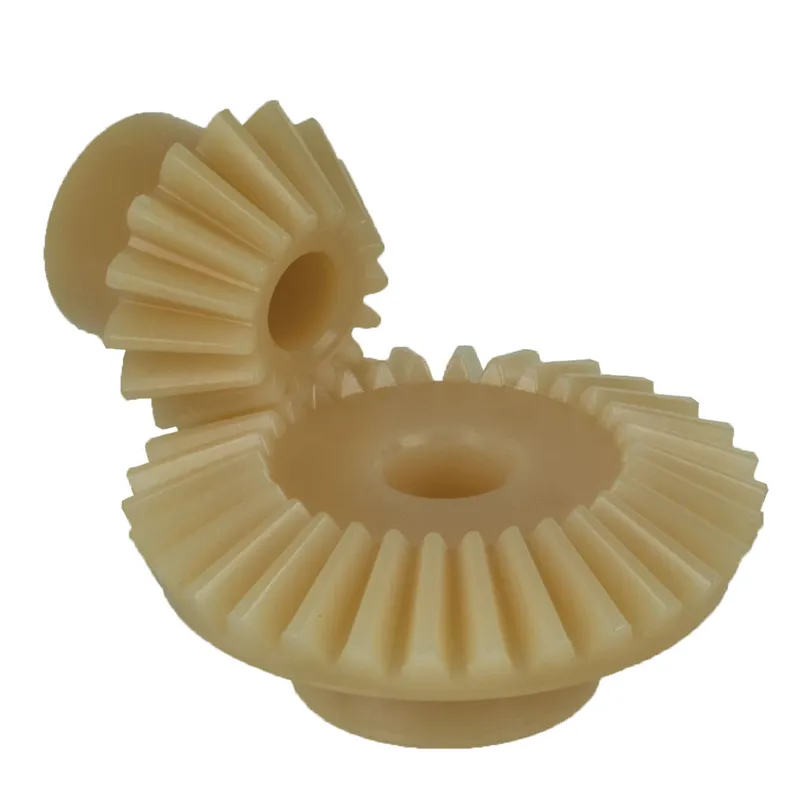
Engrenages coniques en résine polycétone plastique, rapport 1:1 – 5:1
-
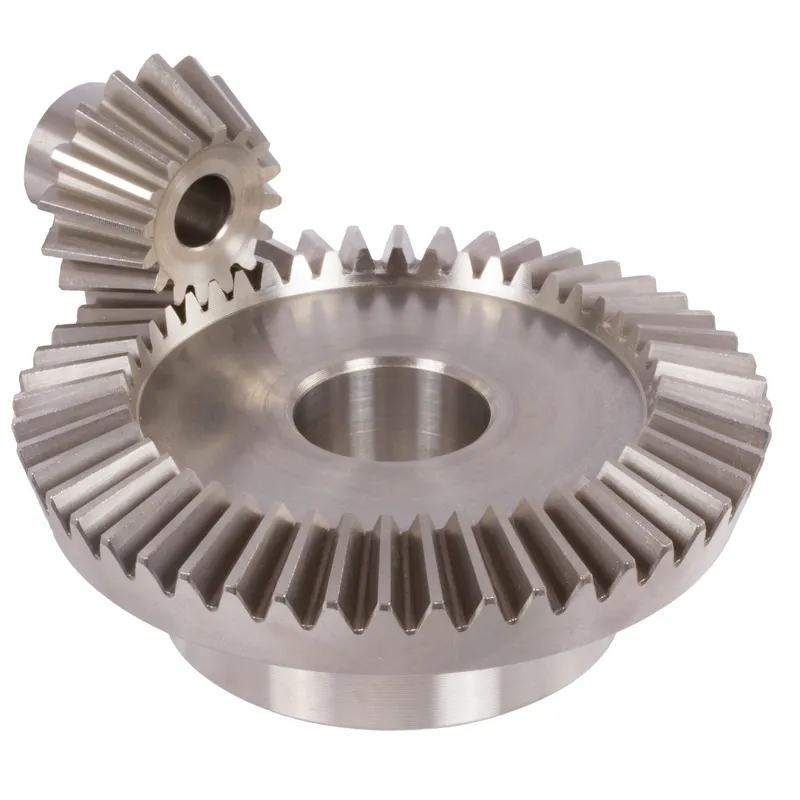
Engrenages coniques en acier inoxydable, rapport de transmission 2:1, système à dents droites
-
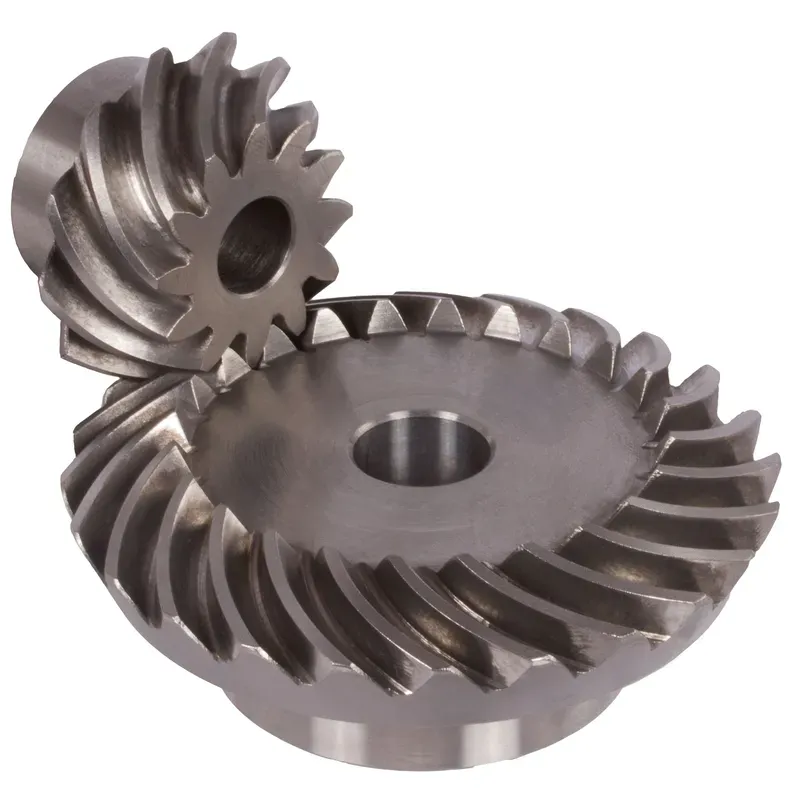
Engrenages coniques à denture spirale en acier, rapport 2,5:1
-
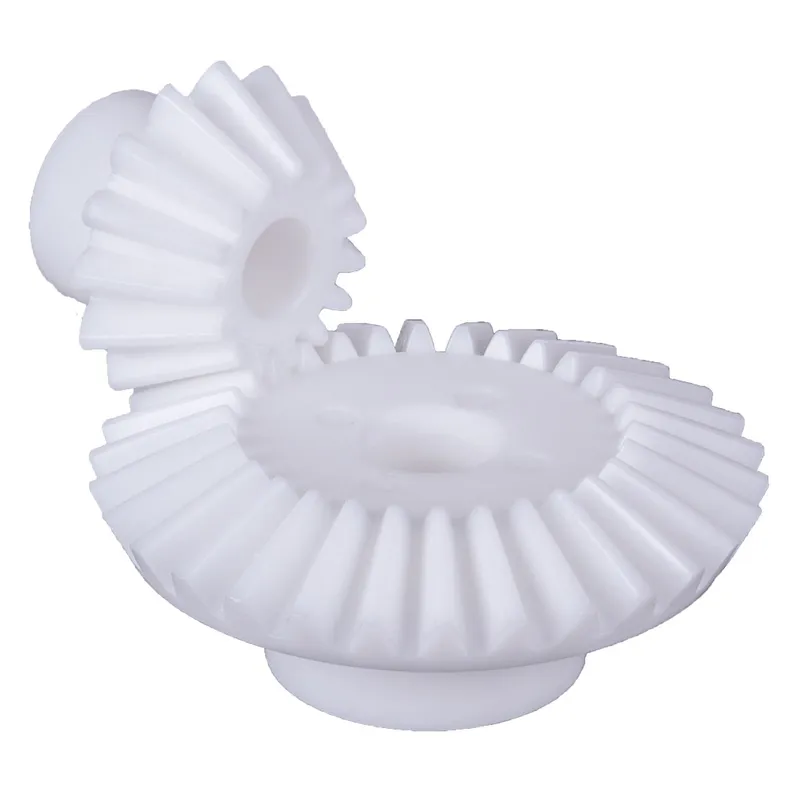
Engrenages coniques en résine polyacétal, rapport 1:1 – 5:1
-
Engrenages coniques en acier inoxydable, rapport de transmission 1:1 à 4:1, système à denture droite