
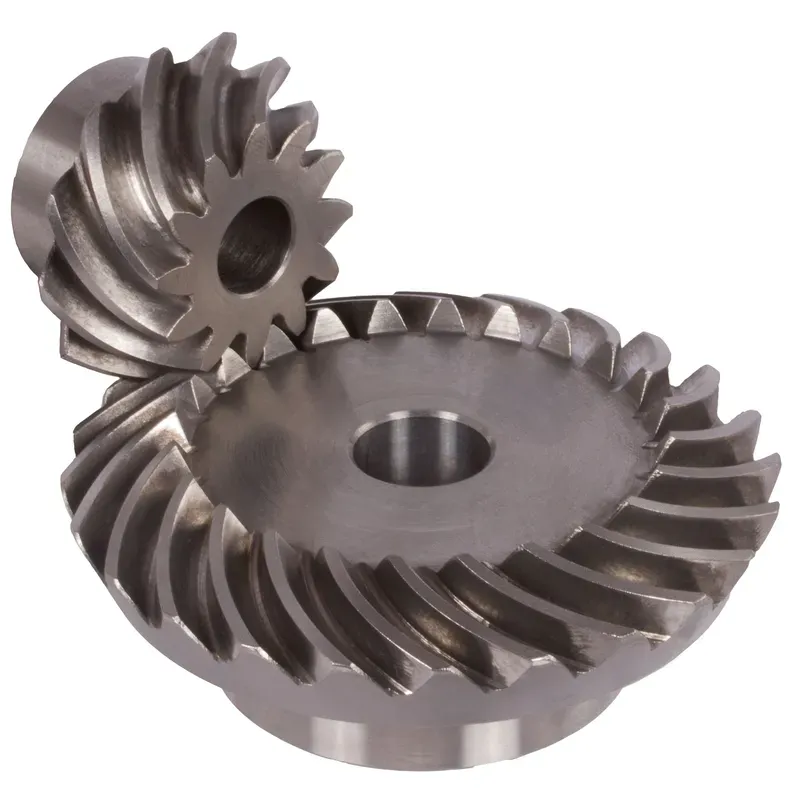
Engranajes cónicos espirales de acero con relación 2:1 y sistema de dientes espirales
Steel spiral bevel gears with a 2:1 ratio are conical gears designed to transmit power between intersecting shafts, typically at a 90-degree angle, with a speed reduction where the driven gear rotates at half the speed of the driving gear. The spiral tooth system features curved, oblique teeth, often with a 35-degree helix angle, enabling smoother and quieter operation compared to straight bevel gears. Made from carbon or alloy steels like 42CrMo4 or 16MnCr5, these gears are heat-treated for enhanced durability and strength, ideal for high-load, high-speed applications such as automotive differentials or industrial machinery.
Steel spiral bevel gears with a 2:1 ratio are conical gears designed to transmit power between intersecting shafts, typically at a 90-degree angle, with a speed reduction where the driven gear rotates at half the speed of the driving gear. The spiral tooth system features curved, oblique teeth, often with a 35-degree helix angle, enabling smoother and quieter operation compared to straight bevel gears. Made from carbon or alloy steels like 42CrMo4 or 16MnCr5, these gears are heat-treated for enhanced durability and strength, ideal for high-load, high-speed applications such as automotive differentials or industrial machinery.
The 2:1 ratio is achieved by the driven gear having twice the number of teeth as the pinion, ensuring efficient torque transfer. Their design minimizes vibration, increases contact ratio, and requires robust bearings to handle axial thrust loads.
Steel Spiral Bevel Gear Ratio 2:1
| 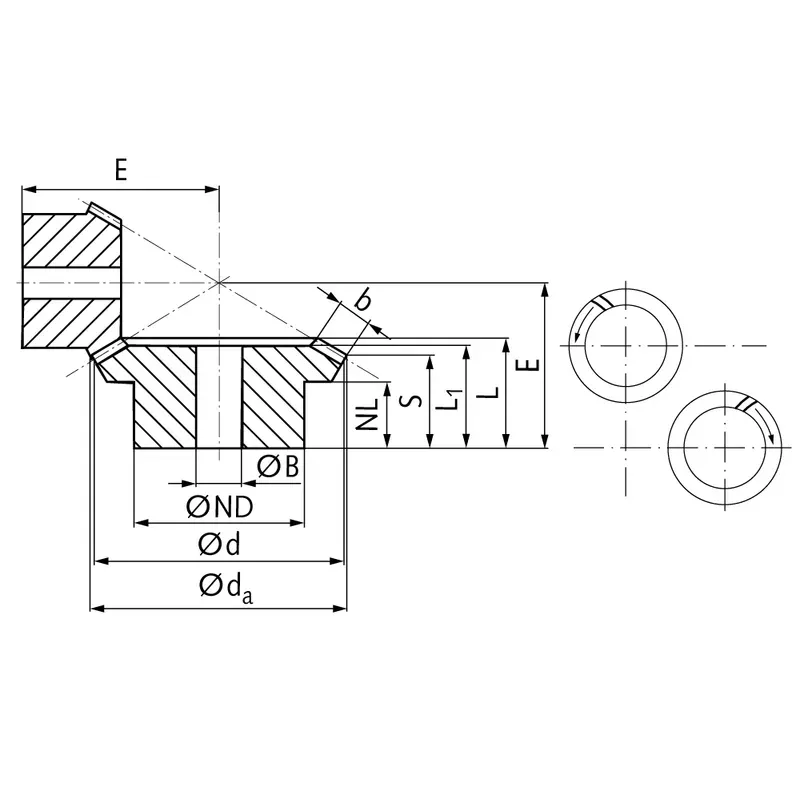 |
| Módulo | Número de dientes | da | d | DAKOTA DEL NORTE | Países Bajos | Yo1 | Yo | S | b | BH7 | mi | Esfuerzo de torsión* | Peso |
| mm | mm | mm | mm | mm | mm | mm | mm | mm | mm | Ncm | gramo | ||
| 0,6 | 22 | 20,8 | 19,8 | 16 | 7,4 | 15 | 15,6 | 8,5 | 8 | 6 | 28 | 2,3 | 116 |
| 0,6 | 44 | 40,1 | 39,6 | 25 | 8 | 15 | 17,2 | 13,6 | 8 | 10 | 23 | 4,6 | 116 |
| 1 | 20 | 31,8 | 30 | 25 | 8 | 19 | 20,2 | 9,4 | 12 | 8 | 39 | 9,8 | 323 |
| 1 | 40 | 60,9 | 60 | 40 | 8 | 18 | 21,2 | 15,9 | 12 | 12 | 30 | 19,6 | 323 |
| 1,3 | 16 | 34,4 | 32 | 25 | 7 | 20 | 22,1 | 9,6 | 14 | 8 | 41 | 12,0 | 397 |
| 1,3 | 32 | 65,1 | 64 | 40 | 8 | 20 | 23,3 | 17,1 | 14 | 12 | 32 | 24,0 | 397 |
| 1,5 | 16 | 38,0 | 35,2 | 30 | 8,4 | 19 | 21,2 | 10,5 | 12 | 10 | 45 | 14,4 | 435 |
| 1,5 | 32 | 71,7 | 70,4 | 45 | 8 | 17 | 21,0 | 15,7 | 12 | 12 | 32 | 28,8 | 435 |
| 2,269 | 12 | 44,0 | 41,5 | 30 | 12 | 28,23 | 28,23 | 17,6 | 15 | 12 | 55 | 10,1 | 846 |
| 2,269 | 24 | 83,0 | 83 | 50 | 15 | 27 | 32,41 | 26,0 | 15 | 16 | 45 | 20,2 | 846 |
| 2,321 | 13 | 47,0 | 45 | 30 | 15 | 30 | 33,0 | 21,7 | 15 | 10 | 63,65 | 49 | 818 |
| 2,321 | 26 | 91,0 | 90 | 40 | 22 | 30 | 35,5 | 29,8 | 15 | 16 | 50 | 98 | 818 |
| 2,5 | 11 | 57,0 | 52,5 | 40 | 15 | 36,72 | 36,72 | 19,7 | 20 | 16 | 70 | 17,8 | 2000 |
| 2,5 | 22 | 106,0 | 105 | 70 | 20 | 39 | 44,65 | 35,8 | 20 | 20 | 60 | 35,6 | 2000 |
| 2,5 | 13 | 59,0 | 56 | 39 | 15 | 34 | 38,37 | 22,9 | 20 | 16 | 75,13 | 95 | 1400 |
| 2,5 | 26 | 113,0 | 112 | 54 | 21 | 30 | 37,72 | 29,0 | 20 | 25 | 55 | 190 | 1400 |
| 3 | 13 | 68,0 | 64 | 45 | 16 | 37 | 41,95 | 24,9 | 22 | 20 | 84,62 | 133 | 2000 |
| 3 | 26 | 128,0 | 128 | 54 | 20 | 32 | 39,9 | 30,6 | 22 | 25 | 60 | 266 | 2000 |
| 3 | 14 | 76,0 | 72,5 | 55 | 25 | 51,46 | 51,46 | 32,0 | 25 | 20 | 100 | 644 | 4800 |
| 3 | 28 | 146,0 | 145 | 90 | 25 | 50 | 57,1 | 46,2 | 25 | 30 | 80 | 128 | 4800 |
| 3,5 | 13 | 77,0 | 72 | 54 | 12 | 34 | 39,8 | 21,1 | 24 | 20 | 88,38 | 197 | 2800 |
| 3,5 | 26 | 146,0 | 144 | 64 | 25 | 38 | 47,1 | 36,5 | 24 | 30 | 70 | 394 | 2800 |
Diferentes tipos de engranajes cónicos
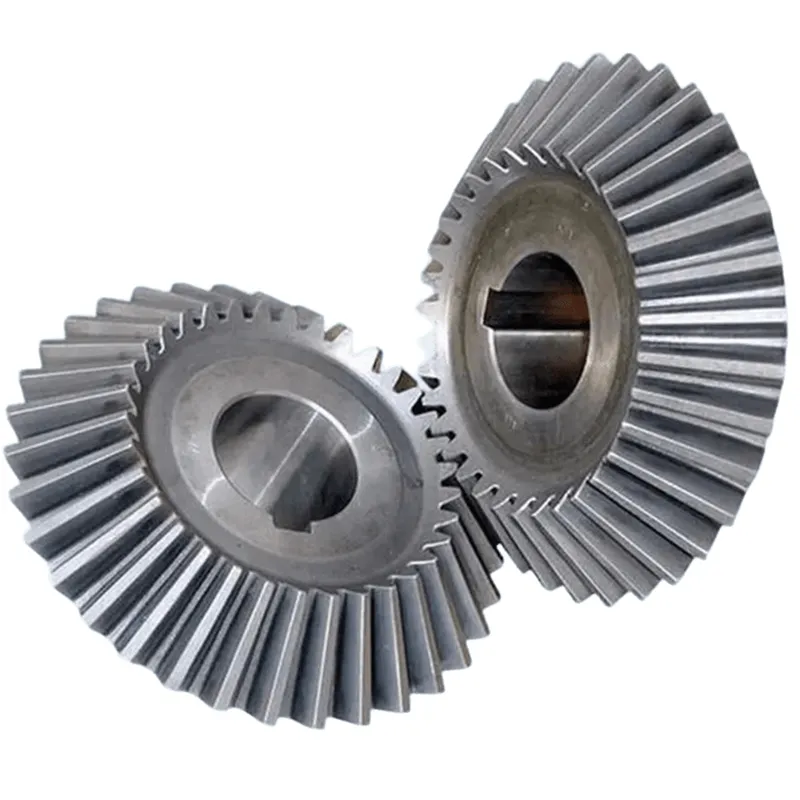
Engranajes cónicos rectos
Los engranajes cónicos rectos son el tipo más simple, con dientes rectos paralelos a la generatriz del cono primitivo. Se utilizan en aplicaciones con altas velocidades y cargas bajas o medias. Sin embargo, pueden generar más ruido que otros tipos de engranajes cónicos debido al engrane repentino de los dientes.
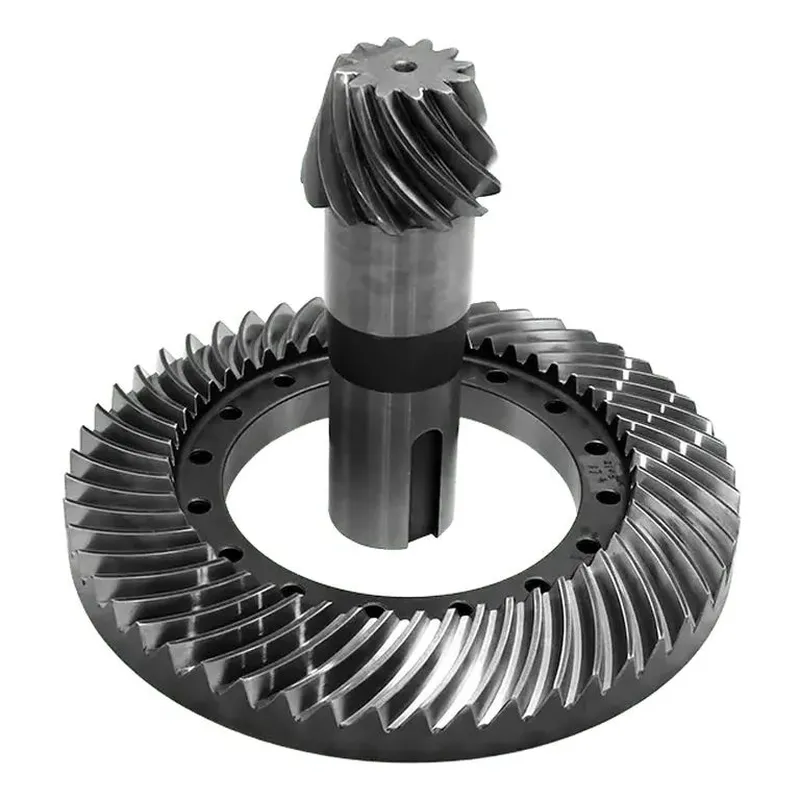
Engranajes cónicos espirales
Los engranajes cónicos espirales tienen dientes curvos oblicuos a la generatriz del cono primitivo. El ángulo espiral de los dientes proporciona un engrane gradual y suave, lo que resulta en un funcionamiento más silencioso y una mayor capacidad de carga en comparación con los engranajes cónicos rectos. Los engranajes cónicos espirales se utilizan comúnmente en diferenciales automotrices y aplicaciones industriales que requieren altas velocidades y cargas pesadas.
Engranajes cónicos hipoides
Los engranajes cónicos hipoides son similares a los engranajes cónicos espirales, pero con una diferencia notable: sus conos de paso no se intersecan. En cambio, sus ejes están descentrados, lo que permite piñones de mayor diámetro y un mejor contacto entre los dientes. Esta configuración descentrada ofrece varias ventajas, como mayor capacidad de par, reducción de ruido y diseños más compactos. Los engranajes hipoides se utilizan frecuentemente en ejes traseros de automóviles y cajas de cambios industriales.
Engranajes cónicos Zerol
Los engranajes cónicos Zerol son un caso especial de engranajes cónicos espirales, donde el ángulo espiral es cero. Esto significa que los dientes son paralelos al eje de rotación, similar a los engranajes cónicos rectos. Sin embargo, a diferencia de los engranajes cónicos rectos, los engranajes cónicos Zerol tienen un perfil de diente curvo que permite un engrane suave y gradual. Los engranajes cónicos Zerol ofrecen un equilibrio entre las ventajas de los engranajes cónicos rectos y espirales, proporcionando una mayor capacidad de carga y un funcionamiento más silencioso en comparación con los engranajes cónicos rectos.
Engranajes de inglete
Miter gears are a specific type of bevel gear where the number of teeth on both gears is equal, and the shaft angle is 90°. This configuration results in a 1:1 gear ratio, making miter gears ideal for applications that require a change in the direction of rotation without altering the speed or torque. Miter gears can have straight, spiral, or Zerol teeth.
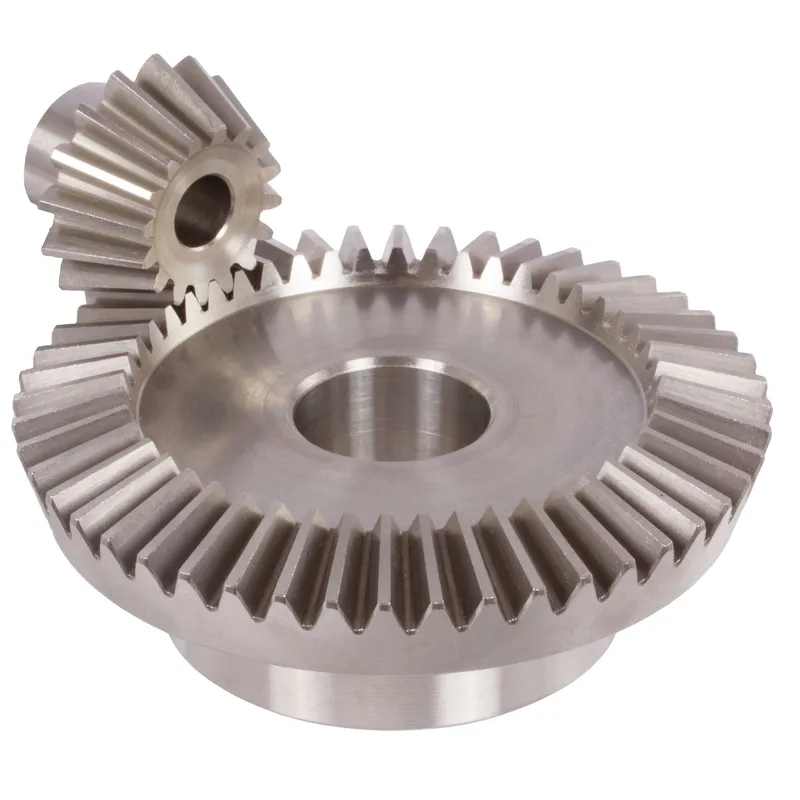 | 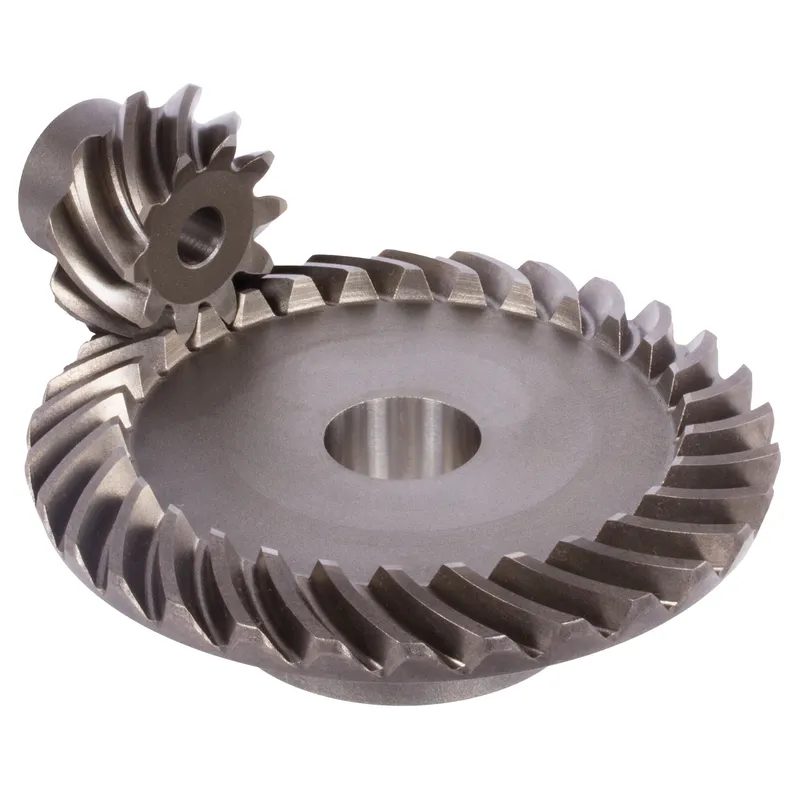 |
| Engranajes cónicos rectos | Engranajes cónicos espirales |
 |  |
| Engranajes cónicos hipoides | Engranajes cónicos Zerol |
Applications of Spiral Bevel Gears
1. Automotive Differentials
Spiral bevel gears are widely used in automotive differentials to transmit torque from the driveshaft to the wheels while allowing the wheels to rotate at different speeds. Their smooth operation and quiet performance make them ideal for high-speed vehicles and heavy-duty trucks.
2. Industrial Machinery
In heavy-duty industrial machines such as conveyors, crushers, and mixers, spiral bevel gears ensure efficient power transmission between perpendicular shafts. Their ability to handle high torque loads with minimal vibration makes them suitable for applications requiring reliable and long-lasting operation under constant stress.
3. Aerospace Systems
Spiral bevel gears are integral to aerospace applications such as helicopter transmission systems and jet engines. They ensure precise and smooth power transfer in compact spaces while withstanding extreme conditions like high temperatures, heavy loads, and demanding operational environments, ensuring safety and reliability.
4. Marine Propulsion Systems
In marine applications, spiral bevel gears are used in propulsion systems to transfer power from engines to propellers. Their smooth engagement and high torque capacity allow for efficient power delivery, ensuring reliable performance in harsh environments, including prolonged exposure to saltwater and vibration.
5. Power Tools and Robotics
Spiral bevel gears are common in high-performance power tools and robotic systems where compact design and precision are essential. Their ability to transmit power smoothly in small spaces ensures accuracy and durability, especially in applications requiring continuous operation or varying load conditions.
6. Wind Turbines
Spiral bevel gears are used in wind turbine gearboxes to transfer rotational energy from the blades to the generator. Their smooth operation enhances energy efficiency, while their robust design ensures they can endure high torque loads and fluctuating wind conditions over extended periods.
 |  |
| Engranaje cónico para la industria automotriz | Engranaje cónico para robótica |
 | 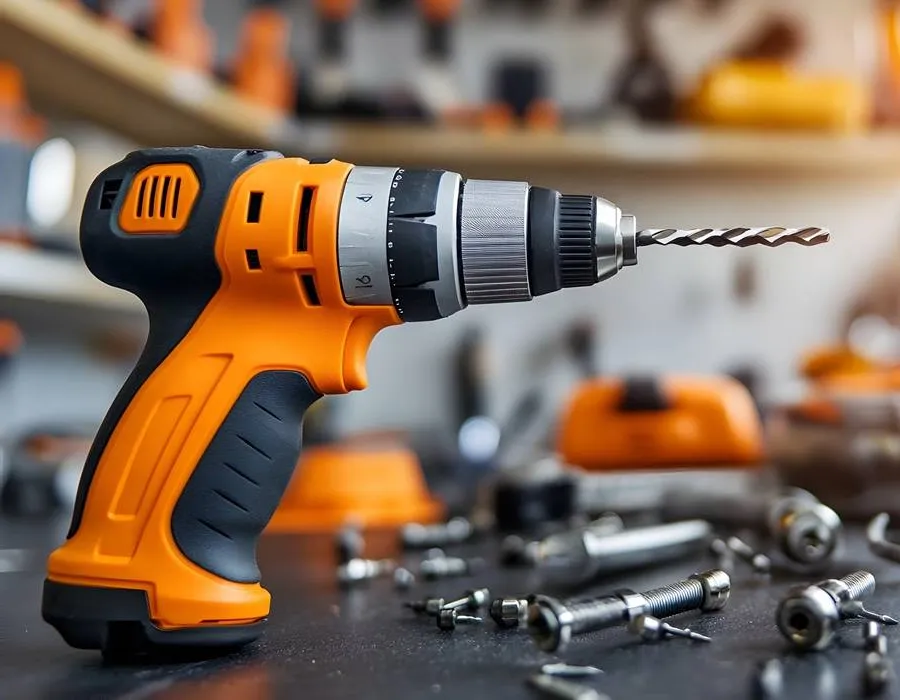 |
| Engranajes cónicos para la industria marina | Bevel Gear for Power Tools |
Información adicional
| Editado por | Yjx |
|---|
Productos relacionados
-
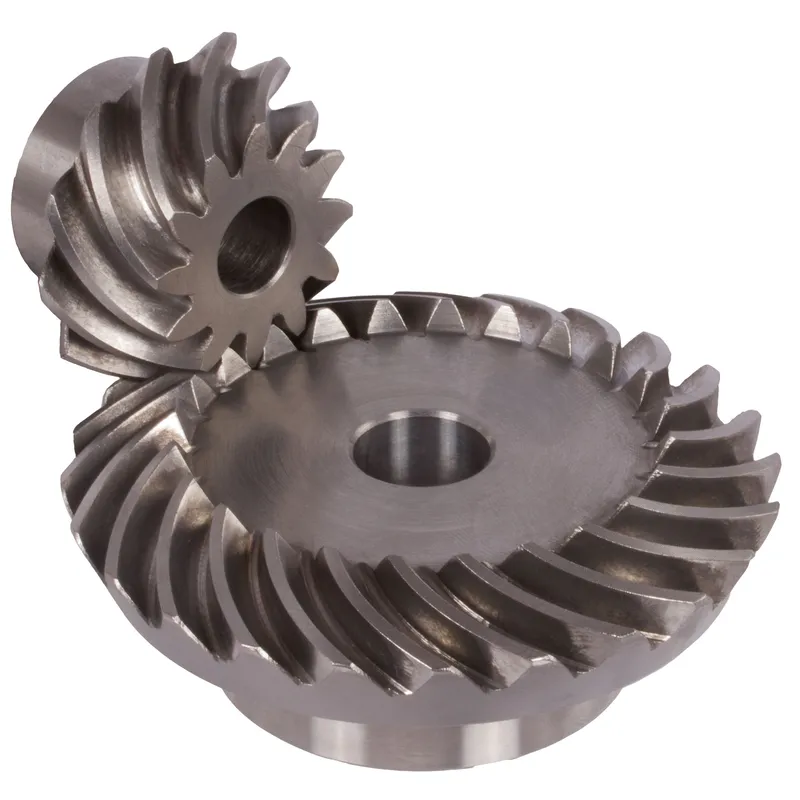
Engranajes cónicos espirales de acero con relación 1:1 – 4:1 Sistema de dientes espirales
-
Steel Spiral Bevel Gears Ratio 1.615:1 Spiral Tooth System
-
Engranajes cónicos de latón con relación 1,5:1 y sistema de dientes rectos
-
Engranajes cónicos espirales de acero con relación 4:1 y sistema de dientes espirales
-
Engranajes cónicos espirales de acero con relación de engranajes de 2,066:1 y sistema de dientes espirales.