
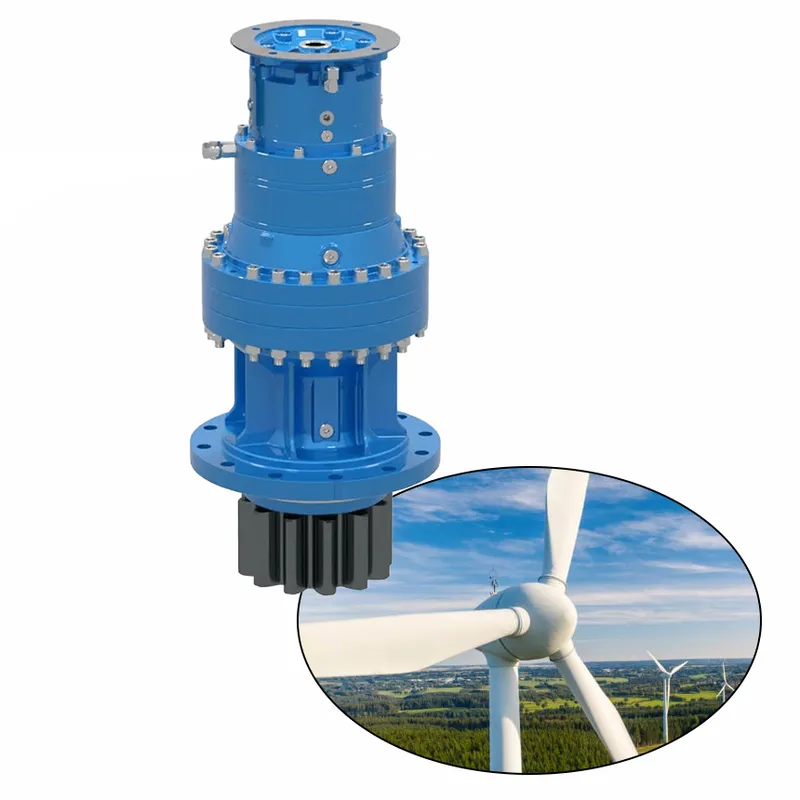
Planetary Slewing Drive Gearbox for Wind Turbines
A planetary slewing drive gearbox for wind turbines is a specialized rotational drive mechanism designed to facilitate precise and high-torque adjustments in turbine operations, integrating a slewing ring bearing with a planetary gear system. This compact assembly comprises a central sun gear, multiple orbiting planet gears mounted on a carrier, an outer ring gear, and a robust housing, enabling efficient torque multiplication and smooth rotational motion under substantial loads. In wind turbine applications, it primarily serves in yaw and pitch drive systems: the yaw drive orients the nacelle to face prevailing wind directions, optimizing energy capture, while the pitch drive adjusts blade angles to regulate rotor speed and prevent overload during variable wind conditions.
A planetary slewing drive gearbox for wind turbines is a specialized rotational drive mechanism designed to facilitate precise and high-torque adjustments in turbine operations, integrating a slewing ring bearing with a planetary gear system. This compact assembly comprises a central sun gear, multiple orbiting planet gears mounted on a carrier, an outer ring gear, and a robust housing, enabling efficient torque multiplication and smooth rotational motion under substantial loads. In wind turbine applications, it primarily serves in yaw and pitch drive systems: the yaw drive orients the nacelle to face prevailing wind directions, optimizing energy capture, while the pitch drive adjusts blade angles to regulate rotor speed and prevent overload during variable wind conditions. Capable of transmitting torques in the multi-megawatt range, these slewing gearboxes ensure reliable performance in harsh environmental conditions, contributing to enhanced turbine efficiency, longevity, and minimal maintenance requirements.
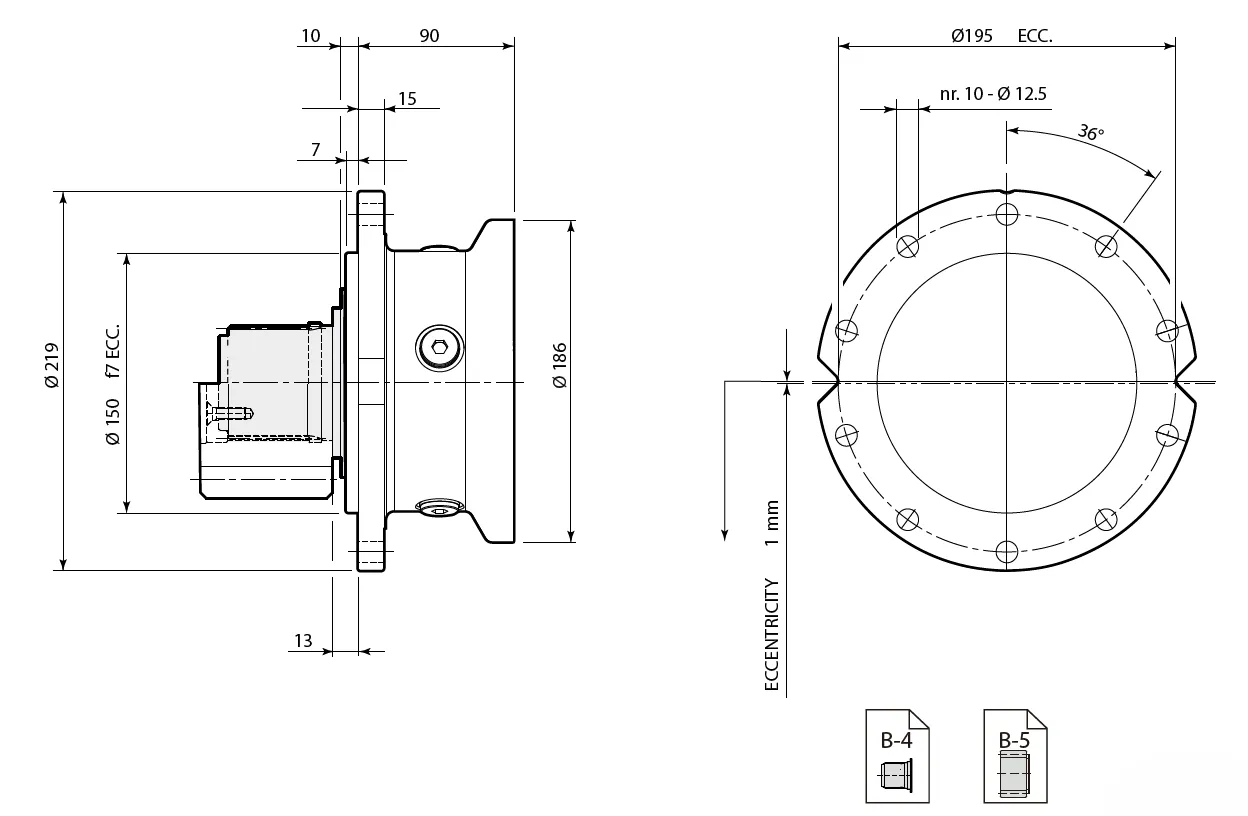
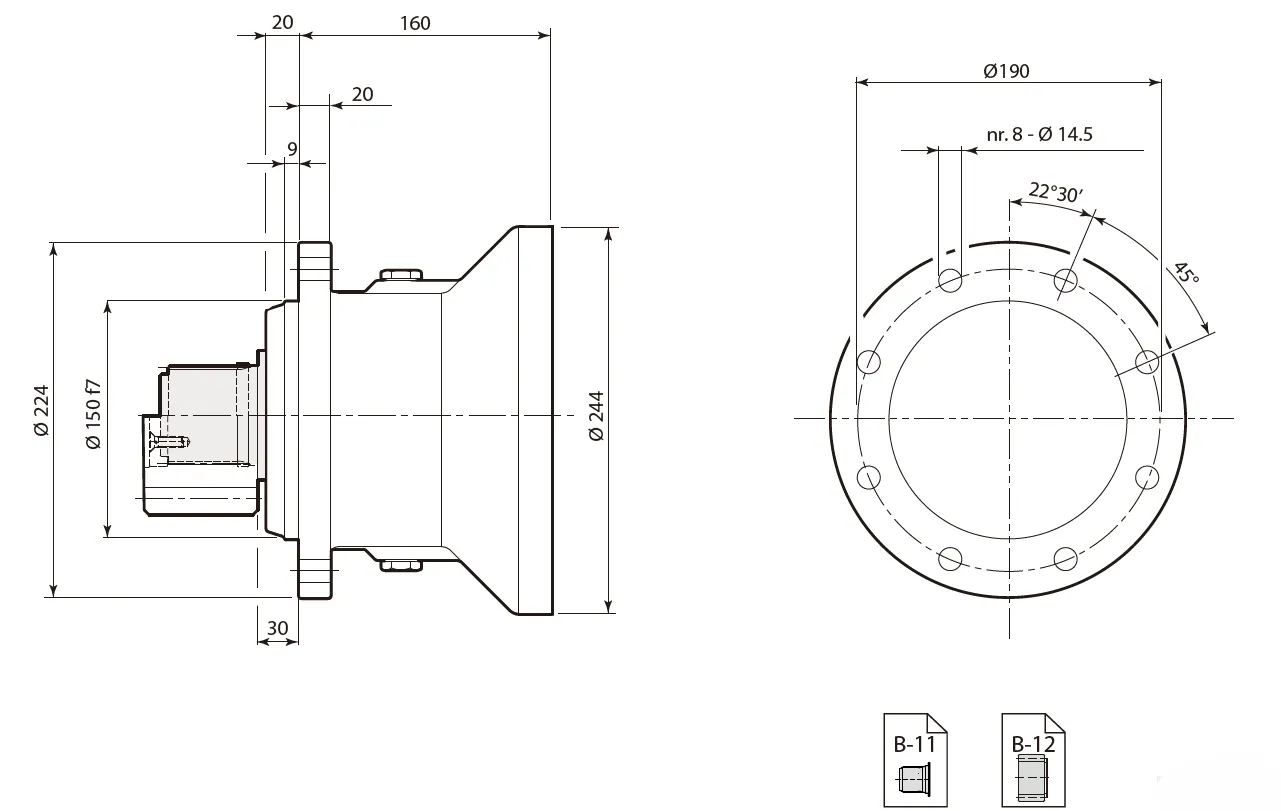
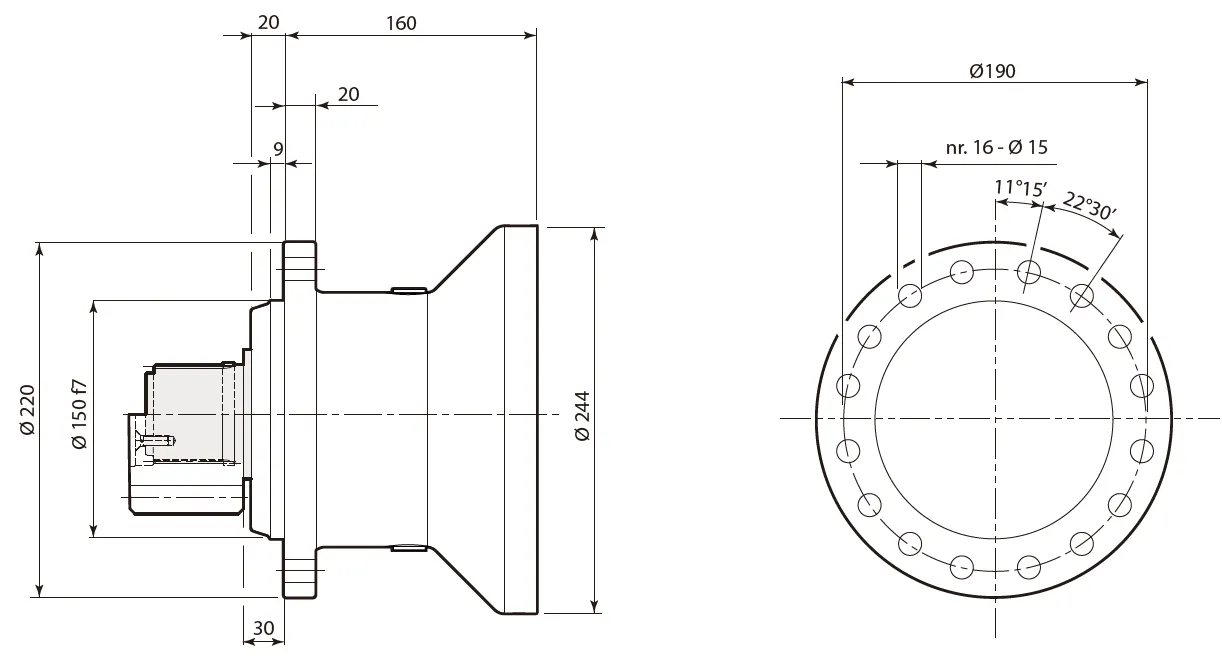
Dimensiones del accionamiento de giro planetario
RE 240
Soporte: DBS

Soporte: Tecc
Eje estriado:
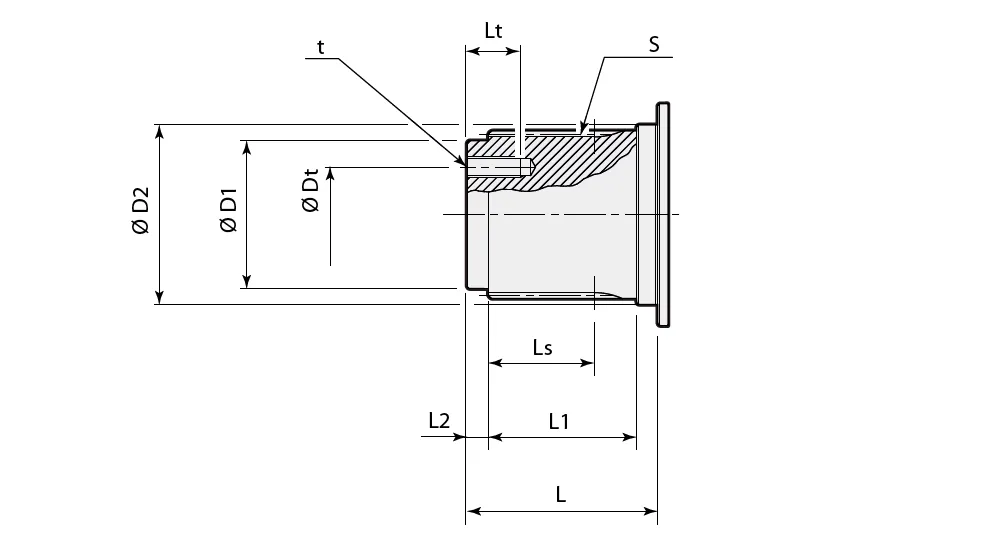
| Soporte Apoyo | ØD1 | ØD2 | S | Ls | Yo | L1 | L2 | el | ØDt | Teniente |
| [ mm ] | ||||||||||
| DBS | 50 h7 | 60 h6 | DIN5482 B58x53 | 37 | 68.3 | 50 | 8 | M10 (n.° 3) | 32 | 21 |
| Tecnología | 50 h7 | 60 h6 | DIN5482 B58x53 | 37 | 68.3 | 50 | 8 | M10 (n.° 3) | 32 | 21 |
Piñones:
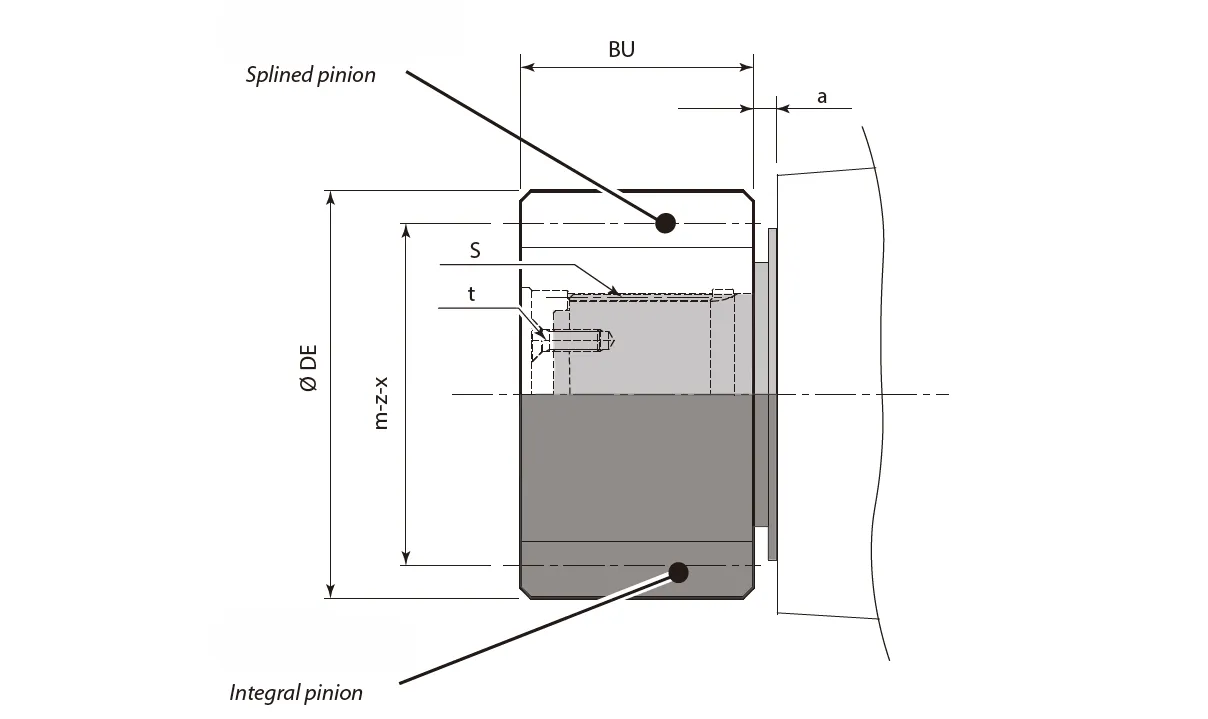
| Apoyo | metro | z | incógnita | ODA | BU | a | S | el | Tmáx | |
| [mm] | Estático [Nuevo Méjico] | Dinámica [Nuevo Méjico] | ||||||||
| DBS | 6 | 15 | 0.5 | 108 | 88 | 2 | - | - | 6000 | 5400 |
| 8 | 9 | 0.5 | 95.2 | 96 | 0.5 | - | - | 5000 | 4500 | |
| 10 | 11 | 0.5 | 137 | 68 | 2 | - | - | 6300 | 5670 | |
| 14 | 13 | 0.5 | 224 | 70 | 2 | DIN5482 B58x53 | M10 (n.° 3) | 6300 | 5670 | |
| Tecnología | 6 | 18 | 0 | 120 | 70 | 13.5 | DIN5482 B58x53 | M10 (n.° 3) | 6000 | 5400 |
| 8 | 10 | 0.5 | 104 | 80 | 13.5 | - | - | 5000 | 4500 | |
| 8 | 14 | 0.5 | 136 | 80 | 23.5 | DIN5482 B58x53 | M10 (n.° 3) | 6300 | 5670 | |
| 10 | 13 | 0 | 150 | 80 | 3.5 | DIN5482 B58x53 | M10 (n.° 3) | 6300 | 5670 | |
| 14 | 13 | 0,5 | 224 | 70 | 2 | DIN5482 B58x53 | M10 (n.° 3) | 6500 | 5670 | |
RE 310/510
Soporte: DBS
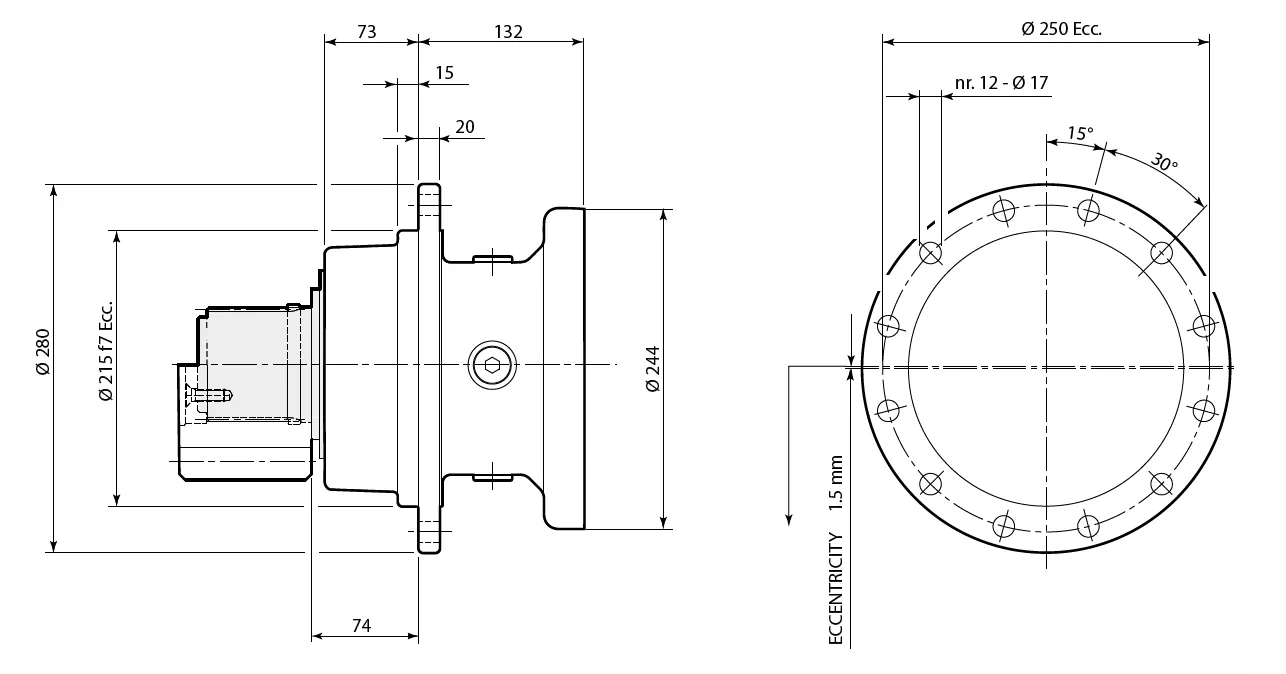
Soporte: Tecc
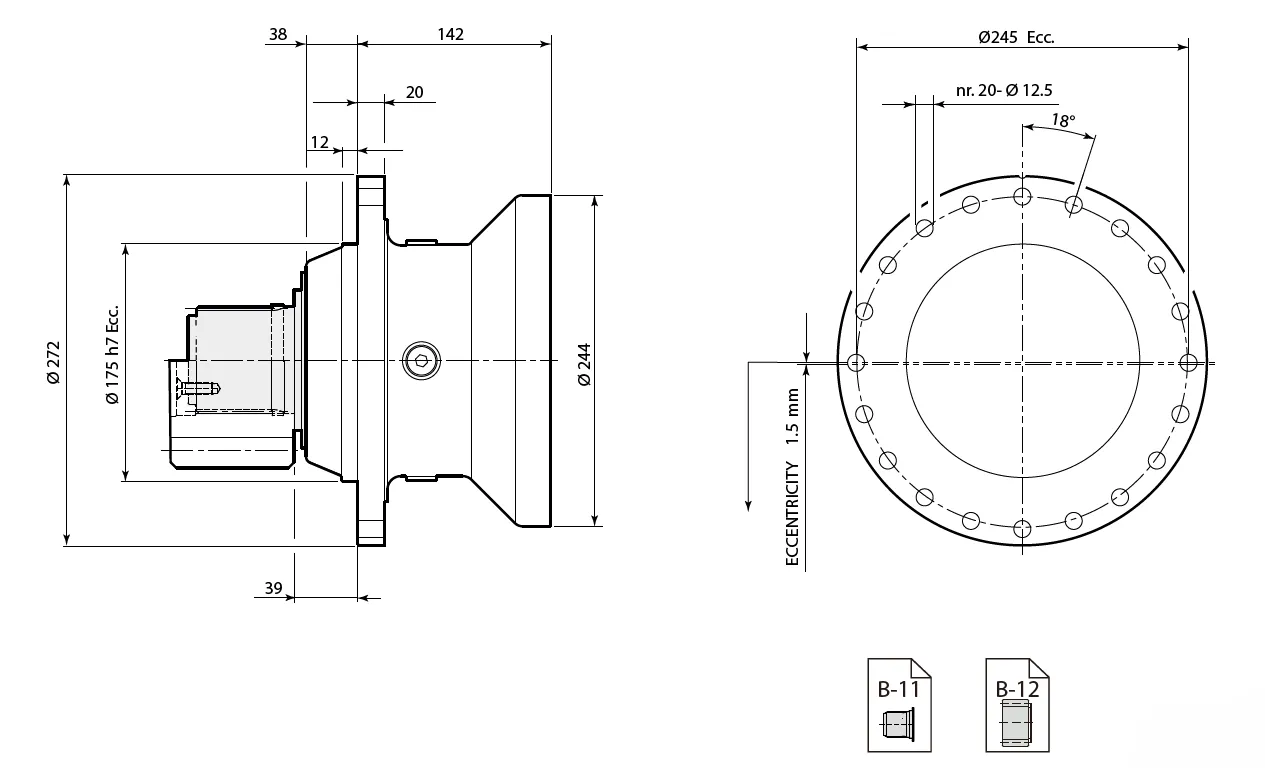
Soporte: T6
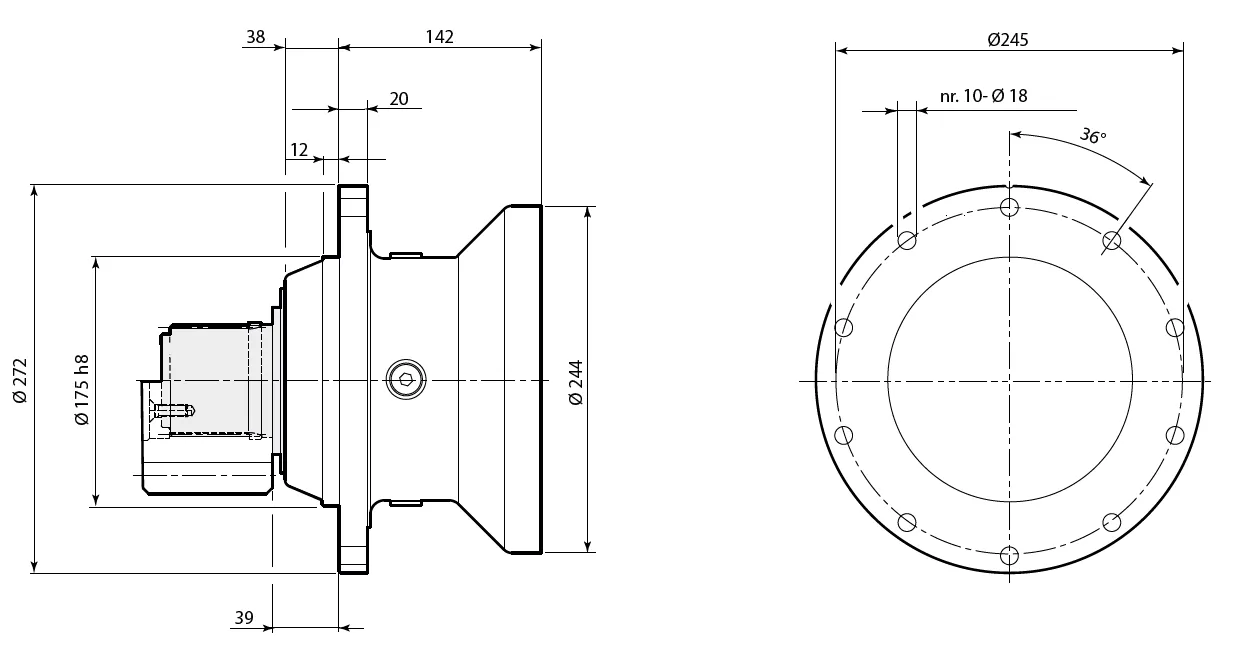
Soporte: T8

Soporte: T18
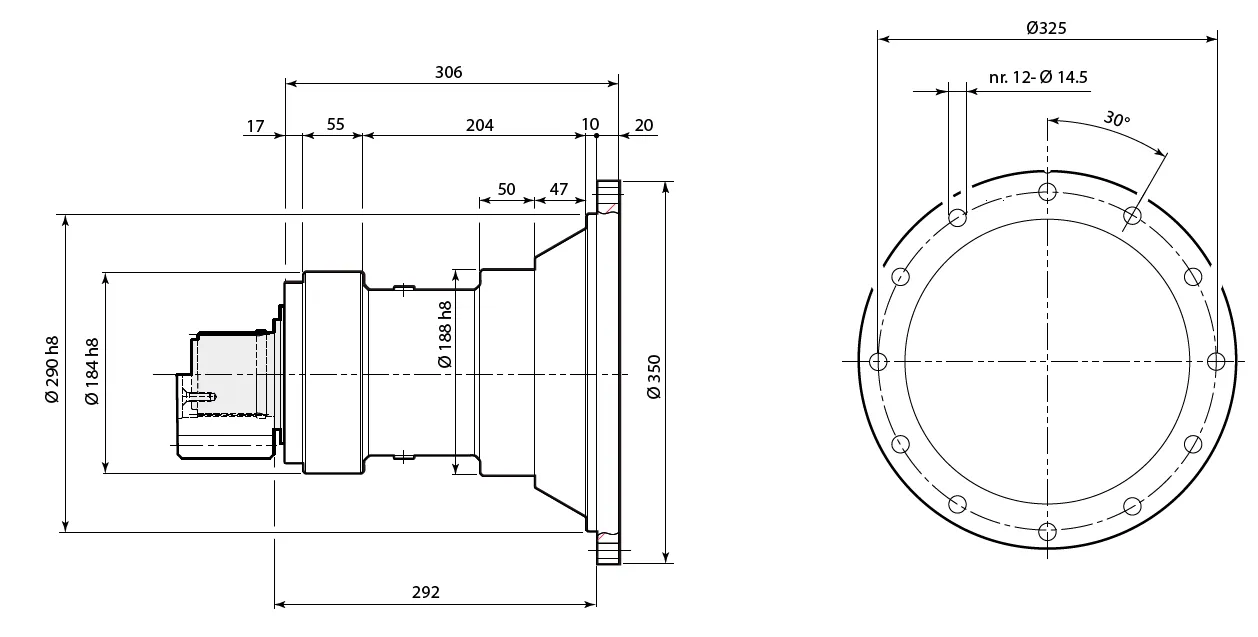
Soporte: NR
Soporte: NR3
Eje:
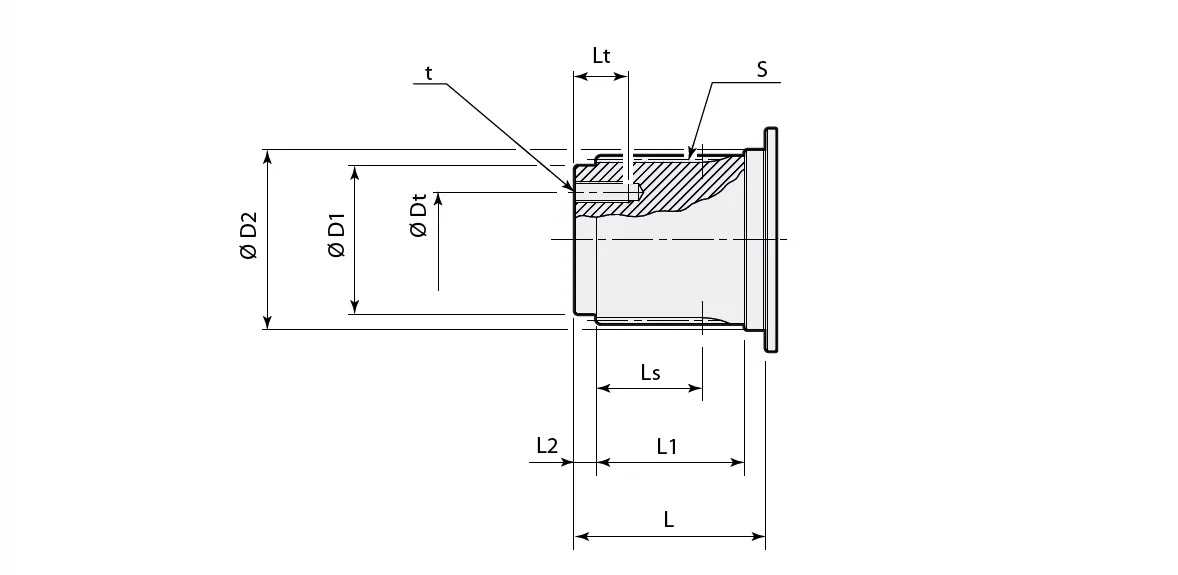
| Apoyo | ØD1 | ØD2 | S | Ls | Yo | L1 | L2 | el | ØDt | Teniente |
| [ mm ] | ||||||||||
| DBS | 50 h7 | 60 h6 | DIN5482 B58x53 | 46 | 78 | 60 | 8 | M10 (n.° 3) | 32 | 20 |
| Tecnología | 50 h7 | 60 h6 | DIN5482 B58x53 | 46 | 78 | 60 | 8 | M10 (n.° 3) | 32 | 20 |
| T6 | 50 h7 | 60 h6 | DIN5482 B58x53 | 46 | 78 | 60 | 8 | M10 (n.° 3) | 32 | 20 |
| T8 | 50 h7 | 60 h6 | DIN5482 B58x53 | 46 | 78 | 60 | 8 | M10 (n.° 3) | 32 | 20 |
| T18 | 62 F7 | 72 F7 | DIN5482 B70x64 | 51 | 90 | 70 | 10 | M10 (n.° 3) | 40 | 22 |
| NR | 50 h7 | 60 h6 | DIN5482 B58x53 | 37 | 68.5 | 50 | 8 | M10 (n.° 3) | 32 | 20 |
| NR3 | 50 h7 | 60 h6 | DIN5482 B58x53 | 37 | 68.5 | 50 | 8 | M10 (n.° 3) | 32 | 20 |
Piñones:
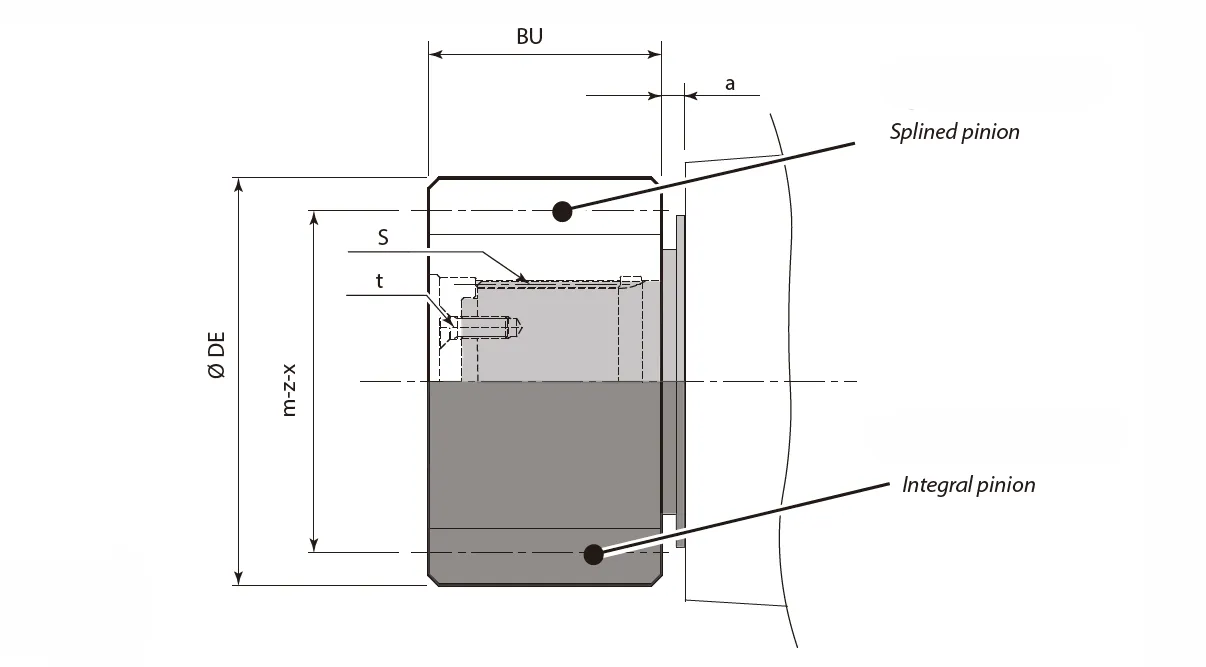
| Apoyo | metro | z | incógnita | ODA | BU | a | S | el | Tmáx | |
| [mm] | Estático [Nuevo Méjico] | Dinámica [Nuevo Méjico] | ||||||||
| DBS | 8 | 11 | 0.5 | 112.2 | 78 | 7 | - | - | 10500 | 9450 |
| 9 | 13 | 0.5 | 144 | 75 | 7 | - | - | 10500 | 9450 | |
| 10 | 11 | 0.5 | 137 | 78 | 7 | - | - | 10500 | 9450 | |
| 10 | 15 | 0 | 170 | 90 | 10 | - | - | 10500 | 9450 | |
| 12 | 10 | 0.5 | 155 | 95 | 7 | - | - | 10500 | 9450 | |
| 12 | 11 | 0.5 | 166.8 | 80 | 7 | - | - | 10500 | 9450 | |
| Tecnología | 6 | 13 | 0.65 | 97.2 | 65 | 27 | - | - | 6900 | 6210 |
| 8 | 11 | 0.5 | 111.2 | 88 | 4 | - | - | 8300 | 7470 | |
| 8 | 15 | 0 | 136 | 75 | 11 | DIN5482 B58x53 | M10 (n° 3) | 10400 | 9360 | |
| 10 | 10 | 0.5 | 130 | 90 | 3 | - | - | 9500 | 8550 | |
| 14 | 14 | 0.5 | 236.6 | 100 | 1 | DIN5482 B58x53 | M10 (n° 3) | 10500 | 9450 | |
| T6 T8 | 10 | 13 | 0.6 | 161 | 86 | 17 | - | - | 10500 | 9450 |
| 10 | 14 | 0.5 | 168 | 80 | 2.5 | - | - | 10500 | 9450 | |
| 10 | 12 | 0.55 | 150.5 | 93 | 3 | - | - | 10500 | 9450 | |
| 12 | 10 | 0.5 | 155 | 108 | 5.5 | - | - | 10500 | 9450 | |
| T18 | 8 | 14 | 0 | 128 | 79.5 | 16 | DIN5482 B70x64 | M10 (n.° 3) | 10500 | 9450 |
| 10 | 14 | 0.32 | 166.4 | 90 | 15 | 13200 | 11880 | |||
| 12 | 13 | 0.5 | 192 | 80 | 21 | 13200 | 11880 | |||
| 14 | 15 | 0.5 | 250.6 | 105 | 6 | 13200 | 11880 | |||
| NR NR3 | 5 | 22 | 0 | 120 | 50 | 27.5 | DIN5482 B58x53 | M10 (n° 3) | 9250 | 8325 |
| 8 | 11 | 0.5 | 110.8 | 79 | 10.5 | - | - | 9250 | 8325 | |
| 8 | 16 | 0.5 | 149.5 | 73 | 20.5 | - | - | 9250 | 8325 | |
| 10 | 11 | 0.5 | 139 | 100 | 12 | - | - | 9250 | 8325 | |
| 10 | 12 | 0.5 | 149 | 90 | 19.5 | - | - | 9250 | 8325 | |
RE 610
Soporte: DBS
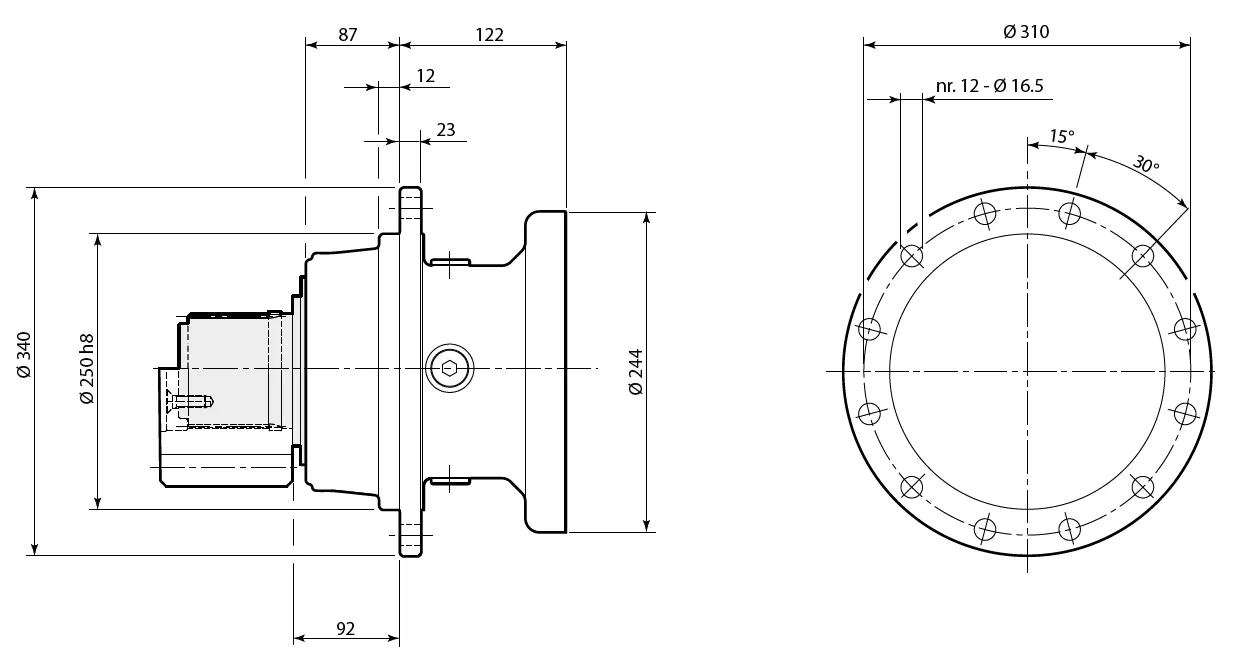
Soporte: DBS2
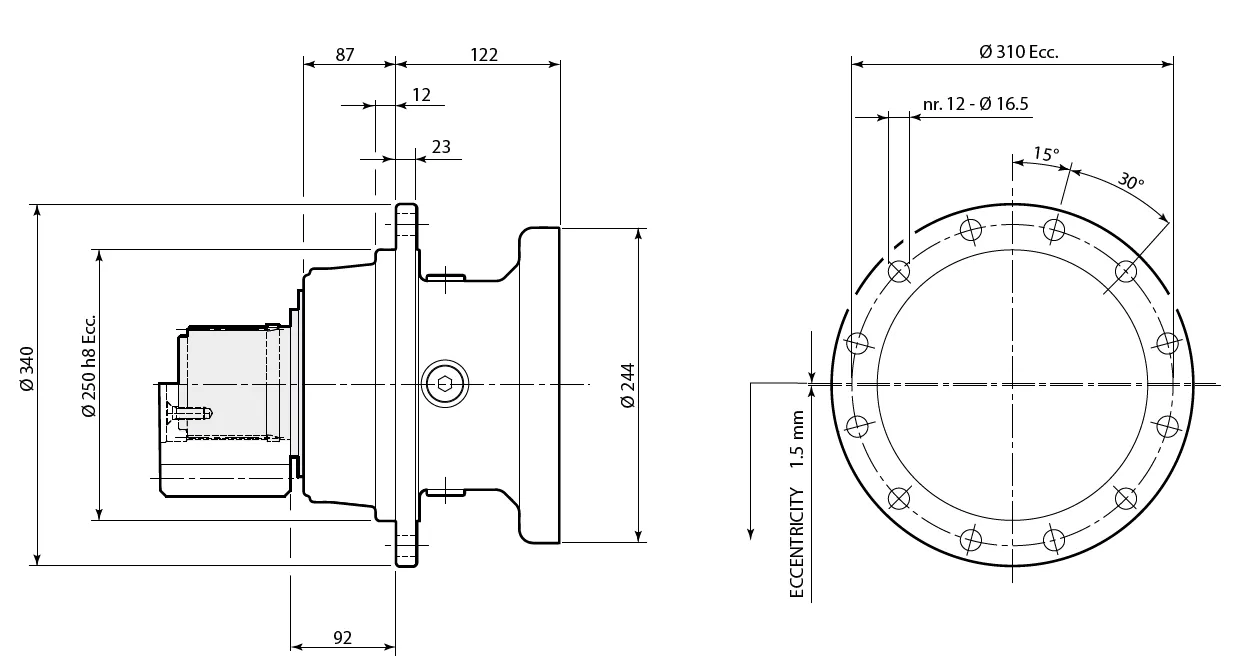
Soporte: T18
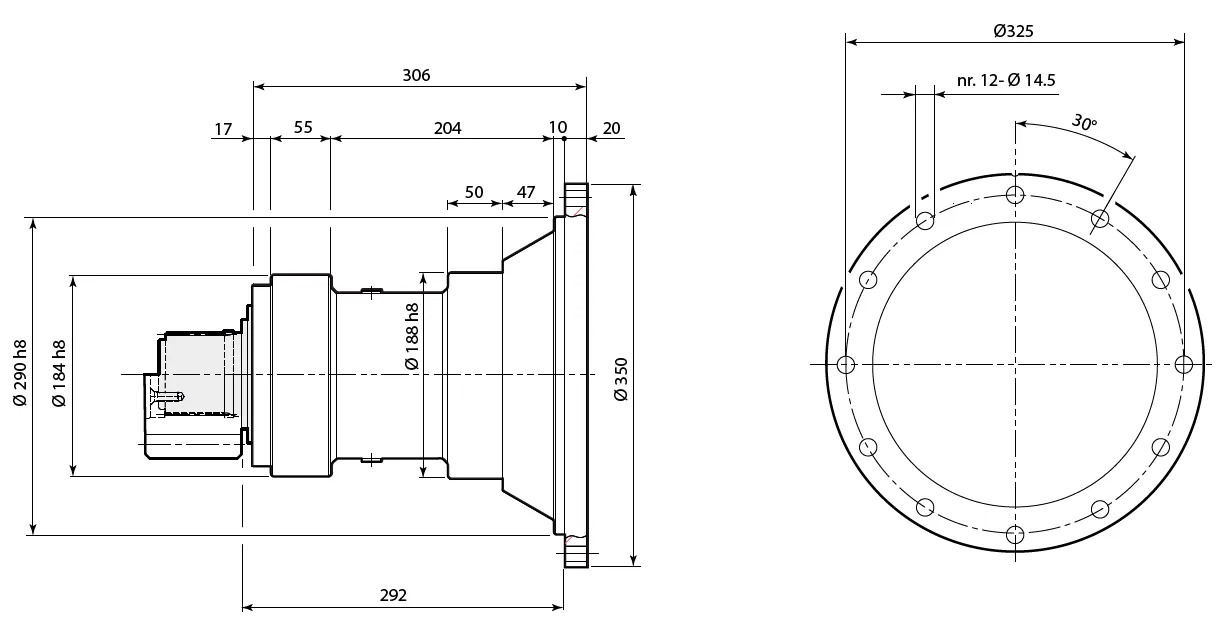
Eje:
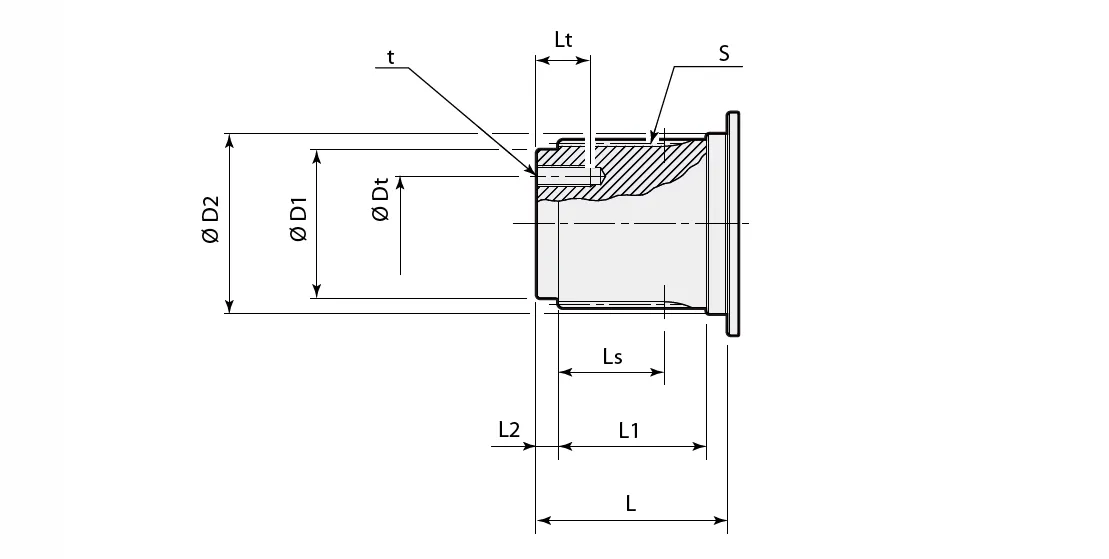
| Apoyo | ØD1 | ØD2 | S | Ls | Yo | L1 | L2 | el | ØDt | Teniente |
| [ mm ] | ||||||||||
| DBS | 62 h7 | 72 h6 | DIN5482 B70x64 | 51 | 90 | 70 | 10 | M10 (n.° 3) | 40 | 22 |
| DBS2 | 62 h7 | 72 h6 | DIN5482 B70x64 | 51 | 90 | 70 | 10 | M10 (n.° 3) | 40 | 22 |
| T18 | 62 f7 | 72 f7 | DIN5482 B70x64 | 51 | 90 | 70 | 10 | M10 (n.° 3) | 40 | 22 |
Piñones:
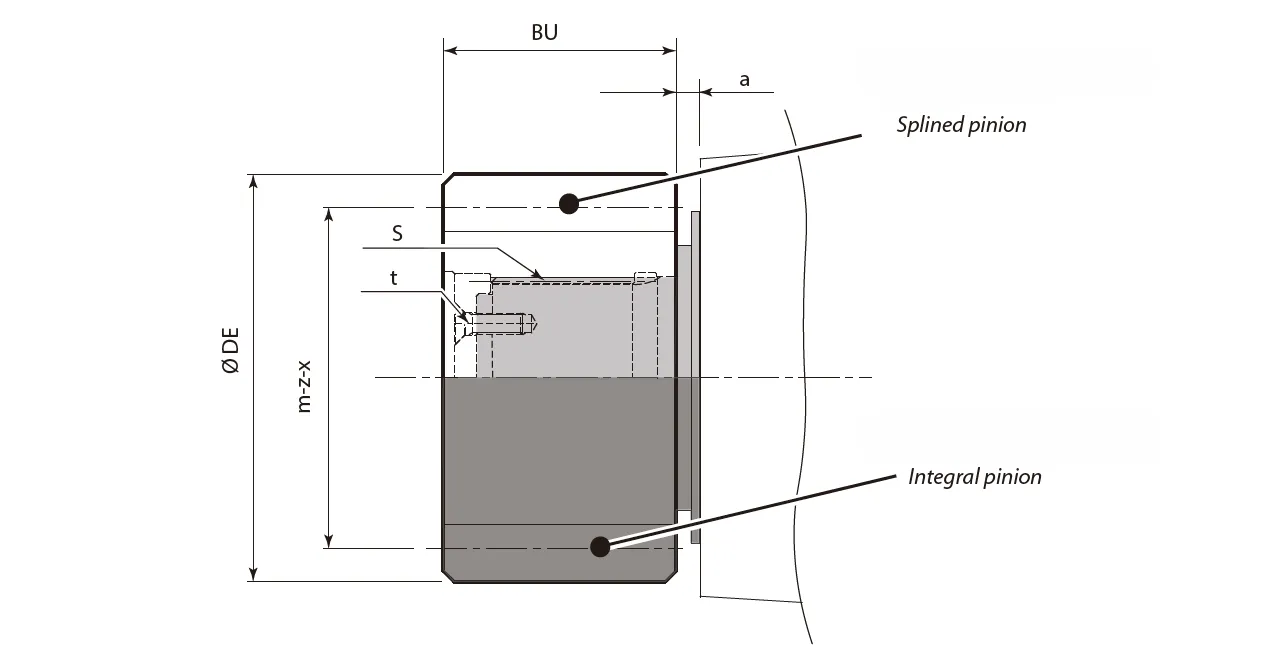
| Apoyo | metro | z | incógnita | ODA | BU | a | S | el | Tmáx | |
| [mm] | Estático [Nuevo Méjico] | Dinámica [Nuevo Méjico] | ||||||||
| DBS DBS2 | 8 | 14 | 0 | 128 | 79.5 | 15 | DIN 5482 B70x64 | M10 (n° 3) | 17500 | 15750 |
| 10 | 12 | 0.5 | 150 | 78 | 5 | - | - | 21500 | 19350 | |
| 10 | 13 | 0.5 | 160 | 85 | 19 | DIN 5482 B70x64 | M10 (n° 3) | 21000 | 18900 | |
| 10 | 14 | 0.5 | 170 | 90 | 5 | - | - | 24000 | 21600 | |
| 12 | 10 | 0 | 144 | 100 | 5 | - | - | 18500 | 16650 | |
| 12 | 12 | 0.5 | 180 | 100 | 5 | DIN 5482 B70x64 | M10 (n° 3) | 24000 | 21600 | |
| 12 | 14 | 0.5 | 204 | 105 | 5 | - | - | 24000 | 21600 | |
| 14 | 11 | 0.5 | 194.6 | 105 | 4 | - | - | 24000 | 21600 | |
| T18 | 8 | 20 | 0 | 176 | 115 | 15 | DIN 5482 B70x64 | M10 (n° 3) | 14500 | 13050 |
| 10 | 11 | 0.681 | 141 | 85 | 6 | - | - | 12000 | 10800 | |
| 12 | 10 | 0.5 | 156 | 120 | 6 | - | - | 12000 | 10800 | |
| 12 | 11 | 0.525 | 168.61 | 110 | 6 | - | - | 13500 | 12150 | |
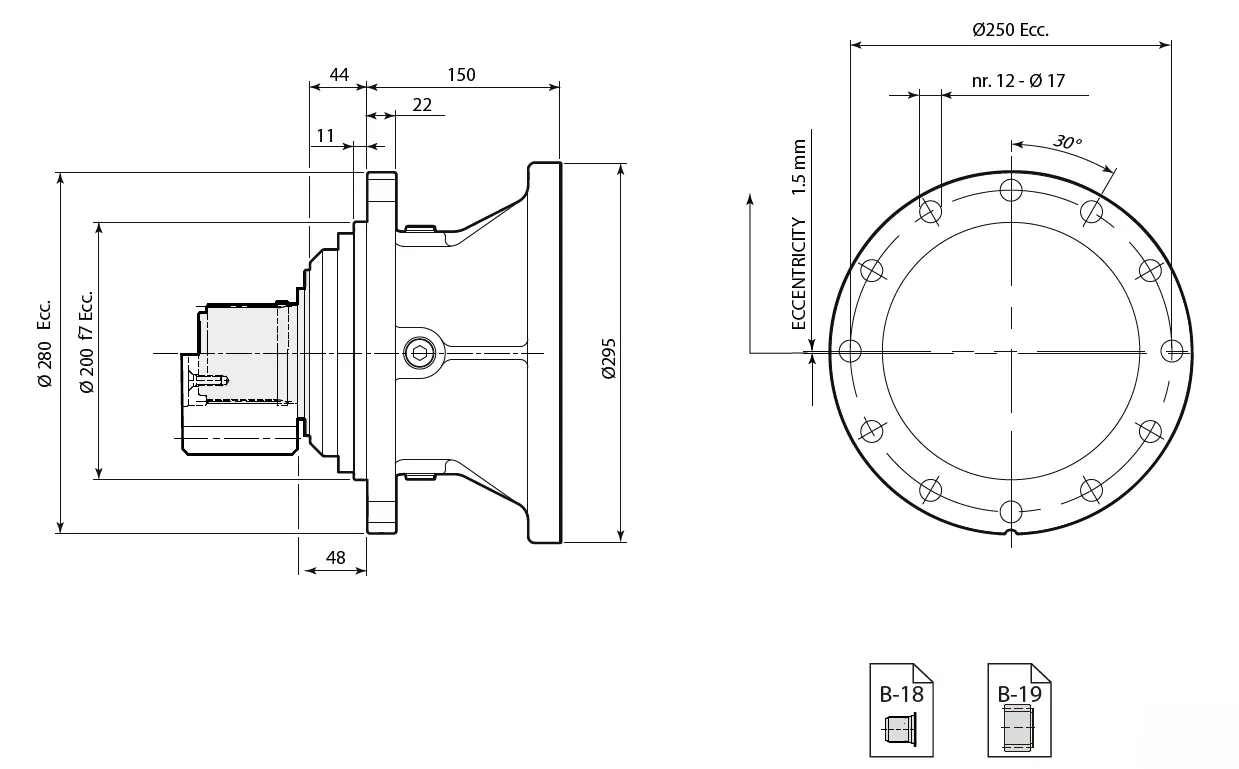
RE 810
Soporte: Tecc
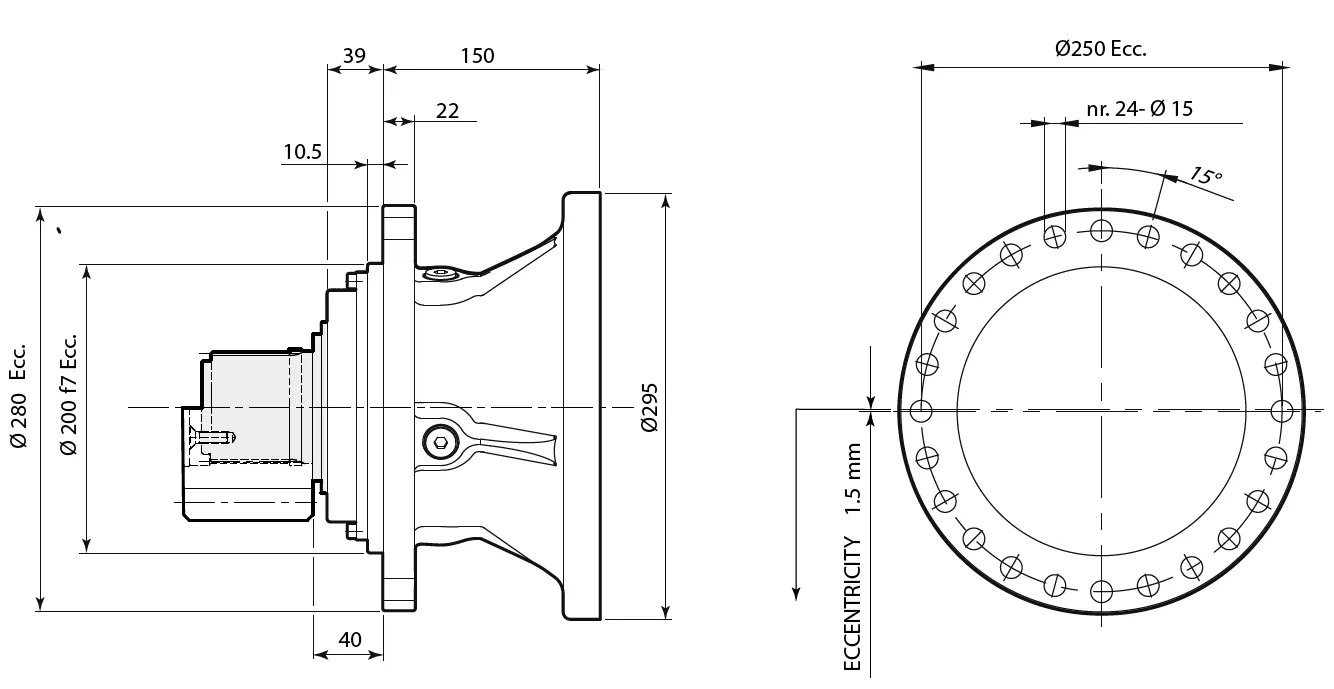
Soporte: TRecc
Eje:
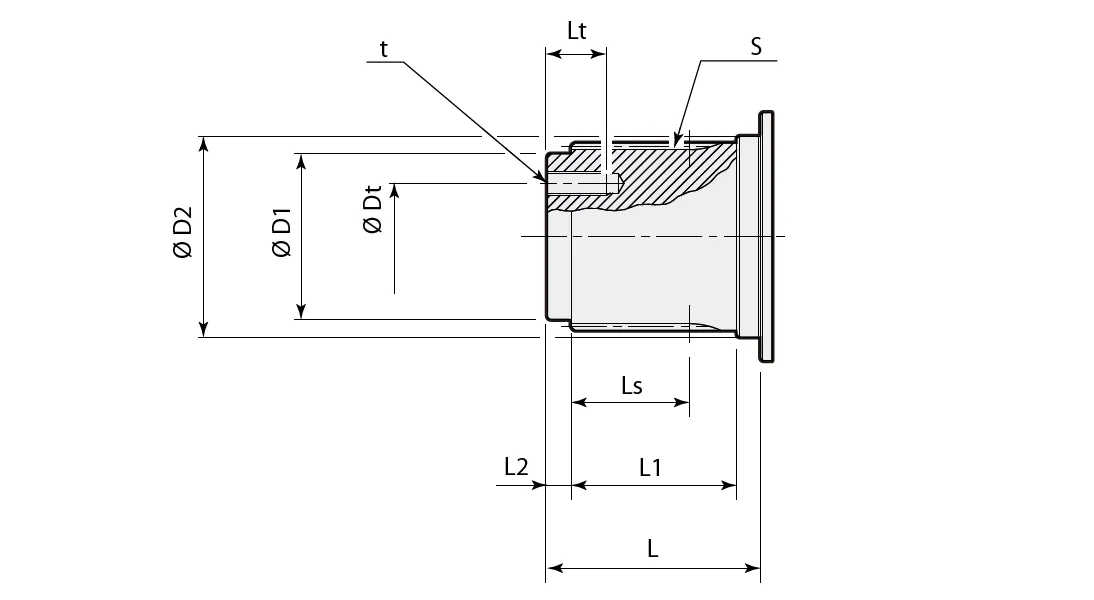
| Apoyo | ØD1 | ØD2 | S | Ls | Yo | L1 | L2 | el | ØDt | Teniente |
| [ mm ] | ||||||||||
| Tecnología | 62 f7 | 72 f7 | DIN5482 B70x64 | 51 | 90 | 70 | 10 | M10 (n.° 3) | 40 | 22 |
| TRecc | ||||||||||
Piñones:
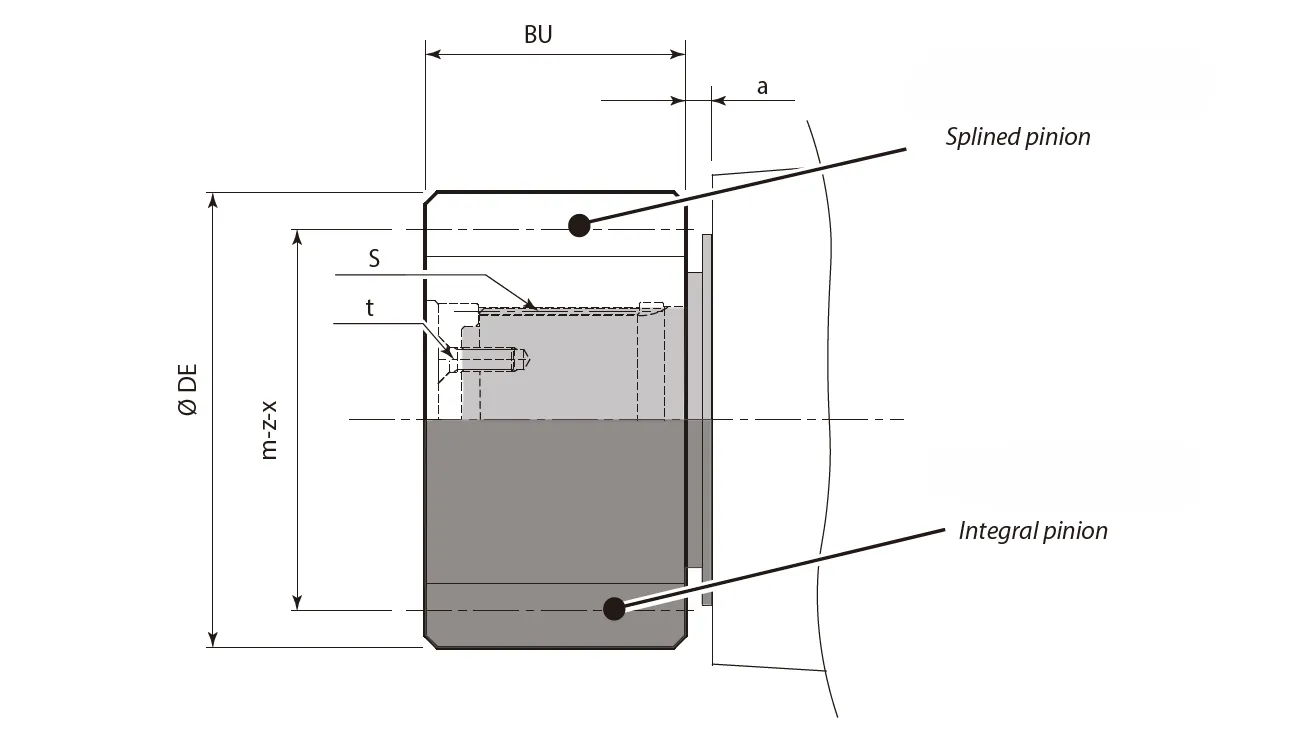
| Apoyo | metro | z | incógnita | ODA | BU | a | S | el | Tmáx | |
| [mm] | Estático [Nuevo Méjico] | Dinámica [Nuevo Méjico] | ||||||||
| Tecnología | 8 | 14 | 0 | 128 | 79.5 | 11.5 | DIN 5482 B70x64 | M10 (n° 3) | 10500 | 9450 |
| 9 | 15 | 0 | 152.64 | 101 | 6.5 | - | - | 12500 | 11250 | |
| 10 | 14 | 0.5 | 169 | 90 | 1.5 | DIN 5482 B70x64 | M10 (n.° 3) | 14500 | 13050 | |
| 12 | 13 | 0.5 | 192 | 95 | 32.5 | 13500 | 12150 | |||
| 14 | 15 | 0.5 | 250.6 | 105 | 1.5 | 21000 | 18900 | |||
| TRecc | 8 | 15 | 0.3 | 140 | 80 | 13.5 | DIN 5482 B70x64 | M10 (n° 3) | 15200 | 13680 |
| 10 | 13 | 0.5 | 160 | 90 | 5.5 | - | - | 17800 | 16020 | |
| 10 | 18 | 0 | 198 | 80 | 5.5 | - | - | 23800 | 21420 | |
| 12 | 12 | 0.5 | 180 | 100 | 3.5 | DIN 5482 B70x64 | M10 (n.° 3) | 19000 | 17100 | |
| 12 | 14 | 0.5 | 199 | 100 | 33.5 | 16000 | 14400 | |||
Benefits of Planetary Slewing Drive for Wind Turbines
1. Exceptional Torque Transmission
Planetary slewing drives are designed to handle immense torque loads, making them ideal for the demanding requirements of wind turbines. The system’s multiple planet gears evenly distribute loads across the mechanism, ensuring consistent performance while reducing stress on individual components, leading to enhanced durability and reliable power transfer under extreme conditions.
2. Diseño compacto y que ahorra espacio
The integration of a slewing ring bearing and planetary gear system creates a compact yet powerful assembly. This space-efficient design minimizes the overall size and weight of the drive system, a critical factor in wind turbines where compact components are essential for reducing nacelle weight and improving overall turbine efficiency.
3. High Efficiency and Smooth Operation
Planetary slewing gearboxes offer superior efficiency by optimizing torque multiplication and rotational motion. The precise alignment of gears minimizes energy losses due to friction, allowing for smoother and quieter operation. This efficiency is crucial for maintaining consistent turbine performance, especially in variable wind conditions, ensuring maximum energy generation.
4. Durability in Harsh Environments
Built to withstand extreme weather conditions, slewing planetary gearboxes feature robust housings and corrosion-resistant materials. These components are engineered to perform reliably in harsh environments, including exposure to high winds, temperature fluctuations, and moisture, ensuring long-term operation with minimal maintenance, even in offshore wind turbine installations.
5. Optimized Energy Capture
By enabling precise nacelle yaw and blade pitch adjustments, planetary slewing drive gearboxes help maximize energy capture from varying wind directions and speeds. Accurate positioning ensures the turbine operates at its optimal efficiency, reducing power losses and enhancing the overall output, which is critical for maximizing return on investment in wind energy projects.
6. Low Maintenance and Long Service Life
The robust construction and efficient load distribution of planetary slew drives reduce wear and tear on components, minimizing maintenance requirements. Coupled with their ability to operate reliably over extended periods, these drives significantly lower operational downtime and maintenance costs, contributing to a longer service life and reduced lifecycle expenses.
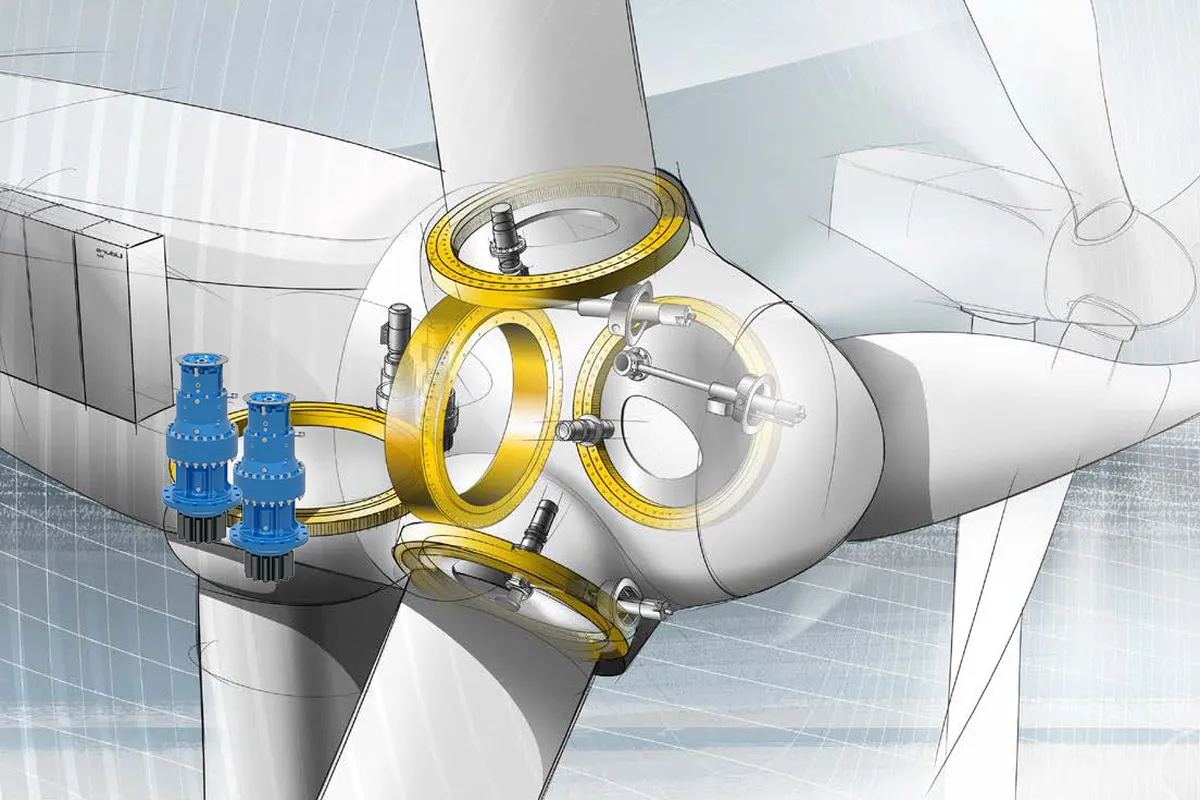

Planetary Slewing Gearbox Application Industry
1. Wind Energy Industry
Planetary slewing gearboxes play a vital role in wind turbines by powering yaw and pitch systems. These gearboxes help adjust the nacelle and blade angles to optimize energy capture and protect the turbine during high winds. Their ability to handle high torque loads ensures reliable performance in harsh environmental conditions, including offshore installations.
2. Construction and Heavy Machinery
Widely used in cranes, excavators, and drilling rigs, planetary slew drives enable smooth rotational movements for heavy equipment. Their compact design and excellent torque transmission capacity allow precise control of machinery, ensuring efficient operation in demanding construction tasks such as lifting, digging, and material handling under substantial loads.
3. Marine and Offshore Applications
In the marine industry, slewing planetary gearboxes are used in ship cranes, deck machinery, and offshore platforms. They ensure reliable rotational control in harsh environments, including exposure to saltwater and extreme weather. Their robust construction and corrosion-resistant materials make them ideal for long-term operation in challenging offshore conditions.
4. Aerospace and Defense
Precision and reliability are critical in aerospace and defense applications, where planetary slewing drive gearboxes are used in radar systems, satellite positioning mechanisms, and weapon platforms. These gearboxes provide accurate rotational control and high torque capabilities, ensuring smooth operation in complex systems that demand exceptional performance and durability.
5. Mining and Material Handling
In mining and bulk material handling, planetary slewing drives are used in stackers, reclaimers, and conveyor systems. They provide the torque and control needed for heavy-duty operations, ensuring smooth and efficient movement of materials. Their rugged design allows them to withstand the demanding conditions of mining environments, including dust and heavy loads.
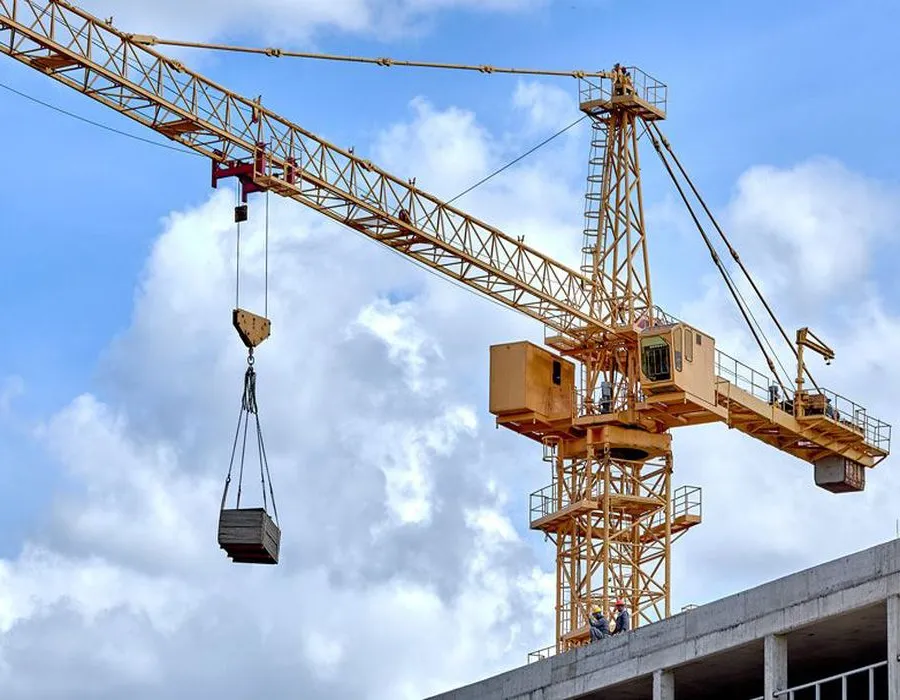 | 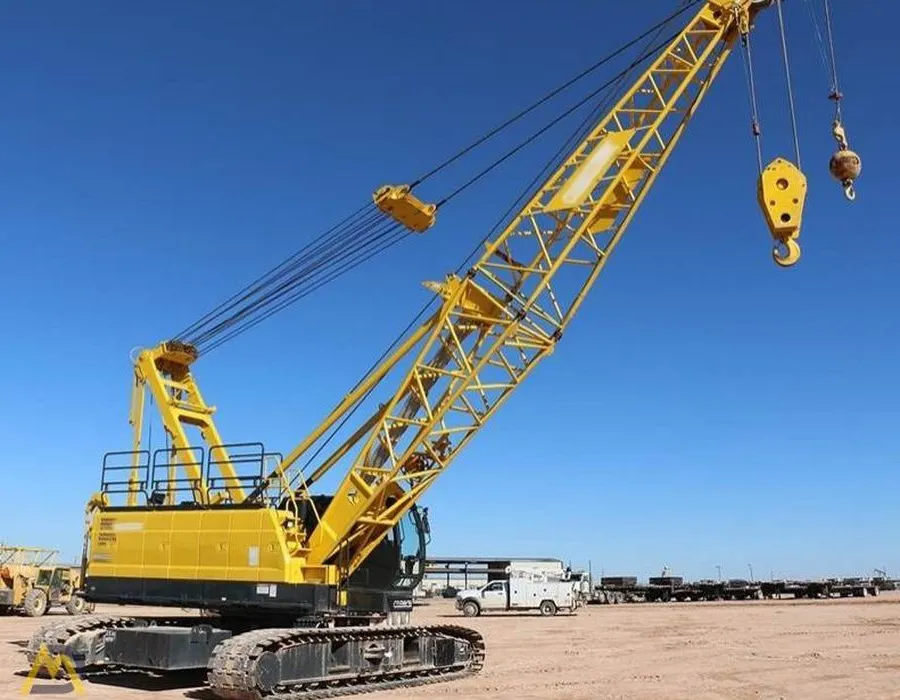 |
| Accionamiento de giro planetario para grúas torre | Accionamiento de giro planetario para grúas sobre orugas |
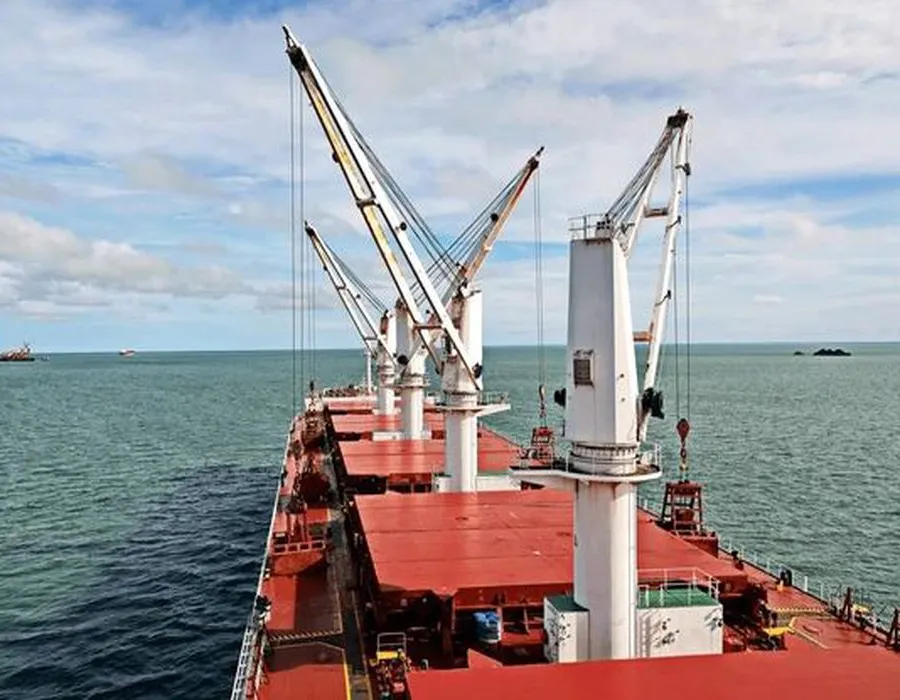 | 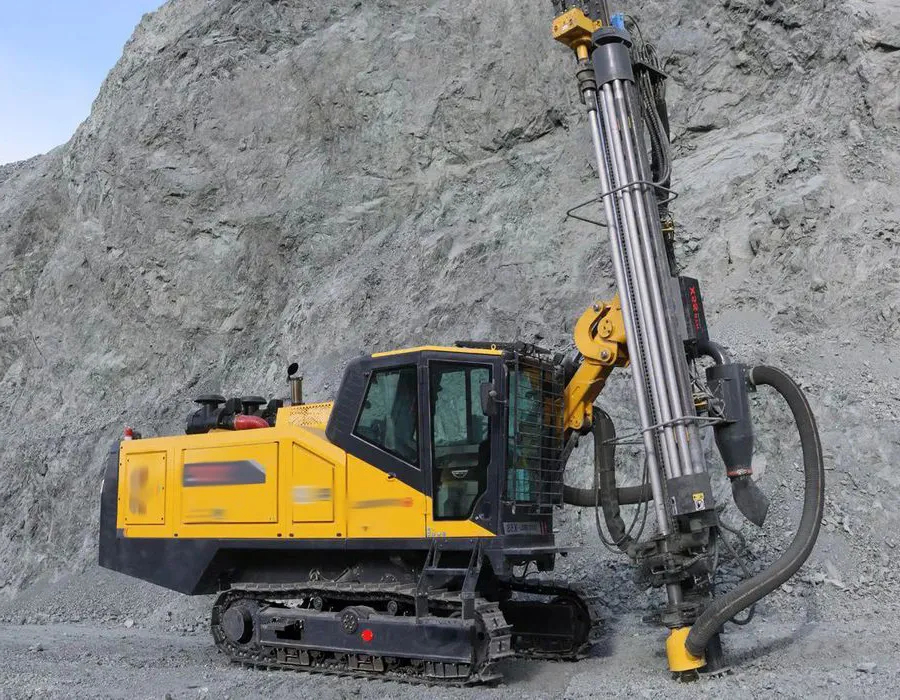 |
| Accionamiento de giro planetario para grúas de cubierta | Accionamiento de giro planetario para plataformas de perforación sobre orugas |
Planetary Slewing Drives Vs. Planetary Wheel Drives
Planetary slewing drives and transmisiones planetarias are both robust gear systems designed for high-torque applications, but they serve different purposes and are optimized for distinct types of motion and functionality. Understanding their differences is crucial in selecting the right drive for specific industrial needs.
Planetary Slewing Drives are primarily designed to facilitate rotational movement around a fixed axis. They typically combine a slewing ring bearing with a planetary gear system to deliver precise and high-torque rotational control. These drives are extensively used in applications requiring controlled rotational motion under heavy loads, such as wind turbines (yaw and pitch systems), cranes, excavators, and solar trackers. Their compact design allows for efficient torque transmission and smooth operation, even in demanding environments. Slewing drives are particularly advantageous in scenarios where 360-degree rotation or intermittent yet precise positioning is required.
Planetary Wheel Drives, on the other hand, are engineered to provide rotational power to wheels or continuous mobility systems. These drives are commonly found in vehicles, off-road machinery, and mobile construction equipment such as loaders, graders, and dump trucks. They are designed to transmit torque to the wheels efficiently, ensuring smooth movement over uneven terrains. Unlike slewing drives, wheel drives prioritize continuous rotational motion for mobility rather than stationary or fixed-axis rotation.
The key difference lies in their application focus: slewing drives excel in stationary torque and controlled rotation, while wheel drives are optimized for mobile systems requiring efficient torque transfer to wheels. Both systems share a planetary gear mechanism, ensuring high torque handling and compact design, but their specific use cases make them indispensable in their respective industries.
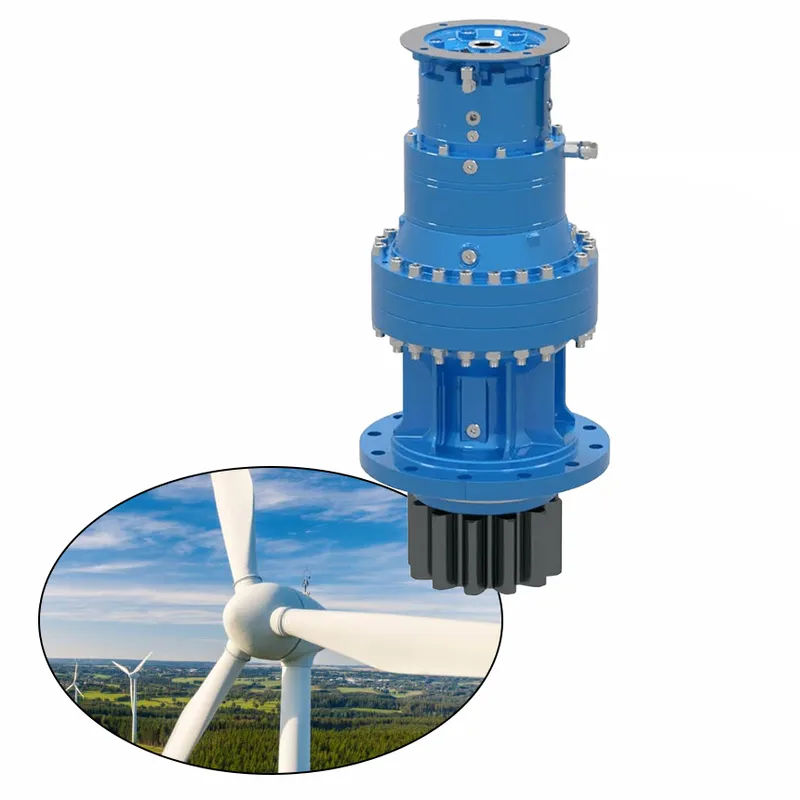 | 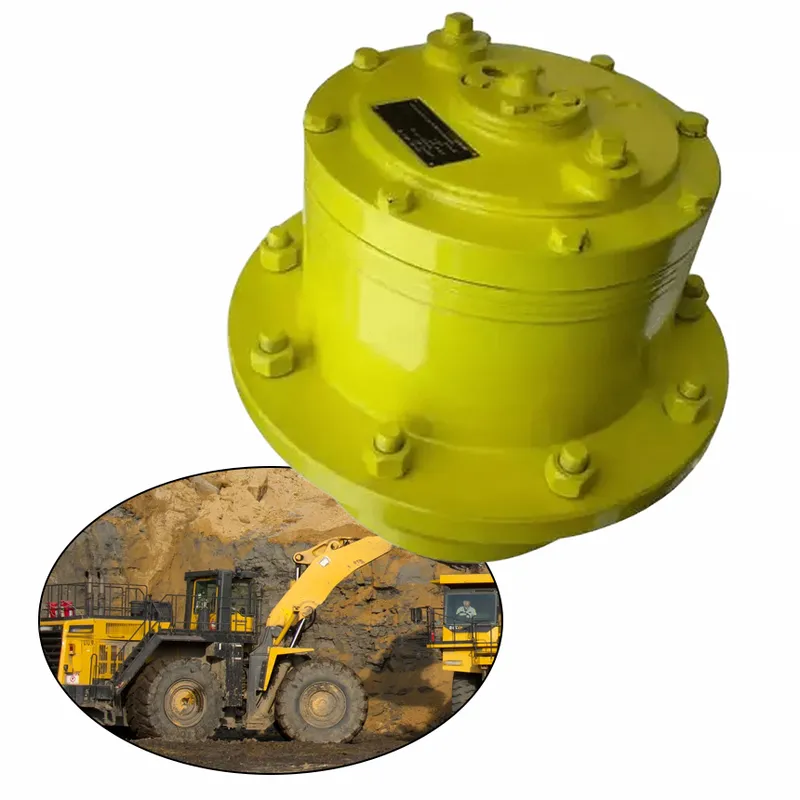 |
| Accionamiento de giro planetario | Tracción planetaria |
Información adicional
| Editado por | Yjx |
|---|
Productos relacionados
-
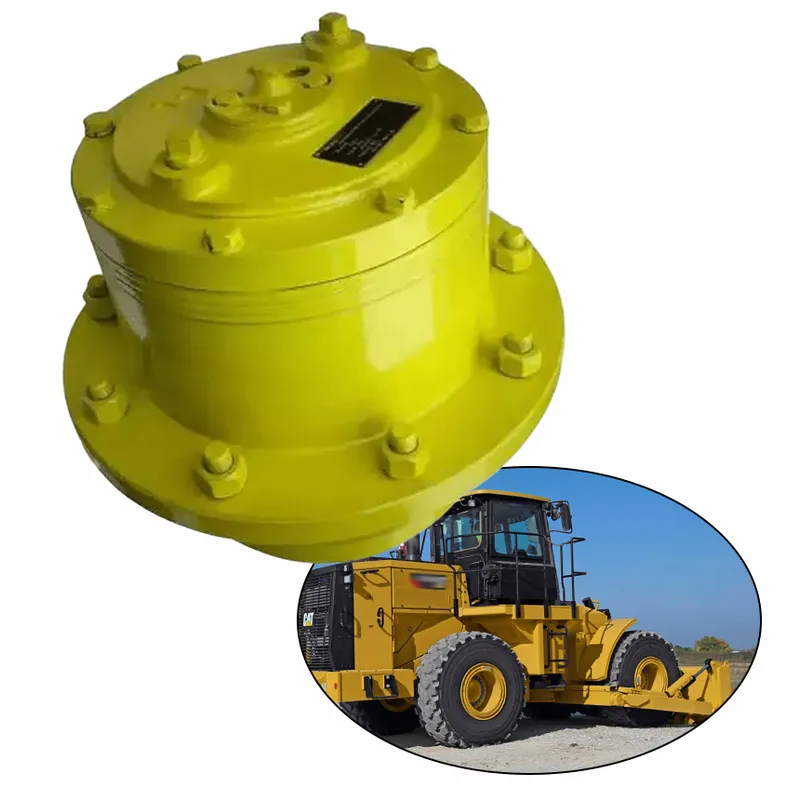
Caja de engranajes de transmisión planetaria para topadoras de ruedas
-
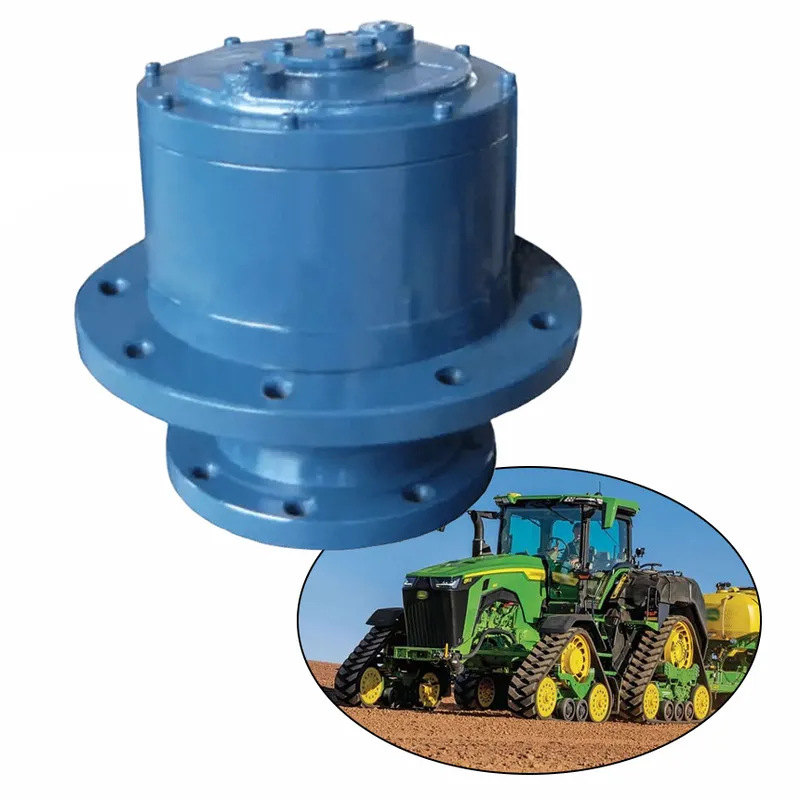
Caja de engranajes de transmisión planetaria para tractores
-
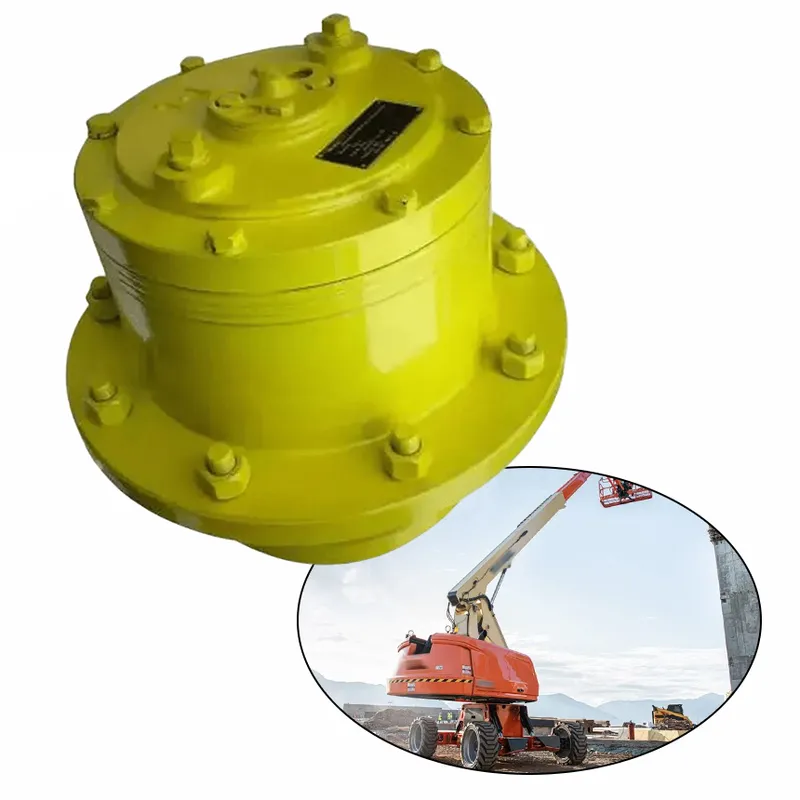
Caja de engranajes de transmisión planetaria para plataformas telescópicas
-
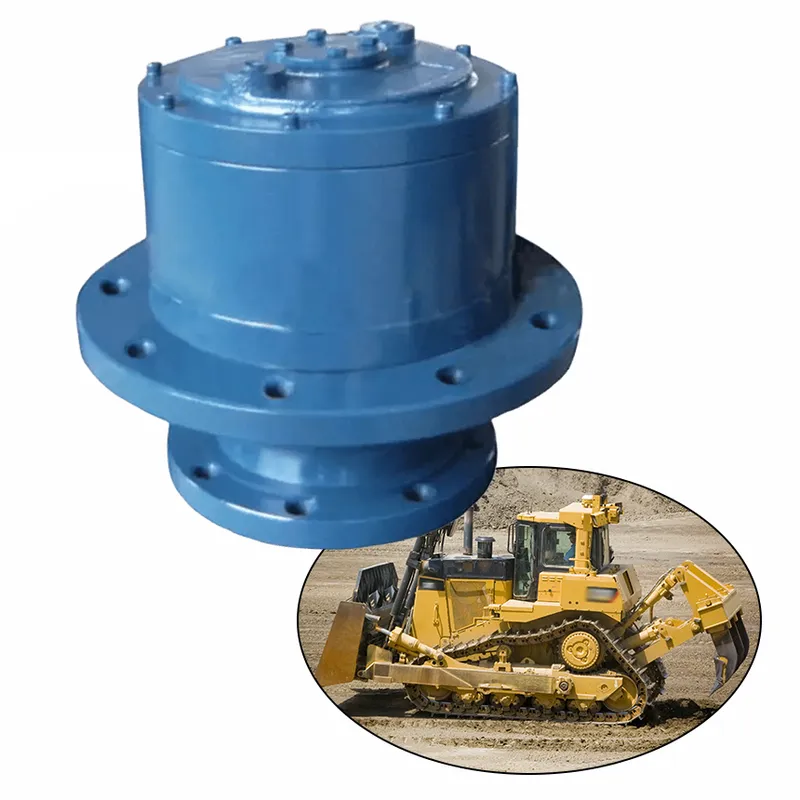
Caja de engranajes de transmisión planetaria para excavadoras
-
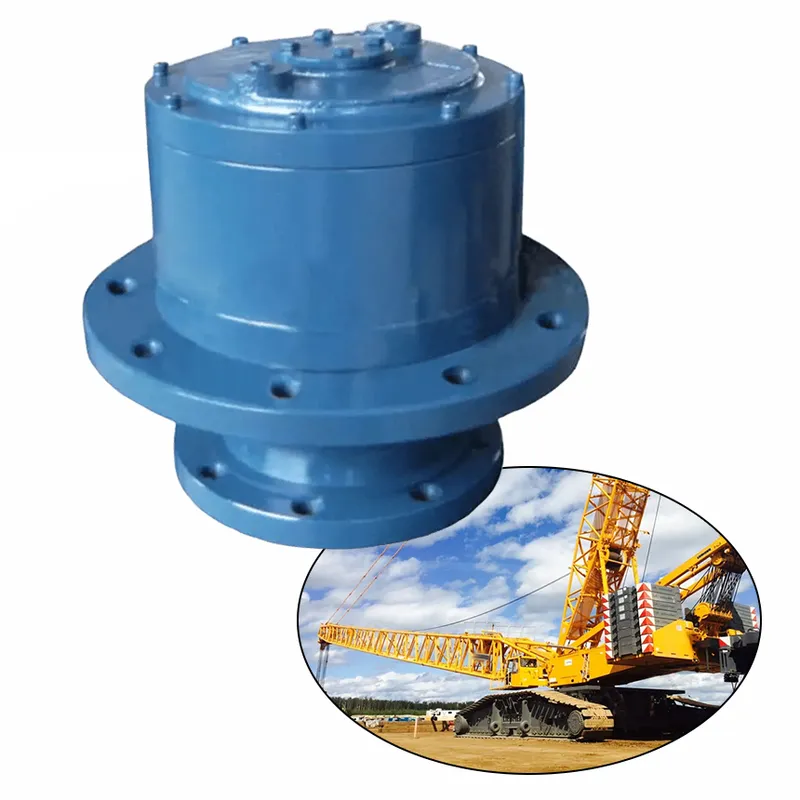
Caja de engranajes de transmisión planetaria para grúas sobre orugas