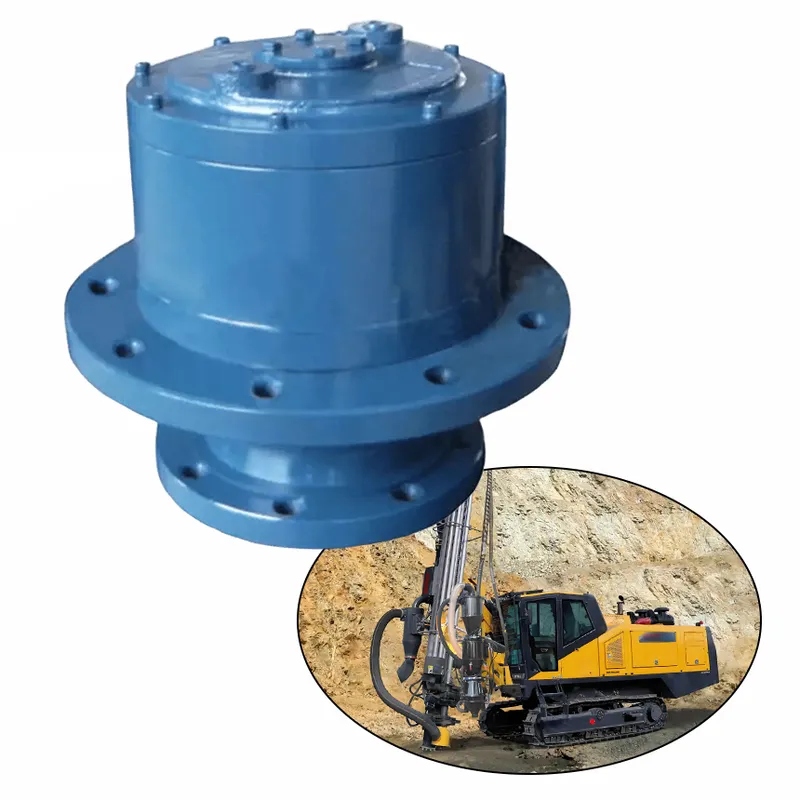
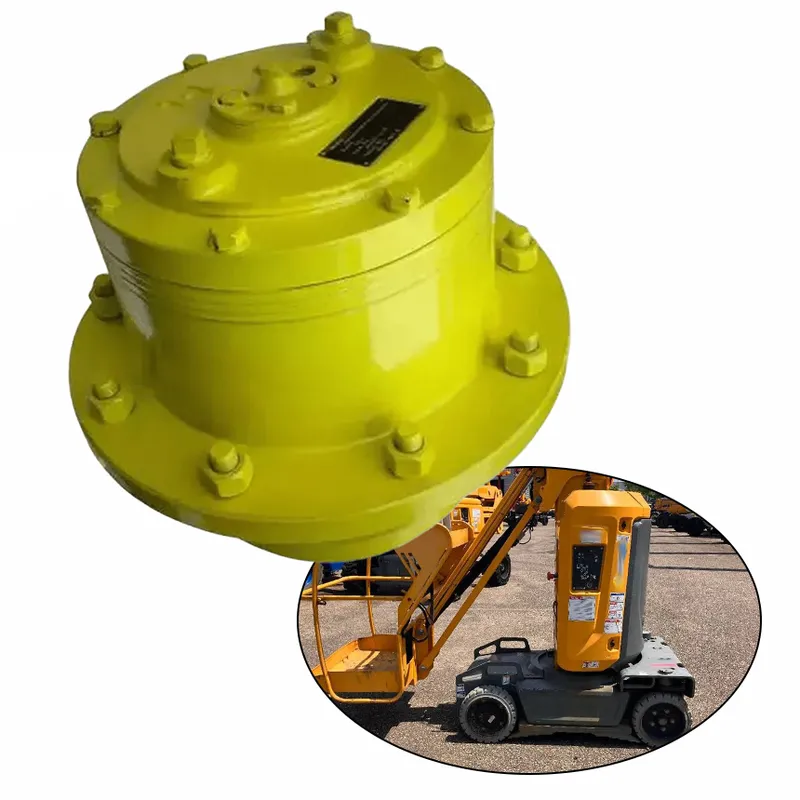
Planetenradgetriebe für Vertikalmast-Hebebühnen
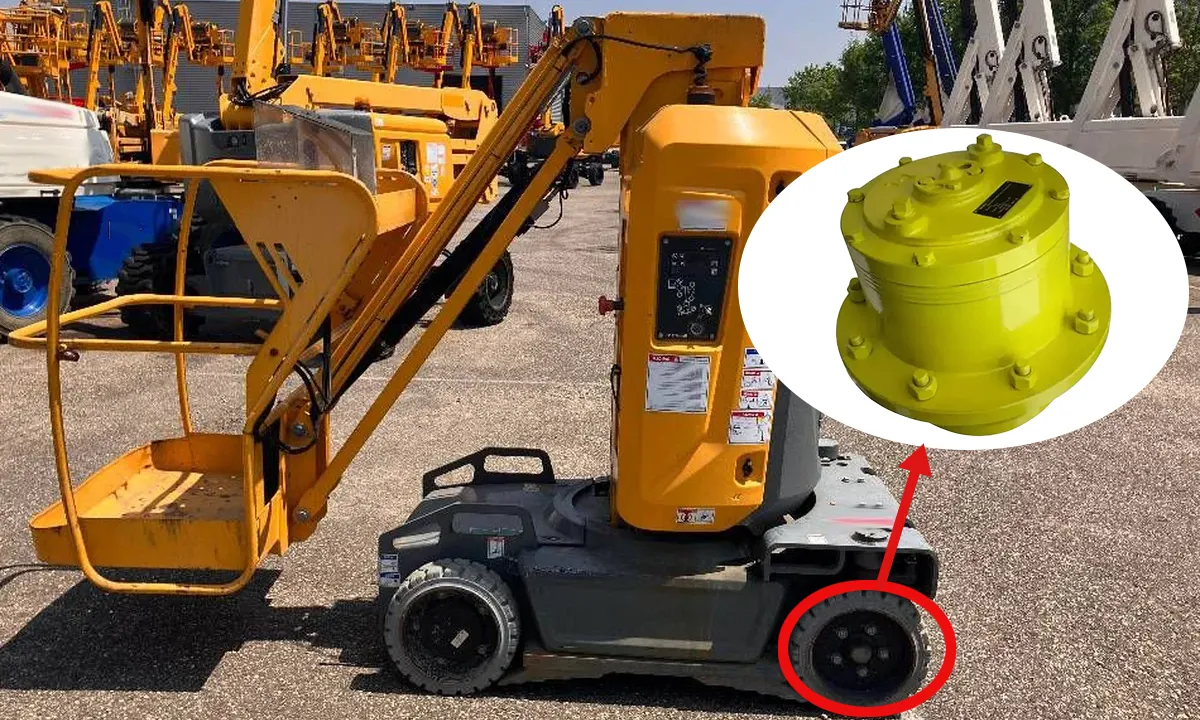
The planetary wheel drive gearbox for vertical mast lifts is a specialized, compact transmission system designed to deliver high torque multiplication and speed reduction, essential for the propulsion and precise maneuverability of self-propelled mobile elevating work platforms. In vertical mast lifts, compact, lightweight machines used for indoor and outdoor access to elevated workspaces in construction, maintenance, and industrial settings, the wheel drive planetary gearbox integrates directly with wheel hubs, facilitating smooth, controlled movement and enhancing operational safety and productivity.
The planetary wheel drive gearbox for vertical mast lifts is a specialized, compact transmission system designed to deliver high torque multiplication and speed reduction, essential for the propulsion and precise maneuverability of self-propelled mobile elevating work platforms. It employs an epicyclic gear configuration, comprising a central sun gear that meshes with multiple orbiting planet gears, all enclosed within an outer ring gear and supported by a carrier assembly. This arrangement enables efficient power transfer from the drive motor to the wheels, reducing motor speed while amplifying rotary force to handle heavy loads and ensure stable traction on uneven surfaces.
In vertical mast lifts, compact, lightweight machines used for indoor and outdoor access to elevated workspaces in construction, maintenance, and industrial settings, the wheel drive planetary gearbox integrates directly with wheel hubs, facilitating smooth, controlled movement and enhancing operational safety and productivity.
Abmessungen des Planetenradantriebs
Technische Definitionen
| Symbole | Maßeinheiten | Beschreibung |
| ich | - | Untersetzungsverhältnis |
| T2max | [Nm] | Maximales Ausgangsdrehmoment |
| T2p | [Nm] | Spitzenausgangsdrehmoment |
| T2maxint | [Nm] | Maximales intermittierendes Drehmoment |
| T2cont | [Nm] | Dauerhaftes Ausgangsdrehmoment |
| Pcont | [kW] | Maximale Dauerleistung |
| Pint | [kW] | Maximale intermittierende Leistung |
| n1max | [U/min] | Maximale Eingangsgeschwindigkeit |
| n2max | [U/min] | Maximale Ausgangsdrehzahl |
GR 80
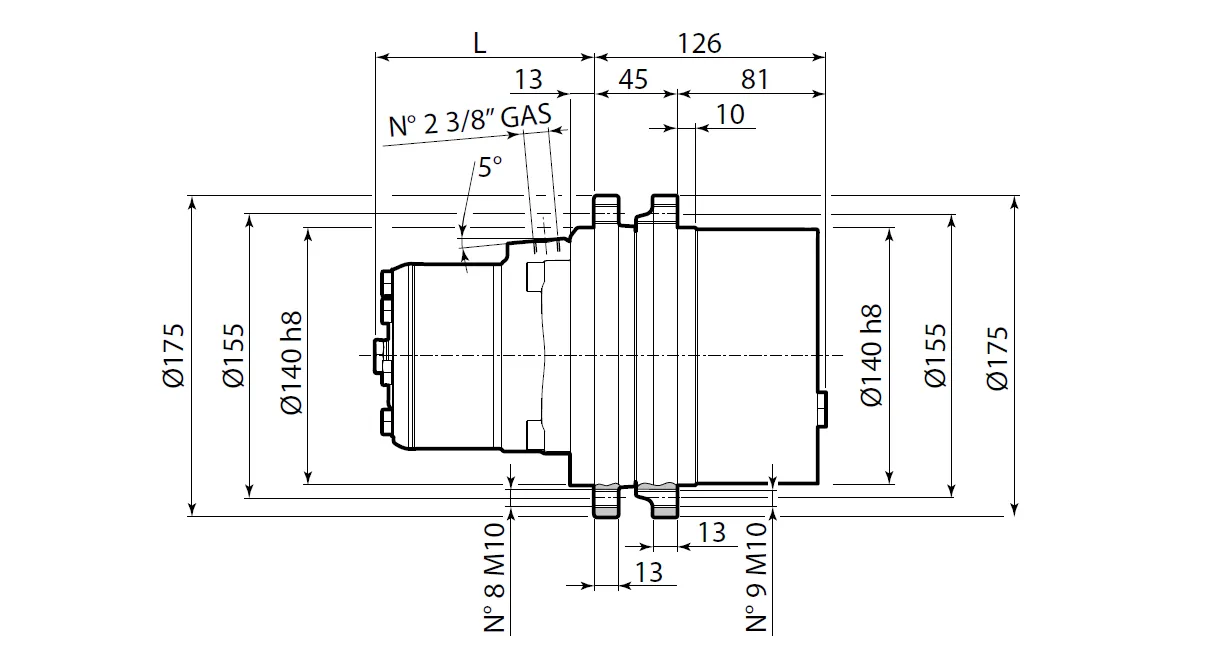
| Typ | Motordisp. [cc] | Gesamtanzeige [cc] | ich | Drehmoment | Geschwindigkeit n2max | Leistung | |||||||
| T2cont | T2maxint | T2p | Pcont [kW] | Pint [kW] | |||||||||
| [Nm] | Δp [bar] | [Nm] | Δp [bar] | [Nm] | Δp [bar] | [U/min] | portata fließen [l/min] | ||||||
| GR80-MR50 | 51,6 | 269,9 | 5,23 | 470 | 145 | 570 | 175 | 630 | 205 | 115 | 30 | 5,5 | 7 |
| GR80-MR80 | 80,3 | 420,0 | 800 | 145 | 960 | 175 | 1060 | 205 | 68 | 30 | 5,5 | 7 | |
| GR80-MR100 | 99,8 | 522,0 | 800 | 115 | 1000 | 145 | 1310 | 205 | 55 | 30 | 5,5 | 7 | |
| GR80-MR125 | 125,7 | 657,4 | 800 | 95 | 1000 | 120 | 1500 | 190 | 45 | 30 | 5,5 | 7 | |
| GR80-MR160 | 159,6 | 834,7 | 800 | 75 | 1000 | 95 | 1500 | 145 | 33 | 30 | 5 | 7 | |
| GR80-MR200 | 199,8 | 1045,0 | 800 | 60 | 1000 | 75 | 1500 | 115 | 26 | 30 | 5 | 7 | |
| GR80-MR250 | 249,3 | 1303,8 | 800 | 50 | 1000 | 60 | 1500 | 95 | 21 | 30 | 4,5 | 6 | |
GR 200
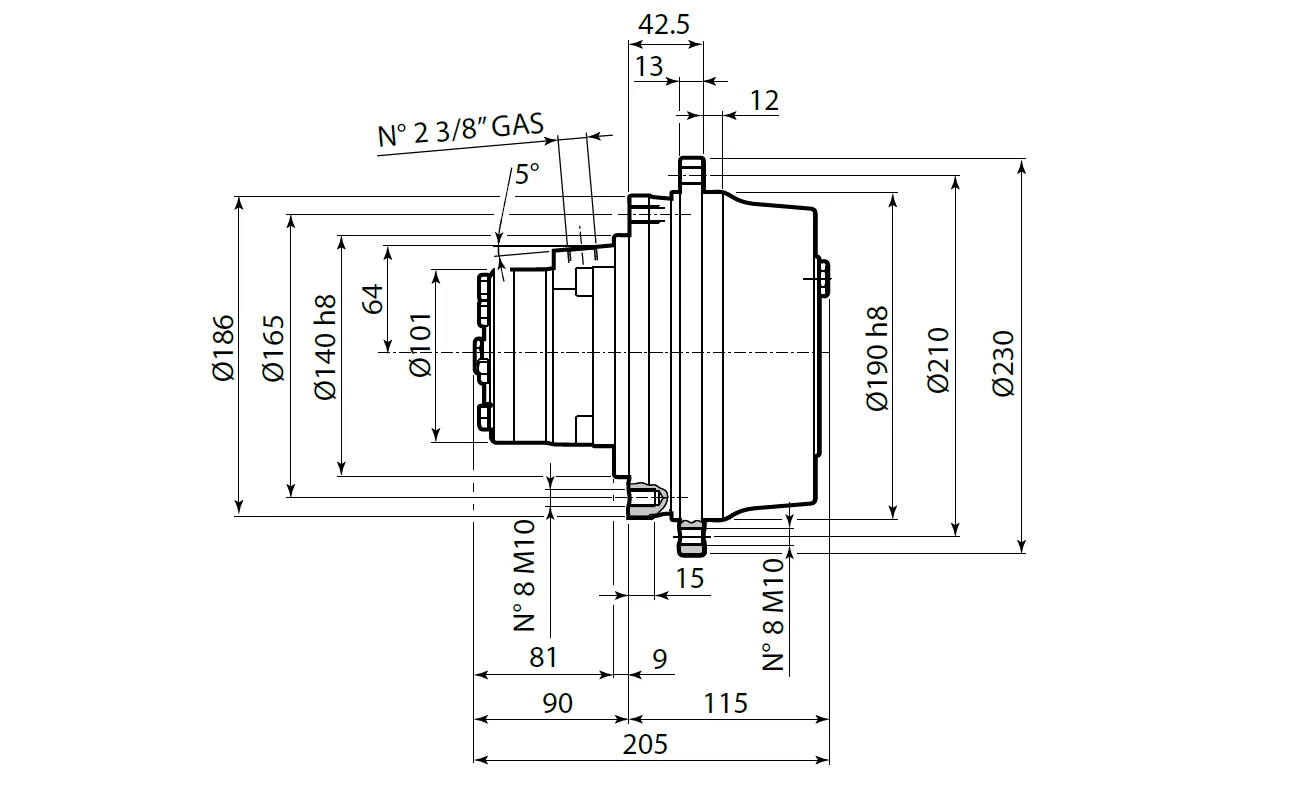
| Typ | Motordisp. [cc] | Gesamtanzeige [cc] | ich | Drehmoment | Geschwindigkeit N2max | Leistung | |||||||
| T2Fortsetzung | T2maxint | T2P | Pcont [kW] | Pint [kW] | |||||||||
| [Nm] | Δp [bar] | [Nm] | Δp [bar] | [Nm] | Δp [bar] | [U/min] | portata fließen [l/min] | ||||||
| GR200-MR50 | 51,6 | 319,9 | 6,20 | 560 | 145 | 670 | 175 | 740 | 205 | 98 | 30 | 5,5 | 7 |
| GR200-MR80 | 80,3 | 497,9 | 950 | 145 | 1150 | 175 | 1250 | 205 | 58 | 30 | 5,5 | 7 | |
| GR200-MR100 | 99,8 | 618,8 | 1180 | 145 | 1420 | 175 | 1560 | 205 | 46 | 30 | 5,5 | 7 | |
| GR200-MR125 | 125,7 | 779,3 | 1450 | 145 | 1750 | 175 | 1920 | 205 | 38 | 30 | 5,5 | 7 | |
| GR200-MR160 | 159,6 | 989,5 | 1600 | 125 | 2100 | 165 | 2450 | 205 | 29 | 30 | 5 | 7 | |
| GR200-MR200 | 199,8 | 1238,8 | 1600 | 100 | 2150 | 135 | 2500 | 165 | 23 | 30 | 5 | 7 | |
| GR200-MR250 | 249,3 | 1545,7 | 1600 | 80 | 2150 | 105 | 2500 | 135 | 18 | 30 | 4,5 | 6 | |
| GR200-MR315 | 315,7 | 1957,3 | 1600 | 65 | 2150 | 85 | 2500 | 110 | 15 | 30 | 4 | 5 | |
| GR200-MR375 | 372,6 | 2310,1 | 1600 | 55 | 2150 | 70 | 2500 | 90 | 12 | 30 | 3,5 | 4,5 | |
EH 210
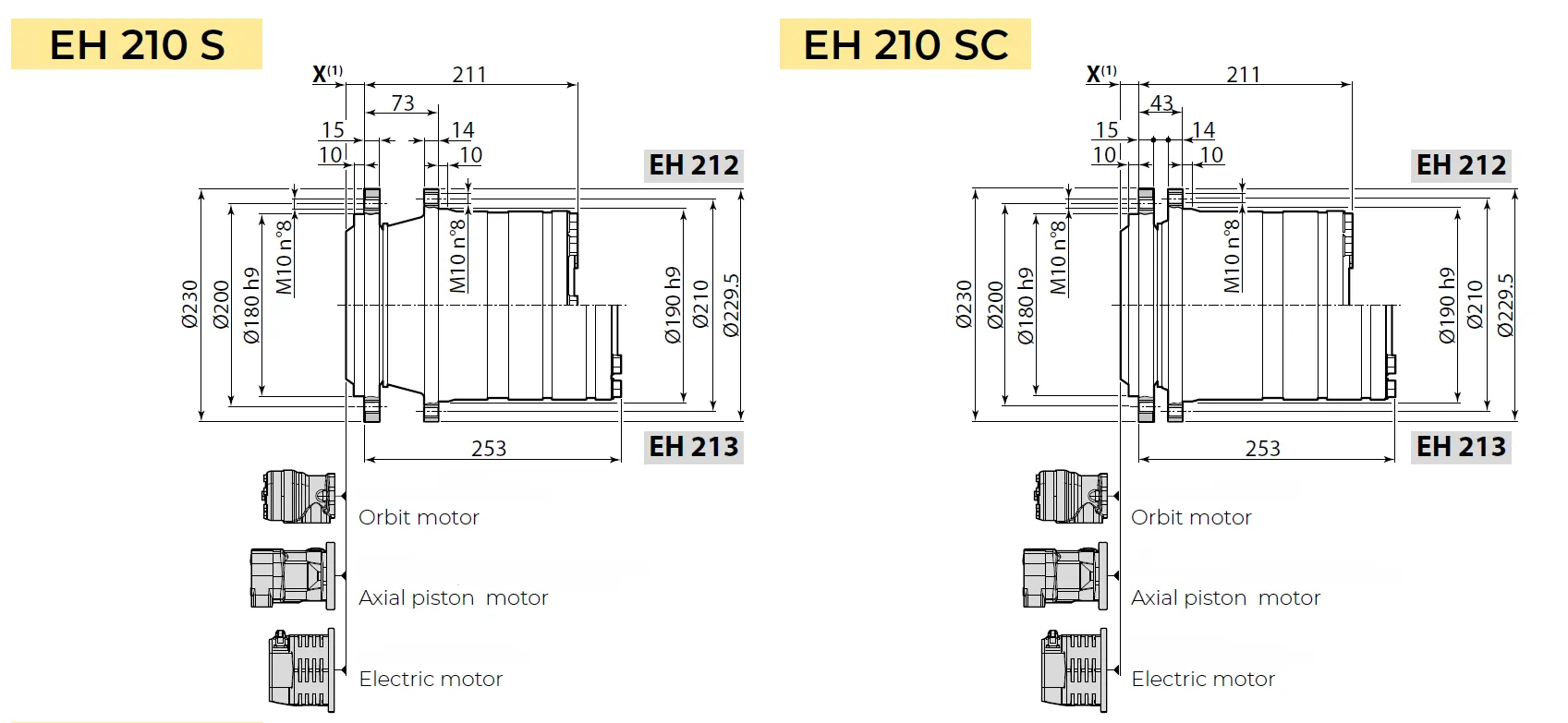
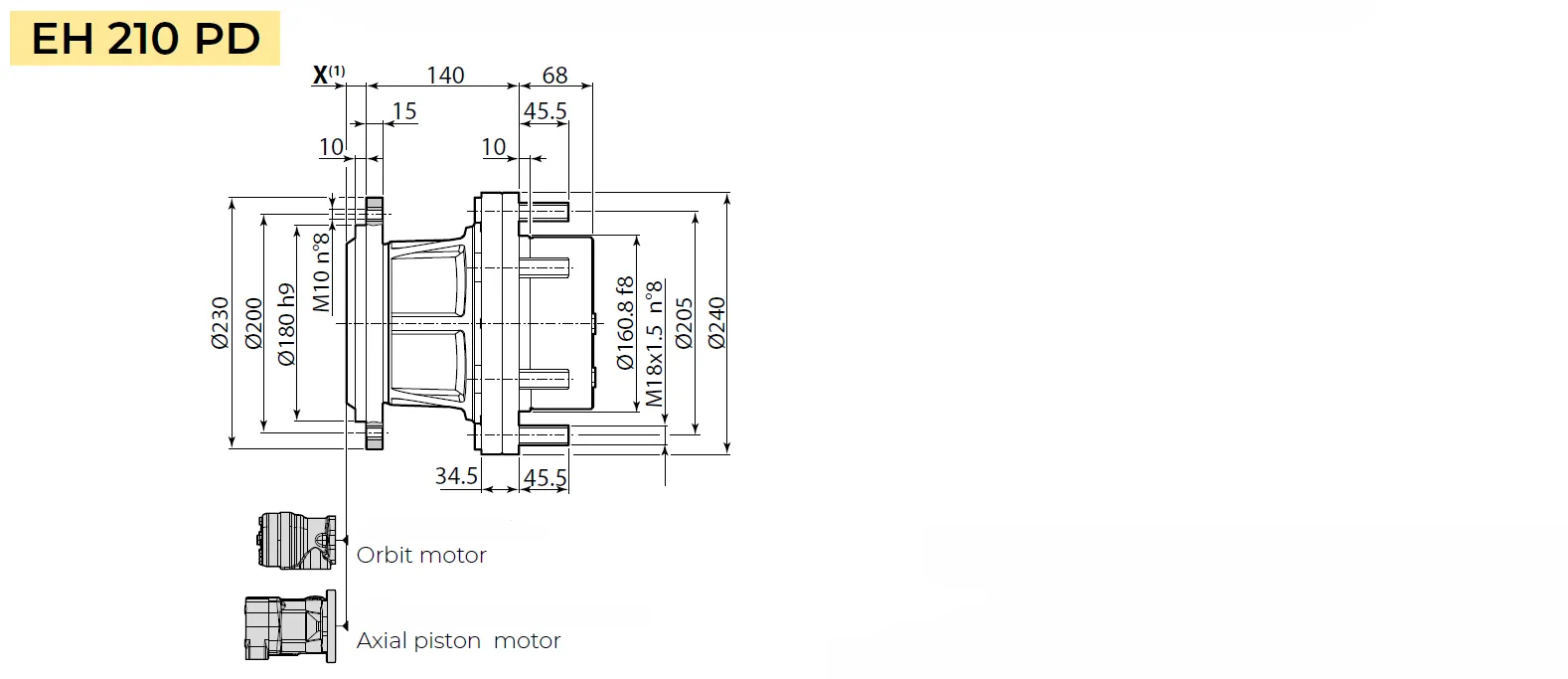
| Typ | Gewicht | Ölmenge | i (da÷a / From÷to) | T2max [Nm] | n1max [U/min] | ||||
| EH 212 | EH 213 | EH 212 | EH 213 | EH 212 | EH 213 | ||||
| EH 210 S | 35 | 40 | 0.8 | 1 | 11 ÷ 29 | 41 ÷ 129 | 3950 | 3500 | |
| EH 210 SC | |||||||||
| EH 210 PD | - | - | |||||||
EH 240
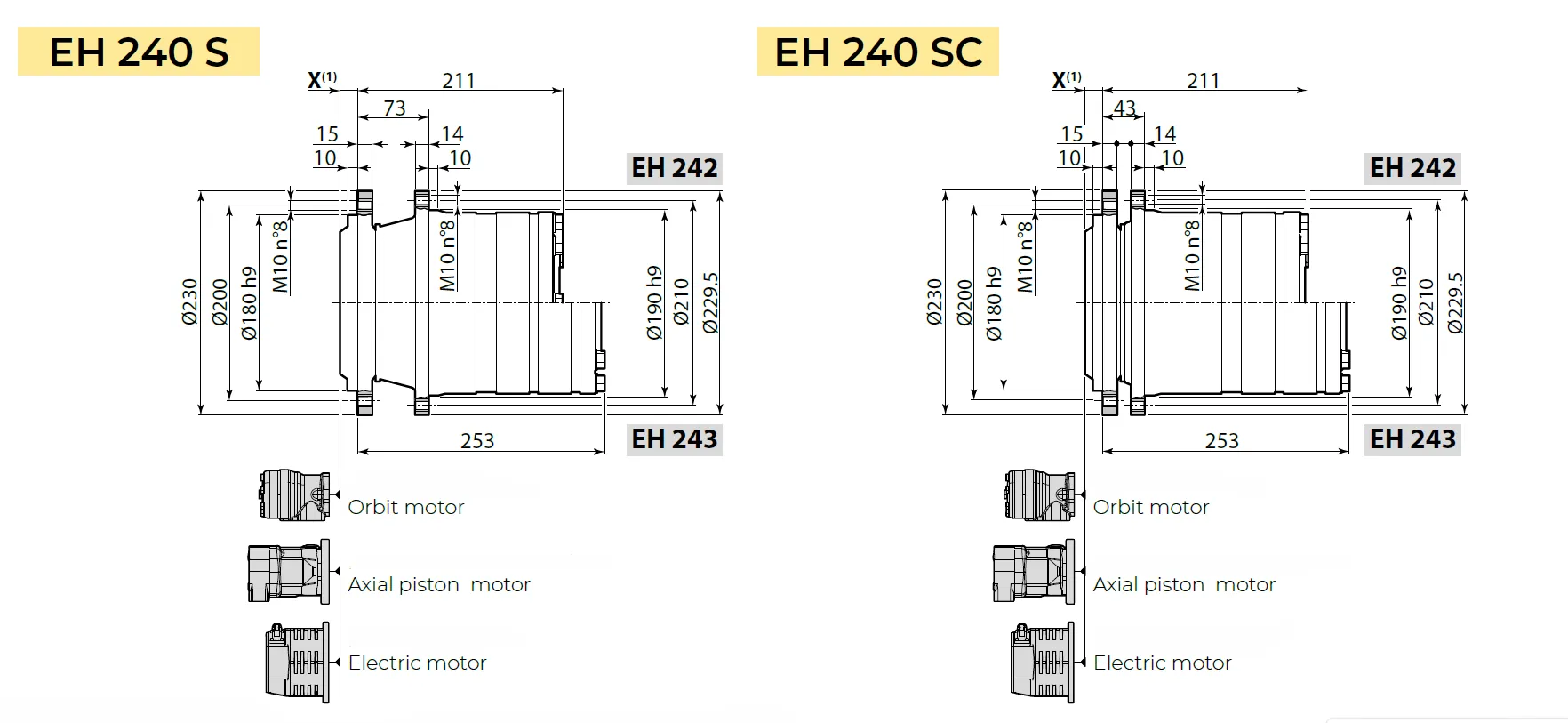
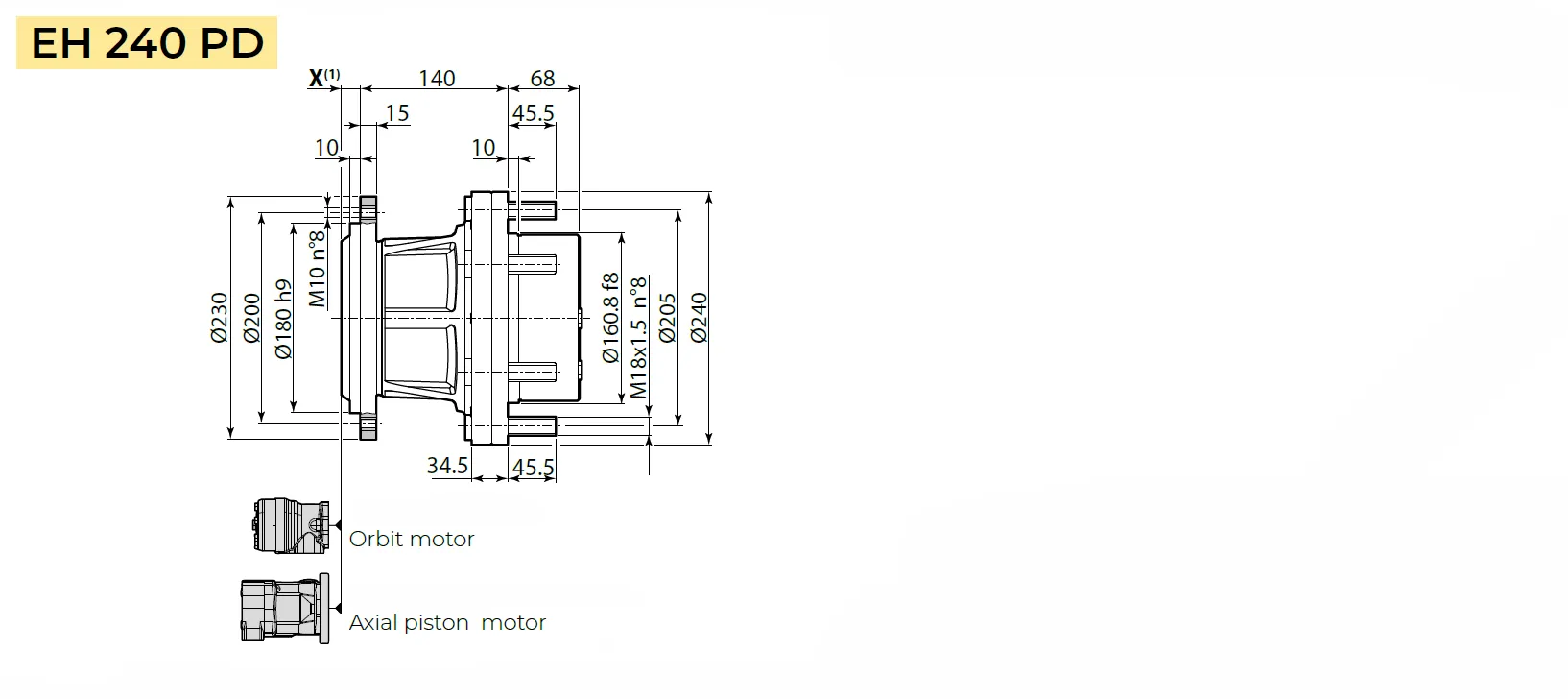
| Typ | Gewicht | Ölmenge | i (da÷a / From÷to) | T2max [Nm] | n1max [U/min] | ||||
| EH 242 | EH 243 | EH 242 | EH 243 | EH 242 | EH 243 | ||||
| EH 240 S | 35 | 40 | 0.8 | 1 | 12 ÷ 31 | 45 ÷ 135 | 5600 | 3500 | |
| EH 240 SC | |||||||||
| EH 240 PD | - | - | |||||||
EH 350
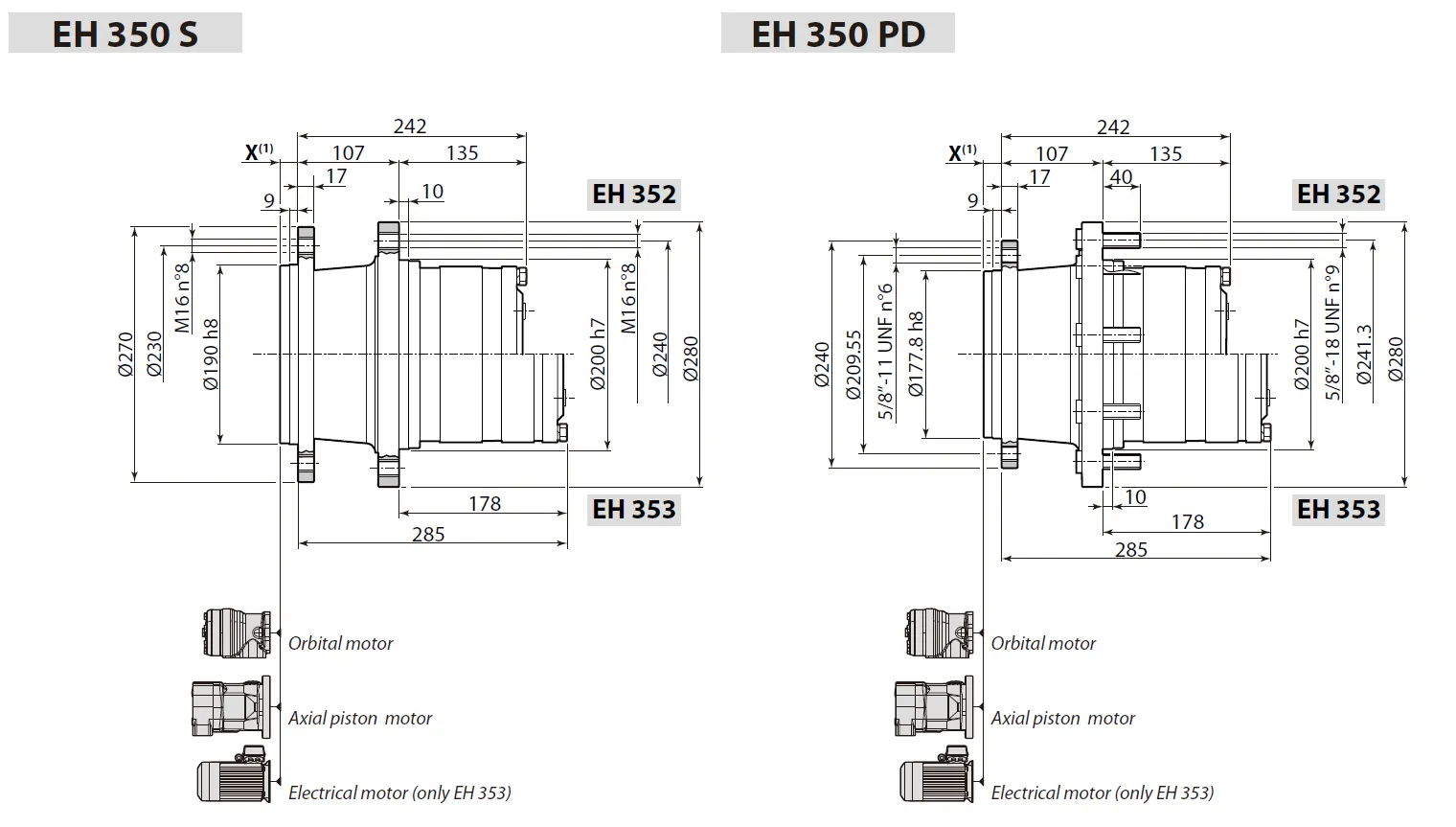
| Typ | Gewicht | Ölmenge | i (da÷a / From÷to) | T2max [Nm] | n1max [U/min] | ||||
| EH 352 | EH 353 | EH 352 | EH 353 | EH 352 | EH 353 | ||||
| EH 350 S | 55 | 60 | 1 | 1.2 | 15 ÷ 31 | 52 ÷ 135 | 7200 | 3500 | |
| EH 350 PD | |||||||||
EH 610
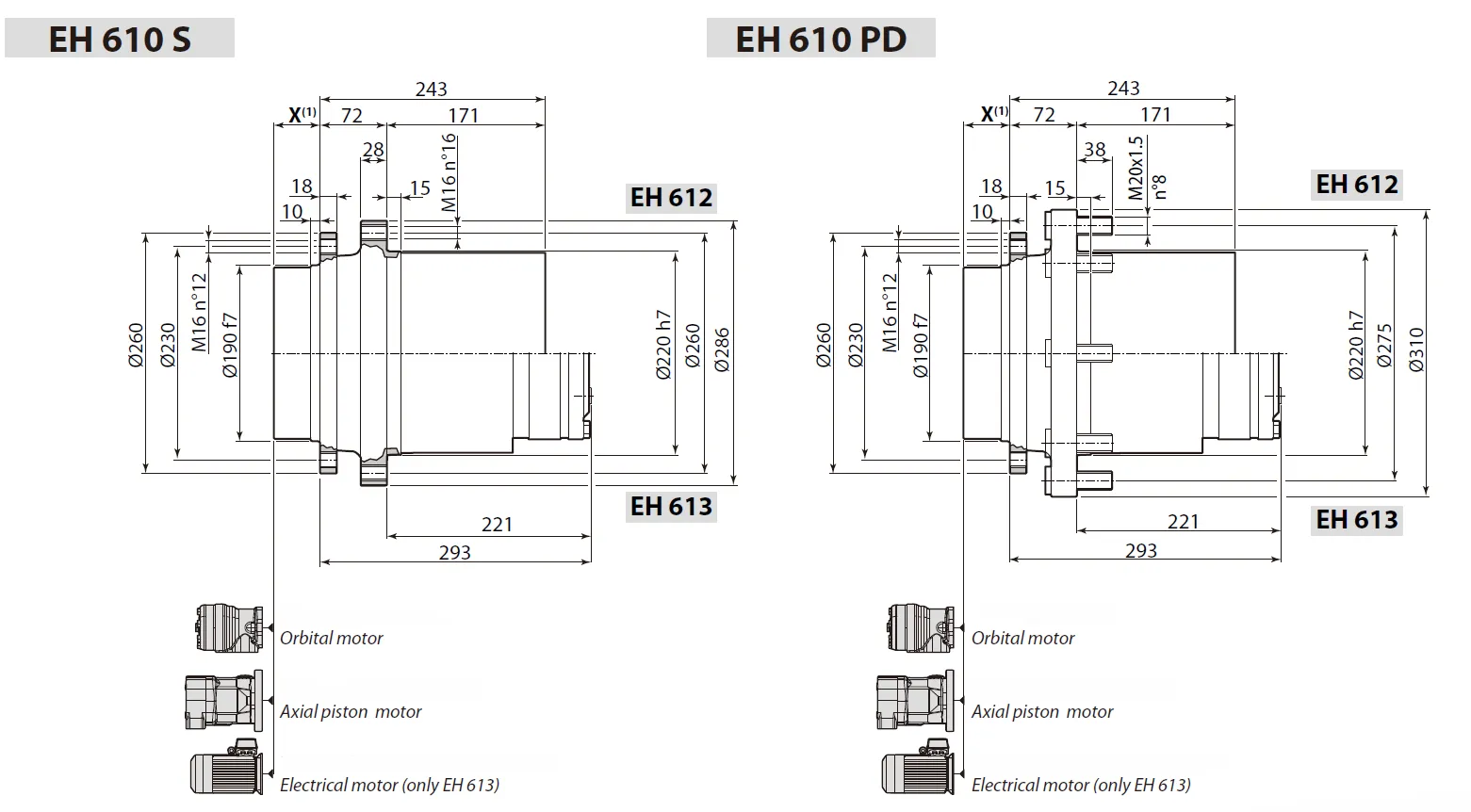
| Typ | Gewicht | Ölmenge | i (da÷a / From÷to) | T2max [Nm] | n1max [U/min] | ||||
| EH 612 | EH 613 | EH 612 | EH 613 | EH 612 | EH 613 | ||||
| EH 610 S | 60 | 70 | 1.2 | 1.5 | 12 ÷ 31 | 47 ÷ 138 | 13500 | 3500 | |
| EH 610 PD | |||||||||
EH 910
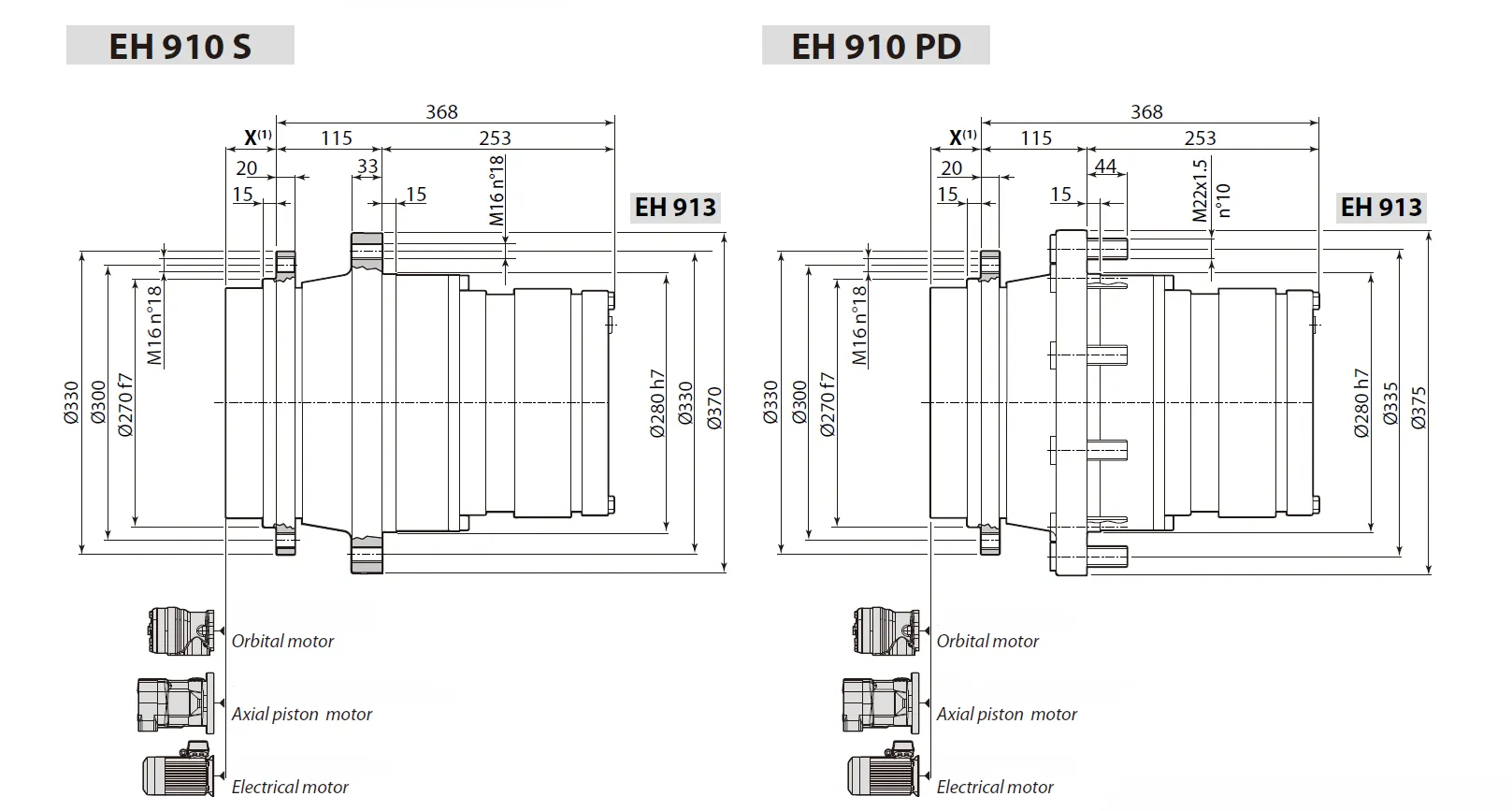
| Typ | Gewicht | Ölmenge | i (da÷a / From÷to) | T2max | n1max | |
| EH 913 | EH 913 | EH 913 | [Nm] | [U/min] | ||
| EH 910 S | 130 | 1 | 47 ÷ 131 | 24200 | 3500 | |
| EH 910 PD | ||||||
S-Version

| Größe | Maße | ||||||||||
| D1 | D2 | T3 | D4 | D5 | D6 | D7 | D8 | L1 | L2 | L3 | |
| EH 210 S | 230 | 200 | 180 h9 | 190 h9 | 210 | 229.5 | M10 Nr. 8 | M10 Nr. 8 | 253 | 73 | 180 |
| EH 240 S | 230 | 200 | 180 h9 | 190 h9 | 210 | 229.5 | M10 Nr. 8 | M10 Nr. 8 | 253 | 73 | 180 |
| EH 350 S | 270 | 230 | 190 h8 | 200 h7 | 240 | 280 | M16 Nr. 8 | M16 Nr. 8 | 242 | 107 | 178 |
| EH 610 S | 260 | 230 | 190 f7 | 220 h7 | 260 | 286 | M16 Nr. 12 | M16 Nr. 16 | 243 | 72 | 171 |
| EH 910 S | 330 | 300 | 270 f7 | 280 h7 | 350 | 370 | M16 Nr. 18 | M16 Nr. 18 | 368 | 115 | 253 |
PD-Version
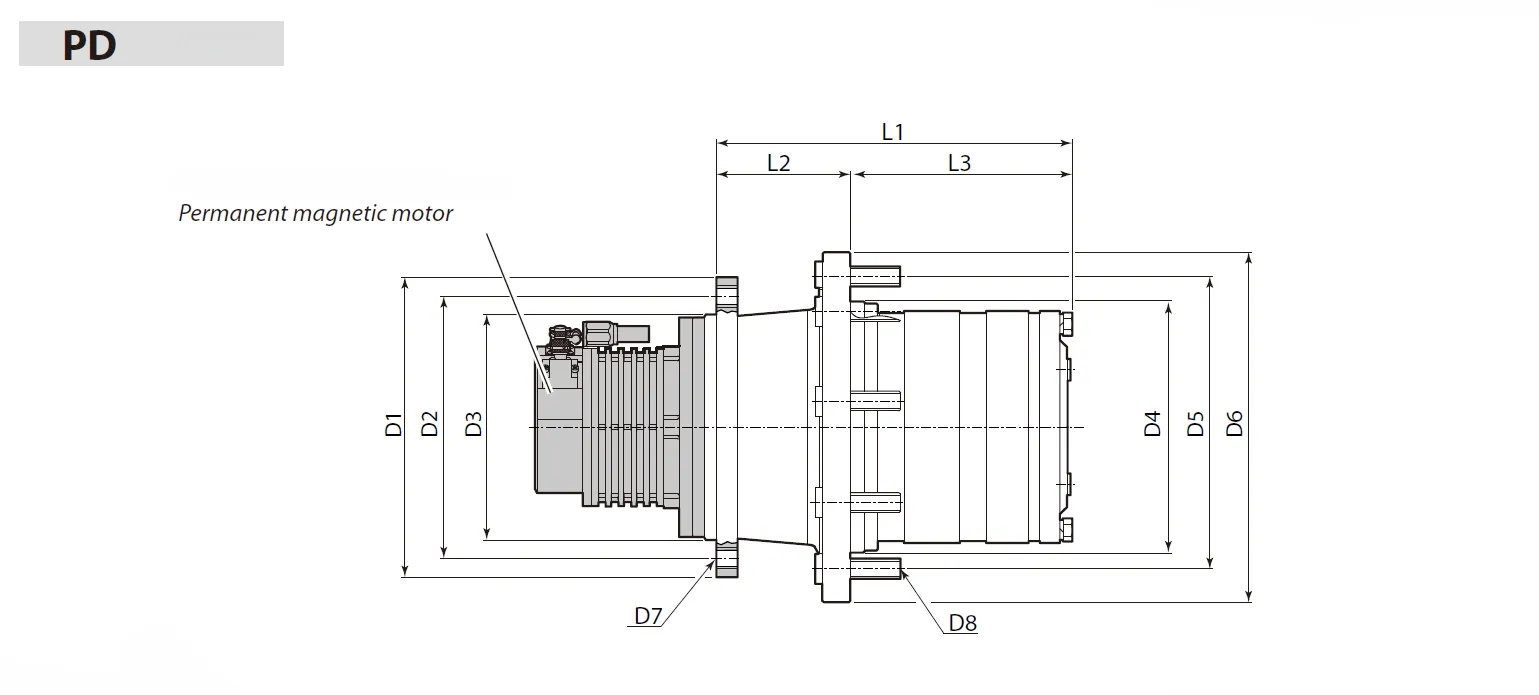
| Größe | Maße | ||||||||||
| D1 | D2 | T3 | D4 | D5 | D6 | D7 | D8 | L1 | L2 | L3 | |
| EH 210 PD | 230 | 200 | 180 h9 | 160.8 f8 | 205 | 240 | M10 (8x) | M18x1,5 (6x) | 210 | 140 | 70 |
| EH 240 PD | 230 | 200 | 180 h9 | 160.8 f8 | 205 | 240 | M10 (8x) | M18x1,5 (6x) | 210 | 140 | 70 |
| EH 350 PD | 240 | 209.55 | 177.8 h8 | 200 h7 | 241.3 | 280 | 5/8"-11 UNC (6x) | 5/8"-19 UNF (9x) | 285 | 107 | 178 |
| EH 610 PD | 260 | 230 | 190 f7 | 220 h7 | 275 | 310 | M16 (12x) | M20x1,5 (8x) | 293 | 72 | 221 |
| EH 910 PD | 330 | 300 | 270 f7 | 280 h7 | 335 | 375 | M16 (18x) | M22x1,5 (10x) | 368 | 115 | 253 |
Vertical Mast Lift Planetary Wheel Drive Gearbox Benefits
- Hohe Drehmomentdichte
This planetary wheel drive gearbox excels in delivering substantial torque output within a compact footprint, enabling vertical mast lifts to handle heavy loads and achieve stable elevation up to 18 feet or more without requiring oversized components, thereby improving overall machine efficiency and reducing structural strain in confined workspaces. - Verbesserte Haltbarkeit und Zuverlässigkeit
Constructed with evenly distributed planet gears that share loads effectively, the wheel drive planetary gearbox withstands rigorous operational demands, minimizing wear and extending service life in harsh environments like construction sites, thus ensuring consistent performance and reducing downtime for vertical mast lifts. - Improved Energy Efficiency
By achieving high power transmission efficiency through precise gear meshing and reduced friction, this planetary wheel drive optimizes fuel or battery consumption in electric vertical mast lifts, allowing for longer operational cycles and lower energy costs while maintaining smooth propulsion and lifting capabilities. - Kompaktes und platzsparendes Design
The integrated epicyclic configuration fits seamlessly into wheel hubs, promoting a smaller overall footprint for vertical mast lifts, which facilitates superior maneuverability in tight indoor spaces such as warehouses or retail environments, without compromising on power or stability. - Reduced Maintenance Requirements
With its self-contained lubrication and balanced load distribution across multiple gears, the planetary gearbox experiences less frequent breakdowns and requires minimal upkeep, leading to cost savings and increased productivity for operators of vertical mast lifts in demanding daily use. - Superior Stability and Safety
Offering rotational stiffness and even power distribution, this wheel drive planetary gear reducer ensures precise control during elevation and movement, enhancing operator safety at heights by preventing slippage or instability, which is critical for vertical mast lifts used in elevated work platforms compliant with industry standards.
Planetary Wheel Drive Application Industry
- Bauindustrie
In the construction sector, planetary wheel drive gearboxes are integral to equipment such as excavators, wheel loaders, and compact track loaders, providing reliable torque transmission for wheel and track drives under heavy loads and rough terrains, thereby improving operational efficiency, stability, and longevity of machinery in site preparation and material handling tasks. - Landwirtschaft
Planetary wheel drives play a critical role in agricultural machinery like tractors, harvesters, and irrigation systems, offering high torque density to manage variable speeds and heavy-duty traction on uneven fields, which enhances productivity, reduces fuel consumption, and supports precision farming techniques for sustainable crop management. - Bergbau
Within mining operations, these planetary gearboxes are employed in haul trucks, drilling rigs, and conveyor systems, delivering exceptional load-bearing capacity and shock resistance to withstand abrasive conditions and continuous heavy-duty cycles, thereby ensuring safe and efficient extraction processes while minimizing downtime and maintenance costs. - Forstwirtschaft
Wheel drive planetary gearboxes are essential in forestry equipment, including forwarders, harvesters, and skidders, providing robust power transmission for navigating dense woodlands and handling timber loads with precise control, which boosts operational reliability, terrain adaptability, and overall efficiency in sustainable logging practices. - Material Handling and Logistics Industry
In material handling and logistics, these planetary gear reducers facilitate automated guided vehicles (AGVs), forklifts, and warehouse robots by enabling compact, high-efficiency wheel drives that support smooth navigation in confined spaces, improving throughput, energy savings, and automation integration for streamlined supply chain operations. - Robotics and Automation Industry
Wheel drive gearboxes are pivotal in industrial robotics and automation systems, offering low-backlash precision and high torque for articulated arms, mobile platforms, and assembly lines, which enhances motion control accuracy, reduces vibration, and supports advanced manufacturing processes in smart factories.
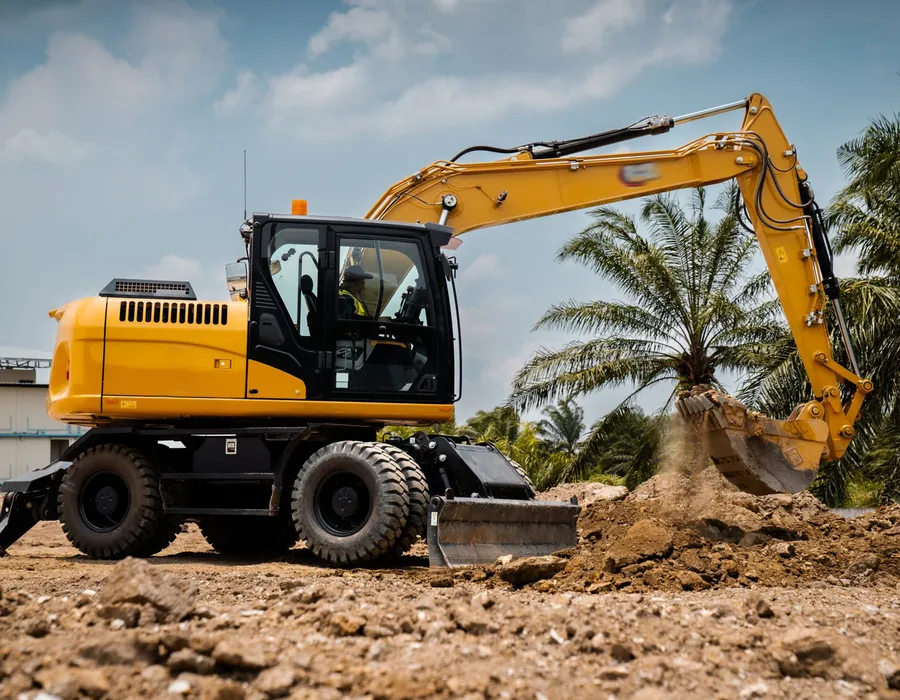 | 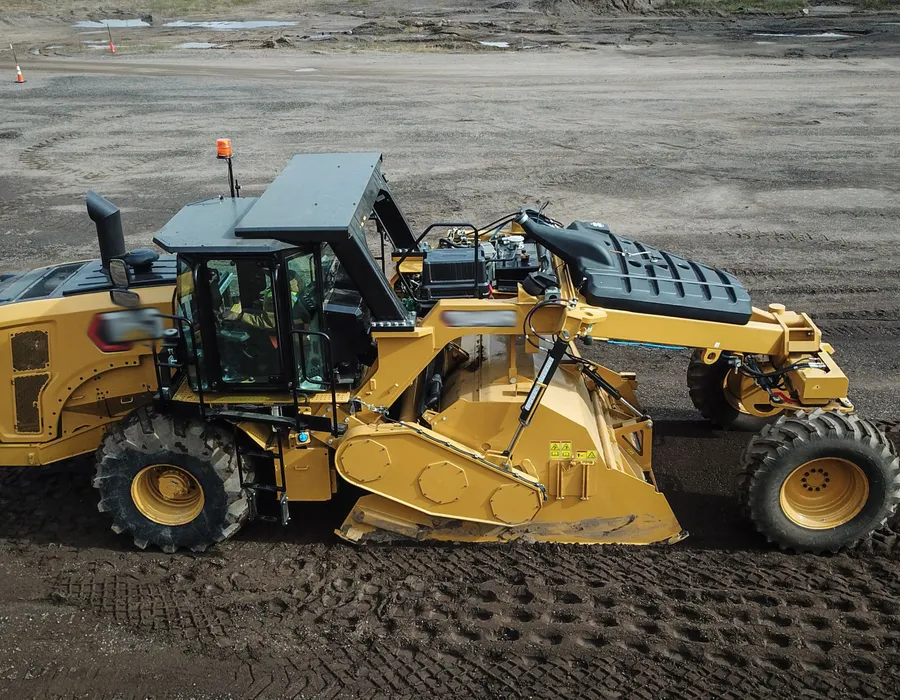 |
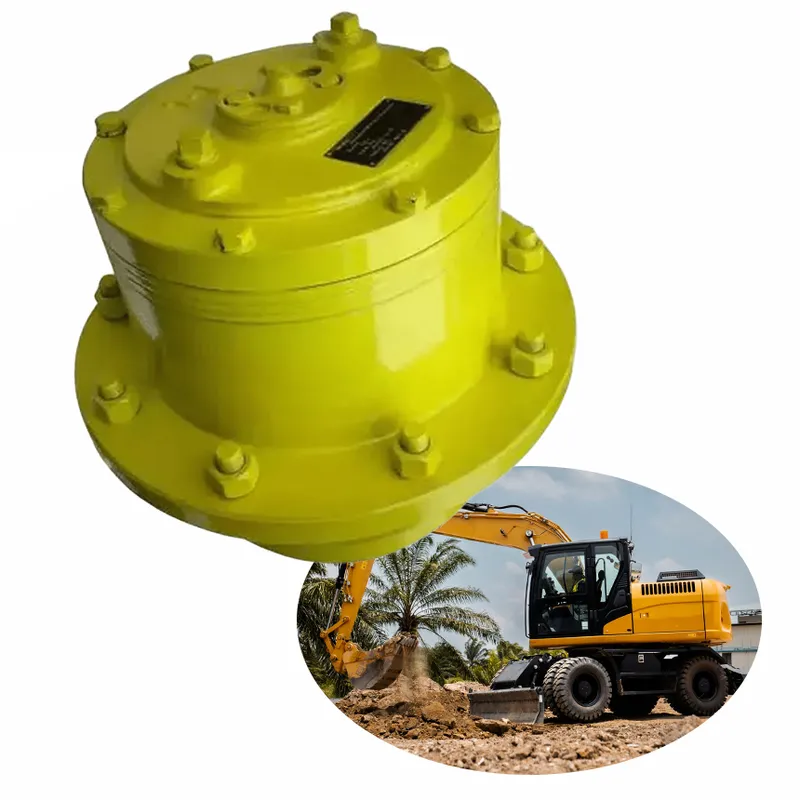
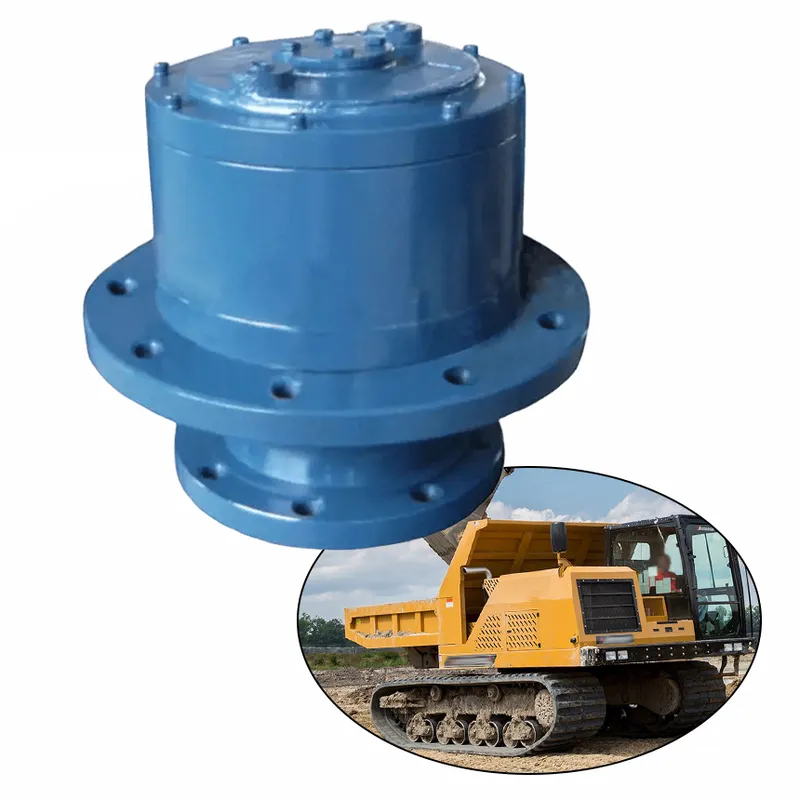
| Planetenradantrieb für Mobilbagger | Planetenradantrieb für Straßenrückgewinnungsmaschinen |
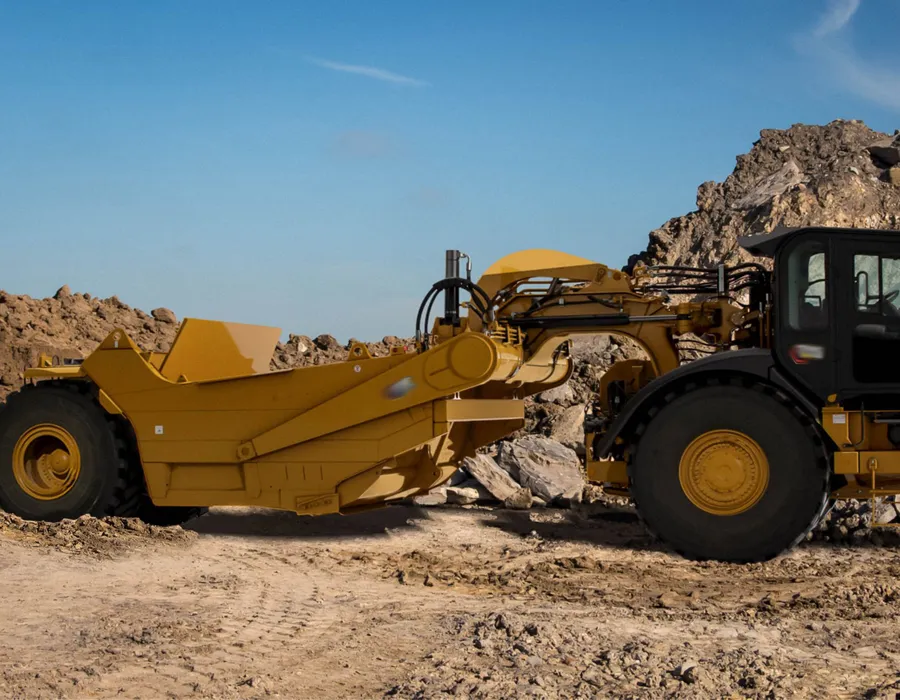 | 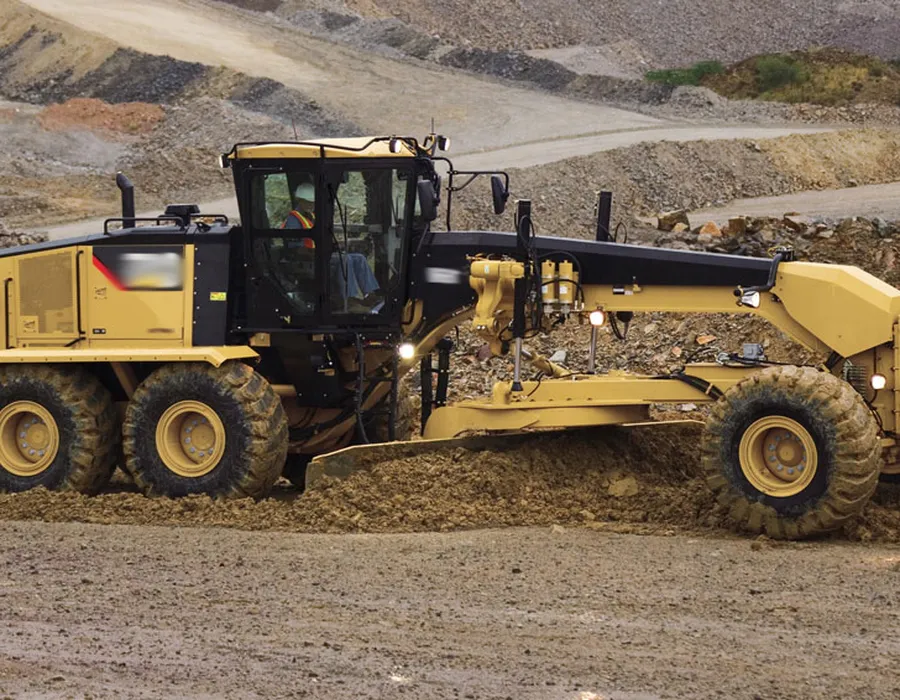 |
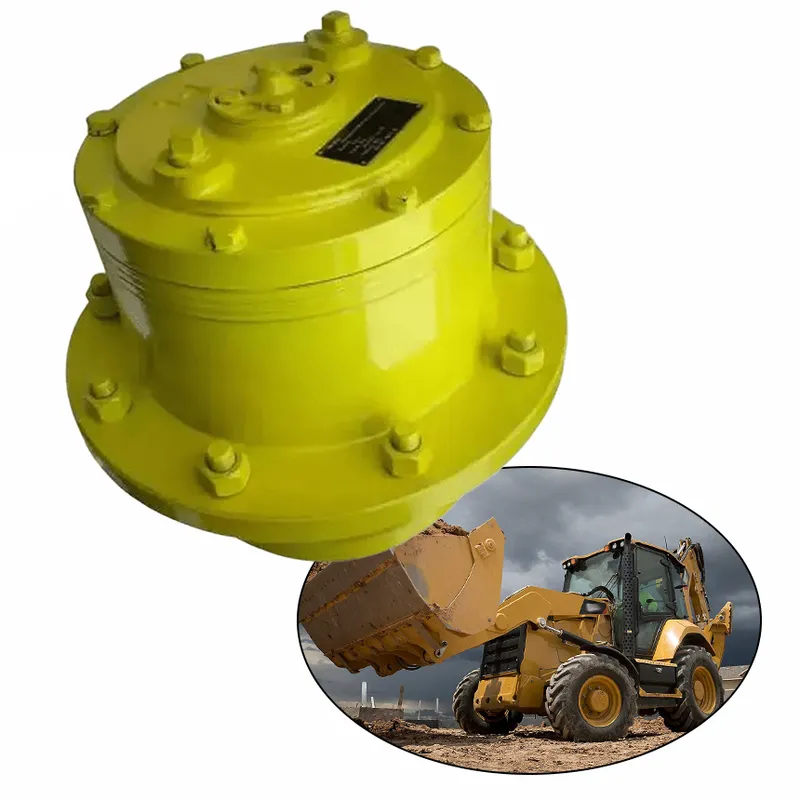
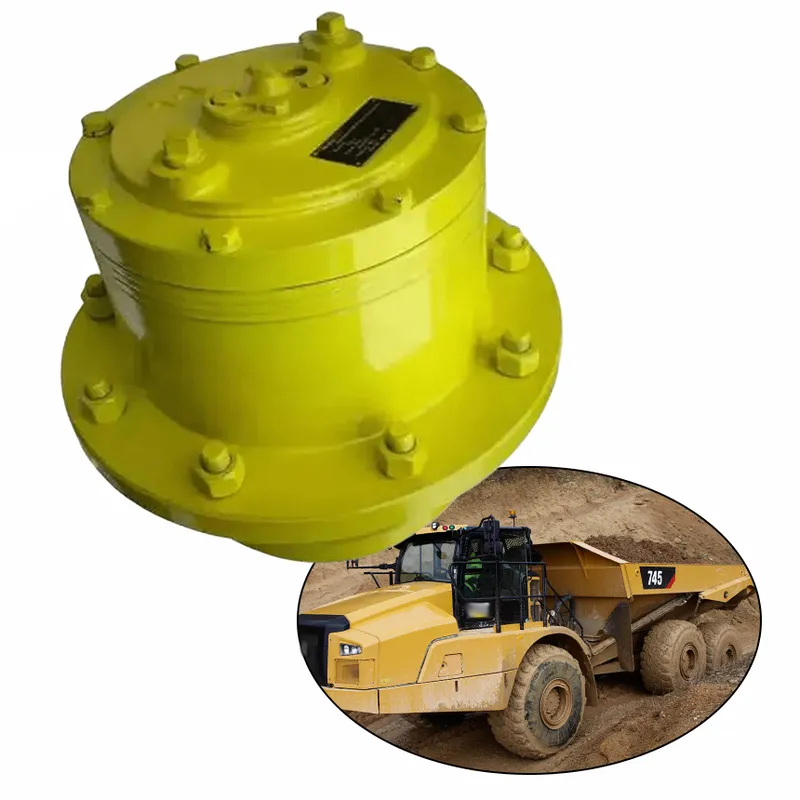
| Planetenradantrieb für Radtraktoren-Schürfwagen | Planetenradantrieb für Motorgrader im Bergbau |
Difference Between Planetary Wheel Drive and Planetary Track Drive
Planetary wheel drives and planetary track drives are both essential mechanisms used in heavy machinery, vehicles, and industrial equipment to transmit torque efficiently. While they share similarities in their design and functionality, they cater to different applications and environments.
A planetary wheel drive is a compact and high-torque transmission system designed for vehicles or equipment with wheels. It utilizes a planetary gear system, where a central sun gear is surrounded by planet gears that rotate within a ring gear. This configuration provides high torque output in a small package, making it ideal for wheeled machinery like trucks, agricultural equipment, and forklifts. Planetary wheel drives are particularly effective in applications requiring high load capacity and precise movement. Their compact design allows for reduced space requirements while delivering exceptional performance.
On the other hand, a planetary track drive is specifically engineered for equipment that relies on tracks for movement, such as excavators, bulldozers, and tracked cranes. Like the wheel drive, it employs a planetary gear system but is optimized to handle the demands of track-based equipment, including higher torque and greater resistance to harsh environments. Track drives are built to provide smooth power transmission and superior traction, even on uneven or muddy terrain. Their robust construction ensures durability and reliable operation in demanding conditions.
The primary difference lies in their application: planetary wheel drives power wheeled systems, while planetary track drives are tailored for tracked machinery, each optimized for its specific use case to ensure maximum efficiency and durability.
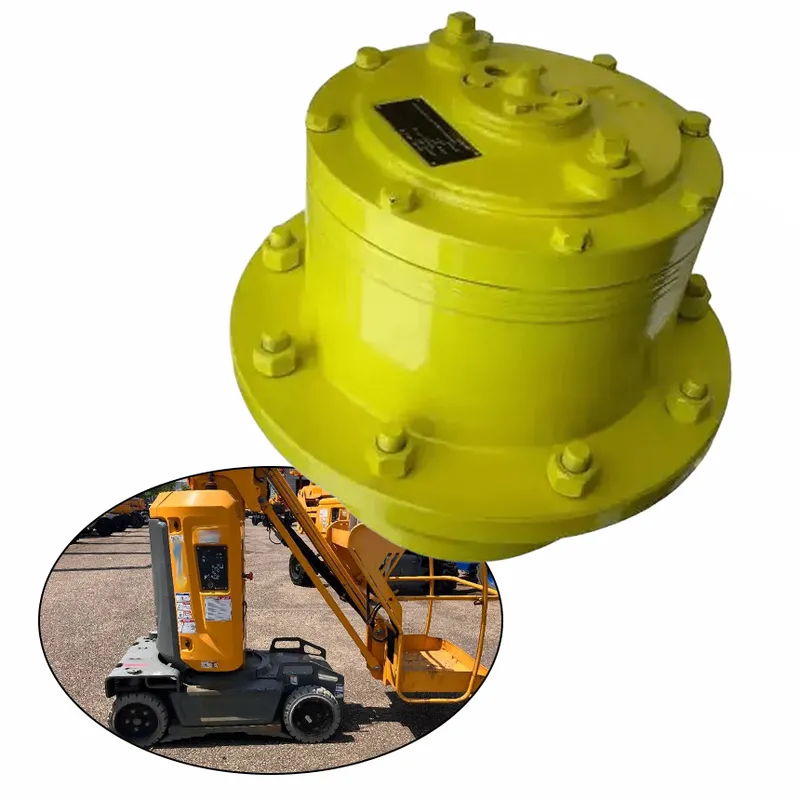 |  |
| Planetenradantrieb | Planetenkettenantrieb |
Zusätzliche Informationen
| Bearbeitet von | Yjx |
|---|