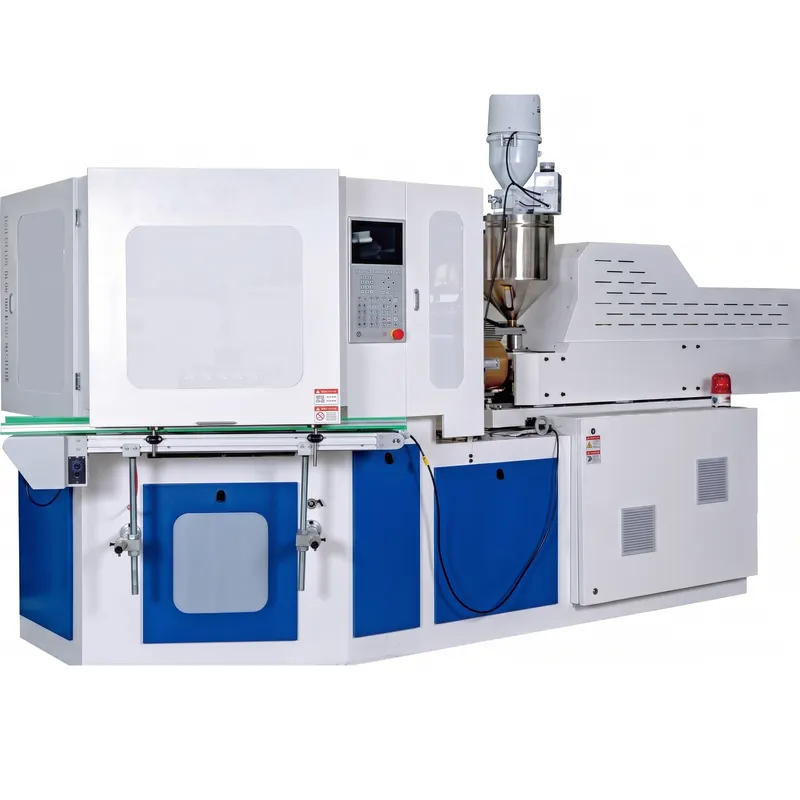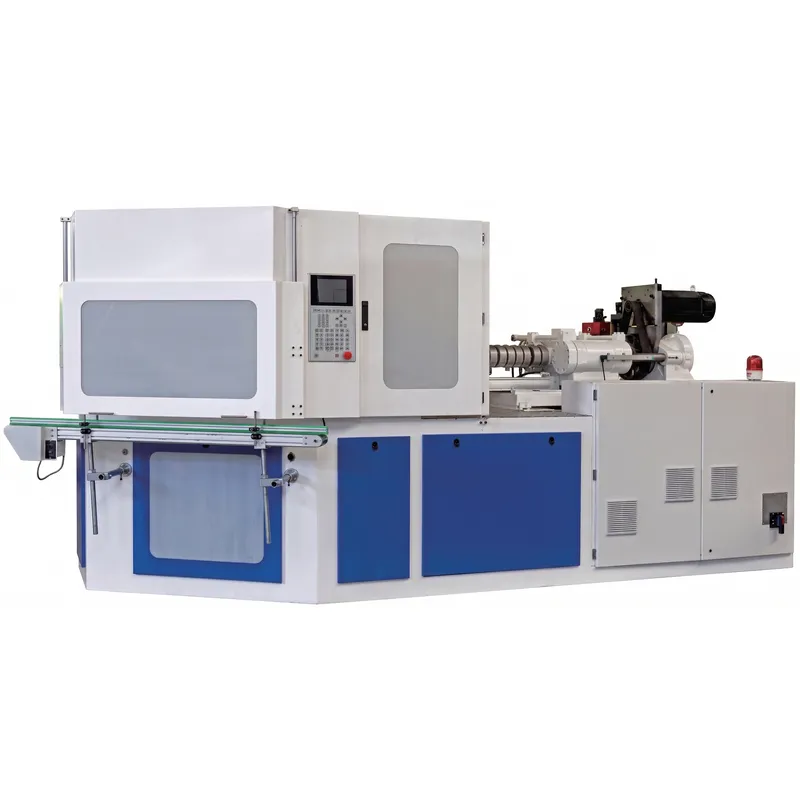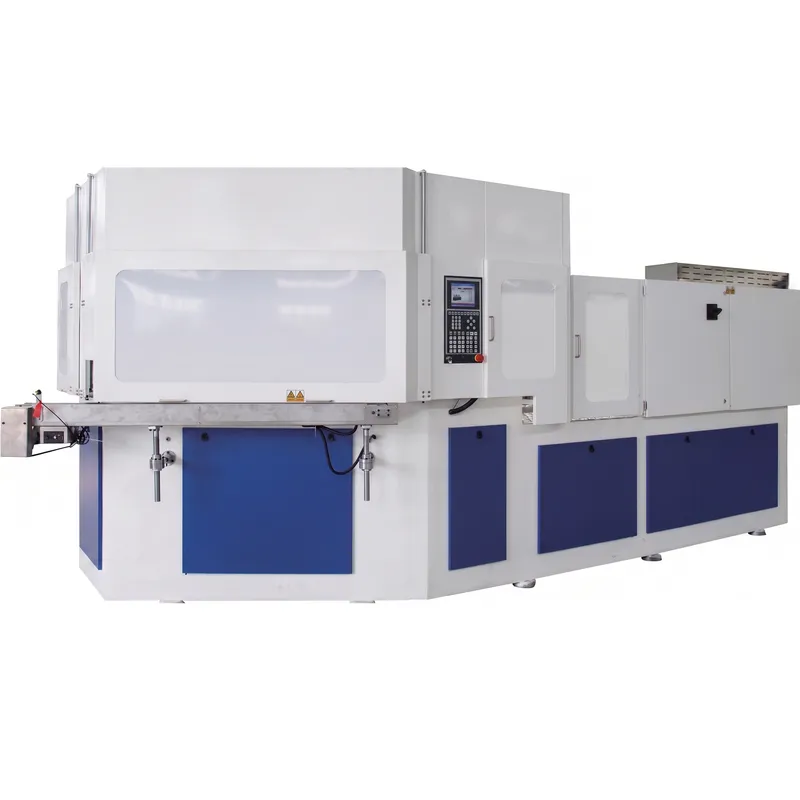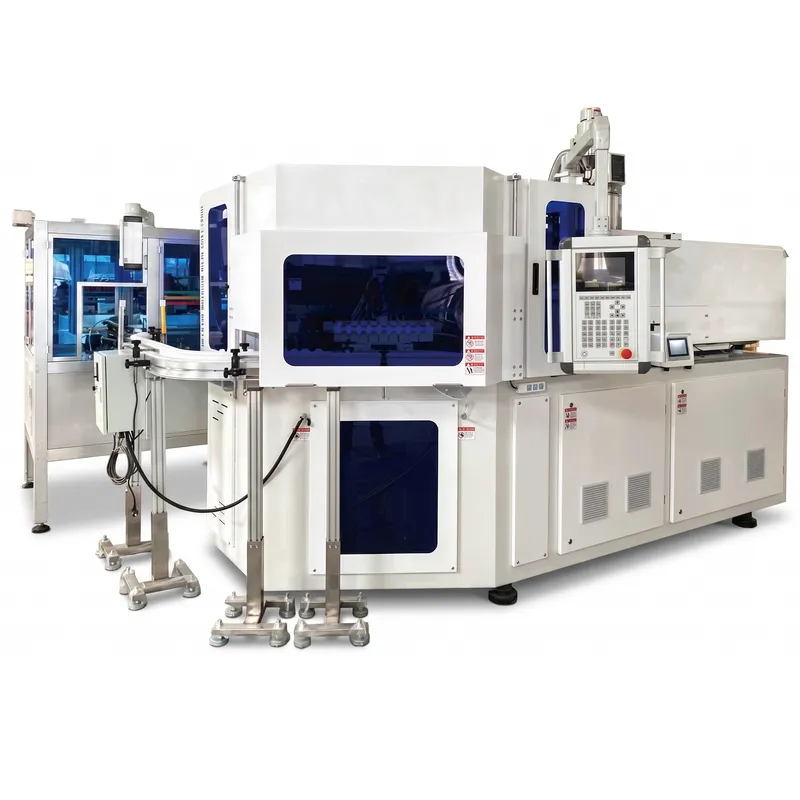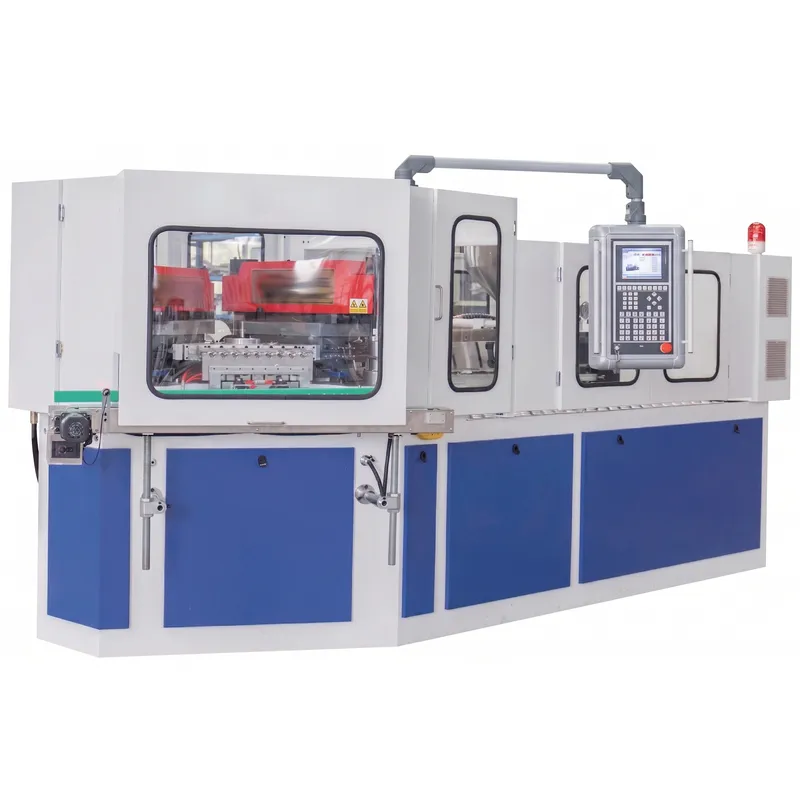
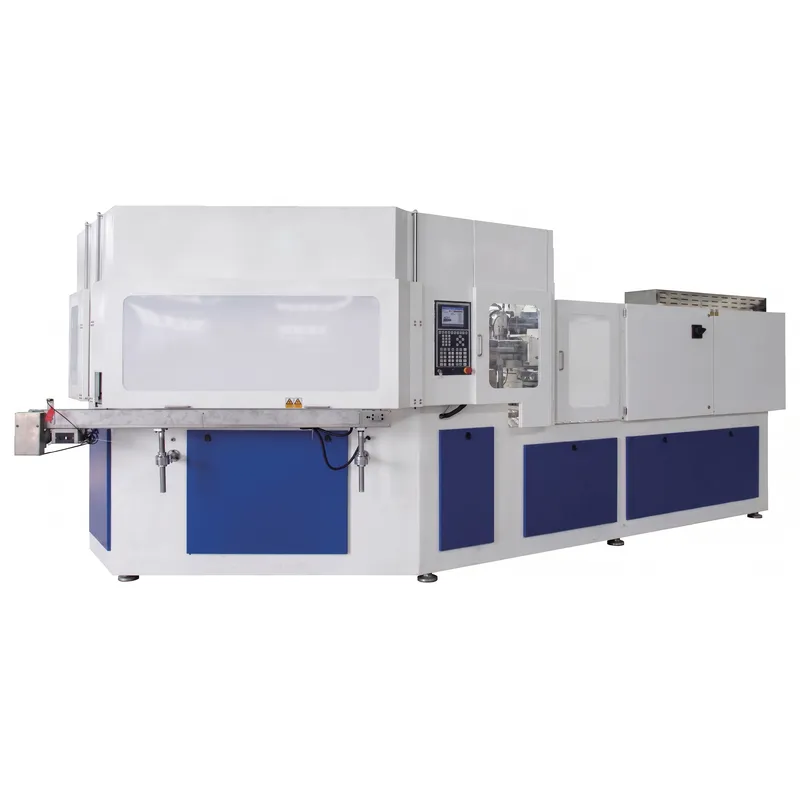
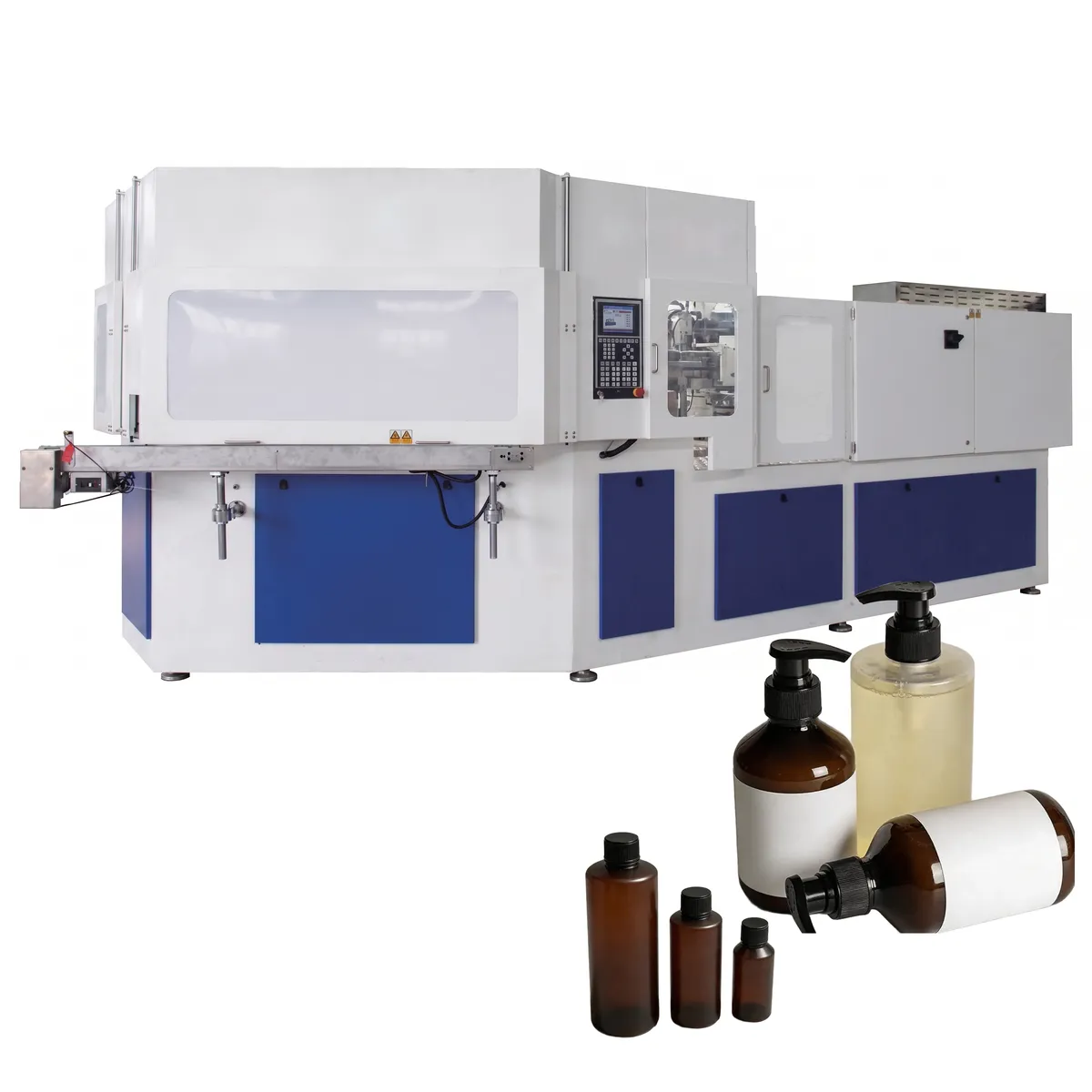
ZQ135 Spritzblasformmaschine (Europäisch)
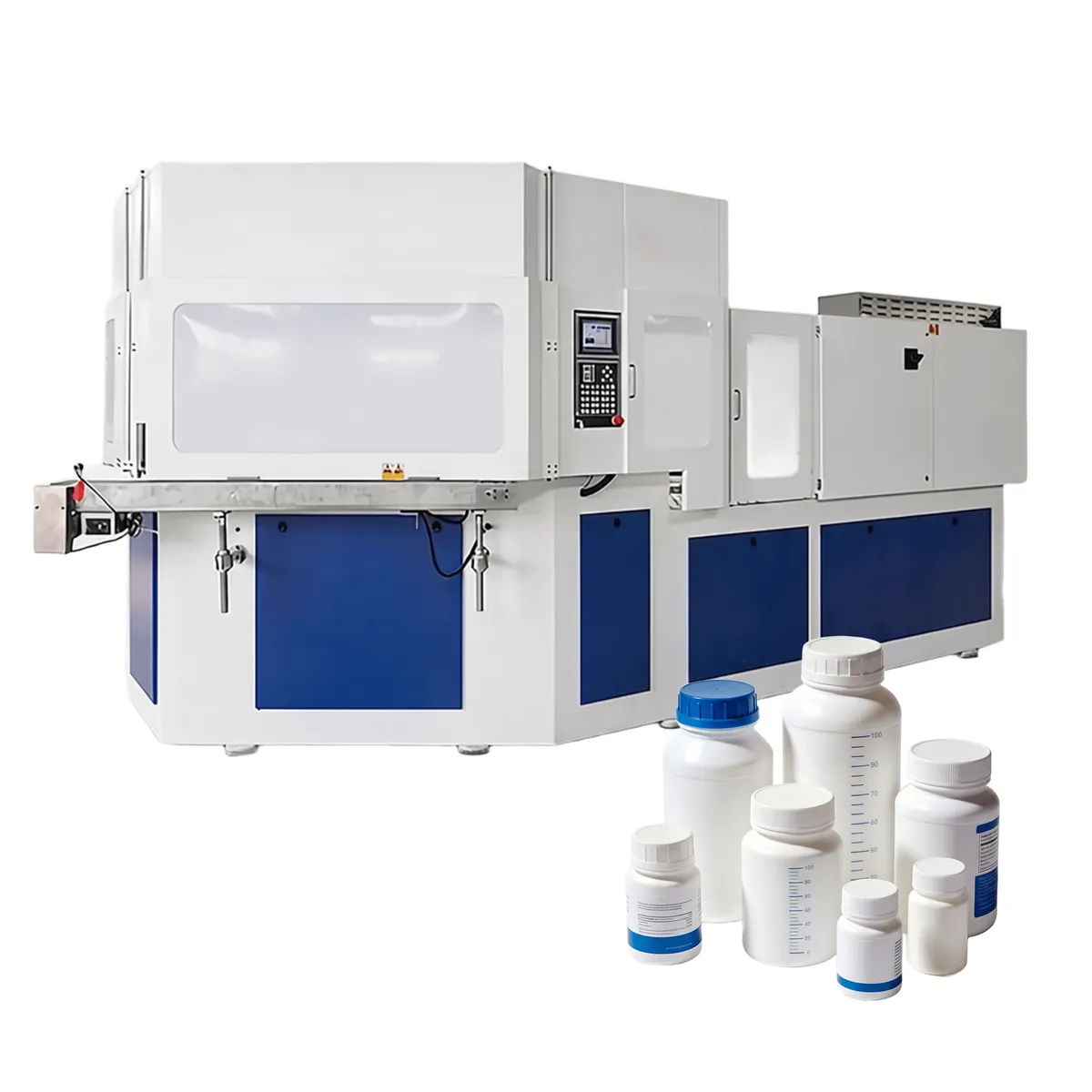
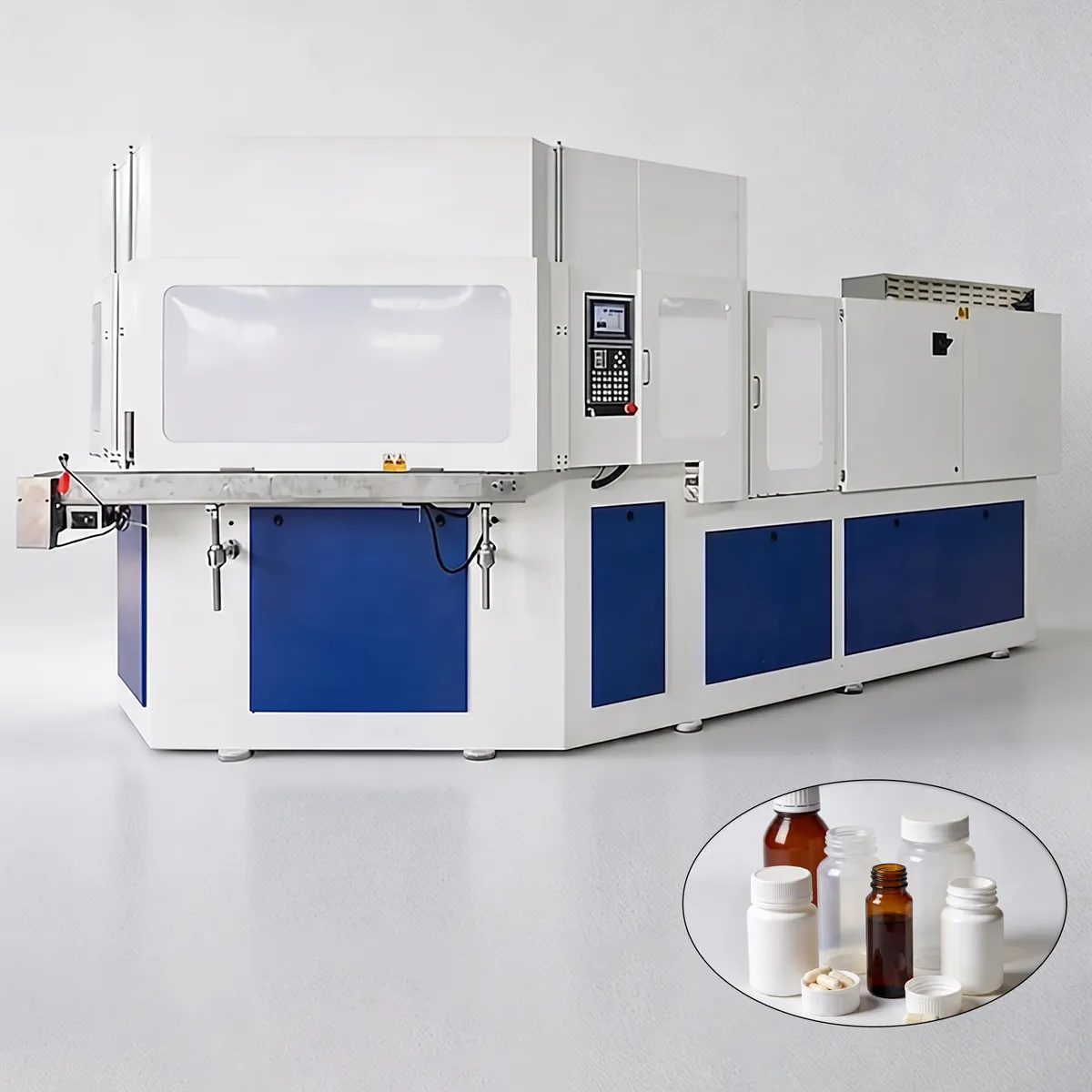
Als führender Hersteller von Spritzblasformmaschinen präsentiert CMN Transmission stolz die Spritzblasformmaschine ZQ135. Ihre Konstruktion im europäischen Stil setzt neue Maßstäbe in puncto Stabilität und Produktionseffizienz. Die fortschrittliche IBM-Maschine liefert eine Schließkraft, die 201 TP3T bis 301 TP3T über dem Branchendurchschnitt liegt und definiert Präzision in der Kunststoffverarbeitung für anspruchsvolle Anwendungen neu. Die serienmäßige Servorotation in Kombination mit der optimierten mechanischen Struktur gewährleistet eine effiziente und komfortable Bedienung für Flaschengrößen von 1 ml bis 1000 ml.
ZQ135 Spritzblasformmaschine (Europäisch)
Als führender Hersteller von Spritzblasformmaschinen präsentiert CMN Transmission stolz die Spritzblasformmaschine ZQ135. Ihre Konstruktion im europäischen Stil setzt neue Maßstäbe in puncto Stabilität und Produktionseffizienz. Die fortschrittliche IBM-Maschine liefert eine um 201 TP³T bis 301 TP³T höhere Schließkraft als der Branchendurchschnitt und definiert damit die Präzision in der Kunststoffverarbeitung für anspruchsvolle Anwendungen neu. Die standardmäßige Servorotation in Kombination mit der optimierten mechanischen Struktur gewährleistet eine effiziente und komfortable Bedienung für Flaschengrößen von 1 ml bis 1000 ml. Die patentierte Druckschließkonstruktion, bei der der Boosterzylinder nicht an den Öffnungs- und Schließbewegungen beteiligt ist, reduziert den Energieverbrauch um 101 TP³T bis 201 TP³T. Dadurch ist die ZQ135 eine kostengünstige und umweltfreundliche Wahl für hochwertige Produktionslinien.
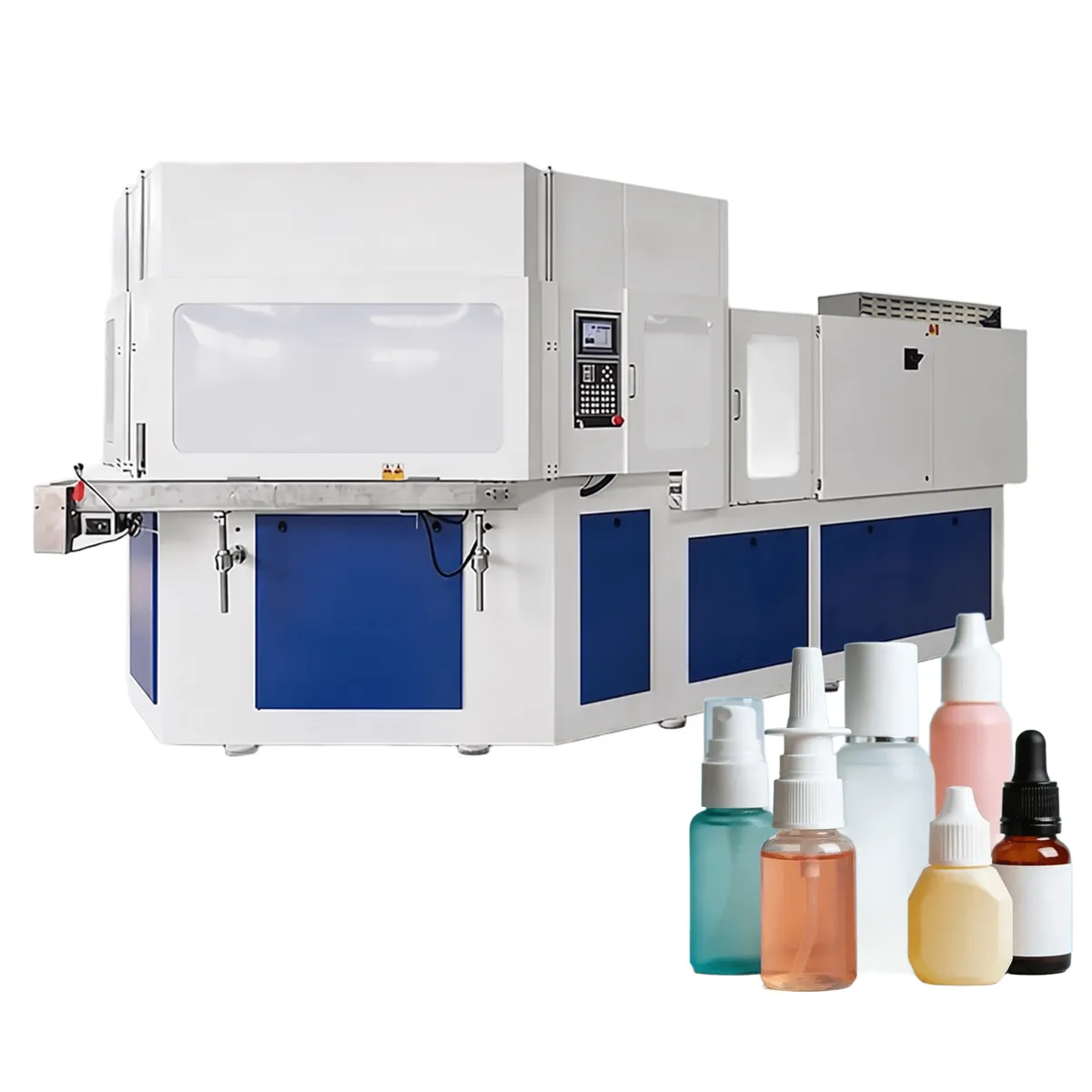
Die ZQ135 ist eine Spritzblasformmaschine für die pharmazeutische Verpackungsindustrie, Kosmetikflaschen, Lebensmittelbehälter, Getränkeflaschen und die chemische Industrie. Sie zeichnet sich durch die präzise Herstellung von Hohlkörpern aus Kunststoff ohne Gussgrate aus. Ob Sie pharmazeutische Tablettenflaschen mit strengen Dichtungsanforderungen, Kosmetikbehälter mit makelloser Oberfläche oder lebensmittelechte Flaschen mit hohen Hygieneanforderungen fertigen – diese Maschine bietet die Genauigkeit, Geschwindigkeit und Zuverlässigkeit, die Ihre Produktionslinie benötigt. Die ZQ135 gilt als wettbewerbsfähige Alternative zu IBM-Maschinen von Aoki und bietet vergleichbare oder sogar bessere Leistung zu einem attraktiveren Preis. Als einer der vertrauenswürdigsten IBM-Maschinenlieferanten der Branche bietet CMN Transmission Komplettlösungen für internationale Kunden, die die optimale IBM-Lösung für ihre Betriebsabläufe suchen.
Formkavitation (zur Information)
| Ungefähres Volumen | 10 ml | 30 ml | 60 ml | 100 ml | 250 ml | 500 ml | 1000 ml |
| Max. Kavitation | 30 | 26 | 22 | 18 | 14 | 10 | 8 |
Technische Spezifikationen
| Artikel | Einheit | ZQ135 |
| Einspritzsystem | ||
| Schraubendurchmesser | mm | 70 |
| Schraube L/D | % | 22:1 |
| Einspritzgewicht | G | 650 |
| Heizleistung | KW | 30 |
| Anzahl der Laufzonen | 6+N | |
| Injektionsschlag | mm | 200 |
| Spannsystem | ||
| Schließkraft der Einspritzung | KN | 1350 |
| Öffnungshub für die Injektion | mm | 140 |
| C Lampenkraft des Blasvorgangs | KN | 200 |
| Eröffnungsschlag zum Blasen | mm | 140 |
| Hubhöhe des Drehtisches | mm | 70 |
| Schimmel | ||
| Maximale Plattengröße (L x B) | mm | 1300x500 |
| Formdicke | mm | 280 |
| Durchmesser der Flasche | mm | 120 |
| Flaschenhöhe | mm | 220 |
| Geeignete Flaschenhöhe | mm | 1-2000 |
| Streifenstrich | mm | 280 |
| Hydrauliksystem | ||
| Hydraulischer Druck | Karte | 14 |
| Motorleistung | KW | 37+37 |
| Trockengang | S | 4 |
| Gesamtleistung | KW | 95 |
| Betriebsleistung | % | 52-70 |
| Andere | ||
| Mindestdruck der Druckluft | MPa | 0.7- 1.2 |
| Druckluftkapazität | m³/min | 0.7 |
| Wasserdurchfluss | M³/h | 4 |
| Kühlwasserdruck | MPa | 0.3- 0.4 |
| Abmessungen (Länge x Breite x Höhe) | M | 5,5 x 2 x 2,4 |
| Nettogewicht | Tonne | 18 |
Austauschbare Marke und Modell
| CMN | Klemmkraft | Jomar | SUMA | Uniloy | Bloma |
| ZQ40 | 40T | IBM40 | 40iB | UIB70 | IBM45 |
| ZQ60 | 60T | IBM65 | 65iB | UIB90 | IBM50 |
| ZQ80 | 80T | IBM85S | 85iB | UIB120 | IBM85 |
| ZQ110 | 110T | IBM135 | 135iB | UIB150 | IBM135 |
| ZQ135 | 135T | IBM175 | 175iB | UIB180 |
IBM Maschinenschraubendurchmesser
| CMN | Schraubendurchmesser | Jomar | SUMA | Bloma |
| ZQ40 | 40/45 | 35/40 | 40 | 45 |
| ZQ60 | 45/50 | 45 | 40/50 | 50 |
| ZQ80 | 55 | 55 | 50/60 | 50 |
| ZQ110 | 65 | 65 | 65/76 | 70 |
| ZQ135 | 70 | 70 | 65/76 |
IBM Maschineneinspritzgewicht
| CMN | Einspritzgewicht | Jomar | SUMA | Bloma |
| ZQ40 | 190/260 | 180 | 169 | 180 |
| ZQ60 | 260/383 | 205 | 169/264 | 240 |
| ZQ80 | 466 | 300 | 333/480 | 310/280 |
| ZQ110 | 540 | 450/550 | 580/770 | 560 |
| ZQ135 | 650 | 450/550 | 580/770 |
IBM Maschinen-Spritzgieß-Schließkraft
| CMN | Einspritzklemmkraft | Jomar | SUMA | Bloma |
| ZQ40 | 400 kN | 340 kN | 386 kN | 350 kN |
| ZQ60 | 600 kN | 460 kN | 580 kN | 500 kN |
| ZQ80 | 800 kN | 680 kN | 720 kN | 700 kN |
| ZQ110 | 1100 kN | 1210 kN | 1200 kN | 1250 kN |
| ZQ135 | 1350 kN | 1560 kN | 1600 kN |
IBM-Maschinenformgröße
| CMN | Formgröße | Jomar | SUMA | Bloma |
| ZQ40 | 480 × 340 | 394 × 508 | 470 × 350 | 450 × 390 |
| ZQ60 | 600 × 390 | 432 × 660 | 620 × 400 | 620 × 430 |
| ZQ80 | 800 × 400 | 464 × 749 | 700 × 400 | 620 × 430 |
| ZQ110 | 1100 × 460 | 559 × 1118 | 1000 × 500 | 900 × 480 |
| ZQ135 | 1300 × 500 | 635 × 1372 | 1200 × 600 |
IBM Maschinengröße
| CMN | Formgröße (M) | Jomar | SUMA | Bloma |
| ZQ40 | 3,8 × 1,3 × 1,7 | 2,72 × 1,9 × 2,75 | 3,8 × 1,5 × 2,3 | 4,05 × 1,52 × 2,55 |
| ZQ60 | 3,8 × 1,4 × 1,8 | 2,92 × 1,98 × 3,41 | 4 × 1,7 × 2,3 | 620 × 430 × 2,55 |
| ZQ80 | 4,5 × 1,6 × 2 | 3,33 × 1,94 × 3,41 | 4,5 × 2 × 2,6 | 620 × 430 × 2,55 |
| ZQ110 | 5 × 1,8 × 2,2 | 3,79 × 2,4 × 3,41 | 5 × 2,4 × 2,7 | 900 × 480 × 2,55 |
| ZQ135 | 5,5 × 2 × 2,4 | 4,22 × 2,67 × 3,58 | 6 × 2,6 × 2,7 |
Hinweis: Marken werden nur genannt, um Kunden bei der Produktauswahl zu helfen, nicht um die Produkte dieser Marken zu verkaufen.
Komponenten für Spritzblasformmaschinen
1. Zubereitung der Stammlösung / Injektionsgerät
Die Materialaufbereitungs- und Einspritzvorrichtung ist die primäre Plastifizierungseinheit der ZQ135. Sie besteht aus einer Präzisionsschnecke mit 70 mm Durchmesser und einem L/D-Verhältnis von 22:1, mehreren Heizzonen im Schneckenzylinder und einer elektrisch angetriebenen Einspritzeinheit. Dieses System schmilzt, homogenisiert und spritzt das Kunststoffgranulat unter kontrolliertem Druck und kontrollierter Temperatur in den Formhohlraum ein.
2. Heißkanalsystem
Das optimierte Heißkanalsystem gewährleistet eine konstante Schmelztemperatur, während der geschmolzene Kunststoff von der Spritzeinheit in die einzelnen Formhohlräume fließt. Dies sorgt für eine gleichmäßige Materialverteilung, minimiert Gewichtsschwankungen und reduziert Materialverluste. Die präzise Temperaturregelung des Heißkanalsystems ist entscheidend für die Herstellung von Flaschen mit gleichbleibender Qualität und Optik.
3. Kernstab
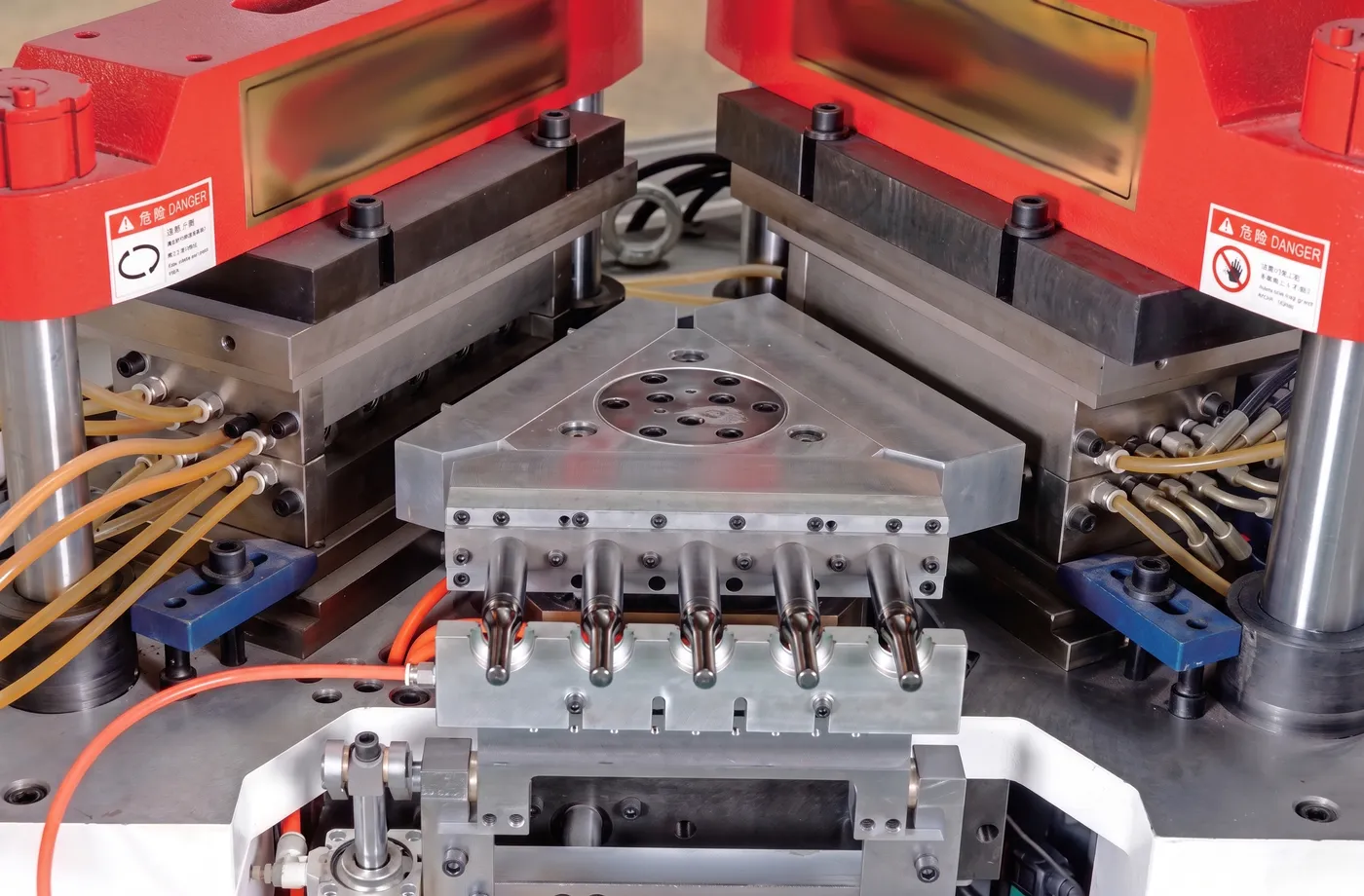
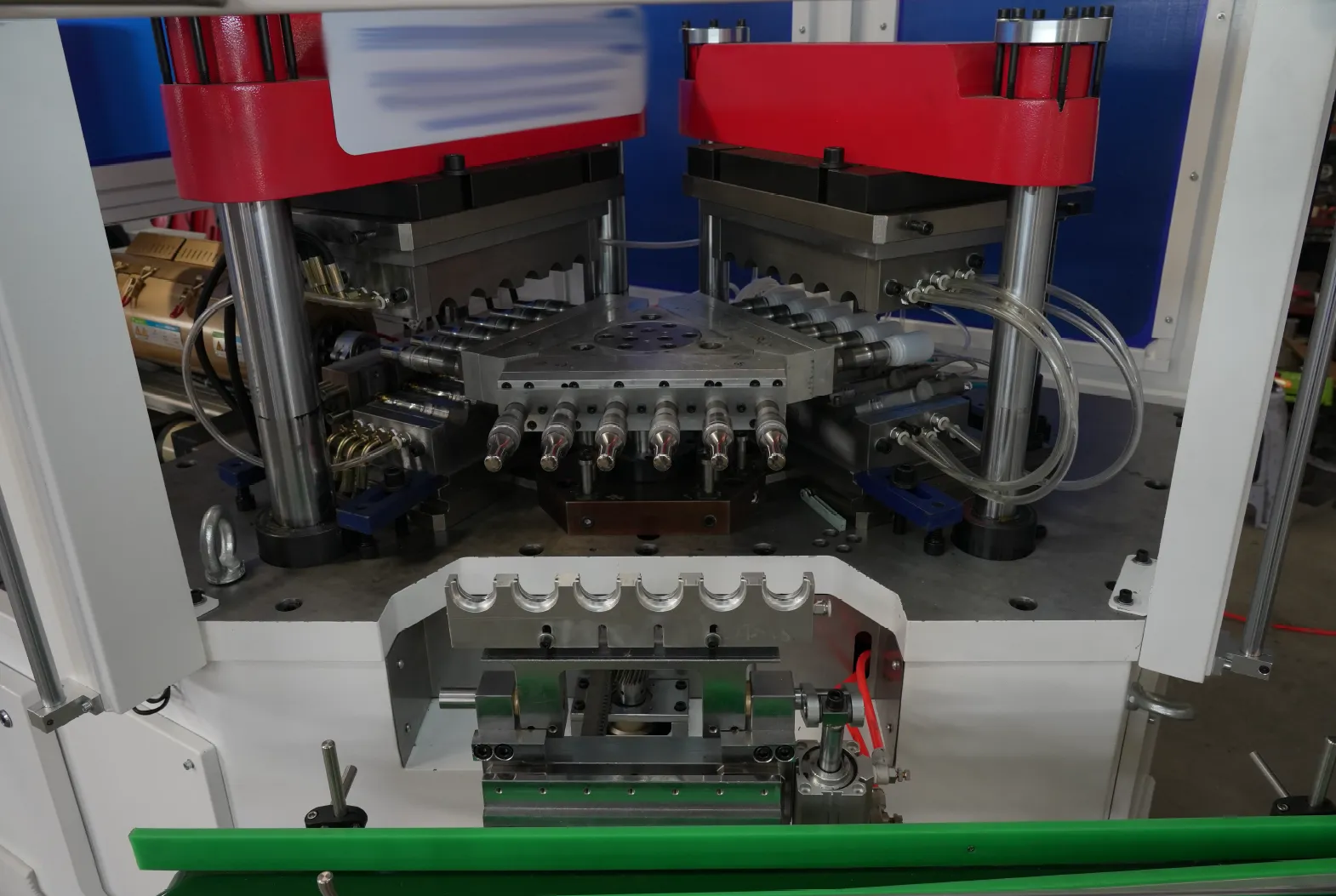
Kernstäbe dienen als innere Dorne, um die die Vorform spritzgegossen wird. Sie verfügen über eine speziell entwickelte Struktur mit internen Kühlkanälen, die eine schnelle und gleichmäßige Kühlung des Kerns während der Produktion gewährleisten. Die Konstruktion des Kernstabs beeinflusst direkt die Zyklusgeschwindigkeit, die Konzentrizität der Vorform, die Wandstärkengleichmäßigkeit und die Gesamtqualität des fertigen Flaschenprodukts.
4. Flaschenvorformling
Die Flaschenvorform ist das Zwischenprodukt, das an der Spritzgießstation hergestellt wird. Es handelt sich um ein präzise geformtes Kunststoffrohr mit vollständig ausgebildetem Hals und Gewinde. Wandstärke, Gewicht und Temperatur der Vorform werden sorgfältig kontrolliert, bevor sie zur Blasformstation transportiert wird, wo sie im Blasformhohlraum zur endgültigen Flaschenform aufgeblasen wird.
5. Spritzguss
Das Spritzgusswerkzeug verfügt über speziell entwickelte Kavitäten und Halseinsätze mit eigens konstruierten Ölkanälen, die sich für verschiedene Produkte einfach austauschen lassen. Gefertigt aus importiertem S136-Stahl oder 4Cr13-Edelstahl, bietet das Werkzeug außergewöhnliche Langlebigkeit und Präzision. Es bestimmt die Vorform, die Halsgeometrie und die Gewindeabmessungen mit höchster Genauigkeit.
6. Einspritzstation
Die Einspritzstation ist die erste von drei Drehpositionen, an denen die Kunststoffschmelze um die Kernstäbe eingespritzt wird, um präzise Vorformlinge zu erzeugen. Sie integriert das Spritzgießwerkzeug, den Schließmechanismus und das Heizsystem. Die Schließkraft des Einspritzsystems von 1350 kN gewährleistet einen stabilen Werkzeugschluss und eine präzise Materialfüllung in jedem Einspritzzyklus ohne Gratbildung oder Überlauf.
7. Blasstation
Die Blasstation ist die zweite Drehposition, an der Druckluft (0,7 bis 1,2 MPa) den erhitzten Vorformling im Blasformwerkzeug aufbläst, um die endgültige Flaschenform zu erzeugen. Die präzise Luftdruckregelung gewährleistet eine gleichmäßige Wandstärke und exakte Flaschenkonturen. Das Kühlsystem im Blasformwerkzeug verfestigt die Flasche, bevor sie zur Entnahmestation transportiert wird.
8. Blasformen
Die Blasform bestimmt Form, Größe und Oberflächenbeschaffenheit der fertigen Flasche. Sie verfügt über präzisionsbearbeitete Kavitätsflächen mit integrierten Kühlkanälen für eine schnelle und gleichmäßige Aushärtung. Die Schließkraft von 200 kN gewährleistet, dass die Formhälften während des Aufblasprozesses sicher verschlossen bleiben und somit Flaschen mit gleichbleibenden Abmessungen und makelloser Oberflächenqualität entstehen.
9. Strippingstation
Die Abstreifstation ist die dritte und letzte Drehposition, an der die fertigen Flaschen automatisch von den gekühlten Kernstangen ausgeworfen werden. Der Abstreifhub von 280 mm gewährleistet die saubere und vollständige Entnahme von Flaschen jeder Größe, von kleinen Fläschchen bis hin zu größeren Behältern. Die ausgeworfenen Flaschen werden ohne manuelle Handhabung direkt zum Ausgabeförderband für Inspektion, Etikettierung oder Verpackung transportiert.
Merkmale der ZQ135 Spritzblasformmaschine
1. Vollständig servogesteuerter Betrieb
Alle Betriebsbewegungen dieser Maschine werden vollautomatisch mit Servoantrieb gesteuert. Dadurch entfällt der Bedarf an Hydrauliköl, und die Umweltbelastung während der Produktion wird deutlich reduziert. Das Servosystem integriert Absolutwertgeber für höchste Präzision und außergewöhnliche Wiederholgenauigkeit in jedem Zyklus. Dank dieser vollelektrischen Architektur ist die ZQ135 eine führende Maschine im Bereich der servogesteuerten IBM-Maschinen, die moderne Nachhaltigkeitsanforderungen erfüllt und gleichzeitig höchste Produktionsgenauigkeitsstandards gewährleistet.
2. 20% Schnellere Zykluszeit
Die ZQ135 erzielt eine Zykluszeitverkürzung von 201 TP3T im Vergleich zu herkömmlichen IBM-Maschinen. Bei 30-ml-Flaschen ist jeder Zyklus in nur 8,2 Sekunden abgeschlossen, was einer Tagesleistung von ca. 105.000 Flaschen und einer maximalen Tagesleistung von 115.000 Flaschen entspricht. Dieser beeindruckende Durchsatz macht die ZQ135 ideal für Produktionsstätten mit hohem Durchsatz, die eine gleichbleibende Geschwindigkeit ohne Kompromisse bei der Produktqualität erfordern. Damit zählt sie zu den leistungsstärksten IBM-Systemen für die Massenproduktion.
3. 30% Energieeffizienzgewinn
Die Energieeffizienz des 30% ist gegenüber herkömmlichen Hydraulikmodellen optimiert. Bei der Herstellung von 30-ml-Flaschen liegt der Stromverbrauch bei ca. 12 kWh pro Stunde, wodurch die Betriebskosten über die gesamte Lebensdauer der Maschine deutlich gesenkt werden. Die patentierte Druckschließkonstruktion stellt sicher, dass der Boosterzylinder nicht am Öffnen und Schließen der Form beteiligt ist, was den Energieverbrauch weiter reduziert. Dank dieser energiesparenden Konstruktion amortisiert sich die ZQ135 durch die geringeren Energiekosten.
4. Einstellbare Klemmkraft
Eine spezielle Spannvorrichtung mit einstellbarer Kraft von 40 bis 80 Tonnen ermöglicht die Bearbeitung unterschiedlichster Produktspezifikationen und Flaschengrößen. Dank dieses vielseitigen Bereichs können Bediener den Spanndruck präzise an Materialart, Flaschengeometrie und Wandstärke anpassen. Ob kleine Pharmafläschchen oder größere Getränkebehälter – die Maschine passt sich jedem Produktionsszenario ohne separate Werkzeugeinstellungen an und maximiert so die Flexibilität über alle Produktlinien hinweg.
5. Hygienisches Bottom-Up-Design
Die Bottom-Up-Konstruktion verhindert effektiv die Kontamination des Formbereichs mit Schmieröl und gewährleistet so die vollständige Einhaltung der strengen Hygieneanforderungen für pharmazeutische und hochwertige Kunststoffflaschenverpackungen. Dank dieser Konstruktion eignet sich die IBM Spritzblasformmaschine ZQ135 besonders für GMP-regulierte Umgebungen, in denen Produktreinheit unerlässlich ist. Die saubere Produktionsumgebung eliminiert das Risiko von Kreuzkontaminationen und stellt sicher, dass jede Flasche höchsten Ansprüchen an Lebensmittelsicherheit und pharmazeutische Verpackungen genügt.
6. Vollständige Automatisierungsintegration
Das Fördersystem lässt sich nahtlos mit Sichtprüfsystemen zur Erkennung von Fremdkörpern, unzureichendem Füllmaterial und unebenen Böden verbinden. Es ist außerdem mit Seitendichtigkeitsprüfern, Etikettiermaschinen und automatischen Verpackungsanlagen kompatibel und ermöglicht so eine vollautomatische, unbeaufsichtigte Produktion rund um die Uhr. Die elektrisch angetriebene Einspritzeinheit sorgt für einen stabilen Einspritzdruck und reduziert die Wartungskosten im Vergleich zu hydraulischen Alternativen. Dank dieser umfassenden Automatisierungsmöglichkeiten ist die ZQ135 eine hochmoderne Maschine, die bestens für die intelligente Fabrikumgebung von Industrie 4.0 gerüstet ist.
Funktionsprinzip
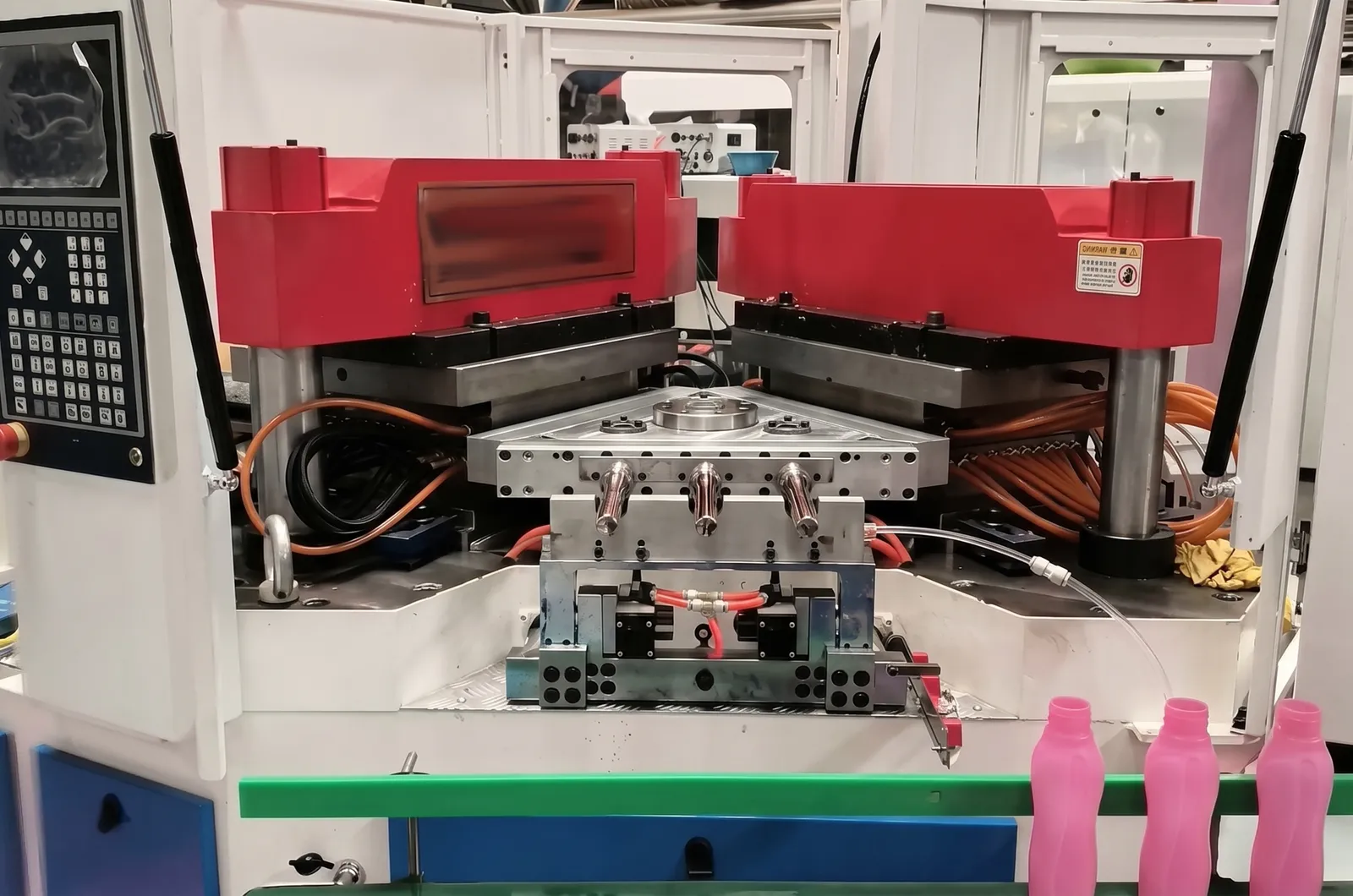
Die Spritzblasformmaschine ZQ135 arbeitet mit einem hocheffizienten Drei-Stationen-Rotationsverfahren, das das gleichzeitige Einspritzen, Blasformen und Entformen ermöglicht. Diese simultane Arbeitsweise ist die Grundlage für die außergewöhnliche Produktivität und die minimale Abfallmenge der Maschine und macht sie zu einer der effizientesten Maschinen ihrer Klasse auf dem Markt.
1. Vorformlingsinjektion
An der Einspritzstation wird geschmolzenes Kunststoffmaterial präzise in den Formhohlraum um den Kernstab eingespritzt. Dadurch entsteht ein exakter Vorformling mit perfekt geformtem Flaschenhals und Gewinde. Das Einspritzverfahren gewährleistet die vollständige Kontrolle über Materialverteilung, Wandstärke und Halsgeometrie. Sobald der Vorformling die erforderliche Temperatur und den Erstarrungspunkt erreicht hat, öffnet sich die Form und der Dorn mit dem geformten Vorformling wird über den Drehtisch zur Blasformstation transportiert.
2. Blasformen
An der Blasstation wird Druckluft durch den Dorn geleitet, um den erhitzten Vorformling im Inneren der Flaschenform aufzublasen. Das expandierende Kunststoffmaterial passt sich präzise der Formkontur an und formt so die endgültige Flaschenform. Flaschenform und Formdesign bestimmen die Anzahl der Kavitäten pro Zyklus. Nach ausreichender Abkühlung und Erstarrung in der Form behält die fertige Flasche ihre Maßgenauigkeit. Anschließend öffnet sich die Form, und der Drehtisch transportiert den Dorn mit der fertigen Flasche zur Entformungsstation.
3. Abstreifen und Auswerfen
An der Abstreifstation werden die fertigen Flaschen automatisch von den gekühlten Kernstangen ausgeworfen und zur Verpackungslinie transportiert. Die drei Vorgänge – Einspritzen, Blasen und Auswerfen – laufen in jedem Umdrehungszyklus gleichzeitig an ihren jeweiligen Stationen ab, wodurch dieser Prozess in einem einzigen Schritt abläuft. Spritzblasformmaschine Hocheffizient mit praktisch keinem Produktionsabfall. Da der Flaschenhals während des Spritzgießens vorgeformt wird, entstehen keine Grate, kein Entgraten und keine Nachbearbeitung ist erforderlich. Die Flaschen sind somit sofort einsatzbereit.
Anwendungsgebiete
1. Pharmazeutische Flaschen
Die ZQ135 produziert pharmazeutische Tablettenflaschen, Behälter für flüssige Medikamente und Augentropfflaschen mit 100%-Verschluss. Ihr hygienisches Design mit von unten nach oben verhindert Ölverunreinigungen und erfüllt die GMP- und FDA-Verpackungsstandards für die Herstellung von Flaschen in medizinischer Qualität mit präziser Maßgenauigkeit.
2. Kosmetikflaschen
Die ZQ135 liefert für Kosmetikverpackungen Behälter mit makelloser Oberflächenbeschaffenheit und präzisen Gewindemaßen. Sie produziert Lotionflaschen, Serumfläschchen, Cremetiegel und Parfümflakons mit gleichmäßiger Wandstärke und ohne Grate und gewährleistet so eine hochwertige Markenpräsentation im Einzelhandel.
3. Getränkeflaschen
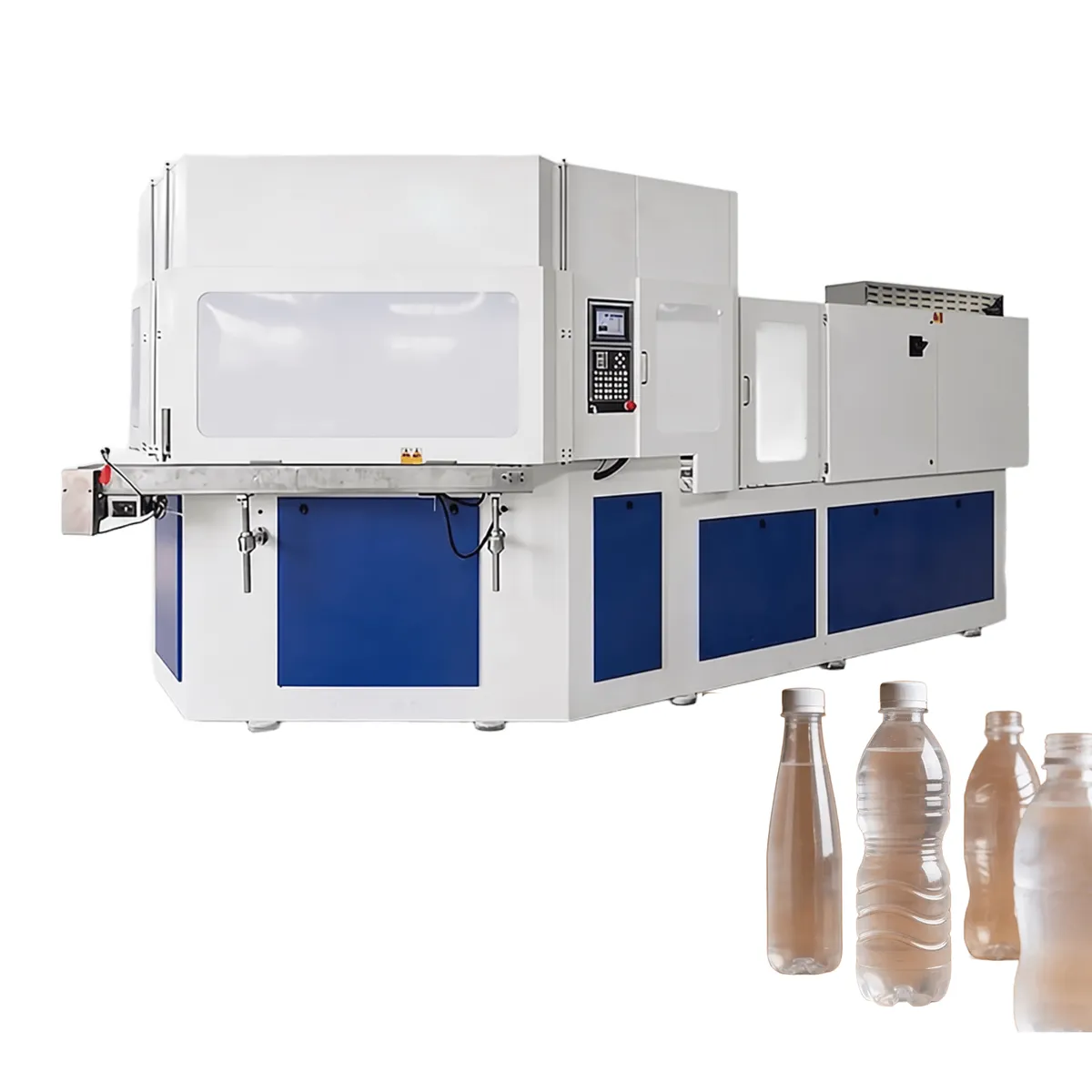
Die Maschine produziert Getränkeflaschen, darunter Wasserflaschen, Saftbehälter und Milchverpackungen, mit zuverlässiger Versiegelung. Die hohe Produktionsgeschwindigkeit von bis zu 115.000 Flaschen pro Tag erfüllt die anspruchsvollen Produktionsanforderungen großer Getränkeverarbeitungs- und Abfüllbetriebe.
4. Babyflaschen
Für die Herstellung von lebensmittelkonformen Behältern fertigt die ZQ135 Soßenflaschen, Gewürzbehälter, Honiggläser und Gewürzverpackungen aus Materialien, die den lebensmittelrechtlichen Vorschriften entsprechen. Das saubere Formverfahren und die präzise Halsverarbeitung gewährleisten einen manipulationssicheren Verschluss zum Schutz der Verbraucher.
5. Babyflaschen
Die Herstellung von Babyflaschen erfordert höchste Sicherheits- und Hygienestandards. Die ZQ135 produziert BPA-freie Babyflaschen aus HDPE und PP mit perfekt verschlossenen Öffnungen, glatten Innenflächen und gleichmäßiger Wandstärke. So entstehen sichere und zuverlässige Babyprodukte, die internationale Sicherheitsstandards für Säuglingsprodukte erfüllen.
6. Flaschen mit Handwäsche
Die ZQ135 produziert effizient Flaschen für Handseife, Desinfektionsmittel und Flüssigseife mit präzise verarbeiteten Pumpverschlusshälsen. Dank ihrer einstellbaren Klemmkraft eignet sie sich für verschiedene Flaschengrößen – von kompakten Reiseflaschen bis hin zu großen Haushaltsspendern – und gewährleistet so absolute Dichtigkeit und ein einheitliches Erscheinungsbild der Produkte.
7. Chemikalienflaschen
Für chemische Verpackungsanwendungen fertigt die ZQ135 Behälter für Waschmittel, Reinigungsmittel, Industriechemikalien und Laborreagenzien aus chemikalienbeständigem HDPE und PP. Die präzise Abdichtung verhindert das Austreten gefährlicher Inhalte und erfüllt somit die geltenden Sicherheits- und Transportvorschriften.
8. Pestizidflaschen
Die Herstellung von Flaschen für Pestizide und Agrochemikalien erfordert chemikalienbeständige Materialien und manipulationssichere Verschlüsse. Die ZQ135 produziert HDPE-Pestizidbehälter mit kindersicheren Gewinden, gleichmäßiger Wandstärke für die sichere Lagerung von Chemikalien und präziser Volumengenauigkeit zur Einhaltung der Kennzeichnungsvorschriften im Agrarsektor.
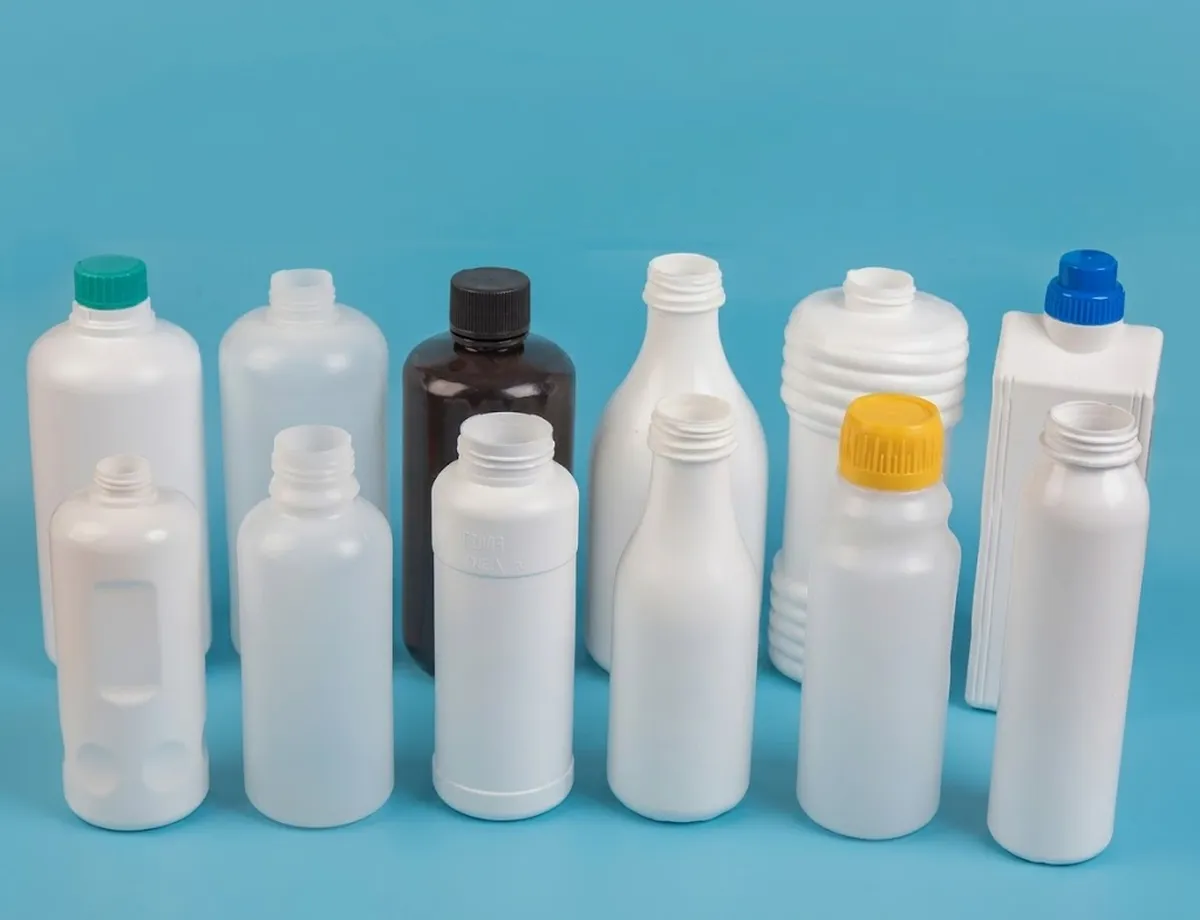 | 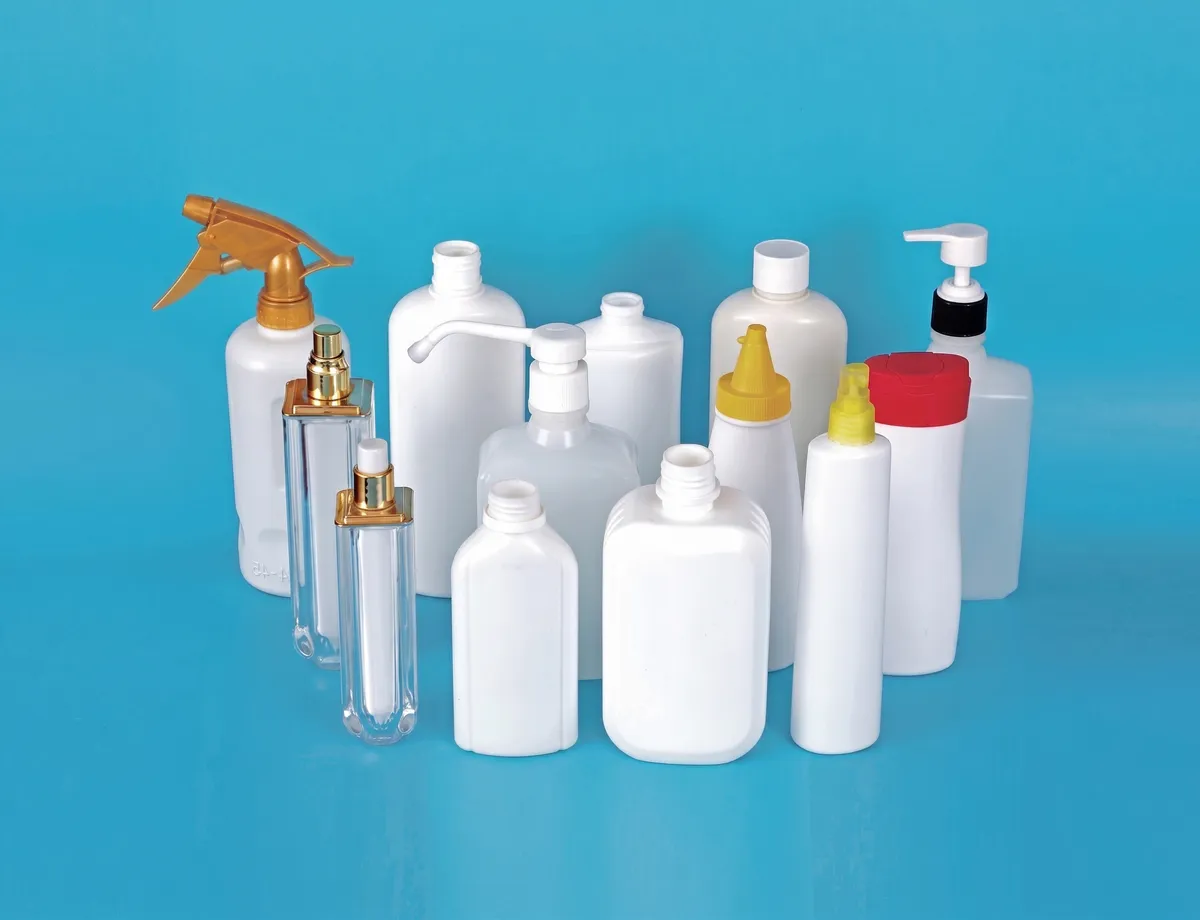 | 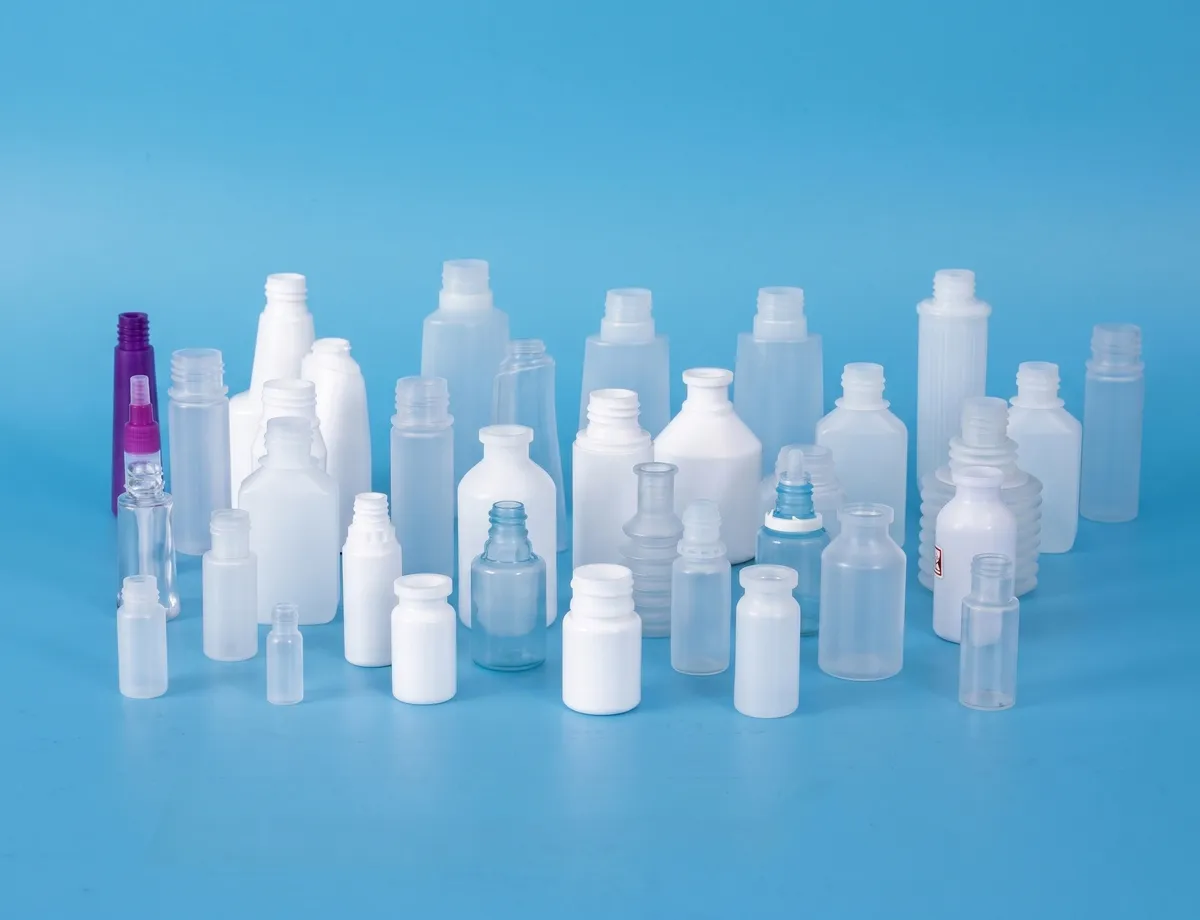 |
| Babyflaschen | Chemikalienflaschen | Pipettenflaschen |
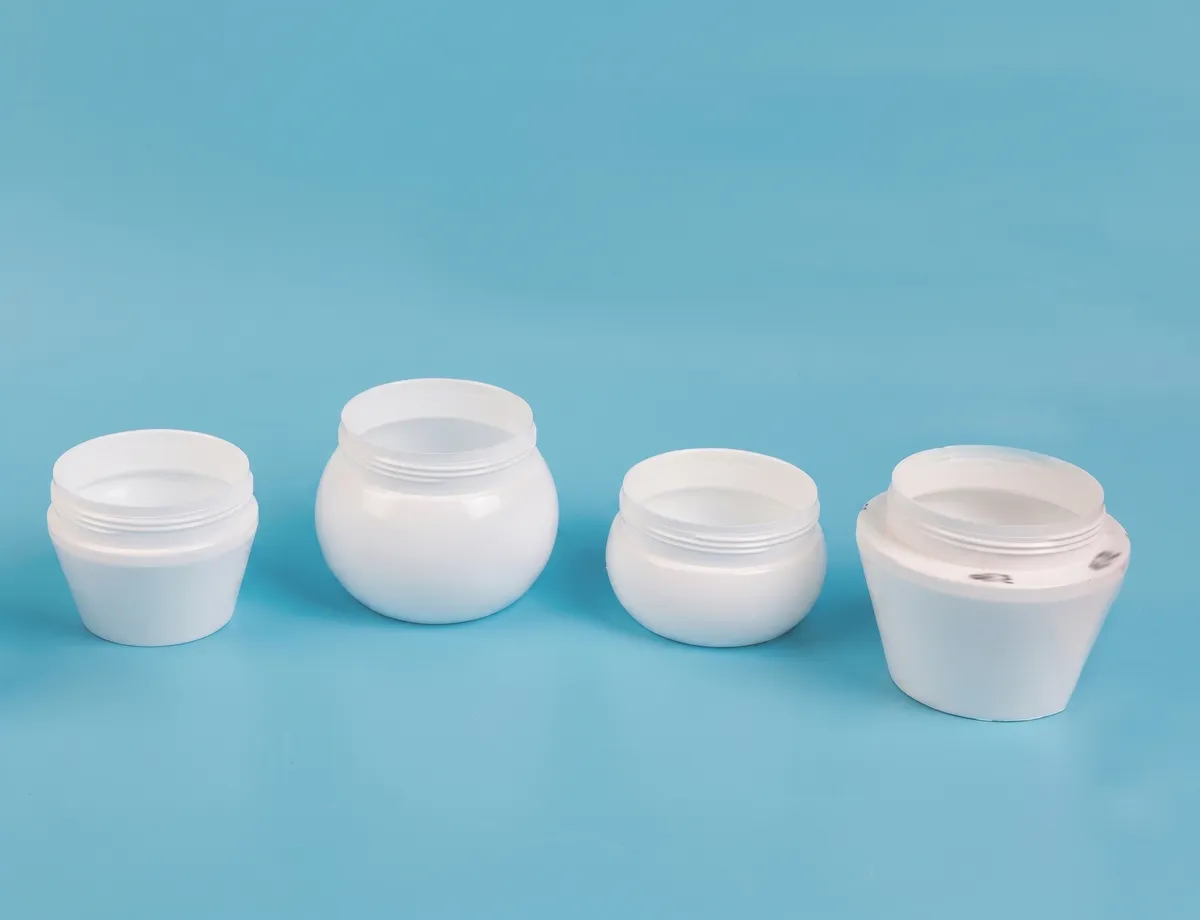 | 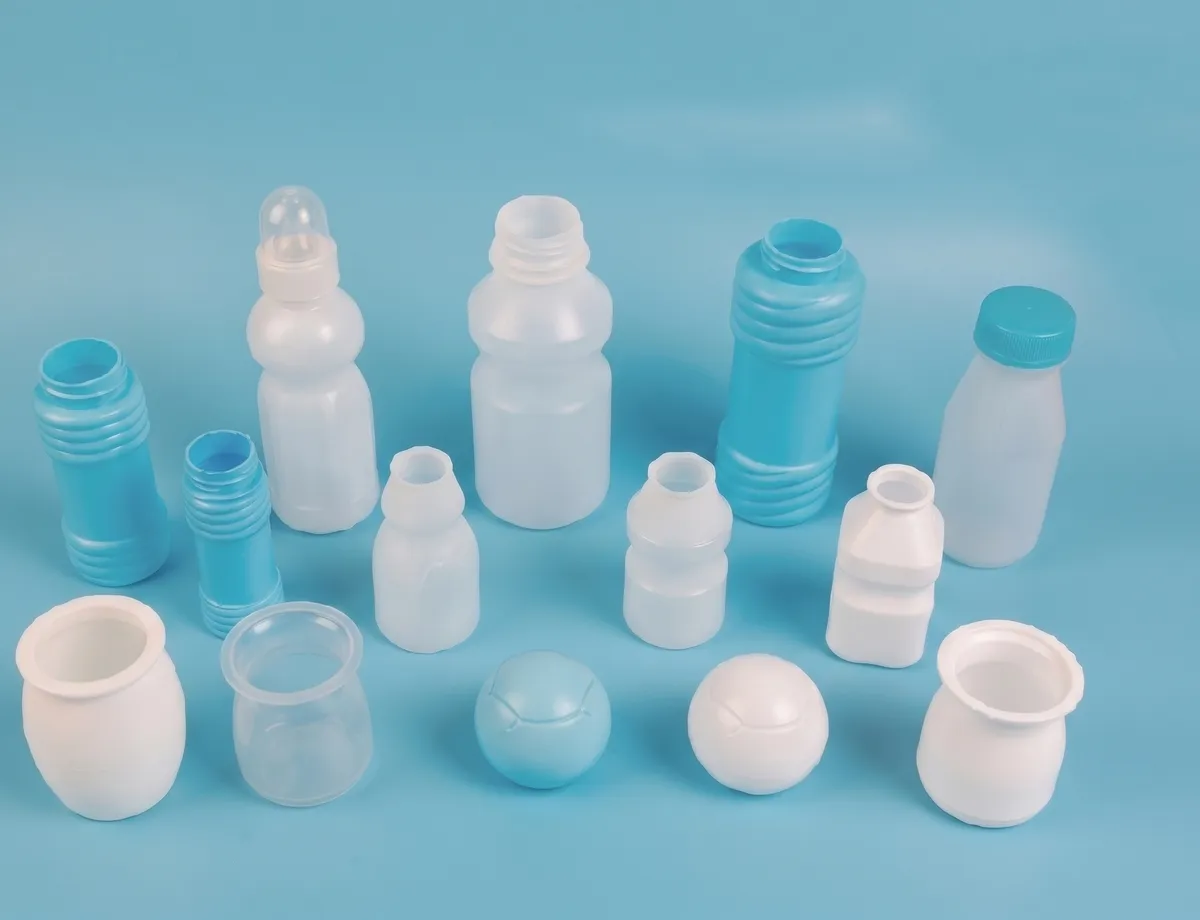 | 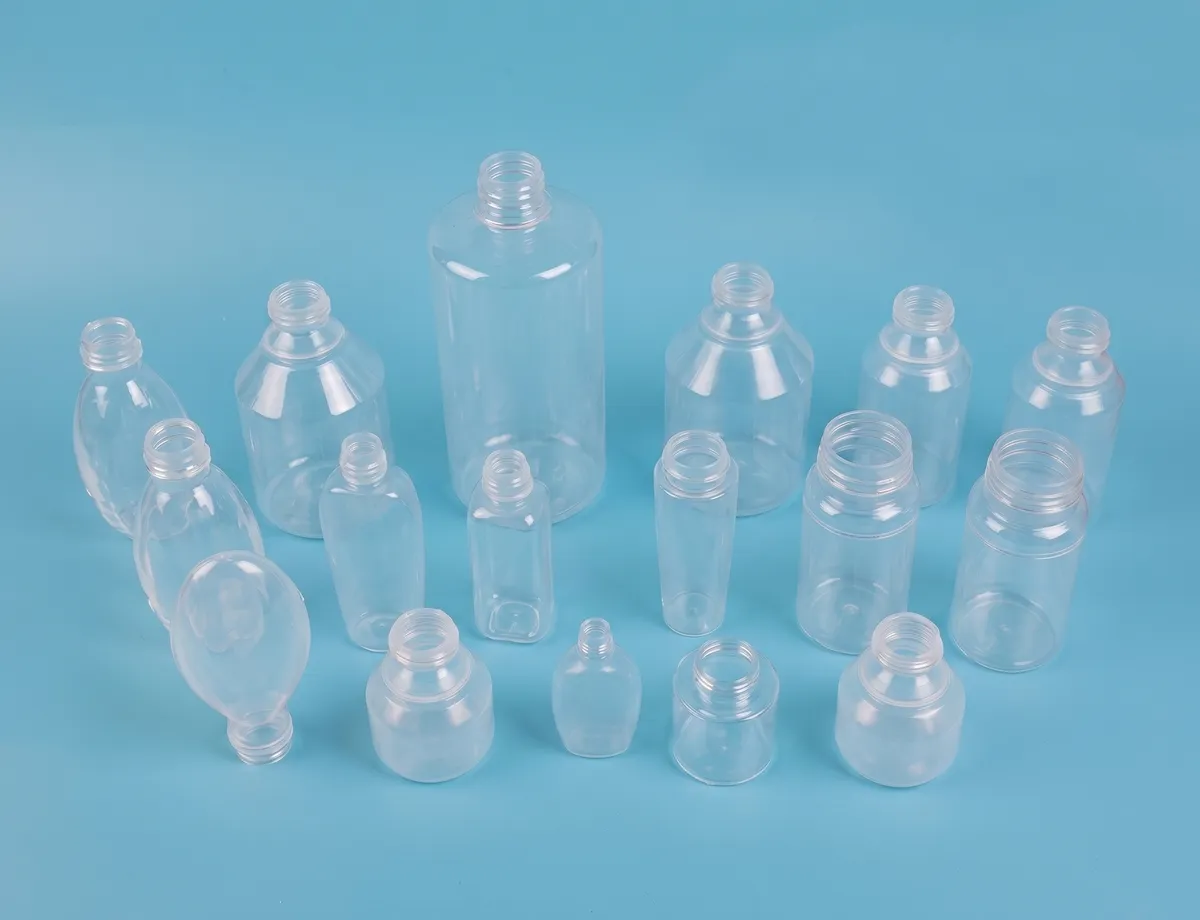 |
| Kosmetikflaschen | Babyflaschen | PP-Flaschen |
Spritzblasformen vs. Extrusionsblasformen
Sowohl Spritzblasformen als auch Extrusionsblasformen sind weit verbreitete Verfahren zur Herstellung von Hohlbehältern aus Kunststoff, unterscheiden sich jedoch grundlegend in der Art der Formgebung. Beim Spritzblasformen wird ein spritzgegossener Vorformling verwendet, bei dem geschmolzener Kunststoff um einen Kernstab eingespritzt wird, um einen präzisen Vorformling mit exakt geformtem Hals zu erzeugen. Extrusionsblasformen hingegen beginnen mit einem extrudierten Vorformling, einem Hohlrohr aus geschmolzenem Kunststoff, das durch einen Düsenkopf nach unten extrudiert wird. Dieser grundlegende Unterschied in der Ausgangsform beeinflusst die Halspräzision, die Wandstärkenkontrolle, den Verschnitt, die Werkzeugstruktur, das Materialverhalten, die Zyklusstabilität und die Art der Flaschen, die mit den jeweiligen Verfahren effizient hergestellt werden können.
So funktioniert das Spritzblasformen (IBM).
Injektion: Geschmolzener Kunststoff wird um einen Kernstab eingespritzt, um ein präzises Vorformteil mit einem exakt gefertigten Hals und Gewinde zu erzeugen.
Blasen: Die Vorform wird zur Blasstation überführt und im Inneren der Flaschenform mit Druckluft aufgeblasen, um die endgültige Behälterform zu erhalten.
Strippen: Die fertige Flasche wird ohne Nachbearbeitung oder Gratentfernung aus dem Kernstab ausgestoßen, wodurch ein sauberes Endprodukt entsteht.
Wie das Extrusionsblasformen (EBM) funktioniert
Extrusion: Geschmolzener Kunststoff wird als hohles Rohr, der sogenannte Vorformling, aus dem Düsenkopf nach unten extrudiert.
Klemmung: Die Form schließt sich um den Vorformling und klemmt überschüssiges Material oben und unten ab.
Föhnen und Trimmen: Die Flasche wird durch Druckluft in Form gebracht, anschließend müssen die entstehenden Luftreste nach dem Abkühlen entfernt und recycelt werden.
IBM steuert den Flaschenhals durch Spritzgießen und erzielt so eine extrem hohe Gewindegenauigkeit und Dichtigkeit. EBM formt die Flasche aus einem Vorformling und erzeugt üblicherweise Verschnitt, der eine Nachbearbeitung erfordert. Die Struktur der IBM-Spritzblasformmaschine basiert auf Kernstäben und Stationsübergabe, während die EBM-Maschinenstruktur auf Extrusion, Vorformlingskontrolle und Formschließung beruht.
IBM vs. EBM: Welches Blasformverfahren sollten Sie wählen?
Wählen Sie das Spritzblasformverfahren, wenn Sie Folgendes benötigen: Präzisionsflaschen im kleinen bis mittleren Format mit exakten Gewindehälsen; Verpackungen für Pharmazeutika, Medizinprodukte, Kosmetik, Labore oder hochwertige Produkte; geringer Abfall und sauberere Produktion ohne Nachbearbeitung; stabile Abmessungen, wiederholbare Wandstärke und zuverlässige Dichtungsleistung.
Extrusionsblasformen ist die richtige Wahl, wenn Sie Folgendes benötigen: Große Flaschen, Kanister, Fässer, Tanks oder unregelmäßige Hohlteile; geringere Werkzeugkosten für weniger präzisionskritische Verpackungen; große Flexibilität bei Behältern und breitere Produktgeometrieoptionen; Anwendungen, bei denen das Entfernen von Grat im Prozess akzeptabel ist.
Kurzvergleich: Unterschiede im IBM-Prozess vs. EBM
| Merkmal / Faktor | Spritzblasformen (IBM) | Extrusionsblasformen (EBM) |
|---|---|---|
| Startformular | Spritzgegossene Vorform | Extrudiertes Vorgelatine |
| Halspräzision | Extrem hoch; der Hals ist spritzgegossen vorgeformt. | Standard; abhängig von Formschließung, Beschnitt und Halskalibrierung |
| Schrott / Abfallmaterial | Kein Flash und sehr geringer Prozessabfall | Erzeugt Blitzlicht, das gekürzt und wiederverwendet werden muss. |
| Optimale Behältergröße | Kleine bis mittelgroße Präzisionsflaschen | Mittelgroße bis große Hohlbehälter |
| Anfängliche Formkosten | Höhere Vorabinvestitionen für Präzisionswerkzeuge und Kernstangen | Geringere anfängliche Formkosten für viele große Hohlbehälter |
| Beste Anwendungen | Pharmazeutische Tablettenfläschchen, Augenpipetten, Kosmetika, Laborbehälter | Große Milchkannen, Waschmittelfässer, Benzinkanister, komplizierte Griffe |
| Qualitätspriorität | Maßgenauigkeit, saubere Produktion und Dichtungszuverlässigkeit | Größenflexibilität, Produktionsleistung und Wirtschaftlichkeit des Containervolumens |
Gängige Flaschenanwendungen für IBM und EBM
| Anwendung | Bessere Passform | Warum das wichtig ist |
|---|---|---|
| Pharmazeutische Pillenflaschen | IBM | Präzise Halsbearbeitung, saubere Produktion und stabile Abdichtung sind wichtiger als niedrige Werkzeugkosten. |
| Augentropfer- und Nasensprayflaschen | IBM | Kleindosierungsverpackungen erfordern eine präzise Halsgeometrie und gleichbleibende Abmessungen. |
| Kosmetiktiegel und Flaschen für den täglichen Gebrauch | IBM | Oberflächengüte, Maßhaltigkeit und reduzierter Verschnitt verbessern die Produktqualität. |
| Benzinkanister, Fässer und große Behälter | EBM | Große Volumina und flexible Hohlformen eignen sich in der Regel besser für EBM-Anlagen. |
| Große industrielle Hohlteile | EBM | EBM kann größere Vorformlinge und breitere Produktformen verarbeiten, auch wenn ein Beschnitt erforderlich ist. |
Verwendete Rohstoffe bei IBM vs. EBM
Beide Verfahren eignen sich für gängige Verpackungskunststoffe. Die Materialwahl sollte jedoch stets anhand der Flaschengeometrie, der Dichtungsanforderungen, der regulatorischen Vorgaben und der Produktionsstabilität geprüft werden. HDPE und PP werden häufig für präzise IBM-Verpackungen eingesetzt. EBM findet breite Anwendung bei HDPE, LDPE und größeren Industriebehältern. Die Materialauswahl hängt von der Endanwendung, den Anforderungen an die chemische Beständigkeit und den spezifischen Fähigkeiten der eingesetzten Produktionsanlagen ab.
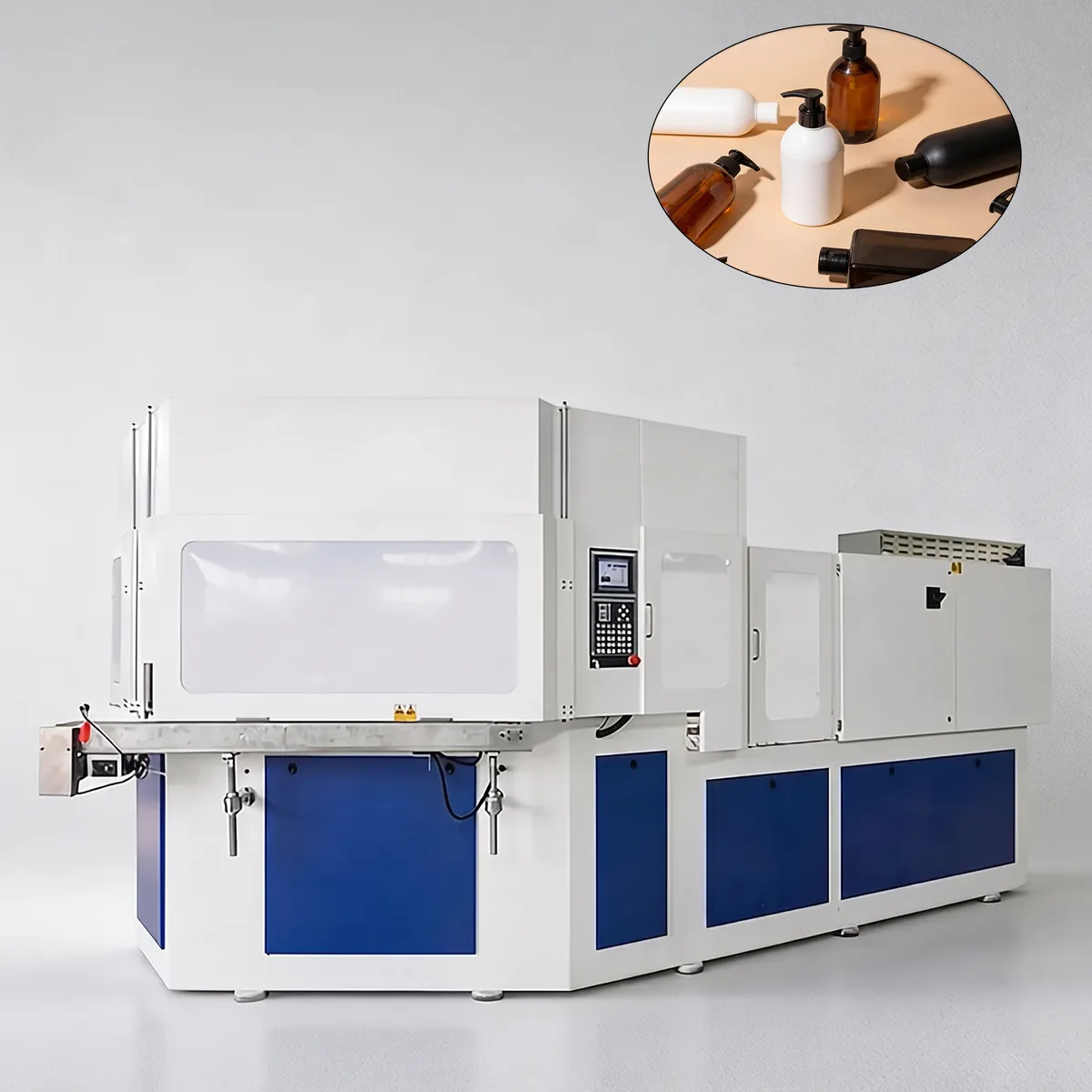
Rohmaterialien, die mit der IBM ZQ135-Maschine kompatibel sind
Die ZQ135 ist für die Verarbeitung einer breiten Palette thermoplastischer Kunststoffe ausgelegt. Zu den am häufigsten verwendeten Materialien bei IBM gehören HDPE, LDPE, PP und PS, die aufgrund ihrer spezifischen Eigenschaften für verschiedene Produkttypen ausgewählt werden. Nachfolgend sind die wichtigsten von dieser Maschine verarbeiteten Materialien aufgeführt.
HDPE (Polyethylen hoher Dichte)
Übliche Anwendungsgebiete: Waschmittelflaschen, Wasserflaschen, Pharmabehälter
HDPE ist eines der am häufigsten verarbeiteten Materialien auf der ZQ135. Es ist äußerst langlebig und rissbeständig und daher das bevorzugte Material für Produkte, die höchste Festigkeit und Verschleißfestigkeit erfordern. Dank seiner ausgezeichneten Chemikalienbeständigkeit eignet es sich zudem ideal für die Verpackung von Haushaltschemikalien und industriellen Reinigungsmitteln.
LDPE (Polyethylen niedriger Dichte)
Übliche Anwendungsgebiete: Quetschflaschen, flexible Behälter, Tropfflaschen
LDPE ist flexibler als HDPE und bietet eine gute Transparenz, wodurch es sich für Behälter eignet, die im Gebrauch gequetscht oder gebogen werden müssen. Es wird häufig für Augentropfflaschen, Kosmetiktuben und flexible Verpackungsbehälter verwendet. LDPE lässt sich auf der ZQ135 problemlos verarbeiten und zeichnet sich durch hervorragende Trenneigenschaften und eine gleichmäßige Wandstärkenverteilung aus.
LLDPE (Lineares Polyethylen niedriger Dichte)
Übliche Anwendungsgebiete: Verpackungsbehälter, Industrieflaschen
LLDPE bietet eine ausgewogene Mischung aus Flexibilität und Robustheit und eignet sich daher ideal für Konsum- und Industrieprodukte. Im Vergleich zu herkömmlichem LDPE bietet es eine höhere Durchstoßfestigkeit und Zugfestigkeit bei gleichzeitig guter Transparenz und Verarbeitbarkeit. LLDPE ist bestens geeignet für Verpackungsanwendungen, die verbesserte mechanische Eigenschaften erfordern, ohne dabei an Flexibilität einzubüßen.
PP (Polypropylen)
Übliche Anwendungsgebiete: Lebensmittelbehälter, pharmazeutische Verpackungen, Heißabfüllflaschen
Polypropylen (PP) ist hitze- und chemikalienbeständig und daher die bevorzugte Wahl für Lebensmittelprodukte oder Behälter, die Heißabfüllprozessen standhalten müssen. Es wird häufig für Tablettenflaschen, Joghurtbecher und Saucenflaschen verwendet. Die ZQ135 verarbeitet PP mit optimierter Zylindertemperaturregelung in ihren 6+N Heizzonen für eine perfekte Plastifizierungsqualität.
HIPS (Hochschlagfestes Polystyrol)
Übliche Anwendungsgebiete: Spielzeug, Haushaltsgeräte-Ersatzteile, Kosmetikbehälter
HIPS ist robust und schlagfest und eignet sich daher ideal für Produkte, die unter Belastung widerstandsfähig sein müssen. Es wird häufig für die Herstellung von Spielzeug, Gehäusen für Haushaltsgeräte und verschiedenen Konsumgüterverpackungen verwendet. HIPS bietet bei der Verarbeitung auf der ZQ135-Anlage eine gute Dimensionsstabilität und eine glatte Oberfläche und ist somit für Anwendungen geeignet, bei denen sowohl die Optik als auch die mechanische Festigkeit wichtig sind.
PS (Polystyrol)
Übliche Anwendungsgebiete: Einweggeschirr, Verpackungen, Flaschen mit Milchsäurebakterien
PS ist hochtransparent und leicht formbar und eignet sich daher ideal für kostengünstige Produkte mit hoher Transparenz. Es wird häufig zur Herstellung von Einwegbechern, transparenten Verpackungsbehältern und Flaschen für probiotische Getränke verwendet. Die ZQ135 kann auch spezielle PS-Sorten verarbeiten, darunter hochtransparentes PS für Premiumverpackungen, bei denen optische Klarheit und Produktsichtbarkeit entscheidende Verkaufsargumente sind.
Eigenschaften der automatischen Form der ZQ-Serie
1. Austauschbares Hohlraum- und Halsdesign
Das Spritzgusswerkzeug verfügt über eine speziell entwickelte Kavitäts- und Halseinsatzstruktur mit eigens konstruierten Ölkanälen, die sich bequem an unterschiedliche Produktgrößen anpassen lassen. Diese modulare Bauweise gewährleistet einen schnellen Wechsel zwischen verschiedenen Flaschenspezifikationen bei gleichzeitig stabiler Temperaturverteilung im gesamten Werkzeug und sichert so die Maßgenauigkeit der Vorformlinge über alle Produktionsläufe hinweg.
2. Hochwertige Stahlkonstruktion
Alle Spritzgussformkomponenten werden aus importiertem S136-Stahl oder 4Cr13-Edelstahl gefertigt. Beide Werkstoffe zeichnen sich durch außergewöhnliche Härte, Korrosionsbeständigkeit und Polierbarkeit aus. Die Wahl dieses hochfesten Stahls verlängert die Lebensdauer der Formwerkzeuge erheblich, reduziert langfristig die Ersatzteilkosten und gewährleistet eine gleichbleibende Produktqualität über Millionen von Spritzgießzyklen.
3. Optimiertes Heißkanal- und Vorformsystem
Das optimierte Heißkanalsystem und die Flaschenvorformkonstruktion minimieren Gewichtsschwankungen und Wandstärkenabweichungen. Die speziell entwickelte Dornstruktur ermöglicht schnelle Formzyklen bei gleichzeitig exzellenter Kernkühlung. Dies gewährleistet eine gleichbleibende Vorformqualität und führt somit zu konsistent hochwertigen Fertigflaschen über lange Produktionszyklen hinweg.
4. Präzision bei Hals- und Gewindegenauigkeit
Die mit der ZQ-Serie hergestellten Formen zeichnen sich durch extrem präzise Abmessungen von Öffnung und Gewinde aus und erreichen die Dichtheitsklasse 100%. Diese hohe Präzision ist entscheidend für pharmazeutische und Lebensmittelverpackungen, bei denen ein manipulationssicherer Verschluss und absolute Dichtheit zwingend erforderlich sind, um die gesetzlichen Bestimmungen einzuhalten und die Verbrauchersicherheit im Endmarkt zu gewährleisten.
5. Gratfreie und abfallfreie Oberfläche
Die fertige Flasche weist keinerlei Grate oder Materialreste an Öffnung oder Boden auf. Im Gegensatz zum Extrusionsblasformen wird beim Spritzblasformen der Grat vollständig eliminiert, sodass keine Nachbearbeitung erforderlich ist. Dieser Vorteil einer sauberen Produktion reduziert die Arbeitskosten, vermeidet die Aufbereitung von Mahlgut und gewährleistet, dass jede Flasche sofort abgefüllt und verpackt werden kann.
6. Maß- und Gewichtskonstanz
Produktgröße, Gewicht, Trennlinie und Flaschenwandstärke bleiben in jeder Produktionscharge von der ersten bis zur letzten Flasche äußerst konstant. Diese außergewöhnliche Wiederholgenauigkeit wird durch präzisionsgefertigte Formteile, eine stabile Temperaturregelung und den servogesteuerten Prozess der ZQ135 erreicht. So wird eine gleichbleibende Produktqualität gewährleistet, die den strengsten Qualitätskontrollstandards in regulierten Branchen entspricht.
Wartungstipps für Spritzblasformmaschinen
1. Regelmäßige Schmierung und mechanische Inspektion
Führen Sie die planmäßige Schmierung aller beweglichen Teile, einschließlich Führungsschienen, Kniehebelmechanismen, Drehtischlager und Verbindungsstücke, gemäß Wartungshandbuch durch. Überprüfen Sie die mechanischen Komponenten regelmäßig auf Verschleiß, Spiel oder Fehlausrichtung. Eine ordnungsgemäße Schmierung reduziert die Reibung, beugt vorzeitigem Bauteilausfall vor und verlängert die Gesamtlebensdauer der Anlage.
2. Reinigung von Zylinder und Schnecke
Reinigen Sie den Injektionszylinder und die Schneckeneinheit gründlich, wenn Sie das Material wechseln oder längere Produktionsläufe durchführen. Harzrückstände können die Produktqualität beeinträchtigen, Farbverunreinigungen verursachen und die Plastifizierungseffizienz verringern. Verwenden Sie geeignete Spülmittel oder führen Sie manuelle Demontage-Reinigungsverfahren durch, wie für den jeweiligen Harztyp Ihrer Maschine empfohlen.
3. Überprüfung der Heizungsanlage und des Temperaturreglers
Überprüfen Sie regelmäßig alle Heizbänder, Thermoelemente und Temperaturregler des Fasses, um eine präzise und stabile Erwärmung in allen 6+N Fasszonen sicherzustellen. Defekte Heizelemente oder ungenaue Temperaturmessungen können zu ungleichmäßiger Plastifizierung, mangelhafter Vorformlingqualität und ungleichmäßiger Flaschenwandstärke führen. Ersetzen Sie verschlissene Heizelemente und kalibrieren Sie die Temperatursensoren im Rahmen der planmäßigen Wartung neu.
4. Wartung des Kühlwassersystems
Das Kühlwassersystem muss durch regelmäßige Kontrolle von Wasserdurchfluss, Druck (0,3 bis 0,4 MPa) und Wasserqualität instand gehalten werden. Kühlkanäle in Formen und Kernstäben sind zu reinigen, um Mineralablagerungen und Verstopfungen zu vermeiden. Unzureichende Kühlung führt zu längeren Zykluszeiten, geringerer Formstabilität der Flaschen und ungleichmäßigem Schrumpfen. Wassertemperatur und Durchflussmenge sind zu überwachen, um die erforderliche Kapazität von 4 m³/h konstant zu gewährleisten.
5. Pflege von Form und Kernstab
Reinigen und prüfen Sie Spritzgussformen, Blasformen und Kernstäbe nach jedem Produktionslauf. Tragen Sie vor der Einlagerung ein Rostschutzmittel auf die Formoberflächen auf. Überprüfen Sie die Formausrichtung, den Zustand der Trennlinie und die Oberflächenqualität der Kavität, um die Maßgenauigkeit und Oberflächengüte dauerhaft zu gewährleisten. Beschädigte oder verschlissene Formteile müssen umgehend repariert oder ausgetauscht werden, um die Produktion fehlerhafter Flaschen zu vermeiden, die die Qualitätsprüfung nicht bestehen.
6. Inspektion des Servomotors und des elektrischen Systems
Überprüfen Sie regelmäßig Servomotoren, Absolutwertgeber, Antriebssteuerungen und elektrische Verdrahtungen. Das Servosystem ist das Herzstück dieser vollelektrischen Maschine, und jede Beeinträchtigung der Servoleistung wirkt sich direkt auf Zykluszeit, Positioniergenauigkeit und Produktqualität aus. Halten Sie die Schaltschränke sauber und staubfrei, überprüfen Sie die Erdung und überwachen Sie die Servoalarmprotokolle zur frühzeitigen Fehlererkennung.
Checkliste zur Maschinenauswahl vor der Angebotsanfrage
Vor der Auswahl eines Maschinenmodells prüft CMN Transmission üblicherweise die Flaschenzeichnung, das Material, das Zielgewicht, die Halsbearbeitung, die Anzahl der Kavitäten, das Ausstoßziel und die Anforderungen an die nachgelagerte Automatisierung. Diese Angaben helfen unserem Ingenieurteam, die optimale Maschinenkonfiguration für Ihr Projekt zu empfehlen.
1. Flaschenkapazität und Zeichnung
Das Flaschenvolumen und die detaillierte Zeichnung definieren die erforderliche Schließkraft, die Formgröße, die Anordnung der Kernstäbe und die Kühlanforderungen. Durch die Angabe des Flaschenvolumens (z. B. 10 ml, 30 ml, 60 ml, 100 ml, 250 ml oder 500 ml) und einer technischen Zeichnung oder eines Musters kann CMN die exakte Formkonfiguration, die Kavitätenanordnung und die für Ihr Produktionsprojekt benötigte Maschinenkraft berechnen.
2. Harzqualität und Flaschengewicht
Die spezifische Kunststoffharzsorte und das Zielgewicht der Flasche beeinflussen direkt die Plastifizierungskapazität, das Temperaturprofil und die Zykluszeit. Unterschiedliche Materialien wie HDPE, PP, LDPE und PS weisen jeweils spezifische Schmelzflusseigenschaften und Schrumpfungsraten auf, die die Einstellungen der Zylinderzone, den Einspritzdruck und die Kühldauer der IBM-Spritzblasformmaschine beeinflussen.
3. Halslackierung und Kappenart
Die Spezifikation der Halsbearbeitung und der Verschlusstyp bestimmen Gewindedesign, Dichtungstoleranz und Formgenauigkeit. Unabhängig davon, ob die Flasche einen Schraubverschluss, einen Klappverschluss, einen Pumpspender oder einen kindersicheren Verschluss verwendet, muss der Halseinsatz exakt auf Gewindesteigung, Durchmesser und Dichtflächenabmessungen abgestimmt sein, um eine zuverlässige Verschlussleistung in der Endanwendung zu gewährleisten.
4. Erforderliche Leistung und Hohlräume
Das tägliche Produktionsziel verknüpft das Flaschendesign mit der passenden Maschinengröße und Werkzeugkonfiguration. Die ZQ135 unterstützt bis zu 30 Kavitäten für 10-ml-Flaschen und 8 Kavitäten für 1000-ml-Flaschen. CMN berechnet die optimale Kavitätenanzahl, Zykluszeit und Maschinenauslastung, um sicherzustellen, dass Ihr Produktionsziel sowohl bei der Ersteinrichtung als auch bei der langfristigen Skalierung effizient und kostengünstig erreicht wird.
Warum sollten Sie sich für die Spritzblasformmaschinen von CMN entscheiden?
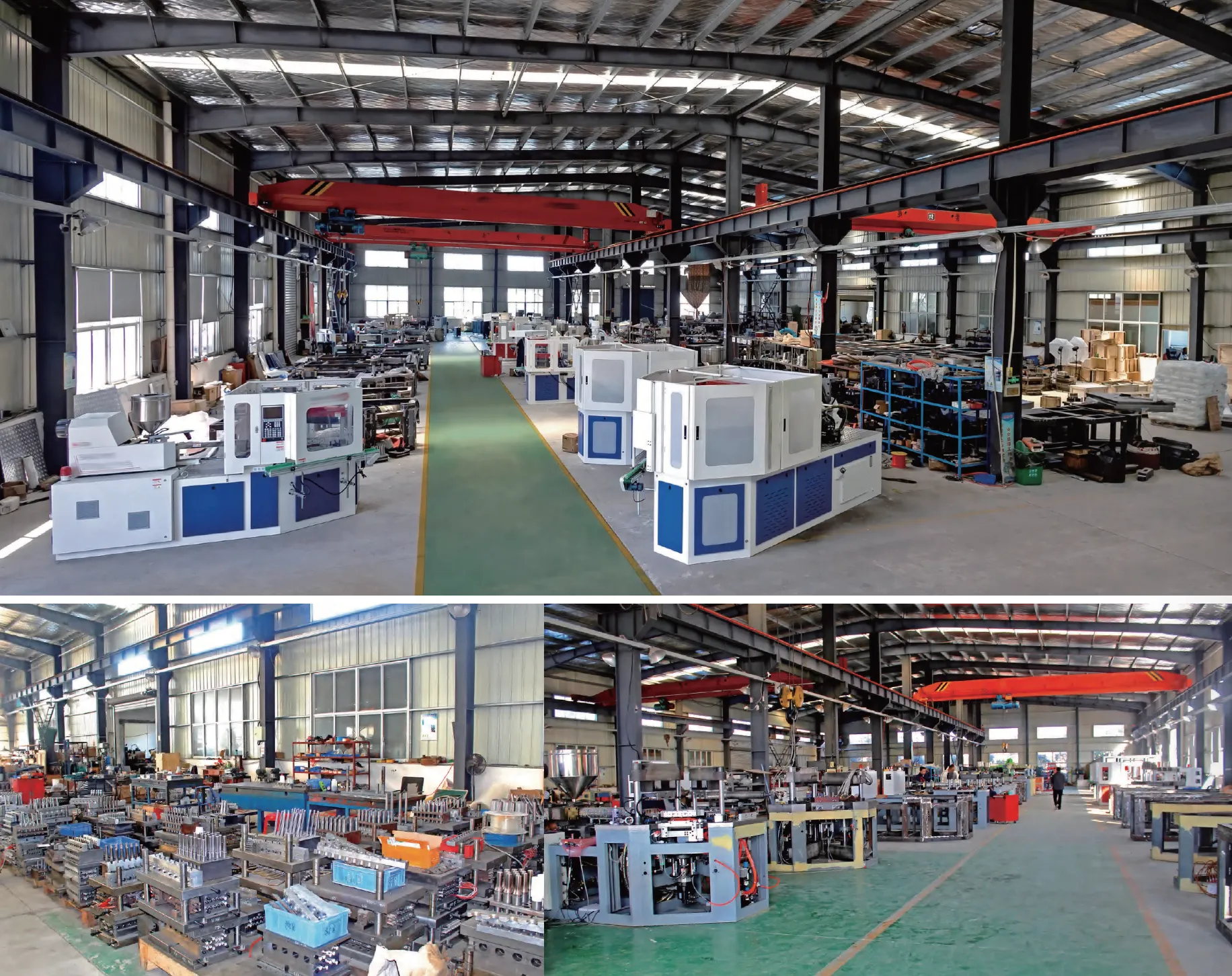
CMN Transmission ist ein professionelles Unternehmen, das sich hauptsächlich mit der Forschung und Entwicklung, der Produktion, dem Vertrieb und dem internationalen Handel von automatischen einstufigen Spritzblasformmaschinen und zugehörigen Spritzblasformlösungen befasst. Als etablierter Hersteller von Spritzblasformmaschinen umfasst unser Produktportfolio Spritzblasformmaschinen, Extrusionsblasformmaschinen, Spritzstreckblasformmaschinen sowie ein komplettes Sortiment an Peripheriegeräten für die nachgelagerte Automatisierung und die integrierte Qualitätskontrolle.
CMN Transmission verfügt über ein herausragendes Forschungs- und Entwicklungsteam, das erfahrene Ingenieure und Techniker mit umfassender Expertise im Bereich Spritzblasmaschinen und Spritzblasformkonstruktion vereint. Dank fundiertem theoretischem Wissen und langjähriger praktischer Erfahrung aus Tausenden von Projekten bietet unser Team Kunden eine detaillierte und durchdachte Beratung vor dem Kauf, technischen Support während des Kaufs und einen umfassenden Kundendienst. Ob Sie Unterstützung bei der Auswahl des richtigen Maschinenmodells, der Konstruktion eines Formlayouts, der Optimierung von Produktionsparametern oder der Fehlerbehebung per Fernwartung benötigen – das Ingenieurteam von CMN steht Ihnen auf jedem Schritt Ihres Weges zur Seite.
Unsere Produktanwendungen umfassen Verpackungen für die Pharmaindustrie, Lebensmittel, das Gesundheitswesen, Kosmetik und weitere Bereiche der Präzisionskunststoffverpackung. CMN-Maschinen produzieren Behälter von 1 ml bis 1000 ml aus einer Vielzahl von Kunststoffen, darunter HDPE, LDPE, PP, PS, hochtransparentes PS, ABS, umweltfreundliches Maisstärke-Aluminium (PLA), EVA und PCTG. Dank dieser umfassenden Materialkompatibilität bietet CMN für jede Verpackungsanwendung die passende Lösung.
CMN Transmission folgt der Unternehmensphilosophie der Selbstständigkeit, Integrität, des Pragmatismus, der Innovation und der Verantwortung. Wir realisieren schlüsselfertige Komplettlösungen für hochwertige Spritzblasprodukte mit überzeugender Kundenzufriedenheit und erstklassiger Produktionsleistung. Von der ersten Beratung über Maschinenlieferung, Werkzeuginbetriebnahme und Bedienerschulung bis hin zum laufenden technischen Support bietet CMN eine umfassende Partnerschaft, die unseren Kunden zum Erfolg auf den wettbewerbsintensiven globalen Verpackungsmärkten verhilft. Als einer der zuverlässigsten IBM-Maschinenlieferanten für Kunden weltweit laden wir Sie ein, uns noch heute zu kontaktieren, um Ihr nächstes Projekt zu besprechen und zu erfahren, wie CMN Ihre Flaschenproduktion optimieren kann.
Häufig gestellte Fragen
F: Welche Flaschengrößen kann die Spritzblasformmaschine ZQ135 herstellen?
A: Die ZQ135 produziert Flaschen von 1 ml bis 2000 ml in der passenden Flaschenhöhe. Die Form bietet 30 Kavitäten für 10-ml-Flaschen bis hin zu 8 Kavitäten für 1000-ml-Behälter. Der maximale Flaschendurchmesser beträgt 120 mm, die maximale Flaschenhöhe 220 mm. Damit eignet sich die Maschine für ein breites Anwendungsspektrum in der Pharma-, Kosmetik-, Lebensmittel- und Industrieverpackungsbranche.
F: Wie hoch ist die tägliche Produktionsleistung dieser IBM-Maschine für 30-ml-Flaschen?
A: Bei 30-ml-Flaschen erreicht die ZQ135 mit 26 Kavitäten eine Zykluszeit von 8,2 Sekunden und produziert ca. 105.000 Flaschen pro Tag bei einer maximalen Tageskapazität von 115.000 Flaschen. Dank dieser hohen Durchsatzrate eignet sie sich für die großtechnische Flaschenproduktion in der Pharma- und Kosmetikindustrie.
F: Wie viel Energie verbraucht die vollelektrische Spritzblasformmaschine ZQ135?
A: Die ZQ135 erzielt Energieeinsparungen von 301 TP3T im Vergleich zu herkömmlichen hydraulischen Spritzblasformmaschinen. Bei der Produktion von 30-ml-Flaschen beträgt der Stromverbrauch pro Stunde ca. 12 kWh. Die installierte Gesamtleistung liegt bei 95 kW, das Verhältnis der Betriebsleistung bei 521 TP3T zu 701 TP3T. Das bedeutet, dass der tatsächliche Energieverbrauch während der Produktion deutlich unter der Nennleistung liegt.
F: Welche Kunststoffmaterialien kann diese Spritzblasformmaschine verarbeiten?
A: Die Spritzblasformmaschine ZQ135 verarbeitet eine breite Palette von Thermoplasten, darunter HDPE, LDPE, LLDPE, PP, PS, HIPS, hochtransparentes PS, ABS, umweltfreundliches Maisstärke-Aluminiumoxid (PLA), EVA und PCTG. Jedes Material kann durch die 6+N Heizzonen im Zylinder und die einstellbaren Spritzgießparameter optimiert werden, um die beste Produktqualität für spezifische Verpackungsanwendungen zu erzielen.
F: Ist der ZQ135 als Alternative zu Aoki IBM-Geräten geeignet?
A: Ja, die ZQ135 gilt weithin als wettbewerbsfähige Alternative zu den IBM-Maschinen von Aoki. Sie bietet vergleichbare Stabilität nach europäischem Vorbild, ähnliche oder höhere Schließkräfte, gleichwertige Flaschenqualität mit präzisen Halsbearbeitungen und gratfreier Verarbeitung sowie einen vollautomatischen Servoantrieb zu einem deutlich günstigeren Preis. Viele Anwender haben erfolgreich von älteren Aoki-Maschinen auf die ZQ135 umgestellt, ohne Kompromisse bei der Produktionsqualität einzugehen.
F: Kann ich den ZQ135 an automatisierte Verpackungs- und Inspektionssysteme anschließen?
A: Absolut. Das Fördersystem ZQ135 lässt sich nahtlos in visuelle Inspektionssysteme zur Erkennung von Fremdkörpern, unzureichendem Füllmaterial und unebenen Böden integrieren. Es ist außerdem mit Seitendichtigkeitsprüfern, Etikettiermaschinen und automatischen Verpackungsanlagen kompatibel und ermöglicht so eine vollautomatische, unbeaufsichtigte Produktion, die sich ideal für intelligente Fabrikumgebungen im Sinne von Industrie 4.0 eignet.
F: Wie hoch sind die Maschinenpreise von CMN Transmission?
A: Der Maschinenpreis hängt vom jeweiligen Modell, der Werkzeugkonfiguration, der Kavitätenanzahl und den individuellen Anpassungswünschen ab. CMN Transmission bietet wettbewerbsfähige Preise, die in der Regel 30% bis 40% unter denen vergleichbarer europäischer und japanischer Marken liegen, bei gleichbleibender Verarbeitungsqualität. Bitte kontaktieren Sie unser Vertriebsteam mit Ihren Flaschenspezifikationen für ein detailliertes Angebot inklusive Maschine, Werkzeug und optionalem Zubehör.
F: Bietet CMN kundenspezifische Spritzblasformmaschinen mit spezifischen Formwerkzeugen zum Verkauf an?
A: Ja, CMN Transmission bietet einen Komplettservice inklusive kundenspezifischer Maschinenpakete mit projektspezifischem Werkzeugbau. Unser Ingenieurteam entwirft das Werkzeuglayout, das Heißkanalsystem, die Kernstabkonfiguration und die Kavitätenanordnung basierend auf Ihrer Flaschenzeichnung, den Materialspezifikationen und Ihren Produktionsanforderungen. Wir liefern Ihnen ein vollständig geprüftes Maschinen- und Werkzeugpaket, das sofort produktionsbereit ist.
F: Worin besteht der Unterschied zwischen einer Spritzblasformmaschine und einer Spritzstreckblasformmaschine?
A: Eine IBM-Maschine (Spritzblasformmaschine) formt einen Vorformling und bläst ihn in einem einzigen, kontinuierlichen Prozess auf einer Maschine zu einer Flasche. Eine ISBM-Maschine (Spritzstreckblasformmaschine) fügt einen mechanischen Streckschritt hinzu, der den Kunststoff vor dem Blasformen biaxial ausrichtet. Sie wird typischerweise für PET-Flaschen eingesetzt. Die ZQ135 ist eine IBM-Maschine, die sich ideal für Flaschen aus HDPE, PP und PS eignet, während ISBM-Maschinen besser für PET-Flaschen geeignet sind, die eine höhere Transparenz und bessere Barriereeigenschaften erfordern.
F: Wie lange dauert die Lieferung einer bestellten ZQ135 Spritzblasformmaschine?
A: Die Standardlieferzeit für eine ZQ135 beträgt in der Regel 60 bis 90 Tage ab Auftragsbestätigung, abhängig von der Komplexität der Form und den individuellen Anpassungswünschen. CMN Transmission koordiniert die internationale Logistik inklusive Werksprüfung, Seefracht und Zollabwicklung und kann die Installation vor Ort sowie die Bedienerschulung in Ihrem Unternehmen organisieren. Für dringende Projekte sind nach Absprache mit unserem Vertriebsteam gegebenenfalls beschleunigte Lieferoptionen verfügbar.
F: Kann die ZQ135 Flaschen und Spezialbehälter mit LED-Lampenabdeckung herstellen?
A: Ja, die ZQ135 kann als Spritzblasformmaschine für LED-Lampenabdeckungen zur Herstellung von speziellen Kunststoffabdeckungen, Diffusoren und Gehäusen eingesetzt werden. Dank ihrer einstellbaren Schließkraft und des austauschbaren Formsystems lassen sich neben herkömmlichen Rundflaschen auch eine Vielzahl von Flaschen- und Behälterformen mit Sonderformen herstellen. Senden Sie CMN Ihre Produktzeichnung, um die Machbarkeit und die Formkonstruktion für Ihre Spezialanwendungen zu besprechen.
Kundenrezensionen
Kim Jae-won, Pharmaindustrie, Südkorea
„Wir haben die Spritzblasformmaschine ZQ135 vor etwa zehn Monaten für unsere pharmazeutische Verpackungsanlage in Incheon angeschafft. Die Schließkraft des Spritzsystems von 1350 kN sorgt für perfekt verschlossene Flaschenmündungen – jedes Mal. Wir produzieren 50-ml-HDPE-Tablettenflaschen mit rund 18 Kavitäten pro Zyklus und erreichen eine Tagesproduktion von fast 105.000 Einheiten. Besonders beeindruckt hat uns die Energieeinsparung. Unsere Stromkosten sind im Vergleich zu unserem alten hydraulischen Modell deutlich gesunken. Die Ingenieure von CMN waren während der Installation eine ganze Woche vor Ort und haben unser gesamtes Team umfassend geschult. Wir können diese Maschine jedem Unternehmen der Pharmaflaschenbranche wärmstens empfehlen.“
Rajesh Patil, Kosmetikindustrie, Indien
„Wir betreiben die ZQ135 seit Anfang des Jahres für unsere Kosmetikflaschenlinie in Pune. Wir produzieren 30-ml- und 60-ml-PP-Flaschen für lokale Hautpflegemarken, und die Oberflächenqualität ist exzellent. Keine Grate, kein Grat – jede Flasche ist sauber und sofort abfüllbereit. Das servogesteuerte System ist deutlich leiser als unsere vorherige Hydraulikmaschine. Unsere Mitarbeiter schätzen die geringere Geräuschentwicklung in der Produktion. Anfangs hatten wir einige Fragen zur Werkzeugausrichtung während der Einrichtung, aber das Kundendienstteam von CMN antwortete innerhalb von 24 Stunden per Videoanruf und führte uns Schritt für Schritt durch die Justierung. Durchweg sehr professioneller Support.“
Mehmet Yilmaz, Chemische Industrie, Türkei
„Wir haben die ZQ135 letztes Jahr für die Produktion von Chemikalienflaschen und Handwaschmittelbehältern in unserem Werk in Istanbul angeschafft. Die einstellbare Schließkraft von 40 bis 80 Tonnen ist äußerst praktisch, da wir wöchentlich zwischen verschiedenen Flaschengrößen wechseln. Der Umbau ist schnell und unkompliziert. Die Maschine läuft seit etwa acht Monaten im Zweischichtbetrieb ohne größere Ausfallzeiten. Der Seetransport vom Werk in die Türkei dauerte etwa 35 Tage und lag damit innerhalb unseres Zeitplans. Die Holzverpackung war stabil, und die Maschine kam in einwandfreiem Zustand und ohne jegliche Beschädigung an.“
Andrei Kozlov, Lebensmittelindustrie, Russland
„Unser Unternehmen hat zwei ZQ135-Spritzblasformmaschinen für unsere Lebensmittelverpackungsabteilung in Moskau erworben. Wir produzieren 100-ml- und 250-ml-HDPE-Flaschen für Gewürzmarken und nutzen je nach Flaschengröße 14 bis 18 Kavitäten. Die Gleichmäßigkeit von Flaschengewicht und Wandstärke ist bei beiden Maschinen bemerkenswert, und die Qualitätskontrolle war noch nie so einfach. Die Dokumentation könnte verbessert werden; einige Abschnitte des Handbuchs bedürfen einer besseren Übersetzung. Die technischen Inhalte sind jedoch vollständig und die Maschinenzeichnungen sehr detailliert. Insgesamt sind wir mit der Investition zufrieden und verhandeln bereits mit CMN über eine dritte Anlage für das nächste Jahr.“
Thabo Molefe, Pharmaindustrie, Südafrika
„Wir haben die ZQ135 vor etwa sechs Monaten in unserem Werk in Johannesburg für die Produktion von Flaschen für Arzneimittel und Nahrungsergänzungsmittel installiert. Das hygienische Bottom-Up-Design war für uns ein entscheidendes Kaufargument, da unsere Produktionsumgebung strengen Vorschriften für pharmazeutische Verpackungen entsprechen muss. Die Maschine produziert konstant 30-ml-Flaschen mit einer Zykluszeit von 8,2 Sekunden. Der Energieverbrauch liegt bei rund 12 kWh pro Stunde für die 30-ml-Produktion und ist damit deutlich niedriger als bei unserer alten Anlage. CMN hat sogar einen Techniker zur Inbetriebnahme nach Südafrika entsandt – etwas, was nicht jeder Anbieter tut. Solch ein Engagement macht den Unterschied.“
Ricardo Santos, Getränkeindustrie, Brasilien
„Ehrlich gesagt war ich anfangs skeptisch, eine Maschine von einem neuen Lieferanten zu bestellen, anstatt auf die europäischen Marken zu setzen, die wir bisher verwendet hatten. Doch nach meinem Besuch im CMN-Werk und dem Anblick der ZQ135 im Produktionsbetrieb habe ich meine Meinung geändert. Die Verarbeitungsqualität ist solide, die Rahmenkonstruktion im europäischen Stil wirkt sehr stabil, und die Leistung der Maschine entspricht den Versprechungen. Wir verwenden sie in São Paulo für 500-ml-Getränkeflaschen und verarbeiten dabei 10 Kavitäten pro Zyklus. Die Maschinen von CMN sind 30 bis 40 Prozent günstiger als vergleichbare europäische Modelle, und die Qualität hat unsere Erwartungen voll erfüllt.“
James Mitchell, Pharmaindustrie, Vereinigte Staaten
„Wir haben mehrere IBM-Maschinenhersteller evaluiert, bevor wir uns für die ZQ135 von CMN Transmission für unser Werk in Ohio entschieden haben. Ausschlaggebend waren für uns das vollelektrische Servosystem, der niedrige Geräuschpegel und die Integrationsfähigkeit in unsere bestehende Sichtprüfungs- und automatisierte Verpackungslinie. Nach neun Monaten Betrieb kann ich bestätigen, dass die Maschine unsere Erwartungen hinsichtlich Verfügbarkeit und Flaschenqualität erfüllt hat. Wir produzieren 60-ml-Pharmazeutikaflaschen für ein großes US-amerikanisches Pharmaunternehmen, und jede Charge besteht die Qualitätskontrolle problemlos. CMN hat uns zudem mehrfach per Fernwartung bei der SPS-Fehlerbehebung unterstützt, was für unser Wartungsteam eine große Hilfe war.“
Carlos Garcia, Chemische Industrie, Mexiko
„Wir haben die ZQ135 für unsere Pestizidflaschen-Produktionslinie in Monterrey bestellt. Pestizidbehälter müssen eine ausgezeichnete Chemikalienbeständigkeit und kindersichere Verschlüsse aufweisen, daher war die Gewindegenauigkeit für uns von größter Bedeutung. Die ZQ135 liefert konstant präzise Gewinde an unseren HDPE-Flaschen. Seit der Installation haben wir über 3 Millionen Flaschen mit einer minimalen Ausschussquote von unter 0,3 Prozent produziert. Die Maschinenabmessungen von 5,5 x 2 x 2,4 Metern passen optimal in unsere Produktionshalle, und das Gewicht von 18 Tonnen ermöglichte eine problemlose Fundamentierung. Zollabfertigung und Versand ab Werk wurden von CMNs Logistikpartner übernommen, und alles verlief reibungslos. Eine gute Maschine zu einem wettbewerbsfähigen Preis.“
Nguyen Kim Thanh, Körperpflegeindustrie, Vietnam
„Wir haben die ZQ135 für unsere Kosmetik- und Körperpflegeflaschenproduktion in Ho-Chi-Minh-Stadt angeschafft. Ausschlaggebend für unsere Entscheidung für CMN gegenüber anderen IBM-Maschinenlieferanten war der Komplettservice. CMN hat uns nicht nur eine Maschine verkauft, sondern uns auch bei der Entwicklung des Werkzeuglayouts für unsere spezifischen Flaschengrößen (10 ml bis 100 ml) unterstützt, das Heißkanalsystem konfiguriert und unsere Bediener zwei Wochen lang geschult. Die Maschine ist nun seit fünf Monaten im Einsatz und produziert durchschnittlich rund 95.000 Flaschen pro Tag. Das Servosystem gewährleistet auch bei langen Produktionsläufen eine gleichbleibende Präzision. Wir sind sehr zufrieden und planen, im nächsten Quartal eine zweite Maschine für unsere neue Produktionslinie zu bestellen.“
Zusätzliche Informationen
| Bearbeitet von | Yjx |
|---|